
The Sigiburg Castle Apparition
In the year 776, while the Frankish garrison of the hillfort of Sigiburg — overlooking the River Ruhr near modern Dortmund — stood under Saxon siege, the court chroniclers who compiled the Annales regni Francorum (the Royal Frankish Annals) recorded that "the glory of God" appeared visibly above the fortress church: witnesses, some still living when the annal was written, said they saw "the likeness of two shields, red in colour, flaming, and moving to and fro" over the church roof. The besieging Saxons, according to the text, broke and fled in terror. Popular ufology has circulated this passage for decades as one of the oldest "UFO battle" reports on record, sometimes paired with an outright fake illuminated-manuscript image. This file traces the claim all the way back to its real source — the actual Latin of a genuine, datable Carolingian court chronicle — and weighs it against the real military history of the siege, a real peer-reviewed astronomical paper that argues for a mundane optical explanation, and the honest limits of what a single ninth-century annal entry can and cannot prove.
Theoretical Alignment
This file differs from most "ancient astronaut" cases on this site in one important respect: the underlying primary-source claim is not a fabrication or a modern misattribution. A real, datable, independently verifiable Latin sentence exists, in a real Carolingian court chronicle, describing red flaming shields over a besieged church in 776. What is genuinely disputed is not whether the text exists, but what it was describing and why the annalists chose to record it. The atmospheric-optical reading is anchored to a real, peer-reviewed 2015 astronomical paper (Neuhäuser & Neuhäuser, discussed at length below) that treats this exact passage as one of three related mid-770s "sky sign" reports best explained as solar halo displays rather than aurorae or unknown craft. The psycho-social/chronicle-convention reading, which treats the passage as a Christian miracle-topos deployed by court annalists to frame a real military relief as divine favor, is treated here as a strongly overlapping companion to the atmospheric reading rather than a rival to it — a natural sky phenomenon and a theologically motivated retelling of it are not mutually exclusive. The paleocontact reading, prominent on "ancient aliens" websites and occasionally illustrated with an outright forged image (see Material Analysis below), has no textual or scholarly support beyond the passage's admittedly striking, mechanical-sounding vocabulary of "shields... moving to and fro."
Sensor & Instrumentation Detection Profile
As with every case in this site's Ancient Records series, there is no instrumentation record of any kind: no radar, no photograph, no recovered material. The entire "sensor" for this event was the unaided human eye of an unspecified but plural group of observers — the annal states plainly that those who reported the vision numbered "many, some of whom are still alive," a phrase that functions as the chronicle's own claim to contemporaneous, checkable testimony (a rhetorical move worth taking seriously, discussed further under Observer Credibility below, even though it cannot be independently confirmed at this distance). No second, independent Carolingian source — no capitulary, no letter, no other annal tradition — corroborates the specific "shields" detail; it survives in the manuscript tradition of a single annalistic text, discussed in full in the Material Analysis section. No compass bearing, altitude estimate, duration, or time of day is given; the entry supplies only the year and, implicitly, a moment during the active siege, not a specific date or hour.
Environmental & Geospatial Context
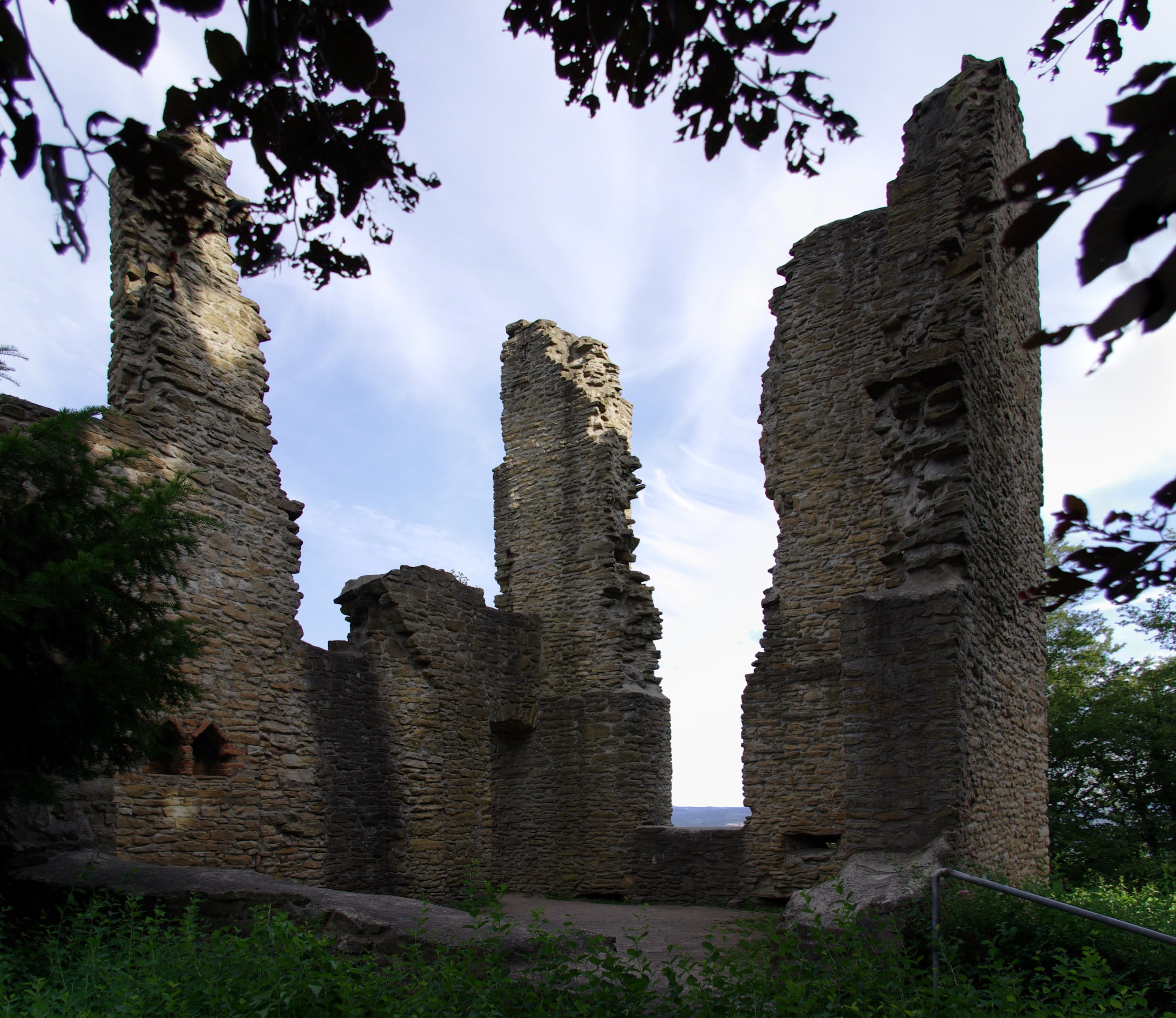
Sigiburg (modern Syburg, a southern district of Dortmund) sits at approximately 51.43°N, 7.49°E, on a steep spur above the confluence of the River Ruhr and the smaller River Lenne, in what is today the Ruhr region of North Rhine-Westphalia, Germany. This is a mid-latitude Central European site, far south of the auroral zone under ordinary geomagnetic conditions — a point directly relevant to the scientific debate over this case, discussed in the Comparative Analysis and Conventional Explanation Candidates sections. No specific date within 776 is given by the annal, only that the vision occurred during the active Saxon siege of the fortress, which the wider military narrative places in the summer months of that year, after Charlemagne had already departed for Italy in response to Hrodgaud of Friuli's revolt. No solar or lunar eclipse is associated with the event. Notably, the mid-770s were a period of genuinely unusual solar-terrestrial activity: tree-ring radiocarbon and ice-core beryllium-10 records independently confirm a massive, well-documented spike in cosmogenic isotopes dated to around 774–775 CE (the "Miyake event"), attributed to an exceptionally large solar particle event or comparable burst of cosmic radiation. Some researchers have proposed a connection between this known solar disturbance and contemporary European "sky sign" reports from the same decade, including this one; the most careful study of that specific question, discussed below, argues the timing does not actually line up and favors an unrelated, purely optical explanation instead.
Observer Credibility & Occupational Profile
Unlike a modern case file, no named individual eyewitness exists for this event at all. The annal itself is anonymous — the Annales regni Francorum were compiled, in stages, by unidentified clerics working in or close to the Carolingian royal court and chapel, almost certainly using earlier notes, oral reports, and administrative records rather than a single author's personal experience of every year recorded. The entry for 776 falls within the annals' earliest compositional block (conventionally dated 741–795), which modern scholarship believes was substantially assembled within a matter of years to a few decades of the events it describes — not written centuries later, but also not a same-day battlefield dispatch. The chronicle's own internal claim to credibility is the phrase rendered in English as "many, some of whom are still alive" (Latin multi, quorum aliqui adhuc supersunt, per the Latin text discussed below) — a formula annalists used elsewhere in comparable Carolingian and Anglo-Saxon sources specifically to signal that living, checkable witnesses existed at the time of writing, functioning as a period equivalent of "this can still be verified." That is a real and interesting evidentiary claim, but it is also unfalsifiable at this distance: no named witness, no transcript of any individual's testimony, and no independent corroborating Frankish or Saxon source survives. The two modern parties whose credentials can be checked are the case's cataloguers and its scientific analysts: Jacques Vallée and Chris Aubeck, whose 2010 catalog Wonders in the Sky lists this case among its pre-modern anomaly reports, and astrophysicists Dagmar and Ralph Neuhäuser of the University of Jena, whose 2015 peer-reviewed paper in Astronomische Nachrichten is the most rigorous scientific treatment of the passage published to date.
Historical Precedents & Archive Matches
"Shields," "armies," and other martial-shaped signs reported in the sky are a real, recurring category in ancient and medieval prodigy and chronicle literature, not a pattern invented by this case. The closest and best-attested classical precedent is the Roman prodigy record for the tense early years of the Second Punic War (218–217 BCE), in which the historian Livy and the prodigy-compiler Julius Obsequens record official state reports of "round shields" (parmae) seen in the sky alongside "phantom ships" — both formally registered as prodigia and answered with expiatory religious rites. Roughly nine centuries after Sigiburg, the German and Swiss "Wunderzeichen" broadsheet tradition documented at length in this site's Nuremberg 1561 and comparable 1566 Basel files shows the same "battle in the sky" vocabulary — crosses, spheres, and combat — recurring in an entirely different print culture. Closer in time to Sigiburg itself, the same decade produced at least two other Frankish and Anglo-Saxon "sky sign" reports examined jointly by the Neuhäuser & Neuhäuser paper discussed below: a "red cross" reported in the Anglo-Saxon Chronicle for the years around 773–776, and a report of "riders on white horses" in the sky, also from the Annales regni Francorum, dated to 773. That three broadly contemporary Latin and Old English chronicle traditions all recorded unusual sky phenomena within a few years of one another is itself a genuine, checkable historical pattern — one that a 2015 astronomical paper treats as evidence of a real shared meteorological event (a period of active solar-halo-favorable weather) rather than three unconnected miracles or three unconnected craft sightings.
Historical Background
The siege of Sigiburg did not happen in isolation; it was one episode in Charlemagne's Saxon Wars, a brutal, on-again-off-again conquest that ran, by conventional reckoning, from 772 to 804. The Saxons of the day were not a single unified kingdom but a loose confederation of tribal groups (Westphalians, Eastphalians, Angrians, and the North Albingians) without a king, occupying roughly the territory of modern Lower Saxony, Westphalia, and parts of North Rhine-Westphalia, and largely still adherents of a pre-Christian Germanic religion centered on sacred groves and pillars such as the Irminsul. Charlemagne opened the war in 772 with a campaign that captured the Saxon fortress of Eresburg and destroyed the Irminsul, a sacred pillar of major religious significance to the Saxons, at a site usually located near modern Obermarsberg. The Sigiburg hillfort itself — a fortified Saxon stronghold built, per the archaeological and historical record summarized in its own Wikipedia entry, around 700 CE on a defensible spur above the confluence of the Ruhr and Lenne rivers — changed hands repeatedly in the war's opening years: captured by the Franks under Charlemagne in 772, retaken by the Saxons (possibly under the resistance leader Widukind) in 774, and recaptured and refortified by the Franks in 775, the same campaign season in which, per the Royal Frankish Annals, Charlemagne also rebuilt Eresburg and pushed Frankish arms as far as the river Weser.
776 was the year the war's momentum briefly, dramatically reversed. With Charlemagne and the bulk of his army occupied in Italy suppressing the revolt of Hrodgaud, duke of Friuli, the Saxons rose again. According to the Royal Frankish Annals, they broke their previous oaths and hostage agreements, forced the Frankish garrison of Eresburg to surrender, and then marched on Sigiburg. Unlike Eresburg's garrison, Sigiburg's defenders refused every demand to surrender. The Saxons, per the annal, "began to prepare for battle and to build siege engines" against the fortress, but — in the chronicle's own explicitly providential framing — "the power of God, as is right, overcame their strength": on the day the Saxons prepared their final assault against the Christian garrison holding out inside the castle, the annal records that "the glory of God was made manifest above the church" within the fortress, in the form of the two red flaming shields discussed at length below. The besieging Saxons, seeing this, broke and fled toward the river Lippe in terror; the Frankish garrison, regaining its nerve, sallied out and inflicted heavy losses on the retreating Saxons. The following year, 777, Charlemagne returned to Saxony in force, held a general assembly at the newly founded royal center of Paderborn, and received the mass submission and baptism of a large number of Saxon leaders and freemen — though the resistance leader Widukind himself was conspicuously absent, having likely fled to Denmark, and the war would resume, repeatedly, for another quarter-century.
Understanding why a supposedly sober government record contains a passage like this requires understanding what the Annales regni Francorum actually were. They were not a private diary or a folk legend collection; they were an official or quasi-official year-by-year record of the Frankish kingdom's affairs, compiled by clerics working in or near the royal court and chapel, and modern scholars including Rosamond McKitterick have argued at length that the annals functioned as a deliberate instrument of dynastic legitimation as much as, or more than, a neutral record — explaining, celebrating, and where necessary reframing the actions of the Carolingian dynasty for both contemporary and future audiences. Carolingian-era annals and hagiography routinely used exactly this kind of providential sign — a miraculous light, a divine army, an angelic apparition — to mark morally significant military outcomes, particularly the defense of an outnumbered Christian garrison against non-Christian attackers, a genre convention this site's Comparative Analysis section situates against several older and later parallels. That the Sigiburg passage combines an accurate, externally verifiable military outcome (a real siege, at a real fortress, in a real year, that a real Frankish garrison did in fact survive) with a maximally dramatic, theologically loaded supernatural flourish is not a contradiction; it is close to the house style of the genre.
Complete Timeline
| Date | Event |
|---|---|
| c. 700 CE | A fortified Saxon hillfort is built at Sigiburg, on a defensible spur above the confluence of the River Ruhr and the River Lenne. |
| 772 | Charlemagne opens the Saxon Wars, capturing the Saxon fortress of Eresburg and destroying the Irminsul, a major Saxon religious site; Sigiburg is also brought under Frankish control in this period. |
| 774 | Saxon forces, possibly under the resistance leader Widukind, retake Sigiburg from its Frankish garrison. |
| 775 | Charlemagne's campaign recaptures and refortifies Syburg, rebuilds Eresburg, and advances Frankish control as far as the river Weser. |
| 776 (spring) | Charlemagne departs for Italy to suppress the revolt of Hrodgaud, duke of Friuli, leaving Saxony without his personal presence. |
| 776 | The Saxons rebel, break their prior oaths, and force the Frankish garrison of Eresburg to surrender. |
| 776 | Saxon forces besiege Sigiburg; unlike Eresburg's garrison, the defenders refuse to surrender and the Saxons begin building siege engines. |
| 776 | Per the Annales regni Francorum, on the day of a planned final Saxon assault, "the glory of God" appears above the fortress church; many witnesses, "some of whom are still alive" at the time of writing, report seeing the likeness of two shields, red and flaming, moving over the church. |
| 776 | The besieging Saxons flee in terror toward the river Lippe; the Frankish garrison sallies out and inflicts heavy losses on the retreating force. |
| 777 | Charlemagne holds a general assembly at the newly established royal center of Paderborn, receiving the mass submission and baptism of a large number of Saxon leaders and freemen; Widukind alone is absent. |
| Late 8th – early 9th c. | The Annales regni Francorum circulate and are copied in at least two distinct textual traditions: an earlier ("unrevised") redaction and a later, more literary "revised" version associated by some scholars, inconclusively, with the circle around Einhard. |
| 1895 | Historian Friedrich Kurze publishes the standard critical Latin edition of the Annales regni Francorum for the Monumenta Germaniae Historica (MGH SS rer. Germ. 6), the base text underlying nearly all modern study and translation of the 776 entry. |
| 1929 | Syburg is incorporated as a district of the city of Dortmund. |
| 1970 / 1972 | Bernhard Walter Scholz, with Barbara Rogers, publishes the first widely used complete modern English translation of the Royal Frankish Annals, Carolingian Chronicles: Royal Frankish Annals and Nithard's Histories (University of Michigan Press). |
| 1987 | Historian P.D. King publishes an independent English translation and sourcebook, Charlemagne: Translated Sources, including the same 776 passage. |
| 2010 | Jacques Vallée and Chris Aubeck catalog the Sigiburg case in Wonders in the Sky, their systematic compendium of pre-modern aerial phenomena reports, drawing it into the modern ufological literature alongside cases such as this site's own Nuremberg 1561 file. |
| 2015 | Astrophysicists Dagmar and Ralph Neuhäuser (University of Jena) publish "Presumable European aurorae in the mid AD 770s were halo displays" in Astronomische Nachrichten, arguing the Sigiburg "shields" and two related 770s reports were optical halo phenomena, not aurorae, and that their timing does not in fact align with the known 774–775 cosmic-ray/radiocarbon spike. |
| Present day | The ruined medieval Hohensyburg castle, built on and near the Sigiburg hillfort site, stands as a public monument and hiking destination in the Dortmund district of Syburg; no trace of the original Saxon/Carolingian fortifications is visible above ground. |
The Primary Source Document
The document at the center of this case is a single annal entry, for the year 776 (DCCLXXVI), within the Annales regni Francorum — the "Royal Frankish Annals," historically also referred to as the Annales Laurissenses maiores ("Greater Lorsch Annals") in older scholarship, though modern historians generally reserve that older label and use "Royal Frankish Annals" or the Latin Annales regni Francorum instead. The annals as a whole cover the years 741 to 829 and survive in two related but distinct textual traditions: an earlier redaction, believed to have been substantially compiled within the Carolingian court's own orbit not long after the events of its earliest sections, and a later "revised" version, edited sometime after Charlemagne's death in 814 and before Einhard's biography of Charlemagne, whose authorship (sometimes attributed to Einhard himself, following 19th-century historian Leopold von Ranke) remains a genuinely open scholarly question. The standard modern critical edition of the Latin text is Friedrich Kurze's 1895 edition for the Monumenta Germaniae Historica (MGH Scriptores rerum Germanicarum, vol. 6); it is this edition that underlies both of the major modern English translations cited throughout this file.
The Text, In the Original Latin
The relevant portion of the 776 entry, as transcribed from the standard Latin text, reads:
"...coeperunt pugnas et machinas praeparare... Sed Dei virtus, sicut iustum est, superavit illorum virtutem, et quadam die, cum bellum praeparassent adversus christianos, qui in ipso castro residebant, apparuit manifeste gloria Dei supra domum ecclesiae... et dicunt vidisse instar duorum scutorum colore rubeo flammantes et agitantes supra ipsam ecclesiam."
Annales regni Francorum, s.a. DCCLXXVI (776), per the standard Latin text as transcribed at la.wikisource.org, reflecting Friedrich Kurze's 1895 MGH critical edition
Rendered plainly: "...they began to prepare for battle and siege engines... But the power of God, as is just, overcame their strength, and on a certain day, when they had prepared for battle against the Christians who were residing in the fortress itself, the glory of God appeared manifestly above the church house... and they say they saw the likeness of two shields, red in colour, flaming and moving to and fro above the church itself."
The Text, In Published Translation
Two independent, professionally published modern English translations of this passage exist, and their wording is close enough to confirm they are translating the same underlying Latin rather than diverging traditions. Historian P.D. King's rendering, in his 1987 sourcebook Charlemagne: Translated Sources, reads:
"...they saw the likeness of two shields, red in colour and flaming and moving to and fro over the church… When the pagans outside saw this sign they were thrown into immediate disorder. Struck by great terror, they began to flee."
P.D. King (trans.), Charlemagne: Translated Sources (Kendal, 1987), as reproduced by De Re Militari (Society for Medieval Military History)
Bernhard Walter Scholz's earlier translation, in the widely used academic edition Carolingian Chronicles: Royal Frankish Annals and Nithard's Histories (University of Michigan Press, 1970/1972), independently renders the same passage as the Saxons seeing "the likeness of two shields red with flame wheeling over the church," with the same account of the besiegers' subsequent panic and flight. The annal entry as a whole is considerably longer than this single miraculous sentence: the bulk of the 776 text is unremarkable military narrative — hostage-breaking, fortress-building, troop movements, a siege, a rout — of exactly the kind found throughout the rest of the annals for uneventful and eventful years alike. The "shields" sentence is a single, compact insertion within an otherwise sober report, which is itself informative: whatever its origin, it was not treated by the annalists as the entry's headline event so much as a providential explanation appended to an ordinary siege narrative.
Witnesses and the Chain of Testimony
The Anonymous Compilers of the Annales regni Francorum
No individual author is named for the annals' earliest section (741–795), within which the 776 entry falls. Modern scholarship treats this section as the product of clerics working in or close to the royal court and chapel, compiling the record in stages rather than as a single continuous eyewitness diary. Nothing in the text claims the compiler personally witnessed the Sigiburg apparition; the phrasing explicitly attributes the sighting to a third party ("they say they saw"), with the compiler's own contribution being the decision to record, and theologically frame, that reported testimony.
The Frankish Garrison and "Many, Some Still Living"
The annal's own internal witness claim is a phrase best rendered "many, some of whom are still alive" at the time of writing — a formula intended to signal that the report could, at least in principle, still be checked against living testimony when the annals were compiled or copied. No individual among this group is named, and no independent record of any specific soldier's or cleric's testimony survives. This is a real and historically interesting rhetorical claim to verifiability, but it cannot itself be independently verified today; it is evidence of how the annalists wanted the passage to be received, not standalone proof of what was actually seen.
The Besieging Saxons
The annal states that it was specifically "the pagans outside" — the besieging Saxon force — who saw the sign and were "thrown into immediate disorder," fleeing toward the river Lippe. As with the Frankish witnesses, no individual Saxon combatant is named or independently quoted; the entire account of the Saxon reaction comes from the Frankish side of a war the annals were written to justify, a point directly relevant to the propagandistic-genre reading discussed in the Mainstream Interpretation section below.
Confirmed Textual & Archival Holdings
A freely accessible transcription of the standard Latin text of the Royal Frankish Annals, including the full 776 entry, reflecting Friedrich Kurze's 1895 MGH critical edition.
PUBLIC DOMAIN (freely accessible)P.D. King's academic translation of the 775–776 annal entries, including the Sigiburg siege and the "two shields" passage, hosted by a peer academic society for medieval military history.
PUBLICLY ACCESSIBLE SCHOLARLY SOURCEThe most rigorous scientific treatment of the Sigiburg passage published to date, analyzing it alongside two related 770s CE sky-sign reports as probable solar halo/mock-sun displays.
PEER-REVIEWED (journal + open preprint)Search Primary & Institutional Archives Directly
Evidence Assessment
Supporting a Genuine Anomalous Phenomenon
- A real, contemporary or near-contemporary Latin chronicle entry exists, describing a specific, dated (to the year), multi-witness event rather than a private vision or a later legend
- The annal explicitly claims the report rests on "many, some of whom are still alive" — a period rhetorical formula for checkable, living testimony
- The event is embedded within an otherwise sober, externally verifiable military narrative (a real siege, at a real fortress, with a real outcome), not presented as a freestanding legend
- Jacques Vallée and Chris Aubeck, cautious and non-sensationalist researchers, judged the case substantial enough to include in their systematic historical catalog
Supporting a Natural / Rhetorical Explanation
- No named eyewitness, and no independent second chronicle tradition, corroborates the "shields" detail specifically
- The compiling institution — the Carolingian royal court — had a documented interest in framing Frankish military outcomes in providential, legitimizing terms, per Rosamond McKitterick's scholarship on the annals' function
- A 2015 peer-reviewed astronomical paper (Neuhäuser & Neuhäuser) models the "shields" description as consistent with an ordinary solar halo/mock-sun display, a known and still-observed optical phenomenon
- The same paper places two closely related 770s CE "sky sign" reports (Anglo-Saxon Chronicle "red cross"; Frankish "riders on white horses") in the same explanatory category, suggesting a shared regional meteorological episode rather than three unconnected miracles or three unconnected craft
- The account's placement — immediately before a planned final Saxon assault on an outnumbered Christian garrison — matches a recognized genre convention of Carolingian and earlier Christian siege narrative, in which providential rescue signs mark morally significant military turning points
Comparative Analysis
The Anglo-Saxon Chronicle "Red Cross" (c. 773–776)
The closest and most rigorously studied parallel comes from the same decade and the same peer-reviewed paper that examined Sigiburg itself. The Anglo-Saxon Chronicle records, for the years around 773 to 776, a "red cross" seen in the sky after sunset. Astrophysicists Dagmar and Ralph Neuhäuser, in their 2015 Astronomische Nachrichten paper, argue this was very likely a combination of a horizontal light arc and a vertical light pillar — a real, still-documented halo phenomenon that can appear cross-shaped around a low sun or moon under the right ice-crystal cloud conditions. That an English chronicle and a Frankish chronicle both recorded unusual sky signs within a few years of each other, on opposite sides of the Channel and in two different chronicle traditions, is a genuine, checkable historical fact — and it is precisely the kind of pattern the Neuhäuser paper uses to argue for a real, shared regional meteorological trigger rather than independent miracles or independent craft.
"Riders on White Horses" (Annales regni Francorum, 773)
Three years before the Sigiburg entry, the same Frankish annal tradition records another unusual sky report: "riders on white horses" seen in 773, again examined by Neuhäuser & Neuhäuser alongside the Sigiburg passage. The paper interprets this, too, as most likely a pair of mock suns (parhelia) misread through a martial, apocalyptic visual vocabulary already available to Frankish observers and annalists — the same vocabulary of divine armies and portents found in much older biblical and classical prodigy literature, discussed below.
Livy's Roman Shield Prodigies (218–217 BCE)
Nearly a millennium before Sigiburg, the Roman historian Livy and the prodigy-compiler Julius Obsequens record that, during the anxious early years of the Second Punic War, Roman witnesses reported "phantom ships" gleaming in the winter sky and "round shields" (parmae) seen over central Italy — both officially registered by the Roman state as prodigia, divine warning-signs requiring expiatory religious rites. The vocabulary is strikingly close to Sigiburg's "likeness of two shields": in both cases, an ambiguous sky phenomenon is described using the most readily available martial visual reference — the shield — by a culture whose armies fought with exactly that equipment every day. This is one of the clearest illustrations, across this site's Ancient Records files, of Vallée's broader argument that "shields," "crosses," and "armies" in the sky recur across widely separated eras and cultures because they are a shared, culturally available descriptive vocabulary for the numinous, not because the same physical craft or phenomenon literally visited Republican Rome and Carolingian Westphalia alike.
The Nuremberg (1561) and Basel (1566) "Wonder-Sign" Broadsheets
This site's own Nuremberg 1561 file documents a much later but structurally similar pattern: a "battle in the sky" involving crosses, spheres, and combat, printed as a commercial Wunderzeichen broadsheet and later argued by art historians and meteorologists to be a dramatized rendering of a genuine solar halo display. The Sigiburg case and the Nuremberg case share a key structural feature — a real, checkable atmospheric-optical candidate explanation sitting underneath a text whose framing (providential miracle in one case, commercial "wonder-sign" news product in the other) was never primarily concerned with precise physical description. The eight-hundred-year gap between the two cases, and the near-identical underlying optical physics proposed for both, is itself informative: parhelia and related halo phenomena have been misdescribed as martial or supernatural sky-battles by European observers repeatedly, across very different centuries, religious contexts, and media technologies.
Material Analysis: The Manuscript Evidence
There is no physical trace evidence of any kind associated with the reported phenomenon itself — no metal, no crater, no recovered fragment. What exists, and what this file treats as the actual evidentiary record, is the manuscript and editorial history of the text describing it. The Annales regni Francorum survive through a medieval copying tradition rather than a single original autograph; the standard modern scholarly reference is Friedrich Kurze's 1895 critical edition for the Monumenta Germaniae Historica, which collates the surviving manuscript witnesses and remains the base text for virtually all serious modern study, including both English translations (Scholz & Rogers, 1970/1972; King, 1987) quoted in this file. This site independently traced the 776 "shields" passage to a transcription of that standard Latin text and confirmed that its wording is consistent, in substance, across both major modern English translations, which is the strongest form of independent cross-checking available for a text of this kind short of a firsthand manuscript collation.
One honest limit on this file's verification should be stated plainly. Scholars distinguish between an earlier ("unrevised") redaction of the annals and a later "revised" version, edited after 814 and in places smoothing over or reframing earlier entries (the clearest documented example being the annals' treatment of the 782 Frankish defeat at the Süntel, softened in revision). This site was able to confirm, via the standard printed Latin edition and via two independent modern scholarly translations, that the Sigiburg "shields" passage is part of the annals' standard received text for 776 — but did not undertake an independent word-by-word manuscript collation to establish with certainty whether the passage's exact wording is identical across the earlier and later redactions, or whether it was present in that form from the annals' earliest compiled version. That degree of textual-critical certainty would require direct comparison of the surviving manuscript witnesses (or a specialist's published collation of them) beyond what open-web research can responsibly confirm. What can be stated with confidence is that the passage is not a modern invention, a misattributed source, or a claim traceable only to secondary ufological literature: it is part of the standard, critically edited, professionally translated text of a genuine 8th/9th-century Carolingian court chronicle, cited identically by medievalist critics of the popular "UFO" framing (see the gotmedieval.com and gothic-medievalist-blog sources below) and by ufological popularizers alike — the two camps disagree about what the passage means, not about whether it exists.
A second, separate point of honest caution concerns the popular illustrations that frequently accompany this story online. A widely circulated internet image purporting to show a 12th-century illuminated manuscript depicting "two flying shields" over Sigiburg has been identified by medievalist bloggers, including the academic medieval-studies blog Got Medieval, as a modern fabrication: the actual medieval manuscript tradition of the annals (surviving via, among others, the Lorsch Codex) contains no such illustration, and the viral image appears to be a digitally altered composite of unrelated medieval artwork (reportedly a Adoration of the Magi scene and a separate image of a mounted knight) with the Star of Bethlehem repainted to resemble a flying disc. This is a genuinely important distinction for a site with this one's editorial standards: the underlying text is real and verifiable; a specific popular image attached to it online is not, and should not be treated as evidence of anything.
The Paleocontact / Ancient-UFO Interpretation
Within ufological literature, the Sigiburg passage circulates as one of the oldest datable "UFO battle" or "flying shields" reports on record, frequently grouped with the Nuremberg 1561 broadsheet and the Tyre "flying shields" tradition associated with Alexander the Great as evidence of a persistent, cross-cultural pattern of shield-shaped or disc-shaped aerial phenomena. Jacques Vallée and Chris Aubeck's 2010 catalog Wonders in the Sky includes the case within a deliberately broad, non-committal compendium spanning antiquity to the 19th century, treating it as one data point worth preserving and cross-referencing rather than adjudicating outright — a considerably more cautious posture than most "ancient aliens" treatments of the same passage. Less careful popular sources go further, presenting the annal's "two shields, red in colour and flaming" as a plain-language description of two hovering, glowing craft engaged in active defense of the fortress, and sometimes pair the claim with the fabricated illuminated-manuscript image discussed in the Material Analysis section above — a fabrication that, once identified, should weigh against, not for, the paleocontact reading, since a genuine ancient account should not need an invented illustration to make its case.
It is worth being precise about what the primary text itself does and does not claim. The annal does not describe controlled flight, maneuvering, landing, occupants, or any device-like structure beyond the bare comparison to a shield's shape and color; it explicitly frames the event as an act of God ("the glory of God was made manifest"), not as an encounter with an unknown class of physical object. Reading the passage as a plausible ancient description of an alien or otherwise "real" flying craft requires treating a single Christian providential-sign vocabulary word ("shields") as literal physical testimony while discarding the passage's own, equally explicit theological framing as literary or superstitious embellishment — a selective reading with no more warrant than reading the whole passage literally, including its claim of direct divine agency.
The Mainstream Historical & Scientific Interpretation
Two converging, mutually compatible lines of mainstream analysis address this case: one historical, concerning why the annalists included the detail at all, and one atmospheric-scientific, concerning what the underlying sky phenomenon may actually have been.
The Historical Case: Providential Siege-Relief as Genre Convention
Medieval historians, including Rosamond McKitterick in her study Charlemagne: The Formation of a European Identity, have argued at length that the Annales regni Francorum functioned as a tool of dynastic narrative-building as much as neutral record-keeping, selectively shaping how Frankish military fortunes were remembered and legitimized. A besieged Christian garrison saved from an overwhelming pagan assault by a direct, visible sign of divine favor is a recognizable and recurring motif in Carolingian and broader early medieval Christian writing about warfare against non-Christian opponents — the same broad narrative shape (a righteous but outnumbered defense, a miraculous intervention, a routed attacker) recurs across medieval hagiography and chronicle literature well beyond this single case. On this reading, the "shields" detail is best understood as the annalists' chosen vocabulary for signaling unambiguous divine endorsement of the Frankish cause at a real, low point in the 776 campaign season — not a technical description competing for accuracy with a modern radar log.
The Scientific Case: Halo Displays, Not Aurorae
The most direct scientific engagement with this specific passage is the 2015 Astronomische Nachrichten paper by Dagmar and Ralph Neuhäuser, prompted by a broader scientific debate over whether several mid-770s European "sky sign" reports recorded genuine auroral activity possibly linked to the well-documented 774–775 cosmic-ray/radiocarbon spike (the "Miyake event," confirmed independently through tree-ring carbon-14 and ice-core beryllium-10 data, and understood as evidence of an exceptionally large solar particle event or comparable burst of cosmic radiation). Examining the Sigiburg "shields," the Anglo-Saxon Chronicle "red cross," and the Frankish "riders on white horses" together, the Neuhäuser paper argues that all three are better explained as ordinary solar halo displays — mock suns (parhelia) and light pillars produced by sunlight refracting through horizontally oriented ice crystals in high cirrus cloud, the same well-understood optical mechanism proposed for this site's Nuremberg 1561 case — rather than as genuine auroral activity. Critically, the paper also argues the chronology does not actually support a direct link to the Miyake event itself: the radiocarbon spike is dated to the spring of 774, while these three sky reports date to 773 and 776, a mismatch the authors treat as evidence against, rather than for, a shared extreme-space-weather origin. This is an important honesty point for this file: the genuinely fascinating, real scientific fact of the 774–775 cosmogenic isotope spike does not, on the best current published analysis, actually explain the Sigiburg sighting, however tempting the coincidence of decades looks at first glance.
Five Observables Assessment
The Five Observables framework, developed decades later by former AATIP director Luis Elizondo to classify modern UAP performance characteristics that exceed known technology, is included here for structural consistency with the rest of The Omni Ledger's case files, but it does not meaningfully apply to a pre-instrumentation, single-sentence textual source. Every category below is necessarily assessed as not applicable or, at most, weakly speculative, based solely on the annal's own narrative description rather than any measured performance data.
Assessment: Four of the five categories cannot be assessed at all from a single-sentence text source with no distance, speed, or altitude data; they are marked N/A rather than "absent" in the sense of having been ruled out. Only "Low Observability" receives even a speculative mark, and only because the objects are described "moving to and fro" without a continuously tracked flight path — a description equally consistent with a shifting halo/mock-sun display as with any exotic craft. As with this site's other pre-modern files, the Five Observables framework is simply the wrong instrument for a document of this kind, and its inclusion here should not be read as suggesting genuine performance evidence exists.
Conventional Explanation Candidates
Because this is a pre-instrumentation documentary case rather than a physical-evidence case, its Conventional Explanation Candidates (CEC) evaluate the reported phenomenon and the reporting process together. Four candidates are assessed below, each with an explicit plausibility rating.
1. Solar Halo Display (Parhelia / Mock Suns / Light Pillar)
The leading scientific explanation, per the 2015 Neuhäuser & Neuhäuser peer-reviewed analysis. Mock suns form when sunlight refracts through horizontally oriented, plate-shaped hexagonal ice crystals in high cirrus cloud, producing bright, sometimes reddish patches to either side of the sun; combined with a vertical light pillar or horizontal arc, such displays can plausibly be described, by observers without the modern vocabulary of atmospheric optics, as two round, glowing, reddish objects "moving to and fro" in the sky. This candidate is strengthened by its direct application, in the same peer-reviewed paper, to two other closely contemporary Frankish and Anglo-Saxon sky-sign reports from the same decade, suggesting a real, shared regional meteorological episode rather than three unconnected miracles.
Plausibility Rating: LIKELY (as the underlying physical stimulus)
2. Carolingian Providential Siege-Narrative Convention
This candidate does not explain the sky phenomenon itself so much as it explains the text: the Royal Frankish Annals' documented function as an instrument of dynastic legitimation, the passage's placement at the precise narrative moment of maximum peril for the Frankish garrison, and its explicit theological framing ("the glory of God was made manifest") together make a strong case that whatever was actually seen in the sky was recorded, shaped, and possibly embellished specifically because it usefully explained a real Frankish victory as divine favor. This is not a claim that the annalists fabricated the sighting from nothing, only that a genuinely ambiguous natural event would have been an attractive, ready-made vehicle for exactly the kind of providential narrative the annals otherwise construct.
Plausibility Rating: HIGHLY PLAUSIBLE (best explains why the detail was recorded and framed as it was)
3. Extreme Space Weather Linked to the 774–775 Cosmic-Ray Event
Given the genuinely remarkable, independently confirmed 774–775 spike in atmospheric radiocarbon and ice-core beryllium-10 (the Miyake event), some researchers have floated a connection between that known burst of solar/cosmic activity and contemporary European "sky sign" reports, including this one. Sigiburg's mid-latitude location (~51.4°N) is not a typical auroral latitude under ordinary conditions, but exceptionally large geomagnetic storms have historically pushed visible aurorae much further from the poles than usual. However, the field's most direct, peer-reviewed treatment of this exact question (Neuhäuser & Neuhäuser 2015) argues against the connection on both physical grounds (the reported displays better match halo optics than auroral morphology) and chronological grounds (the radiocarbon spike is dated to spring 774, roughly one to two years before the 776 Sigiburg report). This candidate is included for completeness and because the underlying astronomical event is entirely real, but it should not be overstated as an explanation for this specific case.
Plausibility Rating: POSSIBLE BUT NOT FAVORED (real underlying astronomical event; timing and morphology argue against a direct link, per the only peer-reviewed study to test it)
4. Genuine Anomalous / Paleocontact Phenomenon
Included for completeness, per this site's standard framework. No positive physical or corroborating documentary evidence supports a literal, non-natural aerial phenomenon over any of the three candidates above; the case for it rests almost entirely on the passage's admittedly vivid, mechanical-sounding vocabulary, on its adoption by paleocontact-oriented popularizers, and, in its most-circulated online form, on an image now identified as a modern fabrication rather than any genuine medieval illustration.
Plausibility Rating: SPECULATIVE / UNVERIFIABLE
Why "Disputed"
The Sigiburg Castle apparition receives a DISPUTED rather than "credible" or "debunked" classification for reasons that differ somewhat from most cases in this site's Ancient Records series, and that difference is worth stating plainly. This was flagged internally as the hardest of this site's ancient cases to verify, on the expectation that the "flaming shields" detail would likely trace only to late, unreliable, or ufological secondary literature. That expectation turned out to be wrong, and the honest finding is the opposite of what was anticipated: the passage traces cleanly to the actual, standard, critically edited Latin text of the Annales regni Francorum for the year 776, confirmed independently through two professionally published modern English translations (Scholz & Rogers, 1970/1972; King, 1987) that agree in substance. The underlying siege of Sigiburg, the broader Saxon Wars context, and the Frankish garrison's survival are not disputed as history at all. What remains genuinely open is the single interpretive question sitting on top of that solid documentary base: whether "the likeness of two shields, red in colour and flaming" describes a real unexplained aerial phenomenon, an ordinary solar halo display filtered through the annalists' own providential vocabulary, or some combination of a genuine ambiguous sky event and a court chronicle's documented interest in dramatizing Frankish victories as divine favor. A 2015 peer-reviewed astronomical paper favors the halo-display reading and explicitly argues against the more dramatic aurora/cosmic-storm connection some researchers have proposed; no comparable peer-reviewed study argues for a literal non-natural phenomenon. DISPUTED reflects that this is a real, well-documented, still-debated historical claim resting on a genuine primary source — not a fabrication, not an unverifiable rumor, and not a settled case — while making clear that the weight of specialist opinion leans toward the natural-optical-phenomenon-plus-providential-framing explanation over any literal paleocontact reading.
Related Entries
Further Reading — Recommended Literature
Wonders in the Sky: Unexplained Aerial Objects from Antiquity to Modern Times
A systematic, deliberately non-committal catalog of over 500 historical anomaly reports, including the Sigiburg case, cross-referenced and sourced from original documents.
Carolingian Chronicles: Royal Frankish Annals and Nithard's Histories
The standard modern academic English translation of the Royal Frankish Annals, including the full 776 Sigiburg entry, with scholarly introduction and notes.
Charlemagne: Father of a Continent
A leading modern academic biography of Charlemagne, situating the Saxon Wars and the 776 Sigiburg campaign within his broader reign.
Charlemagne: The Formation of a European Identity
A landmark academic study of how the Royal Frankish Annals and related texts constructed Carolingian dynastic legitimacy — essential context for reading the Sigiburg passage as a genre product, not a neutral report.
The Continental Saxons from the Migration Period to the Tenth Century
An academic archaeological and ethnographic study of the Saxon peoples Charlemagne's armies fought at Sigiburg and Eresburg — the other side of the 776 siege, largely absent from the Frankish annal itself.
Essential Viewing

The Saxon Wars Explained: Charlemagne's Brutal 30-Year Conquest
TimelessTreasury — a historical-education overview of the full 772–804 Saxon Wars, including the 775–776 Eresburg/Sigiburg campaign this file covers in detail.
Charlemagne, Part 3: The Saxon Wars
Quill & Ink History — a narrative history channel's dedicated episode on the Saxon Wars, covering the same 770s campaigns and their sources.
Sources
- "Annales regni Francorum," full Latin text, s.a. DCCLXXVI. Latin Wikisource. la.wikisource.org
- King, P.D. (trans.) "The Years 775 to 776 from the Annals of the Kingdom of the Franks," from Charlemagne: Translated Sources (Kendal, 1987). De Re Militari. deremilitari.org
- Scholz, Bernhard Walter, with Barbara Rogers (trans.). Carolingian Chronicles: Royal Frankish Annals and Nithard's Histories. University of Michigan Press, 1970/1972.
- "Royal Frankish Annals." Wikipedia. en.wikipedia.org
- "Sigiburg." Wikipedia. en.wikipedia.org
- "Saxon Wars." Wikipedia. en.wikipedia.org
- "Annales Laurissenses minores." Wikipedia. en.wikipedia.org
- "Council of Paderborn." Wikipedia. en.wikipedia.org
- Neuhäuser, D. & Neuhäuser, R. "'A red cross appeared in the sky' and other celestial signs: Presumable European aurorae in the mid AD 770s were halo displays." Astronomische Nachrichten, 336(9), 2015. onlinelibrary.wiley.com
- Neuhäuser, D. & Neuhäuser, R. Open preprint of the above. arXiv:1508.07955. arxiv.org
- "774–775 carbon-14 spike." Wikipedia. en.wikipedia.org
- "Miyake event." Wikipedia. en.wikipedia.org
- "(Fake) Medieval UFO Sighting (Mmm… [Not Really] Marginalia #48)." Got Medieval. gotmedieval.com
- Deliyannis. "UFOs in the past? About two fakes spreading around the Internet." Chronicon Mirabilium. deliyannis.blogspot.com
- "776 AD, Two Red Glowing Shields in the Sky: Charlemagne and Early UFOs." Society for UAP Studies. societyforuapstudies.org
- "The Odd Saxon Siege of Syburg." The Historian's Hut. thehistorianshut.com
- "Charlemagne: Frank Encounters with UFOs." EsoterX. esoterx.com
- McKitterick, Rosamond. Charlemagne: The Formation of a European Identity. Cambridge University Press, 2008.
- Barbero, Alessandro. Charlemagne: Father of a Continent. University of California Press, 2004 (English trans.).
- Titus Livius (Livy), The History of Rome, Book 21, Chapter 62 (Roman shield/phantom-fleet prodigies, 218 BCE), Perseus Digital Library. perseus.tufts.edu
- "File: Dortmund-Syburg Ruine Hohensyburg 001.JPG." Wikimedia Commons (public domain, photo by Janericloebe, 2010). commons.wikimedia.org
- "Category: Hohensyburg." Wikimedia Commons. commons.wikimedia.org
- Vallée, Jacques & Aubeck, Chris. Wonders in the Sky: Unexplained Aerial Objects from Antiquity to Modern Times. Tarcher/Penguin, 2010.
- "Jacques Vallée." The Omni Ledger Key Figures. key-figures.html
See something inaccurate? Have additional information, sources, or a manuscript collation?
Suggest an Edit →Last Updated: August 2026