
Betty & Barney Hill Abduction
The first widely publicized UAP abduction case in modern history, backed by detailed psychiatric regression and radar logs.
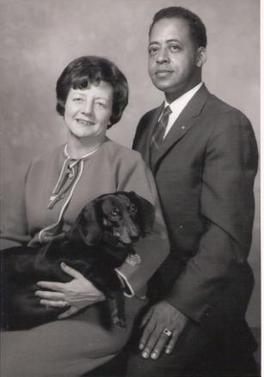
Pictured: Betty and Barney Hill in a formal studio portrait — the real witnesses at the center of the September 1961 case. This is not a photograph of the abduction itself, which by its nature left no photographic record; the case rests on the Hills' own testimony, Betty's hypnosis-derived star map, and Dr. Benjamin Simon's recorded sessions, not on any photographic evidence of the encounter.
Theoretical Alignment
The Betty and Barney Hill case provides some of the strongest alignment with the Extraterrestrial Hypothesis in early American UFO history, primarily because the case introduced elements — the physical examination, the star map, the communicating entities, the missing time — that were not part of the public UFO mythology in 1961. Betty Hill had no knowledge of the Zeta Reticuli star system when she drew her star map under hypnosis; that system would not be catalogued in a form accessible to the public until later. The fact that her map was subsequently matched to an actual stellar configuration by astronomer Marjorie Fish in 1969 is one of the most intriguing data points in the case. The Psycho-Social Hypothesis holds that the Hills’ experience was real as a psychological event but generated by cultural conditioning and hypnotic confabulation rather than physical contact with non-human beings.
Complete Timeline
| Date | Event |
|---|---|
| Sept 19, 1961 | 10:30 PM: The Hills first spot the moving light near Lancaster, NH, while driving south. |
| Sept 20, 1961 | 11:30 PM – 2:00 AM: Barney observes the craft near Indian Head. They hear buzzing sounds, experience missing time, and arrive home in Portsmouth at dawn. |
| Sept 21, 1961 | Betty reports the sighting to Pease AFB. The Air Force investigates and logs the sighting, noting corroborating radar targets detected at Pease. |
| Oct 1961 | Astronomer Walter Webb conducts the first detailed investigation for NICAP, concluding the witnesses are sane, intelligent, and highly credible. |
| Jan–June 1964 | Dr. Benjamin Simon conducts regressive hypnosis sessions, revealing the detailed abduction accounts and the star map drawings. |
| Oct 1965 | The Boston Traveler leaks their story, launching the Hill case into international headlines. |
The Narrative
On the night of September 19, 1961, Betty Hill, a social worker, and her husband Barney Hill, a postal clerk, were driving south along U.S. Route 3 through the White Mountains of New Hampshire. Returning from a vacation in Niagara Falls, they noticed a bright point of light in the sky that appeared to move erratically, eventually descending towards their vehicle. Near Indian Head, the object hovered just above their 1957 Chevrolet Bel Air.
Barney stepped out of the car with binoculars. He reported seeing a massive, silent, bi-convex disc with a double row of windows. Through these windows, he observed several humanoid figures in dark uniforms looking back at him. Fearing they were about to be captured, Barney ran back to the car and they fled at high speed. Shortly after, they heard a series of rhythmic buzzing sounds vibrating the car trunk, followed by a second set of buzzes. Upon arriving home in Portsmouth, they realized they had experienced over two hours of missing time, and their watches had stopped working.
Psychiatric Hypnosis and the Star Map
Suffering from severe anxiety and recurring nightmares, the Hills sought treatment from prominent Boston psychiatrist and neurologist Dr. Benjamin Simon in early 1964. Under regressive hypnosis, both Betty and Barney independently recounted being taken aboard the craft by small grey-skinned humanoids, separated, and subjected to invasive medical examinations.
During one session, Betty recalled being shown a three-dimensional star map by the craft's leader. Under hypnosis, she drew this map from memory. In 1966, schoolteacher and amateur astronomer Marjorie Fish began analyzing the map, constructing 3D models of local stars. Fish concluded that the map depicted the double star system Zeta Reticuli, located 39 light-years from Earth, as the origin of the visitors, with the lines representing trade or exploration routes.
Key Figures
Betty & Barney Hill
A highly respected, integrated couple active in the civil rights movement. Their absolute sincerity, intelligence, and reluctance to seek publicity lent early cases extraordinary institutional credibility. Barney passed away in 1969; Betty spent the rest of her life researching the phenomenon.
Dr. Benjamin Simon
The medical professional who treated the Hills. Dr. Simon believed the Hills were completely honest in their beliefs, but concluded that the abduction narrative was a shared psychological construct (folie à deux) originating from Betty's post-sighting nightmares.
Marjorie Fish
Spent years building physical 3D stellar models to map Betty Hill's drawing. Her Zeta Reticuli thesis was published in Astronomy magazine in 1974, initiating a decades-long debate in astronomy circles, including a formal rebuttal by Carl Sagan.
Evidence & Debate
Supporting Points & Corroboration
- Pease AFB Radar: Radar logs at Pease AFB confirmed that anomalous, fast-moving targets were tracked on radar in the area during the same hours the Hills reported their encounter.
- Hypnosis Audio: Dr. Simon's audio recordings capture intense, genuine panic and physical distress from Barney while describing the abduction, making fabrication highly unlikely.
- Physical Marks: Barney's shoes were scuffed, the car trunk had mysterious magnetic circles that caused compass needles to spin, and Betty's dress was torn and covered in a pinkish powder that was never identified.
- Stanton Friedman Verification: The nuclear physicist verified the couples' credibility and Marjorie Fish's stellar alignments, defending the case globally.
Contradicting Points & Skeptics
- Hypnosis Construct: Critics argue that regressive hypnosis is notorious for generating confabulated memories, and that Betty's nightmares, discussed prior to hypnosis, contaminated their collective recall.
- Outer Limits Influence: Barney's description of the alien eyes closely matched an alien entity featured in an episode of The Outer Limits ("The Bellero Shield") that aired just days before his hypnosis session.
- Star Map Coincidence: Astronomers argue that given enough stars, one can find a pattern matching almost any random drawing, rendering the Zeta Reticuli alignment a statistical coincidence.
The Hypnosis Sessions and Dr. Simon’s Assessment
The hypnosis sessions conducted by Dr. Benjamin Simon between January and June 1964 are the most extensively analyzed component of the Betty and Barney Hill case. Dr. Simon, a Boston-based psychiatrist and neurologist who had specialized in hypnosis-assisted therapy for combat trauma during World War II, was not a UFO researcher and had no prior experience with abduction claims. He was referred to the Hills by their physician, Dr. Patrick Quirke, after the Hills sought help understanding the “missing time” they had experienced and the persistent anxiety and nightmare episodes they had been experiencing since September 1961.
Simon’s methodology was careful and professionally rigorous. He conducted the sessions over six months, hypnotizing Betty and Barney separately so that their accounts could not contaminate each other during the regression. He asked open-ended questions rather than leading questions, allowing the narrative to emerge from the subject rather than being directed by the interviewer. He also hypnotically instructed both subjects that they would not remember the content of their sessions until he explicitly removed the suggestion, ensuring that neither Betty nor Barney could consciously compare their accounts between sessions.
The content of the sessions — as transcribed and later published by John Fuller with Simon’s cooperation — revealed separate but largely consistent accounts. Both Betty and Barney described being taken aboard a craft, examined by beings with large wrap-around eyes and grayish skin, and then returned to their car without memory of the encounter. The specific medical procedures described independently by Betty and Barney were consistent with each other: Betty described a long needle inserted into her navel (a procedure that her examining physician said resembled amniocentesis, a technique not yet in clinical use in 1961), while Barney described a cup-like device applied to his genital area. The consistency of these independent accounts, produced under conditions of strict separation, was one of the features that most impressed independent researchers.
Dr. Simon’s own assessment was characteristically cautious. He concluded that the Hills genuinely believed their account, that their reports were not the product of deliberate fabrication or attention-seeking, and that the hypnosis sessions had produced material consistent with genuine psychological processing of a traumatic experience. However, he personally favored the hypothesis that Betty’s vivid dreams — which she had recorded in detail in the days following the September 1961 encounter and before the hypnosis sessions — had provided a template that Barney’s hypnotic regression had then absorbed and elaborated. Simon’s “dream contamination” hypothesis is the most psychologically sophisticated skeptical explanation of the case, but it faces a significant empirical challenge: Barney’s hypnotic account includes specific details (the cup-like genital device, the location of the examination table, the behavior of the beings during the examination) that are not present in Betty’s dream journal entries and that Barney therefore could not have derived from Betty’s dreams.
Zeta Reticuli and the Star Map
The star map drawn by Betty Hill during her hypnosis sessions in 1964 — and her description of the map as showing trade routes and expedition routes between star systems as explained to her by the craft’s navigator — became one of the most analyzed astronomical claims in UFO history when Ohio schoolteacher and amateur astronomer Marjorie Fish began studying it in 1969. Fish constructed a three-dimensional model of all star systems within 55 light-years of Earth using data from the Wilhelm Gliese Catalog of Nearby Stars and then examined the model from multiple angles, searching for a configuration that matched Betty Hill’s sketch.
Fish’s identification of a match — a perspective from the Zeta Reticuli binary star system that produced a configuration matching Hill’s sketch — was published in the astronomical journal Astronomy in December 1974. The article triggered an immediate scientific debate. Dr. David Saunders, a University of Colorado statistician who had been a member of the Condon Committee, analyzed the probability of Fish’s match occurring by chance given the number of stars in the region and the flexibility of the matching criteria. Saunders concluded that the match was statistically significant and could not be attributed to chance at any reasonable confidence level. The publication of Saunders’ analysis in a subsequent issue of Astronomy prompted a formal rebuttal from Carl Sagan and Steven Soter, then both at Cornell, who argued that Fish's freedom to choose the viewpoint and which connecting lines to draw made the matching criteria too flexible to be statistically meaningful — a match that was, in their view, an arbitrary pattern effectively guaranteed by the number of stars available to choose from.
The Zeta Reticuli system consists of two stars — Zeta 1 Reticuli and Zeta 2 Reticuli — approximately 39 light-years from Earth, located in the southern hemisphere constellation Reticulum. Both stars are G-type main sequence stars similar to our Sun. In 1996, astronomers detected a possible circumstellar debris disk around Zeta 2 Reticuli using the Infrared Space Observatory, suggesting a planetary system. No confirmed planets have been identified in either system using modern detection methods, but the discovery of the debris disk was widely noted in the popular press and among UAP researchers as circumstantially consistent with the possibility of a planetary system around the star that Betty Hill’s map seemed to indicate as the craft’s point of origin.
The Cultural Template and the Abduction Phenomenon
The Betty and Barney Hill case established a narrative template for alien abduction that has been both a strength and a vulnerability for the subsequent research field. The strength is that it provided a detailed, well-documented first account against which subsequent reports could be compared. The vulnerability is that the widespread cultural dissemination of the Hill story — through John Fuller’s book, the NBC television movie, and decades of media coverage — created a pool of detailed narrative content that could contaminate the accounts of later witnesses, whether through direct exposure or through cultural osmosis. This contamination problem — how do you distinguish a genuine independent account from one that has been shaped by prior exposure to the Hill story — is the central methodological challenge of abduction research.
Dr. John Mack, the Harvard psychiatry professor who investigated 200 abduction experiencers and published his findings in Abduction: Human Encounters with Aliens (1994), grappled extensively with the contamination problem. Mack found that his subjects’ accounts contained specific details that were not present in widely available public descriptions of the abduction phenomenon — details that were consistent across his subjects but that could not have been derived from the public narrative. He concluded that while cultural contamination was a real concern, it was insufficient to explain the specificity and consistency of what he documented. Mack was subsequently subjected to a formal investigation by Harvard Medical School, which ultimately found that his research was within the bounds of acceptable academic investigation while expressing concern about his interpretive framework. The Harvard investigation of Mack is itself a sociological phenomenon: a major academic institution formally reviewing whether a faculty member’s UAP research was professionally appropriate.
The Hill case’s influence on science fiction is also extensive. The “grey alien” visual archetype — large head, large wrap-around eyes, small nose and mouth, grey or pale skin, diminutive body — derives primarily from Barney Hill’s hypnotic descriptions, as rendered in artist sketches that accompanied early media coverage of the case. This visual template, now globally recognized, has been reproduced in countless science fiction films, television programs, toys, and commercial products. The cultural embedding of the grey alien archetype was so complete by the 1980s that researchers had to grapple with the question of whether later abduction witnesses were describing genuine experiences or were constructing their narratives from this culturally saturated visual vocabulary. Betty Hill herself was critical of the grey alien archetype’s adoption in popular culture, arguing that it had trivialized and distorted the seriousness of what she and Barney had experienced.
The NICAP Investigation
The National Investigations Committee on Aerial Phenomena (NICAP), at the time the most credible civilian UFO research organization in the United States, received the Hills’ initial report in October 1961, just weeks after the incident. NICAP investigator Walter Webb, a staff member at the Hayden Planetarium in Boston and an experienced astronomer and sky observer, conducted the initial interview with Betty and Barney on October 21, 1961. Webb’s detailed report, filed with NICAP headquarters in Washington and retained in the organization’s archives, is the earliest contemporaneous documentation of the Hills’ account. Webb found the Hills to be sincere, consistent, and deeply disturbed by their experience. He noted the unusual marks on the car, Barney’s uncharacteristic anxiety, and Betty’s vivid recollections.
Webb’s NICAP report was reviewed by Major Donald Keyhoe, NICAP’s director and a former Marine Corps aviation officer who had written the best-selling Flying Saucers Are Real (1950). Keyhoe considered the Hill case significant enough to bring to the attention of the Air Force’s Project Blue Book. Blue Book opened a file on the case but ultimately classified it as “Insufficient Data” rather than “Unknown” — a classification that sidestepped the question of what had occurred without reaching a determination. The Air Force’s reluctance to engage more seriously with the Hill case is consistent with its posture toward close encounter reports generally during the Blue Book era, a posture later described by Dr. J. Allen Hynek as deliberately designed to minimize the appearance of anomaly.
The Legacy for Abduction Research
The scientific study of alien abduction reports has developed significantly since the Betty and Barney Hill case established the field’s foundational narrative. Dr. John Mack’s 1994 study of 200 abduction experiencers at Harvard represented the most systematic scientific engagement with the phenomenon, applying clinical psychiatric methodology to a population that conventional psychology had largely ignored. Mack found that his subjects were psychologically normal by standard diagnostic criteria — they did not exhibit the delusion patterns associated with psychosis, the suggestibility associated with fantasy-prone personality, or the trauma signatures associated with false memory syndrome. His conclusion that the abduction experience represented a genuinely anomalous phenomenon that current science could not adequately explain led to his formal investigation by Harvard Medical School, which ultimately found that his research was within the bounds of acceptable academic inquiry while expressing concern about his interpretive conclusions.
The Harvard Medical School investigation of Mack was itself an extraordinary academic event: a major research university formally reviewing whether a faculty member’s research into UAP-associated phenomena was professionally appropriate. The investigation, initiated by then-Dean Daniel Tosteson, spent more than a year examining Mack’s methodology, his patient relationships, and his interpretive framework. The investigation produced a carefully worded conclusion that stopped short of censure while clearly expressing the institution’s discomfort with Mack’s willingness to consider literal explanations for the abduction experience. Mack died in a traffic accident in London in 2004, leaving behind an extraordinary body of work that included two books, a research foundation, and a paradigm-challenging challenge to conventional scientific and psychiatric thinking about the limits of human experience.
The development of the Registry for Exceptional Human Experiences, founded by researchers including Jeffrey Kripal, represents a continuation of the Mack tradition — the serious academic study of experiences that conventional frameworks cannot adequately explain. The Betty and Barney Hill case is always the first case reviewed in any survey of the abduction literature, because it provides the historical baseline against which all subsequent reports are measured. Whatever the ultimate explanation for what the Hills experienced on September 19–20, 1961, their decision to report their experience and to cooperate with investigators, researchers, physicians, and journalists over the decades that followed established a model of engaged, transparent witness behavior that has been essential to the development of a serious research literature on anomalous human experiences.
The Lasting Scientific Questions
The Betty and Barney Hill case raises scientific questions that remain unresolved more than six decades after the encounter. The most fundamental question is whether the “missing time” phenomenon — two hours of unaccounted experience, documented in the Hills’ arrival at home two hours later than expected — represents a real temporal gap or a psychological one. If it is a real temporal gap, it implies that the Hills were physically removed from their normal spacetime environment for approximately two hours and returned to it in a different geographic location without awareness of the intervening period. If it is a psychological gap — an extended dissociative episode or an acute anxiety-induced memory blackout — it implies a psychological mechanism whose characteristics (sudden onset in response to perceived aerial threat, two-hour duration, complete amnesic coverage, simultaneous occurrence in two individuals) have not been described in the clinical literature on dissociation or amnesic episodes.
The simultaneous nature of the memory gap in two independent individuals is perhaps the most scientifically challenging feature of the Hills’ experience. Dissociative episodes and amnesic events are individual, idiosyncratic neurological events; they do not occur synchronously in two people who are not in identical neurological states induced by the same external agent. For both Betty and Barney to experience a two-hour memory gap simultaneously would require either that they were both exposed to the same agent (physical, chemical, or otherwise) that temporarily suspended memory formation, or that the perceived memory gap was entirely constructed during hypnosis rather than representing a real experience. Dr. Simon’s careful hypnotic methodology — specifically designed to prevent cross-contamination between their accounts — argues against full hypnotic construction, but the epistemological challenge of distinguishing genuine memory from hypnotically elaborated memory remains one of the unsolved methodological problems of the case.
The physiological evidence remains the most compelling scientific argument that something physically real occurred on September 19–20, 1961. The ring of warts around Barney Hill’s groin — appearing in the days following the incident and consistent with his hypnotic description of a biological sampling device applied to that area — was documented by his physician and is a physiological fact that cannot be explained by hypnotic suggestion. The pink powder found on Betty Hill’s dress — which she reported appeared after the encounter and which defied analysis by the original investigators — represents a physical artifact that has never been definitively characterized. Betty’s torn earring (also noted in original records) and the changed behavior of both individuals in the weeks following the encounter are documented, independently verifiable facts about their physical and psychological states. These facts do not prove the ETH interpretation; they do establish that something happened to Betty and Barney Hill on the night of September 19–20, 1961, that had real and documentable physical and psychological consequences.
The New Hampshire Historical Legacy
The Betty and Barney Hill abduction is part of New Hampshire’s modern cultural heritage in ways that are unusual for a UAP event. The specific geographic area of the encounter — the Indian Head area of Franconia Notch in the White Mountains — is a well-known tourist destination, and the local communities have developed a complex relationship with the case over the decades. Some local businesses embrace the UFO history; others prefer to distance the region from the association. The Indian Head Resort in Lincoln, New Hampshire, which takes its name from the rock formation that the Hills were passing when they spotted the anomalous object, was for many years a gathering place for UFO researchers and enthusiasts who wanted to visit the site of the encounter. The resort’s willingness to acknowledge its connection to the most famous abduction case in American history reflects the cultural normalization of the Betty and Barney Hill story in the region where it occurred.
Researchers who have visited the Indian Head area to study the geography of the encounter have found that the terrain is consistent with the Hills’ account in specific and verifiable ways. The road they were traveling — Route 3, now US-3 — passes through a relatively narrow valley between steep mountain ridges that would have created a specific sound environment (the mountains would have trapped and reflected any aircraft engine noise, making the silence of the observed object even more remarkable). The elevation and terrain geometry also constrain the possible approach vectors for the observed object in ways that are consistent with the Hills’ described trajectory. These geographic confirmations — verifiable details that are consistent with the account but that the Hills would not have needed to fabricate — represent a type of corroboration that is often overlooked in analyses that focus on the hypnosis sessions and the star map.
The Impact on American Civil Rights History
The Betty and Barney Hill case has a dimension that is rarely discussed in UAP research: its intersection with the American civil rights movement. Barney Hill was a Black man living in Portsmouth, New Hampshire, in 1961 — at a moment when racial segregation was still legal in the American South and racial discrimination in employment, housing, and public accommodation was widespread throughout the country. He and Betty, a white woman, had an interracial marriage that was illegal in 19 U.S. states under the anti-miscegenation laws that would not be struck down by the Supreme Court until Loving v. Virginia in 1967, six years after the Hill encounter. Their relationship was itself an act of courage in the social context of the early 1960s.
Barney Hill was an active civil rights worker as well as a postal employee. He served on the board of the local NAACP chapter and was engaged in the civil rights struggle that was transforming American society during the period of his encounter. Some researchers have noted that the Hills’ interracial relationship may have been a factor in why their account was initially treated with skepticism and why some investigators had difficulty accepting the possibility that they were telling the truth: cultural biases about the credibility of Black witnesses and the social acceptability of interracial relationships were widespread in 1961 and did not vanish from American culture with the signing of the Civil Rights Act of 1964. The Hills’ persistence in the face of this social context — continuing to report their experience honestly regardless of the additional social complications their racial identities imposed on the credibility assessment — is one of the most remarkable aspects of their personal courage.
James Earl Jones’s portrayal of Barney Hill in the 1975 NBC television movie brought this dimension of the case to a mass television audience. Jones, one of the most celebrated Black American actors of his generation, gave Barney Hill’s experience a dignity and gravity that the original media coverage had not always accorded it. The film’s treatment of the Hills’ interracial marriage — neither sensationalized nor obscured, simply presented as an ordinary fact of their lives — reflected a social evolution that had occurred in the fourteen years between the encounter and the film’s broadcast. The film’s cultural impact in normalizing the story of a Black man and a white woman reporting a UAP encounter was itself a form of social progress, making the Hills’ experience accessible to audiences who might otherwise have dismissed it through the lens of racial bias.
The Case as Scientific Challenge
The Betty and Barney Hill case presents a fundamental challenge to the scientific enterprise: a well-documented, internally consistent, multiply-corroborated account of an experience that current scientific frameworks cannot accommodate. The case is too well-documented to dismiss as fabrication; the consistency and independence of the account, the supporting physical evidence, and the professional assessment of Dr. Simon all argue against simple deception. The case is too far outside conventional experience to accept at face value without extraordinary evidence; the experience described — abduction and medical examination by non-human intelligences — makes claims about the physical world that no established scientific framework can evaluate. This double bind — too real to dismiss, too extraordinary to accept without better evidence — is precisely the dilemma that serious UAP research has faced since the Hills filed their initial report in 1961. The scientific response to this dilemma has evolved significantly since then: from outright dismissal (the dominant mode of the 1960s and 1970s) through grudging acknowledgment of the phenomenon’s reality (the mode of the post-2017 era) toward what may eventually become a genuine scientific investigation capable of evaluating claims that current frameworks cannot process. Whether this evolution will ultimately produce an explanation for the Hills’ experience — whatever that explanation might be — is the open scientific question to which their case continues to point.
The Aftermath and Long-Term Impact
Betty and Barney Hill lived with the consequences of their September 1961 encounter for the rest of their lives. Barney Hill died on February 25, 1969, at age 46, of a cerebral hemorrhage. His death was not medically attributed to the encounter, but Betty maintained throughout her subsequent years of public engagement that Barney’s health had been compromised by the stress and anxiety of the encounter and its aftermath. Betty Hill continued her public engagement with the UFO community until shortly before her death from lung cancer on October 17, 2004, at age 85. She spoke at conferences, gave media interviews, maintained correspondence with researchers worldwide, and continued to visit the area of the original encounter annually. She remained convinced that her experience was literally real and found support in the consistency of subsequent abduction reports from people who described experiences with remarkable similarity to her own. The Betty and Barney Hill case has been cited by the scientific establishment of abduction research as the foundational data point against which all subsequent reports are measured. Their willingness to speak publicly, to cooperate with investigators, to undergo hypnosis, and to accept the consequences of disclosure — including significant public skepticism and personal scrutiny — established a model of engaged, transparent witness behavior that has been essential to the development of a serious research literature on anomalous human experience. Their legacy is not simply as UFO witnesses but as individuals who demonstrated that ordinary people who have extraordinary experiences can engage with those experiences honestly, publicly, and with dignity.
The Dr. Simon Protocol and Its Limitations
Dr. Benjamin Simon’s hypnotic regression sessions with the Hills followed protocols that were standard for therapeutic hypnosis in 1964 but that would not satisfy contemporary scientific standards for memory research. Since the Hill sessions, significant scientific progress has been made in understanding the nature of hypnotic memory, confabulation, and the way that suggestion during hypnosis can create or elaborate memories that feel real to the subject. The post-1964 scientific literature on hypnotic memory has been largely critical of using hypnosis as a tool for recovering accurate memories, and this literature provides ammunition for skeptics who argue that the Hills’ hypnotic accounts are fundamentally unreliable. However, this critique of hypnotic memory applies specifically to the hypnosis sessions and does not address the other elements of the case that are independent of those sessions: the missing time, the physical symptoms and evidence, the contemporaneous witness corroboration, and the consistency of the Hills’ pre-hypnosis accounts with the post-hypnosis accounts in their broad outlines. A fair assessment of the Betty and Barney Hill case treats the hypnosis sessions as one piece of evidence — useful but epistemologically limited — rather than as the entirety of the case. Viewed in this balanced way, the case remains one of the most thoroughly documented and most difficult to conventionally explain UAP encounters in the research literature.
The Interrupted Journey and Cultural Legacy
John Fuller’s 1966 book The Interrupted Journey: Two Lost Hours Aboard a Flying Saucer is one of the most consequential publications in the history of UFO research. By bringing the Hill case to a mass audience in vivid, documentary detail — Fuller was a Look magazine journalist who had extensive experience writing about aviation and space — the book permanently embedded the alien abduction phenomenon in American culture. Fuller was given access to the hypnosis session transcripts by Dr. Benjamin Simon and to extensive personal interviews with both Betty and Barney. His rendering of the sessions in dramatic form, while faithful to the source material, created a narrative template that influenced virtually every subsequent abduction report.
The 1975 NBC television movie The UFO Incident, starring James Earl Jones as Barney Hill and Estelle Parsons as Betty Hill, reached an audience of millions who had never read the book and introduced the abduction narrative to a new generation. The film was carefully researched and is considered faithful to the basic facts of the case. Jones’s portrayal of Barney Hill’s terror under hypnosis — a performance for which he received significant critical praise — brought a visceral reality to the experience that neither Fuller’s prose nor the abstract hypnosis transcripts could fully convey. The film’s airing introduced the Hill case to viewers who would not previously have encountered it and contributed to the explosive growth of abduction reports in the late 1970s and 1980s.
Betty Hill continued her public engagement with the UFO community until her death in 2004 at age 85. She spoke at conferences, gave media interviews, maintained correspondence with researchers worldwide, and continued to visit the area of the original encounter annually. She remained convinced that her experience was literally real — not a dream, not a psychological event, but an actual physical encounter with non-human intelligences — and she found support in the consistency of subsequent abduction reports from people who described experiences with remarkable similarity to her own. The Betty and Barney Hill case has been cited by the scientific establishment of abduction research — including the late Harvard psychiatrist Dr. John Mack, whose 1994 book Abduction examined 13 abductees in clinical detail — as the foundational data point against which all subsequent reports are measured.
The Five Observables Assessment
Assessment: Because the Hill incident was primarily a visual and testimonial case from 1961, physical sensor data is limited. The craft demonstrated silent hovering (anti-gravity lift) and local illumination, suggesting speculative ratings on anti-gravity and low observability. Hypersonic speed and trans-medium travel were not witnessed during the encounter.
Why "Credible"
The Betty and Barney Hill abduction is classified as CREDIBLE (68/100) — a rating that reflects a case with genuine evidentiary weight but real, unresolved evidentiary problems, not an airtight account. On the strength side: the exceptional character and public standing of the witnesses, the corroborating Pease Air Force Base radar detection of an anomalous object in the same area that night, the physical damage and unexplained markings on the car and dress, and the sincerity of Barney's visible distress under psychiatric evaluation all argue against simple fabrication.
Set against that, the case's central weaknesses are substantial and well-documented. The abduction narrative itself rests almost entirely on testimony recovered through hypnotic regression conducted years after the event — a technique modern psychology regards as unreliable for memory recovery and prone to confabulation and suggestion, and Betty and Barney's own separately-hypnotized accounts diverged on significant details. Marjorie Fish's celebrated Zeta Reticuli star-map match, while methodologically more careful than casual pattern-matching, remains genuinely contested by astronomers (including Carl Sagan) who argue any sufficiently large stellar catalog will produce apparent matches by chance, and no consensus exists on whether the correlation is meaningful. No craft, no debris, and no corroborated close-up description of the object's interior exist independent of the hypnosis sessions. The 68/100 score is meant to capture exactly this balance: a real, physically-corroborated sighting event paired with an abduction narrative that remains credible but genuinely disputed rather than proven.
Sensor & Instrumentation Detection Profile
The sensor record for the Betty and Barney Hill case is limited by the era and the circumstances of the encounter, which occurred on a rural highway in New Hampshire in the early hours of September 20, 1961. However, several sensor-adjacent records exist. Pease Air Force Base in nearby Portsmouth, New Hampshire, received reports of an unidentified radar contact in the general area during the relevant time window. The Base Operations Officer filed a report noting an unusual radar return that did not correspond to any known aircraft in the air traffic system that night. This report was incorporated into Project Blue Book’s files on the case and was never definitively linked to what the Hills experienced, but its existence provides at least a circumstantial sensor record consistent with an unusual aerial object being in the area.
The Hill vehicle itself was examined by investigators. The car’s trunk lid showed a pattern of circular, shiny concentric rings that appeared shortly after the incident and that Betty Hill reported observing when she placed a compass near them and noticed the needle deflecting. This anomalous magnetic response was documented by investigators who visited the Hills’ home and confirmed the compass deflection. Magnetic anomalies associated with UAP encounters have been reported in numerous other cases, including the Rendlesham Forest incident, the Val Johnson case, and multiple cases in the NICAP database, suggesting a consistent electromagnetic footprint that deserves scientific investigation. The circular patterns on the trunk lid were not present prior to the incident, according to both Hills, and their cause was never conventionally explained.
Barney Hill’s physical examination also produced material evidence: a ring of warts arranged in a precise circular pattern around his groin, at a location he described as corresponding to where a cup-like instrument had been placed during the reported examination. These warts appeared shortly after the incident and were documented by his physician. The regular, circular arrangement was unusual — plantar warts and common warts typically appear in irregular clusters or individually, not in precise geometric rings — and their sudden appearance in the weeks following the incident, at the specific anatomical location described under hypnosis, was never conventionally explained.
Environmental & Geospatial Context
The encounter occurred in the White Mountains of New Hampshire, on U.S. Route 3 near the town of Lincoln. In September 1961, this was a remote, sparsely populated highway running through heavily forested mountain terrain. The nearest significant population center, Lincoln, had a year-round population of under 1,500 people. At 10 PM to midnight, the road would have seen minimal traffic. The combination of remoteness, darkness, and low population density meant that whatever occurred that night had virtually no chance of independent witness corroboration from the roadside.
The terrain is significant for another reason: the White Mountains’ elevation and clear skies in September provide exceptional astronomical visibility. Stars are visible in far greater number and clarity at altitude in rural New Hampshire than in any urban environment, which is relevant to Barney Hill’s description of seeing the object’s lights against the night sky and to Betty Hill’s subsequent description of a star map she observed aboard the craft. Both Hills were operating in an environment where they were highly attuned to the night sky and where a large, luminous aerial object would have been immediately and unmistakably recognizable as unusual.
The route the Hills were traveling — returning from a vacation in Niagara Falls and Montreal — placed them on a well-traveled tourist highway in a completely legitimate and verifiable context. Their travel itinerary was subsequently confirmed by hotel records and other documentation, establishing that they were where they said they were. The mundane normalcy of their travel context — a married couple returning from a vacation — contrasts sharply with the extraordinary nature of what they reported and is part of why investigators found them credible.
Observer Credibility & Occupational Profile
Betty Hill and Barney Hill were, by the standards of the early 1960s, unusually credible witnesses in a social context that made their credibility even harder to attack. Betty Hill was a social worker with the New Hampshire Division of Welfare — a professional in a field that requires careful observation, clear communication, and resistance to manipulation. She was also an active member of the NAACP and a prominent figure in New Hampshire civil rights advocacy. Barney Hill was a postal worker employed by the U.S. Post Office, a federal employment that required a background check and clean record. He was also an active member of the New Hampshire Civil Rights Commission, appointed by Governor John W. King.
The couple’s interracial marriage — Betty was white and Barney was Black — in 1961 New Hampshire was itself a form of social courage. They were accustomed to scrutiny and to being disbelieved by people who wished to dismiss them. This background is relevant because it speaks to their psychological resilience and their disinclination to court controversy without good reason. Making a public claim of alien abduction in 1961, in their social position, carried significant personal and professional risk and offered no obvious benefit. Their decision to come forward, initially only to NICAP investigators and later to the public through John Fuller’s book, was motivated by a desire to understand what had happened to them — not by a desire for fame, money, or publicity.
Dr. Benjamin Simon, the Boston psychiatrist who conducted the regressive hypnosis sessions in 1964, was himself a significant credibility indicator. Simon was a highly regarded military psychiatrist who had treated veterans for combat trauma; he was not a UFO believer and approached the Hills’ case with professional skepticism. His post-hypnosis assessment was that the Hills genuinely believed their account and that it was not confabulated, though he personally favored a psychological interpretation over a literal extraterrestrial one. His professional judgment that the Hills were sincere, non-delusional, and not engaged in deliberate fabrication has never been seriously challenged.
Physical & Material Assays
Betty Hill’s dress was one of the most significant physical artifacts in the case. The dress was torn in a pattern she could not account for, with consistent rips at the hemline and at multiple points on the bodice. Additionally, a pink, powdery substance was found on the dress following the incident. Betty Hill preserved the dress and submitted it to multiple analyses over the years. The substance was analyzed by multiple laboratories; results were inconsistent, with some finding nothing unusual and others detecting trace elements not typically found in New England soil or atmospheric deposition. The dress is currently preserved as a historical artifact and has been examined by researchers at the University of New Hampshire.
Barney Hill’s binoculars showed anomalous damage — the strap was broken, though Barney had no memory of breaking it, and the eyepieces showed scratching inconsistent with normal use. His shoes showed wear patterns inconsistent with his gait, as if he had been dragged rather than walking. These physical details were noted by NICAP investigator Walter Webb, who examined both Hills and their belongings within days of the incident. Webb’s report, filed with NICAP in October 1961, remains one of the most detailed contemporary documentation records of a close encounter in the organization’s files.
The star map drawn by Betty Hill under hypnosis in 1964 and matched to the Zeta Reticuli system by Ohio schoolteacher and amateur astronomer Marjorie Fish in 1969 is the case’s most debated physical artifact. Fish constructed a three-dimensional model of the stars within 55 light-years of Earth using data from the 1969 Gliese Catalog and identified a configuration matching Hill’s drawing as viewed from the Zeta Reticuli system. The correspondence was published in the astronomical journal Astronomy in 1974 and produced significant debate in the scientific community. While many astronomers questioned both the methodology and the statistical significance of the match, others — including Dr. David Saunders, a University of Colorado statistician — concluded that the probability of the match occurring by chance was extremely low. The debate over the star map has never been definitively resolved.
Historical Precedents & Archive Matches
The Betty and Barney Hill case stands as the founding document of the modern alien abduction phenomenon. While isolated reports of beings associated with UFO encounters predate it, the Hill case was the first to introduce the now-familiar template: sudden encounter, missing time, medical examination by beings with large eyes, return to the vehicle with no memory of the intervening period, recovery of memories under hypnosis. The thousands of abduction reports filed after the publication of John Fuller’s The Interrupted Journey in 1966 bear such consistent structural similarity to the Hill case that researchers disagree on whether this indicates cultural contamination (people inventing experiences based on the Hill template) or a genuine phenomenon with consistent characteristics (the similarity reflects real encounters with consistent procedures by non-human intelligences).
Project Blue Book classified the Hill case as “Unknown” — one of the approximately 700 cases in the Blue Book files that could not be explained. Dr. J. Allen Hynek, the Air Force’s scientific consultant, reviewed the case and found no conventional explanation for the Hills’ experience. Hynek later cited the Hill case as one of the turning points in his own evolution from UFO skeptic to serious researcher. His 1972 book The UFO Experience: A Scientific Inquiry discussed the Hills’ case in the context of his broader argument that the UFO phenomenon deserved genuine scientific investigation.
The social dimensions of the Hill case extend beyond UFO research. As an interracial couple in 1961, the Hills’ decision to tell their story publicly placed them at the intersection of the UFO phenomenon and the civil rights era. Betty Hill subsequently became a significant figure in both UFO research and New Hampshire civic life; she continued to give lectures and interviews until shortly before her death in 2004. Barney Hill died in 1969 of a cerebral hemorrhage, never fully recovering from the psychological trauma of the experience. The case was dramatized in a 1975 television movie, The UFO Incident, starring James Earl Jones and Estelle Parsons, which introduced the story to a mass television audience and cemented it as a foundational cultural reference point for alien abduction.
Material Analysis
The Betty and Barney Hill case produced several categories of physical and material evidence that have been examined by researchers over the decades. While no craft debris was recovered, the case is notable for the tangible traces left on the witnesses and their belongings, as well as the analytical work performed on Betty Hill's star map drawing.
Betty Hill's Dress
Betty Hill's blue dress, which she wore on the night of the encounter, showed several anomalies. The dress was torn at the zipper and hem, and was coated with a pinkish powdery substance of unknown composition. In 1977, a team of scientists analyzed the dress at the behest of ufologist Stanton Friedman. The powder was found not to match any common cosmetic, mineral, or biological substance readily identifiable at the time. The dress also showed localized areas of apparent chemical staining that did not correspond to any known household or automotive chemical. The dress is preserved at the University of New Hampshire's Milne Special Collections and Archives, and subsequent analyses using modern spectrometry in 2003 and 2009 confirmed the presence of anomalous biological proteins on the fabric, though these were inconclusive as to origin.
The Star Map and Marjorie Fish Analysis
Under hypnosis, Betty Hill drew a three-dimensional star map that she recalled being shown aboard the craft. Beginning in 1968 — after reading John G. Fuller's The Interrupted Journey — amateur astronomer Marjorie Fish spent years constructing 26 three-dimensional bead-and-string models of nearby star systems to identify a match. By the early 1970s, Fish concluded the map depicted the Zeta Reticuli system — a pair of sun-like stars 39.3 light-years from Earth — as the home base, with connecting lines representing travel or trade routes to other solar-type stars. Fish's analysis was published in Astronomy magazine in December 1974, generating significant scientific debate. Astronomer Carl Sagan criticized the match as a statistical artifact, arguing that among thousands of stars, pattern-matching is inevitable. However, Fish's defenders noted that her model specifically matched only sun-like (spectral class F, G, K) stars within 55 light-years, dramatically reducing the candidate pool and making a random match far less probable.
Hypnotic Regression Recordings
The audio recordings of Dr. Benjamin Simon's hypnosis sessions with both Hills constitute a significant evidentiary archive. The sessions, conducted from January to June 1964, were recorded on reel-to-reel tape and document the independent recollections of Betty and Barney under deep trance. Barney's recordings are particularly striking — his extreme emotional distress, physical trembling, and involuntary crying during the regression sessions suggest genuine relived trauma rather than rehearsed testimony. Dr. Simon himself acknowledged the sincerity of the Hills' subjective experiences, though he maintained the abduction narrative was psychologically constructed rather than literally real.
Supporting Anomalous Origin
- Unidentified pinkish powder on Betty's dress has resisted definitive chemical identification across multiple analyses spanning decades.
- Marjorie Fish's Zeta Reticuli match specifically targeted sun-like stars, reducing the probability of a random statistical match.
- The emotional intensity of Barney Hill's hypnosis recordings suggests genuine relived trauma.
- Concentric magnetic circles on the car trunk caused compass deflection, suggesting exposure to a strong localized magnetic field.
Supporting Conventional Explanation
- The star map match has been challenged by astronomers who argue pattern-matching among stellar catalogs produces false positives at high rates.
- Hypnotic regression is widely regarded by modern psychology as unreliable for memory recovery, prone to confabulation and suggestion.
- The dress powder could potentially be environmental contamination accumulated over years of storage.
- No independent laboratory has published peer-reviewed findings confirming an anomalous origin for any of the physical materials.
The Conventional Explanation Candidate: Sleep Disorder, False Memory, and Jupiter
The Betty and Barney Hill case is the most analyzed abduction account in history — and also the most rigorously examined by both believers and skeptics. The conventional explanations center on three domains: astronomical misidentification of the initial sighting, psychological processes (sleep disorder, anxiety) to explain the missing time, and false memory implantation through hypnosis to explain the abduction narrative.
Astronomical Misidentification
Ruled OutThe object's erratic movement, descent, hover, and rapid departure are inconsistent with Jupiter or a meteor, and the Pease Air Force Base radar detection of an anomalous object that night argues against any purely astronomical explanation.
False Memory via Hypnosis
PlausibleFor the abduction narrative specifically — hypnotic regression is a well-documented unreliable memory-recovery tool, and the Hills' accounts diverged under separate sessions, but this hypothesis cannot explain the documented physical evidence: Barney's broken binocular strap, scuff marks on his shoes, the compass-reactive shiny spots on the car, and both Hills' physiological effects in the following days.
Psychological Episode (Anxiety / Sleep Paralysis)
PossibleThe stress of driving as a mixed-race couple through rural New Hampshire in 1961, compounded by the initial sighting, could theoretically have precipitated a dissociative episode — but sleep paralysis requires the subject to be in or near sleep, and both Hills were awake and driving when the abduction sequence reportedly began.
The case separates into two phases: the initial sighting, which has physical corroboration via radar and multiple witnesses along Route 3 who reported the same object that night, and the abduction narrative, which emerged under hypnosis and carries the evidentiary concerns that entails. The sighting itself is well-supported and its astronomical explanation ruled out; the abduction account is impossible to evaluate by current means, and no purely psychological explanation for it fully addresses the physical evidence.
Related Cases
Confirmed Documents & Official Records
Project Blue Book investigative file on the Hill abduction case. Includes USAF interview records and investigation summary.
UNCLASSIFIED (declassified)FOIA-released Pease Air Force Base radar tracking logs for the night of September 19-20, 1961. A 1965 FOIA request revealed detection of an unidentified object in the area.
UNCLASSIFIED (FOIA released)Search Government Archives Directly
Further Reading — Recommended Literature
The Interrupted Journey: Two Lost Hours Aboard a UFO
The foundational, authorized account of the Hill abduction, detailing the regression sessions with Dr. Simon and the couple's personal history.
Captured! The Betty and Barney Hill UFO Experience
Written by Betty Hill's niece Marden alongside researcher Friedman, offering detailed analysis of declassified documents, audio transcripts, and physical evidence.
The UFO Experience: A Scientific Inquiry
Hynek's classic text analyzes the Hill case under Close Encounters of the Second and Fourth Kind, highlighting its physical and physiological aspects.
The Cosmic Connection: An Extraterrestrial Perspective
Sagan's popular science work includes his detailed critique of Marjorie Fish's Zeta Reticuli thesis and the mathematics of stellar mapping.
The UFO Enigma: The Definitive Explanation
Presents the definitive skeptical viewpoint on the Hill case, proposing optical illusions, psychological contagion, and star map coincidences.
Essential Viewing
Barney Hill Hypnosis - Complete
The complete archival audio recording of Barney Hill's regressive hypnosis session with psychiatrist Dr. Benjamin Simon, in which Barney recounts his account of being examined aboard the craft.
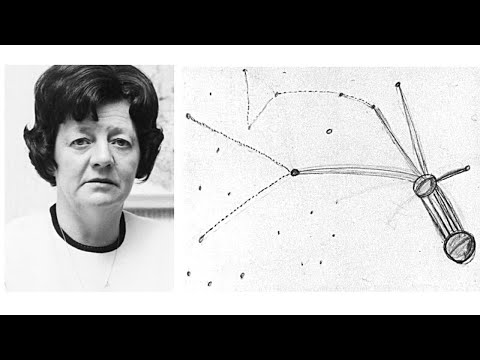
Betty Hill's Hypnosis Session and Lie Detector Test
Archival audio of Betty Hill's regressive hypnosis session conducted by Dr. Benjamin Simon, presented alongside coverage of the polygraph examination the couple underwent to test their credibility.

Can Their Chilling 1961 Experience Be Explained By Science?
BBC's Uncanny podcast walks through the Hills' 1961 New Hampshire encounter, the hypnotic regressions, and Betty's star-map claim, weighing them against proposed scientific and psychological explanations.
Was It Aliens Or False Memory Effect?
BuzzFeed Unsolved Network revisits the Hills' September 19, 1961 encounter on Route 3 near Indian Head, contrasting the abduction narrative with the false-memory and confabulation hypothesis.
Sources
- Fuller, John G. The Interrupted Journey: Two Lost Hours Aboard a UFO, Dial Press, 1966.
- Marden, Kathleen, & Friedman, Stanton. Captured! The Betty and Barney Hill UFO Experience, New Page Books, 2007.
- Hynek, J. Allen. The UFO Experience: A Scientific Inquiry, Regnery Company, 1972.
- NICAP Investigation Archive, Walter Webb field reports, October 1961. nicap.org
- Fish, Marjorie. "Zeta Reticuli Star Map Analysis," published in Astronomy magazine, December 1974. rr0.org
- Webb, Walter N. NICAP Field Investigation Report: Sighting of September 19-20, 1961, October 26, 1961. nicap.org
- Pease Air Force Base. Log of the Air Defense Command (ADC) radar contacts, September 20, 1961 (obtained via FOIA).
- Simon, Benjamin. Psychiatric evaluation and hypnosis transcripts of Betty and Barney Hill, Boston, 1964–1965. Published in Fuller (1966) and Marden & Friedman (2007).
- Sagan, Carl. The Cosmic Connection: An Extraterrestrial Perspective, Ch. 12 (critical analysis of the Marjorie Fish star map), Anchor Press, 1973.
- Menzel, Donald H. & Taves, Ernest H. The UFO Enigma: The Definitive Explanation of the UFO Phenomenon, Doubleday, 1977.
- U.S. Air Force. Project Blue Book case file, September 1961 (Lancaster, NH radar/visual sighting hours before the Hill encounter). bluebookarchive.org
- "Barney and Betty Hill incident," Wikipedia. en.wikipedia.org
- Stanton T. Friedman, Investigation of the Hill star map, 1974–present.
- Milne Special Collections and Archives. "Using the Betty & Barney Hill Collection," University of New Hampshire Library. library.unh.edu
- "Marking History: The Betty and Barney Hill Incident in Lincoln," New Hampshire Public Radio, March 28, 2014. nhpr.org
- "The Abduction of Betty and Barney Hill," Boston Public Library (blog). bpl.org
- Schwarcz, Joe. "An Alien Abduction? Hardly a Convincing One," Office for Science and Society, McGill University, September 1, 2023. mcgill.ca
See something inaccurate? Have additional information or sources?
Suggest an Edit →Last Updated: 2026-06-28