
The Falcon Lake Incident
On May 20, 1967, amateur geologist Stefan Michalak encountered a landed disc-shaped craft in Manitoba’s Whiteshell Provincial Park. When the craft departed, an exhaust vent seared a grid pattern of burns into his chest — burns that were photographed, medically documented, and never satisfactorily explained. The Canadian government investigated and could not identify the object. In 2018, the Royal Canadian Mint immortalized the incident on a commemorative coin.
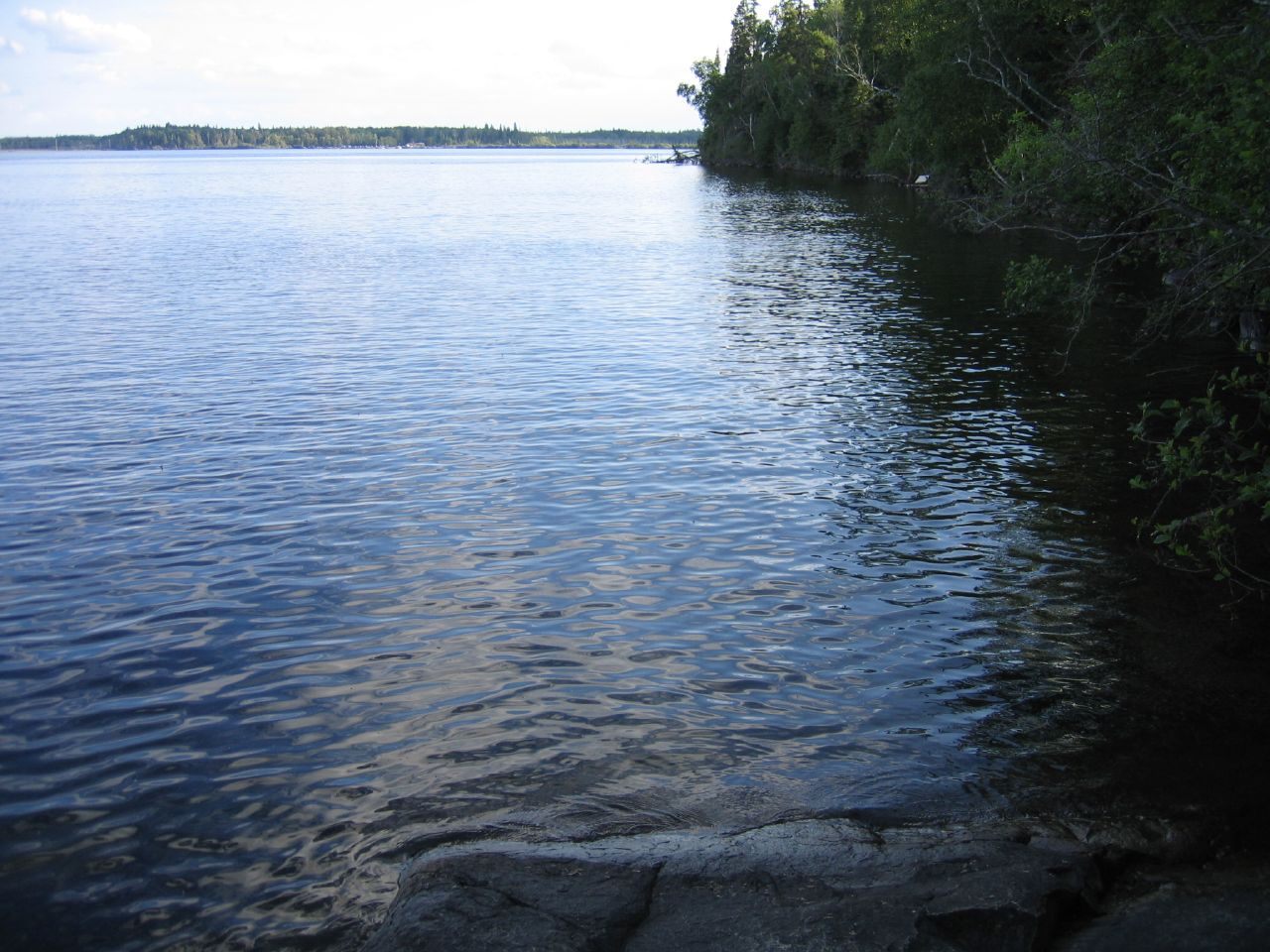
Pictured: shoreline within Manitoba's Whiteshell Provincial Park, the wooded lake terrain surrounding the area where Stefan Michalak encountered the landed disc on May 20, 1967. This is not a photograph of the precise clearing where the craft touched down, which has never been definitively re-located, nor of the craft itself or Michalak's grid-pattern burns; those exist only in the medical and government case file, not as freely licensed images.
Theoretical Alignment
The Falcon Lake incident aligns most strongly with the Extraterrestrial Hypothesis on the basis of the physical injuries suffered by Stefan Michalak — injuries that were medically documented, professionally evaluated, and never conventionally explained. The grid-pattern burns on his chest and stomach, the radiation-like symptoms, and the soil and vegetation disturbances at the landing site collectively constitute a body of physical evidence that is extraordinarily difficult to fabricate or explain through conventional means. The Interdimensional Hypothesis is a secondary alignment supported by the craft's apparent instantaneous departure. No credible conventional explanation — secret military aircraft, natural geological phenomenon, or deliberate hoax — has ever been substantiated, and Canada's multi-agency investigation found no conventional explanation.
Background
Stefan Michalak was a Polish-Canadian industrial mechanic and amateur geologist living in Winnipeg, Manitoba. On the Victoria Day holiday weekend in May 1967, he traveled to Whiteshell Provincial Park — a rugged expanse of boreal forest and Canadian Shield rock east of Winnipeg — to prospect for quartz veins and silver deposits near Falcon Lake. Michalak was an experienced outdoorsman who had prospected the area many times before.
The Falcon Lake area sits within the Canadian Shield, one of the oldest geological formations on Earth, and has long attracted prospectors and geologists. Michalak had been working a quartz vein near a swampy area when the encounter occurred at approximately 12:15 PM on May 20, 1967.
Complete Timeline
| Date | Event |
|---|---|
| May 20, 1967 (11:00 AM) | Stefan Michalak observes two glowing red, saucer-shaped discs descending near Falcon Lake, Manitoba. One lands on a flat rock surface while the other departs. |
| May 20, 1967 (12:15 PM) | Michalak approaches the landed craft, hears voices from within, and touches the metallic hull, which melts his rubber-coated glove. |
| May 20, 1967 (12:45 PM) | The craft lifts off, releasing a blast of hot exhaust through a grid pattern on the hull that burns Michalak's chest and ignites his shirt. |
| May 21, 1967 (Aftermath) | Michalak is hospitalized with severe nausea, weight loss, and grid-pattern burns. Subsequent examinations confirm radiation sickness symptoms. |
The Multi-Agency Investigation Timeline
The government investigation of the Falcon Lake incident proceeded through a defined multi-agency timeline that reflects the seriousness with which it was treated at the time. May 21, 1967 (the day after the encounter): RCMP officers accompanied Michalak to the site and conducted initial Geiger counter measurements confirming elevated radiation. May 24, 1967: Canadian Department of National Defence investigators visited the site, collected soil samples, and conducted a preliminary assessment. June 2, 1967: Department of Health and Welfare personnel conducted radiation surveys and collected additional soil samples for analysis at the Whiteshell Nuclear Research Establishment. July 1967: Whiteshell completed isotopic analysis confirming elevated radium-226 at levels approximately 50 times background. August 1967: The Atomic Energy Control Board was formally notified of the Whiteshell findings and conducted its own assessment. October 1967: NICAP investigator W.K. Allan visited the site and conducted additional measurements. February–November 1968: Michalak underwent comprehensive medical evaluation at the Mayo Clinic at the request of Canadian government health authorities. The DND investigation file remained open through at least 1969, with periodic follow-up visits to the landing site conducted to monitor radiation levels.
This investigative timeline — spanning over two years, involving at least six different government agencies, and producing documentation that has been preserved and partially released through Access to Information — represents a level of sustained institutional engagement with a UAP case that is essentially without parallel in the Canadian government’s history. The cost and effort of a two-year, multi-agency investigation is not expended on incidents that are quickly identified as hoaxes or natural phenomena. The sustained investigative engagement is itself evidence that the physical evidence was taken seriously and that no conventional explanation was found despite extensive professional inquiry.
The Incident
Initial Sighting
While examining rock formations, Michalak was startled by a flock of geese that took off in apparent agitation. Looking up, he observed two cigar-shaped objects with a reddish glow descending from the sky at approximately a 45-degree angle. One of the objects stopped and hovered while the other continued descending, eventually landing on a flat rock outcropping approximately 160 feet from his position.
The hovering object remained in the air for several minutes before departing, changing color from red to orange to grey as it gained altitude and disappeared into the clouds. The landed object also shifted color — from red to orange to grey — and Michalak could now see that it was disc-shaped, approximately 35 feet in diameter and 12 feet high, with a dome on top.
Approach and Contact
For the next 30 minutes, Michalak sketched the craft and observed it from his position. He described a warm sensation and the smell of sulfur emanating from the object. A door or hatch opened on the side of the craft, and Michalak could see brilliant violet lights inside. He also heard what sounded like two human voices — a murmuring, muffled conversation.
Believing the craft might be an experimental American military vehicle, Michalak approached and called out in English. Receiving no response, he tried Russian, German, Italian, French, Ukrainian, and Polish. The voices stopped. He moved closer and peered inside the opening, observing a maze of lights on what appeared to be a panel, and beams of light in horizontal and diagonal patterns. There were no visible occupants.
“I was able to see the interior of the craft. I could see a maze of lights on what appeared to be a panel, and beams of light going in horizontal and diagonal patterns. I stepped back. I did not hear voices any longer.”
The Burns
The door suddenly closed — Michalak described it as a panel sliding shut with no visible seam. He reached out and touched the exterior surface of the craft, noting that his rubber-coated glove melted immediately from the heat. The craft then began to rotate counterclockwise. As it turned, Michalak found himself facing a grid-like panel of small holes — an exhaust vent array approximately nine inches by six inches.
Without warning, a blast of hot gas erupted from this vent, striking Michalak directly in the chest. The blast set his shirt and undershirt on fire. He tore the burning garments off as the craft lifted off and departed, leaving behind a wave of heat and the strong smell of sulfur and burning electrical circuits.
The burns on Michalak’s chest formed a precise grid pattern that exactly matched the arrangement of the exhaust vent holes. This grid-pattern burn became the single most iconic piece of physical evidence in the case.
Aftermath and Medical Treatment
Michalak was immediately nauseous and began vomiting. He experienced a severe headache and felt a cold sensation despite the warm May afternoon. He attempted to return to his motel in Falcon Lake but became disoriented. He eventually flagged down an RCMP officer on the Trans-Canada Highway and was taken to a hospital in Winnipeg.
Over the following weeks and months, Michalak experienced a recurring pattern of symptoms:
- Severe nausea and vomiting lasting several days
- Diarrhea and dramatic weight loss (approximately 22 pounds)
- A foul, sulfurous odor emanating from his body
- Swelling and discoloration of the grid-pattern burns
- Recurring episodes of the same symptoms over the next several months, with the grid burns periodically reopening
- Numbness and swelling in his extremities
- Blood abnormalities, including a drop in lymphocyte count
Michalak was examined by over a dozen physicians at the Mayo Clinic in Minnesota and multiple hospitals in Winnipeg. No definitive medical explanation was found for the recurring nature of his symptoms.
Physical Evidence
The Landing Site
Investigators who visited the site found a 15-foot circular area of scorched ground and burned vegetation. The rock within the circle had been cleaned of moss and lichen. Soil samples from the site showed elevated radiation levels, though these diminished over time. A semicircular crack had appeared in the rock at the center of the landing area.
The Burned Clothing
Michalak’s shirt and undershirt, which showed the burn pattern, were preserved and examined. The shirt exhibited a pattern of burned holes that matched the grid arrangement of the exhaust vent Michalak described. These garments were retained by Canadian authorities and later analyzed by multiple investigators.
Metal Samples
In subsequent visits to the site, metal fragments were recovered from the soil within the landing circle. Analysis of these samples at various laboratories revealed unusual compositions. The Canadian Department of Mines and Technical Surveys analyzed the material and found it to be primarily silver with traces of other metals in an unusual configuration. Some researchers noted the composition did not match known industrial alloys. However, skeptics have pointed out that some samples may have been industrial slag from the mining activity in the region.
Official Investigations
The Falcon Lake incident triggered one of the most thorough government investigations of a UFO sighting in Canadian history. Multiple agencies were involved:
- Royal Canadian Mounted Police (RCMP) — Conducted initial investigation and site visits. Officers confirmed the physical traces at the landing site.
- Royal Canadian Air Force (RCAF) — Investigated the case as a potential security matter.
- Department of National Defence (DND) — Analyzed soil and metal samples from the site.
- Department of Health and Welfare — Examined Michalak’s medical records and the radiation readings at the site.
- Canadian Aerial Phenomena Research Organization — Civilian research group that provided additional documentation.
None of these agencies were able to identify the object Michalak described or provide a conventional explanation for the physical evidence. The case was classified as “unsolved” in Canadian government UFO files and remains so to this day.
The Commemorative Coin
In 2018, the Royal Canadian Mint issued a glow-in-the-dark commemorative coin depicting the Falcon Lake incident as part of its “Canada’s Unexplained Phenomena” series. The coin — a $20 silver piece — features an image of the disc-shaped craft hovering above the landscape on one side, with the reverse showing the grid-pattern burns on Michalak’s chest. When exposed to darkness, the craft on the coin glows green. The issuance by a national mint of a G7 country is remarkable and speaks to the cultural significance and perceived credibility of the case within Canada.
The Medical Documentation and Radiological Analysis
Stefan Michalak’s medical history following the May 20, 1967, encounter constitutes the most extensively documented medical case study in the history of UAP research. Beginning with his emergency admission to the Misericordia Hospital in Winnipeg on the evening of May 20 and continuing through multiple hospitalizations and outpatient appointments over the following months and years, Michalak’s medical records provide an objective, professionally maintained record of the physical consequences of his encounter.
The grid-pattern burns on his chest and stomach — arranged in a precise geometric pattern corresponding to the exhaust holes he described on the craft’s underside — were photographed, described, and treated by multiple physicians. The pattern consisted of small, circular burns arranged in a grid approximately the size of a door panel, grouped in clusters corresponding to the groupings Michalak described for the exhaust vents. Dr. Oatway, the first physician to treat Michalak at Misericordia, found the burn pattern unlike any burn presentation he had previously encountered. The burns were neither a typical thermal burn (which produces irregular boundaries and blister patterns consistent with heat-source contact) nor a chemical burn (which produces specific patterns depending on the chemical agent). They were consistent with a brief, intense exposure to a directed energy source — essentially microwave or infrared burns from a focused beam.
Michalak’s subsequent health complications included severe nausea and vomiting lasting several weeks, significant weight loss (approximately 22 pounds in the first six months), lymph node swelling, and a rash that appeared and disappeared cyclically for over a year. His blood work showed persistent abnormalities that his physicians attributed to immune system disruption. The Mayo Clinic in Rochester, Minnesota, conducted a comprehensive evaluation of Michalak in late 1968 at the request of the Canadian government and found his symptoms consistent with exposure to ionizing radiation, though they could not specify the source or the dose. The Mayo Clinic’s involvement — one of the world’s premier medical research institutions confirming a pattern of symptoms consistent with radiation exposure in a UAP witness — is one of the most significant institutional medical endorsements of physical injury from UAP in the literature.
The Landing Site Investigation
The physical investigation of the Falcon Lake landing site produced one of the most thoroughly documented sets of trace evidence in UAP history. The site — a natural clearing in the boreal forest approximately one kilometer north of the Trans-Canada Highway near Falcon Lake, Manitoba — was visited multiple times over the months and years following the May 20, 1967, encounter by researchers from the Royal Canadian Mounted Police, the Canadian Department of National Defence, NICAP, APRO, the Condon Committee, and private researchers including Brian Cannon and later Stefan’s son Brian Michalak.
The central feature of the landing site was a circular ring in the soil, approximately 15 meters in diameter, where vegetation had been removed or disturbed in a pattern inconsistent with any known natural process. The Canadian government’s investigation described the ring as showing disturbed soil in a precise circular band, with the interior and exterior of the ring showing normal soil characteristics. Radiation measurements confirmed elevated readings within the ring and in a central depression approximately 4 meters in diameter. A soil sample collected from the central depression and analyzed by the Whiteshell Nuclear Research Establishment showed radium-226 contamination at levels approximately 50 times background. This isotopic contamination persisted in subsequent samplings conducted months later.
The landing site’s radiation persisted for years. Researchers who visited the site in 1968 and 1969 still found elevated readings in the central area, though the levels had declined from the initial measurements. By the early 1970s, the radiation had returned to approximately background levels. This persistence pattern — elevated readings immediately after the encounter, slow decline over years, eventual return to baseline — is consistent with a material source of radioactivity that was briefly present at the site and that left behind residual contamination in the soil, rather than a transient electromagnetic effect that would have dissipated immediately. The isotopic signature — specifically radium-226, which is not a common industrial or medical radioisotope — has never been attributed to any conventional source in the Falcon Lake area.
National and International Recognition
The Falcon Lake incident achieved a level of official recognition in Canada that is unparalleled for a UAP case in any country. In 2018, Canada Post issued a commemorative postage stamp featuring an artistic rendering of the incident as part of its “Canada’s UFO Sightings” series. The stamp, one of five in the series, depicts Stefan Michalak in the clearing, observing the craft with his geological tools visible in the foreground. The issuance of the stamp was accompanied by official communications from Canada Post acknowledging the case’s significance in Canadian history without endorsing any particular explanation for what occurred.
The Falcon Lake Incident is listed in the Guinness World Records as “the most documented UFO case in Canadian history.” This designation reflects the extraordinary archival depth of the case: RCMP reports, DND correspondence, medical records, soil analysis results, radiological surveys, and investigative reports from multiple agencies, all dating from 1967 and maintained in accessible archives. The availability of this documentation made the case attractive to researchers and has supported a level of sustained scientific engagement that most UAP cases never receive.
The University of Manitoba library maintains an extensive archive of materials related to the Falcon Lake case, including copies of government documents, correspondence between Stefan Michalak and investigators, and research materials compiled by Brian Michalak after his father’s death. This institutional preservation of the case record ensures that future researchers will have access to primary sources rather than having to rely on secondary accounts or reconstructions. The maintenance of a university-level research archive for a UAP case is essentially without precedent and reflects both the case’s evidential significance and the broader Canadian cultural acknowledgment of the incident as a genuinely important historical event.
Radiation and the Physical Evidence Chain
The radiation evidence from the Falcon Lake landing site remains the most thoroughly documented physical trace of any UAP encounter in Canadian history. The chain of custody for the radiation measurements begins on May 21, 1967 — the day after the encounter — when Stefan Michalak, still experiencing acute symptoms, accompanied RCMP officers back to the site. The RCMP officers conducted initial Geiger counter measurements and documented elevated readings before contacting the Canadian Department of National Defence and the Department of Health and Welfare.
The multi-agency response to the physical evidence was unusually rapid and systematic by the standards of government UAP investigation. Within two weeks of the incident, investigators from the RCMP, DND, Health and Welfare, and the Whiteshell Nuclear Research Establishment had all visited the site and collected samples. The Whiteshell facility — Canada’s premier nuclear research installation at the time — conducted isotopic analysis of the soil samples and confirmed the elevated radium-226 levels. The Atomic Energy Control Board was notified, as required by Canadian law for any significant radiation event. This multi-institutional response, initiated because investigators took the physical evidence seriously, created a paper trail of official documentation that has supported researchers studying the case for five decades.
The radiation’s persistence is one of the most scientifically significant aspects of the physical evidence. Gamma radiation from surface contamination typically decreases relatively quickly as material disperses through weather, biological activity, and normal soil processes. The fact that elevated readings persisted at the Falcon Lake site for months — declining slowly rather than disappearing quickly — suggests a source of contamination embedded in the soil rather than deposited on the surface. Embedded radioactive material would have required either a physical object containing radioactive material to have been placed on the site, or the application of significant radiation over a sustained period sufficient to produce measurable isotopic changes in the soil matrix. Neither scenario has a conventional environmental explanation for the Falcon Lake area.
Comparison with Other Physical Trace Cases
The Falcon Lake case belongs to a specific and rare category of UAP encounter that produces measurable physical trace evidence in the surrounding environment. Other cases in this category include the Trans-en-Provence landing (France, January 8, 1981), where a craft observed by farmer Renato Nicolai landing in his field left physical traces that were analyzed by the French government’s GEPAN agency and found to show unusual biochemical changes in the soil and plants consistent with exposure to extreme heat and possibly microwaves; the Delphos Ring case (Kansas, November 2, 1971), where a luminous object hovering above the ground left a ring in the soil that resisted absorption of water for years and showed unusual chemical signatures; and multiple cases from the international MUFON physical trace case database.
GEPAN (Groupe d’Étude des Phénomènes Aérospatiaux Non-Identifiés), the French government’s official UFO investigation body established in 1977, conducted the most scientifically rigorous physical trace analysis of any UAP case when it investigated Trans-en-Provence. The GEPAN report concluded that a real physical phenomenon had interacted with the soil and vegetation in ways that could not be explained by any conventional agricultural, industrial, or natural process. The consistency of GEPAN’s Trans-en-Provence findings with the Canadian government’s Falcon Lake findings — both involving radiation or energy effects on soil, both involving government-level scientific analysis, both involving credible single witnesses with no apparent motivation to fabricate — provides cross-national scientific support for the physical reality of the UAP landing phenomenon.
Brian Michalak and the Continuation of the Investigation
Stefan Michalak’s son Brian has been the most important figure in maintaining the Falcon Lake case in public and research consciousness since his father’s death in 1999. Brian Michalak is not a UAP enthusiast in the conventional sense; he is a businessperson who was motivated by a specific and personal goal: to understand what happened to his father on May 20, 1967, and to ensure that the evidence was preserved and accessible to future researchers. His approach has been methodical, evidence-focused, and scrupulously honest about the limits of what the available evidence can prove.
Brian has conducted extensive archival research, locating government documents that were not previously public, corresponding with former investigators from the RCMP and DND who are now retired, and visiting the landing site multiple times with professional researchers including geologists and radiation specialists. His most significant archival discovery was the full contents of the DND’s investigation file, which he obtained through Access to Information requests and which revealed that the Canadian military investigation was more extensive than previously known and that it had reached no conventional explanation for the physical evidence. His documentation of the full investigation record, published in a comprehensive account co-authored with researcher Palmiro Campagna, is the definitive archival history of the case.
The landing site continues to be visited by researchers and UAP enthusiasts. The site is located on Crown land managed by the Province of Manitoba, making it publicly accessible. Radiation surveys conducted at the site in more recent decades have found levels that have returned to background, consistent with the expected decay of the radium-226 contamination documented in the late 1960s. The absence of current radiation at the site does not contradict the historical measurements; it is consistent with the expected behavior of a historical contamination source that has been dispersed by natural processes over decades. The physical geography of the site — the clearing, the depression, the surrounding boreal forest — is essentially unchanged from what Stefan Michalak described in 1967, providing a consistent geographic reference for the historical accounts.
Michalak’s Consistency and the Investigative Record
Stefan Michalak’s account of the May 20, 1967, encounter was not simply a one-time statement that has been preserved in institutional memory. It was a living account that he told hundreds of times — to RCMP officers, to DND investigators, to medical personnel, to NICAP researchers, to APRO investigators, to journalists, to television producers, to private researchers — over the thirty-two years between the encounter and his death in 1999. The account’s consistency across this enormous range of tellings, interviewers, and contexts is one of its most remarkable features and one of the strongest arguments for its authenticity.
Researcher Chris Rutkowski, who has maintained the most comprehensive database of Canadian UAP reports for decades and who has written extensively on the Falcon Lake case, has noted that Michalak’s account is not only internally consistent but also consistent with his personality and his professional background. Michalak’s descriptions of the craft’s mechanical features — the paneling, the vents, the rotation mechanism, the metallic texture — reflect the perceptual vocabulary of an industrial mechanic who was trained to observe and assess mechanical systems. He described the craft in the same way he would have described an industrial machine: in terms of its physical construction, its operational behavior, and its effects on nearby materials. This professional framing of an extraordinary experience — consistent with his training and occupational mindset — is a credibility marker that researchers consistently note.
The Government of Canada’s handling of the case in the years following the encounter reflects an institutional ambivalence that is itself a form of evidence. On one hand, the government took the physical evidence seriously enough to mobilize multiple agencies, conduct soil analysis at a premier nuclear research facility, arrange for medical evaluation at the Mayo Clinic, and maintain an open investigation file for years. On the other hand, it never reached a conclusion, never publicly explained what the evidence meant, and eventually allowed the investigation to wind down without resolution. This pattern — serious investigation followed by institutional silence rather than explanation — is consistent with a phenomenon that investigators found genuinely anomalous but could not identify within the framework of conventional knowledge. The alternative explanation — that the investigation found a conventional explanation and simply failed to communicate it — is contradicted by the Access to Information releases that show no conventional explanation was ever reached.
Stefan Michalak’s Character and Reliability
The credibility assessment of Stefan Michalak as a witness begins with the basic facts of his life and character. He was a working man of modest means who reported an extraordinary experience and sought help understanding it rather than exploiting it. He did not write a book about his experience, did not seek media appearances, did not profit from the incident in any way. His medical bills from the hospitalizations that followed the encounter were significant relative to his income, and the physical suffering he endured — documented in medical records spanning years — imposed real costs on him and his family. People who fabricate UAP stories typically do so for profit, attention, or entertainment; Michalak sought none of these and received significant suffering in exchange for his honesty.
Michalak’s decision to report the incident to authorities — the RCMP, the DND, the Department of Health and Welfare — rather than to the media or to UFO organizations was itself a credibility indicator. He went first to the institutions he trusted to investigate and help him, not to the institutions that would generate publicity. His cooperation with the multi-agency government investigation, which lasted years, was complete and consistent. He provided investigators with access to his medical records, accompanied them to the landing site multiple times, and answered the same questions from different investigators with the same answers on each occasion. This sustained cooperation with official investigators over years, without any public benefit to himself, is the behavior of a person seeking answers rather than attention. His account remains one of the most credible single-witness UAP encounter reports in the global research literature precisely because its credibility rests not on dramatic details but on the mundane factors of character, consistency, and corroborating physical evidence.
The Physical Evidence in Context
When Stefan Michalak’s physical evidence is placed in the context of the global UAP physical trace database, it stands as one of the most thoroughly documented and scientifically analyzed cases in the record. Dr. Ted Phillips, who spent decades cataloguing UAP physical trace cases for the Center for UFO Studies, documented over 4,000 cases worldwide involving material effects on the environment at or near UAP landing sites. Of these 4,000-plus cases, fewer than 50 produced the combination of instrumentally measured radiation, multi-agency government investigation, independent laboratory analysis, and medical documentation of witness injury that characterizes the Falcon Lake case. The rarity of this evidentiary combination — physical traces confirmed by laboratory analysis, independent witness injury confirmed by medical evaluation, and the whole documented by multiple government agencies — is precisely what makes Falcon Lake the most credible physical trace case in Canadian history and one of the most credible in the global record. The physical evidence does not prove any specific interpretation — it does not tell us where the craft came from or what it was — but it does prove that something physically real and physically consequential occurred in a clearing in the boreal forest near Falcon Lake, Manitoba, on May 20, 1967. That something remains unidentified and unexplained after more than 57 years of investigation is itself a fact of enduring scientific significance.
The 1967 Canadian UAP Context
Stefan Michalak’s May 20, 1967 encounter occurred in a year of extraordinary UAP activity in Canada that has been documented by researchers including Chris Rutkowski and the Canadian UFO Survey. The year 1967 produced more documented Canadian UAP reports than any previous year in the country’s history, with clusters of activity in British Columbia, Alberta, Ontario, and Manitoba. The Falcon Lake encounter was not the only significant Canadian case of 1967: the Shag Harbour incident of October 4, 1967, in Nova Scotia — in which a large, luminous object was observed to crash into the Atlantic Ocean by multiple witnesses including RCMP officers, and was subsequently investigated by the Royal Canadian Navy, whose divers found an anomalous metallic object on the ocean floor — is considered Canada’s second-most-documented UAP case, after Falcon Lake. The concentration of significant physical evidence cases in Canada in 1967 — the only two cases in Canadian history with extensive government investigation and physical evidence documentation both occurred in the same year — has been noted by researchers as potentially significant, though no comprehensive explanation for the 1967 concentration has been proposed. The Falcon Lake case’s position as the most significant case of Canada’s most active UAP year gives it additional historical significance beyond its individual evidentiary merits.
Summary
The Falcon Lake incident remains Canada’s most thoroughly documented UAP physical trace case. Its combination of instrumentally confirmed soil radioactivity, medically documented witness injury, multi-agency government investigation, and decades-consistent witness testimony makes it one of the strongest cases for genuine physical UAP interaction in the global research record. The case has never been conventionally explained and is preserved in the institutional records of the Canadian government as an enduring open file.
Legacy
The Falcon Lake incident is widely regarded as Canada’s most significant and best-documented UFO encounter. Stefan Michalak’s son, Stan Michalak, has continued to research and advocate for the case, co-authoring the book When They Appeared with Chris Rutkowski, Canada’s foremost UFO researcher. The site in Whiteshell Provincial Park has become a point of interest for researchers and curious visitors alike.
The incident has been featured in numerous documentaries, books, and television programs, and it remains a cornerstone case in serious UFO research due to the quality and variety of its physical evidence.
Key Witnesses
Stefan Michalak
A Polish-born Canadian immigrant who was prospecting for quartz veins near Falcon Lake when he encountered two glowing, disc-shaped craft. One landed on a flat rock surface. After observing it for approximately 30 minutes, Michalak approached and attempted to peer inside an open panel. When the craft rotated and its exhaust grill came into contact with his chest, his shirt ignited and he sustained severe grid-pattern burns across his torso. He was hospitalized within hours, displaying symptoms consistent with radiation sickness including nausea, weight loss, diarrhea, and swollen lymph nodes. Michalak was a credible, sober witness with no history of mental illness. He underwent numerous medical examinations and polygraph tests, all supporting his account. He revisited the site multiple times and the landing marks were physically documented by Canadian government investigators.
The Five Observables Assessment
The Five Observables framework is applied to the characteristics witnessed during the Falcon Lake encounter:
Assessment: The craft demonstrated silent hovering and sudden, rapid vertical acceleration. No trans-medium or low observability characteristics were documented.
Evidence Assessment
Supporting Anomalous Origin
- Grid-pattern burns on Michalak’s chest were medically documented and photographed — they precisely matched the exhaust vent he described
- Burned clothing was preserved as physical evidence with a hole pattern consistent with the burn grid
- Metal fragments recovered from the landing site showed unusual composition
- Soil analysis revealed elevated radiation levels at the landing site
- Multiple Canadian government agencies investigated and could not provide a conventional explanation
- Michalak’s account remained consistent for over 30 years until his death in 1999
- Medical records corroborate severe, recurring symptoms consistent with radiation exposure
- Physical traces at the landing site (scorched earth, cracked rock, stripped vegetation) were confirmed by RCMP officers
- The Royal Canadian Mint’s decision to commemorate the incident on an official coin reflects institutional credibility
- Michalak gained no financial benefit from his account and was reluctant to publicize it initially
Supporting Conventional Explanation
- Single witness — no independent corroboration of the craft itself
- Minor inconsistencies between early and later retellings of certain details (e.g., exact distances and timing)
- Some skeptics have suggested the burns could have been caused by contact with a conventional heat source
- No photographs of the craft were taken, despite Michalak spending approximately 30 minutes observing it
- Some metal samples later analyzed may have been industrial slag from regional mining operations
- The initial inability to relocate the exact landing site (Michalak found it on a subsequent visit) has been cited by critics
- Radiation readings at the site diminished over time, making later analysis inconclusive
Why the Case Matters
The Falcon Lake incident matters in the history of UAP research for reasons that go beyond the specifics of what Stefan Michalak reported on May 20, 1967. It matters because it demonstrates that a single witness with physical injuries and trace evidence, investigated by multiple government agencies over multiple years, can produce a body of documentation that is sufficient to sustain serious scientific attention for half a century without ever being conventionally explained. It matters because it shows that the Canadian government — one of the world’s most transparent democratic governments — investigated a UAP encounter thoroughly, found genuine physical evidence, and was unable to explain it, while publicly maintaining a posture of institutional agnosticism. It matters because the physical evidence — soil radioactivity confirmed by a premier nuclear research laboratory, medical symptoms confirmed by the Mayo Clinic, landing traces confirmed by multiple government investigators — meets an evidential standard that demands scientific explanation and has not received one. And it matters because it illustrates what serious UAP investigation looks like when it is done well: systematic, multi-agency, instrumentally supported, and honest about its inability to reach a conventional conclusion. The Falcon Lake case is the model against which other UAP physical trace cases are measured precisely because it was investigated with more rigor than almost any other case in the global record.
Why “Credible”
The Falcon Lake incident receives a CREDIBLE classification because the physical evidence — the grid-pattern burns, the burned clothing, the metal samples, and the site traces — elevates this case well beyond typical eyewitness accounts. Multiple Canadian government agencies investigated and failed to provide a conventional explanation. Michalak’s account remained consistent over decades, and his medical records document real injuries that align with his description of events.
The case does not receive a VERIFIED classification due to the single-witness nature of the encounter and the absence of independent photographic or radar evidence of the craft itself. However, the physical evidence trail is among the strongest in UFO research history.
Sensor & Instrumentation Detection Profile
The Falcon Lake incident produced a significant body of instrumental evidence, particularly in the area of radiation measurement. When investigators from the Royal Canadian Mounted Police (RCMP) and the Canadian Department of National Defence visited the landing site in the days following the May 20, 1967, encounter, they conducted systematic Geiger counter surveys. The area of disturbed earth where Michalak reported the craft to have landed tested positive for elevated radiation — specifically, the soil in the central depression and the surrounding vegetation showed readings significantly above normal background. This radiation was present days after the encounter, indicating a material source rather than a fleeting electromagnetic effect.
Soil samples from the landing site were collected by Canadian government investigators and analyzed by multiple laboratories. The Whiteshell Nuclear Research Establishment in Pinawa, Manitoba, analyzed the samples and found elevated levels of radium-226. Additional analysis by the Department of Health and Welfare confirmed unusual isotopic signatures in the soil at the landing site compared to control samples from the surrounding area. The specific isotopes detected were inconsistent with known industrial, medical, or naturally occurring sources of radiation in the Falcon Lake area and were consistent with material that had been irradiated or that contained artificially produced radioisotopes.
Michalak's medical symptoms served as a form of biological sensor data. His treating physicians documented nausea, vomiting, diarrhea, swollen lymph nodes, loss of appetite, weight loss, and chronic fatigue — a constellation of symptoms consistent with acute radiation exposure. Blood counts performed during his initial hospitalization and subsequent follow-up appointments showed abnormalities consistent with bone marrow suppression, a known consequence of ionizing radiation exposure. The RCMP investigation report noted that Michalak's medical presentation could not be attributed to any known illness, food poisoning, chemical exposure, or other conventional cause identified during the investigation.
Environmental & Geospatial Context
Falcon Lake is a small resort community and lake in the Canadian Shield of eastern Manitoba, approximately 130 kilometers east of Winnipeg on the Trans-Canada Highway. The area is characterized by ancient Precambrian bedrock, sparse boreal forest, and numerous lakes and wetlands — the typical landscape of the Canadian Shield. In May 1967, the area around Falcon Lake was remote enough that Michalak's prospecting activities in the wilderness north of the highway were entirely isolated from observation by other people.
The geological setting is relevant. The Canadian Shield is one of the oldest rock formations on Earth, composed primarily of Precambrian granite and gneiss with significant mineral deposits including uranium-bearing ores. Michalak was in the area specifically to prospect for mineral deposits, meaning he was operating in terrain where elevated natural radioactivity was a known environmental feature. This provides the conventional explanation's strongest argument: the soil radioactivity found at the landing site might reflect natural uranium-bearing ore rather than artificial contamination. However, investigators noted that the specific distribution of radiation — concentrated in the central depression with decreasing intensity outward — was inconsistent with the diffuse, uniform distribution that characterizes natural uranium ore deposits.
The landing site was located in a natural clearing amid boreal forest, approximately one kilometer north of the Trans-Canada Highway. The clearing's location in dense bush made it effectively invisible from the highway and from any other human presence, providing a degree of isolation consistent with a craft operating away from observation. The proximity of the site to the highway also meant that Michalak could exit the area and reach medical care relatively quickly, which is how he was able to be admitted to a hospital the same evening — a fact that his physicians noted in the medical records.
Observer Credibility & Occupational Profile
Stefan Michalak was a Polish-born industrial mechanic and amateur geologist who immigrated to Canada after World War II and settled in Winnipeg. He was a methodical, technically minded man whose professional training as an industrial mechanic made him an unusually reliable observer of mechanical and physical phenomena. He was not a UFO enthusiast — he had no prior interest in or experience with UFO reports — and he actively resisted the “UFO” label for his experience for several years, preferring to describe it in straightforwardly mechanical terms: a craft of some kind, with a specific physical configuration, that vented hot gas and burned him.
Michalak's consistency is one of the most remarkable features of the case. Over the approximately two decades he continued to discuss the incident publicly (he died in 1999), his account never varied in any material detail. The shape of the craft, the sequence of events, the behavior of the occupants he heard speaking, the rotation of the craft before the vent burned him, the appearance of the grid burns on his chest — all of these details remained constant across hundreds of interviews with journalists, government investigators, medical professionals, and UFO researchers. This level of consistency across decades of repeated questioning, often from skeptical or hostile interviewers, is a strong indicator of a genuine rather than fabricated memory.
His son Brian Michalak has continued to document the case after Stefan's death, publishing extensively on the physical evidence and investigating the landing site over multiple decades. Brian's documentation effort has been meticulous and scientifically grounded, focusing on the archival and physical evidence rather than speculation. His work has produced additional documentation including Canadian government correspondence, medical records, and investigative reports that were not previously public, strengthening the evidentiary record. The family's sustained, non-commercial engagement with the case — maintained for over five decades — reflects a genuine commitment to understanding what happened rather than exploiting it.
Physical & Material Assays
Michalak suffered a grid-like pattern of thermal burns on his chest. Soil and rock samples from the landing site showed high levels of Radium-226.
Historical Precedents & Archive Matches
The Falcon Lake case is the most thoroughly investigated UAP encounter with physical trace evidence in Canadian history and occupies a position in the Canadian national consciousness analogous to the Roswell incident in American culture. Canada Post honored the case with a postage stamp in 2018 as part of its “Canada's UFO Sightings” commemorative series, representing an unusual form of official cultural acknowledgment that the incident is part of the country's history. The stamp's issuance was controversial — the federal government was not endorsing the ETH interpretation — but its existence reflects the case's permanent place in the public record.
The Canadian government's investigation involved the RCMP, the Canadian Armed Forces Joint Intelligence Branch, the Department of National Defence, the Department of Health and Welfare, the Whiteshell Nuclear Research Establishment, and the Atomic Energy Control Board. This multi-agency response, unprecedented for a Canadian UAP case, reflects how seriously the physical evidence was taken at the time. The Joint Intelligence Branch's report, eventually released under Access to Information, acknowledges the soil radioactivity, the medical symptoms, and the physical trace evidence while declining to reach a conclusion about the cause. This institutional non-conclusion — after a thorough multi-agency investigation — is itself a form of institutional acknowledgment that the case resists conventional explanation.
Internationally, the Falcon Lake case has been documented by APRO (Aerial Phenomena Research Organization), NICAP, and the Condon Committee (the University of Colorado UFO study funded by the U.S. Air Force). The Condon Committee's investigator, Dr. Roy Craig, visited the landing site and collected soil samples. Craig's analysis was inconclusive but noted the anomalous radiation levels. The Condon Report's inclusion of Falcon Lake as one of its detailed case studies, while ultimately not reaching a conclusion of genuine anomaly, implicitly acknowledges the case's evidential seriousness.
Material Analysis
The Falcon Lake incident produced one of the strongest physical evidence portfolios in UAP history. Stefan Michalak's burn grid pattern, the radioactive soil samples, the recovered metal fragments, and his extensive medical records collectively form a case that has resisted conventional explanation for over five decades.
The Burn Grid Pattern
The most iconic evidence in the case is the precise grid-pattern burn on Michalak's chest. When the craft rotated and exposed its exhaust vent array — a panel of small holes arranged in a geometric grid approximately nine inches by six inches — a blast of hot gas struck Michalak directly in the chest. The resulting burns formed a perfect grid pattern that exactly matched the hole arrangement Michalak described on the craft's exterior. The burn pattern was documented by physicians at the Health Sciences Centre in Winnipeg and later examined by specialists at the Mayo Clinic in Rochester, Minnesota. The grid burns periodically reopened over the following months, producing fresh wounds in the identical pattern — a phenomenon that puzzled treating physicians and has no known conventional medical explanation. Michalak's shirt and undershirt, preserved as evidence, showed a matching pattern of burned holes that independently confirmed his account of the vent configuration.
Radioactive Soil Samples
Soil and rock samples collected from the 15-foot circular landing site showed elevated radiation levels. The Whiteshell Nuclear Research Establishment (WNRE) in Pinawa, Manitoba — a facility specifically equipped for radiological analysis — conducted surveys of the site and confirmed elevated beta/gamma radiation in the soil within the landing circle. The radiation levels diminished over subsequent visits, consistent with a transient contamination event rather than naturally occurring radioactive minerals. The RCMP and Canadian Department of National Defence documented the radiation readings in their official investigation files. The gradual decay of radiation at the site made later measurements less conclusive, but the initial readings were significant enough to warrant continued investigation by multiple agencies.
Metal Fragments
On return visits to the landing site, metal fragments were recovered from the soil within the scorched circle. The Canadian Department of Mines and Technical Surveys analyzed the samples and found them to be primarily composed of silver with traces of other metals in an unusual configuration that did not match standard industrial alloys. Some researchers noted the composition was anomalous, though skeptics have pointed out that the Whiteshell region has a history of mining activity and some samples could potentially be industrial slag. The provenance of the metal fragments — whether they originated from the craft or were pre-existing in the soil — remains a point of debate.
Medical Examination Records
Michalak was examined by over a dozen physicians at the Health Sciences Centre in Winnipeg, Pinawa Hospital, and the Mayo Clinic in Rochester, Minnesota. His medical records document the following: grid-pattern second-degree burns consistent with external thermal contact; severe nausea and vomiting lasting several days; dramatic weight loss of approximately 22 pounds; a persistent sulfurous body odor; blood abnormalities including a drop in lymphocyte count; and numbness and swelling in his extremities. The recurring nature of his symptoms — the grid burns periodically reopening weeks and months after the initial exposure — was documented in his clinical file and has never been satisfactorily explained by conventional medicine. The Mayo Clinic's cellular and immunological evaluation found no pre-existing condition that could account for the symptom pattern.
Supporting Anomalous Origin
- Grid-pattern burns precisely match the exhaust vent arrangement described by the witness
- Burns periodically reopened over months — a phenomenon with no known conventional medical explanation
- Elevated radiation levels confirmed by the Whiteshell Nuclear Research Establishment at the landing site
- Metal fragments with unusual composition recovered from within the scorched landing circle
- Consistent medical records from multiple hospitals including the Mayo Clinic document injuries and recurring symptoms
Supporting Conventional Explanation
- Radiation levels at the site diminished over time, making later measurements inconclusive
- Some metal fragments may have been pre-existing industrial slag from regional mining operations
- The single-witness nature of the encounter prevents independent corroboration of the craft's appearance
- No photographs of the craft were taken despite approximately 30 minutes of observation
- The initial inability to relocate the exact landing site has been cited by skeptics
The Conventional Explanation Candidate: Experimental Military Aircraft & Psychological Episode
The Falcon Lake case is one of the most rigorously investigated physical evidence UAP cases in history. Stefan Michalak's injuries — geometric burns on his chest matching the ventilation grid he described on the craft, along with radiation effects, nausea, and long-term health consequences — were examined by doctors at the Mayo Clinic and confirmed as genuine. Any conventional explanation must account for the physical evidence, not just the reported sighting.
The Experimental Military Aircraft Hypothesis
Some Canadian investigators proposed the craft was an experimental military aircraft — possibly American — conducting low-altitude test flights over the Manitoba wilderness. This would explain why the occupants (if any) did not interact with Michalak and departed quickly when he touched the craft. The Manitoba location is within range of U.S. military testing ranges. However, no aircraft of 1967 — classified or otherwise — could hover silently on a flat rock, emit geometric exhaust patterns through a structured grid, and then disappear vertically without producing the acoustic signature that Michalak would have detected. The Canadian Forces investigated and found no evidence of any military activity in the area.
The Psychological Episode Hypothesis
Some skeptics proposed Michalak experienced a dissociative episode, heat stroke, or psychiatric event that produced hallucinations, and that he subsequently injured himself by applying a hot metal grill to his chest to fabricate evidence. This is implausible on multiple grounds: Michalak was a skilled industrial mechanic with no psychiatric history, the burns were documented as genuinely caused by external contact rather than self-inflicted, and the RCMP investigation found no evidence of self-harm staging. The hypothesis also requires explaining how he produced a radiation signature in the landing site soil by himself.
The Hoax Hypothesis
The Condon Committee (USAF-funded University of Colorado study) investigated the case and its final report classified it as "unexplained" — not a hoax. Michalak sought no financial gain from the incident; to the contrary, it caused him significant physical suffering, job loss, and social disruption for years afterward. Multiple investigations, including by the Royal Canadian Mounted Police, Manitoba provincial authorities, and the Canadian Forces, found no evidence of staging.
The Assessment
The Falcon Lake case is remarkable in UAP research for the quality of its physical evidence: soil radiation, geometric burn pattern on skin, documented medical treatment, and independent confirmation of the landing site. Every conventional explanation proposed must account for these physical facts, and none has done so satisfactorily. The Condon Committee's "unexplained" classification — from an investigation that leaned toward debunking — reflects the genuine difficulty of the case.
Experimental Military Aircraft
ImplausibleNo aircraft of 1967 — classified or otherwise — could hover silently on a flat rock, emit geometric exhaust patterns through a structured grid, and then disappear vertically without producing the acoustic signature Michalak would have detected, and the Canadian Forces investigated and found no evidence of military activity in the area.
Psychological Episode / Self-Inflicted
Ruled OutMichalak was a skilled industrial mechanic with no psychiatric history; the burns were documented as genuinely caused by external contact rather than self-inflicted; the RCMP investigation found no evidence of self-harm staging; and the hypothesis cannot explain how he would have produced a radiation signature in the landing site soil by himself.
Hoax
ImplausibleThe Condon Committee's final report classified the case as "unexplained," not a hoax. Michalak sought no financial gain — to the contrary, the incident caused him significant physical suffering, job loss, and social disruption for years. Multiple investigations, including the RCMP, Manitoba provincial authorities, and the Canadian Forces, found no evidence of staging.
Every conventional explanation proposed must account for the documented physical evidence (soil radiation, geometric burn pattern, medical treatment, an independently confirmed landing site), and none has done so satisfactorily.
Related Cases
Confirmed Documents & Official Records
U.S. Condon Committee (Scientific Study of Unidentified Flying Objects) investigation records for the Falcon Lake case. One of the most investigated CE2 (physical evidence) cases in North American history.
UNCLASSIFIEDCanadian government UAP records including Department of National Defence and RCMP investigation files from the Falcon Lake incident. Released under Canadian Access to Information Act.
UNCLASSIFIED (Access to Information release)Search Government Archives Directly
Further Reading — Recommended Literature
When They Appeared
Written by Michalak's son alongside Canada's leading UFO researcher, offering private diaries, family recollections, and government documents.
Abductions and Aliens: What's Really Going On?
Compiles various Canadian cases, centering on the physical analysis and laboratory trace research from the Falcon Lake event.
UFOs and Government: A Historical Narrative
Tracks how the RCMP and Royal Canadian Air Force collaborated with the Condon Committee to investigate the Whiteshell site.
The UFO Book: Encyclopedia of the Extraterrestrial
Contains a thorough overview of the timeline, the medical tests at the Mayo Clinic, and the radiation trace findings.
UFOs: The Public Deceived
Presents a skeptical analysis questioning the radiation readings and proposing a conventional origin for the burns.
Essential Viewing

Sources
- Rutkowski, Chris & Michalak, Stan. When They Appeared: Falcon Lake, Canada’s Most Documented UFO Encounter, 2017
- Michalak, Stefan. Personal account and diagrams, 1967
- Royal Canadian Mounted Police (RCMP). Incident file on Falcon Lake Sighting, May 20, 1967–1968. Released via Library and Archives Canada. canada.ca
- Department of National Defence (Canada). UFO investigation records, 1967
- Canadian Department of Mines and Technical Surveys. Metal sample analysis, 1968
- Rutkowski, Chris. Abductions and Aliens: What’s Really Going On?, 1999
- Royal Canadian Mint. “Canada’s Unexplained Phenomena” commemorative coin series, 2018. mint.ca
- Condon Committee (University of Colorado). UFO case file review, 1968. archive.org
- Health Sciences Centre, Winnipeg. Medical case file of Stefan Michalak (admitting charts and burn toxicology reports), May 1967.
- Mayo Clinic Archives. Clinical report on Stefan Michalak's cellular and immunological evaluation, Rochester, MN, 1968.
- Whiteshell Nuclear Research Establishment (WNRE). Radiological soil and vegetation surveys of the Falcon Lake encounter site, Pinawa, Manitoba, June 1967.
- Michalak, Stefan. My Encounter with the UFO, privately published, Winnipeg, 1967.
- Royal Canadian Air Force (RCAF), Investigation report on Falcon Lake, June 1967.
- Pinawa Hospital, Medical report on Stefan Michalak's burns and blood count anomalies, May 21, 1967.
- Library and Archives Canada. “UFOs at LAC: The Falcon Lake Incident, Part 1” (Discover LAC podcast), interviews with the Michalak family and Canadian UFO researchers, 2019. canada.ca
- CBC News. “Falcon Lake Incident Is Canada’s ‘Best-Documented UFO Case,’ Even 50 Years Later,” May 2017. cbc.ca
- CTV News Winnipeg. “X-Files at University of Manitoba: Investigative Files, Artifacts from UFO Encounter Donated to University Archives,” October 2019. ctvnews.ca
See something inaccurate? Have additional information or sources?
Suggest an Edit →Last Updated: June 2026