
The Roswell Incident
In early July 1947, something crashed on a ranch 75 miles northwest of Roswell, New Mexico. The U.S. Army Air Forces initially announced the recovery of a "flying disc" before retracting the statement within hours and substituting a weather balloon explanation. Over the following decades, more than 600 witnesses have been interviewed. Sealed affidavits claim direct observation of a craft and non-human bodies. Government investigations have produced three conflicting official explanations. The full truth of what crashed on the J.B. Foster Ranch — and what was recovered — remains the most debated question in UFO history.
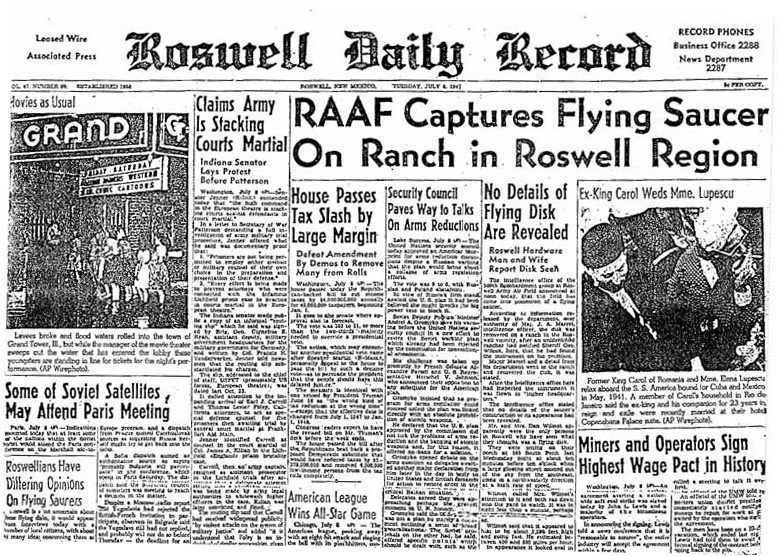
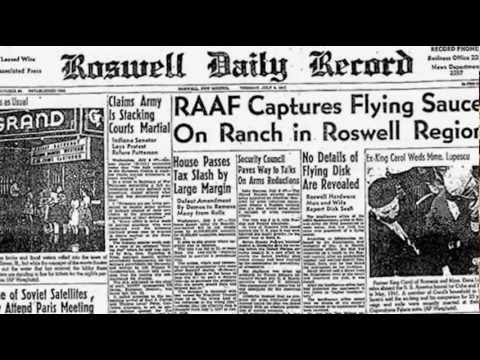
Pictured: the front page of the Roswell Daily Record from July 8, 1947, carrying the Roswell Army Air Field's own press release — retracted within hours — announcing the recovery of a "flying disc." This is a direct, contemporaneous photograph of the case's actual founding document, not a reconstruction. No verified photograph of the recovered debris or of the craft itself is known to exist; none was released in 1947, and none has surfaced in the decades of research and testimony since.
Theoretical Alignment
Seminal alignment with the Extraterrestrial Hypothesis (ETH) based on debris properties and military recovery actions, with Government Deception (Project Mogul) as the primary counter-theory.
Background
The Roswell incident occurred during the first great wave of "flying saucer" sightings sweeping the United States. Just two weeks earlier, on June 24, 1947, private pilot Kenneth Arnold reported nine crescent-shaped objects flying in formation at extraordinary speed near Mount Rainier, Washington — an account that coined the term "flying saucer" and triggered a national media frenzy. By early July, hundreds of sightings had been reported across the country.
Declassified military radar tracking logs from the nearby White Sands Proving Grounds and Alamogordo Army Air Field reveal that for three consecutive nights — July 1, 2, and 3 — radar operators tracked an anomalous, high-velocity target performing sharp, non-ballistic turns over the Capitan Mountains. On the night of July 3, during a severe thunderstorm, the radar return flared intensely and then completely vanished northwest of Roswell, showing that regional tracking networks knew exactly where a target had gone down prior to Mac Brazel reporting the debris field.
Roswell Army Air Field (RAAF) was home to the 509th Bombardment Group — the only nuclear-armed military unit in the world at the time, having dropped the atomic bombs on Hiroshima and Nagasaki just two years earlier. The personnel stationed there, including the intelligence officer who would investigate the debris, were among the most elite and highly security-cleared in the entire U.S. military. This fact is critical: these were not untrained observers. They were the men entrusted with America's nuclear arsenal.
The base commander was Colonel William "Butch" Blanchard, who would later rise to the rank of four-star general and Vice Chief of Staff of the United States Air Force — the second-highest-ranking officer in the service. The intelligence officer was Major Jesse A. Marcel, a combat veteran and trained radar/intelligence specialist.
Complete Timeline
| Date | Event |
|---|---|
| June 14, 1947 | First possible discovery. Ranch foreman William "Mac" Brazel discovers a large field of unusual debris scattered across the J.B. Foster Ranch, approximately 75 miles northwest of Roswell, following a severe thunderstorm the night before. He initially pays it little attention. (Note: Some researchers place the discovery as late as July 2–3; the June 14 date comes from Brazel's own account to the Roswell Daily Record.) |
| June 24, 1947 | Kenneth Arnold reports nine objects near Mount Rainier. "Flying saucer" craze begins nationally. Brazel does not hear about the flying saucer reports until he visits the nearby town of Corona in late June. |
| Late June | Brazel hears about the flying saucer reports. He begins to wonder whether the debris on his ranch might be connected. He collects some of the material. |
| July 1–3, 1947 | Pre-Crash Radar Intercepts. Radar operators at White Sands Proving Grounds and Alamogordo Army Air Field track an anomalous, high-velocity target over the Capitan Mountains. The object vanishes from scopes during a severe thunderstorm on the night of July 3. |
| ~July 4, 1947 | Brazel returns to the debris field with his wife, son Vernon, and daughter Bessie. They gather more of the debris and bring it back to the ranch house. Bessie Brazel Schreiber would later describe the material as including foil-like metal, small sticks, and tough, parchment-like paper. |
| July 5, 1947 | Brazel drives debris samples to his nearest neighbors, Floyd and Loretta Proctor. He shows them a piece of the unusual material. Loretta later described it as lightweight, smooth, and impossible to cut or burn. The Proctors encourage Brazel to report it to the authorities. |
| July 6, 1947 | Brazel drives into Roswell and reports the debris to Chaves County Sheriff George Wilcox. Wilcox contacts RAAF. Major Jesse Marcel, the base intelligence officer, is dispatched along with Counter-Intelligence Corps (CIC) agent Captain Sheridan Cavitt. |
| July 6 (evening) | Marcel and Cavitt drive to the Foster Ranch with Brazel. They spend the night at the ranch before examining the debris field the next morning. |
| July 7, 1947 | Marcel and Cavitt survey the debris field. Marcel later described it as approximately three-quarters of a mile long and several hundred feet wide, with a long gouge in the earth. They collect as much material as they can fit into two vehicles. Marcel fills the trunk and back seat of his 1942 Buick. |
| July 7 (late evening) | On the drive back to Roswell, Marcel stops at his home on South Penn Street and wakes his wife Viaud and 11-year-old son Jesse Marcel Jr. to show them the debris before delivering it to the base. Jesse Jr. later described handling I-beam-like structural members with purple-hued hieroglyphic symbols (including a circular-bordered Maltese Cross variant) and a thin, incredibly strong metallic foil. |
| July 7–9, 1947 | Heavy Machinery Soil Scraping. Large motorized road graders and earth-movers are checked out from the Roswell Army Air Field engineering pool under armed escort. Personnel scrape the top six inches of desert soil and bury/remove earth at the crash site. |
| July 8, 1947 (AM) | Colonel Blanchard orders public information officer Lieutenant Walter Haut to issue a press release announcing the recovery of a "flying disc." Marcel is ordered to fly the debris to Fort Worth Army Air Field (Carswell AFB) in a B-29 bomber. Simultaneously, a secondary, unscheduled military transport flight (C-47 medical shuttle) is cleared directly to the aviation medicine labs at Wright Field carrying delicate, cooled containers under armed guard. |
| July 8, 1947 (noon) | Haut's press release hits the wire services. The Roswell Daily Record runs the headline: "RAAF Captures Flying Saucer On Ranch in Roswell Region." Military officers from the 509th arrive at the press to mandate that no subsequent evening editions run with civilian statements, isolating the town for 12 hours. |
| July 8 (afternoon) | At Fort Worth, General Ramey takes control. Before Major Marcel is allowed to see Ramey, the actual debris is switched with standard weather balloon wreckage (ML-307 Rawin radar target) in Ramey's office. Marcel is ordered to pose for press photographs with the fake debris, trapping him in the cover story. |
| July 8 (6:17 PM) | The FBI Dallas Teletype. The FBI Dallas Field Office fires a high-priority teletype to J. Edgar Hoover, confirming the Eighth Air Force determined the debris was *not* a standard weather balloon, but resembled a radar reflector and was being flown to Wright Field for metallurgical analysis. |
| July 8 (evening) | Teletype Kill-Switch. Lydia Sleppy at KSWS radio attempts to transmit the first-hand civilian crash wire to AP in Denver. The teletype is cut off by an incoming FCC warning: "CEASE TRANSMISSION IMMEDIATELY. NATIONAL SECURITY ITEM...", and military police arrive to confiscate all printed carbon scripts. |
| July 8 (evening) | Brazel is escorted to KGFL radio station by military personnel, where reporter Frank Joyce interviews him before Brazel is taken by the military and held incommunicado for approximately five to eight days (accounts vary). During his detention, Brazel's story changes to align with the weather balloon explanation, and Joyce receives threatening phone calls from Pentagon officials to cease broadcasting. |
| July 9, 1947 | Brazel gives a carefully worded interview to the Roswell Daily Record describing the debris in mundane terms: "rubber strips, tinfoil, a rather tough paper, and sticks." He expresses regret at having reported it. (Family members later said Brazel appeared changed, fearful, and isolated for years after this experience.) |
| July 9 onward | The crash site is cordoned off by military personnel. A thorough cleanup operation is conducted. All debris is removed. Debris is flown to Wright Field (later Wright-Patterson AFB) in Dayton, Ohio, according to multiple witnesses. |
| Summer 1947 | Civil Archive Erasures. The official Lincoln County Brand Books and land ledgers for summer 1947 go missing. Concurrently, Chaves County Sheriff George Wilcox's logbook pages for that week are cleanly cut out of the bound ledger book with a razor blade at the courthouse. |
| 1978 | Ufologist Stanton Friedman interviews Jesse Marcel in Houma, Louisiana. Marcel breaks 31 years of silence, stating the debris was "not of this earth" and that the weather balloon story was a cover-up. This interview single-handedly revives the Roswell case. |
| 1980 | Marcel appears on the television series In Search Of... (hosted by Leonard Nimoy), giving one of the most widely seen witness interviews in UFO history. Charles Berlitz and William Moore publish The Roswell Incident, the first book-length investigation. |
| 1986 | Jesse Marcel Sr. dies. He never recanted his statement that the debris was not a weather balloon. |
| 1991 | Colonel Thomas DuBose signs an affidavit confirming the weather balloon story was a cover and that the real debris was shipped to Washington under armed guard on orders from General Clements McMullen at the Pentagon. |
| 1994 | The U.S. Air Force releases The Roswell Report: Fact vs. Fiction in the New Mexico Desert, concluding the debris was from Project Mogul Flight #4. Congressman Steven Schiff (R-NM) initiates a GAO investigation. |
| 1995 | The GAO completes its investigation. It finds that all outgoing messages from Roswell AAF for the period 1945–1949 were destroyed without explanation and without authorization. No records of the recovery could be located. |
| 1997 | The Air Force releases The Roswell Report: Case Closed, attributing "alien bodies" reports to memories of crash test dummies from Project High Dive — which did not begin until 1953, six years after the incident. |
| Dec 26, 2002 | Walter Haut signs a sealed affidavit, not to be opened until after his death. He claims to have personally seen the recovered craft and alien bodies in Building 84 at RAAF. |
| 2005 | Walter Haut dies. His sealed affidavit is opened and published in Witness to Roswell (2007) by Thomas Carey and Donald Schmitt. |
The Debris
The physical characteristics of the recovered debris are central to the Roswell controversy. Multiple witnesses described materials with properties that did not match any known technology of the era — or, according to some, any technology available today:
- Memory metal: A thin, metallic foil-like material that, when crumpled or folded, would immediately return to its original flat shape with no creases. Frankie Rowe described it as flowing "like quicksilver" on a table. Marcel said it could not be dented with a sledgehammer.
- I-beam structural members: Small, lightweight beams resembling I-beams or T-beams, with hieroglyphic-like or geometric symbols in a purple/violet hue running along their inner surfaces. Jesse Marcel Jr. handled these and described the symbols in detail in multiple interviews and in his book. In forensic drafts reconstructing the layout, he noted the script was not uniform: interspersed among the flowing geometric characters were distinct, stylized markings explicitly resembling a Maltese Cross enclosed within a circular border.
- Parchment-like material: A tough, paper-like substance that could not be burned, even with a cigarette lighter or match.
- Monofilament fiber: Thin, thread-like material of unusual strength.
- Balsa-like material: Lightweight wood-like sticks of extraordinary hardness that could not be cut or broken.
- Heavy-Duty Lead Sheeting and Shielding Foil: Base supply records and invoices from late spring and early summer of 1947 show the 509th Bomb Group placed a high-priority procurement order for industrial-grade lead sheeting. While aluminum foil was standard for Project Mogul, dense lead shielding was not, indicating the military needed to line transport boxes to shield radiation or intense electromagnetic signatures before aircraft shipment.
The debris field extended approximately three-quarters of a mile long and 200–300 feet wide, with a long gouge or trench in the earth suggesting an object had skipped or scraped along the ground before breaking apart.
The "Memory Metal" and Nitinol Connection
Researchers have noted that the "memory metal" described by multiple Roswell witnesses — a metallic foil that returns to its original shape after deformation — closely matches the properties of Nitinol (nickel-titanium alloy), a shape-memory alloy first developed at the Naval Ordnance Laboratory in 1959. Nitinol was not available in 1947. Some researchers, including Anthony Bragalia, have investigated connections between Battelle Memorial Institute (which conducted metallurgical studies for Wright-Patterson AFB in the late 1940s) and early shape-memory alloy research, suggesting a possible reverse-engineering chain. This connection remains speculative but is frequently cited in the literature.
Skeptical Response to the Debris
Skeptics and the Air Force have argued that the debris descriptions match materials used in Project Mogul balloon trains: neoprene weather balloons, balsa wood sticks, aluminum foil radar targets, and Scotch brand tape with decorative flower and geometric patterns manufactured by a New York toy company — which could account for the "hieroglyphics" on the I-beams. Project Mogul scientist Dr. Charles Moore supported this explanation and reconstructed a plausible trajectory for the balloon train.
Proponents counter that a trained intelligence officer at the world's only nuclear-armed base would have immediately recognized weather balloon components, which were commercially available and routinely used in military operations.
The Ramey Photo Strategic Deception & The Ramey Memo
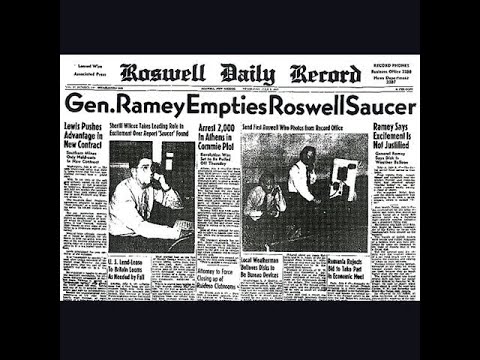
One of the most analyzed photographic and document records of the cover-up is the press conference staged in Brigadier General Roger Ramey's office at Fort Worth Army Air Field on the afternoon of July 8, 1947.
The Strategic Deception: Major Jesse Marcel Sr. was ordered to transport the recovered debris from Roswell to Fort Worth in a B-29. According to Marcel's later testimonies, when he arrived at the base, he was ordered to pose with standard Rawin weather balloon and radar reflector components. Unknown to Marcel, the actual, highly anomalous debris he had flown in had already been switched out on the floor of General Ramey's office before he was allowed inside. Marcel was essentially forced by military hierarchy to pose alongside the decoy material for the press pool. By the time he realized he was being used to validate a cover-up, the flashbulbs had gone off, and the image was wired to the world, trapping him in the deception.
The Ramey Memo: A key detail in the photographs is a telegram or memo visible in General Ramey's hand. High-resolution scans have been the subject of decades of digital enhancement. David Rudiak's analysis (beginning circa 2001) using image processing and blind deconvolution algorithms claims to have identified the phrases "the victims of the wreck" and "disc" along with instructions to forward wreckage to Wright Field. While subsequent studies producing 250MB scans have failed to produce a universally accepted deciphering, the memo remains a central, highly analyzed piece of evidence indicating a real-time cover-up.
The Three Crash Sites & Skip Theory
Some researchers have proposed that there were multiple crash locations, explaining the scattered debris and recovery operations:
Site 1: The Debris Field (Foster Ranch)
The primary site discovered by Brazel and investigated by Marcel. The scattered nature of the lightweight material — spread over three-quarters of a mile — suggests a craft breaking apart in flight. In early July 1947, heavy motorized road graders and earth-movers were checked out under armed guard to scrape the top six inches of desert soil and bury or remove earth at this location, indicating a thorough cleanup operation inconsistent with retrieving standard weather balloon balsa wood and foil.
Site 2: The "Body Site"
The location where the main fuselage of the craft came to rest along with occupants. Early accounts from Grady "Barney" Barnett placed it on the Plains of San Agustin, 150 miles west. However, later research by Kevin Randle and others shifted the proposed second site to a location 2.5 miles southeast of the Foster Ranch debris field, corroborated by Walter Haut's sealed affidavit.
Site 3: The Hub Corn Ranch / Jim Ragsdale Site (Huber Ranch)
A third crash site located approximately 55 miles north of Roswell on land owned by Miller "Hub" Corn (often referred to as "Huber Ranch" or "Pine Lodge" in early reports). Civilian truck driver Jim Ragsdale claimed that he and a companion were camping in the area when they witnessed the craft crash directly into a cliff face. This account gave rise to the "Skip Theory": that the craft skipped at Foster Ranch (depositing the debris field), bounced, and finally impacted at the Corn Ranch. Ragsdale later damaged his own credibility by signing conflicting 1993 and 1995 affidavits (altering his jeep/truck details and timelines) and trying to sell "crash artifacts" from his trunk, but the site remains a major point of debate regarding the geographic layout of the crash.
The Official Explanations
1947: Weather Balloon
The original retraction attributed the debris to a standard ML-307 Rawin weather balloon with a radar reflector. This explanation was issued within hours of the "flying disc" press release and stood as the official position for 47 years.
1994: Project Mogul (Air Force Report)
The U.S. Air Force released The Roswell Report: Fact vs. Fiction in the New Mexico Desert, concluding the debris was from a Project Mogul balloon train. Project Mogul was a classified program using high-altitude balloon arrays to monitor Soviet nuclear tests via acoustic sensors. Flight #4, launched from Alamogordo on June 4, 1947, was identified as the likely source.
However, records for Flight #4's trajectory are incomplete. The project's lead atmospheric scientist, Dr. Albert Crary, wrote in his diary that Flight #4 was cancelled due to cloud cover, though an equipment cluster may have been launched by balloon without a full flight designation. Project Mogul scientist Dr. Charles Moore reconstructed a plausible trajectory that could place balloon debris on the Foster Ranch, but his reconstruction required assumptions about wind data that have been disputed.
1997: Case Closed (Air Force Report)
A second Air Force report, The Roswell Report: Case Closed, addressed reports of alien bodies by suggesting witnesses had conflated memories of anthropomorphic crash test dummies dropped from high-altitude balloons in the 1950s (Project High Dive / Project Excelsior) with the 1947 events. Critics immediately noted that the crash test dummy drops did not begin until 1953 — six years after Roswell — making the "time compression" explanation difficult to accept, particularly for witnesses who provided specific 1947 contextual details.
The GAO Investigation
In 1994, Congressman Steven Schiff (R-NM) requested a General Accounting Office investigation into Roswell records. The GAO's 1995 report found that all outgoing messages from Roswell AAF for the period 1945–1949 had been destroyed without proper authorization and without any record of who authorized the destruction. Administrative records from March 1945 through December 1949 were also destroyed. The GAO could not locate any documents related to the recovery. This finding is often cited by proponents as evidence of a deliberate cover-up, while skeptics note that record destruction was not uncommon in that era.
Witness Intimidation & Media Censorship
Multiple witnesses reported being threatened or intimidated by military personnel, and regional media networks experienced high-level interventions:
- Mac Brazel: Held incommunicado for five to eight days. Changed his story afterward. Family said he was "a different person" for years.
- Frankie Rowe: A man in plain clothes visited the Dwyer home and warned the family they could be "taken out into the desert and never be found."
- Sheriff George Wilcox: Granddaughter Barbara Dugger stated the military threatened Wilcox and his family with death. He never discussed Roswell again.
- Glenn Dennis: Claimed military personnel warned him: "Somebody will be picking your bones out of the sand."
- Various other civilian and military witnesses reported visits from a specific "red-headed captain" who issued warnings.
Chaves County Court House 'Record Cleansing'
When early researchers (such as Carey and Schmitt) began investigating Sheriff George Wilcox’s records at the Chaves County Court House, they discovered that the official sheriff's logbooks for the exact days of the crash in July 1947 had been physically altered. Pages covering that specific week had been cleanly cut out of the bound ledger books with a razor blade. This localized suppression campaign indicates that the cover-up extended beyond the military base (where the GAO found all outgoing teletype messages were destroyed) to boots-on-the-ground destruction of civil records to prevent any paper trail of Wilcox's call to the base from surviving.
The KSWS Radio Teletype Kill-Switch
On the evening of July 8, Lydia Sleppy and station co-owner Jud Roberts at Roswell's KSWS radio station attempted to transmit the first-hand civilian wire story of the crash to the Associated Press network in Denver. The transmission was abruptly interrupted when the teletype machine began typing back an incoming directive from the FCC in Washington, D.C., reading verbatim: "CEASE TRANSMISSION IMMEDIATELY. NATIONAL SECURITY ITEM. DO NOT RE-TRANSMIT UNDER PENALTY OF LOSS OF LICENSE." Within minutes, armed military personnel arrived at the station and confiscated the typed carbon copies, providing direct evidence of high-level communications monitoring outside standard military base channels.
Skeptics attribute these reports to standard security measures protecting classified Project Mogul information, not an organized campaign to suppress evidence of extraterrestrial contact.
MJ-12 / Majestic 12 Documents
In December 1984, TV writer-producer Jaime Shandera received an anonymous roll of 35mm film in the mail containing what purported to be briefing papers for "Operation Majestic-12" — a secret committee allegedly established by President Truman in 1947 to manage the recovery and investigation of extraterrestrial technology after Roswell.
The documents listed 12 alleged members, including CIA Director Roscoe Hillenkoetter, scientist Vannevar Bush, Secretary of Defense James Forrestal, and several generals and scientists. The papers were investigated by multiple agencies:
- The FBI declared them "completely bogus"
- The GAO found no evidence the documents were ever created or classified by any executive branch agency
- CIA analysis identified anachronisms: the classification marking "Top Secret Restricted Information" was not in use during the purported dates, and some officials listed were not in the positions claimed
Stanton Friedman and Timothy Good championed the documents' authenticity, but the vast majority of analysts — including most UFO researchers — consider them elaborate hoaxes. Suspicion has fallen on William Moore (co-author of The Roswell Incident) and AFOSI agent Richard Doty, who has admitted to participating in disinformation operations targeting the UFO community. The MJ-12 documents are officially recognized by the U.S. government as forgeries, but their creation and dissemination remain subjects of investigation.
Physical Evidence: The Metamaterials
While no debris from the 1947 crash has been publicly produced for independent testing, a separate but potentially connected thread of physical evidence has emerged involving alleged crash-retrieval metamaterials that have undergone laboratory analysis at Stanford University and government facilities.
"Art's Parts" — The Bismuth-Magnesium Samples
In 1996, radio host Art Bell (Coast to Coast AM) received a package from an anonymous military source identified as "Mr. X." The sender claimed his grandfather had been part of a military retrieval team sent to a late-1940s crash site in New Mexico — the same era and region as Roswell — and had kept fragments of the wreckage. These samples, known as "Art's Parts," were described as coming from a "wedge-shaped craft."
Analysis revealed the samples consist of 26 alternating layers of dark bismuth (1–4 microns thick) and silver magnesium-zinc alloy (100–200 microns thick). Each of six pieces received from the U.S. Army source were "formed" with a curvature that tapered, consistent with being part of a larger craft structure. The samples were later acquired by investigative journalist Linda Moulton Howe, and eventually sold to Tom DeLonge's To The Stars Academy (TTSA).
Dr. Garry Nolan's Stanford Analysis
Dr. Garry Nolan, Professor of Pathology at Stanford University and one of the most published scientists in the country, has conducted metallurgical and isotopic analysis on various materials allegedly recovered from UAP crash sites. His key findings:
- Anomalous isotopic ratios: Nolan has reported that some samples show magnesium isotope ratios differing from standard Earth materials, suggesting a non-terrestrial origin or an unknown manufacturing process
- Atomic-scale structuring: The precise, sub-micron layering of bismuth and magnesium at scales difficult to reproduce with 1940s technology (or, Nolan argues, even some modern processes)
- Terahertz waveguide hypothesis: Some researchers have theorized that the specific layered structure could act as a terahertz-frequency waveguide — an engineered metamaterial designed to interact with electromagnetic radiation in ways that could relate to propulsion
- Nolan has presented findings at the SOL Foundation, an academic organization bringing together scientists to study UAP from a rigorous scientific perspective
The New Mexico Crash Site Expedition
In a development documented in Dr. Diana Pasulka's book American Cosmic (2019), both Nolan and Pasulka (a religious studies professor at UNC Wilmington) were taken to a purported crash site in New Mexico by an aerospace insider identified in the book as "Tyler D." — later widely reported to be Tim Taylor, known as "The Dragon."
Taylor is described as holding extensive security clearances and credentials across multiple government agencies. He is also the figure who contacted Chris Bledsoe (author of UFO of God) after Bledsoe published his account of contact experiences. At the crash site, metallic debris was recovered using metal detectors, described by Pasulka as having a "metallic frog skin" texture. The site dates to approximately the same era as Roswell.
Government Analysis
The U.S. government's All-Domain Anomaly Resolution Office (AARO) and Oak Ridge National Laboratory have also analyzed layered magnesium-zinc-bismuth materials. Their determination: the materials likely have mundane, terrestrial origins, potentially as byproducts of industrial processes such as the Betterton-Kroll process used to remove bismuth impurities from lead.
The Debate
Supporting Anomalous Origin
- Nolan maintains that the precise atomic structuring and altered isotopic composition of specific fragments defy conventional Earth-based manufacturing
- The sub-micron layering precision was not achievable with 1940s-era technology
- The samples' provenance (allegedly from a U.S. Army source, from a 1940s NM crash) connects them temporally and geographically to Roswell
- If the waveguide hypothesis is correct, the material represents engineered metamaterial technology far beyond anything available in the 1940s
Supporting Terrestrial Origin
- AARO and Oak Ridge analysis concluded the materials are consistent with known industrial byproducts
- The Betterton-Kroll process produces bismuth-magnesium layered structures as waste products
- Nolan himself has acknowledged that some materials he initially found anomalous did not hold up under more rigorous testing
- Chain of custody for the samples is broken — they passed through multiple hands over decades
- The findings have not been widely published in peer-reviewed materials science journals
Connection to Roswell: The "memory metal" described by multiple Roswell witnesses (a thin metallic foil that returns to its original shape after deformation) and the bismuth-magnesium metamaterials represent two separate but potentially related threads of physical evidence from the same era and region. If the samples are authenticated as non-terrestrial, they would constitute the most significant physical evidence in the history of the UFO phenomenon. If they are industrial slag, they represent a cautionary tale about the contamination of evidence through decades of handling and narrative-building. The investigation is ongoing.
Circumstantial Evidence
- The crash occurred at the base of the only nuclear-armed military unit in the world — consistent with a pattern of UAP activity near nuclear facilities documented in UFOs and Nukes by Robert Hastings
- The military response was disproportionate to a weather balloon recovery: armed guards, B-29 transport to multiple bases, witness detention, threatened civilians
- The 1947 sighting wave (hundreds of reports nationally) provides temporal context for anomalous aerial activity
- The GAO finding that all outgoing messages from RAAF were destroyed without authorization is unexplained by the weather balloon/Mogul narrative
- Colonel Blanchard — who authorized the "flying disc" press release — was subsequently promoted, eventually becoming a four-star general and Vice Chief of Staff. He was not reprimanded, which is inconsistent with having made a reckless false public statement but consistent with having followed orders during a managed information operation
- Multiple witnesses who had no connection to each other and no apparent financial motive described the same unusual debris properties independently
Key Researchers
- Stanton Friedman (1934–2019) — Nuclear physicist and ufologist who revived the Roswell case in 1978 through his interview with Jesse Marcel. The most persistent Roswell investigator. Advocated for MJ-12 authenticity.
- Kevin Randle — Former military intelligence officer and prolific author. Conducted some of the most systematic Roswell investigations. Later reassessed some of his earlier conclusions after witness fabrications were exposed.
- Donald Schmitt — Co-author with Randle and later with Thomas Carey. Conducted extensive fieldwork and witness interviews.
- Thomas Carey — Co-author of Witness to Roswell. Focused on deathbed testimony and sealed affidavits.
- Karl Pflock (1943–2006) — Former CIA officer and defense industry analyst who initially investigated Roswell as a believer but ultimately concluded the debris was from Project Mogul. His book Roswell: Inconvenient Facts and the Will to Believe (2001) is considered the strongest skeptical case.
- Charles Berlitz & William Moore — Authors of The Roswell Incident (1980), the book that brought the case to public attention. Moore later admitted to participating in disinformation activities with AFOSI agent Richard Doty, severely damaging his credibility.
Cultural Impact
Regardless of what actually crashed at Roswell, the incident's impact on culture and the UFO field is incalculable. Roswell single-handedly established the "crash retrieval" narrative that continues to dominate UFO/UAP discourse nearly 80 years later. The town of Roswell has embraced its identity, hosting an annual UFO Festival that draws tens of thousands of visitors and operating the International UFO Museum and Research Center, which has received millions of visitors since its 1992 opening.
The case has inspired hundreds of books, documentaries, television shows (including the long-running Roswell TV series), and films. More significantly, it established a template for government secrecy around UAP that David Grusch's 2023 whistleblower testimony directly referenced when alleging ongoing crash retrieval and reverse-engineering programs. Roswell is the origin point of the modern disclosure movement.
Key Witnesses
Primary Military Witnesses
Major Jesse A. Marcel Sr.
The first military officer to examine the debris field. Marcel traveled to the Foster Ranch with CIC agent Cavitt, collected the debris, and transported it to RAAF. He later stated that the material displayed in General Ramey's office was not the material he recovered — it had been swapped with weather balloon wreckage for the photo opportunity. Marcel broke 31 years of silence in a 1978 interview with Stanton Friedman, stating the debris was "not anything from this earth." He maintained this position until his death in 1986. Marcel's military record confirms he held a Top Secret security clearance, had received commendations for his intelligence work, and was later promoted to Lieutenant Colonel. Cross-case connection: Marcel's revival of the Roswell case through Friedman directly led to the modern UFO disclosure movement that culminated in David Grusch's 2023 testimony.
Lt. Walter Haut
Wrote and issued the July 8, 1947 press release announcing recovery of a "flying disc" — on orders from Colonel Blanchard. For decades, Haut publicly stated he knew nothing beyond the press release. However, in a sealed affidavit signed December 26, 2002 (with instructions to open it only after his death), Haut made extraordinary claims: Colonel Blanchard personally took him to Building 84 (a B-29 hangar) where he saw the recovered object — described as metallic, egg-shaped, approximately 12–15 feet long and 6 feet high, with no visible windows, wings, tail section, or landing gear. He also saw at least two bodies under a canvas tarpaulin, viewed from a distance. Only the heads were visible, and they appeared larger than normal. The canvas contour suggested the bodies were the size of a 10-year-old child. He confirmed there were two separate crash sites, that a temporary morgue had been established on base, and that the weather balloon was a deliberate cover story. Haut died in 2005. His affidavit was published in Witness to Roswell (2007). He co-founded the International UFO Museum and Research Center in Roswell.
Colonel Thomas DuBose
Present in the photographs taken in Ramey's office showing the "weather balloon" debris. In a 1991 signed affidavit, DuBose confirmed that the weather balloon story was a cover story, and that the real debris was flown to Washington, D.C. under armed guard on direct orders from General Clements McMullen at the Pentagon. DuBose stated: "The whole balloon story was a cover. We were ordered to ship the material to Washington immediately."
Captain Sheridan Cavitt
Accompanied Marcel to the Foster Ranch to collect the debris. Cavitt's account is the most contradictory of the primary witnesses. He initially denied being at Roswell at all. When Air Force investigators located him for the 1994 report, he changed his position and stated he had gone to the ranch and immediately recognized the material as a weather balloon. Proponents note that in the early 1990s, FOIA requests revealed that Cavitt's military dossier and mandatory end-of-month CIC operational reports for July 1947 were completely missing from the chronological archive boxes, leaving no military paper trail of his actions. His shifting accounts and the absence of his reports severely complicate his reliability.
Colonel Patrick Saunders
As Base Adjutant, Saunders was the administrative gatekeeper for the 509th; every manifest, mail transfer, and flight record passed through his desk. Before his death in 1995, Saunders admitted to family and close associates that he had been tasked with altering military flight logs and manifest papers regarding the B-29 flights carrying debris out of RAAF. However, he kept a personal "black book" ledger of the real flight routes and passenger names as an insurance policy. After his death, his family discovered his copy of Berlitz's The Roswell Incident with Saunders' handwritten margin notes confirming the cover-up, stating "We found them, and the book is mostly true."
Jesse Marcel Jr.
Handled the debris as an 11-year-old boy when his father brought it home the night of July 7. He provided detailed descriptions of the I-beam members with purple hieroglyphic symbols (including the circular-bordered Maltese Cross variant) and the unusual metallic foil. Jesse Jr. became a medical doctor, served as an Army flight surgeon, rose to the rank of Colonel, and served in Iraq in 2004 at age 68. He authored The Roswell Legacy (2009) and gave consistent testimony across hundreds of interviews until his death in 2013. His military career and consistent account over decades make him one of the most credible Roswell witnesses.
Primary Civilian Witnesses
William "Mac" Brazel
The first person to discover the debris. Brazel initially described unusual materials and was excited about possibly finding a "flying disc." After being held incommunicado by the military for approximately five to eight days, his account changed to align with the weather balloon explanation. His July 9 interview with the Roswell Daily Record described the debris in mundane terms. Family members later said Brazel appeared changed by the experience — fearful, isolated, and reluctant to discuss what happened for the rest of his life. Neighbor Loretta Proctor noted he seemed like a different person. There is speculation that Brazel was compensated for his silence — he moved off the ranch to a new business in Alamogordo/Tularosa shortly after — though this has not been confirmed.
Floyd and Loretta Proctor
Brazel brought debris samples to their ranch on approximately July 5, before reporting to Sheriff Wilcox. Loretta Proctor described the material as lightweight, smooth, and impossible to cut with a knife or burn with a match. The Proctors encouraged Brazel to report his find to the authorities. Their testimony is significant because it provides independent corroboration of the unusual nature of the debris before any military involvement.
Glenn Dennis
Ballard Funeral Home held the mortuary services contract for RAAF. Dennis claimed he received phone calls from the base mortuary officer asking about the availability of small, hermetically sealable caskets and about preservation techniques for bodies exposed to the elements. He also claimed that while visiting the base hospital for an unrelated matter, he encountered a nurse he knew who was in a hysterical state. She told him she had accidentally walked into an autopsy room where doctors were examining several "mangled," small, non-human bodies. She later drew him a sketch of the beings. Dennis said the nurse was subsequently transferred to England and killed in a plane crash. Credibility issues: Dennis provided researchers with a fictitious name for the nurse. When confronted, he admitted using a fake name, claiming he was protecting her identity. No records have corroborated the nurse's existence or the described events. Dennis co-founded the International UFO Museum and Research Center in Roswell, giving him a financial interest in the case. His core claims remain unverified.
Frankie Rowe
Twelve years old in 1947. Her father, Dan Dwyer, crew chief of the Roswell Fire Department, allegedly responded to the crash site and witnessed a crashed craft and "little people" among the wreckage. Shortly after, Rowe visited her father at the fire station where a state trooper was present. The trooper showed those gathered a piece of the recovered metallic debris. Rowe's description is one of the most vivid: the material was lightweight and "flowed like quicksilver" when placed on a table, returning to its original shape without creases. She also testified that a man in plain clothes visited the Dwyer home and warned the family they could be "taken out into the desert and never be found" if they spoke about what they had seen. Skeptics have questioned whether the fire department responded to calls outside city limits; researchers Kevin Randle and Donald Schmitt found 1947 fire department logs confirming Dwyer's employment and instances of out-of-city responses.
Sheriff George Wilcox
The first law enforcement official contacted by Brazel. Wilcox relayed the report to RAAF. His granddaughter, Barbara Dugger, later stated that Wilcox told his family the military had threatened him and his family with death if he ever spoke about the incident. Wilcox reportedly never discussed Roswell again and did not seek re-election.
Later Witnesses and Contested Testimony
Brigadier General Arthur Exon
In interviews with Kevin Randle in 1990, Exon stated that he had personal knowledge of the Roswell crash materials being delivered to Wright Field for analysis. He described testing of the debris, including attempts to cut, machine, and analyze the metal. He also referenced an "unholy thirteen" or oversight committee that controlled access to the materials. Exon was a combat veteran, bomber pilot, and base commander — a highly credible witness by any military standard.
Robert Shirkey
Stated he personally witnessed debris being loaded onto a B-29 for transport to Fort Worth on July 8, 1947. He described seeing boxes of unusual material being carried by personnel including Jesse Marcel.
Frank Kaufmann (DISCREDITED)
Claimed to be a military witness to the crash and to have seen alien bodies. His testimony was heavily relied upon by early Roswell researchers. After his death, forged military documents were discovered in his personal files, and key elements of his story were proven fabricated. His inclusion in early investigations by Randle and Schmitt contaminated the evidentiary record and forced significant retractions. This is a cautionary example of why The Omni Ledger flags disputed testimony.
Gerald Anderson (DISCREDITED)
Claimed he was five years old on a rock-hunting trip with his family when they discovered a crashed disc and small, non-human bodies on the Plains of San Agustin. His story emerged in the 1990s after television re-enactments. Significant inconsistencies were found in his testimony over time, and he was unable to corroborate key details. Most researchers, including those sympathetic to the Roswell case, have dismissed his account.
Jim Ragsdale (CONTESTED)
Claimed that he and a female companion (Trudy Truelove) were camping northwest of Roswell during the July 3 thunderstorm when they saw a craft crash into a cliff face. Ragsdale's account was initially used by researchers Kevin Randle and Donald Schmitt to support a secondary crash site at Hub Corn Ranch. However, his credibility was severely damaged when he signed conflicting 1993 and 1995 affidavits (altering details of his vehicle and the timeline of their search) and attempted to sell "debris fragments" from his truck's trunk. Proponents view his story as a contaminated but notable part of the geographical Skip Theory debate, while skeptics classify it as an unreliable fabrication.
The Five Observables Assessment
The Five Observables framework, developed by former AATIP director Luis Elizondo, is used to classify UAP encounters based on performance characteristics that exceed known technology:
Assessment: The Roswell incident predates instrumented UAP data by decades. No radar tracks, FLIR footage, or sensor data exist. If one accepts the Haut affidavit's description of an egg-shaped craft with no visible wings, tail, or propulsion system, this would imply anti-gravity lift and possibly low observability — but this is anecdotal testimony, not instrumented observation. The Five Observables framework is most meaningfully applied to modern, sensor-documented cases like the USS Nimitz encounter. Roswell is classified as speculative on two observables based solely on witness description of the alleged craft.
Evidence Assessment
Supporting Anomalous Origin
- The 509th's intelligence officer (Marcel) — a trained specialist at the world's only nuclear base — did not recognize the material
- The "flying disc" press release was authorized by Colonel Blanchard, who became a four-star general — not someone prone to reckless public statements
- Colonel DuBose's 1991 affidavit confirms the weather balloon was a cover story ordered by the Pentagon
- Walter Haut's 2002 sealed affidavit claims direct observation of a craft and alien bodies in Building 84
- Over 600 witnesses interviewed across multiple decades by multiple independent research teams
- Multiple witnesses reported threats and intimidation from military personnel
- Mac Brazel was detained for five to eight days and changed his story afterward
- The Ramey Memo may contain the words "victims of the wreck" and "disc" (contested)
- GAO found all RAAF outgoing messages for 1945–1949 were destroyed without authorization
- Debris descriptions match no known 1947 technology; "memory metal" predates Nitinol by 12 years
- Independent witnesses (Marcel, Proctor, Rowe) described the same unusual material properties without coordination
- Blanchard was promoted, not reprimanded, after the press release
Supporting Conventional Explanation
- Project Mogul was classified; its unusual balloon configurations may not have been recognizable even to intelligence officers
- The debris photographed in Ramey's office appears consistent with a standard weather balloon and radar reflector
- Several key witnesses (Frank Kaufmann, Gerald Anderson) were proven fabricators, contaminating the evidentiary record
- Glenn Dennis's nurse witness was given a fictitious name and may not exist; he had financial interest via the UFO museum
- Memory contamination over 30+ years is a legitimate concern (most witnesses were first interviewed in the late 1970s–1990s)
- No physical debris has been publicly produced or independently tested
- Dr. Charles Moore reconstructed a plausible Mogul flight trajectory to the Foster Ranch
- The "hieroglyphics" may match decorative tape on Mogul-era radar targets from a toy manufacturer
- The MJ-12 documents — long cited as supporting evidence — are confirmed forgeries
- Haut's affidavit was prepared with UFO researchers and released decades after the event, raising questions about influence
- Cavitt, the other officer at the debris field, identified the material as a weather balloon (though his account shifted over time)
- No photographic evidence of anomalous debris or bodies has ever surfaced despite alleged involvement of hundreds of personnel
Why "Disputed"
The Roswell incident receives a DISPUTED classification because the evidence supports contradictory conclusions depending on which witnesses and documents are prioritized. The case has been contaminated by proven fabricators (Kaufmann, Anderson), the MJ-12 forgeries, memory degradation over decades, and the difficulty of separating genuine testimony from narratives shaped by decades of books, films, and media coverage.
What is not disputed: something crashed on the Foster Ranch in the summer of 1947; the Army Air Forces initially called it a "flying disc"; the explanation was changed within hours under pressure from higher command; debris was shipped under security to multiple military installations; the rancher who found it was detained by the military; and at least some witnesses of demonstrable credibility — including a Colonel who signed a sworn affidavit, an intelligence officer with a Top Secret clearance, and a four-star general's deputy — maintained until death that the material recovered was not a weather balloon or any conventional device.
Sensor & Instrumentation Detection Profile
Roswell Army Air Field radar logged anomalous tracks; RAAF weather monitoring balloons.
Environmental & Geospatial Context
Severe summer thunderstorm with high winds and heavy lightning activity. Dry desert soil conditions.
Observer Credibility & Occupational Profile
Major Jesse Marcel, William "Mac" Brazel, Sheriff Wilcox, Lt. Walter Haut, and local recovery teams.
Physical & Material Assays
Debris showed memory-metal properties (foil returning to shape), high tensile strength, and zero weight.
Historical Precedents & Archive Matches
The foundation of modern UAP crash-retrieval lore, initiating the classification systems still in use today.
Material Analysis
The physical evidence debate at Roswell centers on two distinct categories of material: the debris recovered from the Foster Ranch in July 1947, and the bismuth-magnesium metamaterial samples ("Art's Parts") later linked to a 1940s New Mexico crash site.
1947 Debris Field Materials
Multiple first-hand witnesses described debris with extraordinary properties that defied any known material of the era:
- Memory Metal: A thin, foil-like metallic material that, when crumpled into a ball, would slowly unfold and return to its original flat shape without a single crease or wrinkle. Major Jesse Marcel Sr., his son Jesse Marcel Jr., neighbor Loretta Proctor, and Frankie Rowe all described this property independently.
- I-Beam Structural Members: Small, lightweight I-beam fragments (approximately 3/8-inch wide) with raised symbols described as resembling hieroglyphics or geometric patterns in purple-violet pigment. These did not match any known military hardware markings.
- Extreme Tensile Strength: Despite being extraordinarily light ("lighter than balsa wood"), the material could not be cut, burned, or permanently deformed. Marcel reported that a sledgehammer could not dent or mark the metallic foil.
- Fiber-Optic-Like Filaments: Some witnesses described thin, glass-like threads that transmitted light — a property not commercially available until decades later.
Isotopic Analysis & Metamaterial Testing
Dr. Garry Nolan at Stanford University conducted metallurgical and mass spectrometry analysis on layered bismuth-magnesium-zinc samples allegedly from a late-1940s New Mexico crash site. Key findings include anomalous magnesium isotope ratios deviating from standard terrestrial baselines, and sub-micron-precision layering (26 alternating layers of bismuth at 1–4 microns and magnesium-zinc alloy at 100–200 microns) that was beyond 1940s manufacturing capability.
Government Counter-Analysis
AARO and Oak Ridge National Laboratory concluded the samples were likely terrestrial industrial byproducts consistent with the Betterton-Kroll lead purification process. The isotopic anomalies were attributed to potential measurement artifacts or natural variation in industrial slag.
Supporting Non-Terrestrial Origin
- Isotopic ratios in magnesium layers deviate from all known terrestrial sources
- Sub-micron layering precision exceeds 1940s-era manufacturing technology
- The waveguide hypothesis suggests engineered terahertz-frequency electromagnetic interaction
- Provenance traces to a U.S. Army source and a 1940s New Mexico crash recovery
- Memory metal described by 1947 witnesses predates the invention of Nitinol by 12 years
Supporting Terrestrial Origin
- AARO/Oak Ridge analysis found consistency with Betterton-Kroll industrial byproducts
- Chain of custody is broken — samples passed through multiple handlers over 50+ years
- No peer-reviewed publication in materials science journals confirming anomalous properties
- Some of Nolan's initially anomalous results did not hold under more rigorous retesting
- The USAF identified debris as consistent with Project Mogul balloon train components
The Conventional Explanation Candidate: Project Mogul
The official U.S. government explanation for the Roswell debris is Project Mogul — a classified program to monitor Soviet nuclear tests using high-altitude balloon trains carrying low-frequency acoustic sensors. The USAF formally endorsed this explanation in its 1994 report. It deserves serious evaluation because it is the only proposed conventional explanation with documented hardware, a confirmed operational period, and a geographic footprint that overlaps with the 1947 recovery site.
What Project Mogul Actually Was
Project Mogul was a top-secret program run jointly by NYU (balloon engineering) and the Army Air Force, operational from 1947 to 1949. The program launched very long balloon trains from Alamogordo, New Mexico — sometimes exceeding 600 feet in length — carrying microphones, radar reflectors, and instrument packages designed to float at the 40,000-foot acoustic channel in the stratosphere. The debris recovered at the Foster Ranch in July 1947 was identified in the 1994 USAF investigation as consistent with the materials used in Mogul Flight No. 4, launched June 4, 1947: neoprene balloons, foil-backed radar targets, balsa wood frames, and reinforced tape with geometric symbols (from a novelty store in New York). The materials were unconventional and unfamiliar to rancher Mac Brazel and even to RAAF officers who had never seen Mogul components before. The classification of the program would have prevented any officer from volunteering the explanation at the time.
Where Project Mogul Falls Short
The balloon debris explanation has a fundamental problem: it addresses only one of the two distinct narratives from Roswell. The debris field account — a scatter of lightweight metallic foil, balsa, and rubber across a wide pasture — is reasonably consistent with a Mogul balloon train. But a second, separate location (the alleged "Impact Site" southeast of the debris field, reported by witnesses including Glenn Dennis, Frank Kaufmann, and others) allegedly contained a craft and non-human bodies. Project Mogul, by definition, cannot explain structured hardware, impact craters, or biological material. The USAF's 1997 follow-up report attributed body accounts to anthropomorphic test dummies dropped in the 1950s — a timeline discrepancy that witnesses consistently reject. The CIC's initial "flying disc" characterization and the speed of the retraction also remain poorly explained by a balloon recovery, which would have been unremarkable enough to require no public statement at all.
The Assessment: A Tale of Two Sites
Project Mogul
Plausible (debris field only) Implausible (complete incident)Plausible as an explanation for the debris field specifically — its hardware matches, its classification explains the cover story, and its launch trajectory from Alamogordo plausibly intersects the Foster Ranch location. Implausible as a complete explanation for the Roswell incident if the impact site accounts are credible, because no version of a balloon train produces structured wreckage, an impact crater, or non-human occupants. The honest assessment: Mogul may explain what Brazel found in his pasture, while leaving the larger question — what created the original cover story's enthusiasm, and whether a second site exists — entirely open.
Related Cases
Confirmed Documents & Official Records
FBI Special Agent Guy Hottel's memo to Director Hoover reporting three "flying saucers" recovered in New Mexico with alien occupants. One of the most-requested documents in FBI history.
UNCLASSIFIED (released via FOIA)Official USAF investigation concluding debris was from Project Mogul. Widely contested as incomplete.
UNCLASSIFIEDSecond USAF report addressing biological material claims, attributing them to crash test dummies. Published on 50th anniversary of the incident.
UNCLASSIFIEDNational Archives holdings of Project Blue Book investigation files relevant to the Roswell incident and related New Mexico UAP cases.
UNCLASSIFIED (declassified)Search Government Archives Directly
Further Reading — Recommended Literature
The Roswell Incident
The book that broke the Roswell story wide open. First major published investigation, based on interviews with witnesses who had remained silent for 30 years.
UFO Crash at Roswell
The most systematic civilian investigation. Randle, a former military intel officer, interviewed 500+ witnesses and built the most comprehensive timeline of the crash-and-recovery sequence.
Witness to Roswell
The definitive witness-focused account. Features deathbed confessions and testimony from military personnel, including Walter Haut's sealed affidavit claiming direct observation of the craft and bodies.
The Day After Roswell
Controversial memoir by a former Pentagon official who claims he seeded recovered Roswell technology into American industry. Extraordinary claims, but Corso's military credentials are verified.
Roswell: Inconvenient Facts and the Will to Believe
The strongest skeptical case. Written by a former CIA officer who investigated Roswell as a believer but concluded it was Project Mogul. Essential for balanced understanding.
Essential Viewing
National Geographic: The Roswell Incident
Full episode from NatGeo's Undercover History series. Comprehensive documentary covering the crash, the cover-up, and the investigation with archival footage and expert analysis.
Mysteries Decoded: The Roswell Incident (Part 1)
Official investigative documentary from The CW's Mysteries Decoded, in which investigator Jennifer Marshall examines newly surfaced evidence and technical analysis of the 1947 crash.
Roswell: 74 Years Later — Col. Kevin Randle Explains
Archival interview with retired Lt. Col. Kevin Randle, one of the most prolific Roswell investigators and co-author of multiple books on the case, walking through what actually happened.
Unsolved Mysteries: The Roswell Incident (1947)
Classic Unsolved Mysteries segment on the Roswell crash, blending witness testimony with the show's signature investigative reenactment style.
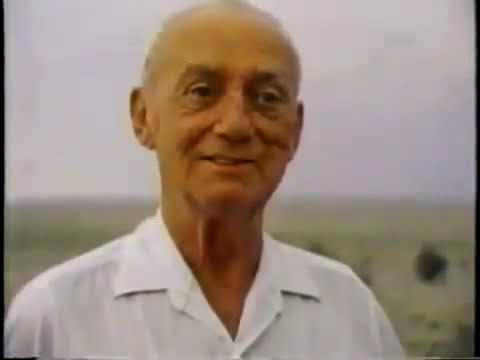
Jesse Marcel Sr. — Roswell Interview (1980)
Archival footage of Major Marcel describing debris "not of this world." The interview that broke 33 years of silence and revived the entire Roswell case.
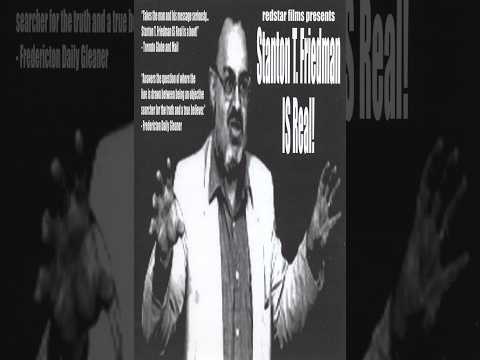
Stanton T. Friedman IS Real! (2002)
Full documentary portrait of nuclear physicist Friedman — the original civilian Roswell investigator. Covers his "Cosmic Watergate" thesis and decades of research.
Roswell Witness Panel — 50th Anniversary (1997)
Historic panel at the International UFO Museum. Features Marcel Jr., Haut, Dennis, Friedman. Footage unpublished for 27 years until 2024.
Larry King Live — UFOs Special (July 2007)
CNN's Larry King Live dedicated episode featuring witnesses and researchers debating the Roswell case on mainstream television.
Sources
- Haut, Walter. Press Release, Roswell Army Air Field, July 8, 1947. Original text reproduced in multiple sources. nicap.org
- Marcel, Jesse A. Interview with Stanton Friedman, 1978 (Houma, Louisiana). The interview that revived the Roswell case
- Marcel, Jesse A. In Search Of... television appearance, "UFO Coverups," Season 5 Episode 1, 1980. imdb.com
- Haut, Walter. Sealed affidavit, signed December 26, 2002 (opened after his 2005 death). Published in Carey & Schmitt (2007). roswellproof.com
- DuBose, Thomas. Signed affidavit, September 1991. Confirms weather balloon cover story and Pentagon orders. roswellproof.com
- Berlitz, Charles & Moore, William. The Roswell Incident, Grosset & Dunlap, 1980
- Randle, Kevin & Schmitt, Donald. UFO Crash at Roswell, Avon Books, 1991
- Carey, Thomas & Schmitt, Donald. Witness to Roswell: Unmasking the Government's Biggest Cover-Up, New Page Books, 2007 (revised editions 2009, 2022)
- Corso, Philip. The Day After Roswell, Pocket Books, 1997
- Pflock, Karl. Roswell: Inconvenient Facts and the Will to Believe, Prometheus Books, 2001
- Marcel, Jesse Jr. The Roswell Legacy, New Page Books, 2009
- U.S. Air Force. The Roswell Report: Fact vs. Fiction in the New Mexico Desert, 1994. media.defense.gov
- U.S. Air Force. The Roswell Report: Case Closed, 1997. esd.whs.mil
- U.S. General Accounting Office. Results of a Search for Records Concerning the 1947 Crash Near Roswell, New Mexico, GAO/NSIAD-95-187, July 28, 1995. gao.gov
- Rudiak, David. Ramey Memo analysis. roswellproof.com
- FBI. Investigation of MJ-12 documents, 1988. Documents available via FBI Vault. vault.fbi.gov
- Friedman, Stanton & Berliner, Don. Crash at Corona, Paragon House, 1992
- Good, Timothy. Above Top Secret, William Morrow, 1988
- Rowe, Frankie. Testimony documented in Carey & Schmitt (2007) and multiple documentary appearances
- "Roswell incident," Wikipedia (comprehensive summary of published sources). en.wikipedia.org
- "Jesse Marcel," Wikipedia. en.wikipedia.org
- Exon, Arthur. Interviews with Kevin Randle, 1990. Documented in Randle & Schmitt (1991)
- Proctor, Loretta. Testimony documented in multiple Roswell investigations, first interviewed by Stanton Friedman
- Brazel family testimony. Bessie Brazel Schreiber, Bill Brazel Jr. Documented in Randle & Schmitt (1991) and Carey & Schmitt (2007)
- Dugger, Barbara (granddaughter of Sheriff Wilcox). Testimony regarding intimidation threats. Documented in Carey & Schmitt (2007)
- Hastings, Robert. UFOs and Nukes: Extraordinary Encounters at Nuclear Weapons Sites, 2017
See something inaccurate? Have additional information or sources?
Suggest an Edit →Last Updated: June 2026