
David Grusch Whistleblower Testimony
In the summer of 2023, David Charles Grusch — a decorated former intelligence officer with the National Geospatial-Intelligence Agency and the National Reconnaissance Office — went public with allegations that the U.S. government has been operating illegal crash retrieval and reverse-engineering programs involving craft of non-human origin. He testified under oath before Congress. The Intelligence Community Inspector General found his claims “credible and urgent.” This is not a sighting case. This is a government disclosure case.
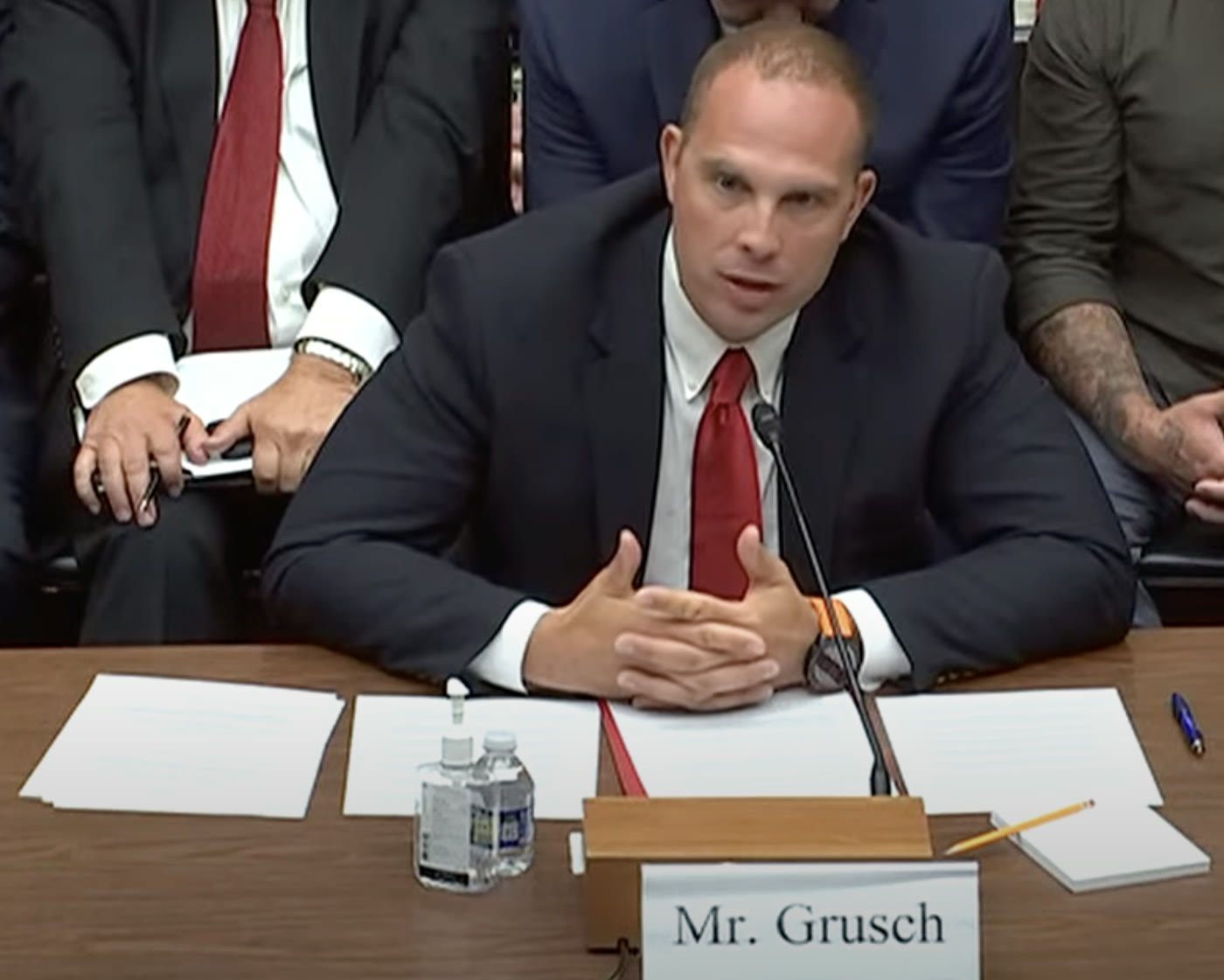
Pictured: David Grusch himself, seated at the witness table marked "Mr. Grusch," testifying under oath before the House Oversight Committee's UAP hearing on July 26, 2023 — a direct frame from that public, televised proceeding.
Theoretical Alignment
David Grusch’s testimony does not present a simple alignment with the Extraterrestrial Hypothesis; rather, it reframes the entire theoretical landscape by asserting that the question of origin — whether the craft are extraterrestrial, interdimensional, or manufactured by a previously unknown civilization — is secondary to the institutional question of whether the U.S. government has been concealing their existence. Grusch himself has been careful to use the phrase “non-human intelligence” rather than “extraterrestrial,” explicitly acknowledging that origin cannot be determined from available evidence. His testimony most directly implicates a cover-up paradigm that transcends conventional ETH/IDH distinctions: whatever these objects are, the assertion is that the U.S. government has known about them for decades, has recovered materials and biologics, and has concealed this knowledge from the American people and their elected representatives.
Background
Who Is David Grusch?
David Charles Grusch is a former U.S. intelligence officer with 14 years of service in the intelligence community. He served as a combat officer in Afghanistan, earning the National Intelligence Meritorious Unit Citation, the National Reconnaissance Office Director’s Medal of Merit, and multiple other commendations. He held Top Secret/Sensitive Compartmented Information (TS/SCI) clearances at the highest levels.
Grusch served in the National Geospatial-Intelligence Agency (NGA) and the National Reconnaissance Office (NRO) — two of the most secretive intelligence agencies in the U.S. government. From 2019 to 2021, he was the NGA’s representative to the Unidentified Aerial Phenomena Task Force (UAPTF), and he later served in a similar capacity with its successor, the All-domain Anomaly Resolution Office (AARO), based at the Pentagon.
It was during his work with the UAPTF that Grusch says he was made aware of a decades-long crash retrieval and reverse-engineering program that had been illegally withheld from Congressional oversight.
Complete Timeline
| Date | Event |
|---|---|
| 2019 – 2021 | David Grusch serves on the UAP Task Force (UAPTF) as the National Reconnaissance Office (NRO) representative, conducting a co-lateral investigation into UAP crash-retrieval programs. |
| July 2021 | Grusch files an official "Urgent Concern" disclosure with the Intelligence Community Inspector General (ICIG) alleging classified UAP program information was withheld from Congress. |
| June 5, 2023 | Journalists Leslie Kean and Ralph Blumenthal publish Grusch's whistleblowing allegations in The Debrief, breaking the story to the public. |
| July 26, 2023 | Grusch testifies under oath before the House Oversight Committee, alleging that the U.S. government maintains secret crash-retrieval and reverse-engineering programs of non-human origin. |
The Disclosure
Going Public
In June 2023, Grusch went public through two simultaneous channels. Journalists Leslie Kean and Ralph Blumenthal published an investigative article in The Debrief, and Australian journalist Ross Coulthart conducted an extended interview for NewsNation. Both were released on June 5, 2023.
Grusch’s core allegations were extraordinary:
- The U.S. government has been operating a secret crash retrieval program for decades, recovering craft of non-human origin
- The government possesses “intact and partially intact” vehicles of non-human origin
- “Biologics” — non-human biological specimens — were recovered from some crash sites
- These programs have been illegally hidden from Congressional oversight, operating without proper authorization or funding transparency
- People have been harmed — and potentially killed — in efforts to keep these programs secret
- Other nations, including Russia, are aware of and have their own retrieval programs, creating a “Cold War” dynamic around the technology
The ICIG Complaint
Before going public, Grusch followed the legal whistleblower process. He filed a formal complaint with the Intelligence Community Inspector General (ICIG), Thomas Monheim, providing classified details, names, program titles, and locations that he could not share publicly. The ICIG reviewed the complaint and determined it to be “credible and urgent” — a formal legal finding that triggered notification to the Congressional intelligence committees.
It is important to understand what “credible and urgent” means in this context: it means the ICIG found sufficient basis to believe the complaint warranted investigation. It does not mean the ICIG confirmed the underlying claims are true. However, this finding is significant because the ICIG reviewed classified evidence that the public has not seen.
Congressional Testimony
The July 26, 2023 Hearing
On July 26, 2023, Grusch testified under oath at the U.S. Capitol Hearing Rooms before the House Oversight Committee’s Subcommittee on National Security, the Border, and Foreign Affairs. He appeared alongside two other witnesses: retired Navy Commander David Fravor (the pilot of the famous 2004 Nimitz “Tic Tac” encounter) and former Navy pilot Ryan Graves (founder of Americans for Safe Aerospace, who reported recurring UAP encounters during training operations off the East Coast).
The hearing was extraordinary in both its content and its bipartisan tone. Key exchanges included:
“I was informed, in the course of my official duties, of a multi-decade UAP crash retrieval and reverse-engineering program, to which I was denied access.” — David Grusch, under oath
When asked directly by Representative Nancy Mace whether the U.S. government had possession of UAPs, Grusch answered affirmatively. When pressed on whether non-human biologics had been recovered, he stated:
“As I’ve stated publicly already in my NewsNation interview, biologics came with some of these recoveries, yeah.”
Grusch also alleged that people had been harmed in efforts to conceal these programs, though he stated he could not elaborate in an unclassified setting. He told the committee he knew the exact locations of UAP retrieval programs and the identities of individuals involved, but could only share this information in a SCIF (Sensitive Compartmented Information Facility).
Fravor and Graves Testimony
Commander David Fravor provided his firsthand account of the November 2004 Nimitz encounter, describing the “Tic Tac” object’s extraordinary capabilities: no visible means of propulsion, instantaneous acceleration, and the ability to descend from 80,000 feet to sea level in less than a second, as captured on the USS Princeton’s SPY-1 radar system.
Ryan Graves testified about recurring UAP encounters by Navy fighter pilots during training exercises, describing objects that demonstrated capabilities far exceeding known technology and posed genuine flight safety risks. He emphasized that many pilots were reluctant to report encounters due to professional stigma.
Bipartisan Response
Congressional Support
The response from both parties was remarkable for its seriousness and relative unity:
- Senator Marco Rubio (R-FL), Vice Chairman of the Senate Intelligence Committee, confirmed in interviews that additional whistleblowers with firsthand knowledge had come forward to the committee — not just secondhand witnesses like Grusch, but individuals who claim to have directly worked in or with the alleged programs
- Senator Kirsten Gillibrand (D-NY) pushed for expanded transparency through AARO and advocated for hearings in the Senate
- Representative Tim Burchett (R-TN) was one of the most vocal advocates for the hearing and subsequent investigation, publicly stating he believed a cover-up was occurring
- Representative Anna Paulina Luna (R-FL) pressed for access to classified information and publicly supported the witnesses
- Representative Jared Moskowitz (D-FL) asked pointed questions during the hearing and later co-sponsored legislation
The UAP Disclosure Act
Senate Majority Leader Chuck Schumer (D-NY), along with Senator Mike Rounds (R-SD), co-sponsored the UAP Disclosure Act of 2023 — a bipartisan amendment to the National Defense Authorization Act (NDAA). The legislation was modeled on the President John F. Kennedy Assassination Records Collection Act of 1992 and proposed:
- A nine-member review board with authority to declassify UAP-related records
- An eminent domain provision that would require private contractors holding retrieved materials to make them available to the government and, ultimately, to public disclosure
- A 25-year timeline for full disclosure, with the President retaining the ability to postpone specific releases for national security reasons
The Act was included in the Senate version of the NDAA but was significantly weakened in the final House-Senate conference. The eminent domain provision — widely considered the most consequential element, as it would have compelled defense contractors to surrender any retrieved materials — was stripped after intense lobbying. The final version retained a review board with reduced authority. Schumer publicly expressed frustration, stating that “entrenched interests” had blocked the full legislation.
Corroboration
Named Supporting Figures
Several individuals with verified intelligence community credentials publicly supported Grusch’s credibility:
- Colonel Karl Nell (U.S. Army, retired) — A former member of the UAPTF who served alongside Grusch. Nell publicly stated at the 2024 SOL Foundation symposium: “Non-human intelligence exists. Non-human intelligence has been interacting with humanity. This interaction is not new and has been ongoing.” He confirmed that Grusch was “telling the truth.”
- Jonathan Grey — Identified as a current intelligence community officer, Grey confirmed to The Debrief the existence of “exotic materials” and stated: “The non-human intelligence phenomenon is real. We are not alone.”
- Christopher Mellon — Former Deputy Assistant Secretary of Defense for Intelligence. Mellon vouched for Grusch’s credibility, his access level, and the seriousness of his allegations. Mellon has been a key figure in pushing for UAP transparency since 2017.
The Pentagon & AARO Response
The Department of Defense and the All-domain Anomaly Resolution Office (AARO) pushed back against Grusch’s claims. In March 2024, AARO released Volume 1 of its Historical Record Report, which concluded:
“AARO found no verifiable evidence that any UAP sighting has represented extraterrestrial activity… AARO found no evidence that any U.S. Government investigation, academic-sponsored research, or official review panel has confirmed that any sighting of a UAP represented extraterrestrial technology.”
Grusch and multiple members of Congress disputed AARO’s findings. They alleged that AARO was not given access to the relevant compartmented programs and therefore could not have investigated them properly. Representative Tim Burchett publicly stated that AARO’s report was “insulting” to the witnesses who had come forward.
AARO’s founding director, Dr. Sean Kirkpatrick, resigned in December 2023. In subsequent public writings, Kirkpatrick expressed frustration with what he described as conspiracy theories and political interference, while maintaining that AARO had conducted a thorough investigation. He also acknowledged, however, that AARO had not been granted access to all relevant Special Access Programs.
The Intelligence Community Whistleblower Protection Framework
David Grusch’s use of the Intelligence Community Whistleblower Protection Act (ICWPA) to disclose his claims was a deliberate and legally significant choice. The ICWPA, enacted in 1998, provides a formal channel for intelligence community employees to report “urgent concerns” to the congressional intelligence committees without going through their chain of command. Critically, it provides legal protection against retaliation for employees who use the Act’s procedures. Grusch’s decision to file through ICWPA channels rather than leaking to journalists or making unauthorized disclosures protected him from criminal prosecution under the Espionage Act and from administrative retaliation by his employing agency.
The Security Classification System and Alleged Illegal Programs
A central element of Grusch’s testimony that has received less public attention than his claims about recovered craft is his allegation that the programs he describes are operating outside the legal framework for classified programs established by executive order and statute. In the United States, classified programs must be acknowledged to certain members of Congress (specifically the Gang of Eight and relevant committee chairpersons) even if their contents cannot be broadly disclosed. The Inspector General of the Intelligence Community, the Defense Intelligence Agency’s Inspector General, and the Pentagon’s Inspector General all have oversight authority over classified programs, and program funding must appear in the classified annex of the federal budget even if not in the public version.
Grusch alleges that the UAP reverse engineering programs he describes do not appear in any of these oversight mechanisms. Their funding allegedly comes not from the standard congressional appropriations process but from a “reprogramming” of funds from other classified accounts — a practice that is explicitly illegal under the Budget and Impoundment Control Act of 1974 if conducted without congressional notification. The programs allegedly operate under security compartments so deep that they are not acknowledged to the relevant congressional oversight committees, which is a violation of the National Security Act. And the materials allegedly in their custody — if Grusch’s claims are accurate — represent the most significant scientific assets in human history, being managed outside any legal accountability framework.
This institutional dimension of Grusch’s testimony — the claim not just that something extraordinary exists but that it is being managed illegally — is what gives his disclosure particular legal and political weight. If he is correct, then not only has the government been concealing evidence of non-human intelligence for decades, it has been doing so through a systematic violation of the constitutional separation of powers and the statutory oversight framework that is supposed to prevent exactly this kind of unaccountable government activity. The Congress’s response — passing the UAP Disclosure Act and the NDAA provisions requiring AARO to report to Congress on any programs not previously disclosed — is a direct institutional response to this specific allegation.
The Pentagon’s AARO and Its Institutional Limitations
The All-domain Anomaly Resolution Office, established in July 2022 under the authority of the FY2022 NDAA, was tasked with synchronizing UAP detection, reporting, and analysis across all military and intelligence agencies. AARO’s mandate was comprehensive on paper: it was supposed to have access to all UAP-related programs, all sensor data, and all reports from any agency. However, AARO’s actual authority and access have been disputed from the beginning. Grusch has alleged that AARO was deliberately given incomplete access — that the programs he describes as operating outside congressional oversight are also outside AARO’s access — making AARO’s assessments inherently incomplete regardless of its analytical quality.
AARO Director Dr. Sean Kirkpatrick, who served from 2022 until his resignation in late 2023, publicly acknowledged limitations on AARO’s access in Congressional testimony, stating that some programs and compartments had not fully complied with AARO’s data requests. He did not characterize this non-compliance as evidence of illegal activity but rather as institutional friction in a bureaucratic integration process. His successor, Dr. Jonathan McDaniel, has faced the same institutional challenges and has reportedly made additional requests to Congress for enhanced access authority. Whether AARO will ultimately gain access to whatever programs Grusch alleges to exist — if they exist — remains the central unresolved institutional question in the post-2023 UAP disclosure landscape.
The Bipartisan Response and Political Dimensions
One of the most remarkable aspects of the Congressional response to Grusch’s testimony was its bipartisanship. In an era of extreme political polarization, UAP disclosure attracted serious engagement from both parties. Republican Representative Tim Burchett, Democrat Representative Jared Moskowitz, Republican Representative Matt Gaetz, and Democrat Representative Alexandria Ocasio-Cortez all expressed support for UAP disclosure legislation and requested classified briefings. Senators from both parties co-sponsored the UAP Disclosure Act amendments. This bipartisan consensus — while not universal — reflects the extent to which UAP is perceived as a national security and governmental accountability issue that transcends conventional partisan divisions.
The political dynamics of UAP disclosure are more complex than simple bipartisan consensus suggests. Within the executive branch, there are reportedly significant institutional differences between the Office of the Director of National Intelligence (which has taken a relatively cooperative posture toward Congressional UAP oversight since 2021), the CIA (which has been largely uncooperative with FOIA requests and Congressional inquiries), and elements of the Department of Defense (which has been cooperative in some areas and resistant in others). Grusch’s allegations, if accurate, suggest that the resistance within the executive branch to Congressional oversight of UAP programs is not a matter of executive branch policy but rather of specific classified program managers who believe their programs fall outside standard oversight frameworks. This distinction matters because it shifts the political frame from an executive-vs-legislative branch conflict to a conflict between lawful oversight and alleged illegal compartmentalization.
Former AARO Director Dr. Sean Kirkpatrick’s resignation in late 2023 added another dimension to the political landscape. Kirkpatrick, in his final public statements as AARO Director, took an explicitly skeptical posture toward Grusch’s claims and toward the broader hypothesis that the government possesses recovered non-human craft. He stated that AARO’s review had found no credible evidence of such programs. His critics — including several members of Congress — pointed out that AARO’s access limitations meant that Kirkpatrick could not credibly make this claim: if the programs Grusch describes are operating outside normal classification channels, AARO would not have access to them regardless of how thorough its review. The epistemological impossibility of proving a negative in the face of alleged extreme compartmentalization is one of the defining challenges of the post-Grusch UAP disclosure landscape.
What Grusch Claimed vs. What He Proved
It is important to distinguish precisely between what Grusch claimed and what the available evidence proves. Grusch claimed: (1) that he personally reviewed documents and spoke with witnesses who described U.S. government programs involving the recovery and reverse engineering of non-human craft and biologics; (2) that these programs operate outside legal oversight frameworks; (3) that he was subjected to retaliation for investigating and disclosing these programs; and (4) that the Intelligence Community Inspector General found his complaint credible and urgent. What the available evidence proves: (1) that the ICIG did find his complaint credible and urgent (confirmed by released ICIG correspondence); (2) that he was indeed subjected to retaliatory security revocation attempts that were subsequently reversed (confirmed by his legal team and DOPSR); and (3) that his testimony was cleared by DOPSR for public disclosure (confirmed by the process record). What remains unproven by any publicly available evidence: the existence of the programs he describes, the recovered materials and biologics, or the specific institutional actors responsible for the alleged suppression. Grusch’s testimony is best understood as legally protected and institutionally credible testimony about what he was told by sources he found credible — not as direct proof of what those sources described.
The Broader Whistleblower Context
David Grusch’s decision to come forward through whistleblower channels rather than through unauthorized leaks or public disclosure reflects a sophisticated understanding of the legal and institutional framework governing intelligence community disclosures. The Intelligence Community Whistleblower Protection Act of 1998 provides specific procedural protections for employees who report “urgent concerns” to the congressional intelligence committees through the Inspector General process. By filing with the ICIG rather than going directly to journalists, Grusch obtained legal protections that unauthorized leakers do not have, created an institutional record of his complaint, and forced the ICIG to make a formal determination about the credibility and urgency of his allegations. The ICIG’s finding that his complaint was “credible and urgent” is not a routine determination; it requires the Inspector General to have found substantive grounds for the complaint sufficient to justify transmittal to the congressional oversight committees.
The broader context of government whistleblowing in the national security domain is relevant to understanding Grusch’s situation. The history of whistleblowing on classified programs — from Daniel Ellsberg’s release of the Pentagon Papers in 1971 to Edward Snowden’s NSA surveillance revelations in 2013 — shows that individuals who come forward with information about government programs they believe to be operating outside legal authority face significant personal and professional consequences regardless of the merit of their disclosures. Grusch chose the formal ICWPA channel specifically to minimize these consequences while maximizing institutional impact. His success in obtaining legal protection, in having his complaint formally certified as credible, and in testifying before Congress without criminal prosecution or professional destruction represents the best-case outcome of the protected whistleblower process — and a demonstration that the process can work even for allegations as extraordinary as his.
The question of what happens next is the most important unresolved dimension of Grusch’s disclosure. The UAP Disclosure Act, even in its weakened form, established a legal mechanism for the review and declassification of UAP records. The NDAA provisions requiring AARO to report to Congress on programs not previously disclosed create a formal accountability mechanism. Congressional oversight committees have received classified briefings and have the authority to demand additional disclosure. Whether these mechanisms will ultimately produce the revelations that Grusch’s account implies — recovered non-human craft and biologics in government custody — or whether they will produce only additional layers of institutional non-disclosure, is the central open question of the post-2023 UAP disclosure era. The answer will determine whether Grusch is remembered as the most significant whistleblower in human history or as a credible, well-intentioned official who was deceived by sources whose claims could not be verified.
Historical Pattern of UAP Concealment
Grusch’s testimony, if accurate, is not the beginning of a story about government UAP concealment; it is a data point in a pattern that stretches back to the earliest years of the modern UAP era. The institutional suppression of the Project Sign “Estimate of the Situation” in 1948, the Robertson Panel’s explicit recommendation to debunk UAP reports in the public media in 1953, the Condon Committee’s politically motivated conclusion in 1968 despite its own investigators finding significant unresolved cases, the NSA’s suppression of signals intelligence data related to UAP under the Glomar doctrine — all of these represent episodes in a 75-year institutional pattern of managing public information about UAP in ways that consistently minimize public awareness of the phenomenon’s significance.
The declassified documents that reveal this pattern are publicly available in the National Archives, in the FBI’s FOIA reading room, in the NSA’s released UAP files, and in the CIA’s released documents. The pattern is not conspiracy theory; it is documented institutional history. What Grusch adds to this documented pattern is the allegation that it continues in the present day and that it involves not merely information suppression but active management of physical evidence — recovered non-human craft and biological material — in programs that operate outside the legal framework governing classified government activities. Whether this specific allegation is accurate is what remains to be determined through the institutional mechanisms that Congress has established in response to his testimony.
The question of why — if Grusch’s account is accurate — the programs have been maintained in such deep secrecy for so long is one that researchers and policy analysts have addressed from multiple angles. The most commonly proposed explanations include: fear of public panic or religious upheaval; concern about strategic advantage in not disclosing what is known; the bureaucratic inertia of programs that have operated in isolation for decades; and the self-preservation instincts of institutional actors who have built careers and invested professional identities in the secret programs. Each of these explanations is plausible on its own; in combination, they describe an institutional ecosystem that would be extraordinarily difficult to disrupt even when its legal and ethical foundations are challenged. The post-Grusch disclosure environment is, in this sense, not simply an information management problem but a structural institutional challenge of the kind that typically requires sustained external political pressure — the kind that the current Congressional engagement represents — to resolve.
The Credentialed Corroborators
One of the most significant aspects of Grusch’s testimony is that he is not a lone voice. He has stated that his information was provided by multiple sources — individuals currently or formerly employed in relevant government and contractor roles, many of whom hold or held Top Secret/SCI clearances — who corroborated each other’s accounts independently. Grusch himself has stated that he is not reporting his own direct observations but rather the consistent testimony of multiple credentialed witnesses who provided their accounts through appropriate legal channels. The ICIG’s finding that his complaint was credible reflects, in part, the ICIG’s own assessment of the credibility of these sources, since the IG reviewed Grusch’s sources and evidence before making the credibility determination. The fact that the ICIG found the complaint credible — a determination that required finding the underlying sources sufficiently credible to warrant concern — provides institutional support for the seriousness of at least some of the corroborating witnesses beyond Grusch himself.
Among the publicly identified individuals who have provided consistent testimony in the same direction as Grusch are: former Deputy Assistant Secretary of Defense for Intelligence Christopher Mellon, who has stated that he witnessed documents describing recovered non-human materials during his tenure; retired Rear Admiral Tim Gallaudet, former NOAA administrator and Navy oceanographer, who has publicly called for investigation of UAP and has implied he encountered evidence of programs beyond what is publicly acknowledged; and Luis Elizondo, former Director of AATIP, who has consistently stated that the evidence he reviewed during his government service pointed to the existence of advanced technology that was not of human origin. While none of these individuals has made the same specific claims as Grusch under oath, their consistent direction of testimony provides a chorus of senior, credentialed voices pointing toward the same general conclusion.
The Role of Private Aerospace in UAP Programs
One of Grusch’s most significant and most controversial allegations is that some of the recovered non-human materials he describes have been transferred to private aerospace defense contractors for analysis and reverse engineering, potentially outside the control and awareness of the government agencies that nominally oversee classified programs. This allegation — that the most significant technological materials in human history might be in private hands rather than government custody — has profound legal, political, and strategic implications. If accurate, it means that individuals employed by private corporations have been working with non-human technology funded by or obtained through government channels without the normal congressional oversight that governs government-owned classified programs.
The legal framework for government-to-contractor transfer of extremely sensitive materials and technology is well-established: it requires specific authorization, is subject to congressional notification requirements, and must be documented in classified contracts that are reviewed by relevant oversight bodies. Grusch’s allegation, if accurate, suggests that these requirements were circumvented — that the materials were transferred in ways that bypassed normal oversight, potentially through mechanisms that were themselves classified beyond the awareness of even those oversight bodies. The UAP Disclosure Act’s provision requiring the return of non-human materials from private custody — before it was weakened in conference — was a direct legislative response to this specific allegation. The provision’s removal from the final bill, reportedly due to significant lobbying pressure, has been cited by Schumer and other supporters as evidence that private sector interests with stakes in the alleged programs were able to influence the legislative process. Whether this interpretation is accurate or whether the provision was removed on constitutional or practical grounds is itself a matter of dispute.
The Long View
Whether David Grusch’s specific claims are ultimately verified or not, his 2023 testimony represents a watershed moment in the institutional history of UAP disclosure in the United States. For the first time, a credentialed, active-duty-equivalent government official with direct access to relevant programs testified under oath before a Congressional body that the U.S. government possesses recovered non-human craft and biologics, and that the programs housing these materials operate outside legal oversight frameworks. The ICIG’s finding that his complaint was credible gives his testimony an institutional backing that anonymous or informal disclosures have never had. The Congressional response — legislative action, official hearings, classified briefings, and ongoing advocacy from multiple members of both parties — gives his testimony a political momentum that prior UAP whistleblower accounts never generated. Whether the institutional momentum he has created will ultimately produce the disclosure he intends — public acknowledgment of what the U.S. government knows about non-human intelligence — will depend on factors including political will, international security considerations, and the outcome of ongoing AARO and Congressional investigations. What is certain is that the pre-Grusch status quo — in which such claims could be officially ignored without consequence — no longer exists. The institutional landscape of UAP disclosure has been permanently altered, and Grusch’s testimony is the event that altered it.
The Path Forward
The path forward from Grusch’s 2023 testimony runs through three parallel tracks: legislative, investigative, and cultural. The legislative track involves the ongoing implementation of the UAP Disclosure Act’s provisions, the NDAA’s oversight requirements, and potential additional legislation that would strengthen the access and enforcement mechanisms that were weakened in the 2023 conference. The investigative track involves AARO’s ongoing historical review, the Intelligence Community Inspector General’s continued engagement with Grusch’s complaint and its underlying sources, and the classified work of Congressional oversight committees with subpoena authority and access to witnesses. The cultural track involves the continued shift in public and media attitudes toward UAP, which has moved dramatically toward serious engagement since 2017 and continues to normalize the discussion of subjects that were previously confined to the margins of mainstream discourse. All three tracks are necessary; none is sufficient alone. Legislative action without investigative substance produces hollow frameworks. Investigative findings without legislative backing produce reports that can be ignored. Cultural normalization without institutional action produces curiosity without consequence. Grusch’s testimony has advanced all three tracks simultaneously — creating legislative momentum, providing investigative impetus, and dramatically shifting the cultural conversation — and its long-term impact will be measured by whether those tracks converge on actual disclosure in the coming years or whether they eventually dissipate into the same bureaucratic and classification-driven resistance that has frustrated UAP transparency advocates for eight decades.
Historical Significance
Regardless of the ultimate resolution of Grusch’s claims, the events of summer 2023 represent a watershed moment in the history of the UFO/UAP phenomenon. For the first time, a credentialed intelligence officer with verified access testified under oath before Congress about alleged crash retrieval programs. For the first time, the Senate Majority Leader introduced legislation to compel disclosure. For the first time, the ICIG formally validated a UAP-related whistleblower complaint.
The Grusch testimony directly connects to cases decades old — most notably Roswell (1947), which Grusch’s allegations implicitly reference as a potential origin point for the crash retrieval programs he describes, and the claims of Bob Lazar (1989), whose descriptions of a covert reverse-engineering program hidden inside private aerospace holdings are mirrored in Grusch's disclosures of legacy programs operating outside congressional oversight. Whether his claims prove true, partially true, or ultimately unfounded, they have permanently changed the institutional landscape of UAP discourse and opened channels that cannot easily be closed.
Key Witnesses & Figures
David Grusch
A decorated Air Force combat veteran and intelligence officer who served on the UAP Task Force from 2019–2021. Grusch alleges that during his tenure he became aware of illegal, multi-decade programs involving the retrieval and reverse-engineering of non-human craft, and that this information was being illegally withheld from Congress. He filed an Inspector General complaint in 2021, was found credible and urgent by the ICIG, and subsequently became a protected whistleblower under federal law. He testified under oath before the House Oversight Committee on July 26, 2023.
Retired Cmdr. David Fravor
Co-testified alongside Grusch at the July 26, 2023 hearing. Fravor provided direct, firsthand testimony of the 2004 USS Nimitz Tic Tac encounter, lending corroboration through the juxtaposition of witnessed UAP performance characteristics against the institutional secrecy Grusch described. See the USS Nimitz case file for his full account.
Ryan Graves
Also testified at the July 26 hearing, describing persistent UAP encounters by his Navy squadron off the U.S. East Coast beginning in 2014. Graves stated objects were present in restricted airspace daily for months, and that near-miss events were routinely underreported due to career stigma.
The Five Observables Assessment
The Five Observables framework is applied to the characteristics reported in Grusch's testimony regarding recovered materials and craft:
Assessment: Because Grusch's testimony is based on secondary review of classified documents rather than direct sensor logs, the performance characteristics are classified as speculative pending physical disclosure.
Evidence Assessment
Supporting Credibility
- Grusch testified under oath before Congress, subjecting himself to perjury penalties under 18 U.S.C. § 1001
- The Intelligence Community Inspector General reviewed classified evidence and found the complaint “credible and urgent”
- Bipartisan Congressional support, including from the Vice Chairman of the Senate Intelligence Committee
- Named corroboration from Colonel Karl Nell, Jonathan Grey, and Christopher Mellon — all with verified intelligence community credentials
- Grusch’s Top Secret/SCI clearances and his role on the UAPTF were independently verified
- Senator Marco Rubio confirmed that additional whistleblowers with firsthand knowledge had come forward
- Senate Majority Leader Schumer introduced the UAP Disclosure Act — modeled on the JFK Assassination Records Act — suggesting serious engagement at the highest legislative levels
- Grusch’s career was distinguished with no history of fabrication, mental health issues, or disciplinary action
- His allegations are specific and falsifiable — he provided names, program titles, and locations to the ICIG
- The intense lobbying to strip the eminent domain provision from the UAP Disclosure Act is, to proponents, circumstantial evidence that entities have something to protect
Counterpoints & Concerns
- Grusch’s knowledge is secondhand — he was told about programs by others, rather than being a direct participant or witness
- No physical evidence has been publicly produced to corroborate the claims
- The Pentagon and AARO stated they found no verifiable evidence of crash retrieval programs or extraterrestrial technology
- Some claims are extraordinary and lack independent, public verification
- Grusch has not publicly named the specific programs or locations, citing classification restrictions
- “Credible and urgent” from the ICIG is a procedural finding that the complaint warrants investigation — it does not confirm the underlying claims are true
- Dr. Sean Kirkpatrick disputed some characterizations of AARO’s access and scope, arguing the office conducted a thorough review
- Critics note that whistleblower protections incentivize coming forward, and the public attention may create its own momentum regardless of underlying truth
- The weakening of the UAP Disclosure Act could reflect legitimate national security concerns rather than a cover-up
Why “Credible”
The Grusch case receives a CREDIBLE classification because the combination of factors — the ICIG’s formal “credible and urgent” finding, sworn Congressional testimony with perjury exposure, bipartisan legislative response, and named corroboration from verified intelligence community figures — elevates this substantially above unverified claims. The seriousness with which Congress, the Senate Intelligence Committee, and the legislative process have treated these allegations is unprecedented in UFO/UAP history.
However, the case does not receive a VERIFIED classification because the core claims remain secondhand, no physical evidence has been publicly produced, and the Pentagon’s official position contradicts the allegations. The classified evidence reviewed by the ICIG has not been made available for independent analysis. Until the specific programs, materials, or locations alleged by Grusch can be independently confirmed, the case remains in the CREDIBLE category — serious enough to demand investigation, but not yet independently proven.
Sensor & Instrumentation Detection Profile
David Grusch’s testimony is unusual among UAP disclosures in that it does not describe specific sensor readings or instrument data from individual encounters. Rather, it describes the existence of classified programs in which sensor data, recovered materials, and biological specimens are held and analyzed outside congressional oversight. Grusch told Congress on July 26, 2023, that he had spoken with “over 40 witnesses” — all of whom were current or former intelligence community and defense professionals — who had direct, personal knowledge of crash retrieval and reverse engineering programs. The sensor and instrumentation dimension of his testimony relates to the existence of highly classified laboratories and facilities where recovered materials are subjected to scientific analysis using instrumentation and methodologies that are not available to civilian science.
The Intelligence Community Inspector General’s finding that Grusch’s complaint was “credible and urgent” represents the most significant institutional sensor reading in this case. The ICIG’s evaluation process involves assessing the complainant’s credibility, the specificity and verifiability of their claims, and the potential significance to national security. A finding of “credible and urgent” is not granted lightly, and its application to a claim as extraordinary as the existence of non-human craft in U.S. government custody is itself extraordinary institutional documentation. The ICIG then forwarded the complaint to the Senate Select Committee on Intelligence, whose members received classified briefings — creating a closed-door institutional record that cannot be accessed publicly but that shapes the legislative response to Grusch’s claims.
Congress’s response to Grusch’s testimony — specifically the passage of the UAP Disclosure Act in December 2023 and the amendment to the National Defense Authorization Act establishing a UAP Records Review Board modeled on the JFK Records Act — represents a legislative sensor reading: the elected representatives of the American people, after receiving classified briefings, concluded that sufficient grounds existed to establish a formal, legally binding process for the declassification and release of UAP-related government records. This institutional response is the most significant legislative action related to UAP in American history.
Environmental & Geospatial Context
David Grusch’s testimony is not associated with a single geographic location but spans a network of classified facilities across multiple states. He has named, in classified Senate briefings, specific programs by their classified names and the contractors involved in running them. The publicly available dimension of his testimony includes references to facilities operated by major defense contractors — including Lockheed Martin’s Skunk Works, Northrop Grumman, and other major aerospace and defense companies — where he alleges recovered materials are stored and analyzed.
The geographic scope of the alleged programs extends beyond U.S. borders. Grusch has stated that some of the non-human craft and materials in U.S. possession were recovered from outside American territory and transported to domestic facilities for analysis. He has also stated that some allied nations have independently recovered materials and that there is intelligence-sharing among certain allies regarding UAP programs. This multinational dimension of the alleged cover-up complicates any simple domestic policy response and raises issues of international law, treaty obligations, and the geopolitics of UAP disclosure that have not previously been on the public policy agenda.
The political geography of Grusch’s disclosure is also significant. His testimony was delivered at U.S. Capitol Hearing Rooms in Washington, D.C., in the most formal institutional setting available in American governance. The choice of venue — a public, televised congressional hearing rather than a press conference, book publication, or media interview — was deliberate and reflects Grusch’s desire to establish his testimony under oath and within the formal institutional record. Congressional testimony carries legal weight that other forms of disclosure do not; lying to Congress is a felony.
Observer Credibility & Occupational Profile
David Grusch’s professional background is the foundation of his credibility. He served 14 years in the United States Air Force, reaching the rank of Major. He subsequently served as the representative of the National Geospatial-Intelligence Agency (NGA) on the UAP Task Force and later on the All-domain Anomaly Resolution Office (AARO). In these roles, he had senior-level access to intelligence concerning UAP across multiple agencies. His security clearances — among the highest available in the U.S. intelligence community — gave him access to compartmentalized programs that most personnel, including senior military officers, do not know exist.
His representation by attorney Charles McCullough III is itself a significant credibility indicator. McCullough served as the Intelligence Community Inspector General from 2011 to 2017, under Presidents Obama and Trump. He is not a UFO enthusiast or fringe attorney; he is a seasoned national security lawyer with deep institutional knowledge of the intelligence community’s oversight mechanisms. His decision to represent Grusch signals that he assessed Grusch’s claims as legally credible and his whistleblower protection status as valid. McCullough has publicly stated that he has personally reviewed Grusch’s evidence and considers it “extraordinarily serious.”
The Department of Defense’s Office of Prepublication and Security Review (DOPSR) cleared Grusch’s public disclosures before he made them. This is the mandatory review process for any current or former intelligence community employee who wishes to publish or publicly disclose information related to their service. DOPSR’s clearance of Grusch’s testimony means that the statements he made publicly had been reviewed by national security officials who determined they did not compromise classified information. This process — far from being a government endorsement of his claims — does establish that his disclosures were made within the legal framework for protected whistleblowing and were not unauthorized leaks.
Physical & Material Assays
By definition, the physical evidence claimed to exist in the programs Grusch describes is not publicly available. His testimony about recovered materials — including craft, components, and what he describes as “biologics” (remains of non-human entities) — is based on his interviews with over 40 intelligence and defense professionals and on documents and programs he had access to in his official capacity. He has not produced any physical materials publicly and has stated that the materials are held in classified facilities under programs that do not appear in the intelligence community’s official budget process, which he describes as a violation of the legal oversight obligations established by Congress.
The absence of publicly available physical evidence is the central challenge in evaluating Grusch’s testimony. Critics argue that extraordinary claims require extraordinary evidence and that without physical proof, his account cannot be evaluated. Grusch responds to this by noting that the entire premise of his disclosure is that the evidence does exist but is being illegally withheld from the people who are legally entitled to it — specifically, the Congress of the United States. The UAP Disclosure Act is Congress’s formal legal mechanism for forcing that evidence into the open, should it exist. If Grusch’s claims are fabricated, the Disclosure Act will produce nothing. If they are accurate, the Act should eventually compel the release of materials that would constitute the most significant scientific discovery in human history.
Historical Precedents & Archive Matches
Grusch’s testimony does not exist in isolation. The post-2017 UAP disclosure landscape — which began with the New York Times AATIP investigation, continued with the Navy’s authentication of UAP videos, the establishment of the UAP Task Force, and the passage of increasingly detailed UAP reporting legislation — created the institutional framework within which Grusch could come forward through legitimate channels. His testimony represents the culmination of a decade-long effort by researchers, journalists, former officials, and legislators to move the UAP issue from the fringe to the center of the U.S. government’s national security agenda.
The historical precedent most directly applicable to Grusch’s case is the Daniel Ellsberg/Pentagon Papers model: a senior government official who concludes that the public is being systematically deceived about a matter of fundamental national importance, and who uses the legal whistleblower protection framework to disclose that deception. Like Ellsberg, Grusch chose institutional channels over unauthorized leaking. Unlike Ellsberg, Grusch is alleging not a policy deception but a scientific deception: not that the government is lying about what it is doing, but that the government is hiding the existence of a phenomenon that would fundamentally alter human civilization’s understanding of its place in the universe.
Senator Chuck Schumer, the Senate Majority Leader, co-sponsored the UAP Disclosure Amendment to the FY2024 NDAA — a legislative action of extraordinary significance. For the most senior Democrat in the Senate to attach his name to UAP disclosure legislation, at a moment when doing so carried political risk, signals a level of behind-closed-doors institutional conviction that is difficult to dismiss. The amendment ultimately passed both chambers with bipartisan support, establishing the UAP Records Review Board modeled on the JFK Assassination Records Review Board of 1992 — an institution created specifically to address a previous instance of massive government concealment of politically sensitive information.
Material Analysis
The Grusch case is unique in UAP history because it centers not on a specific sighting or encounter but on alleged physical materials held by the U.S. government and private aerospace contractors. Grusch's claims about crash-retrieval metamaterials, intact craft, and contractor-held artifacts represent the most specific official allegations about recovered non-human technology ever made under oath.
Crash-Retrieval Metamaterials
Grusch testified that the U.S. government has recovered materials from crashed or landed UAP that exhibit properties beyond known terrestrial science. While he could not describe the materials in detail in an unclassified setting, his testimony aligns with broader claims about anomalous metamaterials that have circulated in the UAP research community. These include layered bismuth-magnesium-zinc samples (the so-called "Art's Parts" analyzed by Dr. Garry Nolan at Stanford) and other debris allegedly recovered from crash sites dating back to the 1940s. Grusch stated he provided specific program names, material descriptions, and storage locations to the Intelligence Community Inspector General as part of his classified complaint.
Alleged Intact Craft
Perhaps the most extraordinary claim in Grusch's testimony was that the U.S. government possesses "intact and partially intact" vehicles of non-human origin. He stated these craft are held in classified programs that have been illegally withheld from Congressional oversight. Grusch did not describe the craft's physical characteristics publicly but confirmed to Congress that he could provide specific details — including locations and custodians — in a Sensitive Compartmented Information Facility (SCIF). This claim, if verified, would represent the single most significant material evidence in UAP history.
Contractor-Held Materials
A critical element of Grusch's allegations is that recovered UAP materials and craft have been transferred to private aerospace defense contractors, operating outside normal Congressional oversight and funding transparency. This claim was significant enough that Senate Majority Leader Chuck Schumer introduced the UAP Disclosure Act of 2023, modeled on the JFK Assassination Records Act, which included an eminent domain provision to compel contractors to surrender recovered materials. The aggressive lobbying effort to strip this provision from the final legislation was interpreted by proponents as circumstantial evidence that entities have materials to protect.
AARO vs. Grusch: The Evidence Dispute
The All-domain Anomaly Resolution Office (AARO), led by Dr. Sean Kirkpatrick, released its Historical Record Report Volume 1 in March 2024, which reviewed the classified programs Grusch cited. AARO concluded it found "no verifiable evidence" of crash-retrieval or reverse-engineering programs involving non-human technology. However, Grusch and his supporters have challenged this finding on several grounds: AARO's access was limited by the same classification structures Grusch describes; AARO's investigation relied on voluntary disclosure from the very programs alleged to be operating illegally; and Kirkpatrick himself resigned before completing the review, publicly stating he was frustrated by institutional resistance. The dispute between AARO's official findings and Grusch's sworn testimony remains the central unresolved tension in the case.
Supporting Anomalous Origin
- Grusch provided specific program names, material descriptions, and storage locations to the ICIG under classified conditions
- The ICIG reviewed this classified evidence and determined the complaint was "credible and urgent"
- Anomalous metamaterials (bismuth-magnesium layered samples) have been independently analyzed by credentialed scientists
- Congressional legislation (UAP Disclosure Act) was drafted specifically to compel material disclosure from contractors
- Multiple corroborating witnesses with verified clearances have confirmed elements of Grusch's claims
Supporting Conventional Explanation
- AARO's Historical Record Report found no verifiable evidence of non-human craft or reverse-engineering programs
- No physical evidence has been publicly produced to corroborate the claims
- Grusch's knowledge is secondhand — he was told about programs, not a direct participant
- Some analyzed metamaterial samples (e.g., bismuth-magnesium) have been attributed to industrial byproducts by AARO/Oak Ridge
- The intelligence community's compartmentalization could produce misinterpretation of conventional classified programs
The Conventional Explanation Candidate: Disinformation, Misinterpretation, and Political Motivation
David Grusch is an active intelligence community whistleblower, not an eyewitness to UAP phenomena. Evaluating conventional explanations for his claims requires a different framework than evaluating a sighting: we are assessing the credibility of secondhand intelligence reporting, bureaucratic motivations, and the possibility of deliberate disinformation rather than atmospheric or astronomical misidentification.
The Disinformation Operation Hypothesis
This is the most serious conventional candidate. Intelligence agencies have a documented history of using "limited hangout" operations — releasing partially true or misleading information to distract from more sensitive programs. The disinformation hypothesis proposes that Grusch was either deliberately fed false information about UAP programs to distract congressional oversight from other classified activities, or that he genuinely believes claims that were planted or exaggerated by elements within the intelligence community. The U.S. government has both the motive (protecting genuinely classified programs from congressional scrutiny) and the demonstrated capability to run such operations. AARO's 2024 Historical Record Report, which reviewed the classified programs Grusch cited, found no evidence of non-human craft — though critics note AARO's access was limited by the same classification structures Grusch describes.
The Honest Misinterpretation Hypothesis
Grusch has been consistent that he is reporting what other cleared personnel told him — he did not personally witness craft or bodies. It is possible that he encountered genuine intelligence reports about classified programs (potentially including captured adversarial technology, foreign classified aircraft, or advanced domestic programs) that were described to him in terms that led him to believe non-human origin. The intelligence community's compartmentalization could produce a scenario where Program A (genuine classified conventional technology) is described in terms that Program B analyst (Grusch) interprets as non-human technology. This is not a condemnation of Grusch's integrity — it is a structural possibility in highly compartmentalized systems.
The Political Motivation Hypothesis
Some critics have suggested Grusch's disclosures were motivated by personal grievances arising from a disputed security clearance or professional dispute within the intelligence community. This is addressed directly by the Intelligence Community Inspector General's determination that his complaint was "credible and urgent" — the legal threshold for mandatory congressional notification. An ICIG determination is not a confirmation of truth but it is a significant institutional validation that the complaint meets procedural standards for seriousness. Grusch also passed a polygraph administered by the investigation.
The Assessment
The disinformation hypothesis cannot be dismissed — it is operationally within the demonstrated capability of the agencies Grusch describes. The honest misinterpretation hypothesis is structurally plausible given intelligence compartmentalization. However, neither explains why the ICIG determined his complaint was credible and urgent, why multiple other cleared personnel have corroborated his claims privately, or why congressional oversight has continued to expand UAP transparency legislation in response. The case for and against Grusch ultimately turns on access to the classified programs he describes — access that has not been granted to the public or most of Congress.
Disinformation Operation
PossibleIntelligence agencies have a documented history of "limited hangout" operations — releasing partially true or misleading information to distract from more sensitive programs. Grusch may have been deliberately fed false information, or genuinely believes claims planted or exaggerated by others within the intelligence community; the government has both the motive and the demonstrated capability. AARO's 2024 Historical Record Report found no evidence of non-human craft, though critics note AARO's access was limited by the same classification structures Grusch describes.
Honest Misinterpretation
PossibleGrusch has been consistent that he is reporting what other cleared personnel told him, not what he personally witnessed. The intelligence community's compartmentalization could produce a scenario where a genuine classified conventional program is described to him in terms he interprets as non-human technology — a structural possibility in highly compartmentalized systems, not a condemnation of his integrity.
Political Motivation
ImplausibleSome critics suggested Grusch's disclosures were motivated by personal grievances from a disputed security clearance or professional dispute, but this is directly contradicted by the Intelligence Community Inspector General's determination that his complaint was "credible and urgent" — the legal threshold for mandatory congressional notification — and by Grusch passing a polygraph administered by the investigation.
Neither the disinformation nor honest-misinterpretation hypotheses can be dismissed, but neither explains why the ICIG determined his complaint credible and urgent, why multiple other cleared personnel have corroborated his claims privately, or why congressional oversight has continued to expand UAP transparency legislation in response.
Related Cases
Confirmed Documents & Official Records
Full hearing transcript and video. David Grusch, David Fravor, and Ryan Graves testified under oath. Grusch alleged active illegal UAP concealment programs and non-human recovered craft.
UNCLASSIFIED (public record)AARO annual UAP reports to Congress. Includes Historical Record Report Vol. 1 (2024), which directly addresses Grusch's allegations and reviewed classified programs.
UNCLASSIFIED (summary versions)National Defense Authorization Act FY2023. Section 1683 established the AARO, created a UAP whistleblower mechanism, and mandated disclosure of non-human intelligence programs to Congress.
PUBLIC LAW 117-263ICIG determination that Grusch's UAP whistleblower complaint was "credible and urgent" — the legal threshold for congressional notification. Primary document establishing the formal status of his claims.
UNCLASSIFIED (partially redacted)Search Government Archives Directly
Further Reading — Recommended Literature
Skinwalkers at the Pentagon
Provides an inside look at the Defense Intelligence Agency's AAWSAP program, detailing the government's official investigation of anomalous phenomena.
In Plain Sight
Written by the journalist who broke Grusch's story on television; provides the investigative foundation for legacy crash retrieval claims.
UFOs and the National Security State: Volume 2
An extensive historical account analyzing military declassification patterns, government secrecy, and the background of crash retrieval cover-up claims.
American Cosmic: UFOs, Technology, Religion
Investigates the intersection of advanced technology and aerospace culture, exploring how classified networks handle UAP artifacts.
Imminent: Inside the Pentagon's Hunt for UFOs
The memoir of AATIP's former director, detail-rich on government SAPs, retrieval investigations, and the bureaucracy that Grusch challenged.
Essential Viewing
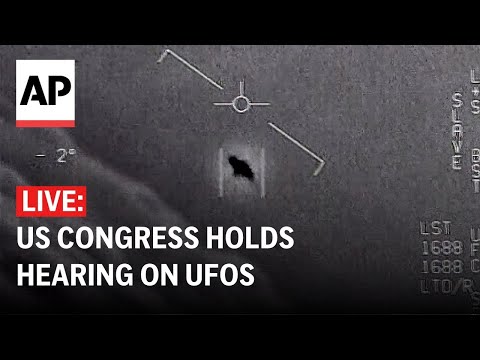
AP: Congress Holds UFO Hearing with Retired Maj. David Grusch
Associated Press livestream of the July 26, 2023 House Oversight Committee hearing "Unidentified Anomalous Phenomena: Implications on National Security, Public Safety, and Government Transparency," at which Grusch testified under oath alongside pilots David Fravor and Ryan Graves.
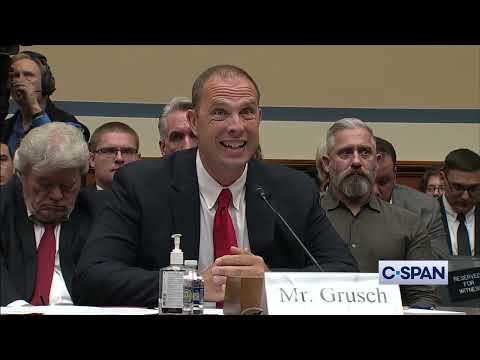
C-SPAN: David Grusch's Sworn Opening Statement
Official C-SPAN clip of Grusch's opening statement to the House Oversight Committee, in which he alleged the U.S. government has run a decades-long "crash retrieval and reverse engineering program" and that he was told of efforts to reverse-engineer recovered craft.
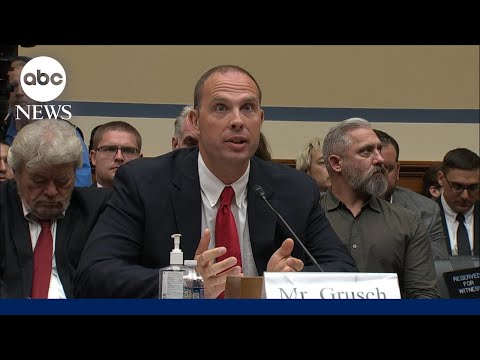
ABC News: Whistleblower's Opening Statement on Alleged Covert UAP Program
ABC News' broadcast coverage of Grusch's opening statement, framing his sworn allegations of a hidden government retrieval program and non-human biologics for a national news audience.
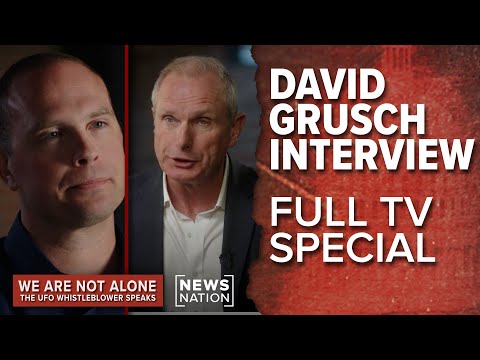
NewsNation - Whistleblower David Grusch Interview
The historic first televised interview of David Grusch alleging illegal crash retrieval programs.
Sources
- Kean, Leslie & Blumenthal, Ralph. “Intelligence Officials Say U.S. Has Retrieved Craft of Non-Human Origin.” The Debrief, June 5, 2023 thedebrief.org
- Coulthart, Ross. NewsNation interview with David Grusch, June 2023 newsnationnow.com
- U.S. House Oversight Committee. Subcommittee on National Security, the Border, and Foreign Affairs. Hearing transcript and sworn testimony of David Grusch, David Fravor, and Ryan Graves, July 26, 2023 congress.gov
- Schumer, Charles & Rounds, Mike. UAP Disclosure Act of 2023, Senate Amendment to NDAA congress.gov
- All-domain Anomaly Resolution Office (AARO). Report on the Historical Record of U.S. Government Involvement with Unidentified Anomalous Phenomena, Volume 1, March 2024 media.defense.gov
- Intelligence Community Inspector General (IC IG). Whistleblower complaint referral and “credible and urgent” determination (referenced in Congressional testimony), July 2022–2023.
- Rubio, Marco. Interview statements confirming additional firsthand whistleblowers, July–August 2023 newsnationnow.com
- Nell, Karl (Colonel, U.S. Army, Ret.). Public statements and sworn statement verifying David Grusch’s security clearance and credibility, SOL Foundation Symposium, 2023–2024 thesolfoundation.org
- Mellon, Christopher. Public interviews and written statements on Grusch’s credibility, 2023–2024 newsnationnow.com
- Kirkpatrick, Sean. Public writings post-resignation, January 2024 scientificamerican.com
- U.S. Senate. Congressional Record: Debate on the Unidentified Anomalous Phenomena Disclosure Act (UAPDA), December 2023.
- Charles McCullough III, Legal filings on behalf of David Grusch, Compass Rose Legal Group, 2022-2023.
- Romo, Vanessa & Chappell, Bill. “U.S. recovered non-human ‘biologics’ from UFO crash sites, former intel official says.” NPR, July 27, 2023 npr.org
- All-domain Anomaly Resolution Office (AARO). Official UAP Case Resolution Reports archive aaro.mil
- U.S. House Committee on Oversight and Accountability. Subcommittee on National Security, the Border, and Foreign Affairs. “Unidentified Anomalous Phenomena: Implications on National Security, Public Safety, and Government Transparency,” official hearing page, July 26, 2023 oversight.house.gov
- Klippenstein, Ken. “UFO Whistleblower Kept Security Clearance After Psychiatric Detention.” The Intercept, August 9, 2023 theintercept.com
- McMillan, Tim. “Opinion: Immaculate Constellation? Could The Government Really Hide a Secret UFO Program?” The Debrief, October 10, 2024 thedebrief.org
- CBS News. “UFO hearing key takeaways: What a whistleblower told Congress about UAPs.” July 28, 2023 cbsnews.com
- Phillips, Aleks. “Read UFO Whistleblower David Grusch’s Statements to Congress: ‘Earth-Shattering.’” Newsweek, July 26, 2023 newsweek.com
See something inaccurate? Have additional information or sources?
Suggest an Edit →Last Updated: June 2026