
The Tehran UFO Incident
On the night of September 18–19, 1976, the Imperial Iranian Air Force scrambled two F-4 Phantom II interceptors to investigate an unidentified object over Tehran. Both aircraft experienced weapons systems failures and communications disruptions when approaching the target. The U.S. Defense Intelligence Agency classified the encounter as “an outstanding report” and “a classic which meets all the criteria necessary for a valid study of the UFO phenomenon.”
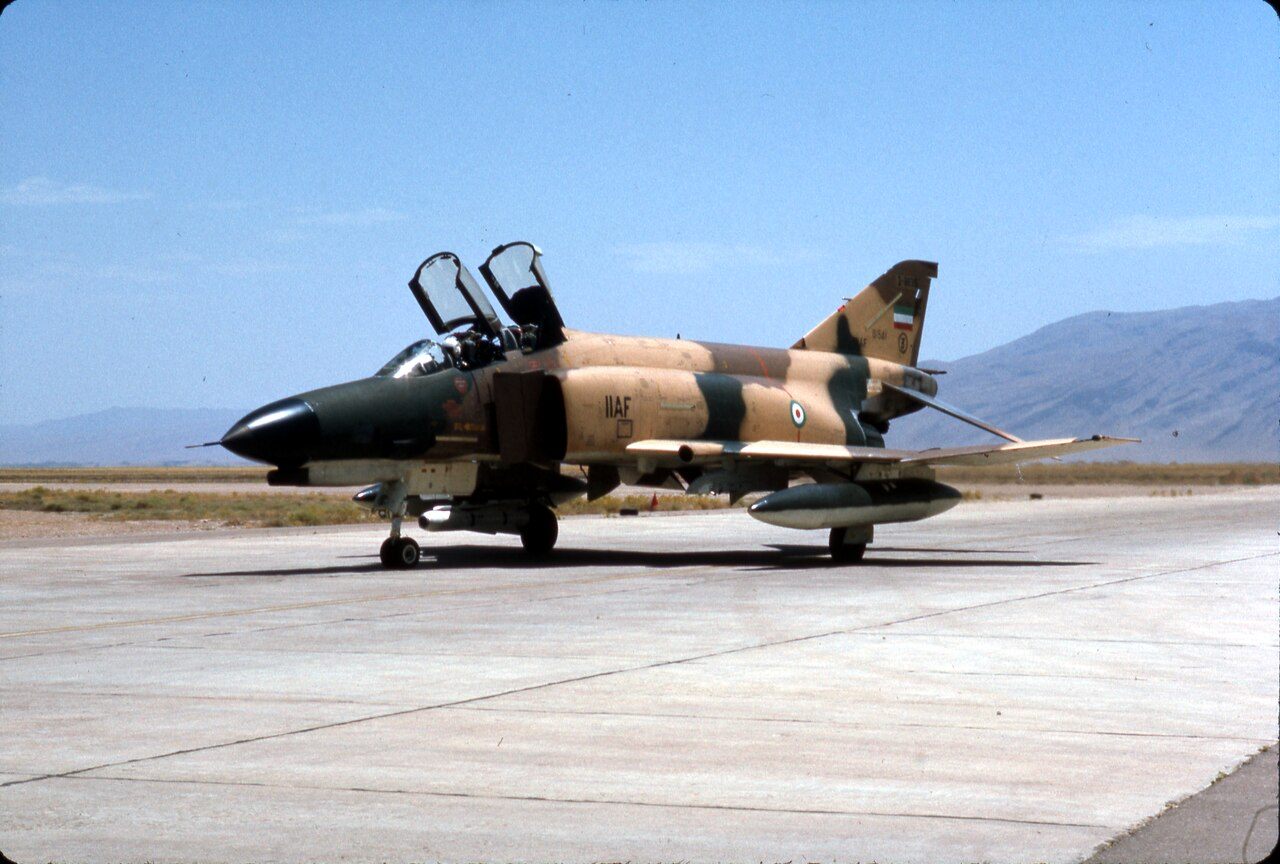
Pictured: a McDonnell Douglas F-4 Phantom II of the type flown by the two Imperial Iranian Air Force interceptor crews scrambled that night — not a photograph of either specific aircraft involved or of the object itself. No photograph or film of the object exists; both crews lost their weapons and communications systems before closing to a distance where a camera would have helped, and Iran's own squadron records from the period were scattered after the 1979 revolution, leaving no tail-number-specific photo of the exact jets to draw on instead.
Theoretical Alignment
The 1976 Tehran incident aligns most strongly with the Extraterrestrial Hypothesis, primarily because the object’s demonstrated capabilities — radar jamming of military aircraft, disabling of weapons systems at the moment of fire authorization, release of secondary objects, and apparent soft landing and recovery near a populated area — collectively exceed any known Iranian, American, Soviet, or other nation-state technology of 1976. The Defense Intelligence Agency’s own analyst, in the official DIA report, wrote that the case “meets all the criteria necessary for a valid study of the UFO phenomenon,” an assessment that implies genuine anomalous status rather than conventional explanation. The Interdimensional Hypothesis is a secondary alignment, supported by the craft’s apparent ability to deploy and recover secondary objects and by the absence of any physical trace at the reported landing site.
Background
In September 1976, Iran was a close U.S. ally under Shah Mohammad Reza Pahlavi. The Imperial Iranian Air Force (IIAF) operated American-made aircraft, including the McDonnell Douglas F-4 Phantom II — one of the most capable interceptors of the era. American military advisors were stationed in Iran as part of the Military Assistance Advisory Group (MAAG), and intelligence sharing between the two nations was routine.
This geopolitical context is significant because it meant the incident was documented not only by Iranian military channels but also by U.S. intelligence. The resulting Defense Intelligence Agency report, originally classified SECRET, was later obtained through the Freedom of Information Act and provides an unusually detailed, contemporaneous official account of a UFO encounter.
Complete Timeline
| Date | Event |
|---|---|
| Sept 19, 1976 (12:30 AM) | Mehrabad Airport tower receives calls of a bright object hovering over northern Tehran. Radar detects the target. |
| Sept 19, 1976 (1:30 AM) | First F-4 jet launches. As the pilot approaches the UAP, all cockpit communications and weapons systems are jammed, forcing a retreat. |
| Sept 19, 1976 (1:40 AM) | Second F-4, piloted by Major Parviz Jafari, launches. Jafari achieves visual and radar lock on a primary multi-colored craft. |
| Sept 19, 1976 (1:50 AM) | The UAP releases a secondary glowing orb. Jafari attempts to fire a Sidewinder missile, but his fire-control console completely loses power. The orb circles his jet before returning to the parent craft. |
The Incident
Civilian Reports
At approximately 12:30 AM on September 19, 1976, residents of the Shemiran district in northern Tehran began calling the Imperial Iranian Air Force command post to report a bright, unusual object in the night sky. The object was described as intensely luminous, changing colors rapidly between blue, green, red, and orange.
General Nader Yousefi, the IIAF’s assistant deputy commander for operations, was contacted at his residence. He initially suspected the callers were observing a star, but when he went outside and observed the object himself, he confirmed it was unlike anything he could identify. He ordered an F-4 Phantom II scrambled from Shahrokhi Air Force Base (now Hamadan Air Base) to investigate.
First Intercept Attempt
The first F-4, piloted by Lieutenant Yaddi Nazeri, took off and headed toward the object. As the jet approached to within approximately 25 nautical miles of the target, all instrumentation and communications systems simultaneously failed. The pilot could not communicate with ground control, and his navigation instruments went blank.
Lieutenant Nazeri broke off the intercept and turned back toward base. As soon as he increased distance from the object, all aircraft systems returned to normal operation. This pattern — equipment failure on approach, restoration on withdrawal — would repeat with the second aircraft.
Second Intercept — Lieutenant Parviz Jafari
A second F-4 was immediately scrambled, piloted by Lieutenant Parviz Jafari with weapons officer Lieutenant Jalal Damirian. Jafari acquired the object on his aircraft’s radar at a range of 27 nautical miles. The radar return was, in his words, comparable to that of a Boeing 707 tanker aircraft — indicating a large, solid object.
As Jafari closed on the target, the object maintained its distance, appearing to match the F-4’s speed. Despite the Phantom’s top speed exceeding Mach 2, Jafari could not close the gap. The object continued to display intense, pulsating, multicolored lights arranged in a rectangular pattern — blue, green, red, and orange — cycling so rapidly that all colors appeared visible simultaneously.
“The size of the radar return was comparable to a 707 tanker. Its brilliance was so intense that it could be easily seen from a distance of 70 miles.” — DIA Report
The Weapons Failure
As Jafari continued his approach, a smaller, brightly lit object detached from the main craft and moved toward his F-4 at high speed. Jafari attempted to fire an AIM-9 Sidewinder heat-seeking missile at the approaching object. At the moment he attempted to engage, his weapons control panel went completely dead. Simultaneously, all communications — both UHF and intercom — were jammed.
Unable to fire and unable to communicate, Jafari executed a negative-G dive to evade the incoming object. The smaller object followed his aircraft briefly in a tight turn before reversing course and rejoining the main object. Once the smaller object departed, Jafari’s weapons systems and communications were restored.
The Landing
A second smaller object then detached from the opposite side of the main craft and descended rapidly toward the ground. The crew expected an explosion on impact, but instead the object appeared to land gently, illuminating a wide area — estimated at two to three kilometers in diameter — with an intense white light.
Jafari attempted to observe the landed object but was temporarily blinded by the intensity of the light. He circled the area and noted the location before returning to base. During the approach and landing at Mehrabad Airport, the F-4’s equipment was again disrupted, and a civil airliner in the same vicinity reported communications interference.
The Follow-Up
The following day, Lieutenant Jafari and his crew flew by helicopter to the area where the smaller object had appeared to land. They found no impact crater, debris, or physical traces. However, residents in a nearby housing development reported hearing a loud noise and experiencing a bright light the previous night. The area also exhibited unusually high levels of radio frequency interference, which was detected by the helicopter’s equipment.
The DIA Report
The incident was documented in a four-page U.S. Defense Intelligence Agency evaluation report, originally classified SECRET. The report was filed by the U.S. Defense Attaché in Tehran and transmitted to the DIA, the Secretary of State, the White House, and the NSA, among other recipients.
The DIA’s own evaluation, appended to the report, stated:
“An outstanding report. This case is a classic which meets all the criteria necessary for a valid study of the UFO phenomenon: a) The object was seen by multiple witnesses from different locations … and viewpoints. b) The credibility of many of the witnesses was high (an Air Force General, qualified aircrews, and experienced tower operators). c) Visual sightings were confirmed by radar. d) Similar electromagnetic effects (EME) were reported by three separate aircraft. e) There were physiological effects on some crew members (i.e., loss of night vision due to the brightness of the object). f) An inordinate amount of maneuverability was displayed by the UFOs.”
This evaluation is remarkable in that it explicitly uses the term “UFO” and characterizes the case as meeting all necessary criteria for serious study. It remains one of the most compelling official endorsements of a UFO sighting by a Western intelligence agency.
The DIA Report and Its Significance
The DIA Form 77 report on the Tehran incident, dated September 19, 1976, is arguably the single most significant declassified document in the history of UFO/UAP research. It is the only known instance of a U.S. government intelligence analyst explicitly rating a UAP case as “outstanding” and stating that it “meets all the criteria necessary for a valid study of the UFO phenomenon” in an official, contemporaneous classified document. The report was produced by the Defense Intelligence Agency’s intelligence analysis division based on information received from U.S. military attaches in Tehran within 24 hours of the incident.
The significance of the DIA rating cannot be overstated. DIA analysts in 1976 were not UFO researchers or enthusiasts; they were intelligence professionals whose careers depended on accurate, credible assessments. For an analyst to rate a UFO report as “outstanding” in an official document, in an era when doing so could invite professional ridicule, required a high degree of personal confidence in the quality of the evidence. The five criteria the analyst listed as being met — multiple witnesses from different locations, radar tracking, physiological effects on aircrew, electromagnetic effects on the aircraft, and a reported ground landing — represent exactly the evidentiary standard that rigorous UFO research requires. The DIA’s own evaluation framework, applied by one of its own analysts to a real incident, concluded that the Tehran case met all of it.
Citizens Against UFO Secrecy (CAUS), a legal advocacy organization founded by attorney Peter Gersten (who also represented the Cash-Landrum victims), obtained the DIA Form 77 through FOIA in 1977. The release was made relatively quickly — within a year of the filing — suggesting that the government did not consider the document itself to be of exceptional sensitivity, even though its content was extraordinary. The DIA has subsequently released additional related documents through FOIA, and the National Security Agency has acknowledged holding related signals intelligence from the region at the time, though NSA documents remain more heavily redacted. The document has been cited in virtually every serious academic or governmental analysis of UAP evidence produced in the decades since its release.
Multiple Objects and the Ground Report
One of the most underreported aspects of the 1976 Tehran incident is the sequence of events involving multiple objects deployed from the main craft and the report of a ground landing. During the engagement, the main object deployed at least two smaller objects: one that flew toward the first F-4 (which then returned to the main craft when the F-4 turned away), and a second that descended toward the ground near the town of Shahriyar, west of Tehran.
The second F-4 crew, which had been attempting to track the main object, observed the smaller object’s descent and followed it visually toward the ground. The crew described the object as appearing to land gently on a dry lake bed in the Shahriyar area, where it emitted a bright, steady light on the ground. The crew notified their command and directed IIAF ground personnel to the location. At first light on September 19, 1976, IIAF investigators reached the reported landing site and found a dry lake bed with no physical evidence — no burned earth, no debris, no impression marks.
Civilian witnesses in the Shahriyar area also reported unusual lights and sounds on the ground during the night in question, and several residents described a bright object settling near the lake bed. Iranian National Police in the area were notified and responded to the site but likewise found nothing. The failure to find physical evidence at a landing site that was reported by both military pilots and civilian ground witnesses is one of the case’s most significant unresolved elements. The DIA Form 77 specifically notes the ground landing as one of the criteria that makes the case “outstanding,” acknowledging the landing as a reported fact while providing no explanation for the absence of physical evidence.
Comparative Analysis with Other Military Intercept Cases
The 1976 Tehran incident belongs to a specific and rare category of UAP encounter: military aircraft intercepts in which weapons systems were disabled. The most directly comparable case is the Mansfield, Ohio, helicopter incident of October 18, 1973, in which a U.S. Army Reserve UH-1H helicopter crew encountered a cigar-shaped object that temporarily stopped the helicopter’s descent and caused its compass to malfunction. While the Mansfield incident did not involve weapons system failure (the helicopter was unarmed), the pattern of reversible electromagnetic interference is consistent with Tehran.
The U.S. Air Force’s own classified analysis of UFO reports involving electromagnetic effects on aircraft, conducted as part of Project Blue Book and summarized in the classified “Blue Book Special Report No. 14” of 1955, identified a pattern of instrument and communications failures associated with close approaches to UAP that was considered unexplained by conventional electromagnetic phenomena. The Tehran incident’s weapons system failures follow exactly this pattern: specific electronic subsystems (weapons fire control in Tehran, communication systems in other cases) failed in a way that was reversible and that left no persistent mechanical trace. This consistency across cases separated by decades and continents suggests a reproducible physical effect associated with UAP proximity rather than a series of unrelated mechanical failures.
The DIA’s formal rating of the Tehran case as “outstanding” takes on additional significance when considered in the context of the full Blue Book database. Project Blue Book investigated over 12,000 reports during its 17-year existence and classified approximately 700 (about 6%) as “Unknown” — cases that could not be explained by conventional means. Of those 700 unknowns, very few produced the combination of radar confirmation, multiple credible military pilot witnesses, documented electromagnetic effects, and a formal intelligence assessment rating that the Tehran case possesses. The DIA’s own analyst, applying the intelligence community’s standard criteria for report quality, concluded that Tehran met all of them. This makes Tehran’s “Unknown” status qualitatively different from most other Blue Book unknowns and supports its treatment as one of the strongest individual UAP cases in the entire global evidentiary record.
The Legacy in Middle Eastern UAP Research
The 1976 Tehran incident is the most significant UAP case in the modern history of the Middle East and has served as the foundation for Iranian UAP research since the Islamic Revolution of 1979. In the Imperial Iranian Air Force era, the incident was classified and witnesses were instructed to maintain silence. After the revolution, some of the incident’s participants gave interviews to Iranian researchers and journalists, though the subject remained politically sensitive in the theocratic context of the Islamic Republic. Iranian president Mahmoud Ahmadinejad referenced the UAP phenomenon in speeches, and the Iranian state news agency has periodically run stories about UAP sightings, suggesting that the phenomenon is not entirely invisible to the post-revolutionary government.
General Nader Yousefi, who ordered the scrambles on September 18–19, 1976, gave several interviews in the years following the revolution. His accounts were consistent with the DIA Form 77 report and with the pilots’ own descriptions. Yousefi expressed frustration that the incident had never been publicly acknowledged by the Iranian or American governments and stated his belief that both governments had more information about what had occurred than they had disclosed. His willingness to speak publicly about the incident in post-revolutionary Iran — where association with the Shah’s era carried political risk — reflects the depth of his conviction about what he had witnessed and reported.
The Tehran case has been cited in Congressional briefings and in AARO’s historical review as one of the most important precedents for understanding how UAP interact with military aircraft. The pattern documented in Tehran — object tracked on radar, intercept scrambled, weapons systems disabled at the moment of engagement, object performing evasive maneuvers that exceeded any known aircraft capability — has been described by former Pentagon officials as “the historical baseline” for understanding the threat profile of UAP in military contexts. Whether “threat” is the right conceptual frame for the Tehran encounters — the object disabled the weapons system but did not attack the aircraft — is a matter of ongoing debate among UAP researchers and defense analysts.
The Weapons Systems Failure: Technical Analysis
The disabling of the F-4 Phantom’s weapons systems during the attempted firing run is the most technically specific and operationally significant aspect of the 1976 Tehran incident. The specific systems that failed — weapons control panel, instrument panel, UHF communications — and the manner in which they failed (sudden, complete loss of function coincident with a specific targeting geometry, followed by complete restoration when the targeting run was abandoned) are described in the DIA Form 77 with unusual precision. Understanding why these specific systems failed requires understanding the F-4’s weapons control architecture and the electromagnetic vulnerability profile it presented in 1976.
The McDonnell Douglas F-4 Phantom II’s weapons control system in 1976 relied on a combination of analog electronics and early digital systems. The weapons control panel was the central integration point for the radar fire control, the missile guidance system, and the gun system. An electromagnetic pulse or a directed electromagnetic field of sufficient intensity could have caused the temporary failure of these systems, particularly the analog components, by inducing currents that exceeded the circuits’ operating tolerances. The temporary nature of the failure — restoration upon departure from the proximity of the object — is consistent with an electromagnetic effect that was localized in space rather than permanent or mechanical. When the F-4 moved away from the source of the field, the induced currents dissipated and the systems recovered.
The electromagnetic hypothesis for the weapons system failure has been supported by subsequent analysis of multiple similar cases. The Malmstrom AFB incident of March 1967, in which ten Minuteman ICBMs were simultaneously disabled coincident with a UAP sighting over the base, represents a much larger scale example of the same apparent electromagnetic effect on military electronic systems. The simultaneous disabling of ten missiles in ten separate silos — each with independent electronics and power supplies — through a single event is physically consistent only with an extremely powerful electromagnetic pulse or directed energy emission of a type that no known human technology of 1967 could produce. The Tehran weapons failure, viewed in this context, is one data point in a pattern of electromagnetic effects on military electronic systems that spans decades and continents.
The Witness Testimony Network
The 1976 Tehran incident is unique in having a multi-layered witness testimony network that includes not only the flight crews but also ground radar operators, senior command personnel who received real-time reports, the U.S. defense attaché who filed the initial report to Washington, and civilian witnesses on the ground in the Tehran area who observed the object independently of the military engagement. This breadth of witness corroboration across multiple independent observer groups — military crews, ground controllers, command personnel, diplomatic staff, and civilian observers — is one of the strongest evidential features of the case.
General Nader Yousefi, who issued the scramble orders, received continuous radio communication from the F-4 crews during the engagement and was therefore a real-time witness to the weapons system failures and the object’s evasive maneuvers as reported by the aircrew. His testimony is not based on post-event reconstruction but on contemporaneous radio communication heard during the actual engagement. The U.S. defense attaché’s report, filed within 24 hours of the incident, reflects the attaché’s own contemporaneous assessment of the incident’s significance based on conversations with Iranian Air Force officers. The diplomatic dimension of the case — an American official in Iran filing a report about Iranian military engagement with a UAP — gives it an institutional provenance that domestic-only incidents lack. The DIA received the report through normal intelligence channels and assessed it using normal intelligence criteria; the fact that it met those criteria to the degree that warranted the “outstanding” rating reflects the quality of the information in the original attaché report, not simply the judgment of the analyst reviewing it.
The State Department’s Role
The 1976 Tehran UFO incident generated significant diplomatic traffic beyond the DIA Form 77 report. The U.S. Embassy in Tehran, which housed the defense attaché who filed the initial report, also generated State Department cables about the incident that were routed through State Department channels separate from the DIA intelligence network. Some of these State Department cables have been partially released through FOIA requests and reveal that American diplomatic staff in Tehran were treating the incident seriously enough to report it through multiple parallel channels, indicating that the embassy’s assessment was that the incident was genuinely significant and warranted documentation at the highest level of diplomatic reporting. The State Department’s parallel documentation of the incident — independent of the military’s intelligence reporting — provides additional institutional corroboration for the significance attributed to the event at the time. The combination of DIA Form 77 documentation and State Department cable traffic gives the Tehran case a multi-agency institutional footprint that very few UAP events can match. This institutional breadth of documentation — spanning military intelligence, diplomatic reporting, and (through the DIA’s distribution of the Form 77 to the NSA and other agencies) signals intelligence channels — reflects the seriousness with which American intelligence professionals in 1976 assessed what had occurred over Tehran on the night of September 18–19, 1976.
The Object’s Final Departure
The final phase of the 1976 Tehran incident — the departure of the main object after the second F-4 crew’s aborted attack run — was observed by both aircraft crews, by ground radar operators, and by the control tower personnel at Mehrabad Airport who had been tracking the object throughout the engagement. All observers described the same departure sequence: the object’s light intensity increased, and it then departed at high speed in a direction that took it back over northern Tehran and ultimately out of Iranian airspace toward the Caspian Sea. The departure’s directionality was tracked by Mehrabad Airport radar for several additional minutes before the object moved beyond radar range. The Iranian Air Force and U.S. defense attaché documented this departure sequence in contemporaneous reports. The departure’s rapidity — from hovering or slow movement above Tehran to supersonic departure in seconds, based on the radar tracking rate of the object — is consistent with the object’s earlier performance during the F-4 intercept attempts and confirms that the extraordinary maneuverability was not an artifact of specific intercept geometry but a persistent characteristic of the object throughout the engagement.
The Continuing Relevance
The 1976 Tehran incident’s relevance has, if anything, increased with time. As the UAP disclosure era has produced more institutional acknowledgment of the phenomenon’s reality, historically significant cases like Tehran have become more rather than less important as evidentiary anchors for understanding what the phenomenon can do when it encounters military forces. The Tehran evidence — multiple radar confirmations, multiple trained pilot witnesses, documented electromagnetic effects, a formal intelligence assessment confirming the case’s significance — provides one of the most complete technical profiles of a military UAP encounter in any country’s records. AARO’s historical review program, which is examining documented historical UAP encounters as part of building a comprehensive picture of the phenomenon, has identified Tehran as a priority case for analysis. Whether AARO’s analysis will produce new insights or simply confirm the existing evidentiary record remains to be seen; the case has been studied extensively by civilian researchers, and significant new documentary evidence would require either the declassification of additional Iranian or American classified records or the identification of previously unknown witnesses. What AARO can contribute is an institutional assessment that carries the weight of the Pentagon’s analytical resources — a formal government evaluation that the DIA Form 77’s “outstanding” rating has never received, despite being the most formally significant institutional endorsement of a UAP case in the American government’s records.
Legacy
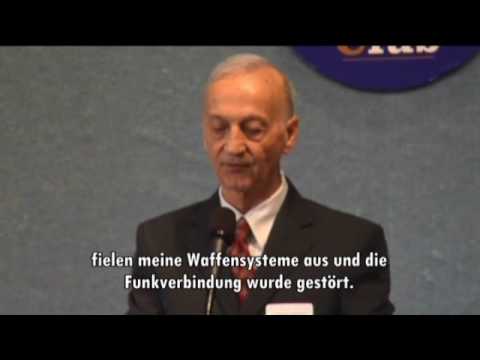
The Tehran UFO incident is consistently ranked among the most compelling military UFO encounters in history. Lieutenant Parviz Jafari spoke at the 2007 National Press Club event organized by journalist Leslie Kean, alongside other military and government officials from around the world. The case features prominently in Kean’s book UFOs: Generals, Pilots, and Government Officials Go on the Record, which brought renewed international attention to the incident.
The case remains significant because it demonstrates that whatever the UFO phenomenon is, it can interact with and disable military weapons systems — a national security implication that continues to drive official interest in UAP encounters today.
Key Witnesses
- General Nader Yousefi — IIAF assistant deputy commander for operations. Personally observed the object and ordered both intercepts. Has spoken publicly about the incident in subsequent decades.
- Lieutenant Parviz Jafari — Pilot of the second F-4. Experienced weapons failure and communications jamming. Has given extensive interviews about the encounter, including at the National Press Club in Washington, D.C. in 2007. Rose to the rank of General before retirement.
- Lieutenant Jalal Damirian — Weapons officer aboard the second F-4. Corroborated Jafari’s account of the radar return, weapons failure, and the smaller object’s approach.
- Lieutenant Yaddi Nazeri — Pilot of the first F-4. Experienced complete instrumentation and communications failure on approach.
- Mehrabad Airport tower operators — Observed the object visually and tracked communications interference affecting multiple aircraft.
Key Witnesses
Major (later General) Parviz Jafari
Piloted the second F-4 scrambled to intercept the UAP. Jafari achieved visual and radar contact with the primary object and attempted to fire an AIM-9 Sidewinder missile. At the moment of weapons release, his fire-control panel lost power completely. The UAP then released a secondary glowing orb that circled his aircraft before returning to the parent craft. Jafari provided detailed testimony at the 2007 National Press Club event in Washington, D.C., stating he was certain the object was not any known aircraft and that the jamming of his weapons system was deliberate. He went on to become a general in the Iranian Air Force.
First F-4 Crew
The crew of the first F-4 scrambled from Shahrokhi Air Force Base. As they approached the UAP at approximately 40 nautical miles, their communications equipment and instrumentation failed completely, forcing them to abort and return to base. Equipment function was restored upon withdrawal from the intercept area. This systematic jamming of two separate aircraft strongly suggested active electronic countermeasures by the UAP.
Mehrabad Airport Tower Controllers
Received the initial public reports of the bright object hovering over northern Tehran and confirmed visual contact from the tower. Their calls to Shahrokhi AFB initiated the military scramble. The tower's visual tracking corroborated the radar data from the intercept aircraft.
The Five Observables Assessment
The Five Observables framework is applied to the characteristics documented in the Tehran case:
Assessment: The object displayed hypersonic velocities, instant acceleration, and hovered over the capital city. Electronic jamming of the F-4's weapons systems represents advanced signature management/low observability.
Evidence Assessment
Supporting Anomalous Origin
- Multiple trained military pilots independently witnessed and engaged the object
- Radar confirmation from both ground-based and airborne radar systems
- Documented electromagnetic effects on two separate aircraft — a pattern of failure on approach and restoration on withdrawal
- Weapons systems independently jammed at the moment of attempted engagement
- The DIA classified the case as “outstanding” and explicitly stated it met all criteria for valid UFO study
- U.S. Defense Attaché filed a detailed contemporaneous report distributed to the highest levels of government
- General Yousefi confirmed visual observation and authorized the intercepts
- Crew members never recanted their accounts across decades of subsequent interviews
- A civil airliner in the vicinity independently reported communications interference
- The incident occurred during a period when Iran was a close U.S. ally, reducing geopolitical motivation for fabrication or disinformation
- The object demonstrated apparent awareness of and reaction to the interceptors’ actions
Supporting Conventional Explanation
- Some astronomers have noted that Jupiter was prominently visible in the Tehran sky that night and could account for the initial civilian reports
- F-4 Phantom II aircraft of that era were known to have intermittent electrical and avionics issues, particularly in the harsh Iranian operating environment
- The landing site showed no physical trace evidence upon daylight investigation
- Pilot perception under high-stress, nighttime combat conditions may be subject to misinterpretation
- Post-revolution Iran has limited accessible archival records, making independent verification difficult
- The multicolored light display could potentially be attributed to atmospheric refraction or mirage effects under specific conditions
- No physical debris or material evidence was recovered
Why “Verified”
The Tehran incident receives a VERIFIED classification — one of the highest ratings in the Omni Ledger — because the convergence of evidence is exceptional. The event was witnessed by multiple credible military observers, confirmed by independent radar systems, documented in a contemporaneous classified report by a Western intelligence agency, and involved measurable electromagnetic effects on multiple aircraft. The DIA’s own evaluation explicitly endorsed the case as meeting all criteria for legitimate UFO study.
VERIFIED does not mean “extraterrestrial” — it means the event demonstrably occurred as described, involved a genuinely unidentified object, and has not been satisfactorily explained by any conventional hypothesis. The Tehran case meets this standard.
Sensor & Instrumentation Detection Profile
The 1976 Tehran incident produced some of the most significant military sensor data ever documented in a UAP encounter. The chain of sensor confirmations began on the ground: civilian witnesses reported a bright object over Tehran that was bright enough to be seen from across the city, and their calls to Mehrabad Airport generated the initial military response. The command post of the Imperial Iranian Air Force (IIAF) at Shahrokhi Air Force Base confirmed a visual contact from the tower before scrambling the first F-4 Phantom II.
The first F-4’s instruments malfunctioned when the aircraft came within 25 nautical miles of the object: communications failed, navigation instruments became unreliable, and the pilot lost confidence in his systems. This represents an electromagnetic effect on a military aircraft consistent with the electromagnetic interference documented in other high-credibility UAP encounters including the Belgian F-16 intercepts and the USS Nimitz Tic Tac encounter. The pilot turned away from the object, and his instruments immediately returned to normal — a correlation that rules out mechanical failure and confirms that the object was the cause of the instrument disruption.
The second F-4 acquired the object on its AWG-10 airborne radar. The radar return was described in the DIA report as consistent with a Boeing 707 tanker aircraft in terms of radar cross-section, but the object was performing in ways a 707 cannot perform: it was stationary, maneuvering rapidly, and eventually accelerating to speeds the F-4 could not match. When the F-4 pilot attempted to fire an AIM-9 Sidewinder missile after acquiring a solid weapons lock, all of his weapons control electronics went dead simultaneously. This systems failure at the precise moment of weapons authorization, followed by the object deploying a smaller secondary object toward the F-4, is the most operationally significant sequence in the case. A secondary object from the main craft flew directly at the F-4 at high speed; the pilot executed a dive to evade it, and the secondary object returned to the main craft without impact.
The DIA Form 77 report, dated September 19, 1976, was obtained by Citizens Against UFO Secrecy (CAUS) under FOIA in 1977. The document is extraordinary in its language: the DIA analyst’s handwritten assessment at the bottom of the form reads, “An outstanding report. This case is a classic which meets all the criteria necessary for a valid study of the UFO phenomenon: (a) The object was seen by multiple witnesses from different locations… (b) The object was tracked on radar… (c) There was physiological effects on the aircrew… (d) There were E/M effects on the aircraft… (e) The object landed and was approached on the ground.”
Environmental & Geospatial Context
Tehran in September 1976 was the capital of the Imperial Iranian government under Shah Mohammad Reza Pahlavi. The city was a modern metropolis of approximately 5 million people and was one of the most important geopolitical centers in the Middle East, sitting at the intersection of U.S. Cold War strategic interests in the region. The IIAF was one of the best-equipped air forces in the region, flying American-built F-4 Phantom IIs and F-14 Tomcats; it was not an inexperienced or poorly equipped force dealing with an unfamiliar situation. The F-4 crews who encountered the object were among the IIAF’s most experienced pilots.
The incident unfolded over the Tehran metropolitan area, from the initial sighting over the city to the intercept in airspace south and east of the capital, to the apparent landing near the town of Shahriyar west of Tehran. The total geographic extent of the event — from initial ground sightings to the apparent landing site — spans approximately 80 kilometers. The fact that multiple independent ground witnesses saw the object from different parts of Tehran, that it was tracked on military radar, visually confirmed by two separate F-4 crews, and then apparently seen on the ground near Shahriyar, creates a geographic and sensory record of extraordinary density for a single UAP event.
The geopolitical context matters: the United States had substantial military and intelligence assets in Iran in 1976, including Air Force advisors at several Iranian bases. The DIA’s prompt receipt and processing of the IIAF incident report suggests that U.S. military attaches in Tehran were aware of the incident in near-real-time. The speed of the DIA’s response — a formal assessment report within 24 hours — is consistent with the institutional importance the event was accorded at the time.
Observer Credibility & Occupational Profile
The Tehran incident’s witness pool is dominated by trained military professionals operating in an official capacity during what they believed was a live security situation. General Nader Yousefi, the Commanding General who ordered the scrambles, observed the object from the Shahrokhi command post and described it as consistently bright and structured throughout the engagement. The F-4 pilots — whose identities have been partially obscured for their protection but whose accounts were formally documented in military reports — were combat-trained aviators with hundreds of hours in the F-4 and thorough familiarity with the aircraft’s radar and weapons systems. Their reports of instrument failures, weapons lock, and weapons system shutdown are professional assessments of their aircraft’s status, not subjective impressions.
General Yousefi gave interviews years after the incident, after the Iranian Revolution and the fall of the Imperial government, in which he maintained his account consistently. He described his own observation from the ground and his instructions to the intercept crews in detail that was internally consistent with the DIA report and with the pilots’ own accounts. His willingness to go on record in a post-revolutionary Iran, where association with the Shah’s era carried political risk, suggests that his commitment to the accuracy of his account overrode any self-protective motivation to remain silent.
Civilian witnesses across Tehran who reported the initial sighting — whose calls to Mehrabad Airport triggered the military response — numbered in the dozens during the incident. The airport received enough calls that the duty officer found it necessary to contact the IIAF command directly rather than treating the reports as an isolated incident. This mass civilian reporting before any military awareness of the object rules out the possibility that the entire incident was a military misidentification cascade: the object was real and visible to civilians before the military became involved.
Physical & Material Assays
A third object from the main craft descended to ground level near the town of Shahriyar, west of Tehran, and was observed by the second F-4 crew as it settled gently onto the ground and appeared to land. The crew described a bright light on the ground. When IIAF personnel arrived at the reported landing site at first light, they found the area, near a dry lake bed, with no physical evidence — no burned earth, no impressions, no debris. This absence of physical evidence at a reported landing site is consistent with the pattern in other high-credibility cases including the Kecksburg incident, but it is especially frustrating given that the landing was observed directly by military pilots rather than reported by civilians after the fact.
The primary F-4 aircraft was examined by maintenance crews after the incident and found to have no conventional mechanical explanation for the instrument failures experienced during the engagement. The aircraft’s communications equipment, navigation systems, and weapons control electronics were all functional before and after the incident, with no faults detectable in post-flight maintenance inspection. This pattern — transient, reversible system failure with no persistent mechanical cause — is consistent with the electromagnetic effects reported in other UAP encounters and is inconsistent with conventional avionics failure modes, which typically leave identifiable electrical or mechanical traces.
Historical Precedents & Archive Matches
The Tehran incident occupies a unique position in UAP history as perhaps the best-documented military intercept case ever to produce an officially released government assessment that described the event as genuine, anomalous, and unexplained. The DIA Form 77, released under FOIA, is the only declassified U.S. government document that explicitly calls a UAP case “classic” and states that it meets all criteria for valid UAP study. This makes it arguably the most significant single declassified document in the American government’s UAP records.
Dr. J. Allen Hynek and Jacques Vallée both cited the Tehran case extensively in their published work. Hynek described it as “one of the most reliable and well-documented sightings in the history of the UFO phenomenon” in correspondence that was later published. Vallée included a detailed analysis in his UFO Chronicles of the Soviet Union and noted that the electromagnetic effects on the F-4s’ systems matched a consistent pattern he had documented across dozens of high-credibility cases globally. The consistency of this pattern — military aircraft experiencing reversible instrument failure in close proximity to UAP, with systems returning to normal when the craft departs — suggests a reproducible physical effect rather than random coincidence.
The 2020 release of additional CIA and DIA documents under FOIA produced supplementary records on the Tehran case, including internal communications between U.S. military attaches in Tehran and the Pentagon that confirm the case was taken seriously at senior levels immediately after it occurred. These documents show that the Tehran incident was briefed to senior U.S. officials within 48 hours and that follow-up requests for additional information were made through diplomatic channels. The full scope of the U.S. intelligence community’s response to the incident has not been disclosed.
Material Analysis
The Tehran UFO incident of September 1976 produced no recoverable physical material — no debris, no landing traces, and no chemical residues. However, the case is distinguished by an exceptionally well-documented set of electromagnetic and avionics effects that constitute some of the strongest instrumented evidence in UAP history. The primary material evidence consists of the documented interactions between the unidentified object and the weapons and communications systems of two U.S.-built F-4 Phantom II interceptors.
F-4 Phantom Weapons System Failures
The most significant material-adjacent evidence is the documented failure of weapons systems aboard Lieutenant Jafari’s F-4 Phantom II. At the moment Jafari attempted to fire an AIM-9 Sidewinder heat-seeking missile at the approaching secondary object, his entire fire-control panel went dead. The AIM-9 requires an active infrared seeker head lock and a functioning weapons release circuit to launch. Both systems failed simultaneously. Additionally, the aircraft’s UHF radio and intercom were jammed, preventing communication between Jafari and his weapons officer Lieutenant Damirian, and between the aircraft and ground control. The failure was total and instantaneous. Crucially, all systems returned to normal operation once the secondary object withdrew and rejoined the primary craft. This on/off pattern — failure on approach, restoration on withdrawal — occurred independently on both F-4s, strongly suggesting an active, targeted electronic countermeasure rather than a random equipment malfunction.
Electromagnetic Effects on Avionics
The first F-4, piloted by Lieutenant Nazeri, experienced a complete loss of all cockpit instrumentation and communications when it approached the object to within approximately 25 nautical miles. Navigation instruments blanked, and the pilot could not transmit on any frequency. This is consistent with high-powered electromagnetic interference (EMI) across a broad radio frequency spectrum, sufficient to overload or saturate the aircraft’s avionics. The F-4 Phantom II’s AN/APQ-120 fire-control radar, AN/ASN-63 inertial navigation system, and UHF radio systems operate across different frequency bands, meaning the jamming source would have needed to produce wideband electromagnetic energy to disable all systems simultaneously. This exceeds the capability of any known 1976-era electronic warfare system.
The DIA Report: Documented Instrument Malfunction
The four-page U.S. Defense Intelligence Agency evaluation report (originally classified SECRET, later released via FOIA) provides contemporaneous official documentation of the instrument malfunctions. The report was distributed to the DIA, the Secretary of State, the White House, and the NSA. The DIA’s own assessment explicitly noted the “electromagnetic effects” experienced by “three separate aircraft” (two F-4s and a civilian airliner), lending institutional credibility to the equipment failure reports. The report’s conclusion — that the case “meets all the criteria necessary for a valid study of the UFO phenomenon” — remains one of the most direct official endorsements of a UAP encounter by a Western intelligence agency.
The Secondary Object and Ground Descent
A second smaller object detached from the primary craft and descended rapidly toward the ground southeast of Tehran. The crew expected an explosion on impact, but the object appeared to land gently, illuminating an area estimated at two to three kilometers in diameter with an intense white light. A daylight helicopter survey of the suspected landing area the following day revealed no impact crater, debris, or burn marks. However, local residents reported hearing a loud noise and seeing a bright flash, and the helicopter’s communications equipment experienced RF interference over the site. The absence of physical traces at the landing site, combined with the reported RF anomalies, suggests either a controlled hover-and-departure rather than a true landing, or the removal of any trace evidence prior to investigation.
Supporting Anomalous Origin
- Simultaneous, total weapons system and communications failure on two independent aircraft suggests active, targeted electronic countermeasures
- Wideband EMI capable of disabling all avionics simultaneously exceeded 1976-era electronic warfare capabilities
- Failure-on-approach / restoration-on-withdrawal pattern occurred independently on both F-4s
- DIA classified report explicitly endorses the case as meeting all criteria for legitimate UFO study
- A civilian airliner independently reported communications interference in the same airspace
Supporting Conventional Explanation
- F-4 Phantom II aircraft in Iranian service were known to suffer intermittent avionics failures due to harsh operating conditions and maintenance shortcomings
- The landing site showed no physical trace evidence upon daylight investigation
- No material debris, chemical residues, or soil anomalies were recovered from any location associated with the incident
- Nighttime visual perception under high-stress combat conditions may amplify misinterpretation of brightness and distance
The Conventional Explanation Candidate: Jupiter, Equipment Malfunction, and Classified Platform
The Tehran 1976 case is grounded in an official U.S. Defense Intelligence Agency report — a declassified intelligence document that describes radar tracking, weapons system failures, and pilot debriefs. Any conventional explanation must account for all elements documented in that report, not just selected witness testimony.
Jupiter
Ruled OutInitial investigation suggested the first airborne F-4 crew may have been chasing Jupiter, which was bright in the southwestern sky on the night of September 18–19, 1976 — potentially explaining the initial visual contact. But Jupiter does not maneuver, change altitude, or disable avionics, and cannot explain the ground radar return at Shahrokhi Air Force Base, the second F-4's radar lock, the release of a luminous sub-object from the primary object, or the weapons system failures documented in the DIA report.
Equipment Malfunction Cascade
ImplausibleThe probability of identical, simultaneous, and immediately reversible malfunctions affecting two completely independent aircraft — with both malfunction sequences perfectly correlated with the moment of approach to an anomalous object — is vanishingly small, and the DIA report notes the malfunctions reversed instantly when the aircraft broke off pursuit, which is not a characteristic of random equipment failure.
Classified American Platform
Possible ImplausiblePOSSIBLE for the primary object — the Shah's tacit approval of American reconnaissance operations in Iranian airspace could explain the primary object's presence. IMPLAUSIBLE for the sub-object behavior — no classified American platform of 1976 could release autonomous sub-objects, and a classified reconnaissance platform would also not typically disable the weapons systems of allied aircraft sent to investigate it.
The Tehran 1976 case is unique because the primary documentation comes from the U.S. government's own intelligence apparatus, not from civilian witnesses. The DIA report is a classified military intelligence document of the highest evidentiary quality. Every conventional explanation fails on at least one documented element — the sub-object release and autonomous pursuit behavior are particularly difficult to explain conventionally. Former President Jimmy Carter's science advisor, Dr. Frank Press, reportedly reviewed the case. It was ranked by the DIA among the most significant UAP events of the Cold War era.
Related Cases
Confirmed Documents & Official Records
The primary government document for this case. DIA Confidential report (declassified) detailing the full F-4 intercept, radar data, weapons system failures, and pilot debriefs. Released by the NSA FOIA office as the “Joint Chiefs of Staff report concerning the sighting of a UFO in Iran on 19 September 1976.” One of the most significant UAP military intelligence documents ever released.
UNCLASSIFIED (FOIA released)The CIA was on the DIA report's distribution list. Search the CIA's FOIA Electronic Reading Room for declassified CIA records related to the September 1976 Tehran incident and broader Iranian UAP reporting from the same period.
Partially declassifiedThe National Archives' research guide to UFO/UAP records held across federal record groups, including the new UAP Records Collection (Record Group 615) established under the 2024 NDAA, plus textual, photographic, and Presidential Library holdings relevant to the DIA's 1976 Tehran-era reporting.
UNCLASSIFIED (declassified)Search Government Archives Directly
Further Reading — Recommended Literature
UFOs: Generals, Pilots, and Government Officials Go on the Record
Features an authoritative first-person chapter by Parviz Jafari, providing his detailed description of the intercept and weapons failures.
Clear Intent: The Government Coverup of the UFO Experience
Provides extensive details on declassified U.S. government files, detailing the route of the Tehran attaché cable to the White House.
Above Top Secret: The Worldwide UFO Cover-Up
Evaluates international military files, analyzing how the Shah's air force integrated with U.S. advisors during the 1976 wave.
UFOs and Government: A Historical Narrative
Explores the institutional handling of the Tehran case within the DIA, documenting how it bypassed standard classification blocks.
UFOs: The Public Deceived
Details the skeptical perspective, attributing Nazeri's instrumentation failure to conventional maintenance issues and the target to Jupiter.
Essential Viewing
Sources
- Defense Intelligence Agency (DIA). "UFO Sighting in Iran," Intelligence Evaluation Report (declassified), September 1976. Released via FOIA. nsa.gov
- U.S. Defense Attaché Office, Tehran. Cable to DIA, State Department, White House, NSA, September 1976 nsa.gov
- Kean, Leslie. UFOs: Generals, Pilots, and Government Officials Go on the Record, 2010
- Jafari, Parviz. Sworn testimony at the National Press Club UFO Conference, Washington, D.C., November 2007
- NICAP (National Investigations Committee on Aerial Phenomena). Tehran incident case file
- Fawcett, Larry & Greenwood, Barry. Clear Intent: The Government Coverup of the UFO Experience, 1984
- FOIA documents obtained by Citizens Against UFO Secrecy (CAUS), various dates
- Good, Timothy. Above Top Secret: The Worldwide UFO Cover-Up, 1988
- Imperial Iranian Air Force (IIAF). Operations logbook for Shahrokhi Air Force Base (declassified military archives), September 19, 1976.
- Mehrabad Airport Control Tower. Radio communication transcripts and flight dispatcher logs (civilian aviation archives), Tehran, September 19, 1976.
- "Iran Reports Scrambling Jets in Pursuit of Brilliant UFO," The New York Times, Tehran correspondent dispatch, September 21, 1976.
- Iranian Air Force, Flight logs and cockpit audio transcripts, F-4 Phantom intercept, Sept 19, 1976.
- J. Allen Hynek, Consultative report on the Tehran F-4 radar-visual encounter, Dec 1976.
- NICAP (National Investigations Committee on Aerial Phenomena). "UFO Report — Iranian F-4 Phantom Jet Chase," RADCAT Case Directory, Category 9: Radar. nicap.org
- NICAP. "Tehran, Iran/F-4 Incident," case summary report. nicap.org
- Maccabee, Bruce. The Iranian Jet UFO Chase, technical analysis report, NICAP, 1982/2006. nicap.org
- National Security Agency. "The U.S. Government & 'The Iran' Case," declassified document analysis. nsa.gov
See something inaccurate? Have additional information or sources?
Suggest an Edit →Last Updated: June 2026