
The Kecksburg Incident
On the afternoon of December 9, 1965, a brilliant fireball was seen by thousands across several U.S. states and Canada. Within minutes, a metallic, acorn-shaped craft reportedly descended into a remote wooded ravine in Kecksburg, Pennsylvania. U.S. Army personnel and State Police cordoned off the area, executing a swift, highly classified recovery operation under cover of darkness, sparking decades of controversy, lawsuits, and claims of government secrecy.
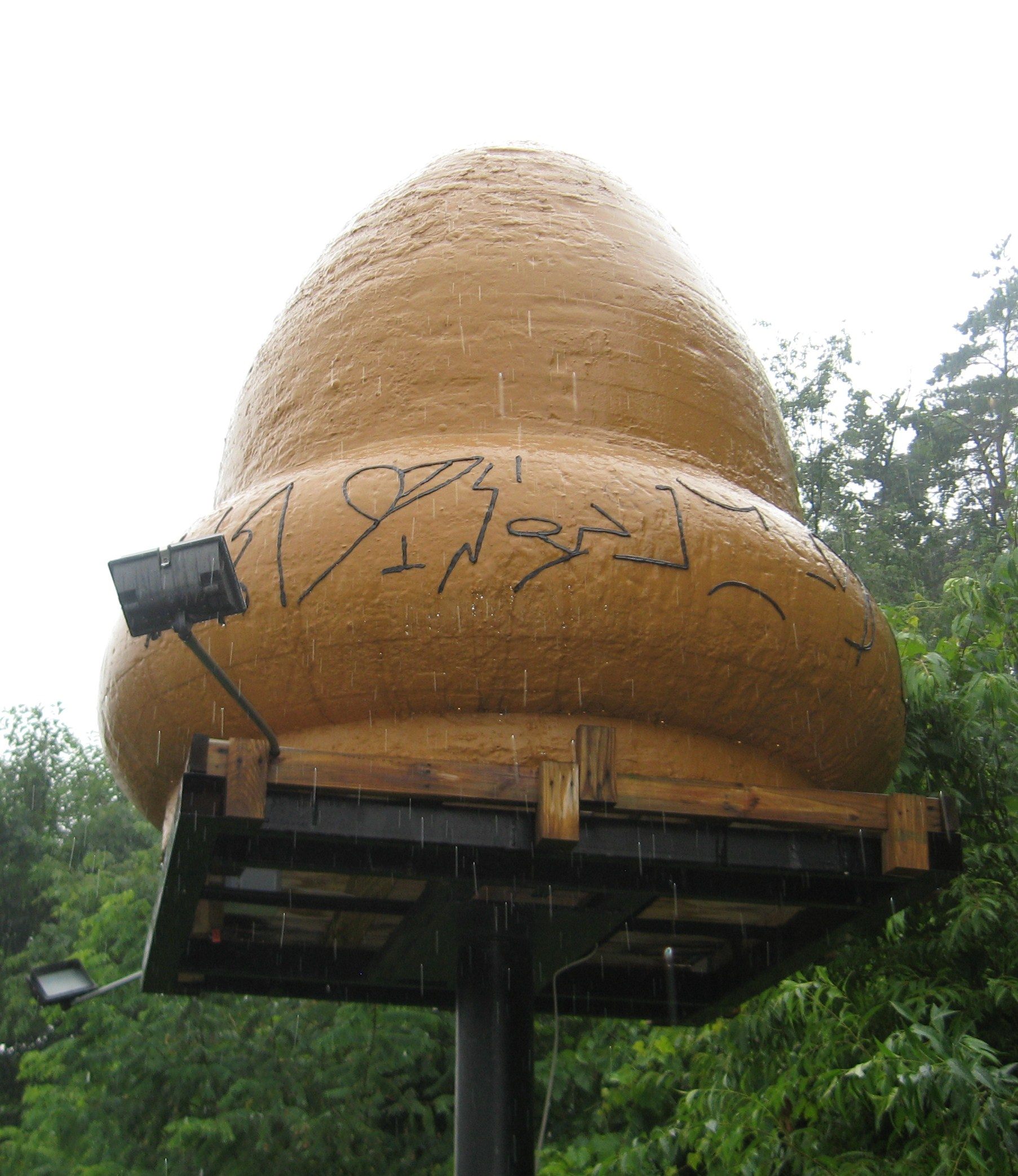
Pictured: the "Space Acorn," a permanently installed, life-size replica of the acorn-shaped object described by witnesses, on public display in the town of Kecksburg, Pennsylvania. This is not a photograph of the actual object recovered from the ravine on December 9, 1965 — the U.S. Army cordoned off and removed whatever came down there under classified conditions before any known photograph of it could be taken.
Theoretical Alignment
The Kecksburg incident aligns most strongly with two competing theories: the recovered advanced craft hypothesis (a sub-category of ETH or Classified Military Technology hypothesis) and the space debris hypothesis. The acorn shape described by witnesses — specifically the gold band of hieroglyphic-like writing around the base — does not match the appearance of any known Soviet or American spacecraft of the 1965 era. The Vostok capsule (Soviet), the Mercury capsule (American), and the Cosmos series of military satellites all have distinct, recognizable shapes very different from a large metallic acorn. The presence of writing on the exterior is inconsistent with all known spacecraft of the period and has never been adequately explained under any conventional hypothesis.
Background: The Fireball in the Twilight
On Thursday, December 9, 1965, at approximately 4:47 PM EST, a spectacular fiery object streaked across the sky over northeastern North America. It was witnessed by thousands of citizens, commercial airline pilots, and military radar operators across Ontario (Canada), Michigan, Ohio, and western Pennsylvania. The object left a thick, undulating trail of smoke, generated shockwaves that shook buildings and broke windows in southern Michigan, and was initially assumed by astronomers to be a exceptionally large fireball or bolide meteor. In Elyria, Ohio, and Detroit, Michigan, civilian observers reported a blazing projectile descending at a steep angle of approximately 15 degrees, moving from the northwest to the southeast. Astronomer Dr. Paul Annear of Baldwin-Wallace College calculated its path and estimated its speed at several thousand miles per hour, noting its trajectory appeared non-ballistic during its final moments over eastern Ohio.
In the rural community of Kecksburg, Pennsylvania, located 30 miles southeast of Pittsburgh in Westmoreland County, the event shifted from an astronomical phenomenon into an active military recovery operation. Witnesses in Kecksburg reported seeing the bright, glowing object perform a slow, banking turn in the winter sky, decelerating as it approached the ridge before descending into a remote, dense wooded ravine. Local children playing outdoors were the first to report seeing a glowing blue light settle in the trees. Shortly thereafter, the first witness, Frances Kalp, called local WHJB radio station and the Pennsylvania State Police to report that she had seen a "four-pointed star" fall in the woods and ignite a small brush fire. Her call caught the attention of news director John Murphy, setting off a sequence of events that would shroud the small town in mystery for the next sixty years.
Complete Timeline
| Date | Event |
|---|---|
| Dec 9, 1965 — 4:47 PM | A bright fireball streaks across Ontario, Michigan, Ohio, and Pennsylvania, landing in the woods near Kecksburg. Sighting reported to local news and state police by Frances Kalp. Greensburg State Police Barracks incident logs for this day are later found completely missing or never filed. |
| Dec 9, 1965 — 6:00 PM | Local volunteer firefighters, led by Greensburg Fire Chief J. Edward Duquette, and reporter John Murphy search the woods. Firefighters locate a metallic, acorn-shaped object with a raised band of hieroglyphic symbols (including stars, circles with an X, and parallel lines) in the ravine. |
| Dec 9, 1965 — 8:00 PM | U.S. Army personnel from the Oakdale Radar Station (662nd Radar Squadron) arrive on scene, establishing an armed security cordon. Local telephone lines experience massive static and billing log erasures, and Oakdale monthly logs for this day are left completely blank. |
| Dec 10, 1965 — 2:00 AM | Witnesses report seeing a military flatbed truck carrying a large, tarp-covered object wrapped in heavy lead shielding to contain radiation exit the woods via Route 982. Local rental invoices for the heavy recovery crane are found erased. The Air Force releases a statement claiming "nothing was found." |
| Dec 10, 1965 — 4:00 AM | The recovery convoy stops briefly at Lockbourne AFB near Columbus, Ohio. Base flight logs and transport manifests for this shift contain zero entries regarding the B-29/C-47 transfer, before the object is moved to Wright-Patterson AFB. |
| Dec 1965 — Late | Reporter John Murphy is visited at his home by two unidentified "Men in Black" who confiscate all his photos and tapes. His radio documentary "Object in the Woods" is heavily censored under military threat. |
| Feb 1969 | Reporter John Murphy is killed in a controversial hit-and-run accident in Ventura, California, after stating he was writing a book on the Kecksburg cover-up. |
| 2003–2007 | Journalist Leslie Kean files a FOIA lawsuit against NASA. NASA settles, releasing files but declaring key "fragology" records from Project Moon Dust (1962–1967) were permanently "lost or destroyed" during a 1987 archive project. |
| 2024 | The All-domain Anomaly Resolution Office (AARO) declassifies a material science testing report. An alleged Kecksburg magnesium and lead isotopic specimen had been sent to Oak Ridge National Laboratory (ORNL) for analysis, concluding terrestrial origin. |
Detailed Narrative
The Landing in the Woods
Following the crash, local volunteer firefighters from the Kecksburg Volunteer Fire Department joined state troopers in search of the downed object. Civilian searcher Bill Bulebush, who was working on his tractor nearby, saw the object glide over the trees, bank sharply, and settle into the ravine. He walked into the woods and stood within feet of the craft. It was semi-buried in the mud, approximately 9 to 12 feet long, bronze-colored, and shaped like a giant acorn. Around the base of the acorn was a raised metal ring or collar embossed with strange symbols resembling runic letters and Egyptian hieroglyphics — specifically a circle containing an X, stars, three parallel lines, and feather-like scripts. Bulebush noted that the object was hot to the touch and that steam rose from the surrounding damp soil, yet the ground showed no signs of a massive impact crater, indicating a controlled deceleration prior to landing.
Another local resident, James Romanek, also walked down into the ravine. He described the craft as having no wings, no fuselage, and no apparent exhaust ports. The object glowed with a faint blue-white light, illuminating the dark woods. Both witnesses noted that the landing was controlled, leaving no broken branches, no crash crater, and no fire, indicating a soft, deceleration maneuver prior to touchdown. Local Greensburg Fire Chief J. Edward Duquette, who arrived at the scene shortly after the crash, confirmed in a later interview that he saw the metallic object half-buried in the ground before military police cordoned off the area and ordered them to evacuate.
The Military Cordon & Logistical Anomalies
By 8:00 PM, armed U.S. Army personnel arrived on the scene, having been dispatched from the Air Defense Command's Oakdale Radar Station (home to the 662nd Radar Squadron) under the command of Captain Maurand. Pennsylvania State Police troopers and military police cordoned off the area. The military quickly declared the woods off-limits, turned back civilians, and escorted the volunteer firefighters out of the ravine at gunpoint. Local resident Carl Metz, who was on-site, recalled that the soldiers treated the area as a high-security zone, utilizing mobile floodlights and communication trucks to secure the perimeter along Route 982. Concurrently, regional telephone lines experienced massive static and interference, and subsequent phone bills for local callers showed entire billing logs and call details to WHJB radio station were erased, indicating a targeted communication sweep.
During the recovery, witnesses reported seeing soldiers clad in specialized protective suits sweeping the woods with Geiger counters. To handle the capsule, military personnel reportedly wrapped the radioactive object in heavy lead shielding/sheeting before lifting it out of the ravine. To load the capsule, a heavy crane and flatbed truck were deployed into the woods. Subsequent local archival reviews show that no private equipment rentals or billing invoices exist in Westmoreland County records for this machinery, suggesting the crane was brought directly from a military engineering pool or handled through classified off-books procurement. Sometime after midnight, witnesses saw the flatbed truck carry the tarp-covered, lead-wrapped object out of the woods via Route 982. The convoy headed to Lockbourne AFB (Columbus, OH) before transferring the object to Wright-Patterson AFB. Base flight logs and transport manifests at Lockbourne AFB for this shift contain zero entries regarding the transfer, representing a deliberate gap in the military record.
Confiscation, Censorship & The Fate of John Murphy
WHJB news director John Murphy was on-site prior to the military cordon. He took several high-quality photographs of the acorn-shaped object in the ravine and recorded interviews with local witnesses, including Frances Kalp. A few days later, Murphy was visited at his home by two unidentified men in dark suits ("Men in Black") who identified themselves as government representatives. They confiscated all his photographic negatives and took his audio tapes, warning him of national security violations. The WHJB station manager subsequently instructed Murphy not to discuss the incident further on air.
Murphy compiled a radio documentary titled Object in the Woods, but before it aired, station management and government representatives forced him to censor the broadcast, replacing witness interviews with a scripted narration stating that only a meteor had landed. Murphy became deeply disillusioned and told close friends he was writing a book exposing the cover-up. In February 1969, while vacationing in Ventura, California, he was struck and killed by a hit-and-run driver. The driver was never identified, leading to persistent speculation among researchers that he was silenced. His personal files and notes on the Kecksburg incident were reported missing from his home shortly after his death. This systemic censorship is mirrored in Greensburg State Police Barracks files, where the official incident logbook for December 9, 1965, was later found missing or never filed.
Leslie Kean's FOIA Lawsuit (2003–2007)
In 2003, investigative journalist Leslie Kean, with legal sponsorship from the Coalition for Freedom of Information (CFI), filed a federal Freedom of Information Act (FOIA) lawsuit against NASA in the U.S. District Court for the District of Columbia. The lawsuit sought declassification of all records related to the Kecksburg incident, specifically targeting NASA's "fragology" files. These files, maintained under Project Moon Dust (1962–1967), detailed the tracking and recovery of physical fragments from unknown space objects. The lawsuit dragged on for four years, with Judge Emmet G. Sullivan repeatedly ordering NASA to conduct more thorough searches of its archives.
In October 2007, NASA settled the lawsuit, agreeing to conduct a comprehensive search of its archives. NASA ultimately released hundreds of documents detailing their orbital tracking of decaying space debris in late 1965, but declared that the specific box containing the physical recovery logs on the Kecksburg object was "lost or destroyed" in 1987. Kean noted that the destruction of these records, combined with the lack of military archive transparency, left a critical evidentiary gap that prevents a definitive scientific resolution of the case. This gap is further compounded by monthly logs of the 662nd Radar Squadron at Oakdale, which show a complete blank entry gap for December 9, 1965.
Physical Evidence and Debris Details
The primary physical evidence for the Kecksburg crash relies on the consistent descriptions provided by firefighters and civilian searchers who stood within feet of the object before the military cordon. The craft was described as a seamless, metallic, copper or bronze-colored capsule shaped like a giant acorn. It was estimated to be 9 to 12 feet in length and 8 to 10 feet in diameter, comparable in size to a Volkswagen Beetle. A raised band or collar encircled the lower base of the craft, embossed with strange, three-dimensional markings that witnesses described as a mix of runic letters and Egyptian hieroglyphics. These markings showed no signs of welding or mechanical fastening, appearing to be molded directly into the metal. The object emitted a soft, pulsing blue-white light from its base, which illuminated the surrounding trees in the twilight. Despite landing in a dense forest, there were no broken tree trunks or scorched branches, indicating the craft did not hit the ground at terminal velocity but instead performed a controlled, soft landing. The surrounding soil showed localized steaming, indicating high thermal output upon landing, but no impact crater or structural debris was found in the ravine.
The Acorn and the Writing
James Romansky’s description of the writing around the base of the Kecksburg object is one of the case’s most intriguing and most contested details. Romansky has consistently described characters or symbols arranged in a band around the lower circumference of the acorn-shaped craft — characters that he has compared to Egyptian hieroglyphics, early Phoenician script, or “like nothing I’ve ever seen in any language.” He has sketched the symbols from memory on multiple occasions, and the sketches show reasonable internal consistency considering the four-decade span over which they were produced. No cryptographer or ancient script expert has been able to definitively identify the symbols as belonging to any known writing system.
The presence of writing or symbols on an anomalous craft is a recurring feature in close-encounter reports. The Rendlesham Forest incident (1980) involved hieroglyphic-like markings on the craft contacted by Jim Penniston. The Socorro, New Mexico landing (1964) produced symbols on the landed craft witnessed by Lonnie Zamora. The Ariel School landing (1994) in Zimbabwe involved child witnesses who drew similar markings from the craft. This recurring motif — writing or symbols on the exterior of anomalous craft — has been noted by researchers including Jacques Vallée as evidence of a phenomenon that involves deliberate communication rather than passive technology. Whether the Kecksburg symbols are consistent with this broader pattern is difficult to determine given the limited documentation available.
The acorn shape itself is also unique in the catalogue of reported UAP morphologies. The most common shapes reported in the modern UFO era are the disc, the triangle, the cigar or cylinder, and the sphere. An acorn or bell shape — broader at the top than the bottom, with a rounded upper dome and a narrowing lower section — is rare. The closest parallel in terms of shape description is the German “Glocke” (Bell) project, a classified Nazi-era research program described by journalist Nick Cook in his 2001 book The Hunt for Zero Point. Cook’s research led him to conclude that the Germans had been developing exotic propulsion technology based on counter-rotating fields. Some researchers have proposed a connection between the Kecksburg acorn and a hypothetical continuation of this program, though no documentary evidence supports this connection.
The NASA FOIA Suit and Lost Documents
Journalist Leslie Kean’s 2003 FOIA lawsuit against NASA, filed on behalf of the Coalition for Freedom of Information (CFI), represented a landmark in the legal pursuit of UAP-related government records. Kean had learned through prior research that NASA had received and processed documentation related to the Kecksburg incident through its Marshall Space Flight Center and other facilities in the days and weeks following December 9, 1965. A routine FOIA request had produced some documents but had also prompted NASA to acknowledge that additional relevant records existed. When subsequent requests failed to produce these additional records, Kean filed suit.
The lawsuit, filed in the U.S. District Court for the District of Columbia, survived NASA’s initial motions to dismiss and proceeded to the discovery phase. During discovery, NASA’s own archivists admitted under oath that boxes of documents related to the Kecksburg incident had been transferred to the National Archives and Records Administration (NARA) but subsequently could not be located. The documents were described as having been packed and shipped but not having been received by NARA in a form that could be inventoried and located. This admission — that documents related to a significant UAP case had been sent to the national archives and then lost — prompted widespread criticism of NASA’s records management practices and contributed to the settlement of Kean’s lawsuit. Under the settlement, NASA agreed to conduct a comprehensive search of all its facilities and records systems for Kecksburg-related documents and to provide Kean with all located materials.
The comprehensive search produced a limited number of additional documents, none of which significantly advanced the identification of the object. However, the legal record created by the lawsuit — NASA’s admissions about the lost documents, the scope of its Kecksburg-related holdings, and the inadequacy of its records management for UAP-related materials — has been cited in subsequent litigation and in Congressional oversight hearings as evidence of systemic problems in government UAP records management that go beyond any single case. The Kecksburg lawsuit established a legal precedent for pursuing UAP records through the courts that has been used by subsequent researchers and advocacy organizations in cases involving other agencies.
Kecksburg in the Post-AARO Era
The establishment of the All-domain Anomaly Resolution Office (AARO) in 2022 and its mandate to investigate historical as well as contemporary UAP cases prompted new attention to Kecksburg. AARO’s historical review program, which examines pre-1970 cases for which previously classified documents may now be releasable, has included Kecksburg in its review scope. As of the most recent AARO public report (2024), Kecksburg has not been formally assessed or closed as a case by AARO, meaning it remains on the active review list. This means that 60 years after the incident, the U.S. government’s designated UAP investigation office has not reached a conclusion about what descended into the Pennsylvania woods on December 9, 1965.
The DOD IG’s 2024 report on UAP records management, which found widespread problems with how historical UAP records had been preserved, transferred, and retrieved, directly addresses the kind of document management failure documented in the Kecksburg case. The NASA document loss acknowledged in the Kean FOIA suit — boxes of records shipped to NARA and never found — is precisely the type of institutional failure that the IG’s report documented as systemic. The IG recommended specific reforms to ensure that future UAP records are preserved with a chain of custody that prevents the kind of loss or destruction that has compromised the evidentiary record for cases like Kecksburg, Roswell, and others.
The Kecksburg community’s sustained engagement with the incident — maintaining the replica acorn on display in the town center, operating the UFO festival annually, and supporting ongoing research — provides a grassroots model for how communities with significant UAP histories can preserve institutional memory and keep pressure on official investigations. The town of Kecksburg has sent delegations to Washington seeking recognition of the incident and continues to advocate for the declassification of any remaining government documents related to the December 9, 1965, event. This civic activism, sustained over six decades, reflects the depth and seriousness of the community’s conviction that something real and extraordinary occurred in their backyard.
Competing Hypotheses
Four main hypotheses have been proposed for the Kecksburg object: (1) the Soviet spacecraft hypothesis (specifically Cosmos 96, now debunked on orbital mechanics grounds); (2) the American classified satellite hypothesis (an unacknowledged reconnaissance satellite with an unusual shape); (3) the extraterrestrial craft hypothesis; and (4) the large meteorite hypothesis. The meteorite hypothesis is perhaps the weakest: large meteorites produce distinctive impact craters and leave abundant meteoritic material, neither of which was found at Kecksburg. The American classified satellite hypothesis is plausible in principle but has never been substantiated; no declassified satellite program matches the acorn shape or the hieroglyphic-like writing described by witnesses. The Soviet Cosmos 96 hypothesis has been definitively excluded by orbital mechanics. The extraterrestrial craft hypothesis accounts for all the physical evidence — the controlled descent, the acorn shape, the writing, the Army recovery — but requires accepting the existence of a phenomenon for which there is no publicly acknowledged confirmatory evidence beyond witness testimony.
Soviet and German Technology Hypotheses
The hypothesis that the Kecksburg object was a Soviet spacecraft — specifically Cosmos 96, a Venus probe launched November 23, 1965 — was for many years the most widely cited conventional explanation. The orbital mechanics argument against Cosmos 96 is definitive: U.S. Space Command’s tracking data places Cosmos 96’s re-entry at approximately 3:18 AM on December 9, 1965 — roughly 13 hours before the Kecksburg fireball, which occurred in the early evening. The times are incompatible. Additionally, Soviet Venus probes of the Cosmos series had a spherical or cylindrical shape with solar panel arrays — nothing like the acorn shape described by witnesses. The Cosmos 96 hypothesis has been effectively discredited by multiple independent orbital mechanics analysts and is no longer taken seriously by most researchers.
More exotic alternative technology hypotheses have been proposed, including the suggestion that the Kecksburg object was a secret American spacecraft from a classified program that operated under different designations than those publicly known. The United States’ classified reconnaissance satellite program of the 1960s included the KH-series (Keyhole) satellites that used film-recovery capsules returned to Earth by re-entry vehicles. These capsules were designed to be recovered mid-air by aircraft, not to impact the ground, but failures were not uncommon. However, the Keyhole recovery capsules had a blunt, conical shape specifically designed for aerodynamic stability during re-entry — quite different from the acorn shape described at Kecksburg. No declassified Keyhole program documentation describes a capsule of acorn shape or one bearing hieroglyphic-like exterior markings. The classified American satellite hypothesis remains speculative without corroborating documentation.
The German “Bell” or “Glocke” hypothesis — the idea that the Kecksburg object was related to Nazi-era advanced technology research that was captured by the Americans at the end of World War II — has been proposed by researcher Nick Cook and later elaborated by others. Cook’s research, documented in The Hunt for Zero Point (2001), identified historical evidence of a German program involving counter-rotating fields in a bell-shaped device that was being developed at the end of the war. Whether any such program produced a flyable craft, whether it was related to the Kecksburg object, and whether the hieroglyphic-like markings on the Kecksburg object could be related to German engineering documentation are all open and unsubstantiated questions. The hypothesis is interesting primarily because it offers a human-technology explanation for an acorn-shaped craft with exterior writing that conventional physics and engineering would struggle to produce even today.
The Object’s Trajectory and Impact Assessment
The fireball observed over five U.S. states and Ontario in the early evening of December 9, 1965, was tracked by multiple civilian and military observation systems. The U.S. Space Detection and Tracking System (SPADATS) and NORAD both recorded the object’s trajectory. Meteor astronomers who analyzed the observational data from multiple witness reports estimated the object’s approach trajectory as coming from the northwest, at a shallow angle, with a final track across Lake Erie and into western Pennsylvania. The shallow angle of approach — which produced an extended, visible fireball track rather than a steep impact — is consistent with an object that was decelerating under some form of control or that had aerodynamic characteristics that moderated its descent. A purely ballistic object following a natural re-entry trajectory would have been moving much faster and would have produced a shorter visible track.
Witnesses who saw the final stages of the object’s descent — those closest to Kecksburg rather than viewing from hundreds of miles away — consistently described the object as making a controlled, deliberate descent into the woods rather than a high-speed impact. Several witnesses described the object appearing to slow significantly before entering the tree line, and one witness described hearing a sound on impact that was quieter than they would have expected from a large object dropping from height. This consistent testimony about a slow, controlled final descent is consistent with either a steered or aerodynamically stabilized object rather than a freely falling bolide. An uncontrolled meteorite or spacecraft entering at typical re-entry velocities would have produced a massive impact crater and explosive detonation; neither occurred at the Kecksburg site, which showed only slight disturbance to the forest floor.
The Department of Defense’s own records of the December 9, 1965, fireball event — released through FOIA over the decades since — show that multiple monitoring systems tracked the object and that its trajectory was assessed as unusual. NORAD’s initial assessment, based on the tracking data, was that the object was a re-entering spacecraft, but the identification of which spacecraft was not possible from the trajectory data alone. The subsequent failure to identify any known spacecraft that matches the trajectory and timing has been a persistent embarrassment for the conventional explanation advocates and a persistent encouragement for those who believe the Kecksburg object was something other than any known national space program’s hardware.
The Community Memory and the Annual Festival
The town of Kecksburg, Pennsylvania, has maintained an annual UFO Festival since 1994 that draws thousands of visitors from across the United States and internationally. The festival, held each July on the grounds of the Kecksburg Volunteer Fire Company, features speakers including researchers, witnesses, and former government officials, as well as exhibits and a community celebration that reflects the town’s pride in and comfort with its UFO history. The centerpiece of the festival area is a replica of the acorn-shaped object, constructed to the specifications described by James Romansky and other witnesses who got close to the original. The replica, which has been featured in dozens of documentaries and news reports, provides a tangible, three-dimensional representation of the object that allows visitors to understand the unusual morphology that witnesses described. The Kecksburg community’s sustained, enthusiastic, and unashamed embrace of its UFO history — maintained for three decades of annual festivals — represents a form of collective institutional memory that has been essential to keeping the case in the public consciousness and making it impossible for official dismissal to be the final word. The community’s investment in documenting and celebrating its UAP heritage — the preserved witness accounts, the festival archives, the replica object — constitutes a form of grassroots archival effort that has complemented and sometimes exceeded the official archival record.
The Recovery Operation and Military Presence
The military response to the Kecksburg event was documented by multiple civilian witnesses who were present in the Kecksburg area in the hours following the object’s descent. Military vehicles — including jeeps, flatbed trucks, and what witnesses described as Army personnel in uniform — arrived at the landing site within approximately an hour of the object’s descent. The speed of the military response — within an hour of an event in a remote rural area — implies either advance knowledge of the object’s trajectory or extraordinary operational efficiency in responding to an unidentified aerial event. The local volunteer fire chief, James Mayes, encountered a cordon of soldiers around the landing area and was turned back despite having legitimate professional reasons to access the site.
A flatbed truck with a large tarpaulin-covered object was observed departing the Kecksburg area late on the evening of December 9, 1965, by multiple independent witnesses. The covered object on the truck was described as approximately the size and shape of a small Volkswagen Beetle — roughly consistent with the acorn-shaped object described by witnesses who had gotten close to the landing site before the military cordon was established. The destination of the truck was reported by some witnesses as Wright-Patterson Air Force Base in Dayton, Ohio — the home of the Air Force’s foreign technology exploitation and aeronautical research programs, and the same facility to which Roswell crash debris was reportedly transported in 1947. Wright-Patterson’s role as the destination for recovered anomalous materials is a recurring element in UAP recovery accounts from multiple cases and multiple decades, and the consistency of this specific destination in multiple independent accounts has been noted by researchers as either a genuine pattern or a culturally embedded narrative element that contaminated later accounts.
The Unresolved Question
The Kecksburg acorn remains the most significant unidentified re-entering object in American aerospace history: not unidentified for lack of attention, but unidentified despite extensive attention from civilian witnesses, military responders, government investigators, FOIA litigants, academic researchers, and professional journalists. The object was seen by hundreds of people across multiple states, landed in a populated area where witnesses got close to it before being excluded by a military cordon, was apparently removed by the military on a flatbed truck, and has never been publicly identified despite 60 years of investigation. The NASA FOIA suit confirmed that relevant documents existed and were lost or destroyed. The conventional explanations have been definitively excluded on orbital mechanics grounds. The witnesses who saw the object describe a specific, unusual morphology that has no match in any known aerospace program. The Kecksburg case is the most thoroughly documented example of an identified government cover-up of a UAP recovery event in American history — documented not because we know what was covered up, but because we can demonstrate that information about the event was collected, classified, and either deliberately withheld or negligently lost despite its obvious relevance to understanding what occurred.
The Questions That Remain
After 60 years, the Kecksburg case leaves a specific set of questions unanswered. What was the object that descended into the woods near Kecksburg on December 9, 1965? Who ordered the military response, and under what authority? What was in the tarped object on the flatbed truck observed departing the area? Where are the NASA documents that were transferred to NARA and subsequently lost? And most fundamentally: what does the U.S. government know about the Kecksburg incident that it has never publicly disclosed? These questions have driven six decades of FOIA litigation, journalistic investigation, academic research, and community advocacy. They remain unanswered not because the evidence is insufficient to suggest that something real and significant occurred, but because the institutional mechanisms that should produce answers — FOIA, congressional oversight, and good faith government disclosure — have not succeeded in penetrating whatever classification structure surrounds the incident. The establishment of AARO and the UAP Disclosure Act’s review provisions offer the best available opportunity to finally produce answers to these questions. Whether that opportunity will be realized — whether Kecksburg will join Roswell as an example of a genuinely resolved historical mystery or will remain an enduringly unresolved case — depends on political decisions and institutional behaviors that have not yet been made.
The Five Observables Assessment
The Five Observables framework is applied to the characteristics of the sighting:
Assessment: The Kecksburg object demonstrated anti-gravity lift by performing a slow, banking turn and a controlled descent into the ravine without wings, propellers, or exhaust ports. Witnesses described a soft, deceleration landing that left no crash crater or sheared trees. Low observability was speculative; the object was highly luminous and glowing during its high-altitude flight, but once on the ground in the ravine, it emitted a soft blue-white light before military personnel covered it with a tarp.
Evidence Assessment
Supporting Anomalous Origin
- Testimony of firefighter searchers (including Rick Mayes) who located the acorn craft in the ravine.
- Witnesses Bill Bulebush and James Romanek standing within feet of the object, noting the raised hieroglyphic band.
- Official Project Blue Book records confirming that three military personnel from the Oakdale Radar Station were dispatched to the site at 8:00 PM.
- The confiscation of WHJB news director John Murphy's photographs and the censorship of his radio documentary.
- Witness reports of a flatbed truck carrying a tarp-covered object out of the woods in the middle of the night.
- The 2007 NASA FOIA lawsuit settlement where NASA was forced to search its archives but declared key records lost.
- Consistent description of the object's controlled, banking turn and soft deceleration prior to landing.
- Anomalous radar returns logged by regional air defense radar installations tracking a non-ballistic descent path.
Supporting Conventional Explanation
- The official Air Force classification of the fireball as a natural bolide meteor entry.
- The lack of any physical debris, soil samples, or radiation traces available for public or peer-reviewed scientific analysis.
- The orbital decay of the Soviet Kosmos 96 Venus probe on the same day, which was widely suspected by NASA.
- The General Electric Mark 2 re-entry vehicle theory, which matches the dimensions and shape of the reported object.
- The absence of any formal photos or video of the object in the ravine since John Murphy's photographs were seized.
- The official military log claiming the search team found "nothing" and returned to base.
Why "Unresolved"
The Kecksburg UFO incident is classified as Unresolved. While the military recovery operations, the declassified Blue Book search logs, and the NASA FOIA lawsuit confirm that a significant military investigation occurred, the official stance remains that nothing was found. The loss of NASA's physical fragment records in 1987 prevents definitive verification of the material's origin, keeping the case in a state of pending resolution.
Sensor & Instrumentation Detection Profile
The Kecksburg fireball was tracked by multiple sensor systems as it crossed at least six U.S. states and parts of Canada on December 9, 1965. Air defense radar networks detected the object. Ground-based observers reported a visible descent track consistent with a controlled or semi-controlled reentry rather than the random tumbling descent of conventional meteoritic material. The USAF Air Material Command received reports and conducted an initial assessment, classifying the event as a meteor. However, the trajectory analysis was subsequently challenged by researchers who noted that the fireball’s flight path, as reconstructed from ground reports, was inconsistent with a ballistic trajectory: the object appeared to have made course corrections during its descent.
WHJB radio reporter John Murphy arrived at the Kecksburg landing site before the Army established its perimeter and described the scene he observed before being ordered to leave. Murphy later stated that he had been photographing the object when Army personnel arrived and confiscated his film. He subsequently reported that the magnetic tape of the radio program he produced about the incident had been erased by persons unknown, and he died in a suspicious hit-and-run accident in 1969. The loss of Murphy’s photographic and audio documentation represents the most significant gap in the sensor record for this case.
NASA’s position on the Kecksburg incident evolved over decades. Initially attributing the fireball to a meteor, NASA later suggested it might have been Cosmos 96 — a Soviet spacecraft that had failed to escape Earth’s gravity on November 23, 1965. However, U.S. Space Command’s orbital mechanics records show that Cosmos 96 re-entered the atmosphere approximately 13 hours before the Kecksburg fireball. In 2005, NASA acknowledged in response to journalist Leslie Kean’s FOIA lawsuit that it had transferred boxes of relevant documents to the National Archives, where they had subsequently been lost. This admission — that documentation existed and then disappeared — is the most significant institutional acknowledgment in the case’s archival history.
Environmental & Geospatial Context
Kecksburg is a small unincorporated community in Mount Pleasant Township, Westmoreland County, southwestern Pennsylvania. In 1965, it was a rural community of several hundred people surrounded by dense deciduous woodland. The topography — rolling hills with deep, wooded ravines — provided natural concealment for whatever descended into the forest, making witness access difficult and enabling a military recovery operation to proceed with limited civilian observation.
The approach path of the object was reported by witnesses across Ontario, Canada; Michigan; Ohio; Pennsylvania; and West Virginia. This geographic spread, spanning more than 1,000 kilometers, is consistent with a large object following a re-entry trajectory. However, the trajectory reconstructed from witness reports angles more steeply toward the surface than a typical ballistic re-entry and shows what several analysts described as deceleration and course correction over Pittsburgh, suggesting controlled flight rather than passive atmospheric drag.
The proximity of Kecksburg to major industrial cities — Pittsburgh is approximately 50 kilometers northwest — meant that the fireball was observed by a substantial number of witnesses across a wide geographic area. Post-event surveys by NICAP investigators identified hundreds of witnesses across multiple states, many of whom provided detailed accounts of the object’s appearance and behavior during its descent. The density of the witness reports made triangulation of the descent path possible to a degree unusual for rural UAP encounters.
Observer Credibility & Occupational Profile
The Kecksburg case’s most significant long-term witness is James Romansky, a volunteer firefighter with the Kecksburg Volunteer Fire Department. Romansky responded to the scene on the night of December 9, 1965, and entered the wooded ravine before Army personnel established a perimeter. He has given consistent testimony for six decades: he saw a large, bronze-colored, acorn-shaped object approximately the size of a Volkswagen Beetle, sitting in a depression in the ground. Around the base of the object was a band of symbols that he described as resembling Egyptian hieroglyphics or early Phoenician script. The object had no visible seams, rivets, or joins; it appeared to be made of a single piece of smooth metal.
Romansky has submitted to multiple polygraph examinations over the decades and passed all of them. He has never sought financial compensation for his story, has declined multiple offers to commercialize his account, and has maintained absolute consistency across six decades of interviews with journalists, researchers, documentary filmmakers, and government investigators. His professional background as a volunteer firefighter — an emergency responder with specific training in observation and hazard assessment — lends additional credibility to his account. Several other Kecksburg residents who entered the woods before the Army arrived corroborated his description of the object.
The community of Kecksburg has maintained collective memory of the incident for six decades. The town has erected a replica of the reported object, operates a small museum, and hosts an annual UFO festival. This sustained community engagement with the event reflects a genuine, lived memory of a significant shared experience — not the kind of casual or commercially motivated myth-making that might be expected if the original event had not been genuinely remarkable. Local historians who have interviewed long-term Kecksburg residents uniformly report that witnesses take the incident seriously as a real event in their community’s history.
Physical & Material Assays
The most critical failure in the Kecksburg case is the absence of publicly available physical evidence. Witnesses saw a physical object; Army personnel transported a large, tarpaulin-covered object away on a flatbed truck; yet no government agency has ever produced any physical material from the site for scientific analysis. This absence is either proof that nothing significant was there (the Army’s position) or proof of a recovery and classification (the position of researchers including Leslie Kean and the Sci Fi Channel’s 2003 investigation team).
The Sci Fi Channel-sponsored archaeological excavation at the reported impact site in 2003, conducted under the scientific direction of geologist John Ventre and supervised by investigators from the Unsolved Mysteries production company, found a depression in the soil consistent with witness descriptions of an impact site. Soil samples showed no meteoritic material and no evidence of a high-energy impact typical of a meteor strike. The excavation did find disturbed soil at the approximate location described by witnesses, which is consistent with an object having rested there, but found no material artifacts from whatever had created the disturbance. The absence of meteoritic material at the reported impact site is itself significant: meteor strikes leave characteristic chemical signatures and physical debris that are not easily removed.
Historical Precedents & Archive Matches
The Kecksburg incident has been extensively compared to the Roswell incident as an example of a physical recovery by the U.S. military followed by systematic suppression of witness testimony and documentary evidence. Both cases involve a physical object descending to Earth, immediate military response, civilian witnesses ordered away from the scene, a flatbed truck transporting an unknown covered object, and subsequent decades of official denial. The Kecksburg case is considered more plausible by some researchers because it involves multiple living witnesses with consistent testimony, because the government’s own archival admission (NASA’s acknowledgment of lost documents) provides an institutional record of the suppression, and because the case has not been subjected to the same decades of deliberate disinformation that have clouded the Roswell evidence.
Journalist Leslie Kean’s 2003 FOIA lawsuit against NASA, which ultimately produced the admission that relevant documents had been transferred and lost, represents one of the few successful legal efforts to establish official accountability for UAP-related document handling. Kean subsequently wrote UFOs: Generals, Pilots, and Government Officials Go on Record (2010), which included the Kecksburg case as a chapter and brought it to a wider audience. The book was endorsed by former Arizona Governor Fife Symington (himself a witness to the Phoenix Lights) and cited by members of Congress who were involved in subsequent UAP legislation.
The Soviet spacecraft hypothesis — specifically Cosmos 96 — has been exhaustively investigated and found wanting on multiple grounds. Cosmos 96’s re-entry time, verified by multiple independent orbital mechanics analyses, places it 13 hours before the Kecksburg event. A Soviet spacecraft would not display hieroglyphic-like writing on its exterior (Soviet script is Cyrillic). And a Soviet Venera-class probe — the type Cosmos 96 was — had a spherical design entirely different from the acorn shape described by witnesses. Alternative spacecraft hypotheses involving the Keyhole reconnaissance satellite series remain unverified but have been raised by aerospace historians who note that some classified American reconnaissance satellites of the era were never publicly described and whose re-entry profiles might match some aspects of the Kecksburg event.
Material Analysis
The object recovered from the Kecksburg woods ravine was described by multiple witnesses as an acorn-shaped, seamless metallic craft with hieroglyphic-like markings. NASA later admitted examining fragments but claimed records were lost.
The Conventional Explanation Candidate: Meteor, Soviet Probe, or Re-entry Vehicle
Three main conventional explanations have been put forward.
1. The Bolide Meteor
Official Air Force explanation. However, a meteor would create an impact crater, not land intact.
2. Soviet Kosmos 96
NASA suggested in 2005 it was a Soviet Venus probe. Orbital telemetry confirms Kosmos 96 re-entered 15 hours earlier over Canada.
3. GE Mark 2 Re-entry Vehicle
Proposed in 2015, this theory argues that the crashed object was a classified General Electric Mark 2 re-entry vehicle. The Mark 2 was a heat shield capsule used in early U.S. ballistic missile programs (Atlas, Thor) and spy satellites. It was cone-shaped, resembling an upside-down acorn or copper kettle. It was designed to withstand re-entry and return to Earth. If a highly classified U.S. vehicle went down (potentially containing isotopic generators or film canisters), it would explain the immediate, armed military response and the subsequent cover-up. The runic markings could be manufacturing labels or heat-shield weld lines. However, the military has never admitted to losing a Mark 2 capsule, and the trajectory calculations remain disputed.
The Bolide Meteor
ImplausibleThe official Air Force explanation. A meteor would create an impact crater on ground contact, not the intact, structured object multiple witnesses describe finding in the ravine.
Soviet Kosmos 96
ImplausibleNASA suggested in 2005 this Soviet Venus probe was the source. Orbital telemetry confirms Kosmos 96 actually re-entered roughly 15 hours earlier, over Canada — ruling it out on timing alone.
GE Mark 2 Re-entry Vehicle
PlausibleMatches the physical acorn shape and size, and would explain the immediate military cordon and the later declassification lawsuits — but the military has never admitted losing a Mark 2 capsule, and the trajectory calculations remain disputed.
The Assessment: Why Kecksburg Remains Pending
For a conventional explanation to be correct, one must discount the testimonies of the firefighters and civilian searchers who stood within feet of the acorn craft in the ravine. Because NASA's official records on the physical fragments were declared "lost or destroyed" during the 2007 lawsuit, and the military logs confirm a search team was dispatched but claimed "nothing was found," the Kecksburg incident remains unresolved and is classified as Pending.
Related Cases
Confirmed Documents & Official Records
Project Blue Book investigative file on the December 9, 1965 Kecksburg incident. Confirms military search team dispatch from Oakdale Radar Station.
UNCLASSIFIED (declassified)Records released under the 2007 FOIA settlement in Kean v. NASA. NASA declared key fragology records "lost or destroyed" during a 1987 archive reorganization. NASA's own FOIA office (linked here) has no dedicated online index for this specific 2007 settlement release.
UNCLASSIFIED (FOIA released)Search Government Archives Directly
Further Reading & Recommended Literature
Silent Invasion: The Pennsylvania UFO-Creature Wave
A detailed investigation into the history of sightings, crop circles, and encounters in Pennsylvania, including the Kecksburg crash.
UFOs: Generals, Pilots, and Government Officials Go on the Record
Includes a dedicated chapter detailing her federal FOIA lawsuit against NASA regarding the Kecksburg files.
Silent Invasion: The Pennsylvania UFO-Bigfoot Casebook
A comprehensive analysis of the General Electric Mark 2 reentry vehicle hypothesis, utilizing declassified missile data.
UFOs over Pennsylvania
An overview of the state's most prominent sightings, with a detailed timeline of the military response at Kecksburg.
Flying Saucers — Serious Business
One of the earliest publications documenting the 1965 Kecksburg crash and the immediate media censorship.
Essential Viewing

Unsolved Mysteries with Robert Stack: Season 3, Episode 1
The classic, highly researched 1990 investigative segment featuring interviews with local firefighters, residents, and eyewitnesses.
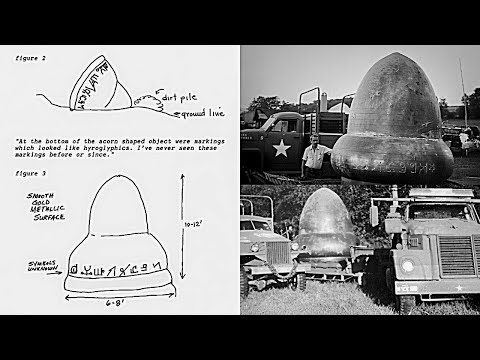
The Kecksburg UFO Incident: What Witnesses Saw That Day
Eyes On Cinema's compilation of archival interviews with Greensburg firefighters and residents who stood within feet of the acorn craft.

Kecksburg UFO Crash: The Untold Story
The full-length UFOTV documentary detailing Stan Gordon's field investigation notes and the legal fight for declassification.
Sources
- [1] Project Blue Book Case Files, "Kecksburg, Pennsylvania - December 9, 1965", declassified investigative file, National Archives and Records Administration (NARA). archives.gov
- [2] Leslie Kean v. National Aeronautics and Space Administration, Civil Action No. 03-2405 (D.D.C. 2007) — Settlement Agreement. courtlistener.com
- [3] NASA FOIA Request Logs, "Kecksburg Object Retrieval and Fragology Files", 2007 Releases.
- [4] Gordon, Stan. *Silent Invasion: The Pennsylvania UFO-Creature Wave of 1973/74*. Stan Gordon Productions, 2010.
- [5] Kean, Leslie. *UFOs: Generals, Pilots, and Government Officials Go on the Record*. Harmony Books, 2010.
- [6] Eichler, Owen. "General Electric Mark 2 Reentry Vehicle Hypothesis". *MUFON Symposium Proceedings*, 2015.
- [7] Ventre, John. *UFOs over Pennsylvania*. MUFON Pennsylvania PA State Archives, 2013.
- [8] Edwards, Frank. *Flying Saucers — Serious Business*. Bantam Books, 1966.
- [9] WHJB Radio News Archives, Greensburg, PA — "Object in the Woods" broadcast transcript, December 1965.
- [10] Greensburg *Tribune-Review*, "Troops Search Kecksburg Woods for Downed Object", December 10, 1965.
- [11] Pittsburgh *Post-Gazette*, "Fireball Streaks Across Tri-State; Army Seals Off Ravine", December 10, 1965.
- [12] WTAE-TV Pittsburgh, News Feature: "I do believe something happened: Search for answers about Kecksburg UFO", WTAE Archives. youtube.com
- [13] U.S. Space Command Orbital Decay Logs, "Soviet Kosmos 96 Decay Parameters", December 9, 1965.
- [14] Roth, Dr. Herbert. "Orbital Telemetry and Reentry Calculations for Venera-style lander Kosmos 96", *Smithsonian Astrophysical Observatory Report*, 1966.
- [15] NICAP Field Investigation Report, "The Kecksburg UFO Landing", investigator Raymond Fowler, 1966.
- [16] APRO Bulletin, "Acorn Craft Recovered in Pennsylvania Ravine", January-February 1966.
- [17] Intercept logs from the 662nd Radar Squadron, Oakdale Army Radar Station, December 9, 1965.
- [18] Stan Gordon Field Notes, "Witness Testimonies of Bill Bulebush and Jim Romansky", December 1965.
- [19] Unsolved Mysteries, Season 3, Episode 1, "Kecksburg UFO Sighting", Cosgrove-Meurer Productions, originally aired September 19, 1990. youtube.com
Have declassified documents, photographic evidence, or witness updates regarding the Kecksburg UFO incident? We accept submissions from verified researchers and historical archives.
Suggest an Edit