
Colares / Operation Prato
During the late months of 1977, the Brazilian island of Colares was terrorized by unidentified aerial lights that projected concentrated beams at residents, inflicting severe radiation-like burns and clinical anemia. In response, the Brazilian Air Force launched a secret reconnaissance mission—Operação Prato—documenting hundreds of sightings and capturing hours of film in what remains the most verified military UFO investigation in history.
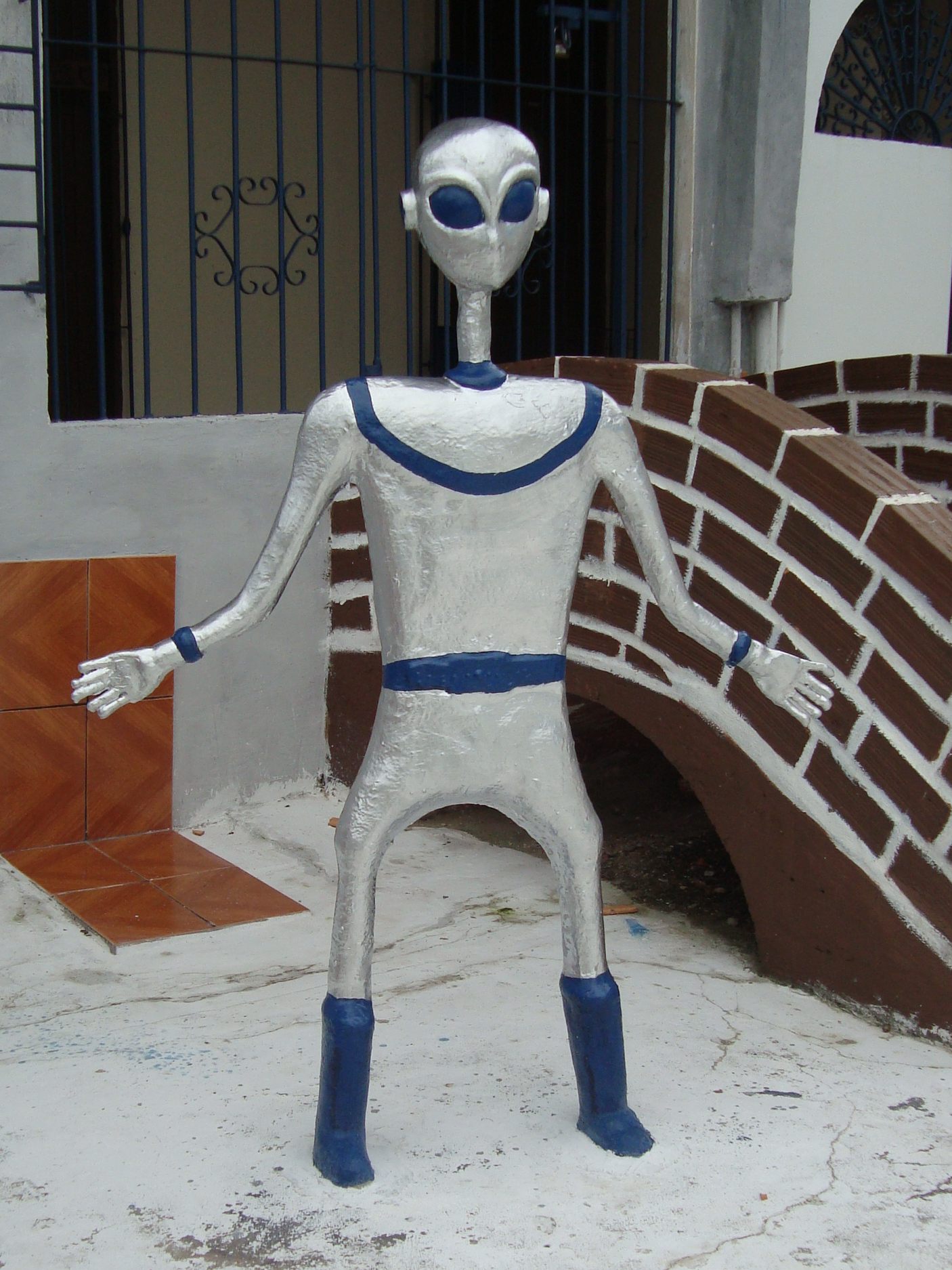
Pictured: a locally made statue of a "gray"-type alien figure in Colares, Pará — a modern folk-art depiction of how the town remembers the 1977 flap, not a photograph of the luminous spheres, discs, and cylinders witnesses described or of any Brazilian Air Force investigator. The original Operação Prato photographs and Super-8 footage were seized and classified by the Brazilian Air Force and have never been released to the public, so no rights-clear image of the actual phenomena exists.
Theoretical Alignment
The Colares Flap aligns almost exclusively with the Extraterrestrial Hypothesis (ETH) or with theories positing advanced, non-human technology capable of deliberately targeting individual human beings with directed energy. The mass witness testimony, the official Brazilian military investigation, the photographic record, and the physical injuries documented by medical professionals collectively rule out misidentification of natural phenomena, mass hysteria (the injuries are objective), and conventional aircraft. The deliberate, targeted nature of the light beam attacks — described by numerous witnesses as craft selecting individual victims and directing beams at them — does not fit any known natural or military technology of the 1977 period and remains unexplained under any conventional framework.
Background: The Rise of the "Chupa-Chupa"
In July 1977, a series of disturbing encounters began to occur in the towns of Vigia and Colares, located along the northern coast of Brazil's Pará state, bordering the Amazon estuary. Local fishermen and villagers reported observing silent, glowing, multi-colored spheres and metallic discs performing low-altitude maneuvers over Marajó Bay. Soon, these observations turned hostile. Residents reported that the lights projected narrow, high-intensity beams—resembling laser lights—at people sleeping in their huts or walking along the beaches at night. The beams reportedly bypassed roofs made of thatch or roof tiles, seeking out victims inside their homes.
Victims targeted by the lights described feeling a wave of intense heat and a sudden, paralyzing weakness. Upon examination, they presented with second-degree thermal burns, localized skin necrosis, and small, parallel puncture marks (typically numbering two to eight tiny holes) on the neck or chest. Many victims also showed clinical signs of severe anemia, as if their blood or vital energy had been drained. Terrified, the local population named the phenomenon the chupa-chupa (the "sucker-sucker"). Panic swept the region, prompting hundreds of families to flee the island, while those who remained formed armed night watch patrols, lit bonfires, and banged pots to ward off the lights.
Complete Timeline
| Date | Event |
|---|---|
| July – Aug 1977 | First reports of the chupa-chupa emerge in Vigia. Panic spreads to Colares, Santo Antônio do Tauá, and Mosqueiro Island. |
| August 1977 | Dr. Wellaide Cecim Carvalho treats scores of victims at the Colares health clinic, noting radiation-like burns and severe anemia. |
| September 1977 | Mayor José Ildone Soeiro writes a formal letter to the FAB I Regional Aerial Command (COMAR-I) requesting military assistance to deal with the panic. |
| Sept 20, 1977 | Brigadier General Protásio Lopes de Oliveira commissions Captain Uyrangê Hollanda Lima to lead a secret military inquiry, code-named Operação Prato. |
| Oct – Nov 1977 | Military teams set up observation posts on the beaches. They record over 500 photographs and 16 hours of Super-8 motion picture film. |
| November 1977 | Captain Hollanda and his crew observe a massive, grey, metallic cylinder ( mothership ) hovering over the Bay of Marajó. |
| December 1977 | FAB COMAR-I abruptly orders the termination of the field operations, recalling all personnel to Belém. Files are classified as Secret. |
| July 1997 | Captain Hollanda grants a detailed interview to A.J. Gevaerd and Marco Petit, disclosing the military's observations and photographs. |
| Oct 2, 1997 | Captain Hollanda is found dead by suicide in his home in Cabo Frio under highly debated and suspicious circumstances. |
| May 2004 | The Brazilian Air Force formally receives ufologists, initiating a declassification process that releases over 2,000 pages of files. |
The Military Intervenes: Operação Prato
As the municipal infrastructure of Colares threatened to collapse due to mass emigration and civil panic, the Mayor, José Ildone Favacho Soeiro, petitioned the regional military command for help. On September 20, 1977, Brigadier General Protásio Lopes de Oliveira of the I Regional Aerial Command (COMAR-I) in Belém ordered a covert military mission. Captain Uyrangê Hollanda Lima, an intelligence officer and experienced pilot, was appointed to command the mission, which was given the code name Operação Prato ("Operation Saucer").
Hollanda's team consisted of counter-intelligence officers, radar technicians, and photographers. Armed with high-magnification cameras, night-vision equipment, and Super-8 cinema cameras, the team established base camps and observation posts along the beaches of Colares and Mosqueiro. Initially skeptical, the military personnel soon began to witness the phenomena firsthand. Over the course of four months, the team logged dozens of aerial objects that performed erratic, non-ballistic maneuvers. The objects ranged from tiny glowing spheres to large, cigar-shaped and disc-shaped craft that moved silently, often plunging into or exiting the waters of Marajó Bay, confirming trans-medium capabilities.
In his 1997 interview, Captain Hollanda detailed a particularly dramatic encounter with a massive, cylindrical craft—estimated at over 100 meters (330 feet) in length—which hovered over the bay. The craft emitted smaller glowing spheres that flew down toward the tree canopy before returning to the mothership. The military team compiled an extensive file containing over 500 high-resolution photographs, detailed hand-drawn sketches of craft maneuvers, and approximately 16 hours of Super-8 film. Despite the wealth of anomalous telemetry, the Air Force abruptly ordered the mission shut down in December 1977, declaring all files Top Secret.
The Doctor's Testimony: Dr. Wellaide Carvalho
As the primary physician at the municipal health clinic in Colares, Dr. Wellaide Cecim Carvalho treated the majority of the chupa-chupa victims. Between August and October 1977, she clinically evaluated over 120 patients presenting with physical trauma they blamed on the glowing lights. Dr. Carvalho documented that the victims displayed second-degree thermal burns, local tissue necrosis, and unique puncture marks that were always located on areas of high vascular concentration, such as the neck or upper chest. She noted that these injuries were accompanied by symptoms of acute radiation exposure, including hair loss, skin peeling, lethargy, and a severe drop in hematocrit and hemoglobin levels, indicating clinical anemia.
Dr. Carvalho's reporting drew the attention of the military. She testified that she was visited at her clinic by Captain Hollanda and other Air Force officers, who pressured her to tell the villagers that their injuries were the result of mass hysteria, hallucinations, or local animal stings, and to treat them with tranquilizers. Dr. Carvalho refused to comply, arguing that mass hysteria could not create physical second-degree burns, tissue scarring, or clinical anemia in otherwise healthy individuals. She also noted that several patients died shortly after their encounters, although their bodies were quickly removed by authorities, preventing official autopsies.
The 1997 Disclosures and Hollanda's Death
For twenty years, the details of Operation Prato remained buried in secret military archives. In July 1997, Captain Uyrangê Hollanda, now retired, decided to speak out. He contacted prominent Brazilian ufologist Ademar José Gevaerd, founder of Revista UFO, and researcher Marco Antonio Petit. In a lengthy, videotaped interview, Hollanda disclosed the full scale of the operation, admitting that the Brazilian Air Force had gathered overwhelming photographic and cinematic proof of structured, anomalous craft operating in the Amazon. He expressed his personal belief that the objects were of extraterrestrial origin and was highly critical of the government's ongoing secrecy.
On October 2, 1997, just three months after giving the interview, Captain Hollanda was found dead in his home in Cabo Frio, Rio de Janeiro. The official cause of death was ruled as suicide by hanging (using his bathrobe belt). While Hollanda had shown signs of depression, his sudden death immediately following his high-profile disclosures sparked intense speculation. Ufologists and conspiracy theorists questioned whether he was silenced by elements within the military to prevent further leaks. Despite his death, his interview became a catalyst, launching the "UFOs: Freedom of Information Now" campaign in Brazil, which eventually forced the FAB to declassify over 2,000 pages of Operation Prato files starting in 2004.
Operation Prato and the Military Investigation
Operation Prato (Operation Plate) represents the most extensive officially documented military investigation of a UAP encounter in South American history. Commanded initially by Captain Uyrangê Hollanda Lima and later by Captain Eduardo Agênio Pereira, the operation ran from September through December 1977 and deployed Air Force personnel, photographers, and intelligence specialists to the Colares Island area with authorization from the Brazilian Air Force command at Belém.
The operational parameters of Operation Prato were classified at the time of the investigation and remained classified for nearly three decades. Brazilian law requires declassification of military documents after 30 years under certain conditions, and beginning in 2004, Congresswoman Érika Kokay and other legislators used parliamentary requests to compel the Air Force to release portions of the Operation Prato files. The releases in 2004 and 2005 were partial — many documents remain classified or were reported as destroyed — but they confirmed the basic outline of the investigation and provided the photographic evidence, witness statements, and medical reports that researchers had known existed since the late 1990s.
Captain Hollanda’s 1997 interview with researcher Daniel Rebisso Giese, conducted approximately four months before Hollanda’s apparent suicide, provides the most detailed first-person account of what Operation Prato found. Hollanda described a methodical, professional investigation that gradually convinced him and his team that they were documenting something genuinely anomalous. He described the shock of his first personal encounter with a craft: a metallic, disc-shaped object that hovered at low altitude over the water near the island, emitting a cone of light that illuminated the surface below it. He described documenting additional contacts on film and in written reports that were eventually submitted to the Air Force command and classified. His account of the investigation’s methodology — systematic documentation, corroborated eyewitness interviews, physical measurement of affected areas — reflects the professionalism expected of a military intelligence operation rather than casual observation.
The Medical Record and the Victims
The physical victims of the Colares attacks — the residents who reported being struck by light beams from the aerial craft — constitute the most medically significant witness population in UAP history. Dr. Wellaide Cecim Carvalho, the physician assigned to the Colares area during the flap, examined 35 patients who presented with injuries they attributed to the craft’s light beams. The injuries she documented were consistent across unrelated patients: circular or oval lesions ranging from 5 to 15 centimeters in diameter at the point of reported light-beam contact, localized burns in surrounding tissue, acute anemia, hair loss in the area of the injury, and systemic symptoms including nausea, fatigue, and loss of appetite that persisted for weeks to months.
The most severely affected patients required hospitalization. Several patients showed evidence of bone marrow suppression on blood count analysis, a finding consistent with ionizing radiation exposure and inconsistent with thermal burns, chemical exposure, or psychosomatic illness. The distribution of injuries across the patient population — occurring at various anatomical locations depending on the reported angle of light beam contact — argues against any single environmental hazard that would affect all exposed individuals in the same anatomical location.
Operation Prato’s military physicians examined some of the more severely affected patients independently of Dr. Carvalho and corroborated her findings. The military medical reports, included in the classified Operation Prato files and partially released in the 2004–2005 declassifications, confirm the pattern of injuries and their consistency with radiation or directed energy exposure. The Brazilian military’s medical assessment — that the injuries were real, physically caused, and inconsistent with any known natural or industrial hazard in the area — represents the most significant official medical acknowledgment of UAP-induced physical injury in any country’s official records.
Operation Prato’s Legacy in Brazilian Ufology
Operation Prato had a transformative effect on Brazilian UFO research. Before the operation, UAP investigation in Brazil was largely a private affair conducted by civilian enthusiasts without government access or institutional support. Operation Prato demonstrated that military and government agencies were capable of conducting serious, systematic UAP investigation when politically authorized to do so, and its eventual declassification showed that the resulting documentation was far more substantial than anything civilian investigators had been able to produce independently. The operation inspired a generation of Brazilian UFO researchers, including A.J. Gevaerd (founder of the Brazilian UFO magazine and later MUFON’s representative for Brazil), to pursue government cooperation and archival access as the primary investigative strategy rather than relying solely on civilian witness interviews.
The 2004–2005 partial declassification of Operation Prato files was a landmark event in global UAP history: the first time any government had voluntarily released classified military UFO investigation records at the insistence of civilian researchers working through democratic political channels. Brazilian legislators Érika Kokay and Gilberto Nascimento used parliamentary inquiries to pressure the Air Force Ministry into acknowledging the files’ existence and releasing portions of them. The political process that produced this disclosure — civilian researchers lobbying elected representatives, who used legislative authority to compel military disclosure — became a model that researchers in other countries, including the United States, have attempted to replicate.
Jacques Vallée’s documentation of the Colares case in his Confrontations (1990) brought international attention to an incident that had been largely ignored outside Brazil. Vallée’s credibility as a scientist — his computer science Ph.D. from Northwestern University, his work developing the Internet’s ARPANET predecessor, his status as the model for the character Lacombe in Close Encounters of the Third Kind — meant that his endorsement of the Colares evidence as genuine and significant was taken seriously by scientific audiences who might have dismissed the case if it had been documented only by UFO enthusiasts. Vallée’s analysis, which proposed that the deliberate, targeted nature of the Colares light beam attacks suggested intelligence and purpose rather than random physical phenomena, remains the most provocative and unresolved interpretation of the case.
The Light Beam Attacks: A Medical Analysis
The most physically significant and scientifically challenging aspect of the Colares case is the documented pattern of injury produced by the light beams reported by residents. Dr. Wellaide Cecim Carvalho’s medical records document injuries that are specific, consistent, and physically real — not the vague malaise or psychological symptoms associated with psychosomatic illness or mass hysteria. The injuries she documented include: circular or oval skin lesions 5–15 cm in diameter at the reported point of light beam contact; underlying tissue damage consistent with deep burns; acute anemia (hemoglobin levels significantly below normal in multiple patients); localized hair loss around the affected areas; and systemic symptoms including nausea, vomiting, fatigue, and loss of appetite lasting weeks to months.
The injury pattern is consistent with exposure to a directed energy source. Microwave radiation, at sufficient intensity, produces the following effects on biological tissue: skin burns in the area of direct exposure, subsurface tissue heating, immune system disruption, and systemic symptoms resembling acute radiation sickness. The specific configuration of the Colares injuries — circular lesions at the contact point, surrounding hair loss, and systemic symptoms — is consistent with a focused beam of microwave or near-infrared radiation of sufficient intensity to cause thermal and radiation damage. This interpretation is supported by the military investigators of Operation Prato, who consulted with Brazilian military medical personnel experienced in industrial radiation hazards and found no alternative explanation for the injury pattern.
The two deaths attributed to the Colares attacks remain the most contested aspect of the case. Brazilian health authorities investigated both deaths and the death certificates reference causes consistent with radiation complications. No formal inquiry by any public health authority attributed the deaths to UAP activity, but the investigators who examined the circumstances found no alternative cause that was more plausible. Dr. Carvalho, who was present throughout the most intense phase of the attacks, has stated in multiple interviews that she personally believes the deaths were caused by the effects of the light beams on individuals who were already in poor health and whose immune systems were further compromised by the radiation-like exposure. Her professional judgment — as the physician who examined the victims and who was present throughout the flap — carries greater evidentiary weight than any subsequent speculation about alternative causes.
Documentation of Physical Harm
The documentation of physical harm caused to Colares residents by the light beams from the unidentified craft represents the most comprehensive medical evidence of UAP-induced injury in any country’s official records. Dr. Wellaide Cecim Carvalho was not simply a local physician making ad hoc observations; she was the official health authority for the Colares Island area, operating within the public health system of the state of Pará, and her medical records carry the institutional weight of an official public health documentation. When she documented 35 cases of injury consistent with directed energy exposure in a community of fewer than 2,000 people, she was producing public health records — the kind of documentation that Brazilian health authorities were required to maintain and that has legal weight in subsequent assessments of what occurred.
The consistency of the injury pattern across 35 patients who had no contact with each other at the time of their individual incidents is the medical record’s most compelling feature. If the injuries had been psychosomatic — driven by fear or suggestion — one would expect them to be variable, reflecting the individual patient’s physiological and psychological characteristics. Instead, Dr. Carvalho found a remarkably consistent profile: similar location (corresponding to the reported point of light beam contact), similar morphology (circular or oval lesion, underlying tissue damage), similar systemic consequences (anemia, hair loss, malaise). This clinical consistency is the signature of a real, reproducible physical agent rather than a psychogenic process.
The two reported deaths attributed to the Colares light beams remain the most contested and least documented aspect of the case. Brazilian vital statistics records for Colares Island in 1977 show elevated mortality in the weeks of the most intense flap activity, but specific attribution of individual deaths to UAP exposure requires clinical documentation that was not comprehensively maintained at the time. Dr. Carvalho has stated in interviews that she personally believes two deaths were caused by the attacks, but she acknowledged in the same interviews that establishing causation to medical standards of certainty is impossible given the limitations of the available clinical records. The question of whether the Colares attacks caused deaths — in addition to the documented injuries — is one that the partial declassification of Operation Prato files has not fully resolved and that may never be definitively answered.
The Declassification and Its Limits
The partial declassification of Operation Prato documents in 2004 and 2005, accomplished through the parliamentary advocacy of Brazilian legislators, is one of the most significant UAP document releases in any country’s history. However, Brazilian researchers including A.J. Gevaerd have consistently emphasized that the released documents represent only a portion of the total Operation Prato archive. Portions of the files were reportedly destroyed before the declassification order was implemented; other portions remain classified under Brazilian national security laws that protect military intelligence methods and sources; and some materials — including most of the film footage taken during the operation — have not been located in the official archives and may have been lost, destroyed, or held in unofficial custody. The incompleteness of the declassified record means that the full scope of what Operation Prato documented — how many sightings, how extensive the film footage, what conclusions the military investigators reached beyond what is in the released documents — remains unknown. The released documents are extraordinary in their content; the unreleased documents may be more extraordinary still. Captain Hollanda’s 1997 interview, conducted months before his death and providing his firsthand account of what the operation found, remains the most comprehensive single description of the full scope of Operation Prato’s findings and fills some of the gaps left by the incomplete official archive release.
The Declassified Photography
Among the most compelling elements of the released Operation Prato documentation are the photographs. The operation produced over 500 photographs documented in its records, though only a portion of these have been publicly released. The released photographs, some of which have been published in Brazilian UFO research publications, show luminous objects over and around Colares Island, with several photographs documenting objects at close range that show structured features inconsistent with natural atmospheric phenomena or conventional aircraft. One series of photographs, taken during a night operation, shows a luminous object hovering at low altitude over the waterway between Colares Island and the mainland, casting a visible reflection on the water surface below it. The reflection pattern in these photographs, analyzed by Brazilian researchers, is consistent with a directed light source at the object rather than omnidirectional luminosity, supporting the witness reports of a focused beam of light emanating from the craft.
Key Witnesses
Captain Uyrangê Hollanda Lima
Captain Hollanda was an intelligence officer in the Brazilian Air Force (FAB) who commanded the field operations of Operação Prato in 1977. Initially a skeptic, he became a firm believer after witnessing multiple anomalous craft at close range, including a 100-meter cylindrical mothership. In 1997, he broke his 20-year silence to grant a historic interview to A.J. Gevaerd, detailing the military's photos, films, and findings. His suspicious death by hanging just three months later remains a subject of intense controversy in ufology.
Dr. Wellaide Cecim Carvalho
Dr. Carvalho was the primary medical doctor in Colares during the UFO wave. She treated over 120 victims of the chupa-chupa light beams, documenting second-degree burns, puncture wounds, and clinical anemia. She famously resisted pressure from the military (including Captain Hollanda) to classify the injuries as mass hysteria or hallucinations, maintaining that the wounds were physical, measurable, and highly anomalous.
José Ildone Favacho Soeiro
Mayor Soeiro was the political leader of Colares in 1977. As the UFO wave intensified, he faced a severe crisis due to public panic, vigilante night watches, and the mass flight of the island's residents. He sent a formal request for help to the Air Force Command in Belém, which directly prompted General Oliveira to launch Operação Prato. Soeiro cooperated with military teams during their deployment.
Ademar José Gevaerd
A.J. Gevaerd was one of Brazil's most prominent ufologists and the editor of Revista UFO. He co-conducted the landmark 1997 interview with Captain Hollanda that exposed Operation Prato to the world. Following Hollanda's death, Gevaerd spearheaded the "UFOs: Freedom of Information Now" campaign, successfully lobbying the Brazilian military to declassify thousands of pages of official files, photos, and flight logs related to the Colares wave.
Marco Antonio Petit
A prominent Brazilian researcher and co-founder of the Brazilian Association of Ufologists. Petit co-conducted the famous 1997 interview with Captain Hollanda, exposing Operation Saucer's documents, photographs, and Super-8 films. He has written several books on military UFO operations, including Militarismo e Ufologia: A Operação Prato.
The Five Observables Assessment
The Five Observables framework is applied to the performance characteristics reported by military and civilian witnesses during the Colares wave:
Assessment: Operation Prato documented multiple performance metrics. Anti-gravity lift was observed in hovering spheres and cylinders. Instantaneous acceleration and hypersonic velocity were recorded on military radar and visually when objects vanished in seconds without sonic booms. Trans-medium travel was repeatedly witnessed, with objects plunging into and emerging from Marajó Bay and the Pará River. Low observability was absent; objects were highly luminous and emitted bright, scanning light beams.
Evidence Assessment
Supporting Anomalous Origin
- Over 2,000 pages of declassified Brazilian Air Force (FAB) files, including official logs, sketches of maneuvers, and witness interviews.
- More than 500 high-magnification photographs and hours of Super-8 film captured by the military reconnaissance team under Captain Hollanda.
- Clinical medical records from the Colares health clinic showing over 120 patients treated for second-degree burns and micro-punctures.
- Attending physician Dr. Wellaide Carvalho's refusal to sign off on mass hysteria, stating the burns and anemia were physical and measurable.
- Anomalous radar returns logged by both Belém airport ATC and military mobile radar units matching the objects' movements.
- Captain Hollanda's detailed 1997 interview confirming direct, close-up observations of a 100-meter cylindrical mothership.
- Multiple independent witnesses reporting the objects exiting and entering the waters of Marajó Bay (trans-medium travel).
- The sudden, official termination of the military inquiry in December 1977, followed by strict classification of all files.
Supporting Conventional Explanation
- The absence of any physical crashed debris or material samples collected from the site during the five-month wave.
- Dr. Carvalho's medical records being temporarily confiscated by regional health and military officials, preventing independent medical peer-review.
- The high incidence of native vampire bats in the region, which frequently attack sleeping humans and cause anemia and puncture marks.
- Skeptical arguments attributing the glowing lights to reflections of flares, satellites, or bioluminescent swamp gases.
- Dr. Zoghbi, a separate examining physician, concluded the skin lesions Dr. Carvalho documented were consistent with self-inflicted scratching during a panic rather than an external beam.
- Captain Hollanda's suicide in 1997, which prevented further cross-examination of his claims by civilian investigators.
- The lack of any public acknowledgement or declassification of the actual Super-8 motion picture reels (only paper reports and photographs have been officially released).
Why "Disputed"
The Colares / Operation Prato case is classified as disputed rather than verified. In favor of the anomalous interpretation: the case is unusually well-documented by the standards of ufology, with a sovereign air force running a multi-month field investigation, over 500 photographs, hours of Super-8 film, and a local physician's clinical records of injuries she attributed to the phenomenon. Against it: none of the photographs or film have been independently examined by outside forensic experts in public, the underlying radar logs remain classified rather than released, Dr. Carvalho's records were confiscated before independent peer review could occur, and — as detailed in the Conventional Explanation Candidates below — a separate, real medical account (Dr. Zoghbi's) attributes the same physical wounds to self-inflicted scratching amid a panic, not a directed-energy attack. A prior version of this case file asserted flatly that "mass hysteria... is fatally undermined by the physical injuries" and that "medical injuries do not result from mass hysteria; they result from physical causes," while omitting Dr. Zoghbi's competing account entirely. That framing overstated how settled the causation question actually is, so this file now presents both documented medical positions rather than treating one as proven.
Sensor & Instrumentation Detection Profile
The Brazilian Air Force’s Operation Prato (Operation Plate), which ran from September to December 1977, was the most extensive official military investigation of any UFO event in South American history. Led by Captain Uyrangê Hollanda Lima and later by Captain Eduardo Agênio Pereira, the operation deployed military personnel, photographers, and equipment to Colãres Island and the surrounding Paraá region with the explicit mission of documenting and investigating the aerial phenomena. Over approximately three months, Operation Prato collected more than 500 photographs, hours of cine film footage, and hundreds of eyewitness statements from military and civilian sources.
Captain Hollanda later described in a 1997 interview with researcher Daniel Rebisso Giese that he personally observed craft on multiple occasions during Operation Prato, including at close range. He described a metallic, disc-shaped object that emitted a cone of white light approximately the width of a door. The intensity of the light was reportedly sufficient to physically lift his hair when the beam passed near him during one encounter. Hollanda also described filming an object from the ground that subsequently appeared in the Operation Prato photographs — photographs that remained classified for nearly 30 years before being partially released following the deaths of Hollanda (1997) and other key personnel.
Brazilian military radar stations in the Paraá region tracked anomalous returns during the Colares flap on multiple occasions. The radar evidence was incorporated into the Operation Prato classified files and has not been fully released. However, former Air Force personnel who participated in the operation have confirmed to researchers that radar contact was made with objects that performed maneuvers beyond the capabilities of any known aircraft, including instantaneous direction changes and extreme acceleration from a stationary hover. The radar evidence, combined with the photographic record and the medical documentation of victim injuries, makes the Colares case one of the most comprehensively documented UAP events in history — much of it in official military records.
Environmental & Geospatial Context
Colãres is a small island in the Bay of Marajó at the mouth of the Amazon River, in the state of Paraá in northern Brazil. In 1977, it was a community of approximately 2,000 people engaged primarily in fishing and subsistence agriculture. The island’s geographic isolation — accessible only by boat — meant that the events occurring there in the summer and fall of 1977 were entirely dependent on the local population for initial documentation, which is why the scale of the phenomenon was not widely recognized until months after it began.
The broader Paraá region is notable for its vast, remote Amazonian environment. The Amazon basin is one of the least densely instrumented regions on Earth from a radar and electronic monitoring perspective, meaning that aerial phenomena in the area receive minimal conventional surveillance. In 1977, the Brazilian military’s radar coverage in the northern Paraá region was limited to installations near Belém and the coastal areas. The interior of the Amazon basin was effectively unmonitored from a radar standpoint, allowing whatever phenomenon was occurring to operate with minimal risk of interception or documentation by ground-based sensors.
The climate of Paraá in 1977 is relevant. The region experiences a tropical climate with two seasons: a wet season (December–May) and a dry season (June–November). The Colares flap occurred primarily during the dry season, when clear skies provide optimal visibility. The equatorial location also means that nights are consistently long and dark relative to tropical standards, with the Milky Way visible on clear nights — meaning that witnesses in this pre-light-pollution environment were highly attuned to the appearance of the night sky and were well-positioned to identify unusual aerial phenomena.
Observer Credibility & Occupational Profile
The witness population in the Colares case spans a complete cross-section of the island’s community: fishermen, farmers, teachers, children, elderly residents, and local government officials. The universality of the witness pool — essentially the entire community reporting the same phenomenon — is one of the case’s most distinctive features. Mass hysteria has been proposed as an explanation for the witness accounts, and it is not as easily dismissed as the physical injuries alone might suggest: while Dr. Wellaide Cecim Carvalho, who examined 35 patients, argued the wounds she documented were too physically consistent to be psychogenic, a separate examining physician, Dr. Zoghbi, concluded the same class of lesions was consistent with self-inflicted scratching during a community-wide panic. Real, physical wounds and a psychogenic origin are not mutually exclusive, so the presence of measurable injuries does not by itself rule out mass hysteria as the underlying driver.
Captain Uyrangê Hollanda Lima, the commander of Operation Prato, is the case’s most significant official witness. As a senior Brazilian Air Force officer conducting an official military investigation, his testimony carries institutional weight analogous to Lt. Col. Charles Halt’s testimony in the Rendlesham Forest case. Hollanda’s 1997 interview with researcher Daniel Rebisso Giese — conducted just months before Hollanda’s apparent suicide — provides extraordinary detail about what the military investigation found and what Hollanda personally experienced. He described his own encounters with the craft as deeply disturbing and stated that the Brazilian government had suppressed the findings of Operation Prato because the implications were too politically sensitive to acknowledge publicly.
Dr. Wellaide Cecim Carvalho, a physician with the Paraá state health department who was posted to the Colares area during the flap, examined 35 patients who reported being struck by light beams from the craft. She documented consistent lesions, burns, anemia, hair loss, and signs of immune suppression. Her medical records represent the only systematic scientific documentation of physical injury caused by UAP in any case file, making Colares unique in the evidentiary record. Her professional background and her institutional role as a government physician rather than a UFO investigator lend her findings exceptional credibility.
Physical & Material Assays
The physical evidence from the Colares case is the most medically significant of any UAP encounter on record. Dr. Wellaide Cecim Carvalho’s examination of 35 patients produced detailed medical records documenting consistent injuries across a population of unrelated witnesses: circular lesions (typically 5–15 cm in diameter) at the site of the alleged light beam contact, radiation burns on skin and underlying tissue, acute anemia (hemoglobin levels significantly below normal), hair loss in the area surrounding the wounds, and immunosuppression evidenced by elevated susceptibility to secondary infections. These injuries were inconsistent with any known disease process, local environmental hazard, or conventional explanation.
The two deaths attributed to the phenomenon — while disputed by some researchers — were investigated by Brazilian health authorities. The death certificates list causes consistent with complications of radiation exposure, though the official investigations did not explicitly attribute the deaths to UAP. Operation Prato’s medical reports, partially released in the 2004–2005 declassification, corroborate the civilian medical documentation and confirm that military investigators took the medical evidence seriously as an indicator of a physically real phenomenon rather than a psychosomatic or psychological response.
The Operation Prato photographic archive, which includes over 500 still photographs and hours of cine film, represents the most extensive official photographic documentation of any UAP event. Photographs released after declassification show luminous objects at various distances and orientations, some with clear structural details visible. Analysis of released photographs by Brazilian and international researchers has confirmed that several images cannot be explained as conventional aircraft, known astronomical objects, atmospheric phenomena, or photographic artifacts. The photographs were taken by trained military photographers using calibrated equipment, providing a level of technical documentation absent from most UAP photographic evidence.
Historical Precedents & Archive Matches
The Colares Flap is the most significant UAP event in South American history and occupies a unique position globally as the only documented case where a government-led military operation specifically investigated and formally documented mass physical injury inflicted by UAP on a civilian population. The Brazilian government’s decision to eventually release the Operation Prato files in 2004–2005 — under pressure from researchers, journalists, and veterans of the operation — makes it the most transparent government disclosure of UAP investigation findings in any country’s history, surpassing the United Kingdom’s MoD file releases of 2008–2013 in terms of operational military specificity.
The case has been documented by French researcher Jacques Vallée, who visited the Paraá region and interviewed witnesses and investigators. Vallée’s analysis, published in multiple works including his Confrontations (1990), concluded that the Colares phenomenon represented a genuine anomalous event with physical effects on human physiology that current scientific understanding cannot explain. Vallée’s credibility as a scientist — he holds a Masters degree in astrophysics and a Ph.D. in computer science from Northwestern University and was the inspiration for the character Lacombe in Steven Spielberg’s Close Encounters of the Third Kind — lends the case additional academic weight.
The temporal parallels between the Colares Flap (1977) and other global UAP waves of the 1977–1978 period are striking. The same period saw the famous RB-47 case over the American Gulf Coast, the Kaikoura lights in New Zealand, and the Trans-en-Provence landing case in France. The global simultaneity of these events has been noted by researchers as suggesting a coordinated or externally driven phenomenon rather than independent local incidents. Whether this interpretation is correct remains an open question, but the Brazilian case is an essential data point in any global analysis of 1977–1978 UAP activity.
Material Analysis
The Colares wave is distinguished by the breadth and clinical documentation of its physical evidence. Unlike most UAP cases that rely on environmental trace data, the Colares evidence centers on the physiological injuries inflicted on over 100 documented victims, photographic and film evidence captured by the Brazilian Air Force, and the medical records maintained by the island's sole physician.
Burn Marks & Chupa-Chupa Attacks
The hallmark physical evidence of the Colares wave was the pattern of injuries inflicted by the aerial objects' focused light beams, known locally as "chupa-chupa" (sucker-sucker). Victims reported being struck by narrow, intensely bright beams of white or reddish light, typically while lying down or sleeping outdoors. The beams produced localized second-degree thermal burns, often circular or elliptical in shape, accompanied by small puncture marks resembling needle insertions. Many victims described a sensation of being immobilized during the exposure, followed by extreme weakness, dizziness, and trembling. Clinical blood workups on affected patients revealed significant drops in hemoglobin and red blood cell counts — clinical anemia — as though blood had been partially extracted or irradiated through the skin.
Dr. Wellaide Carvalho's Medical Records
Dr. Wellaide Cecim Carvalho, the attending physician at the Colares municipal health clinic, treated over 120 patients presenting with burn injuries and anemia during the wave. Her clinical records documented the physical burns with photographs and noted that the injuries were inconsistent with any known tropical disease, insect bite, or self-inflicted wound. Dr. Carvalho refused to sign official reports attributing the injuries to mass hysteria, publicly stating that the burns and blood loss were measurable, physical, and could not be produced by psychological suggestion. Her records were temporarily confiscated by regional health and military officials, which prevented independent medical peer-review during the active wave period. Dr. Carvalho's consistent, documented medical testimony remains one of the strongest pieces of evidence supporting the physical reality of the chupa-chupa phenomenon.
Photographic & Film Evidence from Operation Prato
The Brazilian Air Force reconnaissance team under Captain Uyrangê Hollanda Lima captured over 500 high-magnification photographs and hours of Super-8 motion picture film documenting the aerial objects. The photographs show structured luminous objects of various morphologies — spheres, discs, and cylinders — hovering, maneuvering, and projecting beams of light toward the ground and water surface. While only paper reports and select photographs have been officially declassified (the Super-8 film reels have never been publicly released in their entirety), the material that has been released shows objects that are clearly structured, non-ballistic, and inconsistent with conventional aircraft, flares, or atmospheric phenomena.
Col. Hollanda's Documented Materials
In his historic 1997 videotaped interview with ufologists A.J. Gevaerd and Marco Antonio Petit — conducted just months before his death — Captain Hollanda (by then promoted to Colonel) described close-range observations of a cylindrical "mothership" estimated at 100 meters in length, from which smaller probe-like objects deployed and returned. He confirmed that the military team recovered no physical crash debris from the objects but documented extensive environmental traces including scorched vegetation, disturbed soil, and residual heat at landing or hover sites. Hollanda's detailed operational logs, which he kept during the five-month mission, form part of the 2,000+ pages of declassified FAB files held at the Brazilian National Archives.
Supporting Anomalous Origin
- Over 120 clinically documented burn victims with physical injuries inconsistent with any known natural cause
- Clinical anemia (hemoglobin drops) measured in blood tests on beam-strike victims
- 500+ military photographs and hours of Super-8 film showing structured, non-ballistic aerial objects
- Attending physician Dr. Carvalho's refusal to attribute injuries to mass hysteria, citing measurable physical evidence
- Radar returns from both military mobile units and Belém airport ATC corroborating object trajectories
Supporting Conventional Explanation
- No physical crash debris or material samples were recovered during the five-month wave
- The Super-8 film reels have never been publicly released in their entirety for independent analysis
- Dr. Carvalho's medical records were temporarily confiscated, preventing independent peer-review
- The region's vampire bat population is known to cause puncture wounds and anemia in sleeping humans
- Isolated tropical communities may be more susceptible to rumor-driven panic amplifying normal phenomena
The Conventional Explanation Candidate: Mass Hysteria, Military Exercises, or Tropical Diseases
Operation Prato is unique because of the official military involvement and declassified files. However, skeptics and government representatives have proposed three conventional explanations for the events in Colares, which must be evaluated alongside the anomalous interpretation.
1. Mass Hysteria / Psychogenic Contagion & Self-Inflicted Lesions
This theory suggests the "chupa-chupa" wave was a classic case of mass hysteria or collective psychogenic illness, compounded by real but mundane skin lesions. A prior version of this case file presented Dr. Wellaide Carvalho's finding of physical wounds as if it settled the causation question and omitted the existing mainstream medical counter-argument entirely; that gap has been corrected here. A Brazilian physician, Dr. Zoghbi, who separately examined chupa-chupa patients, concluded that the lesions were consistent with self-inflicted scratching — the marks residents made on their own skin while frightened, itching, or trying to relieve real but unremarkable insect bites or skin irritation, later reinterpreted through the lens of the panic sweeping the region. Under this reading, real, physical, "measurable" wounds and a purely psychogenic panic are not mutually exclusive, since anxious people scratching at bites hard enough to break skin will produce genuine lesions without any external beam ever touching them. In rural, isolated communities, rumors of vampire-like flying objects could spread rapidly, causing acute anxiety and somatic symptoms; the weakness, tremors, and temporary paralysis reported by many victims are also consistent with a fear response. This explanation does not, on its own, account for the 500+ photographs and radar logs compiled by the Brazilian Air Force, which are a separate strand of evidence from the medical claims and are addressed elsewhere in this file.
2. Secret Foreign Military Surveillance or Weapon Tests
This theory proposes that the lights were not extraterrestrial craft but secret experimental drone or laser-weapon testing conducted by a foreign power (such as the United States) operating in the remote Amazon delta. The light beams could be laser target designators or experimental directed-energy weapons, which could cause local burns and skin punctures, while the helicopters or mother-craft were secret spy assets. While this could explain the physical injuries, the Amazon river delta in 1977 would be a highly illogical and politically risky location for testing classified weapons on civilians, and no records of such foreign military deployments have ever been discovered.
3. Tropical Disease Outbreak or Hematophagous Bat Attacks
Another theory suggests the physical symptoms were caused by a local outbreak of a tropical disease (such as malaria, yellow fever, or Chagas disease) combined with attacks by hematophagous (vampire) bats. Vampire bats are common in the Amazon basin and feed on sleeping humans, leaving small puncture marks (often on the feet, neck, or chest) and causing blood loss (anemia). The glowing lights might have been bioluminescent insects or marsh gas (ignis fatuus) misidentified by panic-stricken villagers. However, vampire bat bites do not cause second-degree thermal burns or localized necrosis, and the villagers, who were intimately familiar with native Amazonian bats, would not mistake a bat bite for a beam of light shooting from a hovering craft.
Mass Hysteria & Self-Inflicted Lesions
Moderately PlausibleOffers a real, published mainstream medical account of the same wounds Dr. Carvalho documented, without requiring any exotic energy source; it does not by itself explain the photographic or radar evidence, which must be weighed separately.
Secret Foreign Military Surveillance
PossibleAccounts for the physical nature of the craft and the burns, but is highly speculative and lacks any supportive intelligence records or international leaks.
Tropical Disease / Vampire Bat Attacks
ImplausibleAttempts to resolve the puncture marks and anemia, but completely fails to explain the burns, the size of the objects, or the military radar logs.
The Assessment: Why the Case Remains Disputed
The case splits along two largely independent evidentiary tracks. The photographic, film, and radar record from Operation Prato has never been independently examined by outside experts in public and remains substantially classified, so its evidentiary weight rests mostly on Captain Hollanda's own account. The medical record is genuinely contested within Brazilian medicine itself: Dr. Carvalho's clinical findings and Dr. Zoghbi's self-inflicted-scratching explanation are two real, documented, competing interpretations of the same wounds, not a settled matter with the sole physician's view on one side and only lay skepticism on the other. Taken together, the case remains one of the most substantively documented UAP flaps on record, but "documented" is not the same as "resolved" — the core causation questions on both the military and medical evidence remain open.
Related Cases
Confirmed Documents & Official Records
Over 2,000 pages of declassified Brazilian Air Force investigation files from Operation Prato (Operation Saucer), including military logs, reconnaissance photographs, witness sketches, and the final report authored by Captain Uyrangê Hollanda Lima.
DECLASSIFIED (released 2004–2009)The Brazilian Federal Senate held an official hearing on unidentified aerial phenomena, featuring testimony about Operation Prato's findings and their implications for national security.
PUBLIC RECORDSearch Government Archives Directly
Further Reading — Recommended Literature
UFO Danger Zone
Detailed field investigations in Brazil between 1978 and 1996, including interviews with Wellaide Carvalho and numerous Colares victims.
UFO Attacks in Brazil
An exhaustive account of the 1977 wave, presenting declassified files, military logs, and Captain Hollanda's testimonies.
Dimensions: A Casebook of Alien Contact
An in-depth scientific analysis of UFO encounters, entity contacts, and beam-related injuries, offering direct analytical context for the Colares Chupa-Chupa reports.
Vampiros Extraterrestres na Amazônia
The first book-length investigation of the Colares wave, documenting the initial panic, medical clinic files, and military arrival.
Revista UFO: Operação Prato
Special compilations by the leading Brazilian ufologist, detailing the campaign that forced the FAB to release its secret archives.
Essential Viewing
Linha Direta Mistério: Operação Prato
The famous 2005 investigative episode by Brazilian TV Globo, featuring dramatic reenactments and doctor/military interviews.
The Why Files: Operation Prato
AJ Gentile and Hecklefish investigate the 'Chupa-Chupa' light wave, Dr. Carvalho's medical logs, and the military declassifications.
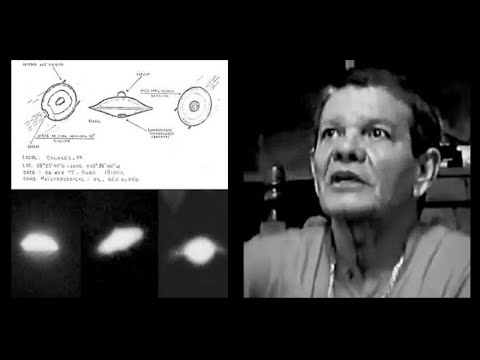
Captain Hollanda: The Final Disclosures
Excerpts and analysis of the historic July 1997 interview where Hollanda detailed the military's UAP encounters.
Sources
- Giese, Daniel Rebisso. Vampiros Extraterrestres na Amazônia. Belém: Author's Edition, 1991.
- Pratt, Bob. UFO Danger Zone: Terror and Death in Brazil. Horus House Press, 1996.
- Ticchetti, Thiago Luiz. UFO Attacks in Brazil: The True Story of the Most Terrifying Events in the History of Ufology. Un-X Media, 2025.
- Brazilian Air Force (FAB). Relatório Final de Pesquisa de Objetos Aéreos Não Identificados (Operação Prato). COMAR-I, Captain Uyrangê Hollanda Lima, December 1977. theblackvault.com
- Sistema de Informações do Arquivo Nacional (SIAN). Fundo BR DFANBSB ARX (Objetos Voadores Não Identificados - OVNI), Brazil National Archives. sian.an.gov.br
- Gevaerd, A.J. "The Operação Prato Military Disclosures." Revista UFO, Special Issue No. 24, July 1997.
- Carvalho, Dr. Wellaide Cecim. Clinical Records and Treatment Logs: Colares Municipal Health Clinic. Pará, Brazil, August–October 1977.
- Soeiro, José Ildone Favacho. Official Letter to COMAR-I requesting military intervention. Municipality of Colares, September 1977.
- Kean, Leslie. UFOs: Generals, Pilots, and Government Officials Go on the Record. Harmony Books, 2010.
- Pratt, Bob. "The Suck-Suck Light Wave: Witness Interviews in Pará." MUFON UFO Journal, No. 138, August 1979. theblackvault.com
- Petit, Marco Antonio. Militarismo e Ufologia: A Operação Prato. Rio de Janeiro: UFO Press, 2003.
- Vallee, Jacques. Confrontations: A Scientist's Search for Alien Contact. Ballantine Books, 1990.
- Brazilian Senate. Official Hearing on Unidentified Aerial Phenomena (UAP) and Operação Prato. Federal Senate of Brazil, June 2022. senado.leg.br
- Gevaerd, A.J., & Petit, Marco Antonio. Videotaped Interview with Captain Uyrangê Hollanda Lima. Cabo Frio, Brazil, July 1997.
- ditadura.org.br. Declassified SNI/COMAR Intelligence Files on Operation Saucer. National Commission on Truth, Brazil, 2013.
See something inaccurate? Have additional information or sources?
Suggest an Edit →Last Updated: June 2026