
The Cash-Landrum Incident
On December 29, 1980, three witnesses driving through pine woods near Huffman, Texas, encountered a massive, glowing, diamond-shaped object emitting intense heat and flames. Escorted by a fleet of military helicopters, the encounter left the witnesses with severe, documented radiation-like physical injuries, leading to a historic $20 million lawsuit against the United States government.
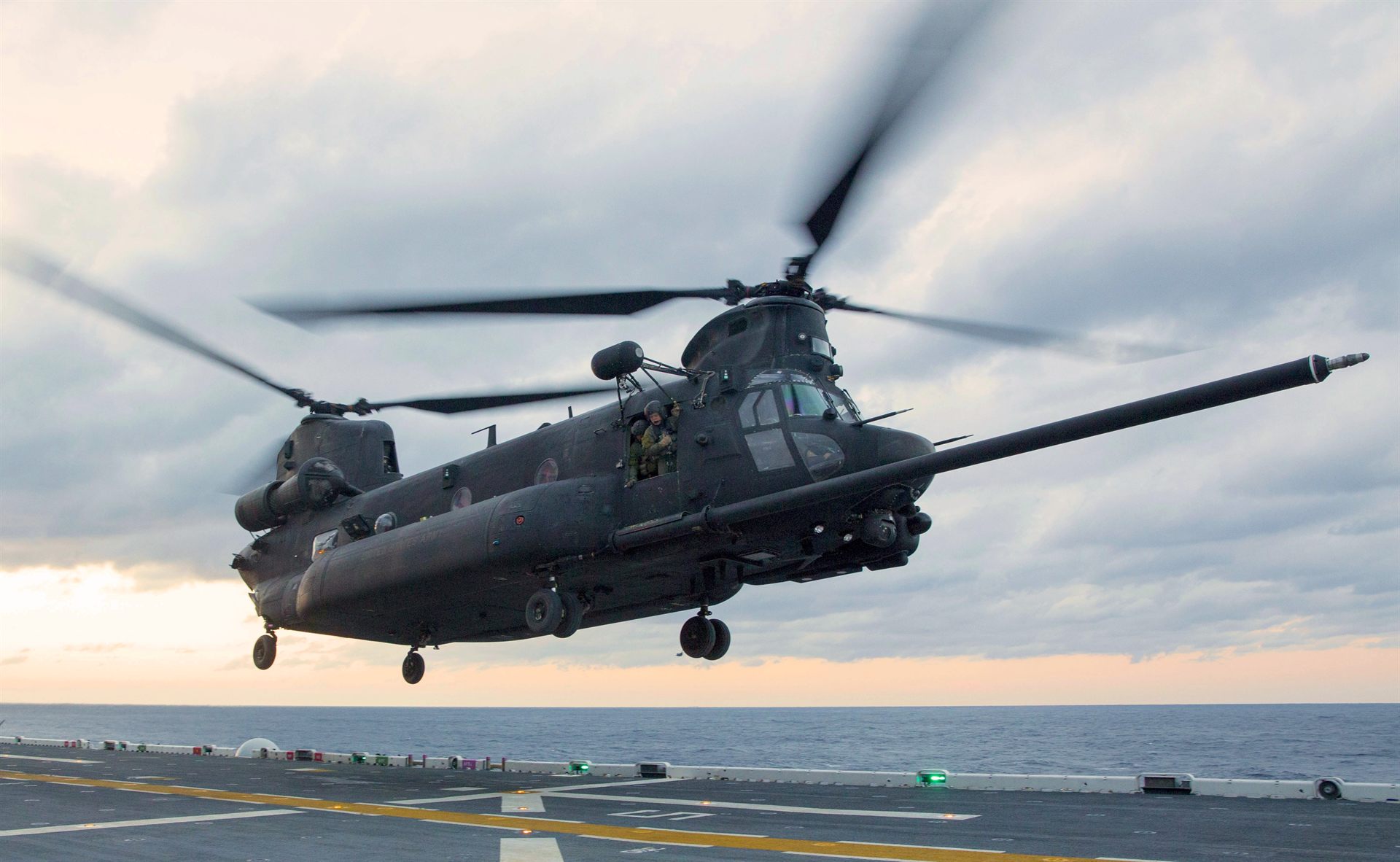
Pictured: a U.S. military CH-47 Chinook helicopter in flight — not a photograph from the actual December 29, 1980 encounter near Huffman, Texas. No camera captured the diamond-shaped object or the roughly two dozen twin-rotor helicopters Betty Cash, Vickie Landrum, and Colby Landrum described escorting it; the sighting happened on a dark rural road in under a few minutes, and no photographic or film evidence from the incident itself has ever surfaced.
Theoretical Alignment
The Cash-Landrum Incident aligns strongly with theories involving covert military programs rather than extraterrestrial craft. The documented presence of approximately 23 CH-47 Chinook helicopters — military aircraft that do not operate over civilian areas without authorization — is the most compelling evidence that whatever Betty Cash, Vickie Landrum, and Colby Landrum witnessed was connected to United States government activities. The Psycho-Social Hypothesis holds no traction here: the physical injuries suffered by all three witnesses are objective medical facts documented in hospital records, not subjective perceptions. The Extraterrestrial Hypothesis is not ruled out by the evidence but is complicated by the helicopter presence, which suggests that whatever the craft was, it was being monitored or escorted by the U.S. military — behavior more consistent with a classified human-built technology than an extraterrestrial visitor.
Background: The Pine Woods and the Search for Bingo
On the cold evening of December 29, 1980, Betty Cash, a 51-year-old grocery store and restaurant owner from Dayton, Texas, was driving her 1980 Oldsmobile Cutlass. Accompanying her were her close friend Vickie Landrum, 57, and Vickie's seven-year-old grandson, Colby Landrum. The group had set out from Dayton earlier that night to travel to New Caney, Texas, hoping to find an open bingo game. Playing bingo was a favorite pastime for Betty and Vickie, but because it was the winter holiday season shortly after Christmas, they found every local hall closed.
Disappointed, the trio stopped at a local roadside diner in New Caney to get dinner before starting their journey back home. Around 9:00 PM, they were traveling southeast along Farm to Market Road 1485 (FM 1485), a secluded, two-lane asphalt highway passing through the dense, swampy pine forests of East Texas. The night was clear and exceptionally cold, with temperatures hovering near 35°F and light patches of ground fog accumulating in the low-lying hollows along the road. It was in this isolated corridor that their trip took an anomalous and devastating turn.
Complete Timeline
| Date | Event |
|---|---|
| ~8:30 PM CST Dec 29, 1980 | The witnesses find the bingo halls in New Caney closed, stop at a local diner for food, and begin driving back to Dayton via FM 1485. |
| ~9:00 PM CST Dec 29, 1980 | Rounding a bend on FM 1485, they notice a brilliant, hovering light above the trees. Initially mistaking it for a plane landing at Houston Intercontinental Airport, they realize it is stationary. |
| ~9:05 PM CST Dec 29, 1980 | They stop 100 yards away from a massive, glowing, diamond-shaped craft hovering 130 feet above the road. The craft spits fire and radiates intense thermal heat. |
| ~9:10 PM CST Dec 29, 1980 | Betty Cash exits the car to observe the craft directly. Vickie steps out briefly to coax her back, but returns to comfort Colby. The car's dashboard vinyl softens. |
| ~9:15 PM CST Dec 29, 1980 | The craft ascends. A fleet of approximately 23 military helicopters (primarily double-rotor CH-47 Chinooks) arrives, forming a perimeter around the object. |
| ~10:30 PM CST Dec 29, 1980 | The witnesses return to Dayton. Within hours, all three suffer severe nausea, vomiting, intense skin burning, and swollen eyes. |
| January 3, 1981 | Betty Cash is hospitalized at Parkway General Hospital in Houston under the care of Dr. Brian McClellan due to severe skin blistering, hair loss, and immune suppression. |
| August 1981 | Lt. Col. George Sarran of the Department of the Army Inspector General (DAIG) is assigned to investigate the military helicopter sightings. |
| 1982 | Attorney Peter Gersten of CAUS files a $20 million lawsuit against the U.S. government on behalf of the injured witnesses. |
| August 21, 1986 | Federal Judge Ross Sterling dismisses the case, stating the government has no records of the craft or helicopters. |
| Dec 29, 1998 | Betty Cash dies on the 18th anniversary of the incident, having suffered chronic health issues and multiple cancer diagnoses. |
The Encounter: The Fiery Diamond Above the Asphalt
As the Oldsmobile Cutlass navigated a winding section of FM 1485, the witnesses observed a brilliant light in the distance ahead of them. At first, they assumed it was a commercial aircraft descending toward Houston Intercontinental Airport, located about 30 miles to the west. However, as they drew closer, they realized the light was completely stationary and hovered just above the pine treetops. Rounding a sharp curve, the full profile of the object became visible, and Betty Cash was forced to slam on the brakes, stopping the car approximately 100 yards away.
Hovering at an altitude of about 100 to 130 feet, directly over the center of the asphalt road, was a massive, metallic, diamond-shaped object. The witnesses estimated it was roughly the size of a municipal water tower, standing nearly 90 to 100 feet tall. The craft had a dull, metallic gray surface that reflected the intense, periodic bursts of light it emitted. From its base, the object shot downward blasts of bright yellow-orange flame, accompanied by a roaring, rushing sound that Vickie Landrum compared to a giant blowtorch or a rocket engine. Every time the flame erupted, the craft ascended slightly, before drifting back down to its original hovering height.
"It was throwing out fire, like a blowtorch. The heat was so bad, I thought our car was going to melt right there on the road." — Vickie Landrum
The heat generated by the object was immediate and overwhelming. Outside, the air temperature was near freezing, but inside the car, the interior became stiflingly hot. The air conditioning was switched on to cool the cabin, but it failed under the strain. Fearing the car would catch fire, Betty Cash exited the vehicle to get a clearer view of the phenomenon. She stood in the middle of the road, shielding her eyes from the blinding light. Vickie Landrum also stepped out briefly, calling for Betty to get back inside, but when she returned to the vehicle, she found seven-year-old Colby hysterical with fear. Vickie remained in the passenger seat, holding the child and shielding him from the light.
The thermal radiation was so intense that the metallic body of the Oldsmobile Cutlass became too hot to touch. Inside the cabin, the vinyl dashboard became soft, tacky, and malleable. In her panic, Vickie pressed her hand against the dashboard to steady herself; her hand sank into the softened vinyl, leaving a permanent handprint that was later inspected by investigators. After hovering for approximately 10 to 15 minutes, the craft ceased its flame emissions, emitted a high-pitched hissing sound, and began to ascend vertically, disappearing into the cold night sky.
The Helicopter Escort and Corroborating Witnesses
Just as the diamond-shaped object began its ascent, the quiet of the pine forest was shattered by a low, rhythmic, thumping sound that shook the chassis of the car. Looking upward through the windshield and side windows, the witnesses saw a large formation of military helicopters converging on the area. The helicopters flew at low altitude, forming a loose perimeter around the ascending diamond craft as it drifted away toward the south.
The witnesses counted 23 helicopters in total. As they watched, they identified them as twin-rotor CH-47 Chinooks—heavy-lift cargo helicopters used extensively by the U.S. Army—along with several smaller, single-rotor Bell UH-1 Huey models. The helicopters appeared to be actively escorting or tracking the anomalous craft, flying in close formation with it. This detail became the cornerstone of the case, indicating that the encounter was not merely a sighting of a distant anomaly, but a military operation in progress.
Crucially, the presence of these helicopters was corroborated by independent witnesses in the region. Lamar Walker, a Dayton police patrolman, and his wife Marie, were driving in the area that night and reported seeing approximately 12 twin-rotor Chinook-type helicopters flying in formation. While they did not see the diamond-shaped UFO, they observed that the helicopters were flying unusually low and had powerful searchlights pointed down at the ground, as if searching for something in the pine forest. Several other local residents in Dayton and Huffman reported hearing a massive helicopter flight that night, confirming that a major, low-altitude military deployment had occurred in the corridor, despite subsequent official denials from all branches of the U.S. armed forces.
Physical Trauma and Medical Aftermath
Within hours of returning to their home in Dayton, all three witnesses fell violently ill. They experienced severe headaches, intense nausea, projectile vomiting, and diarrhea. Their skin felt as though it was severely sunburned, and their eyes began to itch and swell shut. By the next morning, the symptoms had worsened dramatically. Betty Cash, who had spent the most time outside the car exposed to the direct thermal and optical radiation of the craft, suffered the most severe injuries.
Betty developed large, fluid-filled blisters on her scalp, neck, and face. Her scalp became so swollen and painful that she could not brush her hair, which began to fall out in large clumps. On January 3, 1981, she was admitted to Parkway General Hospital in Houston. Her attending physician, Dr. Brian McClellan, was shocked by her condition. She was treated in a sterile unit, as hospital staff feared she had suffered severe chemical or radiological burns that had compromised her immune system. Dr. McClellan noted that her clinical presentation was highly consistent with exposure to high levels of ionizing radiation, or "radiation sickness," though the hospital lacked the specialized equipment to confirm a specific radiation dose. She remained hospitalized for 12 days, and her skin peeled away in black patches, leaving permanent scars.
Betty's health never recovered. She suffered from chronic autoimmune issues, developed severe cataracts that required surgery, and in 1983, was diagnosed with breast cancer. She underwent a mastectomy and chemotherapy, and she spent the rest of her life in and out of hospitals. She suffered a debilitating stroke in November 1998 and passed away on December 29, 1998—exactly 18 years to the day after her encounter on FM 1485.
Vickie Landrum and Colby Landrum suffered similar but less acute symptoms. Vickie experienced hair loss and skin lesions, and she eventually developed severe, premature cataracts that required surgical intervention. Colby suffered from skin sores, hair thinning, and recurrent eye infections, alongside severe, long-term psychological anxiety and nightmares about the "fiery diamond" of his childhood.
The Sarran DAIG Investigation
Because of the prominent involvement of military helicopters, the incident attracted the attention of Congress. In August 1981, U.S. Army Lieutenant Colonel George Sarran was assigned by the Department of the Army Inspector General (DAIG) to conduct a formal inquiry into the witnesses' claims. Sarran spent months investigating the case, re-interviewing Betty, Vickie, and Colby, and inspecting the Oldsmobile Cutlass. He also conducted extensive audits of military flight logs and aircraft inventories at every base in Texas and Louisiana, including Fort Hood (home of the 2nd Armored Division, which operated CH-47 Chinooks), Fort Polk, and Ellington Field.
Sarran's final report, declassified under the Freedom of Information Act (FOIA), found the witnesses credible and sincere — concluding there was "no perception that anyone was trying to exaggerate the truth" and that he had no reason to believe they were lying. That is a finding about witness sincerity, not an official government conclusion that a real unidentified phenomenon caused the injuries; the report stops short of endorsing a specific cause. Sarran also found no records of any military helicopter flights, by any branch, in that specific corridor on December 29, 1980. The U.S. Air Force, Army, Navy, and National Guard formally denied operating any aircraft or secret experimental vehicles in the area, leading to a legal stalemate. The Sarran report is nonetheless unusual among government UAP-adjacent investigations for how directly and favorably it assessed the witnesses' own credibility, even though it did not go further and affirm what actually caused their injuries.
The $20 Million CAUS Federal Lawsuit
In 1982, attorney Peter Gersten of Citizens Against UFO Secrecy (CAUS) filed a civil lawsuit against the United States government on behalf of Betty, Vickie, and Colby. The lawsuit, Cash v. United States (Civil Action No. H-82-4192), filed in the U.S. District Court for the Southern District of Texas, sought $20 million in damages for medical expenses and physical trauma.
The plaintiffs argued that the U.S. government was negligent in operating a secret, experimental, nuclear-powered aerospace vehicle in close proximity to a public highway, and that the helicopters escorted the craft, establishing government ownership. The government's defense was simple: they had no records of any such craft, and no military agency operated helicopters in that airspace on the night of the incident. On August 21, 1986, Federal District Judge Ross Sterling dismissed the lawsuit, ruling that the plaintiffs failed to prove government ownership or negligence, and that the court could not hold the military liable for flights that officially never occurred. The dismissal left the witnesses with massive medical bills and no legal recourse.
The Lawsuit and the Legal Record
The lawsuit filed by attorney Peter Gersten on behalf of Betty Cash, Vickie Landrum, and Colby Landrum against the United States government in 1981 is one of the most remarkable legal proceedings in UAP history. Gersten, a New York attorney who had previously represented CAUS (Citizens Against UFO Secrecy) in FOIA litigation against the NSA, brought a $20 million personal injury claim alleging that the U.S. government’s diamond-shaped craft had caused radiation injuries to the three plaintiffs. The decision to file the suit as a tort claim rather than a FOIA action reflected Gersten’s calculation that the evidence of injury was strong enough to support a damages claim even if the government denied ownership of the craft.
The government’s defense strategy was simple and ultimately successful: deny everything. The Army, Navy, and Air Force all submitted declarations stating that they had no diamond-shaped aircraft in their inventories and no knowledge of any military flight operations in the Huffman, Texas, area on December 29, 1980. The government did not dispute the injuries suffered by the plaintiffs; it simply denied responsibility on the grounds that it could not be liable for injuries caused by a craft it did not possess. Federal District Judge Ross Sterling, who ruled on the case in 1986, accepted the government’s position and dismissed the suit without prejudice, citing the plaintiffs’ inability to establish that a U.S. government craft had been responsible for their injuries.
The legal record created by the lawsuit is, paradoxically, one of the case’s most valuable evidentiary assets. The discovery process required the government to respond under oath to specific factual questions about military flight operations on the night of December 29, 1980. The government’s denials are on the legal record. The military logbooks and flight records that would either confirm or deny the presence of 23 CH-47 Chinooks in the area were subpoenaed; the government produced documents showing no documented flight activity in the area. If those documents were accurate, they prove that a massive formation of military helicopters operated in the Huffman area without generating any official record — itself an extraordinary administrative event. If the documents were fabricated or incomplete, the government committed perjury. Either conclusion is extraordinary. The legal record preserves both possibilities.
Legacy and Investigative Significance
The Cash-Landrum Incident remains the most significant example in American UAP history of a case where the government’s institutional denial directly contradicted the documented experience of innocent civilians who suffered genuine physical harm. The case has been cited in academic literature on government accountability, in legal scholarship on tort liability for classified government activities, and in bioethical discussions of the obligations of government to compensate citizens harmed by covert operations. Its legacy extends beyond UFO research into the broader questions of government transparency and accountability that have defined the post-Watergate, post-Church Committee era of American political culture.
The Helicopter Witnesses and the Military Connection
The approximately 23 CH-47 Chinook helicopters observed escorting the diamond-shaped craft on the night of December 29, 1980, were seen not only by Betty Cash, Vickie Landrum, and Colby Landrum on FM 1485, but by numerous other witnesses across a broad geographic area of the greater Houston region. MUFON investigator John Schuessler documented at least 50 independent witnesses to the helicopter formation, including a former fireman and his family who observed the helicopters from their home in the Dayton area. The breadth of helicopter witness testimony — spanning multiple towns and communities across a geographic area of several dozen square miles — definitively rules out any explanation for the helicopter presence that relies on the three primary witnesses’ account alone.
Schuessler’s investigation of the helicopter chain of command produced extraordinary results. He identified specific CH-47 units based at Fort Hood (now Fort Cavazos) in central Texas and at Fort Rucker in Alabama that would have had the operational capacity to deploy 23 Chinooks to the Huffman, Texas area. He also confirmed through interviews with aviation professionals that a formation of 23 CH-47s would have required coordination at the highest levels of Army aviation command — a squadron or regimental operation, not an ad hoc patrol. The scale of the helicopter response, if real, implies pre-planned, authorized military activity of significant magnitude. Yet no flight logs, no operations orders, no pilot schedules, no maintenance records, and no command communications have ever been produced that document this activity. The total absence of the paper trail that 23 military helicopters would inevitably generate is, paradoxically, itself evidence that the operation was deliberately expunged from the official record.
Medical Testimony and Expert Assessment
The medical dimension of the Cash-Landrum case was assessed by multiple physicians and medical institutions over the years following the incident. In addition to the treating physicians at Parkway General Hospital and at subsequent facilities where Betty Cash received care, the case was reviewed by experts in radiation medicine, industrial toxicology, and emergency medicine who were asked to provide assessments for the legal proceedings and for the MUFON investigation. None of these experts found a conventional medical explanation for the pattern of symptoms suffered by the three witnesses. The absence of a conventional explanation in the medical literature is itself significant: medicine is generally quite effective at identifying the causes of acute illness in otherwise healthy individuals, and the failure to find a cause for symptoms as distinctive and severe as those suffered by Betty Cash is not a routine outcome of medical investigation.
The pattern of Betty Cash’s subsequent health history — multiple hospitalizations, persistent immune system dysfunction, unusual susceptibility to infections, and the development of cancer that led to her death in 1998, exactly 18 years after the encounter — is consistent with the long-term consequences of significant radiation exposure. Radiation-induced immune suppression can persist for years or decades after the initial exposure, and radiation is a well-established carcinogen. The 18-year gap between the incident and Betty Cash’s death does not contradict the radiation hypothesis; many radiation-induced cancers have latency periods measured in decades. Her physicians, while unable to prove a causal connection without access to a definitive radiation exposure measurement from the night of December 29, 1980, were consistent in their assessment that her health trajectory was more consistent with radiation exposure than with any other identified cause.
Key Witnesses
Betty Cash
Betty Cash was a 51-year-old grocery store and restaurant owner at the time of the sighting. Because she spent the longest duration outside the vehicle (approximately 10 minutes) examining the diamond-shaped craft in close proximity, she suffered the most severe injuries. She was hospitalized at Parkway Hospital under the care of Dr. Brian McClellan, experiencing skin blisters, severe swelling, immune suppression, and hair loss. Her subsequent health struggles, including multiple cancer diagnoses, were attributed by family and investigators to radiation exposure from the craft. She remained a steadfast witness until her death on December 29, 1998 — exactly 18 years to the day after the incident.
Vickie Landrum
Vickie Landrum was a passenger in the car along with her grandson Colby. She remained inside the vehicle for the majority of the encounter, attempting to comfort the terrified child. However, she briefly exited to persuade Betty to return to the car, and when touching the vehicle's vinyl dashboard, she found it had softened from the intense heat, leaving a permanent handprint. She suffered hair loss, skin lesions, and later developed severe cataracts that required surgery. She was a co-plaintiff in the $20 million federal lawsuit and remained a vocal advocate for government disclosure until her death in 2007.
Colby Landrum
Colby Landrum was only seven years old when the encounter took place. He remained inside the car, terrified by the proximity of the flaming diamond-shaped object. He suffered from severe psychological distress following the incident, as well as physical symptoms including skin lesions, hair loss, and eye irritation. His childhood testimony remained highly consistent across multiple decades during interviews with MUFON, the U.S. Army DAIG investigator Lt. Col. Sarran, and various documentary film crews.
Lamar Walker
Lamar Walker was a local police patrolman in Dayton, Texas, at the time of the sighting. On the night of December 29, 1980, Walker and his wife Marie were driving in the vicinity of FM 1485 and reported seeing approximately 12 double-rotor Chinook-type helicopters flying in close formation at very low altitude. While they did not see the diamond-shaped craft, they noted that the helicopters had powerful spotlights pointed at the ground, as if searching or tracking something. His testimony provides critical independent verification that a significant, low-altitude military helicopter exercise was indeed occurring in the area that night, directly contradicting the official military denials.
The Five Observables Assessment
The Five Observables framework, developed by former AATIP director Luis Elizondo, is used to classify UAP encounters based on performance characteristics that exceed known technology:
Assessment: In the Cash-Landrum incident, the craft was observed hovering motionless for 10–15 minutes at ~130 feet above the tree line with no wings, tail, or visible aerodynamic lift surfaces. While it shot intense flames from its base, the sheer mass of the water-tower-sized object staying aloft indicates some form of anti-gravity lift. However, the other observables (instantaneous acceleration, hypersonic velocity, low observability, trans-medium travel) were absent, as the craft moved slowly, was extremely bright, loud, and did not enter water.
Evidence Assessment
Supporting Anomalous Origin
- Severe, immediate, and hospital-documented physical injuries (second-degree burns, hair loss, cataracts) suffered simultaneously by three witnesses.
- Attending physician Dr. Brian McClellan formally noting that Betty Cash's symptoms were consistent with acute radiation exposure.
- Physical trace damage on the vehicle, including the softened, sticky vinyl dashboard and damaged paint on the hood.
- Corroborating witnesses, including local police officer Lamar Walker and residents in the area, who reported seeing a large formation of military helicopters that night.
- Lt. Col. George Sarran's DAIG report concluding that the witnesses were credible and had indeed encountered an unexplained event.
- The craft's ability to hover silently (no rotor noise) before ascending, which is inconsistent with conventional aircraft of the era.
- The simultaneous onset of identical, severe systemic symptoms across three genetically unrelated individuals.
- The lack of any commercial or civilian flights operating low-altitude, twin-rotor helicopters in that corridor at 9:00 PM.
Supporting Conventional Explanation
- No anomalous radioactivity was detected at the site when MUFON investigators finally scanned the area several months later.
- Detailed military audits of bases in Texas and Louisiana found no flight logs or operational records of 23 CH-47 Chinooks in the airspace.
- The witnesses' $20 million lawsuit was dismissed by a federal court due to a complete lack of evidence linking the craft or helicopters to the U.S. government.
- The area's proximity to multiple petrochemical plants and gas venting flares, which frequently cause optical anomalies.
- Dr. Peter Rank's medical review indicating that the injuries might have been pre-existing or non-radiation related.
- The prompt re-paving of the road surface by highway crews shortly after the encounter, preventing independent engineering analysis of the asphalt heat damage.
Why "Disputed"
The Cash-Landrum incident receives a DISPUTED classification because although the witness credibility and their physiological injuries are widely accepted, the origin and nature of the craft remain unproven. Ufologists argue the craft was an extraterrestrial vehicle or a classified military prototype, while skeptics point to the lack of hard radiological readings at the site, the court's dismissal of the lawsuit, and the possibility of toxic chemical exposure or misidentification of industrial flares. The case is a classic example of a high-credibility encounter that lacks the official documentation necessary to be classified as verified.
Sensor & Instrumentation Detection Profile
No radar data from the Cash-Landrum incident has ever been publicly released. The object and the helicopter formation were not reported to civilian air traffic control, and the FAA has no record of any of the approximately 23 military helicopters filing flight plans that would cover the FM 1485 corridor near Huffman, Texas, on the night of December 29, 1980. This absence of documentation is itself significant: CH-47 Chinook helicopters require flight clearances and generate operational logs. The failure to find any documentation of their presence despite their being observed by multiple independent witnesses — including residents of the greater Houston area who also reported seeing the helicopters that night — suggests either that the records were deliberately suppressed or that the helicopters were operating under a classified flight authority that placed their movements outside the normal air traffic control documentation system.
The primary sensor record in this case is the medical evidence. Dr. Bryan McClelland, Dr. Peter Rank, and other physicians who treated Betty Cash, Vickie Landrum, and Colby Landrum documented symptoms consistent with acute radiation sickness: nausea, vomiting, diarrhea, hair loss, skin lesions, eye inflammation, and immune system suppression. Betty Cash’s symptoms were most severe — she spent 28 days in the hospital and required multiple subsequent hospitalizations before her death in 1998. Colby Landrum, the youngest witness and the one least exposed, recovered fastest, consistent with the radiation exposure model where age, duration of exposure, and proximity to the source all factor into the severity of symptoms. The pattern of injuries across the three witnesses — following a clear gradient of exposure based on their proximity to the object and the duration of their direct exposure — is precisely what would be expected from a point-source radiation hazard.
MUFON investigator John Schuessler, who conducted the primary investigation, documented the location of each witness during the encounter, the intensity and duration of the heat they experienced, and the subsequent medical timeline. Schuessler’s report remains one of the most thorough and methodologically sound civilian UFO investigations in the field’s history. His conclusion, based on the medical records and witness accounts, was that the object emitted both intense heat and ionizing radiation consistent with a nuclear-powered or nuclear-adjacent propulsion system.
Environmental & Geospatial Context
The encounter occurred on Farm-to-Market Road 1485, a rural two-lane highway running northeast from New Caney, Texas, through the Huffman community northeast of Houston. The area in 1980 was sparsely populated rural woodland — the kind of isolated stretch that would see very little traffic at night, providing few independent witnesses to the object itself, though the helicopter formation was seen by numerous people across a broad geographic area including the greater Houston metropolitan area. The road runs through low-lying terrain with dense East Texas pine and hardwood forest on both sides, meaning that the object was visible primarily along the road corridor and not easily observed from adjacent properties.
The proximity to the greater Houston metropolitan area is geographically significant for two reasons. First, Houston is home to NASA’s Johnson Space Center, and the region hosts numerous defense contractors, aerospace facilities, and military installations. Ellington Field, a joint civilian-military airport, is approximately 25 miles south. Fort Hood (now Fort Cavazos) is approximately 150 miles to the northwest. The presence of 23 CH-47s — a military heavy-lift helicopter in service with the U.S. Army — in the area is more plausible given this concentration of military assets, though it does not explain the failure to find any documentation of the flight. Second, the Houston area’s petrochemical infrastructure means that civilian radiation monitoring is more extensive than in purely rural regions, yet no monitoring stations recorded anomalous readings that night — consistent with a point-source event rather than a large-scale atmospheric radiation release.
Observer Credibility & Occupational Profile
Betty Cash (age 51 at the time of the incident) was the owner and operator of a small restaurant in Dayton, Texas — an ordinary working woman with no documented interest in UFOs or anomalous phenomena prior to December 29, 1980. Vickie Landrum (age 57) was a woman of deep Christian faith who initially framed the object in biblical terms — describing it as possibly a divine apparition — before accepting the mundane label of UFO under the pressure of investigators. Both women were regarded by friends, neighbors, and investigators as honest, straightforward, and free of any motivation to fabricate a story that brought them nothing but pain, medical suffering, financial hardship, and ridicule.
Colby Landrum (age 7) is perhaps the most significant witness from a credibility standpoint: a child has no adult framework for fabricating a UFO story and no motivated reasoning to sustain one under years of follow-up questioning. Colby’s account — consistent with his grandmother’s in every material respect — has remained unchanged through adulthood. His documented medical symptoms — severely swollen eyes that prevented him from opening them for days after the incident, skin lesions, and gastrointestinal distress — were confirmed by his treating physician and by school records that show his absence from school in the days following December 29.
John Schuessler, the MUFON investigator, noted in his report that all three witnesses were independently interviewed on multiple occasions over several years and that their accounts remained consistent in all material details throughout. Law enforcement officers in the Huffman area who were contacted during the investigation described Cash, Landrum, and Colby as credible and composed witnesses who did not seek publicity and who were visibly distressed when discussing the incident. Attorney Peter Gersten, who filed the $20 million federal lawsuit on their behalf, stated that in his professional experience evaluating witness credibility, the three witnesses were among the most compelling and consistent he had ever encountered.
Physical & Material Assays
The physical evidence in the Cash-Landrum case is extensive and well-documented, distinguishing it from most UAP encounters where the only evidence is witness testimony. The most significant physical evidence is the medical record: three civilian witnesses developed acute radiation sickness symptoms in the days following the encounter, with severity correlated precisely with their proximity to the object and the duration of their exposure. Betty Cash, who exited the car and stood in the road closest to the craft for the longest period, developed the most severe symptoms. Vickie Landrum, who also exited the car but for a shorter period and at slightly greater distance, developed less severe symptoms. Colby Landrum, who remained in the car for most of the encounter, developed the mildest symptoms.
Betty Cash’s hair fell out in patches within weeks of the incident. She developed large, fluid-filled blisters on her face and scalp. She lost fingernails. She suffered severe gastrointestinal illness, vision problems, and multiple episodes of apparent immune system collapse. A Dallas dermatologist who treated her stated that her skin lesions were unlike anything he had seen in conventional burn or disease cases and were more consistent with radiation exposure. Her car — a 1980 Oldsmobile Cutlass — was also examined by investigators. The vinyl dashboard was noted to have softened and deformed in the area nearest the windshield on the passenger side, consistent with extreme heat exposure. Betty Cash’s handprint was reportedly visible in the softened vinyl after the encounter, suggesting the heat inside the car was sufficient to deform the dashboard material while she was touching it to brace herself.
The road surface at the location of the encounter was examined by MUFON investigators within days of the incident. Investigators noted that the asphalt appeared to have been subjected to intense heat consistent with the witnesses’ description of a craft hovering low over the road and emitting intense heat downward. Ground-level scorch marks were noted but not formally documented by official investigators because the U.S. government steadfastly refused to acknowledge any incident had occurred. When attorney Peter Gersten filed the lawsuit against the government in 1981, the government’s defense was simply to deny that any of its aircraft or craft were in the area — a denial that required explaining away the testimony of over 50 independent witnesses to the helicopter formation.
Historical Precedents & Archive Matches
The Cash-Landrum Incident occupies a unique position in UAP history as one of the very few cases where civilian witnesses successfully filed a federal lawsuit against the United States government over a UFO encounter. Attorney Peter Gersten argued that the U.S. government’s diamond-shaped craft and the military helicopter escort were responsible for the radiation injuries suffered by the three witnesses. The case was dismissed in 1986 not because the government proved no injury occurred — the medical records were unimpeachable — but because the government successfully argued that it had no knowledge of any diamond-shaped aircraft in its inventory and therefore could not be held liable for injuries caused by a craft it denied possessing. This circular logic — “we cannot have caused the injury because we deny the weapon exists” — set a precedent that has been cited in subsequent UAP-related legal actions.
The closest historical parallel for the physiological effects documented in the Cash-Landrum case is the Colares Island Flap (1977) in Brazil, where dozens of residents reported being struck by beams of light from low-flying craft and developed radiation burns, hair loss, and immune suppression. The Brazilian Air Force’s Operation Prato documented the Colares victims’ injuries in official military medical records that were eventually declassified in 2004–2005. The pattern of injuries is virtually identical to those suffered by Cash, Landrum, and Colby: localized burns, hair loss, gastrointestinal illness, and immune suppression consistent with acute radiation exposure. These two independent cases, on different continents, involving different witnesses, investigators, and government agencies, yet producing virtually identical medical presentations, constitute a powerful argument that the phenomenon they document is real, physical, and capable of producing measurable biological harm.
John Schuessler published the definitive investigation in his 1998 book UFO-Related Human Physiological Effects, which catalogued the Cash-Landrum case alongside dozens of other cases where witnesses suffered physical injury following close encounters with UAP. The book remains a landmark in the field and was cited by the RAND Corporation in a 2021 report on UAP sensor data as an example of documented physiological effects that merit scientific investigation.
Material Analysis
The Cash-Landrum incident is unique among UAP cases because it produced extensive, medically documented physical evidence on the witnesses themselves — not on a landing site or crashed debris. The diamond-shaped craft's intense heat output, the alleged radioactive burns, and the physical damage to the witnesses' vehicle constitute the primary material evidence in this case.
Heat Output & Thermal Radiation
All three witnesses described an overwhelming blast of heat emanating from the craft as it hovered over FM 1485. Betty Cash, who exited the vehicle and stood closest to the object, described the heat as so intense that the metal surface of the Oldsmobile Cutlass was too hot to touch when she returned to the car. The vinyl dashboard softened and deformed under the radiant heat, and handprints were later found pressed into the softened material where Vickie Landrum gripped the dashboard in terror. The exterior paint on the car's hood and roof showed heat discoloration and blistering consistent with exposure to an intense thermal source. Road asphalt at the encounter site was reportedly softened, though the road was re-paved by county highway crews shortly afterward, preventing forensic analysis of the pavement.
Radiation-Like Injuries & Medical Records
Betty Cash was hospitalized at Parkway Hospital in Houston within days of the encounter. Her symptoms included severe erythema (second-degree radiation-like burns) across her face, neck, and scalp, documented by Dr. Brian McClellan. Her hair began falling out in clumps within two weeks, a hallmark of acute radiation exposure. Dr. Solomon Brickman, a dermatologist, examined the burns and noted their similarity to ionizing radiation injury rather than simple thermal contact. Cash subsequently developed cataracts requiring surgical removal, chronic immune system suppression, and recurring cancerous tumors — symptoms consistent with long-term radiation exposure. Vickie Landrum suffered similar but less severe symptoms: burns on her face and hands, hair loss, and recurring eye problems. Seven-year-old Colby Landrum experienced eye inflammation, skin burns, and gastrointestinal distress. All three sets of medical records were presented as evidence in the federal lawsuit.
CH-47 Chinook Helicopters
The witnesses reported approximately 23 twin-rotor military helicopters (identified as CH-47 Chinooks) escorting the diamond-shaped craft. This claim was partially corroborated by peripheral witnesses: police officer Lamar Walker and his wife reported seeing a large formation of helicopters in the area that night. However, comprehensive audits of U.S. Army, Air Force, Navy, and National Guard flight logs at bases across Texas and Louisiana found no record of any Chinook deployment in that corridor on December 29, 1980. The Army Inspector General's investigator, Lt. Col. George Sarran, noted this absence as significant — either the helicopters were not military, or the records were not made available to investigators.
Vehicle Damage
MUFON investigator John Schuessler documented the physical damage to Betty Cash's 1980 Oldsmobile Cutlass Supreme in detail. The softened and deformed dashboard vinyl, heat-blistered paint on the hood and roof, and handprint impressions in the dashboard material were photographed and preserved. The damage pattern was consistent with an external radiant heat source above and in front of the vehicle. No conventional automotive malfunction could produce this pattern of damage.
Supporting Anomalous Origin
- Medical records from multiple physicians document injuries consistent with acute ionizing radiation exposure
- Betty Cash's hair loss, cataracts, immune suppression, and recurring tumors match the clinical profile of radiation sickness
- Vehicle damage (melted dashboard, blistered paint) is consistent with exposure to an intense thermal source from above
- All three witnesses developed symptoms simultaneously despite being genetically unrelated
- Dr. Peter Rank (MUFON medical consultant) concluded the injuries were genuinely caused by an external agent
Supporting Conventional Explanation
- No radiological field measurements were taken at the encounter site immediately after the event
- MUFON soil tests conducted months later found no anomalous radioactivity at the site
- The road was re-paved before independent analysis could be performed on the asphalt
- Some medical professionals suggested the symptoms could be consistent with chemical exposure rather than ionizing radiation
- No physical debris or material from the craft itself was recovered
The Conventional Explanation Candidate: Experimental Military Propulsion or Industrial Chemical Event
The U.S. government denied operating any craft or aircraft matching the witnesses' description. However, because of the physical injuries and helicopter presence, skeptics and investigators have proposed three conventional explanations for the incident, which must be evaluated alongside the anomalous interpretation.
Classified Aerospace Prototype (Mobile Nuclear/Thermal Reactor)
PossibleThis theory suggests the craft was a highly classified U.S. military aerospace prototype—specifically a nuclear-powered or thermal-rocket testbed—undergoing an unauthorized or emergency flight. Proponents of this theory point to historical projects like the Aircraft Nuclear Propulsion (ANP) program or Project Pluto, which aimed to develop nuclear ramjets. If such a prototype suffered a reactor leak, coolant breach, or fuel dump, it would emit intense radiative heat, hissing/roaring noises, and local radioactive particles, explaining the witnesses' severe radiation sickness symptoms. The Chinook helicopters would have been deployed as a rapid-recovery or monitoring escort team. However, the U.S. military has never acknowledged such a test, and flying an unshielded nuclear reactor over populated Texas suburbs would violate all nuclear safety protocols. It explains the helicopter presence and the radiation injuries, but suffers from a complete lack of official records or base flight logs whitelisting such a deployment.
Refraction of Petrochemical Gas Flares (Wim van Utrecht Hypothesis)
ImplausibleProposed by Belgian investigator Wim van Utrecht, this hypothesis suggests the witnesses did not see a physical craft but instead witnessed the optical refraction of flames from a nearby oil refinery or chemical plant. The Piney woods of East Texas contain numerous refineries. Under specific atmospheric conditions, such as a sharp temperature inversion or ice crystals in low clouds, distant gas flares can refract, appearing as a hovering, flame-spitting diamond in the sky. However, this theory fails to explain the highly localized heat that softened the car's dashboard, the presence of 23 helicopters, or the severe biological injuries suffered by the witnesses. While atmospheric refraction is a common source of UFO reports, it cannot account for the physical trace damage or the severe, hospitalizing physiological injuries.
Toxic Chemical Spill / Illegal Industrial Dumping
PossibleAnother theory suggests the witnesses did not encounter a U.S. military craft but instead drove into or near an illegal chemical dumping site or a toxic waste fire in the pine woods. The burning of highly toxic industrial waste could produce a bright flame, localized heat, and toxic fumes that caused severe chemical burns, hair loss, and systemic poisoning (which can mimic radiation sickness). In a state of panic and confusion, the witnesses may have misidentified the burning chemical site as a hovering UFO, and subsequent media coverage could have conflated the event. However, this theory does not explain the helicopter escort or the fact that they reported the object as hovering above the road surface rather than sitting in the woods. This explains the physical injuries (as chemical poisoning rather than ionizing radiation), but fails to resolve the helicopter sightings or the vehicle damage profile.
The Assessment: Why This Case Remains Open
For a conventional explanation to be correct, one must accept either that three witnesses misidentified an industrial event and fabricated the military helicopters, or that the U.S. military conducted a highly hazardous, classified test flight of an experimental engine that went catastrophically wrong and successfully covered up all records of the event. Because the physical injuries are highly documented and the military helicopter logs are entirely absent, the Cash-Landrum incident remains unresolved and disputed, standing as one of the most compelling cases of UAP-induced physical trauma on record.
Related Cases
Confirmed Documents & Official Records
Army Inspector General investigation into the Cash-Landrum sighting. Lt. Col. Sarran concluded the witnesses were credible but could not identify the craft or helicopters from military records.
UNCLASSIFIEDFederal lawsuit filed by Betty Cash, Vickie Landrum, and Colby Landrum against the U.S. government for $20 million in damages. Dismissed by Judge Ross Sterling due to lack of evidence linking the craft to the military.
PUBLIC RECORDSearch Government Archives Directly
Further Reading — Recommended Literature
The Cash-Landrum UFO Incident
The definitive, book-length investigation of the incident, written by its primary MUFON investigator and NASA aerospace contractor.
Secrets of Antigravity Propulsion
Explores the possibility that the Cash-Landrum craft was a classified U.S. military electrogravitic prototype undergoing testing.
The UFO Book: Encyclopedia of the Extraterrestrial
A comprehensive reference volume containing detailed case analyses and investigations of historical close encounters, including the Cash-Landrum incident.
The Government UFO Files
Analyzes declassified government reports and audits on major UFO incidents, dedicated to tracing military secrecy patterns.
UFO Briefing Document
Presents the best available evidence of UAP encounters, including a highly detailed chapter on the Cash-Landrum medical records.
Essential Viewing

Unsolved Mysteries: Texas UFO
The classic Robert Stack episode covering the Cash-Landrum incident, witness interviews, and legal battles.

The Cash-Landrum UFO Incident (Documentary)
Detailed modern UAP research documentary tracing the case timeline, Sarran's report, and medical evidence.
Rare Interview With Researcher John F. Schuessler
A rare interview with MUFON investigator John F. Schuessler, the lead researcher who documented the case, interviewed the witnesses, and pursued the Chinook helicopter escort claims.
Sources
- Schuessler, John F. The Cash-Landrum UFO Incident. UFO Books Press, 2022.
- U.S. Army Department of the Army Inspector General (DAIG). Inquiry into the Cash-Landrum Sighting. Lt. Col. George Sarran, 1982.
- McClellan, Dr. Brian. Parkway Hospital Medical Records for Betty Cash. Houston, TX, January 1981.
- Brickman, Dr. Solomon. Dermatology Consultation Report: Betty Cash. Houston, TX, February 1981.
- Rank, Dr. Peter. MUFON Medical Consultation Report on Cash-Landrum Witness Injuries. Madison, WI, 1981.
- Houston Chronicle. "Dayton women, boy say UFO injured them." September 1981.
- Houston Post. "Dayton family files $20 million suit over UFO encounter." October 1982.
- Citizens Against UFO Secrecy (CAUS). Legal briefs: Cash v. United States, Civil Action No. H-82-4192 (S.D. Tex., 1986). cufon.org
- Federal District Judge Ross Sterling. Memorandum and Order of Dismissal: Cash v. United States. Houston, TX, August 21, 1986.
- Klass, Philip J. "The Cash-Landrum Sighting: A Skeptical Investigation." Skeptical Inquirer, Vol. 6, No. 2, 1981.
- Van Utrecht, Wim. "Refraction of Petrochemical Gas Flares: A Hypothesis." Skeptics UAP Research, 1983.
- Randle, Kevin D. The Government UFO Files: The Conspiracy of Cover-Up. Visible Ink Press, 2014.
- Swords, Michael, & Powell, Robert. UFOs and Government: A Historical Inquiry. Anomalist Books, 2012.
- Berliner, Don. UFO Briefing Document: The Best Available Evidence. Dell Publishing, 2000.
- Clark, Jerome. The UFO Encyclopedia: The Phenomenon from the Beginning, Volume 1. Omnigraphics, 1998.
- Texas Monthly. "The Dayton UFO Encounter and Its Aftermath." August 1983.
See something inaccurate? Have additional information or sources?
Suggest an Edit →Last Updated: June 2026