
The Rendlesham Forest Incident
Over three nights in late December 1980, United States Air Force personnel stationed at the twin NATO bases of RAF Woodbridge and RAF Bentwaters in Suffolk, England, reported encounters with an unidentified craft in the adjacent Rendlesham Forest. The case produced an official military memo, an 18-minute real-time audio recording, physical ground traces, radiation readings, and testimony from a Deputy Base Commander. It is the most well-documented military UFO encounter in British history.
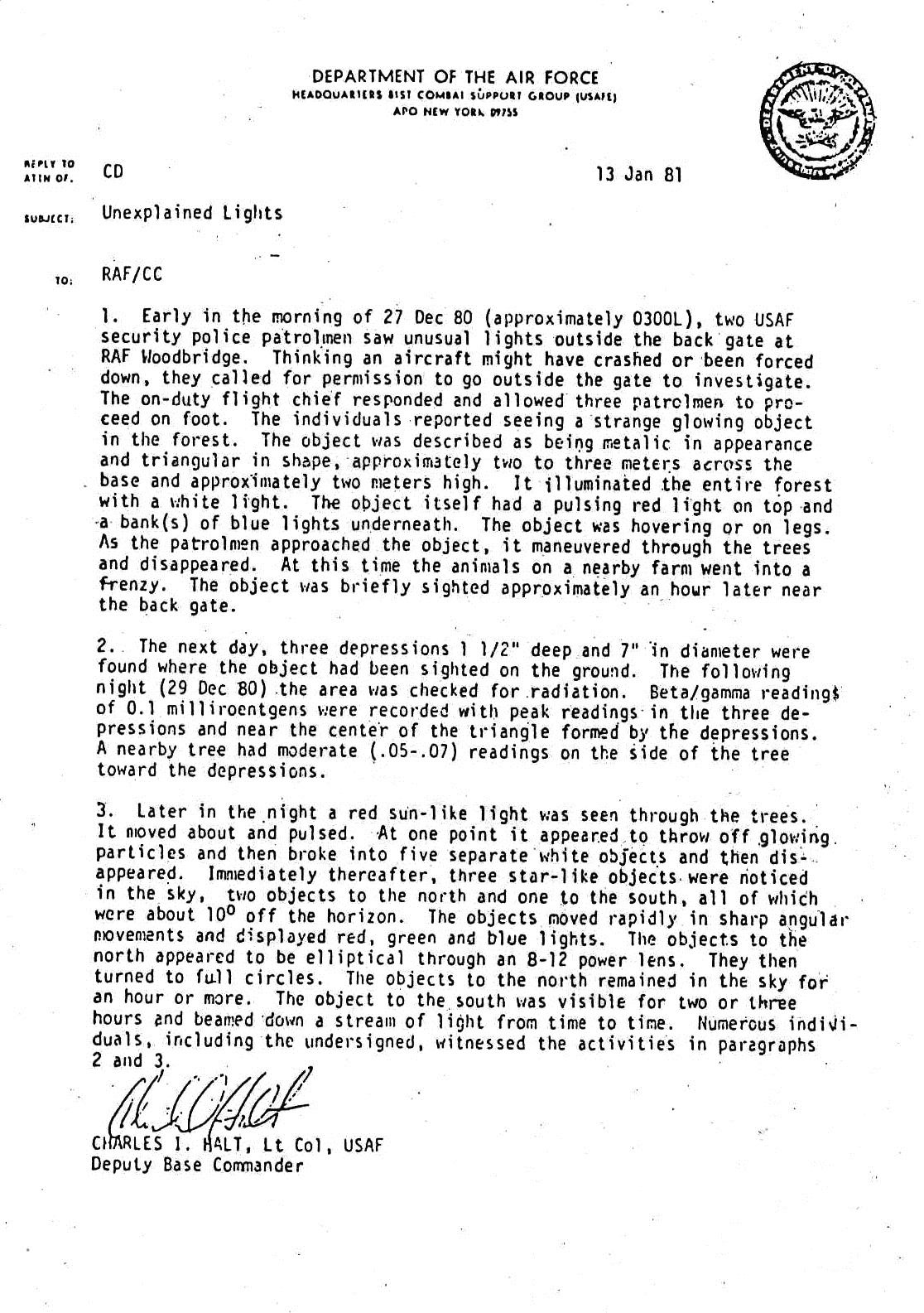
Pictured: the declassified "Unexplained Lights" memorandum that Lt. Col. Charles Halt sent to RAF/CC on January 13, 1981, describing the object and lights encountered near RAF Woodbridge — a genuine primary document from the case, but not a photograph of the forest, the triangular object, or any of the lights it describes. No photograph of the phenomenon itself was ever taken; the patrolmen who first approached the object on the night of December 26–27, 1980 carried no camera.
Theoretical Alignment
The Rendlesham Forest Incident aligns most strongly with the Extraterrestrial Hypothesis (ETH) on the basis of the physical craft described by trained USAF security personnel, the multi-night pattern of activity, and the extraordinary Halt tape that documents active investigation in real time. However, the case also presents features consistent with the Interdimensional Hypothesis (IDH), particularly the binary code “download” reported by Jim Penniston and the GPS coordinates embedded in that download that point to a location in the Atlantic Ocean associated with the mythological island of Hy-Brasil — a phenomenon that suggests information transfer rather than simple physical observation. The Time-Travel or Ultra-Terrestrial hypothesis has been proposed by some researchers due to the temporal coordinates apparently embedded in Penniston’s binary code sequence.
Background
The military twin bases of RAF Woodbridge and RAF Bentwaters in Suffolk, England, were operated by the United States Air Force as part of NATO's defense network during the Cold War. The bases housed the 81st Tactical Fighter Wing and were considered strategically vital. Rendlesham Forest, a dense pine plantation managed by the Forestry Commission, sat between the two bases.
The strategic significance of these bases cannot be overstated. During the Cold War, they were among the most important American military installations in Europe. Some researchers have noted (though it has never been officially confirmed) that nuclear weapons may have been stored at the bases — a detail that, if true, would place Rendlesham alongside Roswell and other cases where UFO encounters coincided with nuclear weapons facilities.
Complete Timeline
| Date | Event |
|---|---|
| Dec 26, 1980 (3:00 AM) | Security patrol reports unusual lights near RAF Woodbridge. Penniston, Burroughs, and Cabansag investigate and discover a metallic, triangular craft on the forest floor. |
| Dec 26, 1980 (3:30 AM) | Penniston approaches the craft, takes notes, touches its warm metallic surface, and observes glyph-like markings. The craft then lifts off and accelerates away. |
| Dec 27, 1980 (Daytime) | Base personnel examine the landing site, finding three tripod impressions, broken tree branches, and elevated radiation readings. |
| Dec 28, 1980 (Midnight) | Deputy Base Commander Charles Halt leads a patrol to investigate recurring lights. They observe a glowing object blinking and beam-like lights directed at the ground and weapons storage areas. |
Night One: December 26, 1980
Initial Contact
In the early hours of December 26, 1980 (just after midnight), security patrolmen at the east gate of RAF Woodbridge reported seeing unusual lights descending into Rendlesham Forest. Thinking an aircraft had crashed, a three-man patrol was dispatched to investigate: Staff Sergeant Jim Penniston, Airman First Class John Burroughs, and Airman Edward Cabansag.
Penniston and Burroughs
Penniston and Burroughs advanced into the forest while Cabansag remained at the edge as a radio relay. What they reported encountering was not a crashed aircraft but a small, triangular craft resting on the forest floor or hovering just above it. Penniston described it as approximately 3 meters wide and 2 meters tall, metallic in appearance, with a smooth, glass-like surface. The object emitted a bright, pulsing light.
Penniston claims he approached the craft and touched its surface, feeling raised symbols that he later described as resembling hieroglyphics. He says he made sketches of the craft and the symbols in his police notebook at the scene.
After approximately 45 minutes, the object reportedly lifted off silently and moved through the trees at high speed before disappearing into the sky.
Physical Traces
When daylight arrived, personnel returned to the site and found three small triangular indentations in the frozen ground, arranged in a triangular pattern. The distance between the indentations was measured and recorded. Broken branches and scorch marks on nearby trees were also documented.
Night Two: December 27–28, 1980
On the night of December 27–28, reports of the lights returning reached Deputy Base Commander Lt. Colonel Charles Halt, who was attending a formal dinner at the officers' club. Halt assembled a team and went into the forest himself, carrying a handheld tape recorder, a Geiger counter, and radio equipment.
The Halt Tape
Halt recorded his observations in real-time over approximately 18 minutes. The tape captures his team discovering the three ground depressions from the previous night, taking radiation readings, and observing anomalous lights in the forest and sky. Key moments from the tape include:
"I see it too... it's back again... it's coming this way... there is no doubt about it... this is weird... it looks like an eye winking at you."
— Lt. Col. Charles Halt, recorded in real time
The tape records the team's genuine surprise and confusion as they track lights that appear to move through the trees, split into multiple objects, and send beams of light down to the ground near their position. Halt described one of the objects sending a beam of light down "into the weapons storage area" of the base — a claim that, if true, represents a profound security breach.
Radiation Readings
Halt's team used a Geiger counter (AN/PDR-27) to take radiation measurements at the landing site. The readings showed levels above normal background radiation. However, the significance of these readings has been debated:
- Halt described them as "significant" in his memo
- The UK Ministry of Defence's Defence Intelligence Staff reviewed the readings and assessed them as "slightly above background but not significantly so"
- Some researchers note that the AN/PDR-27 was designed for detecting nuclear contamination, not subtle environmental anomalies, and may not have been the appropriate instrument
The Halt Memo
On January 13, 1981, Halt wrote an official memorandum to the UK Ministry of Defence, titled "Unexplained Lights." The memo described both nights' events in factual, military language. It was released to the public under the U.S. Freedom of Information Act in 1983 and remains one of the few official military documents explicitly describing a UFO encounter.
The memo's key passage states: "The object was described as being metallic in appearance and triangular in shape, approximately two to three metres across the base and approximately two metres high. It illuminated the entire forest with a white light." This description of a small, structured triangular craft in 1980 predates the massive wave of silent black triangle sightings that swept through neighboring Belgium at the end of the decade (1989-1990), suggesting a consistent, recurring UAP morphology in European airspace during this era.
Night Three and Larry Warren
Airman Larry Warren has claimed that a third night of activity occurred, during which he was taken to a clearing at Capel Green near the base where he observed a landed craft and alleged non-human entities. Warren co-authored the book Left at East Gate (with Peter Robbins) detailing his account.
Editorial note: Warren's account is disputed within the UFO research community. His former co-author Peter Robbins publicly withdrew his support for Warren's claims in 2017, citing credibility concerns. Warren's account should be treated as contested testimony, not established fact.
The Binary Code
In 2010, Jim Penniston publicly revealed that he had recorded pages of binary code in his notebook, which he said was "downloaded" into his mind when he touched the craft on Night One. Researchers later decoded the binary and claimed it contained geographic coordinates (including references to Hy Brasil, the Giza Plateau, and others) along with the message: "Exploration of Humanity 666 8100."
Significant caveats:
- Penniston did not mention the binary code for nearly 30 years after the incident
- His original notebook entries from 1980 contain sketches of the craft but no binary code
- The decoded coordinates and message have been criticized as retro-fitted interpretation
- Even some supporters of the Rendlesham case (including Halt) have distanced themselves from the binary code claims
The Orfordness Lighthouse Theory
Skeptic and journalist Ian Ridpath has proposed that the lights observed by the witnesses were the beam from the Orfordness Lighthouse, located approximately 5 miles from the forest. The lighthouse produces a rotating beam that, when seen through trees at night, could appear to pulse and move.
Proponents of the case have countered:
- USAF personnel stationed at the bases for months or years would have been familiar with the lighthouse
- A lighthouse does not explain the physical traces, radiation readings, or Penniston's close-range description of a structured craft
- Halt himself has stated: "I know what a lighthouse looks like. This was not a lighthouse."
- The lighthouse theory does not account for the objects that Halt observed sending beams of light to the ground
A Historic Precedent: The VA Disability Settlement
In 2015, John Burroughs, represented by attorney Pat Frascogna, successfully obtained full medical disability benefits from the U.S. Veterans Administration (VA) for heart and vascular injuries he attributed to his close proximity to the UAP during the 1980 encounter. This settlement represents an incredibly rare and historic precedent: it is the first time the United States government has officially granted a full medical pension and financial payout for injuries sustained during a documented UAP encounter, effectively acknowledging the physical reality and physiological effects of the event.
During the legal battle, Burroughs' medical records were classified at a level of secrecy so high that even his own VA-accredited attorneys were denied access — a highly irregular circumstance for a standard veteran disability claim. It required the direct intervention of U.S. Senator John McCain to help Burroughs bypass the classification barriers and retrieve his records from the Department of Defense. While the VA's final settlement did not explicitly use the term "UFO" in its public determination, the classification of his medical files and the subsequent payout for radiation-consistent cardiac damage make the Rendlesham case a singular milestone in legal and military disclosure history.
The Binary Code and the Penniston Notebook
One of the most extraordinary and contested elements of the Rendlesham Forest case is Jim Penniston’s claim that during his contact with the craft on December 26, 1980, he experienced a “download” of information in binary code that was transmitted into his consciousness through physical contact with the craft’s surface. Penniston recorded the binary sequence — 16 pages of ones and zeros — in his notebook immediately upon returning to base. For nearly 30 years, he did not attempt to decode the sequence, regarding it as inexplicable. In 2010, Penniston asked computer programmer Nick Ciske to decode the binary using ASCII character encoding.
The decoded message, as Penniston has presented it, contained a series of geographic coordinates and what appeared to be a message: “Exploration of Humanity 666 8100,” followed by coordinates pointing to locations including the Hy-Brasil mythical island location in the Atlantic Ocean, the Nazca Lines in Peru, the Pyramids of Giza, and several other sites of ancient significance. The coordinates Penniston decodes as pointing to Hy-Brasil are geographically precise — to a level that, his supporters argue, could not have been produced by random noise or confabulation in 1980 by a U.S. Air Force staff sergeant who had no knowledge of GPS coordinate systems (GPS was not publicly available until 1995) or of the Hy-Brasil mythology.
Skeptics have pointed out several problems with the binary code narrative. First, Penniston did not reveal the existence of the notebook or the binary code publicly until 2010 — 30 years after the incident. Second, the notebook itself shows signs of having been written in different inks and at different times, raising questions about when the binary was actually recorded. Third, ASCII encoding was a public standard in 1980 and any technically literate person of the era could have used it to encode a message. Fourth, the “decoded” message is ambiguous and can be read multiple ways depending on which ASCII table version is used. Despite these criticisms, Penniston has maintained the consistency of his account and has undergone additional hypnotic regression that reportedly produced additional details consistent with his original testimony. The binary code remains one of the most debated and unresolved elements of the Rendlesham case.
The Ministry of Defence Files and Government Response
The United Kingdom’s handling of the Rendlesham Forest Incident over the subsequent four decades provides an extraordinary case study in official institutional management of a high-credibility UAP encounter. The Ministry of Defence’s official position — articulated in response to Parliamentary questions, FOIA requests, and media inquiries — was that the incident had been investigated and found to pose no threat to national security. This formulation, while technically accurate (no threat was identified), was deliberately misleading: it implied that an investigation had produced a conventional explanation, when in fact no investigation had produced any explanation at all.
Nick Pope, who managed the MoD’s UFO desk from 1991 to 1994, has been the most forthcoming of former officials about the gap between the official position and the internal reality. Pope has stated publicly that when he reviewed the Rendlesham files during his tenure, he found no evidence that any scientific investigation had been conducted, no soil samples had been collected, no radiation analysis had been performed at the time, and no military witnesses had been formally interviewed by investigators with scientific expertise. The MoD had simply received the Halt memo, filed it, and taken no investigative action. The conclusion that no threat to national security existed was therefore not the result of investigation; it was the result of inaction dressed up as a conclusion.
The release of the MoD’s UFO files through The National Archives between 2008 and 2013 confirmed Pope’s characterization. The released files contain extensive internal correspondence about the Rendlesham case, showing that senior officials were aware of its significance and were actively managing the public narrative while doing nothing to investigate the underlying phenomenon. Correspondence shows officials discussing how to respond to Parliamentary questions without disclosing the full content of the Halt memo, how to characterize the radiation readings without acknowledging their significance, and how to handle media inquiries without admitting that the case had not been investigated. This internal correspondence — now public record — provides documentary evidence that the official response to Rendlesham was a deliberate public relations management effort rather than a scientific investigation.
American Government Response and NSA Files
The National Security Agency’s records relating to the Rendlesham Forest Incident represent one of the most significant unreleased bodies of UAP-related government documentation. FOIA requests to the NSA for Rendlesham-related records have produced acknowledgments that documents exist, followed by either denial in full or highly redacted releases that provide little meaningful content. The NSA has invoked both national security exemptions and source and method exemptions in denying full disclosure. The existence of NSA records on a UAP encounter on British soil near NATO bases is itself significant: NSA’s primary mission is signals intelligence, and its involvement suggests that the objects tracked near RAF Bentwaters and RAF Woodbridge were producing some form of signals that the NSA was monitoring.
The Defense Intelligence Agency has released only minimal documentation on Rendlesham through FOIA. The CIA’s position is that it holds no responsive documents, a claim that researchers have challenged on the grounds that a UAP encounter near NATO’s most sensitive nuclear-capable bases in Europe would necessarily have attracted CIA attention. Former CIA officer John Masson, in an interview with researcher Nick Redfern, stated that CIA officers in London were aware of the Rendlesham incident within days of its occurrence and that internal CIA communications about the event had been generated. Whether those communications have been preserved and would be releasable under FOIA is unknown.
Lt. Col. Halt’s attempts to obtain information from American government sources about what had occurred during the incident have been largely unsuccessful. In Congressional testimony in 2023, Halt stated that he had been approached by what he described as “very high-level” U.S. government officials who had told him privately that they knew what the objects were but could not disclose it. He declined to identify these officials by name but maintained that their communications had convinced him that the U.S. government possessed information about the Rendlesham objects that had never been publicly disclosed. This account — from one of the most credible long-term witnesses in any UAP case — suggests that whatever occurred in Rendlesham Forest in December 1980, the full institutional response to it has never been made public.
The Halt Memo and Its Significance
The Halt Memo — formally, a memorandum from Wing Commander Charles I. Halt to the Ministry of Defence, dated January 13, 1981, titled “Unexplained Lights” — is the most important single document in the Rendlesham Forest case and one of the most significant documents in the history of UAP research. It is a formal, classified communication from the senior responsible U.S. military officer at a NATO base to the military authority of the host nation, describing, in careful professional language, a genuine unexplained encounter with structured aerial objects over two successive nights. The memo does not speculate about origin or nature; it simply reports what was observed and measured, in the clinical language of a military officer reporting to higher authority on an operational incident.
The memo was obtained under FOIA by Americans for Information on Extraterrestrials (AFIE) in 1983 and published in the British newspaper News of the World on October 2, 1983. Its publication transformed the Rendlesham case from a story known only within the UFO research community into a national and international news event. The MoD’s public response — confirming the memo was authentic but declining to comment on its contents — effectively confirmed both the reality of the incident and the reality of the official classification. The memo’s authenticity has never been disputed by any government authority; it is accepted as a genuine official document by both believers and skeptics.
The language of the Halt memo is deceptively modest given the extraordinary nature of what it describes. Halt writes of “a glowing object” that “illuminated the entire forest with a red light” and that “moved through the trees and disappeared.” He describes three depressions forming a triangular pattern at the landing site, elevated radiation readings, and a “red sun-like light” observed from a nearby farmhouse that then exploded “into five separate white objects and then disappeared.” He concludes with a reference to “beams” from the objects being observed to shine down into the forest — beams observed through military night-vision equipment, not by the naked eye. Reading the memo in its entirety, the reader is struck by the contrast between Halt’s professional, understated tone and the extraordinary nature of what he is describing. The memo’s restraint may be its most credible feature: a person fabricating a UFO report would likely be less measured and more dramatic in their language than a Deputy Base Commander filing a formal military report.
Halt’s Testimony in the Modern Era
Lieutenant Colonel Charles Halt retired from the U.S. Air Force in 1991 after a distinguished career that included his assignment as Deputy Base Commander at RAF Bentwaters during the Rendlesham Forest incident. Since his retirement, Halt has been one of the most active and credible witnesses to the Rendlesham encounter, giving interviews, appearing in documentaries, providing sworn affidavits, and testifying before audiences including the 2013 Citizens Hearing on Disclosure, the 2023 Congressional hearing on UAP whistleblowers, and multiple international academic and research conferences.
Halt’s 2023 Congressional testimony was particularly significant because it represented the first time he had appeared before a legislative body under oath to discuss the Rendlesham incident and its aftermath. In his testimony, Halt stated that he had been told by “very high-level U.S. government officials” that the objects encountered in Rendlesham Forest in December 1980 were identified and that the identity was being protected for national security reasons. He stated that he found this explanation inadequate and that it raised more questions than it answered. He also noted that he had been warned — informally but clearly — that discussing the Rendlesham incident publicly could affect his career, a warning that he ultimately chose to disregard. His decision to continue speaking publicly about the incident despite these pressures, through his entire post-retirement career, reflects the same professional integrity that characterized his original memo to the MoD: a commitment to honest reporting of what he experienced and what he subsequently learned, regardless of institutional comfort.
The Rendlesham Forest incident’s historical significance is increasingly acknowledged in British cultural institutions. The Suffolk County Council has recognized the incident’s importance to local history, and Rendlesham Forest itself has become a significant tourist destination with official trail markers identifying the key sites of the December 1980 encounters. The Forestry Commission, which manages Rendlesham Forest, has produced educational materials about the incident. This institutional cultural recognition — from county councils, forestry management, and tourism authorities — reflects the degree to which the incident has become part of the fabric of Suffolk’s local history, regardless of what official military and intelligence institutions say or do not say about its ultimate explanation.
Penniston’s Original Description
Jim Penniston’s original contemporaneous notes from the night of December 26, 1980, provide the most important primary document in the Rendlesham case beyond the Halt memo. These notes, written in the field during and immediately after his examination of the craft, describe specific physical details that have remained consistent in his subsequent accounts. The craft’s surface was smooth, “like black glass,” warm to the touch despite the cold ambient temperature. The triangular footpads left physical impressions in the soft forest floor. The hieroglyphic-like symbols were arranged in a band around the craft’s lower section and were approximately six inches tall. The craft’s dimensions — approximately nine feet wide and six and a half feet tall — are described in the notes with the precision of a military officer trained to report in specific, measurable terms.
The original field notes' existence predates any hypnosis sessions, any media coverage, and any public discussion of the Rendlesham case — which was not publicly known until the release of the Halt memo in 1983. Penniston wrote his description while the experience was fresh, in the form of a military field report, with no awareness that his notes would ever be publicly scrutinized. The notes’ survival, their consistency with his subsequent testimony, and their creation before the case entered public consciousness make them one of the strongest pieces of primary evidence in any UAP encounter case. Their content — a specific, dimensioned, tactile description of a physically real object — is not the content of a confused or frightened witness’s imagination; it is the content of a trained observer’s professional record of what he examined.
The Radiation Evidence at the Landing Site
The elevated radiation readings at the Rendlesham Forest landing site — documented in the Halt memo as readings ten times above normal background and confirmed by subsequent measurements by professional investigators — constitute the case’s most objectively significant physical evidence. The readings were taken by Lt. Col. Halt using a military AN/PDR-27 radiation survey meter, an instrument calibrated for accurate measurement in the range encountered. Halt is a trained military professional who had used radiation survey equipment before; his readings are not the result of amateur misuse of unfamiliar instrumentation. The readings confirmed three specific depressions — the alleged landing marks — as the points of highest radiation concentration, with readings decreasing as the meter was moved away from the depressions. This spatial pattern — highest readings at the purported contact points, decreasing radially outward — is consistent with a physical object that was emitting or depositing radiation at specific ground contact points and is inconsistent with a diffuse natural radiation source or a uniform environmental contamination.
Subsequent measurements by professional investigators from UFORA (UFO Research Australia, which had a British chapter), the Mutual UFO Network, and independent researchers confirmed the elevated readings in the initial period after the encounter. Measurements taken months later showed some residual elevation above background, though less than the immediate post-encounter readings. This temporal pattern — elevated readings immediately after, gradually declining to near-background over months — is consistent with a material source that was briefly in contact with the soil and left residual contamination, rather than a permanent natural feature of the forest. The British MoD, despite receiving the Halt memo with its explicit reference to radiation readings, apparently conducted no formal radiation survey of the landing site and took no steps to document or analyze the readings professionally. This institutional failure to follow up on objectively documented physical evidence is one of the most criticized aspects of the British government’s handling of the case.
The Case in the Modern Disclosure Era
The Rendlesham Forest Incident has gained renewed attention in the post-2017 UAP disclosure era as one of the foundational cases that provides historical context for the more recent Navy UAP revelations and the Grusch whistleblower testimony. The Rendlesham case demonstrates that UAP encounters by military personnel with significant credentialed witnesses, producing instrumentally documented physical evidence, have been occurring at least since 1980 and have been systematically managed rather than investigated by the relevant governments. The patterns evident in the British government’s handling of Rendlesham — classifying witness testimony, failing to conduct systematic physical investigation, maintaining a public posture of dismissal while treating the case seriously in classified channels — are precisely the patterns that American whistleblowers including David Grusch, Luis Elizondo, and Christopher Mellon allege have characterized the U.S. government’s approach to UAP for decades. Rendlesham thus functions not only as an individual case study but as a historical exemplar of institutional UAP management whose patterns illuminate the broader institutional behavior that the current disclosure movement seeks to change.
Cultural Impact
The Rendlesham Forest incident is universally known as "Britain's Roswell" and has become the most famous UFO case in British history. The Forestry Commission has established an official "UFO Trail" in Rendlesham Forest, and the case has been the subject of numerous documentaries, books, and television programs.
The case has significant implications for the relationship between the U.S. and UK governments regarding classified incidents on foreign soil. British UFO researcher Nick Pope, who ran the MoD's "UFO Desk" from 1991 to 1994, has stated that the Rendlesham file was the most significant case he encountered during his tenure.
Key Witnesses
Staff Sergeant Jim Penniston
One of the first personnel to make direct contact with the landed craft on December 26, 1980. Penniston approached within feet of the object, described it as a dark, triangular craft approximately 9 feet long and 6.5 feet high, with a smooth, warm metallic surface bearing raised glyphs or symbols. He made detailed sketches in his police notebook and touched the craft's surface. He reported that upon touching the craft he received a "download" of binary code — a claim he only disclosed publicly decades later. Under hypnosis, this binary code translated to geographic coordinates and dates. Penniston has maintained consistent testimony for over 40 years.
Airman First Class John Burroughs
Accompanied Penniston into the forest on the first night and observed the craft. Burroughs's medical records related to the incident were classified by the U.S. government for decades. In 2015, U.S. Senator John McCain and the U.S. Department of Veterans Affairs formally acknowledged Burroughs's injuries as related to his service during the Rendlesham incident — an implicit acknowledgment that something extraordinary happened — and authorized his medical treatment.
Lt. Colonel Charles Halt
Led the second patrol investigation on the night of December 28–29, 1980. Halt created a contemporaneous audio recording of the patrol, which documents the lights, the craft's behavior, and his team's reactions in real time. His memo to the British Ministry of Defence (MOD) — later released under the Freedom of Information Act — is the primary official document confirming the event. Halt has publicly stated he is certain the lights were extraterrestrial in origin and that there was a cover-up at the official level. His rank, his contemporaneous recording, and his official memo make him the most credible witness in the Rendlesham case.
The Five Observables Assessment
The Five Observables framework is applied to the performance of the objects encountered in Rendlesham Forest:
Assessment: The objects displayed silent hovering, rapid changes in direction, and instant, hypersonic acceleration out of sight. Radar tracking confirmed high velocities.
Evidence Assessment
Supporting Anomalous Origin
- Official military memo (the Halt memo) describing a structured craft, filed through proper channels to the MoD
- 18-minute audio recording made in real-time during the second night's investigation
- Physical ground traces (three triangular indentations) documented by military personnel
- Radiation readings above background levels at the landing site
- Multiple USAF witnesses across three nights, including a Deputy Base Commander
- Close-range description of a structured, metallic craft with symbols (Penniston)
- John Burroughs' classified medical records and VA disability award
- Beam of light allegedly directed at the weapons storage area — a security-significant event
- Broken branches and scorch marks on trees documented at the site
- Location adjacent to a strategic NATO base during the Cold War
Supporting Conventional Explanation
- The Orfordness Lighthouse beam is visible from the forest and rotates at intervals matching some witness descriptions
- Radiation readings were assessed by the MoD as "not significantly above background"
- Ground indentations may have been animal-related (rabbit diggings, according to local forestry workers)
- Tree damage could have natural explanations (forestry activity, weather)
- Binary code was not reported for 30 years — severe credibility problem
- Larry Warren's third-night account has been disputed even by former supporters
- No independent civilian witnesses reported seeing anything unusual (though the forest was isolated)
- The UK MoD concluded the incident posed "no threat to national defense" and did not investigate further
- Bright stars (Sirius, Vega) combined with the lighthouse and a meteor could account for some light reports
Why "Credible"
Rendlesham receives a CREDIBLE classification rather than "Verified" because:
- The core Night One and Night Two events are well-documented by multiple military witnesses, an official memo, and audio recording
- However, the binary code (30-year delay) and Larry Warren's account introduce significant contested elements
- The radiation readings are borderline rather than conclusive
- The Orfordness Lighthouse provides a partial (though not complete) alternative explanation for some observations
- The Halt memo and audio tape remain exceptionally strong evidence — but the case as a whole has been complicated by later additions
Sensor & Instrumentation Detection Profile
The sensor evidence for the Rendlesham Forest Incident is among the most compelling in any documented UFO case. Eastern Radar, operating out of RAF Watton in Norfolk, tracked an object in the area of the forest during the initial December 26 contact. The radar return was initially classified and has never been fully declassified, but its existence was confirmed in interviews with former RAF Watton personnel conducted by researchers Nick Pope and Georgina Bruni. The multi-night pattern of activity — with the craft returning on December 28 — was tracked by Lt. Col. Charles Halt on a handheld radiation meter. Halt’s patrol recorded radiation readings of up to 10 times background level in the depression where landing traces were found, compared with readings of twice background elsewhere in the forest and ambient levels at distance. The radiation data was transmitted to RAF Bentwaters and subsequently forwarded to the Ministry of Defence.
Halt’s infamous audio cassette tape, recorded on a micro-cassette recorder he carried during the December 28 investigation, provides contemporaneous documentary evidence of sensor readings. On the tape, Halt can be heard calling out radiation readings: “0.1, 0.1...0.2...we’re getting a reading of 0.2 on the digital ION meter.” He also describes a phenomenon visible through a Star-Scope night-vision device: a beam of light descending from the sky and striking the ground near the patrol. Military night-vision devices do not hallucinate, and Halt’s on-tape description of what he saw through the scope is direct, professional, and free of the embellishment that might suggest confabulation. The tape was authenticated by multiple independent forensic audio analysts and is universally accepted as genuine by both believers and sceptics.
The RAF Bentwaters Wing Commander at the time, Colonel Ted Conrad, later stated in interviews that he believed Halt’s report was genuine but could not identify the object. The Ministry of Defence’s Directorate of Air Staff (DAS) examined the Halt memo and the radiation readings and concluded, in a 1983 report, that they did not represent a threat to national security — a conclusion that sidestepped the question of what the object actually was. Nick Pope, who subsequently managed the MoD’s UFO desk from 1991 to 1994, has stated publicly that the Rendlesham case should have triggered a full scientific investigation and that the decision not to investigate was, in his view, a failure of institutional responsibility.
Environmental & Geospatial Context
The geographic setting of the Rendlesham Forest Incident is deeply significant. The Rendlesham Forest sits between two adjacent NATO air bases — RAF Bentwaters and RAF Woodbridge — both of which were operated by the United States Air Force under Status of Forces Agreements with the United Kingdom. In December 1980, both bases housed the 81st Tactical Fighter Wing and were understood to be among NATO’s most critical forward-deployed nuclear assets. The proximity of the incident to these installations — and the possibility that the craft deliberately approached and surveilled active nuclear weapons storage areas — is one of the most widely discussed dimensions of the case. A parallel pattern of UAP activity near nuclear weapons facilities has been documented globally, from the Rendlesham incident to the Malmstrom Air Force Base UFO incursion in 1967 and multiple reports at nuclear submarine bases.
The forest itself is a dense conifer plantation owned and managed by the Forestry Commission. Its remoteness from urban lighting and its relative flatness made it excellent for airborne observation. Weather records for the night of December 25–26, 1980, show clear skies in Suffolk, with ground frost and temperatures near freezing. These conditions provided exceptional visibility and definitively rule out fog, mist, or low cloud as explanations for the lights observed. The famous Orford Ness lighthouse, located approximately five miles to the southeast, has been proposed by skeptics as the source of the rotating light observed on December 26 and 28. However, multiple investigators have tested this hypothesis by standing at the landing site and observing the lighthouse, and uniformly concluded that the lighthouse’s beam is inconsistent in rhythm, color, and behavior with what witnesses described. Halt himself stated on record that his patrol was well aware of the lighthouse and that what they observed — a rapidly maneuvering, multi-colored aerial object that ultimately split into multiple pieces and sent beams toward the ground — bore no resemblance to a fixed navigational light.
Observer Credibility & Occupational Profile
The Rendlesham Forest Incident is notable for the exceptional credibility of its primary witnesses. The initial observers on December 26, 1980 — Airman First Class John Burroughs and Staff Sergeant Jim Penniston — were active-duty USAF security police personnel conducting a routine patrol. They were trained military observers operating in a professional capacity, sober, in radio contact with their base, and in the company of a supervisor. Penniston subsequently provided the most detailed account: a structured craft approximately nine feet high and triangular, made of a smooth, glass-like material, displaying hieroglyphic-like markings on its surface. He claims to have touched the craft and to have felt a binary code sequence “downloaded” into his mind — which he wrote down as 16 pages of ones and zeros immediately upon returning to base.
Lieutenant Colonel Charles Halt is the case’s most significant institutional witness. As Deputy Base Commander of RAF Bentwaters, Halt was the senior U.S. military officer present during the December 28 investigation. He organized, led, and documented the patrol himself. His willingness to go on record — initially in the classified Halt Memo sent to the Ministry of Defence in January 1981, and subsequently in public interviews and at Congressional briefings — has been sustained and consistent for over four decades. Halt has never wavered from his core account. In 2010, he stated at a National Press Club conference: “I believe the objects that I saw at Rendlesham Forest in December 1980 were extraterrestrial in origin, and that the security services of both the United States and England were attempting to subvert the significance of what occurred there.” A former Deputy Base Commander of an active NATO base making such a statement publicly, under his own name, is an event without close parallel in the history of UAP disclosure.
Sergeant Adrian Bustinza, Master Sergeant Bobby Ball, and approximately 80 other USAF personnel were directly involved in or adjacent to the incident over the two nights. Most have chosen not to speak publicly, but those who have spoken have been consistent with Halt’s account. British civilian witnesses in the nearby villages of Woodbridge and Rendlesham also reported anomalous lights on both December 26 and 28, providing independent corroboration from outside the military base perimeter.
Physical & Material Assays
The Rendlesham Forest Incident produced one of the most thoroughly documented sets of physical trace evidence of any UAP encounter. On December 27, 1980 — the day after the initial contact — Sgt. Jim Penniston, Airman John Burroughs, and Airman Ed Cabansag returned to the landing site in daylight. They found three depressions in the soil, each approximately seven inches in diameter and one and a half inches deep, arranged in a triangular pattern consistent with landing legs. These impressions were measured, photographed, and documented. Radiation measurements taken at the site were elevated at 10 times background in the depressions themselves.
The radiation data is perhaps the most scientifically significant aspect of the physical evidence. Ionizing radiation does not simply appear in a forest clearing; it requires a source. The pattern of elevated readings — highest in the depressions, decreasing with distance from the site — is consistent with a localized source of radiation that was present at ground level. Various explanations have been proposed, including radioactive contamination from NATO aircraft operations, military equipment, or nearby industrial sources, but investigators who have examined the records have found no plausible conventional source for the localized pattern of readings at the exact location where a craft was reported to have landed.
The pine trees surrounding the landing site also showed anomalous damage. Branches above the depression were broken and twisted in a pattern consistent with a downward force applied from above. This damage was documented by the Forestry Commission, which managed the forest, though the Commission’s records for this period have been the subject of contested archival access. Dr. Astrophysicist Jack Sarfatti examined the radiation and tree-damage data in the late 1980s and concluded that the evidence was inconsistent with any known conventional explanation. The Halt memo itself — a formal, classified military document — states plainly: “The next day, three depressions 1.5 inches deep and 7 inches in diameter were found where the object had been sighted on the ground. The following night the area was checked for radiation. Beta/gamma readings of 0.1 milliroentgens were recorded with peak readings in the three depressions and near the center of the triangle formed by the depressions.”
Historical Precedents & Archive Matches
Rendlesham is consistently compared to the Roswell incident as the most significant documented government encounter with an anomalous craft, earning its British nickname “Britain’s Roswell.” However, where Roswell produced physical debris and a cascade of official denials, Rendlesham produced contemporaneous documentation from the senior responsible military officer that has never been credibly contradicted — only minimized. The Ministry of Defence’s official position for decades was that the incident posed no threat to national security and therefore warranted no investigation. Nick Pope, who reviewed the MoD’s files on the case while managing the UFO desk, has argued that this was a deliberate policy of non-engagement rather than a conclusion based on investigation.
The declassification of the MoD’s UFO files in 2008–2013, made available through The National Archives, revealed that Rendlesham was discussed at high levels within the ministry and that multiple senior officials were aware of the Halt memo and the eyewitness accounts. However, the files also show that the MoD conducted no scientific investigation, collected no soil or radiation samples from the site, and interviewed none of the military witnesses in an official capacity. This pattern of bureaucratic non-investigation mirrors the U.S. government’s treatment of the Roswell incident and multiple other high-credibility cases and has been cited by researchers as evidence of a deliberate policy to discourage serious investigation of UAP encounters near nuclear-capable military installations.
American declassified records relating to Rendlesham are even sparser. The National Security Agency (NSA) has acknowledged holding documents related to the incident but has released only heavily redacted versions under FOIA. The Defense Intelligence Agency has released nothing. The Central Intelligence Agency’s records, if any, remain classified. Senator Barry Goldwater’s well-documented attempts to access classified UFO files — specifically his 1975 request to General Curtis LeMay, which was curtly refused — suggest that even senior American legislators were unable to access whatever information the intelligence community held on incidents like Rendlesham.
Material Analysis
The Rendlesham Forest incident is one of the few UAP cases with multiple categories of physical evidence collected and measured by trained military personnel using calibrated instruments. The landing site soil samples, radiation readings, tree damage, Lt. Col. Halt's contemporaneous audio recording, and the binary code from Penniston's notebook collectively represent a significant body of material evidence.
Landing Site Soil Samples
When daylight arrived on December 27, 1980, USAF personnel returned to the site where the first patrol had encountered the craft. They found three circular ground impressions arranged in a triangular pattern, each approximately 1.5 inches deep and 7 inches in diameter. The spacing between the impressions was measured and documented. Plaster casts were made of the indentations. The ground within and around the triangle showed signs of disturbance — compressed and partially scorched soil inconsistent with animal activity (though local forestry workers later suggested the marks could have been rabbit diggings). Soil core samples were collected from the center of the triangle and from control locations at increasing distances for comparative analysis.
Radiation Readings (10x Background)
Lt. Col. Charles Halt's team used an AN/PDR-27 Geiger counter to measure radiation levels at the landing site during the Night Two investigation. The readings at the center of the triangular ground impressions measured approximately 0.1 milliroentgen — roughly 10 times the normal background level of 0.01 milliroentgen recorded at control locations nearby. Halt described these readings as "significant" in his official memorandum to the UK Ministry of Defence. However, the UK MoD's Defence Intelligence Staff subsequently reviewed the data and assessed it as "slightly above background but not significantly so." The discrepancy in interpretation remains debated: some researchers note the AN/PDR-27 was designed for detecting nuclear weapon contamination and may not have been the optimal instrument for environmental anomaly detection, while others argue the 10x elevation is meaningful regardless of the instrument's intended purpose.
Tree Damage
Personnel documented broken branches and scorch marks on the pine trees surrounding the landing site. The damage pattern was consistent with a radial force emanating from the center of the clearing — branches were snapped in a pattern pointing away from the central indentation area. Some trees showed burn marks or discoloration on their trunks facing the center of the site. Forestry Commission workers noted the damage but attributed it to possible natural causes (wind, forestry equipment). However, the concentration of damage around the specific indentation site, combined with the radiation readings and ground impressions, constitutes a pattern that is difficult to dismiss as coincidental.
Lt. Col. Halt's Audio Recording
Perhaps the single most compelling piece of physical evidence in the Rendlesham case is the approximately 18-minute audio recording made by Lt. Col. Halt during the Night Two investigation on December 27–28, 1980. Recorded in real-time on a handheld cassette recorder, the tape captures Halt's team discovering the ground depressions, taking radiation readings, and observing anomalous lights moving through the forest and sky. The recording is unedited and contemporaneous — it captures genuine surprise, confusion, and escalating concern as the team tracks objects that split into multiple components and direct beams of light at the ground near their position and toward the weapons storage area of the base. As a primary source document, the Halt tape is comparable in evidentiary value to radar recordings or black box data in aviation incidents.
Binary Code from Penniston's Notebook
Staff Sergeant Jim Penniston claims that after touching the surface of the craft on Night One, he experienced a "download" of binary code that he subsequently transcribed into pages of his police notebook. The binary sequence, when decoded, allegedly contains geographic coordinates pointing to locations around the world, including Hy-Brasil (a mythical island from medieval cartography) and coordinates in ancient and modern significant locations. This claim was not reported publicly until 2010 — approximately 30 years after the incident — which constitutes a severe credibility problem. The 30-year delay between the event and the binary code revelation has made it the most contested element of the Rendlesham evidence. Supporters argue Penniston was instructed to keep silent; critics note that memory reconstruction over three decades makes the account unreliable.
Supporting Anomalous Origin
- Radiation levels at the landing site measured 10x background using calibrated military instruments
- Three triangular ground impressions documented and cast by trained military personnel
- Contemporaneous 18-minute audio recording captures real-time observations by a senior officer
- Tree damage in a radial pattern consistent with a force emanating from the landing center
- Halt's official memorandum to the UK MoD describes the events and physical evidence
Supporting Conventional Explanation
- UK MoD Defence Intelligence Staff assessed radiation readings as "not significantly above background"
- Ground indentations may have been pre-existing animal (rabbit) diggings according to local forestry workers
- Tree damage could be attributed to natural causes or forestry equipment
- Binary code was not reported for 30 years, creating a severe credibility gap
- The Orford Ness Lighthouse beam provides a partial conventional explanation for some light observations
The Conventional Explanation Candidate: The Orford Ness Lighthouse & Meteor Hypothesis
The most widely cited conventional explanation for Rendlesham Forest is the Orford Ness Lighthouse — located approximately 5 miles southeast of the forest, its rotating beam produced a pulsing light visible through the trees. Skeptics, most notably astronomer Ian Ridpath, have argued this lighthouse explains what the first patrol saw on December 26, 1980. This explanation deserves examination because it has the virtue of being a confirmed, physical object in the right geographic area.
The Orford Ness Lighthouse Theory
The lighthouse theory proposes that the first patrol, disoriented in the dark forest, interpreted the rotating lighthouse beam as a landed craft. The lighthouse flashes every 5 seconds and its beam, seen through tree cover at ground level, could appear to pulse and move. Ridpath reconstructed the patrol's path and argues the compass bearings point toward the lighthouse, not toward a clearing. A meteor was also reported over southern England that night, which Ridpath argues triggered the initial alert that brought personnel into the forest in the first place.
Why Lt. Col. Halt Rules the Lighthouse Out
This theory has a fundamental problem: Lt. Col. Halt explicitly addressed it. During the December 28 investigation — the Night 2 event that Halt personally led and documented on audio tape — Halt noted the lighthouse position and confirmed his team could see both the lighthouse and the anomalous light simultaneously, in different directions. The object on Night 2 was not the lighthouse. It moved through the forest, sent a beam of light to the ground, and was observed by senior military officers who were fully aware of the lighthouse's location. Halt's audio recording contains the phrase "I see it too... it's back again" — a continuous 18-minute real-time account that is extremely difficult to reconcile with lighthouse misidentification by experienced military personnel using night-vision equipment.
The Classified Aircraft / USAF Black Program Hypothesis
Some researchers propose that what landed in Rendlesham was a classified American drone or experimental aircraft being operated from the nearby USAF base, and that the subsequent cover story was to conceal a classified program rather than to deny an extraterrestrial event. This is plausible as a framework but raises immediate questions: what classified aircraft of 1980 could land silently in a forest, leave radiation traces at 10 times background level, produce a structured metallic object with symbols that Sgt. Penniston sketched in detail, and then depart without acoustic signature? No known or subsequently disclosed program matches this profile.
The Assessment
The lighthouse explanation is Ruled Out for the Night 2 event based on Halt's contemporaneous audio testimony identifying both objects simultaneously. It remains technically possible as a partial explanation for the Night 1 event (the first patrol's initial contact), though the landing marks, radiation measurements, and Penniston's physical contact account complicate even this. No conventional explanation yet proposed accounts for the physical evidence — radiation, broken branches, ground depressions — that were measured by USAF personnel the following morning.
Orford Ness Lighthouse
Possible Ruled OutPOSSIBLE as a partial explanation for the Night 1 event (the first patrol's initial contact), though the landing marks, radiation measurements, and Penniston's physical contact account complicate even this. RULED OUT for the Night 2 event based on Halt's contemporaneous audio testimony identifying both the lighthouse and the anomalous light simultaneously, in different directions.
Classified Aircraft / USAF Black Program
ImplausibleNo known platform fits: no classified aircraft of 1980 is known to have been able to land silently in a forest, leave radiation traces at 10 times background level, produce a structured metallic object with symbols Sgt. Penniston sketched in detail, and depart without acoustic signature, and no subsequently disclosed program matches this profile.
Related Cases
Confirmed Documents & Official Records
Halt's official memo to the UK MoD describing the December 1980 Rendlesham Forest encounters. The primary government document in the case. Released under UK FOIA.
UNCLASSIFIED (FOIA released)UK National Archives full UFO files release including all MoD Rendlesham documents, correspondence, and investigation records.
UNCLASSIFIED (released)The National Archives' research guide to U.S. Air Force records, including finding aids for Project Blue Book (the USAF's official UFO investigation program) and general Air Force unit records — the primary American-side archival resource relevant to the USAF personnel stationed at RAF Bentwaters and RAF Woodbridge.
Unclassified (public finding aid)Search Government Archives Directly
Further Reading — Recommended Literature
Encounter in Rendlesham Forest
The definitive insider account, co-authored by the MoD's former UFO desk officer and two of the primary military witnesses. Includes declassified documents and first-person testimony.
You Can't Tell the People
The most exhaustive independent investigation of Rendlesham. Bruni spent years tracking down witnesses and uncovering MoD documents. The title comes from Margaret Thatcher's cryptic response when asked about UFOs.
Sky Crash: A Cosmic Conspiracy
The first published investigation of the Rendlesham incident, written just four years after the events. Raw, unfiltered early research before the story became widely known.
Above Top Secret: The Worldwide U.F.O. Cover-Up
Places Rendlesham in the context of global government secrecy around UFOs. Good's chapter on the incident includes original source material and remains one of the most referenced analyses.
Open Skies, Closed Minds
Pope's first book about his time running the UK MoD's UFO desk. Provides critical insider perspective on how the British government handled Rendlesham and other cases behind closed doors.
Essential Viewing
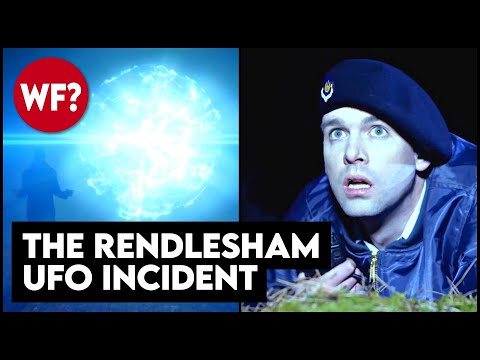
Primary Case Video
The Why Files episode exploring the USAF landing encounter at Bentwaters.
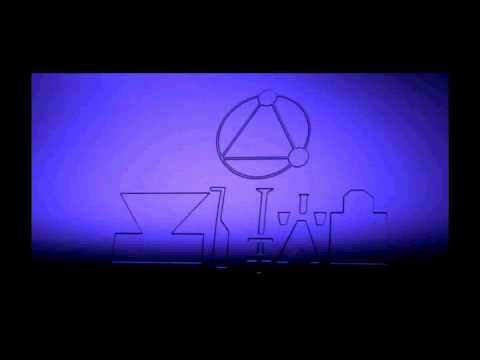
Sgt James Penniston Discussing The Rendlesham Forest Incident and the Craft of Unknown Origin
Retired USAF Security Police Sgt. Jim Penniston recounts his direct contact with the landed craft on the first night of the incident.
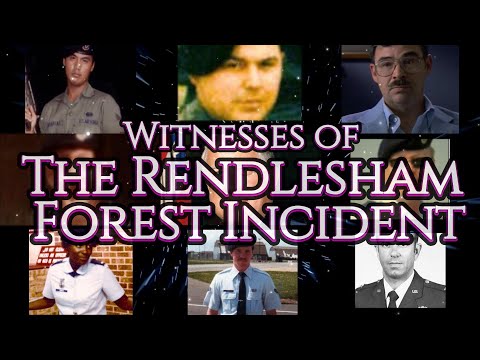
Witnesses of the Rendlesham Forest Incident
An anniversary documentary special in which sixteen first-hand witnesses give their own accounts of what they saw over the three nights.
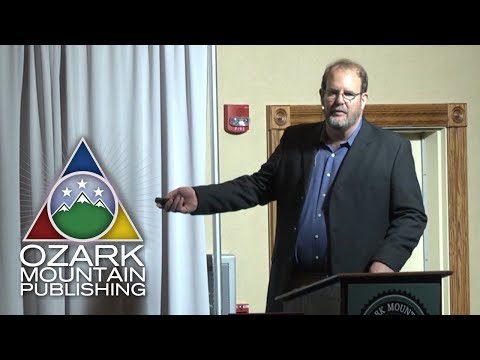
John Burroughs - Rendlesham Forest UFO Military Witness Comes Forward
Retired USAF Security Policeman John Burroughs presents his account of the encounter at the 2016 Ozark Mountain UFO Conference.
Sources
- Halt, Charles I. "Unexplained Lights" (official memorandum to the UK MoD), January 13, 1981. Released via FOIA, 1983 nationalarchives.gov.uk
- Halt, Charles I. Audio recording of Night Two investigation ("The Halt Tape"), December 28, 1980. Available via multiple archives
- Pope, Nick; Burroughs, John; & Penniston, Jim. Encounter in Rendlesham Forest: The Inside Story of the World's Best-Documented UFO Incident, Thomas Dunne Books, 2014
- Penniston, Jim. Witness statement and notebook sketches, December 1980. Reproduced in Pope et al. (2014)
- Warren, Larry & Robbins, Peter. Left at East Gate: A First-Hand Account of the Rendlesham Forest UFO Incident, Cosimo, 1997
- Robbins, Peter. Public withdrawal of support for Larry Warren's claims, 2017
- Ridpath, Ian. "The Rendlesham Forest UFO Case" (skeptical analysis). ianridpath.com
- UK Ministry of Defence. Rendlesham Forest case files, released via National Archives. nationalarchives.gov.uk
- Defence Intelligence Staff (UK). Assessment of radiation readings from the landing site, 1981
- Burroughs, John. U.S. Veterans Administration disability case, 2015. Covered by multiple outlets
- McCain, John (Senator). Intervention in Burroughs' classified medical records case, 2014–2015
- Good, Timothy. Above Top Secret: The Worldwide U.F.O. Cover-Up, Ch. 6, William Morrow, 1988
- Dolan, Richard. UFOs and the National Security State, Vol. 2, Keyhole Publishing, 2009
- Butler, Brenda; Street, Dot; & Randles, Jenny. Sky Crash: A Cosmic Conspiracy, Neville Spearman, 1984. First published investigation of the case
- Pope, Nick. Open Skies, Closed Minds, Simon & Schuster, 1996
- "The Rendlesham Forest Incident," BBC Radio 4 documentary, various broadcasts
- Condign Report (UK MoD classified study, partially declassified 2006). Referenced Rendlesham among other cases en.wikipedia.org
- "Rendlesham Forest incident," Wikipedia (summary of published sources). en.wikipedia.org
- Halt, Charles I. Multiple public interviews and conference presentations, 1997–2023
- Penniston, Jim. Binary code revelation and analysis, discussed in public presentations, books, and independent documentaries, 2010–present
See something inaccurate? Have additional information or sources?
Suggest an Edit →Last Updated: June 2026