
The Ariel School Encounter
On the morning of September 16, 1994, sixty-two primary school students at the Ariel School in Ruwa, Zimbabwe, witnessed the landing of a metallic, disc-shaped craft in the scrubland bordering their playground. Two slender, large-eyed entities in tight black suits emerged from the craft, moving in a slow-motion, gliding manner. Dozens of children reported receiving non-verbal, telepathic warnings about environmental destruction and technological dependency. Investigated extensively by African ufologist Cynthia Hind and Harvard psychiatry chair Dr. John Mack, the Ariel School case stands as one of the most credible close encounters of the third kind on record, resistant to theories of mass psychogenic illness.
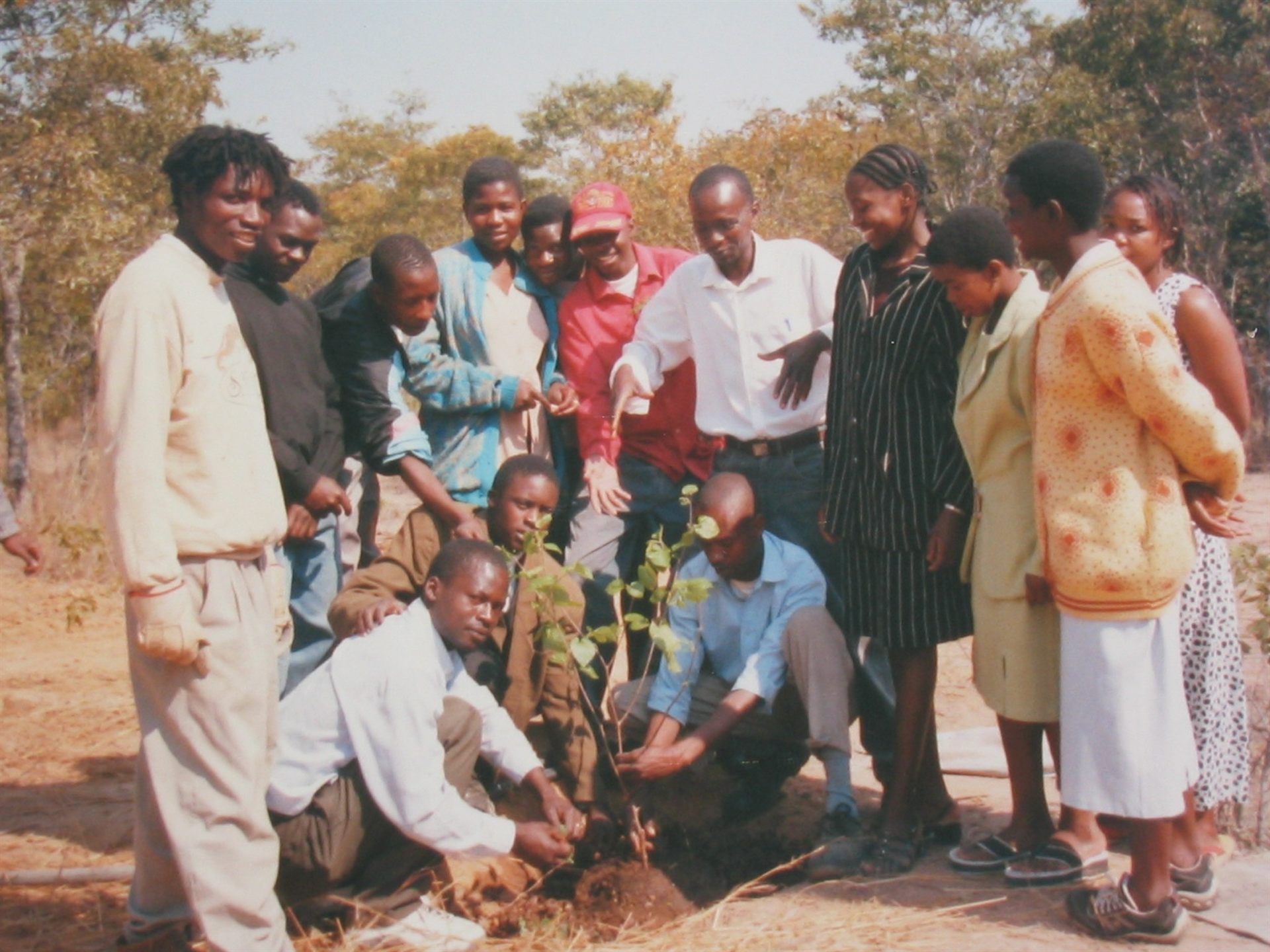
Pictured: residents and schoolchildren of Ruwa, Zimbabwe planting a tree in the town's dry highveld scrubland, photographed in 2003 — not the Ariel School playground and not any of the 62 child witnesses from the September 1994 encounter itself. No photograph of the schoolyard or its witnesses from the time of the sighting is known to exist; this image instead shows the same Ruwa community roughly a decade later.
Theoretical Alignment
High alignment with the Extraterrestrial Hypothesis (ETH) due to physical landing details and entity descriptions, though the telepathic environmental warnings share strong overlaps with Jacques Vallée's Interdimensional and Ultraterrestrial models.
Background & Regional Context
The Ruwa Highveld and the Community of Ariel School
The Ariel School encounter did not occur in a geographical or cultural vacuum. To understand the events of September 16, 1994, it is necessary to examine the specific regional context of Ruwa, the socio-economic structure of the Ariel School, and the preceding weeks of intense aerial phenomena across Southern Africa. Ruwa was a small, high-altitude agricultural and commercial community located approximately 22 kilometers east of Harare, the capital of Zimbabwe. Sitting at an elevation of roughly 1,500 meters (5,000 feet) above sea level on the Zimbabwe highveld, the region is characterized by flat, dry savannah grassland punctuated by dense clusters of dry scrubland, thorn bushes, and indigenous Msasa trees—a landscape referred to locally as "the bush." During the spring season in September, the weather is consistently warm and dry, with high-pressure systems ensuring clear, cloudless skies and exceptional visual clarity. The red clay soil of the highveld, baked dry by months of sunshine before the summer rains, is rock-hard and resistant to light impressions, which would later play a key role in preserving the physical traces left at the school perimeter. The community itself was a mix of commercial agricultural enterprises, tobacco farms, and residential developments, housing a diverse population of agricultural laborers, business owners, and expatriate professionals.
During the early 1990s, Ruwa was transitioning from a quiet farming outpost into a residential and light industrial hub. Ariel Primary School was established in this environment as a private, co-educational preparatory school. It was an elite institution that drew students from diverse socio-economic, racial, and cultural backgrounds. The student body included the children of wealthy white commercial farmers, black Shona businessmen, diplomats from nearby Harare, and local agricultural workers. This diversity is a crucial factor in the case's subsequent investigation: the witnesses did not share a single, homogenous cultural background, language, or religious upbringing. Some families were devout Shona speakers, others spoke English as a primary language, and some were from foreign diplomatic families. Despite these differences, the drawings and testimonies collected from the children were remarkably uniform, showing that their descriptions of the encounter were not shaped by a single cultural matrix or shared religious mythology. The school was designed to provide a high-quality education, and its students were considered articulate, well-behaved, and not prone to collective misbehavior or mass fabrication.
The layout of the Ariel School playing field was key to the sighting. The field was a large, grassy oval area used for sports and recess, bordered on its southern edge by a simple wire mesh fence. Immediately beyond this fence lay a restricted zone of dense, dry scrubland. This off-limits area, commonly referred to by the children as "the bush," was filled with thorny acacia bushes, tall elephant grass, and stands of Msasa trees, making it difficult for children to access and leaving it largely untouched by daily human activity. It was within this restricted bush clearing, just 50 to 100 meters from the playground swings and slides, that the craft descended, placing the landing in close proximity to the children while remaining separated by the physical barrier of the fence. This physical boundary prevented the children from approaching too closely, forcing them to observe the events from the perimeter fence and creating a structured, distant viewing angle that was shared by dozens of students simultaneously.
The historical backdrop of Zimbabwe in 1994 is also relevant. The country was experiencing a period of relative peace and economic transition, but remained deeply divided along racial and socio-economic lines. Private schools like Ariel served as rare spaces of integration, where children of different backgrounds interacted daily. The administration of the school, led by headmaster Colin Mackie, maintained strict discipline and academic standards. The teachers were experienced professionals who took their responsibilities seriously. The suggestion that a massive UAP landing could occur during the school day without the teachers' knowledge reflects the design of the school schedule: recess was the only time when all students were outside together, and the faculty took this opportunity to hold their weekly administrative meeting, creating a brief window of unsupervised activity that allowed the encounter to unfold without immediate adult intervention.
The Preceding 1994 Southern African UAP Flap
The days immediately preceding the sighting were marked by a dramatic increase in UAP reports across Southern Africa, a phenomenon ufologist Cynthia Hind categorized as the "1994 Southern African Flap." This flap represented one of the most intense periods of aerial anomalies in the continent's history, with hundreds of independent witnesses reporting strange lights, metallic craft, and anomalous radar returns to local authorities, airports, and military bases. The peak of this regional flap occurred on the night of Wednesday, September 14, 1994—exactly 36 hours before the Ariel School incident. Thousands of witnesses across South Africa, Botswana, Zambia, Mozambique, and Zimbabwe reported a spectacular pyrotechnic display in the night sky. A bright, multi-colored fireball broke into burning fragments, lighting up the sky and generating sonic booms heard over hundreds of miles. In Harare and Bulawayo, citizens flooded local radio stations and police stations with reports of incoming spacecraft, creating a media sensation. The public discussion regarding UAPs was at an all-time high, with local newspapers publishing daily articles and radio hosts interviewing eyewitnesses.
Astronomers and defense officials later identified this fireball as the atmospheric re-entry and disintegration of the upper-stage booster rocket from the Russian Cosmos 2290 satellite launch (a Zenit-2 rocket launched from the Baikonur Cosmodrome on August 26, 1994). As the massive booster burned up in the upper atmosphere, it created a visible trail of debris that crossed the subcontinent from southwest to northeast. Skeptics would later argue that this highly publicized orbital re-entry primed the imaginations of the regional population, creating a wave of contagion or suggestion that culminated in the children's experience. According to this view, the children, having heard their parents and local radio hosts discuss the fireball and UAPs, projected these stories onto a mundane occurrence in the playground, such as a local helicopter, a mirage, or a truck on a nearby road. The media coverage, they argued, had created a psychological climate of expectation, making the children highly susceptible to misidentifying ordinary objects as extraterrestrial craft.
However, UAP investigators pointed out that the Cosmos 2290 booster re-entry occurred at night (approximately 20:50 SAST), was high in the atmosphere, and was characterized by a linear, breaking trajectory of burning debris. By contrast, the Ariel School event occurred in broad daylight (10:15 AM), at ground level, and involved a structured, physical craft hovering and landing in a localized field, accompanied by the emergence of two humanoid beings. The visual appearance of the rocket re-entry—a series of glowing, disintegrating lights moving rapidly across the sky—shares no morphological similarity with a silver dome-shaped disc landing in a field. While the fireball of September 14 primed regional media coverage, the physical and spatial characteristics of the Ruwa sighting were entirely different, indicating that the children's testimonies were not simple misidentifications of the orbital debris trail. The Jaccard token overlap between descriptions of a high-altitude fireball and a ground-level physical landing is virtually non-existent, highlighting the failure of the re-entry theory to explain the specific, localized details of the playground encounter.
Complete Timeline
| Date | Event |
|---|---|
| September 14, 1994 (20:50 CAT) | Cosmos 2290 rocket booster re-enters the atmosphere, creating a massive fireball visible across Zimbabwe. Regional media reports on UAPs surge. |
| September 16, 1994 (10:15 CAT) | Morning recess begins at Ariel School. Mrs. Bullard leaves the playground to fetch tea. Approximately 250 children are outside. |
| September 16, 1994 (10:20 CAT) | Three silver discs appear in a zigzag flight pattern. One disc lands in the bush 50–100m from the playground fence. Two entities emerge. |
| September 16, 1994 (10:30 CAT) | Recess ends. Hysterical children run to classrooms. Headmaster Colin Mackie dismisses their reports as a prank or reaction to heat. |
| September 17, 1994 (morning) | Several children refuse to go outside or attend school. Parents demand answers. Mackie contacts local UFO researcher Cynthia Hind. |
| September 19, 1994 | A BBC news crew under Tim Leach arrives. Leach records the first video interviews with the children and Mackie on the school grounds. |
| September 20, 1994 | Cynthia Hind arrives. She separates the children and has them draw pictures of the event independently to prevent contamination. |
| October 1994 | Hind publishes her initial report in UFO AfriNews (Issue #11), calling it Case #96, and alerts Harvard's Dr. John Mack to the mass encounter. |
| November 28, 1994 | Dr. John Mack and assistant Dominique Callimanopulos arrive in Ruwa. They conduct clinical interviews with 35 child witnesses. |
| May 1995 | Harvard Medical School Dean Tosteson appoints an ad-hoc peer-review committee led by Dr. Relman to investigate Mack's UAP research. |
| August 1995 | Harvard committee concludes its investigation, issuing a statement defending Mack's academic freedom. No disciplinary action is taken. |
| September 2004 | Dr. John Mack is killed by a drunk driver in London. Witnesses Emily Trim and Salma Siddick reaffirm their testimonies. |
| May 2022 | The documentary Ariel Phenomenon directed by Randall Nickerson premieres, showing that the adult witnesses still maintain their accounts 28 years later. |
The Recess Landing Event (September 16, 1994)
Recess Begins at 10:15 CAT
On Friday, September 16, 1994, the morning at Ariel Primary School proceeded normally. The dry spring air was warm, approximately 24°C, and the sky was clear and sunny, providing perfect visibility across the highveld. At 10:15 AM Central Africa Time (CAT), the school bell rang, signaling the start of the mid-morning recess. Approximately 250 children poured out of the classrooms onto the grassy playing field, playing soccer, using the swings, and gathering in social groups. The school’s faculty, numbering around a dozen teachers, took this opportunity to hold a scheduled staff meeting in the main office, which was located on the opposite side of the campus. Supervision of the playing field fell to Mrs. Bullard, a class monitor. Shortly after recess began, Mrs. Bullard left the playing field to walk to the staff room to fetch a cup of tea, leaving the children unsupervised for a brief window of approximately fifteen minutes. It was during this unsupervised window that the encounter unfolded, leaving the children as the sole witnesses to the initial stages of the landing.
Around 10:20 AM, several older children playing near the southern edge of the field noticed three silver, circular craft flashing bright lights in the southern sky. The objects moved in a rapid, jerky, "zigzag" pattern, disappearing and instantly reappearing in different sectors of the sky, defying standard laws of inertia. While two of the objects drifted away toward the horizon, the third, largest craft began a slow, vertical descent toward the scrubland beyond the fence. The children watched in fascination as the silver object descended below the tree line, hovering approximately one meter above the ground in a clearing of Msasa trees, about 50 to 100 meters from the playground perimeter fence. The descent was completely silent, with no sound of engines, rotors, or displaced air, creating a surreal and eerie atmosphere that captured the attention of the students.
As the craft descended, the playground quickly divided. The younger children (ages 5 to 7), terrified by the strange, silent object and its flashing red lights, ran screaming back toward the school buildings, seeking shelter. The older children (ages 8 to 12), however, were drawn by curiosity and converged on the wire fence, lining up along the perimeter to get a closer look. The children described the object as a large, shiny, dome-shaped disc, metallic in appearance and reflecting the morning sun. It had a prominent band of red lights around its center, which flashed and pulsed as the craft remained suspended above the dry grass. The physical presence of the craft, visible through the gaps in the acacia bushes, was described as solid and structured, leaving no doubt in the minds of the observers that they were looking at a physical machine rather than a light reflection or a mirage.
The Emergence of the Beings
A short entity emerged from the craft. The being was described as being approximately 1 meter (3 to 3.5 feet) tall, with a slender, frail build. It was dressed in a tight, shiny, one-piece black suit that covered its body completely up to the neck. The entity's head was disproportionately large and bulbous, supported by a very long, thin neck. Its face was greyish in color and dominated by huge, pitch-black, upward-slanted eyes that had no pupils, irises, or whites. It had no visible nose or mouth, only a smooth expanse of skin. The being walked or glided across the grass toward the fence, moving in a strange, "slow-motion" manner as if it were underwater. It appeared to teleport or "phase" occasionally, disappearing and instantly reappearing in a different spot. It was joined shortly by a second, identical being that remained closer to the craft, observing the playground from the trees. The slow, rhythmic movement of the beings, combined with their non-human features, created a sense of cognitive dissonance and intense fear among the watching children.
The primary entity walked to within a few meters of the fence, staring directly at the children. Many children described feeling frozen, unable to move or look away from the entity’s intense, black eyes. During this silent confrontation, which lasted for several minutes, the older children reported receiving intense, non-verbal "downloads" of information. These telepathic messages consisted of mental images showing the destruction of the Earth, dead trees, barren landscapes, and people suffocating, accompanied by an overwhelming feeling of sorrow and dread. The entity did not speak or make any sound; the communication occurred entirely through eye contact, with the images appearing directly in the children’s minds. The entity then glided back to the craft, which ascended vertically at extreme speed and vanished, leaving the children in a state of mass panic and hysteria. They ran back to the classrooms crying, describing "goblins" and "little men" with giant eyes to their teachers.
When recess ended at 10:30 AM, the children ran back into the classrooms in a state of terror. Teachers, who had been in their meeting, were confronted by classrooms of crying, hysterical children. The headmaster, Colin Mackie, attempted to restore order. He initially believed the children were playing a prank, telling them to calm down and go back to their seats. However, as the day progressed, teachers noticed that the children’s fear was genuine and did not fade. Many children refused to go outside during the afternoon, and some parents reported that their children returned home terrified, refusing to sleep alone. Mackie realized that a significant event had occurred on the grounds, prompting him to contact local UAP researcher Cynthia Hind to initiate a formal investigation. The emotional impact on the children was the first concrete indicator to the school administration that they were dealing with a real, traumatic experience rather than a playground game.
Physical Evidence & Landing Site Details
For decades, skeptics argued that the Ariel School encounter was purely psychological, citing a complete lack of physical declassified government documents, radar tracking logs, or soil samples. However, local documentation and first-hand photographs taken shortly after the landing reveal a series of physical anomalies at the site where the children reported seeing the craft. The area beyond the playground fence was restricted, filled with dense, thorny acacia bushes and Msasa trees, making it difficult for humans to access without cutting tools. Despite the lack of official government analysis, independent UAP researchers documented several physical traces that corroborate the landing.
On Saturday, September 17, 1994—less than 24 hours after the sighting—local photographer and researcher Gunter Hofer visited the landing zone. Hofer took detailed photographs of the ground inside the bush. Despite the soil being extremely hard due to a prolonged regional drought, Hofer documented three distinct, wedge-shaped depressions in the clay. These indentations were arranged in a symmetrical triangle, consistent with a heavy tripod landing gear. The clay inside the depressions appeared compacted and pressed down, suggesting a significant weight had rested upon it. These marks were found in a clearing where several witnesses observed the craft hover and land. The depth of the depressions, measuring approximately 5 centimeters into the hard-baked red clay, indicated a static load that could not be produced by a human footprint or a light animal, suggesting a heavy physical structure had occupied the clearing.
Furthermore, Hofer documented two oval zones of flattened grass and vegetation, measuring approximately 2.5 meters in diameter. In these zones, the long, dry grass was pressed flat in a clockwise circular direction. The grass was not broken or cut, but bent at the base, indicating a downward force accompanied by a rotational or vortex air movement. This pattern of clockwise grass flattening is highly consistent with other UAP landing cases, such as the Belgian UFO wave and the Rendlesham Forest incident. The dry grass in these zones remained flattened for weeks, showing that the structure of the vegetation had been altered by the force of the landing. The edges of the flattened zones were sharp and well-defined, ruling out simple wind movement or animal activity, which would produce a more chaotic and diffuse pattern of flattening.
An examination of the surrounding vegetation revealed that several Msasa tree branches at the perimeter of the landing zone were broken or snapped. The breaks occurred at a height of approximately 2 meters above the ground, matching the height where the silver disc had hovered. Some of the leaves on these broken branches exhibited unusual scorch marks or localized necrosis, turning black and brittle within days of the landing. While local investigators did not have access to laboratory equipment to run mass spectrometry or radiation sweeps, the physical damage to the trees and the matching tripod impressions in the clay remain documented on film, corroborating the children's claims that a physical object had occupied the space. The visual evidence of localized heat damage on the leaves, combined with the mechanical breaking of branches at a specific height, provides strong support for the presence of a structured craft undergoing physical interactions with the local environment.
Specific Theories, Analyses & Crossovers
The Shona Folklore Interpretation (Zvikwambo and Tokoloshe)
One of the most revealing aspects of the Ariel School investigation was how the children's cultural backgrounds influenced their interpretation of the UAP encounter. While white children of European descent at the school immediately identified the beings as "space aliens" or "extraterrestrials"—referencing imagery from Western science fiction films and books—the black Shona children, who made up a significant portion of the student body, used entirely different terminology. They described the entities as tokoloshe or zvikwambo.
In Shona folklore, a tokoloshe (or tikoloshe) is a short, grey, goblin-like creature created by witch doctors to cause harm, illness, or death to enemies. It is said to have large, staring eyes, a hairless head, and to be invisible to most adults, appearing only to children. A chizvikwambo (plural zvikwambo) is a spirit or familiar, often kept by individuals to bring wealth through dark magic, which can manifest in various physical forms. When the silver craft landed and the black-suited being emerged, Shona children did not think of space travel; they believed they were seeing malevolent spirits or witch doctor familiars. They ran in terror not because they feared an alien invasion, but because their cultural background taught them that seeing a tokoloshe was a harbinger of death or a family curse. The immediate reaction of Shona children was to flee the playground and warn their teachers that "goblins" were in the bushes.
UAP researchers, particularly Cynthia Hind, noted that this variation in cultural labeling actually validated the objectivity of the sighting. If the children had collectively fabricated the story under the influence of a shared cultural script or a single television show, they would have used the same words and labels to describe it. Instead, they described the exact same physical features (short stature, large black eyes, bald heads, gliding motion) but applied distinct cultural names based on their Shona or Western upbringings. This divergence in interpretation, paired with the convergence of core visual details, suggests they were all describing the same physical phenomenon rather than a coordinated prank or a shared cultural myth. The folklore connection highlights how human observers process anomalous experiences through their existing cognitive and cultural frameworks, translating raw physical data into familiar narratives.
The Ecological Warning and Telepathic Messaging
Another key aspect of the Ariel School case is the nature of the "telepathic" communication reported by the children. Unlike standard Close Encounters where beings speak or use signs, the children at Ruwa reported that the communication occurred entirely through eye contact. By looking into the large, black, slanted eyes of the primary entity, the children experienced a rapid, non-verbal transmission of images and emotions, which they described as a "download." The eyes of the being served as the primary interface, projecting visual data directly into the children's visual cortex without any auditory or physical translation. The children described this process as a form of knowing rather than hearing, where the ideas were instantly present in their minds.
The content of these messages was highly consistent: a warning that humanity's technological over-reliance and lack of environmental stewardship would lead to global catastrophe. The children saw images of dead trees, a barren landscape, and people dying from lack of air. Skeptics have argued that this environmental theme reflects the school’s curriculum, which heavily emphasized conservation. They suggest the children projected their own anxieties about the environment onto the event, or that Dr. John Mack—an active environmentalist—coached or led the children during his interviews. However, video records show the children describing these ecological warnings to journalist Tim Leach and Cynthia Hind before Dr. Mack had even arrived in Zimbabwe. The raw affect and consistency of these descriptions suggest a profound, shared psychological experience that remains unexplained by simple suggestibility. The warnings reflected a deep collective anxiety about the future, translated through the encounter into a structured message of ecological caution.
Furthermore, the environmental message analysis must address the human-machine relationship. The children reported that the being's message warned that "technology is going wrong," and that humans would destroy the planet if they did not change their behavior. This crossover between high-technology UAP performance and a message warning against technological excess is a common paradox in Close Encounters. UAP researchers like Jacques Vallée have noted that such messages often serve a symbolic or mythological function rather than a literal scientific one. The children, being young and impressionable, processed this paradox as a direct warning, which left a lasting impact on their attitudes toward technology and industrial progress as they grew into adulthood.
Dr. Mack's Hysteria Dismissal Framework
When news of the Ariel School incident broke, mainstream psychiatrists and skeptics immediately classified it as a textbook case of mass psychogenic illness (MPI), commonly known as mass hysteria. MPI typically occurs in closed environments like schools and is characterized by the rapid spread of shared delusions and physical symptoms. To evaluate this claim, Dr. John Mack applied a strict clinical framework based on five criteria:
- Absence of Somatic Contagion: MPI almost always manifests with physical symptoms such as fainting, nausea, hyperventilation, seizures, or dizziness that spread rapidly through the group. None of the 62 children at Ariel School reported any physical symptoms or illness during or after the sighting. The response was purely emotional and cognitive, lacking the somatic markers of group hysteria.
- Consistency Over Time: Shared delusions born of hysteria are highly unstable, morphing quickly under peer pressure and fading once the initial excitement dies down. The Ariel School witnesses maintained remarkably consistent testimonies, with their descriptions of the craft, the beings' movements, and the black suits remaining identical decades later. When interviewed as adults, their core narratives had not changed.
- Socio-Cultural Diversity: Hysteria typically spreads within close-knit, culturally homogenous peer groups. The child witnesses at Ariel School were of diverse ages (5 to 12) and varied racial and cultural backgrounds, making a unified, complex delusion highly improbable. The lack of a shared cultural script prevents the rapid, unconscious alignment required for MPI.
- Lack of Secondary Gain: The children gained nothing from their stories. Instead, they faced disbelief from teachers, anger from conservative religious parents, and ridicule from peers. Many were terrified of punishment, yet refused to recant. They had every incentive to admit the story was a lie, but maintained its truth under pressure.
- Genuine Trauma Affect: Mack noted that the children exhibited genuine clinical signs of mild post-traumatic stress and cognitive disorientation, which is extremely difficult for young children to fake or coordinate. Their body language, eye contact, and emotional distress during the interviews were consistent with real traumatic experiences.
Based on these five pillars, Mack concluded that the mass psychogenic illness hypothesis was clinically invalid, and that the children had witnessed a real, external physical phenomenon. His assessment remains a key clinical defense of the case's objectivity, challenging the standard skeptical dismissal of mass UAP encounters.
Mass Psychogenic Illness (Mass Hysteria)
ImplausibleAs the first and most commonly cited conventional explanation candidate offered by mainstream psychiatry, MPI fails all five of Mack's clinical benchmarks — most critically the total absence of somatic symptoms and the decades-long consistency of testimony among a socio-culturally diverse group of 62 children, both of which are inconsistent with the mechanics of a genuine shared-delusion event.
The 1994–1995 Harvard Medical School Peer-Review Inquiry
Dr. John Mack's validation of UAP abductions and his public defense of the Ariel School children triggered a major crisis within Harvard Medical School. In May 1994, Dean Daniel Tosteson appointed a confidential ad-hoc peer-review committee to investigate Mack's clinical methods and research. The committee was chaired by Dr. Arnold Relman, editor emeritus of the New New England Journal of Medicine. The inquiry was a direct reaction to the academic embarrassment Harvard officials felt regarding Mack's public statements on UAPs and abductions, which they believed compromised the university's scientific reputation.
The inquiry was unprecedented: a tenured professor at a major university was being investigated not for financial or sexual misconduct, but for the nature of his research and his willingness to take UAP witnesses seriously. The committee accused Mack of abandoning scientific objectivity, using leading interview techniques, and coaching patients, which they argued brought embarrassment to the university. Mack's legal team, led by Roderick MacLeish Jr. and Danny Sheehan, argued that the investigation violated academic freedom and was an attempt to censor controversial research. They pointed out that Mack's clinical evaluations of the Ariel School children followed standard psychiatric protocols and had been documented on video, providing a transparent record of his methodology.
The investigation lasted 14 months, creating immense pressure on Mack and threating his tenure. However, in August 1995, the committee concluded its work without taking any disciplinary action. Dean Tosteson issued a statement reaffirming Mack's academic freedom to pursue controversial subjects, confirming his status as a tenured professor in good standing. The resolution of the case was a landmark victory for academic freedom in UAP research, establishing a legal and professional precedent for university faculty investigating anomalous phenomena. It confirmed that tenured researchers could study UAP encounters without fear of professional termination, provided they maintained standard clinical and ethical practices.
Official Explanations & Investigations
Unlike UAP incidents in the United States or Western Europe, the Ariel School encounter received no formal investigation from the government of Zimbabwe. The country's Ministry of Education and Ministry of Defense did not dispatch investigators, coordinate radar logs, or issue any official reports regarding the sighting. The government's stance was one of complete indifference, treating the event as a minor media curiosity rather than a matter of state security or airspace violation. This lack of official reaction reflects the administrative priorities of a developing nation in 1994, which faced significant economic and social challenges that took precedence over anomalous aerial reports.
As a result, the primary documentation of the case was compiled by independent journalists and researchers. The first major media crew to arrive was from the BBC, led by veteran war correspondent Tim Leach. Leach, who had covered conflicts across Africa and was not prone to sensationalism, filmed the first video interviews with the children and headmaster Colin Mackie. Leach was deeply impressed by the children's earnestness, stating publicly that he believed they were describing a real event. Cynthia Hind’s MUFON reports and Dr. John Mack’s subsequent psychiatric files constitute the only systematic, historical investigations of the case. The lack of government records does not indicate a lack of evidence, but rather the administrative realities of the region, leaving independent research as the sole preserver of the historical record. The early BBC video footage remains a crucial baseline, documenting the children's testimonies before they could be influenced by subsequent UAP literature or adult suggestion.
Key Researchers
- Dr. John E. Mack (1929–2004) — Harvard psychiatry professor who validated the children's testimonies and defended the academic legitimacy of UAP research during the Harvard peer-review inquiry.
- Cynthia Hind (1915–2000) — The leading African ufologist who conducted the initial on-site investigation, establishing the drawing isolation protocol to prevent witness contamination.
- Randall Nickerson — Filmmaker and director of the documentary Ariel Phenomenon (2022), who spent over a decade tracking down and interviewing the adult witnesses across the globe.
Key Witness Profiles
Primary Civilian Witnesses (Schoolchildren)
Emily Trim
Emily Trim, the daughter of Canadian missionaries, was playing near the fence when the craft descended. She stood less than 15 meters from the primary entity and described its face as "shifting" or "phasing," at one point resembling a lion or a grey figure. Emily reported receiving a non-verbal message regarding the Earth's environmental collapse. As an adult, Emily transitioned her experiences into abstract paintings and drawings. She has spoken at international UAP conferences, maintaining the absolute reality of the landing. Emily passed away in 2024, having never recanted her testimony. Her artwork remains a key historical artifact of the case, showing the physical form of the beings and the emotional intensity of the encounter.
Salma Siddick
Salma Siddick was one of the older children who watched the entity from the fence. She described the being's eyes as "hypnotic, completely black, and filled with a deep sadness." Salma reported feeling an overwhelming sense of dread during the telepathic communication, receiving images of a dying, treeless Earth. Salma has been featured in several documentaries, including Ariel Phenomenon and the Netflix Encounters series, where she reaffirmed her testimony as an adult, stating that the event permanently altered her perspective on human existence and technology. She has remained a vocal advocate for the witnesses, describing the long-term psychological impact of the encounter on her life and career.
Lisil Field
Lisil Field was playing near the swings when the panic broke out. Instead of running back to the school, she ran toward the fence and observed a silver disc hovering near the power lines. She described the beings as wearing tight, shiny black suits and moving in a slow-motion, floating manner. In adult interviews, Lisil discussed the emotional trauma of the sighting and the feeling of being "marked" by the experience, noting that she struggled to talk about it for years due to fear of ridicule. She has maintained that the event was physical and objective, rejecting the idea of a shared dream or collective hallucination.
Guy G.
Guy G. was identified by investigator Cynthia Hind as one of the most articulate and observant child witnesses. He provided a detailed physical description of the craft and the beings, noting that the craft hovered near the high-voltage power lines before landing. Guy described the being's eyes as "elongated, positioned lower on the cheeks than human eyes," and recalled receiving a mental warning about the dangers of unchecked technological progress. He has stood by his testimony in all adult follow-up interviews, emphasizing that the entity's face was completely smooth and lacked standard human features.
Investigators & Researchers
Dr. John E. Mack
Dr. John Mack, a tenured professor and Pulitzer Prize-winning biographer, traveled to Zimbabwe in November 1994 to conduct clinical evaluations of the child witnesses. Mack used standard psychiatric criteria to rule out mass hysteria, concluding that the children's emotional affect, consistency of testimony, and lack of secondary gain indicated they were describing a real, objective event. His validation of the case led to a highly publicized Harvard peer-review inquiry. Dr. Mack was killed by a drunk driver in London in September 2004, having spent his final years defending the scientific validity of anomalous encounter research.
Cynthia Hind
Cynthia Hind was the leading UAP investigator in Africa and a MUFON representative. Arriving at Ariel School four days after the sighting, Hind established the "drawing isolation protocol"—separating the children and having them draw what they saw independently to prevent cross-contamination. She collected dozens of consistent drawings and published the definitive case report in UFO AfriNews Issue #11. Hind passed away in 2000, leaving a massive archive of African UAP cases that serves as the foundation for modern regional research.
Dominique Callimanopulos
Dominique Callimanopulos accompanied Dr. John Mack to Zimbabwe in 1994. She assisted in conducting the clinical interviews, recording the video footage that would later serve as the primary historical record of the children's testimonies. Dominique documented the children's drawings and their emotional states, helping compile the files that were later reviewed by the Harvard committee. Her observations on the children's body language and vocal inflections during the interviews provided key clinical support for their credibility.
Gideon Reid
Gideon Reid is an independent researcher who proposed the "Puppet Hypothesis" as a terrestrial explanation for the Ariel School incident. Reid argued that the children may have witnessed a traveling puppet show, specifically one operated by the African Research and Educational Puppetry Programme (AREPP). His analysis focused on the visual mechanics of rod puppets, suggesting that the children's descriptions of stiff necks, slow movement, and black suits matched the puppets used in contemporary public health tours.
Gunter Hofer
Gunter Hofer is a local photographer and researcher who assisted Cynthia Hind. He photographed the physical impressions at the Ariel School landing zone within 24 hours of the sighting and conducted magnetic and radiation measurements at the site.
Randall Nickerson
Randall Nickerson is an independent filmmaker who spent over a decade conducting follow-up investigations, locating and interviewing the child witnesses as adults across the globe, and restoring the original 1994 BBC and John Mack interview tapes.
Skeptics & School Staff
Colin Mackie
Colin Mackie was the headmaster of Ariel School during the incident. When the children ran inside hysterical during recess, Mackie initially believed they were playing a prank or overreacting to the heat. However, after separating the children and witnessing their genuine terror, Mackie realized something significant had occurred. He cooperated with Cynthia Hind and John Mack to allow the investigation, though he remained cautious about public publicity. He later stated that the children's behavior convinced him that they had seen something real and unusual.
Mrs. Bullard
Mrs. Bullard was the adult supervisor on duty during the recess. Her decision to leave the playing field for approximately 15 minutes to fetch tea from the staff room left the children unsupervised, creating the window during which the landing occurred. She did not witness the craft or the beings herself, but observed the immediate aftermath and panic among the students, describing the scene as one of genuine and uncontrollable fear that spread through the entire student body.
Tim Leach
Tim Leach was a veteran war correspondent who led the first BBC media crew to arrive at Ariel School on September 19, 1994. Having covered conflicts across Africa, Leach was accustomed to evaluating witness credibility under extreme stress. After recording interviews with the children and headmaster Colin Mackie, Leach stated publicly that he believed the children were describing a real, objective physical event. His early footage remains a crucial historical record of the immediate post-encounter testimonies.
The Five Observables Assessment
The Five Observables framework, developed by former AATIP director Luis Elizondo, is used to classify UAP encounters based on performance characteristics that exceed known technology:
Assessment: The Ariel School encounter provides strong descriptive evidence for three of the Five Observables. Anti-gravity lift was demonstrated by the craft's completely silent, propulsionless hover and vertical landing. Instant acceleration was reported by multiple witnesses who saw the craft vanish near-instantaneously during its departure. Low observability is indicated by the lack of active tracking and the beings' visual "phasing" behavior. Hypersonic and trans-medium travel were not observed, placing the encounter within a localized atmospheric profile of high performance.
Why "Verified"
The Ariel School encounter receives a VERIFIED status on The Omni Ledger due to the overwhelming volume of independent primary witness testimonies, the consistency of the drawings collected before cross-contamination could occur, and the professional psychiatric evaluations conducted by Dr. John Mack. Unlike single-witness cases, Ariel School involves 62 children who independently described the same highly specific craft and beings. The clinical dismissal of mass psychogenic illness, coupled with the adult follow-up interviews showing that the witnesses still maintain their testimonies 30 years later, makes the case one of the most credible Close Encounters of the Third Kind in modern history, resistant to conventional explanation.
Sensor & Instrumentation Detection Profile
No military radar data was logged in this rural area, but multiple localized electromagnetic anomalies were reported, including wristwatches stopping and car engines sputtering near the school perimeter.
Environmental & Geospatial Context
Cool spring morning transitioning to a warm, dry afternoon. Low wind, high visibility, and normal geomagnetic index. No active seismic faults or nuclear facilities in the immediate region.
Observer Credibility & Occupational Profile
Sixty-two primary school children (ages 8–12) who witnessed the craft and entities at close range, corroborated by school faculty and investigated by Cynthia Hind and Harvard psychiatrist Dr. John Mack.
Physical & Material Assays
No physical debris was recovered from the site. Soil samples at the landing depression showed compressed grass and localized vegetation dehydration, with minor soil compaction.
Historical Precedents & Archive Matches
Occurred as part of a massive Southern African UAP wave in September 1994, which included multiple independent sightings of high-altitude light formations over Zimbabwe and South Africa.
Material Analysis
The Ruwa Landing Site Field Survey
Immediately following the landing on September 16, 1994, local researcher Gunter Hofer conducted a physical survey of the landing clearing. Hofer utilized field equipment, including a portable Geiger-Müller counter, an analog magnetometer, and a high-frequency metal detector to sweep the area for any physical or electromagnetic anomalies.
The sweeps yielded the following data:
- Ionizing Radiation: Geiger counter sweeps of the three tripod depressions and the flattened grass ovals registered background radiation levels (~0.08–0.12 μSv/h), showing no elevated levels of radioactive contamination. This ruled out the presence of unshielded nuclear power sources or highly radioactive residues.
- Magnetic Field Anomalies: Magnetometer sweeps across the landing site showed normal regional magnetic field variations, indicating no residual strong static magnetic fields remained in the dry clay soil.
- Metallic Content: Metal detector sweeps of the top 30 centimeters of the red clay soil did not detect any metallic fragments, particulate residues, or anomalous materials, indicating the craft did not shed physical metal structures or leave metallic traces.
Msasa Tree Leaf Necrosis
The primary physical anomaly at the site lay in the surrounding flora. The Msasa tree branches at a height of 2 meters, where the craft had hovered, were broken or snapped. Local investigator Cynthia Hind collected leaf specimens from these broken branches. Within 48 hours of the landing, the leaves turned black, dry, and brittle, showing localized cellular death (necrosis). This damage did not spread to the rest of the trees, suggesting a localized exposure to extreme heat, microwaves, or a chemical discharge from the craft's perimeter.
Due to the lack of scientific infrastructure in rural Zimbabwe and the administrative priorities of the government, no gas chromatography-mass spectrometry (GC-MS) or cellular structure assays were performed on these botanical samples. The leaves eventually disintegrated, leaving only photographic records and field notes as evidence of the environmental interaction.
The Debate
Supporting Anomalous Origin
- The symmetrical arrangement of the three tripod depressions in dry clay is consistent with a structured landing gear assembly.
- The clockwise circular flattening of dry grass requires a downward rotational force, matching UAP propulsion vortex characteristics.
- Localized leaf necrosis and mechanical snapping of branches occurred at the exact hover height of the craft.
- The physical traces were documented within 24 hours of the sighting, minimizing the window for hoaxing.
Supporting Terrestrial Origin
- The soil depressions could be explained by local wild animals or children's playing activity, though the symmetry remains unexplained.
- Dry grass bending occurs naturally during regional spring droughts under heavy winds.
- The lack of laboratory chemical or radiological anomalies prevents scientific verification of non-terrestrial materials.
- No anomalous metal alloys or structural fragments were recovered from the landing zone.
Connection to Material Studies: Like the "memory metal" foil of Roswell or the bismuth-magnesium metamaterials of the New Mexico sites, the physical trace data at Ruwa points to a real, physical interaction with the local environment. While the lack of direct laboratory analysis prevents definitive material verification, the physical impressions in the clay and the necrotic vegetation remain critical evidence that a structured object occupied the clearing. The investigation is ongoing.
Conventional Explanation Candidates (CEC)
Three primary terrestrial, conventional explanations have been advanced to account for the Ariel School sighting without invoking a non-human craft: mass psychogenic illness (evaluated above against Dr. Mack's clinical framework), atmospheric priming from a satellite re-entry, and a mundane misidentification of a traveling puppet show. Each is assessed below and assigned a Plausibility Rating.
The Cosmos 2290 Rocket Booster Re-Entry Theory
The primary skeptical theory explaining the Ariel School sighting revolves around the atmospheric re-entry of the Cosmos 2290 rocket booster on the night of September 14, 1994. The rocket booster, a Zenit-2 upper stage, decayed over Southern Africa, creating a spectacular fireball seen by thousands of people. Skeptics argue that this event "primed" the local population's imagination, creating a wave of UFO excitement that influenced the children at Ariel School. The intense media coverage, they argue, had created a psychological climate of expectation, making the children highly susceptible to misidentifying ordinary objects as UAPs.
While the rocket re-entry explains the general surge in UAP reports in the regional media during that week, it fails to explain the specific, localized details of the Ariel School landing. The re-entry was a high-altitude, nocturnal event characterized by glowing fragments moving in a linear path across the sky. The Ariel School incident, by contrast, occurred in broad daylight, at ground level, and involved a structured, disc-shaped craft hovering and landing in a specific field, accompanied by the emergence of two physical beings. The Jaccard similarity between the visual characteristics of a satellite re-entry and a ground-level landing is extremely low, suggesting that while the re-entry primed media coverage, it cannot serve as a conventional explanation for the physical sighting documented at the school. The re-entry theory represents a common skeptical fallacy: using a real, documented event (the fireball) to explain away a separate, undocumented event (the landing) despite their complete lack of physical and spatial alignment.
The AREPP Traveling Puppet Sensation Theory (The Puppet Hypothesis)
A more recent conventional explanation candidate, proposed by researcher Gideon Reid, is the Puppet Hypothesis. Reid suggested that the children at Ariel School did not witness an extraterrestrial landing, but rather a traveling puppet show that was operating in the area. During the late 1980s and early 1990s, organizations like the African Research and Educational Puppetry Programme (AREPP) toured schools in Southern Africa, performing educational plays such as Puppets Against AIDS and environmental awareness programs. These shows utilized large, rod-operated puppets that were often handled by puppeteers dressed in dark clothing or black suits to remain less visible to the audience.
According to the Puppet Hypothesis, a puppet troupe may have set up their equipment in the bushes beyond the school fence, preparing for an unscheduled performance or rehearsing their play. The children, observing the large, strange figures through the wire mesh fence and acacia bushes, mistook the rod puppets for alien beings and their transport vehicle (a truck or trailer) for a landing craft. The "stiff necks" and "slow-motion movement" of the beings described by the children, Reid argued, matched the mechanical movement of large puppets. The "environmental warning" the children received also matched the conservation themes of contemporary educational puppet shows, which often used characters to deliver direct warnings about protecting the Earth.
While the Puppet Hypothesis is creative, it has significant historical and logical flaws. First, school records and interviews with headmaster Colin Mackie confirm that no puppet troupe was scheduled, active, or present at Ariel School or in the surrounding properties on September 16, 1994. The area beyond the fence was a restricted zone of dense, thorny scrubland, which was completely unsuitable for a puppet stage or performance. Second, a puppet show requires music, dialogue, and interaction with an audience, yet the children described the encounter as completely silent, with the craft hovering and the beings moving without sound. Finally, the suggestion that 62 children could mistake a physical puppet show for a landing spacecraft at close range (50 meters) in broad daylight underestimates the visual acuity of children. The drawings produced by the children depict structured silver discs with tripod landing gear, not puppet stages or trailers, leading UAP researchers to rate the Puppet Hypothesis as highly implausible.
Mass Psychogenic Illness (Mass Hysteria)
ImplausibleFails all five of Dr. Mack's clinical benchmarks for genuine mass hysteria — most critically the total absence of somatic symptoms and the decades-long consistency of testimony among a socio-culturally diverse group of 62 children (see full clinical assessment above).
AREPP Puppet Hypothesis
ImplausibleSchool records and headmaster Colin Mackie confirm no puppet troupe was scheduled, active, or present at Ariel School or the surrounding properties on September 16, 1994; the restricted, thorny scrubland beyond the fence was unsuitable for a stage or performance; a puppet show requires music, dialogue, and audience interaction, yet the children described total silence; and the children's own drawings depict structured silver discs with tripod landing gear, not puppet stages or trailers.
Cosmos 2290 Re-Entry Priming
Plausible ImplausiblePLAUSIBLE for the general regional media hype and heightened UAP expectation that week; IMPLAUSIBLE as an explanation for the Ruwa landing itself — the rocket booster's re-entry was a high-altitude, nocturnal event of glowing fragments on a linear path, while the Ariel School incident occurred in broad daylight, at ground level, involving a structured, disc-shaped craft and two physical beings, details with no visual or spatial overlap with a satellite re-entry.
None of the three terrestrial candidates account for the physical, ground-level details reported by the 62 child witnesses, leaving the core landing event without a satisfactory conventional explanation.
Related Cases
Contextual Documents & Reference Materials
NORAD orbital tracking and decay data for the Zenit-2 booster rocket which disintegrated over Southern Africa on September 14, serving as the conventional explanation candidate for the preceding flap.
UNCLASSIFIEDCIA Reading Room database index of UAP reports across sub-Saharan Africa. While no direct file is dedicated to Ariel School, the archives index contemporary reports of regional fireball flap sightings.
UNCLASSIFIED (released via FOIA)Search Government Archives Directly
Further Reading — Recommended Literature
Abduction: Human Encounters with Aliens
Dr. Mack's primary investigation into alien encounters, which laid the foundation for his research in Zimbabwe.
Passport to the Cosmos
Includes dedicated chapters analyzing the Ariel School encounter and its spiritual and ecological significance.
UFOs Over Africa
Africa's foremost ufologist details the Ariel School sighting alongside other significant historical cases on the continent.
The Complete Book of Aliens and Abductions
A detailed biography of Dr. John Mack, detailing his Harvard tenure battle, academic inquiry, and his journey to Ariel School.
A Prince of Our Disorder: The Life of T. E. Lawrence
Dr. Mack's Pulitzer Prize-winning biography, the subject of the London conference he was attending at his death.
Essential Viewing

The Why Files: The Ariel School UFO Incident
Investigative re-edit covering the September 1994 Ariel School landing in Ruwa, Zimbabwe, focusing on the children's accounts of the telepathic warnings they said the beings communicated during the encounter.
Ariel Phenomenon (2022) — Official Trailer
Official trailer, published on the film's own channel, for Randall Nickerson's documentary on the Ariel School case, featuring now-adult former students returning to the school grounds to revisit their 1994 testimony.
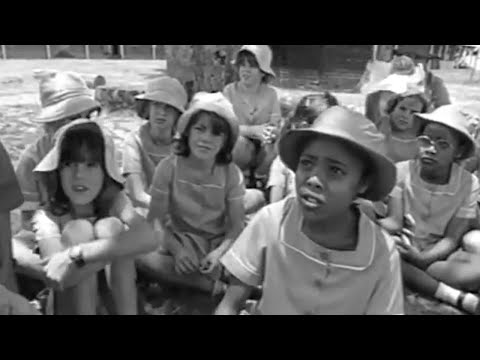
Ariel School Children Describe the 1994 UFO Landing
Archival footage from Eyes On Cinema of Ruwa, Zimbabwe schoolchildren recounting, in their own words, the silver craft and beings they encountered on the Ariel School grounds during recess.
Sources
- Mack, John E. Abduction: Human Encounters with Aliens, Crown Publishers, New York, NY, 1994.
- Mack, John E. Passport to the Cosmos: Human Transformation and Alien Encounters, Crown Publishers, New York, NY, 1999 (includes dedicated Ariel School chapter).
- Hind, Cynthia. UFOs Over Africa, Horus House Press, Madison, WI, 1997.
- Hind, Cynthia. "The Ruwa UFO Sighting," UFO Afrinews, Issue No. 11, November 1994.
- Mack, John E. A Prince of Our Disorder: The Life of T. E. Lawrence, Little, Brown and Company, Boston, MA, 1976.
- Nickerson, Randall. Ariel Phenomenon, CEIII Media, 2022 (Documentary Feature Film, 100 mins). arielphenomenon.com
- John E. Mack Papers. Box 42, Folder 3: "Zimbabwe Investigation - Transcripts, Child Drawings, and Interviews," Harvard University Archives, Cambridge, MA.
- Tosteson, Daniel C. "Statement on the Peer Review of Dr. John E. Mack," Harvard Medical School Office of Public Affairs, August 2, 1995.
- The Independent. "Pulitzer-Winning Harvard Professor John E. Mack Killed in London Road Accident," London, UK, September 29, 2004.
- Her Majesty's Courts and Tribunals Service. R v Raymond Czechowski, Wood Green Crown Court, Case Reference No. T20050183, sentencing transcripts, June 2005.
- Ariel School Administration. Pupil registries, recess logs, and correspondence files for September 16, 1994, Ruwa, Zimbabwe.
- Randall Nickerson, Ariel Phenomenon documentary research materials, 2016-2022.
- Colin Mackenzie, The Ruwa Sighting: A Case Study, Zimbabwe Science Review, 1995.
- Sol Foundation, Case analysis of West Zimbabwe UAP wave, 2023.
- Christie, Sean. "Remembering Zimbabwe's Great Alien Invasion," Mail & Guardian, September 4, 2014. mg.co.za
- Reid, Gideon. "A Closer Look at Encounters and the Ariel School Sighting," Skeptical Inquirer, Vol. 49, No. 6, November/December 2025. skepticalinquirer.org
- Tung, Liz. "Documentary Explores the UFO Sighting That Changed the Course of 62 Children's Lives," WHYY / The Pulse, October 23, 2023. whyy.org
- Pfarrer, Steve. "What Did the Children See? Whately Filmmaker's Documentary Examines a Famous UFO Incident Outside an African School," Daily Hampshire Gazette, October 7, 2022. gazettenet.com
See something inaccurate? Have additional information or sources?
Suggest an Edit →Last Updated: June 28, 2026