
Charlie Redstar
Beginning on the night of April 10, 1975, when Bob and Elaine Diemert watched a pulsing, dome-topped red light drift low over the walk to their private airstrip on the edge of Carman, Manitoba, a recurring nocturnal light nicknamed “Charlie Redstar” was sighted, off and on, for a period residents and researchers alike describe as sixteen to eighteen months, stretching into the fall of 1976. Hundreds of people across the Pembina Valley region of south-central Manitoba — farmers, an RCMP constable, a commercial airline pilot, a Winnipeg television crew, and, on many warm summer nights, whole convoys of townspeople who simply drove out to look — watched a reddish-orange light hover, dart, seem to “play,” and vanish over the flat grain country surrounding the Diemert family's airfield, drawing crowds so large that local gravel roads reportedly jammed with traffic and Carman's own merchants ran ads urging customers to “shop where Charlie Redstar shops.” Logged in at least 53 individual reports from Carman alone in Winnipeg-based Ufology Research's 200-year, roughly 2,000-report Manitoba sighting database, and researched independently by both a teenage Chris Rutkowski and eyewitness-turned-author Grant Cameron, Charlie Redstar is, by witness count and duration, one of the largest sustained UFO waves in Canadian history — and yet, outside Manitoba, it remains strikingly obscure.
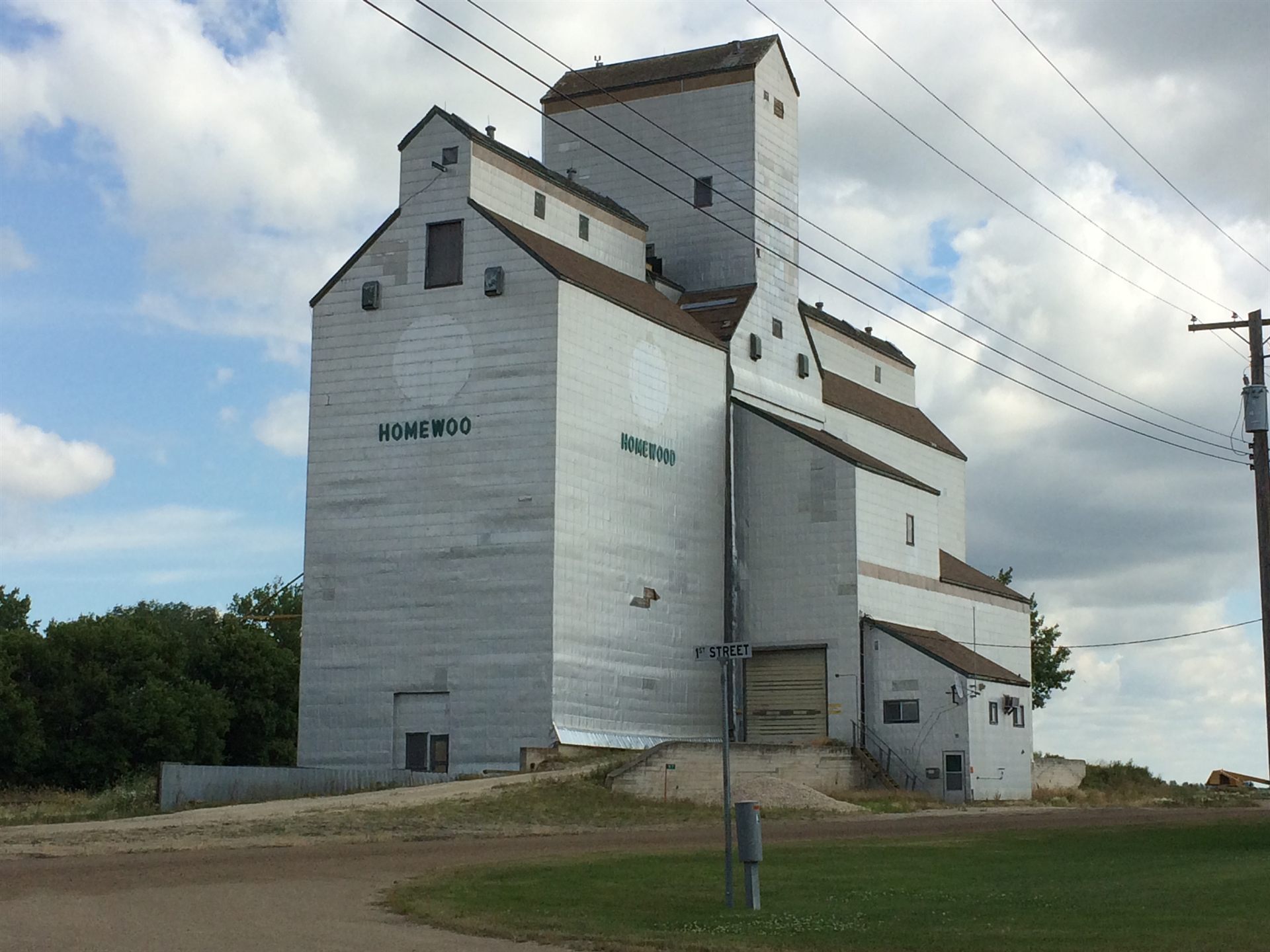
Pictured: a former Manitoba Pool grain elevator at Homewood, Manitoba, a farming community a few kilometres from Carman within the same Rural Municipality of Dufferin — the flat, grain-elevator-dotted prairie horizon typical of the Pembina Valley farmland where Charlie Redstar was sighted. This is not a photograph of the 1975–76 events, of the Diemert farmhouse, or of Friendship Field itself: no rights-clear photograph of the airfield as it appeared during the sightings is known to survive online, and no frame of the Winnipeg TV crew's own 1976 footage of the phenomenon has ever been freely released.
Theoretical Alignment
Charlie Redstar's modest ETH weight rests almost entirely on the sheer scale and geographic spread of the reporting — hundreds of independent witnesses, including a handful of professionally trained observers, describing a broadly similar reddish light over many months — rather than on any instrumented, physical, or officially corroborated evidence, none of which this case ever produced. Its dominant Psycho-Social weight reflects the case's defining character: a self-reinforcing, community-wide viewing culture in which crowds actively drove out each night specifically expecting to see something, named the phenomenon affectionately rather than fearfully, generated real economic and social activity around it (traffic jams, novelty advertising, organized “watching parties”), and produced witness descriptions that grew progressively more elaborate — boomerangs, “Ferris wheel” light clusters, and, in a small number of later, less-corroborated accounts, claimed humanoid occupants — over the course of the flap, a classic signature of expectation and rumor amplifying an initially more modest stimulus. Interdimensional framing finds no support anywhere in the primary record.
Background
Carman, Manitoba in the mid-1970s was, and remains, a farming town of roughly 3,000 people, seat of the Rural Municipality of Dufferin, sitting in the flat, intensively cultivated grain country of the Pembina Valley region about 88 km (55 miles) southwest of Winnipeg. It was, and is, an unremarkable place to have become the center of one of Canada's largest documented UFO flaps, save for one local peculiarity: Bob Diemert, a Carman resident since childhood, was already a locally and internationally known aviation figure well before 1975. A self-taught engineer, Diemert had become one of North America's earliest serious warbird restorers in the early 1960s, rebuilding a Hawker Hurricane fighter — one of only five flyable examples in the world at the time — and flying it as a stunt aircraft in the 1968 film Battle of Britain; he later traveled to the South Pacific to recover and restore Japanese Imperial Navy aircraft from Second World War battlefields. By 1975 he operated a private grass airstrip, later formally named Friendship Field, on his farm at the edge of town, where he and his wife Elaine Diemert kept and flew his growing collection of restored and experimental aircraft.
The broader Canadian context matters too. Nineteen seventy-five was, independently of anything happening in Manitoba specifically, an unusually active year for UFO reporting across Canada: more than 2,000 pages of case files were logged with the National Research Council that year alone, a volume researcher Chris Rutkowski — then an undergraduate beginning what would become a career-long cataloguing project — has documented in detail. Manitoba's own reporting culture already had at least one nationally prominent precedent: the 1967 Falcon Lake Incident, in which prospector Stefan Michalak reported a landed craft and subsequent radiation-like burns roughly 200 km east of Carman, had made international headlines eight years earlier and left the province with an unusually UFO-attentive local press and public. Against that backdrop, when Bob and Elaine Diemert reported an unusual light near their airfield in April 1975, Manitoba's newspapers, and soon its television stations, were primed to take the story seriously and cover it extensively.
Chronology of Events
| Date | Event |
|---|---|
| February 1975 | A Manitoba farmer reports an isolated sighting of a red orb, an account later collected by researcher Grant Cameron as a possible precursor to the main wave; this file treats it as less independently corroborated than the reports that follow from April onward. |
| April 10, 1975 | The Diemert sighting. Walking from their farmhouse toward Friendship Field, Bob and Elaine Diemert see a large, pulsing red light with a dome on top approach from the west, veer north, and travel low over the treetops at an estimated 50 km/h — the wave's first well-documented sighting. |
| May 5, 1975 | The National Research Council's Meteor Centre in Ottawa begins receiving reports of unusual lights from communities across Manitoba, including the Dauphin area, part of the wider 1975 provincial wave that Charlie Redstar would come to dominate. |
| May 7, 1975 | Nightly sightings begin. Reports at or near the Diemert field become a near-nightly occurrence, and word spreads quickly through the Carman area. |
| May–June 1975 | The crowds arrive. Hundreds of local residents and out-of-town visitors begin gathering at the Diemert field for informal “UFO-watching parties,” and drivers take to the region's grid-pattern gravel roads nightly hoping to spot, or “chase,” the light; local roads reportedly experience traffic congestion, and Carman merchants run advertising built around the phenomenon's new nickname. |
| July 1, 1975 | Three friends report a red orb near a grain elevator in the Carman area, one of many broadly consistent secondary sightings logged during the wave's peak summer. |
| July 4, 1975 | A light attributed to Charlie Redstar is reported over Winnipeg, roughly 88 km northeast of Carman, indicating the phenomenon's reported range extended well beyond the immediate Pembina Valley. |
| July 7, 1975 | Mrs. Freddie Giesbrecht reports a UFO sighting east of her farmhouse to the RCMP, one of numerous individual farm-family reports researcher Chris Rutkowski later catalogued from National Research Council files. |
| Summer 1975 | Constable Nicholson's pursuit. RCMP Constable Ian Nicholson observes an oval red light with an X-shaped white halo near Carman and pursues it by car for roughly twelve miles without closing the distance. |
| Fall 1975 | Regional press coverage broadens beyond Carman: the Brandon Sun reports a UFO sighting near Carberry, Manitoba (November 13) and further claimed sightings (November 18), evidence the wave's reporting activity, and press interest, persisted well past the summer peak. |
| 1975–76 | Grant Cameron, a Manitoba resident whose own May 1975 sighting drew him into the case, spends the following eighteen months photographing the phenomenon and personally interviewing hundreds of witnesses, and for a time leads informal viewing tours to the Diemert field. |
| May 1976 | A Winnipeg CKY-TV news crew, including cameraman Allen Kerr, travels to Carman, films footage of a reported sighting, and on a follow-up visit sweeps several locations with a handheld radiation meter, reportedly recording anomalous readings never independently verified. |
| ~Fall 1976 | Sightings taper off, bringing the most active phase of the wave to a close after a total span researchers and residents describe as roughly sixteen to eighteen months. |
| 1983 | CBC Television airs a retrospective segment on Manitoba's best-known UFO cases, including Charlie Redstar, as part of a broader look at the province's UFO reporting history. |
| 1993 | Chris Rutkowski publishes “Charlie Redstar and Friends” as a chapter of his book Unnatural History: True Manitoba Mysteries, the case's first dedicated book-length treatment. |
| 2017 | Grant Cameron publishes Charlie Red Star: True Reports of One of North America's Biggest UFO Sightings, a witness-account-driven book credited with substantially reviving public and media interest in the case. |
| 2025 | Carman marks the 50th anniversary of the sightings with a year-long community tribute organized by the Golden Prairie Arts Council, including a “Table for 300” community dinner, new fan art, and renewed regional and national press coverage. |
April 10, 1975: The Diemert Sighting
The chain of events that would eventually give Manitoba its best-known UFO nickname began, as far as the record allows it to be reconstructed, with an ordinary walk across a farmyard. On the evening of April 10, 1975, Bob and Elaine Diemert were walking from their farmhouse toward Friendship Field, the private grass airstrip Bob used for his restored and experimental aircraft, when they saw a large, pulsing red light approaching from the west. The object had what both witnesses described as a dome on top, and rather than passing overhead at altitude it traveled low, just above the treetops, at an estimated speed of roughly 50 km/h, before veering north and continuing on. Neither Diemert reported any sound accompanying the light, and neither described anything resembling a conventional aircraft's navigation lighting pattern.
What gave the Diemerts' account unusual local weight was Bob Diemert's own background. He was, by 1975, already a nationally and internationally recognized aviation figure — a self-taught engineer who had restored one of the only five flyable Hawker Hurricanes left in the world and flown it as a stunt double in a major feature film, and who would go on to design and build an original fighter prototype, the Diemert Defender, later the subject of a National Film Board documentary. He was not a trained sensor operator, and his account carries the same fundamental limitations as any other unaided visual sighting, but he was a man whose entire adult life involved distinguishing real aircraft, at a glance, from anything that was not — a detail this file weighs, cautiously, in assessing the credibility of the wave's founding report.
May–August 1975: Nightly Sightings and the Crowds
Whatever the Diemerts saw on April 10 did not stay a private matter for long. Beginning May 7, 1975, sightings at or near the Diemert field became close to a nightly occurrence, and word of the phenomenon — which residents had by then affectionately nicknamed “Charlie Redstar” — spread rapidly through Carman and the surrounding Pembina Valley communities. Hundreds of people, both locals and visitors from further afield, began gathering informally at the Diemert field each evening for what participants and later retrospectives describe as “UFO-watching parties”: lawn chairs, thermoses, and long waits on the chance the light would appear, skim the horizon, and, as many witnesses described it, seem to interact playfully with onlookers before retreating. Drivers took to the region's rigid grid of gravel section roads nightly, attempting to follow or intercept the light as it moved — a pursuit culture reportedly intense enough to cause real traffic congestion on rural roads never designed for it, and local merchants leaned into the sudden tourism with advertising built around the new nickname, urging customers to “shop where Charlie Redstar shops.”
The wave's core pattern, described consistently across many independent accounts collected by both Chris Rutkowski and Grant Cameron, involved a red or reddish-orange light that would appear low on the horizon, sometimes hold stationary for minutes at a time, sometimes advance toward observers before abruptly reversing and retreating — a behavior residents read as coy or playful rather than threatening, and one directly responsible for the phenomenon's affectionate rather than alarmed nickname. Smaller companion lights, described in some accounts as trailing or orbiting the main object, were dubbed Charlie's “friends” and “cousins.” Not every report matched that simple pattern: some witnesses described a disk or boomerang shape rather than a bare point of light, and a smaller number described multiple lights arranged in what they called a “Ferris wheel” formation. This file treats the more elaborate and structurally specific descriptions with somewhat more caution than the far more common simple-light accounts, both because they are less numerous and because UFO waves of this general type are well documented in the ufological literature as tending to accumulate more embellished secondary reports as local media coverage and word-of-mouth expectation build.
Individual Reports Through the Summer
Beyond the crowds at the Diemert field, the National Research Council's files and contemporary local press coverage preserve a scatter of individual farm-family reports that give the wave its texture beyond the phenomenon's most famous location. On July 1, 1975, three friends reported a red orb near a grain elevator elsewhere in the Carman area. On July 7, Mrs. Freddie Giesbrecht reported a UFO sighting east of her farmhouse directly to the RCMP, one of the specific, dated reports researcher Chris Rutkowski later catalogued from the underlying National Research Council case files in his 2025 retrospective on the broader 1975 Canadian wave. On July 4, a light attributed to the same phenomenon was reported over Winnipeg itself, some 88 km northeast of Carman — evidence that whatever residents were seeing was not confined to the immediate vicinity of the Diemert field, though it also raises the live possibility that at least some more distant reports were being folded into the “Charlie Redstar” story by a press and public already primed to expect it, rather than representing a genuinely unified single phenomenon roaming across the province.
Press interest did not fade with the summer. The Brandon Sun, based well to the west of Carman, ran reports through the fall of 1975, including a November 13 story on a Carberry-area woman who described being pursued by a UFO and a November 18 report headlined simply “Claims seeing UFO” — evidence that the wider provincial wave Charlie Redstar sat within continued generating fresh, independently reported sightings well past the summer's peak activity at Carman specifically.
Constable Nicholson's Pursuit
Among the wave's individual accounts, the sighting reported by Constable Ian Nicholson of the RCMP's Carman detachment stands out for the observer's professional background and the account's specificity. Responding to a report near Carman during the summer of 1975, Nicholson observed the object directly, describing “an oval red light, surrounded with an X-shaped white halo” that held apparently stationary for two to three minutes. Rather than simply noting the sighting and moving on, Nicholson attempted to close the distance by car; as he drove west, the object appeared to shift onto a northeasterly heading, and he pursued it for approximately twelve miles along the area's grid-pattern gravel roads without ever narrowing the gap. Nicholson's account is one of the relatively few Charlie Redstar sightings made by an on-duty, trained law-enforcement observer rather than a civilian bystander, and the pursuit itself — conducted along roads that offered long, unobstructed sightlines in every direction — is one of the case's better-documented individual episodes, even though, like nearly every other account in the wave, it produced no photograph, radar contact, or corroborating second witness.
Roger Pitts and the View from the Air
A different kind of professional perspective came from Roger Pitts, a commercial airline pilot who reported watching a light behave in a way he found difficult to reconcile with an aircraft or a fixed celestial object. “It was flying on a 45-degree angle, but it was still flying straight at us,” Pitts said of the encounter, before describing its sudden reversal: “It just went directly the other way straight away from us. It just went off into the distance away from us, and a puff of smoke appeared — an odd shape, like a small cloud, and it disappeared in that.” As a pilot accustomed to judging the relative bearing, closing speed, and altitude of other traffic as a routine professional skill, Pitts's account carries somewhat more evidentiary weight than an equivalent description from an untrained ground observer, a distinction this file's Observer Credibility assessment reflects directly. It remains, however, a single uncorroborated visual account with no instrument backing of any kind, and the “puff of smoke” detail in particular has no agreed conventional or anomalous explanation in any source reviewed for this file.
The CKY-TV Investigation and the Radiation Claim
The wave's closest approach to a formal, technical investigation came not from any government body but from a Winnipeg television crew. In May 1976, a CKY-TV news team, including cameraman Allen Kerr, traveled to the Carman area, filmed footage of a reported sighting for broadcast, and on a subsequent visit brought along a handheld radiation meter, reportedly recording elevated readings at several of the locations most closely associated with the sightings. Grant Cameron devotes a chapter of his 2017 book to the crew's visit and footage, titled “Cameras, Photographers, and Charlie Red Star,” including a section specifically on “The CKY-TV Movie.” This file treats the radiation claim as a genuinely interesting but ultimately unverifiable loose end: no instrument specifications, background-radiation control readings, or raw data from the survey appear to have been published or preserved anywhere this research was able to locate, no health-physics or radiological professional is known to have reviewed the readings at the time or since, and the claim was never repeated by a second, independent survey. An unverified anecdote of elevated radiation readings is neither strong evidence of anything anomalous nor evidence of nothing at all; it simply remains outside what this file can respond to as if it were established fact.
Researchers Take Up the Case: Rutkowski and Cameron
Two Manitoba researchers, both personally shaped by the 1975 wave, would go on to give Charlie Redstar its lasting documentary record. Chris Rutkowski, then an undergraduate, began cataloguing Canadian UFO sightings during the same 1975 wave Charlie Redstar was part of, eventually compiling more than 2,000 pages of that single year's National Research Council case files and going on to become Canada's most prominent civilian UFO researcher, publisher of the long-running annual Canadian UFO Survey. He gave Charlie Redstar its first dedicated book-length treatment in 1993 with the chapter “Charlie Redstar and Friends” in his book Unnatural History: True Manitoba Mysteries, and returned to the case again in a 2025 Substack retrospective marking the wave's fiftieth anniversary.
Grant Cameron's connection to the case was more personal still: his own entry into ufology began with his direct sighting of the light in May 1975, and over the following eighteen months he photographed the phenomenon repeatedly, personally interviewed hundreds of the wave's other witnesses, and for a time led informal tours out to the Diemert field for visitors hoping to see it for themselves. Cameron went on to a long career as a UFO researcher focused chiefly on U.S. presidential-level UFO briefings and government disclosure history, but returned to his origin case more than four decades later with Charlie Red Star: True Reports of One of North America's Biggest UFO Sightings (2017), a book built substantially from his own original interview notes and later reviewers described as sticking closely to witnesses' own unembellished accounts. The book is widely credited with reviving broader public and media attention to the case, feeding directly into Carman's own 50th-anniversary commemorations a decade later.
A Half-Century Later: Community Legacy
Unlike most UFO cases that fade from public memory once press coverage moves on, Charlie Redstar has remained a genuine, affectionately held piece of local identity in Carman for fifty years. In 2025, the Golden Prairie Arts Council organized a year-long community tribute to mark the wave's 50th anniversary, including a community reception, an outdoor “Movie in the Park” screening, a disc golf tournament, commissioned fan art, and branded T-shirts and sweatshirts. The centerpiece was “Table for 300: A Charlie Redstar Dinner,” a long-table community fundraiser spanning the Boyne River bridge at Ryall Park, organized by the Boyne River Keepers and Carman Dufferin Communities in Bloom to fund park improvements including an accessible kayak and canoe launch; the event, held in August 2025, sold out roughly 90 percent of its tables within its first week and drew guests in full HAZMAT suits, alien headgear, and “Men in Black” costume tables. Organizer Tracy Enns, whose own parents took her out as a child “to try and see it,” described the original sightings as having “happened over an 11-month period” in her own family's memory — a duration on the shorter end of, but broadly consistent with, the sixteen-to-eighteen-month span researchers generally cite for the wave's full extent. Local astronomy enthusiast Kenton Dyck, reflecting on the case's enduring, good-natured local legacy, put it simply: “People could get in their vehicles and chase it…You don't see that kind of mobility in weather balloons,” adding, “I love that instead of reacting in fear, people just named it Charlie…Friendly Manitoba, right?”
Circumstantial Evidence
- Hundreds of independent witnesses across a wide area of southern Manitoba, over a sustained sixteen-to-eighteen-month period, reported a broadly consistent core description: a pulsing red or reddish-orange light exhibiting apparently deliberate, non-random movement.
- Two witnesses with directly relevant professional backgrounds — an on-duty RCMP constable and a commercial airline pilot — independently described specific, non-generic optical and behavioral details rather than a vague glow.
- The case generated substantial, sustained contemporary press coverage across multiple Manitoba newspapers and at least one television station, rather than surfacing only in later retrospective or secondhand retelling.
- No radar station, military unit, or scientific body ever formally investigated, tracked, or corroborated any Charlie Redstar sighting, despite the wave's scale and duration.
- The wave's peak reporting months (May–August 1975) closely overlap the period during which Venus was at its brightest as an evening object, a documented astronomical circumstance directly relevant to a significant share of the simplest “bright light” reports.
Key Witnesses
Bob & Elaine Diemert
Watched the wave's founding sighting on April 10, 1975 — a pulsing, dome-topped red light traveling low over the treetops near their private airstrip — and hosted the informal nightly gatherings that followed at their field through the summer of 1975. Bob Diemert, an internationally known self-taught aviation engineer and warbird restorer, remained publicly associated with the case for the rest of his life, until his death in January 2024.
Constable Ian Nicholson
An on-duty RCMP constable who observed “an oval red light, surrounded with an X-shaped white halo” hold stationary for two to three minutes before pursuing it by car for roughly twelve miles along local grid roads without closing the distance — one of the case's few sightings by a trained, on-duty institutional observer.
Roger Pitts
Described a light approaching on a steep angle before abruptly reversing and receding “straight away from us,” accompanied by an unexplained trailing “puff of smoke” as it vanished into the distance. As a professional pilot accustomed to judging relative aircraft motion, his account is treated as carrying somewhat more weight than an untrained ground observer's.
Mrs. Freddie Giesbrecht
Reported a UFO sighting east of her farmhouse directly to the RCMP on July 7, 1975, one of the many individual, dated farm-family reports preserved in the National Research Council files that researcher Chris Rutkowski later catalogued from the broader 1975 Manitoba wave.
Hundreds of Unnamed Residents & Visitors
The great majority of the wave's witnesses were ordinary local residents and visiting motorists who gathered nightly at the Diemert field or drove the surrounding gravel roads hoping to see the light; their individual names are, with rare exceptions, not preserved in any source reviewed for this file, a common gap in a mass-witness wave of this kind.
The Five Observables Assessment
The Five Observables framework, developed by former AATIP director Luis Elizondo, is used to classify UAP encounters by performance characteristics exceeding known technology of their era. Applied to Charlie Redstar, the framework highlights just how thin the case's instrumented and physical record is relative to its enormous witness volume:
Assessment: Anti-Gravity Lift is rated speculative: witnesses repeatedly described the light hovering, pausing, and holding stationary for minutes at a time, but no witness, including the two professional observers, ever described a visible means of propulsion or support. Instant Acceleration is rated speculative on the strength of repeated descriptions of the light “shooting away” or reversing course abruptly, including Roger Pitts's professional account, but no elapsed-time or distance figure survives in any source to convert those impressions into an actual rate of acceleration. Hypersonic Velocity is rated absent: no witness, however impressed by the light's apparent speed, offered anything resembling a measured or measurable velocity, and nothing in the record supports a claim of true hypersonic performance as opposed to a simply fast-moving or abruptly disappearing light source. Low Observability is rated absent, and unusually emphatically so for a case in this catalogue: far from evading detection, Charlie Redstar was witnessed by hundreds of people, drew organized nightly crowds, and was filmed by a television news crew — the opposite of a stealthy profile. Trans-Medium travel is rated absent; no witness ever described any transition between air, water, or space. Taken together, Charlie Redstar's Five Observables profile is defined less by any specific extraordinary performance claim than by the sheer disproportion between its witness count and its technical evidentiary yield: a great many people saw something, and almost nothing about what they saw was ever captured by an instrument.
Evidence Assessment
Supporting Anomalous Origin
- Hundreds of independent witnesses across a wide geographic area reported a broadly consistent core phenomenon — a pulsing red light exhibiting apparently deliberate movement — over a sustained sixteen-to-eighteen-month period, not a single brief or ambiguous event.
- Two professionally trained observers, an on-duty RCMP constable and a commercial airline pilot, independently described specific, non-generic optical and behavioral detail rather than a vague glow, and neither is known to have retracted or substantially revised their account.
- Bob Diemert, the wave's founding witness, brought decades of hands-on aviation expertise to a sighting he never publicly recanted, up to his death in 2024, nearly fifty years after the event.
- The case generated substantial, dated, and independently verifiable contemporary press coverage across multiple Manitoba newspapers and at least one television station, rather than surviving only as later folklore.
- Constable Nicholson's twelve-mile pursuit and Roger Pitts's described near-collision-course reversal both describe object behavior — sustained apparent evasive maneuvering relative to a pursuing or approaching vehicle — that is difficult to reconcile with a purely fixed astronomical light source, whatever its role in explaining other, simpler reports.
Supporting Conventional Explanation
- Venus was an exceptionally bright evening object (reported magnitude roughly −4.5) low in the west-northwest sky throughout May, June, and July 1975, closely overlapping the wave's most intensive reporting window and exiting the evening sky, notably, in early August 1975.
- The region's flat terrain and rigid grid-road network created ideal conditions for a well-documented category of highway optical illusion — a distant light appearing to hover down a straight road and retreat as a driver approaches — sometimes called “Lights At The End of the Road,” independently reported at the same rural intersections for years both before and after the main 1975–76 wave.
- No radar station, military unit, or scientific body ever tracked, corroborated, or formally investigated a single Charlie Redstar report despite the wave's exceptional scale and duration.
- The one claimed piece of physical/instrumented evidence — a television crew's handheld radiation-meter readings — was never independently repeated, professionally reviewed, or published with verifiable instrument data.
- The wave's witness descriptions grew measurably more elaborate over time, from a simple pulsing light in the earliest reports to boomerangs, multi-light “Ferris wheel” formations, and, in a small number of the least-corroborated later accounts, claimed humanoid figures — a pattern consistent with rumor and expectation amplifying an initially more modest stimulus rather than a single, stable, well-understood object.
Why “Disputed”
This file rates Charlie Redstar DISPUTED rather than “Credible” or “Open” because the case pairs an unusually large and geographically consistent body of testimony with an unusually thin instrumented and physical record, and because credible conventional explanations cover a substantial share — though almost certainly not all — of what was actually reported. On the strength side: this is not a single uncorroborated account or a story that grew mainly in later retelling. Hundreds of residents across the Pembina Valley region, spanning at least three separate reporting seasons over two consecutive years, described a broadly consistent core phenomenon, and the wave includes two witnesses — an on-duty RCMP constable and a commercial airline pilot — whose professional backgrounds in observation and relative motion give their specific accounts real, if limited, additional weight. Bob Diemert, the case's founding witness, brought genuine aviation expertise to a sighting he stood behind for the rest of his life. On the weakness side: the case produced no radar contact, no scientifically reviewed physical evidence, and no photograph or film frame that has ever entered the public record in a verifiable form; its one claimed technical measurement — a television crew's radiation readings — cannot be evaluated as anything more than an anecdote. Meanwhile, Venus's documented, exceptionally bright 1975 evening apparition maps closely onto the wave's own peak reporting window, and the region's flat, grid-road terrain created near-ideal conditions for the well-documented “lights at the end of the road” optical and social phenomenon independently reported in similar rural settings elsewhere. A case with this much genuine, geographically dispersed human testimony behind it, and this little of that testimony ever converted into anything an instrument recorded, is precisely the profile this site's “Disputed” rating exists to describe: not dismissible, and not resolved.
Sensor & Instrumentation Detection Profile
Unlike NORAD-linked Cold War radar-visual cases elsewhere in this catalogue, Charlie Redstar was never tracked by radar, was never the subject of a formal Royal Canadian Air Force or Department of National Defence sensor response, and generated no contemporaneous scientific instrument readings of any kind. The wave's only attempt at technical documentation came from the civilian press: a Winnipeg CKY-TV news crew, including cameraman Allen Kerr, traveled to Carman in 1976, filmed footage of the reported light, and on a return visit swept several sighting locations with a handheld radiation meter, reportedly recording anomalous readings at a number of spots. That claim has never been independently verified, published in any peer-reviewed or governmental format, or corroborated by a second, differently calibrated instrument — the same evidentiary gap that runs through the entire case. What survives of the CKY-TV footage itself does not appear to be held in any publicly accessible broadcast or online archive this file's research was able to locate. Beyond that one segment, detection rested entirely on human eyes: naked-eye and, in a smaller number of accounts, binocular observation by farmers, town residents, an RCMP constable, and a commercial pilot.
Environmental & Geospatial Context
The Pembina Valley region around Carman is flat, largely treeless prairie farmland laid out on a rigid north-south, east-west grid of gravel section roads — terrain and road geometry that made it unusually easy for a curious driver to head directly toward, or attempt to chase, any distant light on the horizon, a detail directly relevant to more than one of the conventional explanations addressed below. Rural electrification and highway lighting in 1975 Manitoba were sparse by later standards, meaning the night sky over the region was considerably darker than it is today, and low, bright celestial objects near the horizon would have stood out with unusual prominence against it. Astronomically, the timing of the wave's most intense phase is notable: Venus was an exceptionally bright evening object throughout May, June, and July 1975, reaching a reported magnitude of roughly −4.5 — more than seventeen times brighter than Sirius, the night sky's brightest star — hanging fairly high in the west-northwest sky at sunset and remaining visible for roughly 100 minutes after sunset before setting, only making its “dramatic exit” from the evening sky in early August 1975, a period that maps closely onto the wave's own most concentrated reporting window. No meteorological log covering the full 16-to-18-month wave survives in any source reviewed for this file; witness accounts describe generally clear-sky conditions consistent with unobstructed prairie stargazing rather than any specific storm or atmospheric event.
Observer Credibility & Occupational Profile
The great majority of Charlie Redstar's witnesses were ordinary civilian residents — farmers, townspeople, and visiting motorists — with no specialized observational training, a real limitation on the case's overall evidentiary weight given how central subjective distance and size estimation are to nearly every account. Against that backdrop, a small number of witnesses carried more traditional observer credibility. Constable Ian Nicholson of the Carman RCMP detachment observed the object directly while on duty, described it in specific optical terms (“an oval red light, surrounded with an X-shaped white halo”), and pursued it by car for roughly twelve miles — an account filed through an institutional reporting chain rather than volunteered informally. Roger Pitts, a commercial airline pilot, offered a account shaped by professional experience judging the relative motion of other aircraft, describing a light approaching on a steep angle before reversing course and receding with what he described as a trailing “puff of smoke.” Bob Diemert, the wave's central witness, was not a trained sensor operator but was an internationally recognized, self-taught aviation engineer with decades of hands-on experience distinguishing real aircraft from anything else in the sky, a background that lends his initial April 1975 sighting somewhat more weight than an equivalent account from a witness with no aviation background at all. No professional astronomer, meteorologist, or military officer is known to have examined the phenomenon directly while it was active; the case's only outside technical involvement was Winnipeg's CKY-TV news crew, which was documenting the story rather than formally investigating it.
Physical & Material Assays
No physical trace, debris, or material sample connected to Charlie Redstar was ever formally collected, laboratory-tested, or entered into any scientific or governmental record this file's research could locate. The wave's one claimed physical-evidence thread — the CKY-TV crew's handheld radiation-meter readings at several sighting locations — was never independently repeated, never examined by a health-physics or radiological authority, and never published with instrument specifications, background-radiation controls, or raw readings, leaving it impossible to evaluate as anything more than an unverified anecdote. A small number of later, less-corroborated accounts collected by researcher Grant Cameron describe stalled vehicle engines and, in the most extreme retellings, small humanoid figures near a landed craft; this file treats those specific claims with substantial caution, both because they are far less independently corroborated than the wave's core light-in-the-sky reports and because vehicle-stalling claims in particular are a well-documented feature of UFO folklore more broadly, difficult to distinguish from ordinary period automotive unreliability without contemporaneous mechanical inspection, which none of these accounts appear to have received.
Historical Precedents & Archive Matches
Charlie Redstar did not occur in a reporting vacuum. Nineteen seventy-five was independently one of the most active years in Canadian UFO history: researcher Chris Rutkowski has documented more than 2,000 pages of that single year's case files logged with Canada's National Research Council, spanning reports from every Canadian province and territory, and Manitoba's own Ufology Research database records roughly 2,000 UFO reports across the province going back some 200 years, with Carman's 53 individually logged sightings trailing only Winnipeg itself as the province's most-reported single community — a concentration almost entirely explained by this one 16-to-18-month wave. The same year produced the CFS Falconbridge radar-visual incident in Ontario that November, a NORAD-acknowledged case with genuine military and radar corroboration that Charlie Redstar, for all its witness volume, never approached; both cases share Rutkowski as a documenting researcher and both are folded into his broader account of Canada's 1975 “Summer of UFOs.” Within Manitoba specifically, Charlie Redstar also sits within a longer regional pattern: the Falcon Lake Incident of May 20, 1967, in which prospector Stefan Michalak reported a close encounter and subsequent radiation burns at a site roughly 200 km east of Carman, remains the province's other nationally prominent UFO case, and some retrospective, less rigorously sourced accounts of Charlie Redstar have speculatively linked the 1975–76 wave to the Whiteshell Nuclear Research Establishment near the Falcon Lake site; this file treats that specific connection skeptically, both because Whiteshell sits roughly 250 km northeast of Carman — a considerable distance for any proposed causal link — and because no source reviewed here documents anything beyond loose contemporaneous rumor tying the two.
Material Analysis
No physical trace, debris, or material sample connected to Charlie Redstar was ever formally collected, laboratory-tested, or entered into any scientific or governmental record located in this file's research. The wave produced no landing site, no recovered fragment, and no soil or vegetation anomaly examined by any credentialed authority — a sharp contrast with the province's other major UFO case, the 1967 Falcon Lake Incident, where the Whiteshell Nuclear Research Establishment directly tested soil radioactivity at the reported landing site. The one claimed technical measurement from the entire Charlie Redstar wave — a Winnipeg TV news crew's handheld radiation-meter survey of several sighting locations in 1976, reportedly showing anomalous readings — was never independently repeated, never reviewed by a health-physics or radiological professional, and was never published with instrument specifications or control data, leaving it impossible to distinguish from ordinary background variation, equipment miscalibration, or simple misreporting. This file treats the claim honestly as an unresolved, low-confidence anecdote rather than either confirmed evidence or proof of nothing.
Supporting a Genuinely Unusual Stimulus
- A large, sustained, and geographically consistent body of independent witness testimony, including from two professionally trained observers, describes behavior — sustained hovering, apparent evasive reversal from a pursuing car, and an unexplained trailing “puff of smoke” — not obviously reducible to a fixed astronomical object.
- The wave's core sighting pattern remained broadly consistent across many independent witnesses over many months, rather than fragmenting into unrelated, dissimilar reports.
Supporting a Mundane Origin
- No physical sample, debris, or independently authenticated photograph or film frame exists to test against any hypothesis, mundane or otherwise; the case's entire evidentiary weight rests on testimony.
- The single claimed instrumented reading (the TV crew's radiation survey) was never independently verified, and its complete absence of published methodology means it cannot be treated as confirming anything.
The Conventional Explanation Candidate
Three terrestrial and natural explanations deserve serious weight against the Charlie Redstar record, each accounting for a real share of the wave's evidence while leaving other parts genuinely unaddressed.
Astronomical Misidentification: Venus (and, Secondarily, Jupiter)
Venus was an exceptionally bright evening object throughout May, June, and July 1975 — reported at roughly magnitude −4.5, more than seventeen times brighter than Sirius — hanging fairly high in the west-northwest sky at sunset, setting some 100 minutes later, and only making its documented “dramatic exit” from the evening sky in early August 1975. That window overlaps closely with the wave's own most intensive reporting period, and a persistent, brilliant, low point of light near the horizon is exactly the kind of object untrained observers — and, on a featureless prairie horizon with no fixed reference points, even attentive ones — regularly misjudge for distance, altitude, and apparent motion, especially when driving toward or away from it along a straight road, an effect capable of producing a convincing illusion of the light itself approaching or retreating. This candidate explains a real and probably substantial share of the evidence: the great majority of simple, stationary, or slowly shifting “bright light on the horizon” reports that make up the bulk of the wave's volume. It does not explain the case's more behaviorally specific accounts: Venus cannot reverse course to evade a pursuing police car over twelve miles of gravel road, cannot approach an aircraft on a 45-degree closing angle before abruptly retreating, and cannot account for the dome-topped, low-altitude object the Diemerts described traveling just above the treetops at an estimated 50 km/h on April 10, 1975.
“Lights at the End of the Road”: Optical & Social Road-Light Phenomena
Independent of any single celestial object, the Pembina Valley's flat terrain and rigid grid-road network created close to ideal conditions for a well-documented category of rural optical phenomenon in which a distant light — a farmyard light, a vehicle's headlights on a converging road, or a fixed light seen along an atmospheric temperature-inversion layer — appears from a moving vehicle to hover in the middle distance and retreat as the vehicle approaches, an effect sometimes catalogued by researchers under the informal shorthand “LATERs” (Lights At The End of the Road) and functionally similar to better-known persistent road-light folklore elsewhere in North America. This candidate is strengthened by the wave's own social structure: nightly convoys of drivers specifically set out along these roads hoping to see and chase the light, a behavior pattern that both plausibly explains a meaningful share of individual reports and would tend to reinforce and standardize the community's shared description of what “Charlie Redstar” looked like, regardless of how many genuinely distinct stimuli were actually involved on any given night. It struggles to fully explain the wave's founding sighting, in which the Diemerts were on foot rather than driving and described the object's own independent, low-altitude horizontal movement past them rather than an illusion produced by their own motion, and it does not obviously account for professionally observed episodes like Constable Nicholson's sustained twelve-mile automotive pursuit of an object that itself appeared to change heading.
Aircraft, Media Amplification & Witness Expectation
A final, non-exclusive candidate treats Charlie Redstar less as a single stimulus than as a genuine mass social phenomenon layered on top of a real but modest initial trigger: an early, ambiguous light (plausibly Venus, a distant aircraft's landing or anti-collision lighting, or a genuine but mundane atmospheric effect) generated local press coverage and a catchy nickname, which in turn drew large, expectant crowds specifically primed to interpret ordinary night-sky phenomena — aircraft, satellites, other planets, even each other's headlights — through the frame of an already-established, friendly, semi-mythologized local celebrity light. This candidate is supported by the wave's own internal pattern: descriptions grew measurably more elaborate over time, from a simple pulsing light in April 1975 to boomerangs, multi-light “Ferris wheel” formations, and, in the least-corroborated later accounts collected by Grant Cameron, claimed humanoid occupants — a trajectory consistent with rumor and expectation amplifying, rather than a single stable craft's behavior being consistently observed. It does not, on its own, fully explain why professionally trained observers with no obvious motive to embellish — an RCMP constable, a commercial pilot, an aviation engineer — each independently described specific, behaviorally active object motion rather than simply misidentifying a static point of light, leaving a real residue of testimony this candidate alone cannot dissolve.
Astronomical Misidentification (Venus/Jupiter)
Plausible InconclusivePlausible as the explanation for a substantial share of the wave's simplest, stationary “bright light” reports, given Venus's documented, exceptionally bright May–July 1975 evening apparition; inconclusive as a complete account, since it cannot explain the case's more behaviorally active sightings, including the founding Diemert sighting and Constable Nicholson's pursuit.
“Lights at the End of the Road” Optical/Social Phenomenon
InconclusiveA genuine, well-documented rural optical effect made unusually likely by the region's flat, grid-road terrain and the wave's own car-chasing culture; plausible for many individual driving-related reports but does not adequately account for the on-foot founding sighting or sustained pursuit accounts involving apparent independent object movement.
Media Amplification & Witness Expectation
PlausiblePlausible and well-supported by the wave's own internal pattern of increasingly elaborate later descriptions layered onto an initially modest core report; helps explain the case's enormous scale and duration but does not by itself dissolve the specific, professionally observed accounts at the case's evidentiary core.
Related Cases
Confirmed Documents & Official Records
The Canadian federal government's own searchable database of declassified UFO files, the official successor repository to the National Research Council case files that document the broader 1975 Manitoba wave Charlie Redstar was part of.
UNCLASSIFIED (declassified)A large scanned collection of declassified Canadian government UFO records, part of the same National Research Council and successor archive holdings researcher Chris Rutkowski drew on in cataloguing the 1975 Manitoba wave.
UNCLASSIFIED (declassified)Search Government Archives Directly
Further Reading — Recommended Literature
Charlie Red Star: True Reports of One of North America's Biggest UFO Sightings
Written by the researcher who was himself drawn into ufology by a direct 1975 Charlie Redstar sighting; built from his own original interviews with hundreds of witnesses and the single most detailed published account of the case.
Canada's UFOs: Declassified
Draws on declassified Canadian government files covering 1947–1980, situating the Manitoba wave that produced Charlie Redstar within the country's broader declassified UFO record.
The Canadian UFO Report: The Best Cases Revealed
A national survey of Canada's best-documented UFO cases drawn from government files and civilian reports, including the 1975–76 Manitoba wave centered on Carman.
Passport to Magonia: On UFOs, Folklore, and Parallel Worlds
A foundational study connecting modern UFO reports to older folklore traditions of playful, evasive lights and beings — directly relevant to Charlie Redstar's own affectionate, “friendly” local naming culture and its companion “friends” and “cousins” lights.
The UFO Handbook: A Guide to Investigating, Evaluating, and Reporting UFO Sightings
A rigorous, period-contemporary methodology for separating genuinely unresolved sightings from astronomical and other conventional misidentifications, directly applicable to evaluating a mass-witness case like Charlie Redstar.
Essential Viewing
Charlie Redstar: Manitoba's Friendly UFO
A dedicated Fireside Canada podcast episode covering the Diemerts' original sighting, the nightly crowds at the Diemert field, and the case's enduring local legacy.
The Summer of UFOs: Canada's 1975 Wave (with Chris Rutkowski)
A Curiouscast Podcasts interview with researcher Chris Rutkowski covering the broader 1975 Canadian UFO wave, including its Manitoba/Charlie Redstar epicenter.
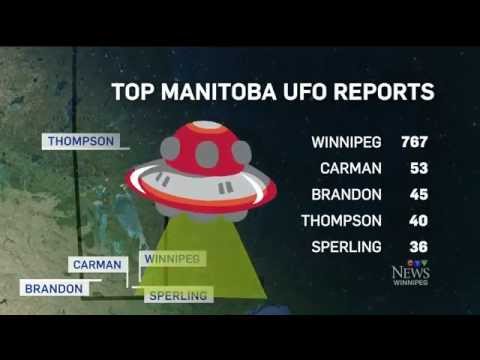
UFO hotbed: 200 years of sightings in Manitoba
CTV News report on Ufology Research's 200-year Manitoba sighting database, detailing Carman's 53 logged reports — the province's second-highest total, driven almost entirely by Charlie Redstar.
The Charlie Redstar UFO Incident Canada 1975
A dedicated case overview covering the wave's timeline, witness accounts, and its place in Canadian UFO history.
UFO - Manitoba, Canada 1975 "Charlie Redstar"
A further case overview summarizing the wave's key sightings and its unusual scale relative to most single-community UFO flaps.
Sources
- Cameron, Grant. Charlie Red Star: True Reports of One of North America's Biggest UFO Sightings, Dundurn Press, 2017.
- Rutkowski, Chris. "Charlie Redstar and Friends," in Unnatural History: True Manitoba Mysteries, Chameleon Publishers, 1993.
- Rutkowski, Chris. "50 Years Ago: Canada's 'Summer of UFOs,'" Substack, 2025. chrisrutkowski.substack.com
- CBC News. "UFO sightings in Manitoba date back to 1792." cbc.ca
- Fireside Canada. "Charlie Redstar: Manitoba's Friendly UFO," podcast episode. firesidecanada.ca
- Manitoba News 101 / Carman-Dufferin Standard. "Carman marks 50 years since famous Charlie Redstar UFO sightings." mbnews101.ca
- Manitoba News 101 / Carman-Dufferin Standard. "Fifty years have passed since Charlie Red Star phenomenon in 1975." mbnews101.ca
- PembinaValleyOnline.com. "Charlie Redstar returns: Carman's Table for 300 lands August 8th." pembinavalleyonline.com
- PembinaValleyOnline.com. "Aliens, costumes, and community spirit on full display for Charlie Redstar-themed dinner." pembinavalleyonline.com
- Openminds.tv. "The Top 10 Strangest Canadian UFO Reports." openminds.tv
- Believing the Bizarre (podcast). "Charlie Red Star: The Canadian UFO," Ep. 84. believingthebizarre.com
- First Comics News. "Rich Reviews: Charlie Red Star" (review of Grant Cameron's book). firstcomicsnews.com
- Ufology Research (Winnipeg). 200-year Manitoba UFO sighting database, cited via CBC News coverage of Manitoba's UFO reporting history.
- Manitoba Historical Society. "Memorable Manitobans: Robert Edward 'Bob' Diemert (1938–2024)." mhs.mb.ca
- CBC News. "Famed Manitoba aviator Bob Diemert remembered as a pioneer who 'never stopped dreaming.'" cbc.ca
- NBC News (Space.com wire report). "Venus to make a dramatic exit off sky stage" (period astronomical circumstances of Venus's 1975 evening apparition). nbcnews.com
- Rutkowski, Chris A. & Dittman, Geoff. The Canadian UFO Report: The Best Cases Revealed, Dundurn Press, 2006.
- Rutkowski, Chris A. Canada's UFOs: Declassified, Dundurn Press, 2019.
- Vallee, Jacques. Passport to Magonia: From Folklore to Flying Saucers, Regnery, 1969.
- Hendry, Allan. The UFO Handbook: A Guide to Investigating, Evaluating, and Reporting UFO Sightings, Doubleday, 1979.
- Library and Archives Canada. "Canada's UFOs: The Search for the Unknown," official declassified UFO document database. collectionscanada.gc.ca
- Pacific Wrecks. "Robert Diemert — Early Warbird Restoration and Japanese Aircraft Recoveries." pacificwrecks.com
See something inaccurate? Have additional information or sources?
Suggest an Edit →Last Updated: August 2026