
El Bosque Air Base UFO Video
During a Chilean Air Force change-of-command ceremony at El Bosque Air Base in Santiago, seven attendees independently filmed a jet flyover — and one of them, reviewing his footage afterward, spotted a metallic, dome-shaped object weaving between the formations at extreme speed. Chile's official UAP investigative body, CEFAA, opened a formal technical review; a decade later, its own analysts remain split on whether the object was ever more than an insect near the lens.
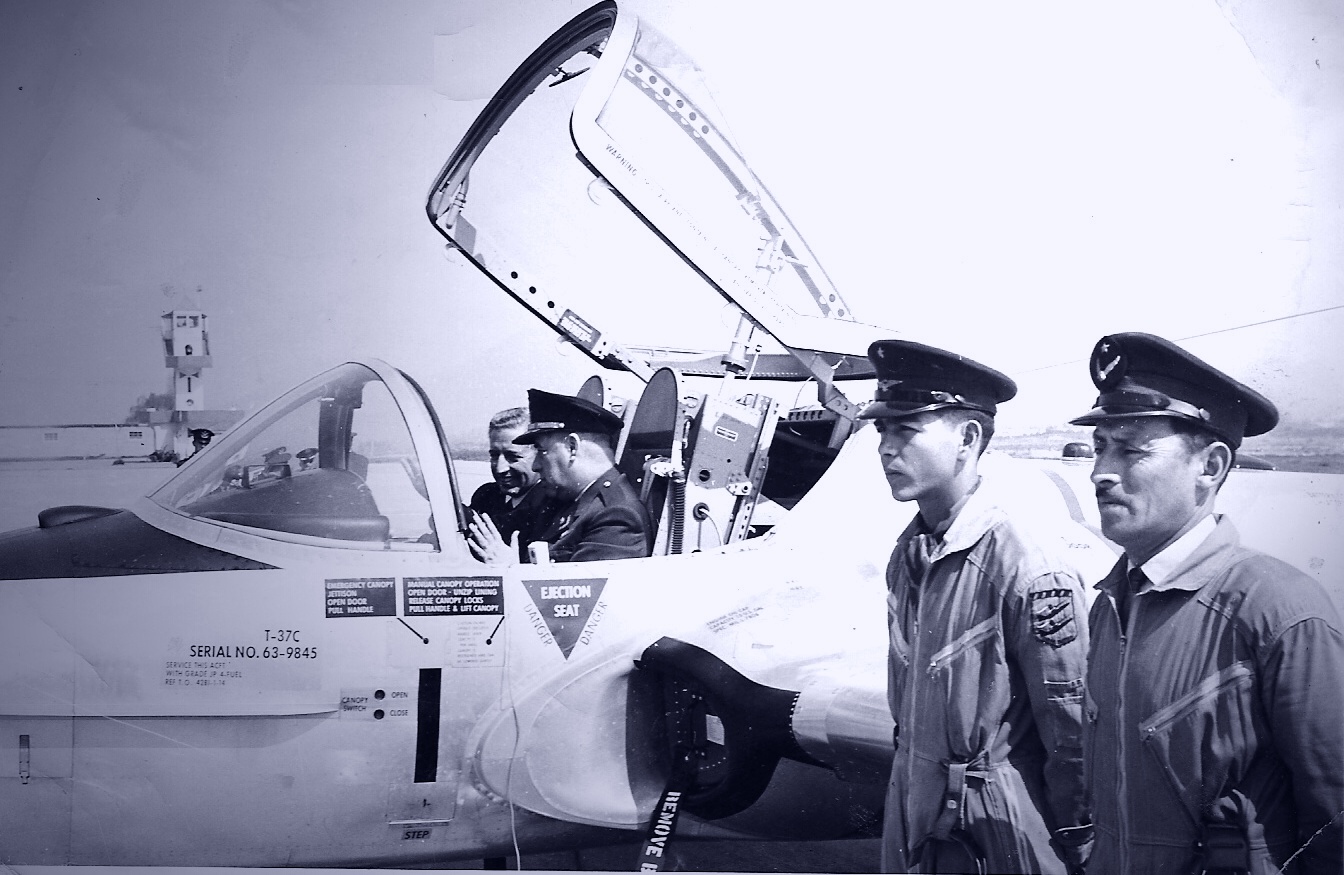
Pictured: Base Aérea El Bosque, Santiago, Chile, photographed circa 1965 — the same Chilean Air Force installation where the 2010 ceremony and filming took place, not a frame from the actual UFO video itself. No rights-clear frame of the 2010 footage or contemporary (2010-era) photograph of the base is known to be freely licensed; CEFAA's own analyzed stills remain within its archival case file rather than published under an open license.
Theoretical Alignment
The case aligns only weakly with the Extraterrestrial Hypothesis: nothing in the record establishes the object's distance, so its apparent "impossible" speed and maneuvering cannot be verified as more than an artifact of scale ambiguity. It aligns more strongly with a Psycho-Social framing in the broad sense used by skeptical analysts — not that witnesses were psychologically unreliable (nobody consciously witnessed anything at the time), but that an ambiguous, low-resolution video artifact was retrospectively assembled into a structured narrative of an "impossible flying craft" once it reached a receptive institutional and media audience. CEFAA's own director never endorsed an extraterrestrial interpretation, only an "unidentified" one.
Background
Chile's government has maintained a formal, standing UAP-investigation office longer than almost any other country. The practice traces to late March and early April 1997, when residents of the northern city of Arica reported unexplained moving lights in the night sky over three consecutive days — sightings independently corroborated by control-tower personnel and the head of Arica's Chacalluta Airport, and widely covered in the Chilean press at the time. That episode, combined with a smaller run of reports published in 1996, created what DGAC's own retrospective materials describe as "a favorable scenario" for the government to formally institutionalize its response. On October 3, 1997, DGAC Director General Gonzalo Miranda Aguirre signed Resolution No. 01599 formally establishing the Comité de Estudios de Fenómenos Aéreos Anómalos (CEFAA) — the Committee for the Study of Anomalous Aerial Phenomena — building on an even earlier, less formal precedent: a 1968 "Commission for the Study of Unidentified Space Phenomena" led by Col. Sergio Bravo Flores out of Chile's old Meteorological Office. CEFAA's founding charter describes its mission in explicitly aviation-safety terms: to "record and analyze all relevant reports concerning UAP...on the basis of a serious, objective and scientific analysis," with the goal of determining whether reported phenomena pose any risk to Chilean air operations, not to adjudicate their ultimate origin.
Ricardo Bermúdez Sanhueza, a retired Chilean Air Force brigadier general, served two separate terms as CEFAA's director: an initial term from 1998 to 2002, and a second, longer term from 2009 to 2016 that encompassed both the El Bosque case and, four years later, the higher-profile 2014 Chilean Navy helicopter FLIR video. By the time of the El Bosque incident, CEFAA had already built a working relationship with the Chilean armed forces as a credible, government-chartered clearinghouse for aviation-relevant anomaly reports — a reputation that lent the case unusual institutional weight the moment Bermúdez chose to present it publicly.
The incident itself occurred at one of the Chilean Air Force's most significant recurring public events: the annual change-of-command ceremony (cambio de mando) marking a new Commander-in-Chief of the Fuerza Aérea de Chile (FACh). On November 5, 2010, at El Bosque Air Base in southern Santiago, Gen. Jorge Rojas Ávila formally assumed the post from outgoing commander Gen. Ricardo Ortega Perrier, in a ceremony attended by Chilean President Sebastián Piñera and the commanders of Chile's other armed services. (Several Chilean outlets — Emol, SoyChile, and MegaNoticias among them — report the ceremony as having occurred on November 4, 2010; the November 5 date is independently corroborated by Gen. Rojas Ávila's own military service record, which documents his promotion to General del Aire and formal appointment as Commander-in-Chief on that date, and by the timestamp embedded in period video re-uploads of the footage. This file uses November 5 as the primary date while noting the one-day discrepancy in contemporaneous Chilean press coverage.) As is customary for the ceremony, the event included a flyover and aerobatic display by three separate FACh formations: the Halcones aerobatic demonstration team, a group of F-5 Tigre III fighters, and a group of F-16 fighters.
Complete Timeline
| Date | Event |
|---|---|
| Oct 3, 1997 | CEFAA is formally established by DGAC Resolution No. 01599, building on a 1968 precursor body, giving Chile one of the world's longest-running official government UAP-investigation offices. |
| 1998–2002 | Ricardo Bermúdez serves his first term as CEFAA director. |
| 2009 | Bermúdez returns as CEFAA director for a second term, lasting until 2016 — the tenure spanning both the El Bosque and 2014 Navy helicopter cases. |
| Nov 5, 2010 | The FACh change-of-command ceremony for incoming Commander-in-Chief Jorge Rojas Ávila is held at El Bosque Air Base, attended by President Sebastián Piñera; seven attendees independently film the accompanying Halcones/F-5/F-16 flyover on personal cameras. |
| Days after Nov 5, 2010 | An unnamed engineer at the adjacent ENAER "Pillán" aircraft plant, reviewing his own footage in slow motion while looking for a usable still frame, notices an anomalous object crossing through the jet formations and alerts CEFAA. |
| 2010–2011 | CEFAA assembles a multidisciplinary review team — aeronautical experts, Air Force/Army photogrammetric technicians, and digital-imaging analyst Alberto Vergara — and begins processing the submitted videos using MATLAB-based digital image analysis, RGB channel separation, and motion-compensation techniques. |
| Feb 22–26, 2012 | Bermúdez presents the El Bosque case publicly for the first time, at the International UFO Congress in Phoenix, Arizona — roughly sixteen months after the incident. |
| Mar 2012 | Journalist Leslie Kean publishes the case in English via HuffPost; Chilean outlets Emol, SoyChile, and MegaNoticias report on Bermúdez's presentation domestically. |
| Mar–Apr 2012 | Skeptical rebuttals follow in quick succession from astronomer Tim Printy (via IBTimes UK), neurologist Steven Novella (NeuroLogica blog), and writer Robert Sheaffer (Bad UFOs blog). |
| Apr 2012 | Kean's HuffPost follow-up, "Getting the Bugs Out," publishes consulting-entomologist assessments from Jason Dombroskie (Cornell), Brett Ratcliffe (University of Nebraska), and Elizabeth Arias (Chile). |
| Nov 2012 | Bruce Maccabee and Richard Haines independently publish competing technical reports reaching opposite conclusions on whether the two most-examinable videos captured the same object at the same instant. |
| Oct 2021 – Jan 2022 | DGAC reorganizes CEFAA into SEFAA (Sección de Estudios de Fenómenos Aéreos Anómalos); no subsequent official reclassification of the El Bosque case has been published under either name. |
The Change-of-Command Ceremony at El Bosque
The FACh change-of-command ceremony is one of the Chilean Air Force's largest annual public events, typically held at an active FACh installation and structured around a formal transfer-of-authority address followed by a flying display intended to showcase the service's current fighter and aerobatic inventory. The November 5, 2010 ceremony followed this pattern closely: after Gen. Jorge Rojas Ávila formally received command from his predecessor in front of assembled dignitaries, three FACh formations performed a scheduled flyover in sequence — first the Halcones aerobatic demonstration team, then a formation of F-5 Tigre III fighters, then a formation of F-16 fighters. President Sebastián Piñera, who had taken office earlier that year, attended along with the commanders-in-chief of Chile's Army and Navy, giving the event a level of high-level government presence that later lent Bermúdez's public presentation of the case unusual credibility — the object, whatever it was, passed through the same airspace occupied by a sitting head of state and the country's senior military leadership, none of whom appear to have noticed anything unusual in real time.
That last point is important to the case's overall evidentiary profile. Despite a crowd that reportedly numbered in the hundreds, equipped with an unknown but almost certainly much larger number of personal cameras beyond the seven that were later specifically identified, not a single named individual has ever come forward describing having consciously seen an anomalous object cross the sky during the ceremony itself. Every account of the object's existence originates from footage reviewed after the fact — a pattern that both proponents and skeptics of the case agree on, even as they draw very different conclusions from it.
El Bosque Air Base was a fitting venue for a display of FACh's frontline inventory, given its own institutional pedigree. The Halcones aerobatic team, founded in 1981, had by 2010 transitioned from its original Pitts biplanes through German-built Extra 300 and Extra 300L monoplanes (adopted in 2003), the aircraft it was almost certainly flying at the ceremony. The F-5 Tigre III fighters in the flyover represented one of El Bosque's own signature programs: in 1990, at the base's own International Air Fair (FIDA), FACh announced a joint venture with Israel Aerospace Industries (IAI), Chile's own ENAER, and ENAER subsidiary DTS to upgrade its aging F-5E/F Tigre II fleet to Tigre III standard, adding Elta ELM-2032 radar and Elbit DASH helmet-sighting systems; the first upgraded aircraft were formally delivered to the FACh at El Bosque itself on December 15, 1993. The F-16s, the newest aircraft in the formation, were part of a fleet of 18 ex-Royal Netherlands Air Force F-16 AM/BM Block 15 aircraft acquired by Chile and delivered between 2006 and 2007, supplementing a smaller number of new-build F-16 C/D Block 50 airframes purchased directly from Lockheed Martin. ENAER's own "Pillán" plant — where the anomaly would be discovered days later — had itself been founded at El Bosque under Law No. 18,297 in 1984, rolling out the first Chilean-built T-35 Pillán trainer at a ceremony on the same base on March 8 of that year. In other words, the object crossed through formations flown by units and aircraft whose own institutional history was deeply intertwined with the very base where the footage was recorded.
Seven Cameras, One Anomaly
According to CEFAA's own account, corroborated independently across Chilean press coverage (Emol, SoyChile, MegaNoticias) and Leslie Kean's original HuffPost reporting, seven separate attendees recorded video of the flyover from different vantage points around the base using personal cameras and camcorders. None of the seven appear to have been professional photographers or credentialed journalists assigned to cover the event; all were described only generically as spectators or ceremony attendees, and none of their names have been made public in any source reviewed for this file.
The anomaly was not discovered at the ceremony but days later, when an engineer employed at the ENAER "Pillán" aircraft-manufacturing plant — located immediately adjacent to El Bosque Air Base and itself part of Chile's state aerospace industry — reviewed his own footage in slow motion, reportedly while looking for a single clean still frame suitable for a keepsake or informal poster image. In that frame-by-frame review he noticed a small, distinct object crossing rapidly through the F-5 formation that had not been visible to him or apparently to anyone else at normal playback speed. He alerted CEFAA, which then solicited the other six attendees' recordings in an attempt to determine whether any of them had independently captured the same object. Of the seven, CEFAA's own presentation materials indicate that only two cameras were positioned closely enough together — an estimated 20 to 30 feet apart — to make any attempt at cross-camera triangulation meaningful; the remaining five clips, some apparently recorded on cell phones of the era, were either lower quality, from angles that did not usefully overlap, or were not made fully available for outside technical analysis.
CEFAA's Formal Investigation
Once CEFAA determined the footage merited formal review, Bermúdez assembled what HuffPost's reporting described as a multidisciplinary team of "scientists from many disciplines, aeronautical experts, and Air Force/Army photogrammetric technicians." The stated purpose was narrow and consistent with CEFAA's founding charter: to determine, as objectively as possible, what the object in the footage was and whether it represented any hazard to the aircraft involved in the flyover — not to establish an extraterrestrial or otherwise exotic origin.
Methodology and the Vergara Analysis
CEFAA's own presentation materials on the case — a technical slide deck titled "CEFAA: Caso El Bosque," later made publicly available online — describe a methodology built around then-current digital image processing tools: scene mapping to reconstruct camera positions, aircraft flight paths, and the object's apparent position in three-dimensional space; frame-by-frame visible-spectrum analysis; RGB channel separation and equalization to enhance contrast against the sky background; and motion-compensation techniques to correct for camera shake, all processed using MATLAB R2010a. The deck states that the resulting conclusions were subsequently reviewed by unnamed international analysts, who are described as having "confirmed the national conclusions." Digital-imaging analyst Alberto Vergara, quoted in Kean's original HuffPost reporting and independently referenced in Robert Sheaffer's critical follow-up, concluded the object "moved at a speed far superior to any flying object of known manufacture." CEFAA's own slide deck attributes a similar judgment to an unnamed astronomer advisor on its scientific committee, describing the object as "a solid object that reflected sunlight and moved at great velocity, a maneuver that no known aircraft can perform." Notably, CEFAA's own materials explicitly caveat this conclusion as preliminary: the deck states that the findings presented "correspond to the preliminary investigation that CEFAA is analyzing and there is still no final opinion on the matter, leaving open the possibility of including new studies to clarify the phenomenon" — language that has never been superseded by a later, more conclusive CEFAA statement.
One internal inconsistency in the CEFAA slide deck is worth flagging directly: alongside its "Nov. 05, 2010" analysis-date label, one slide separately states the ceremony occurred "el 24 de junio del 2010" ("on June 24, 2010"). This figure does not match any other source consulted for this file, but it does exactly match the date of a different, genuinely-dated CEFAA case from the same year: DGAC's own 2019 official retrospective publication, Fenómenos Aéreos Anómalos y la Investigación Oficial en Chile, lists a case called "Alfa-Pelícano" — three separate flight crews reporting a fast-moving oval light over the Antofagasta and Metropolitan regions — dated precisely June 24, 2010. That same 70-page official DGAC retrospective, which catalogues CEFAA's "most relevant" studied cases from 1997 to 2018 and includes three other cases from 2010 alone (Alfa-Pelícano, the April 2010 "Copa 438" airliner sighting, and the September 2010 "Bandera" photographs), does not list El Bosque among them at all — despite Bermúdez's public presentation of the case and its wide international press coverage. Whether this reflects a simple compilation error in the original slide deck (text from an unrelated case bleeding into the El Bosque presentation) or a genuine gap in which El Bosque case never received a permanent case-file number in CEFAA's own official archive, the case's absence from the agency's own curated retrospective is a real, documented fact worth weighing alongside Bermúdez's public statements.
Speed estimates attributed to the analysis vary somewhat depending on the source: Kean's HuffPost reporting cites an estimate of "4,000 to 6,000 mph" attributed to unnamed CEFAA-affiliated scientists, while Chilean outlets (Emol, SoyChile, MegaNoticias) and Antonio Huneeus's Open Minds coverage cite a figure of approximately 10,000 km/h (roughly 6,200 mph) — broadly the same order of magnitude once converted, though no single source ties a specific number directly to a named, on-the-record CEFAA official, and this file treats the figure as an approximate analyst estimate rather than a precisely calculated, agency-endorsed value. All sources agree the object was reported to make three separate elliptical passes near the Halcones, F-5, and F-16 formations within a span of seconds, executing what CEFAA's materials describe as a "risky maneuver" relative to the Halcones squadron, and that no sound was audible on any of the recordings despite the object's proximity, low altitude, and reported speed.
Bermúdez's Public Presentation
CEFAA did not release the case publicly until Bermúdez presented it at the International UFO Congress in Phoenix, Arizona, in late February 2012 — roughly sixteen months after the incident itself, and reportedly after the internal technical review had concluded. In his presentation and subsequent press statements picked up by Emol and SoyChile in Chile and by Leslie Kean internationally, Bermúdez stated plainly: "At this time, this incident cannot be scientifically explained. As agreed by those who have studied the videos, we can affirm that there is an unidentified aerial object present." He went on to frame the case in terms consistent with CEFAA's aviation-safety mandate rather than any exotic-origin claim, arguing that "scientists should take the subject seriously" because of a "moral duty to investigate something that somehow could affect — one way or another — the lives of many people around the world." Later, after the competing Maccabee and Haines reports were published in November 2012, Bermúdez told reporters the objects "did not appear to be bugs, but we can't be 100 percent sure; it's still under investigation" — a formulation notable for stopping well short of ruling out the insect hypothesis CEFAA's own critics had raised.
The Maccabee–Haines Dispute
The case's most technically substantive chapter came in November 2012, when two credentialed, independent analysts — working, by their own accounts, from largely the same underlying footage — published competing reports reaching opposite conclusions on the single question that mattered most: did the two most closely-spaced cameras (the pair positioned roughly 20 to 30 feet apart) capture the same object at the same instant?
Bruce Maccabee, a retired U.S. Navy optical physicist and longtime UFO photo-analysis specialist, authored a report titled "Analysis of 'UAP' Images in two Videos Obtained During the El Bosque Air Show of November 5, 2010." His central finding was that the two most-promising videos did not show the same object at the same time from their two respective camera positions — meaning no valid triangulation was possible to establish the object's true distance, and therefore its true size and speed, from the footage alone. Absent that proof of distance, Maccabee concluded the more parsimonious explanation was that the objects were small and near the camera — his working estimate placed a candidate object at roughly two feet from the lens, traveling at an estimated 12 mph, consistent with an insect (he specifically raised ladybugs as a plausible candidate) rather than a large, distant craft. His report's own words captured the logic precisely: "Without further information that would show the objects were distant and hence large, it must be considered most likely that the objects were small and nearby such as insects."
Richard Haines, NARCAP's founder and chief scientist and a former NASA Ames research psychologist specializing in aviation visual perception, reached the opposite conclusion in a roughly 108-page report titled "The El Bosque Video Case: A Preliminary Study of Anomalous Objects in Active Airspace." Haines argued that at least one of the recorded objects was captured by two separated cameras simultaneously, writing that the evidence supporting this reading meant "at least one of these UAP was not a flying insect near the cameras." He pointed to the objects' high angular velocities, sharp apparent focus, and consistent oval shape across frames as characteristics he judged inconsistent with a nearby insect's typically blurred, erratic flight signature — while stopping short of offering any positive identification of what the object actually was.
Neither analyst has since revised his position, and no independent third-party review has definitively resolved the dispute. The disagreement is not a matter of one analyst being more rigorous than the other — both applied established photo-analysis methodology — but of a genuinely ambiguous underlying dataset that, in Sheaffer's later, more pointed characterization, was never fully released by CEFAA for outside verification in the first place, leaving even credentialed analysts to work from incomplete source material.
The Insect Hypothesis and Entomological Consultation
Because Maccabee's analysis raised the insect hypothesis as a specific, testable claim, Kean's HuffPost reporting followed up by consulting professional entomologists on whether the object's appearance and flight behavior were consistent with a flying insect near a camera lens. The results, published in an April 2012 HuffPost piece titled "Update on Chilean UFO Videos: Getting the Bugs Out," were notably hedged rather than a clean confirmation or refutation.
Jason Dombroskie, an entomologist at Cornell University, said of the insect hypothesis: "It's possible, but I would be very surprised," noting that beetles — among the more common candidates for a dark, rounded flying insect — are comparatively slow fliers and would typically register on video as more blurred than the sharply-defined object shown. Brett Ratcliffe of the University of Nebraska, after consulting colleagues in his own department, reported: "No idea what it is but it does not seem to be an insect," adding that none of the colleagues he consulted had any alternative identification to offer either. Elizabeth Arias, a Chilean beetle specialist consulted directly given the case's local origin, wrote: "I would say they were not insects," explaining that flying beetles typically present a distinctive torpedo-like silhouette with visible wing motion in video, a profile she did not see reflected in the footage she was shown.
Taken together, the three consulted entomologists leaned against the insect hypothesis without fully closing the door on it — a genuinely inconclusive result rather than a decisive rebuttal of Maccabee's analysis, since all three were working from the same limited video excerpts rather than the full raw footage, and none claimed certainty. Their hedged skepticism toward the insect explanation is one of the stronger pieces of evidence cited by the case's proponents; it is also, notably, not the same as an affirmative identification of anything else.
The Broader Skeptical Response
Steven Novella, a Yale University neurologist and the writer behind the NeuroLogica blog, published one of the case's most widely circulated skeptical rebuttals in March 2012. Novella argued that the video, stripped of its surrounding narrative, showed only "a small black splotch" against the sky with no usable reference for scale, distance, or speed, and that the most economical explanation remained a bug flying close to the lens: "it's a small black smudge flying around like an insect." He was sharply critical of Leslie Kean's framing of the case, characterizing the broader promotion of El Bosque as illustrative of "a massive disconnect between what scientists consider good evidence and UFO proponents believe is good evidence," and argued the case demonstrated how "a bug flying around a camera" could be transformed, through selective presentation, "into an unexplainable encounter with an impossible flying craft."
Robert Sheaffer, writing on his Bad UFOs blog in April 2012, made a related but distinct argument, focused less on entomology and more on the case's underlying methodology and data transparency. He argued the object was "probably a fly," directly criticized Alberto Vergara's "far superior to any flying object of known manufacture" speed characterization as resting on an unstated and unjustifiable assumption about the object's distance from the camera — noting dryly that a claimed expert's authority does not itself resolve a basic problem of physics — and criticized CEFAA specifically for declining to release the complete raw video files that would have allowed fully independent analysis, arguing this made it difficult for outside skeptics to be faulted for drawing conclusions from necessarily incomplete material.
Tim Printy, an astronomer and the editor of the skeptical newsletter SUNlite with roughly three decades of UFO-case review experience, offered a more measured but still doubtful assessment, quoted in IBTimes UK's coverage: "I am very skeptical of this story the more I read it. There are no high-quality videos available, and the frame grabs/brief clips I have seen appear to be vague and indistinct." Printy raised birds, insects, and small Mylar balloons as alternative candidates while explicitly acknowledging the available material was insufficient to reach a firm conclusion either way — a notably more cautious posture than either Novella's or Sheaffer's confident insect attribution.
CEFAA's Institutional Standing and the Case's Unresolved Status
CEFAA operated for roughly a quarter-century as Chile's sole official government body tasked with investigating anomalous aerial phenomena, a mandate unusual in scope and longevity compared to most other countries' equivalent efforts. In October 2021, DGAC reorganized the office administratively, and by a formal announcement in early 2022 it was renamed SEFAA — the Sección de Estudios de Fenómenos Aéreos Anómalos — continuing under DGAC's Communications Subdepartment with an unchanged core mission of supporting Chilean aviation safety through scientific review of reported anomalies. As of a recent public DGAC accounting, the office's cumulative case log stood at roughly 1,286 total reports received, of which approximately 644 had been formally classified as explained and 21 as unexplained — figures that illustrate CEFAA/SEFAA's general practice of resolving the substantial majority of the cases it reviews, which makes El Bosque's persistence in an unresolved, preliminary status over more than a decade a genuine outlier within the agency's own institutional track record, rather than the norm.
No official CEFAA or SEFAA statement locatable in the public record has ever formally closed the El Bosque case, reclassified it as explained, or withdrawn Bermúdez's original 2012 characterization that "this incident cannot be scientifically explained." At the same time, no follow-up CEFAA statement has affirmatively endorsed an exotic origin either, and the agency's own presentation materials explicitly describe the case's findings as preliminary. The result is a case that sits, by the investigating agency's own account, in the same unresolved state it occupied within months of its 2012 public disclosure — neither confirmed as anomalous nor conventionally explained to CEFAA's own institutional satisfaction.
Key Witnesses
Unnamed ENAER "Pillán" Plant Engineer
An engineer employed at the ENAER aircraft-manufacturing plant adjacent to El Bosque Air Base, who first noticed the anomalous object while reviewing his own ceremony footage in slow motion, reportedly while searching for a single clean still frame. His discovery, days after the ceremony itself, is the sole origin point of the entire case; his identity has never been made public in any source reviewed for this file.
Brig. Gen. (Ret.) Ricardo Bermúdez Sanhueza
The founding-era director of Chile's official UAP investigative body, who oversaw the multidisciplinary technical review of the seven El Bosque videos and personally unveiled the case publicly at the 2012 International UFO Congress in Phoenix, Arizona, stating the incident "cannot be scientifically explained" while later acknowledging under pressure from competing analyst reports that the case "remains unsolved."
Bruce Maccabee
A veteran UFO photo-analysis specialist who concluded, after his own technical review of the two most examinable El Bosque videos, that they did not show the same object simultaneously — ruling out triangulation and leading him to judge the object most likely a small, nearby insect rather than a large, distant craft.
Richard F. Haines
NARCAP's founder, who authored a competing 108-page technical study concluding the two closest El Bosque cameras likely captured the same object at the same instant, and that the object's flight characteristics were inconsistent with a nearby flying insect — while stopping short of proposing any positive alternative identification.
The Five Observables Assessment
The Five Observables framework is applied to the performance characteristics reported in this case. Because the entire evidentiary record consists of ambiguous, unscaled consumer video rather than instrumented performance data, most categories can be assessed only speculatively, and the assessment below reflects that fundamental limitation rather than confirmed extreme performance:
Assessment: Hypersonic velocity and instant acceleration are rated speculative rather than present, because the case's own central unresolved dispute — whether the object was distant and large or nearby and small — means the reported "4,000–10,000 km/h" speed figures are entirely dependent on an unproven distance assumption; if Maccabee's near-lens-insect reading is correct, the true airspeed was on the order of a few miles per hour, not thousands. Anti-gravity lift is rated speculative for the same reason: CEFAA's analysts describe "impossible" maneuvering, but no independently verified scale reference exists to confirm the object was performing genuine aerodynamic maneuvers at all, rather than simply drifting on ordinary air currents at close range. Low Observability is rated absent — the object was fully visible in ordinary daylight video by seven separate cameras, the opposite of a low-observable signature. Trans-Medium travel is rated absent; no account of the case describes any transition between air, water, or space. In short, El Bosque is not a case that can affirmatively demonstrate any of the Five Observables; its entire "anomalous performance" narrative rests on an unresolved question of scale that neither CEFAA nor its outside analysts have ever definitively settled.
Evidence Assessment
Supporting Anomalous Origin
- Chile's official government UAP investigative body (CEFAA), staffed by credentialed aeronautical and photogrammetric experts, formally reviewed the footage and publicly stated the object "cannot be scientifically explained."
- Three independent entomologists consulted specifically on the insect hypothesis each expressed doubt that the object was an insect, without fully ruling it out.
- NARCAP founder Richard Haines, a credentialed aviation-perception researcher, concluded the two closest cameras likely captured the same object simultaneously, which would rule out a simple near-lens artifact.
- The event occurred in the presence of Chile's sitting president and senior military leadership, at an active, security-conscious military installation, lending institutional seriousness to CEFAA's decision to investigate at all.
- The object reportedly made three coordinated passes near three separate aircraft formations, a pattern some analysts have characterized as more purposeful than random insect flight.
Supporting Conventional Explanation
- Retired Navy physicist Bruce Maccabee's own technical analysis found the two most examinable videos did not show the same object simultaneously, undermining the triangulation needed to establish the object was large and distant rather than small and near the lens.
- No source provides any scale reference, exact object dimension, or verified distance measurement — the single most consequential missing data point in the entire case.
- Not one of the hundreds of ceremony attendees, including the sitting president and senior military officers, reported consciously observing anything unusual in real time; the object exists solely as a retrospective video-review artifact.
- CEFAA never released its complete raw video files for fully independent outside verification, a transparency gap skeptics argue makes the case's "unexplained" status less meaningful than it appears.
- Multiple credentialed skeptics (Novella, Sheaffer, Printy) independently arrived at a mundane near-lens artifact (insect, bird, or debris) as the most parsimonious explanation using standard photo-analysis reasoning.
Why "Disputed"
El Bosque earns a Disputed rating because it combines genuine institutional weight with an unresolved, credentialed technical dispute that neither side has been able to close. On one hand, this is not a fringe claim: it was formally investigated by a government agency with a quarter-century of institutional standing, using a documented, semi-quantitative digital-analysis methodology, and its director never walked back his 2012 statement that the incident "cannot be scientifically explained." On the other hand, the case's single most consequential technical question — whether the two closest cameras captured the same object simultaneously, which would establish it as large and distant rather than small and near the lens — produced flatly opposite conclusions from two credentialed, independent analysts (Maccabee and Haines) working from the same underlying footage, and CEFAA's own presentation materials describe its findings as preliminary rather than final. No live witness, including the country's president and most senior military officers standing in the same airspace, ever reported seeing anything unusual in real time; the object exists only as a retrospective discovery in ambiguous, unscaled consumer video that CEFAA has never fully released for independent replication. That combination — real institutional investigation, a genuinely contested and unresolved core technical dispute, and a class of evidence (unscaled video) with a well-documented history of insect and debris misidentification — places El Bosque squarely in Disputed territory rather than Credible or Debunked.
Sensor & Instrumentation Detection Profile
The only sensor evidence in the case is conventional consumer video: seven separate camera or camcorder recordings made by ceremony attendees at El Bosque Air Base, none of which were purpose-aimed at the object (all were filming the scheduled jet flyover). No radar, infrared, or purpose-built military sensor data exists for this case — a significant contrast with Chile's later, more heavily instrumented 2014 Chilean Navy helicopter FLIR video, also investigated by Gen. Ricardo Bermúdez's CEFAA. Of the seven videos, CEFAA's own presentation materials indicate only two were positioned closely enough (roughly 20–30 feet apart) to permit any attempt at cross-camera triangulation; the other five, several apparently recorded on cell phones, were not made available for full independent technical analysis.
Environmental & Geospatial Context
El Bosque Air Base (formally the Escuela de Aviación Capitán Manuel Ávalos Prado) sits roughly 15 km south of downtown Santiago at approximately 562 meters elevation, in a dense urban commune bordered by the ENAER/Pillán aircraft-manufacturing plant where the anomaly was first noticed. Santiago's early-November climate falls in local mid-spring, typically dry with long daylight hours, consistent with an outdoor daytime ceremony; however, no contemporaneous meteorological report, cloud-cover record, or wind data specific to the morning of November 5, 2010 has been located in any source consulted for this file, and no source claims otherwise — this is a genuine, acknowledged gap in the public record rather than an assumed clear-sky day.
Observer Credibility & Occupational Profile
No named individual reported seeing the object with the naked eye during the ceremony itself; the anomaly exists solely as a retrospective discovery inside video recorded by ordinary spectators. The credibility weight in this case therefore rests almost entirely on the analysts who reviewed the footage afterward, and it is genuinely mixed: Gen. Ricardo Bermúdez was a career Chilean Air Force officer and the founding director of the government's official UAP investigative body; Bruce Maccabee was a retired U.S. Navy optical physicist with decades of photo-analysis experience; Richard Haines was a former NASA Ames research psychologist and founder of NARCAP, a nonprofit focused on aviation-safety-relevant UAP encounters. All three are credentialed, but Maccabee and Haines — working from ostensibly the same footage — reached opposite technical conclusions, which is itself the most informative fact about the reliability of the underlying video evidence.
Physical & Material Assays
No physical evidence of any kind exists in this case — no debris, no trace materials, no radar-cross-section data, and no instrument other than ordinary consumer cameras. This absence is itself informative: unlike ground-trace or crash-retrieval cases, El Bosque is a pure image-interpretation dispute, meaning its outcome depends entirely on resolving ambiguities in a handful of low-resolution video clips rather than on independently testable physical material.
Historical Precedents & Archive Matches
El Bosque is one of a small number of cases worldwide in which a national government's official UAP office conducted a multi-analyst technical video review and split internally over the result. Within CEFAA's own history it directly precedes the more heavily corroborated November 2014 Chilean Navy helicopter FLIR video, investigated by the same Bermúdez-led committee four years later. Methodologically, the case's central "is it an insect near the lens" dispute closely parallels the skeptical lens-reflection and pareidolia arguments raised against Turkey's multi-year Kumburgaz/Yeni Kent compound footage, another video-only case where credentialed skeptics and proponents reached opposite conclusions from the same recordings.
Material Analysis
El Bosque has no physical or trace evidence component of any kind — no recovered debris, no ground scarring, no metallurgical or isotopic samples, and no instrument readings beyond ordinary consumer video. This distinguishes it sharply from crash-retrieval or landing-trace cases in this catalogue and confines any material-evidence discussion to the video files themselves as digital artifacts. CEFAA's technical review treated the seven video files as the entirety of its evidentiary base, applying digital-forensic techniques (RGB channel separation, motion compensation, frame-by-frame enhancement) that are appropriate to image analysis but cannot substitute for independently testable physical material. No radiation readings, electromagnetic interference reports, or biological effects on witnesses were ever reported, because — consistent with the pattern throughout this case — no witness reported any conscious encounter with the object at all.
Supporting Non-Terrestrial Origin
- CEFAA's digital-imaging analysis concluded the object displayed metallic, light-reflective surface properties inconsistent with an insect or airborne debris fragment, per analyst Alberto Vergara's assessment.
- The object was reported to make three distinct, seemingly coordinated passes near three separate aircraft formations within seconds — a pattern some analysts read as more purposeful than the erratic flight typical of an insect.
Supporting Terrestrial Origin
- No physical sample, debris fragment, or instrument reading exists to test independently; every "material" conclusion derives entirely from interpreting compressed consumer video.
- Maccabee's triangulation failure means the object's true size can no longer be established from the surviving footage, which is consistent with a small, ordinary object (insect or windblown debris) passing very close to a single lens.
The Conventional Explanation Candidate: Insect or Airborne Debris Near the Lens
The leading conventional explanation, advanced most rigorously by Bruce Maccabee and echoed independently by Steven Novella, Robert Sheaffer, and (more cautiously) Tim Printy, holds that the object was a small insect, seed pod, or other airborne debris fragment passing within a few feet of one or more camera lenses. This explanation deserves serious evaluation because it directly addresses the case's single largest evidentiary gap: the total absence of any verified scale reference. A small object very close to a lens and a large object very far from it can produce visually similar footage — apparent size, apparent speed, and even apparent "impossible" maneuvering are all functions of assumed distance, and nothing in the surviving record independently fixes that distance for either of the two cameras Maccabee examined.
The Lens-Flare or Optical-Artifact Candidate
A related but distinct conventional candidate holds that the object was not a physical object at all, but a photographic or optical artifact — a lens flare, sensor dust smear, or compression artifact introduced by the consumer-grade cameras and codecs used in 2010. This explanation is weaker than the insect hypothesis on the specific evidence available: unlike a pure optical artifact, the object in the CEFAA-analyzed footage appears to track a consistent, physically plausible flight path relative to the jet formations across multiple frames, a behavior harder to reconcile with a static lens artifact than with a small object genuinely moving through the air near the camera. No source consulted for this file, proponent or skeptic, has argued strongly for a pure optical-artifact explanation over the insect/debris hypothesis, though it remains a theoretically available candidate given the absence of the full raw camera files for independent verification.
Conventional Aircraft, Bird, Meteor, or Space Debris
CEFAA's own multidisciplinary review explicitly considered and rejected several conventional aviation and astronomical candidates: a conventional aircraft (ruled out by the object's reported flight characteristics and its presence within active, controlled military airspace during a live flyover, where any additional aircraft would have been immediately conspicuous to controllers and pilots), a bird (ruled out by CEFAA's own analysts on the basis of the object's apparent surface reflectivity and flight profile, though this conclusion has not been independently re-verified outside CEFAA), and a meteor or re-entering space debris (ruled out on grounds of the object's low altitude, multiple discrete passes, and lack of any ballistic, decelerating trajectory consistent with atmospheric entry). This candidate is the weakest of the three: it fails to explain the case in the way both the anomalous-origin proponents and the insect-hypothesis skeptics agree it must be explained, since virtually no serious analyst on either side of the dispute has proposed a conventional aircraft, bird, meteor, or debris interpretation as more likely than either "insect near the lens" or "genuinely unidentified."
Insect or Airborne Debris Near the Lens
PlausibleDirectly addresses the case's central missing-scale-reference problem; advanced by a credentialed independent physicist (Maccabee) using standard triangulation-failure reasoning, and echoed by multiple other skeptical analysts, though not unanimously accepted even among skeptics and hedged against by three consulted entomologists.
Lens Flare or Optical/Compression Artifact
InconclusiveTheoretically available given 2010-era consumer camera and codec limitations, but weaker on the specific evidence than the insect hypothesis, since the object appears to track a consistent flight path across frames rather than behaving as a static artifact; no analyst on record has argued this is the leading explanation.
Conventional Aircraft, Bird, Meteor, or Space Debris
ImplausibleExplicitly considered and rejected by CEFAA's own review on the basis of flight profile, altitude, and trajectory, and not seriously advanced as an alternative by proponents or skeptics on either side of the case's actual central dispute.
Related Cases
Confirmed Documents & Official Records
CEFAA's own slide presentation on its El Bosque investigation, detailing camera positions, digital image-processing methodology, and its own explicit characterization of the findings as preliminary.
UNCLASSIFIED (public government record)The Chilean government's own official history of CEFAA/SEFAA, including its October 3, 1997 founding resolution and the leadership record covering the El Bosque investigation period.
UNCLASSIFIEDSearch Government Archives Directly
Further Reading — Recommended Literature
UFOs: Generals, Pilots, and Government Officials Go on the Record
Kean's own book predates her El Bosque reporting but lays out the investigative framework and government-credibility standard she later applied to the Chilean case, and remains the definitive introduction to her broader body of UFO journalism.
Bad UFOs: Critical Thinking About UFO Claims
Written by one of El Bosque's most vocal skeptics, this collection lays out Sheaffer's broader methodology for applying critical-thinking standards to UFO claims, directly relevant to his published critique of the CEFAA case.
Observing UFOs: An Investigative Handbook
NARCAP founder Richard Haines's foundational handbook on rigorous UFO photo and witness-report analysis, outlining the methodological approach he later applied in his competing El Bosque technical report.
Dimensions: A Casebook of Alien Contact
A broader scientific framework for evaluating anomalous aerial phenomena reports from a career investigator, useful context for understanding how a case like El Bosque fits into the wider landscape of officially-investigated UAP claims.
Ovnis desde Chile: La era contemporánea y el cambio de paradigma en el estudio de anomalías aéreas
A Chilean-authored survey of roughly twenty of the country's own officially studied UFO cases, providing essential domestic context for CEFAA's decades-long institutional investigative practice, including cases like El Bosque.
Essential Viewing
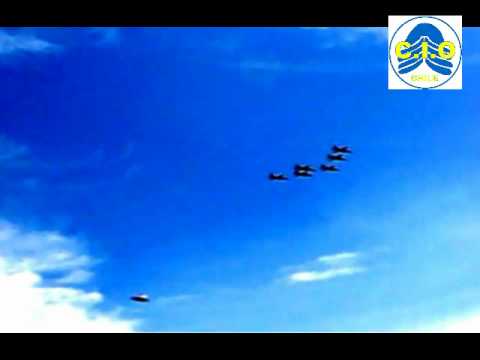
Caso Ovni FACH Base aérea de El Bosque
Corporación CIO's Spanish-language overview of the El Bosque case, presenting the analyzed footage and CEFAA's investigative framing directly.
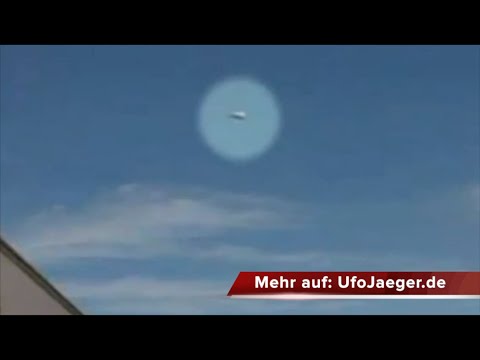
UFO Sichtung: El Bosque Air Force Base in Santiago, Chile 11-5-2010
A period compilation of the raw camera footage from the November 5, 2010 ceremony, whose title independently corroborates the case's date.
Sources
- Kean, Leslie. "The Extraordinary UFO Sighting at a Chilean Air Force Base." HuffPost, March 2012. huffpost.com
- Kean, Leslie. "UFO Video Filmed at Chilean Air Force Base Investigated by Government Committee." HuffPost, February 2012. huffpost.com
- Kean, Leslie. "Update on Chilean UFO Videos: Getting the Bugs Out." HuffPost, April 2012. huffpost.com
- Kean, Leslie. "Two New Reports on Chilean UFO Videos, and the Debate Continues." HuffPost, November 2012. huffpost.com
- "Presentan caso de supuesto ovni fotografiado desde Base Aérea de El Bosque." Emol, March 13, 2012. emol.com
- "General (r) de la FACh dijo que se avistó un ovni en la base aérea El Bosque." SoyChile, March 13, 2012. soychile.cl
- "Revelan caso de ovni avistado en base aérea El Bosque." MegaNoticias, 2012. meganoticias.cl
- Novella, Steven. "UFO Over Chilean Air Base." NeuroLogica Blog, March 16, 2012. theness.com
- Sheaffer, Robert. "Leslie Kean Update: The Fly Is Still Flying." Bad UFOs, April 14, 2012. badufos.blogspot.com
- Narayan, Praveen. "Extra-Terrestrial Visible in Air Force Show?" IBTimes UK, March 18, 2012. ibtimes.co.uk
- Huneeus, Antonio. "UFO Disclosure, Chilean Style." Open Minds, March 5, 2012. openminds.tv
- "Two New Reports on Chilean UFO Videos." The UFO Chronicles, November 15, 2012. theufochronicles.com
- CEFAA (Comité de Estudios de Fenómenos Aéreos Anómalos). "Caso El Bosque" [official technical presentation]. slideshare.net
- SEFAA (Dirección General de Aeronáutica Civil, Chile). "Historia" [official agency history]. sefaa.dgac.gob.cl
- SEFAA (Dirección General de Aeronáutica Civil, Chile). Official site. sefaa.dgac.gob.cl
- Dirección General de Aeronáutica Civil, Chile. "CEFAA: Un Modelo Investigativo de Fenómenos Aéreos Anómalos." dgac.gob.cl
- CEFAA / Dirección General de Aeronáutica Civil, Chile. Fenómenos Aéreos Anómalos y la Investigación Oficial en Chile [official digital publication], September 2019. dgac.gob.cl
- Dirección General de Aeronáutica Civil, Chile. "Con nuevo año, nuevos cambios: el CEFAA pasa a ser ahora SEFAA." dgac.gob.cl
- "Jorge Rojas Ávila." Wikipedia (Spanish). es.wikipedia.org
- "Base Aérea El Bosque." Wikipedia (Spanish). es.wikipedia.org
- Corporación CIO. "Caso Ovni FACH Base aérea de El Bosque" [video]. YouTube. youtube.com
- UFO Jäger. "UFO Sichtung: El Bosque Air Force Base in Santiago, Chile 11-5-2010" [video]. YouTube. youtube.com
See something inaccurate? Have additional information or sources?
Suggest an Edit →Last Updated: August 2026