
Hudson Valley UFO Wave
Beginning just before midnight on New Year's Eve 1982 in Kent Cliffs, New York, and continuing in waves through 1986 — with scattered reports into the 1990s — thousands of witnesses across the Hudson Valley reported an enormous, silent, V-shaped or boomerang-shaped formation of red, blue, green, and white lights moving slowly at low altitude, at times projecting a bright white beam toward the ground. Witnesses ranged from ordinary commuters on the Taconic State Parkway to a Yorktown police officer who watched it bank and speed off, and to a dozen armed security guards who watched it hover over the reactor domes of the Indian Point nuclear plant. Connecticut science teacher Philip J. Imbrogno, working with astronomer J. Allen Hynek and journalist Bob Pratt, logged more than 7,000 reports between 1982 and 1995 and co-authored the case's defining book, Night Siege. A credible, partially-confirmed conventional explanation — nighttime formation flying by small aircraft out of Dutchess County airports — accounts for at least some of the sightings, and Imbrogno's own credibility was seriously damaged in 2011 when his claimed academic and military credentials were exposed as fabricated. Both facts belong in the record alongside the case's genuine, large-scale, multiply-corroborated witness base.
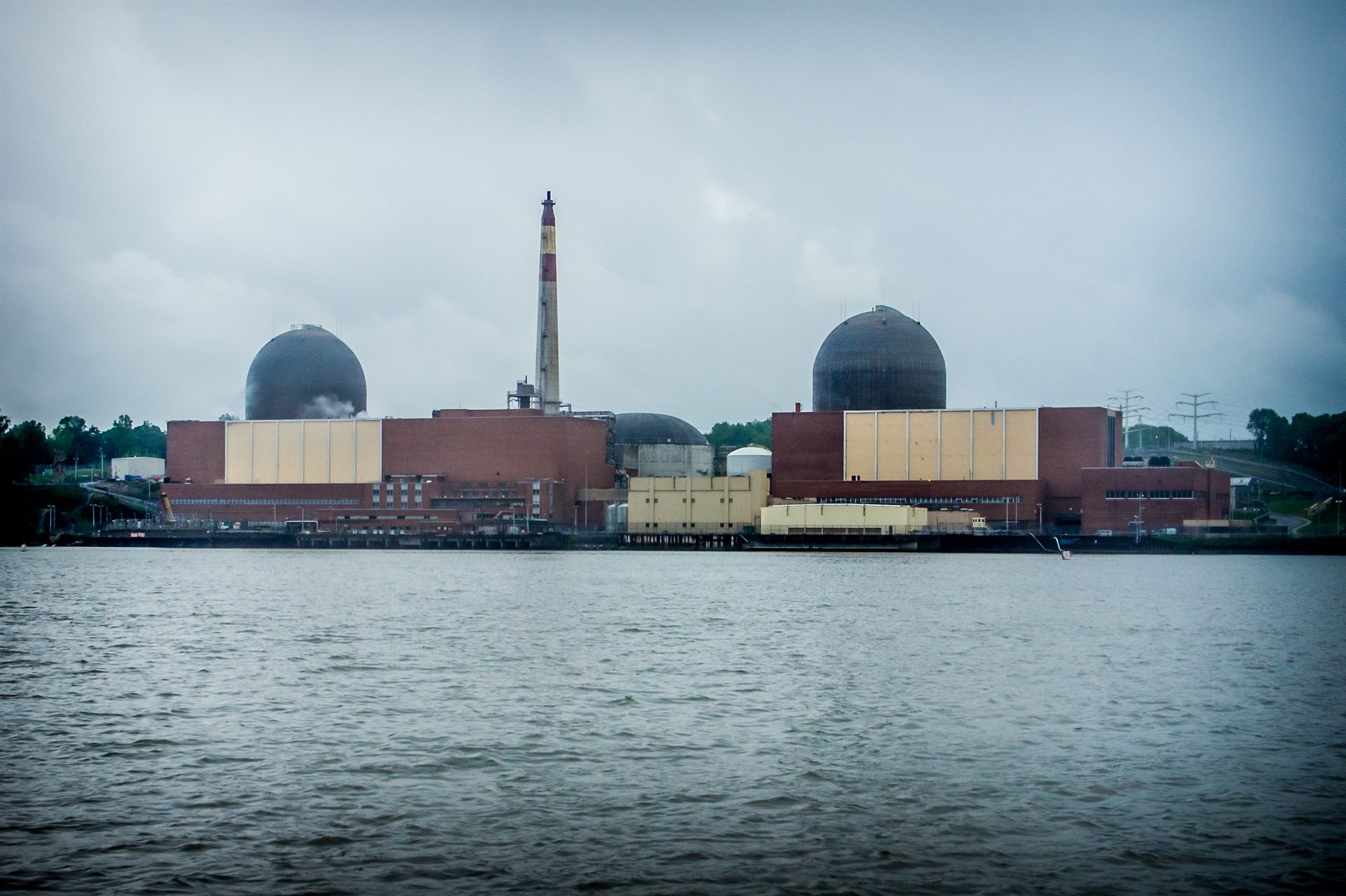
Pictured: the Indian Point nuclear power plant on the Hudson River in Buchanan, New York, photographed from the river in 2012 — not a photograph of the 1984 sighting itself. On the nights of June 14 and July 24, 1984, plant security guards reported a huge, silent, boomerang-shaped formation of lights hovering directly over this reactor complex. No verified photograph or film frame of the object itself, taken by any witness during the wave, is known to survive in a rights-clear, publicly available form; the amateur video shot by Bob Pozzuoli in nearby Brewster exists only as broadcast-quality dubs of unclear provenance.
Theoretical Alignment
Assessment: The Hudson Valley Wave is a poor fit for a single, clean hypothesis. A substantial share of the reports — likely a majority of the low-quality, distant, or brief sightings — plausibly reflects misidentified conventional light aircraft flying in loose or tight nighttime formation, amplified through 1983–1984 media coverage and copycat reporting, which is why the Psycho-Social/misidentification alignment scores highest here rather than a genuine belief-driven hallucination pattern. That still leaves a residue of detailed, close-range, and professionally-observed reports — Officer Kevin Soravilla's under-1,000-foot pass, the Indian Point security incidents, the original Kent Cliffs sighting — that are difficult to fully collapse into the aircraft explanation, which is why Extraterrestrial Hypothesis alignment is nonzero rather than dismissed outright. Interdimensional Hypothesis alignment is low; nothing in the core 1982–1986 record involves the entity contact, missing time, or dimensional-crossing elements IDH proponents typically invoke (those elements appear only in Imbrogno's much later, more speculative solo books, discussed below, which are treated separately from the core wave).
Background
By the early 1980s, the Hudson River Valley north of New York City had settled into a familiar suburban and exurban pattern: bedroom communities for Manhattan commuters spreading up the Taconic State Parkway corridor through Westchester, Putnam, and Dutchess Counties, interspersed with genuinely rural, hilly, and lightly-populated terrain, small general-aviation airports, reservoirs, and one large piece of federal-adjacent infrastructure, the Indian Point nuclear generating station on the river at Buchanan. Project Blue Book, the Air Force's official UFO investigation program, had been closed for over a decade, and the national UFO research infrastructure that existed by 1982 was almost entirely private and volunteer-run: the Center for UFO Studies (CUFOS), founded by former Blue Book scientific consultant J. Allen Hynek after his very public conversion from official skeptic to open-minded investigator, and smaller regional groups and individual field investigators scattered across the country.
One of those individual investigators was Philip J. Imbrogno, a public high school science teacher and amateur astronomer based in Greenwich, Connecticut, just across the state line from the Hudson Valley's eastern edge. Imbrogno had no official government or academic UFO-research affiliation when the wave began; his role grew organically out of local press coverage, as reporters and then police departments began referring panicked callers to him as someone locally known to take the subject seriously. That informal, ad hoc beginning — a single schoolteacher fielding a growing flood of phone calls with no formal funding, oversight, or peer review — is itself an important piece of context for how the case's investigative record grew, and for how much independent verification any single claim in that record can be assumed to have received before publication.
Complete Timeline
| Date | Event |
|---|---|
| December 31, 1982 (night) | Just before midnight, a retired police officer in Kent Cliffs, New York reports a massive, silent, V-shaped object outlined in colored lights — the traditionally cited first sighting of the wave. (A small number of secondary sources place a similar report a year earlier, in late 1981; the December 1982 date is the one most consistently corroborated across independent accounts and is used as this case's anchor date.) |
| March 17, 1983 | Putnam County government employee Dennis Sant reports a large, dark gray, metallic-looking object with iridescent lights near Brewster, New York — one of the first detailed, named reports on record. |
| March 24, 1983 | A major mass-sighting night. Police switchboards in Yorktown, Carmel, and surrounding towns log 300-plus calls in a matter of hours. On-duty Yorktown officer Kevin Soravilla watches a V-shaped light array pass under 1,000 feet over Route 118, bank roughly 45 degrees, and accelerate away; he radios Stewart Air Force Base and is told no C-5 transport was in the area that night. |
| March 26, 1983 | The sightings make front-page local news for the first time, in the Westchester-Rockland Daily Item and Port Chester-area papers, drawing wider public attention and more callers. |
| Spring–Fall 1983 | Philip Imbrogno establishes a witness hotline and begins systematically logging depositions; J. Allen Hynek and CUFOS become involved, and attorney Peter Gersten of Citizens Against UFO Secrecy (CAUS) begins soliciting and publicizing reports independently. |
| November 1983 | Regional papers including the Journal News (White Plains) cover the growing investigation as out-of-town UFO researchers begin visiting the area. |
| March 25, 1984 | A second major flap night falls on nearly the same calendar date as the 1983 peak, with an estimated 200–300 new witnesses. |
| June 11, 1984 | A V-shaped light formation is reported low over a New Castle town board meeting; a neighboring county airport is separately claimed to have logged an anomalous radar return the same night, though no radar tape or transcript has ever been produced to confirm it. |
| June 14, 1984 | Security guards at the Indian Point nuclear plant report a large, boomerang-shaped light formation over the reactor complex — the first of two incidents there that summer. |
| July 12 & 19, 1984 | Additional circular and V-shaped light formations are widely reported across Putnam and Dutchess Counties, drawing continued regional press coverage. |
| July 24, 1984 | Twelve Indian Point security guards watch a huge, silent, boomerang-shaped object hover directly over one of the reactors for roughly ten to fifteen minutes; guards report the plant's security console computer shutting down and a bright flash of light directed back at an officer who illuminated the object with a spotlight. The same night, Brewster resident Bob Pozzuoli captures amateur home video of a similar light formation. |
| August 1984 | The New York Times (reporter Jeffrey Schmalz) and Discover magazine (writer Glenn Garelik, published November 1984) both publish investigative pieces tracing a substantial share of the sightings to small aircraft flying in tight nighttime formation out of Stormville and Sky Acres airports; New York State Police Sergeant Kenneth V. Spiro is quoted describing the formation directly. |
| August 25, 1984 | The first public UFO conference in the region draws roughly 1,500 attendees and dozens of reporters to Brewster; J. Allen Hynek gives the keynote, calling the flap "a real mystery." |
| 1985 | Sighting frequency declines from its 1984 peak but continues at a reduced, sporadic rate across the region. |
| 1986 | J. Allen Hynek dies on April 27, 1986, before Night Siege is completed; Imbrogno and Pratt finish the manuscript, incorporating a transcribed Hynek witness interview. |
| 1987 | Night Siege: The Hudson Valley UFO Sightings, credited to Hynek, Imbrogno, and Pratt, is published by Ballantine Books, becoming the case's defining and most widely cited written record. |
| 1992 | NBC's Unsolved Mysteries airs a segment on the Hudson Valley sightings, dramatically re-enacting several witness accounts and introducing the case to a national television audience. |
| 1982–1995 | Imbrogno's ongoing tally, cited in his later writing and public appearances, reaches "more than 7,000" logged reports across the thirteen-year span — the figure most commonly cited for the case's total scale. |
| July 2011 | Researcher Lance Moody publicly demonstrates that Imbrogno's claimed University of Texas and MIT degrees, including a purported 2010 Ph.D. in theoretical chemistry from MIT, were fabricated, and that a separately claimed record of Green Beret special-operations service was also invented. Imbrogno withdraws from public UFO research shortly afterward. |
| 2021 | The Pine Bush UFO & Paranormal Museum opens in nearby Pine Bush, New York, cementing the wave's lasting place in regional identity and tourism decades after the original sightings. |
The First Reports: Kent Cliffs and the Early 1983 Flap
The account most consistently pointed to as the origin of the wave comes from Kent Cliffs, a small, rural hamlet in the Town of Kent, Putnam County. Just before midnight on New Year's Eve 1982, a retired police officer — a detail investigators considered significant given the witness's professional background in observation — reported an enormous, completely silent, V-shaped array of lights moving slowly across the sky. The report circulated locally without much wider notice for the following weeks. It was not an isolated flash-in-the-pan account: on March 17, 1983, Putnam County government employee Dennis Sant filed a separate, detailed report near Brewster, describing a very large, dark gray, metallic-looking structure carrying iridescent lights, moving slowly and silently at low altitude. Sant's account, gathered independently and a week before the case's real breakout, became one of the investigation's touchstone "early corroboration" reports precisely because it matched details that hundreds of strangers would report just days later, before those details had become widely known through press coverage.
That breakout came on the night of March 24, 1983. Police switchboards across the region were overwhelmed: Yorktown's department alone logged more than a hundred calls, and total calls that night across Yorktown, Carmel, Brewster, and neighboring Danbury, Connecticut departments topped 300. On patrol on Route 118 near the Triangle Shopping Center, Yorktown officer Kevin Soravilla watched a huge, silent, delta or V-shaped array of red, green, and amber lights pass less than 1,000 feet overhead. The object, which he and a civilian witness both estimated at roughly 100 feet across, banked sharply through about 45 degrees and accelerated away. Soravilla's own quoted reaction — "It made me apprehensive. There's no logical explanation for what that was" — became one of the most frequently cited lines from the entire case. Rather than simply filing the report, Soravilla took the unusual step of calling nearby Stewart Air Force Base directly to ask whether one of its C-5 Galaxy transport aircraft, a plane large and slow enough to plausibly match some witness descriptions, had been in the area; Air Force officials told him none had been. That single falsifiable check-and-negative-result is one of the case's stronger individual data points, because it represents a witness actively trying to disprove his own sighting through an obvious conventional explanation rather than simply accepting it. Notably, Soravilla's own partner that night, Officer William Wolf, independently described what he saw as a tight formation of small planes rather than a single rigid object — two trained officers, standing together, reaching different interpretations of the same lights in real time. That split reaction previews, in miniature, the entire debate this case would generate for the next three decades.
Building the Investigation: Imbrogno, Hynek, and Night Siege
The scale of the March 24 flap changed the case's trajectory. Philip Imbrogno, a Greenwich, Connecticut public school science teacher and amateur astronomer who had already been fielding informal inquiries from local press, set up a dedicated telephone hotline and began systematically taking witness depositions using a standardized report form — recording date, time, duration, location, weather, and a free-text description for each caller. J. Allen Hynek, the former Project Blue Book scientific consultant and by then the most prominent working name in American ufology through his Center for UFO Studies, took a direct interest in the case and conducted witness interviews himself, including at least one recorded conversation later transcribed into Night Siege. Journalist Bob Pratt, a veteran National Enquirer reporter who had spent years investigating the Brazilian Colares UFO wave, joined as the book's principal writer. Attorney Peter Gersten of Citizens Against UFO Secrecy ran a parallel reporting channel and, at various points, offered a cash reward for verifiable evidence, though no claim was ever paid out.
By Imbrogno's own later account, the resulting database eventually grew to include more than 900 completed witness deposition forms by the time the investigation slowed in the mid-1980s, and more than 7,000 individual reports logged across the full 1982–1995 span he continued tracking the phenomenon. Those numbers deserve to be presented with an important caveat that this file returns to below: they were compiled, tallied, and reported to the public almost entirely by Imbrogno himself, whose personal credibility on matters of self-reported credentials was later shown to be seriously compromised. That does not mean the underlying witness reports are fabricated — named, independently contactable witnesses such as Soravilla, Sant, and the Indian Point guards exist entirely apart from Imbrogno's own honesty — but it is a legitimate reason to treat precise statistical claims about the scale and rigor of "cases investigated," where Imbrogno himself is the only source, with real caution rather than at face value.
Hynek's involvement lent the investigation scientific weight it would not otherwise have had. He gave the keynote address at the region's first public UFO conference, held in Brewster on August 25, 1984, drawing roughly 1,500 attendees and dozens of reporters, and was quoted describing the Hudson Valley phenomenon as "a real mystery" with "no logical explanation." Hynek died on April 27, 1986, before the manuscript of Night Siege was finished; Imbrogno and Pratt completed it, incorporating Hynek's own witness-interview transcript, and Ballantine Books published it in 1987 as Hynek's final credited work. The book's central conclusion — that no single conventional explanation accounted for the full body of testimony collected — became, and remains, the case's most widely cited scholarly-adjacent statement, even though it was published by two of the three co-authors after Hynek's death and reflects an investigative process that, per the credential issue above, was never subjected to independent institutional review.
The Indian Point Nuclear Plant Incidents
The case's single most consequential set of reports involves the Indian Point nuclear generating station in Buchanan, New York, twenty-five miles north of Manhattan. On the nights of June 14 and July 24, 1984, plant security personnel — a dozen guards, by most accounts, on the second occasion — reported a massive, silent, boomerang-shaped formation of lights hovering directly above the reactor complex for periods estimated at ten to fifteen minutes. According to Imbrogno's published account, one guard had to pan a roof-mounted security camera through nearly 180 degrees to keep the entire object in frame, implying a light formation on the order of hundreds of feet across. When an officer illuminated the object with a handheld spotlight, witnesses reported it responding with an immediate, brilliant flash of white light directed back down at the ground. Inside the plant's security console, according to the guards' accounts relayed by Imbrogno, the computer controlling security and communications systems shut down during the encounter.
These claims sit at an unusually high evidentiary bar for a UFO report, because Indian Point was (and remains, in its successor form as a decommissioning site) a federally licensed, heavily monitored nuclear facility with its own professional security force, its own incident-reporting obligations, and regulatory oversight from the Nuclear Regulatory Commission. That regulatory relationship cuts both ways in assessing the case. On one hand, the guards were trained security professionals whose job specifically involved careful observation and incident documentation, at a facility where false or exaggerated reporting carries real professional consequences. On the other hand, none of the corroborating institutional paper trail one would expect from an incident at a nuclear facility has ever surfaced: the plant's own operator, the New York Power Authority, disputed elements of Imbrogno's account through security coordinator John Branciforte, who denied that any shotgun deployment occurred (a detail in some tellings of the story) and suggested witness exaggeration; the Nuclear Regulatory Commission's response to a formal Freedom of Information Act request filed by Citizens Against UFO Secrecy in November 1984 indicated the agency held no record of the sighting at all. The plant's own security-camera footage, if it exists, has never been made public. That combination — professionally credible witnesses, but an institutional record that is either silent or actively disputes key details — is exactly the kind of unresolved tension the Two-Pass Research process this site is built on is meant to surface rather than paper over.
The Summer 1984 Peak and Media Explosion
July 1984 produced the wave's highest sighting frequency and its first sustained mainstream media attention. Circular and V-shaped light formations were reported across Putnam and Dutchess Counties on July 12, 19, and 24; the second Indian Point incident and Bob Pozzuoli's Brewster video both fall on that final date. Local television stations began running the amateur footage, and by August, both The New York Times and Discover magazine had dispatched reporters to investigate — coverage that, notably, arrived already skeptical, framing the story explicitly around the question of whether a mundane explanation existed rather than treating the phenomenon at face value. That investigative pressure produced the case's most important skeptical breakthrough within weeks, discussed in full in the Conventional Explanation Candidate section below. The August 25, 1984 Brewster conference, drawing 1,500 attendees and Hynek's keynote address, represented the wave's cultural high-water mark: for a period of roughly eighteen months, the Hudson Valley UFO had gone from a series of scattered local phone calls to a regional media phenomenon with its own dedicated investigators, its own skeptical rebuttal in the paper of record, and its own public conference.
Decline, Night Siege, and the Long Tail (1985–1995)
Sighting frequency declined noticeably after the summer 1984 peak, though reports continued at a reduced, sporadic rate through the rest of the decade and into the 1990s; Imbrogno's own tally continued to grow, if more slowly, through 1995. Night Siege's 1987 publication cemented the case in the popular UFO literature and gave it a lasting reference point independent of the original news cycle. NBC's Unsolved Mysteries, hosted by Robert Stack, aired a segment on the sightings in its September 1992 season-five premiere, dramatizing several witness accounts (including, in the show's own framing, the ultralight/formation-flying explanation as the leading skeptical theory) for a national audience decades before streaming and YouTube would give the case a second life among a new generation of researchers. The Hudson Valley Wave never generated a formal government closure report of any kind — no equivalent of a Project Blue Book "solved" or "unidentified" disposition exists, because no government agency ever formally investigated it. Its closest thing to an official record remains Night Siege itself, alongside the contemporaneous newspaper and magazine coverage, and, in more recent years, the modest tourism and local-history infrastructure that has grown up around it, including the Pine Bush UFO & Paranormal Museum, which opened in 2021 in a town roughly forty miles from the wave's original epicenter.
The Philip Imbrogno Credibility Collapse
In July 2011, researcher Lance Moody published a detailed exposé demonstrating that Philip Imbrogno's claimed academic credentials — undergraduate and graduate degrees in physics, astronomy, and chemistry from the University of Texas and MIT, and a purported 2010 Ph.D. in theoretical chemistry from MIT — were fabricated. Moody's central piece of evidence was direct: MIT's own registrar's office confirmed, after checking multiple spelling variations, that no student named Imbrogno had ever been enrolled at the institution, at any level, in any decade. A parallel investigation by Don Ecker of the "Dark Matters" radio program separately found that Imbrogno's claimed record of Green Beret special-operations service, including missions in Cambodia during the Vietnam War, was also invented. Imbrogno withdrew from public UFO research shortly after the exposure, and his later collaborator Rosemary Guiley reportedly ended their professional relationship as a direct result.
What should and should not be concluded from this deserves careful, explicit treatment, because it is easy to overstate in either direction. It should not be read as evidence that the underlying Hudson Valley sightings were themselves invented: the named, independently contactable witnesses at the center of the case's strongest individual reports — Officer Kevin Soravilla, Dennis Sant, the Indian Point security staff, the retired Kent Cliffs police officer — are not accused of any dishonesty, and their accounts exist in newspaper archives and their own recorded statements independent of anything Imbrogno personally claimed about his own résumé. It should, however, be read as a legitimate and material reason to discount the specific investigative-process claims that only Imbrogno himself made: the precision of the "7,000-plus cases investigated" figure, the completeness and rigor of the witness-deposition database, and any claim resting solely on Imbrogno's personal authority as a credentialed scientist rather than as a self-taught, informally-organized citizen investigator. A person who was willing to fabricate a doctorate and a special-forces combat record for decades cannot be assumed to have been rigorously disinterested and error-free in every other claim he made about his own investigative process, even where no specific fabrication in the Hudson Valley material itself has been separately documented. This case file treats that distinction as load-bearing: individual, named, checkable witness testimony is weighed on its own merits; aggregate statistics and methodological claims that trace back only to Imbrogno are weighed with an explicit credibility discount.
It is also worth noting, as later context rather than as part of the core 1982–1986 wave, that Imbrogno's post-Night Siege solo and co-authored books — including Contact of the 5th Kind (2002) and later "ultraterrestrial" material — moved progressively further from the original grounded witness-report model into territory involving alleged telepathic communication, channeling, and abduction claims tied to the same general Hudson Valley region. That later trajectory, developing years after Night Siege and largely built on Imbrogno's own uncorroborated case files, is a separate body of work from the well-documented 1982–1986 wave this file primarily concerns, but it is relevant context for assessing how much independent scrutiny his broader claims about the region ever received before the 2011 exposure.
Key Witnesses
Retired Police Officer (name not publicly released)
Reported the wave's traditionally cited first sighting just before midnight on New Year's Eve 1982: a massive, silent, V-shaped array of colored lights moving slowly over Kent Cliffs. His identity was withheld in the original reporting and has not been published in any source reviewed for this file; his prior law-enforcement background was cited by early investigators as a point in favor of the report's reliability, though the inability to independently re-interview or verify an unnamed source is itself a limit on how much weight this account alone can bear.
Dennis Sant
Filed one of the case's first detailed, named reports on March 17, 1983, near Brewster, describing a large, dark gray, metallic-looking object carrying iridescent lights moving slowly and silently at low altitude — a week before the flood of near-identical descriptions that arrived after the March 24 mass sighting. See his full profile at Dennis Sant.
Officer Kevin Soravilla
Watched a huge, silent, V-shaped array of lights pass under 1,000 feet overhead on Route 118 on the night of March 24, 1983, bank sharply, and speed away; independently checked and ruled out a Stewart AFB C-5 transport as the explanation. His partner that same night, Officer William Wolf, described the same lights as a tight formation of small aircraft rather than a single object. Full profile at Kevin Soravilla.
Bob Pozzuoli
Captured amateur home-video footage of the light formation over Brewster on July 24, 1984, the same night as the second Indian Point security incident. His footage, reviewed by a Jet Propulsion Laboratory optical specialist who could neither identify nor rule out a conventional source, remains among the only surviving moving-image records associated with the wave. Full profile at Bob Pozzuoli.
Indian Point Security Guards (unnamed, 12 witnesses)
A team of roughly twelve on-duty, armed security personnel reported a huge, boomerang-shaped light formation hovering directly over the reactor complex on July 24, 1984, along with an alleged security-console computer shutdown and a directed flash of light in response to a spotlight. Individual guards' names were not published in the sources reviewed for this file, and neither the plant operator nor the NRC has released any corroborating footage or incident report.
The Five Observables Assessment
Assessment: The great majority of Hudson Valley reports describe an object moving slowly and silently at low altitude — the opposite of hypersonic or trans-medium performance, and both observables are marked N/A because no report in the reviewed record claims either characteristic. Instant Acceleration is marked Present on the strength of repeated, independent witness accounts (most notably Officer Soravilla's) of the object banking sharply and departing at high speed after a long, slow approach, a pattern reported too consistently across unconnected witnesses to dismiss outright, even though it is also broadly consistent with a small aircraft simply throttling up and turning away once its formation's presence had been noticed. Anti-Gravity Lift is marked Speculative rather than Present because sustained silent hovering is implied by many accounts but was never instrumentally measured. Low Observability is Speculative because of the single, unverified claim of a radar detection failure on June 11, 1984; without a confirmed radar tape, this cannot be elevated to Present, but it also cannot be dismissed as flatly Absent given how consistently witnesses reported the object evading identification by conventional means.
Evidence Assessment
Supporting Anomalous Origin
- Thousands of independent witnesses across a multi-year span, including at least five separate police departments and one nuclear facility's security staff
- Officer Soravilla's specific, falsifiable, and negative check against a known military aircraft type
- The Indian Point incidents' occupational credibility (trained, armed, professional observers) and reported responsive/electronic anomalies that are difficult to attribute to small aircraft
- Consistent, independently-arrived-at descriptions (size, silence, coloration, low altitude) from unconnected witnesses, including before the details were widely publicized (Dennis Sant, March 17, 1983)
- J. Allen Hynek's own direct, on-the-record assessment that the case presented "no logical explanation," offered by the single most credentialed and experienced professional UFO investigator ever involved in it
- Amateur video evidence (Bob Pozzuoli) that a NASA Jet Propulsion Laboratory optical specialist could not positively identify
Supporting Conventional Explanation
- A named New York State Police sergeant and an FAA official both went on the record in 1984 describing and confirming the legality of the formation-flying explanation for a substantial share of sightings
- The New York Times and Discover magazine's independent 1984 investigations both reached the same formation-flying conclusion without coordinating with each other
- Zero physical trace evidence of any kind across the entire thirteen-year wave
- Lead investigator Philip Imbrogno's claimed academic (MIT Ph.D.) and military (Green Beret) credentials were conclusively proven fabricated in 2011
- The single claimed radar corroboration (June 11, 1984) has never been documented with an actual tape or transcript
- Officer Soravilla's own partner on the scene, Officer William Wolf, independently interpreted the same sighting as ordinary aircraft in formation
- No pilot involved in the alleged formation flights has ever been named or come forward on the record, weakening the explanation's completeness even where its broad outline is corroborated
Why "Disputed"
The Hudson Valley UFO Wave earns a DISPUTED classification, with a numeric credibility score in the middle of this site's range, because both its strongest supporting evidence and its strongest counter-evidence are unusually substantial for a UFO case, and neither side cleanly wins. In its favor: this is one of the largest, longest-sustained, and most occupationally diverse mass-witness events in American UFO history, anchored by testimony from multiple independent police officers and a dozen professional nuclear-facility security guards, with at least one witness (Officer Soravilla) actively and successfully ruling out an obvious conventional explanation on his own initiative. Against it: a specific, named, on-the-record conventional explanation — nighttime formation flying out of a real, identifiable local airport — was independently investigated and substantially corroborated by two major news organizations and a state police sergeant within the same year the wave peaked, which is a materially stronger conventional-explanation foundation than most disputed cases on this site receive. And uniquely among this site's major cases, the investigator most responsible for compiling, framing, and publicizing the case's headline statistics was later proven, in a separate and independently documented 2011 exposure, to have fabricated his own academic and military credentials for decades — a fact that does not disprove any individual witness's account but that any honest assessment of "how many cases were really investigated, and how rigorously" has to weigh. The Hudson Valley Wave is best understood not as one mystery with one answer, but as a real, large-scale mass sighting event in which a substantiated mundane phenomenon (formation-flying aircraft) and a residue of harder-to-explain, high-credibility individual reports (Kent Cliffs, Soravilla, Indian Point) coexisted and were reported together, compiled by an investigator whose own credibility problems make the aggregate record less trustworthy than the best individual reports within it.
Sensor & Instrumentation Detection Profile
Instrumented data for the Hudson Valley Wave is thin relative to its enormous witness count, and this gap is itself analytically important. No Project Blue Book file exists for the case because Blue Book had been closed since 1969, thirteen years before the wave began, leaving the U.S. Air Force with no formal investigative role. A single contested claim of radar corroboration comes from a June 11, 1984 report that a neighboring county airport's radar logged an anomalous return coincident with a visual sighting; no radar tape, printout, or air traffic control transcript from that night has ever been produced or independently authenticated, and it should be weighed as an unverified secondhand claim rather than confirmed instrumentation. Security camera video exists from the July 24, 1984 Indian Point incident — guards reportedly panned a roof-mounted security camera to track the object — but neither the plant's owner (the New York Power Authority) nor the Nuclear Regulatory Commission has ever released that footage publicly, and a 1984 Citizens Against UFO Secrecy FOIA request for related records drew a response that the NRC held no record of the incident. The most substantial visual record is Bob Pozzuoli's amateur home video, shot in Brewster the same night as the second Indian Point sighting, which was reviewed by an optical specialist at NASA's Jet Propulsion Laboratory; the specialist could not positively identify the light source but also could not exclude a conventional explanation, given the well-known limits of consumer video for judging altitude, distance, and true size at night.
Environmental & Geospatial Context
The wave's geography is tightly clustered along a specific transportation and terrain corridor: the Taconic State Parkway as it threads through Putnam, Westchester, and Dutchess Counties, with a secondary concentration along Interstate 84 and the Connecticut border near Danbury and Brookfield. Independent tabulations of the March 24, 1983 reports found roughly 85 percent of that single night's sightings clustered within about 60 square kilometers of rural, hilly, lightly developed terrain — exactly the kind of dark-sky corridor in which small aircraft lights are both easy to fly at night (minimal obstruction, few competing ground lights) and easy for ground observers to badly misjudge in scale and distance, since there are few intervening reference objects to calibrate against. Two general-aviation airports sit inside this same corridor and became central to the case's conventional explanation: Dutchess County's Stormville Airport and, in some accounts, the nearby Sky Acres Airport. Meteorologically, the great majority of the best-documented sightings occurred on clear, calm, cold-season nights with good visibility — conditions equally consistent with an unconventional craft operating without concealment and with recreational or informal night-formation flying, which itself requires clear weather and calm air to be flown safely at all. No correlation with storm fronts, temperature inversions, or other conditions associated with ball-lightning or plasma misidentification has been documented. Indian Point's status as an active nuclear generating station twenty-five miles north of Manhattan places two of the case's most cited incidents within the broader pattern of UAP reports clustering near nuclear facilities documented across many other cases on this site, though no independent radiological or electromagnetic field data from the plant's own instrumentation has ever been released to corroborate the guards' reported computer/communications disruption.
Observer Credibility & Occupational Profile
The case's central credibility argument is sheer volume and occupational diversity: an estimated 5,000-plus individuals reported the phenomenon between 1982 and 1986, drawn from commuters, off-duty and on-duty police officers in at least five separate departments (Yorktown, Carmel, Brewster, New Castle, and Danbury, CT), a Putnam County government employee (Dennis Sant), an IBM computer engineer, and twelve uniformed, armed security personnel at a federally-regulated nuclear facility. Officer Kevin Soravilla's testimony carries particular weight because it combines professional training in observation, a documented immediate reaction (radioing Stewart Air Force Base to check for a known aircraft type), and a specific, falsifiable claim (no C-5 transports were in the area) that was checked and came back negative. Working directly against that same occupational-credibility argument, however, is the lead investigator's own profile: Philip Imbrogno presented himself throughout the 1980s and for decades afterward as holding physics, astronomy, and chemistry degrees from the University of Texas and MIT, credentials that were shown in 2011 to be entirely fabricated. Imbrogno was the person who built, curated, and reported the case's headline statistics — the "7,000-plus cases investigated" figure most often cited for this wave traces directly back to his own tally — and a demonstrated pattern of credential fabrication is a legitimate, material reason to treat the rigor of that specific tally with real caution, independent of whether any individual witness's account is true. The witnesses themselves (Soravilla, Sant, the guards at Indian Point) are not implicated in Imbrogno's fabrications and remain independently checkable; the aggregate statistics and investigative-process claims built on top of their reports by Imbrogno are the part that deserves the most skepticism.
Physical & Material Assays
No physical trace evidence — no debris, ground scorching, soil anomaly, or recovered material of any kind — has ever been associated with the Hudson Valley Wave, and this absence should be stated plainly rather than explained away. The case's entire evidentiary record consists of testimony, one piece of amateur video, and a handful of secondhand, unverified claims of instrumentation (the contested June 11, 1984 radar return; the un-released Indian Point security-camera footage). This puts a hard ceiling on how far any physical-evidence-based credibility argument can go for this case; the section exists in this file's standard template primarily to make that absence explicit, since a case built almost entirely on eyewitness volume is a fundamentally different evidentiary category than a case with recovered or tested material, and the two should never be conflated when comparing credibility across the site's catalog.
Historical Precedents & Archive Matches
The Hudson Valley Wave sits within a well-established pattern of large-scale, multi-year regional UFO "flaps" that includes the 1896–97 airship wave, the 1952 Washington, D.C. sightings, and the 1966 Michigan wave that produced Hynek's regretted "swamp gas" remark. Its closest domestic analogue on this site is the Phoenix Lights case (1997), which shares the same core structural features: an enormous, silent, low-flying V-shaped light formation, thousands of independent witnesses, and a credible but incomplete conventional explanation (flares dropped by Air National Guard A-10s) that critics argue cannot account for every reported detail. Internationally, the closest match is the Belgian UFO Wave (1989–1990), which similarly combined mass civilian sightings of large, silent triangular/boomerang light formations with corroborating law-enforcement witnesses and F-16 intercepts, and which likewise produced years of dispute over how much of the wave a single conventional cause could explain. The Hudson Valley case predates all of the U.S. government's post-2017 UAP disclosure apparatus (AATIP, AARO) by three decades and generated no formal federal investigative file of its own, leaving Night Siege and Imbrogno's original witness-report archive as the closest thing to an official record the case will ever have.
Material Analysis
The Hudson Valley Wave produced no physical trace evidence of any kind across its entire thirteen-year span: no recovered debris, no ground scorching or vegetation damage, no soil or metallurgical samples, and no biological effects reported by any witness. This stands in sharp contrast to physical-trace cases elsewhere on this site (such as Trans-en-Provence or the Roswell debris field) and should be weighed accordingly: the entire evidentiary record here is testimonial and photographic/videographic, never material. The closest the case comes to a physical or instrumented data point is the alleged Indian Point security-console shutdown and the unverified June 11, 1984 radar-return claim, neither of which constitutes recoverable, testable material evidence in the way a soil sample or metal fragment would.
Supporting Non-Terrestrial or Genuinely Unexplained Origin
- An unusually large, occupationally diverse witness base, including multiple police officers in different departments and twelve nuclear-plant security personnel
- Officer Soravilla's specific, falsifiable check against a known aircraft type (Stewart AFB C-5), which came back negative
- Independent, near-identical descriptions (size, shape, color, silence, low altitude) from strangers across a wide geographic area before those details were widely publicized
- The Indian Point incidents occurred at a heavily monitored, professionally staffed facility, raising the occupational credibility of that specific report
- The consistent report of extreme silence at close range is difficult to reconcile with any account involving multiple piston-engine aircraft
Supporting Terrestrial/Conventional Origin
- Zero physical trace evidence recovered across the entire thirteen-year wave
- The New York Times and Discover magazine both independently traced a substantial share of sightings to a specific, named airport and a New York State Police sergeant's on-the-record account of tracking the source there
- The FAA confirmed no regulation barred the close-formation, low-altitude night flying the skeptical explanation requires
- Lead investigator Philip Imbrogno's claimed academic and military credentials were proven fabricated in 2011, undermining confidence in the rigor of his self-reported statistics
- No radar tape, air traffic control transcript, or released security footage has ever independently corroborated any single sighting
- Officer Soravilla's own partner, present for the same sighting, independently described it as a formation of small planes rather than one solid object
The Conventional Explanation Candidate: Nighttime Formation Flying (The "Stormville Flyers")
The single most substantiated conventional explanation for the Hudson Valley Wave is that a significant share of the sightings — likely the majority of the shorter, more distant, and less detailed reports — were small, single-engine general aviation aircraft (witness and press accounts specifically describe Cessna 152s) flying in tight nighttime formation out of Dutchess County's Stormville Airport and, in some accounts, the nearby Sky Acres Airport. This explanation deserves serious weight because, unlike many UFO conventional-explanation candidates, it was not simply proposed after the fact by an armchair skeptic: it was independently investigated and substantially corroborated on the record by working journalists and a named law enforcement official during the events themselves.
The Case For Formation Flying
In August 1984, New York State Police Sergeant Kenneth V. Spiro told The New York Times reporter Jeffrey Schmalz that his department had traced the phenomenon directly to Stormville Airport: "It was a group of light planes. They fly in formation. The undersides and under the wings are painted black," Spiro said, describing aircraft rigged with lights that could be switched between colors and flown in extremely tight formation — air traffic controller Tony Capaldi separately described seeing "anywhere from upwards of seven to ten aircraft" flying close enough together that "they just appeared to be one big light." Discover magazine's November 1984 investigation by Glenn Garelik reported the same core finding, describing pilots who varied their formations "from crescents and circles to crosses" and who had nicknamed themselves "the Martians." The FAA's Eastern region deputy director, Timothy L. Hartnett, confirmed that no federal aviation regulation prohibited this kind of close, low-altitude night flying over sparsely populated terrain, meaning the pilots involved — whoever they were — were not violating any law. State police accounts described the pilots themselves as amused by the panic their formation flights had caused, and at least one attempted debunking flight was staged in April 1983 by private pilots deliberately flying a V-shaped formation to test the hoax theory; witnesses who had seen both the genuine phenomenon and the deliberate test reportedly told investigators they could easily distinguish the two.
Where the Explanation Falls Short
The formation-flying explanation has real, unresolved gaps that keep it from closing the case entirely. No individual pilot's name, aircraft tail number, or first-person on-the-record account has ever surfaced in any source reviewed for this file — every version of the explanation, including the New York Times and Discover reporting, is built on secondhand descriptions from officials and witnesses who claim to have followed the lights to an airport, not from the alleged pilots themselves. When NBC's Unsolved Mysteries attempted to have pilots recreate the formation on camera for its 1992 segment, no one came forward and the attempt was abandoned. A pilot with thousands of flight hours, cited in later skeptical retrospectives, has separately argued that maintaining position in the extremely tight, sustained formations some witnesses described — and doing so at the very slow ground speeds many witnesses reported — would be exceptionally difficult and dangerous to sustain for the multi-minute durations described, particularly at night with minimal visual reference. Most importantly, the explanation struggles to account for the Indian Point incidents specifically: twelve armed, professionally trained security guards at a nuclear facility, reporting an object large enough to require panning a security camera through nearly 180 degrees, along with an alleged instantaneous responsive flash of light and a security-system computer failure, is a qualitatively different and harder-to-explain report than a driver on the Taconic Parkway glimpsing distant colored lights. A small formation of Cessnas or ultralights does not obviously produce a coordinated, responsive flash of light or interfere with a hardened facility's internal computer systems.
An Honest Synthesis
The most defensible reading of the evidence, consistent with how Night Siege's own authors ultimately framed it, is that the Hudson Valley Wave was very likely not one single phenomenon. A real, substantially corroborated pattern of nighttime formation flying by informally organized recreational or ultralight pilots plausibly explains a large share of the more distant, brief, or ambiguous reports, and does so with more direct, on-the-record institutional support (a named state police sergeant, an FAA official, a major newspaper's own investigation) than most UFO conventional-explanation candidates ever receive. That same explanation does not comfortably account for the case's strongest individual reports — the original Kent Cliffs sighting, Officer Soravilla's close-range bank-and-departure, and above all the Indian Point security incidents — which involve details (responsive lighting behavior, alleged electronic interference, extremely close range to trained, motivated observers) that go beyond what a formation of small propeller aircraft straightforwardly produces.
Nighttime Formation Flying (Stormville/Sky Acres)
Plausible (distant/brief reports) Inconclusive (complete wave)PLAUSIBLE, and substantially corroborated on the record by a named state police sergeant, an FAA official, and independent newspaper/magazine investigation, as an explanation for a large share of the wave's more distant and ambiguous reports. INCONCLUSIVE as a complete explanation for the entire case, because no pilot has ever been named or come forward, and the explanation does not comfortably account for the Indian Point security incidents or the closest-range police testimony.
Mass Misidentification / Media-Amplified Copycat Reporting
Plausible (secondary factor)PLAUSIBLE as a real, secondary amplifying factor. Once March 1983 press coverage established what a "Hudson Valley UFO" was supposed to look like, it is highly likely that some subsequent witnesses misidentified ordinary aircraft, stars, planets, or other lights through expectation and suggestion, inflating the raw report count independent of how many genuinely puzzling sightings occurred. This does not require any bad faith from witnesses, only ordinary, well-documented perceptual suggestibility, and it compounds with rather than replaces the formation-flying explanation.
Deliberate Advertising or Blimp/Airship Activity
ImplausibleIMPLAUSIBLE as a general explanation. Investigators at the time contacted major blimp and lighter-than-air advertising operators and found no scheduled activity matching the reports' timing or location, and the described maneuvers (sharp banking turns, rapid acceleration) do not match the flight characteristics of any airship or blimp operating in the region during the period.
Related Cases
Confirmed Documents & Official Records
Citizens Against UFO Secrecy's November 9, 1984 Freedom of Information Act request to the NRC for all records concerning the July 1984 Indian Point sighting, and the agency's on-the-record response that it held no responsive records. Searchable in NRC's public ADAMS document system under accession number ML21179A021.
UNCLASSIFIED (FOIA correspondence)FAA Eastern region deputy director Timothy L. Hartnett confirmed to reporters in 1984 that no federal aviation regulation barred close-formation flying at night over sparsely populated terrain as low as 500 feet, the regulatory basis underlying the case's leading conventional explanation.
UNCLASSIFIEDNo Project Blue Book file exists for this case; the Air Force's official UFO investigation program had been closed since 1969, thirteen years before the wave began, and no other federal agency opened a formal investigation. This case file's government-records section is accordingly thinner than most on this site — an honest reflection of the case's evidentiary record, not an omission.
Search Government Archives Directly
Further Reading — Recommended Literature
Night Siege: The Hudson Valley UFO Sightings
The case's defining book, drawing on more than 900 completed witness deposition forms. Hynek's final credited published work, completed by Imbrogno and Pratt after his 1986 death.
Watch the Skies! A Chronicle of the Flying Saucer Myth
A skeptical, historian's survey of American UFO waves by an aerospace historian formerly with the Smithsonian Institution, providing useful context for how mass sighting flaps like Hudson Valley form, spread, and get investigated.
Contact of the 5th Kind
Imbrogno's later, more speculative solo work on the wider Hudson Valley/tri-state region, useful for tracing how his claims evolved in the years before his 2011 credential exposure — read with the added scrutiny that history warrants.
The UFO Encyclopedia (3rd Edition)
The standard reference encyclopedia of the UFO field, providing an independently-written, non-Imbrogno-authored entry point for cross-checking the Hudson Valley case against the wider historical record of American UFO waves.
UFOs & Nukes: Extraordinary Encounters at Nuclear Weapons Sites
A documented survey of reported UAP activity at nuclear facilities worldwide, providing broader comparative context for the case's two Indian Point nuclear plant incidents.
Essential Viewing
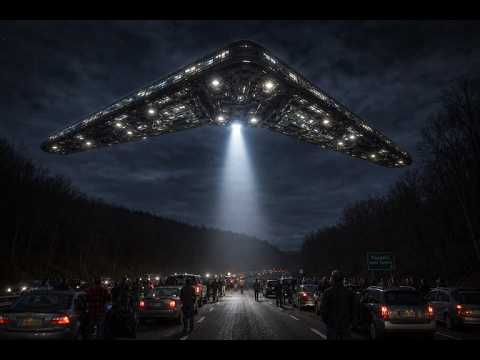
The Hudson Valley Boomerang
A dedicated overview of the wave's scale, witness accounts, and the physical description of the boomerang-shaped light formation reported across the Hudson Valley.
The Hudson Valley UFO Sightings
Long-form audio/video discussion walking through the case's timeline, Night Siege's investigative history, and the leading conventional explanations.
Sources
- Hynek, J. Allen, Imbrogno, Philip J. & Pratt, Bob. Night Siege: The Hudson Valley UFO Sightings, Ballantine Books, 1987.
- Schmalz, Jeffrey. "Pilots Are Suspected in Rash of Reports of U.F.O.'s in Hudson Valley," The New York Times, August 25, 1984.
- Garelik, Glenn. "The Great Hudson Valley UFO Mystery," Discover, November 1984, pp. 18–24.
- Dunning, Brian. "The Hudson Valley UFO Mystery," Skeptoid Episode 598, November 2017. skeptoid.com
- "Mysterious UFO Still Vexes Yorktown Police Officer," Yorktown Daily Voice. dailyvoice.com
- "The Hudson Valley UFOs: How the Media Reacted to a 1980s UFO Flap," The Debrief. thedebrief.org
- Randle, Kevin. "A Different Perspective: The Crash of Philip J. Imbrogno," July 2011. kevinrandle.blogspot.com
- "UFO Swarms Of The Hudson Valley," Plane & Pilot Magazine. planeandpilotmag.com
- "Hudson Valley UAP Flap," Enigma Labs Library. enigmalabs.io
- "The Hudson Valley UFO Sightings," UFOCasebook. ufocasebook.com
- "1984 Hudson Valley UFO sightings," Wikipedia. en.wikipedia.org
- Imbrogno, Philip J. & Horrigan, Marianne. Contact of the 5th Kind, Llewellyn Publications, 2002.
- Clark, Jerome. The UFO Encyclopedia: The Phenomenon from the Beginning, 3rd ed., Visible Ink Press.
- Peebles, Curtis. Watch the Skies! A Chronicle of the Flying Saucer Myth, Smithsonian Institution Press, 1994.
- Hastings, Robert. UFOs & Nukes: Extraordinary Encounters at Nuclear Weapons Sites, 2nd ed.
- "The Mystery of the Hudson Valley UFO," Unsolved Mysteries official case archive. unsolved.com
- NBC. Unsolved Mysteries, Season 5, Episode 1, "Hudson Valley UFO" segment, originally broadcast September 16, 1992.
- Nuclear Regulatory Commission. FOIA correspondence re: Citizens Against UFO Secrecy request, ADAMS Accession No. ML21179A021, November 1984.
- Federal Aviation Administration. Freedom of Information Act reading room. faa.gov
- Hynek, J. Allen. The UFO Experience: A Scientific Inquiry, Regnery Company, 1972 (Close Encounter classification framework applied in this file).
See something inaccurate? Have additional information or sources?
Suggest an Edit →Last Updated: August 2026