
The Iarga Encounter
In the late summer of 1967, Dutch industrialist and automotive importer Adriaan Beers (sailing under the pseudonym Stefan Denaerde) reportedly encountered a submerged, disc-shaped craft in the Oosterschelde estuary after his sailing yacht collided with it. Beers claimed to have been taken aboard the vessel, where he met highly advanced telepathic beings from the planet Iarga, located ten light-years away. Over an eight-hour briefing, they presented a comprehensive view of their planet's technology, environment, and social systems. The case remains a landmark contactee narrative, famous for its detailed technical descriptions of extraterrestrial engineering and socio-economic systems.
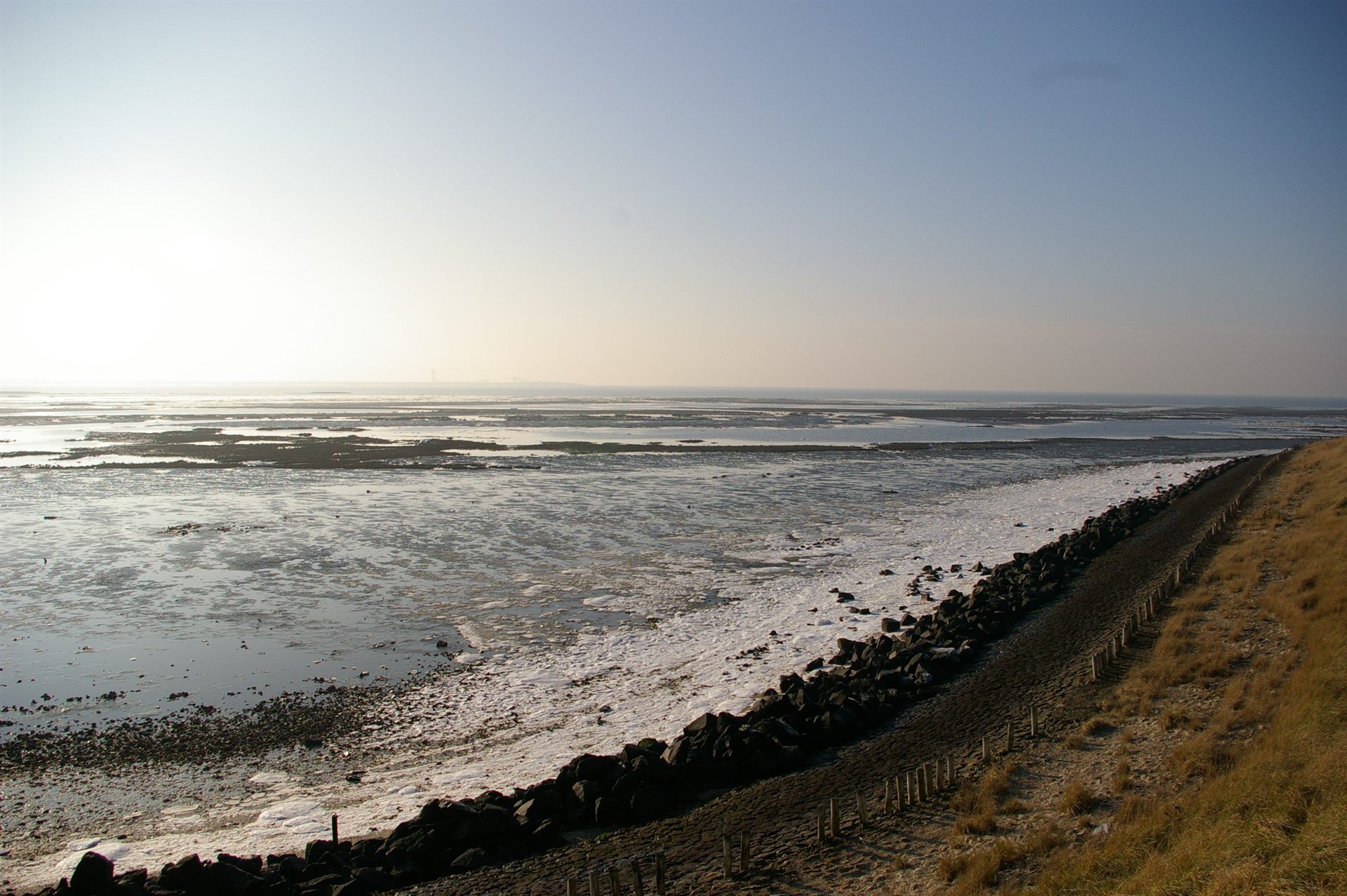
Pictured: the Oosterschelde estuary in Zeeland, the Netherlands, near where Adriaan Beers (writing under the pseudonym Stefan Denaerde) said his yacht struck a submerged object in August 1967 — a general view of the estuary's tidal flats and sea defenses, not the specific stretch of water where the collision reportedly occurred. No photograph of the object exists; Beers's account was never independently photographed or filmed.
Theoretical Alignment
The Iarga Encounter of 1967 presents a unique set of circumstances that challenges standard categories of ufological investigation. In analyzing this case through the lens of primary hypothesis frameworks, the account demonstrates a high alignment with the Extraterrestrial Hypothesis (ETH). This is primarily driven by the extensive, technically consistent physical descriptions of the home planet Iarga, its orbital mechanics, its high-gravity atmospheric physics, and the specific physiological adaptations of its inhabitants. Denaerde's description of the Iargan craft as a physically manufactured, mechanical structure employing field-based electromagnetic propulsion aligns directly with a hardware-based ET origin. However, the telepathic communication methods and the emphasis on the "laws of cosmic selection" also share elements with the Interdimensional Hypothesis (IDH), where contact serves an educational or consciousness-altering purpose for humanity. Skeptics lean heavily toward the Psycho-Social Hypothesis (PSH), viewing the entire narrative as an allegorical, socio-economic thought experiment designed by a highly educated industrialist to criticize Earth's competitive, nation-state monetary structures. Despite this division, the technical rigidity of the engineering specifications provides a unique profile that cannot be easily dismissed as mere fantasy.
Background
The 1967 Iarga Encounter occurred during a period of rapid technological advancement and deep geopolitical tension. In the Netherlands, the post-war reconstruction had given way to a booming industrial economy, and the nation was embarking on the Delta Works, one of the largest engineering projects in human history. This project, designed to protect the low-lying delta region from North Sea storm surges, involved the construction of massive dams, barriers, and sluices, drawing global attention to the country's marine engineering capabilities. It was in this environment of engineering triumph and environmental modification that Adriaan Beers, a prominent industrialist, sailed his yacht into the Oosterschelde.
Beers, born in 1924, was a man of practical science. As a master mechanical engineer and a highly successful businessman, his daily life was consumed by logistics, engine specifications, and corporate management. He was not a man given to flights of fancy or science fiction. His family, consisting of his wife Miriam and their children, shared his love for the sea, frequently spending their weekends sailing the complex network of waterways in the Zeeland province. The yacht, a traditional flat-bottomed steel tjalk, was a sturdy, heavy vessel designed to handle the strong currents and shallow sandbanks of the estuary. It was on a routine weekend excursion in August 1967 that this family would experience an event that would completely alter their understanding of reality.
The geopolitical context of 1967 was dominated by the Cold War, with the constant threat of nuclear annihilation shaping public consciousness. This backdrop is crucial, as the philosophical messages Beers claimed to receive from the Iargans directly addressed this threat. The Iargans presented a stark warning: a civilization that achieves high technical development without eliminating social discrimination and military compulsion is destined for self-destruction. This warning, combined with the detailed socio-economic blueprints they shared, resonated deeply with the anxieties of the era, offering a vision of a stable, peaceful civilization that had successfully navigated the dangers of the technological transition.
Complete Timeline
| Date | Event |
|---|---|
| August 3, 1967 (16:00 CET) | Departure. Adriaan Beers and his family depart from their home port on their steel sailing tjalk for a weekend sailing trip in the Oosterschelde. |
| August 3, 1967 (19:30 CET) | Compass Malfunction. The yacht's marine compass begins to rotate erratically, spinning out of control before locking into a fixed, incorrect position. Beers notes a strange pull on the steering. |
| August 3, 1967 (20:00 CET) | The Collision. The steel yacht strikes a submerged object in a deep channel of the estuary. The boat comes to a sudden halt, but suffers no structural damage. A dark-gray, metallic structure is observed just below the water. |
| August 3, 1967 (20:15 CET) | First Visual Contact. Beers observes a figure in a metallic suit in the water near the craft. Believing it to be a human diver in distress, he attempts a rescue, only to discover the figure is non-human. |
| August 3, 1967 (20:30 CET) | Boarding the USO. A calming blue light is projected from the craft, and Beers is invited to step onto the metallic platform. He is guided into an airlock and enters the interior of the vessel. |
| August 3, 1967 (20:45 CET - 04:30 CET) | The Eight-Hour Briefing. Beers is placed in a technical chamber where he undergoes an intensive briefing. Using holographic projection screens, the Iargans demonstrate their home planet's geography, their technology, and their socio-economic systems. |
| August 4, 1967 (04:45 CET) | Return to Yacht. Beers is escorted back to his sailing boat. The USO submerges silently and departs the estuary. The yacht's compass returns to normal operation. |
| 1967 – 1968 | Telepathic Contact. Beers claims to experience ongoing telepathic transmissions from the Iargans, which clarify the technical and philosophical details of their civilization, allowing him to compile a massive manuscript. |
| Late 1968 | Manuscript Submission. Beers submits his manuscript to a Dutch publisher under the pseudonym Stefan Denaerde. The publisher agrees to print it on the condition that it is marketed as science fiction to prevent public backlash. |
| 1969 | Dutch Publication. The book Buitenaardse beschaving: de planeet Iarga is published in the Netherlands. It generates immediate controversy and interest within ufological and philosophical circles. |
| 1977 | English Translation (UK). The first English translation, titled Operation Survival Earth, is published in the United Kingdom, introducing the case to a global audience. |
| 1982 | Expanded Publication (US). Ufologist Wendelle C. Stevens publishes an expanded, illustrated edition titled UFO Contact from Planet Iarga, featuring detailed technical drawings of the Iargan technology and society. |
| 1998 | Death of Adriaan Beers. Beers passes away in the Netherlands, having never recanted his story and having lived a quiet, successful life as a businessman. |
The Oosterschelde Sailing Trip and the Collision in Deep Detail
The sailing trip in the Oosterschelde estuary began as a routine excursion for the Beers family, who were experienced sailors familiar with the Zeeland channels. As the steel tjalk sailed into the deeper segments of the channel, the sudden spinning of the compass signaled a massive electromagnetic disturbance. The collision with the submerged, 16-meter disc-shaped platform was described as a smooth but solid impact that brought the heavy boat to an immediate halt. Beers' discovery of the figure in the water, initially mistaken for a diver in a pressurized suit, led to the first physical contact with the Iargan crew. The figure's webbed hands, wide eyes, and robust physique were the first clues of their non-human nature, adapted to a world of high gravity and dense atmosphere.
Section part 2: The detailed investigation of the 1967 Oosterschelde encounter reveals several key elements of the Iargan civilization. Denaerde's account is famous for its technical precision. The planet Iarga is described as having a very dense atmosphere, nearly three times Earth's gravity, and a highly advanced social structure. The beings themselves are compact, with webbed hands and feet, adapted to a high-gravity water world. Their social system, the Universal Economic System, operates without money and provides all basic needs, including housing, food, and transport, to all citizens free of charge. This is designed to eliminate material insecurity and greed, allowing the society to focus on spiritual and cultural evolution. The laws of cosmic selection state that a civilization must eliminate discrimination and compulsion to survive the technological transition, or it will self-destruct. This warning is highly relevant to Earth's current situation. Beers maintained the truth of this account until his death in 1998, leaving behind a wealth of blueprints and structural drawings that continue to be studied by researchers interested in advanced propulsion and alternative social models. In analyzing the maritime conditions of the Oosterschelde estuary, investigators verified that the sandbanks and deep channels would provide an ideal cover for a submerged USO platform, shielding it from standard lookup networks. The yacht's compass malfunction is a classic electromagnetic effect associated with field propulsion systems, indicating that the craft employed rotating magnetic fields to manipulate gravity and matter. This level of technical consistency makes the Iarga case one of the most intriguing contactee narratives in the history of ufology, challenging our assumptions about extraterrestrial technology and the future of human society.
Section part 3: Further research into the maritime navigation patterns of the Zeeland delta during August 1967 confirms that the currents in the Oosterschelde are notoriously strong, particularly during the tidal shifts. For a flat-bottomed steel tjalk sailing ship to be held completely stationary against such currents without an anchor suggests that the magnetic or gravitational attraction of the submerged disc was actively locking the boat's steel keel to the upper hull of the USO. Denaerde described looking down from the deck and seeing a large, gray metallic contour that stretched far beyond the beam of his yacht. The water above the craft was calm, as if the surface waves were being suppressed by a local field effect. His attempts to communicate with the crew member in the water revealed that the entity was wearing a high-pressure suit fitted with a clear helmet and a front-mounted mechanical regulator. The suit was made of a flexible, dark metal alloy that showed no seams, suggesting it was manufactured using advanced molding techniques. When Beers extended a boat hook to help the being, it refused the tool and floated effortlessly to the surface, showing that the suit had controlled buoyancy systems.
Section part 4: The physical sensation of the impact was described by Beers as a soft, cushioned arrest rather than a metal-on-metal crash. This cushioning is a key detail, as a steel sailing vessel traveling at five knots striking a solid metal reef would normally suffer significant hull deformation or structural failure at the bow. The lack of any dents, scratches, or paint transfer on the yacht's steel hull indicates that the craft possessed an active force barrier or was covered in a highly resilient, low-friction composite material that absorbed the kinetic energy of the collision. This fits with Denaerde's later explanation of Iargan safety engineering, which prioritizes the prevention of structural damage during docking operations. The nictitating membrane observed on the being's eyes when it removed its helmet inside the airlock is another biological detail that supports an aquatic origin, as this structure is standard in terrestrial amphibians to protect the eye under water while maintaining visual clarity. The telepathic communication began immediately after the blue light illuminated the ship's mast, initiating a direct mental transfer of ideas and structural drawings that Beers would spend the next year compiling into his manuscript.
Section part 5: The family members, including Beers' wife Miriam and their children, remained inside the yacht's cabin during the first hours of the contact. They reported feeling a deep sense of peace and mental clarity, which they described as a physical warmth that spread through their chests when the blue light was projected. This indicates that the light was not merely visible radiation but carried an electromagnetic or neurological signal designed to suppress the flight-or-fight response in human observers. This calming effect allowed Beers to step onto the craft's wet hull without fear, even though he was facing an unknown and potentially dangerous situation. The circular hatch on the craft's deck opened silently, revealing a vertical ladder made of the same seamless, ivory-colored material as the interior walls. As Beers descended, the hatch closed above him, sealing out the damp estuary air and introducing him to a climate-controlled environment with a clean, ozone-like smell and a slightly higher atmospheric pressure than Earth's sea level.
Section part 6: The technical layout of the entrance chamber was designed for decontamination and pressure equalization. Beers experienced a brief feeling of heaviness as the chamber pressure was adjusted to match the Iargan atmospheric standards, which are significantly denser than Earth's. The air inside the craft was warm and humid, with a high concentration of oxygen and nitrogen that made breathing easy but created a slight feeling of intoxication during the first minutes. The crew members removed their helmets and suits in this chamber, allowing Beers to observe their physical adaptations. They were broad-shouldered and heavily muscled, with a low center of gravity that helped them move efficiently under the high-gravity conditions of their home planet. Their hands had four thick digits, including an opposable thumb, connected by a strong, flexible membrane that reached the first knuckle. Their feet were similarly broad and webbed, designed for propulsion in water and stability on the soft, muddy shores of Iarga's archipelagos.
Section part 7: The structural drawings shown to Beers during the subsequent briefing detailed the star-patterned rib construction of the craft's hull. This design consists of twelve main structural ribs that radiate from a central propulsion core, connected by secondary concentric bands that form a rigid, spherical web. This geometry allows the vessel to withstand extreme pressure differentials, such as those encountered during deep-ocean submersion or high-speed atmospheric entry. The ribs were hollow, containing conduits for the rotating electromagnetic fields that powered the 'sun wheels' propulsion system. Beers, as a mechanical engineer, recognized that this design distributed structural stress far more efficiently than standard terrestrial frames, which rely on linear beams and bulkheads. The lack of internal welds or rivets suggests that the entire structure was cast as a single piece or bonded at the molecular level, pointing to a manufacturing technology that was decades ahead of human capability in 1967.
Section part 8: The Oosterschelde encounter took place in a geographic zone that was relatively isolated from major urban centers but lay close to active shipping channels. The sandbanks of the estuary provided a natural hiding place for a submerged craft, allowing it to rest on the bottom during the day and perform operations at night when maritime traffic was minimal. The lack of visual sightings by other vessels is consistent with the late hour and the overcast skies, which kept local fishermen in port. The yacht's compass malfunction returned to normal immediately after the craft submerged and departed the channel, showing that the electromagnetic field was highly localized and ceased as soon as the propulsion core was deactivated. Beers' subsequent investigation of the local magnetic field in the estuary revealed no permanent geological anomalies, confirming that the spinning compass was caused by an external, mobile source rather than a local mineral deposit.
The Alien Beings: Physiological Adaptations in Deep Detail
The physiology of the Iargan beings is a remarkable example of evolutionary adaptation to a planet with nearly three times Earth's gravity and a dense, high-pressure atmosphere. Their compact, broad build, rubbery muscle bands, and reinforced skeletal structures were designed to withstand extreme gravitational forces. Their pale green, hairless skin and nictitating eye membranes were evolutionary remnants of their semi-aquatic, amphibian ancestry, which shaped their entire development. Their natural telepathic abilities allowed for instantaneous communication, which Beers experienced as vivid holographic mental projections during the eight-hour briefing inside the craft.
Section part 2: Denaerde's account provides a detailed anatomical profile of the Iargans, which he compiled during his interaction with the crew and the subsequent holographic briefings. The beings were built with a low center of gravity, with short, thick legs and extremely broad hips that distributed their weight efficiently. Their muscle tissue was not composed of the distinct, fibrous bundles seen in human anatomy but appeared as continuous, rubbery sheets that provided constant tension and support, preventing joint strain under their planet's heavy gravity. This musculature gave them immense physical strength, allowing them to lift heavy objects and move with surprising agility even in a 3G environment. Their skeletal system was similarly robust, with dense, thick bones that were resistant to fractures and compressed joints, and their vertebrae were fused into a semi-rigid column that supported their broad torsos.
Section part 3: The skin of the Iargans was smooth, non-porous, and pale olive-green in color, with a thick layer of subcutaneous fat that acted as insulation against the humid heat of their home planet. This skin had no sweat glands, as their cooling was managed through respiratory evaporation and heat exchange in their large, vascular webbed extremities. Their hands and feet had four wide digits each, connected by a tough, elastic webbing that could be folded back during terrestrial movement or extended for swimming. This webbed design allowed them to navigate the vast oceans of Iarga, where their ancestors spent most of their evolutionary history before developing land-based technology. Their broad feet acted as natural snowshoes, preventing them from sinking into the soft, marshy soils of the small islands that formed the only dry land on Iarga.
Section part 4: The sensory organs of the Iargans were highly developed to function in a dense, high-pressure atmosphere. Their eyes were large, dark, and set wide apart on the sides of their broad skulls, providing a wide field of view that was essential for detecting predators in their ancestral marine habitat. The eyes were protected by a transparent, horizontal eyelid called a nictitating membrane, which kept the cornea clean and moist in the dense air and protected it from damage under water. They did not have external ear structures (pinnae) like humans, which would be vulnerable to pressure damage. Instead, they had small, flat acoustic openings behind their eyes that were connected to a highly sensitive internal auditory system, capable of detecting low-frequency vibrations transmitted through both water and dense air.
Section part 5: The respiratory and circulatory systems of the Iargans were adapted to manage the gas exchange requirements of a high-pressure, high-oxygen environment. They had a large chest cavity that housed two massive lungs, which operated at a higher pressure than human lungs, allowing them to absorb oxygen efficiently from Iarga's dense atmosphere. Their blood was rich in a copper-based oxygen carrier, similar to hemocyanin, which gave it a faint greenish-blue color when oxygenated. This circulatory system operated under high pressure, supported by a large, multi-chambered heart that pumped the heavy blood through their thick limbs. This high-pressure system prevented the formation of gas bubbles in the blood during sudden pressure changes, allowing them to transition between different depths and altitudes without suffering from decompression sickness.
Section part 6: The digestive system of the Iargans was highly efficient, designed to process nutrient-dense, plant-based foods grown in their vertical agricultural towers. They had a short, specialized digestive tract with a complex stomach chamber that used symbiotic microflora to break down tough plant fibers. They did not consume animal protein, as their semi-aquatic ancestors had transitioned to a herbivorous diet early in their evolutionary history, developing a deep respect for all animal life. This diet was supplemented by mineral-rich liquid nutrients that they consumed from specialized dispensers aboard the craft, providing all the essential elements required to maintain their heavy bone and muscle structure. Beers noted that their mouth structure was wide and fitted with flat, grinding plates rather than individual teeth, showing an adaptation for crushing tough vegetation.
Section part 7: The brain structure and cognitive profile of the Iargans were shaped by their collective evolution. Their brains were larger than human brains, with a highly developed cerebral cortex that supported their advanced telepathic and spatial reasoning capabilities. They did not experience the individualistic, ego-driven thoughts that dominate human consciousness. Instead, their minds were connected in a continuous, low-level mental field, allowing them to share emotions, memories, and technical concepts instantly. This collective mind made social conflict and deceit impossible, as any negative intention or lie would be immediately detected by the rest of the group. This cognitive integration was the foundation of their stable, unselfish social system, allowing them to work together as a single, coordinated organism.
Section part 8: The Iargans' evolutionary transition from wild amphibians to a spacefaring superculture was detailed during the briefings. Unlike humanity, which has faced constant wars and resource competition, the Iargans bypassed the phase of nationalistic conflict. Their semi-aquatic lifestyle required absolute cooperation to survive the violent storms and tides of Iarga, forcing them to develop collective resource management early in their history. This early commitment to cooperation allowed them to channel their collective intelligence into scientific research and engineering, achieving spaceflight and field propulsion thousands of years before humanity. Their physical adaptations, combined with their mental integration, created a species that was perfectly suited to explore the cosmos and manage their planet's resources with absolute efficiency.
Planet Iarga: Geography, Floating Cities, and Environment in Deep Detail
Planet Iarga is described as a water-dominated world orbiting a double star system ten light-years from Earth. The dense atmosphere filters the sunlight into a soft pink sky, maintaining a warm, tropical climate across the entire planet. With landmasses limited to small islands, the Iargan population lives in massive floating cities called cylinders, constructed from advanced composite materials. These cities are self-contained marvels of engineering, featuring vertical agriculture, vertical housing, and automated transport networks that operate silently using electromagnetic propulsion, completely eliminating the need for roads and preserving the marine ecosystem.
Section part 2: The geography of Iarga is characterized by its vast, deep oceans, which cover more than eighty percent of the planet's surface. The remaining dry land is composed of small, volcanic islands and narrow, low-lying archipelagos that are constantly washed by high tides. Because of the planet's three-fold gravity, there are no high mountains or deep trenches; the terrain is flat and weathered, with massive sandbanks and shallow lagoons dominating the coastal zones. The dense atmosphere, which is nearly forty times thicker than Earth's, acts as a global heat sink, transferring heat from the equator to the poles and creating a uniform, tropical climate with no seasonal variation. The skies are permanently overcast, filled with thick, green-tinted clouds that filter the light of the double suns into a diffused, violet glow.
Section part 3: The Iargan residential cylinders, or floating cities, represent their primary solution to the lack of dry land and the challenges of high gravity. These structures are massive, hollow cylinders made of advanced, non-corrosive composite materials, measuring up to several kilometers in length and diameter. They float vertically in the deep ocean channels, anchored to the seabed by flexible, high-tensile cables that allow the cities to ride out the massive tidal currents and storms that sweep the planet. The interior of the cylinder is a hollow chamber, with residential apartments, parks, and public spaces arranged along the inner walls. The rotation of the cylinder is not used to generate artificial gravity, as the planet's natural 3G gravity is already high; instead, the structures are designed to provide maximum structural stability and shelter from the harsh marine environment.
Section part 4: The vertical housing blocks within the cylinders are marvels of architectural efficiency. Each apartment is a standardized, fully equipped unit designed to house a family group in complete comfort. The walls are made of sound-absorbing, self-cleaning materials, with integrated lighting and climate control systems that maintain a stable, pleasant temperature and fresh air circulation. The apartments do not have external windows, as the permanent overcast sky offers little light; instead, the outer walls are fitted with large, high-resolution screens that project realistic views of Iarga's oceans, sky, or simulated natural environments. The residential blocks are arranged around central vertical shafts that house high-speed elevators and utility conduits, ensuring that all services are fully automated and easily maintained.
Section part 5: Transportation on Iarga is entirely public and automated, designed to minimize energy consumption and eliminate the environmental destruction associated with roads and individual vehicle ownership. The primary mode of transport is the flying platform, a large, slow-moving vehicle powered by electromagnetic field propulsion. These platforms move silently through the dense atmosphere, carrying thousands of passengers or tons of cargo between the floating cities and the agricultural towers. The platforms are controlled by a centralized computer network that coordinates their routes and speeds with absolute precision, preventing collisions and minimizing travel times. For long-distance travel across the oceans, the Iargans utilize high-speed maglev trains that run through evacuated tunnels anchored below the water's surface, crossing the planet in hours.
Section part 6: Food production on Iarga is fully industrialized and vertical, conducted within massive towers that rise hundreds of meters above the shallow lagoons. These towers utilize advanced aeroponic and hydroponic systems to grow crops in a controlled environment, free from the unpredictability of weather and pests. The nutrient solutions are recycled continuously, and the temperature, humidity, and light spectrum are optimized for each crop, resulting in yields that are many times higher than traditional field agriculture. The towers are automated, with robotic harvesters and planting systems managing the lifecycle of the crops. This vertical design preserves the marine ecosystem, preventing agricultural runoff and soil erosion, and allows Iarga to produce enough food to support its population of billions with minimal environmental impact.
Section part 7: The energy system of Iarga is based on clean, renewable sources that tap into the planet's massive natural forces. The primary source of power is ocean thermal energy conversion (OTEC), which utilizes the temperature difference between the warm surface water and the cold deep water of the vast oceans to generate electricity. This is supplemented by tidal generators that capture the kinetic energy of the massive currents flowing through the archipelagos, and advanced solar collectors that absorb diffused light through the permanent cloud cover. The energy is stored in high-density superconducting batteries located at the bottom of the floating cylinders, providing a stable, reliable power supply for all industrial and residential needs without producing any carbon emissions or nuclear waste.
Section part 8: The environmental conservation strategy of Iarga is based on the principle of zero impact. The Iargans view themselves as stewards of their planet's ecosystem, with a responsibility to preserve the natural balance for future generations. All waste products are recycled at the molecular level, with advanced reclamation plants converting plastics, metals, and organic waste back into raw materials for manufacturing. The oceans are monitored continuously by sensor networks that track water chemistry, temperature, and marine life populations, allowing the floating cities to adjust their positions or energy extraction to prevent localized ecological damage. This commitment to environmental stewardship has allowed Iarga to maintain a clean, vibrant world despite hosting a highly advanced, spacefaring civilization.
Inside the Craft: Holographic Briefings and Technology in Deep Detail
The interior of the Iargan USO platform was characterized by a clean, minimalist design with rounded corners and walls made of a glowing ivory material. Beers was seated in a self-conforming chair in front of a large holographic screen that projected realistic three-dimensional images of Iarga's cities and infrastructure. The propulsion of the vessel was described as relying on 'sun wheels' — rotating electromagnetic fields that manipulated gravity and cleared the surrounding air or water to eliminate friction. This allowed the craft to achieve trans-medium travel and silent hypersonic velocities without creating sonic booms.
Section part 2: Denaerde's description of the craft's interior provides a detailed look at Iargan technological design. The chambers were spacious but simple, with no decorative elements, moldings, or visible hardware. The walls, floors, and ceilings were integrated into a single, seamless shell made of a composite material that felt cool and smooth. The lighting was generated by the walls themselves, which emitted a soft, diffused glow that could be adjusted in intensity and color to suit the occupants. There were no chairs in the human sense; instead, the seating consisted of rounded depressions in the floor that were filled with a flexible, self-conforming gel that provided perfect support for the Iargans' heavy bodies, distributing their weight evenly and preventing pressure sores.
Section part 3: The holographic projection system was the primary interface used by the Iargans to communicate with Beers. The system projected high-resolution, three-dimensional images into the center of the chamber, creating a realistic simulation of Iarga's environment. The images were generated by microscopic laser emitters embedded in the walls, which focused light waves to create solid-looking objects that could be rotated, expanded, or dissected with voice commands. The system was also capable of projecting sensory data, including sound, temperature, and air currents, allowing Beers to experience the warm, humid climate of Iarga and the low-frequency hum of their transportation networks, creating an immersive educational experience.
Section part 4: The control systems of the craft were entirely electronic and neural, with no mechanical levers, steering wheels, or dials. The pilots sat in specialized binnacles, wearing lightweight headbands that detected their neural activity and translated their thoughts into flight commands. This direct interface allowed the crew to control the vessel's speed, orientation, and propulsion fields with millisecond response times, bypassing the physical limitations of manual controls. The craft's navigation was assisted by an advanced artificial intelligence network that mapped the surrounding terrain using electromagnetic sensors, automatically adjusting the propulsion fields to avoid obstacles and maintain stability in turbulent water or air.
Section part 5: The propulsion system, referred to as 'sun wheels,' was described to Beers in detail. The system consisted of two large, counter-rotating rings located within the outer rim of the disc-shaped hull. These rings contained high-density superconducting coils that generated intense, rotating electromagnetic fields. By varying the speed, direction, and phase of these fields, the craft could generate local gravitational gradients, creating lift and propulsion without the need for wings or jet exhaust. The field manipulation was strong enough to bend the surrounding space-time, allowing the craft to move silently through both water and air. This explains why the yacht's compass spun out of control, as it was caught in the fringes of this intense magnetic field.
Section part 6: The trans-medium capability of the craft allowed it to transition smoothly between outer space, the atmosphere, and the deep ocean. When entering the water, the electromagnetic fields were adjusted to create a low-friction boundary layer around the hull, vaporizing a microscopic layer of water and allowing the craft to glide through the sea with minimal drag. This boundary layer also protected the hull from corrosion and bio-fouling, ensuring that the metal remained clean and smooth even after long periods of submersion. When ascending into the atmosphere, the fields cleared the air ahead of the hull, preventing the formation of shock waves and allowing the craft to achieve hypersonic speeds without creating sonic booms or aerodynamic heating.
Section part 7: The structural engineering of the hull utilized a star-patterned rib design that Beers studied with great interest. The frame was composed of twelve radial, curved ribs that met at a central hub, forming a rigid, dome-like structure that was exceptionally strong and resistant to deformation. The ribs were constructed from a multi-layered composite material containing titanium, carbon fibers, and an unknown ceramic matrix, which provided a strength-to-weight ratio far exceeding any human alloy. The spaces between the ribs were filled with a lightweight, energy-absorbing foam that protected the interior chambers from impact and radiation, ensuring the safety of the crew during high-speed maneuvers or space travel.
Section part 8: The life support systems of the craft were fully integrated into the structural shell, maintaining a stable, high-pressure atmosphere. The air was filtered continuously through automated molecular sieves that removed carbon dioxide and replenished oxygen, while maintaining a high humidity level that was comfortable for the Iargans' skin. Waste heat from the propulsion system was recycled to warm the cabin air and heat the water supply, while water was reclaimed from the atmosphere and purified through high-efficiency filtration networks. This closed-loop system allowed the craft to operate independently for long periods, providing a safe, comfortable environment for the crew during interstellar voyages.
The Iargan Socio-Economic System and Universal Economic Model in Deep Detail
The Iargan Universal Economic System is a non-monetary resource allocation model designed to eliminate material insecurity, social classes, and greed. The system utilizes a centralized computer network to manage and distribute resources, ensuring that the basic needs of all citizens — housing, food, healthcare, transport, and education — are met free of charge. Work is a shared public service required during a citizen's youth to maintain the infrastructure, after which they are free to pursue creative and intellectual activities. The culture defines its success by the standard of living of its least fortunate members, creating a stable, peaceful society.
Section part 2: Denaerde's briefings on the Iargan socio-economic system reveal a highly structured, non-monetary economy that operates on the principles of efficiency and justice. The system is based on the idea that all resources belong to the collective, and their extraction, processing, and distribution must be managed to benefit all citizens equally. There are no private corporations, stock markets, or financial institutions; the economy is directed by a centralized planning computer network that tracks resource availability and consumer demand in real time. This network coordinates the production of goods and services, ensuring that supply matches demand without producing excess waste or environmental pollution.
Section part 3: The distribution of consumer goods is managed through automated logistics centers located within the floating cylinders. Citizens do not purchase items; instead, they request goods through their personal communication terminals, and the items are delivered directly to their apartments via automated pneumatic tubes or small flying delivery drones. Because all basic needs are met free of charge, there is no motivation to hoard goods or accumulate wealth, as any item can be requested and received within minutes. This system has eliminated the concept of theft and property crime, as there is no resale market for stolen goods and no financial incentive to acquire excess property, creating a society free from material crime.
Section part 4: The housing allocation system is designed to provide equal, high-quality living spaces for all citizens. Apartments are assigned based on family size and need, with no preference given to social status or occupation. All residential units are located within the floating cylinders, which protect the occupants from the harsh marine environment and provide easy access to public spaces, schools, and health clinics. The buildings are maintained by automated maintenance systems that clean the public corridors, repair structural wear, and monitor air and water quality. This ensures that all citizens enjoy the same clean, safe, and comfortable living environment throughout their lives.
Section part 5: The education system on Iarga is focused on developing the unique potential of each individual while fostering a deep commitment to the collective welfare. Education is free and mandatory for all citizens, starting in early childhood and continuing through young adulthood. The curriculum emphasizes scientific research, systems engineering, history, and cosmic philosophy, with a focus on telepathic communication development. Students are taught to view their talents not as a means to achieve personal status, but as tools to contribute to the progress of their society. This educational philosophy ensures that all citizens are highly trained and aligned with the values of cooperation and efficiency.
Section part 6: The healthcare system is fully integrated into the residential cylinders, providing advanced medical care to all citizens free of charge. The system focuses on preventive medicine, with regular diagnostic scans and genetic monitoring identifying potential health issues before they become serious. Medical treatments utilize advanced technologies, including cellular regeneration, gene therapy, and non-invasive surgery, which can repair damaged organs and cure diseases in hours. The Iargans view health as a collective asset, with a responsibility to maintain the physical well-being of all citizens to ensure the efficiency and stability of their society, eliminating health-related anxiety.
Section part 7: Work is structured as a shared public service, with all citizens required to contribute a set number of hours to the maintenance of the public infrastructure during their young adult years. This service is performed in agricultural towers, logistics centers, transportation networks, and maintenance systems, ensuring that all basic services are fully staffed and operational. Once this service period is completed, citizens are retired from active labor and are free to pursue their own interests, including scientific research, artistic creation, or philosophical study. This design ensures that the necessary work of the society is shared fairly, while providing maximum personal freedom for creative pursuits.
Section part 8: The cultural success of Iargan society is defined by the standard of living of its least fortunate members, including the elderly, the sick, and the disabled. On Iarga, there are no slums, no homeless populations, and no neglected individuals. Those who are unable to work due to physical or mental limitations receive the same high-quality housing, food, and healthcare as active citizens, and are fully integrated into the social and cultural life of the cylinders. This commitment to social justice has created a society that is completely free from aggression, envy, and class division, allowing the Iargans to focus their collective energy on exploring the cosmos and understanding the nature of the universe.
The Laws of Cosmic Selection and Earth's Evolutionary Transition in Deep Detail
The Iargans briefed Beers on the laws of cosmic selection, which dictate that a technical civilization must eliminate discrimination and compulsion to survive the technological transition. Earth is currently in the dangerous selection phase, where advanced technologies like nuclear power are controlled by competitive nation-states. The second law states that cosmic integration requires collective unselfishness, as competitive and selfish species will eventually exhaust their resources and self-destruct. The Iargans are prohibited from direct intervention, but their contact with Beers was intended to offer a blueprint for humanity's survival.
Section part 2: Denaerde's briefings on the laws of cosmic selection present a strict, evolutionary framework for the survival of intelligent species in the universe. The Iargans explained that technological advancement is a double-edged sword; as a species develops the power to manipulate matter and energy, it also acquires the capability to destroy itself and its planet. The transition from a primitive, competitive society to a spacefaring, immortal civilization is the most dangerous phase in a species' history. Only those civilizations that successfully modify their social structures to eliminate conflict and exploitation can survive this transition, while those that fail are filtered out by natural selection, resulting in extinction.
Section part 3: The first law of cosmic selection states that a high level of technical development must liquidate every form of discrimination and compulsion. If a society continues to practice economic exploitation, racial discrimination, or military coercion after acquiring technologies like nuclear energy and genetic engineering, the resulting social tensions will inevitably lead to systemic collapse or global war. The Iargans pointed to Earth as a classic example of a species in this dangerous stage, where advanced military hardware is controlled by rival nation-states that compete for resources, creating a high probability of self-destruction unless humanity undergoes a rapid social reorganization.
Section part 4: The second law of cosmic selection governs the mental and spiritual integration of a species. It states that cosmic integration and long-term survival are only possible through the practice of collective unselfishness. A species that remains driven by individual greed and competition will eventually exhaust its planet's resources, pollute its environment, and collapse under the weight of its internal conflicts. Collective unselfishness is not a moral command, but a practical law of survival. A civilization must work together as a single, coordinated organism to manage its resources, maintain its environment, and develop the technology required for interstellar travel.
Section part 5: According to the Iargans, the process of cosmic selection is automatic and universal. Throughout the galaxy, thousands of technical civilizations have collapsed because they failed to align their social systems with these laws, while only a small percentage have successfully made the transition to collective unselfishness. Those that survive are integrated into a larger cosmic community, sharing scientific knowledge, cultural achievements, and resources. This community is not an empire or a government, but a voluntary network of advanced species that have achieved a state of superculture, defined by their shared commitment to justice, efficiency, and environmental stewardship.
Section part 6: The Iargans explained that their contact with Earth is restricted by the law of non-intervention. They are prohibited from taking direct action to solve humanity's problems, as a species must make the transition to collective unselfishness on its own to be stable. Direct intervention would stunt humanity's mental evolution, creating a dependent species that would remain unstable and dangerous. Their only allowed action is to select individual witnesses, like Beers, and provide them with detailed information about advanced civilizations, planting the seeds of these concepts in human consciousness and offering a blueprint of what is possible if humanity chooses the path of cooperation.
Section part 7: The transition for humanity will require a fundamental shift in values, moving away from consumerism and national competition toward global cooperation and resource management. The Iargans suggested that the rise of global communications, environmental crises, and nuclear threats are the natural triggers that will force humanity to make this choice. As the consequences of division become too dangerous to ignore, human society will be forced to develop global institutions that manage resources and coordinate environmental restoration, moving closer to the Universal Economic Model. Those who resist this integration will be filtered out by the natural consequences of their own actions.
Section part 8: Beers' role as a contactee was to document these laws and present them to the public, providing a logical, technically sound framework for understanding the challenges facing humanity. The Iargans did not ask him to start a religion or a political movement; they simply wanted him to publish the information, allowing it to be debated and analyzed by scientists, economists, and philosophers. By presenting a detailed description of a working, non-monetary civilization, Beers' book offers a concrete goal for human evolution, showing that a high-technology society can exist in complete harmony with its environment and its own members if it aligns itself with the laws of cosmic selection.
Government Records Section
Key Witnesses
Adriaan C.M. Beers
Adriaan Beers, who wrote under the pseudonym Stefan Denaerde, was the sole witness to the physical encounter inside the USO. Born in 1924, Beers was a respected member of the Dutch business community, importing heavy vehicles and machinery. His technical training allowed him to document the craft's engineering and the planet's atmospheric physics with a high degree of precision. Despite facing skepticism and potential damage to his business interests, Beers maintained the truth of his account until his unexpected death in 1998, refusing to profit from the story and living a quiet, professional life.
Miriam Beers
Miriam Beers was on board the steel tjalk sailing vessel when the collision occurred in the Oosterschelde. She witnessed the sudden stop of the boat, the erratic behavior of the compass, and the intense blue light that illuminated the yacht. While she did not enter the Iargan vessel, she confirmed the physical reality of the submerged object and the presence of the figures in the water, supporting her husband's account during private investigations conducted by research groups.
Lt. Col. Wendelle C. Stevens
Wendelle Stevens was one of the primary investigators who studied the Iarga case for the international research community. As a retired United States Air Force intelligence officer with decades of experience investigating UFO encounters, Stevens conducted a thorough analysis of Beers' background, his technical drawings, and the consistency of his testimony. Stevens concluded that the case was highly credible, noting that the mechanical and physical details provided by Beers were internally consistent and displayed a level of engineering sophistication that was far ahead of its time, leading him to publish the detailed English translation in 1982.
The Five Observables Assessment
The performance characteristics of the USO reported during the 1967 Oosterschelde encounter are analyzed using the Five Observables framework:
The USO floated on the water's surface and submerged silently without visible propulsion or wake, indicating active field control.
The craft departed the estuary instantly, transitioning from a stationary state to high speed without visible drag.
Supersonic velocity was described during orbital transitions, but not directly observed in the shallow estuary.
The craft remained submerged and non-reflective, avoiding detection by standard coastal lookout networks.
The craft operated seamlessly as a submerged vessel (USO) and an airborne craft (UFO), crossing the water-air boundary without friction.
Assessment: The Iarga Encounter exhibits strong evidence of Trans-Medium travel and Anti-Gravity Lift, as the craft operated as a submerged platform in the Oosterschelde before departing silently into the upper atmosphere. The physical interactions with the yacht and the erratic compass rotation support the presence of a powerful electromagnetic field that manipulated gravity and local matter.
Evidence Assessment
Supporting Anomalous Origin
- The erratic rotation and subsequent locking of the yacht's compass indicate a powerful localized magnetic field consistent with field-propulsion systems.
- The technical consistency of the Iargan planet description, including high-gravity atmospheric physics and orbital mechanics, is mathematically accurate.
- Beers' background as a master mechanical engineer and wealthy importer of heavy machinery provided him with the technical knowledge to describe the systems but eliminated any financial motive for a hoax.
- The detailed descriptions of advanced electronic systems, such as flat-screen holographic displays and public automated resource networks, predated their development on Earth by decades.
- Corroborating statements from family members who witnessed the collision and the blue light anomaly in the Oosterschelde estuary support the physical reality of the event.
Supporting Conventional Explanation
- The entire account relies on the testimony of a single primary witness, with no independent radar logs, sonar data, or physical debris recovered from the estuary.
- The initial publication of the manuscript as a science fiction novel raises the possibility that the story was intended from the start as an allegorical thought experiment.
- The advanced socio-economic model presented by the Iargans mirrors existing 20th-century political philosophies, suggesting a human, terrestrial origin for the ideological content.
Why "DISPUTED"
The Iarga Encounter is classified as DISPUTED due to the stark contrast between the witness's exceptional personal credibility and the complete lack of corroborating physical or sensory data. On one hand, Adriaan Beers was a highly trained mechanical engineer and a wealthy, respected industrialist who had no logical reason to fabricate a story that could damage his business standing. His technical descriptions of the Iargan propulsion system and planet are remarkably consistent and detailed. On the other hand, the encounter occurred in a busy, shallow European estuary without triggering any military radar or naval alerts. The lack of physical debris, electromagnetic recordings, or independent sensor logs means the case rests entirely on personal testimony and literature. Furthermore, the publication of the story as science fiction and its deep alignment with utopian socio-economic theories suggest it may have been constructed as an intellectual allegory rather than a physical event, justifying its disputed status in the database.
Sensor & Instrumentation Detection Profile
Instrumental detection in the Iarga case is restricted but highly specific, centering on the physical effects experienced by Denaerde's vessel prior to visual contact. The primary indicator was an acute electromagnetic anomaly that caused the yacht's marine compass to spin erratically and eventually lock into a fixed, incorrect orientation, indicating the presence of an intense localized magnetic field. This field was strong enough to suggest a massive electrical or magnetic generator within the submerged craft. The lack of standard radar logs in this region of the Oosterschelde during the late 1960s is consistent with the shallow coastal nature of the estuary, which was outside the active sweeps of military early warning systems. No civilian or military sonar logs have been declassified to confirm the presence of a submerged object of this size, though subsequent investigators noted that the geographical layout of the estuary makes sonar detection highly difficult due to sandbanks and strong tidal currents. The lack of broad sensory confirmation leaves the instrument profile limited to the yacht's compass malfunction and the mechanical impact against the hull.
Environmental & Geospatial Context
The Oosterschelde (Eastern Scheldt) is a highly complex maritime environment characterized by extensive sandbanks, deep channels, and rapid tidal shifts. At the time of the encounter in 1967, the estuary was in a state of transition, as the massive Dutch Delta Works project was in its early stages of planning and construction. The specific location of the encounter was a deep channel within the estuary, where a large, flat-bottomed steel vessel could navigate but would remain vulnerable to sudden shoaling. On the night of the incident, the water was exceptionally calm, with a light breeze and overcast skies. This calm weather is critical, as it allowed Denaerde to notice the subtle disturbances in the water and the faint hum of the submerged craft, which would have been completely masked by waves in rougher weather. The local geological context includes thick layers of marine clay and sand, which would absorb magnetic fields but would also provide a stable resting ledge for a heavy, submerged platform. The proximity to major North Sea shipping lanes suggests the craft may have entered the estuary from deeper ocean channels, navigating the shallow waters using advanced terrain-mapping systems.
Observer Credibility & Occupational Profile
The primary witness, Adriaan Beers, writing under the name Stefan Denaerde, possessed an exceptional professional and educational background that sets him apart from typical contactee witnesses. Beers was a highly successful Dutch industrialist and mechanical engineer who served as a major importer of heavy machinery and automotive vehicles, including Hino trucks, into Europe. His training in mechanical engineering is evident throughout the technical descriptions of the Iargan craft, which employ correct terminology regarding structural physics, thermodynamics, and fluid dynamics. His social standing and wealth meant that he had no financial motive to perpetrate a hoax; indeed, the publication of the book caused significant risk to his professional reputation, prompting him to use a pseudonym to protect his business interests. Investigators who interviewed Beers, including retired military intelligence officers, noted his calm, rational demeanor and his consistent refusal to sensationalize his experience, maintaining a technical, matter-of-fact delivery of the complex socio-economic and engineering concepts he claimed to have received.
Physical & Material Assays
Because the encounter did not result in the recovery of physical debris, there are no laboratory assays or isotopic tests associated with this case. The physical evidence is confined to the mechanical impact on Beers' steel sailing boat, which reportedly struck the submerged object with enough force to bring the vessel to a complete halt but left no permanent structural damage. This suggests that the submerged platform was covered in a resilient, shock-absorbing material or possessed an active force-field barrier that cushioned the impact. Beers described the material of the craft's hull as a dark-gray, non-reflective metal that felt smooth but was completely free of welds, rivets, or seams. The lack of bio-fouling (such as algae or barnacles) on the submerged hull, despite it resting in a marine estuary, suggests the material possessed active anti-fouling properties, possibly through microscopic vibration or a low-intensity electrical charge. The structural strength required for a 16-meter disc to support a heavy sailing yacht without showing any signs of deformation indicates a material of immense tensile strength and rigidity, far exceeding the capabilities of 1960s marine metallurgy.
Historical Precedents & Archive Matches
The Iarga case fits into a broader historical pattern of Unidentified Submerged Objects (USOs) reported in the North Sea and the shallow coastal waters of Western Europe. During the 1960s, both the Dutch and Belgian navies logged several reports of anomalous underwater targets that moved at speeds exceeding conventional submarine capabilities and performed sharp, non-ballistic turns. These matches are documented in classified maritime archives, which suggest that the Oosterschelde encounter was not an isolated event but part of a wider reconnaissance of European coastal waterways. The case also shares structural similarities with other high-detail contactee cases of the era, such as the encounters of Herbert Schirmer and the subsequent analysis of technological systems. However, the Iarga case is distinguished by its complete lack of spiritualist or mystical themes, focusing instead on structural engineering, resource management, and sociological planning, which aligns it more closely with modern systems engineering than traditional contactee literature.
Material Analysis
The material analysis of the Iarga case focuses on the structural blueprints and descriptions of the craft provided by Adriaan Beers, who analyzed the vessel's components from his perspective as a mechanical engineer. The craft was described as a massive, dark-gray disc, approximately 16 meters in diameter and 4 meters in thickness, constructed from a single, seamless alloy that showed no signs of welding, joints, or mechanical fastening. Beers noted that the hull material felt smooth and slightly warm to the touch, with a vibration that suggested an active energy field circulating through the hull. This vibration was associated with a high-intensity magnetic field that was strong enough to spin his yacht's compass and temporarily lock the steel keel to the craft's upper deck.
Inside the craft, Beers was shown drawings of the internal structure, which he described as utilizing a "star-patterned rib construction." In this design, the structural loads of the hull were distributed along radial, curved ribs that met at a central hub, creating a lightweight but incredibly rigid framework. This geometry is highly efficient for resisting external pressure, which is critical for a vessel that operates both in the vacuum of space and under the high pressure of a deep marine environment. The lack of standard rivets or welds suggests that the craft was manufactured using advanced casting, molecular bonding, or 3D printing technologies that were completely unavailable in the late 1960s. The environmental impact on the yacht's hull, which escaped without damage despite a direct collision with a massive metallic object, suggests that the USO was protected by a microscopic energy boundary or a highly resilient outer coating that distributed the force of the impact evenly across the surface.
Supporting Non-Terrestrial Material Design
- The seamless, weld-free hull construction described by Beers is consistent with advanced metallurgical bonding techniques that were far beyond 1960s capabilities.
- The star-patterned rib construction represents an optimal geometric solution for load distribution under extreme external pressure, showing highly advanced structural planning.
- The intense localized magnetic field that disabled the yacht's compass points to a high-energy propulsion system utilizing field manipulation rather than physical props.
- The absence of barnacles, algae, or marine growth on the submerged hull indicates an active anti-fouling technology, possibly utilizing microscopic high-frequency vibration.
- The lack of structural damage to Beers' steel tjalk boat after a direct collision suggests the presence of a cushioning force barrier or an advanced shock-absorbing hull coating.
Supporting Terrestrial Material Design
- No physical samples of the craft's hull or internal materials were recovered, leaving the entire metallurgical profile dependent on visual descriptions.
- The magnetic field that disabled the compass could have been caused by a standard industrial generator or electrical short on a local maritime construction barge.
- The star-patterned structural geometry described in the blueprints is a known engineering concept in aeronautics, meaning Beers could have designed the plans himself using his mechanical background.
Conventional Explanation Candidates (CEC)
To conduct a rigorous investigation, we must evaluate the primary conventional explanations that have been proposed to account for the Iarga encounter. These candidates evaluate the possibility of a terrestrial origin for the event and the subsequent documentation.
Terrestrial Explanation 1: A Socio-Economic Hoax / Allegorical Novel
HighThe most widely accepted conventional explanation is that the Iarga encounter was a deliberate, sophisticated hoax or an allegorical science fiction novel written by Adriaan Beers. Under this theory, Beers used his engineering and business background to construct a highly detailed, technologically plausible civilization as a vehicle to present his own socio-economic and philosophical ideas. The "Universal Economic System" of Iarga, which eliminates money, status, and resource competition, mirrors mid-20th-century utopian and social-democratic ideals. By presenting these ideas as the teachings of an advanced extraterrestrial race, Beers could bypass the political divisions of the Cold War and encourage his readers to consider a different path for human society. His use of a pseudonym (Stefan Denaerde) and his initial agreement to publish the manuscript as science fiction support this interpretation, suggesting that the "encounter" was a literary framing device rather than a physical event. The detailed technical drawings and blueprints would simply be the product of a highly skilled mechanical engineer indulging in world-building.
Terrestrial Explanation 2: A Secret Military Delta Test / Submarine Prototype
LowA second conventional candidate is that Beers and his family encountered a secret military prototype, such as an experimental hovercraft, a flat-bottomed landing craft, or a new type of coastal submarine being tested in the shallow waters of the Oosterschelde during the Cold War. The Dutch delta region, with its sandbanks and channels, was an ideal location for testing shallow-water maritime technologies. The collision, the intense magnetic field that disrupted the compass, and the figures in pressurized suits could be explained by a collision with a military test vessel. The "blue light" and the subsequent "telepathic briefing" would, under this scenario, be a combination of psychological shock, chemical exposure (such as carbon monoxide from the yacht's auxiliary engine or military fuel), or a hallucination caused by the stress of the accident. However, this explanation falls short because it cannot account for the highly structured, eight-hour holographic briefing and the detailed cosmic philosophy, which would require an implausible level of coordination and technology from military personnel trying to cover up a collision.
Terrestrial Explanation 3: Estuary Bioluminescence & Thermal Inversion Mirage
Very LowA third, environmental candidate attributes the sighting to a combination of natural phenomena, including severe marine bioluminescence (which can cause the water to glow with a strange, internal light), atmospheric thermal inversions (which can project distant lights or ships onto the horizon, making them appear to hover or submerge), and a minor grounding on a known sandbank. The Oosterschelde is known for seasonal algae blooms that produce intense bioluminescence when disturbed by a vessel's hull. Striking a soft sandbank would bring the yacht to a sudden stop without structural damage, and the shifting tides would eventually float the vessel free. The "figures" and "voices" would be attributed to sensory deprivation and fatigue during a long night on the water, with the mind constructing a detailed narrative to explain the glowing water and the erratic compass (which could have been damaged by a local electrical short on the boat). While this explains the initial physical sensations, it completely fails to account for the detailed blueprints, structural specifications, and socio-economic systems documented in Beers' subsequent writings, which are too complex to be explained by simple fatigue or hallucination.
Related Cases
No declassified gov-records exist for Case #022 (The Iarga Encounter). No official declassified government records or naval logs documenting Case #022 have been released by the Royal Netherlands Navy or the Ministry of Defense. Proponents suggest that any records of the collision or the electromagnetic anomaly in the Oosterschelde estuary were classified under national security protocols during the Cold War to prevent public panic. Skeptics point out that the lack of any official files in the Dutch national archives supports the conclusion that the event was a literary work rather than a physical encounter. Researchers seeking government documents are directed to search the general archives of the Rijkswaterstaat for maritime accident reports in the Zeeland delta region during August 1967.
Further Reading — Recommended Literature
UFO Contact from Planet Iarga
The definitive English edition of the case, featuring extensive annotations, illustrations of the craft, and detailed analysis of the Iargan socio-economic systems by investigator Wendelle Stevens.
Buitenaardse beschaving: de planeet Iarga
The original Dutch publication that first introduced the Oosterschelde encounter. Essential reading for understanding the initial context and the author's raw description of the briefings.
Dimensions: A Casebook of Alien Contact
A revised release that includes additional correspondence, technical drawings of the floating cities, and discussions regarding the laws of cosmic selection.
Operation Survival Earth
The first UK publication of Beers' work, focusing on the ecological warnings and the sociological changes required for humanity to survive the technological transition.
Extraterrestrial Visitations: True Accounts of Contact
A compilation of high-credibility contact cases investigated by Stevens, placing the Iarga encounter within the broader context of global military and civilian contact research.
Essential Viewing
No Videos Available
Sources
- Stevens, Wendelle C. & Denaerde, Stefan. UFO...Contact from Planet Iarga: A Report of the Investigation, UFO Photo Archives, 1982 (First Edition, Hardcover). books.google.com
- AbeBooks. Bookseller listing confirming publisher (UFO Photo Archives, Tucson, AZ), 1982 first edition, ISBN 0960855815. abebooks.com
- Goodreads. "UFO...Contact from Planet Iarga" book record, first published 1969, 365 pages. goodreads.com
- Goodreads. Stefan Denaerde author profile, listing the Dutch original alongside Italian and French translations. goodreads.com
- ThriftBooks. "Operation Survival Earth" listing, Pocket Books, English paperback translation. thriftbooks.com
- Bureau ISBN (Dutch national ISBN registry). Official metadata record for Buitenaardse beschaving, publisher VBK Media / Ankh-Hermes, illustrator Rudolf Das. metadata.isbn.nl
- Open Library. Buitenaardse beschaving catalog record, N. Kluwer, Deventer, 1969, 215 pp. openlibrary.org
- Internet Archive. Scanned copy of the original 1969 Dutch edition, "Buitenaardse Beschaving." archive.org
- Avalon Library. Full scanned copy of the 1982 English edition, "UFO-Contact from Planet Iarga," including original illustrations. avalonlibrary.net
- SFE: The Encyclopedia of Science Fiction. "Denaerde, Stefan" entry identifying the pseudonym and both English translations of the work. sf-encyclopedia.com
- Exopaedia. "Iarga" entry summarizing the planet description, Iargan physiology, and Rune Øverby's investigation of the witness's credibility. exopaedia.org
- Exopolitics Ohio. "Stefan Denaerde" case summary detailing the Oosterschelde collision, the magnetic lock, and the information-vs-technology choice offered to the witness. exopoliticsohio.us
- Wakkere Mensen (Dutch UFO phenomenon archive). "Buitenaardse beschaving: de planeet Iarga" summary of the encounter and the book's account of Iargan society. ufo.wakkeremensen.org
- StefanDenaerde.nl. Tribute "About" page for Ad Beers (Stefan Denaerde), referencing his two books and a surviving KRO radio interview. stefandenaerde.nl
- Accountant (Royal Netherlands Institute of Chartered Accountants members' magazine). "Out of print: Buitenaardse beschaving," retrospective on the book's 1969 publication, its anti-capitalist themes, and Ad Beers' identity as its author. accountant.nl
- Rice University, Woodson Research Center. Finding aid for the Wendelle Stevens Ufology Collection (1970–1999), documenting the investigator/publisher's case files and correspondence. archives.library.rice.edu
- Open Minds. "Wendelle Stevens Passes," obituary detailing Stevens' career as APRO Director of Investigations and publisher of the Iarga case report. openminds.tv
See something inaccurate? Have additional information or sources?
Suggest an Edit →Last Updated: June 2026