
The Marius Dewilde Sighting
Just before 10:30 PM on September 10, 1954, Marius Dewilde, a 34-year-old metalworker who lived in a former railway crossing-keeper's cottage outside Quarouble, a small village in the Nord department near Valenciennes, went outside after his dog would not stop barking and found a dark, silent, saucer-like mass resting directly on the railway tracks a few meters from his garden fence. Two small humanoid figures were moving near it. When he closed to within a few meters, a blinding beam of light shot from a square opening in the object's side, and Dewilde found himself unable to move a muscle while the figures re-boarded and the craft lifted away in near silence. He reported the encounter that same night to police in Onnaing and, the next day, to a police commissioner who took his formal statement; within roughly a day, gendarmerie, French air police, and agents of the DST — France's domestic counter-intelligence service — were on site measuring five deep, symmetrical marks pressed into the wooden rail sleepers, later estimated by railway engineers to have required roughly 30 tons of force. A month later, on October 10, 1954, Dewilde and his young son reported a second, markedly stranger encounter at the same stretch of track. The case exploded into the French and then the world press — most famously a dramatic feature in the Paris weekly Samedi-Soir on October 14, 1954 — and became the opening case of the autumn 1954 French UFO wave that Aimé Michel would spend the rest of his life studying, developing his controversial "orthoteny" theory of geometrically aligned sightings from the same weeks of reports that Quarouble helped set in motion.
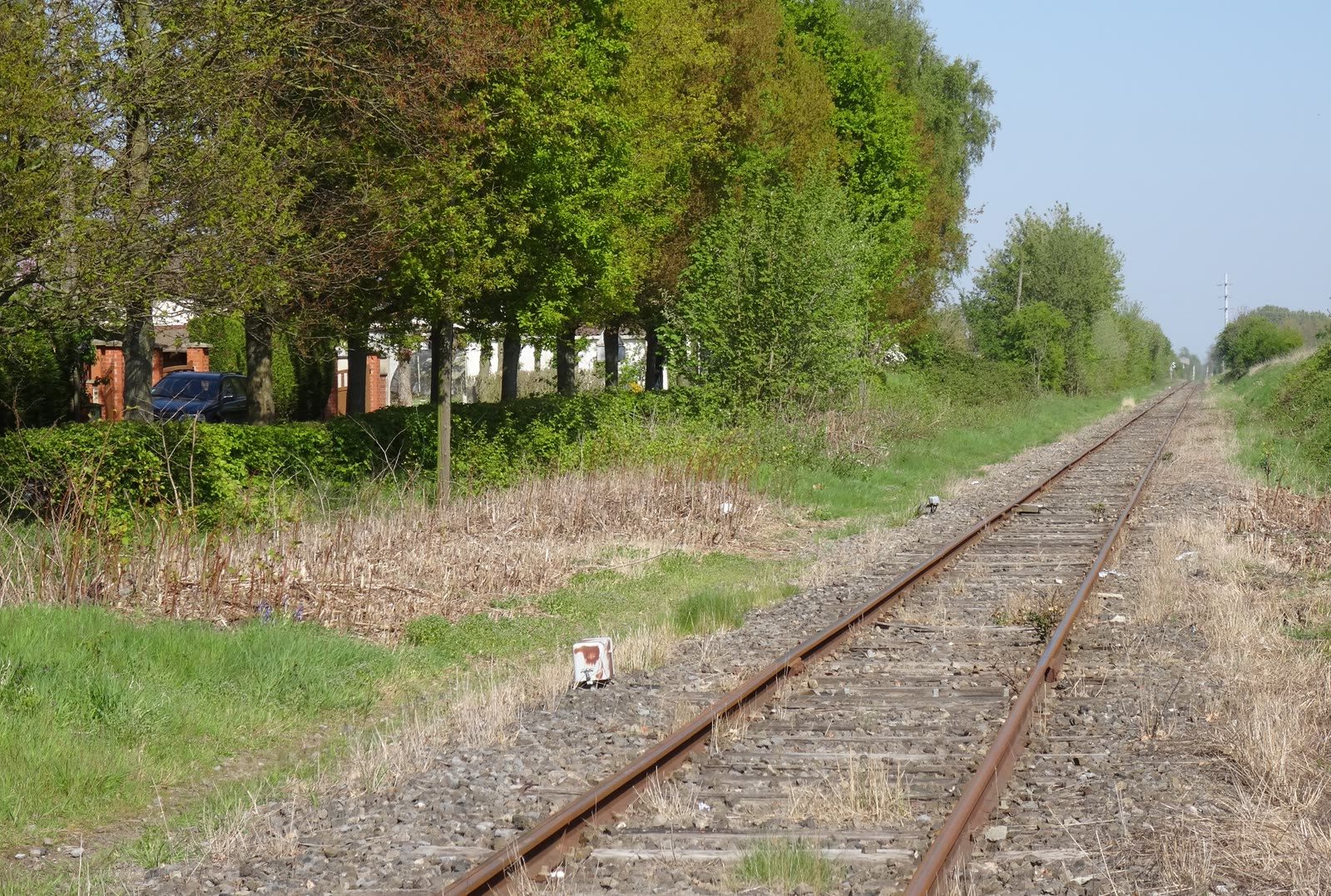
Pictured: the Quarouble railway station area on the Douai–Blanc-Misseron line, photographed in April 2014 as part of a rail-corridor feasibility survey — not a photograph of the 1954 encounter itself, which took place on an open stretch of track beside Dewilde's home rather than at the station building shown here. No photograph of the actual 1954 site, the rail-sleeper marks, or Marius Dewilde at the time of the encounter is known to survive in the public domain; the original gendarmerie and air-police site photographs from September 1954 remain part of the case's archival paper record rather than freely licensed for reuse.
Theoretical Alignment
Quarouble is a foundational case for the Extraterrestrial Hypothesis in French ufology — it is, by most accounts, the first landed-craft, humanoid-occupant, physical-trace case of the modern French UFO era, and it directly shaped how two generations of French researchers described "close encounters of the third kind" years before J. Allen Hynek coined that term. ETH scores only moderately here, not because the report itself lacks the classic structural elements — a landed object, occupants, a paralyzing beam, a genuine physical trace — but because the case's evidentiary chain weakens considerably after its first 24 hours: the physical trace was real and independently measured, but everything else rests on one man's testimony, delivered to a commissioner who was not a trained accident investigator, and that testimony changed shape dramatically across two encounters one month apart and then again across four subsequent decades. The Psycho-Social Hypothesis scores highest of the three frameworks in this file precisely because of that trajectory: contemporary skeptical French press explicitly flagged Dewilde's documented prior head injury and "nervous disorders" within days of the story breaking, the October 10 sequel introduced an almost fable-like new register (seven beings, a caress for a toddler, a docile hen led away) utterly unlike the tense, frightening register of September 10, and Dewilde's own account continued to accumulate dramatic new elements — a locked metal box, alleged government harassment, an unexplained later injury — for the rest of his life, a pattern this file's Observer Credibility section treats as a serious, specific concern rather than mere skeptical color commentary. IDH scores lowest because nothing about the case's own history, unlike Valensole's, ever meaningfully drew a serious researcher toward a multidimensional reading of it.
Background
In September 1954, the commune of Quarouble was a small, unremarkable village of a few thousand residents in the Nord department of northern France, embedded in the dense coal-mining and heavy-industry belt that stretched along the Franco-Belgian border near Valenciennes. The commune sat directly on a rail line, the Douai–Blanc-Misseron line, that served the region's mines and factories, including the Ateliers du Nord de la France (ANF) works at nearby Blanc-Misseron, a manufacturer of railway locomotives and rolling stock straddling the neighboring communes of Quiévrechain and Crespin. Marius Dewilde, born in 1921, had worked as a sailor before settling into a job as a metalworker at the ANF plant, and he and his family lived, apparently rent-free or at low cost, in an old, disused railway crossing-keeper's cottage set back from the tracks near a wooded stretch outside the village — a location isolated enough that, as investigators would soon note, it sat barely a kilometer and a half from the national road connecting Valenciennes to the Belgian customs post at Quiévrain, along a stretch of path locals called "the smugglers' path."
Nothing about France's ufological landscape in the summer of 1954 suggested the storm that was about to break. Reports of "flying saucers" had circulated in France, as elsewhere, since the American "flying saucer" panic began with Kenneth Arnold's June 1947 sighting, tracked informally by small private research circles, but nothing resembling a mass national phenomenon had yet occurred, and the French state had no dedicated investigative body of any kind — that would not exist until CNES created GEPAN in 1977, twenty-three years later. On the evening of September 10, 1954, Dewilde was an ordinary working man doing an ordinary thing: reading indoors after his shift while his wife rested, with no reason to expect that his dog's insistent barking outside was about to make him, however reluctantly, the case around which the entire coming autumn's wave of French sightings would organize itself in the public imagination.
Complete Timeline
| Date / Time | Event |
|---|---|
| ~10:15 PM, Sept. 10, 1954 | Marius Dewilde is reading in his kitchen near Quarouble when his dog begins barking frantically outside. |
| ~10:20–10:30 PM | Dewilde takes a flashlight outside and sees a dark, cheese-cover-shaped mass resting on the railway tracks a few meters beyond his garden fence, then two small humanoid figures moving toward it from a nearby footpath. |
| Moments later | As Dewilde approaches to within a few meters, an intensely bright beam of light — described as green- or blue-tinted — fires from a square opening in the object's side, blinding him and leaving him completely unable to move. |
| Following moments | Still paralyzed but fully conscious, Dewilde hears the beings re-board the craft; a door closes, and the object rises roughly ten meters, rocking slightly, emitting dark smoke, before departing westward toward Anzin with a reddish glow. |
| Shortly after | Dewilde's paralysis lifts. He returns to the house and wakes his wife, who later repeats his account to investigators when he is not present. |
| ~Midnight, Sept. 10–11, 1954 | Dewilde reports the incident to police at Onnaing. |
| Sept. 11, 1954 | Police Commissioner Gouchet travels to Dewilde's home and the site itself, finding Dewilde "trembling in all his limbs" and suffering intestinal contractions; he takes a formal statement and alerts French air police. |
| Sept. 11 (afternoon) | Air police inspectors arrive at Quarouble, measure and photograph five fresh, symmetrical marks on the wooden rail sleepers, and note scorched ballast stones nearby; the DST also collects samples given the site's proximity to the Belgian border. |
| Sept. 12–13, 1954 | Regional and national newspapers — including La Voix du Nord, Nord-Éclair, Le Figaro, France-Soir, and L'Aurore — carry the first reports; L'Aurore publishes a skeptical piece citing Dewilde's prior head injury and floating a "waking hallucination" explanation. |
| Sept. 16, 1954 | Nord-Éclair publishes further coverage as the story spreads nationally. |
| Late Sept.–early Oct. 1954 | France enters the most intense weeks of the autumn 1954 UFO wave, with reports accumulating nationwide; on September 24, six of nine reports that day are later plotted by Aimé Michel along the "Bayonne-Vichy" (BAVIC) orthoteny line — a separate cluster of sightings from Quarouble's own, two weeks earlier. |
| ~11:30 AM–noon, Oct. 10, 1954 | Dewilde's young son alerts him to "a car on the railway"; Dewilde finds a lenticular, porthole-studded disc on the same stretch of track and reports a second encounter with seven small humanoid figures, one of whom gestures toward the child and takes a hen before the group re-boards and departs. |
| Oct. 14, 1954 | The Paris weekly Samedi-Soir publishes a lengthy, dramatized feature on the case, cementing Dewilde's national and, soon after, international press profile as "the contacté of Quarouble." |
| 1958 | Aimé Michel publishes Mystérieux Objets Célestes (English: Flying Saucers and the Straight-Line Mystery), analyzing the 1954 wave that Quarouble opened and introducing his "orthoteny" theory. |
| 1963 | Writer Michel Carrouges publishes Les Apparitions de Martiens, a detailed study of 1954-wave humanoid cases including Quarouble. |
| 1966 | A revised edition of Michel's Mystérieux Objets Célestes is published in French. |
| 1969 | Jacques Vallée discusses the Quarouble case in Passport to Magonia, situating it within his broader folkloric analysis of humanoid encounters. |
| 1980 | Dewilde publishes a memoir, Ne résistez pas aux extra-terrestres ! Le contacté de Quarouble, 26 ans après, with journalist Roger-Luc Mary, adding further detail to his original account. |
| 1994 | An elderly Dewilde, interviewed by researcher Claude Burkel, introduces new claims — alleged government surveillance, an unexplained 1971 loss of his right arm, and a sealed metal object he says he never opened — absent from the 1954 record. |
| 1996 | Marius Dewilde dies, in Tours, having maintained his core account for the rest of his life while it continued to accumulate new detail. |
| 2024–2025 | The seventieth anniversary of the case prompts renewed regional press coverage (France 3 Hauts-de-France, La Voix du Nord) and an independent documentary, Quarouble 1954, l'histoire de Marius Dewilde, revisiting the case for a new audience. |
What Dewilde Saw: The Craft and Its Occupants
Marius Dewilde's own account, given first to Onnaing police that same night and to Commissioner Gouchet the next morning, describes a sequence that began, as so many contact-era accounts do, with an anxious dog. Sometime around 10:15 PM on September 10, 1954, as Dewilde read in his kitchen, his dog began barking with unusual intensity outside. After initially ignoring it, he took a flashlight and went out to investigate, walking toward the railway line that ran close by his home. Beyond his garden fence he saw what he first mistook for an abandoned cart: a dark, motionless mass sitting directly across the rails, which he and the contemporary press subsequently described in terms roughly consistent across accounts — a "cheese cover" or upturned-bowl shape, roughly six meters long and three meters high, resting on the ballast without any visible wheels or landing legs. As he watched, he heard rapid footsteps on a nearby path — the same path locally known for smuggling traffic — and made out two small humanoid figures, each under a meter tall by his estimate, hurrying toward the dark mass. He described them as broad-shouldered relative to their narrow legs, dressed in something resembling heavy diving suits, and wearing large helmets that threw back metallic reflections when his flashlight beam crossed them — a detail he likened to a mirrored visor.
When Dewilde closed the distance to within roughly two meters of the two figures, intending, by his own account, to intercept them, the encounter turned abruptly frightening. A square-shaped opening appeared on the side of the dark mass and emitted an intensely bright beam of light — described in the earliest press coverage as green- or blue-tinted, "like a very powerful magnesium flash" — directly at him. He closed his eyes and tried to call out, but found he could not: not merely too frightened to speak, but physically unable to move any part of his body, a state of total paralysis he insisted, in every retelling for the rest of his life, left him fully conscious throughout. He described hearing, rather than seeing, what followed: footsteps as the two figures returned to the object, a door of some kind closing, and then the craft lifting off the tracks to a height of roughly ten meters, rocking slightly as it rose, emitting a trail of dark smoke from beneath it, before departing rapidly toward the west, in the general direction of Anzin, its surface taking on a reddish-orange glow as it receded. Some contemporary accounts describe a faint whistling sound during the departure; none describe anything resembling a conventional engine noise.
The Paralysis, the Report, and Commissioner Gouchet
Dewilde's paralysis lifted within what he described as a short interval after the object departed — contemporary accounts do not specify an exact duration, in contrast to some later close-encounter cases in this catalogue where witnesses gave more precise timing. Badly shaken, he returned to the house and woke his wife, who would later repeat his account to investigators on an occasion when Dewilde himself was not present, an early and largely overlooked detail that at least establishes his story was told consistently to a second person within the household on the night itself, even if she was not herself a direct witness to the encounter. Rather than waiting until morning, Dewilde went to report the incident to police at nearby Onnaing around midnight. The following morning, Police Commissioner Gouchet traveled to Dewilde's home and to the site itself to take a formal statement. Gouchet's own on-the-record impression of Dewilde's physical and emotional state at that meeting has been repeated across multiple contemporary and later sources: a man visibly trembling in all his limbs and suffering intestinal contractions — a level of acute physiological distress investigators at the time, and this file now, read as difficult to reconcile with a calculated hoax staged purely for attention, though it is equally consistent with a witness who had experienced a genuinely frightening subjective event, hallucinatory or otherwise, and not proof in itself that a physical craft had been present. Persuaded of Dewilde's sincerity if not necessarily of his interpretation, Gouchet alerted French air police, who arrived at the site that same afternoon to begin the physical examination discussed in detail in this file's Physical & Material Assays section above.
The Press Storm: Samedi-Soir and the World's Newspapers
Word of the Quarouble sighting reached the regional press within a day. La Voix du Nord, Nord-Éclair, and other Nord-department papers ran the first accounts on September 12–13, 1954, and within days the story had jumped to the national press — Le Figaro, Combat, France-Soir, L'Aurore, and Paris-Presse among them. Coverage split almost immediately along editorial lines that would recur across the whole autumn 1954 wave: some papers treated Dewilde's account and the physical trace at face value as a serious, still-unexplained event; others, most pointedly L'Aurore, ran openly skeptical pieces — one headlined, in translation, "There Are No Martians" — explicitly citing Dewilde's documented prior head injury and floating a "waking hallucination" diagnosis, a well-recognized if uncommon medical phenomenon in which a person experiences vivid, involuntary perceptual content while objectively awake. Other outlets, including the left-leaning weekly Franc-Tireur, published more analytical pieces questioning whether a regional screening of the 1953 American film adaptation of The War of the Worlds, then playing in local cinemas, might be priming audiences across the Nord department to interpret ambiguous nighttime stimuli as alien craft — a specific, dated contemporary observation about media influence on the wave, not a retrospective theory invented decades later.
The single most consequential piece of press coverage came over a month after the initial story broke: on October 14, 1954, the Paris weekly Samedi-Soir published a lengthy, novelistic feature reconstructing the night of September 10 in dramatic detail, quoting the air police inspector's line about landing gear that "would not leave different traces" and giving Dewilde's account a narrative polish and a national readership far beyond what the initial regional wire coverage had achieved. It was Samedi-Soir's feature, more than any single earlier report, that fixed Dewilde in the French public imagination as "le contacté de Quarouble" — a phrase that would follow him, and shape how journalists and researchers approached him, for the rest of his life. International wire coverage followed within weeks, and by late October 1954 correspondents from outside France, including at least one American paper (the Evening Star, October 19, 1954), were covering the case as part of a wider story about the French "flying saucer" panic then dominating European headlines.
The October 10 Second Encounter
Exactly one month after the first sighting, on the morning of October 10, 1954, Dewilde's young son — roughly three and a half years old — alerted his father to what he described as "a car on the railway." Dewilde went to look and reported finding, on the same general stretch of track, a very different-looking object: a lenticular, disc-shaped craft roughly six meters in diameter and a meter high, considerably flatter and more classically "flying saucer"-shaped than the "cheese cover" mass he described a month earlier, with a rectangular opening at its base and a row of what he described as portholes along its rim. Where the first encounter had involved two figures glimpsed briefly at night before a frightening paralysis cut the interaction short, Dewilde's account of October 10 describes an entirely different kind of scene, unfolding in broad daylight: seven small humanoid figures, this time given as roughly 1.10 to 1.30 meters tall, wearing dark gray, tight-fitting suits with helmets bearing transparent faceplates. One, apparently a leader, approached Dewilde and his son directly, gently touched the child's head, tapped Dewilde on the shoulder while smiling, and spoke in an unintelligible language before returning to the group, which then captured a hen from Dewilde's property — an animal that, in Dewilde's retelling, allowed itself to be taken with none of the panic a chicken would ordinarily show — before re-boarding the craft and departing.
This file states plainly what most serious secondary treatments of the case, including the retrospective assessment of Aimé Michel's own work by later researchers, have also concluded: the October 10 encounter reads as tonally and structurally distinct from September 10 in ways that go well beyond ordinary variation in a genuine two-part experience. The first encounter is tense, threatening, nocturnal, and brief, ending in an act investigators could independently and physically verify; the second is gentle, almost folkloric, played out in daylight in front of a small child, and produced no comparable physical trace that this file has located a documented contemporary investigation of. Whether the October 10 account reflects a second, genuinely independent event, an elaboration Dewilde constructed (consciously or not) in response to a month of intense press attention and public fascination, or some combination of the two, is not a question this file can resolve on the available record — but it is precisely the kind of internal inconsistency the Observer Credibility section above treats as a serious, specific reason for caution, not an incidental footnote.
Aimé Michel, Orthoteny, and the Wider 1954 Wave
Quarouble's lasting historical importance in French ufology has as much to do with what it triggered as with what happened in Dewilde's own garden. The autumn of 1954 saw what remains, by most measures, the largest concentrated national UFO wave France has ever experienced — estimates for the total number of individual reports across the following two months range from several hundred into the low thousands, concentrated with particular intensity in the Nord-Pas-de-Calais region where Quarouble sits, but reaching every corner of the country by late October. Aimé Michel, then a working radio engineer and writer rather than a professional scientist, began systematically collecting and cross-referencing the wave's reports that same autumn, reportedly at the suggestion of his friend, the filmmaker and writer Jean Cocteau, who asked him whether the sightings might follow some discoverable order. Plotting reports on Michelin road maps, Michel found that clusters of same-day sightings appeared to fall disproportionately along straight lines rather than scattering randomly — a pattern he named "orthoteny" (from the Greek for "stretched straight") and presented most famously through the September 24, 1954 "Bayonne-Vichy" line, on which he argued six of nine reports from that single day aligned with striking precision.
Quarouble's September 10 sighting predates that particular alignment by two weeks and is not itself one of the BAVIC line's plotted points, but the case functions in Michel's own later writing, and in nearly every subsequent history of the wave, as the event that opened the autumn's reporting and drew the sustained national press attention that made the following weeks' flood of sightings visible as a single phenomenon in the first place, rather than as scattered local curiosities. Michel published his full analysis in 1958 as Mystérieux Objets Célestes (translated into English the same year as Flying Saucers and the Straight-Line Mystery, with a revised French edition in 1966), a book that made orthoteny, for a time, one of the most widely discussed — and, among statisticians and later researchers including Jacques Vallée, one of the most sharply disputed — theoretical frameworks in twentieth-century ufology. Computer-assisted re-analysis of orthoteny by Vallée and later by researcher Jean Sider found that similar apparent alignments could be produced from random or near-random report locations at a statistically unremarkable rate, a finding that has left orthoteny widely regarded today as an interesting but unproven pattern rather than an established feature of the underlying phenomenon — a judgment this file's own Theoretical Alignment section reflects in treating Michel's broader analytical project as historically important without treating orthoteny itself as validated evidence for any specific hypothesis.
Later Life and Escalating Claims
Marius Dewilde spent the rest of his life as, in effect, a minor public figure defined by a single night in 1954. He gave numerous press and television interviews in the years that followed, by every account never once retracting or substantially revising the core elements of his original testimony, and in 1980 he collaborated with journalist Roger-Luc Mary on a book-length memoir, Ne résistez pas aux extra-terrestres ! Le contacté de Quarouble, 26 ans après, published by Éditions du Rocher, which folded twenty-six years of retellings, press clippings, and personal reflection into a single narrative. The most significant new material entered the record considerably later still: in a 1994 interview with researcher Claude Burkel, an elderly Dewilde, by then retired and living in Tours, introduced claims entirely absent from the 1954 documentary record — that he had been subjected to ongoing government surveillance and mail interception in the decades since, that he had lost his right arm in an unexplained 1971 incident he connected to the case, and that he possessed a small, sealed metal object, reportedly recovered in connection with a later encounter, that he said he had never succeeded in opening. This file reports these later claims because an honest account of the case requires acknowledging how it grew over time, but it treats them with considerably less confidence than the contemporaneous 1954 record: they surface forty years after the fact, from a single aging source, with no independent corroboration this file has located, and they fit a broader, well-documented pattern in ufology in which long-running contactee narratives accumulate increasingly dramatic detail across repeated retellings — the same general concern, on a larger scale, that this file's Observer Credibility section raises about the gap between September 10 and October 10, 1954 themselves. Dewilde died in 1996.
Key Researchers
- Aimé Michel (1919–1992) — French radio engineer and writer whose 1958 book Mystérieux Objets Célestes (English: Flying Saucers and the Straight-Line Mystery) analyzed the autumn 1954 wave Quarouble opened and introduced his "orthoteny" theory, developing it with input from writer Jacques Bergier and, by his own account, on the suggestion of filmmaker Jean Cocteau.
- Michel Carrouges — French writer whose 1963 book Les Apparitions de Martiens gave one of the earliest detailed literary treatments of Quarouble alongside other 1954-wave humanoid cases.
- Jacques Vallée — Computer scientist and ufologist who discussed Quarouble in his 1969 book Passport to Magonia and later, with researcher Jean Sider, conducted computer-assisted statistical re-analysis casting significant doubt on the validity of Michel's orthoteny alignments.
- Graeme Rendall — UFO historian whose book The French UFO Wave of 1954 situates Quarouble as the case that opened the country's largest documented national UFO wave.
- Roger-Luc Mary (1930–2002) — French journalist who collaborated with Dewilde on his 1980 memoir, Ne résistez pas aux extra-terrestres !, collecting and commenting on his account twenty-six years after the case.
- Claude Burkel — Independent researcher whose 1994 interview with an elderly Dewilde introduced the case's most dramatic later claims, including alleged government surveillance and a sealed metal object.
Cultural Impact
Quarouble's cultural footprint in France is considerably larger than the case's relatively modest evidentiary record might suggest, precisely because of its position at the head of the autumn 1954 wave. Dewilde became, almost overnight, France's first widely known "contacté," a term the French press used for him specifically and that would go on to describe an entire later category of witness in French ufology. The Samedi-Soir feature of October 14, 1954 is still cited by French media historians as a landmark moment in how a national tabloid press covered an unexplained phenomenon, and the case's fusion of a sympathetic, blue-collar witness with a genuinely puzzling physical trace gave the broader 1954 wave a human face that abstract statistics about thousands of individual reports could not. The case's seventieth anniversary in 2024 prompted renewed regional press coverage and an independent documentary project, Quarouble 1954, l'histoire de Marius Dewilde, produced by a team of Valenciennes-based researchers and released through France Télévisions' regional network — seventy years on, still described locally as one of the region's most enduring unsolved mysteries.
Key Witnesses
Marius Dewilde
A 34-year-old metalworker living in a former railway crossing-keeper's cottage, Dewilde reported the September 10, 1954 encounter with a landed craft and two humanoid figures that left him temporarily paralyzed, and a second, markedly different encounter with his young son one month later. Described by his employer and by the investigating commissioner as a serious, level-headed man, he nonetheless carried a documented prior head injury that contemporary skeptical press cited, and his account continued to accumulate significant new detail across the following four decades, culminating in a 1980 memoir and a 1994 interview introducing further dramatic claims. He died in 1996.
Marius Dewilde's Son
Dewilde's young son first alerted his father to the object on the railway during the October 10, 1954 encounter and was reportedly approached and touched on the head by one of the seven humanoid figures Dewilde described. As a very young child, he is not treated in this file, nor in any serious secondary source this file has located, as an independent corroborating witness in the evidentiary sense — his role in the record comes entirely through his father's retelling.
Commissioner Gouchet
The police commissioner who traveled to Dewilde's home the morning after the first encounter, took his formal statement, and personally observed him "trembling in all his limbs" and suffering intestinal contractions — a physical state Gouchet's own account cites as evidence against a calculated hoax. It was Gouchet who alerted French air police, setting the physical-trace investigation in motion within roughly a day of the report.
The Five Observables Assessment
The Five Observables framework, developed by former AATIP director Luis Elizondo, is used to classify UAP encounters by performance characteristics exceeding known technology of their era. Applied to Quarouble, the framework returns a genuinely mixed result reflecting the case's split evidentiary character — a real physical trace alongside an increasingly contested single-witness narrative:
Assessment: Anti-Gravity Lift is rated speculative: Dewilde described the object rising vertically off the rails with no visible wheels, legs, or conventional propulsion mechanism, but this rests entirely on his own unverified description with no instrumented corroboration of any kind. Instant Acceleration and Hypersonic Velocity are both rated absent: Dewilde's own account describes a comparatively slow, near-silent departure with a brief hover rather than any abrupt or extreme velocity change. Low Observability is rated present on a narrow but genuine basis — the object was reportedly dark, silent apart from a faint whistle, and unlit except during the light-beam moment, making it plausibly difficult to see or hear at night even at close range, a description broadly consistent across both the primary witness account and the case's leading conventional explanation involving a low-flying, engine-idled aircraft. Trans-Medium travel is rated absent; no transition between air, water, ground penetration, or space was ever reported. Taken together, the Five Observables data reflects a case whose reported phenomenology is unremarkable by the standards of more instrumented modern encounters in this catalogue — its significance rests almost entirely on the physical trace and its early place in French ufological history, not on any exotic performance characteristic.
Evidence Assessment
Supporting Anomalous Origin
- French air police, gendarmerie, and the DST all independently examined the physical trace within roughly a day, a genuinely fast, multi-agency response for a single-witness civilian report.
- Railway engineers' own estimate that the rail-sleeper marks required roughly 30 tons of static load is difficult to reconcile with any lightweight civilian vehicle, whether a helicopter or ground vehicle, that could plausibly have used the smugglers' path unnoticed.
- Commissioner Gouchet, a trained law-enforcement official with no evident stake in a sensational outcome, personally observed Dewilde in a state of visible acute physical distress consistent with a genuine, frightening experience rather than a calmly staged hoax.
- Dewilde's employer and colleagues described him, prior to the case, as an unremarkable, level-headed man with no history of seeking attention.
Supporting Conventional Explanation
- Dewilde's home sat directly beside a route locally known for cross-border smuggling activity, barely two kilometers from a Belgian customs post — the specific circumstance that led the earliest investigators themselves to consider a smuggling helicopter as their working hypothesis.
- Contemporary skeptical press specifically identified a documented prior head injury and reported nervous disorders in Dewilde's medical history, cited in support of a "waking hallucination" explanation.
- The October 10 second encounter is tonally and structurally unlike the first in ways — daylight setting, seven gentle rather than two threatening figures, a docile stolen hen, a child petted on the head — that read to many later researchers as a qualitatively different kind of account.
- Dewilde's testimony continued to grow substantially across a 1980 memoir and a 1994 interview, introducing dramatic new claims (government surveillance, an unexplained lost arm, a sealed metal box) entirely absent from the 1954 record, a well-documented pattern in long-running contactee narratives.
- The wave of "War of the Worlds" screenings across the Nord region that autumn was flagged by contemporary French press itself, not retrospectively, as a plausible cultural primer for interpreting ambiguous nighttime stimuli as alien craft.
Why "Disputed"
This file rates the Marius Dewilde case DISPUTED rather than "Credible" or "Debunked" because its two strongest pieces of evidence point in genuinely different directions, and neither this file nor any investigation conducted in the seventy-plus years since has resolved that tension. What is not seriously disputed: a real physical trace was pressed into the rail sleepers at Quarouble, examined and measured within roughly a day by three independent official bodies rather than reconstructed after the fact from memory, and railway engineers' own contemporary weight estimate for that trace is difficult to reconcile with any conventional civilian vehicle small enough to match Dewilde's own description of the object. Also not seriously disputed: Dewilde's own testimony, the case's only first-hand account of what actually happened, changed character sharply between two encounters a month apart and continued to accumulate substantial new, uncorroborated detail for the rest of his life, a documented pattern that would, on its own, sharply lower this file's confidence in almost any other case in this catalogue. What remains genuinely open is the reconciliation between those two facts: a physical trace this strong is hard evidence of something unusual having happened at that specific spot on the night of September 10, 1954, but the single witness whose testimony gives that trace its meaning is also, by the case's own documented history, not a source whose account can be taken as reliably fixed and unembellished. A case this evidentially split — genuinely strong physical corroboration paired with a genuinely compromised witness record — is exactly what this site's "Disputed" rating exists to describe.
Sensor & Instrumentation Detection Profile
Quarouble is a pre-instrumentation, human-observation case in every respect except one: the physical trace. There was no radar coverage of rural Nord department in 1954, no photograph or film of either encounter, no audio recording of any sound Dewilde described, and no independent optical apparatus of any kind trained on the site. Detection and description rest entirely on Dewilde's own unaided eyesight and a hand-held flashlight, corroborated only distantly by two small groups of other local residents (two and three people respectively, per contemporary press) who separately reported a reddish light in the sky the same night without directly witnessing the close encounter itself. The case's only non-testimonial data is physical rather than sensor-based: the marks pressed into the wooden rail sleepers, examined, measured, and photographed in place within roughly a day by Onnaing gendarmerie, French air police (police de l'air), and DST agents, and later analyzed for load-bearing weight by railway engineers — the same basic evidentiary shape as the 1965 Valensole case eleven years later, minus Valensole's disputed soil-chemistry follow-up. That distinction matters for how this file weighs the case: Quarouble's evidentiary strength is a rapidly and multiply examined physical trace plus a single, increasingly embellished witness, not any recorded signal of any kind.
Environmental & Geospatial Context
Quarouble sits in the flat, densely populated mining and industrial basin of the Nord department, in what was in 1954 one of France's most heavily worked coal and metalworking regions, barely two kilometers from the Belgian customs post at Quiévrain. Dewilde's home was an isolated former crossing-keeper's cottage set back from a country road, near the edge of a small wood, along a route locally known as "the smugglers' path" for its long-standing use by cross-border smugglers moving goods past the nearby customs post — a detail investigators themselves flagged early and that later fed the case's leading conventional explanation, discussed at length below. The immediate landscape offered little in the way of unusual lighting, elevated vantage points, or aviation traffic: this was ordinary agricultural and light-industrial countryside, quiet enough at 10:30 PM that a barking dog and a flashlight were sufficient to notice anything at all out of place. September 10, 1954 was a clear, cool early-autumn night with no reported unusual meteorological activity; the October 10 return encounter occurred at midday under unremarkable daylight conditions. Geospatially, the case's single most consequential fact may be its date rather than its geography: Quarouble's sighting landed in the opening days of what would become, within two to three weeks, a nationwide wave of thousands of French UFO reports — a wave whose geographic clustering and alleged straight-line "orthotenic" alignments Aimé Michel would spend years mapping, though Quarouble's own September 10 date places it before, not on, the most famous of those alignments, the September 24 Bayonne-Vichy ("BAVIC") line.
Observer Credibility & Occupational Profile
Marius Dewilde was, by the account of his employer and by the commissioner who first took his statement, a serious, level-headed 34-year-old with a reputation among colleagues at the Ateliers du Nord de la France (ANF) rolling-stock works at Blanc-Misseron as an unremarkable, grounded man — not someone with any evident history of seeking attention or telling tall tales. That assessment, repeated across multiple contemporary sources, is genuinely significant and this file does not minimize it. But it sits alongside two specific, documented complications that the contemporary French press itself raised within days of the story breaking, not decades later with the benefit of hindsight: Dewilde had suffered a serious head injury roughly a year before the encounter, after which he reportedly exhibited some nervous disorders, and the right-leaning Paris daily L'Aurore published a skeptical piece explicitly citing that history in support of a "waking hallucination" explanation. Commissioner Gouchet, who took Dewilde's initial statement, is on record describing him as visibly trembling and suffering intestinal contractions when questioned — a physical state investigators read as evidence against a calculated hoax, though this file notes that acute physiological distress is also consistent with a genuine, frightening hallucinatory or misperceived-and-then-elaborated experience, not proof of an external craft. The credibility picture becomes considerably more complicated after the primary encounter: the October 10 second sighting introduced elements (seven occupants, an affectionate gesture toward Dewilde's toddler son, a docile stolen hen) in a wholly different narrative register from the tense, threatening first encounter, and Dewilde's own account continued to grow over the following four decades — a 1980 memoir written with journalist Roger-Luc Mary, and a 1994 interview with researcher Claude Burkel in which an elderly Dewilde introduced dramatic new claims (alleged government surveillance and mail interception, an unexplained loss of his right arm in 1971, and a sealed metal object he said he had never been able to open) entirely absent from the contemporary 1954 record. This file treats that trajectory the way it treats comparable embellishment patterns in other cases on this site: not proof the original 1954 report was fabricated, but a serious, independently documented reason the file's overall confidence is capped well below what a single, unwavering witness account would earn.
Physical & Material Assays
Quarouble's evidentiary record rests on a genuinely fast, multiply-corroborated physical trace examination — a real point in the case's favor relative to many single-witness contact reports. Onnaing gendarmerie reached the site within hours of Dewilde's initial report on the night of September 10; French air police (police de l'air) inspectors arrived the following afternoon and conducted the detailed measurement and photographic documentation; and agents of the DST (Direction de la Surveillance du Territoire, France's domestic counter-intelligence service) also collected samples, their involvement most plausibly explained by the site's location barely two kilometers from the Belgian border rather than by any early belief the case involved a genuine security threat. Investigators found five fresh, symmetrical indentations pressed into the wooden rail sleepers, arranged in a single line: three central marks spaced roughly 43 centimeters apart, flanked by two outer marks roughly 67 centimeters further out, each impression covering approximately 4 square centimeters and pressed deeply enough into the wood that one inspector is quoted in the contemporary press stating flatly that "an apparatus which would have landed on skids rather than wheels, like our aircraft, would not leave different traces." Railway engineers subsequently calculated that producing marks of that depth in seasoned rail-tie timber would have required a static load on the order of 30 tons — a figure this file reports as the contemporary investigators' own estimate, not an independently re-verified modern calculation, and one considerably harder to reconcile with witness descriptions of a small, car-sized-to-van-sized craft than with a much heavier vehicle. Ballast stones near the marks appeared scorched or carbonized, a detail multiple contemporary sources describe consistently. No footprints were found around Dewilde's own house, which investigators attributed to ground hardened by regular cattle traffic rather than treating as evidence against the report. Later, considerably less rigorous secondary accounts have added claims of anomalous radioactivity at the site; this file has not located a chain-of-custody-documented contemporary source for that claim and treats it, unlike the rail-sleeper marks and the weight estimate, as unverified.
Historical Precedents & Archive Matches
Quarouble sits at the head of a lineage this catalogue tracks closely across French ufology: the landed-object, physical-trace close encounter, most directly echoed eleven years later by the July 1965 Valensole Incident, in which lavender farmer Maurice Masse reported a landed egg-shaped craft, two small humanoid beings, his own temporary paralysis, and a ground trace gendarmerie investigators documented within roughly a day — a strikingly similar evidentiary shape to Quarouble, right down to the single primary witness and the absence, in both cases, of any contemporaneous scientific state UAP office, since CNES would not create GEPAN until 1977, twenty-three years after Quarouble and twelve after Valensole. Internationally, Quarouble is frequently compared to the April 1964 Socorro Incident, in which police officer Lonnie Zamora reported a landed egg-shaped craft and left behind physical ground traces independently confirmed by fellow officers within minutes — a case with genuine multi-witness, on-scene law-enforcement corroboration Quarouble lacks, though both cases share the same basic template of a physical trace examined quickly by uniformed officials responding to a single civilian's report. Within its own moment, Quarouble is historically significant less as an isolated case than as the opening act of a specific, well-documented phenomenon: the autumn 1954 French UFO wave, which press and later researchers estimate produced somewhere between several hundred and several thousand individual reports across France between late August and early November of that year, concentrated with particular intensity in the Nord-Pas-de-Calais region where Quarouble itself sits. Aimé Michel's subsequent cartographic analysis of that wave, published as Mystérieux Objets Célestes in 1958 (English translation, Flying Saucers and the Straight-Line Mystery, also 1958, with a revised French edition in 1966), remains the most influential single work connecting Quarouble to the broader pattern of reports that followed it.
Material Analysis
Quarouble's Material Analysis rests on a single, well-documented physical trace: the five marks pressed into the wooden rail sleepers beside Dewilde's home, examined and measured by French air police within roughly a day of the report. Each mark covered approximately 4 square centimeters, arranged in a single line — three central marks spaced roughly 43 centimeters apart, flanked by two outer marks a further 67 centimeters out — and pressed deeply enough into the seasoned timber that investigating air police explicitly ruled out an ordinary wheeled vehicle, on the reasoning that "an apparatus which would have landed on skids rather than wheels, like our aircraft, would not leave different traces." Railway engineers subsequently calculated that reproducing marks of that depth in rail-tie timber would require a static load in the range of 30 tons, a figure this file reports as the contemporary investigators' own period estimate rather than an independently re-verified modern engineering calculation. Nearby ballast stones showed scorching or carbonization consistent with contemporary descriptions, though no instrument-measured temperature or duration of heating has survived in the sources this file has located. No footprints were recovered around Dewilde's own house, which investigators attributed to ground compacted by regular cattle traffic. Claims of anomalous radioactivity at the site appear only in later, considerably less rigorous secondary retellings; this file has not located a chain-of-custody-documented contemporary source for that specific claim and does not treat it as established.
Supporting a Genuinely Unusual Stimulus
- Three independent official bodies (gendarmerie, air police, and DST) examined and measured the same physical trace within roughly a day, an unusually fast and multiply-corroborated response.
- The estimated 30-ton static load is difficult to reconcile with the small, lightweight object Dewilde himself described, a genuine and still-unresolved internal tension in the case's own physical evidence.
Supporting a Mundane Origin
- The weight estimate itself is a period calculation this file has not been able to verify against a modern re-analysis, and a heavier-than-described mundane object (a stalled or improvised heavy vehicle) remains a live possibility investigators of the time did not exhaustively rule out.
- No footprints, tire tracks, fuel residue, or debris beyond the sleeper marks and scorched ballast were recovered, leaving the physical record narrower than a fully instrumented crash-retrieval case would provide.
The Conventional Explanation Candidate
A Smuggling Helicopter or Improvised Vehicle
The explanation investigators themselves considered first, and the one this file treats as the strongest single conventional candidate, holds that Dewilde encountered a low-flying helicopter or other improvised vehicle engaged in cross-border smuggling rather than any anomalous craft. The circumstantial case for this reading is genuinely strong on its own terms: Dewilde's home sat directly beside a route locally known for decades as "the smugglers' path," barely a kilometer and a half from the national road connecting Valenciennes to the Belgian customs post at Quiévrain, and a low-flying, engine-idled aircraft settling briefly on or beside an isolated rural rail line at night, its crew fleeing on foot when discovered by a barking dog and an approaching civilian with a flashlight, would produce a broadly similar phenomenology to Dewilde's own account: a dark, largely silent mass, human-scale figures moving quickly away from it on foot, and a light used defensively to blind and disorient an unwelcome witness rather than to communicate. Period CIA intelligence summaries of the broader 1954 European wave explicitly note that French air police themselves considered some September 1954 landing reports to be smuggling-related rather than aerial phenomena, corroborating that this was a live, contemporaneously considered hypothesis rather than a theory invented after the fact.
Where the Smuggling Theory Falls Short
Its central weakness is the physical trace itself: the roughly 30-ton weight estimate railway engineers derived from the depth of the rail-sleeper marks sits far outside the plausible weight range of any 1954-era civilian helicopter or improvised ground vehicle, which would typically weigh well under two tons fully loaded. No wreckage, fuel residue, tire tracks, or any other physical signature consistent with a helicopter or ground vehicle was recovered at the scene, and no contemporary investigation ever identified a specific smuggling operation, vehicle, or suspect connected to the site. The theory also does not obviously account for the October 10 second encounter's very different craft description and its far gentler, more overtly theatrical character.
Waking Hallucination
A second candidate, raised explicitly by the skeptical French press within days of the story breaking rather than proposed decades later, holds that Dewilde experienced a "waking hallucination" — a recognized, if uncommon, medical phenomenon in which a person perceives vivid sensory content while objectively conscious and awake — potentially connected to the head injury he had sustained roughly a year earlier. This candidate is strengthened by Dewilde's own documented medical history and by the tonal shift and escalating detail of his later accounts, patterns broadly consistent with a subjective experience later elaborated through repeated retelling. It is weakened by the independently verified physical trace, which a purely subjective hallucination cannot account for on its own, and by Commissioner Gouchet's own on-the-record assessment that Dewilde's acute physical distress the following morning did not read to him as consistent with fabrication — though acute distress is equally consistent with a genuine hallucinatory experience as with an externally caused one.
Deliberate Hoax
A third candidate holds that Dewilde staged some or all of the encounter, whether for attention, financial gain from later book and media deals, or some combination of motives. This file rates it the weakest of the three primary candidates: no contemporary investigator who examined Dewilde in person concluded he was hoaxing, his employer's independent assessment of his character before the case predates any incentive to fabricate, and staging a 30-ton-force physical trace on an active rail line without leaving any trace of the staging equipment itself would have been a considerable undertaking for a single working man acting alone. It cannot be fully dismissed, however, given that Dewilde did go on to profit from the case's notoriety across four decades of interviews, a memoir, and continued media appearances, and given that his account's later escalations (the 1980 memoir, the 1994 interview's dramatic new claims) are more consistent with an account being actively built over time than with a fixed, unwavering memory of a single external event.
Smuggling Helicopter / Improvised Vehicle
Plausible InconclusivePLAUSIBLE — strong circumstantial fit, favored by the original investigators themselves. INCONCLUSIVE — the weight estimate remains a significant unresolved obstacle.
Waking Hallucination
Plausible Does Not AccountPLAUSIBLE for the subjective experience. Does not account for the independently measured physical trace.
Deliberate Hoax
PossiblePossible, but not favored by any contemporary investigator with direct access to the witness or the site.
Related Cases
Confirmed Documents & Official Records
GEIPAN's public case database, which has progressively published original gendarmerie procès-verbaux from the 1954 wave; Quarouble itself predates GEPAN's 1977 founding by 23 years and was never subject to a contemporaneous state scientific investigation.
UNCLASSIFIED (public archive)The CIA's declassified UFO collection includes period intelligence summaries of the 1954 European "flying saucer" wave, among them contemporary notes that some September 1954 French landing reports were considered by local air police to be smuggling-related rather than aerial phenomena — directly relevant background to Quarouble's own leading conventional explanation.
UNCLASSIFIED (declassified)Search Government Archives Directly
Further Reading — Recommended Literature
Flying Saucers and the Straight-Line Mystery
The foundational study of the autumn 1954 French UFO wave that Quarouble opened, by the researcher who developed the controversial "orthoteny" straight-line alignment theory from its reports.
Passport to Magonia: On UFOs, Folklore, and Parallel Worlds
Discusses the Quarouble case directly within Vallée's broader folkloric analysis of humanoid-occupant encounters, and later informed his statistical critique of orthoteny.
The French UFO Wave of 1954
A modern, dedicated history of the wave Quarouble opened, situating Dewilde's case within the full scope of France's largest documented national UFO flap.
The UFO Encyclopedia, 4th Edition
The definitive UFO reference work, with a detailed entry situating Quarouble within the wider history of French and international humanoid-occupant cases.
The UFO Experience: A Scientific Inquiry
Formalized the Close Encounter classification system, including the Third Kind (CE-3) category under which Quarouble's occupant sighting is catalogued.
Essential Viewing
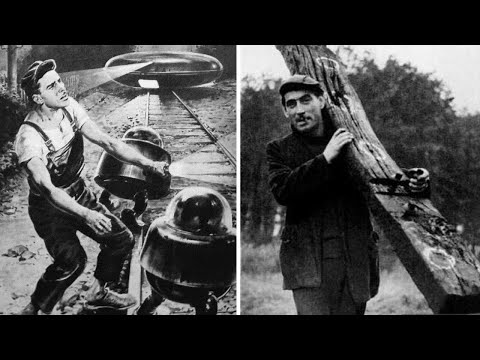
Marius DeWilde on Witnessing a Landed UFO and Two 3 ft. Tall Beings
Eyes On Cinema's archival-footage account of Dewilde's own description of the September 10, 1954 encounter.
Quarouble 1954, l'histoire de Marius Dewilde
France 3 Hauts-de-France's regional public-broadcast segment revisiting the case and its enduring local legacy.

1954: UFO Landing Near Quarouble
The Hidden Truth's documentary-style overview of the encounter and the physical trace investigation.
![1954 [CASE] Marius Dewilde saw a UFO land, two beings walking around](/images/thumbs/6VaRr_rWyuQ.jpg)
1954 [CASE] Marius Dewilde Saw a UFO Land, Two Beings Walking Around
UFOB | Your UAP Library's concise case-file summary of the timeline and physical evidence.
J'ai enquêté sur le plus troublant cas d'OVNI en France — Quarouble 1954
Slash Enquêtes' French-language investigative deep-dive into the case's evidence and remaining open questions.
Sources
- Wikipedia. "Marius Dewilde." en.wikipedia.org
- Wikipedia. "Quarouble." en.wikipedia.org
- Wikipedia. "Aimé Michel." en.wikipedia.org
- Gross, Patrick. "UFOs at Close Sight: The 1954 French Flap, September 10, Quarouble, Nord." ufologie.patrickgross.org
- Gross, Patrick. "UFOs at Close Sight: The 1954 French Flap, October 10, Quarouble, Nord." ufology.patrickgross.org
- Gross, Patrick. "UFOs at Close Sight: The Newspapers, the Marius Dewilde Case, Quarouble, France, 1954" (Samedi-Soir, October 14, 1954 transcript and analysis). ufologie.patrickgross.org
- RR0 (Rationalist Encyclopedia). "Marius Dewilde." rr0.org
- Pelicanist (Magonia Review). "First Read: Aimé Michel and the Straight Line Mystery." pelicanist.blogspot.com
- France 3 Hauts-de-France / France Info. "Il a vu un ovni et des extraterrestres : la célèbre affaire Marius Dewilde de 1954 ressuscitée dans un documentaire inédit." france3-regions.franceinfo.fr
- L'Observateur. "Nord : en 1954, d'étranges phénomènes ont été observés." lobservateur.fr
- L'Observateur. "Nord – Valenciennes : la folle enquête sur l'une des plus passionnantes affaires d'OVNI de l'histoire." lobservateur.fr
- ICI (France Bleu Nord-Pas-de-Calais). "L'ovni de Quarouble : une énigme qui perdure." ici.fr
- Above the Norm News. "Silent Craft on the Tracks: The Marius Dewilde UFO Encounter." abovethenormnews.com
- Informe OVNI. "El asombroso encuentro de Marius Dewilde (1954)." informeovni.net
- Mystère du Monde. "La rencontre de Marius Dewilde (1954)." mysteredumonde.com
- RR3 / Extraterrestre.org. "Marius Dewilde." extraterrestre.org
- Quarouble 1954 (documentary project). Official site. quarouble1954.com
- Central Intelligence Agency. FOIA Electronic Reading Room, UFO Collection (declassified 1979 review of the 1954 European "flying saucer" wave). cia.gov
- GEIPAN (CNES). Official UAP study group of the French space agency. cnes-geipan.fr
- New Dawn Magazine. "Aimé Michel: Tribute to the Great French Ufologist." newdawnmagazine.com
- Bibliothèque RDO CF. "Les apparitions de Martiens — Michel Carrouges — 1963." bibliothequerdo-cf.fr
- Bibliothèque nationale de France (BnF). Catalogue général: "Ne résistez pas aux extra-terrestres ! Le contacté de Quarouble, 26 ans après." catalogue.bnf.fr
- Wikimedia Commons. Category: Gare de Quarouble (photographic documentation of the Douai–Blanc-Misseron rail line, 2014). commons.wikimedia.org
- Wikipedia. "Blanc-Misseron" (fr.wikipedia.org, Ateliers du Nord de la France rolling-stock works). fr.wikipedia.org
- Wikipedia. "GEIPAN." en.wikipedia.org
- UFO Insight. "The Extraordinary World Wide UFO Panic of 1954." ufoinsight.com
- IBTimes UK. "'Martians Are Here!' Inside France's 1954 UFO Frenzy With Humanoids and Face-To-Face Encounters." ibtimes.co.uk
See something inaccurate? Have additional information or sources?
Suggest an Edit →Last Updated: August 2026