
The Valensole UFO Incident
Just before 6:00 AM on July 1, 1965, lavender and wheat farmer Maurice Masse walked into a field outside Valensole, in the Alpes-de-Haute-Provence region of southern France, expecting to find nothing more unusual than an idling helicopter. Instead he found an egg-shaped craft resting on thin legs around a central pivot, with two small humanoid figures crouched beside it among his lavender plants. When Masse approached to within a few meters, one of the beings pointed a short tube-like device at him; he found himself unable to move a muscle while the craft's occupants finished what they were doing, boarded, and lifted off in near silence. What elevates Valensole above the ordinary run of Cold War-era contact claims is not Masse's testimony alone — he is the case's only witness, a fact this file does not minimize — but what was left behind: a geometric pattern of ground marks that gendarmerie investigators photographed and measured within roughly a day, soil that had turned from damp to nearly cement-hard, and lavender that reportedly would not grow again at the exact spot for close to a decade. Jacques Vallée would later call it "the best-authenticated close encounter incident in continental Europe" — a judgment this file treats as a serious, citable assessment from a credentialed investigator, not as the last word on a case that a French government-run UAP office would not seriously revisit for half a century.
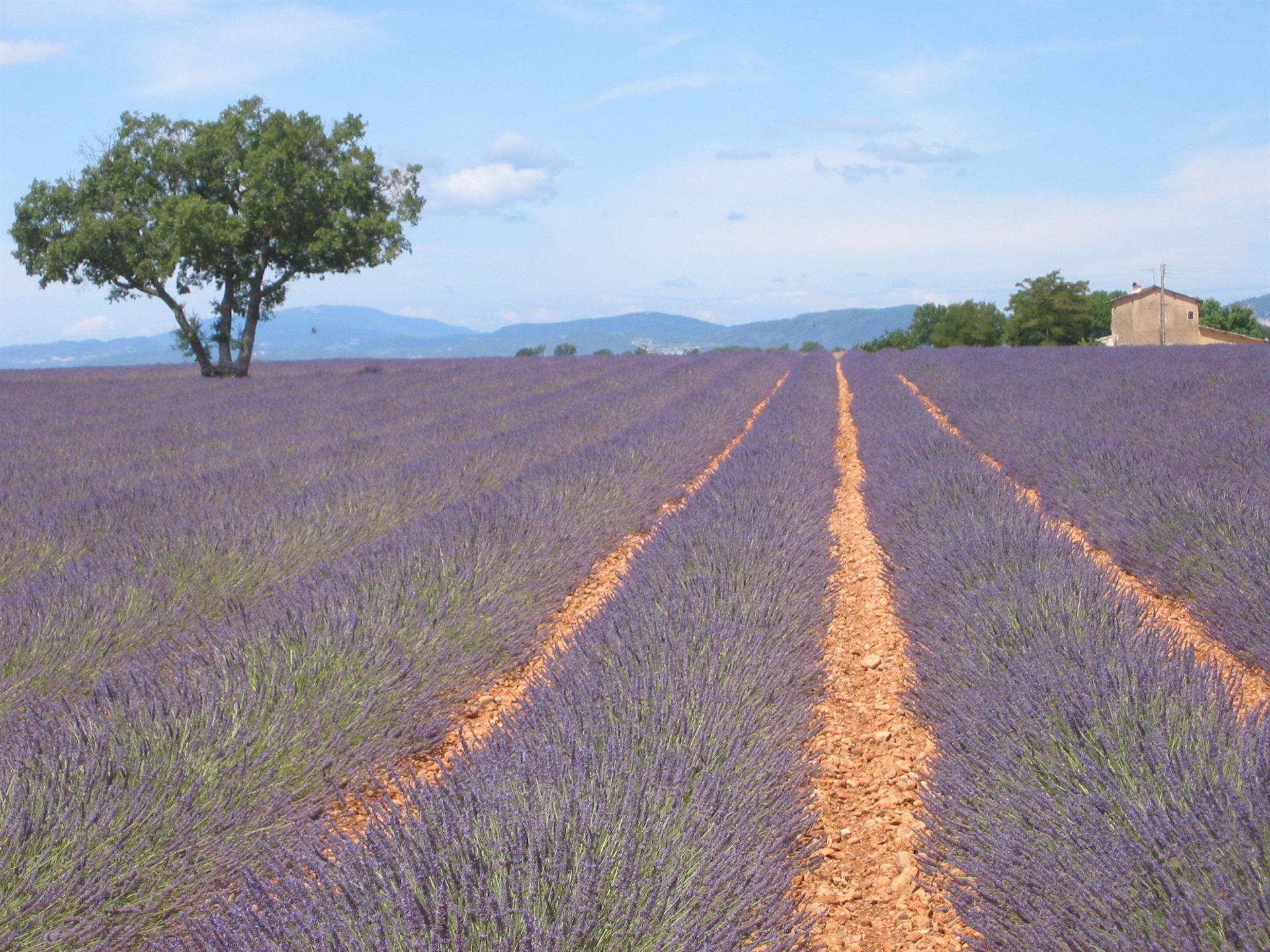
Pictured: a lavender field on the Plateau de Valensole, Alpes-de-Haute-Provence, photographed in 2005 — the same lavender-growing terrain in which Maurice Masse's encounter occurred, not a photograph of the actual landing site or Masse's own field, whose precise plot was never made public. No public-domain or rights-clear photograph of the real 1965 site, the ground trace, or Maurice Masse himself is known to exist; the original Digne gendarmerie site photographs remain part of the case's archival paper record rather than freely licensed for reuse.
Theoretical Alignment
Valensole is an unusually pure test case for competing UAP frameworks precisely because it combines high strangeness — a landed craft and two humanoid occupants, the very archetype of the Extraterrestrial Hypothesis — with a physical evidentiary record that is real but thin by this catalogue's instrumented standards. ETH scores highest because the report itself is a textbook structured-craft-and-occupant encounter with an independently verified ground trace, but the moderate rather than high alignment reflects the total absence of any recovered material, propulsion signature, or corroborating sensor data. The Interdimensional Hypothesis scores a meaningful 27% for reasons specific to this case's own historiography: it was Vallée's direct, hands-on encounter with cases like Valensole — entities that behaved less like conquering visitors and more like furtive, almost embarrassed trespassers who fled once discovered — that helped push his own thinking away from a straightforward extraterrestrial framework and toward the multidimensional model he began publishing later in his career. The Psycho-Social Hypothesis scores lowest but is not zero, both because Masse is this case's only witness and because his description of the beings evolved in some retellings — a pattern independent researcher Fran Ridge and others have flagged as consistent with, though not proof of, a story reshaped by repeated interviews rather than a fixed original perception.
Background
In the summer of 1965, the Plateau de Valensole was, as it remains today, one of the great lavender-growing landscapes of Provence — a broad limestone tableland in the department then called Basses-Alpes, given over largely to lavender, lavandin, wheat, and almond cultivation, and organized around small agricultural communes whose economic life ran on the seasonal rhythms of planting, distillation, and harvest. Valensole itself was, and is, a modest hilltop village overlooking that plateau, its population numbering only in the low thousands, connected to the wider region chiefly through the administrative and gendarmerie seat at Digne. Nothing about the community or the moment suggested any particular vulnerability to a UFO scare: France in 1965 had experienced a real but comparatively modest wave of "flying saucer" reports since the early 1950s, tracked informally by private research groups such as the Groupe d'Étude des Phénomènes Aérospatiaux (GEPA, not to be confused with the later government GEPAN) and chronicled by independent writers including Aimé Michel, but the French state itself had no dedicated UAP investigation office of any kind — that would not exist until the Centre National d'Études Spatiales (CNES) created GEPAN in 1977, twelve years after the events described in this file.
Maurice Masse, born in 1924, was one of Valensole's working farmers, cultivating lavender and wheat on land near the village in the same quiet, unremarkable way most of his neighbors did. On the morning of July 1, 1965, Masse rose before dawn, as farmers on the plateau routinely did during the growing season, intending to check on a patch of lavender that had recently been showing signs of a fungal problem. What he found instead, at approximately 5:45 AM, would make him, however reluctantly, one of the most cited single witnesses in the history of French ufology — and would leave behind a ground trace still being discussed, disputed, and re-investigated sixty years later.
Complete Timeline
| Date / Time | Event |
|---|---|
| ~5:45 AM, July 1, 1965 | Maurice Masse walks toward a lavender plot outside Valensole to check on a fungal problem, expecting at most to find an idling helicopter after hearing a faint whistling sound. |
| ~5:45 AM | Masse instead sees an egg/rugby-ball-shaped craft, roughly the size of a small car, resting on thin legs around a central pivot in the field, with two small humanoid figures crouched beside it near the plants. |
| Moments later | Masse approaches to within roughly 5 meters. One of the two beings turns and points a short, pencil-like device at him. |
| Immediately after | Masse finds himself unable to move, though he remains conscious and aware throughout — a state he and later investigators describe as total paralysis rather than unconsciousness. |
| Following minutes | The two beings finish what Masse describes as an inspection of the lavender, re-enter the craft through a sliding door, and the craft's legs retract. |
| Following minutes | The craft rises a short distance in near-total silence, hovers briefly, then departs rapidly in the general direction of Manosque/Oraison, vanishing from view. |
| Approx. 15–20 minutes after onset | Masse's paralysis lifts; secondary accounts vary on the exact duration, with some describing an effect lasting up to roughly an hour before he could move normally again. |
| Later July 1, 1965 | A shaken Masse returns home and initially confides only in his father and a close friend, reportedly fearing he will be taken for mad if he says more. |
| July 2–3, 1965 | Word reaches Digne gendarmerie investigators, who travel to the site, interview Masse at length, and examine, measure, and photograph the ground trace in the field; local press in the region begins reporting the story within days. |
| July 3–6, 1965 | The case draws wider French and international press coverage, including U.S. papers; Valensole's mayor and parish priest are separately informed and, per multiple secondary accounts, personally visit the site. |
| Following weeks | Masse begins experiencing severe hypersomnia, needing as much as twelve or more hours of sleep daily for a period secondary sources describe as lasting from several weeks to several months. |
| Summer 1965 | Independent researchers, including Aimé Michel and Pierre Guérin, begin their own inquiries into the case, interviewing Masse and examining the site and the gendarmerie's findings. |
| August 18, 1965 | A third, supplementary gendarmerie procès-verbal statement is taken, per GEIPAN's own case file, extending the official record beyond the initial July report. |
| 1966 | The private research bulletin Phénomènes Spatiaux, published by the civilian group GEPA, carries an early detailed writeup of the case. |
| Mid-to-late 1970s | The exact spot of the trace reportedly remains barren of lavender for roughly a decade after the encounter, according to multiple secondary accounts, before growth eventually resumes. |
| 1977 | CNES creates GEPAN, France's first government UAP study office — twelve years after the Valensole encounter, and too late to conduct a contemporaneous, on-site scientific investigation of it. |
| June 26, 2015 | On the case's fiftieth anniversary, GEPAN's successor agency GEIPAN publicly releases the case's three original gendarmerie procès-verbaux for the first time, while explicitly stating it classified the case "D" by default, given its strangeness, rather than through a fresh GEPAN field investigation of its own. |
| 2004 | Maurice Masse dies, having maintained a materially consistent account of the encounter for essentially the rest of his life; his exact death year is reported with some inconsistency across secondary sources. |
| 2024–2025 | The dramatized feature film Valensole 1965, revisiting the case for a French general audience, brings renewed journalistic attention to the file, including fresh coverage from outlets such as Futura-Sciences and France Info. |
What Masse Saw: The Craft and Its Occupants
Maurice Masse's own account, given first to gendarmerie investigators within a day or two of the event and repeated with only minor variation to researchers for the rest of his life, describes a sequence that began with sound rather than sight. Walking toward his lavender plot before 6:00 AM, he heard a faint, high-pitched whistling noise and assumed, reasonably enough for a French farmer in 1965, that a helicopter had set down nearby — a mundane explanation he says he expected to confirm with a glance. What he found instead was an object resting silently among his lavender rows: an egg- or rugby-ball-shaped craft, by his own later estimate roughly the size of a Renault Dauphine, a small, common French car of the era. Early press accounts, working from secondhand or preliminary detail, described the craft as standing on four legs; Masse's own more detailed, considered account — the version this file treats as authoritative, while flagging the discrepancy rather than concealing it — specified six thin legs arranged around a central pivot, a design detail he was insistent enough about to repeat consistently in later interviews. He described a sliding door on the object's side, which closed behind the departing occupants with a motion he compared to the front panel of a wooden card-index file cabinet, and an upper section he characterized as transparent or dome-like.
In front of the craft, crouched among the lavender plants as though examining them, were two small humanoid figures, each roughly a meter (about 3 feet 3 inches) tall — a height Masse and other secondary accounts compare to that of an eight- or nine-year-old child, though nothing else about their described appearance was childlike. Both wore tight-fitting, one-piece coveralls in a grayish-green color. Their heads, bare and disproportionately large relative to their bodies, were described as smooth and bulbous — repeatedly likened in secondary accounts to a pumpkin — with large, slanted eyes Masse felt conveyed something closer to a human expression than a purely alien one, narrow lipless mouths more like a slit than an opening, and pointed chins. He recalled the beings communicating with each other, or perhaps simply vocalizing, in soft grumbling or gurgling sounds rather than any recognizable language. Their hands, by contrast with their heads, struck him as unremarkable and roughly human in proportion. Neither being displayed overt hostility at any point in Masse's account; their attention, as he described it, was directed first at the lavender plants themselves and only turned to him once he had closed to within a few meters.
The Paralysis and the Silent Departure
It was at that close range — by Masse's own estimate, roughly five meters — that one of the two beings turned, raised a short, pencil-like device, and pointed it at him. Masse's account of what followed is specific and has remained consistent across decades of retelling: he did not lose consciousness and did not fall, but found himself abruptly and completely unable to move any part of his body, a state of full paralysis rather than sleep or fainting. He remained fully aware throughout, able to see and hear everything happening around him, including, by his account, the two beings finishing whatever inspection of the lavender they had been conducting before turning and re-entering their craft. The sliding door closed behind them; the craft's legs retracted into its body; and it lifted off the ground in what Masse and every secondary account agree was near-total silence — no rotor noise, no combustion roar, nothing resembling the sound of any aircraft he was familiar with. It rose a short distance, hovered for what he judged to be only a few seconds, and then accelerated away at a speed and with a silence he found impossible to reconcile with any conventional vehicle, vanishing from view in the general direction of Manosque and Oraison.
Masse's paralysis did not lift the instant the craft departed. Secondary accounts vary on the exact duration — estimates range from roughly fifteen to twenty minutes up to, in some retellings, closer to an hour — but agree that it was a substantial, frightening interval during which Masse remained rooted in place, physically unharmed but unable to do anything except wait. When movement finally returned, he made his way home in a state multiple accounts describe as visibly shaken, and initially told no one beyond his own father and a close friend, a reticence this file's Observer Credibility section discusses in more detail as a point weighing against, rather than for, a hypothesis of attention-seeking fabrication.
Reporting It: Fear, the Gendarmerie, and Eight Hours of Questions
Masse's hesitation to come forward did not last long once the physical trace in his field became impossible to explain away privately. Within a day or two, word reached the Digne gendarmerie, whose investigators traveled to Valensole, interviewed Masse at what one detailed secondary account describes as a session lasting as long as eight hours, and personally examined the site. The gendarmerie's role in this case deserves particular emphasis relative to many single-witness contact claims in the broader UFO literature: rather than a report resting solely on a witness's own description of physical evidence after the fact, French law-enforcement investigators reached the field, in most reconstructions of the timeline, within roughly twenty-four hours of the report, measured and photographed the ground marks themselves, and produced what GEIPAN's own later-released case file identifies as three separate procès-verbaux — the first covering the initial July interviews and site examination, and a third taken as late as August 18, 1965, suggesting investigators returned to the case rather than closing it after a single pass. Multiple secondary sources describe the investigating officers, along with Valensole's own mayor and parish priest, as having concluded that Masse was telling the truth as he understood it — a conclusion about his sincerity, this file stresses, rather than an official government finding that an extraterrestrial craft had in fact landed in his field.
Press coverage followed within days rather than weeks. French regional papers, national outlets including Le Provençal and Le Monde, and international coverage as far afield as The Washington Post carried the story by July 3–6, 1965, turning a rural farmer's private ordeal into a nationally, and briefly internationally, discussed event — exactly the kind of exposure Masse's own initial reluctance suggests he had not sought out and, by most accounts, found genuinely uncomfortable rather than gratifying.
The Physical Trace: A Hardened, Geometric Ground Mark
What has kept Valensole in serious ufological discussion for sixty years, more than Masse's testimony alone, is the trace left in the field. Gendarmerie measurements describe a shallow depression roughly 1.2 meters across, with a cylindrical hole at its center approximately 40 centimeters deep and 15 to 18 centimeters in diameter, surrounded by four shallow furrows radiating outward in a distinct cross or star pattern, each roughly 2 meters long. The single most frequently repeated and most striking physical detail in the secondary literature concerns the ground's texture: soil that witnesses and investigators described as damp before the encounter had, by the time gendarmerie investigators arrived, hardened to a consistency multiple accounts compare directly to concrete or cement — hard enough, according to one widely repeated account, that an investigator attempting to extract a soil sample broke the blade of his knife in the attempt. Lavender plants within and immediately around the marked area died in the encounter's immediate aftermath, and according to multiple secondary sources, the exact spot remained stubbornly barren — refusing to support new lavender growth — for a period commonly cited as roughly ten years, a claim this file has not been able to verify against a primary agronomic record but which recurs with enough consistency across independent secondary accounts to be treated as a genuine, if not laboratory-documented, local observation rather than an invented detail.
The soil-chemistry question is where this file must be most careful about overstating what is actually known. A private ufological research group is credited in multiple secondary sources with obtaining soil samples from the site and reporting an anomalous calcium reading — but the specific direction of that anomaly is not consistent across the literature. Several older ufological compilations describe an abnormally elevated calcium level, with one number, roughly 18.3 percent, recurring often enough to have become something close to received wisdom in casual retellings of the case. A more recent, editorially independent French science-journalism treatment of the case, by contrast, describes the finding as an abnormally low calcium level rather than an elevated one. This file has not located any single primary laboratory report, with a documented chain of custody, that would resolve which of these two claims — if either — is accurate; both may ultimately trace back to the same original informal analysis, filtered through decades of secondary summarization in different directions. Readers should treat the "elevated calcium" figure specifically, wherever they encounter it stated as settled fact, with real skepticism: it is a widely repeated number, not a verified one. What is comparatively well corroborated, because it was documented by gendarmerie investigators independently of any private ufological group, is simply that the ground's physical texture and geometric pattern were real, measurable, and inconsistent with an ordinary footprint, tire mark, or casual disturbance.
Aftermath: Hypersomnia and a Reticent Witness
In the weeks following the encounter, Masse began experiencing a pronounced disruption to his normal sleep pattern — a form of hypersomnia that left him needing, by his own account, as much as twelve hours or more of sleep daily, a condition secondary sources describe lasting anywhere from several weeks to several months before gradually subsiding. Some later, more sensationalized retellings of the case add claims of poltergeist-like disturbances at Masse's home during the same period; this file treats those specific claims with considerably more caution than the hypersomnia itself, since they rest on thinner, less consistently sourced secondary material and are easier to embellish in retelling than a farmer's own straightforward description of unusual tiredness.
Perhaps the most consistently cited detail about Masse's character, across nearly every serious secondary account of the case, is what he declined to say rather than what he did. Pressed repeatedly by researchers, including Aimé Michel, about what exactly transpired between him and the two beings during the interval when he stood paralyzed but fully conscious, Masse consistently refused to elaborate in detail, offering only that, in his own words as reported by Michel, the beings "were good" and "did not wish to do us any harm." Investigators and later commentators, including Vallée, have generally read that reticence as working against rather than for a fabrication hypothesis: a witness inventing an account for attention or profit had every incentive to add dramatic detail rather than withhold it, and Masse's refusal to expand on the story's most tantalizing gap, sustained across decades of subsequent interviews, is difficult to reconcile with a simple hoax narrative, even though it does not by itself prove the underlying encounter occurred as described.
Independent Investigation: Michel, Guérin, and Vallée
Because no French government UAP office existed in 1965, the deepest non-gendarmerie investigative work on Valensole fell to private civilian researchers rather than any state scientific body. Aimé Michel, a French science writer and independent ufologist already well known for his controversial "orthoteny" theory of geometrically aligned sighting patterns, conducted extensive personal interviews with Masse in the months after the encounter and published an early detailed account, "The Valensole Affair," in the British journal Flying Saucer Review, as well as a fuller writeup in the French research bulletin Phénomènes Spatiaux. Pierre Guérin, a research director in astrophysics at the French national research agency CNRS, brought a credentialed scientist's evaluation to the case rather than a purely journalistic one, part of a broader career interest in taking selected UFO reports seriously as an open scientific question rather than dismissing the subject wholesale.
Jacques Vallée — the French-American astronomer and computer scientist who would go on to become one of the most influential UAP researchers of the twentieth century, and who later served as a partial inspiration for the French investigator character in Steven Spielberg's Close Encounters of the Third Kind — examined the case as part of his broader catalog of high-strangeness European encounters, and it is his own assessment, repeated in multiple of his books, that has done more than any other single verdict to keep Valensole prominent in serious ufological discussion: his characterization of it as "the best-authenticated close encounter incident in continental Europe." This file treats that as exactly what it is — a serious, considered judgment from one of the field's most credentialed and methodologically careful investigators, carrying real weight precisely because Vallée was not an uncritical believer prone to calling every report "best-authenticated" — while still declining to treat a single researcher's superlative, however well-earned, as equivalent to an independently replicated scientific finding. Vallée's own broader career trajectory is itself relevant context: cases combining a strong physical trace with genuinely strange, non-hostile occupant behavior, of exactly the kind Valensole exemplifies, were part of what pushed his thinking away from a simple extraterrestrial-visitation model and toward the interdimensional and folkloric frameworks for which he later became best known.
GEPAN, GEIPAN, and Fifty Years of Official Silence
The French state's relationship to the Valensole case is, in its own way, as important to understanding this file's credibility assessment as anything Masse himself reported. CNES, the French national space agency, created GEPAN — the Groupe d'Étude des Phénomènes Aérospatiaux Non-identifiés — in 1977, twelve years after Masse's encounter; the office was later renamed SEPRA in 1988 and GEIPAN in 2005, the name under which it continues to operate today as part of CNES. Because GEPAN simply did not exist in July 1965, it never had the opportunity to dispatch its own investigators to the fresh site, collect its own soil samples under a documented chain of custody, or interview Masse while the encounter was recent — the kind of contemporaneous, agency-led response that, as discussed above, the much later Trans-en-Provence case did receive.
GEIPAN's own public statement on the matter, issued on the case's fiftieth anniversary on June 26, 2015, is unusually candid about this limitation. The agency's release states plainly that GEPAN/SEPRA/GEIPAN's successive leadership had always taken an interest in the case, collecting documents about it over the decades, but had never published an in-depth investigation of their own — and adds that a fresh GEPAN inquiry, so long after the fact and after the Gendarmerie and independent investigators including Guérin and Vallée had already done their own work, would likely have been unproductive. Rather than a rigorous new scientific review, what the fiftieth-anniversary release actually delivered was public access to the case's three original gendarmerie procès-verbaux, described by GEIPAN itself as "the most reliable documents" available on the affair. The release states outright that, given the case's strangeness, it is classified "D" by default, specifically to make the case easier for researchers and the public to locate — not as the product of fresh GEPAN fieldwork or a new laboratory workup. In GEIPAN's four-tier classification system, a "D" case is one where the investigation, however thorough, could not identify the phenomenon; the agency's own published statistics describe D-classified cases as a small minority, roughly a few percent, of its full database of several thousand reports. GEIPAN's own case-database entry for the file — catalogued as PV n°445, case reference 1965309761, administratively last updated June 23, 2021 — summarizes it succinctly as an "observation of an unknown craft and close encounter; ground traces: unidentified phenomenon."
This history matters directly to how this file scores the case. Valensole's "unexplained" status is real, but it is fundamentally a default administrative classification inherited from a pre-GEPAN investigation, not the product of the kind of rigorous, multi-laboratory, agency-led forensic workup GEPAN performed on Trans-en-Provence sixteen years later. Readers who encounter Valensole described online as "investigated and confirmed unexplained by the French government" should understand that claim more precisely: the French government's own UAP office inherited, endorsed by default, and made public an investigation that gendarmerie and private civilian researchers had already substantially completed twelve years before that office existed.
Skeptical Counter-Arguments and Maurice Masse's Own Rebuttal
Valensole has attracted real, specific skepticism rather than only casual dismissal, and this file treats the strongest of those arguments on their own terms. The most seriously advanced conventional explanation, discussed further in the Conventional Explanation Candidates section below, is that Masse briefly encountered a military helicopter — whether a French Army Alouette II or III on a nearby exercise, or, in a more speculative variant some skeptics have floated, a covert American Sixth Fleet reconnaissance helicopter operating without official acknowledgment. Masse rejected this explanation directly and specifically when it was put to him, telling one interviewer in terms this file finds notably precise for a supposedly confused or embellishing witness: "The craft had neither rotor nor blades. I do have the presumption to think I know how to recognize a helicopter. This was not one." A minority of French skeptics, including researcher Claude Maugé, have gone further and argued Masse fabricated the entire account and constructed the ground trace himself, a position that requires explaining both his demonstrated reluctance to come forward and the trace's specific, cement-like hardening within hours — a physical effect considerably harder for an individual farmer to fake convincingly on his own field, under gendarmerie examination within roughly a day, than a simple dug or trampled mark would be. Other, less frequently repeated theories include an accidental agricultural chemical or fertilizer-tank spill from a neighboring field, an explanation this file finds a poor structural match for a symmetrical cross-pattern trace with a precise central hole, and a claimed hoax inspired by imagery from a 1950s French comic-strip story sometimes cited under the title "Passengers of Flying Saucers" — a theory that remains circumstantial, unsupported by any documented evidence that Masse had encountered that specific source material, and, like the fertilizer-spill theory, offers no real account of the ground trace's physical hardness.
Circumstantial Evidence
- Maurice Masse gave a substantially consistent account of the encounter across decades of subsequent interviews, without the embellishment a hoax motivated by attention would typically accumulate.
- Digne gendarmerie investigators reached the site within roughly a day, independently examined, measured, and photographed the ground trace, and are described in multiple secondary sources as having personally assessed Masse as a credible witness.
- The trace itself — a geometric cross-pattern of furrows around a central hole, in soil that hardened to a near-cement consistency within hours — is a physically distinctive pattern that is difficult to attribute to routine agricultural activity, animal disturbance, or casual vandalism.
- Lavender reportedly would not grow again at the precise spot of the trace for roughly a decade, a claim repeated with reasonable consistency across independent secondary accounts even though it has not been independently laboratory-documented.
- Masse's consistent refusal, across decades of interviews, to elaborate on the full content of his interaction with the beings is difficult to reconcile with a straightforward hoax narrative, which would typically be elaborated rather than deliberately left incomplete.
- Independent, credentialed investigators — astrophysicist Pierre Guérin and astronomer/computer scientist Jacques Vallée among them — treated the case as a genuinely serious data point rather than dismissing it outright, with Vallée specifically ranking it among continental Europe's best-authenticated close encounters.
Key Witnesses
Maurice Masse
The case's sole witness. A locally respected 41-year-old working farmer with no evident history of seeking attention, Masse reported the encounter reluctantly, out of a stated fear of being thought mad, and maintained a materially consistent account for the rest of his life while specifically declining to elaborate on what passed between him and the beings during his paralysis. His decades-long reticence and lack of any apparent motive for fabrication are cited by researchers, including Vallée, as working against a simple hoax explanation, even as this file notes he remains this encounter's only direct observer.
The Five Observables Assessment
The Five Observables framework, developed by former AATIP director Luis Elizondo, is used to classify UAP encounters by performance characteristics exceeding known technology of their era:
Assessment: Anti-Gravity Lift is rated speculative rather than present: Masse described the craft's legs retracting and a silent, apparently unpowered-looking liftoff, but as a single untrained observer with no instrumentation, he could not rule out a conventional, if unusually quiet, propulsion method. Instant Acceleration is likewise rated only speculative: Masse described the object departing with a speed and silence he found remarkable, but that description is subjective and unmeasured, resting on one witness's impression rather than any timed or instrumented observation. Hypersonic Velocity is rated absent, since no distance, altitude, or duration data exists from which any actual speed could be calculated. Low Observability is rated absent: the craft was plainly visible at close range in daylight conditions, not stealthy in any sense. Trans-Medium travel is rated absent, as no witness reported any transition between air, land, or water.
Evidence Assessment
Supporting Anomalous Origin
- A physically real, geometrically distinctive ground trace was independently examined, measured, and photographed by gendarmerie investigators within roughly a day of the report, rather than resting solely on the witness's own later description.
- The site's soil hardened to a near-cement consistency within hours of the encounter, a specific, physically unusual effect corroborated by investigator testimony rather than by Masse alone.
- Masse's account remained materially consistent for the rest of his life and was assessed as credible by investigating gendarmes and by local figures, including the mayor and parish priest, who knew him personally.
- Masse had no apparent motive for fabrication: he reported the encounter reluctantly, avoided rather than sought press attention, and consistently declined to embellish the story's most dramatic gap.
- Credentialed independent investigators, including a CNRS research astrophysicist and one of ufology's most methodologically careful researchers, treated the case as a serious, well-evidenced anomaly rather than an obvious hoax.
Supporting Conventional Explanation
- The case rests on a single, uncorroborated witness for every detail of the craft's appearance, the beings' behavior, and the paralysis itself — there is no second observer of any kind.
- The soil-calcium analysis often cited as corroborating evidence was performed informally by a private ufological group rather than a state laboratory, and secondary sources directly conflict on whether the anomaly was elevated or depleted calcium, undermining confidence in the claim as usually repeated.
- No French government scientific body investigated the case contemporaneously; GEPAN did not exist until 1977, and its later "D" classification was applied by default rather than through fresh field investigation, a materially weaker provenance than cases GEPAN investigated in real time.
- A real, if ultimately rejected by the witness himself, conventional candidate exists in the form of a military helicopter exercise reportedly active in the region around that time.
- Some witness details, including the number of the craft's legs, evolved between the earliest press accounts and Masse's own later, more detailed retellings, a pattern that can reflect either growing clarity or a gradually elaborated memory.
Why "Disputed"
Valensole earns a DISPUTED rating on this site's scale because it combines a genuinely strong, gendarme-verified physical trace and a decades-long consistent witness account with the same fundamental limitation that constrains nearly every landing case in this catalogue: everything about the craft, the occupants, and the paralysis itself rests on one uncorroborated observer. On the strength side, this file weighs heavily: Digne gendarmerie investigators reached the site within roughly a day, independently measured and photographed a geometrically distinctive ground trace, and are described by multiple sources as having personally assessed Masse as credible; the trace's most striking physical detail — soil hardening to a near-cement consistency within hours — is corroborated by investigator testimony rather than resting on Masse's word alone; Masse himself maintained a materially consistent account for the rest of his life while specifically declining, across decades of interviews, to embellish its most dramatic unresolved detail, a pattern difficult to reconcile with a simple hoax; and credentialed independent investigators, up to and including Jacques Vallée's own considered judgment that this is "the best-authenticated close encounter incident in continental Europe," treated the case as a serious anomaly rather than dismissing it. On the other hand, this file declines to elevate Valensole into "credible" or "verified" territory for reasons this site applies consistently across its catalogue: a single witness, however sincere, cannot corroborate himself; the case's most frequently repeated secondary evidentiary claim — the soil-calcium anomaly — is reported in directly conflicting directions across the literature and was never analyzed by a state laboratory under a documented chain of custody, since GEPAN would not exist for another twelve years; and GEIPAN's own later "unexplained" classification, however often cited as government confirmation, was explicitly applied by default rather than through the kind of fresh, rigorous, multi-laboratory field investigation the same agency conducted on the comparable but considerably better-documented Trans-en-Provence case sixteen years later. That combination — a real, physically corroborated trace and an unusually credible single witness, set against total reliance on that one witness and a genuinely thin, contested chain of scientific analysis — places Valensole squarely in "disputed" territory: one of Europe's most frequently cited close-encounter cases, but not, on the actual documentary record, a closed or independently confirmed one.
Sensor & Instrumentation Detection Profile
Valensole possesses no instrumented detection record of any kind. There was no radar coverage of the site, no photograph or film of the craft or its occupants, no audio recording of the whistling sound Masse described, and no independent optical or electronic sensor of any type within range of the encounter. Every account of what appeared in the sky and on the ground rests on Maurice Masse's unaided testimony, given first to his own family, then within roughly a day to gendarmerie investigators, and later to independent civilian researchers including Aimé Michel, Pierre Guérin, and Jacques Vallée. The case's only non-testimonial data is physical rather than sensor-based: the ground trace itself, examined, measured, and photographed in place by Digne gendarmerie investigators, and a soil sample later analyzed by private ufological researchers rather than a state laboratory. That distinction matters for how this file weighs the case against instrumented, multi-witness files elsewhere in this archive — Valensole's evidentiary strength lies entirely in a physical trace and a consistent, decades-long, single-source testimony, not in any recorded signal.
Environmental & Geospatial Context
Valensole sits on a broad limestone plateau in what was, in 1965, the French department of Basses-Alpes (renamed Alpes-de-Haute-Provence in 1970), a rural, sparsely populated agricultural region roughly 45 kilometers northeast of Aix-en-Provence and dominated by lavender, lavandin, wheat, and almond cultivation. The plateau's open, gently rolling terrain offers long, largely unobstructed sightlines across cultivated fields separated by low stone walls and scattered farm buildings — a landscape with essentially no artificial lighting, dense tree cover, or elevated vantage points that might complicate a close-range ground observation at dawn. Masse's encounter occurred at approximately 5:45 AM in early July, close to sunrise at that latitude, under conditions multiple secondary accounts describe as clear; the ground in the immediate area of the encounter was reportedly damp, whether from overnight dew or a recent light rain, a detail investigators later cited to help explain how a geometric trace could imprint cleanly into the soil before it hardened. Geospatially, the case is notable for how isolated its single data point is: the nearest other witness accounts of that specific morning come only from Masse's own household, who saw him return distressed but did not themselves observe the object, leaving the encounter without a second independent vantage point of any kind — a structural feature of the case, discussed at length in the credibility sections below, rather than a controversial interpretation of it.
Observer Credibility & Occupational Profile
Maurice Masse was, by every account left by those who knew him, an unremarkable and locally well-regarded 41-year-old working farmer, not a person with any evident history of seeking attention, publishing sensational claims, or courting the press. Multiple secondary sources describe him as reluctant rather than eager to come forward: he reportedly confided first only in his father and a close friend, out of a specific, plainly stated fear of being thought mad, and the story only reached the gendarmerie and local press within the following one to two days, consistent with a man working through whether or how to report something he expected would damage his own credibility rather than build it. Digne gendarmerie investigators who questioned Masse at length — one detailed secondary account describes an interview session running as long as eight hours — and local figures who knew him personally, including Valensole's mayor and parish priest, are described in multiple sources as having concluded he was telling the truth as he understood it, a judgment this file treats as informative but not dispositive, since sincere, locally trusted witnesses can still misperceive or, in principle, stage an elaborate account. Masse maintained a materially consistent version of events for the remaining decades of his life, declining opportunities to embellish it for the press and reportedly refusing, even under repeated questioning by researchers including Aimé Michel, to disclose the full content of whatever passed between him and the beings during his period of paralysis — a restraint researchers have read as working against, rather than for, a hypothesis of deliberate fabrication for fame or profit, since a hoaxer with a story to sell had every incentive to add color rather than withhold it.
Physical & Material Assays
Valensole's evidentiary record rests almost entirely on a single, geometrically distinctive ground trace: a shallow depression roughly 1.2 meters in diameter, centered on a cylindrical hole approximately 40 centimeters deep and 15–18 centimeters across, surrounded by four shallow furrows radiating outward in a cross or star pattern, each roughly 2 meters long. Digne gendarmerie investigators reached the site within roughly a day of the report and photographed and measured the trace in place, a meaningfully faster and more procedurally documented response than many contact-case sites receive. The most frequently repeated physical detail across secondary sources is the trace's hardness: ground reportedly damp before the encounter had, within hours, hardened to a texture multiple accounts compare to cement or concrete, hard enough that one oft-repeated account describes a gendarme breaking a knife blade attempting to take a soil sample. A private ufological research group subsequently obtained soil samples and reported an anomalous calcium reading at the site — but the secondary literature is not internally consistent about the direction of that anomaly: some accounts describe abnormally elevated calcium (one frequently cited figure puts it at roughly 18.3 percent), while a more recent French science-journalism treatment of the case describes an abnormally depleted calcium level instead. This file has not located a single, chain-of-custody-documented primary laboratory report that resolves that contradiction, and treats the calcium claim itself — real anomaly of some kind, direction uncertain — as considerably softer evidence than the independently gendarme-verified ground geometry and hardness. No radioactivity above background was reported at the site. Crucially, because GEPAN would not exist for another twelve years, none of this analysis was performed by a state scientific body under a documented chain of custody — a sharp contrast with the later, far more rigorously instrumented Trans-en-Provence case, discussed in detail below.
Historical Precedents & Archive Matches
Valensole sits at the head of a specific sub-genre this catalogue tracks closely: the French landed-craft, physical-trace close encounter, most directly echoed sixteen years later by the January 1981 Trans-en-Provence Sighting, in which a single witness, Renato Nicolaï, reported a landed disc in his garden and left a ring-shaped ground trace that GEPAN itself — by then an existing, functioning CNES office — subjected to a genuine multi-laboratory forensic workup, including a dedicated biochemical analysis of altered plant pigmentation by biologist Michel Bounias. The contrast between the two cases is instructive rather than merely coincidental: Trans-en-Provence shows what a French landing case looks like when a national scientific agency is available to respond within roughly a day and follow up for forty more, while Valensole shows what one looks like when only a rural gendarmerie post and, considerably later, private civilian researchers are the ones available to respond. Beyond France, Masse's account was cited by contemporaries as sharing a structural profile with April 1964's Socorro, New Mexico encounter, in which police officer Lonnie Zamora reported a landed egg-shaped craft and left behind physical ground traces independently confirmed by fellow officers within minutes — a case with its own multi-witness corroboration Valensole lacks, but similar enough in craft morphology that Masse himself, when shown descriptive material connected to Zamora's case without being told its origin, reportedly remarked that "someone else has seen my UFO," a detail J. Allen Hynek later cited as a soft but genuine corroborating data point.
Material Analysis
Valensole's physical evidence begins and largely ends with the ground trace itself: a shallow, roughly 1.2-meter depression centered on a cylindrical hole about 40 centimeters deep, ringed by four radiating furrows in a cross pattern, in soil that hardened from a damp to a near-cement consistency within hours. That transformation is the case's single best-corroborated physical fact, independently verified by gendarmerie investigators who reached the site quickly enough to examine it before it could be substantially altered by weather, curious visitors, or the passage of time — though secondary accounts do note that public curiosity brought enough foot traffic to the site in the following days and weeks that some disturbance of the original marks occurred. Vegetation effects were also documented: lavender within the trace zone died, and the specific spot reportedly resisted new lavender growth for roughly a decade, an agronomically striking claim that nonetheless rests on secondary reporting rather than a laboratory-documented replanting study. The soil-calcium question remains this case's most genuinely unresolved evidentiary thread: real anomaly reported by a private research group, but with the secondary literature split between describing it as abnormally elevated and abnormally depleted, and no primary chain-of-custody laboratory report available to settle the question either way.
Supporting a Genuine Anomalous Effect
- The ground trace's geometry — a symmetrical four-furrow cross pattern around a central hole — is a poor match for routine agricultural disturbance, animal activity, or casual vandalism.
- Soil hardening from a damp to a near-cement consistency within hours is a specific, physically unusual effect independently corroborated by gendarmerie testimony rather than resting on the witness's account alone.
- The approximately decade-long absence of lavender regrowth at the precise trace location, while not laboratory-documented, is reported with reasonable consistency across independent secondary sources.
Supporting a Mundane Origin
- No contemporaneous state laboratory analyzed the soil under a documented chain of custody; the calcium finding rests on an informal private analysis whose own reported direction conflicts across secondary sources.
- Public curiosity brought visitors to the site in the days and weeks after the report, introducing some disturbance to the original trace before more rigorous examination could occur.
- No independent expert has ruled out a sufficiently determined individual constructing a similar trace by hand, even though this file finds the rapid cement-like hardening a genuinely difficult detail for that hypothesis to explain cleanly.
Conventional Explanation Candidates
Three distinct conventional explanations have been seriously proposed for the Valensole case, and each deserves evaluation on its own terms.
Military Helicopter Misidentification
Partially Plausible, IncompleteThe most seriously advanced conventional explanation holds that Masse briefly encountered a helicopter — most plausibly a French Army Alouette II or III operating during a regional exercise, though a small minority of skeptics have floated a more speculative variant involving an unacknowledged American Sixth Fleet reconnaissance helicopter. This candidate deserves genuine consideration because helicopters were a real, active presence in the French countryside during this period, and a startled observer glimpsing an unfamiliar aircraft at dawn is a documented pattern across the broader UFO literature. Its central weakness is twofold: Masse, when the theory was put to him directly, rejected it in specific mechanical terms rather than a vague denial — insisting the object had neither rotor nor blades and that he knew what a helicopter looked like — and no investigator has produced a logged military helicopter flight matching the precise time and location of the report, leaving the theory plausible in general but unconfirmed in this specific instance.
Deliberate Hoax
Partially Plausible, IncompleteA minority of French skeptics, including researcher Claude Maugé, have argued that Masse invented the encounter outright and constructed the ground trace himself, motivated by attention, local notoriety, or an underlying psychological need. This candidate cannot be dismissed purely on grounds of implausibility — elaborate UFO hoaxes involving physical trace fabrication are a documented phenomenon elsewhere in the literature — but it sits uneasily against several specific facts of this case: Masse's demonstrated reluctance to come forward at all, his consistent refusal across decades to embellish the story's most dramatic unresolved gap (behavior that runs opposite to what a hoax built for attention would typically do), and the specific difficulty of an individual farmer manually producing soil hardened to a near-cement consistency across a precise geometric pattern, convincingly enough to pass gendarmerie examination within roughly a day.
Agricultural Equipment or Chemical Spill
Partially Plausible, IncompleteA less frequently discussed alternative proposes that a leaking liquid-fertilizer tank or piece of farm equipment, possibly from an adjoining field, produced both the ground hardening and the vegetation die-off without any craft being involved at all. This candidate deserves mention because agricultural chemical damage to soil and crops is a genuine, documented phenomenon, but it fails to explain the trace's specific, symmetrical cross-pattern geometry with a precise central cylindrical hole — a poor structural match for an irregular chemical spill footprint — and no investigator identified any leaking equipment, container, or logged agricultural operation at that field around the relevant date.
Each candidate offers a real, non-trivial partial explanation for isolated elements of the case, but none, individually or combined, accounts for the full record: Masse's specific and consistent rejection of the helicopter theory, the ground trace's precise geometric hardening pattern, and his decades-long refusal to embellish an account that would have been easy to elaborate had fabrication been the goal.
Related Cases
Confirmed Documents & Official Records
The French national UAP research office's official case-database entry, classifying the sighting "D" (unidentified) and summarizing the ground-trace evidence and witness account.
UNCLASSIFIED / PUBLICGEIPAN's own fiftieth-anniversary statement on the case, explaining that the agency never conducted an original field investigation of Valensole and releasing the three original 1965 Digne gendarmerie procès-verbaux to the public for the first time.
DECLASSIFIED / PUBLICSearch Government Archives Directly
Further Reading — Recommended Literature
Passport to Magonia: On UFOs, Folklore, and Parallel Worlds
Vallée's foundational work situating high-strangeness European contact cases like Valensole within a broader folkloric and multidimensional framework rather than a simple extraterrestrial model.
Confrontations: A Scientist's Search for Alien Contact
Vallée's own field investigation casebook, including his direct assessment of Valensole as "the best-authenticated close encounter incident in continental Europe."
Flying Saucers and the Straight-Line Mystery
By the French researcher who conducted some of the earliest, most detailed personal interviews with Maurice Masse and published the first in-depth case writeup.
The UFO Experience: A Scientific Inquiry
The book that formalized the Close Encounter classification system under which Valensole is catalogued as a CE-3 case, with direct discussion of cross-case comparisons including Socorro.
The UFO Encyclopedia, 4th Edition
The definitive UFO reference work, situating Valensole within the broader history of European close-encounter and physical-trace cases.
Essential Viewing
Vaqui. Des extraterrestres à Valensole
France 3 Provence-Alpes-Côte d'Azur's own regional-news segment revisiting the case and its lasting local legacy.
Un OVNI dans les champs de lavande... L'affaire historique de Valensole !
Inexploré TV's dedicated case walkthrough covering Masse's account, the gendarmerie investigation, and the physical trace.
A Farmer Faced a UFO at Close Range — The Valensole Encounter
A focused English-language narrative retelling of Masse's account and its aftermath.
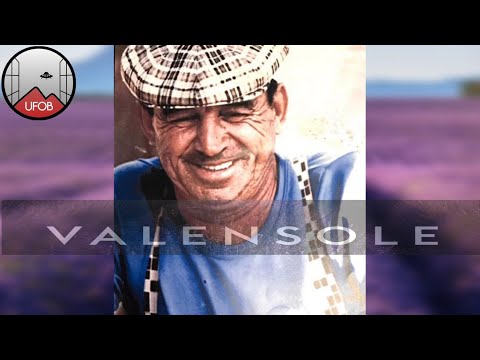
1965 UFOB Case: Impressions of the Valensole Landing in Farmer's Lavender Field
A concise case-library summary covering the timeline, the ground trace, and the case's classification history.
![1965: The Valensole UFO Case [SHORT]](/images/thumbs/HN6gmZQVpFA.jpg)
1965: The Valensole UFO Case [SHORT]
A short-format overview of the encounter and its physical trace evidence for viewers new to the case.
Sources
- GEIPAN (CNES). "VALENSOLE (04) 01.07.1965" — official case file, PV n°445 (ref. 1965309761), Classification D. geipan.fr
- GEIPAN (CNES). "L'observation de Valensole 1965, cinquante ans après…" (50th-anniversary synthesis and gendarmerie procès-verbaux release), Toulouse, June 26, 2015. cnes-geipan.fr
- Wikipedia (English). "GEIPAN." en.wikipedia.org
- Wikipedia (French). "Rencontre de Valensole." fr.wikipedia.org
- Wikipedia (English). "Valensole" (commune). en.wikipedia.org
- Wikipedia (English). "UFO sightings in France." en.wikipedia.org
- Wikipedia (English). "Jacques Vallée." en.wikipedia.org
- Gross, Patrick. "UFOs at Close Sight: Valensole, France, 1965" — detailed sourced case archive with contemporary press citations. ufologie.patrickgross.org
- Think About It Docs. "1965: Valensole, France Landing (Maurice Masse Case)." thinkaboutitdocs.com
- NICAP. "UFO Report: Valensole, France, July 1, 1965." nicap.org
- UFO Casebook. "Valensole, France — UFO Landing (Masse), 1965." ufocasebook.com
- Project Black Echo. "Valensole Close Encounter: Timeline, Maurice Masse and Landing Evidence." projectblackecho.com
- Verdon XP. "Verdon and the Extraterrestrials — The Valensole Meeting." verdonxp.com
- Futura-Sciences. "5 histoires extraordinaires et non résolues d'ovnis : le cas toujours « inexpliqué » de Valensole." futura-sciences.com
- Bowen, Charles (ed.). The Humanoids. Flying Saucer Review special issue / Neville Spearman, 1969 (early detailed casework on Valensole and comparable European contact reports).
- Michel, Aimé. "The Valensole Affair," Flying Saucer Review, 1965.
- Vallée, Jacques. Confrontations: A Scientist's Search for Alien Contact. Ballantine Books, 1990 (case discussion and "best-authenticated" assessment).
- Vallée, Jacques. Dimensions: A Casebook of Alien Contact. Contemporary Books, 1988.
- Hynek, J. Allen. The UFO Experience: A Scientific Inquiry. Henry Regnery, 1972 (Close Encounter classification framework and cross-case comparison with Socorro).
- Clark, Jerome. The UFO Encyclopedia, 4th Edition, Visible Ink Press, 2023 (entry on the Valensole case).
See something inaccurate? Have additional information or sources?
Suggest an Edit →Last Updated: August 2026