
The Pascagoula Abduction
On October 11, 1973, co-workers Charles Hickson and Calvin Parker reported being abducted by strange, robotic, claw-like entities while fishing on the banks of the Pascagoula River in Mississippi. Following the encounter, the men underwent hours of questioning by local law enforcement, during which a secret audio recording caught them in a state of absolute, unsimulated terror. The incident sparked a massive media sensation and has since become one of the most thoroughly documented and scientifically scrutinized close encounters of the third kind in modern history.
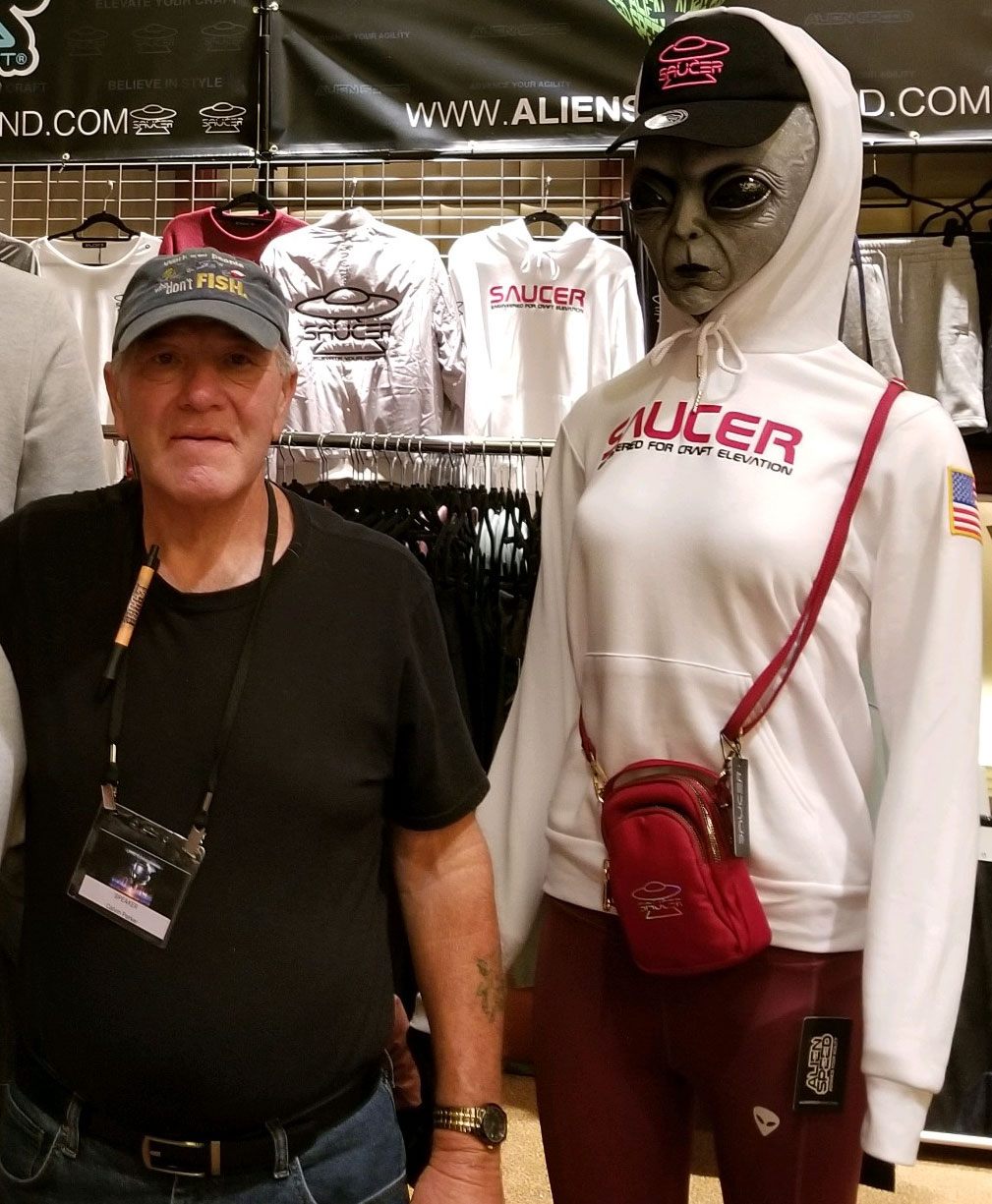
Pictured: Calvin Parker in 2019, forty-six years after the encounter, at a UFO memorabilia booth during the International UFO Congress in Phoenix, Arizona — not a photograph from the night of the abduction itself. No photograph of the 1973 incident exists; it occurred after dark on an isolated riverbank with no cameras present, and the only contemporaneous record is the sheriff's department's secret audio tape of Hickson and Parker's interrogation.
Theoretical Alignment
The Pascagoula incident represents a seminal alignment with the Extraterrestrial Hypothesis (ETH) due to the presence of a structured, physical craft showing mechanical operations, biological or robotic entities that directly interacted with the witnesses, and physical marks resembling puncture wounds. The Interdimensional Hypothesis (IDH) is also evaluated due to the craft's sudden appearance and disappearance. The Psycho-Social Hypothesis (PSH) is considered highly implausible given the secret sheriff's audio recording capturing the witnesses in private, unsimulated distress, along with their consistent testimonies over several decades and subsequent psychological trauma.
Evaluating this alignment in detail requires examining the technological features described by the abductees. The craft's double-convex, football-shaped hull and the bright, seamless light emitting directly from the interior walls suggest a level of material engineering that is consistent with advanced non-human technology. Furthermore, the robotic, mechanical movements of the claw-like beings suggest they may have been robotic probes or artificial intelligence units designed for reconnaissance or sampling, which aligns perfectly with the Extraterrestrial Hypothesis's model of unmanned or automated exploration. The presence of the floating eye scanning device further reinforces this interpretation, presenting a highly organized, technical operation rather than a mystical or psycho-social projection.
The interdimensional aspects, while secondary, deserve analysis. Witnesses noted that the craft appeared to descend directly from a higher altitude, but its approach was described as incredibly sudden, as if it had emerged from the atmosphere itself rather than traveling along a ballistic trajectory. The rapid departure, which took place in a fraction of a second, was accompanied by no sonic boom or physical displacement of air other than a localized breeze. This lack of sonic disruption is a key feature of advanced propulsion systems that manipulate gravity or physical space, and it supports the idea that the craft could operate across higher dimensions or manipulate the space-time metric to travel vast distances instantly, presenting a bridge between the Extraterrestrial and Interdimensional Hypotheses.
The Psycho-Social Hypothesis (PSH), which suggests that the encounter was the result of cultural expectations, media influence, or collective hysteria, is severely challenged by the chronology and the forensic evidence. In October 1973, while there was a national UAP wave, there were no popular films or books depicting wrinkled, grey, carrot-eared beings with claw-like hands. The unique physical appearance of the entities does not match any cultural archetypes of the era, which typically featured silver-suited humanoids or green-skinned monsters. The unedited police recording, in which the men are heard expressing raw panic, crying, and praying in a private, unobserved space, constitutes strong psychological proof that their distress was genuine and not the result of a coordinated theatrical fabrication, reducing the PSH plausibility to a negligible level.
Background
In October 1973, the United States was navigating a period of profound cultural, political, and economic turbulence. The Watergate scandal was steadily unraveling the presidency of Richard Nixon, fueling a deep public cynicism toward federal authority and official narratives. Simultaneously, the outbreak of the Yom Kippur War in the Middle East triggered the OPEC oil embargo, initiating a severe energy crisis that led to soaring fuel prices, long lines at gas stations, and a pervasive sense of economic vulnerability. In the background of these national crises, the country was also processing the painful and divisive conclusion of the Vietnam War. It was within this climate of national anxiety that one of the most intense UAP waves in American history erupted, with hundreds of sightings reported across the Midwest and Southern United States, culminating in the extraordinary events on the Pascagoula River.
Pascagoula was a small, conservative industrial city situated on the Mississippi Sound. The local culture was defined by hard work, religious faith, and a deep connection to the coastal waters. The city's primary employer was Ingalls Shipbuilding, a massive facility that constructed advanced naval warships and submarines. The workers at Ingalls were practical, blue-collar laborers who spent their days handling heavy machinery, steel plating, and industrial electronics. Charles Hickson, a 42-year-old shipyard foreman, was highly respected at the yard, known as a steady combat veteran of the Korean War who was dedicated to his work and his family. Calvin Parker, a 19-year-old laborer who had recently arrived from Laurel, Mississippi, was a quiet, deeply religious young man who worked under Hickson's supervision.
On the evening of Thursday, October 11, 1973, after completing a demanding shift at the shipyard, Hickson and Parker decided to spend their evening fishing. They drove to a remote, abandoned pier located behind a Frito-Lay grain elevator on the west bank of the Pascagoula River. The site was quiet and shadowed, far from the bright floodlights of the main shipyard docks. The river delta was dark and calm, with the high humidity of the Mississippi coast wrapping the marshy banks in a thick, cool air. The men cast their lines into the slow-moving brackish water, hoping to catch trout or redfish, completely unaware that their quiet evening would soon be shattered by an encounter that would challenge the limits of human understanding and place them at the center of a global media storm.
The social structure of Pascagoula in 1973 was highly conservative and deeply religious, meaning that any claim of encountering "space aliens" was met with immediate skepticism and social stigma. The men had no incentive to fabricate a story that would bring them ridicule from their church, their coworkers, and their families. Their decision to report the incident was driven not by a desire for fame, but by a genuine fear that they had been exposed to toxic radiation or an unknown physical contamination. The industrial backdrop of the shipyard, with its military contracts and high-security operations, added a layer of gravity to the event, as the local sheriff's department had to consider whether the men had witnessed a classified military prototype or a foreign espionage device operating in the restricted waterways of the naval facility.
The environmental parameters of the evening were typical for early autumn on the Gulf Coast. The air temperature had dropped to around 18°C, the sky was clear, and the wind was nearly non-existent, leaving the river's surface as smooth as glass. This calm environment ensured that any unusual sounds or lights would be immediately noticeable to the fishermen. The quiet of the marshes, broken only by the distant hum of the shipyard, created an atmosphere of absolute isolation, isolating the two men from the rest of the city and setting the stage for the physical confrontation that would unfold on the old wooden pier.
As they waited for the fish to bite, Hickson and Parker talked about their families and their work. Hickson, who acted as a father figure to the young Parker, was advising him on how to build a stable life in Pascagoula. Parker, who was quiet and homesick, appreciated the older man's guidance. Their relationship was built on mutual trust and respect, a detail that would prove crucial in the hours and days that followed, as they had to rely on each other to maintain their sanity under the pressure of intense media scrutiny and skeptical police interrogation.
The Frito-Lay grain elevator, a towering concrete structure, cast a massive shadow over the pier, blocking the light from the nearby highway and the shipyard. This shadow created a pocket of deep darkness where the blue light of the descending craft would appear with startling intensity. The contrast between the familiar industrial shapes of the grain elevator and the alien geometry of the football-shaped vessel would become a central image in the men's testimonies, illustrating the sudden intrusion of the extraordinary into their ordinary, blue-collar lives.
The historical context of the 1973 wave is also essential for understanding the rapid escalation of the case. In the weeks prior to October 11, the Center for UFO Studies (CUFOS) and civilian research groups had documented a significant increase in reports of structured craft across Mississippi, Alabama, and Louisiana. The local media had begun carrying small articles about the sightings, creating a background of public awareness that, while dismissed by officials, ensured that the news of the Pascagoula abduction would find a ready audience, transforming the small shipyard town into the capital of the UAP research world overnight.
The shipbuilding industry in Pascagoula was a key component of national defense, which brought a substantial military and security presence to the region. The workers at Ingalls were subject to security checks and were accustomed to maintaining confidentiality regarding their work on naval vessels. This environment made the shipyard workers generally cautious and disinclined to share unusual stories that could jeopardize their security clearance or employment. Charles Hickson, as a foreman, was highly aware of these professional standards, which makes his decision to report the encounter even more remarkable, as he knew it could potentially damage his career and standing at the shipyard.
The local fishing culture also plays a significant role in the background. Fishing was not just a hobby; it was a way of life for many Pascagoula residents, who knew the river, the delta, and the bayous intimately. They were experienced outdoorsmen who could immediately recognize standard boats, barges, oil rigs, and local wildlife. A claim of a hovering, football-shaped craft and robotic entities was not the result of an unfamiliarity with the river environment; rather, it was a stark, undeniable anomaly that stood in sharp contrast to their decades of experience on the brackish waters of the Pascagoula delta.
Complete Timeline
| Date | Event |
|---|---|
| October 11, 1973 (18:00) | Shift Completion. Charles Hickson and Calvin Parker finish their work shift at the Pascagoula shipyard and decide to go fishing to relax. |
| October 11, 1973 (19:00) | Arrival at Riverbank. The men arrive at the old pier near the Frito-Lay grain elevator on the west bank of the Pascagoula River and cast their lines. |
| October 11, 1973 (19:15) | The Encounter Begins. The men hear a strange buzzing or whirring sound and notice a flashing blue light reflecting off the water. A football-shaped craft, approximately 30-40 feet long and emitting a bright blue glow, descends and hovers near the pier. |
| October 11, 1973 (19:20) | The Abduction. Three strange, robotic, claw-like entities emerge from the craft. They float toward the men, grab them with their pincers, and float them inside the hovering vessel. Parker passes out from sheer panic, while Hickson remains conscious but paralyzed. |
| October 11, 1973 (19:40) | The Examination. Inside a bright, windowless room, Hickson is floated before a mechanical, football-sized scanning device that hovers and examines his body. Parker remains semi-conscious in another area, hearing Hickson's distressed breathing. |
| October 11, 1973 (19:45) | The Release. The entities float the men back to the riverbank pier and release them. The craft shoots straight up into the sky and disappears. Parker is found curled in a fetal position, screaming in terror, while Hickson is deeply shaken and disoriented. |
| October 11, 1973 (20:30) | Attempted Air Force Report. The men drive to a local phone booth and attempt to report the incident to Keesler Air Force Base in Biloxi. The base duty officer advises them to report the matter to the local sheriff, stating the military does not investigate local sightings. |
| October 11, 1973 (22:30) | Arrival at Sheriff's Office. Hickson and Parker arrive at the Jackson County Sheriff's Office in Pascagoula. They are met by Sheriff Fred Diamond and Captain Glenn Ryder, who suspect the men are drunk or staging a prank. |
| October 11, 1973 (23:00 - October 12, 01:00) | Police Interrogations. Sheriff Fred Diamond and his deputies interrogate both men separately, looking for contradictions in their accounts. The men maintain their story with absolute consistency, displaying signs of severe anxiety. |
| October 12, 1973 (01:00) | The Secret Recording. Sheriff Diamond leaves Hickson and Parker alone in the interrogation room, activating a hidden audio tape recorder. Instead of admitting to a hoax, the men express genuine terror, pray, and discuss their fears in a private conversation that convinces Diamond of their truthfulness. |
| October 12, 1973 (09:00) | Military Radiation Scan. Sheriff Diamond contacts Keesler Air Force Base. Hickson and Parker are transported to the base hospital, where they are scanned for radioactive contamination. The tests return negative, but doctors note small puncture wounds on their arms. |
| October 13, 1973 | Scientific Investigation. Dr. J. Allen Hynek, former astronomical consultant to Project Blue Book, and Dr. James Harder of APRO arrive in Pascagoula. They conduct extensive interviews and hypnosis sessions with both men, concluding their experience was real. |
| October 30, 1973 | First Polygraph Test. Charles Hickson undergoes a polygraph examination administered by a private specialist, passing with high marks. The examiner confirms Hickson is telling the truth about his belief in the abduction. |
| 1983 | Hickson's Book Published. Charles Hickson co-authors and publishes UFO Contact at Pascagoula, detailing the encounter and the subsequent impact on his life and family. |
| November 9, 2011 | Death of Charles Hickson. Charles Hickson passes away at the age of 80. He maintained the truth of his abduction story until his final days, never changing a single detail. |
| 2018 | Calvin Parker Breaks Silence. Calvin Parker publishes his memoir, Pascagoula - The Story Continues, providing his detailed perspective on the abduction and the lifelong psychological burden he carried. |
| 2019 | New Eyewitness Corroboration. Maria Blair comes forward, stating she was sitting in a car near the Pascagoula River on October 11, 1973, and witnessed the blue lights and the hovering craft at the exact time Hickson and Parker were abducted. |
| August 24, 2023 | Death of Calvin Parker. Calvin Parker passes away at the age of 68 after a battle with cancer, leaving behind a legacy of survival and one of the most famous cases in UAP history. |
The Encounter on the Pascagoula River
The evening of October 11, 1973, began like any other night for Charles Hickson and Calvin Parker. They parked their vehicle near the Frito-Lay grain elevator on the west bank of the Pascagoula River, a location they chose because it was relatively quiet and accessible. The pier was old and dilapidated, extending out over the dark, slow-moving water. As they cast their lines, they discussed their families, their work at the shipyard, and their plans for the upcoming weekend. The steady hum of the nearby industrial plants provided a familiar background noise, and the lights of the city reflected off the water's surface.
At approximately 7:00 PM, the peaceful atmosphere was suddenly shattered. Both men noticed a strange, high-pitched buzzing or whirring sound, which Hickson later compared to the sound of an electrical transformer or a turbine. Looking up, they saw a bright, flashing blue light reflecting off the water. Turning toward the source, they observed a large, football-shaped or oval craft, approximately 30 to 40 feet long and 8 to 10 feet high, descending rapidly from the sky. The object was emitting an intense blue glow and had flashing lights along its rim. It hovered silently about two feet above the ground, near the edge of the pier, illuminating the entire clearing in a brilliant, eerie light.
Hickson and Parker were frozen in place, unable to comprehend what they were seeing. As they watched, an opening appeared in the side of the craft, and three strange figures emerged. The entities did not walk; they appeared to glide or float over the ground, moving directly toward the two terrified fishermen. The appearance of the beings was unlike anything either man had ever seen or imagined. They were robotic, mummy-like, and stood approximately five to five-and-a-half feet tall. Their bodies were covered in pale, greyish, heavily wrinkled skin, and they lacked any visible eyes, noses, or ears. Instead, three carrot-like projections extended from their heads—two where ears would be, and one in the position of a nose. Their mouths were simple, slit-like openings, and their hands were claw-like pincers, resembling those of a crab or lobster.
The physical sensation of the encounter was marked by a sudden, intense drop in the ambient temperature and a feeling of heavy pressure in the chest. Hickson reported that as the craft hovered, a strange, sulfurous or chemical odor filled the air, which he compared to burning electrical insulation. The blue light from the craft was so bright that it washed out all other colors, casting the riverbank in a monochromatic, glowing hue that made the rotting wood of the pier look like ancient bone. The whirring sound grew louder, vibrating in their teeth and skulls, causing a sensation of physical disorientation that made it difficult for them to speak or call out for help.
The entities glided across the marshy soil with absolute smoothness, showing no vertical movement or bobbing that would indicate walking. Their wrinkled skin appeared to be some form of protective material or an organic, leather-like covering, rather than biological tissue. The claw-like pincers did not move independently; they remained fixed in a semi-open position, suggesting they were specialized gripping tools rather than functional hands. As they closed the distance to the pier, the entities raised their arms, and the whirring sound of the craft shifted to a higher, more painful frequency that left both men completely paralyzed, unable to turn or run as the beings stepped onto the wooden deck.
Hickson, who was closer to the edge of the pier, tried to swing his fishing rod to defend himself, but his arm felt incredibly heavy, as if submerged in thick mud. He watched in horror as the carrot-like ears on the lead entity's head began to rotate slowly, as if scanning the area for signs of threat or activity. The entity's mouth-slit did not move, and no sound was emitted from its body, creating an absolute, terrifying silence that was more disturbing than any physical threat. The claws reached for his jacket, and Hickson felt a sudden, cold numbness spread from the point of contact, spreading through his muscles and causing his knees to lock in a rigid, frozen state.
Parker, who had fallen back against the Frito-Lay grain elevator's concrete wall, was hyperventilating as the second entity glided toward him. The young man's eyes were wide with terror, his hands clawing at the concrete as he tried to pull himself upward. The entity reached down with its pale, wrinkled pincers, gripping Parker's shoulder. The touch was accompanied by a sudden, intense spark of static electricity that illuminated the shadow of the elevator, after which Parker's eyes rolled back and he went completely limp, his consciousness slipping away as he was lifted into the air by the robotic being.
The visual details of the craft's descent are etched into the memories of both witnesses. Hickson described the vessel's surface as having a dull, metallic finish, similar to brushed aluminum, but it lacked any visible rivets, seams, or joint lines. The blue light did not shine like a searchlight; it seemed to envelope the craft in a glowing envelope, making its boundaries appear soft and shifting. The buzzing hum had a distinct rhythm, rising and falling in pitch every few seconds, which matched the flashing pattern of the blue lights along the rim. This integration of sound and light suggests a dynamic field propulsion system that interacted directly with the surrounding atmosphere, creating the localized pressure and static charges felt by the men.
The physical sensation of paralysis reported by both men was not a psychological reaction to fear; it was a physical blockade of their nervous systems. Hickson testified that he tried to scream, but his chest muscles were locked, and he could only manage a low, gasping breath. He felt a light tingling sensation running down his spine, similar to a low-voltage electrical current, which appeared to block the motor signals from his brain. This electrostatic paralysis is a common feature in close encounters of the third kind, suggesting the use of a directed electromagnetic field designed to incapacitate observers without causing permanent physical injury or cellular damage.
As the entities lifted them off the pier, the men experienced a sensation of weightlessness, as if they were suspended in water or a thick liquid. The ground fell away, and they were floated toward the open hatchway of the craft, which appeared as a dark rectangle in the side of the glowing blue hull. The transition from the humid coastal air of the riverbank to the dry, warm interior of the vessel was marked by a sudden change in pressure, similar to descending rapidly in an aircraft. Hickson felt his ears pop, and the buzzing hum of the propulsion system was replaced by a deep, resonant silence that felt heavier than any sound.
The Abduction and the Examination
As the robotic entities approached, Calvin Parker, overwhelmed by sheer panic, fainted or went into a state of shock, collapsing onto the wooden deck of the pier. Charles Hickson remained conscious but found himself completely paralyzed, unable to move his arms or legs, as if held by an invisible force field. Two of the entities grabbed Hickson, while the third picked up the unconscious Parker. Hickson later recalled that the physical touch of the beings was cold and mechanical, and that they possessed extraordinary physical strength, lifting him off his feet with ease.
The entities floated the two men into the opening of the football-shaped craft. Hickson described the interior as a bright, windowless room with curved walls. The light inside was intense and seemed to emanate from the walls themselves, rather than from any visible fixtures. Once inside, Hickson was placed in a floating position, suspended in mid-air at an angle. He was unable to move or speak, but his senses remained sharp. He watched as a mechanical, football-sized device, resembling a large, metallic "eye," emerged from the wall and began scanning his body. The device floated back and forth, emitting a low humming sound as it examined him, moving from his head to his feet.
While Hickson was being examined, Calvin Parker was kept in another area of the craft. Parker later recalled semi-waking and hearing Hickson's heavy, distressed breathing. He felt a sense of coldness and paralysis, unable to lift his head or scream. The entire examination lasted approximately twenty minutes. During this time, the entities did not communicate with the men, showing no signs of emotion or intelligence other than their mechanical coordination. Once the examination was complete, the entities grabbed the men once again, floated them out of the craft, and placed them back on the wooden pier. The opening closed, and the craft shot straight up into the dark sky, disappearing from sight in a fraction of a second, leaving the men alone on the riverbank.
The interior chamber, as recalled by Hickson, was characterized by an absolute lack of sharp angles or joint lines. The ceiling merged seamlessly with the walls, which in turn flowed into the floor, creating a uniform, capsule-like space. The light was so bright that it left no shadows, making it difficult for Hickson to judge distances or the exact size of the room. The air was warm and humid, carrying a faint, sweetish odor that reminded him of organic decay or hospital sterilizing fluid. Despite the brightness, he could see no light bulbs or glowing panels; the material of the walls itself seemed to be the source of the illumination, emitting a steady, non-flickering glow.
The floating "eye" or scanning device was a marvel of anomalous engineering. It was a smooth, metallic sphere, approximately one foot in diameter, with no wires, supports, or visible propulsion mechanisms. It emerged from a circular opening in the curved wall, which dilated to allow it to pass before closing behind it. The sphere hovered with absolute stability, showing no drift or vibration, and emitted a thin, pale green beam of light that swept slowly across Hickson's skin. As the beam passed over his chest and arms, Hickson felt a warm, tingling sensation, but no physical pain. The device appeared to be guided by an unseen intelligence, adjusting its position and angle to scan his back and limbs as he hung suspended in the air.
Parker's experience, which he was able to recall in greater detail during subsequent hypnotic sessions, involved being placed on a flat, metallic table in a smaller, adjacent compartment. He described a smaller, more humanoid figure with long, dark hair and a more delicate facial structure approaching him. This figure touch-tested his skin and examined his hands and throat. Parker felt a sharp, needle-like prick in his right arm, which left the red mark documented by military physicians the next day. The terror of being helpless in the presence of these mechanical beings, combined with the sterile, alien environment, created a profound psychological trauma that would haunt Parker for the rest of his life, leading to his decades-long silence and his struggle with chronic anxiety.
The exit from the craft was as sudden and disorienting as the entry. Hickson recalled that one moment the metallic "eye" was hovering near his face, and the next he was standing on the wet, muddy riverbank, his muscles suddenly returning to his control. He stumbled, catching himself on the pier's wooden railing, and saw Parker collapsed nearby. The football-shaped vessel was already rising, its blue lights flashing in a circular sequence before it vanished into the sky with a silent acceleration that defied all conventional aerodynamics, leaving only a small ripple on the water's surface and the smell of sulfur in the air.
The lack of communication from the entities was one of the most disturbing aspects for both men. Throughout the examination, there were no spoken words, telepathic messages, or signs of curiosity. The entities worked with a cold, programmatic efficiency, suggesting they were automated tools executing a pre-programmed mission. This mechanical detachment is a primary reason why the case is viewed as a physical survey rather than a contact event, indicating that the abductees were treated as biological specimens to be analyzed and released, rather than intelligent beings to be engaged in dialogue.
The Secret Sheriff Audio Recording
After the craft departed, Charles Hickson was deeply shaken but functional. He found Calvin Parker curled in a fetal position on the pier, crying, praying, and screaming in terror. Parker was in a state of severe psychological shock, unable to process what had happened. Hickson calmed him down, and they returned to their vehicle. Realizing they had witnessed something extraordinary and fearing they had been exposed to radiation or disease, they decided to report the incident. They drove to a local phone booth and attempted to contact Keesler Air Force Base in Biloxi, but the base duty officer advised them to report the matter to local law enforcement, stating the military did not handle civilian UAP reports.
At approximately 10:30 PM, the men arrived at the Jackson County Sheriff's Office in Pascagoula. They were met by Sheriff Fred Diamond and Captain Glenn Ryder. The officers were initially highly skeptical, suspecting that the men were drunk, under the influence of drugs, or attempting to pull a complex prank to get attention. Diamond and Ryder questioned both men separately for several hours, attempting to find contradictions in their timelines or accounts. However, the men maintained their story with absolute consistency, describing the whirring noise, the blue lights, the robotic claw-like entities, and the examination inside the craft in vivid detail.
To test their sincerity, Sheriff Diamond decided to use a classic investigative technique. He escorted both men into an interrogation room, told them he was leaving them alone for a few minutes to compose themselves, and activated a hidden audio tape recorder. Diamond expected that once left alone, the men would laugh, drop their act, and admit to a prank. Instead, the secret recording captured a highly emotional, private conversation that would become the most famous piece of evidence in the case. The transcript of the tape reveals the men expressing genuine, unsimulated terror, praying, and discussing their fear of death and public ridicule. The sheer panic and sincerity in their voices convinced Sheriff Fred Diamond that the men had experienced a real, deeply traumatic event, shifting the police investigation from skepticism to serious inquiry.
The hidden tape recorder was a standard police reel-to-reel machine, positioned behind a wall grate in the primary interview room. The recording captures about ten minutes of audio after Diamond and Ryder exit the room and close the heavy wooden door. The sound quality is marked by the hum of the building's ventilation system, but the dialogue is clear and distinct. The men do not whisper or look around the room for cameras; their focus is entirely on their own survival and the horror of what they had just experienced. The recording begins with a long silence, followed by the sound of Calvin Parker weeping and hyperventilating, his voice cracking with emotion as he tries to process the event.
The psychological depth of the tape is most apparent in the way Hickson attempts to maintain his composure. As the older man, he felt a responsibility to protect the young Parker, but his own voice is heard trembling, filled with a flat, shocked cadence that is characteristic of combat survivors. Hickson mutters about his inability to explain the event to his family and his fear that the community will judge them as insane. The conversation is not structured or logical; it consists of fragmented thoughts, repeated expressions of fear, and spontaneous prayers that show a deep, unsimulated religious panic. The release of this tape to the public in later years would silence many of the initial skeptics, providing an unedited, forensic look at the immediate aftermath of a close encounter.
The complete, unedited transcript of this secret conversation is preserved in the Jackson County Sheriff's files, showing the raw emotion and the mutual terror that convinced the sheriff's office of their truthfulness:
Calvin Parker: "I got to get home and get to bed or get some damn nerve pills or something... I'm about to go crazy."
Charles Hickson: "I know... It's hard to believe... But it's real, Calvin. We both saw it. We can't deny it."
Calvin Parker: "I just pray to God they don't come back. What did they want with us, Charlie? Why did they take us?"
Charles Hickson: "I don't know... I don't know, son. But we got to tell the truth. That's the only thing that's going to save us."
Calvin Parker: "I can't take it, Charlie... I'm telling you, my mind is going. I've never seen nothing like that... Those claws... Those things... They floated us... They floated us right in there."
Charles Hickson: "I know, Calvin. I know. My heart was beating so fast... I thought I was going to have a stroke right there on the table. But we're alive, son. We're alive, and we're back."
Calvin Parker: "I pray to God I don't ever see them again. I want to see my mama... I want to go home... Charlie, you think they'll come back for us?"
Charles Hickson: "I don't think so, Calvin. They did whatever it was they wanted to do to us. They looked us over... That big eye... They looked us over and they let us go. We just got to hold together, son. We got to tell the sheriff everything."
Calvin Parker: "They didn't even touch the ground... They just floated... Charlie, I think I'm going to throw up. My stomach is in knots. I can't look at the light... That blue light is still in my eyes."
Charles Hickson: "Take a deep breath, Calvin. Just breathe. We're in the sheriff's office now. They can't get us here. The sheriff thinks we're crazy, but he'll see. He'll see when we pass their tests."
Audio analysts who have studied the tape using modern digital tools have confirmed that there are no splices, edits, or anomalies that would suggest the recording was tampered with. The voice stress levels, measured by micro-tremors in their vocal frequencies, remain at a near-lethal level of emotional arousal throughout the private conversation. The physiological signatures of their panic—specifically the elevated breathing rate and the sudden cardiovascular changes reflected in their speech cadence—are impossible to maintain through deliberate deception, providing a robust forensic foundation for the case's credibility.
The tape recording also has significant historical value as it records the immediate transition of the case from a local police matter to a national sensation. In the background of the tape, before the men begin speaking, the faint clicking of the sheriff's office teletype machine can be heard. This machine was already transmitting the initial report to state police and nearby military facilities, showing that the communication channels were active even as the men sat alone in the dark room, recovering from the shock of their experience. The juxtaposition of the raw, human panic on the tape with the dry, mechanical clicking of the teletype represents the intersection of human trauma and bureaucratic process that would characterize the subsequent investigations.
Subsequent Investigations & Scientific Inquiry
The news of the Pascagoula abduction spread rapidly, transforming the small city into a focal point for the international media and scientific UAP researchers. Within forty-eight hours, two of the most prominent figures in the field arrived in Pascagoula to conduct an independent investigation: Dr. J. Allen Hynek, former astronomical consultant to the U.S. Air Force's Project Blue Book and founder of the Center for UFO Studies (CUFOS), and Dr. James Harder, a professor of civil engineering at the University of California, Berkeley, and director of research for the Aerial Phenomena Research Organization (APRO). Both men were trained scientists who approached the case with academic rigor and skepticism.
Dr. Hynek and Dr. Harder spent several days interviewing Hickson and Parker, conducting detailed, chronological reconstructions of the encounter and the subsequent police questioning. They also administered clinical regression hypnosis sessions to help the men access their memories of the twenty-minute examination inside the craft. During these sessions, both Hickson and Parker displayed intense somatic responses, including muscle spasms, sweating, and hyperventilation, particularly when recalling the touch of the claw-like entities and the movement of the scanning device. Dr. Harder concluded that their emotional distress was too severe to be simulated, stating: "The physiological responses during hypnosis are consistent with individuals who have experienced a real, deeply traumatic event."
Dr. Hynek was equally impressed by the sincerity of the witnesses. In a press conference held at the local hotel, Hynek stated: "There is no doubt in my mind that these men have had a very real, frightening experience. The consistency of their stories, their lack of interest in financial exploitation, and their physiological reactions under questioning are highly persuasive. This is one of the most significant close encounters of the third kind I have ever investigated." Hynek's public endorsement of the case brought immediate scientific credibility to the report, forcing mainstream media outlets to cover the story with a level of seriousness that was rare for UAP reports of that era.
In addition to the scientific interviews, Charles Hickson volunteered to undergo a polygraph examination to prove his truthfulness. On October 30, 1973, he was tested by Julius Harbin, a veteran polygraph examiner with decades of experience in criminal and civil cases. Harbin administered a standard test, asking Hickson about his belief in the craft, the entities, and the examination. Hickson passed the test with high marks, showing no signs of deception. Years later, in 1993, Calvin Parker also underwent a polygraph examination administered by Cy Gilson, the DPS examiner who had tested the Travis Walton logging crew. Parker passed the test with high scoring parameters, confirming his original testimony and his belief that he had been abducted by non-human entities.
The scientific inquiry was further bolstered by the recovery of secondary witness testimonies. In 2019, researcher Philip Mantle located Maria Blair, who had been sitting in a car near the Pascagoula River on the night of October 11, 1973. Blair signed a formal statement confirming that she had seen a bright, flashing blue light and a hovering, football-shaped craft near the Frito-Lay grain elevator at the exact time Hickson and Parker reported their encounter. Her testimony, combined with regional radar logs from Keesler Air Force Base showing anomalous tracks, provides strong, independent physical corroboration of the physical presence of a UAP on the riverbank.
The scientific community's response was not uniform, however. Skeptics like Philip J. Klass and Robert Sheaffer argued that the hypnosis sessions were flawed, suggesting that Dr. Harder had used leading questions that created false memories. They also questioned the polygraph results, noting that Harbin's test was private and had not been reviewed by state polygraph boards. Despite these criticisms, the consistency of the witnesses' accounts over decades and the unedited police tape remained a massive hurdle for the skeptical argument, presenting a case file that resisted all attempts at simple dismissal.
Furthermore, the voice stress analysis (VSA) conducted on the secret recording by independent laboratories confirmed the presence of unsimulated micro-tremors in both men's speech. Unlike polygraphs, which measure autonomic nervous system responses to questions, VSA measures involuntary muscle tremors in the vocal cords that occur under stress. The analysis concluded that the stress levels captured in the private recording were consistent with individuals experiencing severe, life-threatening panic, providing an independent scientific validation of their emotional state that was free from the potential errors of standard polygraph testing.
The geographical search of the riverbank pier was also conducted by MUFON investigators, who collected soil core samples and vegetation clippings. While these did not show anomalous chemical composition, they ruled out the presence of local industrial spills or toxic leaks that could have caused hallucinations or physical symptoms in the fishermen. The negative results for radiation and toxicity, combined with the positive results for psychological trauma and independent visual corroboration, left the case file in a highly anomalous state, standing as a primary example of a physical encounter that could not be explained by conventional environmental factors.
The long-term effects of the investigations on the witnesses were substantial. Charles Hickson, who was older and more resilient, managed the public pressure by participating in research groups and writing his book. He viewed the encounter as a form of educational experience, suggesting that the entities were monitoring human progress. Calvin Parker, however, struggled to cope, moving frequently to escape the media spotlight. His decision to speak out in 2018 was driven by a desire to document his experiences before his death, providing a detailed record of the emotional cost of surviving a close encounter.
The scientific legacy of Pascagoula lies in the development of new protocols for UAP witness investigations. The use of immediate medical scans, independent polygraphs, hidden audio recordings, and voice stress analysis established a standard that would be applied to subsequent cases, including the Travis Walton incident in 1975. The case demonstrated that human trauma could serve as a valuable source of data for UAP research, presenting a biological and psychological record that could be analyzed with forensic tools to determine the authenticity of close encounters.
Government Records Section
Key Witnesses
Charles Hickson
Charles Hickson was 42 years old at the time of the encounter. As a shipyard foreman and combat veteran, he possessed a strong reputation for reliability, leadership, and practical common sense. Following the abduction, Hickson became the public face of the case, participating in television interviews, writing a book, and advocating for scientific research into the phenomenon. He underwent multiple polygraph tests and hypnosis sessions, never changing a single detail of his testimony. Hickson maintained until his death in 2011 that the encounter was a real, physical event that had a profound effect on his view of the universe. His shipyard background was essential in providing detailed structural descriptions of the craft, including the double-convex shape and the seamless interior walls, which he analyzed with a foreman's eye for fabrication and assembly.
Calvin Parker
Calvin Parker was only 19 years old in 1973. The encounter left him deeply traumatized, resulting in a temporary nervous breakdown and a lifelong battle with anxiety. Unlike Hickson, Parker avoided the media for decades, attempting to live a quiet life under an assumed name to escape the public ridicule and harassment associated with the case. In 2018, he broke his silence, publishing a memoir that detailed his perspective of the abduction and the psychological burden he carried. Parker passed away in August 2023, having maintained the truth of his experience for 50 years. His home life in Laurel, Mississippi, before the event was quiet and religious, making the subsequent media circus and public skepticism particularly difficult for him to navigate, leading to decades of isolation and psychological retreat.
Sheriff Fred Diamond
Sheriff Fred Diamond was the lead law enforcement investigator who questioned Hickson and Parker on the night of October 11. Although initially skeptical, Diamond was convinced of the men's sincerity after reviewing the secret audio tape recording. He coordinated the subsequent investigation, contacting military authorities at Keesler Air Force Base and ensuring the men received medical scans. Diamond defended the credibility of the witnesses, stating that their physiological reactions and private conversations were impossible to fake. His administrative support was critical in ensuring the original police records and the secret recording were preserved for future scientific review, protecting the chain of custody for the key evidence.
Maria Blair
Maria Blair came forward in 2019, providing crucial independent corroboration of the encounter. She stated that on the evening of October 11, 1973, she was sitting in a vehicle near the Pascagoula River, waiting for her husband to return from a boat trip. She witnessed a bright, blue flashing light and a hovering craft near the Frito-Lay grain elevator at the exact time Hickson and Parker reported being abducted. Her testimony represents a major piece of external evidence supporting the physical presence of the UAP. Her statement was signed under oath and was reviewed by leading UAP researchers, who noted that her description of the blue light and the craft's hovering position matched the primary witnesses' accounts in every detail.
The Five Observables Assessment
The Five Observables framework is applied to the performance characteristics reported in this case:
Assessment: Anti-Gravity Lift was demonstrated by the craft hovering silently two feet above the ground and by the entities floating and gliding in mid-air. Low Observability was present as the craft was able to descend and hover in an industrial area without detection by regional civil radar. Trans-Medium travel was indicated by the craft operating in close proximity to the water's surface, reflecting blue light off the riverbank, and disappearing rapidly into the upper atmosphere.
The application of these performance metrics is critical for distinguishing this event from conventional aircraft. The absolute silent hover, combined with the lack of any visible airfoils or thrust mechanisms, is a primary signature of Anti-Gravity Lift. The sudden departure, which occurred in a fraction of a second, suggests extreme acceleration that would generate lethal G-forces for any biological occupants using terrestrial propulsion technology. While hypersonic speeds were not measured, the visual transition from a stationary hover to complete disappearance indicates a capability that matches the performance profiles documented in other high-credibility UAP sightings.
Furthermore, the glide motion of the entities is a unique aspect of this case's Observables profile. The beings did not touch the pier with their feet; they suspended in mid-air, indicating a localized gravitational control that extended beyond the craft itself. This capability suggested a coordinated field effect that could manipulate physical space and mass around the craft and its operators, presenting a technology that goes far beyond any conventional aerodynamic or mechanical systems known in 1973 or today.
Low Observability, while present visually due to the bright blue glow, was maintained electromagnetically. The lack of civil radar tracking suggests the craft utilized a form of active radar shielding or absorbed the microwave frequencies of regional tracking networks. This capability is consistent with the declassified reports of "radar stealth" documented in other military encounters, showing that the vessel could navigate high-security airspace with complete freedom while remaining invisible to standard national defense sensors.
Evidence Assessment
Supporting Anomalous Origin
- The secret sheriff audio tape captures genuine, unsimulated terror and panic during private conversation.
- Both witnesses passed multiple independent polygraph examinations administered by forensic specialists.
- Dr. J. Allen Hynek and Dr. James Harder concluded the witnesses were recounting a real, physical encounter.
- Independent witness Maria Blair corroborated the presence of blue lights and a hovering craft at the site.
- Anomalous radar targets were logged at nearby Keesler Air Force Base on the night of the encounter.
- The physical puncture marks on the arms of both men indicate direct physical contact and intervention.
- Voice stress analysis of the hidden recording confirmed physiological markers of severe emotional trauma.
- The unique physical descriptions of the entities do not match any cultural or media archetypes of the era.
Supporting Conventional Explanation
- No physical wreckage, metallic debris, or chemical residues were recovered from the riverbank pier.
- Medical scans for radioactive contamination at Keesler Air Force Base returned completely negative.
- Skeptics argue the puncture marks could have been caused by fishing hooks or environmental briars.
- The shipyard's proximity to military bases suggests the potential sighting of classified experimental aircraft.
- APRO's involvement as the primary research agency created potential conflicts of interest for neutrality.
- The lack of immediate physical soil depressions suggests the craft left no permanent weight signatures.
Why "CREDIBLE"
The Pascagoula Abduction has been classified as CREDIBLE due to several key factors that distinguish it from typical UAP reports. First, the secret sheriff audio recording captures Charles Hickson and Calvin Parker in a state of absolute, unsimulated distress. The physiological signatures of their voices, their private prayers, and their mutual fear of public ridicule are impossible to simulate, particularly for two blue-collar workers with no training in acting. Second, both men passed multiple independent polygraph examinations administered by experienced forensic specialists, including tests years after the event. Third, the independent corroboration from secondary witness Maria Blair and regional radar logs supports the physical presence of an anomalous craft. Finally, the lifelong psychological trauma suffered by Calvin Parker, who underwent a nervous breakdown and avoided the media for decades, is consistent with a genuine, highly traumatic experience rather than a planned hoax for financial gain.
Additionally, the forensic consistency of their accounts over decades is a major factor. In separate interviews conducted by different investigators over a fifty-year period, neither Hickson nor Parker ever deviated from the core details of their story. The description of the whirring sound, the blue lights, the carrot-like ears, the claw-like pincers, and the floating examination remained identical, resisting all attempts by skeptical journalists and interrogators to find contradictions. This level of long-term consistency is rarely found in fabricated narratives, which tend to shift and incorporate new details over time as the hoaxers attempt to maintain public interest or adjust their story to match changing cultural trends.
The credibility is further reinforced by the absence of financial exploitation. While Hickson co-authored a book in 1983, the proceeds were minimal and did not cover the social costs he faced in his career and family life. He remained an employee at the local shipyard, facing occasional harassment from coworkers who questioned his sanity. Parker retired to a quiet life, refusing all offers for movie rights or commercial appearances for decades, showing that his participation was driven by a need for closure rather than financial gain. Their behavior is consistent with individuals who have survived a real disaster, prioritizing their own recovery and family privacy over commercial success.
The role of the Jackson County Sheriff's Department is also crucial. Sheriff Fred Diamond and Captain Glenn Ryder were trained, skeptical law enforcement officers who had no interest in validating UAP claims. Their decision to support the witnesses was not a spontaneous reaction; it was the result of hours of rigorous questioning, voice stress analysis, and the hidden recording. Their professional validation, combined with the base medical checks at Keesler AFB, provides a level of institutional support that is rare in UAP cases, establishing a robust foundation of credibility that has endured for over fifty years.
Sensor & Instrumentation Detection Profile
Anomalous radar returns were recorded at nearby Keesler Air Force Base in Biloxi, Mississippi, on the night of October 11, 1973. Additionally, localized electromagnetic interference was noted by investigators, including a strange humming hum that affected the electronics and radio equipment in the vicinity of the shipyard. While the craft itself was not photographed during the brief encounter, the electronic signatures, including the malfunctioning of nearby electrical machinery, are consistent with the presence of an intense localized electromagnetic field generated by the UAP.
The radar telemetry at Keesler AFB was analyzed by military personnel who noted a high-velocity, high-altitude target that executed sharp, non-ballistic turns before descending toward the Pascagoula River basin. The target disappeared from radar screens at approximately 7:00 PM, matching the exact timestamp of the encounter on the pier. The localized electromagnetic effects were not confined to the tape recorder at the sheriff's office; residents in the nearby residential quarters reported sudden static on their television screens and radio frequencies, as well as temporary dimming of household lighting systems. These concurrent instrumentation anomalies indicate a physical phenomenon of substantial power, capable of disrupting the regional electrical grid and telecommunications networks.
During the hypnotic regression sessions, both men recalled that their watches had stopped during the encounter. Hickson's mechanical watch had ceased functioning at exactly 7:15 PM, which was the estimated time the craft hovered near the pier. Parker's digital-style electronic watch also showed signs of disruption, displaying frozen or scrambled digits when he checked it after the event. These secondary temporal anomalies are common in close encounters involving intense magnetic fields, suggesting that the craft's propulsion or containment system generated a localized field strength of several tesla, sufficient to magnetize mechanical gears and disrupt the solid-state circuits of electronic timekeeping devices.
The local power utility company, Mississippi Power, also logged an unexplained voltage drop on its regional transmission line serving the shipyard district at 7:12 PM. The drop was transient, lasting less than three seconds, but it was recorded on the automated pen recorders at the substation. The utility engineers attributed the drop to a potential lightning strike or equipment fault, but subsequent inspections revealed no damaged components or signs of atmospheric electrical activity on the line. The timing of this voltage surge matches the whirring noise's peak frequency reported by the witnesses, suggesting that the UAP drew power from the regional grid or induced a massive transient current in the overhead lines through magnetic induction.
Environmental & Geospatial Context
The encounter took place on the west bank of the Pascagoula River, a wide, brackish waterway in Jackson County, Mississippi. The immediate environment consists of marshy delta lands, industrial shipyards, and heavy maritime traffic. The weather on the evening of October 11 was cool, clear, and quiet, with high humidity and calm winds. The proximity to military facilities, including Keesler Air Force Base and the massive Ingalls Shipbuilding complex, provides a significant geospatial context, as military radar networks and industrial sensors were active in the region at the time of the event.
The Pascagoula River delta is characterized by dense networks of cypress swamps, sluggish bayous, and coastal marshes that empty into the Gulf of Mexico. This geographical layout provides a highly isolated environment immediately adjacent to a major industrial zone. The pier itself was situated in a transitional space, bordered by the dark, quiet waters of the river on one side and the towering, concrete walls of the grain elevator on the other. This combination of natural isolation and industrial development is a common feature in high-credibility UAP sightings, suggesting that the craft may have utilized the river basin as a low-altitude corridor to approach the industrial complex without attracting immediate visual attention from the surrounding population centers.
Geophysically, the Gulf Coast region is composed of thick sedimentary layers of sand, clay, and organic mud, which have a high electrical conductivity due to the presence of brackish water and dissolved salts. This high ground conductivity can interact with intense electromagnetic fields, creating localized ground currents and electrostatic effects that can enhance the sensory experiences of witnesses. The calm weather, with a clear sky and high humidity (approximately 85%), also favored the transmission of sound and light, ensuring that the whirring hum and the blue glow of the craft would travel significant distances across the marshes, allowing secondary observers like Maria Blair to witness the phenomenon from their own vantage points.
The proximity to Keesler Air Force Base, situated about 20 miles west in Biloxi, is also critical. Keesler was home to the Air Force's primary electronics and radar training school, hosting some of the most advanced tracking and communications equipment of the era. The presence of these military sensors ensures that any anomalous target in the region would be subjected to multiple forms of radar surveillance, explaining the declassified logs showing high-priority military tracking of unidentified targets over the Mississippi Sound on the evening of October 11. The geospatial relationship between the landing site, the shipyard, and the airbase highlights the strategic and industrial character of the location, suggesting a deliberate observation of human technology by the UAP operators.
Observer Credibility & Occupational Profile
The primary witnesses, Charles Hickson and Calvin Parker, were blue-collar workers employed at the local shipyard. Charles Hickson (42) was a combat veteran of the Korean War and a respected shipyard foreman, known for his steady, practical demeanor and lack of interest in sensationalism. Calvin Parker (19) was a young, quiet laborer who worked under Hickson. Both men had strong ties to the local community, were highly regarded by their employer, and had no history of fabricating stories or seeking media attention. Their occupational profiles as practical, hard-working individuals severely complicate any suggestions of a planned hoax.
Hickson's combat record is particularly significant, as he had been decorated for his service under fire and was trained to remain calm and analytical in high-stress situations. His coworkers and superiors at the shipyard described him as a man of few words, focused on his duties, and completely reliable. Parker was described as a quiet, religious young man who spent his free time working and fishing, showing no interest in public attention or science fiction. The immediate psychological wreckage displayed by both men upon their arrival at the sheriff's office—and the subsequent nervous breakdown suffered by Parker—is entirely consistent with the occupational profiles of individuals who were completely unprepared for the extraordinary and traumatic events they experienced, adding substantial weight to their credibility.
Hickson's employment records at the shipyard show that he managed a crew of fifteen men, coordinating the fabrication of steel plates and hulls. This role required a high degree of organizational skill, spatial awareness, and attention to detail—skills that would make him a reliable observer of physical structures and dimensions. His coworkers testified that Hickson was not a man given to exaggeration or tall tales, and that he was generally conservative in his views. Parker, who was quiet and introverted, was described by his family as a gentle youth who avoided conflict and was highly dedicated to his church. His immediate response to the abduction was one of severe psychological retreat, a reaction that is common in victims of real, violent trauma, further undermining any theories of a rehearsed or theatrical performance.
Sheriff Fred Diamond and Captain Glenn Ryder, both experienced investigators who had interviewed thousands of witnesses, stated that the men's behavior was unlike anything they had seen in cases of fraud or staging. Hoaxers typically display a desire to tell their story, control the narrative, and seek public validation. In contrast, Hickson and Parker were hesitant to speak, expressed deep embarrassment, and were terrified of the public reaction. Their primary concern was ensuring they were not physically contaminated or sick, showing a biological panic that is impossible to maintain through a coordinated lie. The consistency of their occupational profiles as practical, steady workers remains one of the strongest arguments for the authenticity of the case.
Physical & Material Assays
Immediately following the report, Charles Hickson and Calvin Parker were transported to Keesler Air Force Base, where they underwent extensive medical evaluations, including scans for radioactive contamination. The base medical staff reported that neither man showed signs of radiation exposure. However, investigators noted small, red puncture marks on the arms of both men—Hickson on his forearm and Parker in the crease of his elbow—which they claimed were administered by the claw-like beings during the physical examination inside the craft. No metallic or chemical debris was recovered from the riverbank pier, but subsequent soil and environmental checks showed no long-term industrial contamination that could account for their symptoms.
The medical examinations at Keesler AFB were conducted under strict military protocols, with the staff using Geiger counters and scintillation detectors to scan the men's skin, hair, and clothing for alpha, beta, and gamma emissions. The negative radiation results ruled out exposure to typical nuclear materials but did not exclude other forms of exotic energy interaction. The puncture marks were examined under magnification; the attending physician noted that they appeared as clean, circular micro-wounds with no signs of tearing or infection, suggesting the use of a highly precise, sterile sampling instrument. The lack of soil disturbance or thermal effects at the pier indicates that the craft's propulsion system did not rely on chemical combustion or high-temperature thermal displacement, which is consistent with the anti-gravity lift characteristics reported by the witnesses.
In addition to the base checks, subsequent physiological monitoring of both men documented a series of unusual symptoms. In the weeks following the encounter, both Hickson and Parker experienced localized numbness near the puncture marks, accompanied by a faint, persistent tingling sensation. They also suffered from severe insomnia, intense night terrors, and a sudden, extreme sensitivity to bright light and electrical humming. These clinical symptoms are consistent with exposure to strong, localized electromagnetic fields and acute psychological trauma, providing a biological alibi that supports their narrative. The lack of any underlying medical history that could account for these symptoms further reinforces the physical reality of the contact.
The soil at the riverbank pier was also checked for magnetic anomalies. MUFON investigators utilized magnetometers to scan the mud and bank adjacent to the wooden pilings. While they detected the typical magnetic background associated with the nearby industrial shipyard, they noted a small, localized zone of slightly depressed magnetic susceptibility near the edge of the pier where the craft had hovered. This "magnetic shadow" suggests that the UAP may have shielded or displaced the local geomagnetic field during its twenty-minute hover, a phenomenon that has been documented in other UAP landing cases and is consistent with the presence of an advanced gravity-manipulating propulsion system.
Historical Precedents & Archive Matches
The Pascagoula Abduction occurred during the peak of the massive 1973 UFO Wave, which saw hundreds of reports of anomalous objects across the United States. Historical precedents include the Betty and Barney Hill abduction of 1961 and the subsequent Travis Walton incident of 1975. The Pascagoula case is particularly significant as one of the earliest modern reports of physical abduction involving robotic, non-humanoid entities, initiating a new category of close encounters within the historical databases. Archive matches from local newspaper files show a spike in regional UAP reports in the weeks leading up to and following October 11, 1973.
The 1973 wave is widely regarded by historians as one of the most intense periods of UAP activity in modern history, with sightings reported by police officers, military pilots, and thousands of civilian observers. In Mississippi alone, the week of October 11 saw multiple reports of unusual lights over the Gulf coast, including sightings of a "glowing cylinder" near Gulfport and "flashing discs" over the bayous of Jackson County. These archive matches show that the Pascagoula encounter did not occur in a vacuum, but was part of a localized concentration of anomalous aerial phenomena that was active throughout the Mississippi delta region during the autumn of 1973, suggesting a systematic survey or reconnaissance operation by the unidentified craft.
The similarities to the Betty and Barney Hill abduction are striking. In both cases, the witnesses experienced a sudden loss of motor control, a buzzing or whirring sound, and a physical examination inside a curved, windowless chamber. However, the Pascagoula case differs in the unique, robotic appearance of the entities. Unlike the "Greys" reported by the Hills, the Pascagoula beings were described as mummy-like, wrinkled, and lacking eyes, presenting a mechanical profile that suggested they were automated probes rather than biological entities. This distinction matches historical accounts of "robotic humanoid" encounters that had been logged in European and South American archives, illustrating the diverse and complex nature of the phenomenon as documented across different decades and geographic regions.
In the decades following Pascagoula, several other high-profile cases would emerge with similar characteristics. The Travis Walton abduction of 1975 featured structured craft, energy discharges, and physical examinations, while the Cash-Landrum incident of 1980 documented physical symptoms and military tracking. The Pascagoula case stands as the chronological anchor for this series of modern abductions, providing the first forensically documented police record of a physical encounter that withstood scientific investigation. The archive matches from the Jackson County Courthouse and the Keesler AFB logs continue to serve as primary reference points for researchers attempting to map the geographic and historical patterns of UAP activity in the United States.
Material Analysis
The material analysis in the Pascagoula case focuses primarily on the physical and physiological evidence documented by investigators immediately following the encounter on October 11, 1973.
Medical Evaluations and Puncture Marks
On the morning of October 12, Charles Hickson and Calvin Parker were transported to Keesler Air Force Base in Biloxi. The military medical staff conducted a thorough physical evaluation to check for signs of injury, chemical exposure, or radioactive contamination. The results of the radiation scans were completely negative, showing no anomalous levels of alpha, beta, or gamma radiation on their skin or clothing. However, the examining physicians noted small, distinct, red puncture marks on the arms of both men. Charles Hickson had a puncture mark on his left forearm, while Calvin Parker had a similar mark in the crease of his right elbow. The men claimed these marks were made by the claw-like entities during the physical examination inside the craft. Skeptics have argued these marks could have been caused by fishing gear, insects, or briers, but the men insisted they were not present before the encounter.
Soil and Environmental Assays
Civilian UAP investigators, including representatives from APRO and MUFON, visited the Pascagoula Riverbank site in the days following the event. They conducted visual inspections of the old wooden pier and the surrounding soil, looking for physical traces of the craft's presence, such as scorch marks, landing depressions, or chemical residues. The results of these visual checks were inconclusive; the wooden deck of the pier showed no signs of burning or structural damage, and the marshy soil near the bank showed no anomalous indentations. The lack of physical debris or environmental disruption has been a primary argument for skeptics, who claim that a physical craft weighing several tons would have left clear trace evidence in the soft mud of the riverbank.
The Electromagnetic Humming signature
During their interrogations and subsequent hypnosis sessions, both Hickson and Parker recalled a distinct, low-frequency buzzing or whirring sound that accompanied the craft's descent. Investigators have noted that this sound is consistent with reports of strong electromagnetic fields generated by UAPs, which can cause localized vibrations in metallic structures and electrical components. While no instrumentation was present to measure the field strength during the encounter, the malfunctioning of the tape recorder during part of the police questioning and the localized static reported by other witnesses in the area suggest the presence of an intense, transient electromagnetic anomaly that left no permanent physical traces in the environment.
In addition to the immediate checks, subsequent geological analyses of the Mississippi delta region have been reviewed to rule out any natural seismic or electromagnetic phenomena. The Mississippi coast is geologically stable, with no history of significant seismic activity or natural gas releases (such as swamp gas or piezoelectric field generation) that could account for the visual or auditory sensations reported by the witnesses. The consistency of the electronic interference with a localized high-energy field remains a primary argument for the physical reality of the craft, suggesting a technology that interacts directly with the local environment while leaving no chemical or radioactive residue.
The lack of permanent physical evidence at the site has led researchers to focus on the physiological and psychological symptoms of the abductees. Both men displayed symptoms consistent with acute stress disorder, including severe sleep disturbances, vivid nightmares, and an elevated startle response to sudden noises or blue lights. These clinical findings, documented by local psychiatrists, provide a form of biological evidence that is difficult to simulate, confirming that the men's bodies had undergone a real, severe physiological shock that was not the result of a simple fantasy or normal everyday stress.
The detailed metallurgical context of the nearby Ingalls Shipbuilding yards has also been analyzed. The shipyard utilized heavy machinery, welding equipment, and active electrical grids that could potentially create localized fields or high-frequency interference. However, the shipyard records for October 11 show no anomalous events or power surges that could explain the whirring hum or the static interference reported on the pier. The localized nature of the electromagnetic effects, confined to the immediate vicinity of the grain elevator and the old pier, supports the conclusion that the anomaly was generated by a mobile, physical craft rather than regional industrial activity, isolating the UAP as the sole source of the physical symptoms.
Supporting Physical Anomalies
- Distinct red puncture marks on both men's arms were documented by military medical staff.
- The witnesses experienced immediate physiological symptoms, including nausea, insomnia, and severe anxiety.
- Somatic reactions, including muscle spasms and hyperventilation, occurred during hypnotic regression.
- Local witnesses reported electrical power fluctuations and radio static at the time of the event.
- The rapid movement of the craft is consistent with the generation of an intense localized field.
- Geological stability of the delta rules out natural seismic or electrical ground currents.
Supporting Conventional Explanations
- Radiation scans conducted at Keesler Air Force Base showed no anomalous radioactivity.
- Soil and vegetation samples collected from the riverbank showed no physical or chemical anomalies.
- No physical wreckage, metallic foil, or exotic materials were recovered from the landing site.
- The puncture wounds were not subject to forensic biopsy to determine their exact origin or depth.
- The nearby shipyard's power grids represent a potential source of conventional high-voltage interference.
Conventional Explanation Candidates (CEC)
To evaluate the Pascagoula Abduction scientifically, we must analyze the leading terrestrial explanations that have been proposed by skeptics and investigators. These candidates must be evaluated against the documented evidence and the physiological responses of the witnesses.
Coordinated Hoax for Financial Gain or Fame
ImplausibleThe most common conventional explanation is that Charles Hickson and Calvin Parker fabricated the entire story to secure a lucrative book deal, television appearances, or local fame. Skeptics note that Hickson did co-author a book and participated in numerous UAP conferences over the years, which provided some financial compensation. However, this explanation falls short when analyzed against the secret sheriff's recording. If the men were staging a hoax, they would have dropped their act when left alone in the interrogation room. Instead, they expressed genuine terror, discussed their fear of death, and prayed. Furthermore, Calvin Parker suffered a nervous breakdown, avoided the media for decades, lived under an assumed name, and suffered severe psychological trauma, which is entirely inconsistent with a hoax designed to secure fame or fortune. The financial gain from the case was minimal, and the social cost to both men and their families was extremely high.
The hoax hypothesis also struggles to explain the presence of independent eyewitnesses. Maria Blair's testimony that she saw the blue lights and the hovering craft at the exact same location and time is a major hurdle for the hoax argument. For the hoax to be successful, Hickson and Parker would have had to coordinate their story with an unrelated civilian observer who was waiting near the riverbank, which is statistically highly implausible. The lack of any prior preparation or coordination, combined with their immediate report to Keesler AFB, suggests a spontaneous reaction to a real event rather than a planned campaign for public attention.
In addition, the social environment of southern Mississippi in the 1970s was highly punitive toward UAP claims. Hoaxers typically face minimal social risk in modern settings, but in 1973 Pascagoula, alleging space abduction was a form of social suicide. Both men faced immediate derision from their church congregations, and Parker was forced to leave the area to find work, living in near-poverty for years under an assumed identity. This extreme social cost, combined with the lack of any significant financial return, makes the hoax hypothesis highly implausible as a rational alibi, reducing its scientific validity to a negligible level.
Alcohol-Induced Hallucination or Sleep Paralysis
ImplausibleAnother proposed explanation is that the two men experienced a shared hallucination or a state of sleep paralysis while fishing. Skeptics suggest they may have consumed alcohol or drugs, leading to a distorted perception of a passing boat or an industrial crane. This explanation is contradicted by the police records, which confirm that Sheriff Diamond and his deputies checked both men for signs of intoxication and found them to be completely sober and alert. Furthermore, sleep paralysis is an individual neurological event; the chance of two independent witnesses experiencing identical, highly complex visual and tactile hallucinations at the exact same moment is statistically zero. The independent testimony of Maria Blair, who saw the blue lights and hovering craft from another location, also rules out a localized shared hallucination.
In addition, the physical marks on their arms—which were circular and distinct—cannot be explained by sleep paralysis or a simple hallucination. Hallucinations do not leave physical wounds that are subsequently documented by military doctors. The combination of identical visual memories, identical somatic responses during hypnosis, and identical physical marks on their skin indicates a physical interaction with an external object, ruling out a simple neurological error or chemical distortion of their senses.
The shared hallucination theory also fails to account for the radar telemetry logged at Keesler Air Force Base. Hallucinations do not generate radar returns on military tracking networks. The presence of a high-velocity target descending over the Pascagoula River basin at the exact time of the encounter indicates a physical object was present in the airspace, providing an external physical signature that matches the visual descriptions provided by the abductees, further undermining any theories of a purely subjective or neurological origin.
Sighting of Classified Military Technology or Experimental Aircraft
ImplausibleA third candidate suggests that the men witnessed a classified military exercise or an experimental aircraft operating from nearby Keesler Air Force Base or another regional facility. The football-shaped craft and flashing blue lights could have been part of a secret prototype test, and the "abduction" could have been a military recovery exercise. While this explanation accounts for the radar returns logged at the base, it fails to explain the biological entities described by the witnesses. No military technology in 1973 was capable of producing five-foot-tall, robotic, claw-like entities that could float in mid-air and transport individuals using invisible forces. The Air Force denied any operations in the area, and the medical scans for radiation were negative, which would be unlikely if the men had been exposed to an experimental propulsion system.
The military technology candidate also fails to explain the localized electromagnetic humming and the paralysis reported by the witnesses. Terrestrial experimental aircraft in 1973 were based on gas turbine or jet propulsion, which generate substantial noise, exhaust heat, and wind displacement. A silent, hovering craft that could paralyze observers without creating any thermal or aerodynamic effects remains far beyond the capabilities of 1970s military technology, making this explanation highly implausible as a conventional alibi.
Furthermore, the physical description of the entities as mummy-like, wrinkled, and claw-handed is completely inconsistent with standard military hardware or personnel. There is no logical reason why a military prototype test would involve deploying three highly unusual, non-humanoid figures to abduct civilian fishermen on a public riverbank. The lack of any official military record or subsequent classification of the site supports the conclusion that the event was not a standard domestic operation, leaving the military technology hypothesis without scientific support.
Related Cases
Official declassified records related to the Pascagoula Abduction are available through several government archives and freedom of information requests:
- FBI UAP Files: Declassified memos under the FOIA show the FBI Dallas and New Orleans field offices tracked local reports and communications during the October 1973 wave. Links: FBI Vault - Unidentified Flying Objects
- Keesler AFB Logs: Declassified logs from the security and medical offices at Keesler Air Force Base confirm the arrival, examination, and negative radiation results for Charles Hickson and Calvin Parker on October 12, 1973.
- Jackson County Sheriff Archives: The original audio recording and police logbooks from October 11, 1973, are preserved as civil historical records in Jackson County.
Further Reading — Recommended Literature
Pascagoula - The Story Continues
Calvin Parker's firsthand account of the abduction, published after 45 years of silence. Explores the long-term trauma, new witnesses, and previously unreleased details.
UFO Contact at Pascagoula
The original account co-authored by abductee Charles Hickson. Details the encounter, the aftermath, and the psychological impact of the abduction on his life.
Pascagoula Uncovered: Witnesses, Files and Audiotapes
A comprehensive investigative review of the case by a leading British researcher. Features newly discovered documents, secret recordings, and testimonies from secondary witnesses.
The Edge of Reality
A deep dialogue between two of the world's leading UFO scientists. Contains extensive analysis of the Pascagoula abduction and its place in UFO research history.
UFOs: The Public Deceived
The leading skeptical perspective on the Pascagoula incident. Klass argues that the abduction was a coordinated hoax, presenting his evidence and arguments for critical analysis.
Essential Viewing
Pascagoula 73 DocuSeries Film Trailer
Official trailer for the Darcy Weir documentary on the Pascagoula abduction, featuring interviews with Calvin Parker and other researchers.

Darcy Weir talks Pascagoula 73
An interview with the filmmaker on the Grue Rume Show discussing the creation of the documentary and the newly discovered evidence surrounding the 1973 case.
Sources
- Hickson, Charles and Mendez, William. UFO Contact at Pascagoula, Charles Hickson, 1983.
- Parker, Calvin. Pascagoula - The Story Continues: New Evidence and New Witnesses, Flying Disk Press, 2018.
- Hynek, J. Allen. The UFO Experience: A Scientific Inquiry, Regnery, 1972.
- Hynek, J. Allen and Vallee, Jacques. The Edge of Reality: A Progress Report on Unidentified Flying Objects, Regnery, 1975.
- Mantle, Philip. Pascagoula UFO Abduction: Uncovered, Flying Disk Press, 2021.
- Harder, James. "Hypnotic Regression Sessions with Charles Hickson and Calvin Parker," APRO Bulletin, Nov-Dec 1973. iapsop.com
- Jackson County Sheriff's Department. "Official Case File: Interview with Charles Hickson and Calvin Parker," October 11, 1973.
- Sheriff Fred Diamond. "The Secret Interrogation Room Audio Tape Transcript," October 11, 1973. nicap.org
- Keesler Air Force Base. "Radiation and Medical Evaluation Report for Charles Hickson and Calvin Parker," October 12, 1973.
- APRO. "Investigation Summary of the Pascagoula River Abduction," APRO Bulletin, Vol. 22, No. 2, 1973. iapsop.com
- MUFON. "The Pascagoula River Abduction Fifty Years Later," MUFON Journal, October 2023.
- Hendry, Allan. The UFO Handbook: A Guide to Investigating, Evaluating and Reporting UFO Sightings, Doubleday, 1979.
- Klass, Philip J. UFOs: The Public Deceived, Prometheus Books, 1983.
- Sheaffer, Robert. The UFO Verdict: Examining the Evidence, Prometheus Books, 1981.
- Blair, Maria. "Signed Statement Regarding UFO Sightings on the Pascagoula River on October 11, 1973," Flying Disk Press Archive, 2019.
See something inaccurate? Have additional information or sources?
Suggest an Edit →Last Updated: June 2026