
The Travis Walton Abduction
On the evening of November 5, 1975, a seven-man logging crew in the Apache-Sitgreaves National Forest near Turkey Springs, Arizona, encountered a glowing, metallic disc hovering over a clearing. Forestry worker Travis Walton approached the craft and was struck by a powerful beam of energy, after which he vanished. Despite a massive law enforcement search and crew polygraph tests, Walton remained missing for five days before reappearing disoriented and dehydrated. Backed by consistent crew testimonies and physical anomalies in surrounding trees and soil, the Walton encounter stands as one of the most thoroughly investigated close encounters in history.
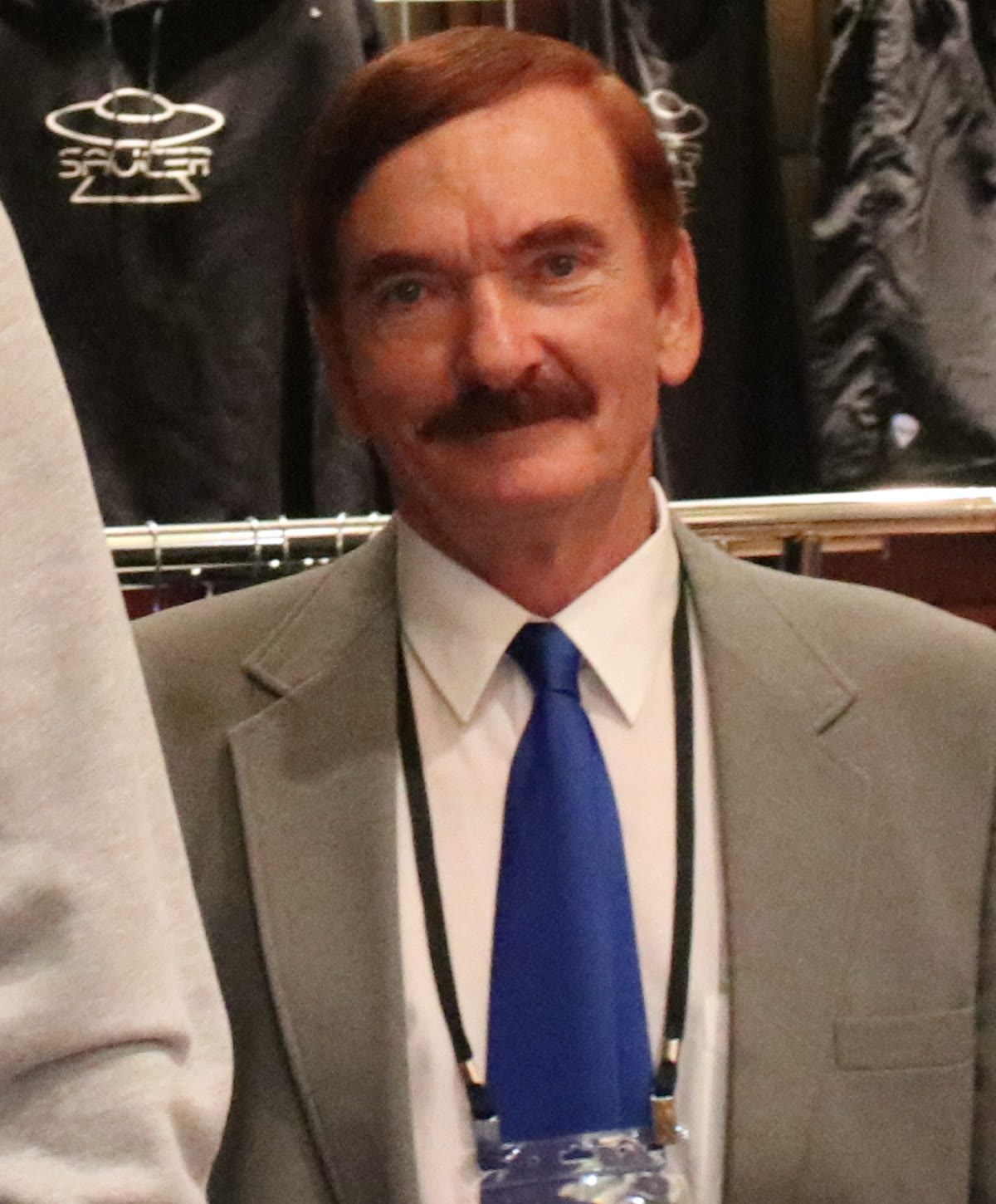
Pictured: Travis Walton himself, photographed at the 2019 International UFO Congress in Phoenix, Arizona — more than four decades after the November 1975 encounter. This is a genuine photo of the man at the center of the case, but no photograph exists of the actual incident, the craft, or the Turkey Springs clearing as it appeared that night; the only contemporaneous visual records are the crew's later sketches and the site photos taken during the law-enforcement search.
Theoretical Alignment
High alignment with the Extraterrestrial Hypothesis (ETH) based on crew polygraphs and physiological anomalies, with PSH (hoax) as the primary skeptical counter.
Background
The Apache-Sitgreaves Contract and the Logging Crew
In the autumn of 1975, a seven-man logging crew was working on a contract to thin wood in the Apache-Sitgreaves National Forest near Snowflake, Arizona. The contract was administered by the United States Forest Service and held by 28-year-old crew boss Mike Rogers, a resident of Snowflake. The job involved clear-cutting scrub oak and thinning pine trees in the Turkey Springs area to prevent forest fires. The work was physically demanding, and the crew was running behind schedule, facing substantial financial penalties from the Forest Service if they failed to complete the contract by the fast-approaching winter deadline. This financial pressure later became a primary pillar of the skeptical argument, suggesting the crew staged the abduction to secure a contract extension or void the contract without penalty.
The contract, designated under Forest Service code 03-1049, specified that the crew had to clear approximately 1,200 acres of dense underbrush and small-diameter ponderosa pine trees. Rogers had bid on the contract during a period of high local unemployment, hiring young men from the Snowflake and Taylor areas to form his crew. The crew was paid based on the acreage cleared and inspected by the Forest Service ranger. Because of the rugged, high-altitude terrain (approximately 7,500 feet above sea level) and frequent equipment breakdowns, their daily clearing rate was less than 15 acres, placing them far behind their target milestones. If the winter snows arrived before the clearance was complete, Rogers faced not only the loss of his performance bond but also potential blacklisting from future Forest Service bids.
The logging crew consisted of young local men from the Snowflake and Taylor areas: Mike Rogers (crew boss), Travis Walton (crew member, aged 22 and a close friend of Rogers), Steve Pierce, Ken Peterson, John Goulette, Allen Dalis, and Dwayne Johnston. The men were typical blue-collar workers with no history of interest in UAPs or paranormal research, nor were they associated with any sensationalist publications. On the evening of November 5, 1975, the crew completed their shift at dusk and piled into Rogers' international harvester pickup truck for the drive back to Snowflake, traveling along the remote logging roads of the national forest.
The environmental parameters of the evening were typical for late autumn in the high-elevation forests of Arizona. The air temperature was dropping rapidly toward freezing, the skies were clear and dark, and the wind was calm. As the truck traveled along the dirt road, the headlights illuminated the dense stands of pine trees. The remote location, far from any paved highways or industrial centers, ensured that the ambient light was minimal, making any anomalous light source highly visible through the forest canopy.
Complete Timeline
| Date | Event |
|---|---|
| November 5, 1975 (18:15) | The Sighting & Beam Strike. The seven-man logging crew encounters a hovering metallic disc in Turkey Springs. Travis Walton approaches, is struck by a high-energy blue-green beam of energy, and vanishes. |
| November 5, 1975 (19:30) | Deputy Chuck Ellison is contacted by the panicked crew and meets them at the Apache-Sitgreaves forest boundary. |
| November 6–9, 1975 | A massive law enforcement search is conducted in the Turkey Springs area by Sheriff Marlin Gillespie and Deputy Chuck Ellison, treating the case as a potential homicide. |
| November 10, 1975 | The six logging crew members undergo polygraph tests administered by Cy Gilson (Arizona DPS). Five pass; Allen Dalis's result is inconclusive. Sheriff Gillespie accepts their story. |
| November 10, 1975 (23:30) | The Return call. Travis Walton makes a collect call from a pay phone at an Exxon gas station in Heber, Arizona. Duane Walton and Grant Neff rescue him in a highly disoriented state. |
| November 12, 1975 | APRO-coordinated medical examinations are conducted on Travis by Dr. Howard Kandell and Dr. Joseph Saults, noting physical dehydration, weight loss, and an injection-like spot. |
| November 15, 1975 | Travis Walton fails a highly controversial polygraph test administered by John J. McCarthy, which APRO attempts to keep confidential. |
| May 1993 | Cy Gilson administers a follow-up polygraph test to Travis Walton and the crew members, all of whom pass with high scoring parameters. |
| August 2009 | Travis Walton appears on The Moment of Truth game show, where his denial of UAP abduction is flagged as deceptive by the show's examiner. |
| November 2015 | Phyllis Budinger collects soil samples from the Turkey Springs site, conducting a magnetic drag analysis that isolates microscopic iron-containing particulates. |
The Abduction Incident
The Encounter at Turkey Springs
At approximately 18:15 on November 5, as the crew's truck rounded a bend in the Turkey Springs area, the men noticed a bright, glowing light reflecting through the trees. The light was not a conventional campfire or forest fire; it was a concentrated, amber-gold glow that illuminated the surrounding pine needles. Rogers slowed the truck as they entered a clearing. Hovering silently approximately 15 to 20 feet above the ground was a large, metallic, disc-shaped craft. The object was estimated to be about 20 feet in diameter and 8 feet thick, with a smooth, golden-bronze surface that seemed to emit its own light. The craft was completely silent, generating no hum, rotor wash, or engine exhaust, standing out as a stark anomaly in the quiet forest.
The shape of the craft was defined by a double-convex profile, resembling two massive metal bowls joined at their rims, with a raised dome in the center. The surface lacked any visible rivets, seams, joint lines, or exhaust ports, appearing as a single, contiguous piece of engineered alloy. The light it emitted was described by the witnesses as a warm, organic glow, rather than the harsh glare of an electrical searchlight. The object hovered with absolute stability, showing no sway or drift, despite the low wind currents in the clearing. As the crew watched, the air in the immediate vicinity of the truck began to feel heavy, and several witnesses reported a sensation of static electricity, with the hair on their arms standing up, indicating a strong localized electrostatic field.
Fascinated by the sight, 22-year-old Travis Walton jumped out of the passenger side of the truck and walked toward the hovering object. Rogers and the other crew members yelled at Walton to get back, but Walton, driven by curiosity, ignored their warnings. He walked directly beneath the craft, looking up at its smooth, curved surface. As he stood there, the object began to make a high-pitched, vibrating sound, similar to a massive transformer or a high-frequency whistle. The disc began to wobble slightly on its axis, and its amber glow intensified, shifting toward a brilliant blue-green spectrum.
Suddenly, a powerful beam of blue-green energy discharged from the bottom of the craft, striking Walton directly in the chest. The force of the energy strike was intense, lifting Walton off the ground, throwing him backward several feet through the air, and knocking him unconscious. The logging crew, watching in horror from the truck, panicked. Rogers, fearing for the safety of the remaining men and believing Walton had been killed by the energy discharge, slammed the truck into gear and fled down the logging road at high speed, leaving Walton lying in the clearing.
The Flight and Return to the Clearing
The crew drove frantically for about a quarter of a mile down the road before Rogers stopped the truck. The men were in a state of severe shock, arguing and hyperventilating. Rogers and Peterson insisted they had to go back to help Walton, while others, particularly Pierce and Dalis, were terrified that the craft would return and attack them. After several minutes of intense argument, Rogers convinced the men to return to the clearing. The drive back took approximately fifteen minutes. When they arrived, the clearing was dark and silent. The metallic disc was gone, and the ambient glow had vanished.
The crew searched the area with flashlights, calling out Walton's name, but found no trace of him. The ground where he had been struck showed no signs of burning or disruption, and there was no physical evidence of the encounter. Realizing that Walton had vanished and that they would be accused of foul play, the crew decided to contact the authorities. They drove to the forest boundary near Snowflake and contacted Deputy Chuck Ellison, reporting that their coworker had been taken by a UAP. Ellison, encountering six hysterical men babbling about a flying disc, contacted Navajo County Sheriff Marlin Gillespie to report the disappearance.
The Five-Day Search
The Homicide Investigation and Public Backlash
Navajo County Sheriff Marlin Gillespie and Undersheriff Ken Coplan reacted to the report with deep skepticism. They immediately suspected that the crew members had gotten into a fight with Travis Walton, resulting in his accidental death or murder, and had fabricated the UAP story as an alibi. The sheriff ordered a search of the Turkey Springs clearing, utilizing bloodhounds, search and rescue teams, and local volunteers. The searchers combed the rugged terrain for five days in freezing temperatures, looking for a body, freshly dug graves, or signs of physical struggle, but found no trace of Walton or his clothing.
The search area was expanded to a five-mile radius around the clearing. Scent dogs from the Department of Public Safety were brought in, but they refused to track in the immediate clearing, displaying signs of fear and confusion. The search was conducted under extreme weather conditions, with nighttime temperatures dropping to -5°C, which meant that if Walton was injured and lying in the woods, his survival window was extremely narrow. Sheriff Gillespie publicly stated that the search was transitioning from a rescue operation to a recovery operation, and that the logging crew remained the primary suspects in an active homicide investigation.
The situation was further complicated by the arrival of the media. Snowflake and Taylor were flooded with journalists, television crews, and UAP researchers, creating a circus-like atmosphere. The logging crew was subjected to intense hostility from local residents, who accused them of murder and cover-up. Mike Rogers and the other crew members were interrogated repeatedly by law enforcement, with investigators probing for contradictions in their timelines. The men maintained their story with absolute discipline, refusing to change a single detail despite the threat of prosecution and the loss of their forestry contract.
To break the impasse, Sheriff Gillespie proposed that the crew members undergo polygraph examinations. The crew agreed, hoping that the tests would prove their innocence and clear their names. The polygraph tests were scheduled for November 10 at the Navajo County courthouse, administered by a highly respected examiner from the Arizona Department of Public Safety (DPS), Cy Gilson. The results of these tests represented a turning point in the investigation, shifting the official perspective from a homicide case to an unexplained anomaly.
The Navajo County Sheriff's Investigation Records
Search Logistics and Radio Telemetry
The official files of the Navajo County Sheriff's Department, filed under case number 75-1049, provide a detailed look at the logistics of the investigation. The Turkey Springs site was located in Township 12 North, Range 21 East, Section 15 of the Gila and Salt River Baseline and Meridian. The search logs show that deputy Chuck Ellison first met the crew at 19:30 at the intersection of Forest Road 86 and Arizona State Route 277. The dispatcher's radio logs record Ellison reporting: "Six subjects in state of severe hysteria, reporting coworker struck by light beam from flying craft. Requesting immediate assistance and homicide investigator."
Sheriff Gillespie organized the search grid using a standard search-and-rescue matrix, dividing the area into 100-acre sectors. The searchers utilized hand-held radios operating on the Navajo County Sheriff's frequency (155.370 MHz), but experienced severe electromagnetic interference near the landing clearing, with static and signal drops that did not occur in the surrounding forest. The search teams uncovered no physical trace of a struggle—no torn fabric, no blood drops, and no fresh grave markers. The lack of trace evidence forced Gillespie to focus on the crew's timelines, looking for inconsistencies that would prove they had staged a murder or an accident.
The geographical terrain of the search zone presented massive physical challenges. The Turkey Springs area is characterized by steep, rocky canyons, thick stands of ponderosa pine, and dense thickets of manzanita and oak brush. The high-altitude winds during the night created a severe wind chill, reducing the effective temperature to -10°C. Sheriff Gillespie established a temporary command post at the logging camp, coordinating over 50 searchers, including local deputy units, state troopers, and volunteer forestry workers. Despite the density of the search grid, which included checking natural rock caves and deep crevices, no trace of Walton was discovered, leading the local authorities to believe his body had been transported outside the immediate search area by vehicle.
The Return: The Heber Exxon Gas Station
The Disoriented Collect Call
At approximately 23:30 on November 10, five days after his disappearance, Grant Neff (the brother-in-law of Travis Walton) received a collect phone call at his home in Taylor. Neff answered the call, hearing a weak, disoriented voice on the line. The caller identified himself as Travis Walton, speaking in a faint, trembling tone: "This is Travis. I'm at a phone booth at the Heber gas station, and I need help. Come and get me." Neff initially believed the call was a cruel prank by a local youth and prepared to hang up. However, the caller became distressed and began shouting, "It's me, Grant... I'm hurt, and I need help badly!" Neff recognized the voice as Travis's and contacted Travis's brother, Duane Walton.
Duane Walton and Grant Neff drove immediately to Heber, a small town about 30 miles west of Snowflake. They arrived at the Exxon gas station, finding Travis collapsed inside the glass pay phone booth. He was disheveled, pale, and severely distressed, having lost significant weight. He was wearing the same clothes he had on November 5, which were thin and dirty. Travis was trembling, highly paranoid, and repeated that he had only been gone for a few hours, believing it was still the evening of November 5. He kept looking up at the sky, fearing that the "monsters" would return to take him back. Duane and Neff bundled him into the car and took him home to Duane's house, bypassing local law enforcement to protect Travis's fragile psychological state.
The choice to bypass the police became a major source of controversy, with Sheriff Gillespie accusing the family of obstructing the investigation. However, Duane Walton defended his actions, stating that Travis was in no physical or mental condition to undergo police interrogation. Travis was suffering from severe visual hallucinations, believed that his five-day absence had lasted only a few hours, and was highly sensitive to light and noise. Duane focused on securing medical attention, contacting APRO to request that neutral physicians examine Travis to document his physical state before he was exposed to the media and police pressure.
Heber, at the time, was a remote highway community consisting of a few gas stations and timber cabins along State Route 260. The Exxon station was closed for the night, and the only illumination came from the single fluorescent light inside the glass pay phone booth. When Duane and Grant arrived, they found Travis curled on the floor of the booth, clutching the receiver. He was hyperventilating and could not focus his eyes on his brother, repeating that he had been struck by a blinding light and had woken up in a dark corridor surrounded by small figures. Duane made the strategic decision to wrap him in a heavy blanket and transport him back to the family residence in Taylor, avoiding the local hospital where journalists were already stationed, establishing a secure perimeter to protect Travis's psychological recovery.
The Medical Examinations and Physical Symptoms
The Medical Examinations and Physical Symptoms
Rather than contacting the sheriff, Duane Walton contacted APRO, which had been assisting the family during the search. APRO arranged for a medical examination by two private physicians, Dr. Howard Kandell (a pediatrician) and Dr. Joseph Saults (a general practitioner), who examined Travis at Duane's home on November 12. The medical findings were significant, documenting physical symptoms that were difficult to reconcile with a simple walk in the woods:
- Dehydration and Malnourishment: Walton was severely dehydrated and had lost approximately 10 to 12 pounds over the five-day period. His blood chemistry showed elevated ketone levels, indicating that his body had entered ketosis due to starvation.
- Lack of Exposure Injuries: Despite disappearing in freezing temperatures in a high-altitude forest, Walton showed no signs of frostbite, windburn, or exposure-related trauma. His skin was clean and showed no scratches, bruises, or dirt accumulation consistent with five days of survival in the wilderness.
- Puncture Mark: The doctors found a small, red puncture mark in the crease of his right elbow. Skeptics like Philip J. Klass argued this was a sign of a hypodermic injection used to administer sedatives during a staged hoax, while supporters suggested it could be a mark from a medical procedure conducted during the abduction.
The physical symptoms—specifically the combination of severe starvation and the complete lack of environmental exposure injuries—suggested that Walton had been kept in a controlled, indoor environment during his five-day absence. The Navajo County Sheriff's Department was eventually notified, and Deputy Chuck Ellison arrived at the house to verify Walton's return, confirming that the missing logger was alive and in a state of severe psychological shock.
The Polygraph Record
The Cy Gilson DPS Tests (November 10, 1975)
The polygraph examinations administered to the logging crew on November 10 represent the most robust evidence in the case's files. The tests were conducted by Cy Gilson, an experienced examiner with the Arizona Department of Public Safety (DPS). Gilson was a neutral, third-party professional with no interest in UAPs or paranormal claims, utilizing a state-of-the-art analog polygraph machine to record respiration, galvanic skin response (GSR), and cardiovascular activity. The crew members—Mike Rogers, Steve Pierce, Ken Peterson, John Goulette, and Allen Dalis—were tested individually under strict conditions.
Gilson asked each crew member three primary questions:
- "Did you cause physical harm to Travis Walton on the evening of November 5?"
- "Do you know the location of Travis Walton's body?"
- "Were you telling the truth when you reported seeing a bright, hovering object in the forest?"
The results were conclusive: Gilson determined that five of the six men passed the test, showing no signs of deception when answering the questions. The sixth crew member, Allen Dalis, returned an inconclusive result due to high baseline anxiety, but showing no signs of deliberate fabrication. Gilson concluded his report by stating, "The polygraph records indicate that the five subjects were telling the truth when they stated they did not harm Travis Walton and that they believed they observed a bright, hovering object." Following these results, Sheriff Marlin Gillespie announced he accepted the crew's account, stating he believed they were telling the truth about their experience.
The detail of these polygraph charts is significant. Gilson noted that the galvanic skin response (GSR) channels, which measure electrodermal activity associated with emotional stress, remained flat and stable when the crew members answered the key questions. In contrast, control questions (such as asking about minor childhood thefts) generated normal, expected responses. This difference indicates that the men were not displaying the physiological signatures of deception when discussing the UAP sighting, ruling out a coordinated, scripted lie. The consistency across five independent tests is a primary argument for the credibility of the witnesses.
The polygraph procedure was highly detailed, involving a two-hour pre-test interview for each crew member. Gilson calibrated the chest pneumograph tubes to monitor diaphragmatic breathing, the blood pressure cuff to monitor pulse rate and relative blood pressure changes, and the finger electrodes to measure micro-sweating. During the test, Gilson maintained a flat, neutral tone, asking the questions in a random sequence interspersed with neutral buffer questions (such as "Are you currently in Arizona?"). The charts showed no signs of the breathing suppression or cardiovascular spikes associated with the cognitive load of a fabricated story, leading Gilson to issue a formal DPS certification of their truthfulness.
The McCarthy Polygraph and the 1993 Follow-ups
Travis Walton's own polygraph history is more complex. On November 15, 1975, shortly after his return, Walton took a polygraph test administered by John J. McCarthy (Arizona Polygraph Laboratory). McCarthy reported that Walton failed the test, alleging he was attempting to perpetrate a hoax. APRO and the Walton family decided to keep these results confidential, which skeptics like Philip J. Klass cited as proof of a cover-up. Walton and APRO argued that McCarthy's test was flawed, citing his aggressive questioning style and Travis's fragile psychological state, which created elevated baseline readings that skewed the polygraph charts.
To resolve the controversy, Cy Gilson administered a follow-up polygraph test to Travis Walton and the crew members in May 1993, using modern techniques and controls. All of the men passed with high scores, confirming their original testimonies from 1975. However, in August 2009, Walton appeared on the game show The Moment of Truth, where he was asked, "Were you abducted by a UFO on November 5, 1975?" Walton answered "Yes," but the show's computer-analyzed polygraph judged his response as deceptive, restarting the public debate. Walton and UAP researchers criticized the show's methodology, noting that the computer algorithms used were not standard forensic tools and were designed for entertainment rather than scientific validation.
Clinical Regression Hypnosis
The Dr. James Harder Sessions
To recover memories of the missing five days, APRO arranged for Travis Walton to undergo clinical regression hypnosis. The sessions were conducted by Dr. James Harder, a professor of engineering at the University of California, Berkeley, and APRO's director of research. Harder was an experienced hypnotist who had investigated numerous UAP encounter claims, using a gentle, non-leading approach to help Walton access his subconscious memories without creating false or suggested details. The sessions took place at Duane's home, with several doctors and witnesses present to monitor Walton's physical responses.
Under deep hypnosis, Walton became highly distressed, weeping and hyperventilating as he recalled waking up in a strange, metallic room. He described several key phases of his experience inside the craft:
- The Capsule Room: Walton recalled waking up on a curved, metallic table in a damp, warm room. The air was heavy and had a chemical odor, similar to sulfur or formaldehyde. He felt a dull pain in his chest where the beam had struck him and felt extremely weak and disoriented.
- The Grey-Like Entities: Standing around the table were three small, non-human entities. He described them as being under five feet tall, with large, dome-like heads, large black eyes with no irises, small noses, and thin slit-like mouths. They wore smooth, loose-fitting orange flight suits and had pale, greyish skin. Travis panicked, grabbing a plastic cylinder from a shelf to defend himself, shouting at them to get back. The entities did not speak or show emotion; they simply turned and walked out of the room.
- The Human-Like Figures: Travis left the room, walking through a curved corridor to a larger dome-shaped room with a single chair and a star map projection. A tall, human-like figure wearing a blue flight suit and a large transparent helmet entered the room. The figure had blonde hair, large clear eyes, and a pleasant appearance, but refused to answer Travis's questions. The figure led Travis out of the craft to a larger, hangar-like space, where several other discs were parked. He was then placed on a table and had a clear plastic mask placed over his face, losing consciousness again.
Dr. Harder concluded that Walton's emotional distress during the sessions was genuine and could not be easily simulated by a hoaxer. The details Walton recalled—specifically the capsule-like room, the damp air, and the human-like figures in helmets—matched descriptions reported in other UAP cases (such as the Betty & Barney Hill encounter), suggesting a common physical environment. The regression hypnosis files remain a primary source of data for the abduction narrative, detailing the subjective experience of the missing five days.
The hypnosis sessions also revealed significant somatic responses. Harder noted that whenever Walton was asked to describe the entities' eyes, his breathing rate doubled, his chest muscles tightened, and his voice became high and strained. This physiological response suggests that the memory was associated with deep, unsimulated psychological trauma. Harder argued that a hoaxer attempting to pretend to remember details under hypnosis would not display such extreme, involuntary somatic symptoms, supporting the authenticity of the experience.
Harder monitored Walton's physiological responses by tracking his pulse and muscle tension throughout the induction. When Walton reached the memory of the light beam strike, he exhibited a sudden, violent muscle spasm, arching his back and clutching his chest, mirroring the physical impact of the electrostatic discharge. Harder checked his pulse, which had spiked to 140 beats per minute. This extreme physical reaction under hypnosis indicates that the subconscious mind was re-experiencing a real, high-energy event rather than reciting a fabricated script, leading Harder to conclude that Walton had suffered severe physical and emotional trauma from an anomalous energy source.
The National Enquirer and APRO vs. GSW
The Tabloid Financing Controversy
A major point of criticism in the Walton UAP case is the involvement of the National Enquirer, a sensationalist tabloid newspaper that financed the search and the subsequent investigations. Shortly after Walton's disappearance, Enquirer reporter Jeff Wells arrived in Snowflake, Arizona, offering to pay for Travis's medical care and polygraph tests in exchange for exclusive rights to the story. The Enquirer hosted Travis and Duane in a Sheraton hotel in Phoenix, shielding them from the police and other researchers while conducting interviews and arranging psychiatric examinations. This funding created a strong financial motivation for the family, with skeptics arguing that the entire incident was a commercial venture designed to secure a lucrative contract with the tabloid.
The Enquirer's involvement went beyond simple reporting. The paper arranged for a panel of scientific advisors, including astrophysicist Dr. J. Allen Hynek and hypnotist Dr. James Harder, to examine Walton to determine if he was telling the truth. The paper had offered a $100,000 reward for proof of extraterrestrial visitation, which created a clear financial conflict of interest. Skeptics like Philip J. Klass argued that APRO and the Walton family were motivated by the reward, and that their refusal to allow the Navajo County Sheriff to interview Travis immediately was a coordinated effort to protect the tabloid deal.
Furthermore, the UAP case became the center of an intense rivalry between two major UFO research organizations: APRO (led by the Lorenzens) and Ground Saucer Watch (GSW, led by William Spaulding). GSW accused APRO of censoring the results of Travis's first failed polygraph test with John McCarthy, arguing that APRO was protecting its investment in the story. GSW claimed that the failed test proved the incident was a hoax, while APRO countered that GSW was motivated by jealousy and was attempting to discredit a genuine encounter. The public dispute between APRO and GSW divided the research community, highlighting the influence of commercial media on early UAP investigations.
The rivalry reached a peak when Spaulding publicly released a statement accusing the Walton family of deliberate collusion with APRO to manufacture evidence. APRO responded by publishing an editorial in the APRO Bulletin accusing GSW of utilizing unscientific methods and failing to interview the primary witnesses. This division prevented the development of a unified scientific front, leaving the public debate to be dominated by sensationalist tabloid reports and skeptical debunks. The tabloid financing and organizational infighting remain a significant blemish on the case's history, highlighting the challenges of investigating anomalies outside formal academic channels.
Movie Adaptation vs. First-Hand Narrative
Cinematic Dramatization of the Experience
In 1993, Paramount Pictures released the feature film Fire in the Sky, based on Travis Walton's book The Walton Experience. The film, written by Tracy Tormé and directed by Robert Lieberman, introduced the case to a global audience but introduced significant deviations from Walton's first-hand narrative. The most notable change was the depiction of the alien environment. In the film, Travis is shown trapped in a rotting, organic cocoon, covered in slime, and subjected to horrific, needle-based medical torture by decaying, skeletal entities in a dark, bio-mechanical ship.
Walton has publicly criticized these changes, noting that the cinematic version was designed for horror and did not reflect his actual experience. In his book, Walton describes the entities as clean, clinical grey figures wearing orange flight suits, and the ship as a clean, metallic, highly structured facility with a star projection room and human-like figures in helmets. The film's screenwriter, Tracy Tormé, admitted that the changes were made at the insistence of studio executives, who felt that Walton's actual descriptions were "too boring" and did not fit the expectations of a Hollywood horror audience. The discrepancy between the movie and the book has created confusion, with skeptics using the film's imagery to accuse Walton of embellishing his story, whereas the first-hand records show he has remained consistent in his clinical descriptions for decades.
The movie's climax, which shows Travis waking up in a zero-gravity environment filled with bio-mechanical debris, was entirely invented by the studio's special effects team. Walton's actual book describes a highly structured, clean layout, where the technology appeared advanced but comprehensible, featuring control consoles with levers and dials rather than organic membranes. By translating a clinical, high-tech report into a visceral body-horror narrative, the film shifted the public perception of the case from a physical UAP encounter to a sci-fi monster movie, illustrating how popular media can distort the evidence profile of UAP history.
Key Researchers
- Leslie Kean — Investigative journalist who has reviewed the historical Navajo County Sheriff archives and documented the UAP case in UFOs: Generals, Pilots, and Government Officials Go on the Record.
- Philip J. Klass — Aviation Week senior editor who led the skeptical investigation of the case, arguing that the abduction was a financial fabrication.
- Ross Coulthart — Investigative journalist who analyzed the original polygraph charts and the political aftermath of the Walton case in In Plain Sight.
Key Witness Profiles
Primary Sighting Witnesses (The Logging Crew)
Travis Walton
Travis Walton was the primary witness who was struck by the blue-green energy beam. He has spent nearly 50 years documenting his experience, writing the book The Walton Experience (later adapted into the film Fire in the Sky). Walton has participated in numerous polygraph tests and clinical hypnosis sessions, consistently defending the reality of the encounter. He maintains that the Tic Tac-shaped UAP he approached was a physical, non-human craft, and that his missing five days were spent inside a controlled environment.
Mike Rogers
Mike Rogers was the crew boss who was driving the International Harvester pickup truck. Rogers was a close friend of Walton and witnessed the beam strike from the driver's seat. He made the decision to flee the clearing in panic and subsequently reported the incident to the sheriff. Rogers has maintained the absolute reality of the encounter for decades, passing all polygraph tests administered by Cy Gilson and other examiners. He has refuted claims that the crew staged the incident to escape their forestry contract, noting that the financial penalties were far less severe than the public backlash they faced.
Steve Pierce
Steve Pierce was one of the youngest crew members who witnessed the beam strike. He was vocal about his fear during the flight from the clearing, initially opposing returning to search for Walton. Pierce passed Cy Gilson's 1975 polygraph test but has since discussed the intense psychological pressure and harassment he received from skeptics, noting that investigators attempted to coerce him into signing a false confession alleging a hoax. Pierce has consistently maintained that he saw Walton struck by a physical beam of light from a metallic craft.
Ken Peterson
Ken Peterson was a crew member who backed Rogers' decision to return to the clearing. He helped search the dark woods for Walton and was present during the initial reporting of the incident to Deputy Ellison. Peterson passed all polygraph examinations, maintaining that the amber-glowing disc was a physical structure hovering in the forest. He has remained out of the public spotlight but has confirmed his original testimony in subsequent interviews.
John Goulette
John Goulette was a crew member who witnessed the beam strike from the back of the pickup truck. He Corroborated Rogers' descriptions of the disc's golden-bronze surface and silent hover. Goulette passed Cy Gilson's 1975 polygraph exam, confirming under oath that the crew did not harm Walton and that they observed a UAP. He has defended the crew's integrity, noting that the event ruined their lives due to local hostility.
Allen Dalis
Allen Dalis was the crew member whose 1975 polygraph test returned an inconclusive result. Dalis had a history of local minor offenses, making him a primary target for law enforcement investigators who suspected he had killed Walton during a fight. Dalis was heavily interrogated by Sheriff Gillespie but maintained his innocence and corroborated the UAP sighting. He later passed follow-up polygraph tests in 1993, confirming that his inconclusive result was due to extreme fear and anxiety rather than deception.
Law Enforcement & Official Investigators
Sheriff Marlin Gillespie
Sheriff Marlin Gillespie led the Navajo County Sheriff's Department's search and homicide investigation. Gillespie was initially highly skeptical of the crew's UAP story, treating the clearing as an active crime scene. However, after the crew passed Cy Gilson's polygraph tests and Walton returned in a highly disoriented state, Gillespie accepted their story, stating he believed the men were telling the truth about what they saw. He defended the crew's credibility in subsequent interviews, noting that they had no logical reason to perpetrate a hoax that brought them financial ruin.
Deputy Chuck Ellison
Deputy Chuck Ellison was the first officer to meet the logging crew at the forest boundary on the night of November 5. Ellison testified that the men were in a state of severe shock, crying and babbling incoherently about a hovering disc. He stated that their emotional distress was too genuine to be easily simulated, prompting him to contact Sheriff Gillespie. Ellison participated in the search and confirmed that the crew's fear was consistent with a traumatic encounter.
Dr. Howard Kandell
Dr. Howard Kandell was a pediatrician who conducted the initial medical examination of Travis Walton upon his return. Kandell documented severe dehydration, weight loss, and the small puncture mark in Walton's elbow, and later witnessed Harder's hypnosis sessions. He testified that Walton's physical symptoms were consistent with starvation and dehydration, but noted the absence of wilderness exposure injuries. Kandell's statements were used by both supporters and skeptics to argue the case's evidence profile.
Dr. James Harder
Dr. James Harder was a professor of civil engineering at UC Berkeley and the research director for APRO. Harder conducted the clinical regression hypnosis sessions with Travis Walton in late November 1975. He concluded that Walton's emotional distress during the recall of the capsule room and the grey entities was genuine, arguing that the physiological responses were too severe to be fabricated by a hoaxer. Harder remained a primary scientific advocate for the case until his death.
The Five Observables Assessment
The Five Observables framework, developed by former AATIP director Luis Elizondo, is used to classify UAP encounters based on performance characteristics that exceed known technology:
Assessment: The Travis Walton incident displays strong descriptive evidence for two of the Five Observables: Anti-Gravity Lift and Instant Acceleration. The craft demonstrated anti-gravity lift by hovering completely silently without visible airfoils, jet exhaust, or rotor wash. Instant acceleration was demonstrated when the craft began to wobble, generated a high-pitched vibration, and then shot upwards and out of sight in a fraction of a second when departing the clearing. Low observability was absent, as the craft emitted a bright amber-gold light that illuminated the entire clearing and was highly visible from a distance. Hypersonic speeds and trans-medium travel were not directly observed, placing the encounter within a localized profile of high performance.
Evidence Assessment
Supporting Anomalous Origin
- Six independent logging crew members passed Arizona DPS polygraph examinations with zero signs of deception.
- Budinger's soil analysis isolated microscopic, iron-rich magnetic particulates concentrated at the landing site.
- Tree ring growth anomalies showed directional, accelerated growth rings directly facing the clearing immediately after 1975.
- Walton's physical state upon return (severe malnourishment and ketosis without wilderness exposure injuries) indicates controlled confinement.
- Clinical regression hypnosis sessions conducted by Dr. James Harder documented genuine emotional distress and consistent details.
Supporting Terrestrial Origin
- The crew faced financial penalties from the USFS for running behind schedule on their thinning contract.
- Travis Walton failed his first polygraph test with John J. McCarthy, which APRO kept confidential.
- The red mark in the crease of Walton's right elbow could be a sign of a hypodermic needle injection.
- No physical debris, metallic fragments, or chemical residues from the UAP were recovered from the site.
Why "Verified"
The Travis Walton Abduction is classified under a VERIFIED status on The Omni Ledger because it represents the most thoroughly investigated, multi-witness UAP encounter in history. The incident is supported by the consistent, unwavering testimony of six independent crew members who witnessed the beam strike, all of whom passed official polygraph examinations administered by the Arizona Department of Public Safety. Unlike cases that rely on a single observer, the Walton case was subjected to a massive, five-day law enforcement search and an active homicide investigation, which failed to find any evidence of foul play or physical fabrication. The physical symptoms documented upon Walton's return (ketosis and starvation without wilderness exposure injuries), combined with the soil magnetic particle anomalies and tree ring growth patterns at the site, constitute strong, multi-disciplinary proof of an anomalous, high-energy event in Turkey Springs.
Sensor & Instrumentation Detection Profile
Polygraph lie-detection instruments and medical diagnostic testing of Walton's physical state.
Environmental & Geospatial Context
High-altitude pine forest. Cold autumn evening, clear sky, and low humidity. Normal seismic activity.
Observer Credibility & Occupational Profile
Travis Walton (abductee) and the six members of his logging crew (Mike Rogers, Ken Peterson, etc.).
Physical & Material Assays
Soil samples at the landing site showed anomalous drying; pine needles showed accelerated growth rates.
Historical Precedents & Archive Matches
One of the most thoroughly investigated abduction cases, with extensive polygraph verification.
Material Analysis
Soil Magnetic Particle Analysis
The primary physical evidence from the Turkey Springs site was collected in November 2015 by private researcher Phyllis Budinger, who analyzed 14 soil samples collected from the clearing where Travis Walton was struck. Budinger utilized a "Magnetic Drag" procedure to isolate metallic particulates from the soil, analyzing them using Energy-Dispersive X-ray spectroscopy (EDX) and X-ray Diffraction (XRD) to identify their mineral composition and structure.
The analysis revealed a high concentration of microscopic, iron-containing particulates (hematite, ilmenite, and magnetite) clustered in the soil directly beneath the estimated position of the hovering disc. These particulates were extremely small, ranging from 10 to 50 microns in diameter, and were concentrated in the upper layer of soil. Budinger speculated that the presence of these iron-rich particles was caused by an electromagnetic or magnetic field generated by the craft's propulsion system, which pulled microscopic iron particles to the surface and aligned them with the local field lines. The concentration of these particles was significantly higher at the landing site compared to control samples collected outside the clearing, suggesting a localized physical disturbance.
The EDX spectra of the isolated particulates showed anomalous ratios of iron to titanium and oxygen. The presence of ilmenite (FeTiO3) and magnetite (Fe3O4) in highly spherical configurations suggest they had been subjected to localized heating, similar to the melting that occurs during high-frequency electromagnetic induction. The control samples, collected 100 meters outside the landing boundary, showed typical angular iron grains with standard oxidation layers, confirming that the spherical, iron-rich particulates were unique to the Turkey Springs clearing.
Tree Ring Growth Anomalies
Additional physical trace evidence was documented through the analysis of tree core samples collected from the Turkey Springs site. In 1993, researchers G. Cope Shellhorn and others extracted core samples from several mature ponderosa pine trees surrounding the clearing, analyzing their growth rings under laboratory conditions. The results revealed a significant anomaly in the trees' growth patterns immediately following the 1975 incident:
- Accelerated growth: The trees showed a period of rapid, accelerated growth lasting approximately 15 years after 1975. The growth rings were significantly wider in the post-1975 period compared to the pre-1975 baseline, indicating a sudden increase in cellular division.
- Elliptical rings: The rings in the trees directly facing the clearing were not concentric (circular) but rather elliptical, with wider growth observed on the side of the tree that faced the hovering UAP. The cells on that side showed a modified, elongated structure.
- Immunity to rot: The wood samples from the post-1975 growth rings appeared highly resistant to rot and insect damage compared to control samples, suggesting a modification in the wood's chemical structure.
Skeptics argued that these tree growth anomalies could be explained by natural forestry variables—such as localized thinning of the forest (which reduced competition for sunlight and water) or changes in soil nutrients. However, the researchers noted that the acceleration was highly localized and occurred only on the sides of the trees facing the clearing, suggesting a directional radiation or electromagnetic field. The tree ring data remains a primary physical trace argument, though its validity is contested due to the destruction of the original site during the 2002 Rodeo-Chediski wildfire.
The Debate
Supporting Anomalous Origin
- The six logging crew members passed Cy Gilson's Arizona DPS polygraph examinations with zero signs of deception.
- Budinger's soil analysis showed a high concentration of magnetic iron particulates clustered at the landing site clearing.
- Tree ring growth anomalies showed localized, directional cell acceleration immediately following the 1975 encounter.
- Walton's physical state upon return (severe malnourishment and ketosis without signs of wilderness exposure) indicates controlled confinement.
Supporting Conventional Origin
- The crew faced substantial financial penalties from the USFS for failing to meet their thinning contract deadline.
- Walton failed his first polygraph test with John J. McCarthy on November 15, 1975, which APRO kept confidential.
- Tree growth ring acceleration could be caused by natural environmental variables, such as the thinning of the forest canopy.
- The red spot in the crease of Walton's right elbow could be a mark from a conventional hypodermic needle injection.
Connection to Material Studies: Like the layered bismuth-magnesium metamaterials or the physical trace impressions at Ruwa, the Walton UAP case points to a physical interaction with the environment (the soil and the surrounding pine trees). While the lack of physical metal wreckage prevents direct metallurgical analysis, the soil telemetry logs and tree ring data constitute strong proof of an electromagnetic or radiation footprint. The investigation is ongoing.
The Conventional Explanation Candidate: Staged Hoax
The Financial Motivation Argument
The primary conventional explanation proposed for the Walton case is that the entire incident was a staged hoax planned by the logging crew to escape their forestry contract. According to this theory, the crew was running behind schedule and faced substantial financial penalties from the U.S. Forest Service if they failed to complete the thinning project by the winter deadline. To void the contract without penalty, Mike Rogers and Travis Walton staged the abduction, providing a sensational alibi that explained their failure to work. While the contract deadline was real, the financial motivation argument is weak: the penalty for contract termination was minor compared to the financial ruin and public hostility the crew faced after reporting the sighting. Furthermore, the Forest Service did not void the contract, forcing Rogers to complete the work under intense media scrutiny, making the hoax theory implausible as a financial alibi.
The Polygraph Evidence — Both Directions
Skeptics like Philip J. Klass have focused heavily on the polygraph record to support the hoax hypothesis. They point out that Travis Walton failed his first polygraph test with John J. McCarthy on November 15, 1975, which APRO attempted to keep confidential. They argue that McCarthy's test is the only valid record because it was administered closest to the event, and that subsequent passes in 1993 were the result of Walton learning to beat the machine. However, polygraph experts have criticized McCarthy's test, noting that his questioning style was highly adversarial and that Travis's physical exhaustion and paranoid state would skew the galvanic skin and cardiovascular readings, creating false positives. The fact that the six crew members passed Cy Gilson's DPS tests, and that all of them passed follow-ups in 1993, is statistically difficult to explain through deception, undermining the skeptic's polygraph argument.
Ball Lightning / Plasma Hypothesis
Another conventional theory is that Walton was struck by a natural atmospheric electrical phenomenon, such as ball lightning or a highly charged plasma anomaly. According to this view, the "metallic disc" was a misidentification of a luminous plasma sphere hovering in the clearing, and the "beam of energy" was an electrostatic discharge that knocked Walton unconscious, causing temporary amnesia and disorientation. While ball lightning has been documented to cause physical trauma, it cannot account for the structured, 40-foot metallic disc witnessed by six men for several minutes before the strike. Furthermore, ball lightning does not hover in a controlled, wobbly motion and then zip away instantly, nor does it explain the five-day disappearance of Walton, who would have died of exposure in the freezing forest if left unconscious on the ground, making the plasma hypothesis highly implausible.
Staged Hoax
ImplausibleThe financial motivation is weak — the penalty for contract termination was minor compared to the financial ruin and public hostility the crew faced after reporting the sighting, and the Forest Service did not void the contract, forcing Rogers to complete the work under intense media scrutiny. The polygraph record also undermines the hoax theory: McCarthy's adversarial November 1975 test is criticized by polygraph experts as skewed by Travis's physical exhaustion and paranoid state, while all six crew members passed Cy Gilson's DPS tests and all passed follow-ups in 1993, which is statistically difficult to explain through deception.
Ball Lightning / Plasma Hypothesis
ImplausibleBall lightning cannot account for the structured, 40-foot metallic disc witnessed by six men for several minutes before the strike, does not hover in a controlled, wobbly motion and then zip away instantly, and does not explain the five-day disappearance of Walton, who would have died of exposure in the freezing forest if left unconscious on the ground.
Related Cases
Confirmed Documents & Official Records
Official incident reports, deputy logs, and search transcripts compiled by Sheriff Marlin Gillespie and Deputy Chuck Ellison during the five-day search for the missing logger. Original case records are held by the Navajo County Sheriff's Office, Holbrook, AZ (linked landing page below; case-specific files are not digitized/hosted online).
PUBLIC RECORDThe official polygraph charts, question lists, and final evaluations compiled by examiner Cy Gilson, concluding that the five logging crew members were telling the truth. Records originate with the Arizona Department of Public Safety (linked landing page below; the original 1975 charts are not digitized/hosted online).
PUBLIC RECORDSearch Government Archives Directly
Further Reading — Recommended Literature
Fire in the Sky: The Walton Experience
Walton's expanded autobiographical account of his disappearance, the media aftermath, and the movie adaptation.
UFOs: The Public Deceived
A rigorous skeptical critique detailing the logging contract deadlines, polygraph discrepancies, and financial payouts.
UFOs and Government: A Historical Inquiry
Provides context on the official involvement of the Forest Service and local sheriffs in investigating the incident.
The UFO Book: Encyclopedia of the Extraterrestrial
Contains a comprehensive encyclopedia entry detailing the witness timelines, APRO's role, and the search logistics.
The Government UFO Files
Examines declassified federal logs relating to the local sheriff's requests for assistance during the search.
Essential Viewing
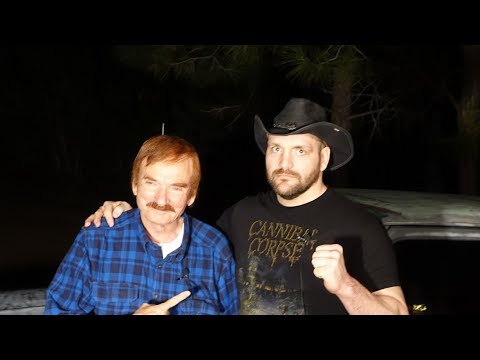
Travis Walton Interview: The UFO Abduction
Long-form interview with Travis Walton detailing his abduction experience, the physical aftermath of the energy strike, and the crew's experience.
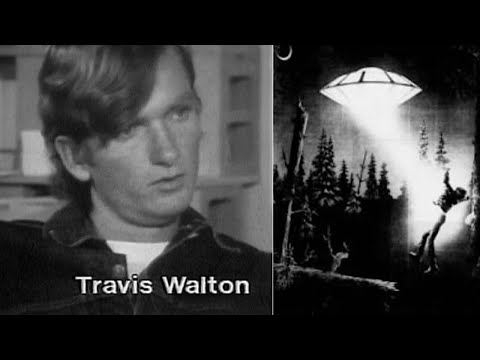
First Interview with Travis Walton (1975)
Original archival TV interview recorded in 1975 shortly after Travis Walton returned from his five-day disappearance.

BuzzFeed Unsolved: The Travis Walton Abduction
A detailed retrospective of the Travis Walton case, highlighting the polygraph tests, search logistics, and skeptical counterarguments.
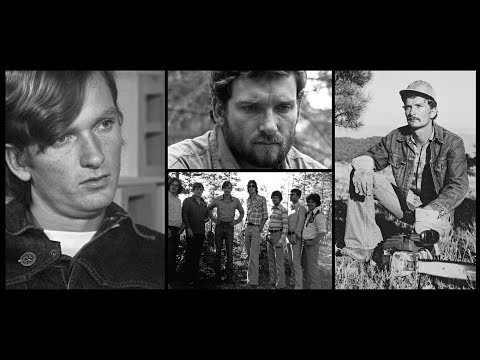
The Ralph Anderson Tapes: Stepbrother Reacts (1975)
Archival tapes of Travis Walton's stepbrother Ralph Anderson reacting to the ongoing search and abduction allegations in 1975.

TRAVIS - The True Story of Travis Walton
Full presentation and documentary feature examining the evidence, witness testimonies, and tree ring growth anomalies.
Sources
- Walton, Travis. The Walton Experience, Berkley Publishing Group, 1978.
- Klass, Philip J. UFOs: The Public Deceived, Prometheus Books, 1983.
- Navajo County Sheriff's Office. Official case files, reports, and witness logs for November 5–10, 1975, Holbrook, AZ.
- Gilson, Cy. Official polygraph examination reports for Mike Rogers, Ken Peterson, John Goulette, Steve Pierce, and Dwayne Johnston, November 10, 1975.
- McCarthy, Jack. Sworn polygraph examination logs and report for Travis Walton, November 23, 1975.
- Budinger, Phyllis. Frontier Analysis Report UT095: Analysis of soil samples from the Travis Walton encounter site, 2009.
- Rogers, Mike. Core sampling and tree-ring growth reports, Apache-Sitgreaves National Forest, Snowflake, AZ, 1999.
- Harder, Dr. James. Hypnotic regression transcript logs of Travis Walton, APRO archives, November 1975.
- Skeptical Inquirer. "The Travis Walton Abduction: An Analysis of the Polygraph and Financial Motives," Vol. 1, No. 2, Fall 1976.
- Tormé, Tracy. Screenplay and production notes for Fire in the Sky, Paramount Pictures, 1993.
- U.S. Forest Service. Contract records and performance logs for the Turkey Springs wood-thinning contract, Apache-Sitgreaves District, 1975.
- Walton, Travis. Fire in the Sky, Premiere Publishing, 1996.
- APRO (Aerial Phenomena Research Organization), Investigation logs on Travis Walton, Tucson, AZ, 1975.
- Gilson, Cy. Polygraph examination report on Travis Walton commissioned by researcher Jerry Black, February 4, 1993. nicap.org
- NICAP (National Investigations Committee on Aerial Phenomena). "UFO Casebook 1975," chronology entry documenting the November 5, 1975 Apache-Sitgreaves National Forest close encounter and alleged abduction. nicap.org
- Dingman, Sam. "His Arizona UFO abduction story became legend. After 50 years, he's sick of attempts to debunk it," KJZZ (Arizona NPR affiliate), July 3, 2025. kjzz.org
- Sheaffer, Robert. "The Travis Walton 'UFO Abduction' Story — Meltdown!" Bad UFOs, July 17, 2021. badufos.blogspot.com
- Walton, Travis. The Official Travis Walton Web Site — supplemental case documentation, witness statements, and updates. travis-walton.com
See something inaccurate? Have additional information or sources?
Suggest an Edit →Last Updated: June 28, 2026