
Piedmont Missouri Wave
Beginning in February 1973, residents around Piedmont, Missouri — a small Ozark-foothills town in Wayne County — logged more than 500 reports of unexplained aerial lights to local police and newspapers in a matter of weeks. What set the case apart from hundreds of other regional "flaps" was the response: Dr. Harley D. Rutledge, chairman of the physics department at nearby Southeast Missouri State University, organized a team of scientifically trained observers — eventually equipped with Questar and Celestron telescopes, an electromagnetic frequency analyzer, a magnetometer, audio detectors, oscilloscopes, and cameras — into "Project Identification," widely described as the first sustained, real-time, instrumented scientific field study of UFO phenomena. Over nearly seven years and 427 logged observation-hours, Rutledge's team calculated azimuth, elevation, distance, speed, and apparent size for a subset of sightings it classified as genuinely anomalous, while attributing the great majority of the wave's reports to aircraft, astronomical objects, and ordinary misperception. Rutledge's own 1981 book concluded the residual, unexplained phenomena behaved as though "an intelligence equal to or greater than that of man" were involved — a striking claim from a credentialed physicist that this case file treats with the same seriousness, and the same scrutiny, that it gives the study's real and unresolved methodological gaps.
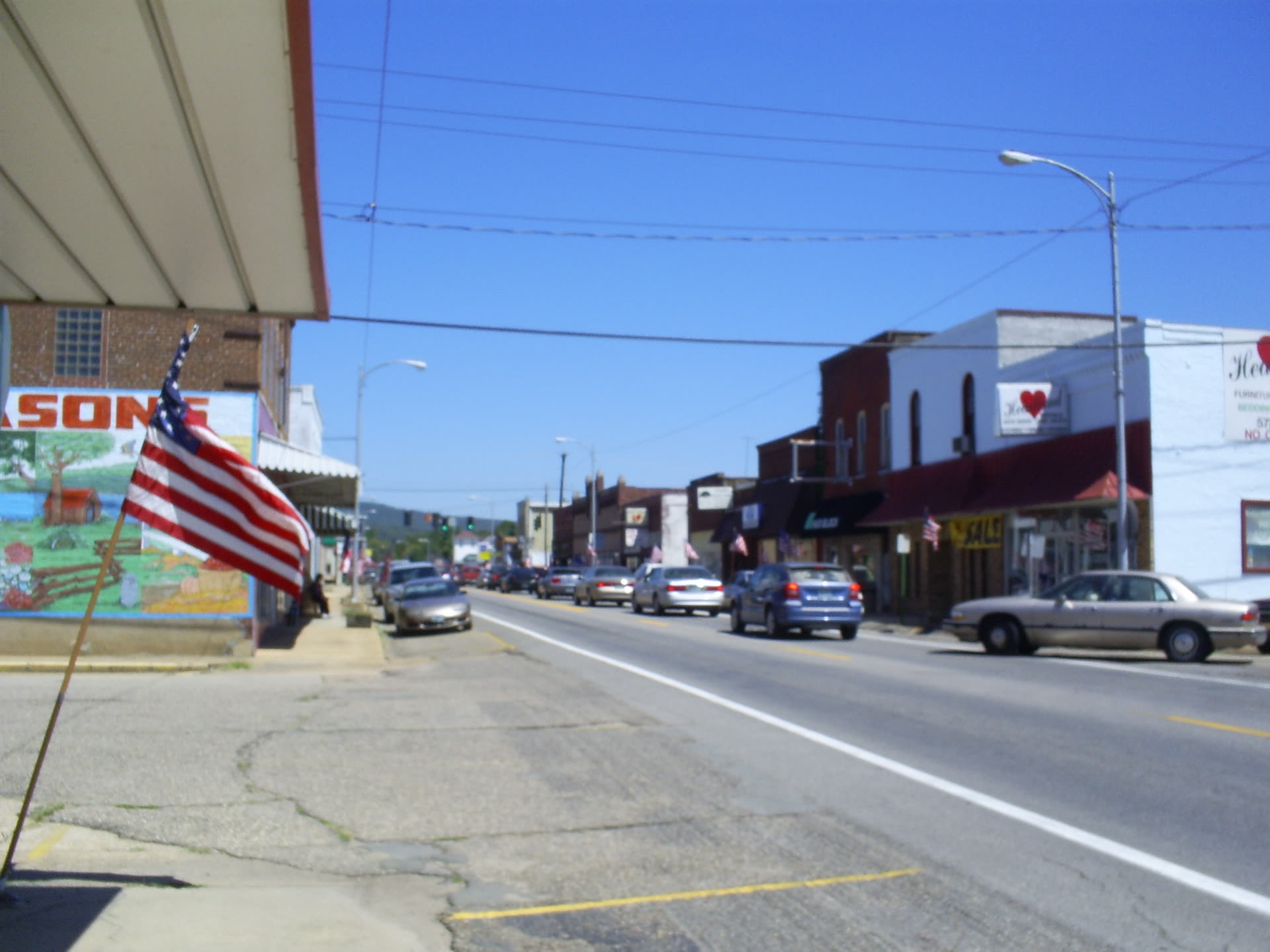
Pictured: downtown Piedmont, Missouri, the Wayne County town whose 1973 UFO reports prompted Harley Rutledge's Project Identification — not a photograph of the phenomena themselves. No public-domain or rights-clear image of the nocturnal lights, of Rutledge's own field equipment in use, or of Rutledge himself is known to exist; his 1981 book's own photographic plates remain the copyrighted property of his publisher, and no free-licensed portrait of Rutledge could be located during this research.
Theoretical Alignment
Rutledge himself never claimed an extraterrestrial origin outright, but his language — describing an "intelligence equal to or greater than that of man" that the team "interacted with" — sits closest to a cautious ETH framing, hence the moderate alignment score. The Psycho-Social Hypothesis also earns real weight here: the initiating 500-plus-report flap of February–April 1973 shows the classic contours of a regional social-contagion event (heavy local press coverage, word-of-mouth, hundreds of untrained lay reports), even though Rutledge's own core instrumented team worked specifically to separate that noisy public layer from its own smaller, vetted observational record. The Interdimensional Hypothesis finds almost no support: nothing in the Project's records describes portal-like phenomena, matter transformation, or other IDH-specific observables.
Background
Piedmont, Missouri is a small city in the Ozark foothills of northwestern Wayne County in southeastern Missouri, with a population of under 2,000 in the 1970s and today. It sits roughly 75 miles southwest of Cape Girardeau and about 140 miles south of St. Louis, in wooded, sparsely populated terrain drained by the St. Francis and Black Rivers. The nearby Clearwater Lake reservoir, whose dam was completed in stages between 1940 and 1958 after wartime delays, is the area's largest body of water and sat at the geographic center of much of the 1973 activity. The region had a documented, if modest, history of aerial oddities predating 1973: southeastern Missouri, including the Cape Girardeau area roughly 75 miles away, had already experienced a smaller UFO flap in 1967, six years before Piedmont's own wave began.
The physicist who would go on to lead the case's investigation, Harley D. Rutledge, was born January 10, 1926 in Omaha, Nebraska, son of Earl and Irene Hoagland Rutledge. He served in the U.S. Army from 1944 to 1946, earned an A.B. from Tarkio College in 1950, an M.S. from the University of Missouri–Columbia in 1956, and a Ph.D. in solid-state physics from the same institution in 1966. He joined the physics faculty at Southeast Missouri State University (then Southeast Missouri State College) in Cape Girardeau in 1963, became chairman of the department the following year, and would hold that chairmanship until 1982 while remaining on the faculty until his 1992 retirement. He married Ruth Lootens in 1954, and the couple raised five children, including a son, Mark, who would later join his father's fieldwork. By his own account Rutledge had, by 1973, already read widely across the UFO literature on both sides of the argument — Donald Keyhoe's contactee-adjacent advocacy, Morris K. Jessup's speculative writing, astronomer Donald Menzel's skeptical debunking, aviation journalist Philip J. Klass's skeptical books, NICAP director Richard Hall's advocacy, and the University of Colorado's 1968 Condon Report, the federally commissioned study that had concluded further scientific study of UFOs was not justified. He described himself, without much self-flattery, as "a bit of an iconoclast."
Southeast Missouri State's own campus in Cape Girardeau — whose oldest surviving building, Academic Hall, dates to the 19th century — had no institutional UFO research program before 1973 and, per Rutledge's own later account, would have none after his 1992 retirement either; a subsequent academic dean is reported to have removed references to Project Identification from official college materials once Rutledge left. Nothing about Rutledge's background before 1973 suggested he was searching for a UFO case to investigate. What changed was a specific, geographically concentrated wave of reports that began, abruptly, in his own region that February.
Complete Timeline
| Date | Event |
|---|---|
| 1967 | A smaller UFO flap occurs in the Cape Girardeau area, roughly 75 miles from Piedmont — a regional precedent Rutledge later cited as part of his own motivation. |
| Feb. 21, 1973 | Clearwater High School basketball coach Reggie Bone and five players witness a close-range light display while driving home from a game — the sighting that first drew national attention to Piedmont. |
| Feb.–Apr. 1973 | More than 500 separate UFO reports are logged with Piedmont-area police, the Wayne County sheriff, and local newspapers. |
| March 1973 | Astronomer J. Allen Hynek visits Piedmont, concludes the reports are "very uninteresting stuff" attributable to the "power of suggestion," and declines to take Bone's account seriously. |
| April 6, 1973 | Harley Rutledge formally launches Project Identification with an initial team drawn from Southeast Missouri State University colleagues and students. |
| April 11, 1973 | Rutledge's own aerial observation from a private aircraft — ten amber and white lights he judged to be reacting to the plane's presence — becomes a pivotal early data point cementing the Project's ongoing commitment. |
| April 13, 1973 | Multi-station Brushy Creek-area observations log four separate lights with calculated altitudes near 4,666 feet and transit speeds of 130–340 mph. |
| May 11, 1973 | A Cessna-based observation session yields Rutledge's most extreme calculated data point: an object apparently ascending roughly one mile in one second, implying a velocity near 7,200 mph and an acceleration of some 330 g. |
| June 4–5, 1973 | Phase 2 observation stations are established on Nash Road and Blomeyer Road near Cape Girardeau; military jets are observed pursuing unidentified lights. |
| June 19, 1973 | Rutledge personally observes a "bullet-shaped" gray object from his own driveway that appears to change color as he raises his hand toward it. |
| Oct. 3, 1973 | Truck driver Eddie Webb reports a blinding flash near Greenville, Missouri that melts and dislodges the lens of his eyeglasses — the case's only physical-trace evidence. |
| 1975–1979 | Phase 3 continues with reduced frequency; Rutledge's wife Ruth and son Mark independently report sightings, some from the family's own front yard. |
| Nov. 9, 1979 | The Project's final logged sightings — reddish strobing lights near the Rutledge residence — are recorded. |
| Jan. 1980 | Project Identification formally closes after roughly seven years of intermittent fieldwork. |
| 1981 | Rutledge publishes Project Identification: The First Scientific Field Study of UFO Phenomena (Prentice-Hall). |
| 1986 | Rutledge delivers what would be his only known public presentation after the book, "Project Identification: Thirteen Years and One-Hundred and Sixty Sightings Later," at a MUFON symposium. |
| June 5, 2006 | Harley Rutledge dies at age 80 at the Missouri Veterans Home in Cape Girardeau. |
| Aug. 28, 2023 | Missouri Senate Bill 139 takes effect, formally designating Piedmont and Wayne County the "UFO Capital(s) of Missouri" for the wave's 50th anniversary. |
| May 23, 2024 | Piedmont — UFO Capital of Missouri Park opens, including historical markers and a mural honoring Rutledge. |
The February–April 1973 Flap
The wave that would eventually draw a physics department chairman into seven years of fieldwork began, as most such waves do, with ordinary people. On the night of Wednesday, February 21, 1973, Clearwater High School basketball coach Reggie Bone was driving several of his players home after a loss when the group saw a shaft of light beaming down out of the night sky. They saw it again a few miles closer to Piedmont and stopped the car to look. Bone later described the object in detail: "It looked as if it were about 50 feet off the ground and about 200 yards away," with lights that were "red, green, amber and white" and "flashing." The group watched for what Bone estimated as five to ten minutes before the object departed. Bone was a well-regarded local figure with no history of seeking attention, which made his account difficult for the local press to dismiss outright, even as it generated exactly the kind of skeptical amusement that trained ufologists usually predict for this type of report.
Bone's sighting did not occur in isolation. Over the following weeks, from roughly late February through April 1973, Piedmont's police department, the Wayne County sheriff's office, and local newspapers logged more than 500 separate calls describing unexplained lights in the sky — an extraordinary volume of reports for a town whose entire population was under 2,000. The flap drew national wire coverage and, notably, a visit from Northwestern University astronomer J. Allen Hynek, by then the U.S. Air Force's former scientific consultant on Project Blue Book and already the most prominent trained scientist publicly associated with UFO research. Hynek's Piedmont visit in March 1973 did not go the way the excited town might have hoped: he concluded there was "only very uninteresting stuff" behind most of what he heard, attributed the bulk of it to the "power of suggestion," and would not, in Rutledge's own later account, "dignify" the specifics of Bone's account by taking it seriously. Rutledge would go on to note, pointedly, that Hynek was not the only UFO-research figure of the era to underestimate Piedmont on a first pass.
It was against this backdrop — a real, large, geographically concentrated wave of civilian reports, an initial dismissive verdict from the field's most credentialed skeptic-turned-advocate, and mounting national media curiosity about a small Ozark town suddenly making international headlines — that Rutledge decided the question deserved a more systematic answer than either uncritical acceptance or a one-visit dismissal could provide.
The Founding of Project Identification
Rutledge's own stated motivation was as much about the town's treatment as about the phenomena themselves. "I didn't like the way the Piedmonters were being treated by the media," he said of his decision to get involved — a genuinely unusual starting point for what became one of ufology's most methodologically ambitious field studies. He formally launched Project Identification on April 6, 1973, defining two explicit objectives for the work: first, "to measure the physical properties of the lights and/or objects in the sky," and second, "to identify their origin." Crucially, Rutledge built a hard admission standard into the Project from the outset, requiring team members to have "college training or equivalent experience in the physical sciences" and defining a "lay report" — a written or oral account from someone without a qualified scientific background — as explicitly excluded from the Project's own scientific data set, even when such reports were collected for context. This is the single methodological decision that most separates Piedmont from a typical UFO flap: rather than simply aggregating the 500-plus public reports, Rutledge tried to build an independent, credentialed observational record on top of them.
An early core team formed around Rutledge quickly: astronomy instructor Milton Ueleke, who initially argued that the lights the team was seeing were simply "automobile headlamps" (Rutledge answered this specific skepticism with his own telescope-based calculation, showing that a pair of headlights at the relevant distance would remain distinguishable as two separate points of light out to roughly half a mile — directly contradicting the single, merged light sources the team was recording); physics majors Drake Kambitch, John Wilson, and King Turnbull, the latter two becoming Rutledge's most frequent field partners; electronics specialist Dr. James Sage; and nuclear physicist Dr. Robert Freeman. Kambitch held a pilot's license and gave the Project rare and valuable access to a private Cessna, letting Rutledge take instrumented observation into the air rather than relying solely on ground stations. Over the life of the Project, the team would grow enormously beyond this founding core: independent research into the Project's own records puts the total number of people who ever participated in some observational capacity at around 620, with 378 of those formally inducted as vetted "official" Project members after basic training — a scale that, while it diluted the founding group's uniform scientific rigor considerably, also gave Rutledge an unusually large base of trained eyes watching the same regional sky over the same multi-year period.
Funding was a persistent constraint. Rutledge later described the Project as chronically "short of funds," and much of its equipment came through departmental loans and informal arrangements rather than a dedicated research budget. The St. Louis Globe-Democrat newspaper provided some direct financial support in exchange for exclusive first access to Rutledge's "current" findings ahead of formal scientific reporting — an arrangement that gave the Project working capital but also tied its early public disclosure to a newspaper's own news cycle rather than a peer-reviewed journal's.
Equipment & Methodology
The equipment list Rutledge assembled for Project Identification was, by the standards of civilian UFO research in the 1970s, genuinely unusual in its breadth. The team's core optical instruments were Questar telescopes — compact, high-quality astronomical telescopes whose magnification could be adjusted without swapping eyepieces, useful for quickly tracking a moving light — supplemented by an 8-inch Celestron C-8 telescope for higher-power work. For non-visual data, the team fielded a magnetometer to detect variations in the local magnetic field, an electromagnetic (RF) spectrum analyzer, a Tektronix oscilloscope, and a high-frequency, low-intensity sound detector paired with audio recorders, on the theory that a genuinely anomalous object might leave an electromagnetic or acoustic signature even when its visual behavior was ambiguous. Photographic documentation used 35mm cameras (Praktica and Yashica Matic-9 bodies among them) loaded with both black-and-white and color stock, occasional long-exposure and time-lapse setups to capture a light's path across the sky, a spectroscopic camera, and, when available, a rented infrared camera. Field communications ran on three 37.1 MHz transceivers, and a portable 1.6-kilowatt gasoline generator kept remote stations powered through the night. For aerial work, Kambitch's privately accessible Cessna let Rutledge take telescopic and photographic equipment aloft directly, most memorably during the May 11, 1973 flight described below.
Methodologically, Rutledge's team tried to do something most UFO investigations of the era did not: calculate, rather than merely describe. By recording a light's angular altitude and azimuth from one or more known station positions, timing its transit between two points, and (where multiple stations observed simultaneously) triangulating its position, the team derived working estimates of altitude, distance, apparent size, and speed for individual sightings — the same basic surveying principle an astronomer uses to fix a star's position, applied here to a moving light of unknown origin. This is a real methodological advance over eyewitness description alone, but it carries an important limitation this case file treats as central rather than incidental: the underlying inputs (an observer's read of angular altitude through a telescope, the exact instant a light appeared to move) still depend on human judgment and timing under field conditions, so the resulting speed and acceleration figures are calculated estimates from Rutledge's own team, not radar-confirmed or independently replicated measurements.
Rutledge's team also developed its own descriptive taxonomy for what it was seeing, distinct from mainstream ufology's later "close encounter" scale. "Strobes" described flashing lights, from the ground or the sky, appearing in repetitive patterns without any discernible source, sometimes in an apparent "call-and-response" exchange between two separate lights. The "flashlight effect" referred to discrete aerial lights that simply switched on and off. "Pseudo-stars" — among the taxonomy's more interesting entries — described stationary lights that blended into the background star field until they suddenly brightened, changed color, enlarged, or moved, a category that implicitly assumed some sightings began as ordinary astronomical objects and only became interesting at the point of apparent behavioral change. Physical objects, as opposed to point-source lights, were recorded more rarely: occasional triangular light formations, disc-shaped objects seen in daylight, and, on one occasion that disturbed Rutledge personally, a solid-looking "bullet-shaped" object.
Phase 1: The Founding Season (April–May 1973)
The Project's earliest sustained fieldwork produced its most detailed single data table. On the night of April 13, 1973, in the Brushy Creek area, Rutledge's team logged four separate sightings with real angular and timing data attached. "Light A," observed at 7:18 p.m., transited north to south at roughly 10 degrees of angular altitude, yielding a calculated altitude near 4,666 feet and a transit speed of approximately 340 mph. "Light C," observed later the same evening at 9:20 p.m., transited south to north at the same 10-degree angular altitude and the same calculated 4,666-foot altitude, but at a markedly slower 130 mph — two lights, on the same night, at the same calculated altitude, moving in opposite directions at very different speeds. A final sighting that night, at 10:45 p.m., described an orange streak of light that appeared to merge into a slower-moving white light. Taken together, the April 13 data illustrates both the strength and the limitation of Rutledge's approach: real, timestamped, calculated figures exist for these events, but they describe four discrete, brief nighttime observations rather than a single, extended, unambiguous tracking record of one object.
Just two days after the Project's formal launch, on April 11, 1973, Rutledge conducted an aerial observation of his own that he would later treat as pivotal to the Project's continuation. Flying with a pilot, Rutledge reported ten amber and white lights that appeared, in his judgment, to be reacting to the aircraft's presence — changing behavior in a way he read as a response to being observed rather than as coincidental independent movement. Whether that inference was correct is, by Rutledge's own later admission, genuinely unresolvable: he wrote plainly that "we cannot know if the UFO truly reacted to us or if it was just a coincidence," an honest epistemic caveat this case file treats as one of the more scientifically credible things about his entire published record, precisely because it declines to oversell an ambiguous data point.
The Project's most extreme calculated figure came a month later, on May 11, 1973, during a Cessna-based observation session. Rutledge's team calculated that one observed object ascended approximately one mile in the span of about one second — a figure that, taken at face value, implies a velocity near 7,200 mph (comfortably into the hypersonic range) and an instantaneous acceleration on the order of 330 times Earth's surface gravity, a g-force Rutledge himself noted "would have crushed most living creatures." This is exactly the kind of data point that makes Project Identification simultaneously important and difficult to evaluate: it is a real, specific, dated, team-calculated figure rather than a vague impression, but it rests entirely on the same telescopic angular-timing methodology described above, with no independent radar or photographic confirmation of the object's actual trajectory, and no known attempt by an outside laboratory or observatory to reproduce or audit the underlying calculation.
Phase 2: Nash Road and the June 1973 Sessions
By June 1973, the Project had matured into a more systematic, multi-station operation. On June 4, the team established a primary observation post on Nash Road, a flat flood-plain site roughly two miles west of the Cape Girardeau airport chosen specifically for its unobstructed 360-degree horizon, with a secondary station on Blomeyer Road closer to Rutledge's own residence. The choice of a site near the regional airport was deliberate: it let observers directly compare unidentified lights against the running lights of known aircraft using the same field of view, a control most amateur UFO-watching setups never bother to build in. Members of the college's own Astronomy Club joined the effort around this time, adding a further layer of astronomically literate eyes capable of distinguishing planets and bright stars from genuine unknowns.
The overnight session of June 4–5, 1973 produced some of the Project's most operationally interesting observations: multiple white and amber lights, at one point separated by an estimated ten feet from each other, and — more strikingly — military jets observed actively pursuing some of the unidentified lights, aircraft whose lighting configuration did not match standard FAA-mandated running lights. Whether this reflected a real, if unpublicized, military response to the ongoing Piedmont-area reports, routine training activity that merely coincided with the Project's own observation windows, or an observational misidentification on the team's part could not be resolved in this research; no declassified Air Force record connecting a specific interceptor sortie to this date was located.
Two weeks later, on June 19, 1973, Rutledge had his most personally unsettling encounter of the entire Project, one he recorded from his own driveway rather than a formal field station. He observed what he described as a "bullet-shaped" object, dull gray in color, moving eastward. When he raised his hand in an attempt to frame or gesture toward it, Rutledge reported that the object's color instantly changed to a dull olive-green; it vanished entirely by the time he retrieved a pair of binoculars from inside. Rutledge subsequently wrote of sensing a genuine "interaction" between the observed phenomenon and the observers watching it — language that, read charitably, reflects a scientist trying to describe an apparent behavioral correlation he could not otherwise explain, and read skeptically, illustrates exactly the kind of single-observer, no-instrumentation anecdote that even Rutledge's own admission standards were designed to filter out of the Project's harder data. A similar color-change and disappearance pattern recurred on July 9, 1973, when a light Rutledge was tracking extinguished the moment he attempted to photograph it through his camera; minutes later, he reported, an aircraft with unusually "serrated" wings and non-standard running lights followed an identical flight path — a detail this case file reads as suggestive of aircraft misidentification rather than confirmation of it, given the absence of any independent identification of the aircraft in question.
The Eddie Webb Incident (October 3, 1973)
The Project's only piece of physical-trace evidence arrived from outside its own formal observation network entirely. On the night of October 3, 1973, truck driver Eddie Webb, then of Greenville, Missouri — the Wayne County seat, a few miles from Piedmont — was driving his rig when he reported a turnip-shaped lighted object overtaking his vehicle from behind. When he leaned his head out the window for a better look, Webb said, he was struck by a sudden, intense flash "which felt like a large ball of fire" against his head and face, leaving him temporarily blinded. His wife, riding with him, did not see the object herself but corroborated her husband's description of the flash and its aftermath. When Webb examined his glasses afterward, one lens had fallen out and the frames were melted and visibly twisted; local police retained the damaged glasses as evidence.
The eyeglasses became the case's most scientifically testable single artifact, and also its most contested. According to period newspaper coverage, researchers were able to reproduce a comparably melted, twisted appearance on a similar pair of eyeglass frames using nothing more exotic than an ordinary highway emergency flare — a genuinely useful negative test, since it demonstrates that the visible physical damage to the frames does not, by itself, require any exotic heat source to explain. It does not, however, fully resolve the incident: a St. Louis-area ophthalmologist consulted about Webb's reported temporary blindness expressed doubt that flare-level heat and light exposure could account for that specific symptom, and instead informally floated the possibility that Webb's blindness reflected a psychogenic or "psychic shock" response rather than a genuine photic injury — itself an untested, non-clinical hypothesis rather than a confirmed diagnosis. The result is a case-within-the-case that this file treats honestly as unresolved on both fronts: the physical damage to the glasses has a demonstrated mundane analogue, but the symptom that made the incident notable in the first place does not yet have one.
Phase 3: The Long Tail and the Rutledge Family (1974–1979)
From April 1974 through the Project's 1980 closure, fieldwork continued at a reduced but still real pace, largely at the established Nash Road and Blomeyer Road stations and, increasingly, from Rutledge's own front yard when weather and scheduling allowed. Rutledge's own statistical review of this period found that sightings clustered disproportionately around dusk and full night, and that Thursday and Friday nights produced more reports than Wednesday — a specific, checkable pattern that, notably, ran contrary to the day-of-week pattern claimed by contemporary paranormal researcher John Keel in his own, unrelated writing, a small but real point of empirical disagreement between two period UFO researchers using different regional data sets.
Beginning around 1975, the Project entered what its own later chroniclers have called an "accidental sightings" period: rather than dedicated field sessions, significant observations increasingly arrived unplanned, often to Rutledge's own family. In January 1975, Rutledge and his wife Ruth together witnessed a glowing, disc-shaped object near their home, though the couple's own individual accounts of specific details differed from each other in minor ways — itself a small, honest illustration of how even two trained, cooperating observers watching the same brief event side by side can produce non-identical descriptions. In August 1976, family members reported phenomena at Rutledge's parents' home in Iowa, well outside the Piedmont study area, and the following month a silver disc was reportedly observed in broad daylight from Rutledge's own college office window, departing at a steep climbing angle. By 1978, son Mark Rutledge had experienced multiple sightings of his own from the family's front yard, and by 1979 every member of the Rutledge household reported some form of encounter, with Ruth Rutledge in particular describing strong feelings of dread or unease accompanying her own sightings that year. The Project's final logged observations came on November 9, 1979: reddish strobing lights near the family residence. Project Identification formally closed in January 1980.
Classification, Statistics, and Rutledge's Own Conclusions
Rutledge built his own three-tier classification system to sort the Project's accumulated observations: "Identified" sightings, where the team itself determined a conventional source (most often an aircraft, but also astronomical objects, atmospheric phenomena, or ground lights); "Unidentified Class B," ambiguous lights or objects that were too distant, too briefly observed, or too obscured by weather or terrain for the team to confidently rule in or out a mundane explanation; and "Unidentified Class A," reserved for sightings the team judged to display genuinely unusual characteristics — unexplained behavior, extreme speed or acceleration, anomalous coloration, or a shape inconsistent with any known aircraft or natural phenomenon. In the Project's own tally of a subset of ambiguous Class B sightings, the team tentatively attributed 40 of 42 to probable conventional aircraft, illustrating that Rutledge's team itself resolved the large majority of its harder-to-classify cases as mundane rather than reflexively counting ambiguity as anomaly.
The overall numbers reported for the Project vary somewhat by source and by the specific date at which a given tally was taken, which this case file treats as a function of the study's own multi-year, rolling nature rather than as a contradiction to be smoothed over. Covering roughly the Project's first year (April 1973 to April 1974), one detailed secondary account puts the total at 157 sightings involving 178 separate objects or lights, of which 34 were rated Class A. By the time of Rutledge's 1986 MUFON symposium presentation — itself titled "Project Identification: Thirteen Years and One-Hundred and Sixty Sightings Later" — his own personal observation count across the full life of the Project had reached 160. A separate, later-cited figure puts the cumulative total at 163 sightings by 1988. Across the Project's full run, the team logged 427 total observation-hours from 158 distinct viewing stations.
What Rutledge himself ultimately concluded is best captured in his own words from the 1981 book, a passage repeatedly cited by later researchers as the clearest statement of his final position: "Unbiased, disinterested physical scientists usually measure the properties of inanimate matter. Biological, medical, and behavioral scientists, on the other hand, study intelligences less than or equal to their own. In this Project, we dealt with an intelligence equal to or greater than that of man. We interacted with the phenomenon under study." This is a genuinely unusual thing for a tenured physics department chairman to have committed to print in 1981, and it deserves to be read as exactly what it is: not a claim of alien contact, and not a claim of any specific origin, but a considered judgment from a credentialed scientist that a meaningful fraction of what his team recorded behaved as though it were responding, purposefully, to being watched. At the same time, Rutledge was consistently careful to avoid the "UFO believer" label and stressed repeatedly that most individual sightings had conventional explanations; his own son Mark later confirmed this restraint was deliberate, recalling that his father held that "scientists are not going to draw conclusions on things data won't support." Rutledge, in other words, appears to have believed both that the great majority of the Piedmont-area reports were mundane and that a genuine, unexplained residue remained — a more nuanced position than either a wholesale UFO endorsement or a wholesale debunking, and one this case file treats as central to a fair reading of his work.
Reception, Skepticism, and Legacy
Project Identification's reception among Rutledge's ufological contemporaries was mixed in a way that is itself instructive about the field's internal politics. French-American researcher Jacques Vallée, writing in the first edition of his book The Invisible College, dismissed Rutledge outright as "a confused local scientist," specifically in connection with Rutledge's own investigation of the Eddie Webb eyeglasses incident. Vallée's critique leaned heavily on the media's hoax-leaning coverage of the flare-reproduction test and, on the account of at least one later researcher who has revisited the exchange, did not fully engage with Rutledge's own broader field record or his considerably more direct, sustained, multi-year experience investigating the regional phenomenon — a case, this file's own research suggests, of one serious researcher dismissing another's specific judgment call on a single ambiguous piece of evidence rather than a comprehensive rebuttal of the Project as a whole. No comparably specific, on-the-record critique from aviation journalist Philip J. Klass, the era's most prominent professional UFO skeptic, could be located in the sources consulted for this case file, despite Rutledge's own evident familiarity with Klass's published work; this case file notes that absence honestly rather than inventing a Klass rebuttal that does not appear to exist in the accessible record.
Elsewhere, Rutledge's work found real, if limited, recognition within the field. Sociologist David M. Jacobs referenced Rutledge's ongoing research in his own 1974 dissertation at the University of Wisconsin–Madison (later published as The UFO Controversy in America), while the Project was still actively underway. Researcher Gregory Little later held Rutledge's field methodology up as a model, explicitly challenging subsequent investigators to replicate his approach rather than settle for anecdote collection. Time-Life's popular UFO compendium, The UFO Phenomenon, referenced the Project in its own survey of the field. None of this amounted to the sustained institutional follow-up Rutledge himself said he had hoped for: he never secured a reputable academic institution's commitment to a comparable long-term study after his own retirement, his 1981 book was never reprinted, and correspondence from as late as 1997 shows him declining an invitation to speak at the 34th National UFO Convention in order to prioritize time with his family — a quiet, voluntary exit from public ufology roughly a decade before his 2006 death.
The case's public legacy in Piedmont itself has considerably outlived Rutledge. In August 2023, the Missouri General Assembly passed Senate Bill 139, formally designating Piedmont and Wayne County the "UFO Capital(s) of Missouri" to mark the wave's 50th anniversary, a measure state representative Chris Dinkins framed explicitly in terms of tourism rather than any official evidentiary judgment about the sightings themselves; Dinkins later recalled that during the original 1973 flap "the highways were lined with vehicles" of curious visitors from other states and countries. A commemorative festival, "Close Encounters of the Piedmont Kind," ran April 21–22, 2023 in partnership with Missouri MUFON, and a dedicated "UFO Capital of Missouri Park," featuring a large UFO structure, an alien figure, and historical signage about the 1973 events, opened on May 23, 2024. Local muralist Katie Coleman and other artists have since added UFO- and Rutledge-themed public art around town, including a mural honoring Rutledge himself painted on a shipping container. Missouri MUFON's state director, Debbie Ziegelmeyer, and researcher Margie Kay co-authored a 2023 book documenting the wave's 50th anniversary, and Rutledge's own papers and related newspaper clippings, spanning 1973 to 2006, are today held by the Anomaly Archives in Austin, Texas. The Vatican Observatory's own "Sacred Space Astronomy" blog has separately published on the case, situating it within a broader, cautious discussion of UFOs from a Catholic astronomical perspective — itself consistent with the Observatory's stated general policy, per its former director Br. Guy Consolmagno, of avoiding official media engagement on UFO topics while acknowledging no credible evidence of actual extraterrestrial contact.
Key Witnesses
Dr. Harley D. Rutledge
A solid-state physicist with a University of Missouri Ph.D. and nearly two decades as his department's chairman, Rutledge personally observed dozens of the Project's own sightings — including the disturbing June 19, 1973 "bullet-shaped object" and the extreme May 11, 1973 Cessna-based acceleration calculation — and organized several hundred additional trained and lay observers over the Project's seven-year run. His own conclusion, that the residual unexplained phenomena reflected "an intelligence equal to or greater than that of man," is a serious, carefully hedged claim from a credentialed source, though it remains entirely his and his team's own interpretation, without independent replication or peer-reviewed publication outside his own 1981 book.
Reggie Bone
Bone's February 21, 1973 sighting, witnessed alongside five of his own players while driving home from a game, is the specific incident most consistently credited with drawing national attention to the Piedmont wave and, indirectly, prompting Rutledge's decision to organize a scientific response. Bone was diagnosed with amyotrophic lateral sclerosis roughly six months after his sighting and died in 1977 at age 48; Rutledge's 1981 book is dedicated to his memory.
Eddie Webb
Webb's October 3, 1973 account of a blinding flash and melted eyeglass frames produced the case's only physical-trace evidence, corroborated by his wife's account of the immediate aftermath (though she did not see the object herself). The frames' damage was later reproduced experimentally with an ordinary highway flare, though a consulted ophthalmologist doubted that explanation fully accounted for Webb's reported temporary blindness — leaving the incident genuinely, honestly unresolved rather than either confirmed or debunked.
J. Allen Hynek
Hynek's dismissive March 1973 visit to Piedmont — concluding the reports amounted to "very uninteresting stuff" and declining to take Coach Bone's account seriously — became, in retrospect, a case study Rutledge himself cited in noting that even the field's most credentialed investigators could underestimate a case on a single brief visit. Hynek's own Close Encounter classification framework is nonetheless the direct ancestor of the case-file taxonomy used throughout this site.
Debbie Ziegelmeyer
A MUFON field investigator since the early 2000s with credited work on several hundred case investigations nationally, Ziegelmeyer co-authored, with researcher Margie Kay, the 2023 book documenting the wave's 50th anniversary and helped coordinate Missouri MUFON's partnership with Piedmont's own commemorative festival — the most recent serious attempt to preserve the wave's living witness testimony before it is lost to time.
The Five Observables Assessment
The Five Observables framework is applied to the performance characteristics reported across Project Identification's own logged sightings:
Assessment: Project Identification's May 11, 1973 Cessna observation — a calculated ascent of roughly one mile in one second, implying a velocity near 7,200 mph and an acceleration near 330 g — is the single most extreme Five Observables data point in this case, and it is rated "Present" for both Instant Acceleration and Hypersonic Velocity only with the explicit caveat that the underlying figures are Rutledge's own team's telescopic angular-timing calculations, not radar track data or an independently replicated measurement. No sighting anywhere in the Project's seven-year record describes trans-medium behavior, despite the proximity of Clearwater Lake to much of the reported activity — a genuinely notable absence given how often water-adjacent cases elsewhere on this site report exactly that observable. Low Observability is rated speculative rather than present or absent because the Project itself never obtained any radar coverage of the area, a documented equipment gap Rutledge's own team was aware of and unable to close.
Evidence Assessment
Supporting Anomalous Origin
- An unusually large, credentialed, sustained observational effort for civilian ufology: a tenured physics department chairman, several colleagues with physical-science degrees, and hundreds of vetted observers logging 427 hours across nearly seven years
- Real, dated, calculated performance data exists for specific sightings (the April 13, 1973 Brushy Creek altitude/speed figures; the May 11, 1973 ~7,200 mph/330g ascent), rather than eyewitness description alone
- The Project's own admission standard explicitly excluded untrained lay reports from its scientific data set, reducing (though not eliminating) the social-contagion noise present in the broader 500-plus-report public flap
- Rutledge's own final, published conclusion — that a residual, unexplained set of observations behaved as though "an intelligence equal to or greater than that of man" were involved — is a considered, hedged judgment from a credentialed physicist, not an offhand claim
- Multiple independent family members (Rutledge, his wife Ruth, and son Mark) reported their own sightings across several years, adding a layer of repeated, if informally documented, multi-observer corroboration
Supporting Conventional Explanation
- The Project's own team attributed the clear majority of its harder-to-classify "Class B" sightings (40 of 42 in one internal tally) to probable conventional aircraft, and rated most of the wider 500-plus-report public flap as ordinary misperception during a period of intense local excitement and press coverage
- No radar, laboratory, or independently instrumented confirmation exists for any of the Project's calculated extreme performance figures — every speed and acceleration estimate traces back to the Project's own field-observer angular-timing methodology
- The case's one physical-trace item, Eddie Webb's melted eyeglass frames, was experimentally reproduced using an ordinary highway flare, undercutting (though not fully resolving) its evidentiary weight
- Jacques Vallée, an independent and broadly respected UFO researcher, publicly dismissed Rutledge's own judgment on at least one specific piece of evidence as that of "a confused local scientist"
- Several reported "reactive" or "interactive" behaviors (the June 19 and July 9, 1973 color-change and disappearance incidents) rest on single-observer, no-instrumentation anecdotes that Rutledge's own admission standard was designed to exclude from harder Project data, yet which nonetheless shaped his overall conclusions
- The Project was never published in, or subjected to peer review by, a mainstream physics journal, and no outside institution has ever attempted to independently replicate its methodology or its results over the more than four decades since
Why "Disputed"
Project Identification earns a DISPUTED classification because it combines real, unusual-for-the-field methodological rigor with equally real, unresolved evidentiary gaps that neither confirm nor fully dismiss Rutledge's own conclusions. On the credibility side of the ledger: this is not a single uncorroborated witness account, but a nearly seven-year, multi-station, instrumented field study organized and led by a tenured physics department chairman, staffed in its founding core by colleagues and students with genuine physical-science training, and producing real, dated, calculated data rather than impressionistic description alone. Rutledge's own epistemic caution — his explicit acknowledgment that the team "cannot know if the UFO truly reacted to us or if it was just a coincidence," and his son's account that he deliberately withheld conclusions "data won't support" — reflects exactly the kind of self-skepticism a credible scientific investigator should show, and it is a meaningfully different posture than an advocate simply cataloging every anomaly as proof of something extraordinary.
On the other side of the ledger, the gaps are just as real. Every one of the Project's most dramatic calculated figures — the 7,200 mph, 330-g ascent chief among them — rests entirely on Rutledge's own team's field methodology, with no radar confirmation, no independent replication, and no publication in a peer-reviewed physics venue in the more than four decades since. The case's only tangible physical evidence, Eddie Webb's melted eyeglasses, has a demonstrated mundane analogue (a highway flare) for its most visible feature, even though the specific symptom that made the incident notable (Webb's reported temporary blindness) remains without a confirmed explanation on either side. A respected independent researcher, Jacques Vallée, publicly and specifically rejected Rutledge's own judgment on that incident. And the Project's most striking interactive/reactive observations — the ones that most directly support Rutledge's ultimate "intelligence equal to or greater than man" conclusion — are disproportionately single-observer anecdotes rather than the multi-station, instrumented data the Project was specifically designed to produce. A case this well-instrumented for its era, led by this credentialed a source, but still missing independent replication, radar confirmation, and peer-reviewed publication, is exactly the profile of a Disputed rating: too methodologically serious to dismiss as simple misperception, too evidentially incomplete to rate as confirmed.
Sensor & Instrumentation Detection Profile
Project Identification's instrumentation was unusually broad for civilian 1970s ufology — Questar and Celestron C-8 telescopes for optical tracking, a magnetometer for magnetic-field variation, an electromagnetic (RF) spectrum analyzer and Tektronix oscilloscope for electromagnetic signature detection, a low-intensity high-frequency sound detector paired with audio recorders, 35mm still photography (including occasional time-lapse and infrared work), and a private Cessna for aerial observation — but it notably never included radar of any kind. The team itself was aware of this gap and speculated, without being able to confirm, that thin regional radar coverage over rural southeastern Missouri in the 1970s may have contributed to the difficulty of independently cross-checking its own visual and instrumented observations. No FAA, military, or civil radar log tying any specific Piedmont-area sighting to a corroborating return was located during this research.
Environmental & Geospatial Context
The Piedmont wave unfolded across rural, heavily wooded Ozark-foothills terrain in Wayne County, well outside any major metropolitan light-pollution footprint — conditions that produced unusually dark, clear rural night skies favorable to both genuine anomaly detection and to the specific "pseudo-star" misidentification of ordinary astronomical objects that Rutledge's own taxonomy explicitly anticipated. The nearby Clearwater Lake reservoir sat at the geographic center of much of the reported activity, though, notably, no sighting in the Project's record describes any water-related or trans-medium behavior despite that proximity. Wooded, hilly terrain limited any single ground observer's horizon, which is precisely why Rutledge's team relied on multiple simultaneous stations (Nash Road, Blomeyer Road, and others) rather than a single fixed post. The regional airport near Cape Girardeau gave the Nash Road station a built-in comparison baseline against known aircraft lighting, while the area's few interstate and federal highways — including the stretch near Greenville where Eddie Webb's October 1973 incident occurred — represented the region's only significant concentrations of nighttime vehicle and roadway lighting that could plausibly be misread from a distance.
Observer Credibility & Occupational Profile
Project Identification's founding core represents an unusually credentialed observer pool for a UFO case: a physics department chairman with a University of Missouri Ph.D. in solid-state physics (Harley Rutledge), a nuclear physicist (Dr. Robert Freeman), an electronics specialist (Dr. James Sage), an astronomy instructor (Milton Ueleke, notably one of the team's own internal skeptics rather than a uniform believer), and several physics undergraduates (Drake Kambitch, John Wilson, King Turnbull). This credibility, however, thins considerably once the Project's full scale is accounted for: of the roughly 620 total people who participated in some observational capacity over seven years, only 378 were ever formally inducted as vetted "official" members, and even that larger official cohort was trained and admitted entirely by Rutledge's own team rather than by any external, independent scientific body. The wave's two most consequential lay witnesses — Coach Reggie Bone and truck driver Eddie Webb — were ordinary, credible, unmotivated-by-fame local residents rather than trained observers, and their accounts, however sincere, were never independently instrumented at the moment of the sighting itself.
Physical & Material Assays
The only physical object connected to this case is Eddie Webb's damaged eyeglasses from the October 3, 1973 incident — a dislodged lens and melted, twisted frames, retained by local police as evidence at the time. No metallurgical, isotopic, or spectrographic laboratory assay of the kind performed on physical trace samples in other cases on this site (see Material Analysis below) was located in the sources consulted for this research, and the glasses' present custodial status could not be established. The one documented test was a practical reproduction — researchers of the era were able to produce a visually similar melted, twisted effect on a comparable pair of frames using an ordinary highway emergency flare, a useful but limited negative test that speaks to the frames' physical damage without addressing Webb's separately reported temporary blindness.
Historical Precedents & Archive Matches
Piedmont sits within a documented, if modest, regional pattern of southeastern Missouri aerial anomaly reports: a smaller UFO flap had already occurred around Cape Girardeau, roughly 75 miles away, in 1967, six years before the Piedmont wave began, and Rutledge cited that earlier flap as part of his own motivation for taking the 1973 reports seriously. Separately, Wikimedia Commons hosts a declassified U.S. Air Force Project Blue Book case file dated October 1957 and indexed to "Piedmont, Missouri" — an entirely different, unrelated incident predating Rutledge's study by sixteen years, included here for completeness and explicitly not to be confused with the 1973 wave this case file documents. Project Identification's own instrumented, real-time methodology would not find a genuine successor for nearly a decade: the Hessdalen Lights project in Norway, beginning its own continuous field study in 1984, is the clearest later parallel, and Norwegian researchers themselves have cited Rutledge's 1981 book as the closest prior methodological precedent to their own approach, even as Hessdalen's now four-decade-plus continuous instrumentation has long since surpassed Piedmont's seven-year run in scope.
Material Analysis
Physical trace evidence in this case is limited to a single artifact: the melted eyeglass frames and dislodged lens reported by Eddie Webb after his October 3, 1973 encounter near Greenville, Missouri. This is a far thinner physical record than Project Identification's instrumented ambitions might suggest — the great bulk of the Project's own effort went into optical, electromagnetic, and acoustic detection of lights and objects in the sky, not into ground-trace or material sampling, since the phenomena the team tracked were almost never reported as landing or leaving physical residue.
What Happened to the Glasses
Webb's glasses were damaged during his reported encounter — one lens fell out, and the frames were left melted and visibly twisted. Local police took custody of the glasses as evidence at the time. No chain-of-custody record establishing where the glasses are held today, or whether they still exist, was located during this research; this case file flags that absence honestly as an evidentiary gap rather than speculating about it.
The Flare Test and Its Limits
Period researchers reproduced a comparably melted, twisted appearance on similar eyeglass frames using an ordinary highway emergency flare — a real, useful, if informal, experimental test rather than a laboratory assay. It demonstrates that the frames' visible damage does not require any exotic explanation, but it is a test of appearance, not of Webb's glasses specifically, and it says nothing about the separate, more medically significant claim in the case: Webb's reported instantaneous temporary blindness. A consulted St. Louis-area ophthalmologist doubted that flare-level heat and light exposure could produce that specific symptom and instead informally raised the possibility of a psychogenic ("psychic shock") origin — itself an unconfirmed clinical hypothesis rather than a tested diagnosis. No isotopic, metallurgical, or spectrographic analysis of the actual recovered frames (as opposed to a comparison sample) was located in this research.
Supporting Non-Terrestrial or Unexplained Origin
- Webb's account was corroborated in its immediate aftermath by his wife, an independent witness present at the time, even though she did not see the object herself
- The specific combination of a sudden bright flash, facial heat, and simultaneous eyewear damage is not, on its own, the profile of an obvious hoax motive, and no financial or attention-seeking motive for Webb was documented in the sources consulted
- The reported temporary blindness remains without a confirmed conventional medical explanation, even after the flare test addressed the frames' physical damage
Supporting Terrestrial (Mundane) Origin
- The frames' melted, twisted appearance was experimentally reproduced using nothing more exotic than an ordinary highway emergency flare, a readily available roadside object in October 1973
- No isotopic, metallurgical, or trace-chemical signature inconsistent with an earthly heat source was ever reported for the actual recovered frames
- An ophthalmologist's own informal alternative — a psychogenic ("psychic shock") origin for the blindness — while itself unconfirmed, provides at least one plausible non-exotic pathway for the incident's most dramatic symptom
- The incident occurred at night on a rural highway, conditions under which a startling, unexpected roadside light source (whether a flare, another vehicle's high beams, or an unrelated bright object) could plausibly produce genuine but non-anomalous alarm and momentary visual disruption
The Conventional Explanation Candidate
Because Project Identification's own team spent seven years actively trying to sort conventional from anomalous sightings within its own data, this case file's Conventional Explanation Candidate analysis draws heavily on the team's own honest self-classification rather than reconstructing one from scratch. Rutledge's team itself attributed the clear majority of both the public flap's 500-plus reports and its own more carefully vetted "Class B" sightings to ordinary sources — but a residual, smaller set of "Class A" observations, plus a handful of the Project's own most dramatic calculated figures, remain genuinely disputed even by the team that generated them.
Aircraft Misidentification
Rutledge's own team identified this as the single leading explanation for the bulk of its ambiguous sightings, tentatively attributing 40 of 42 "Class B" cases in one internal tally to probable conventional aircraft. The June 4–5, 1973 Nash Road sessions directly documented military jets pursuing unidentified lights, and the July 9, 1973 incident involved an aircraft with non-standard running lights following an identical flight path to a light that had just extinguished — both consistent with genuine aircraft being misread, at distance and at night, as something more exotic, particularly by the Project's larger cohort of less experienced official members and the general public reporting into the initiating flap.
Astronomical Misidentification ("Pseudo-Stars")
Rutledge's own taxonomy explicitly built in a category — "pseudo-stars" — for stationary lights indistinguishable from ordinary stars or planets until they appeared to brighten, change color, or move. This candidate plausibly explains a meaningful fraction of the Project's more static, ambiguous sightings, particularly under the unusually dark, clear rural skies of the Ozark foothills. It does not, on its own, account for the sightings involving reported extreme motion, acceleration, or apparent reactive behavior, which by definition go beyond what a genuinely stationary astronomical object could produce.
Ball Lightning or Earth-Light Geophysical Phenomena
Paul Devereux's "Earth Lights" framework and Dr. Michael Persinger's related Tectonic Strain Theory — both developed independently of Piedmont and applied more directly to cases like the later Hessdalen Lights — propose that certain classes of nocturnal light phenomena arise from natural geophysical processes (piezoelectric charge generation along fault lines, ball-lightning-like plasma events) rather than any manufactured or biological source. The Ozark foothills' own underlying geology has documented fault structures, but this case file located no dedicated seismic, geological, or piezoelectric survey specifically tying Piedmont's own terrain to this mechanism, unlike the decades of targeted geophysical study behind the Hessdalen comparison. This candidate remains a genuine, geophysically plausible possibility for at least some of the Project's static or slow-moving light sightings, but it is speculative rather than demonstrated for this specific case.
Highway-Flare Reproduction of the Webb Incident
Specific to the Eddie Webb eyeglasses incident, period researchers successfully reproduced the frames' melted, twisted appearance using an ordinary highway flare — a real, if informal, experimental result. This candidate is well-supported for explaining the visible physical damage to the glasses themselves, but it does not fully account for Webb's separately reported temporary blindness, a symptom a consulted ophthalmologist doubted a flare could produce and instead informally attributed, without confirmation, to a possible psychogenic cause.
Aircraft Misidentification
PlausiblePLAUSIBLE. Rutledge's own team reached this conclusion for the large majority of its ambiguous cases, and directly documented military jets and non-standard aircraft lighting in the same time and place as several disputed sightings.
Astronomical Misidentification ("Pseudo-Stars")
PlausiblePLAUSIBLE for the Project's more static, ambiguous sightings under dark rural skies — a category Rutledge's own taxonomy explicitly anticipated — but it does not explain sightings involving reported extreme motion or apparent reactive behavior.
Ball Lightning / Earth-Light Geophysical Phenomena
InconclusiveINCONCLUSIVE. Geophysically plausible in principle and supported by a real, independently developed research tradition (Devereux, Persinger), but no dedicated geological or seismic survey ties this mechanism to Piedmont's own terrain specifically.
Highway-Flare Reproduction (Webb Eyeglasses)
Plausible InconclusivePLAUSIBLE as an explanation for the frames' melted, twisted physical appearance, which was experimentally reproduced; INCONCLUSIVE as a complete account of the incident, since it does not explain Webb's separately reported temporary blindness.
Related Cases
Confirmed Documents & Official Records
A genuine declassified USAF Project Blue Book file indexed to "Piedmont, Missouri," now digitized from the National Archives' Blue Book collection and hosted on Wikimedia Commons. This is an entirely separate, unrelated incident from October 1957 — sixteen years before Rutledge's 1973 study — and is not connected to the wave this case file documents; it is included here for completeness and to explicitly distinguish it from the 1973 wave.
Project Blue Book itself had already closed permanently on December 17, 1969, more than three years before the February 1973 Piedmont flap began, so no Air Force Blue Book file exists for the 1973 wave or for Project Identification itself. No federal or Missouri state agency is known to have formally investigated Rutledge's Project; the 2023 Missouri Senate Bill 139 designating Piedmont a "UFO Capital" is a real state legislative record, but it is a commemorative tourism designation rather than an investigative one.
Search Government Archives Directly
Further Reading — Recommended Literature
Project Identification: The First Scientific Field Study of UFO Phenomena
Rutledge's own primary-source account of the Project, its equipment, its dated observation sessions, and his own carefully hedged final conclusions — essential, and the case file's single most important source.
The UFO Experience: A Scientific Inquiry
The classification framework Hynek developed before his own dismissive March 1973 Piedmont visit, useful for understanding both the scientific vocabulary Rutledge inherited and the credentialed skepticism his Project had to overcome.
Confrontations: A Scientist's Search for Alien Contact
Vallée's own field-investigator memoir, useful context for the specific "confused local scientist" dismissal he leveled at Rutledge over the Eddie Webb eyeglasses incident, from the researcher who made that critique.
Earth Lights Revelation: UFOs and Mystery Lightform Phenomena
The fullest development of the geophysical Earth Lights hypothesis raised as a Conventional Explanation Candidate for Piedmont's more static light phenomena, later applied directly to Hessdalen and other recurring-light cases.
The UFO Encyclopedia, 4th Edition
The definitive English-language UFO reference work, useful for situating Project Identification within the broader landscape of 1970s American ufology and cross-checking its reception among contemporaries.
Essential Viewing
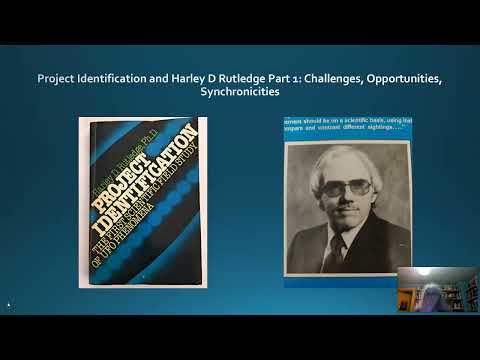
Project Identification and Harley D Rutledge Part 1: Challenges, Opportunities, Synchronicities
A detailed researcher deep-dive into Rutledge's background, the Project's founding, and its early methodology, part one of a dedicated three-part series.

Missouri Mysteries, Chapter Two: Unexplained Lights Near Piedmont, Missouri
The State Historical Society of Missouri's own oral-history documentary segment on the 1973 wave, presented by historian Sean Rost.

How Piedmont Became the UFO Capitol of Missouri | Living St. Louis
Nine PBS's own public-broadcasting segment on the wave's legacy and Piedmont's modern UFO-tourism designation, featuring the town's own commemorative efforts.
Sources
- "Harley Rutledge," Wikipedia. en.wikipedia.org
- "Biography:Harley Rutledge," HandWiki. handwiki.org
- "Area UFO expert Dr. Harley Rutledge, 80, dies." Southeast Missourian. semissourian.com
- "Obituary: Dr. Harley Rutledge." Southeast Missourian, June 7, 2006. semissourian.com
- "MO UFOs... and Miracles." Vatican Observatory, Sacred Space Astronomy. vaticanobservatory.org
- "Project Identification," Anomaly Archives. anomalyarchives.org
- "Rutledge, Harley," Anomaly Archives. anomalyarchives.org
- Rutledge, Harley D. Project Identification: The First Scientific Field Study of UFO Phenomena. Prentice-Hall, 1981 — full text. archive.org
- "Project Identification: the first scientific field study of UFO phenomena," Internet Archive (scanned volume). archive.org
- "Project Identification and Harley D Rutledge Part 1: Challenges, Opportunities, Synchronicities." ProfessorWHAM. professorwham.com
- "Project Identification Part 3: Phases 2 & 3, Ongoing Uncanny, A Family Affair, Vallee Gets It Wrong." ProfessorWHAM. professorwham.com
- "The First Scientific UFO Field Study." Podcast UFO. podcastufo.com
- "Dr. Harley Rutledge – A UFO Blueprint to Follow." In The Field. inthefield2017.weebly.com
- "Piedmont, Missouri celebrates UFO history with new park." FOX 2 (KTVI). fox2now.com
- "Did you know that Piedmont is the UFO capital of Missouri?" FOX 2 (KTVI). fox2now.com
- "Greetings, Earthlings: Piedmont opens UFO Capital of Missouri Park." Missourinet. missourinet.com
- "Piedmont, Mo. celebrates 50 years since reported UFO event." KFVS12. kfvs12.com
- "Ribbon cutting celebrates opening of UFO Capital of Missouri Park." KFVS12. kfvs12.com
- "Bill would name Piedmont as Missouri's UFO capital." Jefferson City News-Tribune. newstribune.com
- "UFO Melted His Glasses; Blinded Him, Claims Cape Girardeau Resident." UFO Chronicles, 2015 (reproducing 1973 wire coverage). theufochronicles.com
- "50th Anniversary of the SE Missouri Ozarks UFO Flap: Piedmont, Clearwater Lake, Farmington, Wayne County." Ziegelmeyer, Debbie & Kay, Margie. Amazon listing. amazon.com
- "Piedmont, Missouri," Wikipedia. en.wikipedia.org
- "Wayne County, Missouri," Wikipedia. en.wikipedia.org
- "Piedmont Area Chamber of Commerce | History." visitpiedmontmo.com
- "Category:Piedmont, Missouri," Wikimedia Commons. commons.wikimedia.org
- "File:Piedmont Missouri.jpg," Wikimedia Commons (public domain photograph used as this case file's hero image). commons.wikimedia.org
- "File:Project Blue Book report - 1957-10-7228365-Piedmont-Missouri.pdf," Wikimedia Commons. commons.wikimedia.org
- "Investigation of UFO reports by the United States government," Wikipedia (Project Blue Book closure date). en.wikipedia.org
- "Hessdalen Lights" case file, The Omni Ledger (cross-reference on Rutledge as methodological precedent). Internal case file
See something inaccurate? Have additional information or sources?
Suggest an Edit →Last Updated: August 2026