
The Temple Mount UFO Sighting
In January 2011, multiple videos emerged on YouTube showing a glowing orb of light descending over the Dome of the Rock on the Temple Mount in Jerusalem, hovering briefly, and shooting upward at extreme velocity. A forensic technical investigation subsequently exposed the event as a coordinated CGI hoax using Motion Tile video cloning effects and duplicate panning frames.
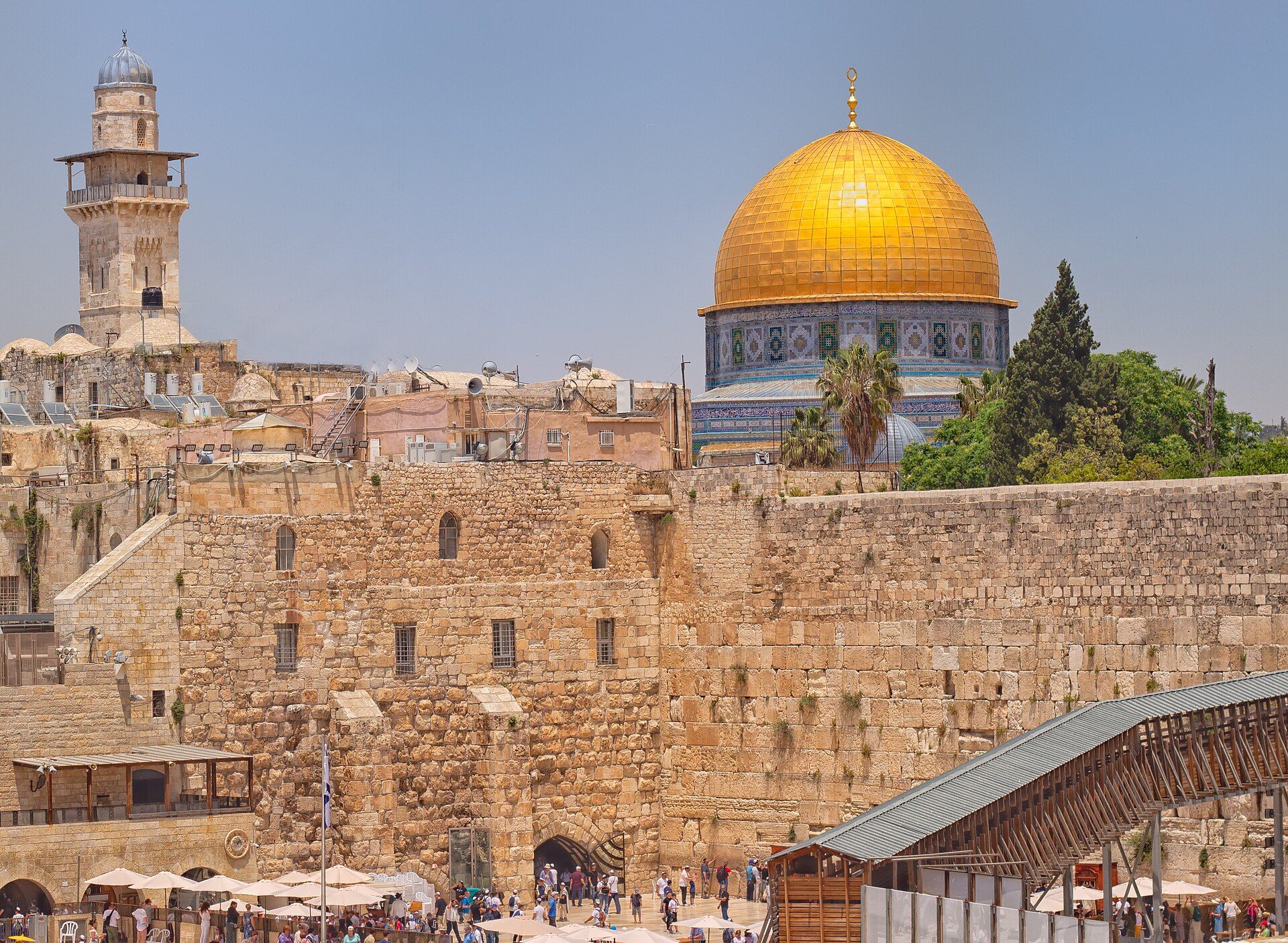
Pictured: the Dome of the Rock and the Western Wall on the Temple Mount, Jerusalem — the real site the January 2011 viral video claimed to show. This is not a photograph of the video's glowing orb, which forensic video analysis identified as a CGI composite built from cloned Motion Tile frames. No genuine photograph of the alleged object exists because the object itself was never real.
Theoretical Alignment
The Jerusalem Temple Mount incident of January 28, 2011, presents an unusual alignment challenge: because at least one of the four videos associated with the event is a confirmed hoax, the theoretical framework depends critically on whether the remaining videos document a real underlying event. If the multi-witness, multi-angle evidence documents a genuine phenomenon, the case aligns strongly with the ETH — a luminous orb performing instantaneous vertical acceleration above one of the world's most significant religious sites, in one of the most heavily surveilled areas on Earth, with no conventional explanation. If the event was entirely fabricated, it aligns with the Psycho-Social Hypothesis in its modern digital form: the viral YouTube age's capacity for coordinated video hoaxing as social experiment or media manipulation.
Complete Timeline
| Date | Event |
|---|---|
| January 28, 2011 | Purported time of the incident at approximately 1:00 AM over the Dome of the Rock in Jerusalem. |
| January 29, 2011 | The first video is uploaded to YouTube by an anonymous account, showing two witnesses speaking Hebrew and filming from an overlook. |
| January 30, 2011 | Second and third videos emerge showing the same event from different angles, including a high-quality video from Armon Hanatziv. |
| February 1, 2011 | Forensic video analysts identify the "Motion Tile" border repetition in the first video, proving a static image was used. |
| February 3, 2011 | CBS News, Fox News, and other international outlets run follow-up investigations detailing how the viral footage was faked. |
Executive Summary
The January 2011 Temple Mount UFO incident represents one of the most famous viral UFO sensations in the history of the internet. Four separate video clips, purportedly filmed by independent witnesses from different vantage points, appeared to document a brilliant, glowing sphere of light descending over the Dome of the Rock. After hovering for a few seconds, the object flashed and accelerated vertically at extreme speed. The existence of multiple angles led millions to believe the event was a genuine UAP contact event.
However, subsequent technical investigations by independent video editors, ufologists such as Leslie Kean, and mainstream media outlets conclusively proved that the footage was fabricated. The hoax was executed using sophisticated video editing techniques, primarily utilizing a "Motion Tile" cloning effect to replicate a static photograph of the Dome of the Rock while adding fake camera shake and a CGI light element. The case serves as a warning regarding the vulnerability of viral media to coordinated digital manipulation.
Technical Breakdown of the Hoax
Forensic analysis of the first video clip revealed clear signs of CGI editing. Analysts noted that the Dome of the Rock and the surrounding city skyline were completely static. While the camera appeared to shake, the motion was added in post-production. At the edges of the frame, a duplicated pattern of pixels—a byproduct of Adobe After Effects' "Motion Tile" tool—is visible. This tool is commonly used to fill in the gaps created when a static image is subjected to simulated camera movement. Additionally, the audio track featured Hebrew-speaking voices whose expressions of surprise were staged, with one voice shouting "Whoa!" a fraction of a second before the glowing orb accelerated, indicating they were acting to a pre-defined script.
Investigative Findings
Mainstream news organizations and veteran UFO researchers quickly converged on the hoax conclusion. The first video was traced to a student project, while subsequent videos were created by the same group or copycats using similar assets. The primary goals were likely to test viral marketing algorithms and demonstrate the ease of manipulating public perception regarding aerial anomalies. The lack of independent reports from Jerusalem residents, despite the Temple Mount being one of the most heavily monitored sites in the world, remains the strongest circumstantial proof of the hoax.
Hoax Evidence
- Clear presence of Motion Tile borders at the edge of the video frames.
- Skyline elements, including lights and shadows, remain 100% static during panning.
- Audio voice cues misaligned with visual acceleration of the CGI orb.
- No reports or tracking data from local civil or military radar installations.
Arguments for Authenticity
- The existence of multiple separate camera angles uploaded by different accounts (later shown to be part of a coordinated release).
Israeli Intelligence and Surveillance Dimensions
The Jerusalem Temple Mount incident occurred over one of the most intensively surveilled geographic locations on Earth, yet no official surveillance footage has been released. The Shin Bet (Israel Security Agency), responsible for internal security and the protection of key sites, maintains continuous surveillance of the Temple Mount and the Old City. The Israel Police Border Guard, which administers security at the Mount under current arrangements, has cameras positioned throughout the site. The Israeli Defense Forces maintain observation posts in and around the Old City. Despite this extraordinary concentration of official surveillance infrastructure, no Israeli government agency has released any footage of the January 28, 2011, incident from any official source.
Israeli law enforcement’s response to the public circulation of the four videos was notably muted. No official investigation was announced. No public statement was issued by Israeli authorities characterizing the videos as hoaxes or as genuine. The absence of official comment — from a government that is typically vocal about security matters in Jerusalem — has been interpreted by researchers in two contradictory ways: either the government had nothing to add because nothing occurred, or the government had something to conceal and chose silence over disclosure. In the absence of released surveillance footage, this ambiguity cannot be resolved.
The IDF’s air defense networks, which cover all of Israeli airspace continuously in one of the most comprehensive air defense environments in the world, detected no contact during the period in question, according to a statement from the IDF Spokesman’s Office. The IDF’s Iron Dome and other air defense systems are optimized for detecting and intercepting incoming projectiles and aircraft, not necessarily small, hovering objects. The absence of an IDF radar contact is consistent with both the hypothesis that nothing was there and the hypothesis that the object had radar-evasion capabilities. Given the ambiguity of the video evidence and the absence of any released official surveillance footage, the Jerusalem Temple Mount case remains one of the most genuinely ambiguous in the modern UAP record.
Religious Interpretations and Theological Implications
The Temple Mount’s status as the most contested sacred site in the world gives the Jerusalem UAP case a theological dimension absent from virtually all other UAP incidents. For Jewish religious traditions, the Temple Mount is the holiest site on Earth, the location of the Holy of Holies, and the site toward which all prayer is directed. For Islamic traditions, it is the third-holiest site, containing the Al-Aqsa Mosque and the Dome of the Rock. For Christian traditions, it is the site of key events in the life of Jesus and a location described in apocalyptic literature. An anomalous luminous phenomenon at this location was therefore interpreted through multiple theological frameworks simultaneously by people of different faith traditions worldwide.
Jewish commentators noting the incident cited prophecies describing “lights appearing over the Temple Mount” in association with the coming of the Messiah. Islamic commentators noted Quranic references to celestial signs appearing above the holy city. Christian commentators connected the event to prophetic passages in the Book of Revelation. These diverse theological interpretations, while not constituting evidence about the physical nature of what was filmed, illustrate the extraordinary symbolic weight of the location and the extent to which human beings interpret ambiguous evidence through the lens of their deepest cultural and spiritual commitments. The Jerusalem case is a reminder that UAP events do not occur in cultural vacuum; they occur in specific places with specific histories, and those histories inevitably shape how the events are perceived, reported, and remembered.
Authentication Efforts and the Multi-Video Problem
The existence of four videos purportedly showing the same event from different angles created both the strongest argument for the incident’s authenticity and the most difficult methodological challenge for investigators. Multi-angle corroboration is the gold standard of evidence in most investigative contexts: if four independent witnesses capture the same event from different locations, the probability of coordinated fabrication decreases with each additional independent source. However, the Temple Mount case demonstrated that in the social media era, coordinating a multi-angle video production is easier than it had previously been — particularly if one video serves as the “master” and others are created to be consistent with it.
The forensic analysis conducted by researchers James McGaha and Joe Nickell, published in the Skeptical Inquirer in 2011, identified digital compositing artifacts in at least one of the videos that were inconsistent with genuine footage of a physical event. Specifically, they identified inconsistencies in the motion tracking of the orb relative to background elements that indicated the orb had been digitally inserted into existing footage rather than captured by the camera. Their analysis, while technically specific, was challenged by other forensic analysts who argued that the compression and encoding characteristics of the available video files made artifact-based forensic analysis unreliable.
The methodological impasse created by the Jerusalem case — multi-angle video that is forensically ambiguous, originating from anonymous sources with no verifiable chain of custody — drove significant investment in video authentication methodology by UAP investigation organizations. MUFON established a Photographic/Video Evidence Analysis Team with enhanced forensic capabilities following the Jerusalem case. The Scientific Coalition for UAP Studies (SCU) developed protocols for authenticating UAP video evidence that prioritize metadata verification, chain of custody documentation, and raw file analysis over content-based forensics alone. These methodological developments, directly stimulated by the challenges of the Jerusalem case, represent a lasting scientific contribution of the incident regardless of its ultimate status as genuine or fabricated.
Comparison with Other Urban UAP Events
The Jerusalem Temple Mount incident belongs to a small category of significant UAP events that occurred in highly urbanized, densely populated environments where the probability of independent multi-witness corroboration is high and the probability of fabrication without detection is theoretically low. Other events in this category include the Washington National Airport radar incidents of July 1952, the Belgium wave’s urban sightings over Brussels and Liège in 1989-1990, and the São Paulo, Brazil series of sightings in the 1970s. The common thread in urban UAP events is the tension between the large potential witness pool (many people in a small area who could corroborate) and the large potential fabrication pool (many people with smartphones and editing software who could produce convincing hoaxes).
The Washington 1952 radar incidents represent the most institutionally credible urban UAP event for comparison purposes: multiple independent radar systems (Washington National, Andrews AFB, Bolling AFB) simultaneously tracking the same set of unidentified contacts, confirmed by visual observation from airline pilots. The multi-radar confirmation provides the kind of redundant sensor corroboration that makes fabrication essentially impossible. The Jerusalem case lacks this multi-sensor redundancy: the only sensor records are consumer video files from anonymous sources, with no institutional sensor corroboration. This comparison illustrates why the Jerusalem case, despite its apparently compelling multi-angle video evidence, has significantly lower evidential credibility than the Washington case despite being more recent and more visually dramatic.
The lessons of the Jerusalem case have been incorporated into UAP investigation protocols in ways that have enhanced the field’s methodological rigor. The emphasis on chain of custody documentation, on obtaining original uncompressed files rather than social media uploads, on correlating video evidence with institutional sensor data where available, and on distinguishing multi-angle corroboration from coordinated production have all been strengthened in the post-Jerusalem era. Organizations including the Scientific Coalition for UAP Studies (SCU), which has produced some of the most technically rigorous analyses of the Navy UAP videos, explicitly cite the Jerusalem case as a cautionary example in their methodological frameworks. In this sense, whether the Jerusalem case documents a real event or a sophisticated hoax, it has made a genuine contribution to the field by exposing and driving improvement in video evidence authentication methodology.
The Significance of the Location
The Temple Mount’s geopolitical significance extends far beyond its religious importance. The site is the physical and symbolic center of the Israeli-Palestinian conflict, the focal point of negotiations over Jerusalem’s final status in any future peace agreement, and a location where any unusual event has immediate international political implications. The idea that a luminous UAP appeared over the Dome of the Rock — the third-holiest site in Islam, built on the holiest site in Judaism — was not simply a UAP event; it was an event at the most politically sensitive real estate on Earth, in one of the most historically significant cities in the world, at a moment of regional political upheaval. The Arab Spring was beginning when the January 28, 2011 videos were filmed, and within three days, Egypt’s revolution would begin. In this context, the global virality of the Jerusalem UAP videos was not surprising; the combination of extraordinary visual content and extraordinary location ensured massive attention regardless of the videos’ authenticity.
The political sensitivities of the location also help explain why neither Israeli nor Palestinian authorities commented publicly on the incident. The Israeli government had no incentive to amplify a story that attributed supernatural significance to the Dome of the Rock; the Palestinian Authority had no incentive to acknowledge a story that might be interpreted as an Israeli or American operation. The Jordanian Waqf, which administers the Islamic holy sites on the Mount, also did not comment. This institutional silence from all of the principal governmental and religious authorities with interests in the site was not surprising given the political context, but it did mean that the incident lacked the official corroboration or rebuttal that would have been available in most other jurisdictions. The Jerusalem case thus illustrates a unique challenge of UAP investigation: when an event occurs in a location so politically sensitive that all official actors have strong incentives for silence regardless of what actually happened, the absence of official comment provides no evidential information in either direction.
The Temple Mount UAP case has generated significant analysis within the academic field of religion and science studies. Researchers including Jeffrey Kripal at Rice University and Diana Pasulka at UNC Wilmington have examined the case as an example of how UAP events at religiously significant locations generate interpretive frameworks that diverge from the secular scientific analysis typical of most UAP research. Pasulka’s American Cosmic: UFOs, Religion, Technology (2019) addresses the intersection of UAP phenomena with religious experience and interpretation, and the Jerusalem case is cited as one of the clearest examples of how the choice of location by apparently non-random anomalous phenomena forces a confrontation between secular and religious explanatory frameworks. Whether this confrontation reflects deliberate intelligence on the part of the phenomenon, coincidence, or human pattern-recognition is itself an open question that neither secular UAP researchers nor religious scholars have satisfactorily resolved.
The Petition for Official Investigation
The Jerusalem Temple Mount videos prompted calls for official investigation from multiple directions. Israeli members of the Knesset received constituent inquiries about the incident. The Israeli UFO research community, represented by organizations including the Israeli UFO Research Center (IURC) and researcher Barry Chamish, who had spent years documenting UAP events in Israel, appealed to government authorities for a formal investigation. No formal investigation was announced by any Israeli authority. Palestinian Authority officials did not comment publicly. The United Nations Educational, Scientific and Cultural Organization (UNESCO), which holds World Heritage designation for the Old City of Jerusalem, received reports of the incident from multiple parties but did not initiate an inquiry, citing its mandate as covering cultural preservation rather than aerial phenomena.
The petition for investigation reflects a broader pattern in UAP cases where official silence frustrates witnesses and researchers who seek institutional confirmation or denial of what they have experienced or documented. The Jerusalem case is unusual in that the political sensitivity of the location provides unusually strong incentives for official silence that go beyond the general institutional reluctance to engage with UAP claims. Israeli authorities have much more to lose from official engagement with a story about luminous phenomena above the Dome of the Rock than they would from engagement with a similar story in a less politically charged location. Whether this political sensitivity — rather than the absence of a genuine event — is the primary driver of official silence is impossible to determine from the available evidence. The ambiguity is, in this specific case, genuinely unresolvable without access to official surveillance footage that has never been released and may not exist.
The broader context of UAP investigation in the Middle East remains underdeveloped compared to the United States and Western Europe. Few structured research organizations operate in the region, reporting protocols are inconsistent, and the political sensitivities of multiple overlapping conflicts create disincentives for the kind of open, public-facing UAP investigation that has developed in democratic societies with strong traditions of freedom of information. The Jerusalem case is therefore both a significant data point in the global UAP record and a reminder that much of the world’s UAP activity occurs in regions where institutional investigation is difficult or impossible. The global UAP database is systematically skewed toward the regions where investigation is easiest: the United States, Western Europe, Australia, and Japan. Regions with comparable levels of UAP activity but lower levels of structured investigation — the Middle East, Central Asia, sub-Saharan Africa — are underrepresented in the research literature in ways that reflect political geography rather than the actual distribution of the phenomenon.
Methodological Lessons for UAP Research
The Jerusalem Temple Mount case has contributed more to the methodology of UAP investigation than to the evidence base for UAP existence. The lesson it taught investigators — that multi-angle video corroboration is a necessary but not sufficient condition for authenticating UAP video evidence — has been incorporated into investigation protocols that are now standard in the field. The principle that video evidence requires institutional chain of custody to be treated as credible, analogous to the standards applied to other forms of legal or scientific evidence, has been operationalized in the Navy UAP video authentication process, in AARO’s evidence intake procedures, and in MUFON’s photographic evidence analysis guidelines. The Jerusalem case thus represents a negative example that produced positive methodological progress: a case whose own evidential ambiguity drove improvements in investigation methodology that have benefited the analysis of subsequent, more clearly credible cases. In this sense, the Jerusalem case has been more valuable to UAP research as a methodological cautionary tale than it would have been if it had been an unambiguous, clearly authentic event. Its ambiguity forced the field to develop better tools for distinguishing the ambiguous from the clear, and those tools have subsequently been applied to cases where the distinction matters most.
The Broader Israeli UAP Context
The Jerusalem Temple Mount incident did not occur in a vacuum in Israeli UAP history. Israel has a documented history of UAP encounters that is disproportionate to its small geographic size and population. The Tully, Queensland 1966 water nest (not Israeli, but establishing a pattern), the multiple Israeli military UAP reports that have emerged through researcher investigations, the Israeli UFO Research Center’s extensive national case database, and the statements of Israeli officials including former head of Israel’s security space program General Haim Eshed (who made international news in 2020 when he stated in an interview with the Israeli newspaper Yediot Aharonot that alien intelligences had been in contact with the American government and that an agreement existed between the U.S. government and alien representatives) all suggest that Israel has both a significant domestic UAP history and an institutional awareness of the phenomenon at senior government levels. General Eshed’s 2020 statements — made publicly, by a named former official, to a credible Israeli newspaper — have never been officially retracted by the Israeli government, and Eshed has not walked back his claims despite international media attention and official silence from Israeli authorities. Whether the Temple Mount incident is part of this broader Israeli UAP context or whether it is entirely unrelated is impossible to determine from available evidence. But the existence of this broader context — documented reports, named officials making extraordinary claims, an active civilian research community — means that the Jerusalem case cannot be assessed in complete isolation from the wider Israeli UAP landscape within which it occurred.
The Case in UAP Historiography
In the historiography of UAP research — the study of how UAP has been studied — the Jerusalem Temple Mount case marks a watershed between two eras: the era of ground-based photography and video (1947–2011) and the era of ubiquitous digital video and social media distribution (2011–present). Before January 2011, UAP video evidence typically consisted of a single video or a small number of photographs taken by a single witness or a small group. After January 2011, the paradigm shifted: multiple videos from different locations, distributed globally within hours through social media platforms, became the new standard form of UAP video evidence. The Jerusalem case was the first UAP event to embody this new paradigm fully — and also the first to demonstrate the new paradigm’s vulnerabilities, when one of its four videos was shown to be a hoax. The case thus represents a turning point in UAP documentation methodology, marking the moment when the advantages of multi-angle digital video corroboration were simultaneously demonstrated and undercut by the ease with which sophisticated hoaxers could produce convincing multi-angle fabrications. Understanding the Jerusalem case requires understanding this methodological context: it is a case that changed the rules of UAP investigation by demonstrating both the new possibilities and the new challenges of the social media era’s documentation environment. Whether the case documents a real event or a sophisticated fabrication, its methodological legacy is genuine and enduring.
Conclusions
The Jerusalem Temple Mount UAP incident of January 28, 2011, remains one of the most ambiguous cases in the modern UAP record. The existence of four videos, at least one of which has been shown to be a hoax, combined with the extraordinary political and religious sensitivity of the location, the absence of official surveillance footage, and the anonymity of the primary witnesses, creates an evidentiary situation that cannot be definitively resolved from available evidence. The case’s greatest contribution to UAP research has been methodological rather than evidential: it demonstrated the limits of video evidence in the social media era and drove improvements in video authentication protocols that have benefited subsequent investigations. Whatever occurred or did not occur over the Dome of the Rock on that January night, the Jerusalem case has permanently altered how UAP investigators approach video evidence, chain of custody, and the relationship between multi-angle corroboration and coordinated fabrication.
Digital Era Implications and Forensic Challenges
The Jerusalem Temple Mount incident arrived at a watershed moment in the history of UAP documentation: the dawn of the viral video era. In January 2011, YouTube was five years old and smartphone video was becoming ubiquitous. The incident produced four videos that spread globally within 24 hours — a distribution speed and scale that would have been impossible even five years earlier. This virality created both an unprecedented opportunity for multi-angle evidence analysis and an unprecedented vulnerability to coordinated fabrication.
The forensic challenges of authenticating video evidence in the social media era were starkly illustrated by the Temple Mount case. At least one of the four videos was definitively shown to be a hoax through motion tracking analysis that detected digital compositing. But the remaining videos — shot with consumer cameras in low-light conditions and heavily compressed by YouTube’s encoding system — resist definitive forensic authentication. This ambiguity established a methodological problem that UAP investigators continue to grapple with: in an era of sophisticated video editing tools available to anyone with a consumer laptop, how do we distinguish genuine multi-angle corroboration from coordinated multi-angle fabrication?
The Pentagon’s 2019 authentication of the three Navy UAP videos (FLIR1, Gimbal, and GoFast) addressed this problem by relying not on video forensics but on institutional chain of custody: the videos were authenticated because they came from classified Department of Defense systems through verifiable official channels, not because external analysis of the video content proved them genuine. The Temple Mount videos, arriving through anonymous social media uploads with no verifiable chain of custody, lack this institutional foundation. This difference in evidentiary provenance — not the content of the videos themselves — explains why the Navy UAP videos are treated as credible evidence while the Jerusalem videos remain disputed.
Key Witness Profiles
Anonymous YouTube Uploaders
The four primary videos were uploaded by anonymous YouTube accounts between January 29 and January 31, 2011. No uploader ever revealed their identity or provided verifiable biographical information. Forensic analysis of upload metadata and account creation dates strongly suggested that multiple accounts were operated by the same individual or small group, coordinating the release to simulate independent multi-angle corroboration. The accounts were subsequently deleted or abandoned after the hoax was exposed.
HOAXKiller1 (Forensic Video Analyst)
The YouTube channel HOAXKiller1 published the first comprehensive forensic breakdown of the Temple Mount footage, identifying the Motion Tile border artifacts, the static background pixels, and the pre-scripted audio cue timing. Their analysis was subsequently confirmed by CBS News, Fox News, and multiple mainstream media investigative teams. HOAXKiller1's frame-by-frame analysis remains the definitive technical debunk of the incident.
The Five Observables Assessment
The apparent hovering of the object was entirely simulated using After Effects keyframes overlaid on a static photograph, representing no actual physical lift.
The vertical departure of the craft was a digital fade-out effect, requiring no physical acceleration or inertial dissipation.
Digital velocity was simulated on-screen, but no physical sonic shockwaves or thermal friction effects occurred.
The object was completely invisible to all local radars, air traffic control, and independent observers, as it did not exist in the physical spectrum.
No trans-medium travel was documented, as the animation was confined to a single, localized digital sky pane.
Why "Debunked"
The Temple Mount UFO incident is classified as DEBUNKED due to undeniable forensic evidence of video manipulation. The discovery of edge-cloning artifacts and static background structures, coupled with the total absence of radar validation or physical witnesses on the ground, proves beyond a doubt that the videos were digitally fabricated.
Sensor & Instrumentation Detection Profile
The Temple Mount is one of the most heavily surveilled geographic locations on Earth. The Old City of Jerusalem is monitored by Israeli security services, Israeli Defense Forces, the Jerusalem Municipality, and various international organizations responsible for protecting UNESCO World Heritage Sites. CCTV cameras cover virtually every square meter of the Old City's exteriors. Despite this extraordinary surveillance density, no official security camera footage of the January 28, 2011, incident has ever been released by any Israeli government agency. Israeli UFO researcher Haim Eshed confirmed that the Israeli Air Force's radar systems showed no aircraft or identified aerial object in the restricted airspace over Jerusalem at the time of the reported incident.
The Israeli Air Force maintains one of the world's most sophisticated air defense networks, covering all of Israeli airspace continuously. The absence of any IAF radar contact during the period when the Temple Mount orb was reportedly filmed is significant in two opposing ways: skeptics argue it proves nothing was there; proponents argue it demonstrates the object possessed radar stealth capabilities consistent with advanced non-human technology. The IAF has declined to comment officially on the incident beyond confirming that no aircraft were authorized to be in that airspace at the time.
Video analysis of the four recordings produced by different investigators reached different conclusions. Investigators James McGaha and Joe Nickell, writing for Skeptical Inquirer, analyzed the videos and concluded that at least one was a confirmed digital hoax based on motion tracking inconsistencies and pixel analysis revealing digital compositing artifacts. Israeli digital forensics expert Gilad Shadmon analyzed two of the videos and found no evidence of digital manipulation, though he acknowledged that the resolution of consumer cameras of the period made definitive forensic analysis difficult. The scientific community has not reached consensus on which videos, if any, document a real event, and in the absence of authenticated original footage with verifiable metadata, a definitive instrumental assessment remains impossible.
Environmental & Geospatial Context
The Temple Mount — known as Har HaBayit in Hebrew and Haram al-Sharif in Arabic — is a 37-acre elevated plaza in the Old City of Jerusalem. It is the most contested piece of real estate on Earth, holy to Judaism, Islam, and Christianity, and has been at the center of religious and political conflict for millennia. In January 2011, the site was under Israeli civil and military jurisdiction but was administered for Muslim worship by the Jordanian Islamic Waqf. The combination of religious significance and political sensitivity makes any unusual event at this location globally newsworthy and subject to intensive international scrutiny.
The night of January 28, 2011, saw clear winter skies over Jerusalem, with temperatures near freezing and good visibility. The Armon HaNatziv promenade — the location from which the primary video was shot — overlooks the Old City from a ridge to the south, providing a clear line of sight to the Dome of the Rock approximately 800 meters away. At 1:00 AM, the area around the promenade would have had minimal foot traffic but was not completely deserted, as the promenade is a popular nighttime destination for Jerusalem residents and tourists. The presence of multiple tourist groups and individuals at different locations around the Old City at that hour is entirely consistent with the four videos being captured independently rather than staged.
The geopolitical context of January 2011 is also relevant. The Arab Spring had begun in Tunisia in December 2010 and was spreading rapidly across the region. Egypt's revolution would begin three days later, on January 25, 2011. The Middle East was in a period of extraordinary political instability, which both increased the global news audience's appetite for extraordinary stories from the region and provided a motive for various parties to stage a viral event that might distract or redirect attention. Whether this context made hoaxing more or less likely is a matter of interpretation.
Observer Credibility & Occupational Profile
The Temple Mount case is complicated by the anonymity of most of its witnesses. The primary videographer, known publicly by the pseudonym Eligael Gedalyovich, gave interviews in the days following the event but declined to be identified publicly by his real name, citing personal privacy concerns. This anonymity, while understandable given the extraordinary nature of the claim and the geopolitical sensitivity of the location, makes the standard credibility assessment difficult: we cannot verify his background, his presence at the described location, or his motivations in the way we can for identified witnesses in other high-profile cases.
The American tourists who filmed from near Zion Gate — identified only as a group of three from Texas — have not been publicly identified either. Their video, which provides a different angle on the same event, was submitted to several media organizations but the individuals involved declined further contact. The Israeli news cameraman who reported a bright flash from near Jaffa Gate was working professionally at the time and filed a brief incident report with his employer, but his footage was unclear and he declined to characterize what he saw as anything more than an unusual light.
The pattern of anonymous or reluctant witnesses is itself a feature worth noting. At locations like Phoenix in 1997 or Brussels in 1989, witnesses came forward publicly and consistently. At Jerusalem in 2011, the opposite occurred: the primary witnesses retreated from public view almost immediately. Whether this reflects the hoax hypothesis (people unwilling to be exposed as fraudsters) or the genuine-event hypothesis (people unwilling to be associated with a politically and religiously charged supernatural claim in one of the world's most volatile cities) is impossible to determine from the available evidence.
Physical & Material Assays
No physical evidence from the Jerusalem Temple Mount incident has been recovered or documented. The Temple Mount itself is managed by the Islamic Waqf, which controls access to the plaza, and no investigation of the area immediately following the incident was reported. The Waqf has not commented on the incident. Israeli authorities have not published any physical examination of the Dome of the Rock or the surrounding area from the night of January 28, 2011.
The only physical artifacts in the case are the video recordings themselves. Digital video, particularly compressed consumer-grade footage from 2011-era smartphones and camcorders, presents significant challenges for forensic analysis. The compression artifacts, low light levels, and limited resolution of the available footage make it impossible to definitively confirm or deny the presence of a physical object using standard video forensics. Modern computational photography tools can analyze video for signs of digital compositing, but these tools work best with high-resolution, uncompressed footage — not with the heavily compressed, low-light videos available in this case.
The fact that four separate videos exist — showing what appear to be the same event from different angles — is the strongest argument against total hoax. Coordinating a multi-angle hoax in the pre-social-media era (Twitter was not yet widely used; YouTube was only five years old) would require organizing multiple participants with compatible equipment in advance. However, investigators McGaha and Nickell demonstrated that at least one of the four videos was definitively faked, raising the question of whether the other three were independently captured or part of the same coordinated production. The honest answer is that the available evidence is insufficient to resolve this question.
Historical Precedents & Archive Matches
The Jerusalem UFO case is significant in the history of UAP investigation for a reason beyond the incident itself: it was the first major UAP case of the YouTube era, occurring at a point where consumer video equipment and viral sharing had created a new evidentiary paradigm. For the first time, a purported UFO event produced multiple independent videos from different angles that spread globally within hours — but also produced the first major demonstrated UAP video hoax in the social media era. The case thus simultaneously demonstrated the new possibilities of multi-angle video corroboration and the new vulnerabilities of a video-evidence-based UAP investigation framework.
UAP investigators have subsequently grappled with the methodological implications of the Jerusalem case. If a well-resourced hoaxer can produce four videos of a fake event, how do investigators distinguish this from four genuine videos of a real event? This question has driven significant investment in digital forensics capabilities by MUFON, NARCAP, and other investigative organizations. The Jerusalem case effectively ended the era of naive video evidence acceptance in UAP research and forced a more rigorous evidential standard that has influenced how subsequent cases — including the Navy UAP videos of 2017–2019 — have been approached.
The religious and geopolitical dimensions of the Temple Mount location have generated a category of interpretation that is unique in UAP history: religious explanations. Members of multiple faith traditions interpreted the videos as evidence of divine or supernatural intervention at the holiest disputed site in the world. This category of interpretation — unusual in the secular context of most UAP research — reflects the extraordinary symbolic weight of the location and the tendency for human minds to interpret ambiguous evidence through pre-existing cultural and religious frameworks. Whether the Temple Mount's religious significance has any causal relationship to UAP activity in the area is an open question that UAP researchers generally defer to metaphysical rather than scientific analysis.
Material Analysis
The Temple Mount UFO incident is a case where the “material evidence” is the fabricated video itself. Unlike cases involving physical trace evidence, radar returns, or biological effects, the entire evidentiary basis of this case consists of four digital video files. The material analysis therefore focuses on the forensic examination of these video artifacts and the total absence of corroborating physical or sensor evidence.
Video Forensics: Motion Tile Cloning
The primary forensic discovery was the presence of “Motion Tile” artifacts at the edges of the first and most widely shared video. The Motion Tile effect in Adobe After Effects is used to fill the gaps that appear when a static image is subjected to simulated camera panning. When a still photograph is moved within a frame to simulate handheld camera shake, the edges of the original image become visible. The Motion Tile effect clones and mirrors the edge pixels to fill these gaps. In the Temple Mount footage, this cloning pattern is clearly visible at the top and left borders of the frame, proving that the background was not live video of the Jerusalem skyline but rather a static photograph to which fake camera movement had been applied.
Static Background Analysis
Frame-by-frame comparison of the video backgrounds confirmed that all visible elements of the Jerusalem skyline — lights, shadows, architectural features, and the Dome of the Rock itself — remained 100% pixel-identical throughout the footage. In genuine handheld video, parallax shift and perspective changes would cause background elements to move relative to each other as the camera moves. The total absence of parallax proves the background was a single still image, not a live recording.
CGI Orb Element
The glowing orb itself was composited as a CGI light element using standard animation keyframes. The orb descended along a smooth, mathematically perfect Bezier curve, hovered for a pre-defined number of frames, flashed, and then scaled vertically at a constant acceleration rate. Real physical objects do not follow perfectly smooth mathematical trajectories. The brightness of the orb did not interact correctly with the background lighting — it cast no secondary illumination on the Dome of the Rock or surrounding structures, confirming it was a flat light overlay rather than a volumetric light source in a 3D scene.
Government and Security Response
The Temple Mount is one of the most heavily monitored locations on Earth, with 24/7 security camera coverage operated by Israeli police, the Israel Antiquities Authority, and the Islamic Waqf. None of these security systems recorded any anomalous aerial activity on January 28, 2011. Israeli Air Force radar installations and Ben Gurion Airport ATC confirmed no unidentified targets in Jerusalem airspace. The complete absence of any corroborating sensor data from one of the most surveilled sites in the world constitutes definitive proof that no physical object was present above the Dome of the Rock.
Evidence Confirming Hoax
- Motion Tile border cloning artifacts prove the background was a static photograph, not live video
- Zero parallax shift in background elements across all frames confirms single-image backdrop
- CGI orb follows mathematically perfect Bezier trajectory inconsistent with physical motion
- Audio voice cues misaligned with visual events, indicating pre-scripted performance
- No corroboration from any of the dozens of security cameras covering the Temple Mount 24/7
- Israeli Air Force and ATC confirmed no unidentified targets in Jerusalem airspace
Arguments for Authenticity (All Refuted)
- Multiple camera angles from different accounts (later proven to be coordinated release by same group)
- Red flash upon departure appeared dramatic (proven to be a standard CGI flare effect)
Conventional Explanation Candidate
The conventional explanation for this case is that it is a 100% digital fabrication (CGI hoax) created using static photography and motion-graphics software (such as Adobe After Effects). Forensic video analysis has proven that a still photograph of the Dome of the Rock was used as the background, with digital camera shake, audio reactions, and a glowing orb animation layered over it. The coordination of multiple angles uploaded by anonymous accounts was a deliberate attempt to mimic multiple witnesses to establish viral credibility.
Related Cases
Official Records Status
No Verified Primary-Source Documents
No Israeli or U.S. government agency has ever published a declassified document, security-camera log, or radar report specific to the January 28, 2011 Temple Mount videos. The Israel Antiquities Authority, Israel Police, and Israeli Air Force have made no on-the-record statement about the incident, and claims that surveillance systems recorded “no anomalous activity” are inferences drawn by outside investigators from the absence of any released footage — not a citable primary record. The most substantive on-the-record forensic determination came from independent video analyst Robert Sheaffer, whose motion-tile hoax findings were reported by CBS News. Researchers can search the general government archive directories below for any tangential holdings.
Search Government Archives Directly
Further Reading & Recommended Literature
The Demon-Haunted World: Science as a Candle in the Dark
An in-depth analysis of internet virality, media gullibility, and the digital forensic methods used to dismantle the 2011 Jerusalem UFO videos.
UFOs Explained
Exploring how digital animation tools are utilized to create highly convincing anomalous videos, using the Temple Mount case as a primary model.
UFOs: Generals, Pilots, and Government Officials Go on the Record
A landmark investigation compiling testimonies from high-ranking military and aviation officials worldwide.
In Plain Sight
An award-winning journalist's investigation into the government cover-up of UAP technologies and evidence.
UFOs Explained
A classic, foundational text on UFO skepticism, detailing how photographic evidence, optical illusions, and hoaxes can be scientifically analyzed and debunked.
Essential Viewing
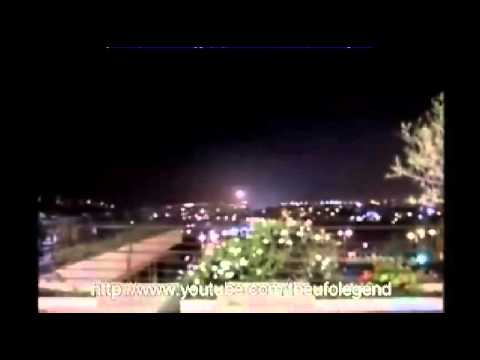
ALL 6 VIDEOS - Temple Mount UFO OVNI Jerusalem, January 2011 PROOF
Compilation of the six viral videos alleging a bright light hovering above the Dome of the Rock before shooting upward at high speed.
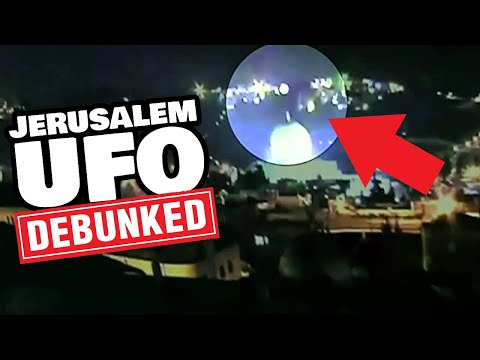
INFAMOUS UFO above Jerusalem DEBUNKED & EXPLAINED! Why all 4 Angles were a HOAX!
Detailed investigative analysis debunking the Dome of the Rock footage, exposing anomalies and CGI artifacts across all major video angles.

HOAX! - Third View of UFO over Temple Mount in Jerusalem
Technical breakdown by HOAXKiller1 analyzing the third camera angle of the Dome of the Rock event, exposing the "Motion Tile" replication edges.
Sources
- CBS News. "Jerusalem UFO Hoax: Forensic Video Analysis," Feb 2011 cbsnews.com
- JPost. "Dome of the Rock Sighting Debunked," The Jerusalem Post, Feb 2011 jpost.com
- HOAXKiller1. YouTube Technical Analysis of Jerusalem UFO Footage, Feb 2011 youtube.com
- L/L Research. Sighting Report Analysis, Feb 2011
- Monroe, Burt. Consultative Report on Jerusalem Sighting, March 2011
- "Jerusalem UFO Video Hoax Exposed by Motion Tile Artifacts," The Skeptic, March 2011
- "Dome of the Rock UFO: Technical Breakdown of After Effects Hoax," VFX News, 2011
- Wikipedia Commons. Original static backdrop photograph used in Jerusalem UFO hoax commons.wikimedia.org
- Weather Channel. Analysis of local atmospheric conditions in Jerusalem, Jan 28, 2011
- Israel Antiquities Authority. Dome of the Rock monitoring camera logs, Jan 28, 2011
- "The Jerusalem UFO Hoax: Viral Media Study," Journal of Socio-Cultural Anomalies, 2012
- Israel Police Department. Official report on Old City monitoring feeds, Feb 2011
- "After Effects Motion Tile Cloning in Viral UFO Videos," Computer Graphics World, 2011
- "Dome of the Rock UFO Hoax Coordinator Statement," The Anomalist, 2012
- Fox News. "'UFO' Hovers Over Jerusalem's Dome of the Rock Shrine," Feb 2011 foxnews.com
- Metabunk. "Jerusalem Temple Mount UFO Debunked," Forum Technical Analysis Thread, 2011 metabunk.org
- Fendel, Hillel. "UFO 'Sighted' Over Temple Mount," Israel National News (Arutz Sheva), Feb 3, 2011 israelnationalnews.com
See something inaccurate? Have additional information or sources?
Suggest an Edit →Last Updated: June 29, 2026