
Agobard's Ships from Magonia
Around 815–816 CE, Archbishop Agobard of Lyon wrote a Latin treatise refuting a popular Frankish belief: that hailstorms were summoned by human "storm-makers" (tempestarii) working in league with sailors from an aerial land called Magonia, who carried off storm-flattened crops in cloud-borne ships. In the treatise's most famous passage, Agobard describes a crowd that had seized four strangers — three men and a woman — and was preparing to stone them to death as Magonian sky-sailors who had fallen from their ships, until Agobard and other "wiser men" argued the mob down and the captives were released. The book is De Grandine et Tonitruis ("On Hail and Thunder"), and it is the direct, verifiable source of the title of Jacques Vallée's 1969 book Passport to Magonia — making this ninth-century sermon against superstition one of the most consequential, and most genuinely citable, primary documents in the entire prehistory of UFO literature.
Theoretical Alignment
Unlike a modern UAP case, or even the Nuremberg celestial phenomenon, Agobard's text does not describe a single dated sighting witnessed and reported once. It describes a standing regional belief system that Agobard says he had personally "seen and heard" expressed by "many people," plus one specific, undated crowd incident that nearly turned fatal. The overwhelming weight of modern historical and folklore scholarship reads the Magonia belief as exactly what Agobard himself argued it was: a superstition, a piece of popular Carolingian folk cosmology explaining crop loss, not a garbled memory of an actual encounter with non-human technology. A secondary, genuinely plausible reading — raised by several historians of medieval magic — treats the tempestarii not as sincere believers but as opportunists running a low-grade extortion racket on frightened farmers, with the Magonia mythology supplying a convenient, unfalsifiable cover story for where the "stolen" grain went. The paleocontact/genuine-anomaly reading is not Jacques Vallée's own settled conclusion — as detailed below, his actual argument in Passport to Magonia is considerably more cautious than the label popular ufology has since pinned on him — and it is scored here as speculative accordingly.
Sensor & Instrumentation Detection Profile
There is no instrumentation of any kind, and unlike the Nuremberg broadsheet or Ezekiel's vision, there is not even a claimed physical description of "sensor data" to evaluate: Agobard's Latin never describes the ships' size, shape, color, sound, or method of flight. The word he uses throughout is simply naves — "ships." The entire "sensor" for the belief system he describes is secondhand rumor and oral testimony circulating among the peasantry of the Lyon countryside, which Agobard says he has personally "seen and heard" (vidimus et audivimus) expressed by "many people... so blinded by the depths of their folly." For the specific stoning incident, Agobard's grammar shifts to a more direct claim of presence — "we have seen" a crowd assembling with four bound captives — which most historians read as Agobard describing an event he or his informants witnessed firsthand, in or near his own diocese, rather than another layer of hearsay. No second contemporary chronicle, capitulary record, or independent Carolingian source corroborates either the general belief or this specific incident; Agobard's treatise is, as with Hans Glaser's Nuremberg broadsheet, the entire surviving evidentiary record.
Environmental & Geospatial Context
Lyon sits at approximately 45.764°N, 4.836°E, at the confluence of the Rhône and Saône rivers in what was, in Agobard's day, the Carolingian sub-kingdom of Burgundy. The surrounding countryside was and remains a significant wine- and grain-growing region, and the Rhône valley is genuinely prone to violent, fast-moving summer hailstorms capable of destroying a season's crop in minutes — a real agronomic hazard that supplies the entire economic logic of the belief Agobard is attacking. No specific storm, date, or season is given for either the general belief or the stoning incident, so no meteorological reconstruction of an actual weather event is possible; this is a case about *how* pre-modern farmers explained a chronic, recurring hazard (hail), not about any single verifiable atmospheric episode. No instrumentation of any kind existed in the 810s, and Carolingian written sources for local weather in this decade are essentially nonexistent outside this text.
Observer Credibility & Occupational Profile
Agobard was, by any Carolingian standard, an exceptionally well-credentialed observer: Archbishop of Lyon from 816 until his death in 840, a prolific author of works spanning biblical exegesis, canon law, liturgy, and political polemic, and a figure personally present at the highest levels of imperial politics, including the November 833 assembly at Soissons that forced Emperor Louis the Pious into public penance. He was not, however, a neutral field investigator in any modern sense. De Grandine et Tonitruis is an explicitly polemical text, written to stamp out a specific popular belief the Church regarded as both theologically wrong (implying created beings, not God, controlled the weather) and pastorally dangerous (as the near-lynching demonstrates). Agobard's own rhetorical purpose — to portray the belief as maximal, widespread "folly" so that his refutation looks maximally necessary — means his account, while almost certainly substantially accurate in its broad strokes, should be read the way this site reads any advocate's field report: as testimony from an engaged, credentialed party with a clear didactic agenda, not as a disinterested transcript. No named individual besides Agobard appears anywhere in the account: not the crowd's ringleaders, not the "wiser men" who assisted him, and not any of the four captives.
Historical Precedents & Archive Matches
Agobard's treatise was not written into a legal or cultural vacuum. A generation earlier, Charlemagne's own Capitulatio de partibus Saxoniae — a capitulary imposed on the newly conquered Saxons, traditionally dated to the early-to-mid 780s though some scholars argue for as late as 795 — had already made it a capital offense to believe, "as is customary among pagans, that any man or woman is a night-witch (striga), and eats men," and to kill or cannibalize a person on that belief; a companion clause punished anyone who falsely accused a free woman of being a striga or masca. Read together, Charlemagne's law and Agobard's treatise show the same Carolingian reforming impulse operating a generation apart: senior figures of Church and state moving to criminalize, and to argue down, exactly the kind of supernatural-accusation mob violence that nearly killed four people near Lyon. The broader Indiculus superstitionum et paganiarum, a terse thirty-item list of pagan and superstitious practices condemned in Frankish territory (surviving only as a chapter list in a Vatican Library manuscript, Codex Palatinus Latinus 577, and variously dated by scholars to the mid-to-late eighth century), documents the same general Carolingian anxiety about lingering pre-Christian belief, though it does not itself name the tempestarii or Magonia specifically. Later medieval and early modern Europe continued to produce "sky ship" and "phantom army in the clouds" folklore in a recognizably similar key — a pattern this site's own Nuremberg and Ezekiel's Wheel files document independently — suggesting a durable human tendency to narrate ambiguous sky-anxiety and material loss through stories of aerial visitors, long before "flying saucer" entered the vocabulary.
Historical Background
Agobard was born around 769 CE, most likely in Spain (some sources say more specifically the Visigothic-held south), and relocated north to Lyon around 792, plausibly as part of the wave of Christian Iberians who migrated into Carolingian territory to escape the political and religious pressures of al-Andalus. He was ordained a priest around 804 under Archbishop Leidrad, a favorite of Charlemagne's and a key figure in the Carolingian program of clerical education and reform, and rose to become Leidrad's chorbishop (assistant bishop). When the aging Leidrad retired into monastic life in 814, he named Agobard his successor — a move that provoked protest from other bishops at the Council of Arles, since the normal election process had been bypassed. The controversy dissolved when Leidrad died in 816, leaving Agobard as the uncontested Archbishop of Lyon, a post he would hold, with one interruption, until his own death in 840.
Agobard governed one of the most important sees in the Carolingian church during the reign of Emperor Louis the Pious (r. 814–840), Charlemagne's son and sole surviving heir. He was, from the start, a committed reformer and a combative one. He opposed the judicial practice of trial by ordeal (fire, water, and combat) as a superstitious usurpation of divine judgment; he wrote against the Adoptionist Christology of the Spanish bishop Felix of Urgel in 818; and he took a genuinely nuanced position in the Carolingian image-veneration debates of the 820s, opposing the outright iconoclasm of Bishop Claudius of Turin while also criticizing what he saw as excessive, near-idolatrous defenses of images offered by writers like Dungal of Bobbio. This same decade produced the most troubling and most frequently cited body of Agobard's work today: a series of polemical treatises against Jewish religious practice and against the legal protections and social privileges Jewish communities enjoyed under Louis the Pious — De Insolentia Judaeorum, De Judaicis Superstitionibus, and related tracts written between roughly 823 and 827. Honest treatment of Agobard requires stating plainly that these works are harshly anti-Jewish by any standard, ancient or modern, and that they form part of a genuinely dark strand in Carolingian ecclesiastical politics; they are not incidental to his biography, even though this file's subject — his hail-and-weather-magic treatise — is a separate work with a very different target.
De Grandine et Tonitruis ("On Hail and Thunder"), composed around 815–816 — that is, right around the time Agobard was consolidating his hold on the archbishopric — takes aim at a different popular belief entirely: that hail, thunder, and destructive storms could be summoned or steered by human weather-magicians, the tempestarii, and that these storm-makers worked in a kind of supply arrangement with aerial sailors from a place called Magonia, who came in ships riding the clouds to carry away the grain and produce that hailstorms knocked down, paying the tempestarii for the privilege. Agobard treats this as a genuinely widespread belief across "almost all" of the people in his region, high and low alike, and structures his refutation as a point-by-point theological argument: storms are the direct instrument of God's will, not a resource that any human or aerial trafficker could conjure, redirect, or monetize, and belief to the contrary edges uncomfortably close to paganism.
The treatise's most dramatic passage — and the one that would matter most 1,150 years later — describes an assembly of local people who had seized four strangers, three men and a woman, and were on the point of stoning them to death as Magonian sailors who had fallen out of their ships. Agobard reports that he and other "wiser" men (quidam ex nostris... sapientiores) intervened, argued the crowd out of its conviction "after much reasoning," and secured the captives' release — with the crowd's original accusers, in Agobard's telling, left "confounded," a word he pointedly borrows from the prophet Jeremiah's condemnation of false idols (Jeremiah 2:26). No names, no date more specific than the treatise's general composition window, and no follow-up account of what happened to the four survivors afterward is given anywhere in Agobard's surviving corpus or in any other source.
Agobard's career after 816 was inseparable from the volatile politics of Louis the Pious's reign. Louis's decision, after the 817 Ordinatio Imperii divided the succession among his three elder sons, to carve out a fourth share for young Charles (the future Charles the Bald) by his second wife Judith of Bavaria touched off a decade of dynastic conflict. Agobard sided decisively with the elder sons: he backed the first revolt against Louis in 830, and, more consequentially, backed the much larger 833 revolt led by Lothair I, which culminated at the notorious "Field of Lies" near Colmar, where Louis's own army deserted him. That November, at a synod held at the church of Saint-Médard in Soissons, Agobard sat among the bishops — alongside Ebbo of Reims, a former protege of Louis's own father — who oversaw Louis's forced public penance and effective deposition. It did not last: by March 834, shifting noble loyalties and Lothair's own overreach brought Louis back to the throne. Agobard, having publicly defended the deposition in writing, lost his see at the Council of Thionville in 835 and was replaced, for a few years, by Amalarius of Metz, whose liturgical reforms Agobard's own circle regarded as theatrical innovation. Agobard was restored to Lyon in 838, after Amalarius was himself deposed for doctrinal error (with the backing of Agobard's own disciple, Florus of Lyon), and held the see until his death on June 6, 840 — just weeks before Louis the Pious himself died, on June 20, 840, setting off the succession war among Louis's sons that would end with the 843 Treaty of Verdun and the tripartite division of the Carolingian Empire into the political ancestors of modern France, Germany, and the short-lived Middle Kingdom.
Complete Timeline
| Date | Event |
|---|---|
| c. 769 | Agobard is born, most likely in Spain, during a period of Christian migration north out of Umayyad-held Iberia. |
| 792 | Agobard relocates to Lyon, entering the circle of Archbishop Leidrad. |
| c. 804 | Agobard is ordained a priest and later serves as Leidrad's chorbishop (assistant bishop). |
| 814 | Leidrad retires to a monastery and names Agobard his successor, provoking (short-lived) protest at the Council of Arles over the irregular succession. |
| 816 | Leidrad dies; Agobard becomes the uncontested Archbishop of Lyon. |
| c. 815–816 | Agobard composes De Grandine et Tonitruis ("On Hail and Thunder"), refuting belief in the tempestarii and the land of Magonia, and describing the near-stoning of four captives. |
| 818 | Agobard writes against the Adoptionist Christology of Felix of Urgel. |
| 820s | Agobard opposes both the iconoclasm of Claudius of Turin and what he views as excessive defenses of image veneration; he also writes his harshly anti-Jewish treatises (De Insolentia Judaeorum and related works, c. 823–827). |
| 830 | Agobard supports the first revolt of Louis the Pious's elder sons against their father. |
| 833 | Agobard supports Lothair I's larger revolt; Louis's army deserts him at the "Field of Lies" near Colmar. |
| Nov. 833 | Agobard sits among the bishops at the Synod of Soissons who oversee Louis the Pious's forced public penance and deposition. |
| March 834 | Louis the Pious is restored to the throne as noble support for Lothair collapses. |
| 835 | The Council of Thionville deposes Agobard from Lyon for his role in the 833 revolt; Amalarius of Metz is installed in his place. |
| 838 | Amalarius is deposed for doctrinal error; Agobard is restored as Archbishop of Lyon. |
| June 6, 840 | Agobard dies. He is succeeded by Amulo. |
| June 20, 840 | Louis the Pious dies, touching off the succession war among his sons that ends with the 843 Treaty of Verdun. |
| 1605 | A manuscript of Agobard's collected works, thought lost, is rediscovered in Lyon and published by the antiquarian Papirius Masson. |
| 1666 | Étienne Baluze republishes Agobard's works in an improved edition. |
| 19th c. | De Grandine et Tonitruis is printed in Jacques-Paul Migne's Patrologia Latina, vol. 104, cols. 147–158, becoming the standard reference edition for over a century. |
| 1920 | Historian Reginald Lane Poole publishes an English paraphrase/translation of key passages, including the Magonia and captives material, in Illustrations of the History of Medieval Thought and Learning (2nd ed.). |
| 1969 | Jacques Vallée publishes Passport to Magonia: From Folklore to Flying Saucers, taking its title directly from Agobard's text and introducing the case to a mass ufological audience for the first time. |
| 1981 | Lieven Van Acker publishes the modern critical Latin edition, Agobardi Lugdunensis Opera Omnia, in the Corpus Christianorum Continuatio Mediaevalis series (vol. 52, Brepols) — the text scholars use today. |
The Primary Source Document
De Grandine et Tonitruis survives only through the manuscript tradition rediscovered in the early modern period: lost for centuries, a copy was found in Lyon and published by Papirius Masson in 1605, republished with corrections by Étienne Baluze in 1666, and eventually printed as the standard 19th-century reference text in Jacques-Paul Migne's Patrologia Latina, volume 104, columns 147–158. The modern scholarly edition is Lieven Van Acker's critical Latin text, Agobardi Lugdunensis Opera Omnia, published in 1981 as volume 52 of the Corpus Christianorum Continuatio Mediaevalis series by Brepols — the edition against which all serious modern translation work is now checked. A separate manuscript associated with Agobard, the so-called Codex Agobardinus (a 9th-century compilation of the North African Church Father Tertullian's works that Agobard owned and donated to Lyon Cathedral, now held in the Bibliothèque nationale de France as Ms. Latin 1622), is sometimes confused with the hail-treatise manuscript in casual online summaries; it is a different book entirely, though it is genuine, independently verifiable material evidence of Agobard's own scholarly library and interests at Lyon.
The Text, In Translation
Two English renderings of the relevant passages circulate in the modern literature. The older is historian Reginald Lane Poole's paraphrase-translation, published in the second edition of his Illustrations of the History of Medieval Thought and Learning (London, 1920) and freely available today via Wikisource and the Internet Archive. The more precise and more widely used modern translation is by W. J. Lewis, made directly from Van Acker's critical Latin text and hosted, with full attribution, by Fordham University's Internet History Sourcebooks Project — a translation also cited independently by researcher Jason Colavito in his own published commentary on the case. Quoted here from the Lewis/Fordham rendering, Agobard opens the relevant chapter of the treatise by describing the belief itself:
"...there is a certain region, which is called Magonia, from which ships come in the clouds. In these ships the crops that fell because of hail and were lost in storms are carried back into that region; evidently these aerial sailors make a payment to the storm-makers, and take the grain and other crops."
Agobard of Lyon, De Grandine et Tonitruis, c. 815–816 CE, trans. W. J. Lewis from L. Van Acker's critical edition, via Fordham University Internet History Sourcebooks Project
Agobard then turns to the incident that would echo furthest into the future — the near-lynching of four strangers accused of being Magonian sailors who had fallen from their ships:
"...they exhibited these four, who had been chained up for some days, with such a meeting finally assembling in our presence, as if these captives ought to be stoned. When truth had prevailed, however, after much argument, the people who had exhibited the captives, in accordance with the prophecy [Jeremiah 2:26], were confounded."
Agobard of Lyon, De Grandine et Tonitruis, trans. W. J. Lewis, via Fordham University Internet History Sourcebooks Project
Poole's earlier 1920 rendering of the same passage, still widely quoted in older secondary literature, gives substantially the same content in slightly different words: "there is a certain region called Magonia whence ships come in the clouds," and the crowd is said to have presented "four persons, three men and a woman, as having fallen from the said ships," before "the truth prevailed, after much reasoning, and they who brought them forward were confounded." The two translations agree closely on every substantive point — the number and composition of the captives, the duration of their captivity, the outcome of the confrontation — which is itself a reasonable indicator of translation stability, though it should be stated plainly that this file has not independently re-verified either translation against Van Acker's Latin word-for-word; both are quoted here as the real, attributed, publicly checkable renderings that exist in the literature, not as a fresh translation of our own.
Elsewhere in the treatise, discussing the storm-makers themselves, Agobard reports that people attributed hail and thunder to "the incantations of men called 'storm-makers,'" while pointedly noting he could find no one who claimed to have actually witnessed a tempestarius perform such a feat — an early and rather modern-sounding evidentiary complaint embedded inside a 9th-century theological tract.
Plain-English paraphrase: In Agobard's diocese, it was widely believed — by "almost all" the people, he says, both peasants and the educated — that a mysterious floating land called Magonia existed somewhere above, and that its inhabitants sailed down in ships riding the storm clouds to collect grain and produce knocked to the ground by hail, which they had arranged in advance with local human "storm-makers" who could summon or steer the weather for a price. On at least one occasion, this belief turned violent: a crowd captured four strangers — three men and a woman, bound and held for several days — convinced they were Magonian sailors who had literally fallen out of the sky, and assembled intending to stone them to death as thieves and sorcerers' accomplices. Agobard, together with other level-headed men, talked the crowd down, the truth (in his telling) prevailed, and the four captives were freed, while whoever had presented them to the mob was left publicly humiliated.
Witnesses and the Chain of Testimony
Agobard of Lyon (c. 769–840)
The sole named source for the entire case, and the only person whose account we possess. A Spanish-born cleric who rose to become one of the Carolingian church's most prolific and combative writers, Agobard reports the Magonia belief as widespread secondhand testimony ("we have seen and heard many") but describes the stoning incident in terms that most historians read as closer to direct or near-direct witness. He is not a neutral field investigator; the treatise's entire purpose is polemical, aimed at eradicating what he regarded as a dangerous superstition, and his broader body of work (including his harshly anti-Jewish polemics of the 820s) shows a writer capable of considerable rhetorical severity when he believed a cause justified it.
The Crowd and the "Wiser Men"
Neither the crowd that seized the four captives nor the "wiser" men Agobard says helped talk them down are named or occupationally identified in the surviving text. No civic, judicial, or ecclesiastical record independent of Agobard's own account documents the incident. This is the single largest evidentiary gap in the case, structurally identical to the gap this site has already documented in the Nuremberg 1561 file: a dramatic, specific human event resting entirely on one literate, motivated author's word, with no second witness on record.
The Four Captives
Three men and one woman, described as having been bound for "some days" before being presented to the assembled crowd. Agobard gives no names, no origin, no explanation of who they actually were or why they had been singled out, and no account of what happened to them after their release. The most sober, non-speculative reading available — consistent with a broader pattern documented in the history of witchcraft and supernatural-accusation violence across medieval and early modern Europe — is that they were simply strangers or travelers unlucky enough to be passing through at the wrong moment, made convenient targets by their very unfamiliarity to the local crowd.
The Paleocontact / Vallée Interpretation
This case's entire modern fame rests on one book: Jacques Vallée's Passport to Magonia: From Folklore to Flying Saucers, published in 1969. Vallée, a French-American astronomer and computer scientist who had already worked with J. Allen Hynek on early scientific UFO cataloguing, took his title directly from Agobard's ninth-century text — using "Magonia" as a shorthand for an entire category of historical folklore in which aerial visitors, drawn from a place fundamentally other than ordinary human geography, interact with earthbound witnesses in patterned, recurring ways: appearing from the sky, taking material goods or people, provoking both belief and violent disbelief in the communities that encounter them.
It is important, and consistent with this site's treatment of similarly over-simplified paleocontact claims (see the Jung/Nuremberg and Blumrich/Ezekiel files), to be precise about what Vallée actually argued. Passport to Magonia does not claim Agobard's account proves ninth-century Franks encountered literal extraterrestrial spacecraft. Vallée's project, both in this book and across his later career, has been to argue that UFO reports and older folkloric traditions — fairy abductions, encounters with "little people," demonic and angelic visitations, and cases like Magonia — share deep structural and narrative similarities that a simple nuts-and-bolts extraterrestrial-visitation model cannot easily explain, and that these similarities point toward some more complex psycho-social, symbolic, or (in Vallée's later, more explicitly speculative work) multidimensional phenomenon operating across human history rather than a one-time technological visitation beginning in the 20th century. Agobard's text served Vallée specifically as proof that the raw narrative material of the UFO phenomenon — aerial visitors, stolen goods, credulous crowds, official skepticism — already existed, richly documented, more than a thousand years before Kenneth Arnold's 1947 sighting coined the term "flying saucer."
As with Carl Jung's use of the Nuremberg broadsheet, later and less careful popularizers have often stripped away Vallée's own interpretive caution when recirculating the Agobard case, presenting it in paleocontact-oriented books, blogs, and video content as straightforward evidence that medieval Europeans witnessed real alien spacecraft — a much stronger and more literal claim than either Agobard's text or Vallée's own argument actually supports. Vallée's genuine scholarly contribution here is narrower and more defensible than that popularized version: he correctly identified a real, well-documented, and previously under-appreciated medieval primary source, brought it to a new audience, and used it to argue — carefully, and with the folklore parallel doing the real interpretive work — that the modern UFO phenomenon has deep, patterned roots in much older human storytelling about the sky. That argument itself is now treated as a serious, if contested, position within Fortean and psycho-social UFO scholarship, independent of whether one accepts any of Vallée's later, more speculative multidimensional theorizing.
The Mainstream Historical & Folkloric Interpretation
Professional historians of the Carolingian world and of medieval magic read De Grandine et Tonitruis essentially the way Agobard himself presented it: as a document of popular belief and clerical reform, not as garbled testimony about a real physical phenomenon requiring a modern technological explanation. Historians including Michael D. Bailey, whose academic work on magic and disbelief in Carolingian Lyon situates Agobard's treatise within a broader ninth-century project of defining and policing acceptable versus superstitious belief, and Rob Meens, whose study "Thunder over Lyon: Agobard, the Tempestarii and Christianity" places the text within Carolingian pastoral and legal efforts against paganism more broadly, treat the Magonia belief as a genuine, richly documented specimen of early medieval folk cosmology — valuable precisely because it is one of the fullest surviving descriptions of what ordinary Frankish peasants (as opposed to the literate clerical elite who wrote almost everything else that survives from this period) actually believed about the natural world.
A second, complementary reading treats the tempestarii not purely as sincerely believed folk magicians but as opportunists exploiting that belief for material gain: farmers anxious about crop loss may have been paying real people — local "storm-makers" — for protection against hail, with Magonia supplying the mythological cover story explaining where any lost grain had "really" gone. Under this reading, which several historians of medieval magic and popular religion treat as at least partially compatible with the pure-belief explanation rather than a rival to it, the near-stoning of the four strangers reflects a community lashing out, in a moment of acute anxiety over real material loss, against convenient outsiders framed by an existing and culturally available supernatural narrative — a dynamic with uncomfortably direct parallels to later European witch-persecution.
Both readings converge on the same bottom line: nothing in the text, in the surviving Carolingian legal and pastoral record, or in the broader comparative folklore literature Vallée himself drew on, requires positing an actual non-human technology to explain what Agobard describes. What the text unambiguously documents is a real, dangerous, and well-attested category of medieval belief, a real theologian's real argument against it, and (per Agobard's own account) a real crowd that nearly killed four people over it — a genuinely significant piece of social and religious history in its own right, independent of any later ufological repurposing.
Five Observables Assessment
The Five Observables framework, developed decades later by former AATIP director Luis Elizondo to classify modern UAP performance characteristics that exceed known technology, is included here for structural consistency with the rest of The Omni Ledger's case files, but it applies even less well to this text than to the Nuremberg broadsheet or Ezekiel's vision. Agobard's description of the Magonia ships contains no physical detail whatsoever beyond the bare word "ships" (naves) — no shape, size, sound, luminosity, or flight behavior of any kind is recorded. Every category below is necessarily N/A.
Assessment: All five categories are marked N/A rather than "absent" in the sense of having been actively ruled out by evidence — there is simply no performance data of any kind in a nine-word description that amounts to "ships come in the clouds." Even "Low Observability," which received a speculative mark in this site's Nuremberg file on the strength of objects described appearing and disappearing, cannot be honestly marked here: Agobard's text never describes the ships appearing, maneuvering, or vanishing at all. It describes a belief about where certain ships were thought to come from and what their occupants were thought to do, without a single sentence of first-person observational detail. The Five Observables framework is not merely a poor fit for this document; it is close to inapplicable, and its inclusion here should be read as a transparent structural placeholder, not as evidence of any genuine unexplained performance characteristic.
Comparative Analysis
The Tempestarii and Carolingian Weather-Magic Legislation
Agobard's treatise did not invent the term tempestarii, and the belief he attacks recurs, in less detailed form, across other Carolingian pastoral and legal texts warning against weather magic, divination, and related "pagan" survivals — most notably the terse condemnations gathered in the Indiculus superstitionum et paganiarum. Read alongside Charlemagne's own Saxon capitulary criminalizing belief in cannibal night-witches (strigae), Agobard's text is best understood as one especially detailed data point within a decades-long, empire-wide Carolingian campaign to define, catalog, and stamp out a broad category of popular supernatural belief the Church regarded as incompatible with Christian orthodoxy — a campaign that, as both the Saxon law and Agobard's own intervention show, was at least partly motivated by a genuine concern for the physical safety of people targeted by supernatural accusation.
The Broader "Sky Visitor" Pattern (Nuremberg, Ezekiel, and Beyond)
The Omni Ledger's own Nuremberg celestial phenomenon and Ezekiel's Wheel files document two structurally different but thematically related pre-modern "sky" cases: a single-day mass sighting reported and dramatized by a commercial print publisher, and a first-person visionary theophany embedded in Israelite priestly theology. Agobard's case is different again in kind from both — not a reported sighting and not a personal vision, but a documented standing folk belief, complete with an economic mechanism (crop theft), named intermediaries (the tempestarii), and a documented incident of real-world violence. Taken together, the three files illustrate three distinct pre-modern literary and social modes for processing anomalous or threatening sky-related experience — commercial news reporting, prophetic vision, and folk-magical belief — a range Jacques Vallée himself has pointed to as evidence that "things in the sky" narratives are a persistent, adaptable feature of human culture rather than evidence of a single consistent physical visitor recurring across unrelated eras.
Later European Witch-Persecution
The near-stoning of the four strangers anticipates, by many centuries, the dynamics of the much larger and better-documented early modern European witch trials: an anxious community facing a real material hardship (crop failure), a culturally available supernatural explanation assigning blame to human or quasi-human agents, and violence directed at whichever individuals could plausibly be slotted into that explanatory role — frequently outsiders, travelers, or otherwise marginal people. Agobard's intervention, stopping the killing through argument rather than through invoking his own ecclesiastical authority to simply forbid it, is unusual and worth noting on its own terms: it is an early, genuinely rationalist-flavored appeal to evidence and reasoned persuasion embedded inside a document that is, in every other respect, a work of orthodox Carolingian theology.
Material Analysis
There is no physical trace evidence associated with this case in the sense familiar from modern UAP investigations, and there is not even a surviving manuscript of the treatise from Agobard's own lifetime: the text vanished from view for roughly seven and a half centuries before being rediscovered in Lyon and printed by the antiquarian Papirius Masson in 1605. The entire physical evidentiary record for this case is therefore a chain of textual transmission rather than any object connected to the reported event itself: Masson's 1605 printing, Étienne Baluze's improved 1666 edition, the 19th-century reference printing in Migne's Patrologia Latina (vol. 104, cols. 147–158), and the modern critical Latin edition by Lieven Van Acker (Agobardi Lugdunensis Opera Omnia, Corpus Christianorum Continuatio Mediaevalis vol. 52, Brepols, 1981), which incorporates the accumulated manuscript-critical work of the intervening centuries. A separate, genuinely 9th-century physical artifact connected to Agobard does survive: the Codex Agobardinus, a parchment manuscript of the Church Father Tertullian's works that Agobard owned and donated to Lyon Cathedral, now held at the Bibliothèque nationale de France (Ms. Latin 1622) — real, tangible, catalogued evidence of Agobard's own scholarly activity at Lyon, even though it is not the manuscript of the hail treatise itself and should not be confused with it.
Supporting the Document's Reliability
- Agobard's authorship, approximate date, and the treatise's basic content are not seriously disputed by any historian who has worked with the Van Acker critical edition
- The text's core claims — that a hail/weather-magic belief was genuinely widespread in Carolingian Francia, and that supernatural accusation could and did turn violent — are independently corroborated in kind, if not in specific incident, by Charlemagne's Saxon capitulary and the Indiculus superstitionum
- Agobard names himself as a direct party to the stoning incident ("we have seen"), a stronger evidentiary posture than the secondhand hearsay he explicitly attributes to the general Magonia belief
- The manuscript tradition, while interrupted by a long gap, is transparent and traceable: Masson (1605) → Baluze (1666) → Migne (19th c.) → Van Acker (1981), with no serious modern scholar alleging forgery or later interpolation of the Magonia passage
Limits on Treating This as an Eyewitness Physical-Phenomenon Record
- No contemporary manuscript survives from Agobard's own century; the earliest text we have passed through a 1,300-year gap before Masson's 1605 rediscovery
- No second, independent witness, civic record, or corroborating source names the four captives, dates the stoning incident, or confirms any detail beyond Agobard's own account
- The text contains zero physical description of the ships themselves — no shape, size, sound, or motion — making any claim about "what was actually seen" entirely speculative
- Agobard is an explicitly polemical author with a strong didactic agenda, writing specifically to maximize the perceived scale and danger of the belief he is refuting
Confirmed Archival & Editorial Holdings
W. J. Lewis's English translation of the treatise, made from Van Acker's critical Latin edition, hosted by Fordham University's long-running Internet History Sourcebooks Project.
FREELY ACCESSIBLE / ACADEMIC HOSTINGA genuine 9th-century manuscript of Tertullian's works owned by Agobard and donated to Lyon Cathedral; not the hail-treatise manuscript itself, but authentic surviving material evidence of his scholarly library.
INSTITUTIONAL HOLDING, PARISLibrary catalog record for the standard modern critical Latin edition of Agobard's complete works, Corpus Christianorum Continuatio Mediaevalis vol. 52.
ACADEMIC CRITICAL EDITIONSearch Primary Archives Directly
Evidence Assessment
Supporting the Case's Historical Significance
- A real, critically edited, well-provenanced Carolingian text exists, authored by a named, historically verifiable, highly credentialed archbishop
- The belief it describes is independently corroborated in kind by other genuine Carolingian legal and pastoral sources targeting weather magic and supernatural-accusation violence
- Agobard's account of the stoning incident uses language suggesting direct or near-direct personal observation, not pure hearsay
- The text directly and verifiably inspired Jacques Vallée's influential 1969 study, making it a genuinely load-bearing document in the intellectual history of ufology, independent of any question about literal alien visitation
Supporting a Purely Folkloric / Non-Anomalous Explanation
- No physical description of the "ships" survives at all — the text supports no inference whatsoever about what, if anything, was ever actually seen in the sky
- No second witness, civic record, or independent source corroborates the specific stoning incident
- Agobard is an explicitly polemical author refuting the belief as false, not endorsing or investigating it as potentially real
- The belief maps cleanly onto a well-attested, cross-culturally common pattern of explaining agricultural loss through supernatural theft, with a plausible mundane fraud/extortion mechanism (the tempestarii) sitting underneath the mythology
- Jacques Vallée himself, the case's modern discoverer for ufology, frames it as folklore parallel and psycho-social pattern-evidence, not as a literal spacecraft encounter
Conventional Explanation Candidates
Because this is a pre-instrumentation documentary case describing a belief system rather than a single physical sighting, its Conventional Explanation Candidates (CEC) evaluate the reported belief, the near-lynching it provoked, and the reporting process together. Four candidates are assessed below, each with an explicit plausibility rating.
1. Folk Etiology for Hailstorm Crop Loss (Psycho-Social / Cultural Explanation)
The dominant scholarly explanation. Sudden, violent hailstorms were a genuine, chronic, economically devastating hazard in the Rhône valley, and pre-scientific agricultural societies across many cultures have independently developed supernatural explanations assigning destructive weather to malicious human or quasi-human agents, rather than accepting it as impersonal natural variation. The Magonia mythology — storm damage as deliberate theft by aerial traders, rather than random misfortune — gives farmers a legible, if false, causal story and a target for blame. This candidate explains both the belief's content and its emotional intensity extremely well.
Plausibility Rating: HIGHLY PLAUSIBLE
2. Tempestarii as a Literal Extortion Racket (Mundane Fraud)
A complementary rather than competing candidate specifically for the economic mechanism Agobard describes: real people, locally known as weather-workers, may have collected payment from anxious farmers in exchange for promised protection from or control over hail, with the Magonia story providing a ready-made explanation for any "lost" grain a suspicious farmer might otherwise have questioned. Agobard's own pointed observation — that he could find no one who claimed to have actually seen a tempestarius perform a weather-controlling feat — is consistent with this reading: a confidence scheme depends on never actually being tested.
Plausibility Rating: PLAUSIBLE (as a partial mechanism underlying the broader belief)
3. Xenophobic Scapegoating of Strangers
Independent of any belief about ships or storm-makers specifically, the pattern of a frightened community turning violently on unfamiliar outsiders during a period of material hardship is extremely well documented across medieval and early modern Europe (and, indeed, across many other times and places). Under this reading, the four captives' actual "offense" may have been nothing more than being strangers in the wrong place after a bad storm, with the Magonia narrative supplying the accusation's specific shape after the fact rather than causing the crowd's underlying hostility.
Plausibility Rating: PLAUSIBLE
4. Genuine Anomalous / Paleocontact Phenomenon
Included for completeness, per this site's standard framework. No positive physical description, corroborating source, or independent evidence of any kind supports the idea that an actual non-human craft or its crew are being described. The case for this reading rests almost entirely on the narrative pattern-matching Jacques Vallée identified between Magonia and modern UFO folklore — itself, as detailed above, a considerably more cautious argument than the literal "medieval UFO sighting" framing popular paleocontact media has since built on top of it.
Plausibility Rating: SPECULATIVE / UNVERIFIABLE
Why VERIFIED
This file is rated VERIFIED rather than DISPUTED, DEBUNKED, or HOAX because it houses two genuinely different kinds of claims that deserve two different verdicts, and the historical claim — the one this file is actually about — is not seriously contested by any historian working with the primary text. That Agobard of Lyon existed, served as archbishop from 816 to 840, authored De Grandine et Tonitruis around 815–816, and described both a widespread regional belief in weather-magicians and Magonian sky-ships and a specific incident in which a crowd nearly stoned four people to death over that belief, is well-documented, critically edited, and uncontested history, verifiable today through Van Acker's 1981 critical Latin edition and multiple independent English translations. What is genuinely open to interpretation — and what The Omni Ledger treats as a separate question entirely — is the modern ufological gloss layered on top of that history: whether the Magonia belief reflects, however distantly, some kind of real anomalous phenomenon, as later and less careful popularizers of Jacques Vallée's work have sometimes implied, or whether it is exactly what Agobard, and the great majority of professional historians since, have said it is: a real, dangerous, well-attested piece of Carolingian folk belief with no non-human technology required to explain it. VERIFIED describes the document and the documented event, not any paleocontact interpretation built on top of them.
Cultural & Scholarly Legacy
For roughly thirteen centuries, De Grandine et Tonitruis was, at most, a specialist reference point for scholars of Carolingian ecclesiastical history and medieval law — valuable evidence for historians of magic and popular religion, but essentially unknown outside those circles. Jacques Vallée's 1969 Passport to Magonia changed that permanently and specifically: the book's title alone has made "Magonia" a durable piece of ufological vocabulary, later adopted, for instance, as the name of a long-running British Fortean magazine (Magonia, published 1979–2009) devoted to exactly the folklore-and-psycho-social approach to anomalous phenomena that Vallée's book helped establish as a serious alternative to strict extraterrestrial-visitation theorizing.
On the academic side, the treatise continues to serve historians of Carolingian religion and magic entirely apart from ufology: Michael D. Bailey's work on magic and disbelief in Carolingian Lyon and Rob Meens's study of Agobard, the tempestarii, and Christianity both treat the text as primary evidence for how the Carolingian church defined, policed, and argued against popular supernatural belief — a status entirely independent of, and largely unconcerned with, its later adoption by ufology. That the same eleven-hundred-year-old sermon against superstition can simultaneously anchor a serious current in Fortean/psycho-social UFO research and remain a standard citation in academic studies of early medieval magic is, itself, a small but genuine illustration of how primary historical texts can accumulate very different afterlives depending on who picks them up.
Related Entries
Further Reading — Recommended Literature
Passport to Magonia: On UFOs, Folklore, and Parallel Worlds
The book that made Agobard's treatise famous. Vallée takes his title directly from the Magonia passage and argues for deep structural parallels between medieval folklore and the modern UFO phenomenon.
The Rise of Magic in Early Medieval Europe
A foundational academic study of how early medieval Christianity absorbed, reshaped, and argued against popular magical belief — essential context for understanding Agobard's project against the tempestarii.
The Carolingians: A Family Who Forged Europe
A standard scholarly narrative history of the Carolingian dynasty, covering the political world of Louis the Pious, the 833 revolt, and the imperial court Agobard served and later opposed.
The Carolingian World
A modern academic survey of Carolingian society, religion, and politics, situating figures like Agobard within the empire's broader culture of reform, law, and popular belief.
Agobard of Lyons: Churchman and Critic
A dedicated academic biography of Agobard himself — his career, his major works, and his role in Carolingian ecclesiastical and imperial politics, including the 833 revolt against Louis the Pious.
Essential Viewing
Book on Hail and Thunder | Agobard of Lyon
Bibliothecarius Modernus — a reading and discussion of Agobard's treatise itself, focused directly on the primary text rather than secondhand ufological retellings.
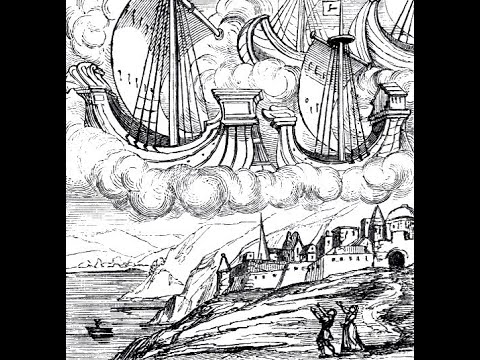
Refutation of UFOs and Aliens in the 9th Century
David Erhan — a video specifically covering Agobard's own rationalist rebuttal of the Magonia and tempestarii beliefs in their original theological context.
Sources
- "Agobard." Wikipedia. en.wikipedia.org/wiki/Agobard
- "Magonia." Wikipedia. en.wikipedia.org/wiki/Magonia
- "Tempestarii." Wikipedia. en.wikipedia.org/wiki/Tempestarii
- "Louis the Pious." Wikipedia. en.wikipedia.org/wiki/Louis_the_Pious
- "Field of Lies." Wikipedia. en.wikipedia.org/wiki/Field_of_Lies
- "Codex Agobardinus." Wikipedia. en.wikipedia.org/wiki/Codex_Agobardinus
- "Capitulatio de partibus Saxoniae." Wikipedia. en.wikipedia.org/wiki/Capitulatio_de_partibus_Saxoniae
- "Indiculus superstitionum et paganiarum." Wikipedia. en.wikipedia.org/wiki/Indiculus_superstitionum_et_paganiarum
- "Saint Agobard." Encyclopedia Britannica. britannica.com/biography/Saint-Agobard
- Agobard of Lyon. De Grandine et Tonitruis ("On Hail and Thunder"), trans. W. J. Lewis. Fordham University Internet History Sourcebooks Project. sourcebooks.fordham.edu
- Poole, Reginald Lane. Illustrations of the History of Medieval Thought and Learning, 2nd ed. (1920), Chapter I. Wikisource. en.wikisource.org
- Poole, Reginald Lane. Illustrations of the History of Medieval Thought and Learning. Internet Archive (full digitized text). archive.org
- Colavito, Jason. "Agobard on Magonia." jasoncolavito.com
- Lewis, W. J., trans. "Agobard of Lyons, De grandine et tonitruis (ca. 816)." Academia.edu. academia.edu
- Meens, Rob. "Thunder over Lyon: Agobard, the Tempestarii and Christianity." Academia.edu. academia.edu
- "Storm-Raisers and Blood-Drinkers: The Many Sides of Agobard of Lyon." The Historians' Sketchpad. salutemmundo.wordpress.com
- "The Bishop Who Stopped a Mob From Killing Cloud Pirates." The Church History Project (Substack). thechurchhistoryproject.substack.com
- "Magonia #1: Introducing a Medieval Cloud Cuckoo Land." Beachcombing's Bizarre History Blog (Strange History). strangehistory.net
- "Magonia #3: The Tempestarii." Beachcombing's Bizarre History Blog (Strange History). strangehistory.net
- "Agobardi Lugdunensis Opera omnia / edidit L. van Acker." Princeton University Library Catalog. catalog.princeton.edu
- Agobardus Lugdunensis. Contra Insulsam Vulgi Opinionem De Grandine Et Tonitruis. Patrologia Latina, vol. 104. Documenta Catholica Omnia. documentacatholicaomnia.eu
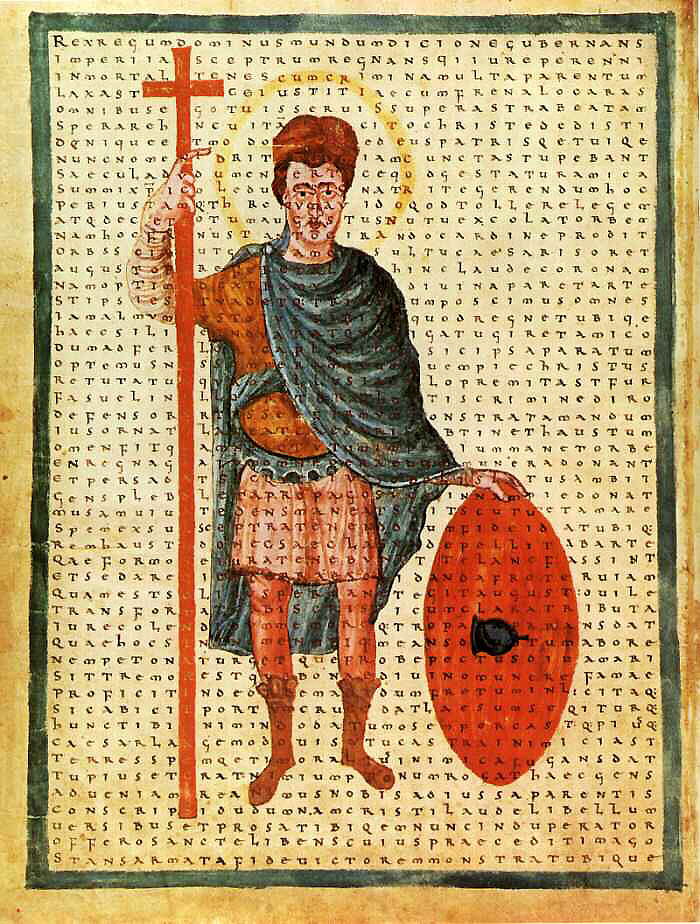
- "File: Ludwik I Pobożny.jpg" (Louis the Pious, De laudibus Sanctae Crucis). Wikimedia Commons. commons.wikimedia.org
- Vallée, Jacques. Passport to Magonia: From Folklore to Flying Saucers. Henry Regnery Company, 1969.
- "Jacques Vallée." The Omni Ledger Key Figures. key-figures.html
See something inaccurate? Have additional information or a translation correction?
Suggest an Edit →Last Updated: August 2026