
Psycho-Social Hypothesis (PSH)
UAP sightings and contact experiences as products of human psychology, cultural templates, and sociological contagion — not evidence of a physical, non-human craft.
Peer-Reviewed FrameworkCore Thesis
"PSH asserts that the study of UAPs is fundamentally the study of human belief, memory, and collective behavior under stress."
Origin & History
The Psycho-Social Hypothesis (PSH) is a cornerstone of critical anomalistic research, shifting the primary focus of inquiry from the skies to the human mind and human society. Rather than assuming that Unidentified Anomalous Phenomena (UAPs) are engineered craft of extraterrestrial or interdimensional origin, PSH proposes that sightings and contact experiences are best understood as products of human psychology, cultural templates, and sociological contagion. When observers encounter ambiguous lights or shapes in the atmosphere, they do not perceive them in a vacuum. Instead, the brain reconstructs these inputs through the lens of culturally available myths, science fiction tropes, and collective anxieties. In the modern space-age era, this process manifests as the "extraterrestrial flying saucer" myth, while in previous centuries it produced narratives of angels, demons, fairies, or airships. PSH is not a simple dismissal of witnesses; it is a sophisticated, multidisciplinary model combining cognitive science, depth psychology, and folklore studies to explain how authentic human experiences are shaped by cultural expectations.
The philosophical roots of PSH lie in the mid-20th century response to the "nuts-and-bolts" space-craft narrative popularized after World War II. Early sociologists and folklorists recognized that the shape and behavior of UAPs evolved in step with human technological capabilities and media output. For example, during the late 19th century, waves of witnesses reported seeing steam-powered "mystery airships," whereas the space age brought reports of sleek, metallic saucers and disc-shaped craft. Carl Jung's 1958 work, "Flying Saucers: A Modern Myth of Things Seen in the Skies," proposed that the saucer represents a psychological projection of the "mandala"—the symbol of wholeness and psychic integration—created by the collective unconscious to cope with the existential dread of the Cold War and the threat of nuclear annihilation. This psychological compensation mechanism provides a cosmic savior myth in an era of global insecurity.
Today, PSH continues to be a vital tool for separating actual anomalous sensor data from the massive volume of civilian reports. The hypothesis operates on the principle that the human cognitive system is highly constructive, easily projecting structure onto random noise (apophenia) and altering memories over time. Through media reinforcement and peer validation, these individual sensory misinterpretations coalesce into powerful, politically active belief systems. PSH asserts that the study of UAPs is fundamentally the study of human belief, memory, and collective behavior under stress.
Under this view, PSH advocates for a comprehensive, multi-layered investigation of the sociological climate surrounding sighting waves. Sightings are not independent physical encounters, but cultural developments that trace along patterns of public interest. When UAP media coverage increases, the visual acuity of the public shifts toward finding anomalous explanations for everyday atmospheric clutter. PSH researchers analyze this feedback loop to map how myths propagate, showing that UAP waves operate like waves of financial speculation or social fashion, rising and falling based on psychological conditions rather than external physical arrivals.
The tradition Jung established continued to develop across the following decades, beginning earlier than his own study: the modern "contactee" movement, led by George Adamski from 1950 onward, demonstrated how the popular space-travel tropes of the late 1940s directly dictated the content of witness claims, years before Jung supplied the field with a formal psychological framework for why. Computer scientist Jacques Vallée extended the cultural-control framework in his 1979 book Messengers of Deception, proposing that UAP waves function as a belief-shaping feedback system independent of any physical craft. Two decades later, French sociologist Bertrand Méheust's 1999 study Science-Fiction et Soucoupes Volantes demonstrated that the entire modern abduction narrative — paralysis, examination tables, small humanoid figures — had already circulated in pulp science-fiction magazines published between 1880 and 1940, years before the first reported abduction case, giving PSH one of its strongest pieces of direct textual evidence for cultural-template transmission.
Scientific Foundations
1. Cognitive-Sensory Misidentification & Apophenia
The primary cognitive mechanism of PSH is the human brain's natural tendency to project meaning onto ambiguous visual stimuli, a phenomenon known as apophenia or pareidolia. In low-light environments, the human visual system struggles to resolve detail, shifting to rod-based vision which is highly sensitive to movement but poor at detecting color and shape. When an observer looks at a bright star, a high-altitude weather balloon, or a satellite, minor atmospheric fluctuations can cause the light to appear to change color or execute rapid, zig-zag movements (the autokinetic effect). The brain, seeking to resolve this ambiguous stimulus, "fills in" the details based on current cultural expectations, projecting a solid, metallic hull, windows, or glowing domes onto what is actually a mundane object.
This sensory error is reinforced by the fallibility of human memory. Cognitive psychologists have proven that memory is not a recording, but a constructive process that is highly susceptible to post-event information. When a witness discusses their sighting with others, reads online forums, or is interviewed by UAP investigators who ask leading questions, their memory of the event is rewritten. A vague, pulsing light in the sky is reconstructed over time into a structured, metallic craft. Under hypnosis—a highly controversial technique used by abduction researchers—this confabulation is accelerated. Hypnosis lowers cognitive barriers, allowing the subject's subconscious fears and imagination to construct highly detailed, emotionally authentic stories of abductions that they fully believe occurred in physical space.
Visual accommodation and physiological fatigue also play a massive role. In low-light environments, the human eye loses its ability to resolve detail, shifting to rod-based vision which is highly sensitive to motion but poor at detecting shape or color. This leads to "night myopia," where distant objects appear larger and closer than they are. When an observer looks at a satellite or high-altitude aircraft under these conditions, the slight vibration of their own eye muscles can make the object appear to execute rapid, zig-zag maneuvers, generating a report of impossible flight characteristics that is entirely physiological in origin.
2. Social Contagion & Media Feedback Loops
The sociological mechanism of PSH is social contagion. When a prominent UAP sighting is reported in the media, it establishes a visual and narrative template for the public. The public is taught both what to look for and how to label ambiguous aerial events. In the weeks following such a broadcast, reports of similarly described craft spike. This is not because a fleet of craft has arrived, but because the public has been primed to interpret ordinary atmospheric events through this new template. This template-matching behavior is reinforced by media feedback loops, where journalists highlight reports that match the current trend, thereby consolidating the mythic structure in the public mind. Pulp magazines, science fiction movies, and internet subcultures act as libraries of symbols from which the subconscious draws to construct these narratives.
This feedback loop is further amplified by peer reinforcement within UAP subcultures. When an individual joins a UAP research group or online forum, they enter an environment with a pre-existing belief system. To gain social validation and make sense of their own anomalous experiences, they align their personal narratives with the group's established template. Over time, this group dynamics normalize the belief, creating an echo chamber where alternative, conventional explanations are dismissed as government cover-ups. The social contagion thus transforms a series of isolated, ambiguous sensory events into a cohesive, politically active subculture centered around the expectation of cosmic disclosure.
3. Neuro-Biological Disruption & Sleep Paralysis
The neuro-biological mechanism focuses on sleep anomalies and temporal lobe sensitivity. Sleep paralysis occurs when the brain wakes up from REM sleep while the motor cortex remains locked, preventing movement. During this state, the amygdala (the brain's threat-detection center) is highly active, generating a sense of extreme terror and dread. To resolve why the body cannot move and why it feels threatened, the brain constructs a projection of an intruder in the room. In a space-age culture, that intruder is modeled as a Grey alien standing at the foot of the bed. The witness experiences this event with full sensory clarity, including electrical buzzing sounds, local light shifts, and the feeling of being touched or levitated. When they fully awaken, they carry a traumatic, deeply felt memory of an actual alien abduction, which is biologically real to their nervous system but entirely endogenous in origin.
Furthermore, localized temporal lobe epilepsy (TLE) is known to produce complex, structured hallucinations that include the sighting of glowing lights, hearing metallic humming sounds, and experiencing profound spiritual transformations. Many historical UAP contactees and abductees exhibit psychological markers that align with temporal lobe sensitivity, including high creativity, fantasy-proneness, and sensitivity to electromagnetic shifts. Under the PSH model, these individuals are not fabricators, but highly sensitive observers whose neurological systems react to local environmental stresses by generating anomalous visual and spatial narratives. This constructive-perception model is not merely theoretical: psychologist Chris French's 2003 clinical studies established a direct, replicated link between sleep paralysis, temporal-lobe transients, and alien-abduction belief, converting what earlier researchers had treated as impressionistic folklore analysis into a body of testable, peer-reviewed clinical science.
Taken together, these three mechanisms are complementary rather than competing explanations, and PSH's proponents argue this is a strength rather than a weakness of the model: cognitive-sensory misidentification accounts for the initial ambiguous stimulus, social contagion explains how an individual misperception is shaped into a shared cultural template and propagates across a population, and neuro-biological disruption explains the small subset of cases — close encounters and abductions — where witnesses report the most vivid, high-strangeness content. No single mechanism is asked to carry the full explanatory weight of the phenomenon; instead, each is scoped to the tier of report it best explains, from a fleeting light in the sky to a fully remembered abduction narrative.
Key Proponents
Carl Gustav Jung
Founder of analytical psychology. His 1958 book Flying Saucers: A Modern Myth of Things Seen in the Skies established the founding depth-psychological framework of PSH, interpreting the saucer as a projected mandala symbol of Cold War-era collective anxiety rather than a literal spacecraft claim.
Philip J. Klass
Senior editor at Aviation Week who investigated famous cases firsthand, publishing UFOs Explained (1974) and UFOs: The Public Deceived (1983), demonstrating how ordinary atmospheric phenomena are misidentified under stress.
Jacques Vallée
Pioneered the study of UAP waves as cultural feedback loops and control systems reshaping human consciousness. His 1979 book Messengers of Deception argued that UAP reports function as a belief-manipulation system independent of physical craft.
Bertrand Méheust
Documented how pre-existing science fiction templates dictate the structure and details of UAP encounters. His 1999 study Science-Fiction et Soucoupes Volantes traced the abduction narrative directly to pulp fiction written between 1880 and 1940.
Robert Bartholomew
PhD, Flinders University (1990); Honorary Senior Lecturer, Department of Psychological Medicine, University of Auckland. Author of UFOlore (1989) and, with George S. Howard, UFOs & Alien Contact: Two Centuries of Mystery (1998) — the most sustained modern academic body of PSH research.
Hilary Evans
Co-founded the Association for the Scientific Study of Anomalous Phenomena (ASSAP) and systematized the psychosocial model into a respectable, cross-referenced sociological discipline within anomalistics.
Dr. Chris French
Professor of Psychology and head of the Anomalistic Psychology Research Unit at Goldsmiths, University of London. His clinical studies established the neurological basis of abduction claims via sleep paralysis and temporal-lobe transients.
Government & Military Programs
Unlike the Extraterrestrial Hypothesis, PSH does not treat government secrecy as evidence of a concealed physical craft — it treats the government's own institutional handling of UAP reports as a case study in the same psychological and sociological dynamics that shape civilian sightings. The Robertson Panel (1953), convened by the CIA in the wake of the 1952 Washington, D.C. radar-visual wave, is PSH's founding government document: the panel of physicists concluded that UAP reports were chiefly a psychological hazard — a risk to military readiness because they could clog communication channels and be exploited by a hostile power to trigger false alarms or mass panic — rather than a national security threat posed by the objects themselves. Its recommendation was explicitly sociological: a public education and debunking campaign, run in part through mass media and civic groups, to reduce the volume and intensity of reports. The Panel's framing — that the "UFO problem" was substantially a problem of public psychology to be managed rather than a physical phenomenon to be tracked — is the earliest official validation of the PSH position from within the U.S. government itself.
The Condon Committee, commissioned by the U.S. Air Force and led by physicist Edward Condon at the University of Colorado, extended this institutional posture. Its 1968 report attributed the substantial majority of its reviewed cases to misidentification, psychological misperception, or hoax, and its conclusions directly provided the Air Force's rationale for closing Project Blue Book in December 1969. Where ETH proponents treat the Condon Report as a compromised, predetermined debunking exercise, PSH treats its core empirical finding — that the great bulk of reports resolve to ordinary causes once investigated — as a validation of the psychosocial model, independent of the study's own internal politics.
A more recent and more troubling government dimension is explored in British researcher Mark Pilkington's 2010 book Mirage Men, which documents how U.S. intelligence agencies have, on multiple occasions, actively run UAP-themed psychological operations and disinformation campaigns — not to cover up extraterrestrial contact, but to protect secret conventional military aviation programs by encouraging and amplifying belief in an extraterrestrial cover story among researchers and the public. Under this reading, the Pentagon, long central to UAP policy discussions, has at times been not merely a passive subject of PSH's psychological analysis but an active participant in manufacturing the very cultural contagion PSH studies — deliberately feeding the saucer myth to civilian investigators as camouflage for classified stealth-aircraft testing. This is, notably, the one place where PSH and government-deception frameworks converge: both agree secrecy shaped the record, but PSH argues the "cover-up" often ran in the opposite direction assumed by ETH proponents, manufacturing belief in aliens rather than suppressing evidence of them.
PSH proponents also extend the same skeptical lens to the government's own modern evidentiary apparatus. The Five Observables framework discussed below was developed inside an intelligence bureaucracy — the Defense Intelligence Agency's AATIP program — that was already institutionally oriented toward treating anomalous sensor returns as potential craft rather than as candidate sensor artifacts or misperceptions requiring exclusion first. PSH does not dispute that AATIP's analysts recorded real sensor data in good faith; it argues that a threat-assessment framework built to characterize an assumed physical threat is not a neutral instrument for adjudicating whether that threat is physical in the first place, and that the same institutional history that produced the CIA's 1953 debunking-oriented Robertson Panel and the Air Force's 1968 Condon Report shows how thoroughly official UAP assessment has always been shaped by the bureaucratic and political incentives of the moment it was produced in.
The Five Observables
The Five Observables framework, developed by former AATIP director Luis Elizondo, is used to classify UAP encounters based on performance characteristics that exceed known technology. Applied here, each observable is scored by how convincingly PSH's psychological and perceptual mechanisms account for it — not by how exotic the raw witness testimony sounds.
Assessment: PSH accounts for four of the five observables through well-documented perceptual and cognitive mechanisms rather than exotic technology. Anti-gravity lift is explained as the autokinetic effect: a stationary point of light (a star, planet, or distant aircraft beacon) appears to hover, drift, or "lift" because the eye lacks a fixed reference frame against a dark sky, not because a craft is defeating gravity. Instant acceleration is attributed to saccadic eye movement and the brain's motion-completion process, which can register a light's true position discontinuously as an abrupt jump or "impossible" burst of speed. Hypersonic velocity claims are treated as a product of size-distance misjudgment — without a reference object, observers routinely overestimate the true speed of aircraft, satellites, or high-altitude balloons by an order of magnitude or more. Low observability is read as ordinary difficulty resolving small, dark, or distant objects (birds, drones, balloons) against a night sky, rather than as evidence of engineered stealth materials. Trans-medium travel is the observable PSH explains least persuasively and is marked speculative rather than absent: multi-sensor water-entry cases with radar and FLIR correlation fall outside pure witness-perception models and represent the framework's weakest ground.
Physical Evidence
PSH's physical-evidence case is, deliberately, a negative one: the theory's central evidentiary claim is that the anomalous physical trace record for UAP reports is thin, inconsistent, or resolves to mundane material under close analysis far more often than proponents of a physical-craft hypothesis acknowledge. Two case files on this site illustrate the pattern directly. In the Amaury Rivera Abduction (Case #023, 1988), densitometer and depth-of-field analysis of the witness's photographs identified suspension-line artifacts and matching focal characteristics between the "craft" and a pursuing jet — consistent with a small model photographed a few feet from the camera rather than a distant aircraft. In the Eagle River Pancake Incident (Case #025, 1961), FDA laboratory analysis of the physical "evidence" — three griddle cakes allegedly given to the witness by the occupants of a landed craft — found only ordinary terrestrial ingredients: wheat, buckwheat hulls, soybean hulls, and hydrogenated fat, with no anomalous chemistry of any kind, even though no hoax was ever proven against the witness himself.
PSH's second physical-evidence argument concerns craft morphology itself: rather than a small number of physically consistent vehicle designs, the UAP report database catalogues at least ten recurring morphological categories, and their relative popularity tracks the dominant aerospace and science-fiction imagery of the era in which they were reported rather than any fixed engineering lineage. The Cylinder/Cigar shape dominates the pre-flight 1896–97 "mystery airship" wave, when a dirigible-like silhouette was the only technologically plausible flying form available to the popular imagination. The Disk/Saucer shape follows Kenneth Arnold's 1947 sighting and the ensuing space-age boom. The Amorphous/Gaseous "foo fighter" balls of light are concentrated in the WWII aircrew reports that predate any of these. The Triangular/Delta shape rises sharply alongside public awareness of stealth aircraft testing from the 1980s onward, most visibly in the 1989–90 Belgian wave. The Tic Tac/Capsule and Diamond/Double-Cone forms cluster around the post-2000s military encounters most associated with modern multi-sensor cases. Chevron/V-Shape, Conical/Acorn, Sphere/Orb, and Cube-in-Sphere reports round out the catalogue, with orb-shaped reports rising sharply alongside the ubiquity of smartphone cameras and social-media sharing in the most recent decade. PSH proponents argue that a genuine, singular non-human engineering tradition should not be expected to redesign its vehicles in lockstep with the reporting public's own changing visual vocabulary; skeptics of PSH counter that shifting morphology could equally reflect a diversifying fleet rather than a projecting mind — a tension the Weighing the Evidence section below addresses directly.
Crash Retrievals
PSH does not dismiss crash-retrieval and whistleblower claims as insincere; it explains them through the same belief-formation architecture that produces ordinary sighting reports, scaled up by institutional stakes and the confabulating effect of memory reconstruction. Reported subjective experiences accompanying the most dramatic claimed encounters — missing time, bodily paralysis, and a sense of telepathic communication — are mapped by PSH researchers onto the same well-documented neurological anomalies already discussed under Scientific Foundations: sleep paralysis and temporal-lobe transients that can generate emotionally authentic, fully believed memories of events that never physically occurred. Under hypnotic regression, a technique historically favored by abduction researchers, this confabulation effect is measurably accelerated, producing highly detailed narratives that witnesses experience as genuine recollection rather than reconstruction.
The case of Bob Lazar's 1989 claims regarding reverse-engineering work at a secret "S-4" site near Area 51 is instructive for PSH's broader argument about institutional crash-retrieval narratives: Lazar's claimed academic credentials at MIT and Caltech have never been independently verified in the public record, yet the claim generated an enduring cultural phenomenon — the modern "Area 51" mythos — independent of whether the underlying claim was ever true. PSH treats this as a template case for how a single uncorroborated account, amplified through media coverage and peer validation within UAP research subcultures, can achieve durable cultural authority regardless of its evidentiary basis. The 2023 congressional testimony of intelligence officer David Grusch, alleging a multi-decade U.S. crash-retrieval and reverse-engineering program, is analyzed by PSH proponents through a parallel institutional lens: sincere belief by a credentialed insider is not, on its own, independent verification of the underlying physical claim, and organizational belief systems — including classified ones — are subject to the same social-contagion and narrative-consolidation dynamics documented in civilian UAP subcultures. PSH researchers stress this is not an accusation of dishonesty against any individual whistleblower, but an argument that institutional credibility and factual accuracy are separate questions that crash-retrieval narratives routinely conflate.
PSH researchers also situate the enduring appeal of crash-retrieval narratives within the same cosmic-savior framework Jung identified in 1958: a recovered craft and its "non-human biologics" function, psychologically, as tangible proof of the mandala myth — physical confirmation that humanity is not alone and not without a benevolent or at least comprehensible cosmic order behind an otherwise anxious and uncertain moment. Sol Foundation lectures as recently as 2023 have framed PSH's continuing task as separating this recurring disclosure-eschatology narrative, which resurfaces in some form roughly once a generation, from the small residue of genuinely unresolved multi-sensor contacts that any complete accounting of the UAP phenomenon still has to address.
Supporting Case Files
PSH researchers maintain a case-alignment index applying the framework's core mechanisms — collective panic, media priming, sensory misidentification, and neurological confabulation — across the UAP report database. The following cases are those most frequently cited in PSH literature as best explained by psychological and sociological mechanisms rather than a physical, non-human craft:
Weighing the Evidence
Supporting Arguments
- Its leading proponents (Jung, Bartholomew, French) hold conventional, independently verifiable academic credentials in peer-reviewed disciplines — psychiatry, medical sociology, and clinical psychology — rather than disputed insider claims
- Documented, pre-space-age precedents (the 1896–97 airship flap, the Mattoon "Mad Gasser," the Seattle windshield-pitting epidemic) prove large-scale sighting waves can and do occur with zero non-terrestrial cause
- PSH makes testable predictions — that sighting-wave timing tracks media coverage and cultural-anxiety cycles, and that report morphology shifts to match contemporary aerospace and science-fiction imagery — both of which have held up historically
- Clinical, replicated research links sleep paralysis and temporal-lobe transients directly to abduction-belief formation
- Forensic analysis in documented cases (Amaury Rivera, Eagle River) has directly identified staged or mundane material where physical "evidence" was claimed
- The CIA's own 1953 Robertson Panel and the Air Force's Condon Report both concluded the great majority of investigated reports resolve to psychological or conventional causes, from within the government's own scientific establishment rather than from outside ideological skeptics
- Report morphology (saucer, airship, orb, triangle) has reliably tracked contemporary aerospace and science-fiction imagery across more than a century of sightings, a pattern a fixed physical craft population would not be expected to produce
Skeptical Arguments
- PSH cannot easily explain why some events were tracked simultaneously by independent military radar systems, logged by thermal FLIR sensors, and visually confirmed by trained aircrew
- Physical ground-trace cases with state-laboratory-verified soil compaction, metallurgical residue, or thermal scorch marks are not well accounted for by a purely psychological explanation
- Critics argue PSH exhibits a "selection bias," favoring weak, poorly documented civilian reports while giving comparatively little sustained attention to the smaller subset of multi-sensor, multi-witness military cases
- Mark Pilkington's own Mirage Men research shows government actors have sometimes deliberately manufactured UAP belief rather than merely observing an organic social phenomenon, complicating a purely bottom-up contagion model
- Shifting craft morphology across eras is also consistent with a diversifying non-human fleet, not only with cultural projection
- PSH's own historical precedents (the Robertson Panel, the Condon Committee) have themselves been criticized by ETH proponents as predetermined debunking exercises rather than neutral scientific inquiry, a charge PSH must answer rather than simply cite in its own favor
On balance, PSH's proponents do not claim to resolve the UAP phenomenon in its entirety, only to correctly account for the overwhelming majority of it. The framework's own internal logic concedes a residual category of well-instrumented, multi-sensor military encounters that its component mechanisms do not comfortably explain, and treats that residue — rather than the bulk of the civilian report database — as the genuinely open scientific question. This scoped, falsifiable posture is itself part of PSH's evidentiary case: unlike frameworks that must explain every report to remain intact, PSH is structured to be wrong about a bounded, shrinking minority of cases without being wrong about the theory as a whole.
Theory Development Timeline
| Date | Development |
|---|---|
| 1896–97 | The "mystery airship" flap sweeps the United States and Canada — later cited by sociologist Robert Bartholomew as the first modern template for a socially contagious wave of ambiguous aerial sightings, decades before the "flying saucer." |
| 1950 | George Adamski's contactee movement begins, demonstrating how the space-travel tropes of the late 1940s directly dictated the content of witness claims. |
| 1953 | The CIA-convened Robertson Panel concludes that UAP reports are chiefly a psychological hazard capable of clogging military communication channels, and recommends a public education campaign to debunk the phenomenon. |
| 1958 | Carl Gustav Jung publishes Flying Saucers: A Modern Myth of Things Seen in the Skies, establishing the founding depth-psychological framework of PSH and framing the saucer as a projected mandala of Cold War-era collective anxiety. |
| 1968–69 | The Condon Report attributes the substantial majority of its reviewed cases to misidentification, psychological misperception, or hoax, providing the Air Force's rationale for closing Project Blue Book. |
| 1974 | Philip J. Klass publishes UFOs Explained, establishing ten logical principles of witness misidentification that remain a core skeptical reference. |
| 1979 | Jacques Vallée publishes Messengers of Deception, proposing that UAPs act as a cultural control system manipulating human belief systems. |
| 1989 | Medical sociologist Robert Bartholomew publishes UFOlore: A Sociological Study of a Modern Myth in the Making, beginning a sustained body of peer-reviewed work applying mass-hysteria and social-contagion theory to sighting waves. |
| 1990 | Bartholomew completes his PhD thesis at Flinders University on UFO reports and "mass hysteria," and publishes "The Airship Hysteria of 1896–97" in Skeptical Inquirer, formally linking the 19th-century airship wave to modern UAP sociology. |
| 1998 | Bartholomew and psychologist George S. Howard publish UFOs & Alien Contact: Two Centuries of Mystery, cataloguing recurring sighting-wave patterns from the 1896 airship flap through the space age. |
| 1999 | Bertrand Méheust publishes Science-Fiction et Soucoupes Volantes, proving that the entire abduction narrative existed in pulp science fiction stories written between 1880 and 1940. |
| 2003 | Dr. Chris French publishes clinical studies proving the direct link between sleep paralysis, temporal lobe transients, and alien abduction beliefs; the broader body of clinical and cognitive research it catalyzed continues to extend PSH through the present day. |
| 2010 | British researcher Mark Pilkington publishes Mirage Men, arguing that U.S. intelligence agencies actively ran UAP psychological operations to cover up secret military aviation assets. |
| 2023 | Sol Foundation lectures evaluate how PSH remains an essential methodology for filtering civilian report datasets from multi-sensor contacts. |
Theoretical Alignment
PSH aligns most strongly with the largest, least-instrumented tier of the UAP report database: single-witness civilian sightings with no corroborating radar, FLIR, or multi-observer data. Reframed under the Five Observables above, most reported "anti-gravity" hovering and "sudden acceleration" resolve to well-documented visual physiology — the autokinetic effect on ambiguous points of light, saccadic eye jumps, and the brain's constructive filling-in of motion where none physically occurred — rather than evidence of a genuine departure from known aerodynamics. "Hypersonic velocity" claims are similarly vulnerable to size-distance misjudgment: without a fixed reference object, human observers are demonstrably poor at estimating the speed of aircraft, satellites, or drones at night, and routinely overstate it by an order of magnitude. Where PSH is weakest is precisely where the phenomenon is best instrumented: cases like the USS Nimitz and USS Theodore Roosevelt encounters involve multiple independent radar tracks, FLIR video, and trained aircrew operating under professional protocols, a combination that social-contagion and misperception models do not comfortably explain away. PSH proponents respond that these cases represent a small, disputed fraction of the total report volume, and that the overwhelming majority of the database — lights in the sky, disc-shaped clouds, misidentified Starlink trains and Chinese lanterns — is exactly the tier where psychological and sociological explanations carry the most explanatory weight.
Environmental & Geospatial Context
PSH-aligned sighting waves cluster around a specific, recurring environmental signature: high media saturation intersecting with a period of acute collective anxiety, rather than any particular geography or terrain. The 1896–97 mystery airship flap swept the American Midwest and California via newspaper wire services competing for circulation, at a moment of rapid, poorly understood technological change. The Mad Gasser of Mattoon (1944) took hold in a small Illinois community already primed by wartime anxiety and blackout-era vigilance, with local newspaper coverage of the first reports actively soliciting and shaping subsequent ones. The Seattle Windshield Pitting Epidemic (1954) shows the mechanism in its purest form: the physical "cause" — ordinary road-wear pitting — had been present all along, unremarked, until media coverage taught residents to look for it, at which point reports spiked across an entire metropolitan area within days. Jung's own 1958 analysis situates the postwar saucer wave within the specific psychological climate of Cold War nuclear dread, arguing the timing of the phenomenon's peak intensity tracked the acuity of that anxiety rather than any change in the night sky. This pattern continues into the internet era: PSH researchers note that report morphology now tracks social-media virality cycles as much as broadcast media, with orb- and drone-shaped reports rising alongside the ubiquity of smartphone cameras rather than any change in what is actually overhead.
Observer Credibility & Occupational Profile
Unlike many fringe UAP frameworks, PSH's leading proponents carry conventional, independently verifiable academic credentials rather than disputed insider claims. Carl Gustav Jung (1875–1961) was a Swiss psychiatrist and the founder of analytical psychology, whose 1958 study of the phenomenon was explicitly framed as an analysis of belief and projection rather than a claim about physical craft — he described himself as agnostic on the underlying physical reality of sightings while treating the "modern myth" itself as a legitimate object of study. Robert Bartholomew, the discipline's most sustained modern voice, holds a PhD in medical sociology from Flinders University (1990) and is an Honorary Senior Lecturer in the Department of Psychological Medicine at the University of Auckland. His doctoral thesis and subsequent peer-reviewed papers on sighting waves, published in venues such as Sociological Inquiry and Culture, Medicine and Psychiatry, apply the same social-contagion methodology he has used to analyze the Salem witch trials, the Mattoon "Mad Gasser," and outbreaks of mass psychogenic illness, giving PSH a broader evidentiary base outside ufology than most competing frameworks can claim. Elsewhere on this site, aviation journalist Philip J. Klass and Goldsmiths psychologist Chris French provide the applied, case-by-case skeptical analysis that Jung's and Bartholomew's theoretical work underpins.
Historical Precedents & Archive Matches
PSH researchers point to several well-documented, pre-space-age episodes of mass social contagion as archival precedents for modern UAP waves. The 1896–97 "mystery airship" flap, in which thousands of Americans across dozens of states reported seeing a cigar-shaped craft with a searchlight decades before powered flight existed, is the case Bartholomew treats as the direct ancestor of the flying saucer wave: a technologically plausible rumor, amplified by newspapers competing for circulation, that produced structured sightings faster than any actual craft could have been built. The Mad Gasser of Mattoon (September 1944), in which more than two dozen Illinois residents reported symptoms of gas poisoning from an unseen assailant, is a textbook case cited in psychology and sociology courses as an instance of mass psychogenic illness spreading through a community primed by wartime anxiety and local newspaper coverage. The Seattle Windshield Pitting Epidemic of April 1954, in which thousands of drivers reported sudden, unexplained pitting on their windshields — later attributed by investigators to ordinary road wear that residents began noticing only after media coverage primed them to look — is likewise a standard reference case for how expectation and social suggestion can generate a wave of reports around a phenomenon that was present, unremarked, all along. Folklore parallels are drawn as well: pre-modern accounts of aerial "phantom armies," visiting angels, and fairy abductions are read by PSH proponents as functionally identical to modern contact narratives, with the specific costume of the intruder — angel, fairy, or Grey alien — supplied by whatever cosmology is culturally dominant at the time.
Material Analysis
PSH's material profile is defined by absence: in cases where the hypothesis best fits the evidence, forensic examination typically finds either no anomalous physical trace at all, or a physical trace that resolves to mundane or fabricated materials under close analysis. The Amaury Rivera Abduction (Case #023, 1988) is the clearest example on this site: densitometer and depth-of-field analysis of the witness's photographs identified suspension-line artifacts and matching focal characteristics between the "craft" and a pursuing jet, consistent with small models photographed a few feet from the camera rather than distant aircraft — a forensic outcome PSH would predict and ETH cannot easily accommodate. The Eagle River Pancake Incident (Case #025, 1961) shows the opposite but complementary pattern: FDA laboratory analysis of the physical "evidence" (three griddle cakes) found entirely terrestrial ingredients — wheat, buckwheat hulls, soybean hulls, hydrogenated fat — with no anomalous chemistry, undercutting the idea that genuinely exotic material was recovered even though no hoax was ever proven against the witness himself. Where PSH struggles is with cases carrying independent instrumentation records rather than witness-supplied artifacts, since sensor data (radar tracks, FLIR video) is harder to attribute to individual psychology than a photograph or a physical object handed over by a single witness.
Supporting This Hypothesis
- Forensic photo analysis in the Amaury Rivera case identified suspension-line artifacts and mismatched depth-of-field consistent with staged models rather than a distant craft.
- FDA and Air Force laboratory analysis of the Eagle River "pancakes" found only ordinary terrestrial ingredients, with no anomalous material recovered despite the case's high strangeness.
- Bob Lazar's unverifiable academic credentials (no confirmed enrollment at MIT or Caltech) illustrate how a single uncorroborated claim can still generate a durable cultural phenomenon — the modern "Area 51" mythos — independent of its underlying truth.
- Documented precedents (the 1896–97 airship flap, the Mattoon gasser, the Seattle windshield epidemic) show that large-scale sighting waves can and do occur with zero non-terrestrial cause.
Against This Hypothesis
- Military multi-sensor cases such as the USS Nimitz encounter combine radar, FLIR, and multiple trained aircrew observers — a correlation pattern that misperception and social-contagion models do not comfortably explain.
- Some radar-visual cases (e.g. Lakenheath-Bentwaters) show independent instrument confirmation that is difficult to attribute to individual psychology or memory reconstruction alone.
- PSH's reliance on retrospective case selection (favoring poorly documented civilian reports) draws a "selection bias" critique from ETH proponents, addressed in the Weighing the Evidence section above.
Theoretical Assessment Profile
Six-domain evaluation of this hypothesis
Conventional Explanation Candidates (CEC)
Every framework on this site is required to weigh its own conventional rivals honestly, and for PSH that means confronting the specific subset of cases its own proponents concede are its weakest ground: multiply-instrumented military encounters and cases with recovered physical or radiological trace evidence. Below are the leading candidate explanations for that residual category — the cases PSH's social-contagion and misperception mechanisms do not comfortably explain away — rated for how well each candidate actually accounts for the specific evidence in question, independent of whether the underlying event is ultimately extraterrestrial, classified-human, or something else entirely.
Classified Human Aerospace Technology
InconclusiveA sufficiently advanced, secret human platform (an experimental drone, a stealth test aircraft, a foreign adversary's classified asset) could in principle produce radar and FLIR returns consistent with several multi-sensor cases without requiring either a psychological explanation or a non-human craft. Mark Pilkington's own Mirage Men research documents U.S. intelligence agencies actively encouraging extraterrestrial belief specifically to protect classified aviation programs, giving this candidate real documented precedent. It remains inconclusive as a general answer because no specific classified program has ever been publicly matched to a specific case like USS Nimitz, and the kinematics reported (instantaneous stops, extreme accelerations) exceed publicly known human airframe tolerances.
Sensor & Systems Artifacts
InconclusiveRadar clutter, infrared sun glint, and avionics software errors are PSH's most natural extension of its own core mechanism into instrumented cases — a machine, like a human eye, can register a false or exaggerated signal. This candidate explains isolated single-sensor anomalies well, but investigators specifically ruled it out in the strongest cases: the USS Nimitz encounter was independently corroborated by the Princeton's Aegis radar, the FLIR1 infrared video, and two separate aircrews' visual observation, a triple-modality agreement that a single sensor artifact does not produce.
Genuine Non-Human Physical Craft
InconclusiveThe explanation PSH's rival frameworks (principally the Extraterrestrial Hypothesis) offer directly for the same residual cases: that the radar, FLIR, and physical-trace corroboration reflects a real, physical, non-human vehicle rather than any psychological or classified-technology explanation. GEPAN's laboratory-documented soil compression at Trans-en-Provence and the DIA's own "outstanding" classification of the Tehran 1976 instrument-jamming case are the strongest single data points for this reading. PSH proponents do not have a rebuttal that resolves this candidate away entirely — they instead argue, as noted above, that it applies to a small, bounded fraction of the total case record rather than to UAP reporting as a whole.
Related Cases
Further Reading
Flying Saucers: A Modern Myth
A psychological exploration of the UFO phenomenon as a projection of collective archetypal anxiety in a divided, nuclear-threatened world.
UFOs: The Public Deceived
The definitive critical analysis of modern UFO media waves, documenting how cognitive bias and investigative errors lead to anomalous perceptions.
UFOs & Alien Contact: Two Centuries of Mystery
The most sustained modern academic treatment of PSH, applying social-contagion and mass-hysteria theory to two centuries of airship, saucer, and contact-era sighting waves.
Abducted: How People Come to Believe They Were Kidnapped by Aliens
A Harvard psychologist's clinical study of self-identified abductees, arguing false-memory formation via hypnosis and suggestion explains their vivid, sincerely held accounts.
Mirage Men: A Journey into Disinformation, Paranoia and UFOs
Documents how U.S. intelligence agencies actively encouraged extraterrestrial belief to protect classified aviation programs — PSH's most direct engagement with deliberate government disinformation.
Essential Viewing
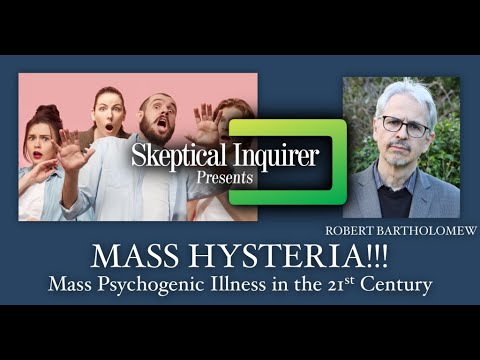
Robert Bartholomew: Why Mass Hysteria Is Thriving in the 21st Century
Medical sociologist Robert Bartholomew, the field's leading researcher on mass psychogenic illness, explains how social contagion and collective misperception generate sighting waves — the sociological engine behind PSH.

Carl Jung: Flying Saucers — A Modern Myth of Things Seen in the Sky
A reading of Jung's 1958 study, the first sustained psychological treatment of the UFO phenomenon, framing the flying saucer as a projected mandala of the collective unconscious.
Sources Cited
- Jung, Carl G. Flying Saucers: A Modern Myth of Things Seen in the Skies. Routledge & Kegan Paul, 1959.
- Klass, Philip J. UFOs: The Public Deceived. Prometheus Books, 1983.
- Klass, Philip J. UFOs Explained. Random House, 1974.
- Sagan, Carl. The Demon-Haunted World: Science as a Candle in the Dark. Random House, 1995 (chapters on alien abductions and sleep paralysis).
- Bartholomew, Robert E. & Goode, Erich. "Mass Delusions and Hysterias: Highlights from the Past Millennium," Skeptical Inquirer, 2000.
- Spanos, Nicholas P. et al. "Close Encounters: An Examination of UFO Experiences," Journal of Abnormal Psychology, 1993.
- Clancy, Susan A. Abducted: How People Come to Believe They Were Kidnapped by Aliens. Harvard University Press, 2005.
- Showalter, Elaine. Hystories: Hysterical Epidemics and Modern Media. Columbia University Press, 1997.
- French, Christopher C. "Fringe Science, Anomalistic Psychology, and Belief in the Paranormal," Australian Journal of Psychology, 2003.
- Appelle, Stuart. "The Folie à Deux of Alien Abduction Claims," Journal of Scientific Exploration, 1996.
- Klass, Philip J. UFO Abductions: A Dangerous Game. Prometheus Books, 1989.
- Hendry, Allan. The UFO Handbook: A Guide to Investigating, Evaluating, and Classifying UFO Reports. Doubleday, 1979.
- Sheaffer, Robert. The UFO Verdict: Examine the Evidence. Prometheus Books, 1981.
- Westrum, Ron. "Social Science and the UFO Phenomenon," Journal of Scientific Exploration, 1988.
- Oberg, James E. UFOs and Outer Space Mysteries: A Scientific Assessment. Donning, 1982.
Have corrections, additional research, or peer-reviewed sources? Help improve this entry.
Suggest an Edit