
Government Deception Hypothesis (GDH)
Proposes that the UAP phenomenon is a highly sophisticated, decades-long psychological operation (PSYOP) run by military intelligence agencies to cover up top-secret human aerospace testing and project fake technological superiority — also known as the Mirage Men or PSYOP Model.
Skeptical Counter-TheoryCore Thesis
GDH proposes that UAP reports, disclosure movements, and entity contact narratives are products of a highly sophisticated, decades-long psychological operation (PSYOP) conducted by military intelligence agencies. The primary goals of this deception are twofold: first, to provide a convenient, pre-packaged cover story for the testing of top-secret human aerospace prototypes, drones, and electronic warfare systems; and second, to project an image of absolute technological superiority to foreign adversaries by utilizing UAP folklore as a delivery mechanism.
Origin & History
The Government Deception Hypothesis (GDH, also known as the Mirage Men or PSYOP Model) is a compelling, terrestrial-focused framework that explains the UAP phenomenon without requiring extraterrestrial intelligence or physics-defying technology. Instead, GDH proposes that UAP reports, disclosure movements, and entity contact narratives are products of a highly sophisticated, decades-long psychological operation conducted by military intelligence agencies. Its historical roots trace back to the early Cold War, when the US Air Force and CIA realized that public fascination with "flying saucers" could be weaponized. By encouraging the belief that anomalous lights in the sky were alien spaceships, the military could test secret spy planes — like the U-2 and SR-71 — in plain sight. If a civilian or foreign observer spotted a secret flight, their report would be cataloged as a UAP sighting, instantly discrediting the witness and protecting the project's security. Over decades, this defensive cover story evolved, in the GDH account, into an active psychological weapon, with intelligence agents feeding fabricated documents, staging fake crash sites, and manipulating UAP researchers to spread disinformation globally.
The theory's first formal articulation is generally credited to Leon Davidson, an American physicist who had worked on the Manhattan Project. In his self-published 1957 pamphlet "The Flying Saucer Hoax," Davidson became the first researcher on record to argue explicitly that the UAP phenomenon was a Central Intelligence Agency psychological warfare project designed to confuse both the American public and Soviet analysts — a full 45 years before the term "PSYOP Model" would enter common use in UAP research circles. Davidson's core insight, that the CIA-convened Robertson Panel of January 1953 had effectively recommended treating UFO folklore as a manageable public-perception problem rather than a genuine anomaly, would not be substantially corroborated by the intelligence community's own record until CIA staff historian Gerald K. Haines published an internal Agency account of covert reconnaissance cover stories four decades later, in 1997.
Furthermore, GDH explains the "high strangeness" and erratic behavior of UAPs as deliberate manipulations. By deploying advanced holographic projections, radar reflectors, and electronic warfare spoofing, military forces can project false targets onto enemy sensors and visual fields. Under this model, UAP hearings and whistleblower disclosures are not steps toward cosmic truth, but carefully managed leaks designed to confuse foreign adversaries — such as China or Russia — about the true extent of American black-project technology, utilizing the UAP myth as strategic camouflage. The theory gained its most systematic modern treatment in the mid-2000s, when journalists Greg Bishop and Mark Pilkington independently began mining declassified FOIA releases and firsthand interviews with retired intelligence officers, culminating in Bishop's Project Beta (2005) and Pilkington's Mirage Men (2010) — the two works that gave the modern "Mirage Men" formulation of GDH its name and its evidentiary backbone.
Scientific Foundations
Rather than resting on astrophysics or exotic propulsion physics, GDH's evidentiary foundation is built from documented military and intelligence tradecraft — three specific, named mechanisms by which a real classified aerospace program could generate what looks, from the ground, like a UAP encounter.
1. Aerospace Camouflage & Plausible Deniability
The primary mechanism of GDH is aerospace camouflage. When the military develops a next-generation stealth platform, drone system, or electronic countermeasure, it must test it in physical airspace. To protect the project's classification, the military utilizes the pre-existing UAP folklore as a shield. If a test flight is observed, intelligence agencies deploy "debunking" campaigns or encourage the witness to believe they saw an extraterrestrial craft. This generates instant plausible deniability, as mainstream scientists and media will dismiss the report as UAP fantasy, keeping the true nature of the aerospace asset hidden from foreign intelligence networks.
2. Active Disinformation & Cognitive Management
The second mechanism is cognitive management, executed by specialized counterintelligence officers such as Richard Doty. These officers actively infiltrate UAP research groups, feeding them falsified documents — such as the Majestic 12 papers — staging fake landing sites with military trucks, and validating abduction claims. By keeping the UAP community focused on alien recovery stories, the military ensures that any genuine leaks of top-secret human technology are mixed with absurd stories of alien treaties, rendering the actual technology unidentifiable to foreign analysts.
3. Electronic Warfare & Holographic Spoofing
The third mechanism is the deployment of advanced sensor spoofing. Using laser-induced plasma filaments, airborne holograms, and radar reflectors, the military can project false, highly maneuverable targets into the sky. These decoys can accelerate at impossible speeds, split into multiple targets, and disappear instantly, projecting UAP-like flight dynamics. These systems are tested against human pilots and radar operators to evaluate their effectiveness, generating authentic "UAP" reports that are actually high-tech military decoys.
Key Proponents
Mark Pilkington
Former contributing editor to Fortean Times. Spent years interviewing retired intelligence officers and cross-referencing FOIA releases to argue that military and intelligence personnel actively promoted extraterrestrial explanations to protect classified aerospace programs. Author of Mirage Men (2010), the most cited synthesis of the GDH position.
Greg Bishop
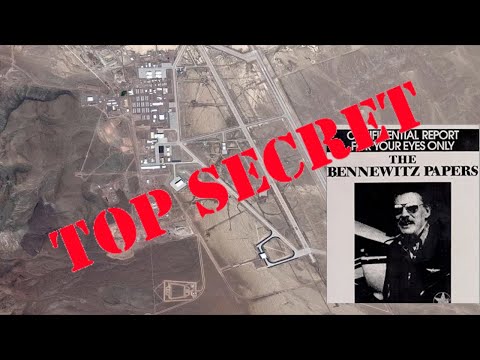
Author of Project Beta (2005), reconstructing the AFOSI disinformation campaign run against Kirtland AFB security consultant Paul Bennewitz in the early 1980s, drawing on interviews and declassified documents to trace how a civilian researcher was fed fabricated alien-invasion material as cover for genuine classified testing.
Richard Doty
Former U.S. Air Force Office of Special Investigations special agent who has publicly admitted to running disinformation operations against civilian UAP researchers, including the Paul Bennewitz case, feeding fabricated documents and staging fake events to cover classified testing at Area 51 and Kirtland AFB.
Leon Davidson
Early physicist and first researcher on record, in his self-published 1957 work "The Flying Saucer Hoax," to argue the UAP phenomenon was a CIA psychological warfare project designed to confuse the public — the founding claim from which the modern GDH literature descends.
David Grusch
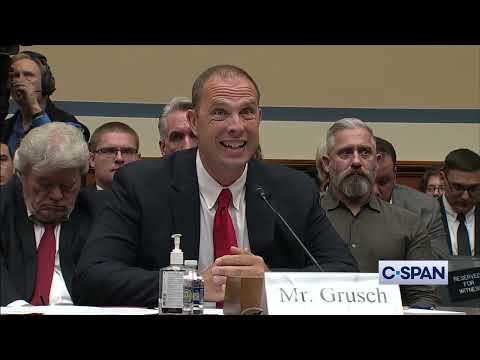
Former intelligence officer (NGA/NRO) who filed a 2023 complaint with the Intelligence Community Inspector General and testified before Congress that the U.S. government operates a secret crash-retrieval and reverse-engineering program for non-human craft. GDH proponents read his testimony not as confirmation of an actual recovered craft, but as either a sincere account shaped by disinformation fed to him inside the classified system, or a further, possibly state-sanctioned leak designed to project future aerospace dominance to foreign adversaries.
Christopher Mellon
Obtained and leaked the Gimbal, GoFast, and Nimitz videos to The New York Times and To The Stars Academy, setting in motion the Pentagon's 2020 declassification. Mellon has repeatedly argued the secrecy he spent a career working inside stems from institutional reflex and unresolved classification of sensor and processing anomalies rather than genuine evidence suppression — a position GDH proponents cite as insider corroboration of the theory's core claim, even though Mellon himself has never endorsed the idea of a deliberate, organized psychological operation.
Key Witnesses & Investigators
Paul Bennewitz (1927–2003)
Thunder Scientific Corporation physicist and the direct, firsthand target of the AFOSI disinformation campaign GDH treats as its clearest confirmed case — not a secondhand chronicler of the deception mechanism, but the specific individual on the receiving end of Richard Doty's fabricated documents and staged events near Kirtland AFB and the Manzano Weapons Storage Area beginning in 1980.
Dylan Borland
Air Force geospatial intelligence specialist who testified before Congress in September 2025 that his own reporting of a triangular craft at Langley AFB led to years of career retaliation — GDH proponents cite his account as evidence that institutional secrecy and reprisal, not a coordinated alien mythology, is the mechanism actually protecting classified programs.
Government & Military Programs
Project Mogul (1947) is the archival case GDH proponents treat as the clearest confirmed instance of the deception mechanism at work. A classified NYU/Army Air Forces constant-altitude balloon train, carrying acoustic sensors designed to detect Soviet atomic tests, was recovered near Foster Ranch outside Roswell, New Mexico. The military's public "weather balloon" statement was itself a cover story for the still-classified Mogul program — a fact only confirmed in Air Force reports issued in 1994 and 1997, nearly half a century after the event.
The CIA-convened Robertson Panel (January 1953) met for four days, reviewed roughly two dozen selected sightings, and recommended that the National Security Council launch a public debunking and education campaign — using mass media, schools, and even the Disney corporation — to strip UFO reports of their "special status" and reduce the report volume clogging military communications channels. GDH proponents treat the panel's own declassified report as the founding charter for treating UFO folklore as a manageable public-perception problem.
Between 1956 and 1968, U-2 and OXCART (A-12/SR-71) reconnaissance flights were tested over the continental United States. Air Force and CIA public affairs officers, according to the Agency's own later account, attributed the resulting radar and visual reports to weather phenomena or misidentification rather than confirm the programs' existence. In 1997, CIA staff historian Gerald K. Haines published "CIA's Role in the Study of UFOs, 1947–90" in the Agency's own journal Studies in Intelligence, stating that U-2 and OXCART flights accounted for well over half of all UFO reports across the late 1950s and 1960s — the Agency's first on-the-record acknowledgment of the mechanism GDH describes, and the single most-cited primary source in GDH literature.
Between 1979 and 1988, AFOSI Special Agent Richard Doty ran a documented disinformation operation against Kirtland AFB security consultant Paul Bennewitz, feeding him fabricated alien-invasion documents that redirected his attention away from genuine classified electronic-warfare testing at the base. In March 2024, the Pentagon's All-domain Anomaly Resolution Office (AARO) published its Historical Record Report Volume I, documenting a decades-long internal hazing ritual, nicknamed "Yankee Blue," built around a fictional alien-retrieval program, and concluding that secrecy around legitimate classified programs has repeatedly been mistaken for UAP activity — a conclusion GDH proponents cite as institutional confirmation of the theory's central mechanism, even as AARO stopped short of confirming an organized, deliberate program to manufacture extraterrestrial mythology.
The Five Observables
The Five Observables framework, developed by former AATIP director Luis Elizondo, is used to classify UAP encounters based on performance characteristics that exceed known technology. Applied to a theory rather than a single case, it measures how well GDH's explanation — misidentified classified aircraft, decoys, and sensor artifacts — accounts for each observable. Because GDH does not propose that any of the phenomenon's performance characteristics are genuinely non-terrestrial, the ratings below reflect how well mundane, classified explanations cover each observable rather than whether the observable itself is "real":
Assessment: GDH does not need anti-gravity lift to explain most of the cases it targets — apparent "lift" is attributed to stealth aircraft, drones, or balloon platforms whose altitude and motion were misjudged by observers on the ground. It offers only a partial account of sudden acceleration: many reports are explained as radar and visual artifacts — flares, chaff, electronic countermeasures — but this does not cover instrumented cases showing sustained multi-g accelerations. Low observability is the theory's strongest fit, since stealth coatings and radar-absorbent materials on real classified aircraft directly produce the low-signature, hard-to-classify contacts GDH describes. The theory is weakest against hypersonic velocity — no declassified or credibly rumored human platform sustains the speeds recorded in cases like the USS Nimitz encounter — and against trans-medium travel, where no declassified or rumored program crosses from air to water and GDH supplies no mechanism at all; such reports are typically reclassified as sensor error or misidentified surface vessels rather than explained.
Physical Evidence
GDH's physical-evidence argument is not built around recovered "alien" hardware but around a morphology-mapping exercise: cross-referencing the recurring craft shapes catalogued in this site's own craft morphology database against known categories of classified aerospace hardware and electronic-warfare countermeasure. Across ten recurring UAP morphologies, GDH proponents apply the same underlying design-rationale — that the shape, aspect ratio, and surface reflectivity of a reported "craft" are not decorative but reflect the physical constraints of a real, classified human propulsion, stealth, or decoy system, and that the shape's reported flight behavior (silent hovering, instant right-angle turns, rapid vertical ascent, an absence of sonic booms) is consistent with localized radar-absorbent coatings, inflatable radar reflectors, or laser-induced plasma decoys rather than with any drive system beyond current declassified engineering. Skeptics of this reading counter that the shapes' popularity in reports correlates more closely with contemporaneous science-fiction design trends than with any documented aerospace contractor program.
Morphology Mapping: Ten Shapes, One Explanatory Model
The Government Deception Hypothesis applies its design-rationale and radar-evasion framework across ten recurring morphologies catalogued in this site's craft database, treating each as a candidate classified prototype, inflatable decoy, or electronic-warfare spoofing target rather than as evidence of a distinct non-human engineering tradition. Rather than treat all ten as interchangeable, GDH literature groups them loosely by the category of classified hardware each is proposed to correspond to.
Rigid airframe candidates — Tic Tac / Capsule, Triangular / Delta, Diamond / Double-Cone, and Chevron / V-Shape: these elongated or angular forms are the shapes GDH proponents most directly associate with genuine flight-test hardware — stealth flying-wing testbeds and low-observable drone airframes whose aspect ratio, surface reflectivity, and lifting-body geometry are dictated by real aerodynamic and radar-cross-section engineering rather than by any exotic propulsion requirement. Their reported flight profile — silent hovering, instant right-angle turns, rapid vertical ascent — is attributed to conventional but classified thrust-vectoring and control-surface design rather than to a drive system beyond current declassified engineering.
Passive decoy candidates — Disk / Saucer, Sphere / Orb, and Cube-in-Sphere: these simpler, more symmetrical forms are the shapes GDH most readily attributes to inflatable radar reflectors and lightweight decoy balloons — hardware built specifically to generate a false, trackable radar or visual return rather than to fly under its own power at all. Their popularity in the earliest-era reports (Roswell-adjacent balloon technology, 1950s radar-reflector tests) is, in the GDH reading, not coincidental.
Electronic-warfare candidates — Cylinder / Cigar, Conical / Acorn, and Amorphous / Gaseous: these more diffuse or elongated forms are mapped by GDH to laser-induced plasma filaments and airborne holographic projection — the mechanism described under Scientific Foundations above — used to generate a maneuverable, sensor-visible target with no physical airframe at all. Skeptics of this reading counter that the shapes' popularity in reports correlates more closely with contemporaneous science-fiction design trends than with any documented aerospace contractor program, and that GDH offers no public contractor, patent, or budget record tying a specific classified program to a specific reported shape.
Crash Retrievals
GDH's account of alleged crash-retrieval cases treats each one as either a misidentified classified-program event or a deliberately seeded piece of disinformation rather than a genuine recovery of non-human hardware. Roswell (1947) is the theory's clearest example: the debris recovered near Foster Ranch was, per the 1994–1997 Air Force reports, Project Mogul balloon-train components rather than saucer wreckage, with the original "weather balloon" cover story itself functioning as a second-order deception layered over the classified acoustic-sensor program. Kecksburg (1965) sits in a murkier middle ground for the theory: a documented military recovery operation and a later NASA FOIA lawsuit over missing Project Blue Book search logs confirm genuine compartmentalized secrecy around the incident, but no physical material has ever surfaced publicly to establish what, specifically, was recovered from the wooded ravine.
The alleged fabrication of the Majestic 12 papers — the purported presidential-level documents describing a secret crash-retrieval and reverse-engineering program, which GDH proponents including Richard Doty have linked to AFOSI-run disinformation targeting researcher Paul Bennewitz — is treated by the theory as a case study in how crash-retrieval mythology itself gets manufactured and seeded into the UAP research community. Later claims follow a similar arc in the GDH reading: Bob Lazar's 1989 claim to have reverse-engineered alien saucers at S-4 near Area 51 is read by GDH proponents as an individual who was fed disinformation to misdirect attention from classified drone and radar-reflector testing at the site, and the 2023 congressional testimony of intelligence-community whistleblower David Grusch — alleging a multi-decade U.S. crash-retrieval and reverse-engineering program — is read by GDH skeptics as a further, possibly state-sanctioned leak designed to project future aerospace dominance to foreign adversaries rather than as confirmation of an actual recovered craft.
Supporting Case Files
GDH proponents cross-reference the theory against twenty cases in this site's database, arguing in each instance that a classified human aerospace or electronic-warfare program — rather than a non-human craft — better fits the sensor and eyewitness record once contemporary military deployment activity and cover-story incentives are taken into account:
Weighing the Evidence
The mundane alternative to GDH is not that governments never obscure secret programs — the Mogul and U-2/OXCART record proves they do — but that most of the resulting confusion is unintentional bureaucratic secrecy and compartmentalization rather than a coordinated, decades-long psychological operation built around fabricated alien mythology. AARO's 2024 Historical Record Report leans toward this reading: it documents real cover stories and even an internal hazing ritual, but concludes it found no evidence of an organized program to manufacture or promote extraterrestrial narratives as strategic camouflage. Occam's razor, in other words, favors "secrecy plus misidentification" over "secrecy plus an active, deliberate UFO mythology." A further critique concerns the theory's historical scope: while GDH can explain Cold War and modern sightings, it struggles to explain the thousands of UAP reports logged before the creation of modern military intelligence agencies, such as the 1897 airship waves or medieval chronicles of sky anomalies, and it requires governments to have spent vast resources maintaining a massive, complex deception for over eighty years, across hundreds of classified facilities and thousands of personnel, without a single official admission of the PSYOP itself.
Supporting This Hypothesis
- Roswell (#001, 1947): Debris officially traced to the classified Project Mogul balloon train, confirmed in 1994–1997 Air Force reports — a documented case of a false public cover story for a real secret program.
- Phoenix Lights (#002, 1997): Maryland Air National Guard A-10s dropped flares over the Barry M. Goldwater Range that night, and the Air Force's delayed, incomplete acknowledgment mirrors the pattern GDH describes.
- Battle of Los Angeles (#014, 1942): A night of sustained anti-aircraft fire against what post-war Imperial Japanese Navy records suggest was likely a weather balloon or false radar contact, amplified by wartime secrecy into an invasion scare.
- Kecksburg (#013, 1965): A documented military recovery operation and a NASA FOIA lawsuit over missing search logs show the government responding to and quietly managing the incident, consistent with GDH's compartmentalized-secrecy model.
Against This Hypothesis
- USS Nimitz Tic Tac (#003, 2004): Multiple trained naval aviators and AN/SPY radar and FLIR sensor data show sustained accelerations and instantaneous course changes with no visible engine, exhaust, or control surfaces; GDH names no declassified or credibly rumored platform capable of the recorded performance.
- Rendlesham Forest (#004, 1980): Multiple USAF security personnel independently reported ground-trace radiation readings and physical indentations on a NATO nuclear-weapons storage base; no classified program has ever been identified to account for a landed craft there.
- Lakenheath-Bentwaters (#043, 1956): Simultaneous confirmation across ground radar, airborne intercept radar, and a RAF pilot's visual observation, with maneuvers exceeding any aircraft of the era; no test-flight program has ever been declassified to explain it.
Theory Development Timeline
| Date | Development |
|---|---|
| 1947 | A downed Project Mogul balloon train — a classified NYU/Army Air Forces array of high-altitude microphones designed to detect Soviet nuclear tests — is recovered near the Roswell crash site. The military's public "weather balloon" statement is a cover story for the still-classified Mogul program, establishing the template GDH proponents cite for every later case. |
| 1950 | Counterintelligence agents begin feeding early UAP researchers disinformation, diverting attention from Project Mogul and early spy-plane tests, per GDH's later reconstruction of the period. |
| Jan 1953 | The CIA-convened Robertson Panel meets for four days, reviews roughly two dozen selected sightings, and recommends that the National Security Council launch a public debunking and education campaign to strip UFO reports of their "special status." |
| 1956–1968 | U-2 and OXCART (A-12/SR-71) reconnaissance flights are tested over the continental United States; Air Force and CIA public affairs officers attribute the resulting radar and visual reports to weather phenomena or misidentification rather than confirm the programs' existence. |
| 1957 | Physicist Leon Davidson self-publishes "The Flying Saucer Hoax," the first work on record to argue the UAP phenomenon is a CIA psychological warfare project. |
| 1979–1988 | AFOSI Special Agent Richard Doty infiltrates the UAP community, feeding Kirtland AFB security consultant Paul Bennewitz fabricated documents and staging fake events to cover up classified electronic-warfare testing. |
| 1989 | Bob Lazar claims to have reverse-engineered alien saucers at S-4. GDH proponents argue Lazar was fed disinformation to cover up classified drone and radar-reflector tests at the site. |
| 1997 | CIA staff historian Gerald K. Haines publishes "CIA's Role in the Study of UFOs, 1947–90" in the Agency's own journal Studies in Intelligence, stating U-2 and OXCART flights accounted for well over half of all UFO reports across the late 1950s and 1960s. |
| 2005 & 2010 | Greg Bishop's Project Beta (2005) and Mark Pilkington's Mirage Men (2010) synthesize declassified FOIA documents and firsthand interviews into the modern "Mirage Men" formulation of GDH. |
| 2023 | David Grusch's whistleblower disclosures before Congress are analyzed by GDH skeptics as a state-sponsored PSYOP designed to project future aerospace dominance to adversaries. |
| Mar 2024 | AARO publishes its Historical Record Report Volume I, documenting a decades-long internal hazing ritual ("Yankee Blue") built around a fictional alien-retrieval program and concluding that secrecy around legitimate classified programs has repeatedly been mistaken for UAP activity. |
Theoretical Alignment
GDH aligns cleanly with the Low Observability observable: stealth coatings, radar-absorbent materials, and classified drone programs are exactly the kind of low-signature, hard-to-classify contacts a cover story is built to explain away, and the documented U-2/OXCART pattern (see Timeline, 1956–1968) shows the mechanism working as described. It offers a plausible account of Sudden Acceleration in cases involving decoy flares, chaff, or electronic countermeasures whose apparent motion is a sensor artifact rather than a physical maneuver. Where GDH strains is against reports of Hypersonic Velocity, Trans-Medium Travel, and instantaneous, high-g maneuvers with no visible propulsion, heat signature, or sonic boom — performance profiles that, as of 2026, exceed any acknowledged or credibly rumored human aerospace platform. For cases like the USS Nimitz Tic Tac, GDH must argue for a secret propulsion breakthrough with no corroborating contractor, patent, or budget trail, a considerably heavier lift than attributing a 1950s radar blip to a U-2.
Sensor & Instrumentation Detection Profile
Because GDH's central claim is that genuine sensor detections are of real but classified or decoy hardware rather than fabricated data, the theory treats the instrumentation record itself as the primary battleground rather than as neutral background. Ground and airborne radar — the modality behind the Lakenheath-Bentwaters and RB-47 cases — is, in GDH's own reading, exactly the kind of system flare-based decoys, chaff, and electronic-warfare spoofing are built to fool, since 1950s-1980s-era radar had no independent means of distinguishing a genuine anomalous target from a well-executed countermeasure. Infrared search-and-track and FLIR sensors, the modality behind the more recent Gimbal and GoFast Navy footage, are similarly vulnerable in GDH's account to being triggered by mundane heat sources — flares, aircraft exhaust, parallax-distorted distant jets — that a trained analyst working from raw, unprocessed footage could misread as anomalous, a reading independent analyst Mick West's parallax analysis of GoFast has lent some public support to. Where GDH's sensor account is weakest is against cases combining multiple, independently cross-checked sensor modalities in the same event with no plausible countermeasure candidate ever named, such as USS Nimitz's simultaneous radar, IRST, FLIR, and visual confirmation, or Lakenheath-Bentwaters' three-way corroboration across ground radar, airborne intercept radar, and a RAF pilot's direct visual observation — instrumentation records that would require an unusually sophisticated, multi-domain spoofing capability GDH has never tied to a specific declassified program.
Environmental & Geospatial Context
GDH-aligned cases cluster tightly around active classified military and intelligence installations rather than distributing evenly across geography — a pattern the theory treats as corroborating rather than coincidental, since a cover-story mechanism should track the real geography of secret testing. Kirtland Air Force Base in New Mexico anchors the theory's best-documented case: the Bennewitz disinformation operation was run against a security consultant working adjacent to the base's own classified electronic-warfare testing. The Area 51 and S-4 / Papoose Lake complex in Nevada is the geographic center of the Bob Lazar narrative and, more broadly, of GDH's account of stealth-aircraft and drone testing conducted under UAP cover. In the United Kingdom, Rendlesham Forest sits adjacent to RAF Bentwaters-Woodbridge, a NATO nuclear-weapons storage base — exactly the kind of high-security installation GDH expects to generate both genuine secrecy and, in this instance, one of the theory's most difficult unresolved cases. In Arizona, the Barry M. Goldwater Range's live-fire and flare-drop activity is the proposed mundane origin of the Phoenix Lights, while Wright-Patterson Air Force Base in Ohio, the source of Project Blue Book's own Special Report No. 14, anchors the institutional side of the theory as the historical seat of official U.S. UFO investigation and record-keeping.
Observer Credibility & Occupational Profile
GDH's advocates are disproportionately investigative journalists and declassification researchers rather than physicists or credentialed astronomers, which shapes both its strengths and its blind spots. Richard Doty is a rare case of a source arguing from the inside: a former U.S. Air Force Office of Special Investigations (AFOSI) special agent who has publicly admitted to running disinformation operations against civilian researchers. Mark Pilkington and Greg Bishop are journalists whose evidence base is built from FOIA releases and interviews with retired intelligence officers rather than firsthand sightings. Leon Davidson, the theory's earliest proponent, brought a Manhattan Project physicist's credentials to the 1957 argument, though without access to the classified record that later vindicated parts of his thesis. The theory's strongest institutional validation comes not from a proponent at all but from the CIA itself — staff historian Gerald K. Haines wrote the Agency's own 1997 account of the U-2/OXCART cover mechanism, giving GDH a rare admission from the alleged perpetrator. That mixed pedigree cuts both ways: it grounds GDH in verifiable paper trails more than most UAP theories, but its proponents are largely documenting an institution's stated motives after the fact rather than independently verifying that every unexplained report has a classified-program origin.
Historical Precedents & Archive Matches
Project Mogul (1947): The clearest archival match for GDH's core claim. Constant-altitude balloon trains carrying acoustic sensors, launched to listen for Soviet atomic tests, were the real object recovered near the Foster Ranch outside Roswell. The Army's public "weather balloon" statement was itself a cover story for Mogul, only confirmed in Air Force reports issued in 1994 and 1997. The Robertson Panel report (1953): A declassified CIA document recommending a coordinated public debunking and education campaign, cited by GDH proponents as the founding charter for treating UFO folklore as a manageable public-perception problem. The Haines study (1997): The CIA's own published admission that spy-plane secrecy generated the majority of a specific decade's worth of UFO reports is the single most-cited primary source in GDH literature, because it is a rare case of the alleged deceiver confirming the mechanism in its own words.
Material Analysis
Where GDH is testable at all, it is testable against the paper and material trail left by real classified programs rather than against recovered "alien" hardware. The Roswell debris is the clean case: officially reclassified in 1994–1997 as Project Mogul balloon-train components, not saucer wreckage. Cases like Kecksburg sit in the middle — documented military recovery activity and a later NASA FOIA lawsuit over missing Blue Book search logs confirm compartmentalized secrecy, but no material has ever surfaced to confirm what, specifically, was recovered. Cases with sensor-recorded flight performance, such as USS Nimitz and Lakenheath-Bentwaters, are the hardest for GDH to absorb, since no declassified program, contractor record, or test-range log has ever been matched to the recorded kinematics.
Conventional Explanation Candidate
GDH itself functions as this site's conventional-explanation counter-theory to the extraterrestrial hypothesis — but the specific deception mechanism it proposes is itself a strong, extraordinary claim: a deliberate, coordinated, mythology-generating psychological operation sustained across decades and multiple agencies. That claim has its own, more mundane and more parsimonious alternatives, which the candidates below evaluate against the same documented secrecy record GDH itself relies on.
Routine Classified-Technology Compartmentalization
PlausibleOrdinary secrecy protecting legitimate but mundane black projects — stealth aircraft, drones, sensor systems — fully accounts for the observed pattern of denial, misdirection, and delayed acknowledgment without requiring anyone to have deliberately manufactured or promoted an extraterrestrial mythology as camouflage. AARO's own March 2024 Historical Record Report reached exactly this conclusion: real cover stories exist, but no organized program to construct UFO folklore as strategic cover was found.
Bureaucratic Inertia & Recordkeeping Failure
PlausibleMuch of the "cover-up" pattern GDH documents — missing Project Blue Book search logs in the Kecksburg case, inconsistent public statements, slow and incomplete disclosures — is at least as well explained by poor interagency recordkeeping, reflexive habitual secrecy, and simple bureaucratic inertia as by an organized disinformation campaign built around a specific, coherent alien-mythology narrative.
Standard National-Security Classification Procedure
PlausibleOrdinary sources-and-methods and need-to-know classification law — the same statutory framework that protects any sensitive intelligence-collection or weapons-testing program — accounts for the U-2/OXCART-era secrecy pattern Haines himself documented without requiring the additional, unproven step of an active campaign to promote extraterrestrial narratives as deliberate strategic camouflage.
Theoretical Assessment Profile
Six-domain evaluation of this hypothesis
Related Cases
Further Reading
Mirage Men
A detailed exposé of the military intelligence apparatus that intentionally constructed and nourished the UFO mythos to cover stealth military flight programs.
UFOs and the National Security State
A comprehensive historical study of the military-intelligence response to UAP incursions, analyzing declassified logs and policy papers.
UFOs and Government: A Historical Inquiry
A rigorously documented, CHOICE-recommended history of the U.S. government's actual response to UFO reports from WWII to the present, built almost entirely from declassified primary sources rather than speculation.
Out of the Shadows: UFOs, the Establishment and the Official Cover-Up
Two British researchers use declassified Ministry of Defence files to trace the real institutional secrecy and cover-story patterns behind UK UFO cases, including Rendlesham Forest.
Watch the Skies!: A Chronicle of the Flying Saucer Myth
A Smithsonian-published skeptical history tracing how Cold War secrecy, media sensationalism, and official mismanagement combined to manufacture the modern flying-saucer myth — the closest thing to an academic baseline history for GDH's own core claim.
Essential Viewing

Sources Cited
- Pilkington, Mark. Mirage Men: A Journey into Disinformation, Paranoia and UFOs. London: Constable, 2010.
- Dolan, Richard M. UFOs and the National Security State: Chronology of a Coverup, 1941–1973. Charlottesville, VA: Keyhole Publishing, 2002.
- Doty, Richard. Public disclosures and interviews regarding AFOSI disinformation operations against Paul Bennewitz, 1989–present.
- Davidson, Leon. The Flying Saucer Hoax. Privately published, White Plains, NY, 1957 (first researcher to suggest UAPs are CIA psychological warfare).
- U.S. Air Force. Project Blue Book Special Report No. 14. Air Materiel Command, Wright-Patterson AFB, 1955.
- Central Intelligence Agency. "The CIA's Role in the Study of UFOs, 1947–90." Studies in Intelligence, 1997.
- Vallee, Jacques. Revelations: Alien Contact and Human Deception. New York: Ballantine Books, 1991.
- Greenewald, John, Jr. Inside the Black Vault: The Government's UFO Secrets Revealed. Lanham, MD: Rowman & Littlefield, 2019. amazon.com
- Doty, Richard. AFOSI operational logs and correspondence on Project Aquarius (disputed/declassified), 1980–1988.
- Borland, Dylan. Whistleblower Congressional Testimony, House Oversight Committee Exhibit D, September 2025.
- Redfern, Nick. Project Beta: The Story of Paul Bennewitz, National Security, and the Creation of a Modern UFO Myth. New York: Pocket Books, 2005.
- Bishop, Greg. Project Beta. San Antonio, TX: Anomalist Books, 2005.
- Good, Timothy. Above Top Secret: The Worldwide U.F.O. Cover-Up. New York: William Morrow, 1988.
- Hansen, Terry. The Missing Times: News Media Cover-Up of UFOs. Philadelphia: Xlibris, 2000.
- Dolan, Richard M. UFOs and the National Security State: Cover-Up, 1973–1991. Charlottesville, VA: Keyhole Publishing, 2009.
Have corrections, additional research, or peer-reviewed sources? Help improve this entry.
Suggest an Edit