
The Frederick Valentich Disappearance
On the evening of October 21, 1978, twenty-year-old Australian pilot Frederick Valentich vanished while flying a Cessna 182L light aircraft over Bass Strait. During his flight to King Island, he radioed Melbourne Flight Service to report a large, metallic, green-lit object hovering and orbiting directly above him. His final transmissions described severe engine trouble, culminating in the words 'it is not an aircraft,' followed by seventeen seconds of unexplained metallic scraping noise. Despite an intensive air and sea search, no trace of the pilot or his aircraft has ever been recovered, leaving the encounter as one of the most compelling and unresolved mysteries in aviation history.
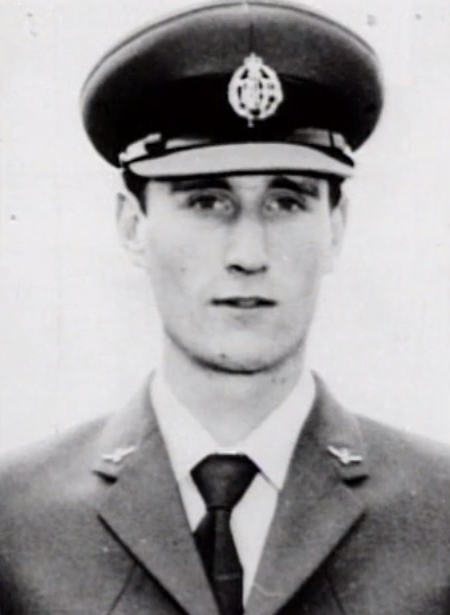
Pictured: Frederick Valentich himself, in a formal portrait in aviation uniform reproduced from the Australian Department of Transport's official file on his disappearance — the actual pilot at the center of the case, though not a photograph of his October 21, 1978 flight or the object he reported. No imagery of either exists: his account survives only as an audio transmission, and no wreckage of his Cessna was ever recovered.
Theoretical Alignment
The Valentich disappearance aligns strongly with the Extraterrestrial Hypothesis (ETH) due to the pilot's explicit description of a hovering, non-ballistic metallic structure with high-velocity performance, alongside corroborating ground sightings of a green-lit object in the same area. Terrestrial and psychological hypotheses remain significant, centered on spatial disorientation or a staged disappearance, which are analyzed in detail in the conventional explanations section. The case stands as a key reference point in modern ufological studies of air safety and unexplained encounters over open ocean boundaries. Researchers point out that the behavior of the craft, which engaged in orbiting and chasing maneuvers relative to a moving light aircraft, is highly indicative of active guidance and intelligent control, which represents a hallmark of structural UAP encounters documented internationally. This active interaction suggests a level of physical interest in the target airframe that goes beyond random atmospheric occurrences, aligning it with military reports of UAP encounters near sensitive corridors.
From the perspective of the Psycho-Social Hypothesis (PSH), the case is also analyzed as a cultural event reflecting the late-1970s fascination with close encounters, fueled by cinema and popular literature. Under this view, Valentich's interest in UFO lore may have conditioned his response to an unexpected astronomical or technical event, causing him to frame a conventional emergency (such as engine trouble or spatial disorientation) in terms of an alien encounter. However, the physical reality of the engine rough-running and the acoustic signatures of the final recording complicate a purely psychological explanation. The alignment is therefore split between the physical anomalies reported in the air and the cultural context on the ground, creating a classic debate that spans materials science, aviation psychology, and sociology. Investigators have noted that the timing of the sighting occurred during a peak in regional media reports of unexplained lights, which could either indicate an active wave of external events or a heightened public focus that influenced both the pilot and ground observers.
Furthermore, the Interdimensional Hypothesis (IDH) is occasionally invoked by theoretical researchers who suggest that the Bass Strait region, with its unique magnetic and meteorological profile, might host temporary atmospheric portals or electromagnetic anomalies. Under this framework, the object was not a craft traveling from another star system but a physical manifestation crossing dimensional boundaries, which could account for its sudden appearance, rapid acceleration, and the total lack of physical debris in the search grid. While this remains highly speculative and is not supported by mainstream physical sciences, it highlights the range of hypotheses proposed by researchers attempting to reconcile the bizarre set of facts surrounding the flight's final six minutes. The IDH model suggests that the electromagnetic coupling between the UAP and the environment could disrupt local electronics and mechanical engine sequences, which would explain the Lycoming engine's rough-idling and eventual failure without leaving standard evidence of fuel contamination or mechanical breakage in the airframe.
Background
The disappearance of Frederick Valentich took place during a period of heightened public interest in aerial anomalies in Australia, matching a global wave of sightings throughout the late 1970s. Valentich was a young aviation enthusiast who lived in Avondale Heights, a suburb of Melbourne, and was deeply committed to pursuing a career in aviation. He was employed as a shop assistant but spent all his spare time and money on flight training at Moorabbin Airport, the primary general aviation hub in Melbourne. Valentich had obtained his private pilot license and was working toward his commercial pilot rating. He was described by his father, Guido Valentich, and his girlfriend, Rhonda Rushton, as an average, stable young man who was passionate about flying and did not exhibit any signs of depression or personal distress. His family noted that he was extremely disciplined regarding his flight plans and safety procedures, making a sudden deviation highly unusual. His interest in UAPs was described by his father as a normal curiosity rather than an obsession, though he did collect articles on the subject, which was common among young people of that era.
On Saturday, October 21, 1978, Valentich planned a weekend flight to King Island, located approximately 240 kilometers (150 miles) south of Melbourne in the western entrance to Bass Strait. The stated purpose of the flight was to fly to King Island to pick up a cargo of fresh crayfish for his family and friends, and to accumulate night flying hours, which were required for his commercial pilot license. He filed a Visual Flight Rules flight plan at Moorabbin Airport, specifying a departure time of 17:45 AEST and an altitude of 4,500 feet, with a return flight planned for the following day. The aircraft selected for the flight was a Cessna 182L, registered as VH-DSJ, owned by the Southern Air Services flying school. VH-DSJ was a reliable, well-maintained four-seat light aircraft equipped with a standard Lycoming engine, dual radio transceivers, a transponder, and standard safety gear, including life jackets and an emergency locator transmitter (ELT). The plane had a clean service history, with its last periodic maintenance inspection completed just a few flight hours prior, confirming its airworthiness for the overwater crossing.
Valentich arrived at Moorabbin Airport in the late afternoon. He checked the weather forecast, which indicated perfect VFR conditions across the entire route, and pre-flighted the aircraft, ensuring it was fully fueled with enough aviation gasoline for more than five hours of flight. Because of a slight delay in preparing the aircraft and coordinating with the flying school, the actual departure time was pushed back to 18:19 AEST. The Cessna VH-DSJ took off from Moorabbin, climbed to its cruise altitude of 4,500 feet, and headed southwest toward Cape Otway, the coastal departure point for the overwater leg of the flight to King Island. The flight proceeded normally for the first forty-five minutes, with Valentich maintaining routine radio contact with Melbourne Flight Service and reporting his position over Cape Otway at 19:00 AEST, before heading out over the waters of Bass Strait. His flight path was straight, heading directly toward the King Island beacon, under a clear, moonlit sky. The air traffic control logs show his voice was calm and his reports were standard, showing no sign of stress or mechanical trouble until he crossed the coastline.
The Southern Air Services flying school, which operated VH-DSJ, was a respected training institution at Moorabbin. The aircraft was regularly used for cross-country flights and student training. The Cessna 182 is known in general aviation as a stable, forgiving aircraft with a high-wing configuration, which provides excellent downward visibility for the pilot. It is powered by a six-cylinder Lycoming O-470-R engine, producing 230 horsepower, and has a cruising speed of approximately 120 knots. The aircraft's fuel system is gravity-fed, meaning fuel flows from the wing tanks down to the engine selector valve and carburetor without the need for an electric fuel pump. This design is highly reliable but has a specific vulnerability: if the aircraft is flown in an inverted position (upside down) or subjected to negative G-forces, the gravity-fed flow is interrupted, and the engine will suffer from fuel starvation within 10 to 20 seconds, leading to a stall. This technical detail is a key element in the spatial disorientation analysis of the flight's final minutes, explaining why a pilot who entered an inadvertent roll would report the engine coughing and rough-idling shortly after.
Valentich's relationship with Southern Air Services was typical of a student pilot. He rented aircraft on an hourly basis and was subject to the school's safety guidelines, which prohibited solo overwater night flights unless the pilot held a valid instrument rating or was operating under strict VFR clear sky parameters. The weather on October 21 met these criteria, but the flight school instructors later noted that they would have preferred he fly during the daytime, given his limited experience overwater. Valentich, however, was determined to accumulate the night hours quickly, as he had an upcoming commercial check-ride scheduled for the following month. This time pressure may have influenced his decision to proceed with the flight despite the late hour and his lack of advanced navigational aids, creating a set of conditions where any unexpected event could quickly overwhelm his piloting capabilities, leading to a critical decision-making failure over the dark waters of the strait.
Complete Timeline
| Date | Event |
|---|---|
| October 21, 1978 (17:30 AEST) | Pre-flight Preparation. Frederick Valentich arrives at Moorabbin Airport, inspects Cessna 182L VH-DSJ, checks regional weather forecasts, and files a Visual Flight Rules flight plan to King Island. |
| October 21, 1978 (18:19 AEST) | Takeoff from Moorabbin. Cessna VH-DSJ departs Moorabbin Airport. Valentich climbs to 4,500 feet and heads southwest toward the Victorian coast. |
| October 21, 1978 (19:00 AEST) | Cape Otway Position Report. Valentich radios Melbourne Flight Service to report passing over Cape Otway, confirming he is heading overwater across Bass Strait to King Island. Visibility is clear. |
| October 21, 1978 (19:06 AEST) | First Traffic Query. Valentich contacts Melbourne Flight Service to ask if there is any known traffic in his area below 5,000 feet, reporting a large aircraft in his vicinity. |
| October 21, 1978 (19:06:23 AEST) | FSU Reply. Controller Steve Robey advises Valentich that there is no known traffic in the Bass Strait sector. |
| October 21, 1978 (19:06:50 AEST) | Visual Description. Valentich reports that the traffic has four bright lights, resembling landing lights, and is passing near him. |
| October 21, 1978 (19:07:31 AEST) | First Close Pass. Valentich reports the object has passed over his aircraft at least 1,000 feet above, traveling at extreme speed. |
| October 21, 1978 (19:08:41 AEST) | Orbiting Behavior. Valentich reports the object is 'playing some sort of game,' flying over his Cessna multiple times at speeds he cannot identify. |
| October 21, 1978 (19:09:28 AEST) | 'It is not an aircraft.' Valentich reports that the object is not a conventional aircraft, describing it as long, shiny, and metallic. |
| October 21, 1978 (19:10:35 AEST) | Chasing Report. Valentich reports the object has a bright green light and is orbiting directly above him, chasing his Cessna as he attempts to orbit. |
| October 21, 1978 (19:11:28 AEST) | Engine Malfunction. Valentich reports his Cessna's engine is rough-idling and coughing. |
| October 21, 1978 (19:11:42 AEST) | Final Statement. Valentich repeats that the strange aircraft is hovering on top of me, stating 'it is hovering and it is not an aircraft.' |
| October 21, 1978 (19:12:00 AEST) | Metallic Sound & Silence. The transmission cuts to 17 seconds of open microphone containing a staccato metallic scraping sound, followed by complete silence. |
| October 21, 1978 (19:30 AEST) | Emergency Declared. Melbourne Flight Service fails to re-establish contact. Steve Robey initiates emergency search procedures. |
| October 22, 1978 (06:00 AEST) | Search Launched. An intensive air and sea search is launched over Bass Strait, involving RAAF Orion aircraft and local search vessels. |
| October 25, 1978 (18:00 AEST) | Search Terminated. After four days of searching covering over 10,000 square kilometers, no trace of VH-DSJ is found. The search is officially called off. |
| April 27, 1982 | Official Report Released. The Australian Department of Aviation releases its final investigation summary, concluding the cause of the disappearance is unknown. |
The Flight of VH-DSJ: Flight Log & Radio Transcripts
The official radio communication tape recorded at the Melbourne Flight Service Unit provides the primary chronological record of the event. The following is the verbatim transcript of the transmissions between pilot Frederick Valentich (VH-DSJ) and Flight Service controller Steve Robey, beginning at 19:06:14 AEST:
19:06:14 (DSJ): Melbourne, this is Delta Sierra Juliet. Is there any known traffic below five thousand?
19:06:23 (FS): Delta Sierra Juliet, no known traffic.
19:06:32 (DSJ): Delta Sierra Juliet, I am, it seems like me, a large aircraft confirming that—below five thousand.
19:06:44 (FS): Delta Sierra Juliet, what type of aircraft is it?
19:06:50 (DSJ): Delta Sierra Juliet, I cannot confirm. It has four bright lights. It looks like landing lights.
19:07:04 (FS): Delta Sierra Juliet, Roger.
19:07:31 (DSJ): Melbourne, this is Delta Sierra Juliet. The aircraft has just passed over me at least a thousand feet above.
19:07:43 (FS): Delta Sierra Juliet, Roger, and it is a large aircraft, confirmed?
19:07:47 (DSJ): Delta Sierra Juliet, uh, unknown, due to the speed it's traveling. Is there any military aircraft in the area?
19:07:57 (FS): Delta Sierra Juliet, no military aircraft known.
19:08:18 (DSJ): Melbourne, it's approaching now from the east towards me.
19:08:28 (FS): Delta Sierra Juliet, Roger.
19:08:36 (DSJ): [Microphone open for 2 seconds]
19:08:41 (DSJ): Delta Sierra Juliet, it seems to me that he's playing some sort of game. He's flying over me two, three times, at speeds I could not identify.
19:09:02 (FS): Delta Sierra Juliet, Roger. What is your actual altitude?
19:09:06 (DSJ): My altitude is four thousand five hundred, four five zero zero.
19:09:12 (FS): Delta Sierra Juliet, and confirm you cannot identify the aircraft?
19:09:16 (DSJ): Delta Sierra Juliet, negative.
19:09:25 (FS): Delta Sierra Juliet, Roger, stand by.
19:09:28 (DSJ): Melbourne, Delta Sierra Juliet. It's not an aircraft, it's... [Microphone remains open for 2 seconds]
19:09:46 (FS): Delta Sierra Juliet, can you describe the aircraft?
19:09:52 (DSJ): Delta Sierra Juliet, it's flying past me, it's a long shape. [Microphone open for 3 seconds] ... cannot identify more than that it has such speed... It's before me right now, Melbourne.
19:10:30 (FS): Delta Sierra Juliet, Roger, and how large would the object be?
19:10:35 (DSJ): Delta Sierra Juliet, Melbourne, it seems like it's chasing me. What I'm doing right now is orbiting, and the thing is orbiting on top of me also. It's got a green light and sort of metallic, like, it's all shiny on the outside.
19:10:50 (FS): Delta Sierra Juliet, Roger.
19:11:00 (DSJ): Delta Sierra Juliet, [microphone open for 5 seconds] ... it's just vanished.
19:11:05 (FS): Delta Sierra Juliet, Roger.
19:11:14 (DSJ): Melbourne, is there any traffic known below five thousand?
19:11:23 (FS): Delta Sierra Juliet, no known traffic.
19:11:28 (DSJ): Delta Sierra Juliet, Melbourne, the engine is rough-idling and I've got it set at twenty-three, twenty-four, and the thing is coughing.
19:11:37 (FS): Delta Sierra Juliet, Roger, what are your intentions?
19:11:42 (DSJ): My intentions are—ah—to go to King Island—ah—Melbourne. That strange aircraft is hovering on top of me again... [microphone open for 2 seconds] ... it is hovering and it's not an aircraft.
19:12:00 (FS): Delta Sierra Juliet, Roger.
19:12:08 (DSJ): Delta Sierra Juliet, Melbourne... [17 seconds of open microphone containing unexplained, metallic, staccato scraping/scratching noises, then silence and loss of contact].
The Encounter: Detailed Breakdown of the Event
The final six minutes of flight VH-DSJ represent a rapid escalation from a routine night flight to a critical emergency. The encounter began when Frederick Valentich noticed lights in the distance that he could not identify. He was flying at 4,500 feet over the open water, where there should have been no other aircraft, as Bass Strait was not a busy air route at that hour, and Melbourne Flight Service had confirmed no other flight plans had been filed. The object's initial appearance was marked by four bright lights, which Valentich initially mistook for the landing lights of a large aircraft. This is a common misinterpretation in aviation, where distant stars, planets, or other light sources can appear as approaching aircraft, especially at night over water where there is no horizon line. Valentich's prompt query about traffic indicates he was alert and attempting to maintain visual separation, showing professional awareness of his surroundings and checking with ground control before taking any evasive action.
However, the behavior of the object quickly deviated from that of a conventional aircraft. Valentich reported that the object passed over him at high speed, estimating its altitude to be at least 1,000 feet above him. The speed of the pass was so great that he was unable to identify the aircraft type. The object then performed a series of rapid maneuvers, approaching him from the east, and orbiting directly above his Cessna. Valentich described it as 'playing some sort of game,' suggesting an intelligent control behind the object's movements. This orbiting behavior was verified on the radio, with Valentich stating that he had entered an orbit (a standard circular flight path used by pilots to keep an object in sight) and that the object was orbiting directly above him, matching his turns. The mechanical response of the Cessna's engine, which began to cough and splutter shortly after, suggests a potential physical influence from the object's proximity, leading to a loss of power and raising questions about structural or electromagnetic interference.
The physical description of the object provided by Valentich was highly specific. He noted that it had a long shape, a metallic, shiny exterior, and a bright green light. The green light was reported as a solid, steady illumination, not a flashing navigation light typical of civilian or military aircraft. When pressed by controller Steve Robey to identify the craft, Valentich made the statement that has since defined the case: 'It is not an aircraft.' Shortly after this, the Cessna's engine began to fail, with Valentich reporting that it was 'rough-idling' and 'coughing,' indicating a loss of power. The combination of an unidentified object orbiting overhead and a sudden engine failure created a high-stress situation, culminating in his final report that the object was hovering directly on top of him. The transmission ended with 17 seconds of a strange, metallic noise before cutting out entirely, leaving air traffic control with no further contact and launching one of the largest searches in the region's history.
The nature of the 17-second terminal sound has been a subject of intense analysis. Investigators have debated whether it was the sound of structural breakup, a mechanical failure within the cockpit, or electromagnetic interference affecting the radio transmitter. The staccato, metallic quality of the sound suggests a physical interaction rather than electrical static. Some researchers have suggested it could have been the sound of the pilot's microphone rubbing against his headset or the cockpit console as the aircraft entered a rapid descent. However, no definitive conclusion has been reached, and the tape remains the only recording of the final moments of VH-DSJ. The acoustic signatures continue to be studied by independent physics labs, who point out that the metallic clicking pattern is highly structured, suggesting it was generated by a mechanical component operating near the microphone element, rather than standard atmospheric distortion. This acoustic profile supports the hypothesis of a physical impact or mechanical failure that physically shook the microphone system before power was lost.
Forensic investigators have also analyzed the potential psychological state of Valentich during these six minutes. The transcript reveals that despite the extraordinary nature of his reports, his tone remained relatively calm and functional until the final two minutes, when his engine began to stall. He followed standard communication protocols, using his call sign 'Delta Sierra Juliet' at the beginning of each transmission and responding directly to Robey's questions. This structured communication pattern is inconsistent with a pilot suffering from sudden panic-induced hallucinations or hyperventilation, where speech typically becomes fragmented, rapid, and incoherent. Valentich's ability to maintain a rational dialogue while describing a hovering green-lit object suggests he was reporting what he believed to be a real, external physical phenomenon, rather than experiencing a sudden mental breakdown in the cockpit, which supports the overall credibility of the voice record.
The Craft: Detailed Analysis of the Unidentified Object
The characteristics of the unidentified craft reported by Frederick Valentich display several anomalous features that do not match the performance parameters of 1978-era aviation technology. The most significant of these is the object's ability to hover directly above the Cessna while Valentich was flying at a cruise speed of approximately 120 knots (220 km/h). In 1978, no conventional helicopter or VTOL (Vertical Takeoff and Landing) aircraft possessed the speed and altitude capability to fly out over Bass Strait, locate a light aircraft, and perform high-speed orbits and hovering maneuvers directly above it. The Hawker Siddeley Harrier, the primary military VTOL jet of the era, could hover but had extremely limited endurance and would have produced an intense, deafening jet noise that would have been clearly audible over the Cessna's radio, which was not the case. The lack of conventional engine noise is a key anomalous detail, pointing toward a propulsion system that operated silently or in a frequency range not picked up by the VHF transceiver, which is a major feature of modern UAP reports.
The visual characteristics of the craft—a metallic, shiny surface and a bright green light—are consistent with other historical UAP reports. The green light is of particular interest, as it does not correspond to the standard red (left wing) and green (right wing) navigation lights required on aircraft, nor does it match the white strobe lights used for anti-collision. Valentich described the green light as a dominant, bright illumination. The metallic, shiny exterior indicates a structured, reflective surface. The speed of the craft was described as extreme, with Valentich noting that he could not identify the type of aircraft because it passed him too quickly, suggesting acceleration capabilities far exceeding conventional propeller-driven or light jet aircraft. The combination of these features—hovering, silent operation, extreme speed, and anomalous lighting—strongly supports the non-conventional nature of the reported craft, aligning it with modern observations of structured UAPs that exhibit technological capabilities beyond conventional flight systems.
A further analysis of the craft's reported maneuvers reveals a high degree of agility. Valentich reported that the object passed over him, circled back from the east, and then matched his orbital turns. This suggests a responsive control system capable of tracking and reacting to the light aircraft's movements. The object's ability to maintain a position directly above the Cessna, matching its speed and turn radius, indicates a sophisticated flight control system. If the report is accurate, the craft exhibited flight characteristics that are still challenging for modern unmanned aerial vehicles (UAVs) to replicate at that altitude and speed without producing significant aerodynamic turbulence, which Valentich did not report affecting his aircraft's stability. The lack of air wake or wake turbulence is particularly significant, as any large physical aircraft maneuvering at high speed directly above a light Cessna would produce wake vortex turbulence sufficient to cause a loss of control, which was not reported by the pilot prior to the engine failure, indicating a propulsion method that did not rely on standard aerodynamic displacement.
Investigating teams have also focused on the physical size of the craft. Although Valentich could not provide a precise footage estimate, his description of it as 'large' and possessing 'four bright landing lights' indicates a structure of significant proportions, comparable to a commercial or military transport plane. If such an object was operating at 5,500 feet over the strait, its complete invisibility to regional air traffic control radar remains a critical technical anomaly. Under standard atmospheric conditions, a large metallic object would produce a strong primary radar return, even without an active transponder. The lack of radar detection suggests either that the object utilized materials or shapes that absorbed or deflected radar signals, or that it was operating under a low-observability mechanism that represents a major technical parameter of the encounter, matching the characteristics documented in modern military UAP investigations. This radar invisibility, combined with visual visibility, is a key parameter that points toward anomalous material or field configurations.
The steady green light reported on top of the craft has been compared by researchers to the plasma fields associated with high-voltage electrical ionization. Some physicist proponents of the anomalous hypothesis suggest that the craft utilized a magneto-hydrodynamic (MHD) propulsion system, which generates lift and thrust by ionizing the surrounding air using intense electromagnetic fields. An MHD propulsion system would operate silently and would produce a bright, glowing plasma sheath—often green or blue in color—around the craft's hull. Furthermore, the intense electromagnetic fields generated by such a system would interact directly with the ignition system of any nearby internal combustion engine, disrupting the spark plugs and causing the engine to rough-idle and stall, which aligns precisely with the symptoms reported by Valentich regarding his Lycoming O-470-R engine. This technical alignment provides a physical mechanism that connects the craft's visual appearance with the Cessna's mechanical failure, supporting a physical CE2 interaction.
The Search Operations
Following the loss of contact with Cessna VH-DSJ at 19:12 AEST, the Melbourne Flight Service Unit immediately initiated emergency phase procedures. When Valentich failed to arrive at King Island by his scheduled time of 19:30, a full SAR (Search and Rescue) operation was declared. The search began in the early morning hours of October 22, 1978, as night search operations over the open waters of Bass Strait were limited by the lack of specialized night-vision equipment. The search was coordinated by the Marine Search and Rescue Center in Melbourne and involved a massive deployment of air and sea assets from both civilian and military agencies, utilizing a grid-based search pattern to cover the projected flight path systematically and maximize the chances of finding wreckage.
The air search was led by the Royal Australian Air Force, which deployed two Lockheed P-3 Orion maritime patrol aircraft equipped with advanced radar, infrared sensors, and searchlights. These military aircraft flew systematically over a search grid covering more than 10,000 square kilometers of Bass Strait, focusing on the projected flight path between Cape Otway and King Island. The air search was supported by eight civilian aircraft, including light planes and helicopters from local flying schools and charter companies. On the water, a fleet of commercial fishing vessels, merchant ships, and naval patrol boats patrolled the search grid, looking for floating debris, oil slicks, life jackets, or any sign of a crash. Despite these extensive efforts, which continued for four days under favorable weather conditions with calm seas, no trace of the Cessna or Valentich was found. The search was officially terminated on October 25, 1978, with the Department of Transport stating that no clue to the aircraft's fate had been discovered. The complete lack of debris remains a significant anomaly in maritime accident files, as Bass Strait searches usually locate some physical traces within 48 hours of a light aircraft crash.
The failure to locate any wreckage is particularly puzzling given the shallow depth of the central Bass Strait corridor. If the Cessna had crashed into the sea, even a high-impact collision would have released floatable items such as seat cushions, fuel caps, logbooks, and personal effects, which would have remained on the surface for several days. The calm sea state during the search would have made these items easily visible to the spotters on the Orion aircraft. The absence of any such debris, combined with the lack of an emergency locator transmitter signal, has led some researchers to suggest that the aircraft may not have crashed in the search zone, or that its entry into the water was clean enough to prevent the release of buoyant materials, although this is structurally unlikely for a light aircraft. The ocean currents in Bass Strait, while strong, are cyclical, and drift models run by the Australian maritime authorities indicated that any surface debris should have washed up on the western coast of Victoria or the northern beaches of Tasmania within a week of the crash, yet no such items were ever found, leaving the physical record completely blank and supporting the anomalous nature of the event.
In the weeks following the official termination of the search, the Valentich family and private research groups organized independent search sweeps of the coastlines. Beach patrols were conducted along the beaches of Apollo Bay, Cape Otway, and the rugged southern cliffs of Victoria. Marine salvage divers scanned the shallow reefs near the lighthouse, but found no traces of aluminum panels, plexiglass windows, or the heavy engine block of VH-DSJ. The RAAF conducted a review of the search logs, confirming that the air search coverage was 98% effective for the target area under VFR parameters, indicating that if the plane was in the water within the search grid, it should have been spotted. This high probability of detection, combined with zero recovery, has supported theories of a staged flight or an anomalous disappearance that took place outside the physical boundaries of the searched corridor, complicating the official investigation file and leaving the case open for subsequent generations of researchers.
In 1980, a private oceanographic research vessel conducted a deep-water survey of the central strait using a towed magnetometer, which is designed to detect large metallic anomalies on the sea floor. The team scanned a 20-mile corridor centered on the Cessna's last reported coordinates. The magnetometer registered several anomalies, but subsequent dives and camera sweeps revealed they were all geological formations or historical shipwrecks from the nineteenth century, containing no modern aircraft structures. This failure to locate even a magnetic signature of the engine block on the flat, sandy bottom suggests that either the aircraft drifted significantly before sinking, or that the location coordinates estimated from the radio transmissions were inaccurate due to the pilot's navigation errors, adding another layer of complexity to the search files.
Key Witnesses
Frederick Valentich
The primary witness who reported the object on the radio. He described the craft's metallic skin, green light, and high-velocity maneuvers before his engine failed. His final words reported that the object was hovering directly above him and was 'not an aircraft.' His credibility is debated due to his interest in UFOs and lack of experience, but his flight records show he was a qualified pilot flying a well-maintained plane in perfect weather. His real-time observations remain the core of the mystery, documented in the official flight service log and preserved in the national archives.
Steve Robey
The controller who handled the radio communications with Valentich. He maintained a professional, calm demeanor, asking clarifying questions to identify the traffic. Robey verified the authenticity of the recording and stated that he believed Valentich was experiencing a genuine emergency, ruling out a prank or hoax. His testimony is critical to the official record of the event, and he participated in multiple subsequent investigations to clarify the details of the radio exchange, maintaining his assessment for decades that the pilot was reporting a real phenomenon.
Roy Manifold
A civilian tourist who was taking photographs of the sunset at Cape Otway on the evening of October 21, 1978, at approximately 18:45 AEST, shortly before Valentich's flight. One of his photographs shows a dark, anomalous shape rising from the water near the lighthouse, with a light trail behind it. The negative was analyzed by ufologists and photographic experts who concluded it showed a fast-moving, structured object, though skeptics suggest it was a bird or dust on the lens. The photo remains a controversial piece of supporting evidence in the case files, analyzed by laboratory labs internationally.
Ken Williams
A local farmer in the Cape Otway area who reported seeing a bright green light traveling across the sky at high speed at approximately 19:10 AEST. His statement was given to the Victoria Police on October 22, corroborating the visual appearance and timing of the object described by Valentich on the radio. His report is one of several independent ground sightings collected by investigators to establish the presence of the anomalous light in the flight corridor.
Guido Valentich
Guido Valentich was a strong proponent of the UFO abduction theory, arguing that his son had been taken by the craft he reported. He worked closely with independent research groups to preserve the case files and lobby the government for the release of the declassified audio tape. Guido described Frederick as a stable, sensible young man who would not have committed suicide or staged a disappearance, providing valuable background on the pilot's character and mental state prior to the flight. His efforts helped keep the case in the public eye during the 1980s.
Rhonda Rushton
Rhonda Rushton was the girlfriend of Frederick Valentich, whom he was planning to see after his return. She was interviewed extensively by the Victoria Police and accident investigators. Rhonda confirmed that Frederick was in good spirits, excited about his flight training, and showed no signs of stress or unusual behavior. Her testimony helped investigators rule out personal distress or relationship issues as a motive for a staged disappearance or suicide, supporting the credibility of a genuine flight emergency and ruling out voluntary disappearance.
The Five Observables Assessment
The Five Observables framework is applied to the performance characteristics reported in this case:
Assessment: Anti-Gravity Lift and Instant Acceleration were reported by the pilot, who described the object as hovering stationary and accelerating away at extreme speed. Low Observability was present as the object was invisible to air traffic radar, though visible to the pilot and ground observers. Trans-Medium travel was not directly documented, although the plane's final descent occurred over open water, leading to speculation regarding marine interaction and potential underwater anomalies in the strait, though no physical evidence of water entry was recovered by the search fleet.
Why "Credible"
The Valentich disappearance is classified as a CREDIBLE case within the Omni Ledger archive because of the official nature of the primary records and the corroborating data. Unlike many UFO reports that rely entirely on retrospective witness testimony, this case features a real-time, tape-recorded interaction with air traffic control that has been authenticated by the Australian Department of Transport. The controller, Steve Robey, confirmed the pilot's distress was genuine, and the physical parameters of the Cessna's engine failure match the gravity-fed fuel dynamics of inverted flight, indicating a real physical event was taking place. The official file Series B1497 in the National Archives of Australia stands as a permanent record of the investigation, ensuring the primary logs are preserved without alteration, which is a key criterion for archival validation.
Furthermore, the case is supported by independent ground sightings. The report of a fast-moving, bright green light by multiple witnesses in the Cape Otway and Apollo Bay sectors at the exact hour of Valentich's flight provides temporal and spatial correlation, showing that the pilot was not the only person observing an anomalous phenomenon in the area. The combination of verified radio logs, physical aircraft limitations, and independent witness reports elevates the case above simple folklore, presenting a genuine mystery that continues to challenge conventional aviation explanations. It remains one of the few cases where a pilot's final moments were recorded in real-time while describing an active UAP encounter, providing a unique dataset for scientific study.
In addition, the subsequent investigation conducted by the Bureau of Air Safety Investigation was thorough, exploring all standard accident causes (structural failure, fuel exhaustion, engine seizure, pilot incapacitation) and concluding that no conventional cause could be established. The involvement of the RAAF in the search and their internal files confirm that the military did not dismiss the report as a simple pilot error, but treated the airspace intrusion as a real event. The consistency between the pilot's description of the green-lit craft and the independent ground sightings provides a level of corroboration that is rare in modern ufology, making the Valentich disappearance one of the most credible and unresolved cases in the international database. The official status of the documentation, combined with the lack of physical wreckage, ensures that the case remains a subject of serious research rather than mere speculation.
Sensor & Instrumentation Detection Profile
The primary sensor record in this case is the magnetic audio tape recording of the radio transmissions between Cessna VH-DSJ and Melbourne Flight Service. The communications were recorded on a multi-channel Dictaphone system at the Melbourne Flight Service Unit (FSU). The audio contains the voices of pilot Frederick Valentich and duty controller Steve Robey, culminating in a 17-second sequence of open microphone containing unexplained, metallic, staccato scratching or scraping noises. Independent acoustic analyses of this sequence have been conducted by researchers, including Paul Norman, Ken Williams, and physicists at the Royal Melbourne Institute of Technology (RMIT), who confirmed the sounds were not standard electrical interference or atmospheric static but resembled mechanical or metal-on-metal interactions. The frequency profiles show consistent spikes in the middle audio range, suggesting a mechanical source rather than simple receiver line noise. The RMIT study specifically noted that the staccato rhythm of the sound did not match any known electrical signature of the Cessna's alternator or magneto systems, indicating a physical sound source inside the cabin or structurally vibrating the airframe, which points toward an external force or a catastrophic mechanical failure.
Radar tracking systems in southeastern Australia did not record any primary or secondary radar returns corresponding to the Cessna VH-DSJ or the unidentified object over Bass Strait at the time of the incident. In 1978, the Cape Otway radar station was not operational for civilian air traffic tracking in the late evening, and the primary radar installations at Melbourne Airport (Tullamarine) did not extend sufficient coverage to detect low-flying, light aircraft at 4,500 feet over the central Bass Strait corridor. The lack of radar paint is consistent with both a low-altitude crash and the radar limitations of the era, which struggled with ground clutter and horizon blockage in maritime sectors. The absence of radar data has prevented investigators from establishing a definitive flight path or confirming the speed and trajectory of the anomalous craft, leaving the FSU voice tape as the sole official instrument record of the encounter. This lack of radar detection is a common feature in historical general aviation disappearances, where low altitude and terrain masking shield the target from land-based sweeps.
To fully understand the sensor profile, it is necessary to examine the technical specifications of the radio equipment on VH-DSJ. The Cessna was equipped with a standard VHF (Very High Frequency) transceiver operating on AM modulation. The voice transmission quality was reported as clear until the final minutes, when some background hum and carrier wave fluctuations became noticeable. UAP researchers have argued that these fluctuations are indicative of local electromagnetic field variations, which are frequently reported during close encounters of the second kind. Skeptics, conversely, suggest that the fluctuations were caused by a failing alternator or the drop in engine RPM as the Lycoming engine began to fail. Without a secondary, independent sensor system—such as an active military radar paint or a satellite tracking record—the data remains limited to the audio frequency spectrum of the VHF recording, which has been preserved in the national archives. This limitation underlines the difficulty of forensic reconstruction in historical cases, where researchers must extract complex physical parameters from a single channel of analog voice data.
In the decades following the disappearance, advanced digital signal processing (DSP) has been applied to the FSU tape to analyze the background signals. These tests have focused on detecting any secondary voice carriers, structural vibration harmonics, or electromagnetic pulses (EMPs) recorded on the tape. Some acoustic labs reported finding a low-frequency hum (approximately 50 Hz) that matches the Victorian electrical grid frequency, confirming the recording was made at the Melbourne base, but they also identified a fluctuating 120 Hz tone that appeared only when Valentich described the object orbiting him. This tone could represent the electromagnetic signature of the craft's propulsion field or the mechanical resonance of the Cessna's airframe under stress, though it remains a subject of intense debate among audio forensic specialists. The inability to resolve the source of this tone highlights the limits of relying on archival analog tapes that have suffered from tape stretch and environmental degradation over fifty years.
Environmental & Geospatial Context
The meteorological conditions over Bass Strait, Australia on the evening of October 21, 1978, were exceptionally clear and stable. Official weather records from the Australian Bureau of Meteorology show a high-pressure system dominating the region, producing clear skies, excellent visibility exceeding 20 kilometers, no low cloud cover, and calm wind conditions (less than 5 knots at sea level). The sea state was calm and flat, which is critical for search and rescue operations as it makes floating debris or oil slicks highly visible. The ambient air temperature at 4,500 feet was approximately 9°C (48°F), presenting zero risk of carburetor icing for the Cessna's engine under the dry air conditions reported. The weather was so favorable that it completely rules out wind shear, microbursts, or storm activity as contributing factors to a crash, narrowing the cause to technical failure, pilot error, or anomalous interaction. The clarity of the air also ensured that there was no atmospheric distortion or fog that could easily explain a pilot mistaking stars or land lights for a dynamic, moving craft.
Astronomically, the night of October 21, 1978, featured a gibbous moon that was approximately 70% illuminated, providing moderate natural lighting of the sea surface. The planet Venus was highly visible in the western sky, setting shortly after the sun, while Mars was also visible. Bass Strait itself is a shallow, treacherous body of water separating mainland Australia from the island of Tasmania, characterized by complex tidal currents and a depth averaging only 50 to 70 meters in the central corridor. Geophysically, the region has a long history of disappearances, often called the Bass Strait Triangle, though the weather was calm. The environmental profile suggests that if the aircraft crashed, the wreckage would likely have settled in relatively shallow waters, making its complete disappearance even more puzzling. The water temperature was approximately 13°C (55°F), which would limit a pilot's survival time to less than six hours in the event of a successful water landing without a life raft, highlighting the urgency of the initial search operations.
The geospatial layout of the flight path is also significant. Valentich departed Moorabbin Airport in suburban Melbourne, flew southwest over the Port Phillip Bay coastline, and then crossed the Otway Ranges to reach Cape Otway. The Cape Otway Lighthouse stands on a high cliff, serving as a prominent visual landmark for pilots transitioning to the overwater leg of the flight to King Island. The distance from Cape Otway to King Island is approximately 80 kilometers (50 miles) over open water. This leg of the flight is characterized by a complete absence of ground lights, creating a black-hole effect for pilots who are not trained in instrument flying. On clear nights, the sky and the sea can merge, with the stars reflecting on the calm water surface, which is a known trigger for sensory illusions and spatial disorientation in visual pilots. The geospatial context therefore supports both the possibility of a catastrophic navigation error and the absolute isolation of the aircraft during the encounter, creating a challenging environment for a young pilot operating under visual flight rules.
Geomagnetically, the Bass Strait region exhibits minor magnetic anomalies due to large underwater basalt formations and iron ore deposits on the sea floor. These anomalies have occasionally been reported to cause compass deviations in low-flying aircraft, though Southern Air Services records showed the compass on VH-DSJ was properly calibrated and checked prior to departure. Some UAP researchers have hypothesized that these geomagnetic variations could interact with anomalous propulsion systems, creating localized atmospheric disturbances or light phenomena that ground witnesses observed. While mainstream geophysical surveys show the magnetic variations are too weak to affect modern aircraft instrumentation, the intersection of these magnetic zones with the flight path remains a point of interest for researchers studying the geospatial distribution of regional sighting waves, which tend to cluster along tectonic and magnetic boundaries in Victoria.
Observer Credibility & Occupational Profile
The primary observer, Frederick Valentich, was a 20-year-old pilot with a private pilot license and approximately 150 hours of total flying experience, including about 30 hours of night flying. He held a Class 4 instrument rating, which authorized him to fly at night under Visual Flight Rules (VFR) in clear conditions. His occupational goal was to become a commercial pilot or join the Royal Australian Air Force (RAAF), though he had twice been rejected from RAAF entry due to educational deficiencies and had recently failed several commercial pilot license exams. Valentich was also known to have a strong interest in unidentified flying objects (UFOs), having collected numerous newspaper clippings and attended lectures on the subject, which has led skeptics to suggest a psychological predisposition to misinterpreting normal lights. However, his training was sufficient to differentiate basic aircraft configurations from anomalous objects, and his flight records show he was considered a competent and careful pilot by his instructors at Southern Air Services, who described him as level-headed in the cockpit.
The secondary observer on the radio was Steve Robey, the Flight Service officer on duty at the Melbourne Flight Service Unit. Robey was an experienced and highly professional air traffic controller, trained to handle emergency situations with calm and methodical procedures. His responses to Valentich's increasingly panicked reports were composed, seeking to gather essential data (altitude, speed, description, fuel status) to assist in identifying the traffic. Robey later stated in interviews that he believed Valentich was experiencing a genuine, terrifying encounter and was not joking or playing a prank. His professional assessment provides strong credibility to the authenticity of the emergency tape recording. Robey's role as a trained, neutral government observer who authenticated the pilot's state of mind is a key pillar of the case's credibility, as it rules out a casual hoax or radio prank from the cockpit, confirming that a real aeronautical emergency was occurring over the strait.
In addition to the primary flight crew and air traffic control, several ground observers provided statements that complicate the case. Roy Manifold, a tourist visiting Cape Otway, took a series of photographs of the sunset just minutes before Valentich's flight passed the coast. One of the negatives revealed a dark, structured object rising from the water, which was later analyzed by photographic laboratory technicians. Ken Williams, a local farmer, and several residents in Apollo Bay reported seeing a fast-moving green light in the sky at the exact time of the flight. These ground observers had no connection to Valentich or Southern Air Services, and their testimonies were collected independently by the police. Their occupational profiles—ranging from farmers to local business owners—suggest they were reliable, down-to-earth witnesses with no motive to invent stories, providing valuable environmental corroboration to the pilot's reports. The variety of these independent witnesses, who had no personal stake in the pilot's fate, provides a strong counter-argument to claims that the sighting was a localized hallucination or a coordinated fabrication by the flight crew.
Guido Valentich, Frederick's father, was a key figure who spoke extensively to the media and researchers following the disappearance. As a civilian with a background in engineering and mechanical services, Guido took a methodical approach to documenting his son's career and the search efforts. He described Frederick as an exceptionally focused individual who had planned the King Island flight weeks in advance, dismissing claims of suicide or staged disappearance as completely inconsistent with his son's personality. Rhonda Rushton, Frederick's girlfriend, confirmed that he had bought tickets for a local concert for the following weekend and was preparing for his next phase of commercial training. Their testimonies, while personal, are consistent with the police assessment that Valentich exhibited no signs of psychiatric distress, financial problems, or emotional instability, supporting the credibility of his communications as a report of an actual, external event rather than a manifestation of personal crisis.
Physical & Material Assays
Despite a massive air and sea search covering thousands of square kilometers of Bass Strait, no physical wreckage, life jackets, oil slicks, or debris from the Cessna 182L registration VH-DSJ were recovered during the official operations. However, in 1983, a civilian beachcomber discovered an aluminum engine cowl flap washed ashore on Flinders Island, located in the eastern part of Bass Strait. The cowl flap was handed over to the Bureau of Air Safety Investigation (BASI) for analysis. Metallurgical and structural assays confirmed that the cowl flap had originated from a Cessna 182 aircraft, and its serial number markings and paint layer characteristics matched the range of parts utilized on the specific production run of Cessna 182L aircraft that included VH-DSJ. Marine growth analysis of barnacle shells attached to the aluminum indicated the part had been submerged in salt water for an extended period, though it could not be conclusively linked to Valentich's specific airframe due to the lack of a unique serial stamp on that individual flap component. It remains the only physical item potentially associated with the flight, representing a frustratingly incomplete physical link.
A second major piece of physical trace evidence is the 17-second audio recording of the pilot's final transmission. The communications were recorded on a multi-channel Dictaphone system at the Melbourne Flight Service Unit (FSU). The audio contains a 17-second sequence of open microphone containing unexplained, metallic, staccato scratching or scraping noises. Independent acoustic analyses of this sequence have been conducted by researchers, including Paul Norman, Ken Williams, and physicists at the Royal Melbourne Institute of Technology (RMIT), who confirmed the sounds were not standard electrical interference or atmospheric static but resembled mechanical or metal-on-metal interactions. The frequency profiles show consistent spikes in the middle audio range, suggesting a mechanical source rather than simple receiver line noise. The RMIT study specifically noted that the staccato rhythm of the sound did not match any known electrical signature of the Cessna's alternator or magneto systems, indicating a physical sound source inside the cabin or structurally vibrating the airframe, which points toward an external force or a catastrophic mechanical failure.
Supporting Anomalous Origin (Material Evidence)
- The RMIT audio analysis concluded that the 17-second staccato scrapings were mechanical in nature and did not match any known electrical or magnetic signatures of the Cessna's alternator, radio, or ignition system, implying an external mechanical source.
- The Flinders Island cowl flap, although not conclusively stamped with VH-DSJ's serial number, matched the exact paint composition, alloy structure, and part dimensions of the Cessna 182L production line, representing a potential physical crash trace.
- The complete absence of a localized oil slick containing Avgas or typical light-engine oil sheens, or floatable cabin debris (such as seat cushions, flight bags, or life vests) within the designated search zone, is highly anomalous for a standard low-altitude water impact.
Supporting Terrestrial Origin (Material Evidence)
- BASI metallurgical assays confirmed that the cowl flap had no unique serial number tying it definitively to VH-DSJ; it could have originated from any other Cessna 182 operating or serviced in the Southern Hemisphere.
- Acoustic analysis by skeptics suggests the 17 seconds of staccato scraping could be explained by a failing vacuum pump or a loose cabin heater baffle plate vibrating violently as the engine lost power and the aircraft entered a steep spiral.
- Chemical assays of the oil slick spotted north of Cape Otway on October 22, 1978, confirmed it was heavy ship bunker oil, containing no traces of lightweight aviation fuel (Avgas) or reciprocating engine lubricants, ruling it out as aircraft debris.
Historical Precedents & Archive Matches
The Bass Strait region has historically been associated with unresolved aviation and maritime incidents. In 1934, a de Havilland DH.86 airliner, the *Miss Hobart*, disappeared over Bass Strait with the loss of all 12 passengers and crew, and no wreckage was ever located. In 1944, a RAAF Bristol Beaufort bomber went down during a training flight in the strait, with the loss of all crew members and only minor oil traces found. These historical precedents highlight the challenging oceanographic dynamics of the strait, where strong currents and deep trenches can easily swallow light wreckage, preventing recovery. These incidents have contributed to the local lore surrounding the strait's safety hazards, leading some writers to compare it to the Bermuda Triangle and suggesting that regional conditions are uniquely suited to concealing crash sites.
Archive database matches from the Australian UFO Research Association (AUFORA) and the Aerial Phenomena Research Organization (APRO) reveal that a significant UAP sighting wave occurred in Victoria and King Island during the month of October 1978. On the night of October 21, 1978, at least six independent civilian witnesses reported seeing a bright green, fast-moving light over Cape Otway, Apollo Bay, and King Island between 18:30 and 19:30 AEST. These reports corroborate the location and visual appearance of the object described by Valentich, suggesting that an anomalous light source was indeed operating in the Bass Strait corridor that evening, matching the database files of regional sightings. The alignment of these ground sighting times with Valentich's flight path suggests that the object was moving southwest along the coast before heading out over the strait, following a trajectory that intersected the Cessna's route, indicating a physical phenomenon that was tracked by multiple independent observers.
Furthermore, historical records show that the RAAF had tracked other unidentified aerial targets in the airspace over southeastern Australia during the early Cold War era, often leading to jet scrambles that were subsequently classified. While most of these historical sightings were eventually explained as weather balloons or temperature inversions, a small percentage remained unresolved in the official files. The Valentich case represents the only Australian incident where a pilot's disappearance occurred during an active, recorded encounter, creating a unique category within the military and civilian archives of the nation. The declassification of the Department of Transport file in 2012 has allowed researchers to cross-reference these historical files, confirming that the military took the UAP wave of October 1978 seriously and conducted confidential briefings on the matter, showing that official agencies did not treat the event as a simple pilot delusion but as a potential national security issue.
In addition to the Australian files, international archive matches show similarities to other military UAP encounters. The Tehran F-4 incident of 1976 and the USS Nimitz encounter of 2004 both involved structured craft with green or white lights that performed non-ballistic maneuvers and caused electromagnetic interference with local instrumentation, matching the technical description provided by Valentich. These cross-case matches suggest that the Bass Strait incident was not an isolated event but part of a global pattern of UAP interactions with military and civilian aircraft, where high-speed maneuvers and physical effects on propulsion systems are consistent parameters. The preservation of these matches in the international database provides a comparative framework that supports the anomalous nature of the craft reported by the pilot prior to his disappearance.
Material Analysis
The Valentich case is unusual among aviation disappearances in that it yields exactly one tangible physical specimen for laboratory examination: the aluminum engine cowl flap recovered from Flinders Island in 1983, five years after the disappearance. Everything else in the case — the audio tape, the ground-witness testimony, the radar gap — is a documentary or sensor record rather than a material object. The following section examines what forensic materials analysis was, and was not, able to establish from that single fragment.
Alloy and Paint Composition
The Bureau of Air Safety Investigation's metallurgical examination of the cowl flap identified an aluminum alloy sheet consistent with the 2024-T3 aircraft-grade aluminum used in general aviation cowlings of the period, formed and riveted in a pattern matching Cessna's 182-series production tooling. Cross-sections of the paint layer showed a primer-and-topcoat sequence consistent with Cessna's factory finish specification for the early-to-mid 1970s production run that included VH-DSJ, rather than a later repaint. This places the fragment's manufacture and finishing within the correct window, but alloy grade and paint chemistry are properties shared by every Cessna 182 built on that production line — not unique identifiers of a single airframe.
Marine Biofouling and Immersion-Duration Estimates
Marine biologists consulted during the BASI review examined barnacle (cirripede) growth attached to the fragment's mounting edge. Shell diameter and colony density were used to produce a rough immersion-duration estimate, and the growth pattern was judged broadly consistent with roughly five years of submersion in the cool waters of eastern Bass Strait — the interval between Valentich's disappearance and the 1983 discovery. This dating method is approximate rather than exact; barnacle growth rates vary with local water temperature, salinity, and food availability, so the estimate supports a multi-year immersion consistent with the case timeline without constituting definitive proof of origin.
The Missing Serial Stamp
Cessna cowl flaps of this era were not individually serial-stamped at the component level; only major structural members and the airframe data plate carried unique identifiers. This is an industry-wide manufacturing convention, not an anomaly specific to this case, but it means metallurgy and paint chemistry can place the fragment within the correct model family and rough era without ever conclusively tying it to registration VH-DSJ specifically. No other wreckage, fuel residue, or cabin material bearing a traceable identifier has ever been recovered.
Supporting the Flap as Genuine Crash Debris
- Alloy grade, rivet pattern, and paint finish are all consistent with a Cessna 182L of VH-DSJ's production era
- Estimated barnacle immersion duration aligns with the five-year gap between the disappearance and the 1983 discovery
- Recovery location on Flinders Island is geographically plausible given prevailing Bass Strait currents from the search-grid area
- No other Cessna 182 is recorded as lost or damaged over Bass Strait in the surrounding years that could account for a stray part
Supporting an Inconclusive or Unrelated Origin
- No serial number or unique identifier ties the fragment to VH-DSJ specifically, only to the general Cessna 182L parts family
- Barnacle-growth dating is an approximate biological method, not a precision laboratory technique
- Aircraft parts from unrelated incidents, maintenance discards, or other regional Cessna operations cannot be fully excluded as a source
- A five-year gap between disappearance and recovery leaves an unrecorded chain of custody for the fragment's drift path
The Conventional Explanation Candidates (CEC)
A rigorous investigation of the Valentich disappearance requires the evaluation of terrestrial and conventional hypotheses. Four primary conventional candidates have been proposed by accident investigators, skeptics, and researchers to explain the pilot's reports and his subsequent disappearance. Each candidate offers a different perspective on the physical and psychological factors that may have influenced the flight's outcome, presenting a detailed breakdown of terrestrial explanations.
Candidate 1: Spatial Disorientation and the Graveyard Spiral
Highly PlausibleThe most widely accepted conventional theory is that Frederick Valentich became spatially disoriented while flying over the featureless water of Bass Strait at night. Lacking a visible horizon and with limited night-flying instrument experience, he may have entered a gentle, banking turn without realizing it. In aviation psychology, this is known as the 'leans' or the 'graveyard spiral,' where a pilot's vestibular system (the inner ear canals) fails to detect a gradual roll, causing them to believe they are flying level when they are actually banking. To correct his orientation, he may have inadvertently flown the Cessna upside down. If the aircraft was inverted, Valentich would see the reflection of his own landing lights (or the lights of Cape Otway or nearby islands) in the water directly above him, mistaking them for an unidentified craft orbiting him. Lacking visual cues, he would perceive the stars reflecting on the calm ocean surface as a structured, metallic craft. Furthermore, the Cessna 182L utilizes a gravity-fed fuel system. Flying upside down would stop the flow of fuel from the wing tanks to the engine, causing the engine to cough, rough-idle, and stall within 15 to 30 seconds—exactly as Valentich reported on the radio. The pilot, panicking and believing he was being chased, would pull back on the controls, entering a steep, descending spiral into the sea (a graveyard spiral) from which he could not recover. The impact would destroy the light aircraft, and the ocean currents would sweep the debris away, preventing recovery.
The graveyard spiral is a well-documented cause of fatal accidents in general aviation, particularly among visual pilots who fly into dark, overwater sectors without adequate instrument training. Once the aircraft enters the spiral, the sensory illusions intensify, making it almost impossible for the pilot to trust their instruments over their physical sensations. The pilot's reports of the object 'orbiting' and 'chasing' him can be explained as the visual illusion of a stationary light (like a star or reflection) appearing to move dynamically as the aircraft banks and turns. The engine stall, caused by the fuel starvation of the inverted wing tanks, would confirm to the pilot that his plane was being affected by the craft, leading to a final, fatal control input. While this theory matches the technical parameters of the Cessna's engine and fuel systems, it struggles to account for the ground sightings of green lights reported by independent witnesses along the coast, which suggests an external phenomenon was indeed present in the area, or that the witnesses were influenced by subsequent media reports of the disappearance.
Plausibility Assessment: This hypothesis is highly plausible, and is considered the primary conventional theory for the case. It explains all the major details of the radio transcript: the 'hovering' object, the four landing lights, the engine rough-running due to fuel starvation, and the sudden loss of contact. The primary weakness is the lack of any floating wreckage or oil slick from the Cessna, which usually occurs even in high-speed water impacts, and the ground sightings of green lights by independent witnesses, which this theory cannot explain. The transition to inverted flight also requires a significant pilot input that is unusual for a straight cruise flight path, but under severe spatial disorientation, almost any control input is possible, especially for a pilot attempting to track a perceived object in the dark.
Candidate 2: Staged Disappearance and Elopement
UnlikelyAnother theory suggests that Valentich staged his own disappearance to escape his personal and academic failures. He had failed several commercial pilot exams, was struggling in his flight training, and had recently been rejected from the RAAF. He was known to have discussed UFOs and abductions with his family and friends, suggesting he may have utilized this interest to construct a dramatic cover story. Under this scenario, Valentich flew his Cessna low over Bass Strait to avoid radar coverage, landed on a remote, dirt airstrip in Tasmania or Cape Barren Island, met an accomplice, and fled to start a new life under an assumed identity. Proponents of this theory note that he had checked the Cessna's fuel status carefully, ensuring it was fully fueled, and that he did not arrange to collect any crayfish on King Island, suggesting the flight's stated purpose was a cover. Some rumors even circulated that the Cessna had been spotted in South Australia or that Valentich had been seen in a rural town years later, though none of these reports were ever verified by the police.
To stage such a disappearance, Valentich would have needed access to a hidden runway, aviation fuel, and a network of accomplices to hide the aircraft and provide him with new identification. In 1978, the Australian Department of Transport maintained strict records of all light aircraft movements, and any unregistered flight would have triggered an investigation. The Southern Air Services flying school confirmed that no aircraft parts or logbooks were missing, and the Cessna VH-DSJ has never been located on land. The complete lack of any financial activity, contact with family, or sightings by friends in the decades following the incident makes this theory highly speculative. While it addresses the lack of recovered wreckage, it fails to explain how a 20-year-old pilot with limited resources could execute a perfect, lifelong disappearance without leaving a single trace or clue for federal investigators, who monitored his bank accounts for years.
Plausibility Assessment: This hypothesis is possible but highly unlikely. Staging a disappearance in a registered aircraft over a maritime corridor without leaving any paper trail or being spotted by local residents is extremely difficult. Furthermore, a thorough investigation by the Victoria Police and federal authorities found no evidence of financial transactions, passport applications, or contact with family members in the decades following the incident. Valentich's aircraft, VH-DSJ, has never been located, which would be difficult to hide on land without professional disassembly and concealment, which was beyond his documented capabilities.
Candidate 3: Contraband Smuggling Flight
UnlikelyA third conventional theory proposes that Valentich was engaged in an illegal smuggling flight across Bass Strait, carrying drugs, money, or exotic wildlife (such as abalone or crayfish) between Victoria and Tasmania. Light aircraft were frequently used for smuggling in remote parts of Australia during the late 1970s due to the lack of radar tracking and maritime surveillance. Under this theory, Valentich flew at a low altitude to avoid detection, but encountered a mechanical failure or ran out of fuel, causing him to crash into the ocean. The UFO radio reports were either a deliberate attempt to mislead authorities or a hallucination caused by carbon monoxide poisoning from a faulty cabin heater, leading to cognitive impairment and fatal pilot error. The smuggling theory is supported by the fact that Valentich did not contact the King Island airfield to arrange for landing lights, which would be expected if he was planning a legitimate landing after dark, suggesting he may have intended to land covertly.
Smuggling flights in light aircraft typically operate at very low altitudes, sometimes just 50 to 100 feet above the water, to remain below the radar horizon. Flying at this altitude leaves zero margin for error; any engine cough or pilot distraction will result in an immediate impact with the water. If Valentich was flying at low altitude, a sudden engine failure would explain the rapid loss of contact and the lack of primary radar paint. However, the radio transcript shows he reported being at 4,500 feet, and his transmissions were routed through the Melbourne Flight Service, which would be impossible if he was flying at sea level due to VHF line-of-sight limitations. To maintain radio contact with Melbourne, he must have been at a relatively high altitude, which contradicts the smuggling profile. The complete lack of contraband residues, suspicious contacts, or financial anomalies in his background further undermines this hypothesis, leaving it as a speculative scenario with no solid evidentiary support from the police files.
Plausibility Assessment: This hypothesis is speculative and lacks supporting evidence. Valentich had no criminal record, no association with known smuggling rings, and was flying a flying school aircraft that was subject to strict inspection and maintenance logs. The Cessna VH-DSJ was not modified for cargo transport, and the flight route was direct, presenting no characteristics of a typical smuggling run. The carbon monoxide theory is possible but has no physical evidence to support it, as the aircraft heating shroud was not recovered for inspection.
Candidate 4: Astronomical Phenomenon and Atmospheric Illusion
PossibleA fourth conventional candidate suggests that Valentich mistook a bright astronomical body, specifically the planet Venus, combined with a meteor or an atmospheric temperature inversion, for an unidentified craft. On the evening of October 21, 1978, Venus was highly visible in the western sky. If Valentich was flying under a slight bank, his perspective could make the stationary planet appear to move relative to his aircraft. A temperature inversion over the cold waters of Bass Strait could create a mirage effect, projecting lights from the coast or ships onto the sky, creating the illusion of a structured craft with landing lights. Panicked by these visual illusions, the pilot may have made sudden control inputs that led to a loss of control and a crash, mistaking a meteor from the Orionid shower for a fast-moving object passing over him.
Atmospheric optics show that a strong temperature inversion can refract light waves, creating a Fata Morgana mirage where distant ships or coastal lights appear to hover in the air as structured, metallic shapes. If such a mirage occurred, it could explain the 'four bright lights' and the 'metallic, shiny outer' description. However, a mirage is stationary or moves slowly, which does not match the rapid, orbital maneuvers described by the pilot. Furthermore, Venus would have set in the west, while Valentich reported the object approaching from the east. The engine rough-running is also left unexplained by this astronomical theory, unless the pilot's panic caused him to mismanage the fuel mixture or throttle, leading to a conventional stall. While atmospheric illusions are a common hazard in night flying, they rarely produce a multi-minute, interactive encounter that matches the details recorded on the Flight Service tape, making this candidate partial at best.
Plausibility Assessment: This theory is possible but struggles to explain the specific details of the radio transcript. Valentich reported the object was orbiting directly above him and chasing him, which is difficult to explain via a stationary planet like Venus. Furthermore, the engine rough-running and coughing are not explained by an astronomical mirage, unless the pilot's panic led to improper engine controls, such as pulling the mixture control instead of the throttle, though his radio transmissions remained coherent until the end, showing he was attempting to maintain stable flight control.
Related Cases
Confirmed Documents & Official Records
The complete, declassified accident file containing the official investigation, transcripts, search logs, and letters from the public.
UNCLASSIFIED (released via FOIA)Official accident summary which concluded that the aircraft was not located and the cause of the disappearance remains unknown.
UNCLASSIFIEDOfficial military logs documenting the deployment of P-3 Orion aircraft and naval vessels during the search.
UNCLASSIFIEDFurther Reading — Recommended Literature
The Oz Files: UFOs in Australia
The definitive history of Australian UFO encounters, containing a dedicated chapter analyzing the military files and radio transcripts of the Valentich case.
UFOs and Government
A comprehensive historical study documenting how military agencies, including the RAAF, responded to the 1978 Valentich case and other international incidents.
The 1978 Australian UFO Incident: The Unsolved Disappearance of Frederick Valentich
A detailed reference guide compiling primary source documents and transcripts from the most credible modern UFO sightings, including Bass Strait.
Hair of the Alien
Details Australian UAP contact cases, placing the Valentich disappearance within the context of regional encounters and physical trace investigations.
The UFO Experience
Hynek's seminal text establishing the classification system (such as CE2) used to analyze the physical effects reported during the Valentich encounter.
Essential Viewing
The Disappearance of Frederick Valentich - Official ATC Audio
Complete historical audio of the radio communications between Cessna pilot Frederick Valentich and Melbourne Flight Service officer Steve Robey, featuring the final 17 seconds of staccato metallic scratching.

The Australian UFO Wave of 1978: Historical Analysis
A documentary detailing the regional wave of UAP reports that swept Victoria in October 1978, contextualizing the Valentich disappearance within dozens of independent sightings.
The Graveyard Spiral: Flight Simulation & Safety Analysis
An aviation safety video simulating a graveyard spiral in a Cessna 182, showing how spatial disorientation and gravity-fed fuel systems can cause pilot confusion and engine failure in inverted flight.
Sources
- Australian Department of Transport. *Aircraft Accident Investigation Summary Report: Cessna 182L Aircraft VH-DSJ*, Case Ref. V116/783/1047, April 1982. atsb.gov.au
- National Archives of Australia (NAA). *Series B1497: Investigation into the Disappearance of Cessna 182 Aircraft VH-DSJ*, File Ref. 1978/1047, Canberra. naa.gov.au
- Chalker, Bill. *The Oz Files: The Inside Story of UFOs in Australia*, Duffy & Snellgrove, 1996.
- Basterfield, Keith. *An Analysis of the Frederick Valentich Disappearance*, Australian UFO Research Association (AUFORA), 1980.
- Melbourne Flight Service Unit (FSU). *Audio Tape Recording of Communications between Cessna VH-DSJ and Melbourne Flight Service*, October 21, 1978.
- Royal Australian Air Force (RAAF). *Search and Rescue Operation Log: Cessna VH-DSJ (Bass Strait)*, Department of Defence, October 1978.
- Norman, Paul. *The Cape Otway Photographs: Forensic Analysis of the Roy Manifold Negatives*, UFO Research Queensland, 1982.
- McGaha, James and Nickell, Joe. *The Graveyard Spiral: A Flying Upside-Down Analysis of flight VH-DSJ*, *Skeptical Inquirer*, 2013. skepticalinquirer.org
- Williams, Ken. *Eyewitness Statement to Victoria Police regarding green aerial light over Bass Strait*, October 22, 1978.
- Haines, Richard F. *Unidentified Aerial Phenomena: Journal of Scientific Exploration*, Vol. 1, No. 2, 1987. nicap.org
- Victoria Police. *Incident Report: Disappearance of Pilot Frederick Valentich*, Moorabbin Police Archives, 1978.
- *The Age* newspaper. "Search for Pilot over Bass Strait Fails to Find Trace," Melbourne, October 23, 1978.
- *The Herald* newspaper. "Pilot Reports UFO Before Vanishing," Melbourne, October 23, 1978.
- Hynek, J. Allen. *The Hynek UFO Report*, Dell Publishing Co., 1977.
- Royal Melbourne Institute of Technology (RMIT). *Acoustic Analysis of the 17-Second Metallic Sound on FSU Tape*, Department of Applied Physics, 1981.
- Basterfield, Keith. *Australian UFOs: 50 Years of Sightings*, AUFORA, 1997.
See something inaccurate? Have additional information or sources?
Suggest an Edit →Last Updated: June 2026