
Iraq "Sphere" UAP
At 9:47 a.m. UTC on April 16, 2016, the electro-optical/infrared sensor of a U.S. Air Force MC-12 Liberty reconnaissance aircraft, flying an intelligence-surveillance-reconnaissance orbit over ISIS-occupied Mosul, Iraq, recorded four seconds of full-motion video showing a bright, shiny, apparently spherical object that appears alongside the aircraft's track without losing altitude before moving out of frame. Folded into a classified Office of Naval Intelligence UAP briefing and studied without resolution for years by imagery analysts supporting U.S. Central Command, the clip — nicknamed the "Mosul Orb" — reached the public in two separate, contested steps: a single leaked still image published by filmmaker Jeremy Corbell and journalist George Knapp in January 2023, and the actual four-second video itself only in July 2025, after independent journalist Dustin Slaughter won a Freedom of Information Act lawsuit against the U.S. Air Force. This case file's own research found no evidence that the Department of Defense ever voluntarily declassified this footage through any normal release channel — it does not appear among the clips AARO has itself chosen to publish in its own official UAP-imagery repository — making the "Coming Soon" queue's "declassified military recon video" description an overstatement this file corrects below. The claimed date and general description of a metallic sphere over Mosul, by contrast, check out in full against the public record.

Pictured: a U.S. Air Force MC-12 Liberty landing at Joint Base Balad, Iraq, on June 10, 2009, after the type's first combat mission (U.S. Air Force photo by Senior Airman Tiffany Trojca; public domain). This is not a frame from the actual 2016 "Mosul Orb" sensor clip, which remains under disputed government control and was never formally released with a rights-clear provenance statement — it shows the same aircraft type and general Iraq theater of operations, at a different time and location, illustrating the kind of platform that recorded the object.
Theoretical Alignment
This case aligns only weakly with the Extraterrestrial Hypothesis and finds essentially no support for the Interdimensional Hypothesis, but scores a few points higher on ETH than a typical viral-video case in this catalogue because of one genuine, unusual feature: the recording platform. Unlike an anonymous phone video, this object was captured by a dedicated military intelligence-surveillance-reconnaissance sensor operated by trained aircrew and reviewed by professional imagery analysts, and the case was folded into an internal Office of Naval Intelligence UAP briefing rather than dismissed at the point of collection. That institutional attention is a real, if modest, evidentiary signal. It is offset almost entirely, however, by the object's own visible behavior — a bright, non-maneuvering point of light that neither accelerates, hovers against gravity, nor performs any motion inconsistent with a wind-blown balloon — and by the fact that every independent technical analyst who has examined the available imagery, working from either the 2023 still or the 2025 video, has converged on some variant of the same mundane explanation. The Psycho-Social/Mundane reading dominates this case's own evidentiary profile for reasons that go beyond the object's visual behavior alone: an unusually convoluted disclosure history (leak, denied FOIA request, lawsuit, a partial and still-incomplete public record) that has generated far more media attention than the underlying sensor data can actually support.
Background
By April 2016, Mosul, Iraq's second-largest city, had been under the control of the Islamic State of Iraq and the Levant (ISIS) for nearly two years, since the group's June 2014 offensive routed Iraqi security forces and seized the city along with a broad swath of northern and western Iraq. The formal military campaign to retake Mosul — the Iraqi-led, U.S.-backed offensive that would eventually run from October 2016 to July 2017 — had not yet begun in April 2016, but the U.S.-led coalition supporting Iraqi forces (Combined Joint Task Force – Operation Inherent Resolve) was already flying a heavy, sustained tempo of intelligence, surveillance, and reconnaissance missions over ISIS-held terrain in preparation, mapping troop positions, infrastructure, and pattern-of-life data well before any ground assault began. The U.S. Air Force's Beechcraft MC-12 Liberty — a modified King Air 350 twin-engine turboprop first fielded in Iraq and Afghanistan in 2009 specifically to fill an urgent need for medium-altitude, full-motion-video ISR support to ground forces — was a routine part of that surveillance architecture. A standard MC-12 crew numbers five: a pilot and copilot, an onboard sensor operator running the aircraft's electro-optical/infrared camera turret and other sensors, an onboard cryptologic operator, and a ground-based imagery analyst who monitors the same full-motion-video feed in real time and provides interpretive input on what it shows.
It was in the course of exactly this kind of routine ISR orbit — not, as far as any source reviewed for this case file can establish, any unusual or specially tasked mission — that the MC-12's sensor recorded four seconds of footage showing a bright, seemingly metallic sphere near the aircraft's flight path. The footage was reviewed and, per multiple secondary accounts, analyzed for an extended period by imagery and signals-intelligence specialists at a Distributed Ground Station (DGS) — the ground facility, typically staffed by an Air Force ISR wing, that receives and interprets a deployed sensor platform's live video feed — supporting U.S. Central Command's area of responsibility. Multiple secondary sources place this specific analysis at DGS-1, the Distributed Ground Station co-located with the Air Force's 480th Intelligence, Surveillance and Reconnaissance Wing at Joint Base Langley-Eustis, Virginia, though this case file's own research was not able to independently confirm that unit assignment against any primary Air Force document, since the DoD has declined to release any underlying casework for this specific incident.
The clip did not simply sit in an ordinary case file. According to reporting sourced to individuals connected to the eventual public disclosure, the footage became part of a classified Office of Naval Intelligence UAP briefing that itself had a documented internal history: an October 18, 2019 ONI briefing on the UAP problem, updated and re-issued on May 1, 2020, and then further distributed across broader U.S. intelligence-community channels on November 4, 2021. Descriptions of that briefing's stated purpose — circulated in secondary reporting rather than confirmed by a primary DoD statement this case file could independently verify — frame it as an effort to "de-stigmatize" UAP reporting internally and encourage service members and analysts to document rather than dismiss anomalous sensor returns. Whatever the briefing's exact original intent, the "Mosul Orb" frame became one of its illustrative examples, described in the briefing's own language, per multiple secondary sources quoting it, as "an unidentified flying orb that appears to have a metallic shine on its surface."
Complete Timeline
| Date | Event |
|---|---|
| June 2014 | ISIS captures Mosul, Iraq's second-largest city, beginning a two-year occupation that would last until the city's recapture in July 2017. |
| Apr. 16, 2016, 9:47 a.m. UTC | An MC-12 Liberty aircraft's electro-optical/infrared sensor records a 4-second clip over Mosul showing a bright, apparently metallic spherical object near the aircraft's flight path, visible for roughly 1 second before leaving the frame. |
| Oct. 18, 2019 | The Office of Naval Intelligence circulates an internal classified briefing on the UAP problem; the Mosul footage is later folded into an updated version of this same briefing lineage. |
| May 1, 2020 | A revised ONI UAP briefing, per secondary reporting, incorporates the "Mosul Orb" clip as an illustrative case example. |
| Nov. 4, 2021 | The briefing material is further distributed across broader U.S. intelligence-community channels. |
| Jan. 24, 2023 | Jeremy Corbell and George Knapp publicly reveal a single leaked still image from the classified briefing on the premiere of their "Weaponized" podcast, dubbing it the "Mosul Orb" and describing it as the first publicly released military-recorded UAP footage from an active conflict zone. |
| Feb. 2023 | Fox News reports on the leak; DoD spokesperson Susan Gough declines to confirm or discuss the footage: "We have nothing further to say... we will not be discussing intelligence-related matters." |
| June 2023 | The Department of Defense denies The Black Vault's FOIA request (Case No. 23-F-0389) for the underlying Mosul Orb case file, citing exemption (b)(1) for classified national-security information alongside law-enforcement exemptions (b)(7)(A) and (b)(7)(E) — a novel and, per The Black Vault's own reporting, questionable use of law-enforcement exemptions for a UAP case. |
| 2023 (undated) | Working only from the leaked still image, Metabunk forum contributors propose several competing early explanations — a metal-coated mylar balloon, a water droplet on the sensor's own optics, and a sunlit puddle or vehicle-window reflection — and attempt an unofficial community geolocation of the frame to northern Mosul. |
| 2023–2024 | Independent journalist Dustin Slaughter files a broad Freedom of Information Act request with the U.S. Air Force and its National Air and Space Intelligence Center (NASIC) for UAP-related video; after what he describes as stonewalling, he and his legal team file suit against both agencies in 2024. |
| Jul. 1, 2025 | Slaughter's FOIA lawsuit yields the actual 4-second color video — not merely a still image — which is released to the public via Corbell and Knapp's "Weaponized" podcast and YouTube channel. |
| Jul. 2025 | Metabunk founder Mick West, examining the newly released moving footage for the first time, publicly revises his assessment, writing that it "seems consistent with a large balloon" — superseding the earlier, still-image-only "puddle reflection" hypothesis that had circulated since 2023. |
| 2026 | This case file is published, correcting the "Coming Soon" queue's "declassified military recon video" description: the record shows a leak followed by a FOIA lawsuit, not a voluntary DoD declassification, and the object does not appear in AARO's own published UAP-imagery repository. |
What the Sensor Actually Recorded
The surviving record of this case is unusually thin for how much attention it has generated: a single four-second clip of full-motion video, of which the object itself is visible for approximately one second as it crosses the sensor's field of view. Full-motion video of this kind is produced by blending electro-optical (ordinary daylight color or monochrome video) and infrared imaging into a single geospatially-referenced feed, typically via a stabilized, gimbal-mounted sensor turret of the kind used across the MC-12 fleet and a wide range of other ISR platforms. Metabunk contributors who examined the leaked still speculated the specific turret was either a FLIR Systems Star SAFIRE 380 or an L3Harris/Wescam MX-15 or MX-25D system — both real, fielded sensor packages capable of roughly 60x optical zoom, equivalent to an extremely long photographic focal length in the neighborhood of 1,500mm — though this case file's own research found no source confirming which specific sensor model was actually aboard the aircraft in question.
Within that four-second window, the object appears as a bright, sharply-defined point with a pronounced specular highlight — the kind of hard, mirror-like glint produced by a smooth, reflective, curved metallic or metallic-coated surface catching direct sunlight, as opposed to the softer, more diffuse light typically reflected by cloth, plastic, or an organic surface. Secondary accounts describing the eventual full video (rather than only the original still) characterize the object as appearing suddenly, moving somewhat erratically within the frame, and — the detail most frequently repeated across coverage — keeping pace with the aircraft's own track without visibly climbing or descending, which several outlets characterized as flying "at a constant speed" alongside the sensor platform. No wings, rotors, exhaust plume, or other conventional propulsion signature is visible at any point in the released footage, and no sound is associated with the clip, since full-motion-video sensor feeds of this kind do not carry synchronized audio.
Two things about this evidentiary record deserve early, explicit emphasis, because so much secondary coverage elides them. First, the object was visible for roughly one second out of a four-second clip — an extremely brief observation window even by the standards of this catalogue's shortest cases. Second, no source consulted for this case file was able to establish the object's actual distance, altitude, or true physical size; a 60x-zoom sensor with no independent range-finding data can make a small, nearby object and a much larger, more distant one appear visually identical, and every specific size estimate offered anywhere in this case's public discussion (including, as discussed below, competing balloon-type theories) is necessarily an inference rather than a measured fact.
From Classified Briefing to Public Leak
The chain connecting a 2016 sensor clip to a 2023 media event runs through the U.S. intelligence community's own internal efforts to systematize UAP reporting following a wave of public attention to the "Gimbal," "GoFast," and "FLIR1" Navy videos beginning in 2017–2019. Per secondary reporting this case file could not independently corroborate against a primary ONI document, the "Mosul Orb" frame was folded into an Office of Naval Intelligence UAP briefing with a documented lineage: an initial October 18, 2019 briefing, an updated version dated May 1, 2020, and further distribution across broader intelligence-community channels on November 4, 2021. The stated purpose of this briefing effort, according to the same secondary reporting, was in part to "de-stigmatize" the UAP problem within military and intelligence ranks — encouraging personnel to document and report anomalous sensor returns rather than quietly discard them, precisely the kind of institutional-culture problem later cited by Navy pilots and intelligence officials in congressional testimony as a longstanding obstacle to systematic UAP data collection.
The briefing material itself remained internal to the Department of Defense and intelligence community until the early morning hours of January 24, 2023, when documentary filmmaker Jeremy Corbell and investigative journalist George Knapp — the same pair whose leaked U.S. Navy materials produced this catalogue's USS Omaha case file two years earlier — revealed a single still image from the briefing on the premiere episode of their "Weaponized" podcast. Corbell characterized the release as "the first time folks get to see an official government-filmed UFO from a conflict zone" and "a huge step toward UFO transparency." Both descriptions require some qualification on their own terms: per Corbell and Knapp's own account, the image had been leaked to them rather than officially released, and — as this case file discusses in detail below — the Department of Defense has never subsequently confirmed, denied, or voluntarily added the material to its own official UAP-imagery disclosures, meaning "transparency" describes the leak itself rather than any institutional policy shift. The Pentagon's only substantive on-record response came a few weeks later, when spokesperson Susan Gough told Fox News, "We have nothing further to say... we will not be discussing intelligence-related matters" — a statement that neither confirms nor denies the image's authenticity, and stands in the same carefully bounded, non-committal register Gough and her successors used throughout the broader wave of Corbell/Knapp leaks in this period.
The Black Vault's Denied FOIA Request and a Contested Exemption
Independent researcher John Greenewald Jr.'s Black Vault archive, one of the longest-running FOIA-based UFO/UAP document repositories in the United States, filed its own formal records request for the underlying Mosul Orb case material, logged as FOIA Case No. 23-F-0389. The Department of Defense's response, received in June 2023, denied the request in full. According to the Black Vault's own published account of the denial, the DoD invoked FOIA Exemption (b)(1) — covering information properly classified in the interest of national security under Executive Order 13526 — alongside Exemptions (b)(7)(A) and (b)(7)(E), which cover records compiled for law-enforcement purposes and law-enforcement techniques and procedures, respectively.
The Black Vault's reporting flags this combination as a genuinely novel and, in its own framing, troubling development: AARO is not a law-enforcement agency, and (b)(7) exemptions are, by design and by the statute's own plain language, reserved for materials tied to actual law-enforcement investigations — not intelligence analysis of an unidentified aerial phenomenon. Whether this represents a deliberate new bureaucratic strategy for withholding UAP-related material, an overcautious FOIA officer's error, or something else, no government source consulted for this case file has offered a public justification for the specific combination of exemptions used here. This case file treats the exemption dispute as a real and separately newsworthy transparency story in its own right, distinct from the underlying question of what the object in the video actually was — the government's reluctance to release its own analysis is not, by itself, evidence for or against any particular explanation of the object's nature.
Dustin Slaughter's Lawsuit and the 2025 Video Release
The still image released in January 2023 remained, for more than two years, the only public trace of the "Mosul Orb" beyond the classified briefing itself. That changed through a second, separate disclosure track: in 2023, independent investigative journalist Dustin Slaughter filed a broad Freedom of Information Act request with the U.S. Air Force and its National Air and Space Intelligence Center (NASIC), seeking any UAP-related video material generally, not the Mosul Orb specifically. Per Slaughter's own public account, both agencies effectively stonewalled the request, prompting Slaughter and his legal team to file suit against the Air Force and NASIC in 2024. That litigation ultimately produced the actual four-second video — not merely a still frame — which Slaughter released publicly via Corbell and Knapp's "Weaponized" podcast on July 1, 2025.
The distinction between these two disclosure events matters more than casual coverage often credits. The 2023 release was a leak of a single frame from a classified slide deck, with no legal process compelling its release and no chain-of-custody documentation accompanying it beyond Corbell and Knapp's own account of how they obtained it. The 2025 release, by contrast, came through actual FOIA litigation — a legal mechanism that compelled the government to produce material it had previously withheld, rather than a leak by an anonymous or undisclosed source. This case file's own assessment is that the 2025 video release is the more evidentially significant of the two events, since it establishes (via a documented legal process rather than an unverifiable leak claim) that a real underlying video exists and that its basic visual content matches what the 2023 leak had already described. Even so, "FOIA-litigation-forced release" remains meaningfully different from "declassified": nothing in the public record indicates the Department of Defense voluntarily determined the footage was safe or appropriate for release; a federal lawsuit determined that FOIA's legal standards required its production, which is a different, and more adversarial, process than declassification.
Early Analysis: Water Droplets, Puddles, and a Contested Geolocation
Working only from the single leaked still image available between January 2023 and July 2025, contributors to the Metabunk forum — the skeptical analysis community founded by Mick West — worked through several competing explanations without reaching a firm consensus, a limitation the thread's own participants repeatedly acknowledged given how little a single static frame can actually establish. Proposed readings included a metal-coated mylar balloon (favored by the object's specular highlight and its apparent failure to descend within the brief visible window), a water droplet or other contaminant on the sensor's own lens or protective dome, a reflection off a parked or moving vehicle's windshield or window on the ground below, and a sunlit puddle or other reflective ground-level feature briefly catching the sensor's attention. Community members also attempted an unofficial geolocation of the frame using visible ground features, arriving at an estimated position in northern Mosul in the neighborhood of 36.328° N, 43.184° E — a location this case file reports as a Metabunk community estimate only, since the U.S. government's own release redacted the precise coordinates and no official confirmation of this or any other specific position has been published.
This case file's own assessment of the 2023-era analysis is that it was, on its own stated terms, inconclusive — and that several of its specific candidate explanations (the water-droplet and puddle-reflection readings in particular) were reasonable hypotheses for a single still frame that turned out to fit the actual moving footage considerably less well once it became available in 2025, as described in the next section. This is not a criticism of the original analysts, who worked honestly and transparently with the very limited data they had; it is instead a genuine, instructive example of how much a single still image can mislead relative to the full video it was extracted from, a caution this case file's own research treats as broadly applicable to leaked-imagery UAP cases generally.
Seeing the Actual Video: A Revised "Large Balloon" Call
The July 2025 release of the complete four-second clip allowed, for the first time, an analysis of the object's actual motion over time rather than a single frozen instant. Mick West, examining the newly available footage, publicly stated that it "seems consistent with a large balloon" — a specific, moving-target assessment distinct from, and effectively superseding, the earlier puddle-reflection and water-droplet readings that had circulated since 2023 based on the still alone. This shift generated some minor friction within UAP-research online spaces, with at least one independent commentary video explicitly framing it as "Mick West 'Puddle' Drama" — a minor but genuine example of a skeptical analyst publicly revising an earlier call once better data arrived, which this case file's own assessment treats as a point in favor of the analytical process's honesty rather than a discrediting inconsistency. A hypothesis that is abandoned the moment better evidence contradicts it is functioning exactly as a good-faith technical hypothesis should.
The "large balloon" reading is consistent with several specific features of the released footage: the object's sustained, non-descending flight path (a free or tethered balloon subject to prevailing winds can maintain apparent altitude over a short observation window without any active lift mechanism); its bright, hard-edged specular highlight (consistent with a metallic-coated or metallized-mylar balloon envelope reflecting direct sunlight); and the complete absence of any visible wing, rotor, control surface, or exhaust signature. It does not, on its own, explain every specific descriptive detail found across secondary reporting — particularly claims that the object moved "erratically" within the frame, a description that could reflect genuine wind-driven balloon tumble and drift, sensor-operator zoom or pan actions, or simply imprecise second-hand paraphrasing of the clip by writers who had, in most cases, not examined the raw footage themselves.
Key Witnesses
MC-12 Sensor Crew & CENTCOM Imagery Analysts (Unnamed)
The object was first documented by the onboard sensor operator of an MC-12 Liberty aircraft and reviewed by ground-based imagery analysts at a supporting Distributed Ground Station, in the ordinary course of an intelligence-surveillance-reconnaissance mission over Mosul. Standard operational-security practice for active ISR units means none of the specific personnel involved has been named in any source reviewed for this case file, and this case file was unable to independently verify the specific unit (commonly reported as DGS-1, Joint Base Langley-Eustis) against a primary military document.
Jeremy Corbell & George Knapp
Publicly revealed the leaked still image on January 24, 2023, on the premiere of their "Weaponized" podcast, and later published the full four-second video obtained through Dustin Slaughter's 2025 FOIA lawsuit. As with their prior USS Omaha disclosures, Corbell and Knapp do not disclose the specific individual who first leaked the still image to them, a limitation this case file discloses rather than treats as resolved.
Dustin Slaughter
Filed a broad Freedom of Information Act request for UAP-related video material with the U.S. Air Force and National Air and Space Intelligence Center in 2023, and, after what he describes as agency stonewalling, sued both agencies in 2024. That lawsuit is the specific legal mechanism that produced the actual Mosul Orb video, released July 1, 2025 — a materially different and more legally consequential disclosure route than the earlier 2023 leak.
Mick West
Led the community's earliest (2023, still-image-only) technical discussion and later personally revised his own assessment to "consistent with a large balloon" upon reviewing the actual 2025 video — an explicit, checkable example of a skeptical analyst updating a public conclusion once better underlying data became available, a track record this catalogue has previously credited in connection with his GoFast and South China Sea analyses.
The Five Observables Assessment
Assessment: Every one of the Five Observables is rated Absent for this case, and disclosing that plainly is itself the most honest single conclusion this file can offer. The object does not hover in a manner distinct from a wind-drifting balloon holding altitude over a brief window; no analyst, leak, or piece of secondary reporting attributes any sudden acceleration or heading change to it; no speed estimate approaching hypersonic performance has ever been proposed by anyone who has examined the footage; the object's brightness and visibility — the opposite of a low-observable signature — is if anything evidence against, not for, a stealthy or radar-evading craft, though this case file rates the domain Absent rather than Speculative because no radar data of any kind exists to test the question either way; and no trans-medium transition is described or applicable to an object recorded entirely in open sky. This is, in the specific technical sense this framework is designed to measure, one of the least anomalous-appearing objects in this entire catalogue — its evidentiary interest rests almost entirely on the unusual credibility of its recording platform and the contested manner of its public disclosure, not on any exotic performance characteristic visible in the footage itself.
Evidence Assessment
Supporting Anomalous Origin
- The recording platform is a dedicated military ISR sensor operated by trained aircrew, reviewed by professional imagery analysts — a fundamentally more credible collection method than an anonymous phone video, even though it does not by itself establish an anomalous object
- The object was formally folded into an internal Office of Naval Intelligence UAP briefing rather than dismissed or discarded at the point of collection, indicating at least one internal review found it worth flagging
- Secondary reporting describes the case as remaining formally unresolved after multi-year analysis, though this case file was unable to independently verify that specific characterization against a primary, on-record AARO statement
- The Department of Defense has never released its own underlying analysis, leaving open the narrow possibility that classified context (not itself made public) supports a different or more specific conclusion than any outside analyst has been able to reach from the imagery alone
Supporting Conventional Explanation
- Every independent technical analyst who has examined the available imagery — working from either the 2023 still or the 2025 video — has converged on some balloon-type or optical-artifact explanation; no analyst consulted for this case file has proposed a genuinely exotic reading
- The object exhibits none of the Five Observables performance characteristics this catalogue treats as the strongest positive indicator of anomalous technology
- The object's specular highlight and non-descending flight path are specifically and independently predicted by a metallic-coated balloon envelope drifting on prevailing winds — not merely consistent with it after the fact
- The object was visible for only about one second within a four-second clip, an extremely brief and data-poor observation window that sharply limits how much any interpretation, anomalous or mundane, can actually be verified
- Large and small military surveillance aerostats and gas-filled balloons were, and remain, a routine and well-documented feature of exactly this theater and this general period, making a balloon a background-rate-plausible object rather than an exceptional coincidence requiring special explanation
Why "Disputed"
This case earns a DISPUTED classification with a credibility score of 44/100 — higher than this catalogue's South China Sea UAP Wave (Disputed, 27), because that case rests on a single anonymous, non-cooperating civilian witness with zero instrumented data, while this one is grounded in a real, professionally operated military sensor system reviewed by trained analysts and folded into a documented internal government briefing — a materially stronger evidentiary chain of custody even though the object's own visible behavior is, if anything, less anomalous. It sits close to, though modestly below, Thomas Mantell (Disputed, 38) for a similar underlying reason to Mantell's own scoring logic: a real, credible-platform sighting with a strong, well-precedented mundane candidate (there, a Skyhook balloon; here, a large gas or surveillance-type balloon) that nonetheless lacks the single decisive document — a specific, dated balloon-launch or aerostat-loss record tying a known asset to this exact time and position — that would close the case outright. This case scores a few points above Mantell rather than below it because its instrumented sensor record, gimbal-mounted zoom optics, and multi-year formal intelligence-community review represent a meaningfully more rigorous evidentiary process than Mantell's 1948 ground-witness sighting, even though the object's own behavior is comparably unremarkable in both cases.
What keeps the score in the Disputed band's middle rather than pushing it toward "Debunked" is a genuine, if narrow, residual gap: no government source has ever released a specific, named, dated record of a balloon or aerostat lost, launched, or otherwise unaccounted-for at this exact time and position, and the Department of Defense's persistent refusal to release its own six-plus years of internal analysis (via a denied FOIA request that itself invoked an unusual and questioned legal exemption) leaves a real, disclosed uncertainty about what that classified review actually concluded, if anything conclusive at all. What keeps the score from climbing higher, into this catalogue's "Credible" range, is the near-total convergence of every independent technical analysis on a mundane explanation, the extremely brief one-second observation window, and the complete absence of any of the Five Observables' anomalous performance signatures. A case this well-instrumented but this thoroughly unremarkable in its actual visual content, sitting atop this unusually contested a disclosure history, is exactly the profile of this catalogue's middle-tier Disputed band.
Sensor & Instrumentation Detection Profile
This is one of the relatively few cases in this catalogue built entirely around a dedicated military sensor system rather than an eyewitness account or a personal camera. The MC-12 Liberty's mission equipment blends full-motion video from a stabilized, gimbal-mounted electro-optical/infrared turret — per Metabunk's own informed speculation, plausibly a FLIR Star SAFIRE 380 or an L3Harris/Wescam MX-15 or MX-25D system, though this case file found no primary confirmation of the exact model — with signals-intelligence collection from an onboard cryptologic operator's equipment, feeding a combined, geospatially-tagged data stream to both the onboard crew and a ground-based Distributed Ground Station. This is a materially more capable sensor package than an ordinary handheld camera: high optical zoom (informed estimates put it in the neighborhood of 60x, comparable to an extremely long photographic telephoto lens), simultaneous EO and IR imaging, and professional real-time interpretation by trained imagery analysts rather than an untrained bystander.
That said, the profile's limitations are just as real as its strengths. No radar track of any kind accompanies this case; the MC-12 Liberty's own primary mission equipment is optical/infrared, not radar, and no source reviewed for this case file describes any independent radar corroboration from a separate platform. No signals-intelligence content specific to the object itself has been disclosed, despite an onboard cryptologic operator being part of the standard crew complement. And critically, no range-finding or laser designator data establishing the object's actual distance, altitude, or true physical size has ever been released, meaning even this case's relatively strong optical evidence cannot resolve the single most basic question — how large was the object, and how far away — that would most directly distinguish a small nearby balloon from a large, distant one, or, in principle, from something else entirely.
Environmental & Geospatial Context
Mosul in April 2016 sat within one of the most heavily surveilled and militarily contested urban environments on Earth at that moment: an ISIS-occupied city of roughly one million residents, subject to an intensifying U.S.-led coalition ISR effort in the run-up to that October's formal offensive to retake it. Dense urban terrain of exactly this kind is a well-documented source of both genuine military surveillance-balloon deployments (tethered aerostats were used extensively by U.S. and coalition forces throughout Iraq and Afghanistan during this period for persistent overwatch of forward operating bases and contested areas) and of mundane ground-level reflective features — vehicle windshields, metal rooftops, standing water — that a long-zoom aerial sensor can render as a bright, ambiguous point of light. The specific claim, made only in secondary reporting this case file could not independently verify against a primary document, that the object was captured "over the city of Mosul" rather than over a more specific, named district or landmark limits how precisely this case file can characterize the exact ground environment beneath the sensor at the moment of capture.
No source consulted for this case file documents specific weather conditions, wind speed, or time-of-day lighting angle for the moment of capture beyond the fact that 9:47 a.m. UTC (roughly 12:47 p.m. local Iraq time) places the event in full daylight, consistent with the clip's own visibly bright, well-lit imagery. Iraq in mid-April typically sees clear-to-partly-cloudy conditions and moderate daytime winds, both broadly consistent with either a genuine balloon drifting on prevailing air currents or an unobstructed sensor view of ground-level reflective features, without favoring one reading over the other on climatological grounds alone.
Observer Credibility & Occupational Profile
Unlike most cases in this catalogue, this file has no individual named eyewitness to assess at all. The original observers — an MC-12 sensor operator and one or more ground-based imagery analysts — are professionally trained specialists whose entire occupational function is interpreting exactly this kind of sensor data, which lends their original decision to flag the object as noteworthy real institutional weight; professionals in this field routinely disregard the great majority of ambiguous sensor returns as mundane, and a decision to escalate this specific frame into a formal intelligence briefing is not a trivial or automatic outcome. At the same time, none of these individuals has been named, interviewed, or made available for any follow-up question by any source reviewed for this case file, for entirely ordinary and expected operational-security reasons rather than any indication of concealment specific to this case — a limitation this case file discloses rather than treats as suspicious.
The credibility of the disclosure chain itself is a separate, and separately assessable, question. Jeremy Corbell and George Knapp have a documented history — discussed at length in this catalogue's USS Omaha case file — of successfully leaking materials the Pentagon subsequently confirmed as authentic Navy- or DoD-recorded footage, even while declining to characterize the depicted objects themselves; that track record lends some weight to the leaked still's likely authenticity, though it does not, by itself, verify every specific claim made about the briefing's own internal history or stated purpose. Dustin Slaughter's FOIA lawsuit provides a considerably stronger form of verification for the video's basic authenticity, since it involves an adversarial legal process rather than an unverifiable leak claim — a federal court, not merely a journalist's own account, is the check on whether the government actually possessed and was compelled to produce this specific material.
Physical & Material Assays
No physical trace evidence of any kind exists or has ever been claimed for this case. Nothing was recovered from any crash, landing, or debris field; no sample was collected or tested. The entire evidentiary record consists of digital sensor footage and its surrounding disclosure history; there is no material object connected to this file for any laboratory or forensic process to examine.
Historical Precedents & Archive Matches
This case belongs to a recognizable and recurring category of modern military UAP report: a brief, ambiguous sensor clip of a small, bright, non-maneuvering aerial object, subsequently analyzed by both official and independent observers who converge on some form of balloon as the leading mundane candidate. The closest documented parallel is a July 12, 2022 incident from an unspecified location in the Middle East, in which an MQ-9 Reaper drone's sensor recorded a small, shimmering spherical object crossing above houses and open fields at 21:56 Zulu time. Then-AARO director Dr. Sean Kirkpatrick personally briefed this 2022 footage to the Senate Committee on Armed Services in April 2023, describing it candidly as an example of the kind of low-context, data-poor case AARO frequently encounters — the object's behavior was assessed as not anomalous, but its origin remains formally unresolved for lack of additional information, and the case sits archived pending any future corroborating data. Metabunk's own technical analysis of that 2022 clip converged, independently of its Mosul Orb discussion, on a small mylar gas balloon (with contributors estimating a plausible payload in the 10–50 gram range) as the leading candidate — a striking convergence of both the visual signature and the leading skeptical explanation across two separate, years-apart Middle East "orb" incidents, despite no indication that AARO or any other source treats them as connected beyond their surface resemblance.
A second, more general precedent worth noting: large, persistent tethered surveillance aerostats (comparable in concept, though considerably larger and higher-altitude, to systems like Lockheed Martin's Persistent Threat Detection System) were a routine, widely photographed feature of the Iraq theater throughout the 2000s and 2010s, used for base overwatch and wide-area surveillance. The National, an English-language UAE newspaper, specifically proposed a smaller tactical system — the Winch Aerostat Small Platform, or WASP — as a plausible match for the Mosul Orb, and separately reported, citing WikiLeaks-published diplomatic cables, that at least three U.S. surveillance aerostats had previously broken loose from their tethers and drifted toward Iran due to equipment failure. This case file's own research was able to independently confirm WASP as a real, fielded tactical aerostat system, but could not independently corroborate the specific WikiLeaks-cable claim beyond The National's own reporting, and notes a genuine tension in The National's own proposed match: WASP's documented operating ceiling of roughly 1,500 feet above ground level sits well below the altitude Metabunk's own 2023 analysis inferred from the object's lack of visible focus blur at long zoom, which suggested a subject considerably higher than a low-altitude tactical aerostat would typically operate. A larger, higher-altitude persistent aerostat of the kind widely deployed in Iraq during this period remains, in this case file's own assessment, a better optical fit for the reported imagery than the specific WASP system The National named, though no source consulted for this case file has proposed or confirmed that more specific alternative by name.
Material Analysis
There is no physical object, debris, or trace sample connected to this case in any sense; "material" here refers instead to the case's actual surviving evidentiary substrate — the sensor video file itself, the classified briefing material it was drawn from, and the documentary record of two separate disclosure processes (a leak and a FOIA lawsuit) — since that is the only tangible thing available for this case file's own analysis.
The Surviving Digital Record
Two distinct pieces of visual evidence exist in the public record, released nearly two and a half years apart: the single still image Corbell and Knapp published on January 24, 2023, and the complete four-second video Dustin Slaughter's FOIA lawsuit produced on July 1, 2025. This case file's own research was able to directly or indirectly review secondary accounts of both, plus the Metabunk analysis threads addressing each release separately, giving this file's account of the case's basic visual content (specular highlight, apparent non-descent, brief visible duration) a reasonably solid multi-source foundation even where the underlying classified analysis and the object's true identity remain unconfirmed.
What Does Not Survive or Was Never Established
No unredacted version of the underlying case file — the specific unit, analyst names, precise coordinates, or the intelligence community's own internal conclusions — has ever been released; The Black Vault's FOIA request for exactly this material was denied in full in June 2023. No range-finding, radar, or independent second-sensor data corroborating either the object's distance or its true size has been published. And no government source, including AARO's own voluntarily-curated public imagery repository, has ever formally added this footage to an official disclosure, meaning even the video's basic authenticity rests on Corbell, Knapp, and Slaughter's own account of its provenance rather than a DoD-issued confirmation comparable to Susan Gough's on-record authentication of the Navy's own USS Omaha and USS Russell footage in 2021.
Supporting Non-Terrestrial or Unexplained Origin
- No government source has ever produced a specific, dated record of a lost balloon or aerostat matching this exact time and position, leaving the leading mundane explanation formally unconfirmed by primary documentation
- The object was reviewed and escalated by trained military imagery analysts rather than dismissed at first glance, and the Department of Defense's continued refusal to release its own multi-year internal analysis leaves a genuine, disclosed gap in the public record
Supporting Terrestrial or Mundane Origin
- Every independent technical analyst to examine either the still or the full video — working across more than two years and two very different levels of available data — has converged on some form of balloon or optical-artifact explanation
- The object displays none of the Five Observables performance characteristics and is visible for only about one second, an extremely limited basis for any confident anomalous claim
- Large and small military surveillance balloons and aerostats were, and remain, a routine, widely documented feature of exactly this theater and period
- The object's specular highlight and apparent non-descent are specifically predicted by, not merely compatible with, a metallic-coated balloon envelope drifting on prevailing winds
The Conventional Explanation Candidate (CEC): A Large Gas or Surveillance Balloon
The single most well-supported conventional explanation for this case, and the one this case file's own research finds most persuasive, is that the object is some form of large, metallic-coated or metallized-mylar gas balloon, either a free-floating weather/party-type balloon or a military surveillance aerostat that had broken loose from its mooring, drifting on prevailing winds at an altitude the MC-12's sensor happened to capture. This candidate deserves serious weight for a specific, cumulative reason: it is not merely one skeptic's initial guess, but the conclusion multiple independent analysts reached separately, at two different points in time, working from two different levels of available evidence — Metabunk's 2023 mylar-balloon read from the still image alone, and Mick West's independent 2025 "large balloon" call after reviewing the full moving video. The core physical mechanism (a metallic or metallized surface producing a hard specular highlight, and a lightweight, buoyant, wind-carried object maintaining apparent altitude without any active propulsion) is a well-documented, unremarkable characteristic of exactly this kind of object, not a speculative or exotic claim.
A Broken-Loose Military Surveillance Aerostat
The National, an English-language UAE newspaper, specifically proposed a Winch Aerostat Small Platform (WASP) — a real, fielded tactical surveillance aerostat — as a plausible match, further reporting (citing WikiLeaks-published cables this case file could not independently corroborate beyond The National's own account) that multiple U.S. surveillance aerostats had previously broken loose and drifted into Iranian airspace due to tether failures. This case file's own assessment treats the general category — a broken-loose or routinely-operating military surveillance aerostat — as plausible and well-precedented for this specific theater and period, while flagging a genuine internal tension in The National's own proposed match: WASP's documented low-altitude operating ceiling fits Metabunk's own inferred altitude read for the object less well than a larger, higher-altitude persistent aerostat system of the kind also widely deployed in Iraq during this period would.
A Free-Floating Weather or Novelty Balloon
A simpler, non-military variant of the same broad hypothesis — an ordinary weather balloon or metallic party/novelty balloon released or lost from the ground below and carried aloft by wind — requires no specific military asset-tracking record to be plausible, and is the more generic reading both Metabunk's 2023 discussion and Mick West's 2025 statement most directly support. This candidate is, in this case file's own assessment, at least as well-supported as the surveillance-aerostat variant and arguably better matches the total absence of any officially acknowledged aerostat loss specifically tied to this date and location.
Sensor or Ground-Level Optical Artifact
The earliest 2023-era hypotheses — a water droplet or contaminant on the sensor's own optics, or a sunlit puddle or vehicle-window reflection on the ground below — were reasonable readings of a single still frame, but this case file's own assessment is that they fit the actual moving footage considerably less well once the full video became available in 2025, since a real lens contaminant or a fixed ground-level reflection would not typically be expected to track and cross the sensor's field of view in the sustained, evolving manner secondary accounts describe for the complete clip.
Genuine Unidentified or Novel Craft
This reading remains formally open only in the narrow, technical sense that no government body has ever published a specific, dated document confirming a balloon or aerostat loss matching this exact time and position, and that the Department of Defense's continued, contested refusal to release its own internal multi-year analysis leaves a genuine gap between "very likely explained" and "documentarily closed." It is not, on the visual evidence itself, well supported: no anomalous performance characteristic of the kind the Five Observables framework is built to detect has ever been reported for this object by any analyst, official or independent, who has examined either the still or the full video.
Free-Floating Weather/Novelty Balloon
PlausiblePLAUSIBLE and, in this case file's own assessment, the best-supported single candidate. Matches the object's specular highlight and non-descending flight independently predicted by a metallic balloon envelope, and is the reading both the 2023 still-image analysis and the 2025 full-video analysis converge toward, without requiring any specific, unconfirmed military asset-loss record.
Broken-Loose Military Surveillance Aerostat
InconclusiveINCONCLUSIVE. Well-precedented for this theater and period and specifically proposed by The National, but the specific system that outlet named (WASP) fits the inferred altitude less well than a larger, higher-altitude aerostat would, and no specific loss record has been officially confirmed for this date and position.
Sensor or Ground-Level Optical Artifact
ImplausibleIMPLAUSIBLE as an explanation for the full video, though it was a reasonable hypothesis when only the 2023 still image was available. The object's behavior across the complete four-second clip is a poor fit for a static lens contaminant or a fixed ground-level reflection.
Genuine Unidentified or Novel Craft
InconclusiveINCONCLUSIVE only in the narrow sense that no government confirmation of any leading balloon explanation has ever been published; on the visual evidence itself, no anomalous performance characteristic has ever been reported that would favor this reading over the balloon candidates.
Related Cases
Case-Specific Records
The Black Vault's own published account of the Department of Defense's full denial of its FOIA request for the underlying Mosul Orb case file, including the specific, contested combination of classification and law-enforcement exemptions cited.
FOIA DENIAL — NOT DECLASSIFIEDSearch U.S. Government & Military UAP Archives Directly
Further Reading — Recommended Literature
Escaping the Rabbit Hole
Written by the analyst whose Metabunk forum produced this case's two separate technical readings (the 2023 still-image analysis and the 2025 full-video "large balloon" revision), laying out the same evidence-first methodology applied here.
UFO: The Inside Story of the US Government's Search for Alien Life Here—and Out There
A comprehensive, archivally-researched history of the U.S. government's UAP programs, including the ONI-briefing and post-2017 institutional context this case's disclosure history sits within.
Skinwalkers at the Pentagon
Co-authored by George Knapp, who with Jeremy Corbell first publicly revealed the Mosul Orb still image in 2023; an insider account of the Pentagon's AAWSAP/AATIP-era UAP program culture this case's classified-briefing origins emerged from.
Black Flags: The Rise of ISIS
Pulitzer Prize-winning history of ISIS's rise, including its 2014 capture of Mosul — essential background on the occupied city and active conflict zone this MC-12 sensor clip was recorded over in April 2016.
In Plain Sight: An Investigation into UFOs and Impossible Science
Situates this case's leaked-and-litigated disclosure pattern within the broader, ongoing fight between journalists, FOIA litigants, and the Pentagon over UAP transparency.
Essential Viewing
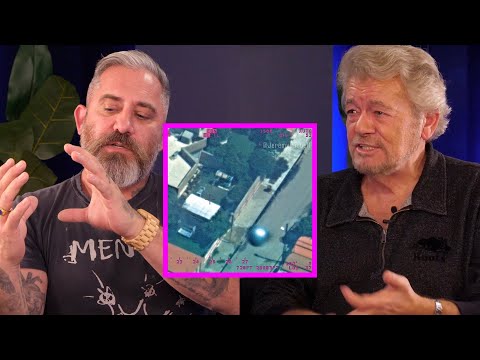
The Mosul Orb: A Military Filmed UFO In An Active War Zone
Jeremy Corbell's own account of the original January 2023 leaked still image and the case's basic facts, from the "Weaponized" channel — the primary source for the initial public disclosure at the center of this case file.
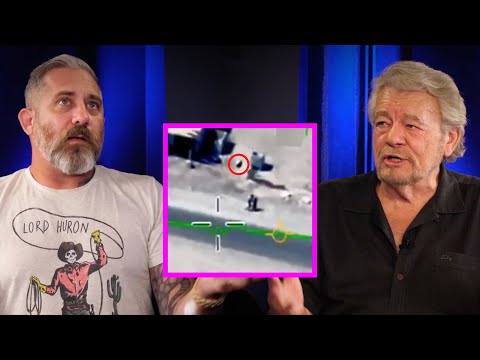
Why Won't the Pentagon Release the Mosul Orb UFO Video?
Covers the FOIA-denial and disclosure-fight period between the 2023 still-image leak and the 2025 full-video release — directly relevant to this case file's correction of the "declassified" framing.

Mosul Orb Video Analysed + Mick West "Puddle" Drama Explained
A dedicated technical breakdown of how the 2025 full-video release changed the leading skeptical explanation from a 2023 puddle-reflection guess to Mick West's revised "large balloon" call — the specific analytical shift this case file's own research treats as most significant.
Sources
- Metabunk (Mick West et al.). "Mosul 'Sphere'." Thread #12850. metabunk.org
- Metabunk (Mick West et al.). "Middle East 2022 MQ-9 Observed Apparent Spherical UAP (via AARO)." Thread #12932. metabunk.org
- Rasha, Michael. "'Mosul Orb': US silent on UFO filmed by military over Iraq." Fox News, Feb. 18, 2023. foxnews.com
- The Black Vault (John Greenewald Jr.). "The CLASSIFIED 'Mosul Orb' UAP Case: A New Chapter in Government Secrecy Tactics Unfolds." theblackvault.com
- The Black Vault (John Greenewald Jr.). "New UAP Leaked Imagery from the DoD: 'Mosul Orb' UAP Published by Jeremy Corbell & George Knapp." theblackvault.com
- The Black Vault (John Greenewald Jr.). "DoD Redacts Nearly All Records Explaining AARO's Use of Law Enforcement Exemption for UAP Files." theblackvault.com
- Fenton, Siobhan. "Was 'Mosul Orb' UFO just a stray US spy balloon?" The National, Feb. 16, 2023. thenationalnews.com
- The US Sun. "First ever bombshell vid of infamous 'Mosul orb' UFO is released." Jul. 2, 2025. the-sun.com
- TMZ. "UFO Sighting In Northern Iraq, Mysterious Orb Shown In Released Photo." Jan. 24, 2023. tmz.com
- Al Arabiya English. "UFO-like orb spotted flying over Iraq's Mosul in 2016 image released by US officials." Jan. 25, 2023. english.alarabiya.net
- Liberation Times. "FOIA Crack Opens: 'Mosul Orb' UFO Video Finally Goes Public." liberationtimes.com
- WEAPONIZED with Jeremy Corbell & George Knapp. "Mosul Orb UFO." weaponizedpodcast.com
- West, Mick (@MickWest). "Looking at the newly released Mosul Orb UFO video. It seems consistent with a large balloon." X (formerly Twitter), Jul. 1, 2025.
- AARO (All-domain Anomaly Resolution Office), U.S. Department of Defense. Historical Record Report, Volume I (2024), cited for AARO's aggregate findings on U.S. government UAP investigations generally. en.wikisource.org
- AARO. "Official UAP Imagery." Official repository of DoD-cleared UAP imagery releases, cited for this case file's finding that the Mosul Orb does not appear among AARO's own voluntary disclosures. aaro.mil
- U.S. Department of Defense, All-domain Anomaly Resolution Office. Official homepage, cited for AARO's mission and current case-handling status generally. aaro.mil
- YouTube (Jeremy Corbell channel). "The Mosul Orb: A Military Filmed UFO In An Active War Zone" (oEmbed-verified title and author, video ID CTAGJ2pof0s). youtube.com
- YouTube (Jeremy Corbell channel). "New Declassified UFO Video: Why Won't The Pentagon Release The MOSUL ORB UFO Video?" (oEmbed-verified title and author, video ID 2OPJxDcXY-k). youtube.com
- YouTube (TheSneezingMonkey channel). "Mysterious 'Mosul Orb' UFO Video Analysed + Mick West 'Puddle' Drama Explained" (oEmbed-verified title and author, video ID FofcNylfyQ0). youtube.com
- Wikimedia Commons. "MC-12 Liberty.jpg" (Senior Airman Tiffany Trojca, U.S. Air Force; public domain), source of this case file's hero image. commons.wikimedia.org
- Air & Space Forces Magazine. "Lifesaving Liberty" (background on the MC-12 Liberty's ISR mission, crew structure, and Iraq/Afghanistan deployment history). airandspaceforces.com
- Case File: USS Omaha Underwater Object (2019), cited for Jeremy Corbell and George Knapp's prior, DoD-confirmed leaked-footage track record.
- Case File: Thomas Mantell Crash (1948), cited for comparative evidentiary weight and balloon-explanation scoring precedent.
- Case File: South China Sea UAP Wave (2021), cited for comparative witness-credibility and instrumented-versus-uninstrumented scoring standards.
- Case File: Yukon UAP Shootdown (2023), cited as a related unresolved-status U.S./North American military UAP case.
- Warrick, Joby. Black Flags: The Rise of ISIS. Doubleday, 2015, cited for background on ISIS's 2014 capture and 2014–2017 occupation of Mosul.
See something inaccurate? Have additional information or sources?
Suggest an Edit →Last Updated: August 2026