
Knowles Family Mundrabilla Encounter
In the pre-dawn hours of January 20, 1988, Faye Knowles and her three adult sons were driving the Eyre Highway across Australia's Nullarbor Plain when they reported a glowing, egg-shaped object that chased their car, briefly lifted it off the road, and left it coated in black ash with a burst tire and a dented roof. Police who examined the vehicle at Ceduna called the family "extremely distraught" and took the report seriously; a laboratory analysis commissioned by a television network and a published meteorological investigation later reached far more mundane conclusions. Few Australian UFO cases have been as publicly documented, as thoroughly picked apart by skeptics, or as genuinely contested on both sides as what happened that night on the Nullarbor.
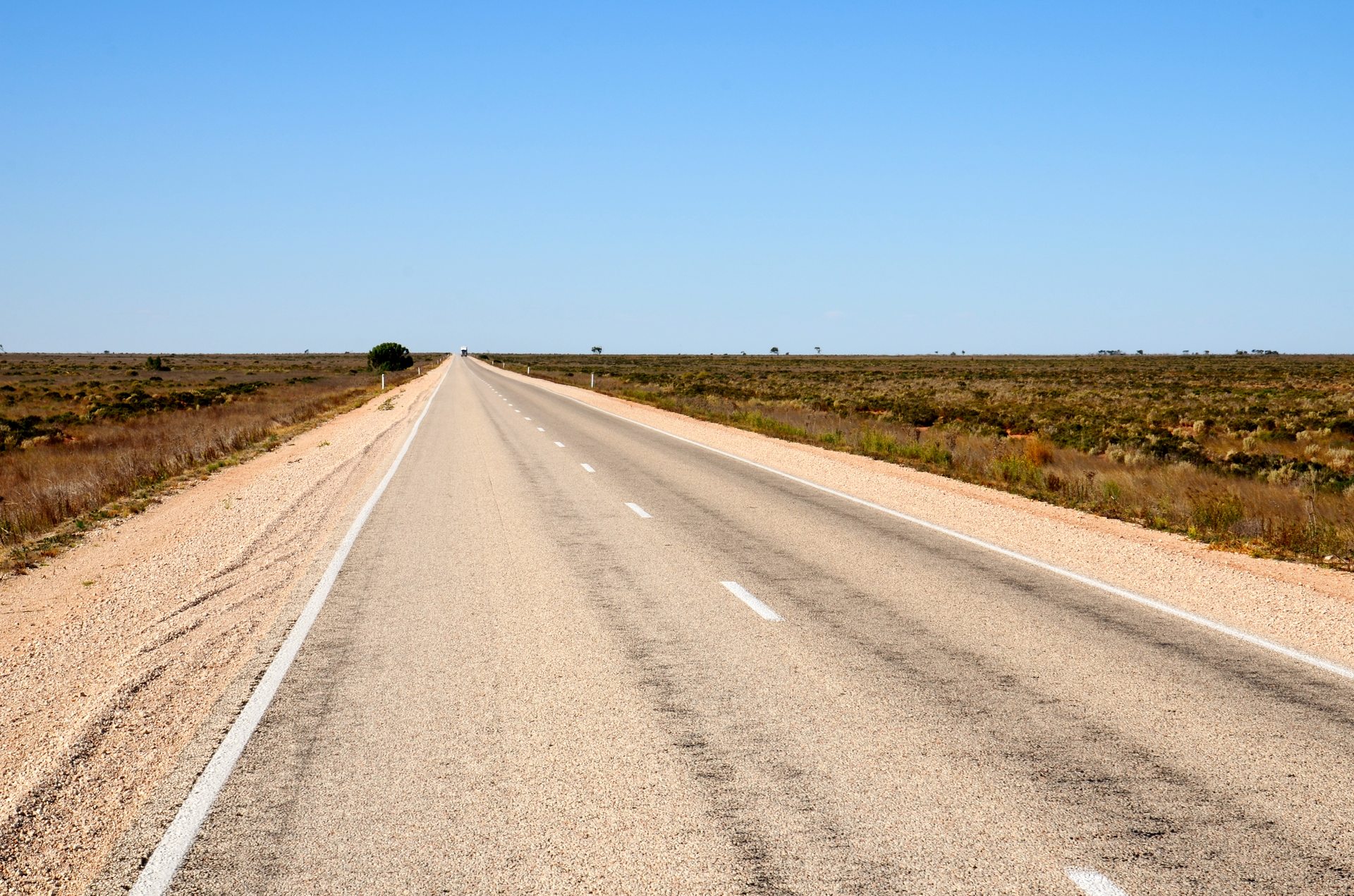
Pictured: the Eyre Highway crossing the Nullarbor Plain in Western Australia, the same lonely, treeless corridor near Mundrabilla where the Knowles family reported their encounter — not the actual incident site, the family's 1984 Ford Telstar, or the black ash residue itself. No rights-clear photograph of the car or the residue is known to exist; the contemporaneous 1988 photographs and television footage of the vehicle remain the copyrighted property of the Australian news organizations that first published them.
Theoretical Alignment
The case aligns most strongly with the Psycho-Social Hypothesis, given a well-documented atmospheric-refraction light source, a coherent published psychological model (Robert Bartholomew's "small group panic") that accounts for the family's reported physiological symptoms, and physical evidence that independent inspection failed to confirm as anomalous. The Extraterrestrial Hypothesis retains a small residual plausibility only because a handful of open questions — principally the roof dents and the character of the ash reported by the first outside witness — were never resolved with full forensic certainty either way.
Background
Faye Knowles, a 48-year-old resident of Perth, Western Australia, set out with her three adult sons — Patrick (24), Sean (21), and Wayne (18) — and two family dogs on a road trip across the Australian continent to Melbourne, a drive of roughly 3,500 km. Their route took them along the Eyre Highway, the only sealed road link across the Nullarbor Plain, a stretch of highway famous even among Australians for its emptiness: hundreds of kilometres separate townsites of any real size, and much of the corridor runs through featureless, treeless limestone karst country. By the early hours of January 20, 1988, the family had already been driving through the night for an extended period, deep into a section of highway between the small settlements of Madura and Mundrabilla, roughly 40 km west of the Mundrabilla Roadhouse itself.
January 1988 fell during a period of heightened Australian public interest in UFOs generally, and the Nullarbor specifically already carried a minor cultural reputation for strange-light reports — reputable enough that a roadside sign near the Western Australia–South Australia border still jokingly warns travellers to "beware of UFOs." The region's isolation, its wide-open dark skies, and the well-documented Min Min Light phenomenon associated with the Queensland outback all fed a pre-existing folk association between the outback highway and unexplained aerial lights. It was into this landscape, physically exhausted after many hours of night driving, that the Knowles family entered the stretch of highway where their reported encounter began.
Complete Timeline
| Date | Event |
|---|---|
| January 19, 1988 | Faye Knowles and her three sons depart Perth by car, bound for Melbourne, driving through the day and into the following night. |
| January 20, 1988, ~4:00–4:30 AM CDST | Roughly 40 km west of the Mundrabilla Roadhouse on the Eyre Highway, the family reports a bright, egg-shaped white-and-yellow light ahead of them on the road. What follows — a chase, near-collisions with two other vehicles, U-turns, and the alleged lifting of the car — unfolds over an account the family says lasted around 90 minutes. |
| January 20, 1988 (shortly after) | The family arrives at the Mundrabilla Roadhouse, distraught. Truck driver Graham Henley, who separately reported an unusual light in his rear-view mirror minutes earlier, inspects their car and confirms black ash and four roof indentations. |
| January 20, 1988 | The family continues approximately 370 km further to Ceduna, South Australia, where they report the incident to police. Sgt. James Fennell and Constable Bob Hagen inspect the vehicle and describe the family as "extremely distraught," corroborating the ash and roof damage. |
| January 21, 1988 | United Press International and Australian newspapers (including the Canberra Times) run the first wire coverage nationally and internationally under headlines such as "Australian family tells of close encounter with UFO." |
| January 22, 1988 | The Perth tabloid The Star runs the story on its front page, cementing national media attention. |
| Late January 1988 | UFO Research South Australia is contacted; the family travels on to Adelaide for further interviews. Investigator Keith Basterfield is brought into the case and initially calls it "an extraordinary example of a close encounter that had left physical traces." |
| Late January 1988 | A television network reportedly pays the family an exclusive-interview fee (commonly cited as around AU$5,000), a "chequebook journalism" arrangement that investigators say subsequently complicated independent access to the family and the vehicle. |
| April 1988 | Keith Basterfield and R. Brooke publish "The Mundrabilla Incident — January 20th 1988" in the UFO Research Australia Newsletter; Tim Mendham publishes a parallel report in the Australian Skeptic magazine. |
| Mid-1988 | A laboratory commissioned by the television network that paid for the family's exclusive interview examines the car and reports "no significant dust... as presented for inspection." Independently, dust samples reach NASA Ames scientist Richard F. Haines, who finds the interior and exterior samples compositionally distinct. |
| June 1988 | Financially unable to keep up payments on the car, the family loses it; the vehicle is auctioned off. |
| July 1988 | Barry Harris publishes a critical review, "The Nullarbor UFO Incident: Dramatic Case Quickly Fades," in The Skeptical Inquirer (Vol. 12, No. 4). |
| October 17, 1988 | A bus driver and passengers report a similar hovering light along the same highway corridor near Mundrabilla. Basterfield investigates independently and identifies the light as the planet Jupiter, distorted by atmospheric refraction. |
| December 1989 | Retired meteorologist A.T. Brunt, commissioned by Popular Astronomy editor Ian Ridpath, publishes a detailed meteorological reconstruction of both 1988 incidents in The Skeptic, concluding both sightings were superior mirages of vehicle headlights and, in the October case, of Jupiter. |
| 1998 | Sociologist Robert Bartholomew classifies the case as a "small group panic" in his book UFOs & Alien Contact: Two Centuries of Mystery. |
| 2020 | Skeptoid host Brian Dunning revisits the case in Episode 715, synthesizing the mirage, tire-overspeed, and small-group-panic explanations into a single account and publishing archival interview transcripts. |
The Encounter
According to the family's own account, given consistently to police, investigators, and journalists in the days after the incident, Sean Knowles was driving (though the earliest wire report, filed with UPI on January 21, instead states his mother was behind the wheel and swerved to avoid the object — one of several small discrepancies between the very earliest coverage and the version that later became canonical) when the family spotted a bright light ahead of them on the highway. Sean initially thought it resembled the headlights of an approaching truck, and joked to his brother that it might be a "spaceship." As the car closed the distance, the light grew brighter and larger, closing to within an estimated 20 metres and resolving — in the family's description — into a "slightly angular egg in an egg-cup shape" about a metre wide, glowing bright white with a yellow centre. Sean's own contemporaneous sketch of the shape was reproduced in newspaper coverage at the time.
The family reported the object moving erratically ahead of their vehicle, then swerving to avoid a head-on collision brought them into the path of a second, oncoming car towing a caravan — whose occupants were never identified and never came forward. The Knowles say the object then appeared to give chase to that second vehicle before returning its attention to their own car; the family made two U-turns, first attempting to give chase themselves, then reversing course again out of fear. It was at this point, by their account, that the object caught up to and settled onto the roof of the car. Faye Knowles wound down a rear window and reached up to touch the roof, describing what she felt as "soft, warm and spongy," not burning, but leaving her hand covered in a fine, blackish dust when she withdrew it. Patrick, in the front passenger seat, wound down his own window and was covered in the same dust, accompanied by what he described as a foul smell "like dead bodies."
What followed, by the family's telling, was a high-pitched humming sound that sent the two dogs in the car into a frenzy, a sense of disorientation, and the alarming perception that their own voices had slowed and dropped in pitch. Sean later told a reporter he had accelerated to nearly 200 km/h trying to escape — a claim skeptics have since noted exceeds both the family's own later, more measured statements to police (which cited speeds closer to 110 km/h) and, more importantly, the S-speed-rating (180 km/h) of the vehicle's stock tires. Patrick told an interviewer afterward, "I thought I was going to die... I just managed to feel like we'd died," while Faye said simply, "It was like we were in a time warp." Believing the object had lifted the car briefly off the road, the family reported it was then forced back down with enough violence to burst the rear right tyre. Sean brought the car to a stop and, by the family's account, briefly blacked out. All four fled the vehicle and hid in roadside bushes for approximately fifteen minutes before returning to change the burst tyre and continue driving.
Arrival at Mundrabilla and the Immediate Aftermath
Unknown to the Knowles family at the time, truck driver Graham Henley had independently observed an unusual light in his own rear-view mirror along the same stretch of highway around the same time, describing it as resembling "a big fried egg hung upside down" and noting he kept it in view for roughly five minutes without ever seeing headlights beneath it. Shortly after, at the Mundrabilla Roadhouse, Henley watched the Knowles family arrive in a visibly frightened state and examined their car himself. He confirmed black ash coating both the interior and exterior of the vehicle — likening its texture to fine silicon sand with a faintly burnt odour — and counted four indentations in the roof consistent with the family's account, alongside the already-changed burst tyre. Henley and two companions subsequently drove back along the highway to the reported location of the encounter and told investigators they found skid marks, footprints, and tyre tracks they felt corroborated the family's story, though this informal roadside survey was never independently forensically documented.
The family drove on roughly 370 km further to Ceduna, South Australia, where they reported the incident to police. According to the contemporaneous UPI wire report, Police Sgt. James Fennell inspected the car personally: "The car was covered in a thick coating of black ash and there was ash inside the car. There was slight damage to the roof of the car," he told the wire service, adding that the family "were extremely distraught" and that "their voices became slurred and abnormally slow." Constable Bob Hagen, who also examined the vehicle, told UPI: "Reports of UFO sightings usually don't hold much water with us, but after checking their car and seeing them, we think there could be something in this." Fennell noted that the family's report was one of four independent sightings reported that same night across the region — the Knowles, truck driver Henley, a tuna-spotter aircraft crew, and a fishing trawler crew in the Great Australian Bight — separated by "hundreds of kilometres," with, in his words, "no reason to conspire." This genuine multiplicity of same-night reports is one of the strongest points cited by those who consider the case unresolved; it is also, as later meteorological analysis argued, exactly the pattern one would expect from a single widespread atmospheric condition capable of producing similar mirage effects at many separated locations simultaneously.
The Media Storm and "Chequebook Journalism"
The story broke nationally within a day, running as wire copy through United Press International on January 21 and appearing on the front page of the Perth tabloid The Star on January 22. Australian UFO investigators, including Keith Basterfield of UFO Research South Australia, were contacted and arranged for the family to travel on to Adelaide for further interviews; Basterfield's initial assessment was that the case "appeared to be an extraordinary example of a close encounter that had left physical traces." Almost immediately, however, the investigation ran into a problem that has dogged high-profile UFO cases before and since: a television network reportedly negotiated a paid exclusive interview with the family, commonly cited at around AU$5,000, on the condition that no other media outlet be given comparable access to the family or their car. Investigators at the time specifically cited this "chequebook journalism" arrangement as an obstruction to independent, disinterested fact-finding — they were forced to negotiate through the television station itself simply to examine the vehicle further. The same network ultimately commissioned its own laboratory investigation of the car, a study whose conclusions (see below) proved considerably less dramatic than the initial press coverage.
The financial and social fallout for the family compounded in the following months. Contemporary Australian coverage reported that the Knowles found themselves the subject of considerable public ridicule and skepticism once the initial sympathetic wave of coverage passed, and that they struggled to keep up payments on the car at the centre of the case — the same vehicle that had generated the exclusive interview fee in the first place — eventually losing it to auction by June 1988. Blogger Ashley Knibb's 2020 retrospective on the case argues that this entire commercial and reputational spiral is itself informative: a family perpetrating a deliberate hoax for profit would, on Knibb's reading, more plausibly have sought to protect and monetize their story going forward rather than watch it curdle into a financial and social liability, a point proponents of the family's sincerity cite even while accepting a mundane explanation for the light itself. Knibb's analysis also raises a methodological objection independent of any particular explanation: the family's most detailed statements were gathered in joint, group interviews rather than separately, a practice now understood in eyewitness-memory research to risk cross-contaminating individually held recollections into a single, harmonized group narrative — a phenomenon unrelated to honesty but highly relevant to reconstructing exactly what was perceived, in what order, by whom.
The Forensic Dust Analysis
The physical evidence chain in this case is genuinely contested, and both the initial reports and the later laboratory findings deserve to be stated plainly rather than resolved into a single tidy narrative. In the immediate aftermath, three separate parties with no evident motive to fabricate a story — truck driver Graham Henley, and Ceduna police officers Sgt. James Fennell and Constable Bob Hagen — personally observed and described black ash coating the car and indentations in its roof. This was not simply the family's own uncorroborated claim.
What happened next is where the case grows more complicated. The television station that had secured the family's exclusive interview commissioned a formal laboratory inspection of the vehicle; per the summary preserved by UFO Research Queensland, that lab concluded "no significant dust was observed on the vehicle as presented for inspection" by the time it reached the laboratory — raising the possibility that whatever material had been present shortly after the incident had already been disturbed, cleaned, or was simply less substantial than the immediate eyewitness descriptions suggested. Separately, UFO researchers obtained their own dust samples and forwarded them to Richard F. Haines, a Ph.D. research scientist then employed at NASA's Ames Research Center (acting independently of NASA in this analysis, not on the agency's behalf). Haines reported that dust taken from the car's interior differed compositionally from dust sampled off its exterior — a genuinely interesting finding, though one that was never published in a peer-reviewed journal, never independently replicated by a second laboratory, and does not, on its own, establish anything about the material's ultimate origin. As UFO Research Queensland's own summary concluded at the time: "Further tests by different analysts have provided no evidence of it being alien or unusual... Unfortunately none of this is conclusive."
A.T. Brunt's later, considerably more skeptical account — based on what he described as thorough inspections of the vehicle "on several occasions by the Police and various UFO research groups in Australia" — reached a starkly different characterization: that there was, in the end, "no black ash inside or outside the car," with "the only addition" being "a black deposit on the metal rims of the two front tyres, which was consistent with material from the brake linings"; that the rear tyre "had burst in a normal manner, such as one would expect from a vehicle driven at high speed"; and that the roof dents were "insignificant," with "no proof that they were not there before the event." Reconciling Brunt's account with the earlier, independently corroborated observations of ash and roof damage by Henley and the Ceduna police is the single hardest unresolved question in the case: either the material genuinely dissipated, was removed, or was substantially less remarkable by the time later, more rigorous inspection occurred, or the earlier witnesses' initial impressions were themselves exaggerated by the emotional intensity of the moment. Both are plausible; neither can be proven from the surviving public record.
The October 1988 Second Incident
Nine months later, on October 17, 1988, a bus driven by Peter Chapman with roughly twenty-five passengers aboard was travelling westward along the Eyre Highway approximately 20 km west of the Mundrabilla Roadhouse — almost the identical stretch of highway as the January sighting. Chapman reported a bright light on the bus's right-hand side that appeared to hover roughly 20 metres above the ground and seemed to pace the bus for several miles at high speed; he woke five passengers, one of whom thought it might be the reflection of a following truck's headlights in the bus's mirror. No physical effects on the bus or its occupants were reported, and Chapman did not stop to investigate further. Keith Basterfield investigated independently and identified the light's position as matching that of the planet Jupiter at the time, at an azimuth and elevation consistent with the reported sighting direction — a conclusion A.T. Brunt's subsequent meteorological analysis endorsed, noting the same kind of atmospheric temperature inversion present on the October night that had likely distorted the planet's ordinarily unremarkable light into something bright, moving, and dramatic. The rapid resolution of this second, independently investigated case — a bright planet refracted by a real, measurable inversion — is frequently cited by skeptics as the strongest available analogue for what might explain the January case's light as well, though it does not by itself explain the Knowles family's reported physical contact and physiological effects.
The Psychological Explanation
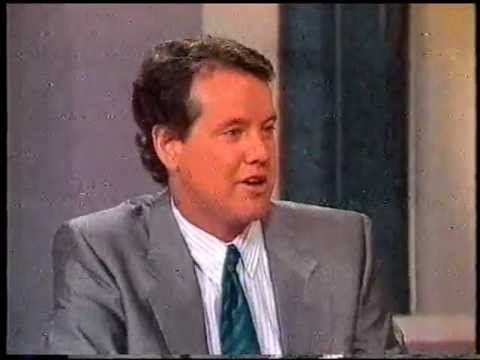
Medical sociologist Robert Bartholomew, in his 1998 book UFOs & Alien Contact: Two Centuries of Mystery, classified the Knowles case as an example of what he calls a "small group panic": episodes in which "normal, healthy people who, as a result of a series of unusual events, grow paranoid and literally scare themselves after growing convinced that their lives are in imminent danger," typically under conditions of prolonged fatigue, isolation, and darkness that "enhance suggestibility and inhibit... powers of critical thinking." Bartholomew's own summary of the case, later quoted at length by Skeptoid host Brian Dunning, concluded: "Given the lack of corroborating physical evidence, and the frightened state of the occupants, it appears that family members, fatigued from a long trip, under the cover of darkness while travelling on an unfamiliar road, mistook an anomalous light for an extraterrestrial space craft that they believed was pursuing them." In a filmed interview shortly after the incident, reproduced in full by researchers since, the family's own words support the framework: Patrick told a reporter, "I was a bit tired, yeah, but not tired enough to see a thing like that," while also confirming, "I thought I was going to die." Faye added she was too frightened to turn the lights off at night afterward. The physiological symptoms the family reported — slowed, slurred voices and disorientation — are also consistent with ordinary "morning voice" caused by vocal-cord dehydration after a long night in the extremely arid Nullarbor air, a mundane alternative to any exotic physiological effect. Wayne, the youngest, gave the most measured account of any family member when a reporter separately asked how he felt: simply "pretty scary" — a notably restrained answer, difficult to reconcile with a deliberate hoax staged for maximum dramatic effect, but entirely consistent with a genuinely frightening, ambiguous experience remembered afterward with somewhat more composure than it was lived through at the time.
Key Witnesses
Faye Knowles
A 48-year-old Perth resident driving her three sons to Melbourne. She gave the most physically specific testimony in the case — describing the car's roof as feeling "soft, warm and spongy" — and was independently described by police as "extremely distraught" upon arrival at Ceduna. Her account has remained broadly consistent across multiple retellings, though the earliest wire report (UPI, Jan. 21, 1988) credits her, not Sean, with driving and swerving to avoid the object.
Sean Knowles
Most commonly identified in secondary accounts as the family's driver that night. Told a reporter he reached speeds of nearly 200 km/h trying to escape the object — a figure exceeding both the vehicle's tire speed rating and the family's own more measured statements to police, and a detail skeptics cite as a plausible mechanical explanation for the tire failure.
Patrick Knowles
The first to wind down a window during the incident; described being covered in dust and a foul smell. His statement, "I thought I was going to die," is frequently cited by both proponents (as evidence of a genuine, non-fabricated fright reaction) and skeptics (as consistent with acute situational panic rather than an actual physical threat).
Wayne Knowles
The youngest family member, whose account broadly corroborated his mother's and brothers'. Described the experience simply as "pretty scary" in a contemporaneous interview, a notably understated remark relative to the case's dramatic press coverage.
Graham Henley
Independently reported an unusual light resembling "a big fried egg hung upside down" in his rear-view mirror around the same time and location, without ever seeing headlights beneath it. Minutes later, he was the first outside party to inspect the Knowles' car at the Mundrabilla Roadhouse, personally confirming the black ash and roof dents — a genuinely independent observation of the physical aftermath, though not of the alleged mid-air interaction itself.
Sgt. James Fennell & Constable Bob Hagen
The two officers who formally inspected the vehicle and interviewed the family at Ceduna. Fennell told United Press International the family "were extremely distraught" and confirmed the ash and roof damage himself; Hagen's statement that "we think there could be something in this" is one of the case's most-quoted lines and reflects the genuine seriousness with which local police treated the report at the time, notwithstanding their professional skepticism of UFO reports generally.
The Five Observables Assessment
The Five Observables framework is applied to the performance characteristics reported in this case:
Assessment: Only the claimed anti-gravity lift of the vehicle registers as even speculatively present, and it rests entirely on the family's own perception during a rapidly unfolding, frightening event with no independent corroboration of the car actually leaving the ground. No instant acceleration, hypersonic performance, low-observability characteristics, or trans-medium transition was reported or claimed by any witness. The object was described throughout as a slow-moving, highly visible, brightly luminous light — a profile far more consistent with a misidentified conventional light source undergoing atmospheric distortion than with a controlled craft demonstrating exotic flight performance.
Evidence Assessment
Supporting Anomalous Origin
- Physical ash/dust and roof indentations were independently confirmed by a truck driver and two police officers within hours, not solely claimed by the family.
- Richard Haines's dust-sample analysis reported a genuine compositional difference between interior and exterior material.
- Four separate, geographically dispersed parties reported unusual lights the same night, and police noted they had "no reason to conspire."
- The family reported the incident to police immediately and consistently, with no evident financial motive at the time of the initial report.
- Investigator Keith Basterfield's initial on-the-ground assessment called it "an extraordinary example of a close encounter that had left physical traces."
Supporting Conventional Explanation
- A.T. Brunt's detailed 1989 meteorological reconstruction found a documented, unusually strong temperature inversion present on the exact night and location, consistent with a superior mirage of an oncoming vehicle's headlights.
- The independently investigated October 1988 "second incident" on the same highway stretch was conclusively identified as the planet Jupiter distorted by the same refraction phenomenon.
- A television-commissioned laboratory found no significant dust on the vehicle by the time of formal inspection, and other analysts attributed what deposits remained to ordinary brake-lining residue.
- The reported nearly-200-km/h escape speed exceeds the vehicle's tire speed rating, offering a mundane mechanical explanation for the tire failure.
- Sociologist Robert Bartholomew's published "small group panic" framework accounts for the family's reported physiological symptoms (slowed voices, disorientation, terror) without requiring any anomalous cause.
- The family's paid exclusive television interview arrangement complicated independent, disinterested investigation from the earliest days of the case.
Why "Disputed"
This case is stamped Disputed rather than Credible or Debunked because both sides of the record contain genuine, unresolved tension rather than a clean resolution in either direction. In the case's favor: this was not a lone, uncorroborated claim. A truck driver and two police officers independently observed and described physical damage and residue within hours, and four separated parties reported unusual lights the same night. Working against the case: no instrumented evidence of any kind exists; the family's own physical evidence chain collapsed under later, more rigorous inspection, with a television-commissioned lab finding no significant dust and a detailed retired-meteorologist's analysis attributing the residue that remained to ordinary brake material; and a genuinely well-documented atmospheric temperature inversion — the same kind of condition independently confirmed to have produced a bright, moving "UFO" out of the planet Jupiter nine months later on the identical stretch of highway — was present on the exact night and location of the January sighting. A published, credentialed sociological framework (small group panic) also independently and specifically accounts for the family's reported physiological effects without requiring anything anomalous. The case earns a below-midpoint score not because the family's sincerity is in doubt — multiple disinterested observers found them genuinely and visibly terrified — but because the strongest physical claims did not survive contact with later, more rigorous analysis, and a specific, well-evidenced mundane explanation exists for both the light and the family's reported symptoms.
Sensor & Instrumentation Detection Profile
No radar, camera, or instrumented sensor of any kind captured the event. The only "instrumentation" applied to the case came after the fact: a television-network-commissioned laboratory inspection of the Knowles' car, an independent dust-sample comparison by NASA research scientist Richard F. Haines, and a subsequent meteorological reconstruction of the night's upper-air temperature profile by retired Bureau of Meteorology regional director A.T. Brunt. All human testimony was unaided by any instrument; the entire primary evidentiary record rests on eyewitness account and the vehicle's post-incident physical condition.
Environmental & Geospatial Context
The Nullarbor Plain is one of the most isolated inhabited corridors on Earth: a flat, treeless expanse of limestone karst straddling the Western Australia–South Australia border, with no towns of significant size between Ceduna and Norseman or Kalgoorlie, and with settlements reduced to widely spaced roadhouses and railway sidings. The Eyre Highway runs close to the coast rather than across the plain's geographic interior, but the entire region is colloquially known as "the Nullarbor." A.T. Brunt's 1989 analysis in The Skeptic reconstructed the actual weather charts for the morning of January 20, 1988: a pronounced ridge of high pressure, over 1,000 km long, extended along the entire southern coastline of Western Australia from a high centered well west of Perth — an unusual configuration for midsummer. The nearest upper-air sounding station, at Forrest roughly 100 km south of the sighting location, recorded a marked temperature inversion between approximately 3,800 and 5,300 feet, with the sharpest temperature increase occurring near the top of the inversion layer. Skies were nearly cloudless (0–2 eighths low cloud) with very light winds. These are precisely the calm, clear, stable conditions meteorologists associate with atmospheric mirage formation — and, as Brunt noted, "you will never see them on windy or cloudy nights," a description that also matches Queensland's long-documented "Min Min Lights." A superior mirage forms when a layer of warmer air sits above cooler air near the surface, bending light downward and causing a distant object to appear displaced upward, magnified, distorted in shape and colour, and prone to sudden, seemingly erratic movement as the observer or the light source shifts position relative to the unstable boundary between the two air layers — a physical mechanism entirely capable of producing an apparently "jumping," flickering, hovering light with no obvious relationship to its true, mundane source on the ground.
Observer Credibility & Occupational Profile
The primary witnesses were Faye Knowles, a 48-year-old Perth resident, and her three adult sons — Patrick (24), Sean (21), and Wayne (18) — none of whom had any technical, aviation, or scientific training relevant to evaluating an aerial phenomenon. By their own account and that of investigators, they had been driving for roughly thirteen hours overnight on an unfamiliar desert highway at the time of the sighting, a combination of sleep deprivation, monotony, and darkness that later analysts flagged as relevant to eyewitness reliability. Their credibility is bolstered, however, by the fact that they reported the incident immediately and consistently to police upon reaching Ceduna, submitted to vehicle inspection without apparent hesitation, and were independently described as genuinely and visibly distressed by multiple parties who had no stake in the outcome — truck driver Graham Henley and Ceduna police officers among them. Weighing against credibility is the family's acceptance, within days, of a reported paid exclusive television interview, a detail investigators cited at the time as complicating any further independent, disinterested account-gathering. The case's after-the-fact analysts carried considerably more relevant training: A.T. Brunt was a former regional director of the South Australian Bureau of Meteorology; Richard F. Haines held a Ph.D. and NASA Ames Research Center credentials; and Robert Bartholomew is a published medical sociologist specializing in collective delusion.
Physical & Material Assays
Three distinct physical claims were made: a coating of black ash or dust on the car's interior and exterior; four indentations in the roof; and a burst rear tire. All three were independently observed by outside parties within hours of the incident — truck driver Graham Henley at the Mundrabilla Roadhouse, and Ceduna police officers thereafter — which is a genuine point in the case's favor: this was not solely the family's own claim. What remains disputed is the origin of that material and damage, not its existence. A television station commissioned a laboratory investigation of the vehicle that concluded "no significant dust was observed on the vehicle as presented for inspection." Separately, investigators obtained their own samples and forwarded them to Richard Haines, then a NASA Ames scientist acting independently of the agency, who reported that dust from the car's interior differed compositionally from dust sampled off the exterior — a finding never published in a peer-reviewed venue or independently replicated. A.T. Brunt's later, more skeptical inspection accounts describe the residue actually found as consistent with brake-lining material on the front wheel rims, the roof dents as insignificant and of unproven origin, and the tire as burst "in a normal manner, such as one would expect from a vehicle driven at high speed." Barry Harris's 1988 review for The Skeptical Inquirer, "The Nullarbor UFO Incident: Dramatic Case Quickly Fades," went further still, characterizing the roof marks on closer examination as minor and consistent with ordinary wear from a roof rack rather than any impact event — a mundane, everyday explanation that, if correct, would remove one of the case's three physical claims almost entirely. See Material Analysis below for the full account of this conflicting evidence chain.
Historical Precedents & Archive Matches
The Nullarbor corridor has a documented history of unexplained-light reports predating and following 1988, cataloged in detail by the Project 1947 archive's regional survey of Nullarbor Plain UAP reports. Nine months after the Knowles case, on October 17, 1988, a bus driver and several passengers reported a similar hovering light along the same stretch of highway roughly 20 km west of the Mundrabilla Roadhouse — a sighting Keith Basterfield identified as the planet Jupiter, distorted by the same kind of temperature-inversion refraction implicated in the January case. The broader phenomenon of atmospheric mirages producing "ghost lights" over long, flat, isolated highways is independently documented in Queensland's famous Min Min Lights, and in the American "Brown Mountain Lights," both widely attributed to distant vehicle headlights refracted by temperature inversions. In an odd historical footnote, the Mundrabilla area is also the findspot of the Mundrabilla meteorite, discovered in 1911 and among the largest meteorites ever recovered in Australia — a genuine regional precedent for the meteorite-disintegration explanation some analysts later proposed for the 1988 case (see the Conventional Explanation Candidate section below). Brunt's own analysis draws a direct comparison to one of Australia's most famous hoax precedents on the same highway: "Nullarbor Nymph" Geniece Brooker Scott, who spent time posing as a feral woman living wild among kangaroos near the same corridor and later told reporters she too had seen unexplained lights in the sky — "they could be meteorites or satellites, or something else!" As calibration for just how far a bright light can appear to travel across the flat plain under the right conditions, Brunt cites Australian National Railways data showing that passengers waiting at sidings on the long, straight transcontinental line have reported seeing an approaching train's headlight for up to an hour before it physically arrived; at a normal running speed of 110 km/h, that means a conventional 2,000-candlepower locomotive headlight was being perceived as an aerial light while still more than 100 km away — a striking, independently documented illustration of exactly the refraction mechanism Brunt applied to the Knowles sighting itself.
Material Analysis
The Knowles case is unusual among physical-trace UFO reports in that the trace evidence was independently observed by disinterested third parties (a truck driver and two police officers) within hours — yet still ultimately failed to survive later, more rigorous laboratory and expert scrutiny. No sample of the reported black ash was ever preserved, formally chain-of-custody documented, and subjected to independent peer-reviewed materials analysis; everything that exists is secondhand description, a single television-network-commissioned lab report whose full methodology was never published, and Richard Haines's unpublished interior-versus-exterior comparison. The roof dents were never measured, photographed with any scale reference in the surviving public record, or compared against the vehicle's pre-incident condition, leaving open A.T. Brunt's specific objection that there was "no proof they were not there before the event." The tire itself — a physical object that, in principle, could still be forensically examined for the specific failure signature of an overspeed blowout versus an impact event — does not appear to have been retained or independently tested by any party; the vehicle itself was sold at auction within months, foreclosing any later re-examination.
Supporting Non-Terrestrial Origin
- Independent, contemporaneous eyewitness confirmation of ash and roof damage from parties with no financial or reputational stake in the outcome.
- Haines's reported compositional difference between interior and exterior dust samples, unexplained by a purely mundane single-source contaminant.
Supporting Terrestrial Origin
- The television-commissioned laboratory found no significant dust on the vehicle by the time of formal inspection.
- A.T. Brunt's account attributes the remaining residue to ordinary brake-lining material on the wheel rims, not the body of the car.
- No chain-of-custody-documented sample, photograph with scale reference, or peer-reviewed published analysis exists for any of the three physical claims.
- The vehicle was sold and dispersed within months, permanently foreclosing independent re-examination.
The Conventional Explanation Candidate: Superior Mirage / Temperature Inversion Refraction
The strongest and most thoroughly documented conventional explanation is the one developed by retired meteorologist A.T. Brunt in his 1989 report for The Skeptic. Brunt obtained the actual upper-air temperature soundings from the Forrest weather station for the night of the sighting and found a pronounced temperature inversion — warmer air overlying colder air — of exactly the kind known to produce a "superior mirage": a refraction effect that displaces, distorts, magnifies, and can cause a distant light source to appear to jump, flicker, or hover well above its true position. Brunt notes this is the same well-documented mechanism behind Queensland's Min Min Lights and, closer to home, the identical phenomenon independently confirmed to explain the October 1988 "second incident" on the same highway (there conclusively identified as the planet Jupiter). It deserves serious evaluation because it rests on actual measured atmospheric data for the specific night and location in question, not mere speculation, and because it has already been shown to correctly explain a near-identical sighting on the same stretch of road.
Small Group Panic / Psychogenic Fright Reaction
Sociologist Robert Bartholomew's "small group panic" framework addresses what the mirage explanation alone cannot: the family's reported physiological symptoms (slowed and distorted voices, disorientation, overwhelming terror) and their perception of physical contact with the object. Under conditions of extreme fatigue, an unfamiliar dark road, and a genuinely startling ambiguous light, otherwise normal people can convince themselves — sincerely, without conscious fabrication — that they are under coordinated physical attack, and can retrospectively interpret ordinary sensations (a "morning voice" from an overnight desert drive, the jolt of braking hard, adrenaline-driven disorientation) within that frame. This explanation is corroborated by the family's own recorded statements expressing genuine terror rather than excitement or opportunism, and it is consistent with the case having produced no lasting instrumented or forensic evidence despite extensive contemporaneous physical inspection.
Mundane Physical Causes: Brake Dust, a Pre-Existing Roof, and an Overspeed Tire Blowout
For the three specific physical claims, independent mundane explanations exist for each: the residue A.T. Brunt's inspection found was consistent with ordinary automotive brake-lining material, not an exotic substance; the roof dents were of unproven origin and unmeasured against the car's condition before the trip; and the tire's failure is consistent with ordinary overspeed blowout given the family's own reported top speed (up to 200 km/h) against the vehicle's 180 km/h-rated stock tires. None of these individually requires an anomalous cause, though critics of this explanation note it requires three separate coincidences (dust, dents, and a blowout) to converge at the exact same frightening moment — a coincidence proponents consider a weakness of the skeptical case and skeptics consider an artifact of a single stressful high-speed driving event naturally producing several kinds of vehicle stress at once.
Meteorite Disintegration
A research physicist at the University of Wollongong, Glen Moore, told The Advertiser at the time that the family's description — a bright light, violent shaking, a burnt smell, and a deposit of fine powder — was consistent with the atmospheric disintegration of a small carbonaceous meteorite (notably, the Mundrabilla area is itself the findspot of one of Australia's largest-ever recovered meteorites, discovered in 1911). This explanation is intriguing given the local precedent but considerably weaker as a complete account: no independent fireball sighting, sonic boom, or recovered meteoritic fragment was ever reported by any of the other three parties who separately saw lights that same night, and a genuine bolide event of the size implied would typically be expected to produce a far more widely observed and far briefer (seconds, not 90 minutes) event than the one described.
Superior Mirage / Temperature Inversion
PlausibleSupported by actual measured upper-air data for the exact night and location, and independently confirmed to explain a near-identical light on the same highway nine months later.
Small Group Panic (Bartholomew)
PlausibleA published, credentialed sociological framework that specifically and coherently accounts for the reported physiological and behavioral effects without requiring anything anomalous.
Mundane Physical Causes (Brake Dust, Overspeed Tire)
InconclusiveEach individual mundane cause is plausible, but requires three separate coincidences to converge simultaneously, and no chain-of-custody-documented sample was ever independently tested to settle the ash's origin definitively.
Meteorite Disintegration (Moore)
ImplausibleAn intriguing regional precedent, but unsupported by any corroborating fireball, sonic boom, or recovered fragment, and a poor match for a reported 90-minute duration.
Related Cases
Confirmed Documents & Official Records
The National Archives' own account of how RAAF Directorate of Air Force Intelligence handled civilian UFO reports (using standardized reporting forms) before ceasing formal investigation in 1994, and where the resulting case files are now held.
UNCLASSIFIED / PUBLIC ARCHIVEAs a civilian Australian case with no U.S. military or intelligence-agency connection, no dedicated declassified American government file exists for the Knowles incident specifically. The RAAF-era Australian civilian UFO report files (the closest domestic equivalent) are held by the National Archives of Australia under its Bureau of Meteorology and Department of Defence record series and can be searched directly via RecordSearch below.
Search Government Archives Directly
Further Reading — Recommended Literature
UFOs & Alien Contact: Two Centuries of Mystery
The book in which sociologist Robert Bartholomew classifies the Knowles case as a "small group panic," situating it within a broader academic framework of collective delusion applied to dozens of historical UFO reports.
UFO's: A Scientific Debate
A foundational scientific-skeptic anthology, useful for understanding the atmospheric-optics and eyewitness-reliability arguments applied throughout this case's meteorological and psychological analyses.
The UFO Encyclopedia
The standard reference encyclopedia for cross-referencing individual case details, investigator names, and publication history for Australian and international UFO reports including Mundrabilla.
UFOs Explained
Klass's foundational work on mundane explanations for UFO reports, including the atmospheric-mirage and misidentified-light mechanisms directly applied to the Nullarbor case by later Australian researchers.
The UFO Verdict: Examining the Evidence
A skeptical case-by-case UFO analysis cited directly in A.T. Brunt's own 1989 investigation of the Nullarbor incidents, useful for the broader methodology behind mirage and misidentification explanations.
Essential Viewing
Sources
- Brunt, A.T. "From the Archives: The 1988 Nullarbor UFO Mystery — Solved." The Skeptic (UK), Dec. 5, 1989 (reprint of The Skeptic, Australia, Vol. 3, Issue 5, 1989). skeptic.org.uk
- UFO Research Queensland (reproduced by UFO Evidence). "Knowles Family UFO Encounter in Mundrabilla, Australia." Case ID 1090. ufoevidence.org
- United Press International. "Australian Family Tells of Close Encounter with UFO." UPI Archives, Jan. 21, 1988. upi.com
- Dunning, Brian. "The Knowles Family UFO Incident." Skeptoid, Episode 715, Feb. 18, 2020. skeptoid.com
- Harris, B. "The Nullarbor UFO Incident: Dramatic Case Quickly Fades." The Skeptical Inquirer, Vol. 12, No. 4, July 1988, pp. 349–352.
- Mendham, Tim. "News Report: The Nullarbor UFO." The Skeptic (Australia), Vol. 8, No. 1, April 1988, pp. 8–10, 13.
- Bartholomew, Robert E. & Howard, George S. UFOs & Alien Contact: Two Centuries of Mystery. Prometheus Books, 1998.
- Basterfield, Keith & Brooke, R. "The Mundrabilla Incident — January 20th 1988." UFO Research Australia Newsletter, April 1988.
- Basterfield, Keith. "The Mundrabilla 'UFO' of October 17th 1988." UFO Research Australia, 1988.
- Project 1947 (Loren Gross & Jerome Clark archive). "A Reference Catalogue of UAP Reported from the Nullarbor Plain Region of Southern Australia." project1947.com
- IndieRockArchiver. "UFO Attack — Knowles Family — Nullarbor 20/1/1988" [1988 Australian television interview footage]. YouTube, 2013. youtu.be
- National Archives of Australia. "Flying Saucers: Fact or Fiction?" naa.gov.au
- Knibb, Ashley. "Looking At The Knowles Family UFO Encounter." Jan. 19, 2020. ashleyknibb.com
- Zal, P. "1984 Ford Telstar TX5 5-Speed (AR) Tire and Wheel Sizes." Automobile-Catalog, 1999 (cited via Dunning 2020 bibliography).
- "Mundrabilla (meteorite)." Wikipedia, background reference on the 1911 meteorite find near the incident location. en.wikipedia.org
- Lunar and Planetary Institute. "The Meteoritical Bulletin," No. 77, Nov. 1994 (general reference on Australian meteorite recovery and classification methodology). lpi.usra.edu
- Condon, Edward U., ed. Scientific Study of Unidentified Flying Objects ("The Condon Report"). Bantam Books, 1969 (source for Viezee, W., "Optical Mirage," cited via Brunt 1989).
- Klass, Philip J. UFOs Explained. Random House, 1976 (cited via Brunt 1989 for the "Brown Mountain Lights" mirage precedent).
- Sheaffer, Robert S. The UFO Verdict. Prometheus Books, 1981 (cited via Brunt 1989).
- Corliss, William R. Handbook of Unusual Natural Phenomena. Sourcebook Project, 1977 (cited via Brunt 1989).
See something inaccurate? Have additional information or sources?
Suggest an Edit →Last Updated: August 2026