
The La Joya Air Base Incident
On the morning of April 11, 1980, roughly 1,800 Peruvian Air Force personnel standing in formation at La Joya Air Base outside Arequipa, Peru, watched a stationary, light-bulb-shaped object hover in the morning sky. The base commander ordered an intercept. Twenty-three-year-old Lieutenant Óscar Santa María Huertas scrambled his Sukhoi Su-22 fighter-bomber, closed to within a few hundred meters, and fired 64 rounds of 30mm cannon fire directly at the object across four separate passes. By his own account the shells appeared to be absorbed by the object rather than striking or deflecting off it; the object suffered no visible damage, evaded his aircraft's remaining passes, climbed beyond the Su-22's operational ceiling, and remained visible near the base for roughly two more hours before departing. A June 3, 1980 cable from the U.S. Defense Attaché Office in Lima to the Defense Intelligence Agency — declassified decades later and titled simply "UFO Sighted in Peru" — independently corroborates the core of the story from a separate Peruvian Air Force source, confirming that an SU-22 was scrambled and "fired upon it at very close range without causing any apparent damage." That same cable, however, dates the encounter to May 9–10, 1980, not April 11 — a genuine, unresolved discrepancy in the one piece of paper that exists independently of Santa María's own testimony. With a single named, career military witness, no radar corroboration, no photograph, and a documentary record that does not even agree on the date, this file is widely cited as the only officially documented instance of a military aircraft firing on an unidentified flying object — a claim substantial enough, and specific enough, to withstand scrutiny even where the paperwork itself falls short of perfect.
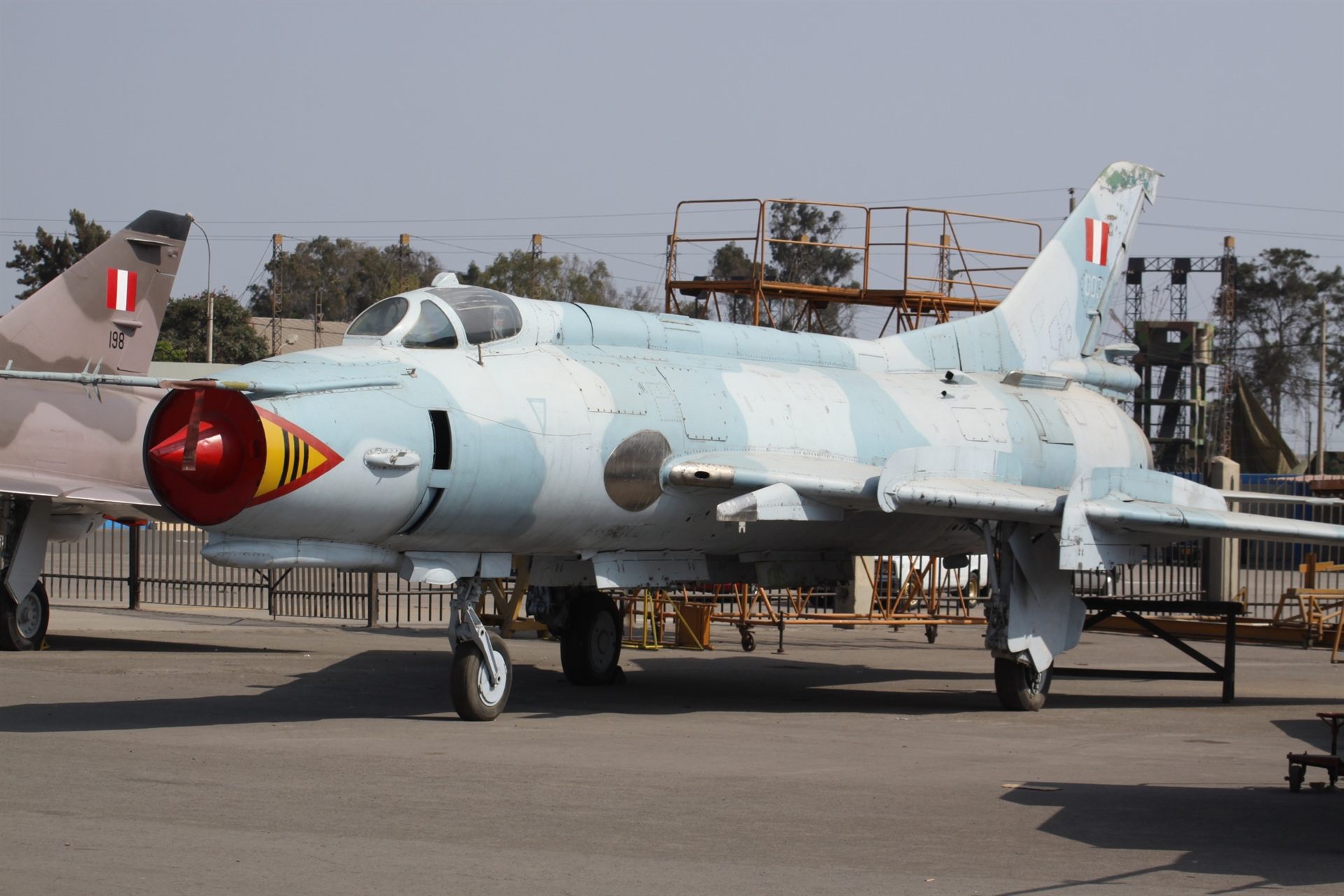
Pictured: a Peruvian Air Force Sukhoi Su-22 — the same fighter-bomber type Lt. Santa María flew on April 11, 1980 — photographed at a Peruvian air base in 2012. This is not a photograph of the actual aircraft, pilot, or object involved in the incident; no photograph of the object itself, of Santa María's specific airframe, or of the encounter is known to exist in the public record, and the Peruvian Air Force has never released one. This image is included solely to illustrate the aircraft type described throughout this file.
Theoretical Alignment
La Joya scores moderately on the Extraterrestrial Hypothesis relative to this catalogue — not because the physical description of the object is especially exotic (a smooth, dome-topped, wingless sphere is a recurring UFO archetype rather than a uniquely advanced one), but because the reported behavior under direct cannon fire is genuinely difficult to reconcile with any known 1980-era aircraft, balloon, or optical phenomenon: sustained hover, apparent total invulnerability to 64 rounds of 30mm high-explosive cannon fire at close range, and a final climb the pilot says exceeded his own aircraft's rated operational ceiling. The Psycho-Social score is kept modest rather than negligible because the case's sole primary witness has himself described a strong personal fascination with the phenomenon in the years afterward — including, by his own account, packing a bag for months in the hope of being taken aboard — a detail this file treats honestly as relevant context for assessing his testimony rather than as disqualifying it outright. The Interdimensional Hypothesis finds essentially no support; nothing in the case describes portal-like or trans-dimensional behavior, only a physically present object that maneuvered, climbed, and eventually flew away.
Background
La Joya Air Base is a Peruvian Air Force installation in the La Joya District of the Arequipa Region, in the high desert of southern Peru roughly 40 kilometers southwest of the city of Arequipa. In 1980 the base hosted Grupo Aéreo 3 of the FAP, flying the Sukhoi Su-22, a Soviet-built swing-wing fighter-bomber Peru had begun acquiring in 1977 as part of a broader Soviet arms relationship that also brought MiG-29s and other Eastern Bloc hardware into Latin America's Cold War-era air forces — a striking contrast to most of the region's U.S.-aligned militaries. Óscar Alfonso Santa María Huertas was, at 23, one of the FAP's younger qualified Su-22 pilots, holding the rank of Lieutenant. Peru in early 1980 remained under the military government that had ruled since 1968, in the final stretch before General Francisco Morales Bermúdez's administration handed power back to elected civilian government later that year; regional tensions with Chile (still fresh from a 19th-century war whose territorial disputes lingered politically) and a wary relationship with Ecuador gave Peruvian air defense planners a standing institutional reflex to treat any unauthorized incursion into restricted airspace as a potential espionage or reconnaissance overflight first, and anything more exotic only as a last resort.
By every surviving account, nothing about the morning of April 11, 1980 began as anything other than a routine formation. Roughly 1,800 personnel — officers, enlisted airmen, and support staff — were assembled for the base's regular morning muster when observers began noticing a stationary, luminous object hanging motionless in the sky at a distance later estimated at around three miles and an altitude of roughly 1,800 feet. Its brightness came from reflected sunlight rather than any light source of its own, and its unmoving position immediately distinguished it from any aircraft, weather balloon in transit, or celestial body low on the horizon. With hundreds of witnesses already watching an object hovering inside restricted military airspace without clearance, the base commander — identified in secondary accounts as Carlos Vásquez Zegarra — made the decision that would turn a strange sighting into the case this file documents: he ordered an armed intercept, and Lieutenant Santa María was the pilot who answered the call.
Complete Timeline
| Date | Event |
|---|---|
| 1968–1980 | Peru is governed by a military regime; the FAP begins acquiring Soviet-built Sukhoi Su-22 fighter-bombers in 1977, deploying them to bases including La Joya. |
| April 11, 1980, ~7:15 AM | Approximately 1,800 FAP personnel in morning formation at La Joya Air Base observe a stationary, luminous, light-bulb-shaped object roughly three miles distant and 1,800 feet in altitude. |
| April 11, 1980, shortly after | Base commander Carlos Vásquez Zegarra orders an armed intercept, citing restricted airspace and possible espionage; Lt. Óscar Santa María Huertas scrambles in a Sukhoi Su-22 loaded with roughly 140 rounds of 30mm cannon ammunition. |
| April 11, 1980, in flight | Santa María closes to within a few hundred meters of the object and fires the first of four cannon passes; he reports the 30mm rounds appear to be absorbed by the object without visible damage or deflection. |
| April 11, 1980, in flight | On three further attempted passes, the object repeatedly moves out of firing position at the moment Santa María locks on, ultimately executing a climb he estimates reached roughly 19,200 meters (63,000 ft), beyond his aircraft's rated operational ceiling. |
| April 11, 1980, ~22–25 minutes after intercept | Low on fuel, Santa María breaks off and returns to base without having damaged or identified the object; he has fired 64 of his roughly 140 available 30mm rounds. |
| April 11, 1980, following landing | The object remains visible hovering near the base for approximately two additional hours, observed by ground personnel, before departing from view. |
| April 11, 1980, aftermath | Santa María files a written report; base command orders personnel not to discuss the incident. The case is not publicly disclosed by the FAP. |
| May 9–10, 1980 | Per the later-declassified DIA cable, a separate (or possibly conflated) sighting and intercept involving an SU-22 is reported to the U.S. Defense Attaché Office in Lima, dated to these two days rather than April 11 — the case's central unresolved documentary discrepancy. |
| June 2–3, 1980 | The U.S. Defense Attaché Office in Lima transmits Intelligence Information Report IR 6 876 0146 80, titled "UFO Sighted in Peru," to the Defense Intelligence Agency in Washington, with information copies to the CIA, State Department, and NSA. |
| 1980s–1990s | The case remains essentially unknown outside FAP internal circles and small Peruvian ufology networks; Santa María says he was ordered not to discuss it publicly. |
| Late 1990s–2000s | The case surfaces in Hispanic ufology publications and Peruvian press as Santa María, by then a senior officer, begins giving limited interviews. |
| 2001 | Peru establishes the Oficina de Investigación de Fenómenos Aéreos Anómalos (OIFAA, later DIFAA) within the FAP, decades after the incident itself. |
| November 12, 2007 | Now-retired Comandante Santa María appears at an international press conference at the National Press Club in Washington, D.C., organized by filmmaker James Fox and journalist Leslie Kean and moderated by former Arizona Governor Fife Symington III, publicly detailing the encounter to the U.S. press for the first time. |
| 2010 | Leslie Kean publishes UFOs: Generals, Pilots, and Government Officials Go on the Record, including Santa María's written first-hand account of the La Joya intercept. |
| May 2, 2013 | Retired Colonel Santa María testifies under a sworn-style format before six former members of the U.S. Congress at the Citizen Hearing on Disclosure at the National Press Club, submitting a typed statement dated to Friday, April 11, 1980. |
| 2010s–2020s | The June 1980 DIA cable is released via a Freedom of Information Act request and published online by researcher John Greenewald Jr.'s The Black Vault, becoming the case's primary independent documentary source. |
| 2024 | Peruvian outlets including Infobae Perú revisit the case amid renewed regional interest in UAP disclosure, adding detail on the FAP's internal secrecy order and Santa María's personal reaction to the encounter. |
An Object in Restricted Airspace
Every surviving account of April 11, 1980 begins the same way: an ordinary morning formation at La Joya Air Base interrupted by something none of the roughly 1,800 personnel present could immediately explain. Standing in formation shortly after 7:00 AM, base personnel noticed a bright, stationary object hanging in the clear high-desert sky, estimated at roughly three miles' distance and an altitude of about 1,800 feet. Unlike a passing aircraft or a balloon drifting on the wind, it did not move; unlike the sun-bleached horizon typical of the Arequipa altiplano, its brightness was distinctly reflective, as though sunlight were glinting off a polished, curved surface rather than radiating from the object itself. Whatever explanation eventually attached itself to the case, this file treats the initial mass sighting as its least disputed element: hundreds of trained military personnel, already assembled and facing the same direction for muster, independently had the same object in view at the same time, a scale of simultaneous witnessing this catalogue rarely has the benefit of outside major public events.
The object's position inside restricted military airspace, without any flight clearance and without matching any scheduled traffic, was what escalated the sighting from a curiosity to a security matter. Base commander Carlos Vásquez Zegarra is identified in secondary accounts as the officer who made the decisive call: rather than simply observe and report, he ordered an armed intercept, reportedly out of concern the object might represent foreign reconnaissance or espionage activity — a plausible first hypothesis for any Cold War-era military commander confronted with an unidentified craft loitering directly over a fighter base, and one that says something important about how seriously the incident was taken in the moment, whatever it later turned out to be. Lieutenant Óscar Santa María Huertas, a 23-year-old Su-22 pilot on duty that morning, was the officer scrambled to answer the order.
Scrambled: Santa María's Pursuit
Santa María's Sukhoi Su-22 — a Soviet-supplied, swing-wing fighter-bomber armed with twin 30mm NR-30 cannons — launched loaded with approximately 140 rounds of cannon ammunition, a war-shot loadout rather than a training load, underscoring that this was treated from the outset as a live intercept rather than a routine identification flight. Closing on the object, Santa María has consistently described it across decades of retellings in remarkably specific terms: roughly 10 meters (30 feet) in diameter, an enameled, cream-colored dome forming the upper section, set atop a wide, smooth, metallic-grey circular base, with no windows, no rivets, no visible exhaust ports, no wings, and no antennae — a design vocabulary, he has repeatedly emphasized, that matched nothing in his training or experience with any known aircraft, balloon, or drone of the era. He closed to a reported distance of a few hundred meters, well within cannon range, and made his first firing pass.
What happened next is the detail that has defined the case ever since: Santa María fired a burst of 30mm rounds directly at the object and, by his own account, watched the shells strike home with no discernible effect — neither an explosion, nor visible damage, nor any deflection of the rounds away from the object's surface. He has described the impression as though the object had simply absorbed the gunfire. He attempted three further passes; on each occasion, he says, the object appeared to anticipate his approach, moving out of his firing envelope at the precise moment he achieved a firing solution, an evasive pattern he and later interviewers have repeatedly characterized as behaving with apparent awareness of his intentions rather than reacting mechanically or randomly. The engagement stretched across roughly 22 to 25 minutes, with Santa María expending 64 of his 140 available rounds before fuel constraints forced him to break off. In the encounter's final phase, he reports the object executed a climb that carried it to an altitude he estimated at approximately 19,200 meters (63,000 feet) — a figure that, if his own account is accurate, would have taken his own aircraft above the Su-22's rated operational ceiling of roughly 15,200 meters (50,000 feet), an extraordinary claim about his own aircraft's performance that no external data has ever corroborated one way or the other.
Two Hours in Plain Sight
Santa María landed having neither damaged nor identified the object, and neither had he been alone in continuing to watch it: ground personnel at La Joya report that the object remained visible, hovering near the base, for roughly two additional hours after his return — a detail that, if accurate, meant hundreds of witnesses had a stationary, unexplained object in view for a combined span of several hours that morning, not merely the 22 minutes of the aerial engagement itself. No second intercept was launched during this window; by most accounts, the immediate crisis had been judged to have passed once the object was no longer treated as an active threat requiring further weapons release, and the base's attention shifted to managing an event that had just involved live cannon fire inside otherwise peaceful airspace, in full view of nearly two thousand witnesses, with no combat result to show for it. Eventually, the object departed from view, and by that afternoon La Joya Air Base had a genuinely unprecedented incident on its hands: a documented weapons engagement against an unidentified target that had produced no casualties, no wreckage, and no explanation.
Silence: The Institutional Response
What followed the encounter, more than the encounter itself, is what has made La Joya a recurring case study in how militaries handle genuinely inexplicable incidents. By Santa María's own later account, orders came down that nobody was to discuss what had happened; he filed his official written report and, in his own words given decades later, "everything went silent." Retired FAP officer Julio César Chamorro, commenting publicly on the case's handling long after the fact, offered a blunt institutional rationale for the imposed secrecy: acknowledging a UFO encounter, he explained, would have drawn "journalists, researchers, and curiosity-seekers" to a base whose real purpose — and real security posture — the FAP had no interest in advertising. Whatever the underlying reasoning, the practical effect was that the case did not enter the public record through any official FAP channel; it remained an internal matter for roughly two decades, known mainly within Peruvian Air Force circles and, gradually, small Hispanic ufology research networks, rather than being formally investigated, publicly acknowledged, or officially explained by the institution whose personnel had witnessed and fired on the object in the first place. This file treats that two-decade gap as a genuine, double-edged fact: it plausibly explains why independent corroborating witnesses never came forward at the time, but it is also the kind of unfalsifiable "official cover-up" narrative this catalogue is obligated to treat with appropriate caution rather than as automatic proof of extraordinary content.
Going Public: The National Press Club and the Citizen Hearing
The case's transition from an internal FAP matter to an internationally documented UFO case happened gradually, then suddenly. Through the late 1990s and 2000s, as Santa María rose through the ranks and eventually retired, he began speaking more openly in Peruvian media and ufology circles about what he had experienced. The case reached a genuinely international audience on November 12, 2007, when Santa María — by then a retired senior officer — appeared at an international press conference held at the National Press Club in Washington, D.C., organized by documentary filmmaker James Fox and journalist Leslie Kean and moderated by former Arizona Governor Fife Symington III, an event that would later form the basis of Fox's documentary I Know What I Saw. Kean subsequently included Santa María's first-hand written account of the encounter in her 2010 book UFOs: Generals, Pilots, and Government Officials Go on the Record, giving the case its widest English-language circulation to date and placing it alongside comparably documented military encounters from Belgium, France, Iran, and the United States.
The case's most formal public airing came on May 2, 2013, when retired Colonel Santa María appeared before the Citizen Hearing on Disclosure, a five-day, sworn-style public hearing held at the National Press Club in Washington, D.C. and staffed by six former members of the U.S. Congress convened to hear testimony on UFO-related topics. Santa María presented a typed statement — dated to "Friday, April 11, 1980," matching his consistent account of the date — describing his encounter with what he called a radar-invisible "globe," and answered questions from the panel through a translator. His testimony that day, on the record, included the plain summary that has followed the case ever since: he approached within shooting range, fired approximately 60 rounds of 30mm cannon fire at the object, and "it had no effect at all."
The Declassified Cable: "UFO Sighted in Peru"
The single most important piece of documentation in this entire case is not Santa María's testimony, extensive and consistent as it is, but a short U.S. government cable that exists entirely independently of him. On June 2, 1980 (received and stamped June 3, 1980), the U.S. Defense Attaché Office (USDAO) in Lima transmitted Intelligence Information Report IR 6 876 0146 80 to the Defense Intelligence Agency in Washington, with information copies routed to the Joint Chiefs of Staff Message Center and, per the message's own distribution header, onward to the CIA, the State Department, and the National Security Agency. The report's title, entered plainly on the form, is "UFO Sighted in Peru." It was prepared by Colonel Norman H. Rungé and approved by Captain Vaughn E. Wilson, the Defense Attaché (DATT), and it explicitly flags itself as "an info report, not finally eval[uated] intel[ligence]" — a standard caveat for raw field reporting rather than a finished, all-source intelligence assessment.
The cable's content matches Santa María's account with striking specificity. Its source, described only as "officer in the Peruvian Air Force who observed the event and is in a position to be party to conversation concerning the event," and noted by the report's preparer as having "reported reliably in the past," told the reporting officer that a UFO had been spotted "in the vicinity of Mariano Melgar Air Base, La Joya, Peru" on two separate occasions. On the first occasion, the source said, "a group of FAP officers were in formation" at the base when "they spotted a UFO that was round in shape, hovering near the airfield. The air commander scrambled an SU-22 aircraft to make an intercept. The pilot, according to a third party, intercepted the vehicle and fired upon it at very close range without causing any apparent damage. The pilot tried to make a second pass on the vehicle, but the UFO out-ran the SU-22." A second sighting, the cable continues, occurred during hours of darkness, when a lighted object was again observed and a second SU-22 was scrambled, again failing to catch the "vehicle." The report's originating comments note that the reporting officer "has heard discussion about the sighting from other sources," indicating the incident was circulating informally within FAP ranks well beyond Santa María's own account.
This cable is, by any reasonable standard, a remarkable document: an independent-source, contemporaneous (to within weeks) U.S. government intelligence report that corroborates the core mechanics of Santa María's story — a hovering, round object over La Joya, a scrambled Su-22, cannon fire at close range with no apparent damage, and the object outrunning the aircraft — from a source who was not Santa María himself. It is precisely the kind of independent documentary corroboration this catalogue treats as a serious credibility asset, and it is the single reason La Joya is discussed in more rigorous UFO literature at all, rather than resting purely on one man's decades of consistent but uncorroborated retelling.
The Date Discrepancy: April 11 or May 9–10?
This file is obligated to state plainly what a less careful account might paper over: the declassified DIA cable does not date the incident to April 11, 1980. It dates the first sighting to "the morning hours of 9 May 80" and the second to "the early evening hours of 10 May 80" — nearly a full month after the date Santa María has given consistently, under oath-adjacent testimony, in writing, and across more than three decades of interviews. This is a genuine, unresolved problem in the case's documentary record, not a minor footnote, and researchers who have examined the cable closely — including UFO historian Kevin Randle, whose blog has hosted some of the most detailed public discussion of this exact discrepancy — have not reached a settled explanation for it. Several possibilities have been proposed, none conclusively demonstrated: that the cable describes an entirely separate, second SU-22/UFO intercept at the same base weeks after Santa María's own encounter (the cable's own text describes "two different occasions," which could in principle be read as distinct from, rather than identical to, Santa María's April 11 event); that the anonymous FAP source's account of an event they did not personally witness suffered date degradation as it passed from the original crew, through informal base discussion, to the source, and then through the reporting officer's own notes before reaching Washington; or, less charitably, that Santa María's own recollection of the exact date has drifted somewhat across the intervening decades despite his consistent insistence on April 11. This file does not resolve the discrepancy, because the available public record does not allow it to be resolved; it registers the gap honestly as the case's most serious documentary weakness, on par with the missing Skyhook launch log in this catalogue's Thomas Mantell file — a case where an otherwise well-supported account is let down by exactly the piece of paper that should have settled it beyond dispute.
Circumstantial Evidence
- A single, named, credentialed military pilot fired 64 rounds of 30mm cannon fire directly at the object across four separate passes and consistently describes it as having sustained no visible damage.
- A declassified June 1980 U.S. Defense Intelligence Agency cable, sourced from a Peruvian Air Force officer independent of Santa María, corroborates the core mechanics of the story — a scrambled SU-22 firing at very close range without causing apparent damage — from outside Santa María's own testimony.
- Roughly 1,800 base personnel reportedly observed the object during the initial sighting, and ground witnesses report it remained visible for approximately two hours after Santa María's aircraft landed.
- Santa María has given a materially consistent account of the object's appearance, behavior, and the engagement's outcome across more than three decades, including formal testimony before six former members of the U.S. Congress in 2013.
- The declassified DIA cable dates the incident to May 9–10, 1980, not April 11 — a substantial, unresolved discrepancy with Santa María's consistently stated date that neither he nor any researcher has definitively explained.
- No other named witness — including the base commander who ordered the intercept — has given extended public testimony corroborating the specific details of the encounter under their own name.
- No radar, photographic, film, or physical trace evidence of the object exists; the case rests entirely on eyewitness testimony and the secondhand DIA cable.
Key Witnesses
Lt. (later Col.) Óscar Alfonso Santa María Huertas
The case's sole primary witness and the only person known to have fired on an unidentified flying object while in military service. Twenty-three years old at the time, he closed to within a few hundred meters of the object, fired 64 rounds of 30mm cannon fire across four passes, and reported the object suffered no visible damage and evaded him before climbing beyond his aircraft's rated ceiling. He has given a materially consistent account across more than three decades, including formal testimony to the 2013 Citizen Hearing on Disclosure, and rose to the rank of full Colonel before retiring from the FAP.
Carlos Vásquez Zegarra
Identified in multiple secondary Peruvian and English-language accounts as the base commander who, faced with an unidentified object hovering over restricted airspace and roughly 1,800 witnesses already watching, gave the order for Lt. Santa María to scramble and intercept. He is not known to have given extended public testimony under his own name.
Unnamed FAP Officer-Source (DIA Cable IR 6 876 0146 80)
The independent source behind the June 1980 U.S. Defense Attaché Office cable "UFO Sighted in Peru," described by the reporting officer as an FAP officer "in a position to be party to conversation concerning the event" and noted as having "reported reliably in the past." This source's account of a scrambled SU-22 firing at close range without apparent damage closely matches Santa María's own story, but dates the event to May 1980 rather than April 11 — the case's central unresolved discrepancy.
Julio César Chamorro
A retired Peruvian Air Force officer who, decades after the fact, publicly explained the military's rationale for suppressing the incident: acknowledging a UFO encounter, he said, would have drawn unwanted press and researcher attention to a base whose security posture the FAP preferred to keep unpublicized. His remarks are among the only on-record institutional commentary on why La Joya was not formally investigated or disclosed at the time.
Anthony Choy
A Peruvian lawyer and UAP researcher who worked with the Peruvian Air Force's official anomalous-phenomena investigation office and compiled a report exceeding 100 pages on the La Joya case — conducted decades after the original 1980 encounter and without the benefit of a contemporaneous FAP inquiry, but remaining one of the most complete standalone investigative files on the incident.
The Five Observables Assessment
The Five Observables framework, developed by former AATIP director Luis Elizondo, is used across this catalogue to classify UAP encounters by performance characteristics exceeding known technology of their era. Applied to La Joya, the framework returns a genuinely mixed result, constrained throughout by the absence of any instrumented data beyond one pilot's visual account:
Assessment: Anti-Gravity Lift is rated speculative: the object held a sustained, motionless hover for an extended period before Santa María's arrival, a genuinely unusual capability for any object without visible rotors, wings, or lift surfaces, but the mechanism is entirely unverified and rests on visual impression alone. Instant Acceleration is rated speculative on the same basis: the object's repeated evasive movements — appearing to anticipate Santa María's firing solution and displace at the last possible moment — strongly suggest rapid, controlled movement, but no instrument ever measured its actual acceleration. Hypersonic Velocity is rated speculative rather than present because, while Santa María describes the object ultimately outrunning his supersonic-capable Su-22, his own aircraft's speed at the moment of separation is the only hard data point available, and the object's true velocity was never independently measured. Low Observability is rated present, the case's clearest and most consistently documented anomaly: the object was plainly visible to hundreds of eyewitnesses and, by Santa María's account, to his own eyes at close range, yet La Joya's ground radar never acquired a return on it at any point, even while continuing to track his own aircraft — a genuinely striking negative data point regardless of the object's ultimate nature. Trans-Medium travel is rated absent; nothing in any account describes a transition between air, water, or space.
Evidence Assessment
Supporting Anomalous Origin
- A named, credentialed career military pilot fired 64 rounds of cannon fire directly at the object with no visible effect, and has maintained this account consistently for more than three decades, including under sworn-style congressional testimony.
- An independently sourced, declassified June 1980 DIA cable corroborates the shape of the encounter — a scrambled SU-22 firing at close range without causing apparent damage — from an FAP source the U.S. reporting officer explicitly described as having "reported reliably in the past."
- Roughly 1,800 personnel reportedly observed the object during its initial appearance, an unusually large simultaneous witness pool for a UFO sighting in this catalogue.
- The object evaded radar detection entirely despite being plainly visible to the naked eye and to the pursuing pilot at close range, even as the intercepting aircraft itself was tracked normally.
- No conventional aircraft, balloon, or optical phenomenon proposed to date fully accounts for an object that reportedly sustained direct 30mm cannon fire without damage while also repeatedly evading a locked-on fighter jet.
Supporting Conventional Explanation or Testimonial Limits
- The case rests on a single named eyewitness for virtually every specific detail beyond the bare fact that an intercept occurred; no other participant, including the base commander who gave the order, has given comparable on-record testimony.
- The one independent documentary source — the DIA cable — dates the incident to May 9–10, 1980, not April 11, a substantial and unresolved conflict with the pilot's own consistently stated date.
- No photograph, film, or physical trace of any kind exists despite roughly 1,800 potential witnesses and a weapons engagement that fired 64 rounds of ammunition somewhere across the desert floor.
- The pilot's own extraordinary altitude claim — a climb to roughly 19,200 meters, above his aircraft's rated ceiling — is unverified by any external flight data and rests entirely on his personal estimate.
- The pilot has openly described an unusually strong personal fascination with the phenomenon in the years since, including keeping a packed bag for months hoping to be taken aboard a craft — a detail worth weighing honestly alongside his testimony's consistency.
Why "Credible"
This file rates La Joya CREDIBLE rather than "Verified" or "Disputed" because its central strength — a real, independently sourced declassified government document corroborating the core of a named military pilot's account — is genuinely unusual in this catalogue, while its central weakness — a documentary date discrepancy that has never been resolved, and a total absence of any second named witness after more than forty years — is serious enough to rule out a stronger stamp. What tips the case above "Disputed" is the specificity of the corroboration: the June 1980 DIA cable was not simply informed that "something happened" at La Joya; it independently reports, from a source who was not Santa María, that a Peruvian Air Force pilot scrambled an SU-22, closed to very close range, fired on a round hovering object, caused no apparent damage, attempted a second pass, and was outrun by the object — a level of specific mechanical agreement with Santa María's own account that is difficult to attribute to coincidence or rumor alone. Combined with Santa María's own unusually strong personal credentials (a named, career fighter pilot who went on to retire at full Colonel, never disciplined or professionally discredited over the incident) and his decades of materially consistent public testimony under increasingly formal circumstances, this file finds the core claim — that a Peruvian jet fired on an unidentified object with no effect — substantially more credible than not. What keeps this file from a "Verified" rating is equally clear: there is no radar track, no photograph, no physical trace, and no second named witness corroborating any specific detail of the encounter beyond what a single pilot and one anonymous cable-source have described, and the cable's own dating of the event to May rather than April is a real, unresolved problem this file refuses to paper over. La Joya earns its place in this catalogue not as a closed case, but as a rare instance where a named military witness's decades-long consistency is backed, however imperfectly, by an actual piece of independently generated government paper — the exact combination this site's "Credible" rating exists to describe.
Sensor & Instrumentation Detection Profile
This is fundamentally a visual, human-observation case with no supporting instrumentation of any kind — a significant limitation given how central instrumented data has become to the credibility of comparable modern cases. La Joya Air Base's ground radar never acquired the object at any point during the encounter, despite the object hovering in plain daylight view of hundreds of personnel and despite Santa María's own Su-22 being tracked normally throughout the intercept. Santa María's aircraft carried no gun camera and no onboard telemetry recorder of the kind that would later become standard on Western fighters; his own real-time estimates of the object's distance, altitude, and speed were derived from cockpit instruments measuring his own aircraft's performance and from visual judgment alone, not from any sensor locked onto the object itself. No photograph or film of the object has ever surfaced from any of the roughly 1,800 witnesses present, a detail frequently noted by researchers given how many people were reportedly watching. The single piece of instrumented, contemporaneous documentation in the entire case is not a sensor reading but a diplomatic and intelligence paper trail: the June 3, 1980 cable from the U.S. Defense Attaché Office in Lima to the Defense Intelligence Agency, discussed in detail below, which reports the intercept and cannon-fire engagement as relayed by a second, unnamed Peruvian Air Force officer-source independent of Santa María himself.
Environmental & Geospatial Context
La Joya Air Base sits in the arid Peruvian altiplano roughly 40 kilometers southwest of the city of Arequipa, in one of the driest inhabited regions on Earth — the same coastal-Andean desert corridor that runs south into Chile's Atacama Desert, chosen by the Peruvian Air Force in part for its near-permanent clear skies and minimal air traffic. Conditions on the morning of the sighting were reported as clear with good visibility, typical of the region's high-desert climate, ruling out cloud, fog, or precipitation as a factor in what the witnesses observed. The base's high-desert elevation and thin, dry air are also directly relevant to the case's own claimed extremes: Santa María reported pursuing the object to an altitude of roughly 19,200 meters (63,000 feet), a figure that, if accurate, would have taken his Su-22 well above its rated service ceiling of approximately 15,200 meters (50,000 feet) — an extraordinary claim about the airframe's performance that no external flight-data record has ever independently confirmed. Geopolitically, 1980 placed the sighting within a Peru still governed by a military regime only months from ceding to civilian rule (Fernando Belaúnde Terry's presidential inauguration followed in July 1980) and amid lingering regional tension with neighboring Chile and Ecuador, context that plausibly explains why the base commander's first instinct was to treat an unauthorized incursion over restricted airspace as a possible espionage overflight rather than an anomalous phenomenon.
Observer Credibility & Occupational Profile
The case's evidentiary weight rests overwhelmingly on a single witness: Óscar Alfonso Santa María Huertas, who was 23 years old and held the rank of Lieutenant in the Peruvian Air Force (Fuerza Aérea del Perú, FAP) at the time of the encounter. He was a qualified, currently-flying fast-jet pilot rated on the Sukhoi Su-22, not a casual observer or a support-role officer, and he went on to a full career in the FAP, eventually rising to the rank of Comandante and later retiring as a full Colonel — a career trajectory inconsistent with any contemporaneous disciplinary judgment that he had fabricated or grossly exaggerated an in-flight incident. He has told a materially consistent account of the encounter across more than three decades of interviews, articles, and formal testimony, including a 2007 appearance organized with journalist Leslie Kean's help at Washington's National Press Club and sworn-style testimony before six former members of the U.S. Congress at the Citizen Hearing on Disclosure on May 2, 2013, where he presented a typed statement matching his original account. This file weighs that consistency as a genuine credibility asset while being equally direct about its limits: no other named witness — not the base commander who gave the order, not any of the roughly 1,800 personnel reportedly in formation that morning, not any of Santa María's fellow FAP officers — has ever given extended public testimony under their own name. Secondary sources identify base commander Carlos Vásquez Zegarra as the officer who ordered the intercept and a fellow officer, Óscar Alegre Valdez, as present at the scene, but neither is known to have given the kind of detailed on-record account Santa María has provided repeatedly. The one piece of corroboration genuinely independent of Santa María is the anonymous "officer in the Peruvian Air Force" cited as the source of the June 1980 DIA cable — a source the cable's own preparer described as reliable, but whose identity has never been disclosed.
Physical & Material Assays
No physical trace, fragment, or recoverable material connected to the object has ever been produced in this case — nothing fell from it, nothing was recovered from the ground, and nothing was retrieved from Santa María's aircraft that could be attributed to contact with the object. The only physical items generated by the encounter were entirely mundane and entirely explained: the 64 spent 30mm cartridge cases ejected from Santa María's own cannons, and whatever became of the 64 rounds themselves after leaving the gun — which, by Santa María's account, either struck the object and were "absorbed" without visible effect or missed and fell to the desert floor below, a distinction no one has ever been able to verify because no debris field, impact site, or unexploded ordnance from the engagement was ever documented or recovered. No soil, metallurgical, or radiological testing of any kind has been performed in connection with this case, because there has never been a physical sample of any kind to test. This absence is itself informative: unlike crash-retrieval cases elsewhere in this catalogue, La Joya generated a documented weapons engagement with no resulting wreckage of any kind, consistent either with an object that genuinely withstood direct cannon fire without damage, or with a target Santa María simply failed to strike cleanly during a fast, high-stress engagement — a distinction his testimony alone cannot resolve.
Historical Precedents & Archive Matches
La Joya's most direct historical precedent within this catalogue is the November 1979 Manises UFO Emergency Landing in Spain, another Cold War-era case in which a NATO-adjacent air force scrambled a supersonic interceptor (a Mirage F1 out of Los Llanos Air Base) against an unidentified target and generated a declassified military file, though the Spanish case never escalated to weapons release. The Chilean Navy Helicopter UFO Video of 2014 offers a useful contrast rather than a parallel: it involves a similarly credentialed South American military aircrew and a similarly unresolved sensor anomaly, but it produced nine minutes of FLIR video and a two-year multi-disciplinary CEFAA investigation, while La Joya produced neither footage nor any comparable institutional review at the time — the Peruvian Air Force's response was to order silence rather than convene a formal study, a pattern this file discusses in detail below. Within Peru specifically, La Joya predates by more than two decades the country's only formal government body dedicated to the subject, the Oficina de Investigación de Fenómenos Aéreos Anómalos (OIFAA), founded in December 2001 and later renamed DIFAA, whose investigators — including researcher Anthony Choy — would eventually compile a 100-plus-page file on the case, decades after the fact and without the benefit of a contemporaneous, dedicated FAP inquiry. The case is also frequently cited alongside the broader wave of Cold War-era Latin American military UFO reports catalogued by researcher Scott Corrales and the Journal of Hispanic Ufology, though La Joya's cannon engagement remains, so far as this catalogue's research has found, the only case in that broader wave in which an aircraft is documented to have actually fired on an unidentified object.
Material Analysis
La Joya is, in material terms, an evidentiary null set: despite a live weapons engagement in which 64 rounds of 30mm cannon ammunition were fired at a target from a few hundred meters' range, no debris field, impact site, unexploded ordnance, or fragment of any kind connected to the engagement has ever been documented, recovered, or tested. This is a genuinely unusual gap. Cannon rounds fired and missed a stationary or slow-moving aerial target would ordinarily be expected to fall somewhere within a calculable footprint of desert terrain below the engagement's flight path; if the Peruvian Air Force or any later investigator, including OIFAA/DIFAA's Anthony Choy, ever attempted a physical search of that footprint, no findings from such a search have been published. Equally, if the rounds truly struck the object and were "absorbed" as Santa María describes, no fragment of either the rounds or the object's surface was ever recovered to examine. No soil sampling, metallurgical assay, or radiological survey has been conducted in connection with this case, because there has never been a specimen to test.
Supporting Non-Terrestrial Origin
- A trained pilot's close-range account of cannon rounds producing no visible damage, deflection, or explosive effect on impact is difficult to reconcile with any known 1980-era airframe or lighter-than-air craft, which would be expected to show damage from 30mm high-explosive rounds.
- The complete absence of any recovered wreckage or debris, despite decades of subsequent interest in the case, is consistent with an object that departed the area intact under its own power rather than one that was destroyed or crashed.
Supporting Terrestrial Origin or Testimonial Limits
- No physical search of the likely fall zone for the 64 fired rounds is known to have been conducted or published, leaving open the mundane possibility that most or all rounds simply missed a fast-moving or evasive target under high-stress combat conditions.
- Without any recovered fragment of the object itself, the "no damage" assessment rests entirely on one pilot's visual impression during a fast, high-workload aerial engagement, not on any physical examination.
The Conventional Explanation Candidate: Reconnaissance or Espionage Craft
The most historically grounded conventional candidate is also the one the Peruvian Air Force itself entertained in the moment: that the object was some form of foreign reconnaissance device, whether an aircraft, a high-altitude balloon platform, or an early remotely piloted drone, operating covertly over restricted Peruvian military airspace at the height of a Cold War in which the FAP had recently begun flying Soviet-supplied hardware and was actively wary of both superpower and regional (Chilean, Ecuadorian) surveillance interest in its bases. This candidate deserves serious weight precisely because it was the base commander's own working hypothesis and the stated reason for ordering an armed intercept rather than a passive observation — a contemporaneous, professionally-informed judgment call rather than a retrospective theory. It struggles badly, however, against the specific details of the engagement itself: no aircraft, balloon, or drone technology publicly known to exist in 1980 could plausibly absorb direct 30mm cannon fire at close range without visible damage, execute apparently anticipatory evasive maneuvers against a locked-on fighter, and climb (if Santa María's estimate is accurate) to an altitude exceeding the pursuing Su-22's own rated ceiling. No wreckage, debris, or intelligence-community acknowledgment of a lost or compromised reconnaissance asset over Peru in 1980 has ever surfaced to support this explanation directly.
High-Altitude Weather Balloon or Research Platform
A stationary, luminous, dome-shaped object at low-to-moderate altitude is, on its face, consistent with a large research or meteorological balloon reflecting morning sunlight — the same class of explanation that resolves several other cases in this catalogue, including Thomas Mantell's 1948 Skyhook encounter. This candidate accounts reasonably well for the object's initial motionless hover and its later high-altitude presence, and Peru's high-desert Arequipa corridor is atmospherically comparable to other regions where classified high-altitude balloon programs have historically operated. It fails, however, to explain the object's reported evasive maneuvering during Santa María's pursuit (balloons do not actively displace to avoid a firing solution), its apparent total invulnerability to direct 30mm cannon fire (a balloon envelope, however large, should be catastrophically vulnerable to high-explosive rounds), or its ability to outrun a supersonic-capable fighter jet, a performance envelope no balloon of any known design in 1980 could achieve.
Atmospheric Optical Phenomenon or Instrument/Eyewitness Misperception
Given the total absence of radar corroboration for the object at any point in the encounter, a third candidate holds that some or all of what was reported — particularly the object's precise altitude, size, and speed — reflects visual misjudgment under genuinely difficult observing conditions: a distant, reflective object against a featureless desert sky offers few reliable depth cues, and a fast-moving, high-stress cockpit engagement is a documented source of perceptual distortion even among experienced pilots. This candidate is strengthened by the case's complete lack of independent instrumented data to check Santa María's estimates against, and it would also help explain the extraordinary, unverified altitude figure (63,000 feet, above the Su-22's own rated ceiling) that no other source in the case corroborates. It struggles, however, against the scale of the initial ground sighting: roughly 1,800 separately positioned witnesses independently observing a stationary object over an extended period is a considerably larger and more geographically distributed sample than the kind of single-observer misperception this candidate best explains, and it offers no account at all for why 64 rounds of cannon fire produced no visible explosive or destructive effect if the target was merely misjudged in distance rather than genuinely resistant to gunfire.
Reconnaissance/Espionage Craft
ImplausibleNo known 1980-era technology matches the reported invulnerability to cannon fire or evasive performance.
High-Altitude Balloon
ImplausibleExplains the initial hover but not the evasive maneuvering, gunfire invulnerability, or high-speed escape.
Optical/Perceptual Misjudgment
InconclusivePlausibly accounts for some of the pilot's more extreme unverified figures, given the total absence of radar data, but does not explain the mass ground sighting or the documented gunfire engagement itself.
Related Cases
Confirmed Documents & Official Records
The declassified DIA cable at the center of this case, obtained via FOIA and hosted by researcher John Greenewald Jr.'s The Black Vault archive. Corroborates a scrambled SU-22 firing on an unidentified round object near La Joya/Mariano Melgar Air Base with no apparent damage, though it dates the event to May 9–10, 1980 rather than April 11.
UNCLASSIFIED (declassified via FOIA)Finding aid for U.S. government UAP-related textual holdings, useful for researchers seeking to independently locate or cross-reference additional Defense Attaché or intelligence reporting connected to Latin American UFO incidents of the Cold War era.
UNCLASSIFIEDSearch Government Archives Directly
Further Reading — Recommended Literature
UFOs: Generals, Pilots, and Government Officials Go on the Record
Includes Óscar Santa María Huertas's own first-hand written account of the La Joya intercept, presented alongside comparably documented military encounters from around the world; the book most responsible for bringing the case to international attention.
UFOs and Government: A Historical Inquiry
A scholarly, internationally-focused history of government responses to UFO reports, useful context for situating La Joya's institutional secrecy alongside comparable military handling of anomalous incidents elsewhere in the world.
The UFO Encyclopedia, 4th Edition
The definitive UFO reference work, useful for cross-referencing La Joya against the broader catalogue of Cold War-era Latin American military encounters and declassified government cases.
Above Top Secret: The Worldwide UFO Cover-Up
A landmark survey of international UFO cases and government secrecy patterns, providing useful comparative context for the two-decade institutional silence the Peruvian Air Force maintained around La Joya.
Confrontations: A Scientist's Search for Alien Contact
Vallée's field investigations of Latin American UFO cases from the same general era, offering methodological context for evaluating single-witness military encounters investigated years or decades after the fact.
Essential Viewing
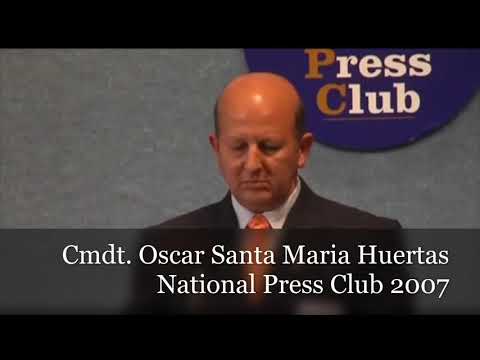
Comandante FAP Oscar Santa Maria Huertas en el National Press Club 2007
Footage of Santa María's own November 2007 statement at the Washington, D.C. press conference organized by James Fox and Leslie Kean — the event that first brought the case to international attention.
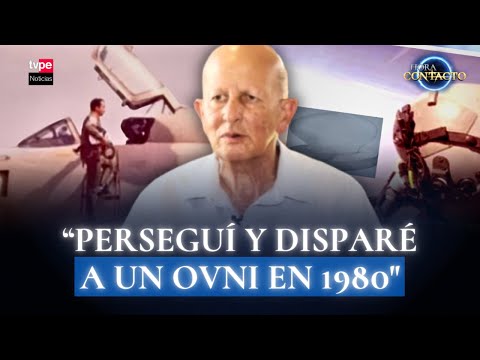
TVPerú Noticias: The Retired Pilot Who Chased and Fired on a UFO
A Peruvian state television news segment interviewing the retired pilot directly about the pursuit and cannon engagement over Arequipa.
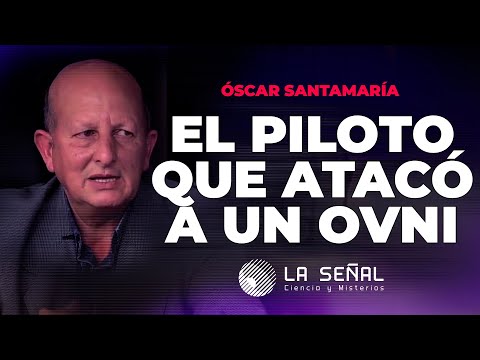
La Señal: The Pilot Who Fired on a UFO — The La Joya Case
An extended Spanish-language interview and discussion of the La Joya case with Santa María, covering the engagement, the aftermath, and its place in Peruvian ufology.
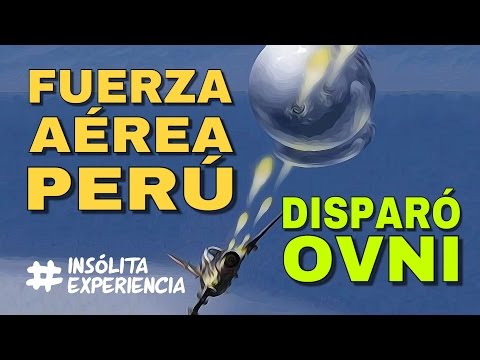
Reporter Yohanan Díaz Vargas: "ATTACKS" — FAP Pilot Fires on UFO in La Joya, Arequipa
An independent Peruvian investigative journalism segment reconstructing the engagement and its aftermath with archival and interview material.
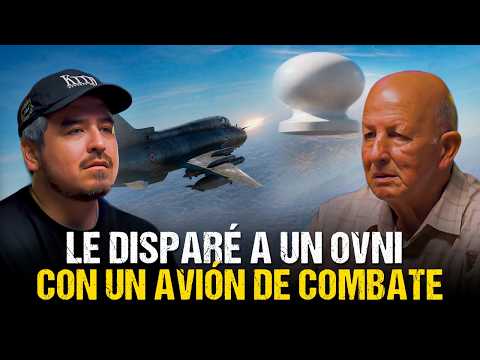
Confesiones Podcast: The La Joya Case, with Óscar Santa María (Episode 160)
A long-form podcast interview with Santa María covering the encounter in extended detail, including his personal reaction and the institutional aftermath.
Sources
- U.S. Defense Attaché Office, Lima, Peru / Defense Intelligence Agency. Intelligence Information Report IR 6 876 0146 80, "UFO Sighted in Peru," June 2–3, 1980 (declassified via FOIA). documents.theblackvault.com
- Kean, Leslie. UFOs: Generals, Pilots, and Government Officials Go on the Record, Harmony Books, 2010 (includes Santa María's first-hand written account).
- "Incidente ovni de la Joya - Arequipa," Wikipedia (Spanish). es.wikipedia.org
- "Arequipa UFO incident," Wikidata, Q117416952. wikidata.org
- Corrales, Scott. "Peru: La Joya AFB, The Perfect UFO Case (1980)," Inexplicata — The Journal of Hispanic Ufology, November 2016. inexplicata.blogspot.com
- Randle, Kevin D. "Comandante Huertas Revisited," A Different Perspective, May 2013 (detailed discussion of the DIA cable's May 1980 date discrepancy). kevinrandle.blogspot.com
- Randle, Kevin D. "Pilot Attacks UFO," A Different Perspective, May 2013 (coverage of the Citizen Hearing on Disclosure testimony). kevinrandle.blogspot.com
- Vázquez, Galán. "Terror in the Air: Mission Shoot Down the UFO," Medium, 2024 (detailed technical account including base commander and armament details). medium.com
- "El ovni en La Joya: avión no recibió ningún ataque, el piloto de la FAP afirmó querer ser 'abducido' y autoridades no informaron del suceso," Infobae Perú, January 25, 2024. infobae.com
- "Piloto se 'enfrentó' a OVNI en Arequipa," La República, 2011. larepublica.pe
- "Hace 44 años una aeronave peruana enfrentó a un OVNI en La Joya," Diario Viral, 2024. diarioviral.pe
- "Peruvian Jet Pilot Tells of Tangle With UFO," The Epoch Times. theepochtimes.com
- "Transcript of Witness Declarations From NPC UFO Conference Held in Washington D.C.," The UFO Chronicles, November 2007 (Santa María's 2007 National Press Club statement). theufochronicles.com
- "La Joya Air Force Base, Arequipa, Peru, April 11, 1980," Enigma Labs Case Library. enigmalabs.io
- Citizen Hearing on Disclosure. Official record and witness list, April 29–May 3, 2013, National Press Club, Washington, D.C. citizenhearing.org
- "Sukhoi Su-17," Wikipedia (technical specifications for the Su-17/Su-20/Su-22 "Fitter" family, including armament and service ceiling). en.wikipedia.org
- "The Sukhoi Su-22 in Peruvian Service," Latin American Aviation Historical Society (LAAHS). laahs.com
- Wikimedia Commons. "003 Sukhoi Su-22 Peruvian Air Force (7508499974).jpg," photograph by Aeroprints.com, CC BY-SA 3.0. commons.wikimedia.org
- National Archives (NARA). "UAP Textual and Microfilm Records Research Guide." archives.gov
See something inaccurate? Have additional information or sources?
Suggest an Edit →Last Updated: August 2026