
The Livingston UFO Encounter
Shortly after 10:00 AM on November 9, 1979, Robert "Bob" Taylor, a 61-year-old forester with the Livingston Development Corporation, was checking fences and young trees on Dechmont Law on the edge of Deans Forest near Livingston, Scotland, when he came upon a large, dark, rough-textured spherical object hovering silently in a forest clearing. Two smaller spiked spheres detached from beneath it, rolled toward him with a hissing, scraping noise, seized his trouser legs, and began dragging him toward the larger object before an overpowering acrid smell overwhelmed him and he lost consciousness. He was found roughly an hour later, dishevelled and alone, with his trousers torn, his chin and thighs grazed, and distinctive compression marks and small round holes gouged into the clearing's turf exactly where he said the object had rested. What makes Livingston extraordinary is not the sighting alone but what happened next: because a real person had real, physical injuries and a real, unexplained scene, Lothian and Borders Police opened a genuine criminal case file, treating the matter as a possible assault, sending Taylor's clothing for forensic examination, and dispatching a scene-of-crime officer to photograph and measure the ground marks — making Livingston one of the only UFO encounters in the world ever formally investigated by police as a physical crime rather than dismissed as an unverifiable report.
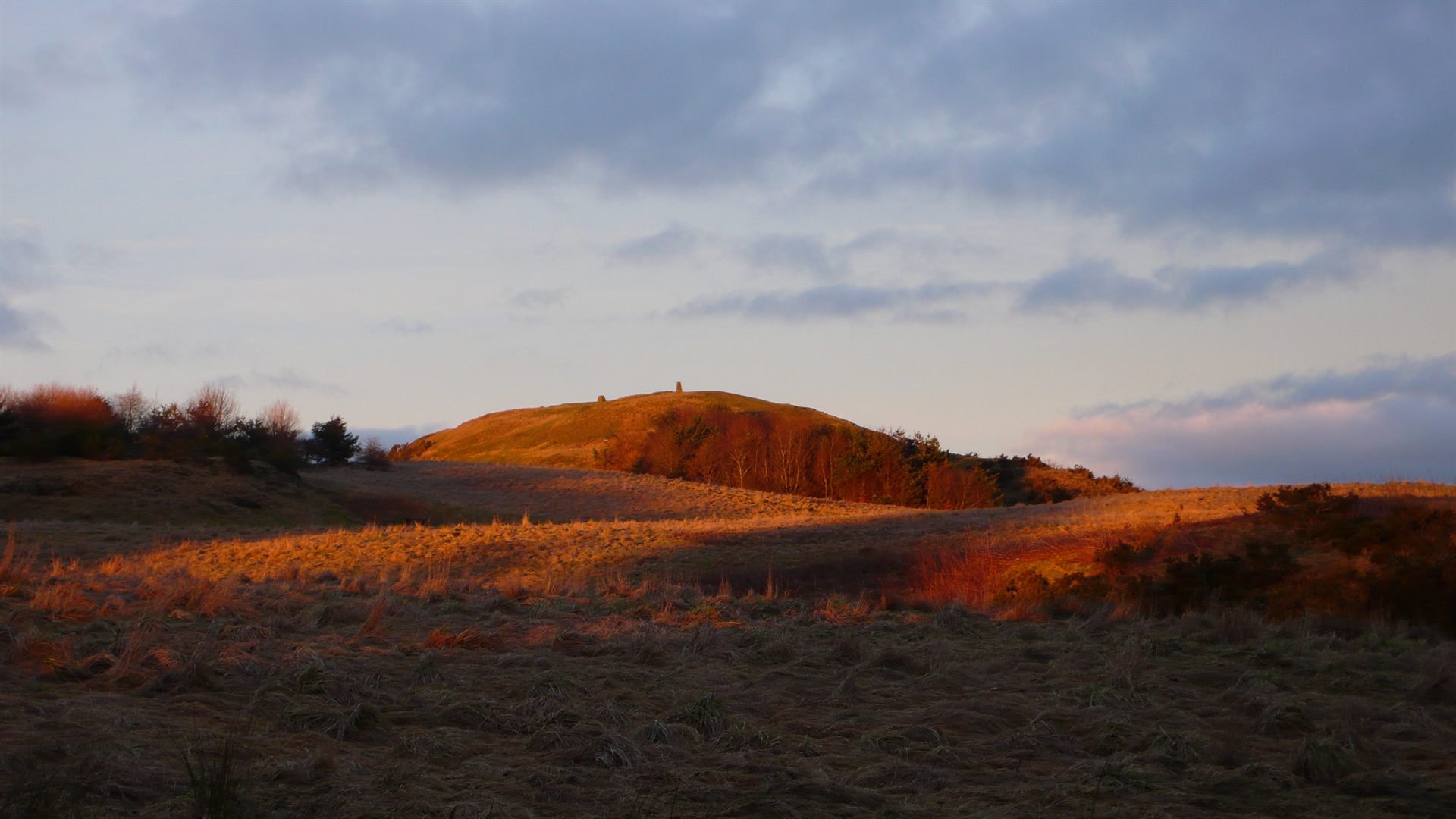
Pictured: Dechmont Law, the wooded hill near Livingston, West Lothian, where Robert Taylor's encounter took place — not the exact clearing or the object itself. No public-domain photograph of the original 1979 scene, the ground marks, or Taylor's torn clothing is known to be freely licensed; Police Scotland's own case photographs remain held within its archival file.
Theoretical Alignment
Livingston occupies an unusual middle ground among UAP hypotheses precisely because its strongest evidence is procedural rather than physical in the laboratory sense: what elevates the case is not a chemical assay but the fact that a professional Scottish police force, with no stake in ufology, opened and pursued a genuine criminal file because a real man had real, examinable injuries and a real, photographed disturbance in the ground. That gives the Extraterrestrial Hypothesis a modest but real foothold — higher than a typical uncorroborated single-witness account, because Robert Taylor's description of a structured, textured, mechanically detailed object with smaller attached components is difficult to explain as a simple light-in-the-sky misperception, and because Steuart Campbell's own detailed rebuttal never produced a controlled replication of the specific ground-mark pattern police documented. It is capped well below cases with independent laboratory corroboration because the entire sighting rests on one uncorroborated witness, and because a specific, detailed, medically informed Psycho-Social explanation — a genuine temporal lobe seizure triggered or accompanied by a distorted mirage, argued at length by a credentialed investigator with the direct support of a practicing physician — remains a live, unresolved possibility that the case's own chief police investigator never fully dismissed even while insisting it did not explain everything he found. The Interdimensional Hypothesis has essentially nothing to offer a case built around a physically described, texturally mundane-sounding metallic object that left conventional mechanical-looking marks in soil and grass. The Psycho-Social Hypothesis scores highest of the three specifically because Livingston is one of the few UFO cases anywhere with a detailed, published, medically grounded psychogenic explanation directly addressing the witness's own documented medical history — even though that explanation, as detailed later in this file, has never been shown to account for the ground marks a trained police officer photographed and measured independently of anything Taylor said.
Background
By 1979, Livingston was one of Scotland's newer post-war new towns, still expanding its housing estates and public amenities outward from Edinburgh's western commuter belt, with substantial tracts of surrounding forestry land managed by the Livingston Development Corporation, the public body responsible for the town's planned growth. Robert "Bob" Taylor, born in 1918, had spent roughly fifteen years by that point working as a forester for the Corporation, a job that involved routine, unglamorous fieldwork — checking fence lines, inspecting young tree plantings, walking the same wooded ground week after week. A World War II veteran and a teetotal, church-attending family man married to his wife Mary, Taylor had no documented interest in UFOs, no history of exaggeration, and nothing to gain from an elaborate hoax. On the morning of Friday, November 9, 1979, he set out in his Corporation pickup truck to inspect the forestry on and around Dechmont Law, a wooded hill on the northern edge of town, taking his red setter, Lara, along for the walk as he often did — ordinary, unremarkable fieldwork, on a day that would otherwise have left no record at all.
What happened next would, within days, generate national newspaper coverage across Scotland and England, a formal criminal investigation file, and more than four decades of continued ufological and skeptical debate — not because Taylor claimed to have seen lights in the sky, but because he came home with real physical injuries, a real damaged vehicle, and a real, independently photographed disturbance in the ground exactly where he said an object had rested. Lothian and Borders Police, the territorial force covering the area at the time, treated the matter with the same procedural seriousness they would apply to any reported assault, opening a case file that later ufological and press accounts came to refer to as the Livingston Report — a designation reflecting the case's unusual status as a UFO encounter that entered the criminal justice system rather than only the pages of a UFO magazine.
Complete Timeline
| Date | Event |
|---|---|
| 1962 | Livingston is designated as one of Scotland's post-war new towns in West Lothian; the Livingston Development Corporation is established to oversee its growth, including surrounding forestry land such as Deans Forest. |
| Friday, Nov. 9, 1979, ~10:00 AM | Robert Taylor, a Livingston Development Corporation forester, parks his pickup truck and walks with his dog Lara into a clearing on Dechmont Law to check fences and young trees, where he sees a large, dark, rough-textured spherical object hovering above the clearing floor. |
| Same morning, moments later | Two smaller spiked spheres detach from beneath the larger object, roll toward Taylor with a hissing/scraping noise, and seize his trouser legs; an overpowering acrid smell overcomes him and he loses consciousness. |
| Same morning, ~20 minutes later | Taylor regains consciousness alone in the clearing; the objects are gone, his dog is agitated, his trousers are torn, and he is temporarily unable to speak clearly or start his truck. |
| ~11:45 AM | Taylor arrives home on foot, dishevelled and muddy; his wife Mary calls a doctor and the police. |
| Same day | Local GP Dr. Gordon Adams examines Taylor, documenting grazes to his chin and left leg with otherwise normal vital signs; Lothian and Borders Police open a criminal case file, treating the torn clothing and injuries as possible evidence of assault. |
| Afternoon, Nov. 9, 1979 | Police officers, including scene-of-crime officer Detective Constable Ian Wark, accompany Taylor back to the clearing, locate it from his directions, and photograph and measure ground marks — roughly 32–40 small round holes and two rows of "ladder-like" impressions. |
| Nov. 9–10, 1979 | Taylor's employer and supervisor, Malcolm Drummond, visits the site and reports finding "very pronounced indentations" in the ground, reversing his initial skepticism. |
| Nov. 10–16, 1979 | The Scotsman, the Sunday Express, the Aberdeen Press and Journal, and the West Lothian Courier publish the first press coverage of the case. |
| Following weeks | Taylor's torn trousers undergo forensic laboratory examination; investigators find the tears consistent with a sharp, sustained pulling force, check flight logs (finding no aircraft in the area) and the Corporation's own machinery inventory (finding no match to the ground marks). |
| March–April 1980 | The British UFO Research Association (BUFORA) publishes a technical case summary, "Close Encounter in Scotland," in its Journal of Transient Aerial Phenomena, Vol. 1, No. 2. |
| 1982 | BUFORA publishes a dedicated field-investigation monograph, Encounter at Livingston, as BUFORA Research Paper No. 1. |
| 1994 | Steuart Campbell publishes The UFO Mystery Solved, proposing that Taylor experienced a distorted mirage of the planet Venus combined with a temporal lobe epileptic seizure, with mundane apparatus offered as a separate explanation for the ground marks. |
| January 1992 | The Livingston Development Corporation erects a commemorative plaque near the encounter site on Dechmont Law. |
| March 14, 2007 | Robert Taylor dies at age 88, having never altered his account of the encounter. |
| 2016 | Following public campaigning after the original marker was damaged, a replacement plaque is installed at the site, subsequently maintained by West Lothian Council. |
| 2019 | Malcolm Robinson publishes The Dechmont Woods UFO Incident (An Ordinary Day, An Extraordinary Event), the most detailed single published investigation of the case, alongside a documentary featuring interviews with Ian Wark and Robinson himself. |
A Clearing on Dechmont Law: Robert Taylor's Encounter
Robert Taylor's account, given consistently to his family, his doctor, the police, and decades of subsequent researchers, begins with nothing more dramatic than a routine morning's forestry work. Having parked his Livingston Development Corporation pickup truck at the roadside, he walked with his red setter, Lara, along a familiar forest path up the side of Dechmont Law, checking fence lines and young tree plantings as he had done countless times before. Rounding a bend into a clearing in Deans Forest at around ten in the morning, he saw what he initially took to be a downed aircraft: a large, dark grey object, its surface rough and pitted like sandpaper, roughly twenty feet across and shaped like a sphere with a raised flange or rim running around its middle, giving it a flattened, dome-like silhouette from certain angles. Around this rim, short mast-like projections resembling small propellers gave the object an almost mechanical, deliberately engineered appearance rather than anything obviously otherworldly, and it hovered a short distance above the clearing floor without any visible means of support.
As Taylor approached to get a better look, two smaller spiked spheres, each roughly two to three feet across and made of the same dark material, dropped or rolled out from beneath the larger object. He would later compare them to sea mines — round, studded with protrusions, and moving with a distinct hissing or scraping sound as their spikes contacted the ground. Rather than remaining stationary, the two smaller objects moved directly toward him from either side, and their spikes caught and seized the legs of his trousers, beginning to drag him bodily toward the larger craft. At the same moment, an overpowering, acrid smell — which Taylor and subsequent accounts have variously described as like burning brakes, sulphur, or something simply rotten and choking — overwhelmed him, and he began to lose consciousness, his last clear memory being the sensation of being pulled toward the hovering object before everything went dark.
Coming Back, Coming Home
When Taylor regained awareness, by his own estimate roughly twenty minutes had passed. He was alone in the clearing; the large object and the two smaller spheres were gone, leaving no trail showing how they had arrived or departed. His dog Lara was present but agitated, and Taylor himself found he could not immediately speak clearly and that his legs felt weak and unsteady — symptoms he attributed at the time simply to shock. His trousers were torn, muddy, and pulled loose at the waistband; he had visible grazes on his chin and thighs. Attempting to drive home, he found his truck would not start, and rather than wait at the isolated roadside, he set out on foot for his house in Livingston, a walk that in his weakened, disoriented state took the better part of an hour rather than the few minutes it would normally require. He arrived home at approximately 11:45 AM, dishevelled, still struggling to speak coherently, and clearly shaken. His wife, Mary, seeing his condition and hearing his fragmentary account, immediately telephoned both a doctor and the police — a decision that, more than anything else, is what turned Robert Taylor's morning from a private, unverifiable experience into a documented criminal case.
A Doctor's Examination and a Police Case File
Local GP Dr. Gordon Adams arrived to examine Taylor at his home and documented two distinct areas of grazing — one on his left leg, one beneath his chin — while noting that his blood pressure, body temperature, and other vital signs were otherwise unremarkable. It was the combination of Taylor's torn, damaged clothing and his documented physical injuries, rather than his account of the object itself, that prompted Lothian and Borders Police to treat the incident as a possible criminal assault rather than simply logging an unusual report and moving on. Officers opened a formal case file — referred to in subsequent press and ufological accounts as the Livingston Report — and proceeded exactly as they would for any assault investigation: interviewing Taylor directly and repeatedly, examining his physical condition, and treating his damaged clothing as potential forensic evidence rather than merely a curious detail. This procedural decision, made by officers with no connection to ufology and no evident interest in the case's ultimate outcome beyond determining whether a crime had actually occurred, is what has allowed Livingston to be described, with real justification, as one of the only UFO encounters in the world ever to become the subject of an active police criminal investigation.
Detective Constable Ian Wark and the Marks in the Clearing
That same afternoon, police officers accompanied Taylor back to the site, and using his directions, located the exact clearing where he said the encounter had occurred. Scene-of-crime officer Detective Constable Ian Wark, who would later rise to Detective Inspector before retiring, was among the first to examine the ground itself, and what he found convinced him, in his own words given decades later to the BBC, that something out of the ordinary had genuinely happened there. Wark documented roughly thirty to forty small, round holes, each about ten centimetres across, arranged in a pattern across the clearing floor, together with two parallel rows of impressions in the turf, spaced and arranged in a way witnesses and investigators alike described as resembling the rungs of a ladder. Wark personally followed up on the most obvious conventional explanation available to him: he went to the Livingston Development Corporation's own forestry equipment yard and checked every piece of machinery the Corporation possessed against the marks, finding no match. He also confirmed through military and civil aviation channels that no aircraft or helicopter had been operating in the area at the relevant time. Years later, when asked whether an epileptic seizure could account for what happened to Taylor, Wark was notably willing to entertain the medical explanation for the collapse itself — but he consistently maintained that it left the physical marks in the ground entirely unexplained, famously summarizing his position with the question: what about the marks on the ground?
Forensic Examination: What the Torn Trousers Showed
Because the case was being handled as a potential assault, Taylor's torn trousers were submitted through standard channels for forensic laboratory examination rather than simply photographed and set aside. The resulting analysis found that the tears in the fabric were consistent with a sharp, sustained upward or outward pulling force — the kind of damage one might expect from something mechanically gripping and pulling at the material — rather than the more ragged, inconsistent tearing typical of a fall, a snag on a branch, or deliberate tampering by hand. A powder discovered on the fabric during this process was initially treated with interest as a possible trace residue, but further analysis identified it as an entirely mundane contact-transfer deposit from the sack in which the clothing had been packaged for shipment to the laboratory — a finding that, rather than undermining the case, illustrates that the forensic examiners were applying genuine scientific scrutiny rather than uncritically validating every anomalous-seeming detail. No evidence of self-inflicted damage, deliberate staging, or any conventional mechanical source for the tear pattern was ever identified, and the case was never closed by police as a resolved hoax; it remains, formally, an unsolved criminal matter.
BUFORA, UFOIN, and the Wider Investigation
Word of the case spread quickly through Britain's organized ufology community, and the British UFO Research Association (BUFORA) undertook its own technical field investigation, publishing an initial summary, "Close Encounter in Scotland," in its Journal of Transient Aerial Phenomena in the spring of 1980, followed in 1982 by a dedicated monograph, Encounter at Livingston, issued as BUFORA Research Paper No. 1 — a level of formal, published technical documentation few British UFO cases of the era received. A separate group, the UFO Investigation Network (UFOIN), also examined the case independently, though its published reconstructions introduced a genuine point of later controversy: illustrations produced by UFOIN depicted a ladder-like landing-gear structure connecting the object to the ground marks, a detail Taylor himself, according to multiple accounts, strenuously denied ever having seen or described. This gap between what Taylor actually reported and what some subsequent illustrations implied has become a cautionary example, cited by both proponents and skeptics, of how a case's popular retelling can drift from a witness's original testimony over repeated retellings — a distinction any honest treatment of Livingston has to keep clearly in view.
Steuart Campbell's Mirage and Seizure Hypothesis
Steuart Campbell, an Edinburgh-based architect-turned-science-writer who served as the Scottish coordinator for a national UFO investigation organization, became the case's most thorough and most publicly identified skeptical investigator, ultimately devoting a detailed chapter to it in his 1994 book The UFO Mystery Solved. Campbell's central proposal held that Taylor witnessed a superior mirage of the planet Venus, then low on the horizon at an azimuth and elevation Campbell calculated as consistent with the timing of the sighting, distorted and magnified into an apparently large, close, structured object by a temperature-inversion layer in the atmosphere above the clearing. Campbell paired this astronomical explanation with a medical one, drawing on the advice of Dr. Patricia Hannaford, a physician and founder of the Edinburgh University UFO Research Society, who proposed that Taylor's collapse represented an isolated episode of temporal lobe epilepsy. In support of this diagnosis, Hannaford and Campbell pointed to Taylor's documented medical history — a bout of meningitis roughly fourteen years earlier, a known risk factor for later seizure activity, and a July 1979 hospital admission for headaches just four months before the encounter — alongside a cluster of post-incident symptoms that map closely onto the classic postictal phase of a temporal lobe seizure: an unusual, undetected smell (a phenomenon known as phantosmia, common as a seizure aura), transient difficulty speaking, a lingering headache, temporary weakness in the legs consistent with Todd's paresis, thirst, and a period of confusion. For the ground marks specifically, Campbell offered a separate, more mundane proposal: that stacked lengths of PVC pipe or other equipment associated with a nearby water-authority project, temporarily stored in the clearing, could account for the holes and ladder-like impressions police documented.
The Rebuttals: What the Mirage Theory Does Not Explain
Campbell's explanation, while genuinely detailed and medically grounded in a way few UFO counter-theories are, has never gone unanswered. The astronomical geometry underpinning the Venus-mirage component was directly disputed by Terry Moseley of the Irish Astronomical Society, who challenged whether the specific combination of Venus's position and a plausible temperature-inversion layer could actually produce the extended, structured, close-range appearance Taylor described, rather than the classic scintillating point-of-light mirage more commonly documented in astronomical literature. More fundamentally, the officer who personally examined the physical scene, Detective Constable Ian Wark, was on record decades later still finding the mirage-and-seizure explanation incomplete on its own terms: a seizure might plausibly explain Taylor's collapse, his disorientation, and even a vivid hallucinated perception, but it offers no mechanism by which a distant planetary mirage or a psychogenic episode could independently produce thirty to forty measured holes and two rows of ladder-like ground impressions that Wark discovered using Taylor's directions alone, hours before any detailed medical or astronomical theory existed to shape what investigators might expect to find. Campbell's own separate proposal regarding stored water-authority pipework has likewise never been corroborated by contemporaneous records placing such equipment at the specific clearing on that specific date, and long-term case investigators including Malcolm Robinson and Scottish paranormal researcher Ron Halliday have argued that no fully satisfying account has yet reconciled a psychogenic or mirage-based explanation for the sighting with the independently documented physical marks in the ground. Former UK Ministry of Defence UFO investigator Nick Pope has likewise pointed to the case's binary character: Taylor had, in Pope's assessment, comparatively little to gain and considerable personal and professional standing to lose by reporting what he did, a consideration that complicates any theory requiring either deliberate fabrication or an easily dismissed misperception.
Legacy: Scotland's Only Criminal UFO File
The Livingston case was never solved, in the specific sense that no suspect was ever identified, no prosecution ever followed, and no single explanation was ever accepted by the police as definitively closing the file. It remains, in that precise procedural sense, an open, unresolved assault investigation more than four decades later — a status that has made it a recurring touchstone in discussions of how UFO reports intersect with formal institutions rather than existing purely within ufological subculture. The Livingston Development Corporation formally commemorated the case in January 1992 with a plaque erected near the encounter site on Dechmont Law; after the original marker was damaged, a replacement was installed in 2016 following public campaigning, and it is now maintained by West Lothian Council as part of a public walking trail with interpretive signage describing the case to visitors. Malcolm Robinson's 2019 book and an accompanying documentary, featuring on-camera interviews with both Robinson and Ian Wark, brought renewed public attention to the case four decades on, and it continues to be cited — by proponents and skeptics alike, for different reasons — as the clearest example in the international UFO literature of a close encounter that a professional police force chose to investigate not because anyone believed in flying saucers, but because a real man came home with real injuries that needed explaining.
Circumstantial Evidence
- Taylor's employer and direct supervisor, Malcolm Drummond, independently examined the clearing and reported finding "very pronounced indentations" in the ground, reversing his own initial skepticism.
- Lothian and Borders Police opened a genuine criminal case file and never closed it as a resolved hoax, despite an active, multi-week investigation involving forensic laboratory testing.
- Detective Constable Ian Wark personally checked the Livingston Development Corporation's own forestry machinery against the ground marks and found no match, and confirmed through flight logs that no aircraft had been operating in the area.
- Forensic examination of Taylor's trousers found tear damage consistent with a sharp, sustained pulling force rather than an ordinary snag, fall, or hand-torn fabric.
- Taylor sought no publicity, gained no meaningful financial benefit, and never altered his account across nearly three decades of continued public interest before his death in 2007.
- Dr. Gordon Adams's same-day medical examination documented genuine physical injuries — grazes on the chin and leg — independent of anything Taylor himself claimed about their cause.
- Steuart Campbell's detailed mirage-and-seizure counter-theory has never been shown to independently account for the specific pattern of holes and ladder-like impressions Wark documented using Taylor's directions alone.
Key Witnesses
Robert "Bob" Taylor
A 61-year-old forester with roughly fifteen years' service for the Livingston Development Corporation, a World War II veteran, and a teetotal churchgoer, Taylor was checking fences and trees with his dog Lara when he encountered the object. He was the sole witness to the object itself, sustained real facial and leg grazes, torn clothing, and roughly twenty minutes of lost time, and reported the encounter to his wife, his doctor, and police the same morning. He never altered his account before his death in 2007 and sought no publicity or financial gain from the case.
Detective Constable Ian Wark
The officer who personally located, photographed, and measured the ground marks in the clearing using Taylor's directions, hours after the encounter. Wark independently checked the Livingston Development Corporation's forestry machinery against the marks and confirmed no aircraft had been operating in the area, finding no conventional explanation for what he documented. He later rose to Detective Inspector before retiring, and decades later maintained publicly that while a medical explanation might account for Taylor's collapse, it did not explain the ground marks he found.
Malcolm Drummond
Taylor's immediate work supervisor, who was initially skeptical of the account but visited the clearing himself and reported finding "very pronounced indentations" in the ground consistent with what Taylor described, a shift toward guarded acceptance from a witness with a direct professional relationship to Taylor and no obvious motive to validate an implausible story.
The Five Observables Assessment
The Five Observables framework, developed by former AATIP director Luis Elizondo, is designed to classify witnessed UAP flight performance against the limits of known technology. Livingston, like other close-range physical-trace encounters in this catalogue, is a difficult structural fit for that framework: it is a brief, close-range, single-witness ground-level encounter with no instrumented flight-dynamics data, tracked speed, or altitude measurement of any kind. Most of the observables below reflect what a single witness impressionistically described over a matter of seconds before losing consciousness, rather than anything independently measured, and the assessment says so plainly rather than inferring performance characteristics no instrument ever recorded.
Assessment: Anti-Gravity Lift is rated speculative because Taylor described the large object hovering just above the clearing floor with no visible support structure, downwash, or exhaust — consistent with a genuinely novel lift mechanism, but based entirely on a few seconds of one witness's visual impression before he lost consciousness, with no measurement of how the object arrived or departed. Instant Acceleration and Hypersonic Velocity are both rated absent, since no witness or investigator ever described or claimed any high-speed departure; the object and its smaller components were simply gone when Taylor regained consciousness, with no timed or witnessed movement at all. Low Observability is rated present because the object was described as dark, non-luminous, and silent apart from a faint hissing or scraping sound from the smaller spheres, with no other resident of Livingston reporting having seen or heard it despite the clearing's proximity to the town. Trans-Medium travel does not meaningfully apply to a case that took place entirely at ground level in a forest clearing with no medium transition of any kind, confirming this as fundamentally a landed CE3 physical-trace report rather than a flight-performance data point. As with other physical-trace cases in this catalogue, Livingston's true evidentiary weight rests almost entirely on what was left on the ground and on Taylor's own body, not on any performance characteristic of the object while in motion.
Evidence Assessment
Supporting Anomalous Origin
- Lothian and Borders Police opened and pursued a genuine criminal case file, never closing it as a resolved hoax despite an active multi-week investigation.
- Detective Constable Ian Wark independently located, photographed, and measured distinctive ground marks using only Taylor's directions, hours before any theory could shape expectations.
- Forensic laboratory analysis found Taylor's torn trousers consistent with a sharp, sustained mechanical pulling force rather than an ordinary snag or hand-torn fabric.
- Wark personally checked the Livingston Development Corporation's own forestry machinery against the marks and found no match, and confirmed no aircraft had been operating in the area via flight logs.
- Taylor's supervisor, Malcolm Drummond, independently examined the site and reversed his initial skepticism after finding "very pronounced indentations."
- Taylor sought no publicity or financial benefit and never altered his account across nearly three decades before his death in 2007.
Supporting Conventional Explanation
- The sighting of the object itself rests on a single witness with no independent corroboration of its appearance or behavior.
- Steuart Campbell's detailed mirage-and-seizure theory offers a medically grounded explanation directly tied to Taylor's own documented health history, including a prior meningitis episode and a July 1979 hospitalization for headaches.
- Taylor's post-incident symptoms — an undetected smell, transient difficulty speaking, headache, leg weakness, and confusion — closely match the recognized postictal phase of a temporal lobe seizure.
- BUFORA's own technical review noted the ground marks were confined to the grass layer without deforming the soil profile beneath, raising questions about their true depth and mechanical significance.
- No contemporaneous photograph of the object itself exists, and some later illustrations (from UFOIN) depicted landing-gear details Taylor explicitly denied describing.
Why "Disputed"
The Livingston UFO Encounter earns a DISPUTED classification because it combines a genuinely unusual institutional and physical-evidence record with the same fundamental single-witness limitation that constrains nearly every close encounter in this catalogue. On the strength side: this is one of the only UFO cases anywhere in the world in which an ordinary territorial police force, acting under its normal criminal-investigation procedures rather than any UFO-specific mandate, opened and pursued a genuine assault file because a real man came home with real injuries and real damaged clothing. A same-day medical examination documented actual grazes; a scene-of-crime officer independently located, photographed, and measured a distinctive ground disturbance using nothing but the witness's own directions; forensic laboratory analysis of the torn trousers found damage consistent with a sharp, sustained mechanical pulling force; and the officer most directly responsible for examining the physical evidence went on record, decades later, still finding no conventional source for what he found. Taylor's own personal conduct throughout — consistent testimony sustained for nearly thirty years, no pursuit of publicity or profit, and an unusually strong, independently corroborated professional and personal reputation for honesty — further strengthens the case's credibility on the witness side. On the other hand, the sighting itself still rests on one uncorroborated observer for every detail of the object's appearance and behavior; a real, medically detailed, and professionally argued psychogenic explanation — a temporal lobe seizure combined with a distorted planetary mirage, grounded in Taylor's own documented medical history — has been developed at length by a credentialed skeptical investigator working with a practicing physician, and has never been definitively disproven; and no fully satisfying account, from either side of the debate, has yet reconciled every element of the case — a mundane origin for the ground marks has never been conclusively demonstrated, and an exotic origin for them has never been conclusively established either. That is precisely the profile of a genuinely disputed case: not one built on flimsy or superficial evidence, but one in which a professional police investigation on one side and an equally serious, medically grounded skeptical rebuttal on the other have examined the same physical record directly and still reached no final consensus.
Sensor & Instrumentation Detection Profile
No radar station, aircraft, or automated sensor detected anything over Dechmont Law that morning; the entire encounter took place at close range, at ground level, in a forest clearing with no aviation or military facility positioned to record it. Taylor himself carried no instrumentation beyond his own senses. What distinguishes Livingston from the overwhelming majority of unwitnessed or purely testimonial UFO reports is what happened afterward: rather than relying on memory alone, Lothian and Borders Police treated the aftermath as a live crime scene, sending an officer to photograph and measure the ground disturbance within hours and submitting Taylor's torn trousers for forensic laboratory examination the same way they would for any assault case. Investigators also checked available instrumentation of a different kind — military and civil aviation flight logs for the area, which showed no aircraft or helicopter operating near Livingston at the relevant time, and the Livingston Development Corporation's own forestry equipment inventory, which the investigating officer personally checked piece by piece against the ground marks without finding a match. As with several other physical-trace cases in this catalogue, Livingston is not an instrumented sighting in the radar-visual sense; it is an instrumented aftermath, in which routine police forensic procedure, rather than any sensor trained on the object itself, produced the case's most distinctive evidentiary record.
Environmental & Geospatial Context
Livingston is one of Scotland's post-war new towns, designated in 1962 in West Lothian roughly midway between Edinburgh and Glasgow, close to the M8 motorway corridor. Dechmont Law, a volcanic-plug hill rising to about 217 metres on the northern edge of the town near the settlement of Deans, was at the time bordered by working forestry land — Deans Forest — managed by the Livingston Development Corporation as part of the new town's landscaping program, the same body that employed Taylor. The clearing where the encounter occurred sat roughly 500 yards from the roadside spot where Taylor had parked his pickup truck, reached by a forest path he knew well from routine fence and tree inspections. Early November in West Lothian typically brings short daylight hours and cold, often overcast mornings, but no witness or investigator account describes any unusual meteorological condition — no fog, temperature inversion, or storm activity — beyond what later became central to the case's most detailed skeptical theory, discussed below, which required a specific atmospheric layering effect to make a distant planet appear as a large, close, structured object. The site's semi-rural, working-forest character cuts both ways evidentially: it means there was no obvious industrial or aviation source positioned to produce the sighting or the ground marks by conventional means, but it also means Taylor was entirely alone at the critical moment, with no second witness in a position to independently confirm what he saw before he lost consciousness.
Observer Credibility & Occupational Profile
The sighting itself rests on a single witness, but that witness's personal credibility was scrutinized more thoroughly, by more disinterested parties, than in almost any other case in this catalogue. Robert Taylor, 61 years old at the time, was a working forester with roughly fifteen years' service for the Livingston Development Corporation, a World War II veteran, a teetotal churchgoer, and a man known throughout the area, according to those who worked with him, as honest and unremarkable — exactly the kind of person unlikely to invent an elaborate, physically corroborated story for attention. His own employer and supervisor, Malcolm Drummond, arrived at the scene expecting to find nothing and instead described "very pronounced indentations" in the ground consistent with Taylor's account, a shift from open skepticism to guarded acceptance that carries real weight precisely because Drummond had every professional reason to want a mundane explanation. Taylor never sought publicity from the case, made "next to nothing" financially from four decades of ongoing public interest according to those who knew him, and by every account never altered a single detail of his story between 1979 and his death in 2007 — a consistency ufologists and skeptics alike have both cited, for opposite reasons, as significant. Working against a completely frictionless credibility assessment is the same limitation present in nearly every single-witness case: no second person saw the object itself, meaning the sighting narrative cannot be cross-checked against an independent account, and Taylor's own documented medical history — a childhood bout of meningitis and a July 1979 hospital admission for headaches, four months before the encounter — became the specific foundation for the case's leading psychogenic counter-theory, discussed in detail below.
Physical & Material Assays
Livingston is, above nearly every other consideration, a physical-evidence case, which is precisely why it crossed from ufological curiosity into an active police file. The clearing floor showed two distinct categories of disturbance, photographed and measured by Lothian and Borders Police scene-of-crime officer Ian Wark within hours of the report: roughly thirty to forty small round holes, each about ten centimetres (roughly 3.5 inches) across, arranged in an arcing pattern, and two parallel rows of "ladder-like" impressions in the turf, each row roughly 2.5 metres long, with individual marks spaced at intervals suggestive of rungs. Wark's own contemporaneous assessment, later repeated to the BBC, held that the pattern looked as though "something had come vertically down," while a separate account from BUFORA's technical review noted the marks were confined to the grass layer without deforming the soil profile beneath it — a genuine point of internal disagreement about the marks' depth and significance that has never been fully resolved. Taylor's torn trousers — ripped at the waistband and legs in a pattern investigators found consistent with a sharp, sustained pulling force rather than an ordinary snag or fall — were submitted for forensic laboratory examination alongside grazes on his chin and left leg documented by his own GP, Dr. Gordon Adams, whose examination found his blood pressure, temperature, and other vital signs otherwise normal. A powder later found on the fabric, initially treated as a potential trace clue, was identified as ordinary contact-transfer residue from the sack in which the clothing had been shipped for testing — a mundane finding that illustrates how carefully the physical evidence was actually processed, rather than uncritically inflated.
Historical Precedents & Archive Matches
Livingston belongs to a narrow category of Close Encounter of the Third Kind cases in which a witnessed close-range encounter left a measurable, independently examined physical trace, placing it alongside cases such as the April 1964 Socorro, New Mexico landing investigated directly by police officer Lonnie Zamora, and physical-trace ring cases such as Delphos, Kansas (1971) and Trans-en-Provence, France (1981), both of which similarly turned on a single rural witness and a durable ground mark subjected to real outside scrutiny. What sets Livingston apart from all three is institutional: rather than a civilian investigator or a national space agency's scientific unit, it was an ordinary territorial police force, acting under its normal criminal-investigation procedures because a resident had suffered apparent physical injury, that produced the case's official documentation — making it arguably the only major case in the international record generated entirely by standard law-enforcement assault-investigation protocol rather than by any UFO-specific research body. Within the United Kingdom, Livingston is regularly discussed alongside the December 1980 Rendlesham Forest incident as one of the two most significant British close encounters of the era, though the two cases differ sharply in character: Rendlesham involved multiple U.S. Air Force witnesses and radiation-level readings over several nights, while Livingston is a single-witness, single-morning event whose entire evidentiary weight rests on one man's injuries and one patch of Scottish forest floor. No other Scottish UFO report before or since has generated a comparable, independently opened criminal case file.
Material Analysis
Livingston's physical evidence divides into two distinct categories, each independently documented by parties with no stake in a UFO-favorable outcome. The ground trace consisted of roughly thirty to forty small, round holes about ten centimetres across, arranged in a broad pattern, together with two parallel rows of "ladder-like" impressions in the turf, each row roughly 2.5 metres long — documented first by Lothian and Borders Police photography within hours of the report, using Taylor's own directions to relocate the site. Detective Constable Ian Wark's initial assessment held that the pattern suggested something heavy had rested there without being driven or towed away, though BUFORA's own subsequent technical review noted the marks were confined to the grass layer without visibly deforming the soil profile beneath — a genuine, still-unresolved point of disagreement about their true depth and mechanical significance. The second category of physical evidence was biological and material: grazes on Taylor's chin and leg documented by his GP the same day, and torn trousers that forensic examination found consistent with a sharp, sustained pulling force rather than ordinary tearing. A powder found on the fabric, initially of interest, was identified as innocuous transfer residue from its shipping packaging rather than any exotic trace substance — a genuinely mundane finding that demonstrates the forensic process was applying real scrutiny rather than uncritically validating every detail.
Supporting a Genuine Anomaly
- Police documentation of the ground marks was independent of anything Taylor said beyond his directions to the clearing, and occurred within hours of the report.
- Forensic analysis of the torn trousers found damage consistent with a sharp, sustained pulling force rather than an ordinary tear.
- No conventional forestry machinery or aircraft activity could be matched to the marks despite a direct, itemized check by the investigating officer.
Supporting a Natural or Mundane Origin
- BUFORA's own technical review found the ground marks confined to the grass layer without deforming the underlying soil profile, raising questions about their true depth.
- Steuart Campbell proposed that stored water-authority pipework, rather than any object, could plausibly account for the holes and ladder-like impressions.
- No contemporaneous, high-resolution color photograph of the marks or any object is known to survive, limiting independent re-analysis of the physical scene today.
Conventional Explanation Candidates
Three distinct terrestrial explanations have been proposed for the Livingston case across more than four decades of investigation and critique, and each deserves individual evaluation rather than being treated as a single undifferentiated "skeptical" position.
1. Venus Mirage Combined with Temporal Lobe Epileptic Seizure
The most thoroughly developed candidate, published by Steuart Campbell in his 1994 book The UFO Mystery Solved with medical input from physician Dr. Patricia Hannaford, holds that Taylor observed a superior mirage of the planet Venus, distorted by a temperature-inversion layer into an apparently large, close, structured object, and that this visual stimulus triggered or accompanied a temporal lobe seizure — a diagnosis supported by Taylor's documented history of meningitis and a recent hospitalization for headaches, and by a cluster of postictal symptoms matching his own reported condition on regaining consciousness. This candidate deserves serious consideration because it is the only proposed explanation grounded directly in Taylor's own verified medical history rather than pure speculation.
Where the Mirage-and-Seizure Theory Falls Short
Terry Moseley of the Irish Astronomical Society directly disputed the astronomical feasibility of the specific mirage geometry Campbell's theory requires, and no seizure or mirage, however vivid, offers a documented mechanism for independently producing measured, physical holes and ladder-like impressions in soil and turf that a police officer, working from Taylor's directions alone, discovered and photographed within hours — a limitation Detective Constable Ian Wark himself pointed out and never considered resolved.
2. Stored Equipment or Machinery Marks
The second candidate, also proposed by Campbell, holds that PVC pipework or other equipment associated with a nearby water-authority project, or alternatively ordinary forestry machinery, was temporarily present in the clearing and produced the ground marks by entirely mundane means. This candidate deserves consideration because it requires no exotic mechanism at all, only ordinary rural equipment storage or use.
Where the Equipment Theory Falls Short
Detective Constable Wark personally and specifically checked the Livingston Development Corporation's own forestry machinery inventory against the marks and found no match, and no contemporaneous record has been produced placing water-authority pipework at that specific clearing on that specific date; the theory remains a plausible possibility rather than a documented fact.
3. Deliberate Fabrication or Staging by the Witness
The third candidate holds that Taylor staged the entire event, including his own injuries and the ground marks, whether using tools, a vehicle, or deliberate self-harm. This candidate deserves consideration because deliberate fabrication is among the most common explanations proposed for isolated single-witness physical-trace cases generally.
Where the Fabrication Theory Falls Short
Taylor's own employer, family, doctor, and the police who interviewed him repeatedly all found no evidence of dishonesty or motive; he sought no publicity and gained no meaningful financial benefit across nearly three decades of continued public interest; and the specific combination of forensically anomalous tear damage, an independently measured and photographed ground pattern, and documented physical injuries would have required a level of premeditation, self-inflicted harm, and technical staging entirely disproportionate to anything in Taylor's character or circumstances as understood by everyone who knew him.
Each conventional candidate offers a genuinely plausible mechanism for part of the case, but none accounts for the full combination of Taylor's documented injuries, the forensically anomalous tear pattern, and the independently measured ground marks, and none has ever been tested directly against the full physical record to the point of confirmation or elimination.
Related Cases
Confirmed Documents & Official Records
The local government authority's own published information document about the case and the commemorative site it now maintains on Dechmont Law.
UNCLASSIFIED / PUBLIC RECORDA detailed 40th-anniversary report including on-record recollections from Detective Constable Ian Wark, the officer who examined the physical scene.
UNCLASSIFIED / PUBLIC RECORDSearch Government Archives Directly
Further Reading — Recommended Literature
The Dechmont Woods UFO Incident (An Ordinary Day, An Extraordinary Event)
The most detailed single published investigation of the case, by the Scottish ufologist who researched it for decades and interviewed both Taylor and the investigating officers directly.
The UFO Mystery Solved
The case's most detailed published skeptical rebuttal, developing the Venus-mirage and temporal-lobe-epilepsy hypothesis at length, from the investigator who served as the case's chief skeptical researcher.
UFO Scotland: The Secret History of Scotland's UFO Phenomenon
The first comprehensive study of Scottish UFO reports, with dedicated coverage of the Livingston case situating it within the country's broader close-encounter history.
The UFO Files: The Inside Story of Real-Life Sightings
A comprehensive history of British government UFO investigation drawn from declassified National Archives files, useful context for how UK institutions have historically handled cases like Livingston.
The UFO Encyclopedia, 4th Edition
The definitive UFO reference work, with an extensively cited entry situating Livingston among the small number of UFO cases with genuine, documented police physical-evidence investigation.
Essential Viewing
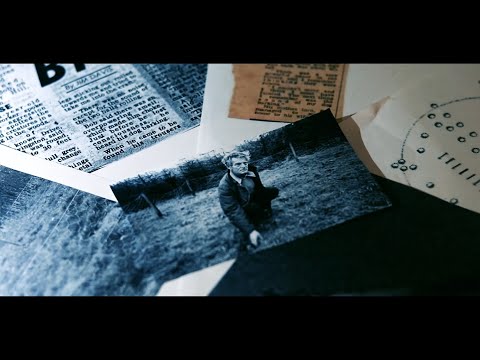
Official Trailer 1: The Dechmont Woods Case
The official trailer for the feature documentary on the case, produced by Condor Entertainment.
Official Trailer 2: The Dechmont Woods Case
A second official trailer for the documentary, featuring further footage from the site and case interviews.
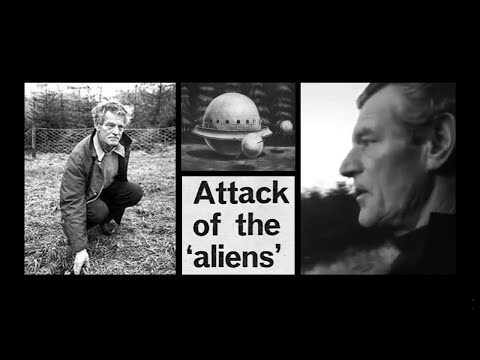
Robert Taylor Talks About Being Attacked by a UFO
Archival footage of Robert Taylor himself describing the encounter in his own words.
![The Robert Taylor UFO Incident - Britain's Only Criminal UFO Case [Eerie's Vault Episode #40]](/images/thumbs/jPi8gDN0Ge4.jpg)
The Robert Taylor UFO Incident — Britain's Only Criminal UFO Case
A detailed case-history episode covering the encounter, the police investigation, and the skeptical counter-theories.
UFO Buster Radio News: The 1979 Dechmont Woods Encounter
A radio news segment discussing the case's key facts and its unusual status as a police-investigated UFO report.
Sources
- "Robert Taylor incident," Wikipedia. en.wikipedia.org
- "Dechmont Law," Wikipedia. en.wikipedia.org
- Undiscovered Scotland. "The Livingston Incident." undiscoveredscotland.co.uk
- History Scot. "On this day in Scotland: The Livingston UFO incident." history.scot
- Brocklehurst, Steven. "The UFO sighting investigated by the police," BBC News Scotland, November 9, 2019. bbc.co.uk
- West Lothian Council. "Dechmont Law UFO" (official information sheet). westlothian.gov.uk
- Grokipedia. "Robert Taylor incident." grokipedia.com
- UFO Casebook. "1979 – Dechmont Woods Abduction of Robert Taylor." ufocasebook.com
- UFO Insight. "The Livingston Dechmont Woods Incident – A 'Criminal Investigation' Of A UFO!" ufoinsight.com
- xUFOs. "The Dechmont Woods Incident: The Night a Forester Met a UFO and Robots – 1979." xufos.com
- Kiddle Encyclopedia. "Robert Taylor incident facts for kids." kids.kiddle.co
- Metabunk. "Scotland's Socorro: the Dechmont/Robert Taylor UFO, 1979" (forum thread collecting BUFORA and skeptical source material). metabunk.org
- Steuart Campbell. "UFOs" (author's own site, discussing his Livingston investigation and The UFO Mystery Solved). steuartcampbell.com
- "Steuart Campbell," Wikipedia. en.wikipedia.org
- Campbell, Steuart. The UFO Mystery Solved, Explicit Books, 1994, pp. 150–158, ISBN 0-9521512-0-0. amazon.com
- Robinson, Malcolm. The Dechmont Woods UFO Incident (An Ordinary Day, An Extraordinary Event), 2019. amazon.com
- Halliday, Ron. UFO Scotland: The Secret History of Scotland's UFO Phenomenon, B&W Publishing, 1998. amazon.com
- Clarke, David. The UFO Files: The Inside Story of Real-Life Sightings, The National Archives, 2009. amazon.com
- Clark, Jerome. The UFO Encyclopedia, 4th Edition, Visible Ink Press, 2023 (entry on the Robert Taylor / Livingston case).
- Wikimedia Commons. "File: Dechmont Law.jpg" (CC BY-SA 3.0, hero image source). commons.wikimedia.org
- McIver, Brian. "UFO investigator claims he has answer to one of Scotland's greatest unexplained alien encounter mysteries," Daily Record, November 22, 2013.
- The Economist. "Obituary: Robert Taylor, a possible victim of alien abduction, died on March 14th, aged 88," March 29, 2007.
- The Telegraph. "Bob Taylor" (obituary), March 23, 2007.
- The Scotsman, Saturday, November 10, 1979, p. 5 (first press report of the case).
- Amazon.com. "The Dechmont Woods UFO Incident," Malcolm Robinson. amazon.com
- Amazon.com. "UFO Scotland," Ron Halliday. amazon.com
See something inaccurate? Have additional information or sources?
Suggest an Edit →Last Updated: August 2026