
The Shag Harbour UFO Incident
Shortly after 11:00 PM on October 4, 1967, at least eleven independent witnesses — a carload of teenagers, three separate Royal Canadian Mounted Police officers, and residents scattered along miles of coastline — watched a string of amber lights bank at a 45-degree angle and plunge into the waters off Shag Harbour, Nova Scotia. What followed was extraordinary by the standards of any UFO case anywhere in the world: the RCMP, the Canadian Coast Guard, and finally the Royal Canadian Navy's Maritime Command — deploying Fleet Diving Unit Atlantic divers from HMCS Granby — spent three days combing the harbour floor and found "not a trace, not a clue, not a bit of anything," while a declassified Department of National Defence file formally logged the object as something that had "not been caused by a flare, float, aircraft or in fact any known object." The U.S. Condon Committee later reviewed the case as its own "Case 34" and, after a cursory investigation, concluded that "no further investigation by the project was considered justifiable" — leaving it, in Condon's own final report, formally unsolved. Nearly sixty years later, with the case memorialized by the Royal Canadian Mint, a purpose-built interpretive centre, and an annual festival, Shag Harbour remains widely cited as the world's only UFO incident with a direct paper trail of contemporaneous government investigation, search-and-rescue logs, and a formal, on-the-record admission that the object's identity was never established.
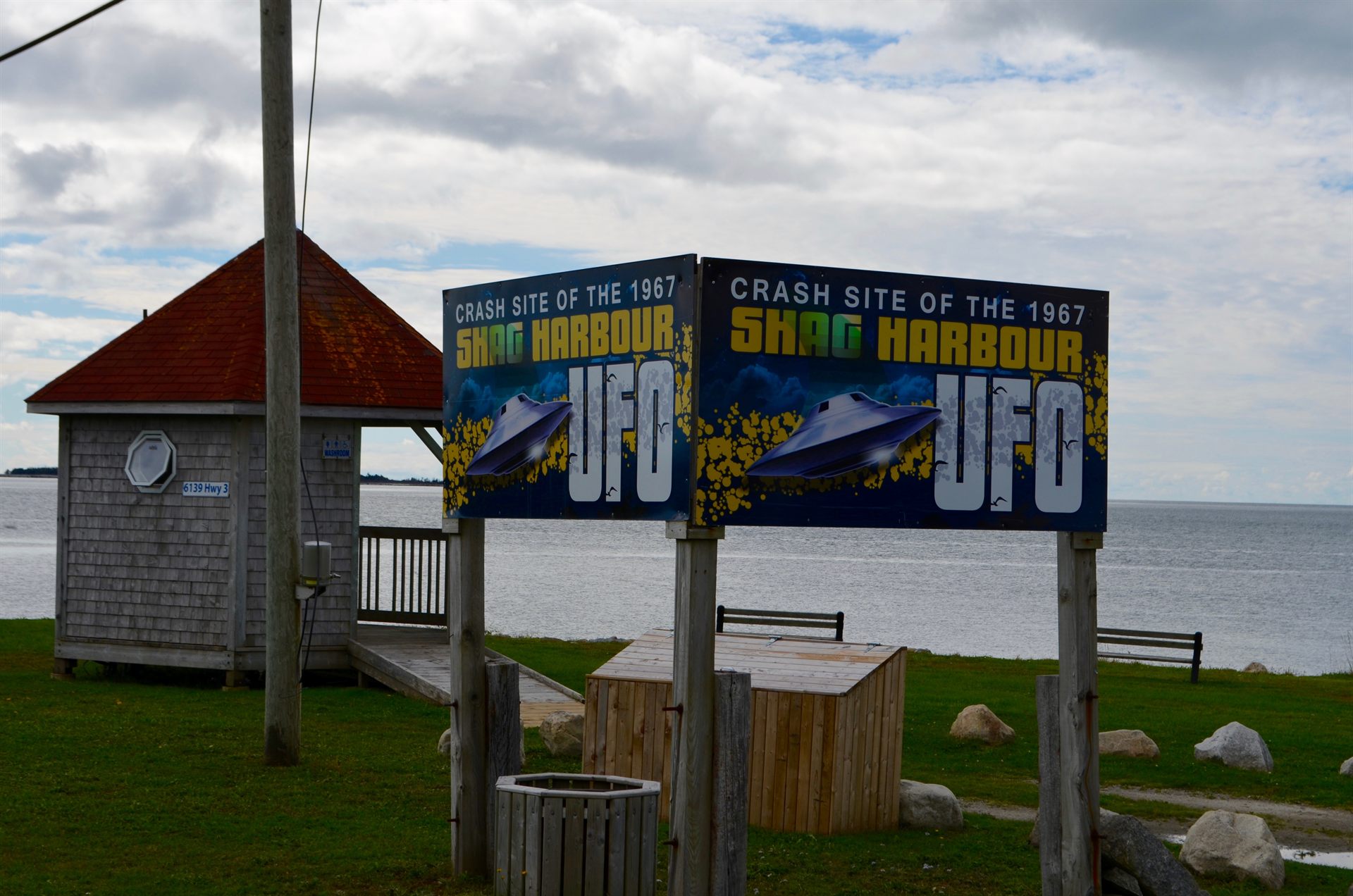
Pictured: the interpretive signage and gazebo at Shag Harbour Incident Park, Nova Scotia, marking the shoreline overlooking the waters where witnesses saw the object go down on October 4, 1967 — not a photograph of the object or the splashdown itself. None of the eleven-plus witnesses that night had a camera in hand, and the Royal Canadian Navy's three-day sonar and dive search recovered no physical trace to photograph.
Theoretical Alignment
Shag Harbour earns a moderate ETH alignment not because any witness described an occupied craft or exotic technology in detail, but because of what happened after the sighting: a formally documented, multi-agency government search that explicitly and in writing ruled out every mundane candidate investigators could think to test — flare, float, aircraft, "any known object" — without ever settling on a replacement explanation. That official non-explanation, rather than the eyewitness testimony alone, is what keeps the case's exotic-origin plausibility from collapsing to near zero the way a well-explained balloon or meteor case would. The Psycho-Social score is kept modest but nonzero to account for the substantial secondary mythology that has grown around the case since the 1990s — particularly the unconfirmed "Government Point" story discussed later in this file — layered on top of a comparatively sober original 1967 evidentiary record. The Interdimensional Hypothesis finds essentially no support: nothing in the contemporary record describes teleportation, high-strangeness occupant contact, or any effect inconsistent with a physical object of conventional (if unidentified) construction descending under some form of control and submerging.
Background
By the autumn of 1967, Canada's federal government had spent nearly two decades maintaining a quiet, low-key apparatus for collecting and, occasionally, investigating UFO reports. It began with Project Magnet, a Department of Transport initiative launched in 1950 by radio engineer Wilbert B. Smith to investigate the theoretical possibility of magnetic propulsion, and continued through the Defence Research Board's brief Project Second Storey (1952–1954). By 1967 no single agency owned the file: reports of unusual aerial phenomena might land with the Department of National Defence, the Department of Transport, the National Research Council, or the Royal Canadian Mounted Police, depending on who happened to receive the call. This fragmented but genuinely functioning system meant that when something extraordinary happened in a small fishing community, the Canadian state's response was neither a cover-up nor indifference, but a rapid, multi-agency mobilization — exactly what occurred on the night of October 4, 1967.
Shag Harbour itself was, and remains, an unassuming fishing village of a few hundred people on Nova Scotia's South Shore, part of the Municipality of the District of Barrington in Shelburne County, its economy built almost entirely around the lobster fishery. Nothing about the community suggested it would become the site of Canada's most scrutinized UFO case. The night began, by some accounts, with a string of possibly related sightings earlier in the evening: at approximately 7:15 PM, the crew of Air Canada Flight 305 — Captain Pierre Charbonneau and First Officer Robert Ralph — reported a "brilliantly lit, rectangular object with a string of smaller lights trailing behind it," followed at 7:19 PM by what they described as a "sizeable silent explosion," with a second explosion two minutes later that "faded to a blue cloud around the object." Around the same period, Darrel Dorey and his family observed a large object manoeuvring above the southwestern horizon from Mahone Bay, well up the coast, and Captain Leo Howard Mersey of the MV Nickerson, roughly 28 kilometres offshore, recorded four stationary blips on his ship's radar corresponding to four bright objects nearly twenty of his crew watched hold a rectangular formation in the sky. Around 10:00 PM, callers to Halifax media described glowing objects over the harbour. Whether any or all of these earlier sightings describe the same phenomenon that came down at Shag Harbour just over an hour later has never been established, and this file treats them as probably-related but formally unconfirmed context rather than as proven components of a single continuous event.
Complete Timeline
| Date | Event |
|---|---|
| 1950–1954 | Canada's Department of Transport runs Project Magnet under engineer Wilbert B. Smith, followed by the Defence Research Board's Project Second Storey — the origin of Canada's federal UFO-reporting apparatus. |
| May 20, 1967 | The Falcon Lake Incident occurs in Manitoba, becoming Canada's other landmark government-documented UFO case of 1967. |
| October 4, 1967 — ~7:15–7:21 PM ADT | Air Canada Flight 305's crew (Capt. Pierre Charbonneau, F/O Robert Ralph) report a lit rectangular object and two "silent explosions"; possibly unrelated to the main event. |
| ~10:00 PM | Halifax-area residents call local media reporting glowing objects over Halifax Harbour. |
| ~11:02 PM | Laurie Wickens, driving four friends on Highway 3, observes four amber lights in sequence bank sharply and descend toward the water off Shag Harbour. |
| ~11:15–11:20 PM | The object, now floating roughly 250–300 metres offshore with its lights still visible, is heard to whistle, then "whoosh," then produce a loud bang before sinking. Wickens telephones the RCMP from a pay phone in Wood's Harbour. |
| ~11:20–11:35 PM | Constable Ron Pond of the Barrington Passage RCMP detachment arrives on scene within roughly 15 minutes and personally observes the disturbance in the water; Constable Ron O'Brien contacts the Rescue Coordination Centre. |
| Same window | Independent witnesses along the coast — Norman Smith and David Kendrick on the highway, Mary Banks near Garron's Point, an unnamed man at Bear Point, and two unnamed women on Cape Sable Island — separately report the same lights. |
| ~11:30–11:40 PM | The Rescue Coordination Centre confirms that all commercial and military aircraft along the Atlantic Canada and New England seaboard are accounted for; no aircraft is missing or overdue. |
| Within the hour | Fishermen Bradford Shand and Lawrence Smith launch boats from the Government Wharf and discover a thick, glittering, sulphur-smelling yellow foam patch on the water; a search of nearly an hour finds no survivors or wreckage. |
| ~12:45 AM, Oct. 5 | A Canadian Coast Guard cutter arrives from nearby Clark's Harbour, roughly an hour after the first call, joining the search. |
| October 6–7, 1967 | Royal Canadian Navy Maritime Command, headquartered in Halifax, takes over search coordination; the Chronicle-Herald's October 7 headline reads "Could Be Something Concrete in Shag Harbour UFO — RCAF," quoting RCAF Squadron Leader Bain. |
| October 8, 1967 | Seven Fleet Diving Unit Atlantic divers, operating from the deep-diving tender HMCS Granby, conduct a daylight underwater search of the harbour floor. |
| October 9, 1967 | Maritime Command formally calls off the search, reporting "nil results" — no wreckage, debris, or trace of any craft. The Chronicle-Herald runs "UFO Search Called Off." |
| October 11, 1967 | One week later and half a mile south of the original site, the Cameron family of Woods Harbour independently reports two more unidentified objects to the RCMP, one closely resembling the object seen the previous week. |
| 1968 | The Department of National Defence transfers its back catalogue of UFO sighting reports, including the Shag Harbour file, to the National Research Council's Herzberg Institute of Astrophysics, which formally assumes responsibility for collecting Canadian UFO reports. |
| 1968–1969 | The U.S. Air Force-funded Condon Committee reviews the case as "Case 34"; investigator Dr. Norman E. Levine's inquiry consists of a small number of long-distance telephone calls, and the committee's final report leaves the case formally unresolved. |
| 1970s–1980s | Nova Scotia researcher Chris Styles begins informally collecting local testimony about the case. |
| 1993 | Styles and writer Don Ledger formally reopen the investigation, re-interviewing original witnesses, filing federal Access to Information requests, and obtaining official Royal Canadian Navy dive-search records. |
| 2001 | Styles and Ledger publish Dark Object: The World's Only Government-Documented UFO Crash, coinciding with a wave of Canadian government UFO-file declassification that draws fresh national media attention to the case. |
| 2006 | Local residents and researchers, including Styles, formally found the Shag Harbour UFO Incident Society. |
| 2016–2017 | Memorial University folklore doctoral candidate Noah Morritt conducts fieldwork on how the incident has shaped Shag Harbour's community identity, ahead of the 50th anniversary. |
| October 2017 | Shag Harbour marks the 50th anniversary of the incident with a three-day festival, drawing national media coverage. |
| October 1, 2019 | The Royal Canadian Mint releases a rectangular, glow-in-the-dark $20 fine silver coin, "Canada's Unexplained Phenomena: The Shag Harbour Incident," the second entry in its "Unexplained Phenomena" series after Falcon Lake. |
| 2018 | Styles and co-author Graham Simms publish Impact to Contact: The Shag Harbour Incident, representing roughly twenty years of further research. |
| 2025 | The Government of Canada's Office of the Chief Science Advisor names Shag Harbour among the country's historically notable UAP cases in its "Sky Canada Project" report recommending a modernized federal UAP-reporting framework. |
| August 2, 2026 | CBC News reports the death of Laurie Wickens, 76, the original caller who became the public face of the case and longtime president of the Shag Harbour UFO Incident Society. |
The Pre-Sightings: Airline Pilots and Halifax Harbour
The night's first reported anomaly came not from Shag Harbour itself but from the air. At approximately 7:15 PM Atlantic Daylight Time, the flight crew of Air Canada Flight 305 — Captain Pierre Charbonneau and First Officer Robert Ralph — reported observing a brilliantly lit, rectangular object trailing a string of smaller lights. Four minutes later, at 7:19 PM, the crew described what they termed a "sizeable silent explosion" near the object, followed two minutes after that by a second explosion that appeared to "fade to a blue cloud" around it. Around the same general period, Darrel Dorey and members of his family, watching from Mahone Bay well up the coast, observed a large object manoeuvring above the southwestern horizon — a sighting distinctive enough that Dorey later wrote directly to the base commander at RCAF Station Greenwood asking what had been flying over the water that evening. Separately, Captain Leo Howard Mersey of the merchant vessel MV Nickerson, roughly 28 kilometres offshore, recorded four stationary blips on his ship's Decca marine radar; nearly twenty of his crew came up to watch four bright objects holding what they described as a "roughly rectangular formation" in the night sky. By around 10:00 PM, callers were phoning Halifax newsrooms directly to report strange glowing objects over the harbour. None of these earlier sightings can be conclusively tied to the object that descended into Shag Harbour just over an hour later, and this file treats the connection as a plausible but formally unproven part of the night's broader pattern of activity along the Nova Scotia coast — a caveat later researchers, including Chris Styles, have themselves been careful to preserve rather than paper over.
"A String of Lights": Laurie Wickens and the Highway 3 Witnesses
The event that became the Shag Harbour incident proper began at approximately 11:02 PM, when 17-year-old Laurie Wickens, driving four friends home along Highway 3 near the harbour, noticed four amber or orange lights arranged in a horizontal line low over the water. As Wickens and his passengers watched, the lights banked together at what several later described as roughly a 45-degree angle and began a controlled-looking descent toward the surface of the harbour, coming to rest floating some 250 to 300 metres offshore with their lights still visible. Assuming they had just witnessed a plane crash, Wickens and his friends pulled over. Multiple accounts describe a whistling sound "like a bomb," followed by a "whoosh," and finally a loud bang as the object began to submerge. Wickens drove to a pay phone in nearby Wood's Harbour and called the RCMP.
Wickens's account did not stand alone for long. Within the same short window, two more local men — Norman Smith, 18, and David Kendrick — independently observed the same lights while driving a separate stretch of the highway. Farther along the coast, additional witnesses phoned in matching reports without any contact with Wickens or with each other: Mary Banks near Garron's (Maggie's) Point, an unnamed resident at Bear Point, and two unnamed women on Cape Sable Island. The geographic spread of these independent calls — several kilometres apart, arriving within minutes of one another, describing a consistent sequence of amber lights descending and vanishing into the water — is one of the case's most evidentially significant features: it is difficult to attribute a coordinated hoax, shared misperception, or single observer's error to witnesses who did not know each other and had no opportunity to coordinate a story in the minutes before they each independently reached for a telephone.
The RCMP Response
The Barrington Passage RCMP detachment, commanded by Corporal Werbicki, dispatched officers within minutes of Wickens's call. Constable Ron Pond arrived at the shore roughly fifteen minutes after the initial report and personally observed the tail end of the disturbance on the water — by his own later account, the object appeared to change in shape or aspect as it settled, behavior he described as consistent with "no known object" he could identify. Constable Ron O'Brien, working in parallel, contacted the regional Rescue Coordination Centre to check whether any aircraft might be missing or overdue. The Centre's answer came back unambiguous and was later recorded in official correspondence: all commercial and military aircraft were accounted for "up and down the eastern seaboard of Atlantic Canada, and well down into New England," and no private aircraft had been reported missing anywhere in the region. This single negative finding — obtained within roughly half an hour of the sighting, through routine institutional channels rather than any UFO-specific investigative apparatus — immediately closed off the single most common conventional explanation for a "something fell out of the sky and into the water" report, and it is a large part of why Shag Harbour was treated as a serious matter by the Canadian government from its very first hour rather than dismissed at the local level.
Fishermen on the Water: The Yellow Foam
While the RCMP worked the shoreline, local fishermen Bradford Shand and Lawrence Smith launched boats from the Government Wharf to search the area where witnesses had watched the object go down. What they found was not wreckage but a strange, persistent slick: a three- to four-inch-thick layer of dense, glittering yellow foam, with bubbles continuing to well up from below and a distinct sulphurous smell, stretching across the water in estimates that vary between roughly 80 feet and several hundred feet wide and as much as half a mile in length. Shand and Smith, men who fished those waters for a living and understood ordinary marine conditions intimately, searched for nearly an hour and found no survivors, no bodies, and no debris of any kind — only the foam. The patch persisted long enough for a Canadian Coast Guard cutter, arriving from Clark's Harbour roughly an hour after the first call, to observe it directly. No public record indicates the foam was ever collected and subjected to formal laboratory analysis, leaving its exact composition — and its true relationship to whatever went into the water — permanently unresolved, a genuine evidentiary gap this file addresses candidly rather than glossing over.
Maritime Command Takes Over: The Granby Dive Search
By October 6 and 7, responsibility for the investigation had escalated from local RCMP and Coast Guard resources to the Royal Canadian Navy's Maritime Command, headquartered in Halifax. Air Force spokesman Squadron Leader Bain, heading the RCAF's "Air Desk" in Ottawa, told the Chronicle-Herald for its October 7 front-page story that the Air Force received "hundreds of reports every week, but the Shag Harbour incident is one of the few where we may get something concrete on it" — a striking admission from an official spokesman that this particular case was being taken more seriously than the routine volume of UFO calls the government otherwise fielded. On October 8, 1967, seven divers from Fleet Diving Unit Atlantic, operating from HMCS Granby (pennant J264) — a former Second World War Bangor-class minesweeper that the Navy had converted into a deep-diving tender based in Halifax — conducted a full day's underwater search of the harbour floor in daylight. The following day, October 9, Maritime Command formally called off the search, reporting "nil results": no wreckage, no debris field, no trace whatsoever of anything that could account for what more than a dozen people had watched descend into the water five days earlier. The Chronicle-Herald's follow-up headline, "UFO Search Called Off," closed out the most intensive phase of the government's involvement, though the file itself would remain formally open and, within the RCMP and DND's own internal correspondence, formally unresolved.
The Condon Committee's Brief Review
The following year, the case crossed the U.S. border into the purview of the Condon Committee — the University of Colorado UFO Project, commissioned by the U.S. Air Force under physicist Edward Condon to conduct what became the government's most exhaustive contemporary review of the UFO phenomenon. Logged in the committee's 1968 final report as Case 34, the investigation was, by the committee's own account, cursory: assigned investigator Dr. Norman E. Levine's inquiry appears to have consisted of little more than a handful of long-distance telephone calls to sources in the area rather than any on-site fieldwork. The Condon Report's own summary nonetheless preserved the core facts accurately — an object "about 60 ft. long with four lights" that descended toward the ocean with a "whistling noise," a white light subsequently visible on the water's surface, and "patches of foam 30–40 yd. wide" found afterward with no wreckage or debris recovered — and confirmed, independently of the RCMP's own findings, that Air Search and Rescue had verified no missing aircraft and that a nearby RCAF radar station had detected no unusual air operations or radar returns. The committee's concluding remark on the case was direct: "No further investigation by the project was considered justifiable, particularly in view of the immediate and thorough search that had been carried out by the RCMP and the Maritime Command." Notably, the Condon Report — whose overall conclusion was deeply skeptical of UFOs as a subject worthy of continued government study, and which directly precipitated the U.S. Air Force's decision to close Project Blue Book in December 1969 — nonetheless declined to offer any alternative conventional explanation for Shag Harbour specifically, effectively leaving it catalogued among the report's own unresolved cases.
The Disputed "Government Point" Story
No account of Shag Harbour is complete without addressing its most sensational, and most contested, secondary claim. Beginning with interviews Chris Styles conducted with retired Navy divers and other secondhand sources decades after the fact, a story has circulated in UFO literature holding that whatever entered the water off Shag Harbour did not simply sink and disappear, but instead traveled underwater roughly 25 miles (40 kilometres) to Government Point near Lower Sandy Point, outside Shelburne — the real, historically documented site of a Cold War-era joint Royal Canadian Navy/U.S. Navy underwater Sound Surveillance System (SOSUS) installation used to detect Soviet submarines. According to this version of events, sonar operators tracked the object joined by a second unidentified contact, prompting several additional days of naval activity in the area before the vessels involved were reportedly redirected to investigate an actual Soviet submarine detected nearby, after which the sonar contacts are said to have surfaced and departed. It is a genuinely dramatic story, and the underlying military installation at Government Point is entirely real and well documented in Canadian naval history — but the "Shelburne connection" itself has never been confirmed by any official government record, sonar log, or on-the-record military source, and researchers including Styles himself have been candid that it rests on secondhand recollection rather than documented evidence, even as it has gained wide, largely uncritical acceptance in popular UFO literature. This file treats the Government Point story as unconfirmed folklore layered onto a well-documented core event, not as an established fact of the case, and flags it explicitly as an example of exactly the kind of undocumented embellishment the Two-Pass Research process this site follows is designed to catch. A separate, better-documented follow-up did occur nearby: on October 11, 1967, one week after the original sighting and roughly half a mile to the south, the Cameron family of Woods Harbour independently reported two more unidentified objects to the RCMP, one closely resembling the object seen the week before — a genuine, RCMP-logged second sighting distinct from the unconfirmed Government Point story.
Declassification and the Modern Investigation: Styles, Ledger, and Dark Object
Public attention to Shag Harbour faded through the 1970s and 1980s, kept alive largely by local memory and a handful of researchers. Nova Scotia writer and investigator Chris Styles began informally gathering testimony from original witnesses starting in the 1970s, and in 1993 formally reopened the case in partnership with fellow Nova Scotia-based researcher and writer Don Ledger. Over the following years the two re-interviewed surviving original witnesses, filed federal Access to Information requests, and — critically — obtained the Royal Canadian Navy's own internal dive-search reports, directly confirming from military records what the RCMP and press coverage had already indicated: the Granby's divers had genuinely found nothing. Their research culminated in the 2001 publication of Dark Object: The World's Only Government-Documented UFO Crash, with an introduction by author Whitley Strieber, released the same year a broader wave of Canadian government UFO-file declassification — ultimately encompassing an estimated 15,000 pages of Department of National Defence, Department of Transport, National Research Council, and RCMP records held by Library and Archives Canada, roughly 9,500 pages of which have since been digitized and made publicly searchable — drew renewed national media attention to the case. Those declassified DND files explicitly and formally logged the object as "unidentified": not a hoax, not a known aircraft, not a meteor, language that gives Shag Harbour its enduring and rare distinction as a UFO case with a genuine government paper trail affirmatively stating the object's nature was never established, rather than a case simply lost to bureaucratic silence. Styles continued his research for nearly two more decades, co-authoring Impact to Contact: The Shag Harbour Incident with Graham Simms in 2018, representing roughly twenty years of cumulative investigation.
Cultural Legacy: The Interpretive Centre, the Festival, and the Mint Coin
Shag Harbour's transformation from a quiet fishing village into a recognized UFO-tourism destination began in earnest with the founding of the Shag Harbour UFO Incident Society in 2006 by local residents, original eyewitnesses, and researchers, whose stated mission was preserving what they describe as "Southwest Nova Scotia's distinctive UFO heritage." The Society went on to establish the Shag Harbour UFO Interpretive Centre on Highway 3 in the community itself, and later began organizing an annual conference and public expo drawing researchers, investigators, and enthusiasts from around the world. The case's 50th anniversary in October 2017 was marked by a three-day festival that drew substantial national media coverage, coinciding with fieldwork by Memorial University folklore doctoral candidate Noah Morritt, whose research focused less on what the object actually was than on how five decades of retelling had shaped Shag Harbour's own sense of community identity. Official Canadian recognition followed in 2019, when the Royal Canadian Mint released a rectangular, glow-in-the-dark $20 fine silver coin titled "Canada's Unexplained Phenomena: The Shag Harbour Incident" — the second entry in a Mint series that began with Falcon Lake — depicting fishermen and shoreline witnesses watching a ghostly craft plunge into the water, with the craft's image vanishing under black light to leave only the four orange lights described by 1967 witnesses. Most recently, the Government of Canada's own 2025 "Sky Canada Project" report, prepared by the Office of the Chief Science Advisor to recommend a modernized federal framework for UAP reporting, explicitly cited Shag Harbour alongside Falcon Lake among the country's historically notable cases — formal acknowledgment, in a current federal policy document, that the case remains part of Canada's serious institutional conversation about unexplained aerial phenomena nearly six decades on.
The Man Who Made the Call
Laurie Wickens spent the rest of his life as the public face of the incident he had reported as a startled 17-year-old. He went on to serve for many years as president of the Shag Harbour UFO Incident Society, helping organize tours, interviews, and the annual festival, and remained the most consistently quoted primary witness in every retelling of the case from the 1990s onward. "I don't think we'd all be talking about this today to the extent we do if it wasn't for Laurie Wickens," researcher Chris Styles later said of him. Wickens's death was reported by CBC News on August 2, 2026, at age 76, in a feature describing him as the man who had "become the face of the mystery" — a fitting, if bittersweet, coda to a case whose enduring credibility rests substantially on the fact that its original, ordinary teenage witness never wavered from his account, never sought to sensationalize it beyond what he had actually seen, and spent decades of his adult life simply helping preserve the honest record of one extraordinary night.
Key Researchers
- Chris Styles — Nova Scotia-based independent researcher who began collecting witness testimony in the 1970s and formally reopened the investigation in 1993, ultimately obtaining official Royal Canadian Navy dive records through federal Access to Information requests. Co-author of Dark Object (2001) and Impact to Contact (2018); co-founder of the Shag Harbour UFO Incident Society.
- Don Ledger — Bedford, Nova Scotia-based UFO researcher and writer who partnered with Styles from 1993 onward, co-authoring Dark Object; also author of Maritime UFO Files, a broader survey of Atlantic Canadian sightings.
- Graham Simms — Co-author with Styles of Impact to Contact: The Shag Harbour Incident (2018), representing roughly two decades of continued case research beyond Dark Object.
- Noah Morritt — Memorial University folklore doctoral candidate whose 2016–2017 fieldwork examined how five decades of retelling the incident shaped Shag Harbour's community identity, distinct from the question of the object's physical nature.
- Dr. Norman E. Levine — Investigator assigned to the case for the U.S. Condon Committee, whose limited telephone-based inquiry nonetheless produced the official Case 34 summary that left the sighting formally unresolved.
Key Witnesses
Laurie Wickens
Wickens was driving four friends home on Highway 3 when he observed four amber lights bank sharply and descend into the water off Shag Harbour. He telephoned the RCMP within minutes and remained the case's most consistent, most publicly identified witness for the rest of his life, later serving for decades as president of the Shag Harbour UFO Incident Society. He died in 2026 at age 76.
Constable Ron Pond
Pond was the first RCMP officer to reach the shore, arriving roughly fifteen minutes after Wickens's call, and personally observed the object's final moments on the water, later describing its behavior as consistent with "no known object." His on-scene, professionally trained observation gives the case an early layer of institutional credibility independent of the civilian witnesses.
Corporal Werbicki & Constable Ron O'Brien
Werbicki, the detachment commander, directed the RCMP's rapid response, while O'Brien contacted the Rescue Coordination Centre and obtained the critical, immediate confirmation that no aircraft anywhere on the eastern seaboard was missing or overdue — a negative finding that shaped the entire subsequent investigation.
Norman Smith & David Kendrick
Driving a separate stretch of Highway 3 at the same time as Wickens, Smith (18) and Kendrick independently observed the same descending lights, corroborating the primary account without any contact with Wickens's group beforehand.
Bradford Shand & Lawrence Smith
Launching boats from the Government Wharf within the hour, Shand and Smith were the first to find the thick, sulphur-smelling yellow foam patch on the water and searched for nearly an hour without finding any survivors or debris — experienced mariners whose judgment that the foam was unusual carries real weight given their intimate familiarity with those waters.
Capt. Pierre Charbonneau & F/O Robert Ralph
Reporting a lit, rectangular object and two "silent explosions" beginning around 7:15 PM, roughly four hours before the main event, this professionally trained aircrew's account may or may not describe the same phenomenon that later descended at Shag Harbour — a connection this file treats as plausible but unconfirmed.
Capt. Leo Howard Mersey & the Crew of MV Nickerson
Roughly 28 kilometres offshore, Mersey recorded four stationary blips on his ship's marine radar corresponding to four bright objects nearly twenty of his crew watched hold a rectangular formation in the sky — the case's one possible instrumented data point, though its connection to the Shag Harbour splashdown remains unresolved.
The Five Observables Assessment
The Five Observables framework, developed by former AATIP director Luis Elizondo, is used to classify UAP encounters by performance characteristics exceeding known technology of their era. Applied to Shag Harbour, the framework highlights the case's single most distinctive feature — trans-medium behavior — while leaving most other categories underdetermined by a fundamentally visual, pre-instrumentation body of evidence:
Assessment: Trans-Medium travel is rated present — the case's defining and best-corroborated characteristic. Multiple independent witnesses, including a trained RCMP officer on the shore, watched a lit aerial object descend under an apparently controlled 45-degree bank, float briefly on the surface with its lights still visible, and then submerge, all without any subsequent wreckage or debris ever being recovered despite a genuinely thorough three-day naval search — a clean air-to-water transition event that is unusually well witnessed for this category of report. Anti-Gravity Lift is rated only speculative: the controlled-looking descent is suggestive but is equally consistent with a powered, conventional (if unidentified) craft under normal flight control rather than any exotic propulsion. Instant Acceleration and Hypersonic Velocity are both rated absent, since no witness described the object suddenly accelerating away or reaching extreme speed — if anything, every account describes a relatively slow, controlled descent. Low Observability is rated absent: the object was, by design or accident, highly conspicuous, independently visible to at least eleven witnesses spread across several kilometres of coastline. The unconfirmed "Government Point" story of onward underwater travel, discussed above, would if true strengthen the Trans-Medium rating further, but this file's formal rating rests only on the confirmed submersion itself, not on that disputed secondary claim.
Evidence Assessment
Supporting Anomalous Origin
- At least eleven independent witnesses, geographically dispersed along miles of coastline with no contact with one another, reported a consistent sequence of lights descending and submerging within the same narrow time window.
- Three separate, on-duty RCMP officers were directly involved within minutes, with Constable Ron Pond personally observing the object's final moments on the water.
- A declassified Department of National Defence file formally and explicitly states the sighting was "not caused by a flare, float, aircraft or in fact any known object" — a rare, on-the-record government non-explanation rather than silence or a shrugged-off dismissal.
- The Rescue Coordination Centre confirmed within roughly half an hour that no aircraft anywhere on the eastern seaboard of Atlantic Canada or well into New England was missing or overdue.
- A professionally conducted, three-day Royal Canadian Navy dive search by Fleet Diving Unit Atlantic recovered absolutely no wreckage, debris, or trace of any craft on the shallow harbour floor.
- Even the skeptically inclined U.S. Condon Committee, after its own (admittedly limited) review, declined to offer any conventional explanation and left the case formally unresolved as "Case 34."
Supporting Conventional Explanation
- The Condon Committee's own investigation consisted of only a small number of long-distance telephone calls rather than any on-site fieldwork, meaning the "unresolved" verdict reflects limited effort as much as genuine mystery.
- The yellow foam patch, the case's one piece of physical evidence, was apparently never collected for formal laboratory analysis, leaving open the possibility of a natural marine-foam phenomenon coincidentally present that night.
- The connection between the earlier-evening airline and marine-radar sightings and the main Shag Harbour splashdown has never been conclusively established, raising the possibility that several distinct, unrelated phenomena have been merged into a single narrative over decades of retelling.
- The widely repeated "Government Point" story of onward underwater travel and a second naval encounter rests on unconfirmed secondhand testimony rather than any documented government or military record.
- No photograph, film, or independently corroborated instrumented measurement of the object itself exists, leaving the case dependent on eyewitness testimony for its core narrative details.
Why "Credible"
Shag Harbour earns a CREDIBLE rating on this site's scale because it combines an unusually broad, independently corroborated witness pool with a rare, formally documented government non-explanation, while stopping short of the kind of lab-verified physical evidence or cross-checked instrumentation that would justify a "Verified" rating. On the strength side: at least eleven witnesses spread across several kilometres of coastline, none in contact with one another, reported a consistent sequence of events within the same narrow window; three on-duty RCMP officers were directly and immediately involved, one of them personally observing the object; the Rescue Coordination Centre's rapid, negative aircraft check closed off the most obvious conventional explanation within half an hour; and a genuinely thorough, professionally executed three-day naval dive search found nothing at all, a negative result that is itself hard to reconcile with any conventional wreck. Most unusually for a UFO case anywhere in the world, a declassified Canadian government file explicitly states, in writing, that the object was not a flare, float, aircraft, or "any known object" — language that puts real documentary weight behind the case's central claim rather than leaving it to eyewitness testimony alone. On the other hand, the case's one piece of physical evidence, the yellow foam patch, was apparently never scientifically tested; the Condon Committee's own review was cursory rather than rigorous; the relationship between the earlier-evening sightings and the main event remains unconfirmed; and the case's most dramatic secondary claim, the Government Point story, rests on undocumented secondhand testimony that this file explicitly declines to treat as established fact. That combination — an exceptionally well-corroborated, multiply-witnessed core event backed by a genuine government paper trail, but without laboratory-verified physical evidence or a rigorous formal investigation — places Shag Harbour solidly in "credible" territory: one of the best-documented submersion-type UFO cases on record anywhere, but not a fully closed file.
Sensor & Instrumentation Detection Profile
Shag Harbour predates any standing Canadian radar or satellite surveillance network capable of tracking a small coastal object, so detection rested almost entirely on the naked eye — but on an unusually large number of independent naked eyes spread across many kilometres of coastline. The one possible instrumented data point in the case is ambiguous: Captain Leo Howard Mersey of the merchant vessel MV Nickerson, roughly 28 kilometres offshore, reported four stationary blips on his ship's Decca marine radar that corresponded to four bright objects his nearly twenty-member crew watched hold a "roughly rectangular formation" in the sky — but that sighting is generally placed earlier in the evening than the 11:02–11:20 PM splashdown at Shag Harbour itself, and researchers have never definitively established whether the Nickerson's radar contact and the object Laurie Wickens watched descend are the same phenomenon, a related one, or two unconnected sightings folded together by decades of retelling. The Royal Canadian Air Force's Rescue Coordination Centre cross-checked its own instrumentation in the negative sense: officials confirmed that "all aircraft, both commercial and military, were accounted for up and down the eastern seaboard of Atlantic Canada, and well down into New England," and a nearby RCAF radar station reported no Canadian or American air operations and no unusual returns during the relevant window — a genuinely instrumented, if negative, finding that meaningfully narrowed the field of conventional explanations. The Royal Canadian Navy's subsequent search itself constituted a form of instrumented investigation: Fleet Diving Unit Atlantic personnel swept the harbour floor by hand and sonar for three days and recorded a complete absence of wreckage, a negative sonar/visual result that carries real evidentiary weight precisely because it was conducted by trained naval personnel using period-standard search equipment rather than casual bystanders.
Environmental & Geospatial Context
The incident unfolded on a clear, moonless October night over Shag Harbour, a small lobster-fishing village of a few hundred residents on Nova Scotia's rural South Shore, within the Municipality of the District of Barrington in Shelburne County. Geospatially, the sighting sits at the mouth of a working harbour opening onto the Gulf of Maine approaches of the North Atlantic — open water with minimal ambient light pollution, excellent conditions for a dark-adapted eye to track a lit object against the night sky and against the water's surface once it descended. The region carried genuine Cold War strategic significance: barely 40 kilometres to the northeast, at Government Point near Lower Sandy Point outside Shelburne, the Royal Canadian Navy and U.S. Navy jointly operated a highly classified underwater Sound Surveillance System (SOSUS) submarine-detection installation, part of the broader NATO effort to track Soviet submarine activity in the North Atlantic — a real strategic asset whose existence lends genuine, if ultimately unproven, plausibility to some of the more elaborate secondary theories about the case discussed later in this file. The Nova Scotia South Shore in October also falls outside any major annual meteor shower's peak activity window, a detail relevant to evaluating the bolide/fireball explanation addressed in the Conventional Explanation Candidate section below.
Observer Credibility & Occupational Profile
Few UFO cases anywhere assemble as broad a cross-section of independent, non-networked witnesses as Shag Harbour did within a single hour. The initial report came from Laurie Wickens, then a 17-year-old local resident driving four friends home on Highway 3, who had no prior interest in UFOs and no reason to fabricate a story he initially assumed was an ordinary plane crash. His account was corroborated within minutes by separate carloads of witnesses — Norman Smith and David Kendrick driving elsewhere on the highway — and, farther down the coast, by residents including Mary Banks near Maggie's/Garron's Point, an unnamed man at Bear Point, and two unnamed women on Cape Sable Island, none of whom had any contact with Wickens or each other before independently calling in similar reports. The case gained a second, professionally credentialed layer of corroboration the moment three separate Royal Canadian Mounted Police officers — Constable Ron Pond, Constable Ron O'Brien, and Corporal Werbicki, the Barrington Passage detachment commander — became directly involved, with Pond personally observing the object's final moments on the water from the shore. A third layer came from local fishermen Bradford Shand and Lawrence Smith, experienced mariners who launched their own boats from the Government Wharf within the hour and who, as men intimately familiar with ordinary marine phenomena in those waters, judged the yellow foam patch they found to be something outside their normal experience. If the earlier-evening sightings by Air Canada Flight 305's flight crew and the MV Nickerson's captain and roughly twenty crew members are in fact connected to the same event, the witness pool would extend to include trained professional aviators and mariners as well — though, as noted above, that connection remains unconfirmed.
Physical & Material Assays
No debris, wreckage, or recovered artifact of any kind was ever produced by this case, despite an unusually thorough, professionally conducted three-day Royal Canadian Navy dive search. The case's one piece of tangible physical evidence is the yellow foam patch fishermen Bradford Shand and Lawrence Smith found on the water within the hour: contemporary accounts describe a dense, glittery, sulphur-smelling foam roughly three to four inches thick, stretching in estimates ranging from about 80 feet to several hundred feet wide and up to half a mile long, with bubbles continuing to well up from below for some time afterward. Crucially, no public record indicates this foam was ever collected and subjected to laboratory chemical or biological analysis — a genuine, unresolved gap in the case's evidentiary record rather than a data point either for or against an anomalous origin. Investigators and later researchers, including Chris Styles, have generally treated the foam as consistent with either a natural marine phenomenon (whitecap froth or an algae-related "sea foam" event, discussed in the Conventional Explanation Candidate section) or a byproduct of whatever object entered the water, without ever resolving the question definitively. The absence of any recovered wreckage after such a thorough naval search is itself informative: it is difficult to reconcile with a conventional aircraft or watercraft, which would ordinarily leave floating debris, fuel slicks, or a locatable wreck on a shallow harbour floor.
Historical Precedents & Archive Matches
Shag Harbour did not occur in isolation. It arrived less than five months after Canada's other most famous UFO case, the Falcon Lake Incident of May 20, 1967 in Manitoba, in which forestry hobbyist Stefan Michalak reported physical burns after encountering a landed object — a case investigated by the same era of Canadian federal UFO-reporting apparatus and, decades later, commemorated on the very same Royal Canadian Mint "Unexplained Phenomena" coin series as Shag Harbour. Both cases trace back to a common institutional lineage: Canada's federal UFO-reporting system began with the Department of Transport's Project Magnet (1950–54) under engineer Wilbert B. Smith, passed briefly through the Defence Research Board's Project Second Storey (1952–54), and by 1967 had settled into an ad hoc arrangement in which the Department of National Defence, the RCMP, and eventually the National Research Council's Herzberg Institute of Astrophysics (which formally took over public UFO-report collection in 1968, absorbing DND's back catalogue of reports from 1965 onward) each handled sightings within their own jurisdiction — explaining why Shag Harbour generated parallel paper trails at DND, the RCMP, and the Coast Guard rather than a single unified case file. The pattern of an object entering water and triggering an official search that finds nothing recurs elsewhere in this catalogue's broader USO (unidentified submerged object) category and echoes, in its combination of credible multi-witness testimony and a total absence of recovered wreckage despite a genuinely thorough search, the debris-search pattern seen in the Kecksburg Incident of December 1965.
Material Analysis
Despite a genuinely thorough, professionally conducted three-day Royal Canadian Navy dive search of the harbour floor, Shag Harbour produced no recovered wreckage, debris, or artifact of any kind connected to the object itself — a negative result that is itself analytically significant given the shallow, easily searchable geography of the harbour. The case's sole piece of tangible physical evidence is the yellow foam patch fishermen Bradford Shand and Lawrence Smith discovered on the water within an hour of the sighting: a dense, glittering, sulphur-smelling substance roughly three to four inches thick, with continuing bubbling from below, that persisted long enough for the arriving Coast Guard cutter to independently observe it. No public record indicates this foam sample was ever collected and subjected to formal chemical or biological laboratory analysis — a genuine and, frankly, frustrating gap in an otherwise unusually well-documented case, and one this file states plainly rather than speculating past. Without that analysis, the foam's true origin — a natural marine phenomenon, a chemical byproduct of the object's descent, or something else entirely — remains permanently unresolved on the public record.
Supporting a Genuine Anomalous Effect
- The complete absence of any wreckage or debris after a thorough, multi-day professional naval search is difficult to reconcile with a conventional aircraft, boat, or other man-made object of the size and behavior described.
- The foam patch's persistence, continued bubbling, and distinct sulphurous odor were independently verified by both the original fishermen and the later-arriving Coast Guard cutter, ruling out a single observer's misperception.
- The declassified DND file's explicit written determination that the object was not "any known object" represents a rare, formal government statement rather than mere silence or bureaucratic non-response.
Supporting a Mundane Origin
- Without laboratory analysis, the foam patch cannot be distinguished with confidence from a naturally occurring marine foam event (algae-related sea foam or wave-agitated organic material) that happened to coincide with the sighting.
- A relatively small or lightweight object could plausibly break apart or disperse in ways that leave little recoverable debris on a harbour floor with tidal currents and marine sediment, without necessarily indicating anything exotic.
- No independent chain of custody or contemporaneous sample collection exists for the foam, meaning any modern claims about its composition are necessarily speculative.
The Conventional Explanation Candidate: Military Flare or Pyrotechnic Device
The most immediately obvious conventional explanation for a string of amber lights descending into the ocean at night is a military flare, marker float, or other pyrotechnic device, potentially released during a training exercise or lost from a passing vessel or aircraft. It deserves serious evaluation because flares are a genuinely common, well-documented source of UFO misidentification worldwide, and a burning flare descending on a parachute could plausibly account for a sequence of lights and an eventual splashdown.
Where the Flare Theory Falls Short
This candidate is the one explanation Canadian authorities themselves investigated and explicitly rejected in writing at the time: the declassified DND file states plainly that the sighting "was not caused by a flare, float, aircraft or in fact any known object." No military exercise involving flares was logged in the area that night, and the RCAF's own contemporaneous confirmation that no aircraft — and, by extension, no known flare-dropping operation — was active in the region undercuts the theory further. The behavior described also fits poorly: witnesses described four discrete lights moving together in a coordinated bank and descent rather than the single falling light and drifting smoke trail typical of a flare, and the persistent yellow foam and reported "explosion" sounds have no obvious flare-based mechanism.
Meteor or Bolide Fireball
A natural astronomical explanation holds that witnesses observed a bright meteor or bolide burning up on atmospheric entry, its fragmentation producing the appearance of multiple sequential lights before impact. This candidate is worth taking seriously because bright fireballs are a genuinely common trigger for "object falling from the sky" reports and can produce loud sonic effects consistent with some witness descriptions of a "bang." It struggles against the specific facts of this case, however: October 4 falls outside any major annual meteor shower's peak window; a meteor's visible burn typically lasts only a few seconds, far shorter than the sustained, minutes-long sequence of lights, banking descent, floating, and eventual submersion multiple witnesses described in detail; and no meteor can produce a persistent, physically observable foam patch on the water's surface afterward.
Secret Military Test Vehicle
A third candidate, made more plausible by the region's genuine Cold War strategic importance, holds that the object was a classified Canadian, American, or other NATO test vehicle — conceivably an early submersible drone, missile test article, or acoustic buoy connected to the real, nearby Government Point SOSUS submarine-detection installation — that malfunctioned and was quietly and quickly written off rather than acknowledged. This candidate cannot be entirely ruled out given the genuine military infrastructure in the area, but it runs directly against the RCMP's and RCAF's own contemporaneous, cross-checked confirmation that no aircraft or known operation was active in the region that night, and against the total absence, in nearly sixty years of subsequent research including federal Access to Information requests filed by Chris Styles, of any documentary trace of such a program or vehicle connected to this specific date and location.
Military Flare / Pyrotechnic Device
ImplausibleIMPLAUSIBLE — explicitly investigated and rejected in writing by Canadian authorities at the time.
Related Cases
Confirmed Documents & Official Records
The official searchable archive of roughly 15,000 pages of Canadian government UFO records (Department of National Defence, Department of Transport, National Research Council, and RCMP), including the original Shag Harbour file materials.
DECLASSIFIEDA curated Library and Archives Canada research guide listing books, film/video holdings, and government archival records specifically related to the Shag Harbour case.
PUBLIC RECORDThe official U.S. government-funded Condon Committee's own case summary of the Shag Harbour incident, including its conclusion that no further investigation was justifiable given the RCMP and Maritime Command's thorough search.
PUBLIC RECORD (1968)A current Government of Canada report recommending a modernized federal UAP-reporting framework, which explicitly names Shag Harbour among the country's historically significant cases.
UNCLASSIFIED (2025)Search Government Archives Directly
Further Reading — Recommended Literature
Dark Object: The World's Only Government-Documented UFO Crash
The seminal, definitive account of the case, drawing on nearly a decade of re-interviews, federal Access to Information requests, and the Royal Canadian Navy's own recovered dive-search records.
Impact To Contact: The Shag Harbour Incident
A later, deeply researched follow-up representing roughly twenty years of further investigation, including the disputed Government Point/Shelburne material addressed critically in this file.
Search for the Unknown: Canada's UFO Files and the Rise of Conspiracy Theory
A scholarly history of Canada's federal UFO-reporting apparatus — from Project Magnet through the National Research Council era — that situates Shag Harbour within the broader institutional context this file describes.
Project Magnet: The Lights In The Sky Are Not Stars
Primary-source material from the Canadian government engineer who founded the country's original 1950s UFO investigation program, the direct institutional ancestor of the apparatus that responded to Shag Harbour in 1967.
The UFO Encyclopedia, 4th Edition
The definitive UFO reference work, with an extensively cited entry on Shag Harbour situating it among the small handful of cases with genuine, government-acknowledged documentary support.
Essential Viewing
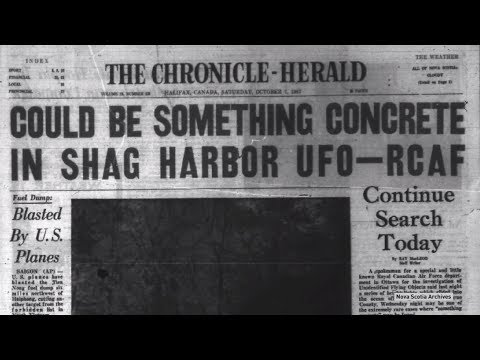
Shag Harbour's UFO Mystery
CBC News Nova Scotia's own report on the case, its community impact, and the ongoing local investigation.
The Shag Harbour UFO Incident — Full Documentary
A full-length documentary walkthrough of the sighting, the search, and the case's investigation history.
The Shag Harbour UFO Incident
A dedicated case-history episode covering the October 1967 timeline and its aftermath.
Canada's Famous Officially Investigated UFO Incident
An on-location look at the incident site and the case's status as a formally investigated government file.
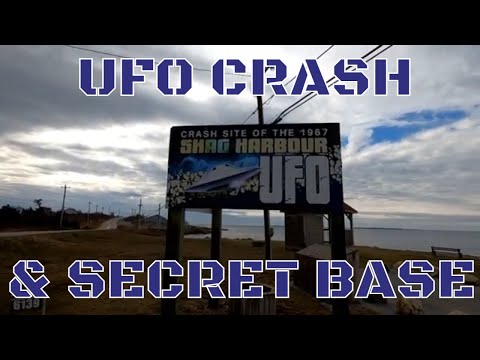
Shag Harbour, Nova Scotia — Site of the UFO Crash + A Secret Base
An on-the-ground visit to Shag Harbour and the nearby Government Point site, covering both the confirmed incident and the disputed secondary lore.
Sources
- "Shag Harbour UFO incident," Wikipedia (comprehensive summary with citations to primary and secondary sources). en.wikipedia.org
- "Shag Harbour, Nova Scotia," Wikipedia (community background and incident summary). en.wikipedia.org
- "Condon Committee," Wikipedia (institutional background on the U.S. government's UFO review). en.wikipedia.org
- University of Colorado UFO Project. Scientific Study of Unidentified Flying Objects (Condon Report), "Case 34: North Atlantic, Fall 1967," 1968. files.ncas.org
- National Investigations Committee on Aerial Phenomena (NICAP). "Shag Harbor, Oct 4, 1967" case report. nicap.org
- Library and Archives Canada. "Canada's UFOs: The Search for the Unknown." collectionscanada.gc.ca
- Library and Archives Canada. "1967 Shag Harbour UFO Sighting and Related Research" (research guide). recherche-research.bac-lac.gc.ca
- Government of Canada, Office of the Chief Science Advisor. "Management of Public Reporting of Unidentified Aerial Phenomena in Canada" (Sky Canada Project), 2025. science.gc.ca
- Royal Canadian Mint. "The Royal Canadian Mint Makes a Splash With a Coin Illustrating Canada's Famous UFO Crash Story," October 2019. mint.ca
- Shag Harbour UFO Incident Society. Official site. shagharbourincident.ca
- Barrington Municipality. "Shag Harbour UFO Incident" visitor information page. barringtonmunicipality.com
- Mysteries of Canada. "The Shag Harbour UFO." mysteriesofcanada.com
- xUFOs. "The Shag Harbour Incident 1967: Canada's Best-Documented UFO Crash." xufos.com
- Vice. "In Search of the Truth Behind Canada's Most Infamous UFO Sighting." vice.com
- CBC News. "The man who phoned in Canada's most famous UFO sighting became the face of the mystery," August 2, 2026. cbc.ca
- CBC News. "The history of the Shag Harbour UFO incident." cbc.ca
- CBC News. "Folklorist examines how UFO story has affected Shag Harbour." cbc.ca
- CBC News. "Shag Harbour UFO festival gets major boost from alien donation." cbc.ca
- CTV News Atlantic. "Shag Harbour witness, president of UFO society dies." ctvnews.ca
- CTV News Atlantic. "Maritime mystery endures: Shag Harbour hosts UFO festival 50 years later." ctvnews.ca
- Styles, Chris & Ledger, Don. Dark Object: The World's Only Government-Documented UFO Crash. Bantam, 2001.
- Styles, Chris & Simms, Graham. Impact to Contact: The Shag Harbour Incident. 2018.
- Hayes, Matthew. Search for the Unknown: Canada's UFO Files and the Rise of Conspiracy Theory. McGill-Queen's University Press, 2022.
See something inaccurate? Have additional information or sources?
Suggest an Edit →Last Updated: August 2026