
The Tremonton, Utah UFO Film
Shortly before 11:10 AM on July 2, 1952, U.S. Navy Chief Warrant Officer Delbert C. Newhouse was driving north of Tremonton, Utah with his wife Norma Newhouse and their two children when Norma spotted a loose formation of roughly a dozen bright, disc-shaped objects "milling about" high in the clear morning sky. A career Navy photographer with more than 2,000 hours of aerial-photography experience, Newhouse retrieved his personal 16mm movie camera from the trunk and shot approximately 1,200–1,600 frames of Kodachrome color film before the objects dispersed. Over the following seventeen years the footage became one of the two most intensively studied motion-picture UFO records of the Cold War era — subjected to roughly 1,000 man-hours of frame-by-frame densitometer analysis by the U.S. Navy's own Photographic Interpretation Laboratory, reviewed by the CIA-convened Robertson Panel alongside the contemporaneous Mariana film, independently re-examined by a Douglas Aircraft physicist, and finally revisited by the University of Colorado's Condon Committee. The Navy's own analysts concluded the objects were not birds, balloons, or aircraft; the Robertson Panel, working from the same underlying data in a fraction of the time, concluded they almost certainly were — California and ring-billed gulls from the nearby Great Salt Lake, reflecting sunlight at extreme telephoto range. More than seven decades later, that same fundamental disagreement between two credentialed groups of analysts, working from the identical piece of film, has never been resolved.
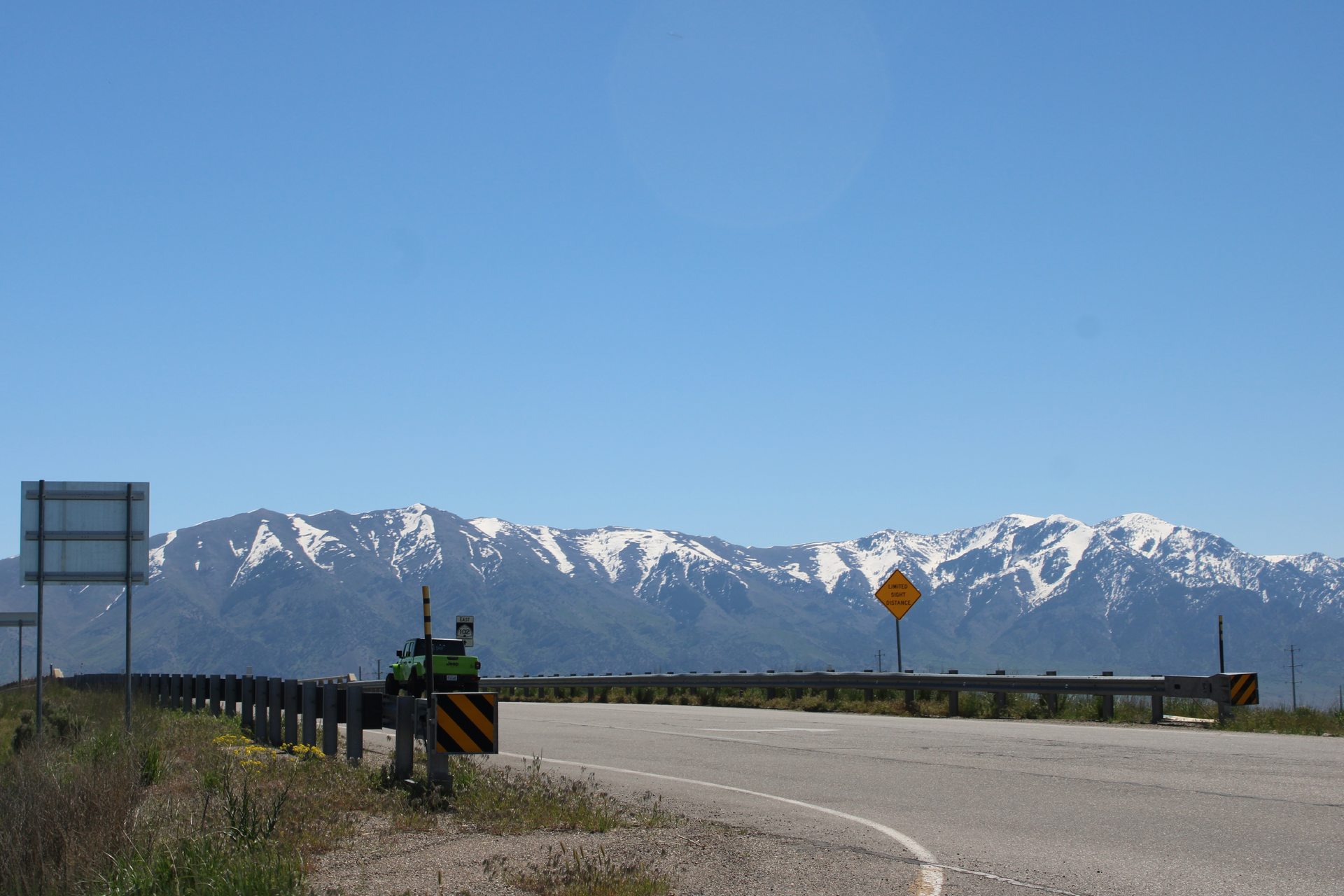
Pictured: the town of Tremonton, Utah, near which Newhouse filmed the objects — not a frame of the actual film itself. No rights-clear frame of the Newhouse footage is available: unlike an official government training or reconnaissance film, this 16mm reel was Newhouse's personal property, shot with his own camera while off duty, and surviving frames are held today under commercial stock-photo licensing (e.g. Topfoto) rather than as a public-domain U.S. government work. It has never been uploaded to Wikimedia Commons with a verifiable free license.
Theoretical Alignment
Like the Mariana and McMinnville films, this is fundamentally an identification dispute over a fixed piece of amateur motion-picture film, not a case that maps cleanly onto the standard hypothesis triangle. ETH earns a modest rating because the Navy's own credentialed photo-interpretation analysts — not fringe researchers — concluded the objects were self-luminous and behaved in ways inconsistent with any bird, balloon, or aircraft then known; if that analysis is correct, the footage shows genuinely controlled, non-ballistic motion. IDH finds essentially no purchase: nothing in the footage or the seventy-plus years of technical literature suggests materialization or trans-dimensional activity. PSH scores low for the same structural reason as its sister cases — this is a single-family, single-camera sighting whose entire evidentiary weight rests on quantitative measurements of film density and angular motion, not on mass misperception or belief-driven testimony.
Background
By the summer of 1952, the American "flying saucer" phenomenon was five years old, dating to Kenneth Arnold's June 1947 sighting near Mount Rainier, and had already produced the Air Force's short-lived Project Sign, its successor Project Grudge, and, that spring, the newly reorganized Project Blue Book under Captain Edward J. Ruppelt. Nationally, 1952 would go on to become the single busiest year in Blue Book's twenty-two-year history, with more than 1,500 reports logged, cresting in the last two weekends of July with the Washington, D.C. radar-visual flap that put jets in the air over the nation's capital and drew a direct inquiry from President Truman.
Delbert C. Newhouse, a career U.S. Navy photographer then holding the rank of Chief Warrant Officer, had no documented connection to UFO reporting or the emerging saucer subculture before that July morning. In the midst of relocating for a new Navy assignment, he was driving north from a posting on the East Coast with his wife Norma Newhouse and their two children, ages twelve and fourteen, their route that week taking them through northern Utah toward Portland, Oregon. Newhouse had spent nineteen years in the Navy by that point, graduated from its photographic school in 1935, and had logged more than 2,000 hours of aerial photography — the kind of technical background that, within weeks, would make the Air Force and Navy treat his film with a seriousness rarely extended to amateur UFO footage.
Just after 11:00 AM on July 2, 1952, as the family drove north on U.S. Highway 30 roughly seven miles outside Tremonton, Utah, Norma noticed a cluster of bright objects in the eastern sky and, after about a minute of trying to convince her husband to stop the car, succeeded. What followed — Newhouse's scramble for his camera, the roughly ninety seconds of resulting footage, and the seventeen years of dueling technical analysis that followed — is the subject of this file.
Complete Timeline
| Date | Event |
|---|---|
| June 1947 | Kenneth Arnold's sighting near Mount Rainier launches the American "flying saucer" era. |
| August 15, 1950 | Nick Mariana films two silvery discs over Great Falls, Montana — the direct procedural precursor to the Tremonton case. |
| July 2, 1952, ~11:00–11:10 AM MST | Delbert Newhouse, his wife Norma Newhouse, and their two children observe roughly a dozen bright, disc-shaped objects seven miles north of Tremonton, Utah; Newhouse films approximately 1,200–1,600 frames on 16mm Kodachrome color stock. |
| Early–mid August 1952 | After processing the film himself, Newhouse contacts the Air Force roughly a month after the sighting, forwarding the reel via Hill Air Force Base. |
| August–September 1952 | The Air Technical Intelligence Center (ATIC) at Wright-Patterson Air Force Base conducts an initial review, reportedly concluding the objects were "most unlikely" to be birds, balloons, or aircraft, without reaching a firm identification. |
| September–December 1952 | The film is forwarded to the U.S. Naval Photographic Interpretation Laboratory in Anacostia, Washington, D.C., where analysts Lt. R. S. Neasham and Harry Woo conduct roughly 1,000 man-hours of frame-by-frame isophotal densitometer analysis, later reviewed and endorsed by senior photo-intelligence officer Arthur C. Lundahl. |
| December 5, 1952 | The Navy Photographic Interpretation Laboratory's report is completed, concluding the objects were not birds, balloons, or aircraft, and were most likely self-luminous rather than reflecting sunlight. |
| January 14–18, 1953 | The CIA-convened Robertson Panel, chaired by Howard P. Robertson, reviews the Tremonton footage alongside the Mariana film over four days of closed sessions at the Pentagon, screening roughly 1,600 frames. |
| January 1953 | The Panel rejects the Navy laboratory's "self-luminous" finding, criticizing its densitometer methodology and panning assumptions, and concludes the objects were most likely California or ring-billed gulls reflecting sunlight near the Great Salt Lake. |
| 1955–1956 | Douglas Aircraft Corporation physicist Robert M. L. Baker Jr. conducts an independent photogrammetric analysis of a duplicate print, ruling out airplanes, balloons, radar chaff, and insects but stopping short of confirming or ruling out birds. |
| 1963 | Astronomer Donald Menzel and co-author Lyle Boyd characterize the objects in print as poorly photographed birds, a characterization Baker and later researchers dispute as inconsistent with the film's actual image quality. |
| 1968 | William Hartmann, investigating for the University of Colorado's Condon Committee, personally visits the Tremonton area and observes gull flocks exhibiting motion he considers consistent with the film. |
| January 1969 | The Condon Report is published; Hartmann's chapter (Case 49) provisionally identifies the objects as birds, "most likely gulls," while acknowledging the case "cannot be said to establish the existence of extraordinary aircraft." |
| 1976 | Researcher Kevin Randle interviews Newhouse directly; Newhouse states the objects appeared much closer and more clearly disc-shaped to the naked eye than the surviving film conveys. |
| 1981 & 1998 | Skeptic Robert Sheaffer reasserts the gull explanation in The UFO Verdict (1981) and its expanded edition, UFO Sightings: The Evidence (1998). |
| August 11, 2006 | Delbert Newhouse dies in Portland, Oregon, at age 93, having never retracted or embellished his original account. |
| 2018 | Physicist and longtime UFO researcher Bruce Maccabee publishes The Legacy of 1952: Year of the UFO, situating Tremonton alongside Washington, D.C. as the two cases that most directly precipitated the Robertson Panel's formation and its subsequent public-debunking recommendations. |
| 2020s | The original Project Blue Book case file, including surviving correspondence and analysis reports, is held by the U.S. National Archives and Records Administration; commercial stock-photo archives continue to license individual frames from the film under copyright. |
The Sighting on Highway 30
The core account, repeated by Delbert Newhouse without material change across more than five decades of Air Force, documentary, and academic interviews, begins with his wife. Driving north on U.S. Highway 30 roughly seven miles outside Tremonton, Norma Newhouse noticed a tight cluster of bright objects in the eastern sky, roughly ten degrees from the zenith. She spent close to a minute trying to convince her husband — who was driving and had not yet seen anything unusual — to pull over. When he finally stopped the car and looked up, Newhouse later recalled: "There were about twelve of them, milling about in a round formation and proceeding in a generally westerly direction. They were like nothing I had ever seen before."
Newhouse's camera equipment was packed in the trunk, not within easy reach, and assembling it — retrieving the Bell & Howell 16mm Filmo Automaster, attaching the three-inch telephoto lens, and setting exposure — took him several minutes, during which Norma and the two children continued watching the objects without the aid of any optical instrument. By the time Newhouse actually began filming, the objects had already been in view for roughly three to four minutes by the family's own account — a detail military interviewers, focused almost entirely on Newhouse's own testimony and the film itself, appear never to have followed up on with Norma or the children directly. Newhouse initially set his aperture at f/8, then adjusted to f/16 partway through the sequence in an attempt to manage what he perceived as the objects' brightness, tracking the loose, shifting formation as it appeared to "mill about" without any single consistent heading, other than a slow overall drift toward the west. At one point, a single object appeared to break away from the group and move off independently to the east before the remainder continued westward and eventually passed out of camera range.
In later interviews, Newhouse consistently described the objects, at their closest and clearest to his naked eye before he began filming, as flat, thin, and metallic — "shaped like two saucers, one inverted on top of the other," with what he described as a dull, gun-metal, polished-aluminum sheen. He reported no sound, no exhaust trail, and no visible wake or disturbance of any kind, and stated flatly that what appeared on the developed film "falls far short of what I saw with the naked eye," attributing the discrepancy to the delay in retrieving his camera and to an exposure error he believed he had made. In a 1976 interview with researcher Kevin Randle, Newhouse reaffirmed that the objects had appeared far closer, faster, and more clearly disc-shaped to the eye than the surviving footage conveys — a claim impossible to verify independently, since no other observer with camera equipment was present, but one Newhouse repeated with total consistency for the rest of his life.
The Film Itself
Sources differ on the precise footage length, a discrepancy stemming from Newhouse's own account of missing material rather than any dispute about what survives today: most describe roughly 30 to 40 feet of exposed 16mm film, translating to somewhere between 1,200 and 1,600 individual frames at Newhouse's 16-frames-per-second hand-cranked rate, or on the order of 75 to 90 seconds of total elapsed footage. Newhouse did not process the film immediately; Kodachrome of the period required mail-order laboratory development, and several weeks passed before he saw the results himself. What the developed reel actually showed was, by nearly universal agreement among every analyst who has ever examined it, considerably less dramatic than Newhouse's verbal description of the sighting: a loose scattering of bright, largely featureless points and small blobs of light, shifting position against a plain blue sky, occasionally brightening or dimming ("flaring") in ways every subsequent technical analysis would spend years trying to explain.
From Hill Air Force Base to the Navy's Photo Lab
Unlike several contemporaries in the same UFO wave, Newhouse did not immediately publicize his film; by his own account, roughly a month passed between the sighting and his decision to contact military authorities, forwarding the reel through Hill Air Force Base, the nearest major installation in northern Utah. From there it moved up the Air Force's own investigative chain to the Air Technical Intelligence Center (ATIC) at Wright-Patterson Air Force Base in Ohio, whose photo-analysis section reviewed the footage and, in an early and rarely quoted assessment, reportedly concluded the objects were "most unlikely" to be birds, balloons, or conventional aircraft — without themselves proposing a positive identification.
Recognizing the limits of its own photo-interpretation resources, the Air Force forwarded the film to the U.S. Navy's Photographic Interpretation Laboratory in Anacostia, Washington, D.C. — an unusual step that placed the Navy in the position of analyzing one of its own officers' footage using the most sophisticated photographic-intelligence techniques then available anywhere in the federal government. Analysts Lieutenant R. S. Neasham and civilian technician Harry Woo spent an estimated 1,000 man-hours over roughly three months constructing frame-by-frame graphs of each object's relative position, angular velocity, and brightness, using an isophotal contour densitometer to measure the precise density of exposed silver on the film stock — a direct proxy for how much light each object had actually reflected or emitted at the moment of exposure. Their completed report, submitted December 5, 1952, was later reviewed and endorsed by Arthur C. Lundahl, then one of the U.S. government's most senior photo-intelligence specialists and, within a few years, the founding director of the CIA's National Photographic Interpretation Center.
"Not Birds, Balloons, or Aircraft": The Navy's Verdict
The Navy laboratory's conclusions were unambiguous and, within the limited world of professional photo-interpretation, unusually confident. Analysts determined that the objects' apparent brightness did not fluctuate in the periodic, predictable way a rotating or banking reflective surface should as it passed through an arc relative to the sun — specifically, the report noted an absence of "blinking" as objects traversed roughly 60 degrees of arc, a pattern the analysts considered difficult to reconcile with sunlight glinting off a turning reflective surface, whether metal or feather. Combined with brightness levels the team judged too high and too sustained for reflected light at the estimated distances involved, the laboratory concluded the objects were most likely intrinsically self-luminous rather than reflective, and stated explicitly that "no species of bird" was known to be "sufficiently actinic" — bright enough under natural sunlight — to account for what the densitometer measurements showed. Combined with calculated velocities the Navy report placed as high as several hundred miles per hour depending on assumed distance, well beyond any bird's flight speed, the laboratory's report amounted to a formal rejection of the bird hypothesis, alongside conventional aircraft and balloons, which the erratic, seemingly independent motion of a dozen separate objects made difficult to sustain from the outset. Michael Swords, a historian affiliated with the Center for UFO Studies, has argued in a modern reassessment that this convergence of credentialed, methodologically transparent analysis — Neasham and Woo's measurements, cross-checked and endorsed by a photo-intelligence figure as senior as Lundahl — deserves considerably more evidentiary weight than the far more hurried review that followed it just weeks later.
The Robertson Panel's Reversal
That far more hurried review was the CIA-convened Robertson Panel, which met at the Pentagon over four days in January 1953 under physicist Howard P. Robertson, alongside fellow scientists Luis Alvarez, Samuel Goudsmit, Lloyd Berkner, and astronomer Thornton Page. The panel examined the Tremonton footage — screening an estimated 1,600 frames — alongside the Mariana film from Great Falls, Montana, treating the two as the Air Force's strongest available pieces of motion-picture evidence. J. Allen Hynek, Blue Book's astronomical consultant and an observer at the sessions, later recalled the panel's informal reaction to the film as distinctly casual: "There was a whole interplay of comments. Not exactly wisecracks, but 'well, it certainly looks like seagulls to me' … 'you can't convince me that that's not birds, it's gotta be birds.'"
The Panel's own final report directly rejected the Navy laboratory's "self-luminous" conclusion, criticizing both its densitometer methodology and its underlying assumption that Newhouse had held the camera steady rather than unconsciously panning to track the objects — a panning motion that, if present and uncorrected for, could have introduced artificial apparent velocity into the Navy's calculations. The Panel's report stated plainly that "a semi-spherical object can readily produce a reflection of sunlight without 'blinking' through 60° of arc travel," directly countering the specific technical basis on which the Navy analysts had ruled out reflective birds. Panel member Thornton Page, drawing partly on his own general familiarity with gull behavior near large lakes rather than on any new frame-by-frame measurement of the Tremonton footage specifically, argued the objects were consistent with California or ring-billed gulls — both common, and both associated with the nearby Great Salt Lake and Bear River Migratory Bird Refuge. The Panel's final, formal position, as later summarized in the CIA's own 1997 historical account of its UFO-related activities, was direct: "the images on the Tremonton film were caused by sunlight reflecting off seagulls."
It is worth being precise about what kind of finding this was. The Robertson Panel's central charter and public recommendations concerned government UFO policy broadly — the panel urged the Air Force to strip UFO reports of "the special status they have been given" and to pursue public "education," including what its own members' notes described in places as "debunking," to reduce the volume and public alarm associated with sighting reports generally. Its review of individual case files, Tremonton included, was conducted in a fraction of the time the Navy laboratory had spent, without new frame-by-frame photogrammetric measurement of its own, and functioned as much to close the book on Blue Book's most publicized "best evidence" film cases as to resolve the underlying physics. That does not make the Panel's bird conclusion wrong — the ecological case for gulls at that specific location is genuinely strong — but it does mean the January 1953 verdict rests on a markedly thinner evidentiary basis than the more painstaking Navy analysis it directly overturned.
Robert Baker's Independent Photogrammetric Study
The most rigorous independent re-examination came from outside both the government and the UFO-research community. In 1955, physicist Robert M. L. Baker Jr., then working at Douglas Aircraft Corporation, obtained a duplicate print of the Tremonton footage and conducted his own photogrammetric analysis, measuring the angular size, transverse velocity, and relative motion of individual objects frame by frame. Baker's work, later summarized in secondary NICAP and Condon Committee sources, calculated angular diameters ranging from roughly 0.0016 to 0.0004 radians and, assuming reflective objects on the order of eight inches across, derived possible distances between roughly 415 and 1,670 feet — though he separately noted that a minimum distance compatible with the bird hypothesis specifically would need to be closer to 2,000 feet, given how large a bird would need to appear at shorter range. At that greater, bird-compatible distance, his measured angular velocities translated to transverse speeds in the range of roughly 14 to 95 miles per hour, broadly consistent with soaring flight.
Baker's most consequential finding, however, was not about speed or distance but about behavior. He noted specifically that "the motion of the objects is not exactly what one would expect from a flock of soaring birds" — observing no discernible periodic dimming that would be expected from birds banking or turning in coordinated flight, and no brightness fluctuation consistent with wing-flapping, a movement pattern that should register clearly in frame-by-frame density measurements if the objects were, in fact, gulls in active flight rather than gliding. He ultimately declined to endorse either the Navy's self-luminous conclusion or the Robertson Panel's bird conclusion, writing that "the evidence remains rather contradictory and no single hypothesis of a natural phenomenon yet suggested seems to completely account for the UFO involved." Baker reaffirmed that carefully hedged position in 1968 testimony before the House Committee on Science and Astronautics, telling Congress that after his detailed study, neither the bird hypothesis nor any other natural explanation then proposed "had merit" as a complete account — a conclusion that neither confirmed an extraordinary craft nor closed the case as conventional.
The Condon Committee and Hartmann's Bird Identification
By the late 1960s, sustained congressional and public pressure led the Air Force to fund an independent university-based review, the Condon Committee, whose final report devoted nine pages to Tremonton as Case 49. Field analysis was led by astronomer William K. Hartmann, the same investigator responsible for the Committee's parallel McMinnville and Mariana photographic case studies. In August 1968, Hartmann personally traveled to the Tremonton area and observed local gull flocks in flight under conditions he judged broadly comparable to those described in 1952, reporting that the birds' motion, sporadic brightening, and loose group behavior appeared consistent with what the film showed.
The Condon Report's final language was more hedged than the Robertson Panel's flat 1953 verdict: it stated that the film "alone" was "consistent with birds," and that Hartmann's own field observations of birds near Tremonton supported that reading, while explicitly noting the case "cannot be said to establish the existence of extraordinary aircraft." Researchers who have revisited Hartmann's methodology, including Kevin Randle, have pointed out that his published analysis did not directly grapple with several details from Newhouse's own testimony — the telephoto lens' extreme magnification, Newhouse's insistence on a disc shape observed at close range with the naked eye before filming began, or the Navy laboratory's specific "no blinking through 60° of arc" finding — treating the film's ambiguous visual content as effectively decisive on its own. Menzel and Boyd had reached a similar bird conclusion in print five years earlier, in 1963, though their characterization of the film's image quality as too poor to show real structural detail has itself been disputed by researchers who note the footage is considerably sharper, at points, than that characterization suggests.
The Skeptical Case: Sheaffer and the Seagull Explanation
Robert Sheaffer, a longtime skeptical investigator, incorporated Tremonton into his broader case-by-case skeptical survey of UFO evidence, first in The UFO Verdict: Examining the Evidence (1981) and again in its expanded 1998 edition, UFO Sightings: The Evidence. Sheaffer's treatment follows the Robertson Panel and Condon Committee's core reasoning — that a location directly adjacent to one of North America's most significant gull nesting habitats, combined with a film whose visual content shows featureless, flaring points of light rather than any resolvable structure, is far more consistent with a misidentified natural phenomenon than with a genuinely novel aircraft. Sheaffer's broader body of work, including his skeptical analyses of the McMinnville and Mariana films discussed elsewhere in this catalogue, consistently emphasizes that amateur, single-source photographic evidence of this kind is inherently difficult to elevate above a mundane explanation once any plausible one exists — a standard that, in Tremonton's case, the well-documented local gull population comfortably meets, in his assessment, regardless of the Navy laboratory's contrary densitometer findings.
Bruce Maccabee and the Case Against the Robertson Panel's Methodology
Bruce Maccabee, a Navy optical physicist and one of the most technically active UFO researchers of the late twentieth century, did not publish a dedicated frame-by-frame reanalysis of the Tremonton footage comparable to his work on the McMinnville Trent photographs or the December 1978 Kaîkōura, New Zealand film. His most direct engagement with the case instead came through his broader critique of the Robertson Panel's process itself, most fully developed in his 2018 book The Legacy of 1952: Year of the UFO, which reconstructs the Panel's formation and four days of closed January 1953 sessions in detail, placing the Tremonton and Washington, D.C. cases together as the two events that most directly precipitated the CIA's decision to convene it. Maccabee's broader, long-documented position — consistent across his decades of published FOIA research into CIA and Air Force UFO files — is that the Panel's short review, its members' informal on-the-record joking about seagulls during the session itself, and its explicit recommendation that the government pursue public "debunking" rather than continued investigation, together represent a genuine methodological downgrade from the far more painstaking, credentialed analysis the Navy's own Photographic Interpretation Laboratory had produced just weeks earlier. That argument does not, on its own, prove the objects were not birds; it argues instead that the Panel's specific process for reaching that conclusion should carry less evidentiary weight than it is often given in later, secondary accounts of the case.
Cultural Legacy
The Tremonton film reached a wide public audience relatively quickly for a Blue Book case: excerpts and stills circulated in 1950s newsreels and press coverage of the "flying saucer" phenomenon, and the footage was later incorporated into Unidentified Flying Objects: The True Story of Flying Saucers (1956), the same United Artists documentary that featured the Mariana film and Baker's photogrammetric findings. Unlike Mariana, who became a minor local media figure in Great Falls, Newhouse largely avoided public attention after the initial round of Air Force and press interviews, declining to build a public career around the case and giving only a small handful of on-the-record interviews — to the Air Force in 1952, briefly to press in the mid-1950s, and to researcher Kevin Randle in 1976 — over the following half-century. The film remains, alongside Mariana's, one of the two motion-picture cases most frequently cited in surveys of Project Blue Book's "unexplained" and "best evidence" files, and its central dispute — credentialed government photo-analysts reaching one conclusion, a hastily convened advisory panel reaching the opposite one from the same underlying data — has since become a recurring touchstone in broader arguments about how seriously the U.S. government actually investigated its strongest UFO evidence during the Cold War.
Key Witnesses
Delbert C. Newhouse
A nineteen-year Navy veteran with more than 2,000 hours of aerial-photography experience and a 1935 graduate of the Navy's photographic school, Newhouse filmed the objects on his own personal camera while off duty and driving with his family. He never wavered from his core account across more than fifty years of periodic interviews, told researchers the film "falls far short" of what he saw with the naked eye, and consistently maintained the objects appeared closer, faster, and more clearly disc-shaped before he began filming than the surviving footage shows. He avoided public attention and never monetized or embellished the case, dying in 2006 without retracting any part of his original testimony.
Norma Newhouse
Delbert Newhouse's wife was the first family member to spot the objects and spent close to a minute convincing her husband to stop the car. She and the couple's two children, ages twelve and fourteen, continued watching the objects with the naked eye for an additional three to four minutes while Newhouse retrieved and assembled his camera equipment — meaning the family's direct visual observation period substantially exceeded the roughly ninety seconds that ultimately appear on film. Neither Norma nor the children were extensively interviewed by military investigators, whose 1952 reports focus almost entirely on Delbert's account and the technical content of the footage itself.
The Five Observables Assessment
The Five Observables framework is applied to the performance characteristics reported in this case:
Assessment: No analysis of the film, government or independent, ever calculated hypersonic speeds or any trans-medium transition — even the Navy laboratory's high-end velocity estimates topped out in the range of several hundred miles per hour, well within the performance envelope of conventional 1950s aircraft, let alone birds. Anti-gravity lift and instant acceleration are rated speculative rather than present or absent because the objects' erratic, seemingly non-uniform group motion ("milling about") was cited by the Navy analysts as one reason to doubt the bird hypothesis, without rising to any documented instance of instantaneous directional change. Low observability is similarly speculative: the objects were visually tracked continuously by four witnesses and on film throughout the encounter, with no report of sudden disappearance or radar evasion, though their small apparent size and featureless appearance on film left their true physical form fundamentally unresolved by any analysis conducted.
Evidence Assessment
Supporting Anomalous Origin
- The U.S. Navy Photographic Interpretation Laboratory's roughly 1,000-man-hour, frame-by-frame densitometer analysis concluded the objects were self-luminous, not reflective, and explicitly ruled out birds, balloons, and aircraft.
- That Navy analysis was reviewed and endorsed by Arthur C. Lundahl, later the founding director of the CIA's National Photographic Interpretation Center — one of the most senior photo-intelligence specialists in the U.S. government.
- The Navy report specifically found no periodic "blinking" as objects traversed roughly 60° of arc, a pattern the analysts argued was difficult to reconcile with sunlight glinting off a turning reflective bird or aircraft surface.
- Robert Baker's independent 1955–56 photogrammetric study found no brightness fluctuation consistent with wing-flapping or coordinated banking flight, describing the motion as "not exactly what one would expect from a flock of soaring birds."
- Primary witness Delbert Newhouse was an exceptionally well-credentialed photographic observer — a 19-year Navy veteran with 2,000+ aerial-photography hours — who never wavered from or embellished his account across more than fifty years.
- The Robertson Panel's bird conclusion was reached in a fraction of the time the Navy laboratory spent, without new frame-by-frame measurement, and involved informal, on-the-record joking about seagulls during the review session itself.
Supporting Conventional Explanation
- The sighting occurred directly adjacent to the Bear River Migratory Bird Refuge and the Great Salt Lake, one of the most significant California and ring-billed gull nesting habitats in the western United States.
- William Hartmann's 1968 field visit to Tremonton for the Condon Committee documented local gull flocks whose flight behavior he judged consistent with the film's content.
- The film itself shows only featureless, flaring points and blobs of light with no resolvable structure — the underlying image quality is genuinely poor and open to competing interpretation.
- No second camera, radar track, or independent instrument corroborates any part of the sighting; the entire case rests on a single amateur camera operated by one family.
- Even Robert Baker's more sympathetic independent analysis stopped short of confirming an anomalous object, finding the evidence "rather contradictory" and no natural-phenomenon hypothesis fully satisfying.
Why "Disputed"
Tremonton earns a Disputed rating rather than Credible or Debunked because it is a genuinely unresolved conflict between two credentialed technical analyses of the same underlying data, not a case with either strong multi-instrument corroboration or a single well-documented mundane explanation. On one side stands the U.S. Navy's own Photographic Interpretation Laboratory — not fringe UFO researchers, but government photo-intelligence professionals who spent roughly 1,000 man-hours on frame-by-frame densitometer measurement and reached a specific, falsifiable technical finding (no blinking through 60° of arc, brightness levels inconsistent with reflection) that a respected senior photo-intelligence figure, Arthur Lundahl, reviewed and endorsed. On the other stands the Robertson Panel and, later, the Condon Committee, both of which reached the opposite conclusion, but through review processes that were, by comparison, markedly less rigorous — a few days of screening versus three months of measurement, general ecological reasoning about the Great Salt Lake's gull population rather than new densitometer analysis, and, in the Panel's case, an explicit institutional mandate to reduce public alarm about UFO reports rather than simply establish the facts. Robert Baker's independent, non-governmental photogrammetric study — arguably the single most disinterested analysis in the case's history — could not fully endorse either side, finding aspects of bird behavior (wing-flap brightness fluctuation, periodic dimming from banking) conspicuously absent from the film while still declining to confirm an anomalous craft. That three-way split among serious, technically literate analysts, sustained across seventy years without resolution, is the definition of a disputed case: the location's strong ecological case for gulls keeps this file from scoring as high as a case like the 1952 Washington radar returns, but the credentialed Navy analysis it must overcome keeps it well above a case with a single, uncontested conventional explanation.
Sensor & Instrumentation Detection Profile
The only instrument brought to the sighting itself was Delbert Newhouse's personal Bell & Howell 16mm Filmo/Automaster movie camera, fitted with a three-inch telephoto lens, loaded with daylight Kodachrome color film and shot at 16 frames per second, hand-held with the aperture changed mid-sequence from f/8 to f/16 as Newhouse tried to compensate for the objects' brightness. There was no radar, no second camera, and no trained aerial observer present at the moment of filming — Newhouse's own extensive photographic training came into play only in how he operated the camera, not in any independent corroborating sensor. Every subsequent "instrument" applied to the case was applied to prints or duplicates of that same roughly 1,200–1,600-frame reel, months or years after the fact: the U.S. Naval Photographic Interpretation Laboratory's frame-by-frame isophotal densitometer analysis (1952), the CIA's Robertson Panel review (1953), Douglas Aircraft physicist Robert M. L. Baker Jr.'s independent photogrammetric study (1955), and the Condon Committee's re-examination under William Hartmann (1968). As with the Mariana and McMinnville films, this absence of any real-time independent cross-check means every conclusion anyone has reached is a conclusion about a single reel of 1952 consumer film stock, not about a corroborated multi-sensor track.
Environmental & Geospatial Context
Tremonton sits in the Bear River Valley of Box Elder County, in northern Utah, roughly fifteen miles north of Brigham City and the mouth of the Bear River where it empties into the Great Salt Lake — a stretch of marsh and open water that, since 1928, has been protected as the Bear River Migratory Bird Refuge, one of the most significant gull and waterfowl nesting habitats in the western United States. That ecological fact sits at the center of the entire dispute: California and ring-billed gulls are extremely common in the skies over this specific stretch of Utah in early July, and the "gull hypothesis" that the Robertson Panel and, later, the Condon Committee settled on drew directly on that local geography. The sighting itself occurred at midmorning under a clear, sunny sky with no reported cloud cover — conditions every investigator, skeptical or otherwise, agrees on, which removes temperature inversion, haze, or low-sun-angle refraction as candidate explanations in the way they functioned in the contemporaneous Washington, D.C. radar-visual flap that same month. No military installation sat directly beneath the sighting, though Hill Air Force Base (roughly 50 miles to the south) and the wartime Wendover Army Air Field (roughly 70 miles to the west, across the Great Salt Lake Desert) were both active in the region, a fact some later, thinly sourced accounts have pointed to as raising an unproven alternative military-aircraft theory.
Observer Credibility & Occupational Profile
Delbert C. Newhouse was, by any measure, an unusually well-qualified photographic witness. A Chief Warrant Officer with nineteen years of Navy service at the time of the sighting, he had graduated from the Navy's photographic school in 1935, accumulated more than 2,000 hours of aerial-photography experience, and held the rank of Chief Photographer — making him, in the Navy's own later assessment, one of the most technically qualified private citizens ever to capture a UFO film. He did not sensationalize the encounter: he waited roughly a month before contacting the Air Force, initially told investigators he could not identify what he had filmed, and — unlike several contemporaries in the same UFO wave — never wrote a book, sought paid speaking engagements, or wavered from his core account across more than fifty years of periodic interviews, up to his death in 2006. His wife, Norma Newhouse (born Norma Isobel Strom, and married to Delbert on August 7, 1936, in Vancouver, Washington), was the first to spot the objects and continued watching them for several additional minutes while her husband retrieved and assembled his camera equipment — a detail later investigators, focused almost entirely on Delbert's account and the film itself, largely failed to follow up on. Genealogical records placing the family's 1950 residence in Wheaton, Maryland, a Washington, D.C. suburb, independently corroborate the Condon Committee's own description of the family driving that July "from Washington, D.C. to Portland, Oregon" — a small but consistent cross-check between two entirely separate documentary sources. The couple's two children, ages twelve and fourteen, also reportedly saw the objects, though neither their names nor detailed individual statements survive in the published record.
Physical & Material Assays
As with the Mariana and McMinnville cases, the only physical evidence in this file is the film itself — there is no debris, no soil sample, no metallurgical assay, and no claim of any recovered object. That makes the reel's chain of custody unusually consequential, and, again, it is genuinely poor by any modern evidentiary standard. Newhouse processed the Kodachrome himself, screened it informally, and only after roughly a month's delay forwarded it to the Air Force via Hill Air Force Base; from there it traveled to the Air Technical Intelligence Center at Wright-Patterson, and then again to the Navy's Photographic Interpretation Laboratory in Anacostia, Washington, D.C., before being reviewed by the Robertson Panel and, later, examined by Baker and Hartmann on duplicate prints. Newhouse maintained for the rest of his life that the copy eventually returned to him was a lower-quality duplicate missing a significant stretch of footage — by his account, the earliest, closest-range frames showing the objects most clearly — a claim the Air Force never definitively confirmed or refuted, and one that closely parallels the "missing frames" dispute in the contemporaneous Mariana case. No frame count audit, sealed evidentiary log, or independent inventory of the original 1952 reel survives to settle the question either way.
Historical Precedents & Archive Matches
The Tremonton film arrived in the middle of the most intense single year of UFO reporting in American military history. It followed the Mariana film from Great Falls, Montana by less than a year, and preceded by only weeks the Washington, D.C. radar-visual flap of July 1952, which together prompted President Truman's own inquiries and, ultimately, the CIA's decision to convene the Robertson Panel that January. The Panel reviewed the Mariana and Tremonton footage back-to-back as its two strongest pieces of motion-picture evidence, applying essentially the same reflections-off-aircraft-and-birds framework to both — concluding "aircraft" for Great Falls and "birds" for Tremonton, a distinction driven largely by Great Salt Lake's well-documented gull population rather than by any difference in the underlying film analysis technique. Within Blue Book's own statistics, photographic and film evidence remained a small minority of the roughly 12,600 cases the program eventually logged, which is part of why the Mariana and Tremonton reels have each attracted a volume of specialist technical analysis wildly disproportionate to the roughly one minute of combined footage they represent.
Material Analysis
There is no physical, tangible evidence in the Tremonton case beyond the 16mm film reel itself — no debris, no recovered fragment, and no trace residue of any kind was ever claimed by Newhouse or found at the sighting location. What exists instead is a body of quantitative optical measurement performed on the film's silver-halide emulsion: the Navy laboratory's isophotal contour densitometer readings, which measured the precise optical density (and therefore brightness) of each object at each frame, and Robert Baker's independent photogrammetric measurements of angular size and motion. Both are legitimate forms of physical-evidence analysis in the sense that they measure verifiable properties of an actual artifact — the exposed film — rather than relying on witness memory alone, even though neither approaches the kind of metallurgical or isotopic assay possible with recovered debris in cases like Roswell.
Supporting Non-Terrestrial Origin
- Densitometer readings found brightness levels the Navy analysts judged too high and too sustained to represent reflected sunlight at the estimated distances.
- No periodic "blinking" was measured as objects crossed roughly 60° of arc — a pattern expected from a rotating or banking reflective surface, whether metallic or feathered.
Supporting Terrestrial Origin
- The measurements exist only as secondary readings of a single reel of consumer film with an incompletely documented chain of custody, not as an independently verifiable physical sample.
- The Robertson Panel directly disputed the Navy's own methodology, arguing a semi-spherical reflective object could plausibly avoid detectable "blinking" through that same arc of travel.
The Conventional Explanation Candidate: Migratory Gulls
The leading conventional explanation, endorsed by both the 1953 Robertson Panel and the 1969 Condon Report, holds that the objects were California or ring-billed gulls — both extremely common species around the adjacent Great Salt Lake and the Bear River Migratory Bird Refuge, roughly fifteen miles south of the sighting location — seen at a distance great enough that individual birds appeared as flat, featureless, flaring points of light rather than resolvable animals. This candidate deserves serious evaluation because the underlying ecological premise is genuinely strong: few places in North America host a denser concentration of large white gulls than the marshes at the mouth of the Bear River, and William Hartmann's 1968 field visit specifically to Tremonton documented flocks whose group motion and intermittent brightness he judged consistent with the film.
Weather or "Pillow" Balloons
The Robertson Panel's report floated the possibility of testing polyethylene "pillow" balloons as a comparison, though no such controlled test was actually conducted before the panel issued its final bird verdict. The balloon hypothesis is weaker than the gull hypothesis on its own evidentiary merits: it does not obviously account for the erratic, independently shifting group motion the Navy analysts specifically cited as evidence against any single coordinated object, nor does the historical record show any documented weather-balloon launch in the immediate area and time window that would place a cluster of a dozen such balloons in the same patch of sky.
Out-of-Focus Conventional Aircraft or Optical Artifact
A third, more general skeptical framework, most associated with astronomer Donald Menzel's broader UFO-debunking work, holds that many amateur UFO films of this era show ordinary aircraft or other mundane light sources rendered unrecognizable by an inexpensive telephoto lens operating near the edge of its resolving power. Applied to Tremonton, this candidate would treat the film's featureless, flaring appearance as a straightforward optical limitation rather than evidence of anything unusual about the objects themselves. It is weakened by the absence of any confirmed aircraft traffic in the immediate area that morning (unlike the Mariana case, where two F-94 jets were independently confirmed airborne nearby) and by the Navy analysts' specific brightness and motion measurements, which they argued were inconsistent with any then-known aircraft's expected reflective signature at the estimated distances.
Migratory Gulls
PlausibleStrong local ecological support (Great Salt Lake / Bear River refuge) and endorsement from two separate official reviews, though never confirmed by new frame-by-frame measurement matching the Navy laboratory's own rigor.
Weather / "Pillow" Balloons
ImplausibleRaised only speculatively by the Robertson Panel, never tested, and does not account for the objects' independent, non-uniform group motion.
Out-of-Focus Aircraft / Optical Artifact
InconclusiveA general Menzel-style skeptical framework with no confirmed aircraft traffic specific to this sighting, and directly contradicted by the Navy laboratory's own brightness and motion measurements.
Related Cases
Confirmed Documents & Official Records
The Robertson Panel's full report, including its direct review of the Tremonton and Mariana films and its rejection of the Navy laboratory's "self-luminous" finding.
The CIA's own official historical account of the Robertson Panel's review of the Tremonton and Great Falls films, including its stated conclusion that the Tremonton images were "caused by sunlight reflecting off seagulls."
National Archives Special Media Division overview of Project Blue Book's surviving home-movie evidence collection, which includes the Tremonton case file among its 1952–1967 motion-picture holdings.
National Archives holdings of Project Blue Book investigation files, including the Tremonton case correspondence and analysis reports.
Search Government Archives Directly
Further Reading — Recommended Literature
The Legacy of 1952: Year of the UFO
Navy optical physicist and longtime researcher Maccabee's detailed reconstruction of the Robertson Panel's formation and four days of closed sessions, placing Tremonton alongside the Washington, D.C. flap as the two cases that most directly precipitated the panel's public-debunking recommendations.
UFO Sightings: The Evidence
A leading skeptic's case-by-case survey applying the scientific method to famous UFO evidence, including Tremonton, arguing the film's location adjacent to major Great Salt Lake gull habitat makes the bird explanation the most defensible reading of the footage.
The Report on Unidentified Flying Objects
The first insider account of Project Blue Book, written by the officer who ran it during the Tremonton investigation and personally oversaw the Air Force's handling of the film before the Robertson Panel took over its review.
UFOs and Government: A Historical Inquiry
A scholarly, CHOICE-recommended historical study of U.S. government UFO investigation, including a detailed treatment of the Navy Photographic Interpretation Laboratory's Tremonton analysis and the Robertson Panel's contrasting methodology.
The UFO Controversy in America
A foundational academic history of American UFO investigation, drawing on then-newly available Air Force documents to trace how cases like Tremonton shaped Project Blue Book's institutional posture toward its own strongest evidence.
Essential Viewing
Sources
- Hartmann, William K. "Case 49: Tremonton, Utah — Movie Film." Scientific Study of Unidentified Flying Objects (Condon Report), University of Colorado, 1968. files.ncas.org
- "The Tremonton, Utah UFO Color Film of July 2, 1952." Patrick Gross, UFOs at Close Sight. ufologie.patrickgross.org
- Swords, Michael D. "Peeking into the Corners of 1952, Part Five." Center for UFO Studies, 2021. cufos.org
- Haines, Gerald K. "CIA's Role in the Study of UFOs, 1947–90." Studies in Intelligence, Central Intelligence Agency, 1997. sgp.fas.org
- Central Intelligence Agency. "Report of Scientific Advisory Panel on Unidentified Flying Objects" (Robertson Panel Report), January 1953. theblackvault.com
- Amidon, Audrey. "Project Blue Book: Home Movies in UFO Reports." The Unwritten Record, U.S. National Archives and Records Administration, October 28, 2013. unwritten-record.blogs.archives.gov
- U.S. National Archives and Records Administration. "UFOs — Project Blue Book Records." archives.gov
- "The Tremonton, Utah UFO Color Film — NICAP Synopsis." National Investigations Committee on Aerial Phenomena. nicap.org
- Randle, Kevin. "The Newhouse Film, Tremonton Utah." National Investigations Committee on Aerial Phenomena archive. nicap.org
- "Tremonton, Utah / Newhouse Color Film" (document directory). National Investigations Committee on Aerial Phenomena. nicap.org
- Randle, Kevin. "A Different Perspective: Newhouse's Tremonton, Utah Movie Revisited." December 2013. kevinrandle.blogspot.com
- "The Tremonton, Utah UFO Color Film." The UFO Casebook. ufocasebook.com
- Maccabee, Bruce. The Legacy of 1952: Year of the UFO. Independently published, 2018.
- Sheaffer, Robert. UFO Sightings: The Evidence. Prometheus Books, 1998.
- Sheaffer, Robert. The UFO Verdict: Examining the Evidence. Prometheus Books, 1981.
- Ruppelt, Edward J. The Report on Unidentified Flying Objects. Doubleday, 1956.
- Swords, Michael D., Robert Powell, et al. UFOs and Government: A Historical Inquiry. Anomalist Books, 2012.
- Jacobs, David M. The UFO Controversy in America. Indiana University Press, 1975.
- Menzel, Donald H., and Lyle G. Boyd. The World of Flying Saucers: A Scientific Examination of a Major Myth of the Space Age. Doubleday, 1963.
- U.S. Fish and Wildlife Service. "Bear River Migratory Bird Refuge." fws.gov
- "Tremonton, Utah." Wikipedia, accessed 2026 (used for background geography and population context only). en.wikipedia.org
- "Delbert Clement Newhouse (1913–2006)." FamilySearch genealogical record (birth, marriage, and death dates). ancestors.familysearch.org
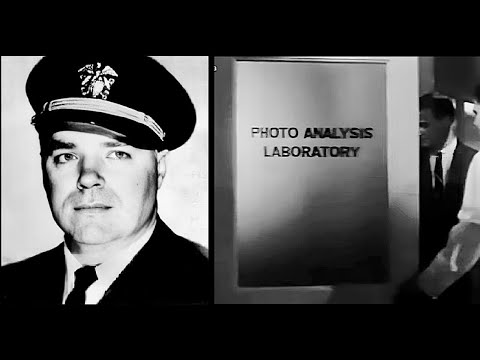
- oEmbed metadata, YouTube video "Navy photographer Delbert C. Newhouse on his famous 1952 UFO film + footage breakdown analysis," Eyes On Cinema channel, 2025. youtube.com
- File description page, "Tremonten 4154 (5-12-24).jpg," photograph by Chris Light, Wikimedia Commons, CC BY-SA 4.0. commons.wikimedia.org
See something inaccurate? Have additional information or sources?
Suggest an Edit →Last Updated: August 2026