
The McMinnville UFO Photographs
On the evening of May 11, 1950, farmers Paul Trent and Evelyn Trent took two photographs of a metallic, disc-shaped object gliding silently over their farm near McMinnville, Oregon. Published nationally by LIFE magazine on June 26, 1950, the two images — universally known as the Trent photographs — became among the most widely reproduced and most exhaustively scrutinized UFO photographs ever taken. They are one of a small handful of UFO photo cases ever subjected to a formal U.S. government scientific review: astronomer William K. Hartmann, investigating for the 1968 Condon Committee, found the photographs consistent with a genuine large object while explicitly declining to rule out a hoax — a rare "unexplained" verdict from a federally funded study whose overall conclusion recommended against further government UFO investigation. Seventy-five years, a lost-and-found set of negatives, and at least four independent rounds of photogrammetric and photometric re-analysis later, the case remains formally unresolved, contested between researchers who regard it as one of the best unexplained photographic cases on record and skeptics who believe the shadows in the photographs themselves prove the Trents were not telling the truth about when the pictures were taken.
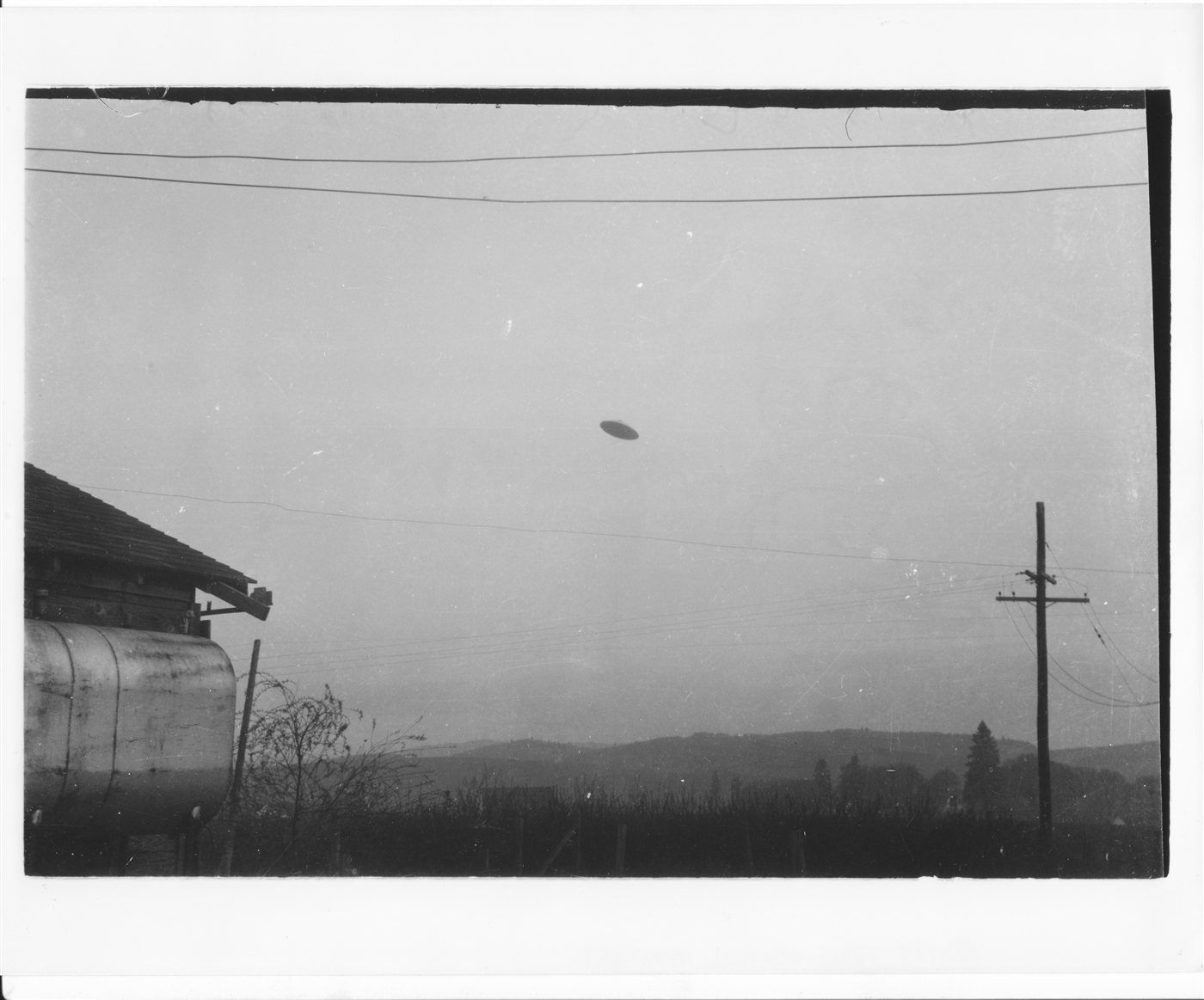
Pictured: one of the two original Trent photographs itself — the actual disc-shaped object Paul Trent photographed over his farm's garage and overhead wires on May 11, 1950, not a reconstruction or a stand-in image. This is the single most reproduced UFO photograph of the 1950s and the direct primary evidence this entire file discusses, though its authenticity — genuine distant craft versus a small model suspended near the camera — remains formally disputed, as detailed throughout this page.
Theoretical Alignment
The McMinnville case sits awkwardly across the standard theoretical frameworks, and it is worth being honest about why. If genuine, the photographed object — a silvery, metallic, apparently structured disc tens of meters across, per Hartmann's estimate — fits the classic Extraterrestrial Hypothesis profile about as cleanly as any photographic case in this catalogue, which is why it earns a moderate ETH alignment despite the unresolved authenticity dispute. The Interdimensional Hypothesis finds essentially no purchase here: nothing about the object's appearance, motion, or the surrounding testimony suggests materialization, dimensional transition, or any of IDH's usual explanatory territory, so it is rated low. The Psycho-Social Hypothesis is rated low for a different reason than usual: PSH is built to explain mass sightings, social contagion, and belief-driven misperception across many witnesses, and this is fundamentally a two-witness photographic-authenticity dispute rather than a wave event — the central question is not "did people convince themselves they saw something," but "are these two specific negatives an accurate photographic record or a deliberately staged model shot." That is a different kind of question, and PSH's usual tools do not map onto it cleanly; to the extent PSH applies at all, it is only in the loose sense that the Trents' delay in reporting and the surrounding 1950 "flying saucer" media climate may have shaped how the story was told and received, not in explaining the photographic evidence itself. That mismatch between the case's actual evidentiary structure (a hoax/genuine binary resting on photogrammetry, not perception) and the three standard hypotheses is itself one of the more analytically important things about this file.
Background
By May 1950, the American "flying saucer" phenomenon was not yet three years old but was already a fixture of national news, driven by Kenneth Arnold's 1947 sighting, the 1948 Thomas Mantell crash, and a steady stream of Air Force-investigated reports under Project Grudge. Paul Trent, then in his early forties, and his wife Evelyn ran a small dairy farm they leased near Sheridan, in Yamhill County, roughly nine miles southwest of the county seat of McMinnville, Oregon. Neither had any documented prior connection to UFO reporting, saucer clubs, or the emerging ufology subculture beyond ordinary awareness of the news stories everyone was reading that spring.
On the evening of May 11, 1950, Evelyn Trent was outside behind the farmhouse feeding rabbits when she noticed a slow-moving, metallic, disc-shaped object approaching silently from the northeast. She called for Paul, who came out of the house, retrieved a camera already loaded with film, and photographed the object twice — once as it hung nearly stationary over the property's garage and overhead utility wires, and again moments later as it began moving off to the west — before it accelerated away and disappeared. The Trents described the object as metallic and disc- or parachute-shaped, with something resembling a raised oval or small tower-like structure on its upper surface, roughly twenty to thirty feet in estimated diameter, making no sound and showing no visible rotation as it departed. According to the Trents' account, Paul's father, also on the property that evening, briefly glimpsed the object as well.
What happened next says as much about the case's later evidentiary problems as the sighting itself. The roll of film was not developed immediately; it remained in the camera for weeks while the family used up the remaining exposures on ordinary snapshots, including Mother's Day family photographs. Once developed, the two negatives of the object were, by the Trents' own account, handled casually around the house — the family's children reportedly played with them at one point — reflecting the fact that nobody in the household initially treated the pictures as significant evidence of anything. Paul later explained the family's reluctance to publicize the photographs plainly: "I was kinda scared of it. You know, you hear so much talk about those things."
Complete Timeline
| Date | Event |
|---|---|
| Winter 1949–50 | Paul Trent buys a roll of 620 film for his Universal/Kodak Roamer camera, intending to photograph snow scenes; the roll remains partially unused into spring. |
| May 11, 1950, ~7:30 PM | Evelyn Trent spots a metallic, disc-shaped object approaching from the northeast while feeding rabbits behind the farmhouse near McMinnville, Oregon. She calls Paul, who photographs the object twice before it accelerates away to the west. |
| Late May 1950 | The film roll is finally used up on family snapshots, including Mother's Day photographs, and developed; the two UFO frames are handled casually at home rather than treated as significant evidence. |
| ~June 7, 1950 | Paul Trent mentions the sighting to his banker, Frank Wortman, who borrows the photographs and, with his brother Ralph, carries them to the McMinnville Telephone-Register. |
| June 8, 1950 | Reporter Bill Powell interviews the Trents separately and examines the negatives for signs of tampering. The Telephone-Register runs both negatives full-frame on its front page under the headline "At Long Last—Authentic Photographs Of Flying Saucer[?]" |
| June 9–10, 1950 | Portland and Los Angeles newspapers reprint the story; the International News Service (INS) picks it up for national wire distribution. |
| June 12–13, 1950 | The story airs on national radio broadcasts originating from Washington, D.C. |
| June 26, 1950 | LIFE magazine, circulation over five million, publishes cropped versions of both photographs and a portrait of Paul Trent with his camera under the headline "Farmer Trent's Flying Saucer." |
| July 7, 1950 | The Trents are flown to New York to appear on the radio/television program We, The People; McMinnville briefly earns the nickname "Saucerville, USA." |
| 1950s–1960s | LIFE later tells the Trents their original negatives have been lost; unbeknownst to the family, the negatives remain in International News Service files, which pass to United Press International (UPI) after a corporate merger. |
| 1965 | A citizen inquiry to Project Blue Book about the McMinnville photographs draws a contradictory reply from Lt. Col. John P. Spaulding, who states the Air Force has "no information" on the case while also claiming a "positive identification" had been made — the case had in fact received no formal Blue Book investigation, filed only as "information only." |
| 1966–1968 | The Air Force-funded, University of Colorado-based Condon Committee, directed by physicist Edward U. Condon, undertakes a comprehensive scientific review of UFO reports and assigns astronomer William K. Hartmann to investigate the McMinnville case as Case 46. |
| 1967 | Hartmann's search locates the long-lost original negatives in UPI's files; they are loaned to him for analysis without the Trents' immediate knowledge, then returned to UPI afterward. |
| January 1969 | The Condon Report is published. Hartmann's chapter concludes the photographs are "consistent with the assertion that an extraordinary flying object...flew within sight of two witnesses," while stating the evidence does not "positively rule out fabrication." |
| 1970 | The Trents ask News-Register editor Philip Bladine to recover their negatives; Bladine obtains them from UPI but does not inform the Trents they have been returned, and the negatives sit in a newspaper office. |
| 1974–1976 | Navy optical physicist Bruce Maccabee begins an independent investigation, interviewing the Trents and people who knew them and beginning densitometric analysis of the negatives. |
| 1975 | Maccabee obtains negatives held in the News-Register files for direct photometric study and concludes the photographs were not hoaxed. |
| 1976–1981 | Maccabee's technical paper on the case is presented to the Center for UFO Studies (CUFOS) symposium and later expanded; JPL scientist Robert Nathan examines the negatives at Maccabee's request and reports finding no clear evidence of a suspension thread using available imaging technology. |
| 2004 | Researcher Joel Carpenter publishes a detailed skeptical geometric analysis online arguing the object was a small model — possibly a vehicle side-mirror — suspended near the camera from the overhead wires visible in both photographs. |
| 2013 | French investigators Antoine Cousyn, François Louange, and Geoff Quick (IPACO) publish a geometric and radiometric re-analysis reporting a statistical photometric signature consistent with a suspension thread at the presumed attachment point on the wire. |
| 2015 | Robert Sheaffer publishes "The Trent UFO Photos—'Best' of All Time—Finally Busted?" in Skeptical Inquirer, synthesizing the shadow-timing and suspended-model arguments into the modern skeptical case. |
| 1997 & 1998 | Evelyn Trent dies in 1997 and Paul Trent in 1998; neither ever altered their account of the sighting. |
| 2000 | McMenamins launches the annual UFO Festival in McMinnville on the sighting's 50th anniversary, with Bruce Maccabee as an inaugural guest speaker. |
| 2004–2010s | Researcher David Rudiak conducts an independent digital and geometric re-analysis, taking his own measurements at the former Trent property and building a 3D model to test the skeptics' claims about photo order, shadow timing, and object placement. |
The Sighting and the Two Photographs
The core account, repeated by both Trents without material change across nearly five decades of interviews, is straightforward. Around 7:30 PM on May 11, 1950, Evelyn Trent was outside feeding rabbits when a large, metallic, disc-shaped object came into view, moving slowly from the northeast. She called out for Paul, who was inside the house; he retrieved the family's Universal/Kodak Roamer camera — a simple folding-bellows box camera using 620 roll film, already loaded from the previous winter — and went out to photograph it. He took the first exposure as the object hovered roughly above the property's garage and the overhead telephone or power wires running across the yard, then moved for a better angle and took a second exposure moments later as the object appeared to be departing toward the west. The Trents estimated its diameter at twenty to thirty feet, described it as silent and non-rotating, with a raised, oval or tower-like structure on its upper surface that Evelyn believed might house a pilot, and said it accelerated away to the west and was gone within roughly half a minute of first being noticed.
From the very beginning, small details of the Trents' retelling varied in ways that both sides of the later dispute would seize on. In their first newspaper interview, Evelyn recalled uncertainty over where the camera actually was: "We'd been out in the back yard. Both of us saw the object at the same time. The camera! Paul thought it was in the car but I was sure it was in the house." Believers have read this kind of small, human inconsistency as exactly what genuine, unrehearsed eyewitness testimony looks like; skeptics have read the same inconsistency, layered on top of the later-identified shadow discrepancy and the unresolved "Mrs. Worth" episode, as evidence of a story that shifted under scrutiny.
From the Farm to LIFE Magazine
The Trents did not rush to publicize what they had photographed. The exposed film sat in the camera for weeks, used up eventually on ordinary family pictures including Mother's Day photographs, and even after developing, the two UFO negatives were treated at home with no particular care — by the family's own account, the Trent children played with them at one point. Paul later explained the delay candidly: "I was kinda scared of it. You know, you hear so much talk about those things." It was almost a month after the sighting, around June 7, 1950, that Paul mentioned the photographs to his banker, Frank Wortman, who borrowed the prints and, together with his brother Ralph, carried them to the offices of the McMinnville Telephone-Register.
Reporter Bill Powell interviewed Paul and Evelyn Trent separately — a basic but meaningful precaution against a coordinated hoax — and examined the negatives himself, finding no obvious signs of tampering or double exposure. On June 8, 1950, the Telephone-Register ran both negatives full-frame on its front page under the headline "At Long Last—Authentic Photographs Of Flying Saucer[?]" The story moved fast from there: Portland and Los Angeles papers picked it up on June 9 and 10, national radio broadcasts out of Washington, D.C. carried the story on June 12 and 13, and on June 26, 1950, LIFE magazine — then the country's leading pictorial weekly, with a circulation exceeding five million — published cropped versions of both photographs alongside a portrait of Paul Trent holding his camera, under the headline "Farmer Trent's Flying Saucer." On July 7, the Trents were flown to New York to recount their story on the radio and television program We, The People. For a brief stretch that summer, McMinnville was known nationally as "Saucerville, USA."
The Negatives' Tangled Chain of Custody
What happened to the original negatives after 1950 is, in its own way, as consequential to the case's credibility as anything captured on the film itself. LIFE magazine had promised to return the negatives once its editors were finished; instead, the Trents were eventually told the negatives had been lost. They had not been destroyed — they remained, unbeknownst to the family, in the files of the International News Service (INS), which had handled the story's national wire distribution, and which later merged into United Press International (UPI). There the negatives sat, unexamined by any independent investigator, for seventeen years.
It was only in 1967, as part of William Hartmann's search on behalf of the Condon Committee, that the original negatives were rediscovered in UPI's archive. Hartmann borrowed them for his photometric analysis; the Trents themselves were not immediately informed that their long-lost negatives had resurfaced. After Hartmann's study, the negatives were returned to UPI rather than to the family. It took until 1970, when the Trents specifically asked News-Register editor Philip Bladine to try to recover them, for the negatives to physically return to McMinnville — and even then, Bladine reportedly obtained them from UPI without telling the Trents they had been returned, leaving the negatives sitting in a newspaper office rather than back in the family's hands. This entire twenty-year odyssey — casual home handling, a national wire service, a corporate merger, an unannounced scientific loan, and an unannounced repatriation — means that no portion of the negatives' custody between 1950 and 1975, when Bruce Maccabee finally obtained direct access for his own study, was governed by anything resembling a controlled evidentiary chain. Researchers on both sides of the case agree on this history; they disagree sharply on what it implies about the photographs' authenticity.
The Condon Committee and Hartmann's Analysis
By the mid-1960s, renewed public and congressional pressure over UFO reports led the U.S. Air Force to fund an independent scientific review, formally titled the Scientific Study of Unidentified Flying Objects and commonly known as the Condon Report after its director, physicist Edward U. Condon of the University of Colorado. Condon assigned astronomer William K. Hartmann — later a prominent planetary scientist and co-originator of the giant-impact hypothesis for the Moon's formation — as the Committee's principal photographic-case investigator, and Hartmann took on McMinnville as Case 46.
Hartmann traveled to the former Trent property, measured the geometry of the garage, wires, and sightlines visible in the photographs, and conducted a photometric comparison of brightness levels within the frames. He found that the underside of the photographed object appeared lighter, or more "washed out," than the underside of a nearby garage roof or oil tank in the same frame — a pattern consistent with atmospheric extinction acting on a large, genuinely distant object, in roughly the same way a distant mountain range appears paler and less distinct than a nearby hillside. On the strength of this and his broader geometric analysis, Hartmann reached a conclusion that stands as one of the most quoted lines in UFO photographic-evidence literature: "This is one of the few UFO reports in which all factors investigated, geometric, psychological, and physical, appear to be consistent with the assertion that an extraordinary flying object, silvery, metallic, disk-shaped, tens of meters in diameter, and evidently artificial, flew within sight of two witnesses."
Hartmann was careful, however, not to overstate the finding. He explicitly noted that "it cannot be said that the evidence positively rules out fabrication, although there are some physical factors which argue against a fabrication," and he was the first investigator to flag what became the central skeptical argument of the following decades: that the object in both photographs appears beneath the same overhead wires, and "in spite of their having been taken from two positions," raising the specific possibility that "the object was a small model suspended from the nearby wire by an unresolved thread." He separately identified the lighting/shadow inconsistency — noting the object, telephone pole, garage, and distant house gables all appeared "illuminated from the right, or east," which he thought might place the actual photography closer to "10 a.m." on "a dull, sunlit day" than the claimed evening hour. In the published Condon Report, McMinnville and the roughly contemporaneous Great Falls, Montana film case were among only a handful of the Committee's roughly 90 case studies left without a confident conventional explanation — a genuinely rare outcome from a federally funded study whose top-line conclusion was that continued UFO investigation was unlikely to yield scientific value.
The Skeptical Case: Shadows, Timing, and the Wire-Suspended Model
The modern skeptical case against McMinnville's authenticity was built directly on Hartmann's own unresolved observation about the shadows. Skeptic Philip J. Klass, the longtime Aviation Week & Space Technology senior editor and the era's most prominent professional UFO debunker, and later researcher Robert Sheaffer, took Hartmann's east-lit-shadow observation and quantified it: the garage wall visible in the photographs faces east, and shadow measurements place the sun at roughly 90° azimuth — consistent with a time near 8:20 AM Pacific Daylight Time, not the Trents' claimed early evening. Sheaffer's blunt framing of the implication became the central line of the skeptical case: "If the photos were actually taken in the morning, then the Trents were lying about the circumstances of the incident." Sheaffer has separately noted that U.S. Weather Bureau records show no clouds over McMinnville that evening at all, undercutting suggestions that diffuse cloud lighting might reconcile the discrepancy.
Layered on top of the timing argument is a specific physical hypothesis for what was actually photographed. Researcher Joel Carpenter's 2004 analysis argued the object was small and close to the camera rather than large and distant, proposing it was most likely a vehicle side-view mirror of a type common on trucks and cars of the era, suspended from the overhead wires visible at the top of both frames; Carpenter also noted the camera's unusually low physical position in both shots — roughly waist- to knee-height — consistent, in his reading, with an attempt to frame the model against open sky to enhance its apparent altitude and distance. A separate proposal from researcher Jay Walter suggested a small suspended "appliance motor shroud," roughly eight inches across, hung by a thread from the same wire. In 2013, French investigators Antoine Cousyn, François Louange, and Geoff Quick, working as the IPACO group, published a geometric and radiometric re-analysis reporting that they had detected a statistical photometric signature — a point along the wire measurably darker than the surrounding sky — consistent with a suspension thread at the object's presumed attachment point, concluding "the clear result of this study was that the McMinnville UFO was a model hanging from a thread." None of these analyses, it should be noted, claim to have directly and unambiguously resolved a visible thread on the original 1950 negatives at the resolution available; the IPACO finding in particular is a statistical inference from photometric data, not a directly visible strand of thread.
Klass extended his skeptical case in a separate, more pointed paper directly challenging Maccabee's methodology, titled "What Bruce Maccabee Doesn't Tell You About His Investigation of the Famous McMinnville/Trent UFO-Photo Case." There, Klass documented that in interviews with Maccabee between 1974 and 1976, Evelyn Trent gave shifting accounts of how she learned about an alleged second witness, a neighbor referred to as "Mrs. Worth," first suggesting indirect knowledge, then a direct conversation, then that Mrs. Worth had learned of the sighting from newspaper coverage rather than having seen it herself. Maccabee was never able to locate or interview Mrs. Worth before her death, leaving the claim permanently unresolved, and Klass argued Maccabee's investigation and his use of voice stress analysis to assess Evelyn Trent's truthfulness had glossed over this specific, documented inconsistency rather than confronting it directly.
Maccabee's Rebuttal and Later Digital Re-Analysis
Bruce Maccabee, a U.S. Navy optical physicist, began his own independent investigation of the case in the mid-1970s, ultimately becoming its most prominent modern defender. After obtaining negatives held in the News-Register's own files in 1975, he conducted densitometric measurements broadly similar in method to Hartmann's original photometric approach, and reported confirming Hartmann's finding of "excessive brightness of the bottom of the image" of the object — the same atmospheric-extinction signature Hartmann had read as evidence of a large, distant craft. Maccabee also enlisted JPL scientist Robert Nathan, who examined the negatives using contemporary image-processing techniques and reported finding no clear evidence of a suspending thread, a finding proponents of authenticity have consistently cited against the wire-suspended-model hypothesis, though skeptics note the imaging technology available in the 1970s was considerably less sensitive than the statistical photometric methods IPACO applied decades later.
Beyond the technical analysis, Maccabee spent years personally interviewing the Trents and people who had known them, concluding that "no one who has met them personally would believe that they would think of creating any hoax." His formal published position, first presented to the Center for UFO Studies symposium in the late 1970s and refined through 1981, was carefully hedged rather than a claim of certainty: "it cannot be proven from either verbal or photographic evidence that the case was a hoax. Instead, the available verbal and photographic evidence indicates that the sighting was not a hoax." Maccabee went on to become the case's most visible modern champion, serving as the inaugural guest speaker at the McMenamins UFO Festival in 2000, on the sighting's fiftieth anniversary.
A further, less formally published round of re-analysis came from researcher David Rudiak, who took his own physical measurements at the former Trent property and built a three-dimensional geometric model to independently test the specific claims Klass, Sheaffer, and Carpenter had made about photo order, shadow timing, and the object's apparent position relative to the wires. Rudiak's analysis, discussed and cited by other researchers including Kevin Randle, argued the disputed geometry was consistent with the Trents' original account rather than decisively proving a nearby suspended model — though, like every other technical analysis in this case's history, it did not end the dispute.
The Air Force's Minimal Investigation
Notably, the U.S. Air Force's own Project Blue Book never conducted a substantive independent investigation of the McMinnville photographs at the time; Blue Book's internal file on the case was marked "information only," meaning no formal analysis was undertaken despite the photographs' national prominence. When a citizen inquiry reached the Air Force in 1965 asking for an explanation, Lieutenant Colonel John P. Spaulding replied that Blue Book had "no information" on the case — while, in the same correspondence, also asserting that a "positive identification" of the object had already been made, an internal contradiction researcher Kevin Randle has cited as characteristic of the Air Force's broader pattern of minimizing rather than genuinely investigating its most difficult photographic cases. It was left to the entirely separate, university-based Condon Committee, more than fifteen years after the sighting, to conduct the case's only formal scientific investigation.
Cultural Legacy and the UFO Festival
McMinnville's status as home to one of history's most reproduced UFO photographs eventually became a point of local civic identity rather than embarrassment. In 2000, on the fiftieth anniversary of the sighting, the McMenamins hospitality company launched an annual UFO Festival in downtown McMinnville, headquartered at its Hotel Oregon, with Bruce Maccabee as the inaugural event's featured speaker. The festival has grown into one of the largest UFO-themed public gatherings in the United States, second in scale only to the Roswell, New Mexico festival, drawing thousands of visitors annually for parades, panel discussions, and community events built around the Trents' story. Locals and organizers alike have generally sought to balance the festival's playful tone with the case's genuine, still-unresolved evidentiary questions; as one longtime organizer put it, the goal is for attendees to "look up and know what they're looking at" as much as simply to have fun with the town's most famous unsolved mystery.
Circumstantial Evidence
- Local reporter Bill Powell interviewed Paul and Evelyn Trent separately on June 8, 1950 and examined the negatives himself, finding no obvious sign of tampering at the time — a basic but genuine safeguard against a simply coordinated hoax story.
- The Trents declined every offer of payment for the photographs across decades of national and international publicity, removing the most common financial motive cited in UFO hoax cases.
- Neither Trent ever altered their core account of the sighting itself under repeated skeptical questioning, including direct interviews by both Bruce Maccabee and, separately, Philip Klass's investigators, across nearly five decades.
- The negatives' chain of custody between 1950 and 1975 was genuinely uncontrolled — handled casually at home, misplaced by LIFE, held unexamined for seventeen years in a wire service's files, and returned without notifying the family — a fact that undermines confident claims of either deliberate fraud or airtight authenticity.
- Hartmann's 1968 photometric analysis for the Condon Committee found the object's brightness pattern consistent with a genuinely large, distant object, while explicitly declining to rule out fabrication — a rare "unresolved" finding from a federally funded study generally skeptical of UFO reports.
- The shadow/lighting discrepancy Hartmann first identified, and Klass and Sheaffer later quantified as indicating roughly 8:20 AM rather than the claimed evening hour, is the single specific, testable claim in the entire case that has never been fully reconciled by proponents of authenticity.
- No analysis on either side of the dispute — not Hartmann's, not Maccabee's, not IPACO's — has ever produced a universally accepted, unambiguous direct visual confirmation of a suspension thread on the original negatives; all thread-related findings remain statistical or inferential.
Key Witnesses
Paul Trent
Took both photographs on the evening of May 11, 1950, using a camera he retrieved from the house at his wife Evelyn's call. An ordinary tenant dairy farmer with no prior connection to UFO reporting, he declined all offers of payment for the images and never altered his account before his death in 1998. His own explanation for the family's month-long delay in publicizing the photographs — "I was kinda scared of it. You know, you hear so much talk about those things" — is one of the most quoted lines in the case's history.
Evelyn Trent
First spotted the object while feeding rabbits behind the farmhouse and called her husband outside with the camera. Her later, shifting 1970s statements to Bruce Maccabee about an alleged second witness, "Mrs. Worth," remain the single most specific documented inconsistency skeptics have identified in either Trent's testimony — though her core account of the sighting itself never changed across nearly five decades of interviews, up to her death in 1997.
The Five Observables Assessment
The Five Observables framework, developed by former AATIP director Luis Elizondo, is designed to classify witnessed UAP flight performance against the limits of known technology. McMinnville is a poor fit for that framework in an informative way: it is a static photographic case built on two frames of film taken seconds apart, not a witnessed flight-dynamics event, so most of the standard performance observables were simply never reported by anyone rather than genuinely absent from an observed craft. The assessment below reflects that distinction honestly rather than inferring flight characteristics no one actually witnessed.
Assessment: Anti-Gravity Lift is rated speculative only because the object appears to hover with no visible means of support in both frames — but that is exactly the appearance a small suspended model on a thread would also produce, so it cannot be treated as positive evidence either way; it is a genuinely ambiguous data point at the heart of the whole dispute rather than a witnessed capability. Instant Acceleration and Hypersonic Velocity are rated absent: the Trents described a relatively unhurried departure over perhaps thirty seconds between first noticing the object and losing sight of it, with no instrumentation of any kind to measure speed, and no claim of extraordinary velocity was ever made. Low Observability is rated absent because the object was, if genuine, bright, reflective, and clearly visible against the sky — photographed easily on a simple consumer camera — the opposite of a stealthy or hard-to-detect craft. Trans-Medium travel is rated absent as no transition between air, water, or any other medium was reported. The larger point is structural: this case simply does not generate the kind of flight-performance data the Five Observables framework was built to organize, and forcing a confident rating onto categories nobody actually witnessed would misrepresent what two photographs can and cannot show.
Evidence Assessment
Supporting Anomalous Origin
- William Hartmann's 1968 photometric analysis for the Condon Committee found the object's brightness pattern consistent with a large, genuinely distant craft rather than a small nearby model.
- The Condon Report left McMinnville formally unresolved, one of only a handful of its roughly 90 case studies not assigned a confident conventional explanation.
- Bruce Maccabee's independent 1975–81 densitometric re-analysis reproduced Hartmann's brightness finding and concluded the case was not a hoax.
- JPL scientist Robert Nathan, examining the negatives at Maccabee's request, reported finding no clear evidence of a suspension thread.
- Neither Trent ever altered their core account of the sighting across nearly five decades of repeated interviews by researchers on both sides of the dispute, up to their deaths in 1997 and 1998.
- The Trents declined every offer of payment for the photographs, removing the most common financial motive cited in UFO hoax cases.
- Local reporter Bill Powell interviewed the Trents separately and examined the negatives himself on June 8, 1950, finding no evidence of tampering at the time.
Supporting a Hoax / Conventional Explanation
- Shadow measurements on the Trents' garage, first flagged by Hartmann and later quantified by Philip Klass and Robert Sheaffer, indicate the photographs were taken around 8:20 AM, not the claimed evening hour — directly contradicting the Trents' account of the circumstances.
- Joel Carpenter's 2004 analysis and the 2013 IPACO geometric/radiometric study both concluded the object was small and close to the camera, suspended from the overhead wires visible in both frames, rather than large and distant.
- U.S. Weather Bureau records cited by Sheaffer show no clouds over McMinnville that evening, undercutting proposed explanations involving diffuse cloud lighting.
- The negatives' 17-year, largely uncontrolled chain of custody — including casual home handling, a claimed loss by LIFE, and years unexamined in a wire service archive — leaves no independently verified record of the original film between 1950 and Hartmann's 1968 study.
- Evelyn Trent gave documented, shifting accounts to Bruce Maccabee between 1974 and 1976 about an alleged second witness, "Mrs. Worth," who was never located and could not corroborate the sighting before her death.
- Klass's investigation found the Trents had shown some pre-existing interest in "flying saucers" before the sighting, which he treated as circumstantial evidence of motive.
Why "Disputed"
The McMinnville case earns a DISPUTED classification because it is defined, more than almost any other case in this catalogue, by two mutually exclusive, technically serious analytical traditions that have never converged after 75 years and four separate rounds of expert re-analysis. On one side, a U.S. government-funded scientific investigator found the photographs' photometric properties consistent with a genuine, large, distant object and explicitly declined to call the case a hoax; a Navy physicist spent years independently reproducing and defending that finding; and neither original witness ever wavered from their account across nearly five decades of scrutiny, with no documented financial motive of any kind. On the other side, the specific, quantifiable shadow-timing discrepancy that Hartmann himself first noticed has never been reconciled by proponents of authenticity, multiple independent researchers using different methodologies (geometric analysis, photometric statistics) have converged on a small-suspended-model explanation, and the negatives' chain of custody was genuinely uncontrolled for most of the case's first quarter-century. Neither side has produced the kind of decisive, universally accepted evidence — an unambiguous visible thread on the original negatives, or a rigorous rebuttal of the shadow-timing math — that would resolve the case outright. That is the textbook definition of "disputed" on this site's rating scale: not a case with weak or absent evidence, but one with strong, specific, and directly conflicting evidence on both sides that has been argued by credentialed researchers for three-quarters of a century without resolution.
Sensor & Instrumentation Detection Profile
This case has exactly one piece of instrumentation: Paul Trent's personal camera, a compact folding-bellows Universal/Kodak Roamer using 620 roll film, already loaded in the house because he had bought the roll the previous winter to photograph snow scenes on the farm. There was no radar, no second camera, no independent recording device of any kind, and no professional photographer or trained observer present. Every subsequent "instrument" brought to bear on the case — Hartmann's 1968 photometric analysis for the Condon Committee, Bruce Maccabee's 1970s densitometric measurements, JPL scientist Robert Nathan's thread-detection imaging, and the 2013 IPACO team's geometric/radiometric re-analysis — was applied years or decades after the fact, to scans and prints of the same two original negatives, not to the original sighting itself. This is the single most consequential fact about the case's evidentiary structure: unlike a radar-visual case, there is no independent sensor to cross-check the photographic record against, which is exactly why so much analytical effort across 75 years has focused on wringing every possible detail out of two frames of film rather than on corroborating witness instrumentation.
Environmental & Geospatial Context
The Trent farm sat in the gently rolling, oak-and-fir farmland of the Willamette Valley, roughly nine miles southwest of McMinnville, Oregon and closer to the small town of Sheridan, in Yamhill County. Mid-May evenings in the Willamette Valley have late sunsets (roughly 8:15–8:30 PM Pacific Daylight Time), which is broadly consistent with the Trents' claimed 7:30 PM sighting time falling in the early-evening, still-bright part of the day. The environmental dispute in this case, however, is not about broad seasonal lighting but about the specific direction of the shadows visible on the Trents' own garage in both photographs: Hartmann first flagged, and skeptics Philip Klass and Robert Sheaffer later quantified, that the garage, telephone pole, and distant house gables in the images appear lit from the east — the geometry one would expect from a mid-morning sun near 90° azimuth, not a low, western, early-evening sun. Sheaffer's calculations placed the likely capture time closer to 8:20 AM Pacific Daylight Time. Compounding the dispute, Robert Sheaffer has separately noted that U.S. Weather Bureau records for the area show no clouds at all over McMinnville that evening, which cuts against later suggestions that a bright, cloud-diffused sky might account for some of the photographs' photometric properties.
Observer Credibility & Occupational Profile
Paul Trent and Evelyn Trent were working tenant farmers with no scientific, aviation, or photographic training and, by every contemporary account, no history of publicity-seeking. They declined every offer of payment for the photographs, waited nearly a month before mentioning the sighting to anyone outside their family, and by Paul's own account were reluctant even then: "I was kinda scared of it. You know, you hear so much talk about those things." Neither Trent ever wavered from their account before their deaths (Evelyn in 1997, Paul in 1998), even under repeated skeptical questioning across nearly five decades. Set against that ordinary-farmer credibility profile, Klass's investigation raised a specific counter-argument: that the Trents had shown some pre-existing interest in "flying saucers" before the sighting, which he treated as circumstantial evidence of motive. Klass's later, more granular critique of Evelyn Trent's shifting 1974–1976 statements to Maccabee about an alleged second witness ("Mrs. Worth," whom Maccabee was ultimately unable to locate before her death) is the most specific documented inconsistency in either Trent's testimony across the entire case history, and it remains unresolved. On balance, contemporary reporters, the local newspaper editor who examined the negatives, and multiple later researchers on both sides of the authenticity debate have described the Trents personally as unassuming and credible; the documented inconsistency concerns a secondary, unconfirmed witness claim rather than the Trents' own core account of what they saw and photographed.
Physical & Material Assays
No physical debris, trace residue, or recovered material of any kind is associated with this case, and none has ever been claimed by the Trents or anyone else. The sole physical exhibit in the entire case is the pair of original photographic negatives themselves — which makes their own physical chain of custody unusually important, and unusually poor by modern evidentiary standards. The undeveloped roll sat in the Trents' camera for weeks; once developed, the two McMinnville negatives were, by the family's own account, informally handled at home, with the Trent children reportedly having played with them "under the davenport" before local reporter Bill Powell tracked them down for the June 8, 1950 newspaper story. From there the negatives passed to the McMinnville Telephone-Register, then to the International News Service (INS) for national wire distribution, then to LIFE magazine (which later told the Trents the negatives had been lost), and were eventually rediscovered in 1967 in the files of United Press International (INS's corporate successor) — seventeen years after the sighting, and only because Hartmann's Condon Committee investigation went looking for them. No period of that chain involved a controlled evidentiary process; at every step, ordinary newspaper and wire-service handling is the most that can be documented.
Historical Precedents & Archive Matches
McMinnville arrived in the middle of the first great postwar American "flying saucer" period, three years after Kenneth Arnold's 1947 sighting near Mount Rainier coined the term and two years before the Air Force's Project Grudge gave way to the more systematic Project Blue Book. It is one of a very small number of individual UFO cases to receive a dedicated, named government scientific investigation: the 1968 Condon Report catalogued it as Case 46 among its Section IV photographic case studies, alongside the similarly unresolved 1950 Great Falls, Montana film case investigated by the same team. Of the Condon Committee's roughly 90 case studies, only a handful were left without a confident conventional explanation, and McMinnville and Great Falls are consistently cited by both proponents and the Committee's own critics as the two strongest examples. Within the broader run of contested UFO photographs, McMinnville is most directly comparable to the 1990 Calvine Incident in this catalogue — another case in which a small number of original photographs became the entire evidentiary record, with authenticity turning on close technical analysis rather than eyewitness volume.
Material Analysis
McMinnville is an unusual case for material analysis because the only "material evidence" that has ever existed is the two original photographic negatives themselves — there is no debris, no soil sample, no metallurgical assay, and no claim of any recovered physical object. That makes the negatives' own physical history unusually important, and it is worth stating plainly: their chain of custody between May 1950 and Bruce Maccabee's direct examination in 1975 was not controlled by any evidentiary standard. The undeveloped roll sat in the Trents' camera for weeks; the developed negatives were, by the family's own account, handled casually at home; they passed through a local newspaper, a national wire service, and a corporate merger before Hartmann's search located them, unexamined, seventeen years later; and even after the Condon Committee's study, they were returned to a wire service rather than the family, sitting for years more before a newspaper editor quietly recovered and held them. Every technical finding in this case — Hartmann's photometric brightness comparison, Maccabee's densitometric measurements, Nathan's thread search, IPACO's geometric/radiometric statistics — was performed on this same physical material, meaning the analytical debate has effectively been conducted entirely within the boundaries of what can be extracted from two frames of 1950 consumer film, without any additional physical evidence ever entering the case.
Supporting a Genuine, Distant Object
- Hartmann's and Maccabee's independent photometric/densitometric measurements both found the object's brightness fall-off consistent with a large, physically distant craft rather than a small nearby model.
- Robert Nathan's JPL-assisted examination found no clear direct evidence of a suspension thread using the imaging technology available in the 1970s.
Supporting a Small, Nearby Suspended Object
- Joel Carpenter's and IPACO's independent geometric analyses both concluded the object's position relative to the overhead wires, and its consistent framing across two exposures taken from different camera positions, is best explained by a small model suspended from the wire near the camera.
- IPACO's 2013 radiometric re-analysis reported a statistical photometric signature consistent with a suspension thread at the presumed attachment point, though this is an inferred rather than a directly visible finding.
The Conventional Explanation Candidate: A Small Object Suspended from the Overhead Wire
The leading terrestrial explanation, developed across Joel Carpenter's 2004 analysis, Jay Walter's appliance-motor-shroud proposal, and the 2013 IPACO geometric/radiometric study, holds that the Trents photographed a small object — plausibly a vehicle side-view mirror or similar reflective item — suspended by a thread from the overhead wires visible at the top of both frames, positioned close to the camera rather than far away in the sky. It deserves serious evaluation because it is the only explanation that also accounts for the independently discovered shadow-timing discrepancy: if the photographs were staged with a suspended prop at a convenient hour (skeptics argue morning, based on the shadow math) rather than genuinely captured at the claimed evening moment, both the geometric and the temporal anomalies in the case resolve simultaneously.
Where the Suspended-Model Theory Falls Short
Its central weakness is that no analysis, including IPACO's, has produced a directly visible, unambiguous thread on the original negatives at the resolution available from 1950 consumer film; the 2013 finding is a statistical photometric inference, and JPL's Robert Nathan reported finding no clear thread evidence using 1970s imaging methods. The theory also has to explain away Hartmann's and Maccabee's independently reproduced photometric brightness measurements, which both investigators read as more consistent with a distant object experiencing genuine atmospheric extinction than with a small, nearby prop under direct, undiffused light.
A Genuine Unconventional Object
The alternative explanation — that the Trents photographed an actual, physically large, unidentified craft — is the position Hartmann's Condon Committee analysis and Maccabee's later work both support, based on the same photometric brightness data read in the opposite direction. This candidate is strengthened by the consistency of the Trents' testimony across five decades and the absence of any documented financial motive, but it has never been able to fully account for the specific, quantified shadow-timing discrepancy that places the likely photography around 8:20 AM rather than the claimed evening hour.
A Simple, Undetected Hoax with No Suspended Model
A third, more minimal explanation holds that the Trents (or someone with access to their camera) staged a simple photographic hoax by some other means not yet specifically identified — double exposure, an in-camera trick, or a prop no longer identifiable from the surviving negatives — without necessarily matching any of the specific suspended-object reconstructions proposed by Carpenter, Walter, or IPACO. This candidate is the weakest of the three: reporter Bill Powell's same-day examination of the negatives in 1950 found no evidence of tampering, and no technical analysis across 75 years, by proponents or skeptics, has identified a double-exposure or in-camera artifact consistent with the images.
Small Object Suspended from the Overhead Wire
Plausible UnprovenThe best-supported terrestrial candidate, consistent with the independently derived shadow-timing evidence, but unproven: no directly visible thread has ever been confirmed on the original negatives, and it directly conflicts with two independent photometric brightness analyses.
Related Cases
Confirmed Documents & Official Records
The complete text of the Air Force-funded Condon Report, whose Section IV photographic case studies include McMinnville as Case 46, investigated by William K. Hartmann.
UNCLASSIFIEDArchived figures from the Condon Report's own McMinnville case study, showing the investigation's sighting-locale documentation.
UNCLASSIFIED (declassified/public government report)National Archives finding aid for Project Blue Book (RG 341) and related UFO/UAP textual holdings, including the Air Force's minimal 1965 "information only" file referenced in this case.
UNCLASSIFIEDSearch Government Archives Directly
Further Reading — Recommended Literature
UFOs Explained
The foundational skeptical treatment of American UFO cases, including Klass's early framing of the shadow-timing and prior-interest arguments he would later apply directly to McMinnville.
Scientific Study of Unidentified Flying Objects
The full Condon Report, containing William Hartmann's original Case 46 investigation of the McMinnville photographs and his carefully hedged "unresolved" conclusion.
UFO Sightings: The Evidence
Sheaffer's broader skeptical casebook, including the shadow-analysis methodology he and Klass applied to date the McMinnville photographs to morning rather than evening.
The UFO Controversy in America
A historian's account of the postwar American UFO phenomenon, situating the Trents' 1950 photographs and their national press coverage within the broader "flying saucer" wave of the era.
UFO/FBI Connection: The Secret History of the Government's Cover-Up
Written by McMinnville's most prominent modern defender, drawing on his decades of case work and declassified federal files on early UFO photographic evidence.
Essential Viewing
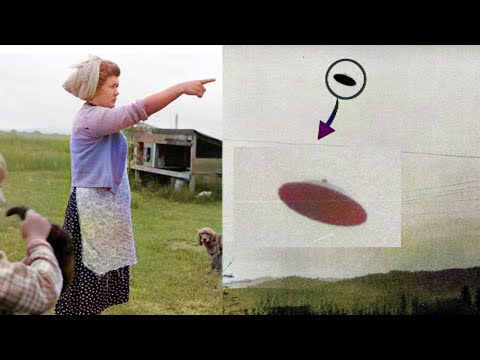
The UFO Photos That Fooled Scientists For Decades | McMinnville Mystery
A focused case history of the Trent photographs, the Condon Committee's investigation, and the decades-long authenticity dispute.
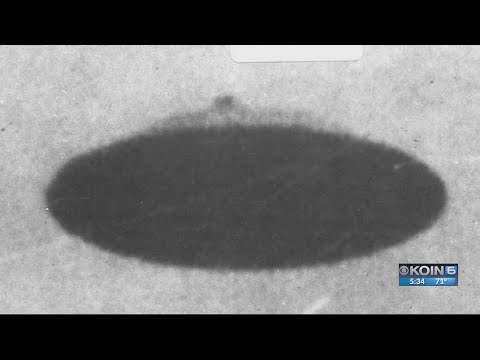
Where We Live: McMinnville's Famous UFO Festival
KOIN 6 News (Portland) report on the annual festival that grew out of the Trents' 1950 sighting and its lasting local legacy.
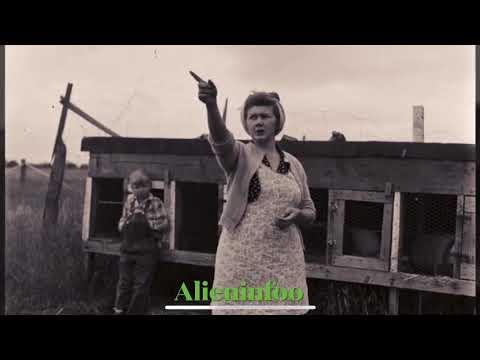
1950 — Paul and Evelyn Trent Capture UFO Near McMinnville
A concise retelling of the sighting itself and the photographs' immediate path to national publication.
Sources
- "McMinnville UFO photographs," Wikipedia. en.wikipedia.org
- McMenamins. "The History of the 1950 Trent UFO Sighting in McMinnville, Oregon." blog.mcmenamins.com
- KOIN 6 News. "Oregon's extraterrestrial history: The 1950 Trent UFO sighting." koin.com
- KOIN 6 News. "Where We Live: McMinnville's famous UFO Festival." koin.com
- Carpenter, Joel. "The Trent Photos," hosted by NICAP. nicap.org
- Condon Committee (Univ. of Colorado). "Condon Report, Case 46: McMinnville Locale." nicap.org
- National Capital Area Skeptics. "Condon Report — Full Text, Table of Contents." files.ncas.org
- Sheaffer, Robert. "The Trent UFO Photos—'Best' of All Time—Finally Busted?" Skeptical Inquirer, January 2015. skepticalinquirer.org
- Sheaffer, Robert. "The Trent UFO Photos," The Debunker's Domain. debunker.com
- Klass, Philip J. "What Bruce Maccabee Doesn't Tell You About His Investigation of the Famous McMinnville/Trent UFO-Photo Case." debunker.com
- UFO Chronicles. "The McMinnville UFO Photos; A Scientific Analysis By Dr. Bruce Maccabee (Redux)." theufochronicles.com
- Cousyn, Antoine; Louange, François; Quick, Geoff (IPACO). "The McMinnville Pictures" (analysis PDF), hosted by NICAP. nicap.org
- Internet Archive. "McMinnville UFO Photo Analysis by Joel Carpenter (1959–2014)," uploaded by Robert Sheaffer. archive.org
- Randle, Kevin. "A Different Perspective: The Air Force and the McMinnville UFO Photographs." kevinrandle.blogspot.com
- Randle, Kevin. "A Different Perspective: The Trent Photographs Reexamined." kevinrandle.blogspot.com
- National Archives and Records Administration. "Records Related to Unidentified Flying Objects (UFOs) and Unidentified Anomalous Phenomena (UAPs): Textual and Microfilm." archives.gov
- "Condon Committee," Wikipedia. en.wikipedia.org
- "William Kenneth Hartmann," Wikipedia. en.wikipedia.org
- "Bruce Maccabee," Wikipedia. en.wikipedia.org
- Unexplained Mysteries. "Mysteries revisited: the McMinnville UFO photographs." unexplained-mysteries.com
- Bitterroot. "70 Years After Famous Sighting, Oregon Town Still Believes in UFOs," May 24, 2019. bitterrootmag.com
- Wikimedia Commons. "File: UFO picture taken by Paul Trent in McMinnville, Oregon.jpg" (public domain, source scans). commons.wikimedia.org
- Wikimedia Commons. Category: McMinnville UFO case. commons.wikimedia.org
See something inaccurate? Have additional information or sources?
Suggest an Edit →Last Updated: August 2026