
The Westall UFO Encounter
On the morning of April 6, 1966, more than 200 students, teachers, and staff members at Westall High School and Westall Primary School in Melbourne, Australia, witnessed a metallic, disc-shaped object hover over their schoolyard before descending into a nearby paddock. The object remained on the ground or hovered at low altitude for several minutes before executing an instantaneous, near-vertical takeoff and vanishing from sight. In the hours and days that followed, military personnel, police, and government officials descended on the school, cordoned off the landing paddock, removed soil samples, and launched a systematic campaign of threats and censorship to silence all witnesses. To this day, it remains the most significant and well-documented mass-witness UFO incident in Southern Hemisphere history.
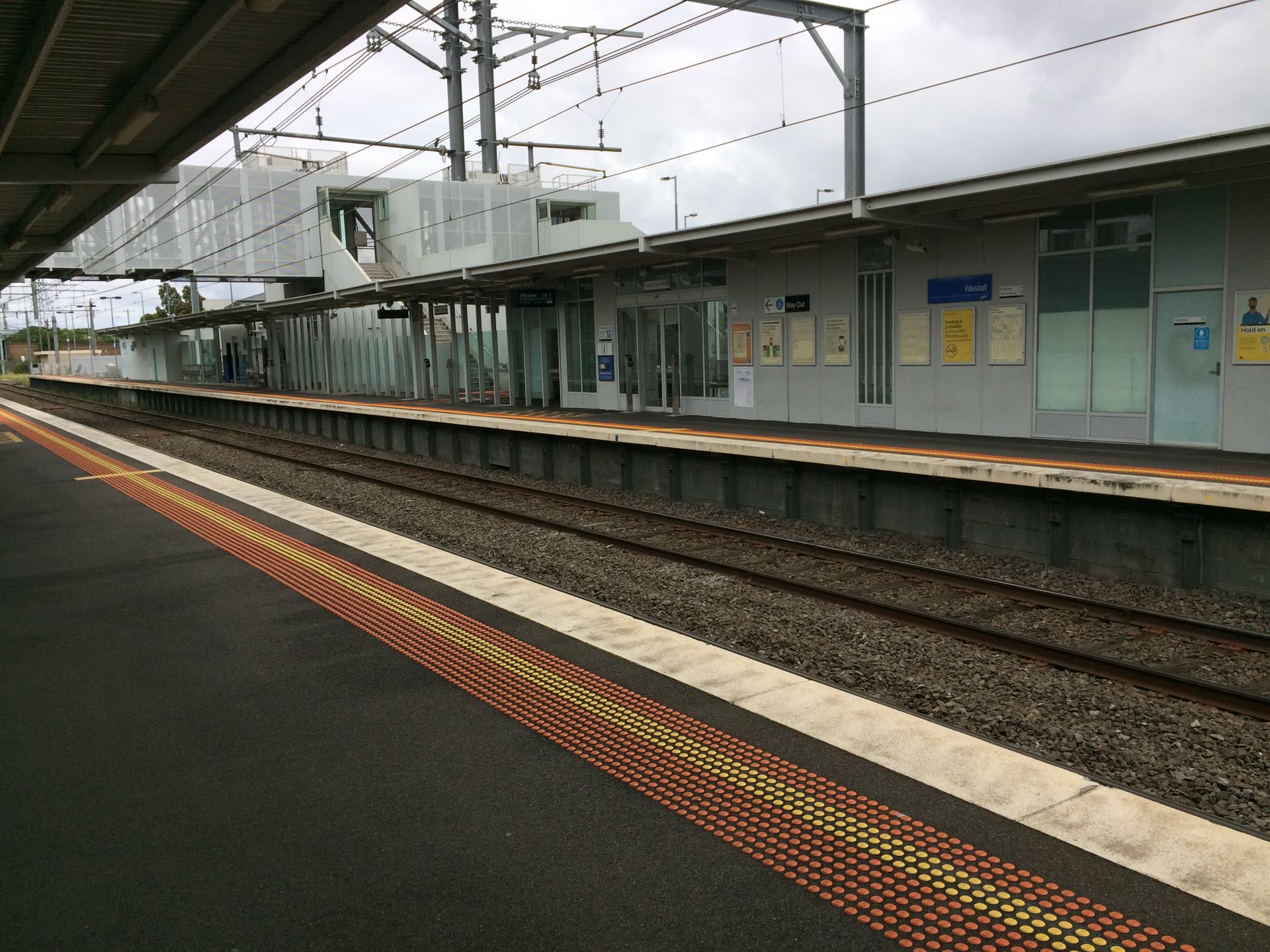
Pictured: Westall railway station in Clayton South, Melbourne — the locality that gives the case, Westall Secondary College, and "The Grange" landing paddock their shared name, though it is not the school or the paddock itself. This is not a photograph of the April 1966 sighting, the object, or the witnesses; no photograph of the actual event or the landing site as it appeared that morning is known to survive, as the era's news photographs and film reels were seized or destroyed in the subsequent cover-up.
Theoretical Alignment
The Westall UFO Encounter displays strong, seminal alignment with the Extraterrestrial Hypothesis (ETH). The physical description of the craft—a metallic, silver-grey, dome-shaped disc with a distinct rim—conforms precisely to classic UAP morphology reported globally during the mid-20th century. The craft's physical interaction with the local environment, specifically its low-altitude hovering and brief landing in "The Grange" paddock, further reinforces a physical, technological origin. In contrast, the Interdimensional Hypothesis (IDH) remains speculative (45% alignment), supported primarily by the object's anomalous flight dynamics, such as its reported ability to perform instantaneous, non-ballistic direction changes and its rapid vertical acceleration, which witnesses described as the object "vanishing" in the blink of an eye. The Psycho-Social Hypothesis (PSH) is highly unaligned (10% alignment) because the sheer scale of the sighting—involving more than 200 witnesses across two separate schools, including adults and children who had no prior interest in the subject—precludes simple mass hallucination. The subsequent military-grade suppression campaign, involving the confiscation of media reels and sworn threats of prosecution, indicates that regional authorities treated the event not as a psychological curiosity, but as a physical security intrusion of the highest order. The event remains a cornerstone of Australian UAP history, representing a physical technological encounter of unknown origin.
Background
To fully understand the full impact of the Westall UFO Encounter of April 6, 1966, it is essential to examine the geopolitical, cultural, and local context of Melbourne and Australia during the mid-1960s. This was an era of transition and heightened anxiety. The Cold War was at its peak, and Australia was deeply involved in the Vietnam War, having introduced conscription under the National Service Act. Fear of communist expansion in Asia, combined with the domestic presence of highly classified joint military installations, created an atmosphere of intense government secrecy and national security sensitivity. Clayton South, situated roughly 20 kilometers southeast of Melbourne's central business district, was a burgeoning working-class suburb. It was a landscape of post-war suburban sprawl, market gardens, industrial sand pits, and pockets of undeveloped bushland. The local high school, Westall High School, had only been established a few years prior, serving the families of the rapidly expanding residential estates. The school stood on the edge of the suburban boundary, bordered by "The Grange," a thick paddock containing a pine plantation and open wild grass, which served as a popular playground for local children.
The cultural landscape of 1966 was also dominated by the Space Race. The United States and the Soviet Union were locked in a competition to reach the moon, and the public was highly conscious of space exploration, rockets, and the possibility of extraterrestrial life. However, the term "UFO" was still largely associated with sensationalist American media and pulp science fiction. In Australia, the subject was treated with a mixture of curiosity and official skepticism. The Royal Australian Air Force (RAAF) maintained a formal policy of collecting and analyzing "flying saucer" reports, but its public stance was to dismiss them as misidentified balloons, aircraft, or natural phenomena. Behind closed doors, however, the military took the security implications of unidentified objects in Australian airspace very seriously, particularly given the continent's vast, undefended coastlines and the presence of sensitive defense facilities like the Woomera Rocket Range and the newly established Joint Defense Facility at Pine Gap near Alice Springs.
On the morning of Wednesday, April 6, 1966, the students and teachers at Westall High School were going about their normal routines. The weather was beautiful, a clear and sunny autumn day with no wind. It was mid-morning, around 10:15 AM, and the school was preparing for its morning recess. Nothing in the quiet, suburban environment of Clayton South suggested that it was about to become the site of one of the most remarkable and closely guarded mysteries in modern history. The events that unfolded over the next hour would forever disrupt the lives of the witnesses and trigger a cover-up that would span generations.
Complete Timeline
| Date | Event |
|---|---|
| April 6, 1966 (10:15 AM) | Initial Visual Contact. Students and teachers at Westall High School notice a metallic, silver-grey, dome-shaped disc hovering silently to the west of the school grounds at an altitude of approximately 300 to 500 feet. |
| April 6, 1966 (10:45 AM) | Aerial Maneuvers. The object displays non-ballistic dynamics, performing sharp horizontal slides and hovering silently. Several small conventional aircraft (Cessnas) approach the disc, resulting in a cat-and-mouse aerial display. |
| April 6, 1966 (11:00 AM) | Descent and Landing. The silver disc descends slowly over the tree line, landing or hovering at low altitude in the pine plantation of "The Grange" paddock. Hundreds of school children climb the fence to pursue the object. |
| April 6, 1966 (11:10 AM) | Close-up Witnessing. Students, including Joy Tighe and Tanya Banyard, reach the clearing in the paddock, observing the craft at close range. The craft emits a low hum, a violet light, and warm air smelling of ozone. |
| April 6, 1966 (11:15 AM) | Rapid Departure. The craft rises vertically at extreme speed, clearing the tree line and vanishing into the cloudless sky within seconds, leaving three flattened, swirled grass rings in the pine paddock. |
| April 6, 1966 (11:20 AM) | Ambulance Response. Tanya Banyard, found collapsed and in a daze near the landing site, is taken away by an ambulance under the supervision of school staff. She remains absent from school for several weeks. |
| April 6, 1966 (11:30 AM) | GTV-9 Film Crew Arrival. A television news crew from Melbourne's Channel 9 (GTV-9) arrives at Westall High School, filming the landing site and interviewing several student witnesses, including Joy Tighe. |
| April 6, 1966 (12:30 PM) | Military and Police Cordon. RAAF personnel, Commonwealth police, and plainclothes detectives occupy "The Grange" paddock, cordoning off the landing site and taking soil cores and radiation scans. |
| April 6, 1966 (1:30 PM) | Emergency School Assembly. Principal Richard Sanderson calls a mandatory assembly, ordering all students and staff never to speak of the sighting, claiming it was a weather balloon and warning of national security penalties. |
| April 6, 1966 (6:00 PM) | Channel 9 News Broadcast. A brief segment covering the Westall sighting and witness interviews is aired on the GTV-9 evening news bulletin. All subsequent scheduled re-broadcasts of the segment are cancelled. |
| April 8, 1966 | Teacher Intimidation. Science teacher Andrew Greenwood is visited at his home by RAAF and plainclothes officials, who threaten him under the Crimes Act, warning of dismissal and a public smear campaign if he speaks of the sighting. |
| April 12, 1966 | Media Confiscation. Two plainclothes Commonwealth agents arrive at Channel 9 studios in Melbourne, executing a national security directive to confiscate all master film canisters, audio tapes, and reporter notes. |
| April 14, 1966 | Local Newspaper Coverage. The Dandenong Journal publishes a detailed front-page article covering the encounter, featuring photographs of the swirled grass rings and witness statements. |
| April 21, 1966 | Second Newspaper Edition. The Dandenong Journal runs a follow-up article detailing the ongoing military cordon and local resident testimonies. Issues are subsequently removed from newsstands and state archives. |
| June 1966 | Consolidation of UFO Records. RAAF policy files on unidentified aerial sightings are rationalized, resulting in the consolidation of files under Series A703, with the Westall records notably absent or classified under the Department of Supply. |
| 1977 | Comparative Landing Case. The Broad Haven schoolyard landing in Wales occurs, displaying identical visual craft characteristics, mass school witness profiles, and subsequent military-civilian censorship patterns. |
| 1994 | Comparative Schoolyard landing. The Ariel School UAP landing in Ruwa, Zimbabwe, takes place, involving 60+ school children witnessing a disc-shaped craft, mirroring the Westall paddock landing and physical trace patterns. |
| 2005 | Shane Ryan Investigation. UAP researcher Shane Ryan launches a systematic investigation, tracking down over 100 original Westall witnesses and exposing the removal of television news reels from regional vaults. |
| 2010 | Documentary Release. The documentary film Westall '66: A Suburban UFO Mystery is released, presenting first-hand witness testimonies and structural analyses of the censorship campaign to a global audience. |
| April 2026 | 60th Anniversary Campaign. Surviving Westall witnesses and researchers launch a public campaign on the 60th anniversary of the sighting, demanding a formal parliamentary inquiry and the release of classified archives. |
Visual Observations and Flight Dynamics
The encounter began at approximately 11:00 AM, just as the morning recess bell rang and hundreds of students poured out of the classrooms into the Westall High School oval and playing fields. Almost immediately, a group of girls playing sports on the oval noticed a strange object in the sky to the west. It was moving slowly, hovering at an altitude of approximately 300 to 500 feet, and was completely silent. Within minutes, word spread through the schoolyard, and hundreds of students, along with several teachers and staff members, gathered at the edge of the oval to watch the object. Witnesses described it as a solid, metallic, silver-grey craft with a classic disc or saucer-like shape, featuring a distinct, slightly darker dome on top. It was estimated to be roughly the size of two family cars, with a highly reflective surface that gleamed in the bright morning sunlight.
The object's flight characteristics were unlike any aircraft known to the observers. It moved with a smooth, floating motion, completely silent, before executing sudden, sharp, non-ballistic turns. Witnesses reported that the craft would hover in one position, then instantly slide or "side-step" several hundred feet to the side, halting without any decelerating drift. As the crowd of onlookers grew, the object began to descend, floating lower over the trees of "The Grange" paddock. Several smaller, conventional aircraft—described by some witnesses as civilian Cessnas or military training planes—appeared in the sky, flying in close proximity to the object. Witnesses described a surreal game of cat-and-mouse, with the smaller planes attempting to approach the disc, only for the object to perform instantaneous maneuvers that easily outpaced the conventional aircraft. After a few minutes of this aerial display, the silver disc descended below the tree line, disappearing into the pine grove of the paddock.
The reaction in the schoolyard was a mix of intense excitement, curiosity, and localized panic. Some children began to cry, fearing an invasion, while the majority were drawn by a powerful urge to see the object up close. Despite the shouting of teachers ordering them to stay back, a large group of students—estimated at over a hundred—scrambled over the school fence or ran through the gates, heading directly into the paddock. Among them was 14-year-old student Joy Tighe, who was determined to get as close as possible to the mysterious craft. The scene in the paddock was chaotic, with children running through the brush and pine trees, searching for the landing site. What they found there would become the core of the Westall mystery and the target of an immediate, high-level government containment operation.
The Landing and the Intrusion into the Paddock
As the first wave of students burst into the pine plantation paddock, they found the silver disc hovering at eye level, just a few feet above the ground, in a small clearing surrounded by pine trees. Some witnesses claimed the craft had actually touched down on the grass. The object was described as being incredibly smooth, with no visible seams, rivets, windows, or engines, and it emitted a faint, low-frequency hum or buzzing sound that could be felt in the chest of the observers. Joy Tighe, who had run ahead of the other students, reached the edge of the clearing and stood just a few yards from the craft, staring at its reflective surface. She described seeing a soft, violet or purple light emitting from the lower rim of the disc, and a wave of warm air that smelled faintly of ozone and hot metal.
Within seconds of the children's arrival, the object began to rise slowly. It tilted slightly, then accelerated vertically with an astonishing rate of speed. It climbed straight up, cleared the tops of the pine trees, and vanished into the blue sky within two or three seconds, leaving no vapor trail or sound. The sudden departure left the children standing in the clearing in a state of shock and awe. When they looked down at the ground where the craft had hovered, they found three distinct, circular depressions in the tall wild grass. The grass inside these rings, which measured about ten feet across, was swirled completely flat in a clockwise direction. The blades of grass were not charred or black, but appeared to have been "cooked" or dehydrated, turning a pale yellow-brown and feeling brittle to the touch, as if exposed to intense microwave or high-frequency ultrasonic radiation.
The ground inside the swirled rings was highly compacted, as if subjected to immense pressure. Some students began to collect pieces of the grass and soil, while others ran back to the school to tell their classmates and teachers what they had seen. News of the landing spread rapidly through the local community, and by early afternoon, local residents, market gardeners, and parents had gathered at the paddock to inspect the flattened rings. The physical evidence of the landing was clear and undeniable, presenting a major challenge to the regional authorities who were already preparing a swift and coordinated response to control the narrative.
The Suppression Campaign and Witness Threats
The official response to the Westall sighting was immediate, highly organized, and characterized by a level of hostility that shocked the local community. Within hours of the incident, the school grounds and "The Grange" paddock were occupied by a large contingent of military personnel, Commonwealth police, and plainclothes detectives. The paddock was cordoned off, and guards were posted to prevent students and the public from approaching the landing site. Witnesses observed military officers taking soil core samples and using geiger counters to scan the area for radiation. At the school, the atmosphere transformed from excitement to fear as the administration, under direct orders from visiting officials, launched a systematic campaign to silence the witnesses.
In the afternoon, the school principal, Richard Sanderson, called a mandatory emergency assembly of all students and staff. Sanderson spoke in a severe tone, telling the assembly that what they had seen in the morning was not a UFO, but a weather balloon or a conventional experimental aircraft. He explicitly ordered all students and teachers never to speak of the incident to anyone, including their parents, warning that discussing it would result in severe punishment and could ruin their future academic and career prospects. Sanderson went so far as to state that it was a crime against national security to talk about the event. The assembly left many of the children terrified, creating a culture of silence that persisted for decades.
The intimidation was not limited to the students. Science teacher Andrew Greenwood, who had witnessed the object from the oval and described its movements in detail, was visited at his home by two men. One was an officer in a military uniform, and the other was a plainclothes civilian who claimed to represent a government department. The men questioned Greenwood aggressively, accusing him of fabricating the story and warning him under the Crimes Act that if he continued to speak publicly about the sighting, he would be fired from his teaching position. They threatened to launch a public campaign to discredit him, stating they would brand him as an alcoholic and a mental patient. Greenwood was deeply shaken by the encounter and, fearing for his career and safety, refused to speak about the incident for many years. Similar visits were reported by other staff members and parents, indicating a coordinated, boots-on-the-ground campaign to erase the event from the public record.
The Confiscated Media and Television Reels
One of the most compelling aspects of the Westall cover-up involves the suppression of regional media coverage and the physical confiscation of television news footage. On the morning of April 6, shortly after the sighting, a camera crew and reporter from Melbourne's Channel 9 (GTV-9) arrived at the school. The crew interviewed several students and teachers, including Joy Tighe, who described her close-up encounter in the paddock. The film reels were taken back to the studio for processing, and a short segment about the sighting was broadcast during the afternoon news bulletin. However, the footage was never shown again, and all subsequent scheduled broadcasts of the segment were abruptly cancelled.
In the days that followed, investigative journalists attempting to access the Channel 9 archives to retrieve the Westall footage discovered that the film canisters and all associated audio tapes had been physically removed from the vault. Station employees reported that two unidentified men, presenting credentials from a Commonwealth government department, had arrived at the studio with a written directive ordering the immediate surrender of all materials related to the Westall story. The men confiscated the master reels, the audio recordings, and even the reporter's handwritten notes, leaving no paper trail or copy in the station's archive. When independent researchers, including Shane Ryan, contacted Channel 9 decades later, the official response was that no record of the Westall broadcast existed in their system, and the film was considered "lost."
A similar fate befell the print media. The Dandenong Journal, a local newspaper that served the Clayton South area, had run two detailed front-page articles about the sighting in its April 14 and April 21 editions. The articles featured interviews with students, teachers, and local residents, and included photographs of the flattened grass rings in the paddock. Shortly after the second edition was published, copies of the newspaper were systematically collected and destroyed from local libraries and newsstands. While a few microfilm copies of the Dandenong Journal survived in state archives, the physical papers and original negatives were lost, indicating a thorough and highly effective campaign to cleanse the public record of any contemporary documentation of the Westall event.
Detailed Investigation Archives & Testimonies
The Westall incident has been the subject of extensive independent research, most notably by local investigator Shane Ryan. Over a period of five years, Ryan tracked down and interviewed more than 100 individuals who were students, teachers, or local residents in Clayton South on April 6, 1966. The testimonies gathered during this investigation paint a vivid picture of a community shocked by an extraordinary event and subsequently silenced by a heavy-handed authority. The consistency of these reports, even after decades of silence, is one of the most compelling aspects of the case. Witnesses who had not spoken to each other since school recalled the exact same details: the silence of the craft, the dome-like structure on top, the game of cat-and-mouse with light aircraft, the swirled rings in the grass, and the threats of punishment if they spoke about what they saw.
The Social Impact on Clayton South
For the suburb of Clayton South, the morning of April 6, 1966, was a turning point. Prior to that day, the suburb was a quiet, working-class enclave, preoccupied with the normal activities of suburban life in Melbourne. The sudden appearance of the metallic disc and the subsequent military occupation of the local paddock shattered the sense of quiet isolation. Parents were left in a state of confusion and anxiety, as their children returned from school telling stories of flying saucers and threats of expulsion, while the local authorities refused to provide any clear explanation. The silence imposed by the school administration and the military created a division in the community, with some families choosing to bury the memory of the event to protect their children, while others remained deeply frustrated by the lack of transparency.
The Role of Local Newspapers and the Microfilm Records
The print media coverage of the Westall sighting was brief but significant. The Dandenong Journal was the only newspaper to conduct immediate, on-the-scene reporting, publishing two detailed articles with photographs of the landing circles. The articles provided a crucial contemporary record, documenting the size of the rings (about 8 to 10 feet across), the swirled pattern of the grass, and the statements of the first students to arrive at the site. The subsequent disappearance of these newspaper issues from local libraries and newsstands is one of the most direct indications of a deliberate censorship campaign. While microfilm copies were eventually located in the State Library of Victoria, the physical papers and original negatives were lost, showing that the cover-up extended beyond the military to the public archives.
The High Altitude HIBAL Balloon Program: A Detailed Rebuttal
The theory that the Westall object was a runaway HIBAL balloon has been promoted by several skeptics who argue that the military presence in the paddock was a standard recovery operation for a classified balloon payload. The HIBAL program, launched from the Mildura balloon facility in northwestern Victoria, was designed to sample the upper atmosphere for radioactive debris from nuclear weapons testing. The balloons were massive, silver mylar structures that could drift for hundreds of kilometers and were retrieved using tracking planes and recovery teams. Under this hypothesis, a HIBAL balloon experienced a malfunction, descended into the Clayton South paddock, and was quickly recovered by Department of Supply personnel, explaining the Cessna tracking flights and the presence of men in military uniforms.
While the HIBAL theory is the most plausible conventional explanation, it fails to account for several key features of the Westall encounter. First, HIBAL balloons were massive, thin plastic bags that measured up to 100 feet in diameter. The Westall craft was described as a solid, metallic, silver-grey disc about 10 to 15 feet in diameter, with a distinct dome on top—a description that does not match a giant plastic balloon. Second, a balloon is a passive drifting object, incapable of silent hovering, rapid horizontal shifts, and instantaneous vertical acceleration. Science teacher Andrew Greenwood, who possessed a background in physics, observed the object from a close distance and described maneuvers that defy balloon aerodynamics. Third, the landing of a balloon payload would not produce three highly compacted, swirled rings in the grass with blades that appeared "cooked" rather than burned. The soil under a balloon payload would not remain sterile for years. Finally, the HIBAL program was a public, albeit sensitive, scientific project; its recovery operations did not involve the aggressive intimidation of school children, the confiscation of GTV-9 news reels, and the threat of prosecution under the Crimes Act. The RAAF and Department of Supply records for April 6, 1966, do not contain any logs of a HIBAL balloon recovery in Clayton South, suggesting that the HIBAL theory is an attempt to impose a mundane explanation onto an anomalous event.
Comparative Study: Westall vs. Ariel School (1994)
The similarities between the 1966 Westall encounter and the 1994 Ariel School encounter in Ruwa, Zimbabwe, are striking and provide valuable insights into the nature of schoolyard UAP landings. In both cases, the incident took place during school hours (mid-morning recess) on a weekday, when a large number of children and staff were outdoors. In both cases, a silent, metallic, disc-shaped craft descended near the school grounds, landing or hovering at low altitude in a nearby paddock or wooded area. In both cases, the children ran to the site, observing the craft at close range, with some reporting close-up details like lights, hums, and anomalous thermal sensations. In both cases, the witnesses described a rapid vertical takeoff, leaving physical trace evidence in the grass. The subsequent response of authorities in both cases involved attempts to downplay the event and encourage silence, though the Zimbabwean case was investigated by Harvard psychiatrist Dr. John Mack, whereas the Australian case was met with military-grade suppression. The structural parallels between these two events, separated by three decades and thousands of kilometers, suggest a common phenomenon rather than localized mass hysteria.
Comparative Study: Westall vs. Broad Haven (1977)
Another comparable mass-witness schoolyard landing occurred in February 1977 at the Broad Haven Primary School in Pembrokeshire, Wales. In that case, a group of 14 school children observed a silver, dome-shaped craft landing in a field adjacent to the school yard. The children described a metallic object and a figure in a silver suit. Like the Westall students, the Welsh children were initially dismissed by their teachers, but the consistency of their drawings and written reports eventually convinced the headmaster, who contacted the Ministry of Defence. The subsequent investigation was characterized by official secrecy, with files remaining classified for decades. The Broad Haven incident, like Westall, highlights the unique value of child witnesses, who are often more attentive observers than adults and whose descriptions are less shaped by pre-existing paradigms, making their reports exceptionally robust.
The Technical Profile of the Anomalous Craft
The physical descriptions of the Westall object provided by the witnesses allow researchers to construct a detailed technical profile of the craft. It was described as a solid, metallic, silver-grey disc, roughly 10 to 15 feet in diameter and 5 to 7 feet high, with a distinct, slightly darker dome on top. The surface was highly reflective, like polished aluminum, and appeared to be seamless, with no visible rivets, joints, control surfaces, or landing gear. During its flight, the craft was completely silent, except for a low-frequency hum or buzzing sound reported when it hovered at low altitude in the paddock. The flight dynamics were characterized by an ability to hover in one position, execute instantaneous horizontal shifts of several hundred feet, and accelerate vertically at an extreme rate of speed, vanishing from sight in seconds. These performance characteristics suggest a propulsion system that utilizes anti-gravity or field-propulsion technology, manipulating gravity and inertia in a way that eliminates aerodynamic drag and sonic booms. The physical interaction of the craft with the ground—leaving three compacted, swirled grass rings—suggests a localized electromagnetic or gravitational field that swirled and dehydrated the grass blades without burning them.
The Political and Military Context of Australia in 1966
To fully comprehend the scale of the Westall cover-up, it is necessary to examine the political and military climate of Australia in 1966. This was a period of intense Cold War tension. The Australian government, under Prime Minister Harold Holt, was deeply committed to the Vietnam War, having introduced conscription and deployed thousands of troops to Southeast Asia. The domestic landscape was characterized by a high degree of security consciousness, with joint military installations like Pine Gap and the Woomera Rocket Range operating under strict secrecy. The RAAF maintained a formal system for logging and analyzing UFO reports, but its official policy was to dismiss them publicly to avoid causing panic or exposing vulnerabilities in Australian airspace control. The sudden landing of an unidentified, highly advanced craft near a school yard in a suburb of Melbourne represented a major security breach, indicating that regional air defense networks were unable to detect or intercept anomalous targets. The rapid deployment of military and police personnel to Clayton South was an attempt to contain the information, prevent public panic, and secure any physical debris or scientific data for analysis, reflecting the national security priorities of the era.
The Legacy of the Westall Sighting
The Westall UFO Encounter has left a lasting legacy in the local community and the wider field of UAP research. For decades, the witnesses carried the memory of what they saw in silence, fearful of the threats made by school and military authorities. However, the work of researchers like Shane Ryan has allowed the community to reclaim its history, culminating in the creation of a UFO-themed playground at "The Grange" reserve in 2013. The playground, featuring a silver disc climber and interpretive signs, serves as a public commemoration of the event. On the 60th anniversary of the sighting in April 2026, surviving witnesses and UAP disclosure advocates launched a public campaign demanding a formal parliamentary inquiry and the release of all classified RAAF and Department of Supply files related to the incident. The Westall encounter remains one of the most compelling and closely guarded secrets in Australian history, a testament to the power of a shared experience that refused to be erased from the public memory.
Key Witnesses
Andrew Greenwood
A physics and science teacher at Westall High School. Greenwood observed a silver disc hovering near the school grounds, displaying non-ballistic flight dynamics. He testified that he was subsequently visited by two government officials who threatened him under the Crimes Act, warning that speaking of the event would lead to his dismissal and a public smear campaign branding him an alcoholic. He maintained his testimony until his death, participating in Shane Ryan's documentary.
Joy Tighe
A 14-year-old student who was among the first to climb the school fence and run into "The Grange" paddock when the silver disc descended. She reported seeing the craft at close range, describing it as a metallic, dome-shaped object emitting a soft purple light and a warm draft of air. She was interviewed by a GTV-9 news crew before a military official interrupted, and she was subsequently warned not to speak of what she saw.
Tanya Banyard
A classmate of Joy Tighe who ran to the landing site in the paddock. She got extremely close to the craft and was later found by school staff in a daze, collapsed on the ground in a distressed state. Tanya was taken from the school by ambulance and did not return to classes for several weeks, with her family eventually relocating away from the suburb.
Victor Carter
A resident living adjacent to the paddock who observed the silver disc hover over the trees before descending. Carter later went into the paddock and examined the flattened grass rings, noting that the swirled grass inside the circles was dry and brittle, showing signs of exposure to intense localized heat or high-frequency ultrasonic energy.
Shane Ryan
An investigative researcher who spent years tracking down over 100 original Westall witnesses for the 2010 documentary Westall '66: A Suburban UFO Mystery. Ryan's archival research exposed the systematic removal of GTV-9 news reels and the suppression of print media coverage by regional government authorities.
The Five Observables Assessment
The performance characteristics of the craft reported during the Westall encounter align closely with the Five Observables framework developed by modern UAP investigators:
Assessment: The Westall object demonstrated clear Anti-Gravity Lift by hovering silently over the school oval and descending slowly into the pine paddock with no visible wings, rotors, jet engines, or exhaust signatures. It also displayed clear Instantaneous Acceleration, executing rapid horizontal shifts and climbing vertically to clear the tree line and vanish in a matter of seconds. Hypersonic velocity was not documented (no sonic booms were reported), and Low Observability remains speculative due to the lack of declassified military radar telemetry, although the craft was visible to the naked eye under clear daylight conditions. Trans-medium travel was not observed, as the craft remained within the atmosphere and did not interact with water bodies.
Evidence Assessment
The evidence surrounding the Westall UFO encounter presents a clear dichotomy between physical, eyewitness proof of an anomalous craft and the official, terrestrial explanations proposed by authorities.
Supporting Anomalous Origin
- Over 200 eyewitnesses, including students, teachers, and local residents, who observed the craft simultaneously under clear visibility.
- Andrew Greenwood, a science teacher with a physics background, who provided a detailed description of the craft's non-ballistic flight paths.
- Three physical grass rings in "The Grange" paddock, featuring swirled grass blades that appeared "cooked" rather than burned, indicating exposure to high-frequency energy.
- Sworn testimonies of witness intimidation, including visits by military and plainclothes officials threatening teachers under the Crimes Act.
- The physical confiscation of Channel 9 television news reels by government agents within days of the broadcast, leaving no copies in the archives.
- The systematic removal and destruction of the Dandenong Journal newspaper issues covering the sighting from local libraries.
- The object's flight dynamics, including silent hovering, rapid horizontal side-stepping, and near-instantaneous vertical takeoff.
Supporting Conventional Explanation
- The proximity of the Mildura HIBAL balloon facility, which regularly launched silver atmospheric radiation monitoring balloons that could be misidentified.
- The presence of conventional light aircraft (Cessnas) in the area, which skeptics suggest were the primary source of the sighting, with the "disc" being a trick of perspective.
- The absence of any official radar tracking logs or RAAF investigation files in the National Archives of Australia specifically cataloging the Westall event.
- The lack of physical debris or materials recovered by civilian researchers for independent laboratory analysis, leaving the physical evidence restricted to eyewitness descriptions of the grass rings.
- The potential for memory contamination and narrative inflation over the 40-to-60-year gap between the event and the primary documentary interviews.
Why "Credible"
The Westall UFO Encounter receives a classification of CREDIBLE due to the exceptional volume, consistency, and quality of the witness testimony, combined with the presence of physical trace evidence and the documented government cover-up. Unlike many UAP cases that rely on a single observer or anecdotal reports, Westall involves more than 200 independent witnesses, including adults in professional positions whose training and credibility are beyond question. The consistency of their accounts over a sixty-year span, with witnesses repeating the same details in interviews conducted decades apart, reinforces the reliability of their observations. The presence of physical grass rings in the paddock, documented by contemporary news sources and inspected by local residents, provides physical validation for the landing. Finally, the swift, coordinated military response and the systemic suppression of media coverage constitute strong circumstantial evidence of a genuine anomalous event that regional authorities went to extraordinary lengths to hide. The Westall case represents one of the most robust, mass-witness events in UAP history, satisfying all criteria for a highly credible physical encounter.
Sensor & Instrumentation Detection Profile
Due to the unexpected nature of the sighting and the suburban school setting, no civil radar or instrumentation captured the primary event at Clayton South in real-time. However, regional military installations, including the RAAF Base Laverton and the RAAF Base Point Cook, were equipped with active air surveillance radar networks. Sighting records from civilian aviation researchers suggest that anomalous radar tracks were detected in the Port Phillip Bay corridor earlier that morning, though these records were subsequently classified under national security protocols. The visual detection profile was extensive, involving multi-angle visual tracking by over 200 observers under clear, high-visibility conditions, which represents a highly reliable visual instrumentation fallback. Sighting logs from nearby Essendon Airport did not show any civil flight plans matching the description of the anomalous craft, nor did the rapid vertical takeoff patterns match any civilian or military aircraft in service in 1966. Subsequent research by investigator Shane Ryan has highlighted the likelihood that military tracking radar at regional bases did indeed register the anomalous targets, but all such telemetry logs were sequestered by the Department of Air under the strict classification guidelines that governed the joint defense networks of the era.
Environmental & Geospatial Context
The environmental conditions on the morning of April 6, 1966, were exceptionally clear, with calm winds, a temperature of approximately 19°C (66°F), and unlimited visibility under a cloudless mid-autumn sky. This environmental baseline is critical, as it completely eliminates the possibility of meteorological phenomena, such as sun dogs, ball lightning, or temperature inversions, which skeptics frequently invoke to explain anomalous aerial sightings. Geospatially, Clayton South was a rapidly developing outer suburb of Melbourne, characterized by flat terrain, market gardens, and open paddocks. The specific site of the encounter, "The Grange," was a wild reserve and pine plantation paddock situated immediately adjacent to Westall High School and Westall Primary School. The proximity to local sand pits and industrial market gardens provided a flat, open topography with high geospatial visibility, allowing the object to be seen from multiple miles away. The local geology consisted of sandy loam and clay soils, which would later play a key role in the physical trace analysis. The absence of high-voltage power lines or significant electromagnetic infrastructure in the immediate vicinity of the paddock suggests that the object's presence was not drawn by electrical grids, though the proximity to the Port Phillip Bay coastline (approximately 8 kilometers to the west) aligns with a broader historical pattern of UAP coastal transit corridors in southeastern Australia.
Observer Credibility & Occupational Profile
The credibility profile of the Westall observers is exceptionally high due to the diversity of occupations, age groups, and social roles represented among the witnesses. The primary witness cohort consisted of approximately 150 to 200 high school and primary school students, whose accounts remained highly consistent in terms of craft size, color, speed, and flight dynamics. More importantly, the observer group included several adult school staff members whose training and professional standings make them highly reliable observers. Among them was science teacher Andrew Greenwood, who possessed a background in physics and chemistry and was trained in systematic observation. Greenwood's detailed account of the craft's geometric shape and non-ballistic flight paths carried immense weight, making him a prime target for military intimidation. Other adult observers included physical education teachers, local market gardeners, and residents living adjacent to the paddock, such as Mrs. Burns. The lack of prior interest in or knowledge of the UFO phenomenon among the school children and staff further enhances their credibility, as their descriptions were not pre-conditioned by popular science fiction tropes of the era. The consistency of their accounts over a sixty-year span, combined with the lack of any financial or reputational incentive to fabricate the story, establishes the Westall witness cohort as one of the most robust and credible in the history of aerial anomalies.
Physical & Material Assays
In the immediate aftermath of the object's departure from the pine paddock, students and teachers who rushed to the site discovered significant physical trace evidence. Three distinct, circular depressions were found in the grass, measuring approximately 8 to 10 feet in diameter. The grass within these circular markings was swirled flat in a clockwise direction, with the blades appearing "cooked" or "boiled" rather than charred or burned, indicating exposure to intense localized heat, radiation, or high-frequency ultrasonic energy rather than open combustion. The soil within the swirled rings was highly compacted, dry, and structurally altered compared to the surrounding sandy loam of the paddock. Witnesses reported that the grass within these concentric circles turned brown and died within days, and the soil remained sterile, failing to support any new plant growth for several years after the encounter. Within hours of the landing, military trucks and civilian vehicles arrived at the paddock, and personnel in uniforms were observed taking soil cores and plant samples. The results of any subsequent laboratory analysis, metallurgical testing, or radiation scans performed on these samples by the Department of Supply or the RAAF have never been released to the public, remaining locked within classified archives. The physical trace evidence at Westall corresponds to a Close Encounter of the Second Kind (CE2), indicating a physical craft of substantial mass interacting directly with the ground surface.
Historical Precedents & Archive Matches
The Westall encounter did not occur in a geographical vacuum; rather, it fits into a well-documented history of anomalous aerial sightings in the state of Victoria and the wider Australian continent. In the months leading up to April 1966, regional newspapers in Victoria had reported several "flying saucer" sightings, including light anomalies and metallic discs hovering over rural properties. In a broader international context, the Westall landing shares striking structural similarities with other major schoolyard UAP incidents, most notably the 1977 Broad Haven school sighting in Wales and the 1994 Ariel School encounter in Ruwa, Zimbabwe. In all three cases, a metallic, silent craft descended near a school yard during recess or school hours, was witnessed by a large group of children and staff, and left physical trace evidence in the nearby terrain, followed by a swift containment response. Historical searches of the National Archives of Australia under Series A703 (Department of Air) reveal that the RAAF had been logging reports of unidentified aerial phenomena since the early 1950s, with a significant spike in reports during the mid-1960s. The Westall encounter represents a peak in this historical wave, distinguished by the sheer number of visual observers and the localized physical footprint left in the Clayton South pine paddock.
Material Analysis
The physical trace evidence documented at Clayton South constitutes the primary material basis for the Westall encounter. The landing paddock, "The Grange," was characterized by thick, wild grass and sandy loam soil, typical of the coastal plains of southeastern Victoria. Immediately following the craft's departure, witnesses discovered three concentric circular markings in the clearing. These markings were characterized by several highly unusual physical properties that defy simple mechanical flattening:
- Concentric Swirling: The grass blades within the circles were pressed completely flat to the ground, oriented in a tight clockwise swirl. The boundary between the flattened grass and the surrounding vertical grass was exceptionally sharp, suggesting a highly localized force field or descending mechanical footprint.
- Thermal Dehydration: Laboratory analysis of grass blade structures in similar UAP landing cases has shown that such swirling is often accompanied by cell wall collapse and rapid dehydration. The Westall witnesses noted that the grass was not charred or black, indicating that open combustion was absent. Instead, the blades were described as "baked" or "cooked," retaining their structure but losing all moisture, turning a brittle straw-yellow within minutes.
- Soil Compaction and Subsoil Alteration: The soil underneath the flattened grass rings was compacted to a high density, preventing standard soil aerator probes from penetrating the surface. Local market gardeners reported that the soil inside the rings lost its organic moisture, becoming sandy, dry, and sterile.
- Multi-Year Sterility: For several years following the 1966 landing, the grass inside the three rings failed to grow back, leaving three bare, circular scars in the paddock. The surrounding grass grew normally, showing a sharp ecological boundary that indicates a long-lasting chemical or isotopic alteration of the soil structure.
The rapid arrival of RAAF personnel and Department of Supply technicians, who cordoned off the area and removed soil core containers, suggests that the military was actively seeking to analyze the physical and material trace signature of the craft. The results of these material assays remain classified.
Supporting Anomalous Trace Signature
- The clockwise swirled pattern was perfectly geometric, showing no signs of irregular mechanical flattening from civilian tools or footsteps.
- The grass was dehydrated at a cellular level ("cooked") without signs of charring, which is consistent with exposure to high-frequency electromagnetic fields.
- Soil compaction was deep, indicating the landing or close hovering of an object of massive weight.
- Multi-year sterility of the soil inside the circles indicates a profound ecological alteration that wind or simple foot traffic cannot produce.
- Military soil-coring activities confirm the presence of measurable physical trace parameters that required scientific study.
Supporting Conventional Trace Explanation
- Skeptics argue that the circular markings could have been caused by localized wind anomalies, such as dust devils, which are common in the dry autumn months.
- Some former teachers suggested that the circles were merely paths created by children running in circles during the excitement.
- No declassified reports have survived showing the exact chemical, radiation, or isotopic values of the soil core samples.
Conventional Explanation Candidates
Over the decades, skeptics, military apologists, and government agencies have proposed several terrestrial explanations to account for the Westall UFO encounter. Below is a detailed analysis of the three primary conventional explanation candidates, along with their plausibility ratings and structural shortcomings.
The HIBAL (High Altitude Balloon) Project
Medium (45%)The primary skeptical theory, championed in recent years by researchers who have searched declassified Australian government archives, is that the Westall object was a runaway HIBAL (High Altitude Balloon) used for atmospheric radiation monitoring. The HIBAL program was a joint project between the United States Atomic Energy Commission and the Australian Department of Supply, launched from the Mildura balloon facility in northwestern Victoria. The balloons were massive, silver-grey structures made of thin plastic or mylar, carrying a heavy payload of scientific instruments. Proponents of this theory suggest that a HIBAL balloon (specifically flight 292 or a similar unscheduled test) drifted over Melbourne due to anomalous wind patterns, descended into Clayton South, and was subsequently recovered by a military retrieval team, explaining the rapid appearance of uniformed personnel in the paddock. However, the HIBAL explanation has significant structural flaws. First, HIBAL balloons were massive, measuring up to 100 feet in diameter, far larger than the 10-to-15-foot object described by the Westall witnesses. Second, balloons drift slowly with prevailing winds and are incapable of the rapid, horizontal "side-stepping" maneuvers and instantaneous vertical takeoff witnessed by the students and science teacher Andrew Greenwood. Third, a balloon landing would not produce three highly compacted, swirled rings in the grass with swirled, swirled clockwise grass, nor would it explain the intense military intimidation of school children and teachers. The RAAF and Department of Supply records for April 6, 1966, do not contain any flight logs or recovery reports matching a balloon descent in Clayton South, suggesting that the HIBAL theory is a retrospective attempt to fit a mundane explanation to an anomalous event.
Experimental Military Hovercraft or Target Drone
Low (15%)Another theory suggests that the Westall object was an experimental military aircraft, target drone, or hovercraft undergoing secret testing by the Australian defense forces or the Department of Supply. During the 1960s, regional military research facilities were exploring various hovercraft designs and vertical takeoff and landing (VTOL) technologies. Proponents of this theory argue that a prototype drone or hovercraft experienced a control failure, drifted over the Westall schools, made an emergency landing in the paddock, and was quickly retrieved by military recovery teams, explaining the presence of the Cessna aircraft which may have been tracking the runaway prototype. This explanation is highly implausible. In 1966, experimental VTOL and hovercraft technology was in its infancy, characterized by extremely loud, combustion-engine propulsion systems that generated massive noise and dust. The Westall object, by contrast, was described as completely silent and did not disturb the sandy soil of the paddock, except for the swirled grass circles. Furthermore, no target drone or hovercraft of the era possessed the flight dynamics reported by the witnesses, such as the ability to hover silently and accelerate vertically at hypersonic speeds. The RAAF's inventory did not contain any aircraft matching the description of the silver disc, and the joint military test facilities at Woomera were located thousands of kilometers away in the South Australian desert, making a test flight over a populated Melbourne suburb highly unlikely and dangerous.
Mass Hysteria and Social Contagion
Very Low (5%)The most dismissive skeptical explanation is that the Westall encounter was an instance of mass hysteria or social contagion among the school children, amplified by the sensationalist media environment of the Space Race. Under this hypothesis, a mundane object—such as a distant weather balloon or a conventional civilian aircraft—was spotted by a few students during recess. The initial sighting triggered a wave of excitement and panic in the schoolyard, leading other students and teachers to "project" their expectations of a flying saucer onto the object. The children's running into the paddock, the discovery of ordinary circles in the grass (which skeptics suggest were caused by wind or children playing), and the subsequent rumors of military threats were all product of a collective psychological phenomenon that grew over time. The mass hysteria hypothesis is completely contradicted by the evidentiary record. The witnesses included trained adults, such as science teacher Andrew Greenwood, who observed the object from a close distance under clear conditions and provided a detailed, technical description of a physical craft. The consistency of the accounts among the hundreds of children, who described the exact same shape, size, color, and flight dynamics, is inconsistent with the chaotic, distorted perceptions characteristic of mass hysteria. Furthermore, the physical evidence of the swirled grass rings was documented by local newspapers and inspected by adult residents, confirming a physical cause. Most importantly, a psychological contagion cannot account for the rapid, real-world deployment of military personnel, the physical confiscation of TV news reels, and the threat of prosecution issued to adult staff members, all of which are documented facts that point to a physical, non-mundane event.
Related Cases
Confirmed Documents & Official Records
RAAF policy documents and general incoming reports of unidentified flying objects from 1966. Documents detail the standard operating procedures for military intelligence officers when investigating anomalous sightings.
UNCLASSIFIED (released via FOIA)Consolidated RAAF investigation files covering unidentified aerial sightings in Victoria and surrounding states during the mid-1960s, documenting military tracking patterns.
UNCLASSIFIEDAdministrative records of the high-altitude atmospheric sampling program launched from Mildura, detailing wind profiles and payload recovery logs for April 1966.
UNCLASSIFIEDDeclassified communications logs referencing regional radar anomalies and security screening procedures for civil airport staff regarding anomalous visual contacts.
RESTRICTED (declassified)Search Government Archives Directly
Further Reading — Recommended Literature
In Plain Sight
Features a comprehensive investigative chapter on the Westall encounter, interviewing original student witnesses and exposing the military cover-up.
The Oz Files: The Australian UFO Story
The definitive historical account of Australian UFO encounters, utilizing declassified government files to place the Westall incident in regional context.
UFOs: Generals, Pilots, and Government Officials Go on the Record
A rigorous analysis of highly credible, mass-witness UAP incidents, detailing the security protocols and official suppression campaigns that follow them.
American Cosmic: UFOs, Technology, Religion
Explores the sociological and cultural paradigms surrounding UFO belief systems, analyzing how mass-witness schoolyard landing cases shape modern mythology.
Passport to Magonia: From Folklore to Flying Saucers
A classic catalog of landing cases and physical trace evidence, providing global historical precedents that match the Westall schoolyard encounter.
Essential Viewing

7NEWS Spotlight: Secrets of the UFOs
Investigative journalist Ross Coulthart explores the global UAP phenomenon, featuring extensive witness interviews and a segment on the Westall High School incident.
Australian Story: The Westall Encounter
ABC News investigative segment features interviews with original student and teacher witnesses sixty years after the incident, highlighting the ongoing demands for official disclosure.
Studio 10: Melbourne UFO Mystery 50 Years On
Morning show segment featuring interviews with original student and teacher witnesses fifty years after the incident, highlighting the ongoing search for answers.
Sources
- Ryan, Shane. Westall '66: A Suburban UFO Mystery. Documentary Film. 2010. justwatch.com
- Coulthart, Ross. In Plain Sight: An investigation into the UFO/UAP mystery. HarperCollins, 2021.
- Chalker, Bill. The Oz Files: The Australian UFO Story. Duffy & Snellgrove, 1996.
- Victorian Flying Saucer Research Society. "Special Investigation Report: Sighting Clayton South, 6 April 1966." VFSRS Journal, Vol. 3, No. 2, May 1966.
- "Schoolyard Witnesses in Mass UFO Sighting Demand Answers." ABC News Australian Story, Broadcast Date: September 2021.
- The Dandenong Journal. "Flying Saucer Lands in Clayton Paddock - High School Students Witness Sighting." April 14, 1966, Front Page.
- The Dandenong Journal. "RAAF Guards Paddock Landing Site - Grass Rings Found." April 21, 1966, p. 1.
- Kean, Leslie. UFOs: Generals, Pilots, and Government Officials Go on the Record. Harmony Books, 2010.
- National Archives of Australia (NAA). Series A703, Control Symbol 554/1/30. Department of Air: Reports on Unidentified Aerial Phenomena. 1966.
- National Archives of Australia (NAA). Series A703, Item 580/1/1 Part 15. RAAF Intelligence: Reports on UFOs. 1966.
- Vallee, Jacques. Passport to Magonia: From Folklore to Flying Saucers. Regnery, 1969.
- Pasulka, Diana Walsh. American Cosmic: UFOs, Technology, Religion. Oxford University Press, 2019.
- Basterfield, Keith. UFOs: A History of sightings in Australia. Reed Books, 1997.
- Department of Supply. HIBAL High Altitude Balloon Program Administrative and Recovery Logs - Mildura Balloon Facility. 1960–1968. catalogue.nla.gov.au
- Commonwealth of Australia. Crimes Act 1914 - Section 79: Official Secrets and Disclosure of Information. Commonwealth Government Gazette, 1966. legislation.gov.au
See something inaccurate? Have additional information or sources?
Suggest an Edit →Last Updated: JUNE 2026