
The Wonsan-Sunchon UFO Incident
Around 11:00 PM on January 29, 1952, deep into the Korean War, the tail gunner and central fire-control gunner of a FEAF Bomber Command B-29 Superfortress, flying a night interdiction sortie some 30 miles southwest of Wonsan, watched a glowing orange sphere with a bluish flame halo pull alongside their aircraft at 20,000 feet and pace it for five minutes. Roughly twenty-four minutes later and some 80 miles away, over Sunchon, the fire-control gunner and waist gunner of a second, unrelated B-29 crew — with no knowledge of the first sighting — watched what their own report described in nearly identical terms shadow their bomber for about a minute before it withdrew. Both crews were combat-seasoned World War II veterans who told Air Force intelligence officers the object "bore no resemblance whatsoever" to any flak, flare, or rocket they had encountered on prior missions. The reports reached the Air Technical Intelligence Center as classified message traffic, triggered a formal technical review by the same officer — then-Lieutenant Edward J. Ruppelt — who would take over Project Blue Book weeks later, climbed all the way to a memorandum from Vice Chief of Staff Gen. Nathan F. Twining to Secretary of the Air Force Thomas K. Finletter, and prompted Senate Armed Services Committee chairman Sen. Richard B. Russell Jr. to demand a full report. Ruppelt himself later credited the case's February 19 press leak with breaking "the calm" and starting the publicity build-up that peaked, five months later, over the nation's capital. No radar, camera, or physical trace evidence exists; the case rests entirely on independent, credentialed aircrew testimony and an official investigative record that reached the Pentagon's senior leadership without ever producing a confirmed explanation.
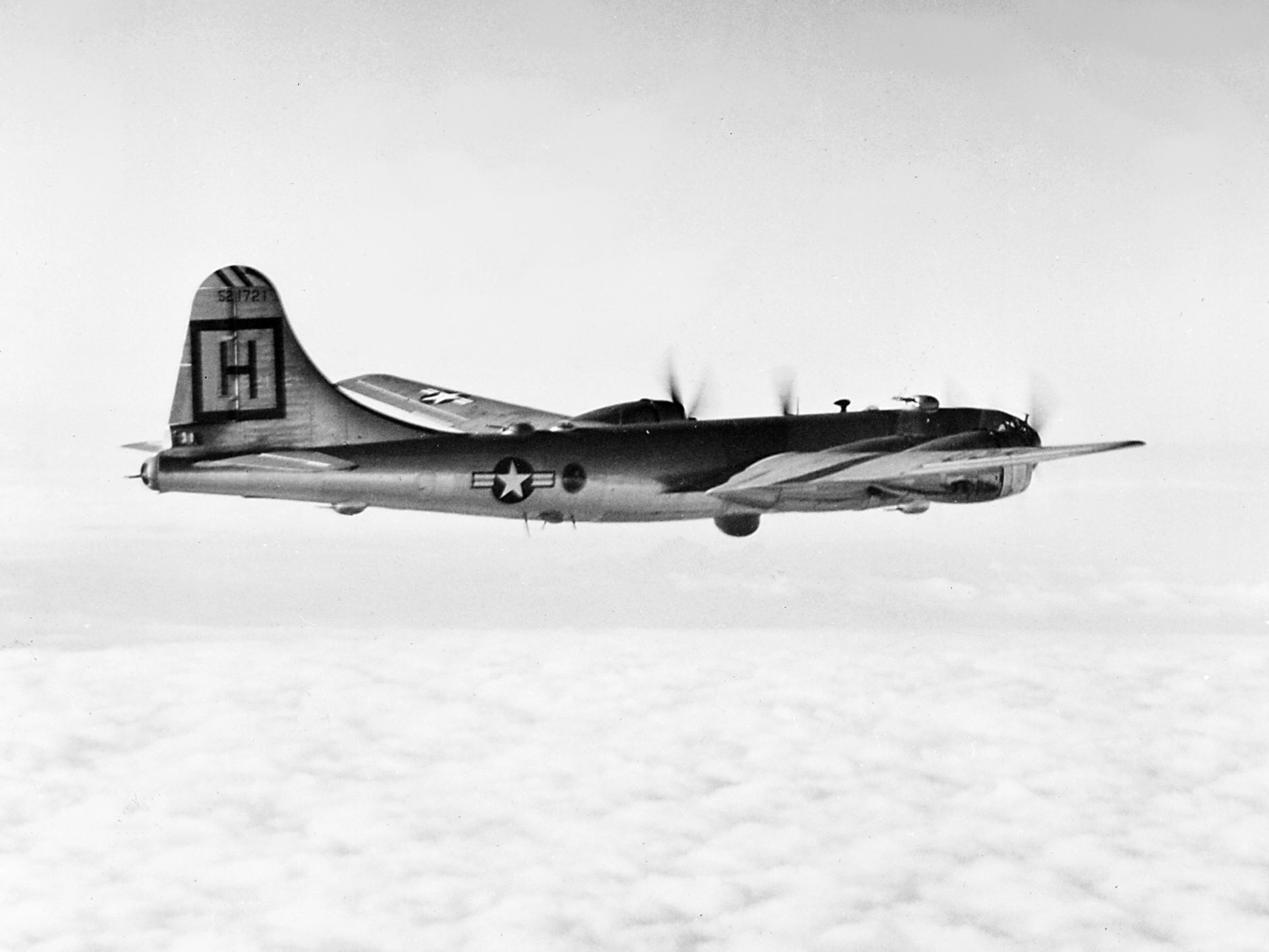
Pictured: a real USAF B-29 Superfortress (serial 45-21721) of the 345th Bombardment Squadron, 98th Bombardment Group — one of FEAF Bomber Command's three B-29 groups flying North Korean interdiction missions in this period — photographed in flight over Korea circa 1950–1952. This is not a photograph of either aircraft actually involved in the January 29, 1952 sighting, whose individual identities were never publicly released, nor of the object itself, which was observed only visually at night with no camera aboard. No photograph of the actual event is known to exist; this image shows the same aircraft type, operator, and general theater of operations as a documented, honest stand-in.
Theoretical Alignment
This file rates Wonsan-Sunchon a moderate-to-genuine ETH candidate rather than a strong one: the object's controlled pacing behavior, sustained duration, and consistent independent description across two unaware crews are the kind of pattern that resists easy dismissal, but a small glowing aerial light with no defined structure, occupants, or instrumented performance data falls well short of the strongest cases in this catalogue. The Psycho-Social score is kept low but non-zero because the case's two crews were on-duty, trained combat veterans reporting through normal military channels under no public pressure at the time of the sighting — the opposite of a mass-hysteria pattern — though the case's later life as the opening chapter of a national press sensation (via LIFE magazine) shows how quickly a sober military report can be absorbed into a much larger, less disciplined public narrative.
Background
By January 1952, the Korean War had settled into its grinding, static middle phase. Ground fighting along the 38th parallel had stalemated into trench warfare while armistice talks dragged on at Panmunjom, and in the air, FEAF Bomber Command's B-29 Superfortresses — organized under the 19th, 98th, and 307th Bombardment Groups — had shifted almost entirely to night operations. The change was forced, not chosen: after a string of daylight losses to Soviet-flown MiG-15 jets, most catastrophically the October 23, 1951 air battle remembered as "Black Tuesday," in which North Korean and Chinese MiGs shot down or crippled a significant fraction of an attacking B-29 formation over Namsi, FEAF Bomber Command concluded that its propeller-driven, unescorted-by-day bombers could no longer survive daylight missions against jet interceptors and moved its interdiction campaign into darkness. That decision put experienced, veteran bomber crews into the North Korean night sky on a nightly basis by early 1952, flying against rail lines, bridges, troop concentrations, and port facilities under the broader interdiction effort historians later called Operation Strangle.
Wonsan, on North Korea's east coast, was one of the war's most fought-over cities from the air and sea alike. Its harbor — some 300 square miles of ice-free water, one of the few on Korea's frigid winter coastline — had been under an active United Nations naval blockade since February 16, 1951, an operation that would eventually run 861 days, the longest naval blockade in modern history at the time, involving near-constant minesweeping and shore bombardment by U.S. and British warships working to deny North Korea the port's use. Sunchon, roughly 80 miles to the west-northwest near Pyongyang, sat on a key North Korean rail corridor that FEAF Bomber Command targeted repeatedly throughout the interdiction campaign, including a heavily-opposed raid against its bypass railway bridges later that year. Both cities, in other words, were legitimate, heavily defended wartime targets under nightly threat from American bombers — not remote or empty terrain, and not a setting where an unusual light in the sky would have gone unnoticed by trained aircrew already scanning for enemy fighters, flak, and searchlights.
It was against this backdrop, on the night of January 29, 1952, that two entirely separate B-29 crews — flying unrelated missions for different squadrons roughly 80 miles apart — independently radioed in reports of a glowing object that paced their aircraft. Neither crew knew of the other's sighting until Air Force intelligence officers, comparing the two reports days later, recognized how closely the descriptions matched.
Complete Timeline
| Date | Event |
|---|---|
| February 16, 1951 | United Nations naval forces begin the blockade of Wonsan harbor, an operation that will ultimately run 861 days. |
| October 23, 1951 | "Black Tuesday": heavy B-29 losses to MiG-15 interceptors over Namsi push FEAF Bomber Command's B-29 campaign almost entirely into night operations. |
| January 29, 1952, ~11:00 PM | Approximately 30 miles southwest of Wonsan, the tail gunner and central fire-control gunner of a B-29 flying above 20,000 feet observe an orange, rotating and pulsating sphere with a bluish flame halo pace their aircraft from the 8–9 o'clock position for about five minutes before it withdraws. |
| January 29–30, 1952, ~11:24 PM+ | Roughly 80 miles away near Sunchon, the fire-control gunner and waist gunner of a second, unrelated B-29 crew independently observe a nearly identical object pace their bomber for about one minute. |
| Late January 1952 | Both crews' reports reach the Air Technical Intelligence Center (ATIC) at Wright-Patterson AFB as classified Secret message traffic. |
| February 1, 1952 | ATIC transmits message T52-2999-4 requesting additional detail — exact coordinates, altitudes, and rotation characteristics — and FEAF alerts all bomber crews to watch for repeat sightings and use fire-control equipment to measure any future encounter. |
| February 4, 1952 | ATIC's Lt. Col. Ray W. Taylor sends message T52-3047 to Brig. Gen. Garland proposing candidate explanations, including exhaust-stack flares, jet or ramjet exhaust, a vortex in the airstream, an air-to-air weapon, and unexplained WWII-era "fireballs." |
| February 18–20, 1952 | Lt. Edward J. Ruppelt, then an ATIC propulsion analyst, formally requests a technical assessment of whether the reported flame matches a conventional jet, jet with afterburner, ramjet, pulsejet, or rocket engine; analyst Peter A. Stranges responds giving only "slight credence" to a modified ramjet-powered helicopter. |
| February 19, 1952 | Details of the sighting leak to the press without the Air Force's customary denial; the Washington Daily News, New York Times, and wire services report the story nationally. |
| February 21, 1952 | Senate Armed Services Committee chairman Sen. Richard B. Russell Jr. formally requests a full Air Force report on the sightings. |
| February 25, 1952 | LIFE magazine researcher Robert Ginna begins Pentagon interviews for what will become the magazine's landmark UFO article. |
| March 5, 1952 | Vice Chief of Staff Gen. Nathan F. Twining sends a memorandum to Secretary of the Air Force Thomas K. Finletter offering two tentative, unconfirmed evaluations: Soviet La-9/La-11 fighter exhaust, or an airborne searchlight on a conventional aircraft. |
| March 6, 1952 | FEAF commander Gen. Otto P. Weyland tells reporters, "We can't say there's nothing to it," while declining to endorse any specific explanation. |
| April 7, 1952 | LIFE publishes "Have We Visitors From Space?", listing the January 29 Korea sighting among the ten cases its authors judged most credible; the article reaches more than 350 newspapers in excerpt. |
| March 1952 | Ruppelt formally reorganizes ATIC's UFO investigation into Project Blue Book. |
| July 12–29, 1952 | The Washington, D.C. UFO Flap unfolds, the culmination of the publicity build-up Ruppelt later traced back to this case's February leak. |
| 1956 | Ruppelt's memoir, The Report on Unidentified Flying Objects, documents the case in Chapter 10, "Project Blue Book and the Big Build-Up." |
The Wonsan Sighting
The first encounter began around 11:00 PM local time on January 29, 1952, aboard a B-29 Superfortress flying an interdiction sortie roughly 30 miles southwest of Wonsan, on North Korea's blockaded east coast. The bomber was above 20,000 feet, holding a ground speed later estimated at roughly 148 knots (about 170 mph), when the tail gunner and central fire-control gunner — the two crew stations responsible for visually and defensively monitoring the aircraft's rear hemisphere — independently picked out an unusual light off the tail. What they watched over the next several minutes was, per the crew's own report and the FEAF summary built from it, an orange, luminous sphere or disc roughly three feet in apparent diameter, rotating and pulsating, ringed by a halo of bluish flame that one contemporary secondary account paraphrases as resembling "an internal churning movement like flames or fiery gases." The object took up a position at roughly the bomber's 8 to 9 o'clock relative bearing — behind and to the left — and held there at an estimated distance of about 600 feet, or 200 yards, matching the bomber's course and speed closely enough to be described as pacing rather than pursuing it.
For approximately five minutes, the object neither closed the distance nor fell away, holding its relative position with only minor drift between the 8 and 9 o'clock bearings, at times appearing to advance slightly before retreating again. No hostile or threatening maneuver was ever reported; the crew did not believe themselves to be under attack, and no fire-control weapon was brought to bear on the object. After roughly five minutes, per the surviving FEAF account, the object "withdrew to the same clock position from which it approached" and was lost from view. The crew's report, filed through normal channels afterward, described a phenomenon that, in the investigators' own later-quoted words, "bore no resemblance whatsoever" to any flak burst, flare, or air-to-air rocket exhaust either man had previously observed in combat — a specific, informed comparison rather than a vague expression of unfamiliarity.
The Sunchon Sighting, Minutes Later and Miles Away
Independently, and without any knowledge of what had just happened near Wonsan, a second B-29 crew flying its own mission roughly 80 miles away near Sunchon reported an almost identical encounter beginning about twenty-four minutes after the first sighting began. This bomber was holding an estimated ground speed of roughly 125 knots (about 144 mph) at a comparable altitude when its fire-control gunner and waist gunner — again, the crew positions oriented toward the aircraft's flanks and rear — picked out a round, glowing, sun-colored object approaching from the same general 8 to 9 o'clock bearing described by the Wonsan crew. The object again came no closer than an estimated 200 yards and again displayed no hostile behavior, pacing the bomber's course for roughly one minute — a shorter encounter than the first, but phenomenologically identical in shape, color, apparent size, relative bearing, and lack of aggression — before withdrawing and disappearing from view.
It was the near-total convergence of two reports filed independently, hours or days apart in the normal chain of command, by aircrews who had no contact with each other and no reason to coordinate their accounts, that gave the case its investigative weight once analysts at ATIC compared them side by side. A single unusual light report from a single aircraft is the kind of thing intelligence officers see routinely in any war and often set aside; two independently-filed reports describing the same object, in the same terms, from crews with no knowledge of each other, flying different missions the same night roughly 80 miles apart, is a materially different and rarer kind of evidence — and it is precisely that convergence that elevated Wonsan-Sunchon from a routine field report into a case ATIC formally investigated, and eventually into a matter serious enough to reach the desk of the Air Force's Vice Chief of Staff.
Reporting the Unknown: ATIC and the Chain of Command
Both crews' accounts moved up through FEAF's own intelligence channels before reaching the Air Technical Intelligence Center at Wright-Patterson Air Force Base in Dayton, Ohio — at that point still the Air Force's primary UFO investigative body, operating in the transitional period between the winding-down Project Grudge and the still-unformed Project Blue Book. The reports arrived as classified Secret message traffic, not as a public or press disclosure, and ATIC's first formal action, on February 1, 1952, was to send message T52-2999-4 back to FEAF requesting substantially more detail than the initial field reports had provided: precise geographic coordinates for both encounters, exact aircraft altitudes and headings, and a request that observers characterize the object's apparent rotation more specifically. In the same message, FEAF instructed all Bomber Command crews to watch for any repetition of the phenomenon and, critically, to attempt to use their aircraft's fire-control radar and optical ranging equipment to measure any future encounter — direct evidence that no such instrumented measurement had been attempted during the original two sightings, and that ATIC considered the case important enough to want better data if it recurred.
This was not a cursory or dismissive process. A follow-up "detailed report" was compiled after what ATIC's own later correspondence describes as a re-interrogation of both crews — investigators went back to the four airmen a second time to press for additional specifics beyond their initial field statements, a level of diligence the surviving record does not extend to most routine unidentified-light reports from the theater. The case's progress from a single field report to a formally re-interrogated, multiply-escalated ATIC investigation is itself part of what distinguishes Wonsan-Sunchon from the broader background noise of wartime aerial-light reports: the Air Force's own intelligence apparatus, applying its ordinary standards for what deserved a second look, judged this one worth pursuing.
Searching for an Explanation: The Propulsion Branch Inquiry
On February 4, 1952, ATIC's Lieutenant Colonel Ray W. Taylor forwarded a message, T52-3047, to Brigadier General Garland laying out the range of candidate explanations then under consideration. The list was notably wide and notably uncertain: an exhaust-stack flare from a conventional propeller aircraft; the exhaust of a jet engine or afterburner; a vortex forming in the aircraft's own airstream; a modified ramjet-powered helicopter; an experimental air-to-air weapon in the form of thrown sheet-metal discs; and, explicitly, "fireballs" — a phenomenon the message itself noted had "made their appearance over both Germany and Japan during World War II" and "have never been completely explained," an unmistakable reference to the wartime "foo fighter" reports that had puzzled Allied aircrews less than a decade earlier.
The most detailed technical follow-up came between February 18 and 20, 1952, when Lieutenant Edward J. Ruppelt — then working within ATIC's aircraft and propulsion analysis section, not yet the head of any UFO investigation — formally requested that the reported flame's shape and color be evaluated against five specific propulsion signatures: a conventional jet engine, a jet engine with afterburner, a ramjet engine, a pulsejet engine, or a rocket engine. The response, from analyst Peter A. Stranges on February 20, is one of the case file's more striking documents precisely because of how unconvincing it is: Stranges wrote that "slight credence" could be given "to the possibility of a ramjet powered helicopter or a modification thereof, with provisions incorporated for exhausting along a section of the trailing edge of the rotor blade" — a technically specific but operationally fanciful hypothesis for which no such aircraft is known to have existed on either side of the Korean War. That ATIC's own propulsion specialists, working the problem seriously and methodically, could produce nothing stronger than a "slight credence" guess at an aircraft type that did not exist is itself a meaningful data point about how poorly the object matched any known technology of the period.
The Press Leak and the Political Firestorm
What set Wonsan-Sunchon apart from dozens of other Korean War aerial-light reports was not the sighting itself but what happened next: on February 19, 1952, details of the classified investigation reached the American press. The Washington Daily News reported that "objects resembling 'flying discs' have been sighted over Korea by crew members of two U.S. bombers," describing them, in language drawn directly from the official reports, as "globe-shaped, bright orange in color and emitting an occasional flash of bluish light." The New York Times ran the story the same day, and the Associated Press followed on February 20; within days the story had gone out over the wire services nationally. What made the moment genuinely unusual, as Ruppelt would later emphasize in his own account, was the Air Force's response — or lack of one. Unlike the reflexive denials that had accompanied most UFO stories since 1947, no official disclaimer accompanied this leak. A 5th Air Force spokesman, pressed for comment, offered only a carefully evasive non-answer: "To affirm or deny it would put us in the position of discussing it and we cannot discuss it." The absence of a firm denial, for a press corps accustomed to one, was itself newsworthy.
The political fallout followed quickly. On February 21, 1952, Senate Armed Services Committee chairman Senator Richard B. Russell Jr. of Georgia formally requested a full accounting from the Secretary of the Air Force — a serious institutional escalation for a story that, days earlier, had been a classified field report from a combat theater. Beyond Russell's inquiry, however, official Washington largely kept its distance: one House Armed Services Committee member reportedly told reporters that his colleagues "wouldn't touch it with a 10-foot pole," a plausible reflection of election-year caution about being publicly associated with a "flying saucer" controversy in 1952. The muted congressional response stands in some contrast to the seriousness with which the Air Force's own intelligence apparatus was, at that same moment, working the case internally.
Twining's Memo and Weyland's Verdict
The case's clearest evidence of how far up the chain of command it traveled is a March 5, 1952 memorandum from Vice Chief of Staff General Nathan F. Twining — at that point the U.S. Air Force's second-highest uniformed officer, and within eighteen months its Chief of Staff — addressed to Secretary of the Air Force Thomas K. Finletter. Twining's memo offered two explicitly "tentative" evaluations rather than a confirmed finding. The first proposed that the crews might have observed exhaust from a Soviet-built La-9 or La-11 single-engine piston fighter, whose exhaust stacks were clustered together on the side of the fuselage in a configuration that could plausibly produce a glowing, localized light source at night. The second proposed an airborne searchlight mounted on a conventional aircraft flown on a very dark night, reasoning that a crew's attention would naturally fixate on the bright light source itself rather than the comparatively invisible aircraft carrying it, potentially explaining the apparent lack of a solid structure around the light. Twining's own Director of Intelligence, in a companion report dated the same day, noted explicitly that the assessment drew on "a mixture of the information given in the preliminary FEAF report plus that contained in their detailed report, which was submitted subsequent to reinterrogation of the two crews" — underscoring that the Air Force's most senior evaluators were working from the fullest evidentiary record then available, not a thin initial account, and still could not commit to either explanation as confirmed.
The following day, March 6, 1952, FEAF commander General Otto P. Weyland — the four-star officer who had led Far East Air Forces through the Korean War's tactical air campaigns — gave the case's most candid on-the-record assessment to reporters. "We can't say there's nothing to it," Weyland said, "but unless we can get more data, I don't think we can expect a conclusive answer." Pressed specifically on the jet-exhaust theory his own headquarters had floated, Weyland was blunter still: "You'd have to be looking right up the tail pipe of a jet to see the glow, and I can't say that I ever have" — a serving four-star general publicly undercutting the plausibility of his own service's leading tentative explanation, a level of institutional candor rarely seen in the Air Force's UFO investigations of this era, before or after.
LIFE Magazine, Robert Ginna, and the Road to the Big Build-Up
The Korea sightings' public life did not end with the February press leak. On February 25, 1952, LIFE magazine researcher Robert Emmett Ginna Jr. began a series of Pentagon interviews that would culminate, on April 7, 1952, in the magazine's landmark article "Have We Visitors From Space?", co-written with H.B. Darrach Jr. The piece was unusually sympathetic to the extraterrestrial hypothesis for a mainstream national publication of its era, quoting rocket scientist Walther Riedel's declaration that he was "completely convinced" UFOs had "an out-of-world basis," and it listed the January 29 Wonsan-Sunchon sighting explicitly among the ten cases its authors judged most credible — describing, in the article's own words, how "two different American bomber crews in Korea reported unidentified lights" over the two cities. Excerpted in more than 350 newspapers nationwide, the article reached a vastly larger audience than the original February wire-service story, and the Pentagon's own response — acknowledging the piece's factual accuracy on the individual cases while explicitly distancing itself from its extraterrestrial framing — only added to its credibility in the public eye.
Edward Ruppelt, who by March 1952 had formally reorganized ATIC's UFO effort into the newly-named Project Blue Book, later wrote plainly about the causal chain he believed connected these events. In his 1956 memoir, discussing the period, Ruppelt recalled that the calm surrounding UFO reports was broken by the February 19 story of how a fireball had paced two B-29s in Korea, and that the episode touched off what he called a slow build-up of publicity that would, within five months, "far surpass anything in the past." That build-up crested in the sightings over the nation's capital that July — the Washington, D.C. UFO Flap — making Wonsan-Sunchon, in the assessment of the very officer who ran the Air Force's UFO program through both episodes, the opening chapter of the year's much larger and more famous story rather than an isolated footnote to it.
Ruppelt's Account
Ruppelt's own institutional position gives his treatment of this case particular weight. He was not a UFO advocate writing from outside the investigation; he was the propulsion analyst who personally drafted ATIC's technical inquiry into the object's possible engine signature in February 1952, and within weeks became the officer responsible for the entire Air Force UFO program. His 1956 book, The Report on Unidentified Flying Objects, remains the single most authoritative insider account of how the Air Force actually handled the case at every stage — from the original field reports through the propulsion-branch dead end to the press leak and the resulting institutional embarrassment. Notably, Ruppelt's book does not claim the case was ever solved; his own chapter on the "Big Build-Up" period treats Wonsan-Sunchon as a case that generated enormous downstream consequences for how the Air Force communicated about UFOs, without ever asserting that Twining's tentative La-9/La-11 or searchlight theories were confirmed. That restraint, from the officer with the fullest access to the classified file, is itself a meaningful data point for this file's own "Credible" rather than "Debunked" rating.
Circumstantial Evidence
- Two entirely independent B-29 crews, with no contact with each other, reported an object matching in shape, color, apparent size, relative bearing, and non-hostile pacing behavior, roughly 80 miles apart the same night.
- Both crews consisted of World War II combat veterans who explicitly told investigators the object resembled nothing they had encountered in prior combat — a specific, informed negative comparison rather than vague unfamiliarity.
- The Air Force's own Air Technical Intelligence Center treated the case seriously enough to re-interrogate both crews for a more detailed follow-up report, a level of diligence not extended to routine sightings.
- ATIC's propulsion branch, working the case methodically over several weeks, could produce no explanation stronger than "slight credence" in an aircraft type — a ramjet-powered helicopter — that did not exist in the Korean War order of battle on either side.
- Vice Chief of Staff Nathan F. Twining's own March 1952 memorandum to the Secretary of the Air Force explicitly labeled its two candidate explanations "tentative," never elevating either to a confirmed finding.
- FEAF commander Otto P. Weyland publicly and specifically undercut his own service's leading jet-exhaust theory, telling reporters the necessary viewing geometry was implausible.
- No radar, photographic, or physical evidence exists in either direction; the case rests entirely on the credibility of the testimony, which this file has found to be consistent, professionally rendered, and free of the embellishment or contradiction that undermines some contemporaneous cases.
Key Researchers
- Edward J. Ruppelt (1923–1960) — The ATIC propulsion analyst who personally drafted the technical inquiry into the object's possible engine signature in February 1952, and within weeks became the first head of the reorganized Project Blue Book. His 1956 memoir remains the single most authoritative institutional account of the case.
- Jan Aldrich — Founder of the Project 1947 research archive, whose compiled FEAF and ATIC message traffic on the Wonsan-Sunchon case — including the full text of Twining's memorandum, the propulsion-branch correspondence, and the LIFE magazine background material — forms the single most detailed publicly available documentary record of the case's official investigation.
- Jerome Clark — UFO historian and author of The UFO Encyclopedia, whose detailed published analysis situates the case within the broader documentary history of the Air Force's early 1950s UFO investigations.
- Curtis Peebles — Historian and author of Watch the Skies!: A Chronicle of the Flying Saucer Myth, whose skeptically-minded account situates Wonsan-Sunchon within the institutional pattern of Air Force UFO reporting through the early Cold War.
- Richard Dolan — UFO historian whose published and video work on Korean War-era UFO reports treats Wonsan-Sunchon as one of the most well-documented early Cold War military sighting cases.
Cultural Impact
Wonsan-Sunchon's greatest historical significance may lie less in the sighting itself than in what it set in motion. In the assessment of the very officer who ran the Air Force's UFO investigation through both episodes, the case's February 1952 press leak — not a dramatic new sighting, but the simple fact that a classified military UFO report had reached newspapers without the customary official denial — began the publicity escalation that culminated, five months later, in the Washington, D.C. flap that remains the most famous UFO episode in American history. The case's incorporation into LIFE magazine's widely-read April 1952 article extended its reach into millions of American households at exactly the moment public appetite for the subject was accelerating, and its escalation to a Vice Chief of Staff memorandum demonstrated, for the first time in the program's short history, that a UFO report from a war zone could command the genuine attention of the Air Force's most senior leadership. For a case whose four named witnesses have been lost to the historical record, its institutional footprint — in ATIC's files, in Ruppelt's memoir, and in the chain of events it helped trigger — is unusually large.
Key Witnesses
Tail Gunner, Wonsan B-29 Crew
One of two crew members who first spotted the orange, pulsating sphere approximately 30 miles southwest of Wonsan around 11:00 PM on January 29, 1952, and tracked it for roughly five minutes as it paced the bomber. A World War II combat veteran per the FEAF report; his individual name was never released in the declassified record located for this file.
Central Fire-Control Gunner, Wonsan B-29 Crew
Operated the B-29's central fire-control station — the crew position responsible for aiming the bomber's defensive gun turrets via optical and radar-assisted sighting — and independently corroborated the tail gunner's sighting in real time. Told investigators the object bore no resemblance to any flak, flare, or rocket he had previously observed in combat.
Fire-Control Gunner, Sunchon B-29 Crew
Aboard a wholly separate bomber roughly 80 miles from the first sighting, this gunner independently reported an almost identical orange, glowing object pacing his aircraft for about one minute, beginning roughly 24 minutes after the Wonsan sighting began. He had no knowledge of the first crew's encounter at the time of his own report.
Waist Gunner, Sunchon B-29 Crew
Corroborated the Sunchon fire-control gunner's account from his own separate crew station. Like the Wonsan crew, both Sunchon witnesses were characterized in the official FEAF report as combat veterans whose assessment of the object's unfamiliarity carried the weight of direct wartime experience with conventional aerial phenomena.
Lt. Edward J. Ruppelt
Not a witness to the sighting itself, but the officer who personally drafted ATIC's February 1952 technical inquiry into the object's possible propulsion signature, and within weeks became the first head of the newly reorganized Project Blue Book. His 1956 memoir remains the most authoritative institutional account of the case and explicitly credits it with helping trigger the broader 1952 UFO publicity wave.
The Five Observables Assessment
The Five Observables framework, developed by former AATIP director Luis Elizondo, is used to classify UAP encounters by performance characteristics exceeding known technology of their era. Applied to Wonsan-Sunchon, the framework returns a mixed but genuinely non-trivial result:
Assessment: Anti-Gravity Lift is rated speculative: the object held a stable relative position alongside a 150–170 mph aircraft for several minutes without any visible wing, rotor, or exhaust plume consistent with conventional lift, but no witness described any positive propulsion signature either, leaving the question genuinely open rather than resolved in either direction. Instant Acceleration is rated speculative on the strength of both crews' reports that the object withdrew abruptly at the end of the encounter rather than gradually falling behind or fading — a real detail, though one described in general terms rather than with any measured rate of departure. Hypersonic Velocity is rated absent: nothing in the record suggests the object ever exceeded, or needed to exceed, the modest speed of the bombers it paced. Low Observability is rated absent; the object was, if anything, unusually conspicuous — a glowing orange light with a visible flame halo, seen clearly by four separate witnesses. Trans-Medium travel is rated absent; no transition between air, water, or any other medium was ever reported. Taken together, the profile is consistent with a genuinely controlled aerial phenomenon of some kind, without rising to the exotic-performance signature (extreme velocity, instantaneous maneuvering, sensor-evading stealth) that the strongest cases in this catalogue display.
Evidence Assessment
Supporting Anomalous Origin
- Two independent, unaware B-29 crews, roughly 80 miles apart, reported a matching object the same night — a convergence far less likely to arise from two unrelated misidentifications than from a single genuine common stimulus.
- All four witnesses were World War II combat veterans who explicitly and specifically distinguished the object from flak, flares, and rockets they had previously observed — an informed comparison, not vague astonishment.
- The Air Force's own Air Technical Intelligence Center re-interrogated both crews for additional detail, a level of diligence beyond what routine reports received.
- ATIC's propulsion specialists, working methodically for weeks, could produce no explanation stronger than "slight credence" in a nonexistent aircraft type.
- Vice Chief of Staff Nathan F. Twining's own memorandum to the Secretary of the Air Force explicitly labeled both of its candidate explanations "tentative" rather than confirmed, and FEAF commander Otto P. Weyland publicly cast doubt on his own service's leading theory.
Supporting Conventional Explanation
- The Air Force itself proposed two specific, non-exotic candidate mechanisms — Soviet fighter exhaust and an airborne searchlight — either of which, if correct, would fully account for a glowing light pacing a bomber at a stable distance.
- The case occurred in an active war zone at night, an environment saturated with flares, searchlights, tracer fire, and enemy aircraft of exactly the kind that could produce an unfamiliar light under stressful, fast-moving combat conditions.
- No instrumented measurement (radar, gun-camera, or photograph) was ever obtained, leaving the case dependent entirely on visual estimation of distance, size, and behavior under night conditions known to distort such judgments.
- The four witnesses' individual identities and any post-war follow-up interviews were never preserved in the public record, precluding the kind of decades-later reliability check performed on some other Cold War-era cases.
Why "Credible"
This file rates Wonsan-Sunchon CREDIBLE rather than "Disputed" or "Verified" because its corroboration is genuinely strong for a visual-only case while its documentary record, though extensive, never converges on a specific confirmed explanation. What is not seriously in dispute: two entirely independent B-29 crews, roughly 80 miles apart, with no knowledge of each other, reported the same object — matching in shape, color, apparent size, relative bearing, and non-hostile pacing behavior — within about 24 minutes of each other the same night; both crews were combat-experienced airmen who specifically and knowledgeably distinguished the object from wartime phenomena they already knew well; and the Air Force's own investigation, rather than being cursory, escalated through a formal ATIC propulsion-branch review, a crew re-interrogation, and ultimately a Vice Chief of Staff memorandum to the Secretary of the Air Force — a degree of institutional attention few UFO reports of any era receive. That same official investigation is precisely what keeps this file from rating the case higher: General Twining's memo offered only two candidate explanations, both explicitly labeled tentative, and FEAF commander General Weyland publicly and specifically undercut the more plausible of the two on physical grounds. No radar, photographic, or physical evidence exists in either direction, and the object's small apparent size and modest, non-threatening behavior fall short of the more dramatic performance signatures — extreme speed, instantaneous maneuvering, or clear structural detail — that would justify a "Verified" rating. A case this consistently corroborated by independent, credentialed military witnesses, investigated this seriously by the Air Force's own leadership, and still left with no adopted explanation more than seventy years later, is exactly the profile this site's "Credible" rating exists to describe.
Sensor & Instrumentation Detection Profile
This is a naked-eye, human-observation case with no instrumented corroboration of any kind. Neither B-29 carried functioning radar coverage of the object, no gun-camera footage was exposed, and no photograph was taken. This absence is notable precisely because the aircraft were not blind: a Superfortress's defensive armament in this period was directed by a central fire-control system with optically-sighted, radar-ranging gun turrets, and it was exactly this equipment — operated by trained fire-control gunners on both aircraft — that produced the sightings in the first place. Yet nothing in the declassified record indicates either crew actually attempted to lock the object with their fire-control radar or gunsight optics during the encounter itself; the Air Technical Intelligence Center's own February 1, 1952 follow-up message (T52-2999-4) explicitly instructed FEAF to alert all bomber crews to use their fire-control equipment for measurement if the phenomenon recurred — an implicit admission that it had not been done this time. The case is therefore built entirely on trained visual testimony, not instrument data, a real limitation this file does not minimize.
Environmental & Geospatial Context
Both sightings occurred on a clear winter night over active North Korean airspace during the Korean War, at an altitude above 20,000 feet where a B-29 crew would have had an unobstructed view in any direction with nothing but dark terrain and occasional flak below. By January 1952, FEAF Bomber Command's B-29s had been flying almost exclusively night missions for several months, a operational shift forced by a string of daylight losses to Soviet-flown MiG-15 jet interceptors culminating in the "Black Tuesday" air battle of October 23, 1951 — meaning the four witnesses were experienced night-interdiction crews, not novices unfamiliar with the visual environment of a combat night sky. Wonsan itself sat inside the perimeter of the 861-day United Nations naval blockade then underway against its harbor, while Sunchon, roughly 80 miles to the northwest near Pyongyang, sat astride a key North Korean rail corridor that FEAF Bomber Command targeted repeatedly throughout the war's interdiction campaign — both cities were legitimate, heavily defended military objectives, not remote or unpopulated terrain. No unusual geomagnetic, astronomical, or meteorological event tied to the specific hour of either sighting appears anywhere in the declassified files.
Observer Credibility & Occupational Profile
The witness pool is small — four men across two aircraft — but occupationally serious. All four were active-duty USAF enlisted aircrew serving aboard B-29 Superfortress bombers on combat interdiction sorties, and per the FEAF report on the incident, described as veterans of World War II combat. Their specific crew positions — tail gunner, central fire-control gunner (Wonsan aircraft) and fire-control gunner, waist gunner (Sunchon aircraft) — put them in exactly the stations from which a B-29's rear hemisphere is visually and defensively monitored, meaning their attention was already professionally directed toward exactly the kind of contact the object represented. The individual names of the four airmen were never released in the surviving declassified record this file has been able to locate, and this case file states that gap honestly rather than inventing names to fill it; what does survive is the FEAF investigators' own characterization of their credibility, recorded in the official report: the observers "stated very emphatically that the object observed bore no resemblance whatsoever" to flak, flares, or rockets they had encountered on previous combat missions — a specific, falsifiable comparison from men with direct wartime experience of exactly those phenomena, not a vague expression of astonishment. Neither crew had any contact with the other before filing their reports, and neither had any known prior involvement in UFO reporting.
Physical & Material Assays
No physical evidence connected to the object was ever recovered, and none was ever claimed. The object never landed, never left debris, and at no point came closer than the two crews' estimated 200 yards (roughly 600 feet). The only physical apparatus involved in the case is the B-29s' own onboard fire-control and optical equipment, which was not, per the surviving record, actively used to range or measure the object during the encounter itself. This file states plainly that the absence of any physical trace is itself informative: it rules out impact, debris-shedding, or landing-type physical evidence as avenues of investigation, and leaves the case resting entirely on the credibility of trained visual testimony discussed above.
Historical Precedents & Archive Matches
Wonsan-Sunchon did not occur in isolation. Korean War-era USAF aircrews reported a documented pattern of unexplained aerial lights and objects throughout the conflict, including a March 1951 sighting by the crew of a B-29 near Chinnampo and a February 23, 1952 sighting — less than a month after this case — in which a B-29 navigator over North Korea reported a bluish, pulsating cylindrical object making evasive turns beneath the bomber during a 45-second encounter while it was under anti-aircraft fire. A separate, unrelated June 1952 FEAF Intelligence Summary describes another North Korean light that a forward ground observer was able to positively identify as a tethered balloon being raised and lowered on a cable — direct proof that the Air Force's Korean-theater intelligence apparatus could and did resolve some aerial-light reports conventionally when enough data existed, underlining that Wonsan-Sunchon's persistence as an unresolved case reflects a genuine evidentiary gap rather than institutional unwillingness to explain it away. Within this site's own catalogue, the case sits chronologically and thematically just five months before the Washington, D.C. UFO Flap of July 1952 and forms part of the same broader wave of professionally-observed military sightings as the January 1948 Gorman Dogfight and the earlier Thomas Mantell case — a recurring pattern of trained aircrew reporting unexplained aerial objects at the dawn of the Cold War.
Material Analysis
No physical material connected to the object was ever recovered, and unlike crash-retrieval cases such as Roswell, no witness in the Wonsan-Sunchon case ever claimed contact closer than an estimated 200 yards. The object never landed, shed debris, or left any environmental trace; the only physical apparatus involved in the case at all is the two B-29s' own onboard fire-control and optical equipment, which the declassified record indicates was not actively used to range or measure the object during either encounter, despite being available and, per ATIC's own February 1 follow-up message, specifically requested for use in any future recurrence. This absence of physical evidence is a genuine and acknowledged limitation of the case, not a detail this file glosses over: everything known about the object's size, distance, and behavior rests on the two crews' visual estimation under night combat conditions, not on any measured or recorded data.
Supporting a Genuinely Unusual Stimulus
- Two independent crews, unaware of each other, produced closely matching descriptions of an object's shape, color, size, and non-hostile pacing behavior the same night.
- ATIC's own propulsion specialists could not identify a satisfying conventional match despite a dedicated, multi-week technical review.
Supporting a Mundane Origin
- The sighting occurred over an active war zone at night, an environment in which flares, searchlights, and enemy aircraft exhaust are all genuinely present and could plausibly be misjudged under stress.
- No instrumented measurement of the object's true distance, size, or speed was ever obtained, leaving open the possibility that visual estimation under difficult night conditions distorted the crews' otherwise consistent accounts.
The Conventional Explanation Candidate: Soviet La-9/La-11 Exhaust
Soviet La-9/La-11 Exhaust
InconclusiveThe explanation the Air Force itself formally proposed, in Twining's March 1952 memorandum, holds that the two crews observed the exhaust of a Soviet-built Lavochkin La-9 or La-11 single-engine piston fighter, both of which clustered their exhaust stacks together on the side of the fuselage in a configuration capable of producing a visible, localized glow at night. It deserves serious evaluation because such aircraft were genuinely present in the Korean theater — Soviet and, by 1952, primarily Chinese pilots flew La-11s on combat air patrols over North Korea throughout the war, and a glowing engine-exhaust cluster is at least a physically real phenomenon rather than a hypothetical one.
Its central weakness is aerodynamic and operational. The La-11's own well-documented Korean War performance record shows it required roughly 26 minutes to climb to a B-29's cruising altitude and, once there, held only a roughly 12 mph (20 km/h) speed advantage over the bomber — a razor-thin margin that would have made sustained, stable five-minute station-keeping alongside a B-29 at 20,000 feet a genuinely difficult flying task, not the effortless pacing both crews described. FEAF commander Otto P. Weyland himself, in his March 6, 1952 press remarks, specifically undercut the theory on visual grounds, noting that a viewer would need to be looking almost directly up a jet or piston fighter's tailpipe to see its exhaust glow — a viewing geometry inconsistent with an aircraft holding a stable position off to the side and slightly behind the bomber for minutes at a time. Most tellingly, both crews — combat veterans experienced with enemy aircraft — explicitly stated the object bore no resemblance to anything they recognized, a comparison that presumably would have included hostile fighters they had previously encountered.
Airborne Searchlight on a Conventional Aircraft
InconclusiveTwining's second tentative theory proposed that a searchlight mounted on a conventional aircraft, flown on a very dark night, could explain why the crews perceived only a glowing light source with no visible supporting structure — the reasoning being that observers' attention would fixate on the bright light itself rather than the comparatively invisible aircraft carrying it. This candidate accounts reasonably well for the lack of a defined solid shape in either report, but struggles against the reported rotation and pulsation of the object, behavior not naturally produced by a fixed searchlight, and against the object's reported bluish flame halo, a color and texture more consistent with combustion than with a directed electric light source. No record of any friendly or enemy aircraft carrying a searchlight in the relevant airspace that night has been identified.
WWII-Style "Fireball" / Foo Fighter Phenomenon
InconclusiveATIC's own February 4, 1952 message explicitly invoked the WWII-era "fireball" phenomenon — the still-unexplained glowing objects, nicknamed "foo fighters," that paced Allied bomber crews over Germany and the Pacific less than a decade earlier — as a candidate class of explanation, candidly noting these had "never been completely explained." This candidate has the advantage of genuine phenomenological consistency: small, glowing, maneuverable lights pacing bomber aircraft at altitude, without hostile intent, is close to a defining description of the WWII foo fighter reports, and the fact that the same basic phenomenon recurred in a different war, a different theater, and a different decade is itself a notable pattern this file does not dismiss lightly. Its central weakness is that it explains Wonsan-Sunchon by reference to another, equally unresolved mystery rather than to a confirmed physical mechanism — it identifies a pattern without identifying a cause.
Related Cases
Confirmed Documents & Official Records
National Archives finding aid for the roughly 130,000 pages of Project Sign, Project Grudge, and Project Blue Book case files, the primary federal repository for ATIC's original Korean War-era UFO investigation records (Record Group 341).
UNCLASSIFIED (declassified)Finding aid for Project Blue Book's 94 rolls of microfilm (T-1206) and related UAP textual holdings, covering the transitional Project Grudge-to-Blue Book period during which the Wonsan-Sunchon case was investigated.
UNCLASSIFIEDThe most detailed publicly compiled record of ATIC and FEAF message traffic on this case, including Twining's March 5, 1952 memorandum, the propulsion-branch correspondence, and the LIFE magazine background documentation.
UNCLASSIFIED (declassified, compiled from official records)Search Government Archives Directly
Further Reading — Recommended Literature
The Report on Unidentified Flying Objects
Written by the ATIC propulsion analyst who personally investigated the Wonsan-Sunchon case's possible engine signature and, weeks later, became the first head of Project Blue Book; his Chapter 10 account remains the single most authoritative primary source on the case.
Korea 1950–53: B-29s, Thunderjets and Skyraiders Fight the Strategic Bombing Campaign
An Osprey Air Campaign volume covering FEAF Bomber Command's B-29 operations exactly as they stood in early 1952, including the shift to night interdiction missions that put the Wonsan-Sunchon crews in the sky the night of the sighting.
Watch the Skies!: A Chronicle of the Flying Saucer Myth
A rigorously documented, skeptically minded history of American UFO cases that situates the Korea sightings within the broader institutional pattern of early-1950s Air Force UFO investigation and public relations.
The UFO Encyclopedia, 4th Edition
The definitive UFO reference work, with an extensively cited entry situating Wonsan-Sunchon within the documented history of Korean War-era military UFO reporting.
Captain Edward J. Ruppelt: Summer of the Saucers — 1952
Built from Ruppelt's private papers, this biography traces how his personal involvement in the Wonsan-Sunchon investigation in February 1952 shaped his approach as the first head of Project Blue Book weeks later.
Essential Viewing
LIFE & DEATH: KOREAN WAR UFOs
UFO historian Richard Dolan's dedicated survey of Korean War-era UFO reports, of which the January 1952 Wonsan-Sunchon sighting is the most thoroughly documented case.
Report on UFOs Audiobook, Part 2/3
A LibriVox public-domain narration of Ruppelt's own 1956 book, including Chapter 10, "Project Blue Book and the Big Build-Up," the primary-source chapter documenting this case.
Report on UFOs Audiobook, Part 3/3
The concluding third of the same LibriVox reading, covering the escalation of publicity Ruppelt directly traced back to this case, through to the July 1952 Washington flap.
Sources
- "Wonsan-Sunchon UFO incident," Wikipedia (comprehensive summary with citations to primary and secondary sources). en.wikipedia.org
- Aldrich, Jan. "PROJECT 1947 — UFO Reports 1952 — Korea — Wonsan Sunchon" (compiled ATIC/FEAF message traffic, including Twining's memorandum and propulsion-branch correspondence). project1947.com
- Aldrich, Jan. "PROJECT 1947 — The Secret Story Behind the April 7, 1952 LIFE Magazine UFO Article." project1947.com
- Gross, Patrick. "UFOs at Close Sight: US Military UFO Reports, Korea, January 29, 1952." ufology.patrickgross.org
- National Investigations Committee on Aerial Phenomena (NICAP). "UFO Report: Wonsan, Korea Incident." nicap.org
- Ruppelt, Edward J. The Report on Unidentified Flying Objects, Doubleday, 1956, Chapter 10, "Project Blue Book and the Big Build-Up." en.wikisource.org
- "Have We Visitors From Space?," Wikipedia (on the April 7, 1952 LIFE magazine article by Robert Ginna and H.B. Darrach Jr.). en.wikipedia.org
- "Robert Emmett Ginna Jr.," Wikipedia. en.wikipedia.org
- "Otto P. Weyland," Wikipedia. en.wikipedia.org
- "Nathan F. Twining," Wikipedia. en.wikipedia.org
- "Richard Russell Jr.," Wikipedia. en.wikipedia.org
- "Thomas K. Finletter," Wikipedia. en.wikipedia.org
- "Blockade of Wonsan," Wikipedia. en.wikipedia.org
- "Lavochkin La-11," Wikipedia (engine configuration and Korean War combat performance against B-29s). en.wikipedia.org
- "Boeing B-29 Superfortress," Wikipedia. en.wikipedia.org
- "Pacific Air Forces" (Far East Air Forces institutional lineage), Wikipedia. en.wikipedia.org
- "1952 Washington, D.C. UFO incident," Wikipedia. en.wikipedia.org
- "The Report on Unidentified Flying Objects," Wikipedia. en.wikipedia.org
- UFO Insight. "UFO Encounters Of The Korean War." ufoinsight.com
- Peebles, Curtis. Watch the Skies!: A Chronicle of the Flying Saucer Myth, Smithsonian Institution Press, 1994.
- Clark, Jerome. The UFO Encyclopedia, 4th Edition, Visible Ink Press, 2023.
- Nuclear Companion. "The B-29's Campaign in the Korean War: A Chronology." nuclearcompanion.com
- Wikimedia Commons. "B-29 345th BS 98th BG over Korea.jpg" (U.S. Air Force / NARA, public domain). commons.wikimedia.org
- National Archives and Records Administration (NARA). "Project BLUE BOOK — Unidentified Flying Objects" research guide. archives.gov
See something inaccurate? Have additional information or sources?
Suggest an Edit →Last Updated: August 2026