
The Zanfretta Incident / Torriglia Encounter
Shortly after midnight on December 6–7, 1978, a 26-year-old private security guard, Pier Fortunato Zanfretta, was on night patrol in the hills above Torriglia, in the Province of Genoa, when his patrol car's engine, headlights, and radio died simultaneously on an icy mountain road. Approaching the darkened villa he had been sent to check, he radioed his control room in evident terror — "Mamma mia, quant'è brutto… no, non sono uomini, non sono uomini" ("My God, how ugly… no, they're not men, they're not men") — before the transmission cut out. Colleagues found him roughly an hour later, dazed and unnaturally warm despite the freezing cold, describing a nearly three-meter humanoid with wrinkled, mottled skin and triangular yellow eyes, and a huge triangular light that had shot skyward from behind the house. Carabinieri investigators led by Brigadiere Antonio Nucchi collected 52 independent statements from other locals who separately reported an intense, low-flying triangular or disc-shaped light over the Torriglia heights that same night, and a formal report was forwarded to Italy's Interior Ministry rating the case's credibility "good." Over the following three years, Zanfretta reported ten further encounters, and a series of contested regressive-hypnosis sessions produced an elaborate abduction narrative — alien names, a dying home planet, telepathic contact — that even the physicians involved and Italy's own ufological organizations flagged as scientifically unreliable and methodologically compromised. Chronicled at book length by journalist Rino Di Stefano, the Zanfretta case is described by researchers as the single most extensively documented alleged contact/abduction case in Italian ufology — a genuinely unresolved 1978 sighting entangled, almost from its first week, with a hypnosis-derived mythology this file treats with the same skepticism any hypnotically recovered testimony deserves.
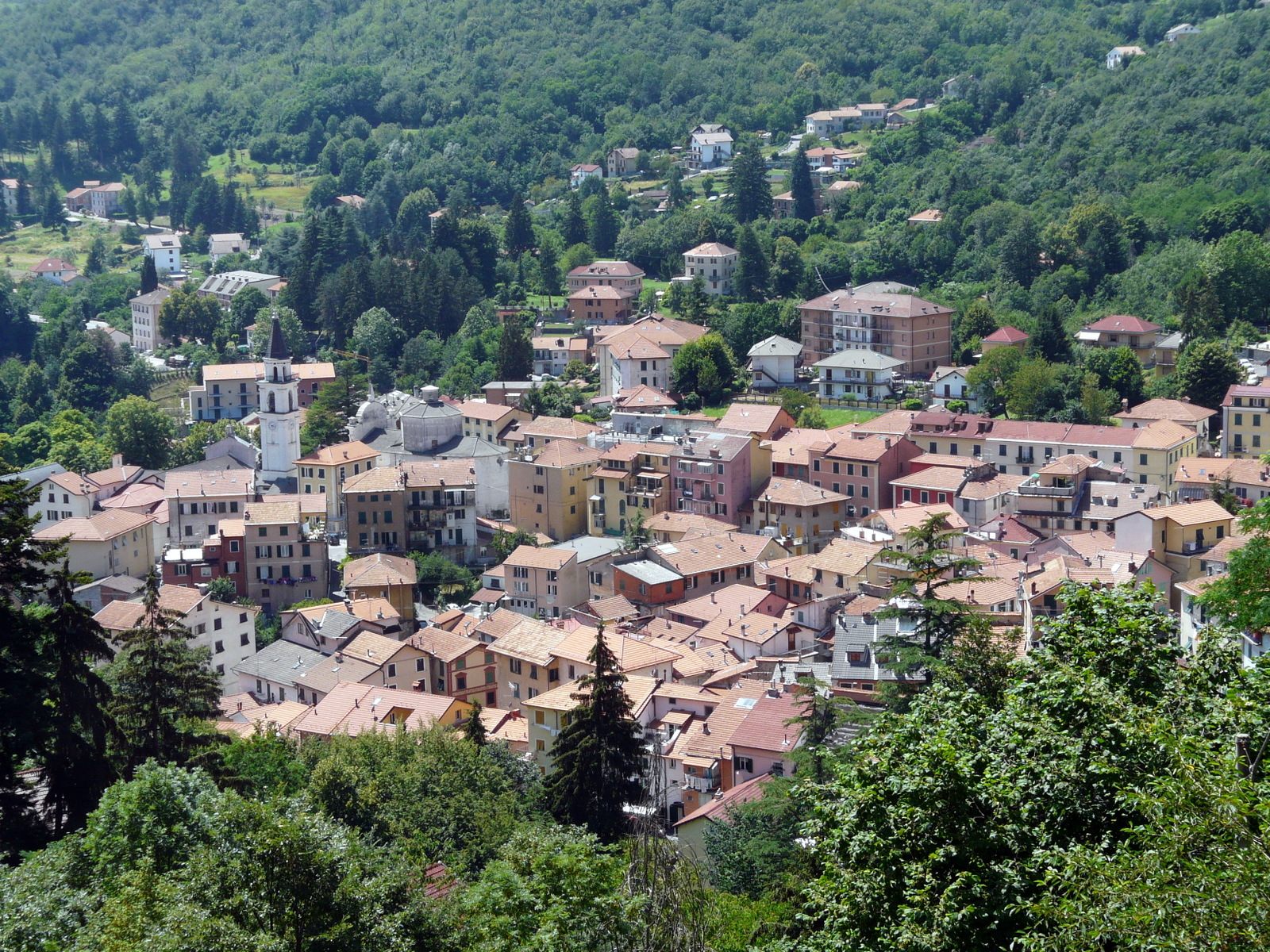
Pictured: the hill town of Torriglia, Province of Genoa, Liguria — not the actual villa grounds or roadside where Zanfretta's encounter took place, which sat on private land at Marzano, a hamlet outside the town center. No public-domain or rights-clear photograph of the "Casa Nostra" villa itself, its garden, or Zanfretta at the time of the 1978 events is known to exist; this image, taken in 2013, shows the same Ligurian hill country and the town whose name the case has carried in the press ever since — English Wikipedia notes Torriglia is "popularly known as the UFO capital of Italy" as a direct result of this case.
Theoretical Alignment
Of every case in this catalogue built around a claimed physical entity encounter, Zanfretta scores among the most heavily weighted toward the Psycho-Social Hypothesis rather than any exotic-craft framework, and this file states that plainly rather than inflating its numbers for drama. The modest, non-zero Extraterrestrial score reflects the genuinely unresolved 52-witness light sighting corroborated the same night — a real, still-unexplained aerial phenomenon distinct from the entity encounter — not any confidence in the "Dargos"/Titania mythology that later hypnosis sessions produced. The dominant Psycho-Social weighting reflects a documented, textbook progression: an acute, terrifying nighttime event under genuinely stressful conditions (ice, darkness, isolation, vehicle failure), followed by repeated regressive-hypnosis sessions that were not conducted with modern anti-suggestion safeguards, layered against a media environment saturated with almost exactly the imagery Zanfretta went on to describe. The case earns its place in this catalogue not because the entity content is likely literal, but because it is arguably Italian ufology's clearest documented case study in how a real, frightening, ambiguous event can be transformed by well-intentioned but methodologically flawed investigation into a fully elaborated abduction narrative.
Background
Pier Fortunato Zanfretta was born December 28, 1952 — most published accounts place his birthplace in Nova Milanese, Lombardy, though a handful of secondary sources cite other towns, and no single authoritative biographical record has ever definitively settled the point. By the winter of 1978 he was 26 years old, married with two children, and working as a "guardia particolare giurata" — a licensed, armed private security guard — for the Istituto di Vigilanza Val Bisagno, a security cooperative contracted to patrol private properties in the hill country north of Genoa. Colleagues who spoke to journalists in the years that followed described him consistently as calm, professionally reliable, and entirely unremarkable — someone with no prior public interest in UFOs, the paranormal, or media attention of any kind, a detail proponents of the case have long emphasized as evidence against a publicity motive.
His patrol territory that winter included the isolated hamlet of Marzano, in the hills above the small town of Torriglia — a comune of roughly 2,300 residents at 769 meters elevation in the upper Trebbia valley, about 20 kilometers northeast of Genoa, an area of narrow unlit roads, scattered farmhouses, and seasonal villas belonging largely to city residents who used them only part of the year. One such property was "Casa Nostra," a country villa belonging to a Genoa dentist, Dr. Ettore Righi, which stood unoccupied through the winter months and was one of the stops on Zanfretta's regular overnight patrol route. The broader national backdrop that December was extraordinary in its own right: 1978 would end as the single largest year for UFO reports in the history of Italian ufology, with roughly 2,300 sightings logged nationwide across three distinct clusters — a mid-September wave tied to reports of unusual atmospheric intrusions, a November panic along the Adriatic coast, and a nationwide December spike into which Zanfretta's own case would fall just as the country's press and public attention on the subject was near its peak.
Complete Timeline
| Date | Event |
|---|---|
| December 28, 1952 | Pier Fortunato Zanfretta is born, most accounts say in Nova Milanese, Lombardy. |
| September–November 1978 | Italy experiences the largest UFO wave in its recorded ufological history — roughly 2,300 reports over the year in three clusters — building national press attention ahead of the Torriglia case. |
| December 6–7, 1978, ~11:30 PM–12:15 AM | Zanfretta's patrol car fails near the "Casa Nostra" villa at Marzano di Torriglia; he reports seeing four lights and a nearly three-meter humanoid entity, and radios his control room in evident terror before contact is lost. Colleagues Walter Lauria and Raimondo Mascia find him roughly an hour later, disoriented and unusually warm. |
| December 8, 1978 | Genoa daily Il Secolo XIX breaks the story nationally under the headline "Incontri ravvicinati a Torriglia" ("Close Encounters at Torriglia"). |
| December 23, 1978 | The first recorded regressive-hypnosis session is conducted by Dr. Mauro Moretti, organized and chronicled by journalist Rino Di Stefano; under hypnosis, Zanfretta names the entities "Dargos" and describes a physical examination aboard a craft. |
| December 27–28, 1978 | A second major incident near Passo della Scoffera in the Val Bisagno hills: Zanfretta radios that thick fog has enveloped him and "the car is driving itself," then falls silent. Found roughly an hour later with dry, warm clothing despite rain and cold, and a scorching-hot car roof; large indentations later assessed by skeptics as puddles are found nearby. |
| January 3, 1979 | Brigadiere Antonio Nucchi files a formal Carabinieri report on the sightings and 52 corroborating witness statements with the Genoa Pretura (magistrate's court). |
| January 31, 1979 | Neurologist Dr. Giorgio Giannotti certifies Zanfretta in "perfect psychic and neurological condition," clearing him for continued armed duty. |
| Early 1979 | Deputy Falco Accame, a former admiral on the Parliamentary Defense Commission, files a formal interrogation pressing the Ministry of Defense for an accounting of the national 1978 UFO wave. |
| 1979 | A sodium-pentothal ("truth serum") session is administered in Milan by Prof. Marco Marchesan; Zanfretta repeats his hypnotically-derived account without material variation. |
| July 30, 1979 | Zanfretta disappears while on scooter patrol near Quarto, on Genoa's outskirts, and is found hours later disoriented atop Monte Fasce, roughly two kilometers from his abandoned Vespa. |
| December 2–3, 1979 | Zanfretta disappears again while driving near Torriglia; several other Val Bisagno security guards separately report an illuminated unidentified object in the same period, one of several later, less thoroughly dated incidents chronicled by Di Stefano as part of the wider Torriglia flap. |
| December 4, 1979 | The Italian press agency ANSA reports a Spanish veterinarian's UFO encounter near Guadalajara, Spain — cited by case proponents as a striking coincidence with a remark Zanfretta made under hypnosis, though the connection rests on retrospective pattern-matching rather than any documented simultaneity. |
| January 11, 1980 | A Genoa magistrate formally archives Nucchi's case file for "mancanza di estremi di reato" (lack of criminal elements) — a procedural dismissal with no legal identifiable perpetrator to prosecute, not a scientific finding on the truth of Zanfretta's account. |
| February 14, 1980 | Zanfretta is found in shock at a cliff edge after a further reported encounter; a separate witness describes a "rugby-ball-shaped" luminous mass in the area. |
| April 25, 1980 | Researcher Gian Paolo Grassino conducts a detailed on-site field investigation at the "Casa Nostra" villa grounds, later publishing a skeptical reconstruction of the encounter. |
| August 13, 1980 | A further monitored incident occurs; researchers observing Zanfretta at the time report the encounter was not completed. |
| 1981 | Zanfretta's reported encounters continue intermittently before tapering off; by his own later account the total across 1978–1981 reaches eleven. |
| 1982 | Genoa police revoke Zanfretta's firearms license amid the continuing incidents; he leaves security work on December 10, 1982, briefly returning in 1983 before stepping back from the field. |
| December 1984 | Journalist Rino Di Stefano publishes the first edition of Il caso Zanfretta; RAI 3 airs a two-part dramatized investigation of the case directed by Bruno Ferraccioli. |
| 2004 | The Italian sci-fi feature InvaXön – Alieni in Liguria is released, with Zanfretta appearing as himself. |
| 2007 | Zanfretta and former Brigadiere Nucchi appear on the television program Il Bivio; Nucchi states publicly that he personally witnessed a UFO during the original investigation and was advised to stay silent about it. |
| 2015 | An English translation of Di Stefano's book, The Zanfretta Case: Chronicle of an Incredible True Story, is published. |
| 2018 | The Centro Italiano Studi Ufologici (CISU) holds a dedicated retrospective conference on the record 1978 Italian UFO wave, including the Torriglia case, coordinated by historian Edoardo Russo. |
| 2024 | Zanfretta appears on the podcast Non aprite quella podcast, continuing to discuss his experiences publicly nearly half a century later. |
The Night of December 6–7, 1978: The Encounter at Casa Nostra
According to Zanfretta's own account — the case's only direct source for everything that follows in this section — he was driving his Fiat 126 patrol car along the icy roads above Torriglia shortly before midnight, en route to check the unoccupied "Casa Nostra" villa belonging to Genoa dentist Dr. Ettore Righi. Freezing rime fog, "galaverna," had coated the mountain roads in a treacherous sheet of ice. As he approached the final curve before the property, his car's engine, headlights, and two-way radio all failed at once — a detail that, if accurate as described, is genuinely difficult to explain mechanically, though no independent inspection of the vehicle from that night has ever been published to test it. In the sudden darkness, Zanfretta reported seeing four unusual lights moving in the villa's garden.
What happened next is known only from Zanfretta's initial radio transmission and his statements to colleagues and investigators afterward, since no other witness was present. He described encountering an enormous humanoid figure, variously reported across different tellings as roughly three meters tall, with "undulating" or wrinkled skin — described at different points as gray, green, or mottled, "like fat or wrapped in a soft suit" — triangular yellow eyes, red veins visible across the skull, pointed ears, and hands with rounded, claw-like nails. At approximately 12:15 AM he made radio contact with his control room, his voice audibly shaking: "Mamma mia, quant'è brutto" ("My God, how ugly"), followed moments later by "No, non sono uomini, non sono uomini…" ("No, they're not men, they're not men…"). The transmission then cut off. He separately described a huge triangular light — likened by some later retellings to a "Chinese hat" in cross-section — rising from behind the villa with a high-pitched sound before accelerating away into the night sky.
Colleagues Walter Lauria and Raimondo Mascia, dispatched after radio contact was lost, found Zanfretta roughly an hour later. He was in a state described as shock, disoriented, and — despite the freezing conditions — unusually warm to the touch. He recounted what he had seen as best he could in his agitated state, telling colleagues he had encountered "extraterrestri dalle sembianze mostruose" ("extraterrestrials of monstrous appearance"). It is worth stating plainly what this file can and cannot verify at this stage of the narrative: the vehicle failure, the entity encounter, and the exact wording of the radio transmission all rest entirely on Zanfretta's own account, given to colleagues and investigators after the fact rather than recorded live. What is independently corroborated, by a body of testimony entirely separate from Zanfretta's own, is that something unusual was visible in the sky over the Torriglia heights that same night — a distinction this file returns to repeatedly, because collapsing the two claims into one is the single most common distortion found in popular retellings of the case.
The Carabinieri Investigation and the Fifty-Two Witnesses
The Val Bisagno security cooperative filed a formal report at the Torriglia Carabinieri station the same week, and the investigation was led by Brigadiere Antonio Nucchi, the station's commanding non-commissioned officer. Nucchi's inquiry produced the case's most substantial independent corroboration: canvassing the surrounding municipalities, he collected 52 separate witness statements — reportedly including, per Di Stefano's contemporaneous reporting, the town's own mayor and parish priest — describing an intense, low-altitude, flat triangular or disc-shaped object over the Torriglia heights that same night, with lights that varied in color between white and red. None of these 52 witnesses claimed to have seen the humanoid entity; their testimony corroborates an anomalous light in the sky, not Zanfretta's ground-level encounter, and this file treats that distinction as decisive to any fair reading of the case's evidentiary weight.
At the Casa Nostra site itself, investigators documented a semicircular or horseshoe-shaped imprint in the villa's gravel courtyard and adjoining lawn, reported at roughly two to three meters in diameter and with a depth cited variously between three and fifteen centimeters. The Carabinieri's own contemporaneous description was carefully hedged rather than conclusive: the mark, officers noted, "could be" the impression left by a helicopter or some other large object that had set down — a statement of possibility, not a forensic finding, and one that later field investigation would specifically challenge (discussed below). Nucchi compiled the full record into a formal document, titled "Rapporto informativo circa l'avvistamento di oggetti volanti non identificati (Ovni) e umanoidi da parte di Zanfretta Fortunato," filed with the Genoa Pretura on January 3, 1979. The Genoa Carabinieri command subsequently forwarded the file to Italy's Interior Ministry, rating the overall credibility of the reported events as "buono" (good) — a genuinely notable institutional judgment, though one that reflects the sincerity and internal consistency of the witnesses interviewed rather than any independent verification of the entity's physical reality. More than a year later, on January 11, 1980, a Genoa magistrate formally archived the case file, citing "mancanza di estremi di reato" — a lack of identifiable criminal elements. This is worth stating clearly: Italian law, then as now, contains no offense of "actually encountering an alien," so a prosecutor closing the file for lack of a crime to charge is a procedural outcome, not a verdict on whether Zanfretta's account was true, false, or something in between. Popular accounts of the case have sometimes cited the archival order as an implicit vindication; it was not one.
Regressive Hypnosis and the Emergence of "Dargos"
Faced with a witness whose account grew more elaborate the longer investigators and journalists spoke with him, and hoping to recover a fuller, more reliable memory of the missing time, Rino Di Stefano — the Corriere Mercantile and later Il Giornale reporter who had been covering the case from its first week — arranged for Zanfretta to undergo regressive hypnosis. The first documented session took place on December 23, 1978, just over two weeks after the initial encounter, conducted by Dr. Mauro Moretti, a physician specializing in psychosomatic medicine and clinical hypnosis. Further sessions followed over the following months and years as new incidents accumulated.
Under hypnosis, Zanfretta's account expanded dramatically beyond what he had described immediately after the encounter. He relived the confrontation with visible, involuntary distress — weeping, trembling, at points crying out "Cosa mi mettete sulla testa? Via! Non voglio…" ("What are you putting on my head? Get it away! I don't want this…") as he described what he experienced as a physical examination. He identified the beings by name for the first time — "Dargos" — and described them as coming from a dying planet called "Titania," located, in his phrasing, in "the third galaxy," a species he said was contemplating eventual relocation to Earth. In at least one session he lapsed briefly into what listeners described as an unrecognized, invented-sounding language ("Ei chi snaua… si naila… isne ghe…"), which no linguist has ever identified as belonging to any real language. Moretti, who observed Zanfretta's trance state directly, described it as exceptionally deep — citing "complete motor catalepsy, anaesthesia, and absolute eyelid immobility" as evidence — and concluded that "the possibility that he lied is negligible."
That conclusion deserves scrutiny rather than uncritical repetition, and this file states directly what the broader scientific literature on hypnosis has established since: depth of trance and physiological markers of dissociation are evidence that a subject is not consciously fabricating a story in real time, but they are not evidence that the content recalled under hypnosis is historically accurate. Modern research on hypnotically refreshed memory — developed substantially in the decades after Zanfretta's sessions, but grounded in principles already understood by specialists at the time — has repeatedly shown that hypnosis increases a subject's confidence in recalled details without increasing their accuracy, and that it measurably increases susceptibility to suggestion, confabulation, and the incorporation of material from outside sources into what feels, subjectively, like genuine memory. By this standard, the specific procedural conditions of Zanfretta's sessions matter enormously, and several of them were compromised: questions about what Zanfretta was experiencing were, according to contemporary press accounts, discussed with him while he was already under hypnosis rather than scripted neutrally in advance — a textbook condition for introducing leading suggestion into recovered testimony. Italy's Centro Ufologico Nazionale (CUN), one of the country's own ufological research bodies, itself criticized the sessions as "irremediably contaminated," attributing specific interference to an inquirer identified in period accounts as Luciano Boccone.
A separate line of skeptical analysis has focused on where the specific content of "Dargos" and Titania may have come from. The alien name bears a striking resemblance to "Hydargos," a robot antagonist from Goldrake (the Italian title for the Japanese anime series UFO Robot Grendizer), which had become a massive, culture-wide phenomenon on Italian television at precisely the moment of Zanfretta's encounter in late 1978. Descriptions of the entity's scaled, wrinkled, monstrous appearance have also been compared to visual tropes from the popular Italian horror-adventure comic Zagor, widely read at the time. Moretti maintained that Zanfretta had no particular familiarity with or interest in science fiction; skeptics have responded that this claim is essentially unfalsifiable and, more importantly, unnecessary to the argument — saturation-level cultural exposure to these images through ordinary 1970s Italian television and newsstands does not require active fandom to leave an impression available for unconscious recombination under hypnotic suggestion, particularly once a subject is being actively prompted to describe alien visitors from another world.
Not every observer read the sessions this critically. Italy's most prominent postwar psychoanalyst, Cesare Musatti (1897–1989), the founding figure of the modern Italian psychoanalytic movement, personally observed one of Zanfretta's televised hypnosis sessions and stated afterward that, in his assessment, Zanfretta was acting "in buona fede" (in good faith) — while candidly acknowledging that it was difficult, even for a trained clinician, to distinguish "objective reality from subjective reality" in what he had witnessed. Musatti's remark has been widely cited by the case's proponents ever since as an implicit endorsement from Italy's most authoritative psychological voice; a careful reading of what he actually said shows he endorsed Zanfretta's sincerity, not the literal truth of an extraterrestrial encounter — a distinction popular accounts of the case have not always preserved.
The Pentothal Test
As public and journalistic controversy grew over whether hypnosis was a scientifically sound method for recovering reliable memory, a further test was arranged: the administration of sodium pentothal, colloquially known as "truth serum" and, at the time, associated in popular understanding with American interrogation practice. The session took place in Milan at an institute for medical and psychological hypnosis under the supervision of Prof. Marco Marchesan. Under the drug's effect, Zanfretta repeated, in Di Stefano's own account, "passo passo tutto quello che aveva già detto" — step by step everything he had already said under hypnosis, without material deviation.
Proponents of the case have long presented this consistency as strong corroboration. It deserves the same scrutiny applied to the hypnosis sessions themselves, because the underlying scientific premise is flawed in the same direction: sodium pentothal is a barbiturate that lowers inhibition and increases suggestibility, not a chemical that compels truthful recall or prevents confabulation. A subject who has already, months earlier, incorporated a confabulated or hypnotically elaborated memory into his own sincere belief about what happened to him will repeat that memory identically under pentothal whether or not the memory is objectively accurate — the drug has no mechanism for distinguishing a genuinely recalled fact from a genuinely believed confabulation. Even Marchesan himself, according to period reporting, added an important caveat to his own findings: that such statements, however sincerely given, "potrebbero comunque non corrispondere alla realtà" — might nonetheless not correspond to reality. Modern forensic and clinical science regards "truth serum" testimony as inadmissible and unreliable for precisely this reason, and this file treats the pentothal session as adding essentially no independent evidentiary weight beyond what the hypnosis sessions had already produced.
Further Encounters, 1979–1981
Zanfretta's second major incident followed on the night of December 27–28, 1978, three weeks after the first, while patrolling near Passo della Scoffera in the Val Bisagno hills. At 11:46 PM he radioed his control room: "Sono avvolto da una fitta nebbia e non vedo più nulla! La macchina sta andando da sola" ("I'm wrapped in thick fog and can't see anything! The car is driving itself"). Four minutes later he radioed again, calmly this time, reporting the vehicle had simply stopped. He was found roughly an hour afterward on a mountain road; despite persistent rain and cold, his face and uniform were dry, his ears were described as "red hot," and the roof of his patrol car was, in witnesses' words, scorching "like midday sun." Large indentations in the ground nearby, initially described as footprints roughly 50 centimeters long with a "concave sole," were later reassessed by skeptical investigators as ordinary rain puddles, misread by torchlight in the dark and cold.
Further reported incidents followed through 1979 and into 1980: a disappearance on July 30, 1979 while on scooter patrol near Quarto, on Genoa's outskirts, with Zanfretta found hours later, disoriented, atop nearby Monte Fasce, roughly two kilometers from his abandoned Vespa; a further disappearance near Torriglia on the night of December 2–3, 1979, during which several other Val Bisagno security guards separately reported an illuminated unidentified object in the area; a February 14, 1980 incident in which Zanfretta was found in shock at a cliff edge, with a separate witness independently describing a "rugby-ball-shaped" luminous mass nearby; and a final, closely monitored encounter on August 13, 1980, observed by researchers who reported that whatever Zanfretta experienced that night did not run its full course. By his own later account, the total across all these years reached eleven separate encounters by 1981, at which point the pattern of incidents tapered off, though Zanfretta has continued discussing the case publicly in interviews and media appearances through the 2020s.
One further detail illustrates how far the case's proponent-side mythology has extended beyond anything independently testable: Zanfretta has stated in later interviews that the "Dargos" gave him a transparent sphere containing a rotating golden tetrahedron marked with twelve inscriptions, eleven of them illuminated — matching, he says, his eleven completed encounters, and implying a twelfth still to come. He says he has never been able to successfully photograph the object, and that photographs and video he has attempted to show interviewers have come out "completamente scure" (completely dark). This file treats the sphere claim as, by its own internal logic, unfalsifiable — a claimed physical object that cannot be examined, photographed, or independently verified is not evidence in any meaningful sense, however sincerely it may be believed or described.
Professional and Personal Cost
Whatever the underlying explanation for his experiences, Zanfretta paid a real and substantial professional price for reporting them. As the incidents continued through 1979 and 1980, Genoa police authorities revoked his firearms license — a serious consequence for a man whose entire livelihood depended on his ability to work as an armed private security guard — and he was effectively unable to continue in the profession, formally leaving security work on December 10, 1982, after a period of diminished duties, before a brief and short-lived return to the field in 1983. He has described experiencing sustained ridicule from strangers and, at times, from journalists covering the case, and has stated in later interviews that he has never sought or profited financially from the extensive media attention the case generated — a claim consistent with the pattern of his public appearances, which have tended toward retrospective interviews and documentary participation rather than any sustained commercial exploitation of the story. This professional cost is a genuinely significant data point for assessing his credibility as a witness: whatever combination of misperception, acute stress, and hypnotically elaborated confabulation may explain what happened to him, it does not fit the profile of a man who fabricated an elaborate hoax for personal gain, since the practical effect of his reports was the loss of his career rather than any lasting benefit.
Media Coverage and the Di Stefano Chronicle
The case broke nationally within 48 hours of the initial encounter, when Genoa's Il Secolo XIX ran the story on December 8, 1978 under the headline "Incontri ravvicinati a Torriglia" ("Close Encounters at Torriglia"), with further coverage quickly following in Corriere Mercantile and, later, Il Giornale — the two papers Rino Di Stefano worked for across his long career covering the case. Di Stefano became, by a wide margin, the case's principal chronicler: he organized and documented the December 1978 hypnosis sessions, conducted extensive follow-up reporting through the 1980s and beyond, and eventually compiled the full record into Il caso Zanfretta: La vera storia di un incredibile fatto di cronaca — a book that reached at least a sixth edition by the mid-2010s and was subsequently translated into English.
Television carried the case to a still wider national audience. Zanfretta appeared on Enzo Tortora's popular variety program Portobello in 1979–1980, and in December 1984 RAI 3 broadcast a two-part dramatized investigation of the case directed by Bruno Ferraccioli. The story resurfaced repeatedly in Italian media over the following decades: a 2002 appearance on the Maurizio Costanzo Show; a widely mocked 2007 segment on the tabloid program Il Bivio, in which former Brigadiere Nucchi himself claimed, on camera, to have personally witnessed a UFO during the original investigation and to have been advised by superiors to stay silent about it; a 2008 appearance on RAI 2's Ricomincio da qui; a 2012 investigative segment on the program Mistero; and a 2024 appearance on the popular podcast Non aprite quella podcast, hosted by musicians J-Ax and Pedar, introducing the decades-old case to a new generation of listeners. The story has also crossed into popular culture directly: the 2004 Italian science-fiction feature InvaXön – Alieni in Liguria, in which Zanfretta plays a fictionalized version of himself recounting his experiences, and a stage production, Loro — Storia vera del più famoso rapimento alieno in Italia ("They — The True Story of the Most Famous Alien Abduction in Italy"), which dramatized the case for Italian theater audiences. Torriglia itself has absorbed the case into its own identity: English-language Wikipedia notes the town is "popularly known as the UFO capital of Italy" as a direct consequence of the events of December 1978.
Key Researchers
- Rino Di Stefano — Journalist for Corriere Mercantile and Il Giornale who covered the case from its first week, organized its hypnosis sessions, and authored the case's definitive book-length chronicle, Il caso Zanfretta, through at least six editions.
- Mauro Moretti — Physician and clinical hypnotist who conducted Zanfretta's regressive-hypnosis sessions from December 1978 onward, concluding Zanfretta was not consciously lying — an assessment of sincerity later scrutinized for what it could and could not actually establish about the sessions' contested methodology.
- Cesare Musatti (1897–1989) — Founding figure of the modern Italian psychoanalytic movement, who personally observed a televised hypnosis session and judged Zanfretta sincere while stressing the difficulty of separating subjective from objective reality in what he witnessed.
- Antonio Nucchi — Carabinieri Brigadiere who led the official investigation, collected the case's 52 corroborating witness statements, and later, in a 2007 television appearance, claimed to have personally witnessed a UFO during the original inquiry.
- Gian Paolo Grassino — Researcher whose April 1980 on-site field investigation produced the case's most detailed skeptical reconstruction, identifying a television aerial, a tethered horse, and ordinary ground irregularities as plausible sources for the encounter's key visual and physical claims.
- Edoardo Russo — UFO historian and founding member of the Centro Italiano Studi Ufologici (CISU), who has situated the Zanfretta case within Italy's record 1978 national UFO wave and coordinated CISU's dedicated 2018 retrospective conference on that year, applying what he describes as a "critical," not blanket-debunking, methodology.
Cultural Impact
Few Italian UFO cases have penetrated national popular culture as durably as Zanfretta's. The story has generated a book that reached at least a sixth Italian edition and an English translation, a dramatized two-part RAI 3 television production, a 2004 feature film in which Zanfretta played a version of himself, a stage play, and recurring appearances across four decades of Italian talk shows, tabloid programs, and, most recently, a 2024 mainstream podcast episode reaching an audience born long after the original events. Torriglia itself has absorbed the case into its civic identity, informally carrying the nickname "Italy's UFO capital" in press coverage ever since. Within Italian ufology specifically, the case has become a recurring touchstone in debates over the proper use of hypnosis in encounter investigation — cited by proponents as a landmark demonstration of extended contact, and by critical researchers such as those at CISU as a formative cautionary example of how quickly a single ambiguous nighttime event can be transformed, through good-faith but methodologically unsound investigation, into an elaborate, internally consistent mythology that outstrips anything the original evidence can support.
Key Witnesses
Pier Fortunato Zanfretta
A 26-year-old married father of two working a routine overnight patrol, Zanfretta reported an encounter with a giant humanoid figure near Torriglia on December 6–7, 1978, followed by ten further incidents through 1981. Colleagues described him as calm and professionally unremarkable prior to the case; a January 1979 neurological evaluation found him psychiatrically sound. His account was substantially elaborated across a series of methodologically contested regressive-hypnosis sessions beginning that same December, and he lost his firearms license and his security career as a direct consequence of the continuing incidents.
Brigadiere Antonio Nucchi
Led the official Carabinieri investigation, personally collecting 52 independent witness statements describing an unidentified light in the sky over Torriglia the same night as Zanfretta's encounter. Filed a formal report with the Genoa Pretura on January 3, 1979 and forwarded a "good" credibility rating to the Interior Ministry. Decades later, in a 2007 television appearance, Nucchi himself claimed to have personally witnessed a UFO during the original investigation.
Walter Lauria & Raimondo Mascia
The two colleagues dispatched after radio contact with Zanfretta was lost on the night of the first encounter; they found him roughly an hour later, in shock, disoriented, and unusually warm to the touch despite the freezing conditions — the first direct witnesses to Zanfretta's post-encounter physical and psychological state, though neither witnessed the reported entity itself.
The Fifty-Two Torriglia-Area Witnesses
Canvassed by Brigadiere Nucchi's investigation, these 52 separate individuals from the towns and hamlets around Torriglia — reportedly including the local mayor and parish priest — independently described an intense, low-altitude, flat triangular or disc-shaped light over the Torriglia heights on the night of December 6–7, 1978. None reported the humanoid entity; their testimony corroborates an anomalous aerial light, a materially different and more modest claim than Zanfretta's own.
The Five Observables Assessment
The Five Observables framework, developed by former AATIP director Luis Elizondo, is used to classify UAP encounters by performance characteristics exceeding known technology of their era. Applied to Zanfretta, the framework returns a picture dominated by testimonial claim rather than any independently observed performance characteristic:
Assessment: Anti-Gravity Lift and Instant Acceleration are both rated speculative rather than present or absent, resting entirely on Zanfretta's own description of a craft rising rapidly with a high-pitched sound — a claim with no instrumented corroboration and no second eyewitness to the departure itself. Hypersonic Velocity is rated absent: nothing in either Zanfretta's account or the 52 independent witness statements describes speeds beyond what an ordinary aircraft, or an atmospheric optical effect, could plausibly produce. Low Observability is rated absent, since the object described by the 52 corroborating witnesses was, if anything, unusually conspicuous — a large, bright, sustained light visible to dozens of separate observers across the district. Trans-Medium travel is rated absent; no transition between air, water, or any other medium was ever reported by any witness. Taken together, the Five Observables data underscore this file's core distinction: the corroborated portion of the case (a bright aerial light, seen by many) shows none of the exotic performance markers this framework is built to detect, while the portion that would engage those markers most directly — a craft's departure — is attested by only one witness whose broader account was substantially reshaped by contested hypnosis in the weeks that followed.
Evidence Assessment
Supporting Anomalous Origin
- Fifty-two independent local residents, canvassed separately by Carabinieri investigators, corroborated an intense, low-altitude triangular or disc-shaped light over the Torriglia heights the same night — a real, unresolved sighting distinct from Zanfretta's entity claim.
- A January 1979 neurological and psychiatric evaluation found Zanfretta in sound mental health, weighing against the simplest dismissive explanation that his account reflects a psychotic or delusional break.
- Genoa Carabinieri command rated the overall case's credibility "buono" (good) in its own formal report to the Interior Ministry — a genuine institutional judgment, even though it reflects witness sincerity rather than independent verification.
- Zanfretta lost his firearms license and his livelihood as a direct consequence of reporting the incidents, a real, ongoing personal cost inconsistent with a hoax pursued for gain or attention.
- Psychoanalyst Cesare Musatti, Italy's most authoritative clinical voice on the question, personally observed a hypnosis session and assessed Zanfretta as acting in good faith, not as a conscious fabricator.
Supporting Conventional Explanation
- The entity encounter itself rests on a single uncorroborated civilian witness with no independent observer at any point during the claimed confrontation.
- The regressive-hypnosis sessions that produced the case's most elaborate content were not conducted with modern anti-suggestion safeguards, and questions were reportedly discussed with Zanfretta while he was already hypnotized — a recognized recipe for contaminated recall.
- The alien name "Dargos" and elements of the entity's described appearance closely echo contemporary Italian science-fiction and comic-book imagery (the TV series Goldrake/Grendizer's villain "Hydargos"; the horror-comic Zagor) circulating widely at exactly the time of the case.
- A later independent field investigation found the site's central physical "evidence" — a ground imprint and giant footprints — consistent with mundane causes: a tethered horse's hoofprints and ordinary rain puddles, respectively.
- Sodium pentothal, presented at the time as an independent verification method, is now understood to reduce inhibition rather than compel truthful recall, meaning Zanfretta's consistent pentothal-session account demonstrates sincere belief, not objective accuracy.
- Italy's own Centro Ufologico Nazionale characterized the hypnosis sessions as "irremediably contaminated," a judgment from within Italian ufology itself rather than an outside skeptical body.
Why "Disputed"
This file rates the Zanfretta case DISPUTED, at a low score reflecting the wide gulf between its two distinct evidentiary components. What genuinely is corroborated: something bright and anomalous was visible over the Torriglia heights on the night of December 6–7, 1978, independently described by 52 separate residents canvassed by a professional Carabinieri investigation that rated the overall episode's credibility as "good" — a real, still-unexplained sighting this file does not dismiss. What is not credibly corroborated, and what this file explicitly declines to treat as established fact, is the humanoid entity, the "Dargos," the planet Titania, and the eleven-encounter abduction saga that emerged through repeated hypnosis sessions conducted without modern safeguards against suggestion, organized and chronicled by the same journalist who was simultaneously breaking the story in the national press. Zanfretta's own sincerity is not seriously in question — a clean neurological evaluation, a respected psychoanalyst's personal assessment of good faith, and a heavy, career-ending professional cost all point away from deliberate fabrication — but sincerity is not the same evidentiary category as accuracy, and this case is arguably the clearest illustration in this catalogue of exactly that distinction. A single uncorroborated witness, physical "evidence" that later field investigation connected to mundane causes, a truth-serum test that cannot actually verify truth, and an entity mythology that echoes the popular television and comics of its own moment together place the Zanfretta case's most famous content on weak evidentiary ground even as its underlying light sighting remains a genuinely open question — precisely the combination this site's "Disputed" rating, at the lower end of its range, is built to describe.
Sensor & Instrumentation Detection Profile
Zanfretta is fundamentally a pre-instrumentation, human-testimony case with no radar, camera, or recording equipment trained on the encounter itself. His Fiat 126 patrol car's engine, headlights, and two-way radio reportedly failed simultaneously as he approached the villa — the case's only claimed "instrumented" anomaly, and one that rests entirely on Zanfretta's own account, since no mechanic's report or vehicle inspection record from that night has ever been published. The regressive-hypnosis sessions conducted from December 23, 1978 onward by Dr. Mauro Moretti were audio- and, in at least one instance, video-recorded — footage that circulated on Italian television in the following years — making the recordings themselves the case's most concrete piece of surviving "instrumentation," though what they document is a subject's verbal and physiological responses under hypnosis, not the original event. A later sodium-pentothal ("truth serum") session, administered by Prof. Marco Marchesan at a Milan hypnosis institute, added no independent instrumented data; pentothal reduces inhibition rather than verifying truthfulness, and Zanfretta simply repeated, under its effect, the same narrative he had already given under hypnosis.
Environmental & Geospatial Context
The night of December 6–7, 1978 was bitterly cold across the Ligurian Apennines above Torriglia, with contemporary accounts describing "galaverna" — a freezing rime fog that coats surfaces in ice — making the mountain roads treacherous that night. Torriglia sits at 769 meters (2,523 feet) elevation in the upper Trebbia valley, roughly 20 kilometers northeast of Genoa, a rural, sparsely populated hill-country landscape of narrow winding roads, isolated villas, and dense fir forest — exactly the kind of environment in which an unfamiliar, moonless, ice-slicked drive can produce genuine disorientation, and in which ordinary rural fixtures (television aerials, tethered livestock, gravel courtyards) are unfamiliar enough to a frightened observer moving quickly through torchlight to be badly misjudged. Geospatially, the case also sits inside a much larger anomaly: 1978 was the single largest year for UFO reports in recorded Italian ufology, with roughly 2,300 sightings logged nationally — about 28 percent of the entire catalogued Italian UFO report history to that point — arriving in three distinct clusters across the year, the last and largest of which, in December, is the one that produced both the Torriglia case and, four days later and 150 kilometers to the northeast, the unrelated December 1978 wave of reports that also touched Treviso and the Veneto region. A population primed by weeks of national UFO news coverage is measurably more likely to interpret ambiguous nighttime lights as anomalous, a documented feature of UFO "flap" psychology independent of whatever any individual witness actually saw.
Observer Credibility & Occupational Profile
The case's central weakness, compared to multiply-corroborated military or scientific cases elsewhere in this catalogue, is that its most dramatic content — the entity itself — rests on the testimony of a single civilian witness with no scientific, aviation, or law-enforcement training: Pier Fortunato Zanfretta, a 26-year-old private security guard employed by the Val Bisagno vigilance cooperative in Genoa, working alone on a routine night patrol. Colleagues and acquaintances who spoke to journalists in the years that followed consistently described him as calm, reliable, and professionally unremarkable — not someone with any prior interest in UFOs, the paranormal, or public attention — and a formal neurological and psychiatric evaluation performed on January 31, 1979 by a physician, Dr. Giorgio Giannotti, certified him in "perfect psychic and neurological condition," with no thought disorder or perceptual disturbance, and fit to return to armed duty. That evaluation is genuinely significant: it weighs against the simplest dismissive explanation (that Zanfretta was mentally ill), but it does not and cannot establish that his experience was objectively an extraterrestrial encounter, since sincere, psychiatrically healthy people are fully capable of misperceiving an ambiguous nighttime scene under acute fear and later reconstructing it, especially once hypnosis is introduced. The case's institutional witnesses — Brigadiere Antonio Nucchi of the Torriglia Carabinieri station, who led the official inquiry, and the 52 other local residents who came forward independently — lend real corroborative weight to the claim that something unusual was visible in the sky above Torriglia that night, but none of them witnessed, or claimed to witness, the humanoid entity itself; that testimony is Zanfretta's alone.
Physical & Material Assays
The case's physical evidence is thin and, on the specific points investigated by skeptical researchers, has plausible mundane explanations. A semicircular or horseshoe-shaped imprint, roughly two to three meters across and reported at depths between three and fifteen centimeters depending on the account, was found in the gravel and grass of the villa's courtyard; the Carabinieri's own contemporaneous description allowed that it "could be the mark of a helicopter or something large that had landed" — a hedge, not a finding — while a later independent field investigation concluded the mark was consistent with a horse that was routinely tied and exercised in that same paddock. Giant footprints, roughly 50 centimeters long with a "concave sole," were reported near the site of Zanfretta's second major encounter on December 27–28, 1978; the same later skeptical review reassessed these as ordinary puddles, misread under torchlight. No metallurgical, isotopic, radiological, or biological sample connected to any of Zanfretta's eleven reported encounters has ever been produced, tested, or published in any peer-reviewed or forensic laboratory context. The one recurring physical detail that resists easy explanation — Zanfretta's clothing and body found unusually warm and dry despite freezing, wet conditions on at least two occasions — is consistent with several mundane possibilities (time spent inside a heated vehicle, exertion-driven flushing under acute stress) that were never systematically tested against his account at the time.
Historical Precedents & Archive Matches
Zanfretta's case did not emerge in isolation; it landed at the tail end of the largest UFO wave Italy had ever recorded, one significant enough that the Italian government responded institutionally: then-Prime Minister Giulio Andreotti formally assigned UFO-report intake and evaluation to the Italian Air Force's General Security Department in the wake of the 1978 wave, a responsibility the service still discharges today, and in early 1979 Deputy Falco Accame, a former Navy admiral serving on the Parliamentary Defense Commission, filed a formal parliamentary interrogation pressing the Ministry of Defense and Prime Minister Andreotti for an official accounting of the wave. Structurally, the case also belongs to a specific and by-now well-studied subclass this site tracks elsewhere: the single-witness, hypnosis-elaborated abduction narrative, alongside Betty and Barney Hill (1961, the case that effectively invented the format) and Travis Walton (1975, American logging-crew case with parallel debates over polygraphs and hypnosis reliability). Geographically and temporally, it also sits inside this site's cluster of late-1970s Italian cases, alongside the unrelated Treviso cylindrical UFO sighting of June 1979, whose radar-and-camera profile and single credentialed military witness present a very different, and in several respects stronger, evidentiary picture from the same national UFO-wave period.
Material Analysis
The Zanfretta case's physical evidentiary record is notably thin for a case of its documentary length, and what does exist has plausible mundane explanations identified by later field research rather than laboratory confirmation of anything anomalous. The primary claimed trace — a semicircular or horseshoe-shaped impression in the gravel and turf of the Casa Nostra villa's courtyard — was measured at roughly two to three meters across, with reported depths ranging from three to fifteen centimeters depending on the account. Carabinieri investigators at the time described it only as consistent with "a helicopter or something large that had landed," language that reflects the limits of an informal on-scene assessment rather than any soil-compaction analysis, load-bearing calculation, or comparison against known aircraft/craft landing-gear geometries. When researcher Gian Paolo Grassino conducted a more systematic field investigation of the same site on April 25, 1980, he found the mark consistent with an entirely mundane cause: a horse that the villa's owners regularly kept tethered and exercised in that same paddock. Grassino's report further noted that photographing the uneven, walnut-sized gravel surface at a low angle produced "an infinite number of marks in the most varied shapes" — a demonstration that ordinary ground texture, examined selectively after the fact by someone already looking for a landing trace, will readily yield apparent "marks" that are not evidence of anything unusual on their own.
The second major physical claim — large, 50-centimeter, "concave sole" footprints found near the December 27–28, 1978 encounter site — underwent a similar downgrade under skeptical review, reassessed as ordinary rain puddles misread under difficult nighttime lighting conditions. No sample of any kind connected to any of Zanfretta's eleven reported encounters — soil, vegetation, metal, fiber, or biological material — has ever been collected, tested by an independent laboratory, or published in any scientific or forensic venue, a significant gap for a case with this much surrounding documentation. The one physical detail that has resisted a fully worked-out mundane explanation is Zanfretta's own reported body temperature and dry clothing after at least two incidents in freezing, wet conditions; no period investigator appears to have systematically tested this detail against ordinary causes (time spent in a heated vehicle cabin, stress-driven vasodilation and flushing), leaving it as a genuinely unresolved, if modest, physiological anomaly rather than a proven paranormal one.
Supporting a Genuinely Unusual Stimulus
- Fifty-two independent witnesses corroborate an intense, unexplained aerial light over Torriglia the same night, a sighting no skeptical field investigation has directly addressed or resolved.
- Zanfretta's reported body warmth and dry clothing after exposure to freezing, wet conditions on at least two occasions was never systematically tested against mundane causes at the time.
Supporting a Mundane Origin for the Physical "Evidence"
- The central ground imprint is consistent with marks left by a tethered horse regularly exercised on the same site, per Gian Paolo Grassino's 1980 field investigation.
- The "giant footprints" from the second encounter were reassessed by skeptical researchers as ordinary rain puddles.
- No physical sample from any of the eleven reported encounters has ever been laboratory-tested, an absence that itself weighs against treating the case's physical record as strong evidence of anything anomalous.
The Conventional Explanation Candidate
No single conventional explanation accounts for every element of the Zanfretta case, because the case itself is really two claims of very different evidentiary weight bundled under one name: an unexplained aerial light seen by 52 independent witnesses, and a single-witness humanoid/abduction narrative substantially built out through contested hypnosis. This file evaluates both strands rather than collapsing them into one.
Perceptual Misidentification Under Acute Stress and Darkness
Gian Paolo Grassino's 1980 field reconstruction remains the most detailed conventional account of the entity encounter specifically: a man alone, in near-total darkness, on unfamiliar ground, in a state of acute fear following his vehicle's inexplicable failure on an icy road, who misjudges ordinary objects — Grassino specifically proposed that from a certain vantage point, a television aerial silhouetted against a backdrop of fir trees could align to resemble a tall humanoid figure — as something monstrous and non-human. This candidate is strengthened by the site's difficult physical conditions (loose gravel that Grassino noted would have been nearly impossible to cross silently, undermining parts of the popularly retold narrative) and by the well-documented tendency of acute fear to distort scale, duration, and detail perception. It struggles to fully account for the specificity and internal consistency of Zanfretta's description across retellings, though that consistency itself is complicated by the hypnosis sessions that followed and by his own extensive subsequent public retellings, which had ample opportunity to smooth out any original inconsistencies over time.
Deliberate Hoax or Fabrication
A hoax explanation for the core encounter is weak on the specific facts of this case. Zanfretta's account cost him his firearms license and, ultimately, his security career — a substantial, sustained professional and financial penalty inconsistent with fabrication for gain or attention. A January 1979 clinical evaluation found no psychiatric abnormality, colleagues described him as an unlikely candidate for elaborate fabrication, and he has stated repeatedly that he never profited financially from the case's extensive media life. None of this proves the entity was real, but it substantially weakens the specific claim that Zanfretta consciously invented the story.
Acute Stress Reaction Elaborated by Contaminated Hypnosis and Cultural Contamination
This file regards this as the strongest single account of how the case's most elaborate content — the named entities, the dying home planet, the multi-year contact saga — actually took shape, even though it cannot by itself prove what, if anything, Zanfretta encountered on the ground that first night. A genuinely frightening, ambiguous nighttime event, met with real institutional attention and press coverage within 48 hours, was followed almost immediately by repeated regressive-hypnosis sessions conducted without now-standard anti-suggestion safeguards, organized by the same journalist simultaneously reporting the story nationally, in a cultural environment saturated with almost exactly the imagery ("Dargos"/"Hydargos," monstrous humanoids drawn from contemporary comics and television) that went on to populate Zanfretta's hypnotic testimony. This explanation accounts for the entity mythology's internal elaboration and growth across sessions far better than either misidentification or hoax alone, without requiring any judgment about Zanfretta's sincerity, which this file does not dispute.
An Unidentified, Unexplained Aerial Phenomenon
Separate from all of the above, the 52-witness light sighting over Torriglia the same night has never been matched to any specific aircraft, flare, balloon, or astronomical event by any investigator, skeptical or otherwise, in this file's research. This is not itself evidence of an exotic craft; it is an honest gap in the record that this file declines to paper over with a conventional label it cannot actually support.
Perceptual Misidentification (TV Aerial / Horse / Gravel)
PlausibleGrassino's 1980 field reconstruction offers concrete, site-specific mundane candidates for the entity sighting and the ground "evidence," strengthened by the acute-stress conditions of the original encounter, though it cannot fully explain the narrative's later internal consistency.
Deliberate Hoax
ImplausibleWeighed against clean psychiatric evaluation, a sustained and severe professional cost, and the absence of any documented financial motive; the pattern of consequences is inconsistent with fabrication for gain.
Acute Stress Reaction Elaborated by Contaminated Hypnosis
PlausibleThe strongest account for how a single ambiguous nighttime event became an elaborate, named-entity abduction saga, given the sessions' documented methodological flaws and the surrounding media environment's close echoes in the testimony's specific content.
Unidentified Aerial Phenomenon (52-Witness Light)
InconclusiveNo aircraft, flare, balloon, or astronomical event has ever been matched to the light 52 independent witnesses reported that night; the sighting remains a genuine, unresolved gap distinct from the contested entity content.
Related Cases
Confirmed Documents & Official Records
The Italian Air Force's General Security Department was formally assigned responsibility for collecting and technically evaluating UFO reports by Prime Minister Giulio Andreotti directly in response to the 1978 national wave that produced the Zanfretta case; the service still administers this program today, publishing regional sighting statistics and downloadable annual reports.
UNCLASSIFIED / PUBLIC PROGRAMItaly's principal independent, critically-oriented UFO research organization, which maintains the country's most systematic long-term case archive and hosted a dedicated 2018 conference specifically reassessing the record 1978 wave and the Zanfretta case within it.
INDEPENDENT ARCHIVESearch Government & Archival Resources
Further Reading — Recommended Literature
Il caso Zanfretta: La vera storia di un incredibile fatto di cronaca
The case's definitive book-length chronicle in the original Italian, by the journalist who covered it from its first week and personally organized its earliest hypnosis sessions.
The Zanfretta Case: Chronicle of an Incredible True Story
The English-language translation of Di Stefano's definitive chronicle, making the case's full documentary record accessible outside Italy for the first time.
The UFO Encyclopedia, 4th Edition
The definitive English-language UFO reference work, situating the Zanfretta case within the broader international catalogue of contested single-witness abduction narratives.
Confrontations: A Scientist's Search for Alien Contact
Vallée's global field investigation of contested close-encounter cases, offering comparative context for evaluating a European contact case investigated largely through journalist-organized hypnosis rather than formal scientific protocol.
The Myth of Repressed Memory: False Memories and Allegations of Sexual Abuse
The foundational scientific account of how hypnotic and suggestive interview techniques can produce vivid, sincerely held, and internally consistent memories that are nonetheless inaccurate — essential context for assessing any case built substantially on regressive hypnosis, including Zanfretta's.
Essential Viewing
Indaghiamo sul caso Zanfretta. Notte horror sui monti degli Alieni
An on-location investigation retracing Zanfretta's patrol route through the Torriglia hills where the encounter took place.
Il caso Zanfretta: i rapimenti alieni più inspiegabili della storia italiana
A full narrative walkthrough of the eleven reported encounters between 1978 and 1981.
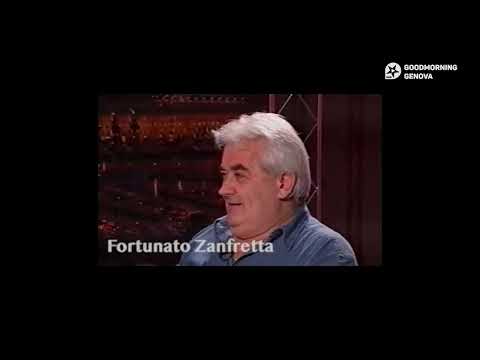
Gli alieni a Torriglia: la storia di Zanfretta
A regional-news retrospective from Genoa's own Goodmorning Genova outlet, covering the case's local roots and lasting civic legacy.
L'enigma dell'effetto Zanfretta, con Rino Di Stefano
A long-form interview with journalist Rino Di Stefano, the case's principal chronicler, discussing the investigation's full documentary record.

Il caso Zanfretta: storia di un rapimento alieno in Italia
A dedicated case history covering the December 1978 encounter, the hypnosis controversy, and the case's status in modern Italian ufology.
Sources
- "Zanfretta UFO Incident," Wikipedia (comprehensive English-language summary with citations). en.wikipedia.org
- "Pier Fortunato Zanfretta," Wikipedia (Italian) — biographical detail, legal record, and media appearance timeline. it.wikipedia.org
- "Torriglia," Wikipedia (English) — geography, demographics, and the town's "UFO capital of Italy" reputation. en.wikipedia.org
- Di Stefano, Rino. "Storia dell'uomo che incontrò gli UFO," rinodistefano.com — the case's principal chronicler's own retrospective account. rinodistefano.com
- Di Stefano, Rino. "Il caso Zanfretta: la vera storia di un eclatante rapimento alieno," Giornale dei Misteri, hosted at rinodistefano.com. rinodistefano.com
- Mentelocale Web Magazine. "Il caso Zanfretta: gli Ufo a Genova? Una storia tra incontri ravvicinati, alieni e cronaca. Primo episodio." mentelocale.it
- Mentelocale Web Magazine. "Il caso Zanfretta: le luci di Fallarosa, le ipnosi e l'intervento della Polizia. Il quarto episodio." mentelocale.it
- Sentinel News. "Almost 50 years on, the Zanfretta case continues to intrigue" — includes Edoardo Russo/CISU context and Gian Paolo Grassino's skeptical field-investigation findings. sentinel-news.org
- Vanilla Magazine. "Lo strano caso Zanfretta: il Metronotte che riportò diversi incontri ravvicinati del 4° tipo." vanillamagazine.it
- Goodmorning Genova. "1978: gli alieni a Torriglia. L'incredibile storia di Pier Fortunato Zanfretta." goodmorninggenova.org
- Reccom.org. "Lo strano caso di Fortunato Zanfretta, il multi addotto" — skeptical/CICAP-adjacent analysis including the sodium pentothal test and methodological critique. reccom.org
- UFOMatrix. "The Zanfretta Alien Abduction Case: Italy's Most Credible UFO Encounter." ufomatrix.org
- Exopaedia. "Pier Fortunato Zanfretta." exopaedia.org
- CISU (Centro Italiano Studi Ufologici). "Edoardo Russo," author/biography page. cisu.org
- Query Online (CICAP). "Gli UFO in Italia: intervista a Edoardo Russo (parte 2)." queryonline.it
- Il Tascabile. "Dischi volanti sull'Italia" — overview of Italy's 1978 national UFO wave and its institutional aftermath. iltascabile.com
- Aeronautica Militare (Italian Air Force). "OVNI" official UFO reporting program page. aeronautica.difesa.it
- Wikimedia Commons. "Torriglia-panorama3.jpg" by Davide Papalini, CC BY-SA 3.0. commons.wikimedia.org
- "Centro italiano studi ufologici," Wikipedia (Italian). it.wikipedia.org
- "Cesare Musatti," Centro Milanese di Psicoanalisi (biography of the psychoanalyst who observed Zanfretta's hypnosis). cmp-spiweb.it
- "InvaXön - Alieni in Liguria," Wikipedia (Italian) — the 2004 film in which Zanfretta appears as himself. it.wikipedia.org
- Loftus, Elizabeth F. & Ketcham, Katherine. The Myth of Repressed Memory: False Memories and Allegations of Sexual Abuse, St. Martin's Press, 1994 (general scientific context on the reliability limits of hypnotically recovered memory).
- Di Stefano, Rino. Il caso Zanfretta: la vera storia di un incredibile fatto di cronaca, 6th Edition, self-published/Createspace, 2015.
See something inaccurate? Have additional information or sources?
Suggest an Edit →Last Updated: August 2026