
1991 Mexico City Eclipse UFO Wave
During the July 11, 1991 total solar eclipse over Mexico City, at least seventeen independent videographers filmed a metallic-looking object near the darkened sun, and a broadcast of the footage a week later triggered tens of thousands of viewer calls and helped launch Mexico's modern civilian ufology movement — even as the leading technical analyses point to the planet Venus and camcorder-lens artifacts as the likely cause.

Pictured: the modern skyline of Mexico City, the metropolis over which the July 11, 1991 eclipse videos were filmed — not a frame from the actual footage. The original VHS camcorder tapes (shot by Televisa cameraman Guillermo Arreguín and more than a dozen independent videographers) remain the broadcast property of Televisa, Imevisión/Grupo Imagen, and the individual videographers; no rights-clear public-domain frame or Wikimedia Commons copy of the footage itself is known to exist, and no photograph of the actual object has ever entered the public domain.
Theoretical Alignment
The case aligns most strongly with a Psycho-Social framework: a genuine, rare astronomical event (a total solar eclipse) placed an unprecedented number of untrained observers and consumer camcorders on the sky at once, and a single broadcast then supplied a ready-made "UFO" interpretation that thousands of subsequent viewers matched their own ambiguous footage to. A residual Extraterrestrial Hypothesis alignment persists only because a handful of individual clips — particularly the undulating, fast-moving object filmed at later Mexico City air shows by Vicente Sánchez and Alejandro Leal — are not as neatly explained by the Venus hypothesis as the original eclipse-day footage. The Interdimensional Hypothesis has essentially no purchase on this case; nothing in the record suggests teleportation, materialization, or non-linear motion.
Background
On July 11, 1991, the moon's shadow swept across the Pacific Ocean, made landfall on the Baja California peninsula, and crossed the Mexican mainland en route to Central America, Colombia, and Brazil, producing what astronomers had already nicknamed the "eclipse of the century": at its point of greatest duration, near the Pacific coast of Baja California, totality lasted 6 minutes 53 seconds — the longest total solar eclipse between 1955 and 2150. Mexico City itself, though not on the exact centerline, still experienced a lengthy totality of 6 minutes 38 seconds, with the moon's disc fully covering the sun from 1:20:58 PM to 1:27:36 PM local time, maximum eclipse falling at 1:24:17 PM. Because Mexico City was (and remains) one of the largest metropolitan areas on Earth, with a 1991 population well over 15 million, the eclipse put an extraordinary number of eyes — and, for the first time in Mexican history, an extraordinary number of consumer video camcorders — on the sky simultaneously. The Mexican federal government had formed an Intersecretarial Commission for the Eclipse, drawing on the Secretaría de Gobernación (Interior Secretariat) and the National Council of Science and Technology (CONACYT), primarily to manage public safety around eye damage from improper solar viewing rather than to investigate any anomalous phenomena.
Television coverage of the eclipse was correspondingly massive. Mexico's two dominant broadcasters of the era, the private network Televisa and the state-run Imevisión, both deployed camera crews across the city. Among them was Guillermo Arreguín, a Televisa cameraman who had spent the day filming eclipse footage for broadcast. Jaime Maussan, then a working journalist for Imevisión's newsmagazine program 60 Minutos (a Mexican adaptation of the American 60 Minutes, hosted by Juan Ruiz Healy), was covering environmental and social-affairs beats at the time and had not yet built any public reputation around UFOs; his defining pivot toward ufology — reportedly triggered a few years earlier by a ratings-successful segment on Swiss contactee Billy Meier — was still in its early stages. Neither man could have anticipated that the eclipse would become the case that made Maussan Mexico's most recognized UFO investigator, or that it would trigger a genuine, still-active national research subculture built almost entirely on amateur video evidence.
The eclipse itself carried real cultural weight independent of any UFO angle. Pre-Columbian Mesoamerican astronomy, most famously among the Aztec and Maya, had tracked solar and lunar eclipses for centuries as significant, often ominous celestial events, and Mexican press coverage in the weeks before July 11, 1991 frequently framed the eclipse in that longer historical context alongside the purely scientific viewing instructions. That framing mattered practically as well as culturally: because improperly viewing a solar eclipse can cause permanent retinal damage, Mexican health authorities and school districts mounted an unusually large public-safety campaign urging the use of proper eclipse glasses and pinhole viewers, which is part of why so many households already had cameras, binoculars, and other optical equipment out and pointed skyward that particular afternoon — an ordinary public-safety response that, in retrospect, also happened to maximize the number of camcorders trained on the same patch of sky Venus occupied.
Complete Timeline
| Date | Event |
|---|---|
| Jul 11, 1991, ~11:54 AM CST | The partial phase of the total solar eclipse begins over Mexico City; camera crews and citizens across the city begin filming. |
| Jul 11, 1991, 1:20:58 – 1:27:36 PM CST | Totality over Mexico City (6 min 38 sec, maximum at 1:24:17 PM). Televisa cameraman Guillermo Arreguín and more than a dozen other independent videographers film a bright, disc-like object near the darkened sun. |
| Jul 11, 1991, evening | Televisa's flagship nightly newscast 24 Horas, anchored by Jacobo Zabludovsky, airs Arreguín's eclipse footage — the first broadcast of what becomes the case's signature video. |
| Jul 18–19, 1991 | Jaime Maussan re-airs the same (or closely related) footage on Imevisión's 60 Minutos, describing it on-air as a genuine UFO. The station reportedly receives on the order of 40,000 viewer phone calls. |
| Late Jul–Aug 1991 | More than a dozen additional videotapes are submitted by viewers, eventually cataloged at roughly seventeen independently filmed videos from locations across the Federal District, Puebla, and Querétaro — among them Erick Aguilar, Luis Lara, and the Bretón family. |
| Aug 1991 | Maussan appears on Nino Canún's talk show ¿Y usted qué opina?, inviting citizens with camcorders to monitor the skies — the origin of the informal "Los Vigilantes del Cielo" (Sky Watchers) network. |
| Sep 1991 | Engineer Vicente Sánchez films a bright, undulating, roughly ten-meter object at a Mexico City military air show, extending public interest beyond the original eclipse footage. |
| Dec 1991 | Sky & Telescope publishes Dennis di Cicco's "The Great Eclipse of 1991," noting that Mercury, Jupiter, Mars, and a very bright Venus were all visible near the eclipsed sun and that observers across Mexico widely reported "brilliant Venus" thirty or more minutes before totality. |
| 1992 | Amateur videographer Alejandro Leal films a similar disc-shaped object near Mexico City roughly a year after the original eclipse, sustaining the wave into a second year. |
| 1993 | Producer Lee Elders and Maussan release the compilation VHS documentary Messengers of Destiny (Genesis III), featuring the 1991 eclipse footage for international distribution. |
| Oct 28, 1994 | NBC's Unsolved Mysteries broadcasts a segment on the Mexico City eclipse UFO videos, introducing the case to a large U.S. audience. |
| 2010s–2020s | Skeptical investigators (Tim Printy, Ron Johnson, Héctor Escobar Sotomayor, and others) publish detailed technical re-analyses concluding most of the footage shows Venus and camcorder-lens artifacts; at least one submitted tape is separately traced to a deliberate fabrication. |
| 2020s | Guillermo Arreguín's decades-old dispute with Maussan over authorship and credit for the original footage remains unresolved before Mexico's Instituto Mexicano de la Propiedad Industrial, more than thirty years after the broadcast. |
The First Broadcast: Arreguín, 24 Horas, and Zabludovsky
The case's origin point is a piece of television news footage, not a UFO report in the conventional sense. While filming the eclipse for Televisa on July 11, 1991, cameraman Guillermo Arreguín recorded an object he described as circular, silvery on its upper surface and dark underneath, hovering near the eclipsed sun. That same evening, the footage aired on Televisa's flagship nightly newscast 24 Horas, anchored by the towering figure of Mexican broadcast journalism, Jacobo Zabludovsky. This first airing predates any involvement by Jaime Maussan and is the version of events documented by researchers who have traced the case's broadcast chronology most carefully; less careful summaries sometimes describe Maussan as having filmed alongside Arreguín on eclipse day itself, but the more consistent record credits Arreguín alone as the cameraman and Maussan as the journalist who amplified the footage roughly a week later. That inconsistency in the secondary literature is itself one thread of the authorship dispute discussed below.
Jaime Maussan's 60 Minutos Broadcast and the Flood of Tapes
On or around July 18–19, 1991, Maussan — then a reporter for Imevisión's 60 Minutos newsmagazine, having worked his way up from a sports desk in 1970 through general-assignment reporting for Zabludovsky's Domingo a Domingo beginning in 1973 — aired Arreguín's footage again, this time framing it explicitly as an unidentified flying object rather than incidental eclipse-day footage. Maussan later recounted his own reaction on seeing the tape: "When I saw it, I said oh my god. This is a UFO, a real UFO." The response was immediate and overwhelming: the station reportedly logged on the order of 40,000 viewer telephone calls in the hours after the broadcast, and more than a dozen additional videotapes arrived from viewers who had independently filmed similar objects that same afternoon. Combined with tapes gathered directly by researchers in the following weeks, the total eventually reached roughly seventeen independently shot videos from locations spread across the Federal District and into the neighboring states of Puebla and Querétaro — a genuinely wide geographic footprint for a single afternoon's filming.
The Witnesses Across the Valley of Mexico
The submitted tapes came from an occupationally diverse set of Mexicans with no prior connection to one another. Erick Aguilar, a 19-year-old university student, was setting up his camera in central Mexico City when he noticed what he first took for a white dot in the sky, which resolved into a larger, light-emitting object as he filmed. Luis Lara, a businessman filming roughly 60 miles (about 95 km) from the capital, reported seeing a faint shadow beneath the object — a detail he took as proof it could not simply be a star, though later frame-by-frame analysts have pointed out that a real star and the planet Mars both appear in correct celestial position elsewhere in his own footage, a detail cited by skeptics as evidence that the "object" itself was likely also a genuine celestial body. The Bretón family, filming from Puebla roughly 80 miles (130 km) east of the capital, recorded a similar silvery shape with what viewers described as an odd, wave-like disturbance trailing behind it. Other named videographers cataloged in the technical literature on the case include a priest, Padre Manuel Ferrer, filming from southern Mexico City; Miguel Torres, filming from the city center; and Jorge de la Torre and Antonio Flores, filming from the southern outskirts — the latter two videos separately proposed by skeptical analysts as showing, respectively, the landing lights of a distant aircraft and the bright star Sirius or Canopus rather than the same object as the others. Additional videographers cataloged in Tim Printy's technical review — including a videographer identified as Laura Hernández, filming from the northeastern quadrant of the city, and others simply logged by surname (Fuentes, Vallejo, and several more) — extend the same basic pattern across still more independent camera positions, with recorded timestamps clustering tightly around the period of totality itself, consistent with everyone filming the same visible sky event rather than a series of unrelated local encounters. That such a range of alternate identifications exists across different tapes is itself telling: it suggests a shared afternoon of mass sky-watching that generated several distinct misidentifications rather than seventeen crews all filming one single physical craft.
Los Vigilantes del Cielo and the Birth of Modern Mexican Ufology
The scale of the public response reshaped Mexican media and, in time, Mexican civilian science culture. In the weeks after the broadcast, Maussan appeared on television host Nino Canún's talk show ¿Y usted qué opina? ("What do you think?") to invite ordinary citizens who owned camcorders to point them at the sky and record anything unusual for later study. The loosely organized network of amateur observers that resulted became known as "Los Vigilantes del Cielo" (the Sky Watchers), with contributors such as Carlos Clemente credited among its early participants. Over the following years this grassroots movement produced thousands of additional videos, many later examined for evidence of infrared-only "invisible" objects using consumer night-vision equipment — a distinctly Mexican research emphasis that grew directly out of the "invisible UFO" still photographs debated within the original eclipse case, and one that has no close parallel in most English-language civilian ufology of the same period. The eclipse case is widely credited as the founding event of Mexico's distinctive, still-active civilian ufology tradition — a research culture built less around declassified government documents (Mexico has no direct analogue to the U.S. Project Blue Book) and much more around a large, decentralized body of amateur video, with Maussan's own long-running program Tercer Milenio becoming its most visible public face for the following three decades.
The Air-Show Sightings of 1991–1992
The eclipse wave did not end when the astronomical event itself passed. Approximately two months later, in September 1991, engineer Vicente Sánchez filmed a bright, round object roughly ten meters in diameter at a Mexico City military air show; witnesses described it as undulating and moving quickly before departing, a dynamic quite different from the largely static point of light recorded during the eclipse itself. Roughly a year later, in 1992, amateur videographer Alejandro Leal filmed a disc-shaped object traveling in a straight, steady line against the prevailing wind before it vanished from view, again near Mexico City. These follow-on sightings are more difficult to explain with the Venus hypothesis that accounts for most of the original eclipse-day footage, since they describe daylight motion inconsistent with a fixed celestial body, though neither event benefits from anything beyond the single videographer's own tape — no second camera, radar return, or corroborating witness account has been documented for either.
The Scientific Community's Response
Unlike the ufological side of the story, professional astronomy's engagement with the July 11, 1991 eclipse was extensive and well documented, even though almost none of it was framed around the UFO reports at all — astronomers were simply there to observe a rare, long-duration total eclipse, and their contemporaneous published accounts happen to independently corroborate the Venus explanation. NASA's Johnson Space Center sent a roughly 320-person observation team to Mazatlán, on Mexico's Pacific coast, while independent eclipse chasers and professional astronomers, including Dennis di Cicco of Sky & Telescope, positioned themselves along the path of totality from Baja California down through southern Mexico and Central America specifically because of the eclipse's unusually long duration. Di Cicco's resulting article, "The Great Eclipse of 1991," published in the magazine's December 1991 issue, is a straightforward observational report rather than a UFO investigation, but its description of Venus, Mercury, Jupiter, and Mars all being visible near the eclipsed sun — and of widespread public reports of "brilliant Venus" starting a half hour before totality — independently establishes, from a source with no stake in the UFO question either way, that the astronomical conditions for mass Venus misidentification were squarely in place across the entire region that afternoon. No professional astronomical body, in Mexico or internationally, is known to have been consulted by Televisa, Imevisión, or Jaime Maussan before either broadcast aired — a gap in the reporting process that later Mexican skeptics, including Héctor Escobar Sotomayor, specifically criticized, arguing that a single phone call to a working astronomer at the time could have resolved the great majority of the case before it ever reached national television.
International Reception and the Messengers of Destiny Video
Unlike many regional UFO cases, the 1991 eclipse footage crossed quickly into international circulation, in large part because it arrived as pre-packaged, professionally shot broadcast video rather than as a written report or a single blurry photograph that had to be laboriously translated and contextualized for a foreign audience. In 1993, American producer Lee Elders partnered with Jaime Maussan to release Messengers of Destiny, a compilation VHS documentary through Elders's company Genesis III that packaged the eclipse footage alongside other Mexican sighting material for English-speaking audiences — one of the first times a Latin American UFO case received this kind of dedicated Western home-video distribution. The case reached an even larger American audience on October 28, 1994, when NBC's long-running documentary series Unsolved Mysteries devoted a segment to the Mexico City eclipse videos, presenting several of the individually named witnesses and their tapes to a mainstream U.S. television audience for the first time. Between the VHS compilation and the network television exposure, the case became one of the most widely seen pieces of purported UFO video evidence of the early-to-mid 1990s, helping cement Maussan's reputation not just within Mexico but among the broader English-language ufology community, well before his later, unrelated controversies over the "Roswell Slides" and the Mexican Congress "alien bodies" presentation.
The Arreguín–Maussan Authorship Dispute
A persistent and largely overlooked thread of this case is a decades-long professional dispute between the two men most associated with its opening act. Guillermo Arreguín has for years accused Jaime Maussan of using his footage without proper credit or compensation, framing Maussan's career-making broadcast as, in effect, built on unattributed use of another cameraman's work. As of the case's 34th anniversary in Mexican press coverage, the two men were reported to still be pursuing the matter through Mexico's Instituto Mexicano de la Propiedad Industrial (the national intellectual-property authority), unresolved more than three decades after the original broadcast. The dispute is a useful reminder that even the case's most basic authorship details — who filmed what, and who first identified it as anomalous — remain contested among the participants themselves, independent of any question about the object's actual nature.
Key Witnesses
Guillermo Arreguín
Filmed the case's originating footage while covering the eclipse for Televisa, capturing a circular object, silvery above and dark below, near the darkened sun. His tape aired that same evening on 24 Horas and again a week later on Maussan's 60 Minutos, making him the case's first and most consequential videographer. As a working broadcast professional filming with Televisa's own equipment, his footage carries a somewhat higher technical baseline than the amateur camcorder tapes that followed it, even though it is ultimately subject to the same Venus-and-artifact analysis as the rest of the case. He has spent much of the following three decades disputing Maussan's credit for the footage, pursuing the matter as recently as the case's 34th anniversary through Mexico's intellectual-property authority.
Jaime Maussan
Re-aired Arreguín's footage on national television roughly a week after the eclipse, explicitly framing it as a genuine UFO and inviting viewer response. The resulting flood of some 40,000 phone calls and more than a dozen independently submitted tapes transformed a single news clip into a nationwide phenomenon and launched Maussan's subsequent career as Mexico's most prominent UFO investigator, eventually leading to his long-running program Tercer Milenio. His independent, well-documented history of promoting other, unrelated hoaxes in later decades is relevant context for weighing his own on-air judgment, though it is not itself evidence about what any of the 1991 videographers actually filmed.
Erick Aguilar
A 19-year-old student who was setting up his own video camera to record the eclipse when he noticed a white point of light that resolved into a larger, glowing object as he filmed — one of the earliest independent tapes submitted after Maussan's broadcast.
Luis Lara
Filmed a metallic-looking object with a faint shadow beneath it, which he took as proof it was not a simple star. Skeptical analysts reviewing his tape frame-by-frame have since identified a real star and the planet Mars in correct celestial position elsewhere in the same footage, using his own video as evidence for the celestial-misidentification explanation. Lara's case is unusually useful analytically precisely because his own footage contains an internal control: two independently verifiable celestial objects (the star and Mars) appear correctly positioned in the same frame as the disputed "object," making his tape one of the more direct pieces of evidence that the recording equipment and conditions that afternoon were fully capable of rendering ordinary celestial bodies in exactly the way skeptics describe.
Vicente Sánchez
Filmed a bright, roughly ten-meter, undulating object that moved quickly before departing at a Mexico City military air show about two months after the eclipse — part of a second cluster of sightings that kept the case in the public eye into 1992.
Alejandro Leal
Captured a disc-shaped object traveling in a straight, steady line against the prevailing wind before it disappeared, in a 1992 sighting near Mexico City roughly a year after the original eclipse case, extending the wave's public visibility into a second year.
Jacobo Zabludovsky
Mexico's most recognized news anchor of the era, whose 24 Horas newscast gave Arreguín's footage its first-ever television airing on the evening of July 11, 1991, before Maussan's broadcast a week later brought it to a much larger and more sustained national audience.
The Five Observables Assessment
The Five Observables framework is applied to the performance characteristics reported in this case:
Assessment: This is fundamentally a stationary-object identification case rather than a maneuvering-craft case, and the Five Observables framework — designed around dramatic in-flight performance — has limited purchase on it. The large majority of the eclipse-day footage shows a fixed or very slowly drifting point of light with no observed lift-off, burst acceleration, or hypersonic transit; the object was plainly visible to the naked eye and to consumer camcorders (ruling out genuine low observability); and no witness at any point described the object interacting with water or any medium transition. The sole partial exception is the later air-show footage from Vicente Sánchez and Alejandro Leal, in which witnesses described "quick" undulating movement that, absent any instrumented speed or altitude data, can only be rated speculative rather than confirmed instant acceleration.
Evidence Assessment
Supporting Anomalous Origin
- At least seventeen independent videographers, unconnected to one another, filmed broadly similar objects from locations up to roughly 130 km apart on the same afternoon.
- Witnesses spanned a wide occupational range (a professional cameraman, a student, a businessman, a family group, an engineer), reducing the likelihood of a single coordinated hoax.
- Several videos (Sánchez's and Leal's air-show footage) describe dynamic, non-stationary motion that is not straightforwardly explained by the Venus hypothesis used for the eclipse-day tapes.
- The case has never been the subject of an official Mexican government debunking or explanation, unlike some U.S. cases with a documented Air Force or Blue Book finding.
- The sheer volume and geographic spread of independently submitted footage was, at the time, described as the most-photographed and -videotaped UFO event in history, a genuinely unusual evidentiary base compared to single-witness cases.
- The footage was captured by a professional television cameraman using broadcast-grade equipment, not solely by amateurs, giving at least the originating tape a higher technical baseline than most UFO video evidence of its era.
Supporting Conventional Explanation
- The planet Venus was independently confirmed, using planetarium software and Sky & Telescope's own published eclipse-day sky chart, to have been in almost exactly the position and magnitude (roughly −4.46) reported for the object in most footage.
- Multiple independent skeptical analysts (Tim Printy, Ron Johnson of Austin MUFON, and Héctor Escobar Sotomayor) converged on the same Venus-plus-camcorder-artifact explanation working from different tapes and different methodologies.
- 1991-era consumer VHS/Video8 camcorders are well documented to bloom bright point sources into extended, domed, or disc-shaped images on their CCD sensors, with a trailing dark edge and apparent "gaseous tail" produced by camera motion rather than any object dynamics.
- At least one circulated tape was separately traced by investigator Oscar García to a deliberate fabrication using a neighbor's real eclipse footage, demonstrating that not every video in circulation is even a good-faith misidentification.
- Luis Lara's own tape shows a real star and the planet Mars in their correct celestial positions alongside the "object," undermining the claim that his footage depicts a solid craft rather than another misidentified celestial body.
- No radar, physical trace, or any instrumented corroboration exists for any part of the case.
Why "Disputed"
This case earns a Disputed rating rather than a higher or lower one because its two defining features point in opposite directions. On one hand, the sheer breadth of independent corroboration — seventeen-plus videographers with no connection to one another, spread across a wide geographic area, filming on the same afternoon — is a genuinely unusual evidentiary pattern that a simple hoax or a single misperception cannot easily explain away. On the other hand, the leading conventional explanation is unusually strong and independently verifiable: Venus's exact position and brightness on July 11, 1991 is a matter of astronomical record, not opinion, and multiple skeptical investigators working separately arrived at the same conclusion using that record. The case is further complicated by a confirmed fabrication in at least one submitted tape, by the complete absence of radar or physical evidence, and by the genuinely mixed credibility of its primary promoter, Jaime Maussan, whose subsequent, well-documented history of promoting other unrelated hoaxes (the 2015 "Roswell Slides," the 2016 "demon fairy," and the 2023 Mexican Congress "alien bodies," among others) means his own on-air endorsement cannot be weighted as strong independent evidence, even though it is not, on its own, proof against this specific 1991 case. Taken together, the case sits between "credible mass sighting" and "well-explained misidentification," warranting a Disputed stamp with a below-midpoint score. It is worth being precise about what that score does and does not say: it is not a claim that all seventeen-plus videographers were lying, mistaken about basic facts, or acting in bad faith — the available evidence is fully consistent with a large number of ordinary people, in good faith, filming a genuinely bright and unfamiliar-looking object near the sun during an extraordinary astronomical event. What the score reflects is that "genuinely bright and unfamiliar-looking object" and "solid, physical, non-terrestrial craft" are two very different claims, and only the second is disputed by the astronomical record, not the first.
Sensor & Instrumentation Detection Profile
Every piece of evidence in this case is consumer-grade analog videotape — VHS and, in a few cases, Video8 camcorders typical of Mexican households and television news crews in 1991. No radar station, military sensor, or scientific instrument of any kind recorded the object(s); no Mexican government agency operated tracking equipment during the eclipse for this purpose. This stands in sharp contrast to Mexico's later, far better-instrumented UFO case — the March 2004 Fuerza Aérea Mexicana FLIR/infrared and radar recording over Campeche — and is itself a significant evidentiary limitation: every one of the roughly seventeen 1991 tapes shows only what a handheld camcorder's automatic-gain, auto-focus optics recorded when pointed at a very bright point of light near the sun, with none of the independent instrumentation (radar returns, multiple triangulated sensor types) that would allow a range or true size to be calculated. The technological gap between the two cases is itself instructive: by 2004, a Mexican Air Force aircraft carried a gyro-stabilized Star SAFIRE FLIR turret and onboard radar capable of triangulating true range and altitude on a target, tools that simply did not exist in consumer or even most institutional hands in 1991. The eclipse case's video-only evidentiary base is not a flaw unique to it so much as a reflection of what was technologically achievable for an unplanned, spontaneous mass-observation event at the very start of the consumer camcorder era.
Environmental & Geospatial Context
Mexico City sits at roughly 2,240 meters (7,350 feet) of elevation in a high mountain valley, giving its sky unusually thin, dry air and excellent contrast for daytime astronomical observation — part of why the July 11, 1991 eclipse drew such enormous crowds of skywatchers with cameras already trained upward. Central Mexico's July skies are normally afflicted by the rainy season's afternoon cumulus buildup, but eclipse-day conditions across most of the Valley of Mexico were reported as clear to only partly clouded, giving millions of residents an unobstructed view of totality. Critically, the same conditions that made the eclipse visible also made Venus visible: the planet lay in the eastern sky not far from the eclipsed sun, at a magnitude of roughly −4.46 — bright enough to be seen even in daylight once the sun's glare was blocked by the moon — and observers as much as 130 kilometers apart (from central Mexico City to Puebla and Querétaro) filmed effectively the same patch of sky at effectively the same moment, which is exactly the pattern a shared, distant celestial object would produce and not the pattern a single small local craft would produce.
Observer Credibility & Occupational Profile
The videographers span an unusually wide occupational cross-section for a UAP case: a professional television cameraman (Guillermo Arreguín of Televisa), a 19-year-old university student (Erick Aguilar), a businessman (Luis Lara), a family group (the Bretón family of Puebla), an engineer (Vicente Sánchez), and several unaffiliated amateur videographers, plus a broadcast journalist (Jaime Maussan) who brought the footage to national attention. None held aviation, military, or scientific observational training, and only Arreguín had professional camera experience. This breadth cuts both ways: it rules out a single hoaxer or a small clique deceiving each other, but it also means the case rests on the collective, untrained interpretation of amateur camcorder footage of a bright point of light near the sun — precisely the observational conditions in which trained astronomers warn that Venus misidentification is common. It is also worth noting what this witness pool does not include: no pilot, air traffic controller, radar operator, meteorologist, or working astronomer is documented among the roughly seventeen videographers, meaning the case lacks the kind of specialized observational training that has meaningfully raised the credibility weighting of other cases on this site, such as the multiply-corroborated military aircrew in the Coyne helicopter encounter.
Physical & Material Assays
None exist. No debris, trace residue, ground scarring, or any other physical evidence was ever recovered or even claimed in connection with this case — it is exclusively a video-documentation event. That absence is itself informative: unlike crash-retrieval cases, there is no physical corpus to test, isotopically date, or metallurgically analyze, which means the entire evidentiary weight of the case rests on the interpretation of analog video images shot in less-than-ideal conditions (near-solar glare, handheld camera shake, and 1991-era CCD sensor limitations).
Historical Precedents & Archive Matches
This case is widely regarded as the founding event of Mexico's modern civilian ufology movement, directly spawning the informal "Los Vigilantes del Cielo" skywatching network and cementing Jaime Maussan's decades-long media career on the subject. It also set a durable pattern — a mass-witnessed astronomical or aerial event, amplified by broadcast media, generating a wave of amateur video submissions later reassessed by skeptics as celestial misidentification — that recurs across UAP history, most directly comparable to the Phoenix Lights flare misidentification and the 1966 Michigan "swamp gas" wave. Mexico's own subsequent UFO record includes a far more heavily instrumented case, the March 2004 Fuerza Aérea Mexicana infrared/radar recording over Campeche, which is unrelated to this event but is frequently cited alongside it as evidence of Mexico's unusually active post-1991 UAP research culture. That later case, publicly confirmed by Mexico's Secretaría de la Defensa Nacional and covered skeptically by Skeptical Inquirer's Robert Sheaffer, illustrates how far the country's UAP evidentiary standard advanced in the thirteen years between the two events — from purely amateur analog videotape in 1991 to gyro-stabilized military FLIR and radar by 2004 — even as both cases ultimately generated the same basic evidentiary dispute between anomalous and conventional interpretations.
Material Analysis
There is no physical or trace evidence of any kind associated with this case, and none has ever been claimed. No debris was recovered, no landing marks or soil anomalies were documented, and no witness reported any physiological effect from proximity to the object. The entire evidentiary record consists of analog videotape shot on 1991-era consumer camcorders. That absence is itself analytically significant: it means the case can only be adjudicated through image analysis (comparing recorded object positions, brightness, and shape against known astronomical data and known camcorder optical behavior) rather than through any laboratory testing, and it removes an entire category of evidence — metallurgical, isotopic, or biological — that has been central to adjudicating other cases on this site, such as Roswell's debris analysis. Where a physical-evidence case can eventually be strengthened or weakened by new laboratory techniques applied to preserved material decades later, this case's evidentiary base is effectively frozen: the analog videotapes themselves are the only artifact that can ever be re-examined, and whatever can be learned from them through improved digital scanning, frame-by-frame photometry, or astronomical modeling has, by most accounts, already been substantially extracted by the analysts discussed in this file.
Supporting Non-Terrestrial Origin
- No physical evidence exists to test, so none can be used to rule the case in or out on material grounds — the absence is neutral rather than positive, but proponents note it also means no material evidence has ever contradicted a craft interpretation.
Supporting Terrestrial Origin
- The complete absence of any physical trace, despite an object allegedly hovering at low altitude over a metropolitan area of more than fifteen million people for an extended period, is difficult to reconcile with a genuine solid craft and is more consistent with a distant celestial object recorded on camera.
- No radar station in one of Mexico's most densely monitored airspaces (Mexico City International Airport sits within the metropolitan area itself) ever logged a corresponding return.
- Neither Televisa nor Imevisión is known to have consulted a professional astronomer before broadcasting the footage, despite the sky conditions that afternoon being exceptionally well documented by the astronomical community independently of the UFO reports.
The Conventional Explanation Candidate: Venus Misidentification and Camcorder Artifacts
The dominant skeptical explanation, developed independently by multiple analysts over the following decades, holds that the great majority of the July 11, 1991 footage shows the planet Venus, distorted into a disc-like shape by the optical and electronic limitations of 1991-era consumer camcorders. Venus lay near the eclipsed sun that afternoon at a magnitude of approximately −4.46 — bright enough to be plainly visible once the sun's glare was blocked — and was roughly 40% illuminated, giving it a genuinely non-pinpoint, slightly extended disc shape even to the naked eye. Astronomer and journalist Dennis di Cicco documented in Sky & Telescope's December 1991 issue that observers across Mexico widely reported "brilliant Venus" thirty or more minutes before totality, alongside Mercury, Jupiter, and Mars. When recorded on a VHS or Video8 camcorder's CCD sensor, an extremely bright point source like Venus commonly "blooms" into a larger, domed or disc-shaped saturation artifact, frequently with a dark trailing edge (an artifact of the sensor's own charge-readout circuitry) and an apparent "gaseous tail" produced whenever the camera operator's hand moved or the lens re-focused — exactly the visual signature reported across most of the case's videos. Tim Printy, Austin MUFON investigator Ron Johnson, and Mexican researcher Héctor Escobar Sotomayor each independently reached this same conclusion using different tapes and different tools, Escobar specifically using the planetarium program EZCosmos to confirm Venus's exact recorded position and magnitude against the historical record of that day's sky. The mechanism is well understood in amateur astronomy and video engineering circles: 1991-era consumer CCD sensors had a comparatively narrow dynamic range, and a point source many orders of magnitude brighter than its surroundings (as an unobstructed Venus is, against a darkened, eclipse-totality sky) will overload adjacent photosites, a phenomenon called blooming. The saturated charge frequently bleeds vertically along the sensor's columns, which is precisely what produces the dark, elongated "shadow" or "base" that so many witnesses interpreted as the underside of a solid disc, and any subsequent auto-focus hunting or handheld camera drift smears that saturated blob further, producing the wavering, "gaseous" edges reported on several tapes. None of this behavior requires any object beyond Venus itself; it is a predictable artifact of pointing a 1991 consumer camcorder directly at the second-brightest object in the sky (after the eclipsed sun and moon) for an extended period.
Lens-Reflection and "Diamond Ring" Optical Artifacts
A second, narrower explanation applies to a distinct subset of the case's photographic evidence: several "invisible UFO" images, which appeared to show an object only after film development rather than through the viewfinder at the time, and separate footage described as showing a luminous object entering and exiting cloud cover. Escobar's photographic analysis found these images to be flat, two-dimensional artifacts — internal reflections off the camera lens elements, a well-documented effect when photographing directly toward the sun or an eclipse — rather than three-dimensional solid objects, and specifically identified one sequence as an unusually vivid rendering of the eclipse's own "diamond ring" effect, magnified and refracted by intervening cloud. Unlike a genuine object, a lens-reflection artifact has no independent existence away from the light source and camera geometry that produced it, which is consistent with why these particular images were not corroborated by any second, independently positioned camera. This is a well-known hazard of eclipse and near-sun photography generally, documented in astrophotography guidance long before and after 1991, and it is a useful reminder that a still photograph "developing to reveal" an object invisible at the time of exposure is, on its own, a red flag for an optical artifact rather than evidence of a genuinely undetectable craft.
Deliberate Fabrication (At Least One Video)
A narrower but firmly established explanation applies to at least one specific tape circulated within the broader case. Investigator Oscar García, who had initially credited portions of the eclipse footage, later published a retraction concluding that one widely shared video was a deliberate fabrication traced to an individual named Daniel Cerda, who doctored a neighbor's genuine eclipse footage to insert an apparent craft. García used the finding to criticize what he characterized as insufficiently rigorous vetting of submitted tapes by Jaime Maussan and the broader research effort that grew up around the case. This explanation is narrow by design: it accounts for one confirmed fabrication, not for the independent, mutually uncorroborated tapes shot by videographers such as Erick Aguilar or Luis Lara, which show no evidence of doctoring and are better explained by the Venus hypothesis above. Its real evidentiary value is methodological rather than explanatory: it demonstrates, from an actual confirmed instance rather than mere suspicion, that the case's rapid, viewer-submission-driven research model had no effective quality-control step standing between an ordinary citizen's tape and a national broadcast, a structural weakness that likely affected how uncritically the wider body of eclipse footage was received in 1991 and that later, more methodologically rigorous Mexican researchers such as García and Escobar have since worked carefully and diligently to identify and correct in their own detailed reassessments of the full case record.
Venus Misidentification & Camcorder Artifacts
Highly PlausibleAccounts for the large majority of the eclipse-day footage, independently confirmed by three separate analysts using verifiable astronomical position and magnitude data alongside well-documented 1991-era CCD sensor blooming behavior.
Lens Reflection / "Diamond Ring" Optical Artifact
PlausibleExplains the "invisible UFO" still photographs and the object seen entering/exiting cloud as flat, two-dimensional lens artifacts rather than solid objects, but applies to a narrower slice of the total evidence than the Venus hypothesis.
Deliberate Fabrication
Confirmed (Limited Scope)Established for at least one specific tape traced to Daniel Cerda's doctoring of real footage, but not shown to apply to the case's other, independently sourced videos.
Related Cases
Confirmed Documents & Official Records
NASA's official Besselian-element eclipse circumstances page for this event, the authoritative government astronomical record underlying the precise totality timing and path data used throughout this case file. It does not address the UFO reports, which fall entirely outside any government investigation.
UNCLASSIFIED / PUBLICNo U.S., Mexican, or other government agency is known to have opened a formal investigation into the July 11, 1991 sightings themselves. Mexico's Secretaría de la Defensa Nacional and Fuerza Aérea Mexicana never issued a public statement on the case, unlike the later, unrelated March 2004 Campeche FLIR/radar incident, for which the Mexican Ministry of Defense did publicly confirm the recording.
Search Government Archives Directly
Further Reading — Recommended Literature
UFOs Over Mexico!: Encounters with Unidentified Aerial Phenomena
A survey by two of Mexico's most experienced civilian UFO researchers, covering more than fifty years of the country's most notable cases and the aviation-focused research culture the 1991 eclipse wave helped establish.
Chupacabras and Other Mysteries
An English-language chronicle of Latin American high-strangeness reporting through the 1990s, written by one of the few U.S.-based researchers who translated and tracked Mexican civilian ufology's post-1991 explosion in real time.
Confrontations: A Scientist's Search for Alien Contact
Vallée's field-investigation methodology for evaluating mass-witnessed photographic and video cases is directly relevant to weighing the seventeen-plus independently filmed 1991 tapes against one another.
Alien Contact: Top-Secret UFO Files Revealed
Published in the immediate aftermath of the eclipse wave, this survey situates the Mexican case within the broader early-1990s international UFO research landscape that helped propel Jaime Maussan's footage to worldwide attention.
The UFO Invasion: Best of Skeptical Inquirer
A skeptical anthology whose methodology for identifying celestial misidentification, camera artifacts, and viral hoax dynamics in mass-witnessed UFO cases maps directly onto the Venus and lens-artifact explanations detailed in this case's Conventional Explanation Candidate section.
Essential Viewing
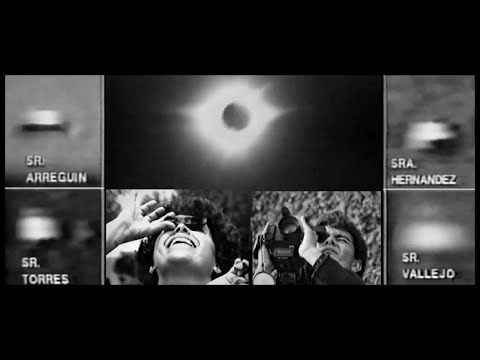
Most Documented Mass UFO Sighting During the July 11, 1991 Solar Eclipse in Mexico
Eyes On Cinema's compilation of archival news footage and interviews covering the scale of the eclipse-day sighting wave across Mexico City.
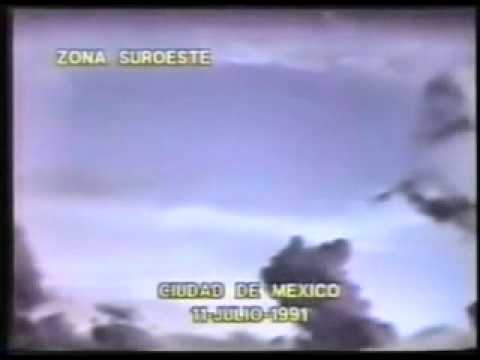
UFO Sightings — Videos of 1991 Mexico Solar Eclipse
UFO Casebook's compiled reel of multiple independently shot 1991 eclipse-day videos, useful for comparing the visual signature reported across different videographers' tapes.
Sources
- Printy, Tim. "The July 11, 1991 Mexico City UFO's." astronomyufo.com (SUNlite). Detailed technical/skeptical breakdown of individual videographers' tapes and the Venus explanation. astronomyufo.com
- "Mexico City UFOs." Mexico Unexplained. Overview of Guillermo Arreguín's original footage, Televisa's broadcast, and the case's international obscurity relative to its scale. mexicounexplained.com
- "The 1991 Solar Eclipse Videos Taken over Mexico." UFO Casebook, 2012. Catalog of submitted eclipse-day videos and the roughly seventeen-video count. ufocasebook.com
- Bunker, Frank J. "Mexico City 1991." The Residium. Narrative account of Arreguín's Puebla-area footage, Jaime Maussan's role, and the 17-videographer, 80-mile geographic spread. the-residium.com
- "Mexico UFO." Unsolved Mysteries (official archive), covering the case as broadcast October 28, 1994. unsolved.com
- "Eclipse and UFO Mexico 1991." Hermanos de Christos blog, 2020. Witness-by-witness account including Erick Aguilar, Luis Lara, and the Bretón family. e101christos2015.blogspot.com
- "El ovni del eclipse (cuarta parte)." Marcianitos Verdes, Feb. 2012. Skeptical technical analysis by Oscar García, Luis Ruiz Nogúez, and Héctor Escobar, including the Daniel Cerda fabrication finding. marcianitosverdes.haaan.com
- "De ovnis, eclipses y contactados." Marcianitos Verdes, Jul. 2011. Additional background on the eclipse-day sighting wave and early skeptical commentary. marcianitosverdes.haaan.com
- "La importancia del eclipse de 1991 en los fenómenos ovnis en México." El Gráfico, Nov. 2023. Héctor Escobar Sotomayor's EZCosmos-based Venus analysis and Los Vigilantes del Cielo origin story. elgrafico.mx
- "34 años del eclipse y la polémica del video OVNI entre Arreguín y Maussan." LM Noticias. Coverage of the Arreguín–Maussan authorship/plagiarism dispute and its unresolved IMPI proceedings. lmnoticias.com.mx
- Chivers, Tom, et al. "Why Would Anyone Think the Mexican 'Alien Mummies' Were Real?" Skeptical Inquirer. Documents Jaime Maussan's independent, unrelated hoax-promotion history (Metepec creature, demon fairy, 2023 Congress mummies) used for credibility calibration in this case file. skepticalinquirer.org
- Sheaffer, Robert. "The Campeche, Mexico 'Infrared UFO' Video." Skeptical Inquirer, Vol. 28, No. 5, Sept./Oct. 2004. Coverage of Mexico's later, instrumented 2004 FLIR/radar UFO case, cited here for comparison and contrast. skepticalinquirer.org
- "Jaime Maussan." Wikipedia. Biographical overview and summary of his documented hoax-promotion history, used for light background orientation only. en.wikipedia.org
- "Solar eclipse of July 11, 1991." Wikipedia. Precise Mexico City totality timing (1:20:58–1:27:36 PM local, 6 min 38 sec) sourced from Besselian eclipse elements. en.wikipedia.org
- "Jaime Maussan, el gran investigador del fenómeno OVNI orgullosamente mexicano." México Desconocido. Biographical detail on Maussan's UNAM journalism education and early career at El Sol de México and Televisa. mexicodesconocido.com.mx
- "Perfil: ¿Quién es Jaime Maussan, investigador mexicano que ha estudiado el fenómeno OVNI?" El Financiero, Jul. 2023. Career timeline including his 1973 recruitment by Jacobo Zabludovsky and the Billy Meier case that redirected his career toward ufology. elfinanciero.com.mx
- NASA Goddard Space Flight Center. "Total Solar Eclipse of 1991 Jul 11." Official Besselian-element eclipse circumstances and path data. eclipse.gsfc.nasa.gov
- Di Cicco, Dennis. "The Great Eclipse of 1991." Sky & Telescope, Vol. 82, No. 6, December 1991, pp. 589–595. Contemporary astronomical account confirming Venus, Mercury, Jupiter, and Mars were all visible near the eclipsed sun.
- "Eclipse of 1991: Solar Eclipse and UFO Sightings." In Search for Truth archive. English-language summary of the mass sighting wave and its scale. istina.rin.ru
- Wikimedia Commons. "File:Mexico City Reforma skyline.jpg," photograph by Jonathan Salvador (Johnnysast), CC BY-SA 4.0, Sept. 15, 2016. Source of this case file's hero photograph. commons.wikimedia.org
See something inaccurate? Have additional information or sources?
Suggest an Edit →Last Updated: August 2026