
Allagash Waterway Abduction
On the night of August 20, 1976, four Massachusetts art students — twin brothers Jack Weiner and Jim Weiner, along with Chuck Rak and Charlie Foltz — were night-fishing on Eagle Lake in the Allagash Wilderness Waterway when a pulsating sphere of colored light descended toward their canoe. They fled to shore to find their campfire burned to embers and roughly two hours unaccounted for. Thirteen years later, independent hypnotic regression sessions conducted by investigator Raymond Fowler produced strikingly similar accounts of abduction and medical examination from all four men — until one of them publicly recanted the abduction narrative in 2016.
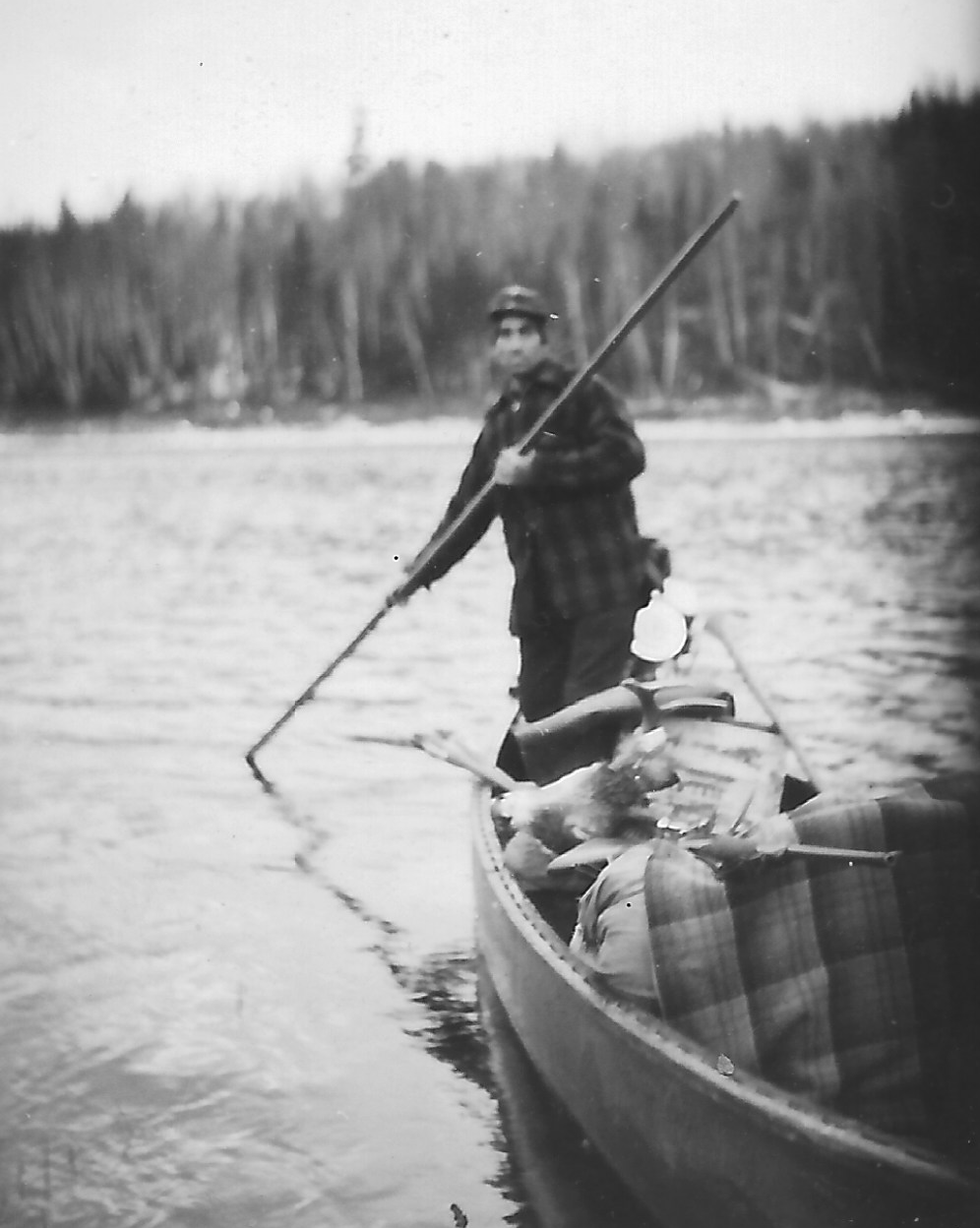
Pictured: a Maine game warden poling a canoe on the Allagash River, autumn 1941 — not a photograph of the actual 1976 event or of Eagle Lake itself, but a real, public-domain image of the same wilderness river system and the traditional mode of travel the Allagash Four used. No photograph of the object described by the witnesses, nor of the group's actual 1976 campsite, is known to exist; the four men carried no camera equipped to capture a night sky, and the encounter itself was never photographed by anyone.
Theoretical Alignment
The Allagash case aligns moderately with the Extraterrestrial Hypothesis on the strength of the consistent, independently-conducted hypnotic accounts of a physical craft, structured biological examination, and sample collection — a coherent narrative that, if taken at face value, describes a technological and biological rather than a purely psychic or interdimensional encounter. The Interdimensional Hypothesis finds little direct support in the testimony, which describes a conventional physical craft and beings rather than any dimensional transition. The Psycho-Social Hypothesis carries substantial weight here specifically because of this case's own internal history: a twelve-year gap between event and recall, a recall process entirely mediated by hypnosis, a documented neurological condition (temporal-lobe epilepsy) capable of independently generating similar hallucinatory content, and a direct recantation from one of the four participants citing financial motive.
Background
Jack Weiner and Jim Weiner were identical twins from the Boston area who, by the mid-1970s, were both enrolled at the Massachusetts College of Art (MassArt) in Boston, an independent public art college specializing in fine arts, illustration, and design. Through the school they became close friends with two other students, Chuck Rak and Charlie Foltz, a U.S. Navy veteran who had returned to civilian life and resumed his art education. All four were accomplished amateur outdoorsmen with a shared enthusiasm for wilderness canoeing, and in August 1976 they set out on an ambitious two-week trip into northern Maine: first climbing Mount Katahdin, then chartering a small plane to Shin Pond before beginning a canoe descent of the Allagash Wilderness Waterway, a 92.5-mile ribbon of connected lakes, ponds, and rivers that had been designated the first state-administered component of the National Wild and Scenic Rivers System in 1970.
The Allagash region is among the most isolated tracts of forest in the eastern United States — a vast, thinly populated expanse of the North Maine Woods with no permanent settlements, no road access along most of the route, and no cellular or radio infrastructure of any kind in 1976. Canoeists traveling the Waterway in this era were, for practical purposes, entirely cut off from the outside world for the duration of their trip, dependent on their own navigation, provisions, and judgment. This isolation is a recurring and important feature of the case: whatever happened to the four men on the night of August 20, 1976, happened with no possibility of an outside observer, no nearby town, and no immediate way to summon help or report what they had seen.
Culturally, the four men arrived in the Maine woods at a particular moment in the history of American UFO reporting. The 1961 abduction of Betty and Barney Hill in nearby New Hampshire, publicized nationally through John G. Fuller's 1966 book The Interrupted Journey, had already established the basic narrative template of the modern abduction account: a bright light, a period of missing time, and—years later, and only under hypnosis—a buried memory of examination aboard a craft. None of the four men later claimed to have been thinking about the Hill case, or abduction narratives generally, on the night of the sighting; their immediate, conscious experience was simply that of an extraordinarily bright and strange light in the sky over a wilderness lake, followed by an unaccountable gap in their evening. It would be twelve years before any of them connected that night to the vocabulary of "abduction" at all.
The four young men were, by every available account, unremarkable in the most important sense: none had a prior interest in UFOs, none sought publicity, and none had any evident financial motive in August 1976, since the story that would eventually make them well known within ufology did not exist yet — there was, as of that summer, no story to tell beyond a strange light and a few unaccounted-for hours around a campfire. What began as a straightforward canoeing vacation for four graphic-arts students would not become a matter of public record for another seventeen years, and it remains, more than four decades later, one of the most closely examined multi-witness encounters in American ufology — precisely because of, rather than despite, how ordinary its beginning was.
Complete Timeline
| Date | Event |
|---|---|
| Mid-Aug. 1976 | Jack Weiner, Jim Weiner, Chuck Rak, and Charlie Foltz depart the Boston area for northern Maine, climbing Mount Katahdin before chartering a floatplane to Shin Pond to begin a two-week canoe descent of the Allagash Wilderness Waterway. |
| Aug. 18–19, 1976 | Early in the trip, near Chamberlain Lake, Jim Weiner independently notices a strange, silent light with an unusual quality that "winks out" from the outside edges inward after roughly fifteen to thirty seconds — the group's first hint that something unusual was moving through the sky above the Waterway. |
| Aug. 20, 1976 (evening) | The group makes camp at the Smith Brook site on Eagle Lake, the largest lake on the Waterway, and builds a large bonfire on the shore, partly to use as a beacon for their position. |
| Aug. 20, 1976 (approx. 9 PM) | The four men paddle out onto the dark lake to fish. Chuck Rak notices "this very, very bright globe of light in the sky," oscillating and changing color from white to red to green in a fluid, boiling motion. |
| Aug. 20, 1976 (~9:15–9:30 PM) | Charlie Foltz signals the object with a flashlight, blinking it on and off. A tube-shaped beam of light immediately erupts from the underside of the object and strikes the surface of the lake, producing a visible glowing ring, then advances toward the canoe. |
| Aug. 20, 1976 (immediately after) | The men paddle frantically for shore, "terrified." Their next continuous memory is of being back at the campsite. The signal bonfire, which had been freshly stoked, has burned down to nothing but glowing embers — consistent with an elapsed interval the men estimate at close to two hours, though their subjective sense was that only minutes had passed. |
| Aug. 1976 (remainder of trip) | The group completes the rest of the canoe descent without further incident and returns to Massachusetts. None of the four discuss the missing-time discrepancy as anything more than a strange, unresolved footnote to the trip. |
| 1976–1988 | The four men resume ordinary civilian and artistic careers in Massachusetts. The Eagle Lake sighting remains an occasional topic of conversation among them, but none reports any conscious memory of an abduction during this period. |
| c. 1987–1988 | Jim Weiner sustains a head injury that triggers a diagnosis of temporal-lobe epilepsy, accompanied by recurring, highly disturbing nightmares of large-headed, black-eyed beings performing medical procedures on him while he lies paralyzed. His twin, Jack, independently begins experiencing strikingly similar nightmares around the same period. |
| 1988 | Jim Weiner attends a UAP lecture in Massachusetts and approaches investigator Raymond Fowler afterward with the story of the Eagle Lake sighting and his nightmares. Fowler, a veteran field investigator, recognizes structural parallels to other regional abduction cases and opens a formal investigation. |
| Jan. 1989 | Regressive hypnosis sessions begin under Fowler's direction, conducted individually and separately by professional hypnotist Anthony Constantino, with MUFON investigator David Webb assisting. Each man is regressed without knowledge of what the others have said. |
| 1989–1991 | Sessions continue over roughly two years. All four men independently describe being lifted aboard a craft by a beam of light, undressed, placed on tables, and subjected to physical examinations by tall, large-headed, grey-skinned beings with large dark eyes. All four subsequently pass polygraph examinations administered by a former FBI examiner, indicating each believed he was telling the truth. |
| 1992 | The case is discussed in ufological circles surrounding the Abduction Study Conference held at the Massachusetts Institute of Technology (June 13–17, 1992), chaired by physicist David E. Pritchard and co-chaired by Harvard psychiatrist John E. Mack. |
| 1993 | Raymond Fowler publishes The Allagash Abductions: Undeniable Evidence of Alien Intervention (Wild Flower Press), a condensation of his ten-volume, 702-page private research file, illustrated throughout by the four trained artists' own renderings of what they recalled. |
| Sept. 18, 1994 | The case is featured on NBC's Unsolved Mysteries, in an episode covering multiple alien-encounter cases, introducing the Allagash story to a mass television audience. |
| Sept. 7, 2013 | The Portland Press Herald revisits the case, interviewing Jim Weiner and Charlie Foltz, who reaffirm their account without wavering nearly four decades on. |
| 2016 | Chuck Rak tells a reporter that the abduction portion of the story was fabricated for financial gain, describing it as "brilliant storytelling" while still affirming that he personally witnessed unusual lights over the course of the trip. Jack Weiner, Jim Weiner, and Charlie Foltz publicly stand by the full account. |
The Trip: From Katahdin to Eagle Lake
The 1976 expedition was, by design, an ambitious one. Rather than simply putting in at a road-accessible launch point, the four men began their trip with an ascent of Mount Katahdin, Maine's highest peak and the northern terminus of the Appalachian Trail, before chartering a floatplane to Shin Pond to reach the headwaters of the canoe route. This is a meaningful detail for assessing the group's competence and state of mind: the Allagash Wilderness Waterway is not a route for casual or inexperienced paddlers, and combining it with a Katahdin ascent in the same two-week window indicates a physically fit, well-prepared, and outdoors-literate group, not a party of novices likely to panic at ordinary nocturnal wildlife or weather phenomena.
Charlie Foltz's Navy background gave the group a degree of practical field discipline that the three art students alone might not have had; multiple retrospective accounts describe him functioning informally as the trip's "guide." The four had known each other for some time through the Massachusetts College of Art, where Jack and Jim Weiner were both training as illustrators and fine artists — a detail that becomes important later in the case, since the group's visual literacy and drawing skill would later be used by researchers to compare each man's independent renderings of what he recalled under hypnosis.
The first hint that the trip would not be an entirely uneventful one came early, within the first two nights on the water, well before the group had reached Eagle Lake. Camped near Chamberlain Lake, Jim Weiner noticed a light with an unusual visual quality — not simply bright, but exhibiting a strange collapsing motion, as though it "winked out from the outside edges inward" over roughly fifteen to thirty seconds, rather than simply blinking off or moving out of sight. This detail matters for the case's internal consistency: it establishes that at least one of the four men was already primed to notice anomalous aerial activity in the area several nights before the main Eagle Lake sighting, independent of any subsequent group discussion, fatigue, or suggestion tied to the main event itself.
By August 20, the group had reached Eagle Lake, the first, largest, and deepest lake on the Waterway, an 18-mile-long body of water in the North Maine Woods reaching depths of over 120 feet. They made camp at a site known locally as Smith Brook and, as was their practice, built a large bonfire on the shore, both for warmth and cooking and as a visual beacon to mark their position on the open water after dark. It was from this camp, on the evening of August 20, that the four men paddled out onto the lake for a routine session of night fishing — an unremarkable activity that would become the center of one of the most scrutinized multi-witness UAP encounters of the twentieth century.
The Sighting on Eagle Lake
According to the consistent, non-hypnotic, consciously-recalled testimony given by all four men — testimony that predates any hypnosis and that even Chuck Rak continued to affirm even after his 2016 recantation of the abduction narrative — the group was fishing from their canoe on the dark water of Eagle Lake when Rak noticed an intensely bright globe of light in the sky. He would later describe it as "this very, very bright globe of light," undergoing a slow, liquid-like color transition — white shifting to red, then to green — in a "melding" motion that several of the men compared to a thick sauce beginning to boil, or to four oscillating quadrants of colored light rotating and blending into one another. The object was estimated to be hovering some 200 to 300 feet above the lake surface, with several later analyses estimating its apparent diameter at roughly 80 feet.
At this stage, the men's conscious recollection is that of curious observers rather than frightened ones. Charlie Foltz, testing whether the light might be some form of aircraft or searchlight capable of responding to a signal, raised a flashlight and blinked it on and off toward the object. The response, by every account, was immediate: a tube-shaped, cone-like beam of light erupted from the underside of the sphere and struck the surface of the lake, producing a visible glowing ring with a darker center on the water. The beam then began to advance across the lake's surface toward the canoe itself.
It was at this point that the men's fear became acute. All four began paddling for shore as fast as they could manage, according to their later conscious recollection — and it is precisely at this point that their continuous, ordinary memory of the evening simply stops. The next thing any of the four men could consciously recall was standing on the shore near their campsite, canoe beached, with no clear memory of covering the intervening distance across the lake. When they checked their signal bonfire — freshly built and well-stocked only a short time before they had paddled out — they found it had burned down to nothing but smoldering, glowing embers, the kind of burn-down that, by the men's own experienced estimation as regular campers, would ordinarily take on the order of two hours to occur. Subjectively, none of the four felt as though more than a few minutes had elapsed.
This discrepancy between the physical evidence of the fire and the men's subjective sense of elapsed time is the objective anchor of the entire case: it is the one piece of evidence that does not depend on hypnosis, memory recovered years later, or any individual's testimony alone. All four men, independently and immediately, on the night of August 20, 1976, before any of them had ever heard the word "abduction" applied to their own experience, recognized that something did not add up about how much time had passed. It is this discrepancy — not the later hypnotic content — that anchors the case's basic credibility, whatever one concludes about what filled the gap.
A Curious Encounter with a Park Ranger
Beyond the fire itself, contemporaneous corroboration for that night is otherwise thin, which is unsurprising given the total isolation of the Allagash Wilderness Waterway in 1976 — there was, quite simply, no one else in the immediate vicinity of Smith Brook to see what the four men saw. Some retrospective accounts of the case describe local Maine wardens dismissing similar reports of unusual lights from the same general period and region as the work of a searchlight used for a hardware-store grand opening in nearby Millinocket, a mundane explanation examined in detail in the Conventional Explanation Candidates section below. No government agency, however, is known to have opened any formal investigation into the Eagle Lake sighting itself at the time it occurred; the men did not file any official report with the U.S. Forest Service, the Maine Warden Service, or any federal body in 1976, and it would be more than a decade before the case came to the attention of any investigator at all.
Twelve Years of Silence, Then Nightmares
For roughly twelve years after the Eagle Lake sighting, none of the four men associated the strange light and missing time with anything more than an unresolved curiosity from a memorable canoe trip. They completed their studies at the Massachusetts College of Art, went on to ordinary civilian careers — Jim Weiner remained connected to the ceramics program at his alma mater, while Jack Weiner pursued a career as an internationally exhibited artist — and none pursued any active interest in ufology.
That changed around 1987 to 1988, when Jim Weiner suffered a head injury that led to a clinical diagnosis of temporal-lobe epilepsy, a neurological condition characterized by seizures originating in the brain's temporal lobes and frequently associated with vivid sensory disturbances, hallucinations, and disruptions of memory. In the course of this illness, Jim began experiencing intensely disturbing recurring nightmares: he described waking, or believing he woke, to see large-headed, black-eyed beings gathered around his bed, "poking him with needles" while he lay paralyzed and unable to move or cry out. Independently — and, by both men's account, without either having described his own nightmares to the other beforehand — Jack Weiner began reporting strikingly similar nightmare imagery around the same period, a detail that researchers sympathetic to the case have treated as significant, and that skeptics have countered could easily be explained by the ordinary influence of two identical twins living in close contact and sharing a family history, rather than anything paranormal.
The nightmares, and the underlying epilepsy diagnosis, are a genuinely important fork in the road for how this case should be read. On one hand, they are precisely the kind of "trigger event" that recurs across many abduction-recall cases: a period of psychological or physiological stress that reactivates buried anxiety connected to an earlier anomalous experience. On the other hand, temporal-lobe epilepsy is itself independently documented in the neurological literature to produce vivid hallucinatory experiences involving perceived intruders, sensed presences, paralysis, and even alien-like imagery, entirely independent of any real external stimulus — a genuine, serious scientific alternative explanation for at least the proximate cause of Jim Weiner's nightmares that is examined in full in the Conventional Explanation Candidates section below.
Raymond Fowler and the Formal Investigation
In 1988, Jim Weiner attended a public lecture on UAP topics given by Raymond Fowler, a veteran field investigator who had already spent decades with the National Investigations Committee on Aerial Phenomena (NICAP) and the Mutual UFO Network (MUFON), and who was already well known within ufology for his multi-year investigation of the Betty Andreasson case in nearby Ashburnham, Massachusetts. After the lecture, Weiner approached Fowler and described the Eagle Lake sighting, the missing-time discrepancy, and his recent nightmares. Fowler, recognizing structural similarities to other New England abduction cases he had investigated, agreed to open a formal inquiry — one that would eventually run to ten volumes and roughly 702 pages of raw research material before Fowler condensed it into a single published book.
Fowler's investigation, joined by MUFON investigator David Webb, took a methodical approach specifically designed to guard against the most obvious objection to any multi-witness hypnotic-regression case: cross-contamination between the witnesses' accounts. Beginning in January 1989, the four men were regressed individually and separately by professional hypnotist Anthony Constantino, an English teacher at Masconomet Regional High School in Boxford, Massachusetts, who also worked as a hypnosis consultant for MUFON investigations. Each man's sessions were conducted without his being told what the others had said, in an explicit effort to test whether their independently recovered accounts would converge or diverge.
The Hypnotic Regression Sessions
The regression sessions continued over a period of roughly two years, from January 1989 into 1991. Constantino later described the work as "the most intense experience I've had as a hypnotist." Under hypnosis, each of the four men, working separately, described a broadly consistent sequence: the canoe being drawn toward, or lifted by, a beam of light from the hovering craft; being carried aboard; being separated from one another; being told, undressed, and placed on plastic-like tables or benches under diffuse white light; and then undergoing a physical examination.
The examinations, as independently described under hypnosis, involved humanoid beings — tall, hairless, with disproportionately large heads and large, dark, wraparound eyes — using a pencil-sized, illuminated probe to examine the men's eyes and mouths, testing the flexibility of their limbs by placing them in harness-like restraints, and collecting biological samples that reportedly included skin scrapings, saliva, blood, urine, feces, and semen. All four men also reported a sense that the beings communicated telepathically and exercised some form of directive control over their movements and compliance during the examination.
Because all four men were trained visual artists, Fowler had each of them independently illustrate what they recalled — the craft's interior, the examination room, and the beings themselves — without reference to one another's drawings. Fowler and later commentators have pointed to the resulting similarity between the four sets of illustrations as one of the case's most distinctive evidentiary features, arguing that four professionally trained artists working from memory, without collaboration, converging on comparable renderings of an examination room and its occupants, is a harder coincidence to dismiss than four sets of purely verbal testimony would be. Skeptics counter that the four men had, by this point, spent years as close friends who had already discussed the original sighting extensively among themselves for over a decade before any hypnosis began, which leaves ample room for shared visual vocabulary to develop long before Constantino ever put any of them under.
All four men subsequently underwent polygraph examinations administered by a former FBI polygraph examiner. The results indicated that each man believed he was telling the truth about what he recalled — an important and frequently misunderstood distinction. A polygraph examination of this kind measures physiological indicators of stress consistent with deception; it cannot verify that a subjectively sincere memory corresponds to an objectively accurate account of external events, especially where that memory was recovered under hypnosis. The polygraph results are therefore genuine evidence of the four men's sincerity, not independent proof of the abduction's physical reality.
Beyond the recalled testimony itself, Fowler's investigation also documented several physical details he considered corroborating, though none benefits from a rigorous chain of custody or contemporaneous laboratory analysis. Jack Weiner reportedly presented with burn-like marks on the soles of his feet and a small, circular "biopsy-like" scoop mark on one ankle around the time of the hypnosis sessions in the late 1980s. Separately, Jim Weiner is reported to have developed a small mass or growth on one leg that appeared essentially overnight; it was surgically removed and, according to Fowler's account, submitted for analysis, though no conclusive or independently published clinical finding from that analysis has ever been made public. These details, discussed further in the Material Analysis and Physical & Material Assays sections below, are treated by the site as reported but unverified: interesting, but incapable of bearing the evidentiary weight that a properly chain-of-custody-documented physical sample would carry.
Publication and the Wider Ufological Context
Fowler published the full case as The Allagash Abductions: Undeniable Evidence of Alien Intervention in 1993, through the small UFO-specialty press Wild Flower Press, illustrated throughout with the four witnesses' own renderings. The book represented a condensation of Fowler's much larger private research file and situated the case within the broader wave of abduction research that had accelerated across American ufology through the 1980s, driven substantially by artist and researcher Budd Hopkins' 1981 book Missing Time and, later, by Harvard psychiatrist John E. Mack's clinical interest in abduction reports. The case's timing placed it squarely within the ferment surrounding the Abduction Study Conference held at the Massachusetts Institute of Technology in June 1992, chaired by physicist David E. Pritchard and co-chaired by Mack, at which MUFON investigator David Webb — already familiar with the Allagash case through his own field work on it — presented material on the broader landscape of reported abduction experiences.
The case reached a mass American audience on September 18, 1994, when it was featured on NBC's long-running documentary series Unsolved Mysteries, produced by Cosgrove-Meurer Productions, in a segment covering multiple alien-encounter cases. The show's dramatized-reenactment format, hosted at the time by Robert Stack, introduced the Allagash story, the Eagle Lake sighting, and the men's hypnotic testimony to a national television audience for the first time, cementing the case's place in American popular UFO culture alongside the Hill case and the Travis Walton case.
Nearly two decades later, on September 7, 2013, the Portland Press Herald revisited the case in a feature interview with Jim Weiner and Charlie Foltz, published under the headline "Unafraid of alienating themselves." Both men, by this point in their late fifties, described a story that had not changed in any material respect over nearly forty years. Jack Weiner separately told the Bangor Daily News that public skepticism had been a constant since the beginning: "This was the 1970s, so the reaction from others was to ask what we were smoking, drinking, or dropping. It's hard for people to understand, but I don't blame them. If someone told me a story like that, I'd say show me a picture, give me some physical evidence."
Chuck Rak's 2016 Recantation
The case's evidentiary picture changed substantially in September 2016, when Chuck Rak, in an interview with a Houlton, Maine newspaper, stated publicly that the abduction portion of the story had been fabricated. "The reason I supported the story at first was because I wanted to make money," Rak said, characterizing the narrative as "brilliant storytelling" rather than either an honest account or a deliberate hoax in the more pejorative sense. Rak maintained that he had genuinely observed a series of strange lights over the course of the camping trip — he did not recant the underlying sighting — but stated that his own hypnosis sessions in the late 1980s had not, in fact, produced any abduction memories, contrary to the impression left by Fowler's published account and by the group's public appearances in the years that followed.
The other three members of the group responded by standing firmly by their account. Jim Weiner, Jack Weiner, and Charlie Foltz have continued to affirm the full account, including the abduction and medical-examination narrative, in interviews and public appearances through at least 2024, and both Weiner twins remain active, exhibited artists connected to the Boston arts community. Rak's recantation is treated on this page, and should be treated by any serious reader of the case, as a genuinely significant piece of counter-evidence — not because an outside skeptic doubted the story, which happens in nearly every abduction case, but because one of the four original participants, from inside the group itself, has directly disputed the central claim that made the case famous. This is examined further in the Conventional Explanation Candidates and Evidence Assessment sections below.
Key Witnesses
Jack Weiner
One of the identical Weiner twins, and by several accounts the member of the group who has spoken most consistently about the case across five decades. Jack went on to become an internationally exhibited artist. He independently reported nightmares nearly identical to his twin brother's beginning around 1987–1988, presented with unexplained burn-like marks on his feet and a scoop-mark scar on one ankle around the time of his hypnosis sessions, and has never wavered from the full account, including the recantation controversy of 2016.
Jim Weiner
Jack's identical twin, and the member of the group whose post-trip nightmares and temporal-lobe epilepsy diagnosis in the late 1980s directly triggered the formal investigation. Jim approached Raymond Fowler in 1988 and remained the case's central figure through the hypnosis sessions that followed. He has remained connected to the ceramics program at his and his brother's alma mater and continued giving interviews about the case as recently as 2024.
Chuck Rak
A member of the original four-man group who affirmed the abduction narrative for decades before publicly stating, in a 2016 interview, that the abduction elements were fabricated storytelling motivated by financial gain. Rak has continued to affirm that he witnessed genuinely strange lights during the trip, but disputes that his own hypnosis produced abduction-related memories, directly contradicting the impression created by earlier public accounts of the case, including his own.
Charlie Foltz
A Navy veteran who returned to civilian life to complete his art education alongside the Weiner twins and Rak, and who functioned informally as the group's wilderness guide on the 1976 trip. Foltz was the member of the group who signaled the object with a flashlight, an action that immediately preceded the beam and the subsequent missing-time interval. He has continued to affirm the full account into the 2020s, including in a 2024 podcast interview alongside Jim Weiner.
The Five Observables Assessment
The Five Observables framework is applied to the performance characteristics reported in this case:
Assessment: The object described by all four witnesses hovered silently at low altitude over the lake with no visible propulsion, wings, or exhaust — consistent with anti-gravity lift — and was reported by the men's later recollection to have departed at extreme speed, consistent with instant acceleration, though no instrumented measurement exists to confirm either quality. Hypersonic velocity is speculative at best, resting entirely on subjective impression rather than any tracked data. The object was, if anything, unusually observable rather than stealthy — a large, brightly glowing, color-shifting sphere clearly visible to four independent observers at close range — and no radar coverage existed over this remote stretch of wilderness to assess low observability in the technical sense. No trans-medium behavior of any kind was reported; the craft's beam touched the surface of the lake but the object itself never entered the water.
Evidence Assessment
Supporting Anomalous Origin
- Four independent, non-sensationalized witnesses with no evident financial motive at the time of the original 1976 sighting, since no public account existed until seventeen years later.
- A consistent, pre-hypnosis, jointly-observed physical anchor — the campfire burned down far more than the men's subjective sense of elapsed time predicted — corroborated by all four men, including Chuck Rak even after his 2016 recantation of the abduction narrative specifically.
- Separate hypnotic regression sessions, conducted individually with no cross-contamination, produced broadly convergent accounts of the craft's interior and the examination procedure from three of the four men.
- All four men passed polygraph examinations administered by a former FBI examiner, indicating sincere belief in their own recollections.
- Independent illustrations produced by four professionally trained visual artists showed notable similarity despite being created without collaboration.
- The case was investigated over several years by a veteran field investigator (Raymond Fowler) with an established track record on other regional cases, rather than emerging from a single uncorroborated source.
Supporting Conventional Explanation
- The abduction narrative itself rests entirely on memories recovered under hypnosis some thirteen years after the original event — a technique the scientific and clinical psychology consensus regards as unreliable for accurate memory recovery and prone to confabulation, especially after years of informal group discussion about the original sighting.
- One of the four original witnesses, Chuck Rak, has directly and publicly recanted the abduction elements of the story, citing a financial motive — a first-person admission from inside the witness group itself, not an outside skeptic's speculation.
- Jim Weiner's temporal-lobe epilepsy diagnosis, contemporaneous with the onset of his nightmares, provides an independently documented neurological mechanism capable of generating vivid hallucinatory "visitor" and paralysis imagery without any external cause.
- No physical, photographic, radar, or instrumented evidence of any kind exists from the night of the sighting itself.
- By the time hypnosis began in 1989, the modern abduction narrative — large-eyed grey beings, examination tables, sample collection — was already a well-established cultural template following the Hill case, Budd Hopkins' work, and numerous television and print treatments, raising the possibility of unconscious narrative influence during recall.
Why "Disputed"
The Allagash Waterway Abduction earns a Disputed classification because it is a case with a real, evidentially anchored core — four independent, non-sensationalist witnesses who agreed, immediately and without any hypnosis, that they had seen an extraordinary light and lost an unaccountable stretch of time on the night of August 20, 1976 — wrapped around a far more contested elaboration built entirely on hypnotic regression conducted thirteen years after the fact. The consistency of the four men's separately-regressed accounts, their polygraph results, their matching illustrations, and Raymond Fowler's sustained multi-year investigation are genuine points in the case's favor and place it well above a simple hoax or fantasy-prone account. Against this, however, stands a set of serious and specific weaknesses that this case carries more acutely than most: the scientific consensus that hypnotic regression is an unreliable method for recovering accurate memory, especially over a thirteen-year gap and after years of prior informal discussion among the same small group; a documented neurological alternative (temporal-lobe epilepsy) for the recall trigger itself; the complete absence of any physical, radar, or photographic evidence; and, most consequentially, a direct, first-person recantation of the abduction narrative from one of the four original witnesses, citing financial motive. No single conventional explanation accounts for the entire case, and no single piece of anomalous evidence proves it beyond the men's own sincere belief — which is precisely the profile of a genuinely disputed case rather than either a debunked one or a verified one.
Sensor & Instrumentation Detection Profile
No radar, air-traffic, or other instrumented sensor data exists for the Eagle Lake encounter. The Allagash Wilderness Waterway in 1976 sat far outside any air-traffic radar coverage relevant to civilian or military aviation, and no FAA or Department of Defense installation is known to have logged any anomalous return over northern Piscataquis County on the night in question. This stands in sharp contrast to several other cases in this archive — including the Loring Air Force Base incursions of October 1975, discussed in Historical Precedents below, which occurred only ten months earlier and roughly 150 miles to the northeast, and which do carry a documented radar and eyewitness military record. The complete absence of any sensor corroboration for the Allagash case is a direct and significant consequence of the extreme remoteness of the encounter site, not evidence of anything having been suppressed or withheld.
Environmental & Geospatial Context
Eagle Lake sits at roughly 928 feet of elevation within the North Maine Woods, the largest contiguous block of undeveloped forest in the northeastern United States. The lake itself stretches some 18 miles in length and reaches depths of over 120 feet, making it the largest and deepest body of water on the Allagash Wilderness Waterway. In August 1976, the surrounding region had no permanent year-round population, no road access to the Smith Brook campsite area, and negligible artificial light pollution of any kind — conditions that would have made even a moderately bright aerial light source unusually conspicuous against a genuinely dark wilderness sky, and that make the group's description of an intensely bright, color-shifting sphere plausible as a striking visual event regardless of its ultimate cause.
Observer Credibility & Occupational Profile
The four Allagash witnesses were, at the time of the sighting, civilian art students in their early twenties with no occupational training in aviation, meteorology, optics, or any related technical discipline that would ordinarily bolster a witness's credibility in assessing an aerial phenomenon. What the group does offer, instead, is a different and unusually specific form of relevant expertise: professional-caliber visual training. All four were enrolled at the Massachusetts College of Art, and both Jack and Jim Weiner went on to careers as working artists. This matters directly to how the case's later hypnotic testimony has been evaluated: when Raymond Fowler had each of the four men independently illustrate the craft's interior and the beings they recalled, he was working with four subjects meaningfully more capable than an average witness of translating a visual memory into an accurate, detailed rendering — for better or worse, since the same visual fluency that makes their illustrations more informative also makes it easier for a compelling, internally consistent visual narrative to develop and reinforce itself over years of friendship and shared retelling.
Charlie Foltz's U.S. Navy service adds a degree of field discipline and physical composure to the group's collective profile, though it does not equate to the kind of trained aerial-observation background that distinguishes witnesses like military pilots or air traffic controllers in other cases on this site. None of the four men had any documented prior interest in UFOs before 1976, and none sought out publicity in the immediate aftermath of the sighting; the case did not become public until Fowler's investigation and subsequent book, seventeen years after the fact. This absence of any evident motive at the time of the original event is a genuine point in the group's favor. It is substantially weakened, however, by Chuck Rak's 2016 statement that he personally profited from, and helped sustain, the abduction narrative for financial reasons in the years after the story became public — a direct, first-person admission of exactly the kind of motive that skeptics of abduction cases generally can only speculate about from the outside.
Physical & Material Assays
No metallurgical, isotopic, or soil-sample assay of any kind has ever been performed in connection with this case, because no physical trace evidence from the Eagle Lake encounter site itself was ever recovered. The reported tissue sample tied to Jim Weiner's leg growth represents the only physical specimen ever said to have been submitted for outside laboratory analysis, and no independently published or peer-reviewed result from that analysis exists in the public record. This absence of any independently testable physical evidence is one of the case's most significant limitations and is treated honestly, rather than minimized, throughout this file.
Historical Precedents & Archive Matches
The Allagash case sits within a well-established regional and thematic lineage of New England abduction reports. It shares its basic structural template — a bright anomalous light, a period of missing time, and a buried abduction memory recovered only years later under hypnosis — directly with the 1961 Betty and Barney Hill case in nearby New Hampshire, the case that established this template in American ufology in the first place, and with the 1967 Herbert Schirmer case in Nebraska. It also invites direct comparison to the 1973 Pascagoula Abduction and the 1975 Travis Walton case, both of which similarly combined credible, non-sensationalist civilian witnesses with a period of unaccounted-for time and a subsequently recalled examination narrative.
Geographically and temporally, the closest documented precedent is not an abduction case at all, but the Loring Air Force Base incursions of October 27–28, 1975 — roughly ten months before the Allagash sighting and some 150 miles northeast of Eagle Lake, in Limestone, Maine. On those nights, Strategic Air Command security personnel guarding Loring's nuclear weapons storage area reported low-flying, unidentified aircraft repeatedly approaching the restricted perimeter, in incidents documented in declassified Air Force communications and cataloged by NICAP. The Loring incidents establish, independently of anything reported by the Allagash Four, that the airspace over northern Maine was the subject of genuine, officially documented anomalous aerial activity in the same general period — a piece of regional context that, while it cannot corroborate the specific events at Eagle Lake, at least demonstrates that the broader claim of unusual things being seen in the skies over northern Maine in the mid-1970s is not confined to this one case alone.
Material Analysis
The Allagash case is, by its nature, almost entirely a testimonial case: no physical fragment of the craft itself, no photograph, no soil sample, and no metallurgical specimen tied to the object exists anywhere in the record. The only physical evidence ever associated with the case consists of after-the-fact bodily details reported on the two Weiner brothers years after the original sighting, at the time of their hypnotic regression — not anything recovered from the scene of the encounter itself on Eagle Lake. Jack Weiner is reported to have presented with burn-like marks on the soles of his feet and a small circular scoop-mark scar on one ankle around the time of the 1989 hypnosis sessions, while Jim Weiner reportedly developed a mass on one leg that appeared suddenly and was surgically excised, with the tissue said to have been sent for outside analysis. None of these details is supported by a contemporaneous, independently verifiable medical record in the public case file, and none was documented by a disinterested third party at the time it appeared.
Supporting Non-Terrestrial Origin
- Unexplained scoop-mark scar and burn-like marks on Jack Weiner's feet, reported to coincide with the period of hypnotic recall.
- A reportedly sudden-onset mass on Jim Weiner's leg, said to have been surgically removed and sent for outside analysis around the same period.
- The consistent, independently-corroborated observation by all four men that their signal fire had burned down far more than their subjective sense of elapsed time would predict.
Supporting Terrestrial Origin
- No chain of custody exists for any physical sample; nothing was examined by an independent, disinterested medical or forensic authority at the time it appeared.
- No published, peer-reviewed laboratory result from the reported tissue analysis has ever been made public.
- Both physical details emerged more than a decade after the original 1976 sighting, during the same period as Jim Weiner's temporal-lobe epilepsy diagnosis, a condition independently capable of producing unusual dermatological and soft-tissue symptoms unrelated to any external cause.
- No debris, landing trace, scorched vegetation, or any other environmental trace evidence was ever reported at the Smith Brook campsite itself.
Conventional Explanation Candidates
To maintain analytical objectivity, several genuinely distinct terrestrial and psychological explanations must be weighed against the anomalous interpretation of this case.
Misidentified Searchlight or Aircraft Beacon
InconclusiveSome retrospective accounts note that a local Maine warden, when told of similar lights reported in the region around this period, immediately attributed them to a searchlight in use for a hardware-store grand opening in nearby Millinocket — and the speed of that explanation has itself drawn skeptical comment, since it implies local awareness that a searchlight was operating nearby. A powerful ground-based or aircraft beacon reflecting off low cloud or atmospheric haze could plausibly account for an intensely bright, color-shifting light seen at a distance over the lake. It does not, however, explain the beam appearing to strike the water and advance toward the canoe, nor the missing-time discrepancy independently corroborated by all four men.
Temporal-Lobe Epilepsy & Hypnagogic Hallucination
Plausible (Recall Trigger Only)Jim Weiner's documented temporal-lobe epilepsy, diagnosed around the same period his nightmares began, is independently established in the clinical literature to produce vivid hallucinatory imagery involving sensed intruders, paralysis, and altered perception, entirely apart from any real external cause. This is a strong candidate explanation for the proximate origin of Jim's (and, through ordinary twin-to-twin influence, potentially Jack's) nightmares that triggered the 1988 investigation. It cannot, however, explain the original 1976 sighting itself, which occurred more than a decade before any epilepsy diagnosis and was independently witnessed by all four men on the water that night.
Hypnotic Confabulation & Cultural Contamination
PlausibleThis is the mainstream scientific position on the abduction content specifically. Hypnotic regression is well documented to be capable of generating detailed, emotionally convincing, but entirely false memories, particularly when the subject has spent years discussing an ambiguous original event with the same small group of people and has had ample cultural exposure — by the late 1980s, extensive exposure — to the by-then well-established grey-alien abduction narrative. This explanation accounts well for the specific content of the examination memories but does not, on its own, account for the pre-hypnosis sighting and missing-time discrepancy that all four men reported independently of any hypnosis at all.
Deliberate Fabrication for Financial or Publicity Gain
InconclusiveChuck Rak's 2016 statement that he sustained the abduction narrative for financial reasons is direct, first-person testimony supporting this explanation for at least his own participation. It is directly disputed, however, by the other three men, who have continued to affirm the full account for decades with no evident financial windfall to show for it, and it does not by itself establish that Fowler's investigation, the polygraph results, or the other three men's testimony were similarly motivated. The truth of Rak's claim relative to the other three cannot be independently verified either way.
Related Cases
No Known Government Records for This Case
No official government investigation of the Allagash Waterway Abduction is known to exist. The U.S. Air Force's Project Blue Book, the government's official UFO-investigation program, had already ceased active operations in December 1969 — nearly seven years before the August 1976 sighting — so the case was never part of that database. No Freedom of Information Act request has ever surfaced a Federal Aviation Administration, U.S. Forest Service, or Maine Warden Service report specifically documenting the Eagle Lake sighting, and none of the four men filed an official report with any government body at the time. The nearest genuinely declassified government record from the same general period and region is the Loring Air Force Base incursion of October 27–28, 1975 — a separate incident, roughly ten months earlier and about 150 miles to the northeast, documented in declassified Strategic Air Command communications and cataloged by NICAP (linked below). Researchers seeking any government paper trail connected to this case are directed to search the general archives below directly; none is known to reference the Allagash Four or Eagle Lake by name.
Search Government Archives Directly
Further Reading — Recommended Literature
The Allagash Abductions
The definitive primary source on this case, condensed by the lead investigator from his own ten-volume, 702-page research file, illustrated throughout with the four witnesses' own artwork.
The Interrupted Journey
The foundational text of the modern abduction narrative — the Betty and Barney Hill case — essential context for the template the Allagash case's later hypnotic content followed.
Missing Time
The pioneering study that helped establish "missing time" as a recognized abduction indicator in the years directly preceding the Allagash investigation.
Abduction: Human Encounters with Aliens
The Harvard psychiatrist's clinical study of dozens of abduction experiencers, situating the Allagash case within the broader 1990s scientific controversy over abduction research.
Alien Abductions: Creating a Modern Phenomenon
A skeptical literary and psychological analysis of the abduction genre that directly discusses the Allagash case as an example of narrative evolution across retellings.
Essential Viewing

The Allagash Abductions — OpenMinds.tv Documentary
A dedicated documentary overview of the case, covering the Eagle Lake sighting, Raymond Fowler's investigation, and the hypnotic regression sessions.
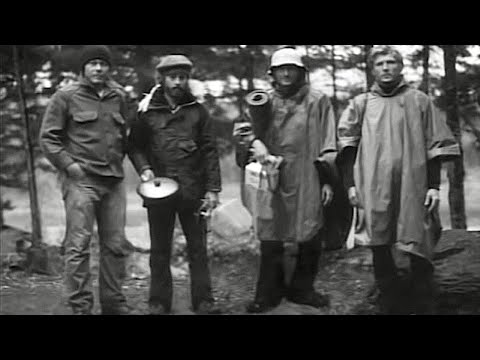
Eyewitness Accounts to the 1976 Allagash Encounter
Eyes On Cinema compiles firsthand eyewitness testimony from the Allagash Four describing the original sighting and the abduction recalled under hypnosis.
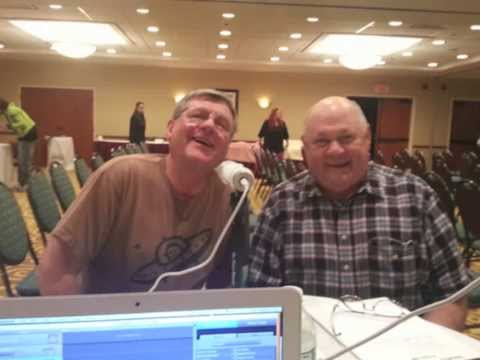
Jim Weiner & Charlie Foltz — Podcast UFO Interview
A direct, extended interview with two of the four original witnesses, recounting the Eagle Lake sighting and their decades of standing by the account.
Sources
- Fowler, Raymond E. The Allagash Abductions: Undeniable Evidence of Alien Intervention, Wild Flower Press, 1993. archive.org
- UFO Evidence. "The Allagash Abductions: The Allagash Four," documentary summary of Fowler's investigation. ufoevidence.org
- UFO Evidence. "The Allagash Abductions" case file, Allagash Wilderness Waterway, Maine — August 20, 1976. ufoevidence.org
- Portland Press Herald. "Unafraid of alienating themselves," September 7, 2013 — interview with Jim Weiner and Charlie Foltz. pressherald.com
- The County (Houlton, ME). "How much of a famed 1976 UFO abduction is true?", September 21, 2016 — Chuck Rak's recantation interview. thecounty.me
- Unsolved Mysteries (Cosgrove-Meurer Productions / NBC). "The Mysterious Abduction of the Allagash Four," archival case gallery from the September 18, 1994 broadcast. unsolved.com
- Hangar1 Publishing. "The Allagash Abductions: Maine's Iconic Alien Encounter." hangar1publishing.com
- UFO Insight. "The Allagash Alien Abduction Incident," detailed case summary including hypnosis session chronology. ufoinsight.com
- Occult World. "Allagash Abductions" reference entry. occult-world.com
- Astonishing Legends. "The Allagash Maine Abductions," June 2024. astonishinglegends.com
- Open Minds TV. "The Allagash Abductions — An OpenMinds.tv Documentary," production notes and case summary. openminds.tv
- UFO Casebook. "The Allagash Abduction," case archive summary. ufocasebook.com
- NICAP. "UFOs Intrude Into SAC Weapons Base," declassified Strategic Air Command communications on the October 1975 Loring Air Force Base incursions. nicap.org
- Pritchard, David E., Mack, John E., et al., eds. Alien Discussions: Proceedings of the Abduction Study Conference Held at M.I.T., North Cambridge Press, 1994.
- Hopkins, Budd. Missing Time: A Documented Study of UFO Abductions, Richard Marek Publishers, 1981.
- Mack, John E. Abduction: Human Encounters with Aliens, Charles Scribner's Sons, 1994.
- Matheson, Terry. Alien Abductions: Creating a Modern Phenomenon, Prometheus Books, 1998 (skeptical analysis of hypnotic regression methodology, citing the Allagash case directly).
- Fuller, John G. The Interrupted Journey: Two Lost Hours Aboard a UFO, Dial Press, 1966 (foundational abduction-narrative template case, referenced for comparison).
- Wikipedia. "Eagle Lake (Maine)" — geographic and hydrological reference data for the encounter site (background orientation only; not relied upon for case-specific claims). en.wikipedia.org
See something inaccurate? Have additional information or sources?
Suggest an Edit →Last Updated: August 2026