
Arak F-14 Radar Intercept
In November 2004, according to a single 2013 magazine article by aviation journalist Babak Taghvaee, an Iranian Air Force F-14A Tomcat crew flying near the Arak heavy-water plant spotted a luminous, spherical object trailing what the pilot described as a green, afterburner-like glow. When the crew attempted to lock their AN/AWG-9 radar onto it, the radar scope was disrupted; the object then accelerated and, in the pilot's words as relayed by Taghvaee, "disappeared like a meteor." Iranian air force sources cited in the same article attributed the object — and a wider pattern of similar "luminous object" encounters near Iran's nuclear sites that year — to suspected U.S. reconnaissance drones, while describing performance characteristics (Mach 10 speeds, the ability to hover and to fly "outside the atmosphere") that no known aircraft, drone, or documented classified program has ever been shown to possess. No pilot, radar intercept officer, or Iranian official is named in the original account; no radar tape, photograph, or Iranian government statement about this specific incident has ever surfaced; and the claim's entire evidentiary trail, more than a decade on, still runs back to that one article and the unnamed contacts it describes. This file corrects the "Coming Soon" queue's framing only slightly — the radar disruption and weapons-systems difficulty it described are accurately drawn from the source material — but treats the underlying claim with the scrutiny its actual, single-sourced, anonymous-witness origin in a notoriously closed military reporting environment demands.
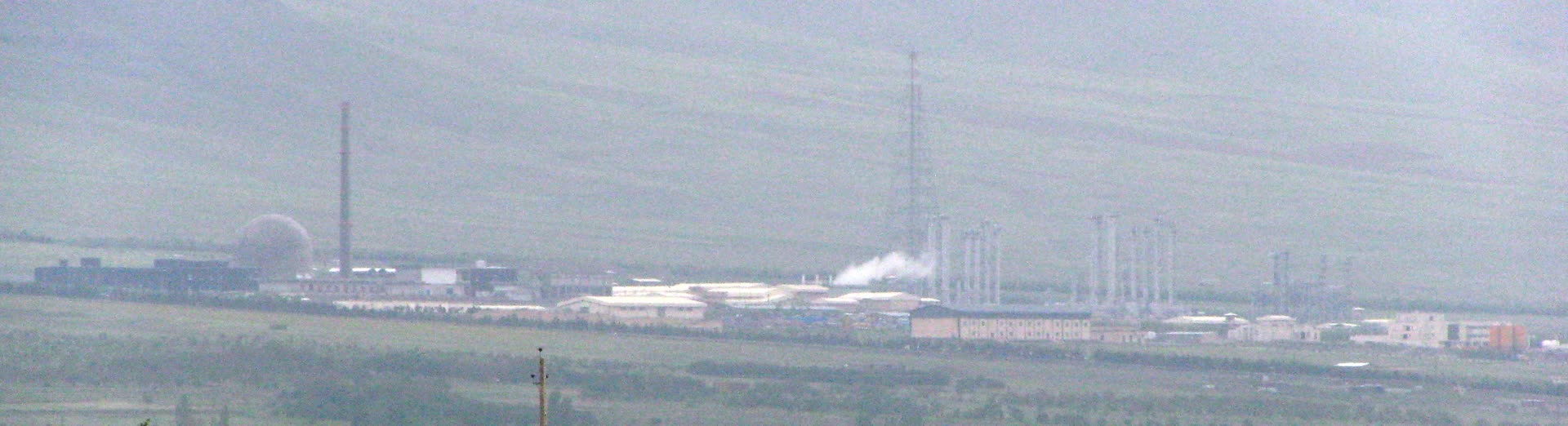
Pictured: an aerial photograph of the IR-40 heavy water reactor complex near Khondab, roughly 40 km from Arak, Iran, taken by a Wikimedia Commons contributor on 29 April 2010 and released into the public domain. This is not a photograph from the November 2004 incident itself — no photograph, radar image, or other visual record of the claimed encounter is known to exist in any public source — but of the actual restricted facility the claimed luminous object was reported flying near, the real subject of this case.
Theoretical Alignment
This case's theoretical alignment sits heavily toward the Psycho-Social/Mundane end of this catalogue's spectrum, for a reason distinct from most cases scored there: the dominant uncertainty here is not primarily about what a witness saw, but about whether the claim itself, as it now circulates, accurately reflects what any actual Iranian aircrew ever reported. Iran's own military and political establishment has never advanced an extraterrestrial interpretation of this or any of the related 2004 "luminous object" encounters; every account traced to an Iranian source describes the objects as suspected foreign (specifically American) intelligence-gathering drones, a mundane, terrestrial explanation however exotic the alleged performance. The Extraterrestrial Hypothesis reading draws its modest residual percentage from the genuinely extraordinary performance figures attributed to the objects in the secondhand telling — Mach 10 speed, the ability to hover, flight "outside the atmosphere" — capabilities that, if taken at face value, exceed any confirmed human aerospace technology, Iranian, American, or otherwise. The Psycho-Social/Mundane reading dominates because the claim's entire evidentiary chain runs through a single journalist relaying unnamed sources' testimony collected years after the fact, precisely the kind of chain in which exaggeration, telephone-game distortion, institutional myth-building, and honest technical misidentification (of a mundane aircraft, a radar fault, or an atmospheric phenomenon) are the best-documented, most parsimonious explanations. Interdimensional Hypothesis alignment is negligible; no source proposes trans-dimensional behavior of any kind.
Background
Iran's undeclared nuclear infrastructure became a matter of open international dispute in August 2002, when the Iranian opposition group the National Council of Resistance of Iran publicly revealed the existence of two secret nuclear-related sites: a uranium-enrichment facility at Natanz and a heavy-water production plant near the city of Arak, in Markazi Province, roughly 250 km southwest of Tehran. The Arak facility, associated with the IR-40 heavy-water research reactor at the nearby village of Khondab, was not something the Iranian government itself had previously disclosed to the International Atomic Energy Agency; confronted with the NCRI's revelation, Iranian officials confirmed the Heavy Water Production Plant's existence to IAEA Director General Mohamed ElBaradei during his February 2003 visit to Tehran. From that point forward, Arak sat alongside Natanz and the Bushehr nuclear power station as one of the three Iranian nuclear sites at the center of an escalating, years-long diplomatic and intelligence confrontation between Iran, the IAEA, the European Union, and the United States.
That confrontation had a genuine, well-documented covert dimension on the American side. In a January 2005 New Yorker article, "The Coming Wars," the investigative journalist Seymour Hersh reported — citing intelligence and military officials speaking on condition of anonymity — that the United States had, since at least the summer of 2004, been running clandestine reconnaissance operations inside Iran aimed at identifying suspected nuclear, chemical, and missile-related sites, with a specialized American task force reportedly working with Pakistani intelligence contacts to probe for underground nuclear-weapons-related installations in eastern Iran. The Pentagon publicly called Hersh's reporting "riddled with errors" and then-Secretary of State nominee Condoleezza Rice called it "inaccurate," though neither official denial specifically addressed, on the public record this case file located, whether covert American reconnaissance activity of any kind was underway in or near Iran that year. Whatever its precise scope, the broader premise Hersh's reporting rested on — that Western intelligence services had genuine, active interest in penetrating Iran's nuclear program by whatever means available in 2004 — is not seriously disputed by any source consulted for this case file, and it forms the real geopolitical backdrop against which any Iranian claim of "suspected CIA drones" over Arak that same year has to be read: not as an arbitrary invention, but as a belief with at least a plausible, contemporaneous basis, whatever its accuracy in this specific instance.
Iran's own air defense posture in this period reflected that anxiety. The Islamic Republic of Iran Air Force (IRIAF) by the mid-2000s was flying an aging, sanctions-starved fleet inherited almost entirely from the pre-1979 Imperial Iranian Air Force, including a shrinking number of Grumman F-14A Tomcats — originally 79 delivered beginning in 1976 — maintained for decades without factory support or a legal parts supply chain after the 1979 revolution and subsequent decades of U.S. and international sanctions. Those Tomcats, based primarily at the 8th Tactical Fighter Base near Isfahan, retained their original AN/AWG-9 long-range radar and AIM-9J/AIM-7E-4 air-to-air missile armament from the aircraft's original U.S. Navy-era fit, but by the 2000s were operating that same 1970s-vintage electronics with three decades of deferred maintenance, cannibalized spares, and no ongoing American technical support behind them — a detail directly relevant to any claim of a radar malfunction aboard one of these aircraft. It is against this backdrop — a newly exposed nuclear site, credible (if not conclusively proven in every particular) reporting of active American covert reconnaissance against Iran's nuclear program, and an Iranian interceptor fleet flying elderly, poorly supported avionics — that the claimed November 2004 Arak encounter, whatever its ultimate accuracy, needs to be situated.
Complete Timeline
| Date | Event |
|---|---|
| August 2002 | The National Council of Resistance of Iran publicly reveals the existence of Iran's Natanz enrichment site and the Arak heavy-water plant, exposing both to international scrutiny for the first time. |
| February 2003 | Iran confirms the Arak Heavy Water Production Plant's existence to IAEA Director General Mohamed ElBaradei during his visit to Tehran. |
| Summer 2004 (per Seymour Hersh, reported January 2005) | The United States is reported to be running clandestine reconnaissance operations inside Iran aimed at suspected nuclear, chemical, and missile sites — contested by the Pentagon and Bush administration officials in its specifics, but never flatly denied in its broad premise. |
| November 2004 | Per Babak Taghvaee's 2013 account of anonymous IRIAF testimony, an F-14A Tomcat crew flying near the Arak heavy-water plant spots a luminous, spherical object; a radar-lock attempt with the jet's AN/AWG-9 disrupts the scope before the object accelerates away. |
| Through 2004 and after (per the same account) | IRIAF F-4E and F-14 crews reportedly encounter similar "luminous objects" near Bushehr, Natanz, and Arak on multiple further occasions, which Iranian air force sources attribute to suspected U.S. intelligence-gathering drones. |
| 26 January 2012 | An IRIAF F-14A (reported serial 3-6062), scrambled from the 6th Tactical Air Base to intercept an object reported near Bushehr — a different site, more than seven years later — explodes minutes after takeoff, killing both crew. Iran's official explanation cites unspecified technical failure; a separate November 2013 Aviationist analysis instead attributes the loss to friendly fire from an unfamiliar Revolutionary Guards air-defense unit. |
| October 2013 | Babak Taghvaee publishes his account of the IRIAF's "luminous object" encounters, including the Arak case, in the October issue of Combat Aircraft (Key Publishing) — the first and, to this case file's research, only original publication of the claim. |
| 4–10 November 2013 | The Aviationist (David Cenciotti) publishes two follow-up analyses, one questioning whether the 2012 Bushehr F-14 loss was Iranian friendly fire rather than a drone/UFO encounter, the other examining the Arak claim's plausibility and sourcing directly. |
| Late 2013 – 2014 | The claim is picked up and re-reported, all citing Taghvaee's original article as the source, by War Is Boring/David Axe, HuffPost, Forbes, National Interest, and other English-language outlets, with no additional independent reporting or corroboration added at any point in this chain. |
| 2026 | This case file researches and publishes the "Coming Soon" queue's #204 entry, tracing the claim to its single-source origin and correcting the placeholder's confident "disrupted" framing to reflect the actual, thin evidentiary basis behind it. |
The November 2004 Radar Intercept: What Is Actually Claimed
Stripped of the embellishment that has accumulated across a decade of re-reporting, the actual claim at the center of this case file is narrow and comes from exactly one place. In the October 2013 issue of the British aviation magazine Combat Aircraft (published by Key Publishing), aviation journalist and Iranian Air Force historian Babak Taghvaee wrote that, in November 2004, the crew of an IRIAF F-14A Tomcat — armed, per the type's standard fit, with two AIM-9J Sidewinder and two AIM-7E-4 Sparrow air-to-air missiles — spotted a luminous object near the Arak heavy-water plant. The pilot described the object as spherical, trailing something resembling a green afterburner and generating considerable turbulence in its wake. When the crew attempted to achieve a radar lock using the Tomcat's AN/AWG-9 radar, both the pilot and the backseat Radar Intercept Officer reportedly observed the radar scope become disrupted — an effect Taghvaee's account attributes, speculatively, to the object's own "high magnetic energy" increasing the power of the radar's own reflected returns. The object then accelerated and, in the phrase Taghvaee attributes to the pilot, "disappeared like a meteor."
That is the complete claim, and every element of it after the phrase "spotted a luminous object" traces back exclusively to Taghvaee's own account of what unnamed Iranian air force contacts told him, years after the fact, during what he has described as roughly two years of research into IRIAF's institutional history. No pilot, RIO, squadron, or IRIAF unit is named anywhere in the original article or in any of the numerous English-language pieces that have since re-reported it. No date more specific than "November 2004" is given. No radar tape, gun-camera footage, cockpit voice recording, incident report, or maintenance log has ever been published, referenced by file number, or even described as existing anywhere outside the general assertion that such an event occurred. This is not, on its own, proof the event did not happen — single-source, anonymously-attributed accounts of classified military incidents are common across many countries' air forces, and Iran's own institutional secrecy around nearly all aspects of the IRIAF's post-1979 operational history makes this pattern of sourcing considerably less surprising than it would be for, say, a similarly undocumented U.S. Air Force claim. But it does mean this case file's honest evidentiary floor is exactly as high, and no higher, than the credibility of one journalist's compiled secondhand testimony — a genuinely different and substantially weaker evidentiary basis than a declassified government document, a named eyewitness's own on-record statement, or multiply and independently sourced contemporaneous press coverage, the kinds of foundation this catalogue's stronger cases are built on.
The Single Source: Babak Taghvaee and Combat Aircraft Monthly
Assessing this case honestly requires assessing its one named source directly. Babak Taghvaee is a real, professionally established aviation journalist and military historian, not an anonymous internet poster or an obviously unreliable narrator. Born in Iran, he began publishing anonymous histories of the Iranian Air Force on Iranian websites starting in 2005, moved into English-language defense journalism (AirForces Monthly, Combat Aircraft) from 2008 onward, and in 2011 became one of two supervisors of the IRIAF's own internal "Historical Identity of IRIAF" research project — a credential suggesting genuine access to Iranian air force personnel and institutional memory that most Western journalists could never obtain. He has since authored several well-regarded, traditionally published Osprey- and Helion-imprint military history titles, including Iranian F-14 Tomcat Units in Combat (as a contributing researcher to Tom Cooper's volume) and his own Desert Warriors: Iranian Army Aviation at War, and has contributed open-source-intelligence reporting to outlets including Radio Free Europe/Radio Liberty, Israel Hayom, and the BBC. This is a real track record, not a fabricated byline, and it means the "luminous object" claim did not originate from a hoaxer or an obviously unreliable outlet.
That said, professional standing in a journalist's broader body of work is not the same thing as independent verification of any one specific claim, and this particular claim has a documented history of drawing skepticism even from writers otherwise willing to take Taghvaee's aviation-history reporting seriously. David Cenciotti, a former Italian Air Force officer and the founder of the well-regarded military aviation blog The Aviationist, published his own November 2013 piece under the explicitly hedged headline "Iranian F-14s vs UFOs: urban legend or weird drones in action over Iranian nuclear plants?" — a title that itself signals real, unresolved uncertainty about which the story actually is. Michael Peck, writing for Forbes in January 2014, concluded his own examination of the claim by suggesting "it's more likely that the Iranian military — perhaps through an honest mistake — exaggerated the performance of the intruders" than that anything resembling the described Mach 10, hovering, atmosphere-exiting craft was ever actually encountered. David Axe, writing for the military-affairs blog War Is Boring, closed his own piece on the topic by declining to endorse either the UFO or CIA-drone readings, writing simply: "Hell if I know." None of these are dismissals of Taghvaee as a source in general; all of them are explicit, published expressions of doubt about this specific claim's reliability, from writers with real standing in the same specialist aviation-journalism community Taghvaee works in.
The Broader 2004 "Luminous Object" Pattern and the CIA-Drone Belief
The Arak encounter, per Taghvaee's account, was not presented as an isolated event but as one instance within a wider pattern. According to his reporting, Iran in 2004 stood up a dedicated intercept task force — described in some derivative coverage as roughly eight F-4E Phantoms and eight F-14A Tomcats, supplemented by a modified Boeing 707 airliner and a C-130 Hercules outfitted as airborne command-and-control and sensor platforms — maintained on standing alert specifically because of a belief that unidentified aircraft, presumed to be American intelligence-gathering drones, were repeatedly overflying Iran's three principal nuclear sites: the Bushehr power reactor, the Natanz enrichment facility, and the Arak heavy-water plant. Iranian personnel are reported to have nicknamed these objects "luminous objects" for a described tendency to emit a blue or greenish glow, particularly during night operations, consistent with (though not proof of) an aircraft using running lights or an infrared/laser illuminator for night imaging.
The specific capabilities Taghvaee's Iranian sources attributed to these objects are the single hardest element of the entire claim to reconcile with any known aerospace technology. Per his reporting, the objects were described as capable of flying "outside the atmosphere," reaching a maximum cruise speed of Mach 10, and slowing to a complete hover — a combination no confirmed aircraft, manned or unmanned, American, Iranian, or from any other nation, has ever been demonstrated to achieve as an integrated capability. NASA's X-43A experimental scramjet, first flown successfully earlier the same year (November 2004) and frequently cited by commentators discussing this case as a loose contemporaneous point of comparison, reached Mach 9.6 — a genuinely comparable top speed — but it was an unpowered-glide, single-use research vehicle flown in a fully controlled U.S. Pacific test range under NASA/Air Force supervision, incapable of sustained cruise, incapable of hover, and never flown anywhere near Iranian airspace; no source consulted for this case file proposes any credible link between the X-43A program and the Arak claim beyond noting the coincidental Mach-number similarity. The RQ-170 Sentinel stealth drone — the one American reconnaissance drone confirmed, by direct public statement from President Obama himself, to have actually penetrated Iranian airspace, when one was captured intact near Kashmar in December 2011 — is a subsonic, propeller-less flying-wing aircraft with no hover capability and no ability to exceed the high subsonic/low transonic speed range; it bears no resemblance to the Mach 10, hovering object described in the Arak/2004 claim. In short: the one American drone whose overflight of Iran is independently, publicly, and multiply confirmed has performance characteristics that directly contradict, rather than support, the specific capabilities the 2004 "luminous object" reports describe.
A Separate, Frequently Conflated Incident: The January 2012 Bushehr F-14 Loss
Much of the derivative English-language coverage of this case links the November 2004 Arak claim to a second, later, and factually distinct event: the loss of an IRIAF F-14A (reported serial 3-6062) on 26 January 2012, which exploded within minutes of taking off from the 6th Tactical Air Base to intercept an object reported near Bushehr — a different Iranian nuclear site, more than seven years after the Arak claim, and roughly 500 km away on Iran's southern Persian Gulf coast rather than in the central highlands near Arak. Both crew members were killed. Iran's official explanation at the time cited unspecified technical failure. Some subsequent English-language coverage has speculatively framed this loss as evidence that "the drone/UFO shot down an Iranian jet" — a framing this case file's research found no credible support for in any source.
The more carefully sourced treatment of this second incident comes from David Cenciotti's own separate, dedicated Aviationist article on the 2012 loss, published days before his article on the Arak claim itself. Drawing on his own interviews with regular IRIAF officers, Cenciotti reports that the aircraft — described as one of the best-maintained Tomcats then in IRIAF service, assigned to critical quick-reaction-alert duty — was most likely brought down not by any drone or anomalous craft, but by friendly fire from an Islamic Revolutionary Guard Corps air-defense unit operating near Bushehr, whose personnel Cenciotti's sources describe as unfamiliar with aircraft recognition and prone to firing on fast-moving unidentified contacts out of caution or fear of disciplinary consequences for failing to engage a genuine threat. If accurate, this reading makes the 2012 Bushehr loss a case of Iranian institutional friction and a genuine, mundane air-defense failure — not a UFO encounter of any kind, let alone one connected to the entirely separate 2004 Arak claim beyond the superficial similarity of "F-14 chasing a luminous object near a nuclear site." This case file treats the two incidents as distinct and declines to let the more dramatic 2012 fatality lend false evidentiary weight to the 2004 Arak claim, which stands or falls entirely on its own single-source account.
Skeptical Readings: Radar Faults, Exaggeration, and an Aging Weapons System
Beyond the specific mundane candidate explanations weighed in this case file's Conventional Explanation Candidate section below, several general skeptical observations are worth stating plainly. First, the AN/AWG-9 radar aboard Iran's F-14A fleet by 2004 was already a 1970s-vintage system operating roughly a quarter-century past its design service life, maintained by an air force that had been cut off from factory technical support, official spare parts, and U.S. Navy institutional knowledge for the entire post-1979 period; a "disrupted" radar scope on this specific airframe, at this specific point in its operational life, carries at least as much prior plausibility as an ordinary equipment fault as it does as evidence of an external electromagnetic effect from an anomalous craft. Second, every specific performance claim in the account — Mach 10, hover, atmospheric exit — is precisely the kind of detail most vulnerable to exaggeration or garbling across a multi-year oral retelling chain (pilot to unit to historical-research contact to journalist, with years elapsing at multiple stages), the same general failure mode well-documented in military oral-history collection generally and not unique to Iran. Third, and most simply: this is a claim about a classified military encounter in one of the world's most opaque defense-reporting environments, relayed by exactly one journalist, corroborated by exactly zero independent sources in the thirteen years since first publication despite the claim's considerable circulation in English-language aviation and UFO-interest media. That combination of high specificity and total absence of independent corroboration is, on its own, a meaningful evidentiary signal, whatever the claim's ultimate truth.
Key Witnesses
Unnamed IRIAF F-14A Pilot
The primary reported observer of the luminous object and the source, relayed through Taghvaee's Iranian air force contacts, of the object's description (spherical, green afterburner-like glow, considerable turbulence) and its final behavior ("disappeared like a meteor"). No name, rank, or squadron assignment is given in any source consulted for this case file.
Unnamed IRIAF Radar Intercept Officer (RIO)
The backseat crew member reported to have separately observed the AN/AWG-9 radar scope disruption alongside the pilot at the moment of the attempted lock. No name or further identifying detail is given in any source consulted.
Babak Taghvaee
Not an eyewitness to the event himself, but the single named individual through whom this entire case's evidence passes. Taghvaee has described compiling the account from roughly two years of research and interviews with unnamed Iranian air force contacts, publishing it in Combat Aircraft magazine in October 2013 — nine years after the claimed encounter. Every other English-language source discussing this case, without exception located in this case file's research, cites Taghvaee's article as its origin rather than any independent reporting of its own.
Unnamed Iranian Air Force Sources
The broader group of Iranian military personnel Taghvaee credits with describing the wider 2004 "luminous object" pattern, the suspected-CIA-drone interpretation, and the objects' claimed Mach 10/hover/atmosphere-exit performance characteristics. Their number, rank, and direct connection (if any) to the specific November 2004 Arak crew is not specified in any source consulted.
The Five Observables Assessment
Assessment: Every one of the Five Observables that scores above "Absent" here does so only speculatively, reflecting how little of this case rests on instrumented, contemporaneous data rather than secondhand recollection. Anti-Gravity Lift is Absent because no source describes any specific lift mechanism for the November 2004 object itself (the "hover" capability comes from the broader pattern description, not this specific encounter). Instant Acceleration is Speculative: the pilot's account, as relayed, does describe the object suddenly speeding up and vanishing, but with no radar-derived velocity data, no gun-camera footage, and no second independent witness account, this is testimony about an impression, not a measurement. Hypersonic performance is likewise Speculative and, on the specific facts of this encounter alone, actually the weakest-supported observable in the set: the Mach 10 figure comes from Taghvaee's broader characterization of the "luminous object" phenomenon across multiple 2004 encounters, not from any instrumented reading tied to this particular November event. Low Observability is Speculative because "the radar scope was disrupted" is genuinely ambiguous between an external jamming/stealth effect and a simple equipment fault on an aging, thirty-year-old AN/AWG-9 unit — this case file does not have enough independent information to resolve that ambiguity in either direction. Trans-Medium is Absent and not applicable. Overall, this observable profile is markedly weaker and less well-evidenced than this catalogue's stronger military-radar cases (compare the Tehran UFO Incident, where named pilots' weapons-jamming testimony was corroborated across multiple independent witnesses and preserved in a contemporaneous DIA cable), reflecting this case's genuinely thinner, single-source evidentiary basis.
Evidence Assessment
Supporting Anomalous Origin
- The claim originates from a professionally credentialed aviation journalist and historian with documented, unusual access to Iranian air force institutional history and contacts, not from an anonymous or obviously unreliable source
- The claim is situated within a real, independently verifiable geopolitical context — credible contemporaneous reporting (Seymour Hersh, The New Yorker, January 2005) that the United States was conducting clandestine reconnaissance activity in or near Iran during exactly this period, giving the Iranian "suspected CIA drone" interpretation at least a plausible contemporaneous basis
- The described radar disruption, if accurately relayed, would be consistent with the kind of instrumented anomaly this catalogue treats as a stronger category of evidence than visual testimony alone
- The claim is not unique or invented for this one case; it fits within a wider, independently described pattern of IRIAF nuclear-site intercept operations in the same period
- Iran's well-documented institutional secrecy around IRIAF operational history makes the total absence of an official Iranian statement, in either direction, less individually diagnostic than it would be for a similar claim about a more transparent air force
Supporting Conventional Explanation
- The claim's entire evidentiary chain, without exception located in more than a decade of subsequent English-language coverage, runs back to a single 2013 magazine article sourced to unnamed contacts describing an event nine years in the past
- No pilot, RIO, squadron, or Iranian official has ever been named in connection with this specific incident, in the original account or in any subsequent reporting
- No radar tape, photograph, gun-camera footage, incident report, or Iranian government statement about this specific November 2004 event has ever been published or referenced by file number
- The specific performance characteristics attributed to the broader "luminous object" pattern (Mach 10, hover, flight "outside the atmosphere") exceed the confirmed capabilities of every known aircraft or drone, including the one American drone (the RQ-170 Sentinel) independently and publicly confirmed to have actually penetrated Iranian airspace, whose real performance characteristics directly contradict the claim's
- Multiple aviation journalists with genuine standing in the same specialist community as the original source — David Cenciotti, Michael Peck, David Axe — have all published explicit, on-record skepticism about this specific claim's reliability, not merely about UFOs in general
- The F-14A's AN/AWG-9 radar was, by 2004, a roughly thirty-year-old system maintained without factory support or an official parts supply chain, giving any described "radar disruption" a strong, mundane, equipment-age-based candidate explanation independent of any anomalous cause
- No credible UAP-tracking organization, academic researcher, or government body (Western or Iranian) has ever taken up this specific case as a documented, investigated anomaly; its entire public existence is confined to aviation-enthusiast and UFO-interest media re-reporting the same single 2013 source
Why "Disputed"
This case earns a DISPUTED classification with a credibility score of 21/100, placing it below Chu Lai Egg-Shaped Object Incident (Disputed, 23) and HMAS Hobart / DMZ Vietnam Incident (Disputed, 24), and well below Dimona/Negev Unidentified Object Shootdown (Disputed, 31), South China Sea UAP Wave (Disputed, 27), and this catalogue's much stronger Tehran UFO Incident (Verified, 88). That placement reflects a deliberate, honest calibration: this case is real in the narrow sense that a real journalist really published this claim in a real, professionally edited aviation magazine, and the claim sits within a genuinely documented, independently verifiable geopolitical context (Iran's 2002–2004 nuclear disclosure crisis; credible contemporaneous reporting of American covert reconnaissance activity against Iran). It is not a hallucinated or wholly invented event in the sense some other "Coming Soon" queue entries removed elsewhere this session turned out to be — a real article, by a real journalist with real Iranian air force access, making exactly this claim, genuinely exists and can be checked.
But every single specific, checkable detail beyond that bare fact of publication rests on one person's compilation of anonymous secondhand testimony about a classified military incident, collected nine years after it supposedly occurred, in one of the world's most opaque defense-reporting environments, and never once independently corroborated by a second journalist's own reporting, a named participant's own statement, an Iranian government acknowledgment, or any released document in the more than a decade since. This is a meaningfully weaker evidentiary foundation than this catalogue's other Middle Eastern military-nuclear-site cases: Dimona had a named senior military decision-maker, multiple independent wire-service and Israeli press outlets, and an official government characterization (however contradictory) issued the same day; this case has none of those things. It is weaker still than this catalogue's own Tehran UFO Incident, where named Iranian Air Force pilots gave on-record testimony that was independently preserved in a contemporaneous U.S. Defense Intelligence Agency cable and later corroborated in person, decades on, at a 2007 National Press Club appearance — the exact kind of independent, multi-source, documentary corroboration entirely absent here. A score in the low twenties, rather than in the single digits some purely fabricated queue entries removed this session would have received, reflects that this is a genuine, findable, professionally published claim resting on a real (if thin and unverifiable) foundation of access to Iranian military sources — not an invented event with no discoverable origin at all. It is not, on the evidence this case file's research could locate, a claim this catalogue can honestly rate any higher than that.
Sensor & Instrumentation Detection Profile
This case's only claimed sensor data is the disrupted AN/AWG-9 radar scope aboard the F-14A itself, and even that data point exists only as secondhand narrative description rather than as any preserved technical record. No radar tape, printout, photograph of the scope, or any other primary instrumentation record has ever been published, described as archived, or referenced by any source consulted for this case file. No altitude, range, closing speed, radar cross-section, or any other quantitative parameter for the object is given anywhere in the account. No ground-based radar corroboration is claimed or described; the entire sensor record, such as it is, consists of one aircraft's onboard radar, relayed through recollection rather than through any retained data. This stands in sharp contrast to this catalogue's stronger radar cases — including its own Tehran UFO Incident, where ground radar at Mehrabad tracked the object independently of the intercepting aircraft's own instruments, providing a second, independent sensor confirming what the aircrews reported.
Environmental & Geospatial Context
The Arak Heavy Water Production Plant and its associated IR-40 reactor sit near the village of Khondab, roughly 40 km from the city of Arak, at approximately 34.37° N, 49.24° E, in Iran's Markazi Province — a landlocked, semi-arid region of the central Iranian plateau roughly 250 km southwest of Tehran, at an elevation of around 1,700 meters. The wider region combines agricultural lowlands with the Zagros Mountains' northern foothills, and the plateau's continental climate produces cold, occasionally snowy winters and hot, dry summers; November falls within the region's transitional autumn period, with no specific meteorological log for the claimed 2004 encounter located in any source consulted. No source specifies the object's claimed altitude, and no source describes any correlated astronomical, meteorological, or geomagnetic data for the claimed date — a further reflection of how little of this case rests on any documented environmental record rather than narrative recollection. The facility's national strategic sensitivity, as one of Iran's three principal disclosed nuclear sites from 2002 onward, is well documented independent of this case's own claims, and provides straightforward, non-anomalous motive for heightened IRIAF vigilance and standing intercept alert in the area during exactly this period, regardless of what the intercepted object(s) actually were.
Observer Credibility & Occupational Profile
This case's evidentiary base is, in a specific and unusual sense, doubly anonymous. The primary claimed observers — the F-14A pilot and RIO — are IRIAF-trained military aircrew, an occupational category this catalogue generally treats as carrying meaningful credibility weight (trained observers with instrument literacy and professional stakes in accurate reporting). But neither is named, ranked, or otherwise individually identified in any source, which means this case file cannot actually evaluate their specific training, experience, or track record the way it can for, say, Parviz Jafari in the Tehran 1976 case, whose IRIAF service record, subsequent general officer rank, and 2007 National Press Club testimony are all independently documented. The claim's actual named source, Babak Taghvaee, carries real, independently verifiable professional credibility as an aviation historian and journalist — but he is a secondhand compiler of the testimony, not a witness to the event himself, and his own professional credibility as a historian does not, on its own, establish the accuracy of the specific anonymous accounts he relays any more than a reputable newspaper's general credibility guarantees the accuracy of every anonymously sourced story it ever runs. This case file finds no basis to doubt Taghvaee's good faith in reporting what he was told; it finds equally no basis, given the total absence of independent corroboration, to treat what he was told as established fact.
Physical & Material Assays
This case possesses no physical evidence of any kind. No wreckage, debris, radar tape, photograph, film, or any other physical or recorded trace connected to the claimed object has ever been described, referenced, or made available in any source this case file's research consulted. Unlike this catalogue's Dimona file, where the Israel Defense Forces at least acknowledged conducting a (ultimately unproductive) physical search for debris the same evening, no source describes any Iranian search, recovery attempt, or forensic effort connected to this claimed encounter at all. This absence is total rather than partial, and this case file states that plainly rather than speculating about evidence that may exist in classified Iranian files but has never been described, even in general terms, by any source located.
Historical Precedents & Archive Matches
Within this catalogue, this case's most directly relevant precedent and its sharpest contrast is its own Tehran UFO Incident (19 September 1976) — another Iranian military radar/weapons case, involving the same national air force (albeit under the previous Imperial government) and describing a strikingly similar phenomenon: F-4 Phantom interceptors experiencing weapons and instrument failures while attempting to engage a luminous aerial object. The Tehran case, however, rests on an entirely different evidentiary foundation: named pilots (Parviz Jafari, Nader Yousefi) and a named RIO (Jalal Damirian) giving contemporaneous, on-record accounts preserved in a real, declassified U.S. Defense Intelligence Agency cable, independently corroborated decades later at a 2007 National Press Club appearance, and rated Verified/88 by this catalogue as a result. The 2004 Arak claim describes a similar phenomenon — luminous object, weapons/radar system difficulty during an attempted engagement — but with none of that case's independent, documentary, or named-witness corroboration, illustrating within a single national air force's own history the very different evidentiary weight a well-documented case can carry compared to an anonymously sourced one. Multiple derivative articles covering this Arak claim explicitly draw the same 1976/2004 comparison, generally to note that the earlier case is the far better documented of the two.
Beyond this catalogue, the December 2011 capture of an RQ-170 Sentinel near Kashmar, Iran — publicly confirmed by President Obama himself and covered extensively by BBC, NBC News, and other outlets — stands as the clearest real, independently verified precedent for an actual American reconnaissance drone penetrating Iranian airspace, lending genuine contemporary plausibility to Iran's general anxiety about foreign drone overflights of its nuclear sites. At the same time, as discussed above, the RQ-170's own confirmed, mundane performance characteristics (subsonic, no hover capability) directly undercut rather than support the specific Mach 10/hovering description attributed to the 2004 "luminous objects," making this precedent a double-edged one: it validates the general fear while contradicting the specific claim.
Material Analysis
As with the Physical & Material Assays section above, "material analysis" for this case is fundamentally a statement about total absence rather than an examination of any actual sample or recovered trace.
What Was Never Recovered or Recorded
No wreckage, fragment, radar tape, photograph, film, gun-camera footage, or any other physical or recorded trace connected to the claimed November 2004 object has ever been described, referenced by file or archive number, or made publicly available in any source located for this case file. This is a materially different situation from cases where physical evidence was collected but later lost, misplaced, or remains classified — no source even claims such evidence was ever gathered in the first place.
What Was Reported Instead
In place of any physical or recorded evidence, this case's entire record consists of one journalist's written compilation of unnamed secondhand testimony, published nine years after the claimed event. That compilation describes narrative impressions (a spherical shape, a green afterburner-like glow, radar-scope disruption, sudden acceleration) rather than any measured, recorded, or independently verifiable data point.
Supporting Non-Terrestrial or Unexplained Origin
- The described radar disruption, if it occurred exactly as relayed, would be a genuinely unexplained instrumented anomaly rather than a purely subjective visual impression
- The claim sits within a real, independently documented context of Iranian nuclear-site security anxiety and credible contemporaneous reporting of actual American covert reconnaissance interest in Iran during 2004
Supporting Terrestrial or Mundane Origin
- No physical trace, recording, or documentary record of any kind has ever been produced or even claimed to exist beyond the secondhand narrative account itself
- The one aircraft system involved (the AN/AWG-9 radar) was, by 2004, a roughly thirty-year-old system operating without factory support or an official parts supply chain, giving any described malfunction a strong mundane candidate explanation
- The claim's most extraordinary specific details (Mach 10, hover, atmospheric exit) directly contradict the confirmed performance of the one American drone independently verified to have actually penetrated Iranian airspace (the RQ-170 Sentinel), undermining rather than supporting the "real advanced drone" reading of the claim
The Conventional Explanation Candidate (CEC): Misidentification, Exaggeration, or Radar Fault
Because this case's specific facts are so thinly documented, its Conventional Explanation Candidates are necessarily broader and more general than this catalogue's better-instrumented cases — this section weighs the most plausible mundane readings of the claim as a whole, rather than of any single measured data point.
Genuine Misidentification of a Conventional Aircraft or Reconnaissance Asset, Exaggerated in the Retelling
The reading favored by Forbes's Michael Peck and implicitly by several other aviation journalists who have examined this claim: a real intercept of some conventional aircraft (a manned reconnaissance jet, a lower-performance drone, or even a misidentified friendly or civilian aircraft) genuinely occurred, and its performance characteristics were exaggerated — whether through an honest observational or reporting error at the time, or through the ordinary distortion of a story retold across nine years and multiple removed layers of secondhand telling — into the Mach 10/hovering description that eventually reached Taghvaee's article. This candidate best explains why the claim exists at all (something real plausibly happened) while also explaining why its most extraordinary specific details fail to match any confirmed technology.
Equipment Malfunction Aboard an Aging AN/AWG-9 Radar
A narrower candidate addressing specifically the "radar scope disrupted" element: Iran's F-14A fleet was, by 2004, flying original 1970s-vintage AN/AWG-9 radar units maintained for a quarter-century without factory support or an official parts supply chain, a maintenance environment in which display glitches, signal-processing faults, or intermittent hardware failures are a well-documented and mundane risk independent of any external cause. This candidate does not, on its own, explain the visual sighting of a luminous object, but it directly addresses the single most "instrumented" element of the claim.
Deliberate or Institutional Exaggeration Serving an Internal IRIAF Narrative
A more speculative but not unreasonable candidate given the source material's own institutional context: Taghvaee's contacts were, per his account, connected to IRIAF's own internal historical-research apparatus, an institution with an evident interest in emphasizing the Tomcat fleet's continued operational relevance and the seriousness of threats it has faced, in an air force otherwise chronically starved of new equipment, funding, and international recognition. This candidate does not require bad faith on Taghvaee's part; institutional narratives can shape what contacts choose to emphasize, recall, or embellish in good faith, particularly across a nine-year gap.
An Actual, Undisclosed Advanced Reconnaissance Platform
The reading Iranian sources themselves apparently favored: that the object was a genuine, technologically advanced American (or other foreign) intelligence-gathering drone. This candidate has real, independently verified contemporaneous support for its general premise (confirmed U.S. covert reconnaissance interest in Iran per Hersh's reporting; the later, confirmed RQ-170 incursion) but no support at all for its specific claimed performance characteristics, which exceed the confirmed capabilities of every drone or aircraft, American or otherwise, ever publicly documented.
Misidentification, Exaggerated in Retelling
PlausiblePLAUSIBLE. Best fits the pattern of a real underlying event whose most extraordinary specific details accumulated distortion across a nine-year, multi-layered secondhand retelling chain — the explanation favored by multiple aviation journalists who examined the claim directly.
Aging AN/AWG-9 Radar Malfunction
PlausiblePLAUSIBLE for the specific "radar scope disrupted" detail; addresses the one quasi-instrumented element of the claim but does not on its own explain the visual sighting.
Institutional Exaggeration Within IRIAF's Own Historical Narrative
InconclusiveINCONCLUSIVE. A reasonable, good-faith-compatible possibility given the sourcing chain's institutional context, but not independently verifiable one way or the other from outside material this case file could locate.
Genuine Advanced Foreign Reconnaissance Drone
InconclusiveINCONCLUSIVE as to a real, mundane drone of some kind (supported by genuine contemporaneous covert-reconnaissance context); IMPLAUSIBLE as to the specific claimed performance (Mach 10, hover, atmospheric exit), which no confirmed aircraft or drone has ever demonstrated.
Related Cases
Confirmed Documents & Official Records
Neither the Iranian government nor any U.S. or allied government body has published a declassified incident report, radar log, or after-action review of this specific November 2004 claim in any source this case file's research located. This is unsurprising on the Iranian side, given the IRIAF's general institutional secrecy around its post-1979 operational history, and on the U.S. side, given that no American statement of any kind (official or leaked) about this specific incident has ever surfaced. The entire public record consists of the single 2013 magazine article and its derivative English-language coverage, all cited in full below. This section's search links are provided for readers who wish to check for any future declassification or archival release, however unlikely given the claim's total absence from any government record located to date.
Search Government & Official Archives Directly
Further Reading — Recommended Literature
Iranian F-14 Tomcat Units in Combat
The definitive operational history of Iran's F-14A fleet, including first-hand pilot accounts, essential background for understanding the exact aircraft type, radar system, and armament involved in this case's claimed intercept.
Desert Warriors: Iranian Army Aviation at War
A later, more rigorously documented book by this case's own sole source, drawing on declassified Iranian military records — useful for readers assessing Taghvaee's broader research methods and standing as an Iranian air force historian.
The Twilight War: The Secret History of America's Thirty-Year Conflict with Iran
A deeply sourced history of covert U.S.-Iran confrontation, providing the fullest available context for the genuine American intelligence interest in Iran's nuclear sites during the exact period this case's claim is set in.
Unthinkable: Iran, the Bomb, and American Strategy
A detailed strategic history of the Iran nuclear standoff, useful for readers wanting fuller context on why Arak, Natanz, and Bushehr became the specific focus of the intelligence and military anxieties this case's claim reflects.
Spying on the Bomb: American Nuclear Intelligence from Nazi Germany to Iran and North Korea
A global history of American nuclear-intelligence efforts, including a dedicated treatment of U.S. reconnaissance against Iran's nuclear program — directly relevant background for evaluating the "suspected CIA drone" explanation Iranian sources themselves favored.
Essential Viewing
No Videos Available
This case file's research located no documentary segment or news broadcast from a source meeting this site's video verification standards (see the Video Verification & Thumbnail Protocol) that is genuinely, primarily about this specific claimed 2004 incident. A handful of independent commentary-channel videos referencing the claim exist, but none originate from the kind of editorially vetted production this site's protocol requires, and none add any reporting or corroboration beyond Babak Taghvaee's original 2013 article. Consistent with this site's video protocol, no unverifiable or low-provenance video has been substituted in its place.
Sources
- Babak Taghvaee. "Persian Space Invaders" [IRIAF F-14/F-4 encounters with "luminous objects" near Iranian nuclear sites, including the November 2004 Arak claim]. Combat Aircraft, Key Publishing, October 2013 issue. Original source of the claim; no online archive URL located.
- David Cenciotti. "Iranian F-14s vs UFOs: urban legend or weird drones in action over Iranian nuclear plants?" The Aviationist, 10 November 2013. theaviationist.com
- David Cenciotti. "Iranian F-14 Tomcat crashed last year mistakenly downed by Iranian Air Defense?" The Aviationist, 4 November 2013 [on the separate January 2012 Bushehr F-14 loss]. theaviationist.com
- David Axe. "F-14s Versus UFOs… in Iran. Yes, you read that right." War Is Boring, Medium, 2013. medium.com
- David Axe. "Iranian F-14s Once Battled UFOs." Trench Art (Substack reprint). trenchart.us
- Michael Peck. "Did Iranian Fighters Battle UFOs?" Forbes, 14 January 2014. forbes.com
- HuffPost. "Iranian Fighter Jets Tangle With UFOs (And Lose)." 21 October 2013. huffpost.com
- Military Watch Magazine. "Iranians Claimed Hypersonic American Spy Drones Flew Over Their Nuclear Sites — Attempted F-14 Interception Failed." militarywatchmagazine.com
- The National Interest. "UFO Sighting? Iran's F-14 Tomcats Once Had Something Inexplicable In Their Sights." nationalinterest.org
- The National Interest. "Did Iran Really See UFOs Above Their Nuclear Facilities?" nationalinterest.org
- National UFO Center. "Did Iranian Fighters Battle UFOs?" (2014 reprint/discussion of the Forbes piece). nationalufocenter.com
- Seymour Hersh. "The Coming Wars." The New Yorker, 24 & 31 January 2005 issue [reporting on covert U.S. reconnaissance activity in Iran dating to summer 2004].
- NBC News. "Report: U.S. conducting secret missions in Iran" [coverage of Hersh's reporting]. nbcnews.com
- Nuclear Threat Initiative (NTI). "Arak Nuclear Complex" [facility background, 2002 disclosure, IAEA confirmation]. nti.org
- GlobalSecurity.org. "Arak Heavy Water Production Plant" [facility background and technical detail]. globalsecurity.org
- Wikipedia. "IR-40" [Arak reactor background]. en.wikipedia.org
- Wikipedia. "Iran–U.S. RQ-170 incident" [December 2011 drone capture background]. en.wikipedia.org
- NBC News. "Iran releases video allegedly captured by crashed US spy drone" (2013 coverage of the RQ-170 incident's aftermath). nbcnews.com
- Key.aero. "Iranian F-14 Tomcats in the crosshairs" [background on the IRIAF Tomcat fleet's history and maintenance challenges]. key.aero
- Middle East Forum. Author profile, Babak Taghvaee [journalist credentials and publication history]. meforum.org
- Wikimedia Commons. "File:Arak heavy water reactor1.jpg" — public domain aerial photograph of the IR-40 facility, taken 29 April 2010, source of this case file's hero image. commons.wikimedia.org
See something inaccurate? Have additional information or sources?
Suggest an Edit →Last Updated: August 2026