
Brazil's Official Night of UFOs
On the night of May 19–20, 1986, ground radar at São José dos Campos Airport, São Paulo's Guarulhos control, and CINDACTA I in Brasília tracked as many as 21 unidentified radar returns moving over São Paulo, Rio de Janeiro, and Minas Gerais states. At least six aircraft — an executive jet carrying incoming Petrobrás president Colonel Ozires Silva, two Northrop F-5E Tiger IIs scrambled from Santa Cruz Air Force Base, and three Dassault Mirage III (FAB designation F-103E) interceptors scrambled from Anápolis Air Force Base — achieved visual and, in several cases, airborne radar contact with objects that reportedly hovered, reversed course, and then separated from the pursuing jets at extreme apparent speed. Four days later, on May 23, 1986, Brazil's Minister of Aeronautics, Brigadier Octávio Júlio Moreira Lima, held an open press conference at the Ministry of Aeronautics in Brasília — flanked by the intercepting pilots and Air Defense Operations Center chief Major Ney Antônio Cerqueira — and told reporters, on the record, "technically, I'd tell you gentlemen that we have no explanation." It remains one of the only times any national government has held a public press conference to discuss an active military UFO intercept while the case was still open.
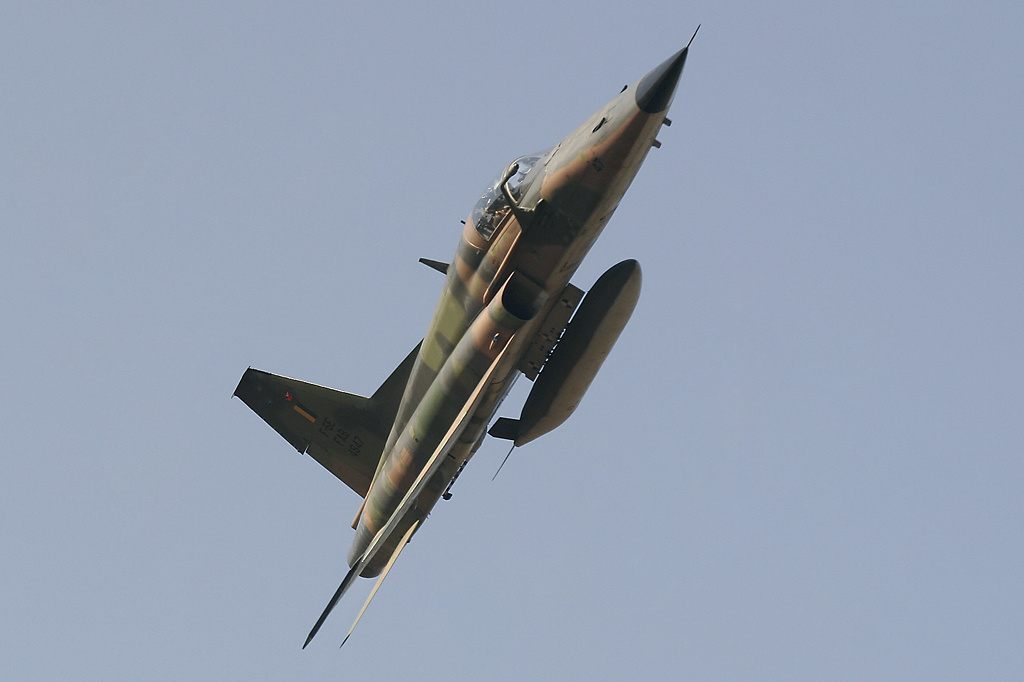
Pictured: a Brazilian Air Force Northrop F-5E Tiger II of the 1º/1º Grupo de Aviação de Caça (1st Fighter Aviation Group) — not a photograph of the actual May 19, 1986 intercept, but the real type and operating squadron lineage of the two F-5Es that Lt. Kleber Caldas Marinho and Capt. Márcio Brisolla Jordão flew that night from Santa Cruz Air Force Base. No photograph or film frame of the objects themselves, taken by any pilot, tower camera, or civilian witness, has ever surfaced in the public record; the only imagery associated with the case is of the aircraft and personnel involved, and of the later-declassified paper occurrence report.
Theoretical Alignment
The Official Night of UFOs is unusual in this catalogue for how much of its weight rests on institutional, not popular, testimony: the account that carries the case is not a crowd of frightened civilians but five named fighter pilots, at least two named air traffic controllers, a decorated aviation executive, and ultimately the Minister of Aeronautics himself, publicly declining to offer any conventional identification. That combination pushes the Extraterrestrial Hypothesis score meaningfully higher than most radar-visual cases in this archive, without approaching certainty, because no photograph, recovered fragment, or unambiguous instrument trace corroborates any pilot's account beyond his own cockpit tape and memory. The Psycho-Social Hypothesis is scored modestly rather than dismissed, reflecting the genuine national media excitement the case generated in the days after May 19 — sensational headlines, a nickname ("the flying saucer festival") drawn from a tower operator's own radio quip, and considerable pressure on the Ministry to say something, anything, definitive by May 23 — without extending to the core military witnesses themselves, who were on duty, individually separated in different cockpits and control rooms, and gave their accounts through official channels rather than to the press. The Interdimensional Hypothesis finds essentially no support in the documentary record; nothing in any pilot or controller account describes anything resembling a dimensional transition, only sudden, extreme changes in apparent velocity and heading.
Background
By May 1986, Brazil's Air Force had spent nearly a decade with unusually direct institutional exposure to the UFO question. Operação Prato, the FAB's official 1977 investigation into the Colares wave, had already produced hundreds of photographs, hours of Super-8 film, and, per its own commanding officer's later account, converted skeptical intelligence officers into believers after they personally observed low-altitude craft over the Amazon delta — though that program's own findings remained tightly classified in 1986 and would not become public until Ademar Gevaerd's landmark 1997 interview with Captain Hollanda. Brazil in May 1986 was also a country in the middle of a fragile democratic transition: President José Sarney had taken office barely a year earlier following the death of president-elect Tancredo Neves, ending more than two decades of military rule, and the armed forces — including the Air Force — still held substantial institutional weight and public visibility even as civilian government reasserted itself. Brazil's air defense infrastructure was, by regional standards, genuinely sophisticated: the Integrated Center for Air Defense and Air Traffic Control (CINDACTA I), headquartered in Brasília, had been operational since the 1970s specifically to give the FAB continuous radar coverage of the country's most strategically important southeastern airspace — exactly the region, encompassing São Paulo's industrial heartland, Rio de Janeiro, and the Paraíba Valley aerospace corridor, that would fill with unidentified returns on the night of May 19.
It was against this backdrop — a military still culturally accustomed to taking aerial anomalies seriously as a matter of national air-defense procedure, a recently reopened civilian press eager to report on anything extraordinary after decades of dictatorship-era censorship, and a genuinely capable radar network newly capable of detecting a countrywide incursion in near-real time — that Sergeant Sérgio Mota da Silva, on duty in the control tower at São José dos Campos Airport, first radioed a report of strange lights shortly after 18:30 on the evening of May 19, 1986.
Complete Timeline
| Date | Event |
|---|---|
| 1977 | The Brazilian Air Force runs Operação Prato, an official military investigation into the Colares "Chupa-Chupa" UAP wave in Pará — an institutional precedent for taking 1986's events seriously. |
| March 1985 | José Sarney becomes Brazil's first civilian president in 21 years, following the death of president-elect Tancredo Neves. |
| May 19, 1986, ~18:30 | Sergeant Sérgio Mota da Silva, on duty in the control tower at São José dos Campos Airport, São Paulo, reports luminous points of light that change color, predominantly red, in the northwest sector. |
| ~19:00–20:00 | Ground radar at São José dos Campos and CINDACTA I in Brasília begin logging unidentified returns; radar operators eventually count as many as 21 separate targets over the following hours. |
| ~21:00 | An executive EMB-121 Xingu (registration PT-MBZ), with Commander Alcir Pereira flying and incoming Petrobrás president Colonel Ozires Silva aboard, observes intense orange/red luminous objects; the crew aborts a landing approach at least three times to continue observing before finally landing. |
| ~21:20 | The Air Defense Operations Center (CODA) is formally notified of the unfolding situation. |
| 22:23–22:34 | The first F-5E (FAB 4848), piloted by 1st Lt. Kleber Caldas Marinho, is scrambled and launches from Santa Cruz Air Force Base, Rio de Janeiro. |
| ~22:45–22:50 | The first Mirage III interceptor, piloted by Capt. Rodolfo da Silva Souza, launches from Anápolis Air Force Base, Goiás; a second F-5E (FAB 4849), piloted by Capt. Márcio Brisolla Jordão, launches from Santa Cruz. |
| ~22:48–23:00 | Capt. Armindo Sousa Viriato de Freitas launches a second Mirage III (FAB 4913) from Anápolis; over the following minutes he closes to within roughly one nautical mile of a radar/visual target before it accelerates away. |
| ~23:15 | Lt. Kleber reports sustained visual contact with a "ball of light" roughly 12 miles ahead, changing from white to green, red, and back to white, climbing toward roughly 10,000 meters; he pursues it out over the Atlantic before losing contact. |
| 23:17–23:36 | Capt. Jordão reports thirteen separate radar/visual targets — six on one side, seven on the other — briefly surrounding his F-5E before vanishing; the third Mirage, piloted by Capt. Júlio Cézar Rozenberg, launches from Anápolis and makes three separate intercept attempts. |
| ~00:00–01:00, May 20 | Interceptions continue intermittently; pilots and ground radar continue to report contacts appearing, maneuvering, and disappearing, with recurring mismatches between what pilots could see and what their radar (or ground radar) registered. |
| ~01:00–01:45, May 20 | All five fighters are recalled to their respective bases as fuel reserves run low; radar contacts diminish and effectively end for the night. |
| May 20, 1986 | News of the intercepts breaks in the Brazilian press; Minister of Aeronautics Brigadier Octávio Júlio Moreira Lima gives initial public confirmation that radar had detected unidentified objects. |
| May 23, 1986, 16:30 | Moreira Lima holds a formal press conference at the Ministry of Aeronautics in Brasília, accompanied by the intercepting pilots and CODA chief Major Ney Antônio Cerqueira; the event is subsequently termed the "Official Night of UFOs." |
| May 25, 1986 | TV Globo's Fantástico broadcasts a retrospective segment on the sightings and press conference, one of the first major televised treatments of the case. |
| June 2, 1986 | Interim Air Defense Command chief Brigadier José Pessoa Cavalcanti de Albuquerque signs the formal FAB occurrence report on the incident, concluding the phenomena were "solid" and "reflect intelligence" through their apparent ability to track and maintain distance from observers and fly in formation — not necessarily piloted. |
| 1993 | Capt. Armindo Sousa Viriato de Freitas, interviewed by TV Globo, estimates one target's peak escape velocity at roughly Mach 15 — a figure not present in any 1986 radar log and drawn entirely from his own recollection nearly seven years later. |
| 1997 | Moreira Lima, by then retired, gives extended interviews to television and to Revista UFO, reaffirming that the objects were not conventional aircraft or known electromagnetic phenomena and stating he personally briefed President Sarney that night. |
| 2004–2005 | Revista UFO editor Ademar Gevaerd leads the "UFOs: Freedom of Information Now" campaign; on May 20, 2005, Gevaerd and colleagues are granted access to CINDACTA I and COMDABRA archives, examining roughly 50 pages of material specifically on the 1986 case. |
| September 25, 2009 | The full June 2, 1986 occurrence report and supporting FAB documentation are formally declassified and released to Brazil's National Archive, 23 years after Moreira Lima had originally promised a report "within thirty days." |
| October 2015 | Brazil's National Archive publicly releases 16 audio recordings, including roughly seven hours of pilot-to-controller communications from the night of May 19–20, 1986. |
| May 22, 2016 | TV Globo's Fantástico airs an extended 30th-anniversary retrospective built around the newly released audio recordings. |
| 2023 | A Brazilian television documentary revisiting the case airs to an audience described by producers as exceeding one million viewers, part of a broader wave of renewed domestic and international attention to the case in its late-2020s anniversaries. |
The First Sightings at São José dos Campos
The night's documented record begins with a single air traffic controller doing his job. At approximately 18:30 on May 19, 1986, Sergeant Sérgio Mota da Silva, on duty in the control tower at São José dos Campos Airport in the industrial Paraíba Valley of São Paulo state, began tracking luminous points of light in the northwestern sector of his airspace, predominantly red in color, that did not correspond to any known scheduled traffic. Within the hour, both his own tower radar and, separately, CINDACTA I's regional radar picture in Brasília began registering unidentified returns in the same general area. What began as a handful of anomalous plots grew through the evening; by the time the fighters were recalled to base in the small hours of May 20, radar operators had logged as many as 21 separate targets across the affected airspace — though Mota da Silva himself would later state plainly that, in his own professional judgment, "the number of objects seen that night was much higher than 21," a caveat this file treats as a genuine, if unquantifiable, ceiling on how precisely the 21-target figure should be read.
Colonel Ozires Silva's Xingu Pursuit
Roughly two and a half hours after Mota da Silva's first tower report, the case acquired its most prominent civilian witness. An executive EMB-121 Xingu twin-turboprop, registration PT-MBZ, was inbound with Commander Alcir Pereira at the controls and a single passenger of considerable stature: Colonel (Ret.) Ozires Silva, the founder of Brazil's national aircraft manufacturer Embraer and, as of the following day, the incoming president of the state oil company Petrobrás, returning from a meeting with President José Sarney in Brasília. As the Xingu approached for landing, its crew observed several intensely bright, orange-red luminous objects that Silva later described simply as resembling "big red stars," moving in ways inconsistent with any aircraft, star, or planet he recognized. Rather than land immediately, Pereira aborted his approach at least three separate times over roughly 25 minutes, repeatedly maneuvering — including at least one full 180-degree turn — to keep the objects in view before finally committing to land. It is difficult to overstate how unusual this behavior is for a professional civil pilot flying a state-connected VIP passenger: Pereira's willingness to delay a routine landing repeatedly to continue observing an unscheduled aerial phenomenon speaks directly to how compelling, and how visually anomalous, whatever he and Silva were watching actually appeared to two trained aviation professionals in real time, not after the fact.
The F-5E Interceptions from Santa Cruz
By roughly 21:20, the Air Defense Operations Center (CODA) had been formally briefed on the accumulating radar picture and civilian reports, and the decision was made to scramble fighters. The first aircraft airborne was an F-5E Tiger II (FAB tail number 4848) out of Santa Cruz Air Force Base outside Rio de Janeiro, launched at 22:34 under 1st Lieutenant Kleber Caldas Marinho. Marinho achieved sustained visual contact with what he described as a "ball of light" roughly 12 miles ahead of his aircraft, changing color from white to green to red and back to white, and climbing toward an estimated 10,000 meters while accelerating past Mach 0.95 — he pursued the object out over the Atlantic before it finally opened distance beyond what his own supersonic fighter could close and he lost contact. A second F-5E (FAB 4849), launched roughly twenty minutes later under Captain Márcio Brisolla Jordão, produced the night's single strangest radar event: Jordão reported thirteen separate targets — six arrayed on one side of his aircraft, seven on the other — appearing on both his radar and, briefly, visually as red and white lights, seeming to maintain formation with his own maneuvers before vanishing entirely. Jordão later recalled, with evident dry humor, the sheer improbability of his own involvement: he had not been on alert duty that night, had stayed at Santa Cruz simply to study for an upcoming flight-test exam, and initially assumed the scramble call was a training exercise until a duty soldier informed him they needed another pilot to fly against "some situation of detection of unknown contacts."
The Mirage III Interceptions from Anápolis
Simultaneously, more than 800 km to the northwest, three Dassault Mirage III interceptors (Brazilian Air Force designation F-103E) launched from Anápolis Air Force Base in Goiás. Captain Rodolfo da Silva Souza was first airborne, reporting a target whose intelligent, evasive maneuvering consistently kept it positioned behind his own aircraft; radioing back to controllers, he noted pointedly, "if it's a real target, it's dark because I'm practically visual with the ground" — a remark this file reads as a trained pilot actively reasoning through, in real time, whether what his instruments showed him could be explained by anything mundane. Captain Armindo Sousa Viriato de Freitas, flying the night's second Mirage (FAB 4913), achieved the closest approach of any pilot that night, closing to within roughly one nautical mile of a radar and visual target while exceeding the speed of sound himself, before the object accelerated away and vanished from both scope and sight. Viriato's account became the case's most quoted — and most contested — single data point when, in a 1993 television interview with TV Globo, nearly seven years after the fact, he estimated the object's peak escape velocity at roughly Mach 15, more than 18,000 km/h. This file flags that figure explicitly as a pilot's own retrospective estimate made years later on television, not a number derived from any surviving 1986 radar log, and treats it accordingly as suggestive rather than as documented fact. The third Mirage, piloted by Captain Júlio Cézar Rozenberg, made three separate intercept attempts over a 54-minute flight, closing to within one nautical mile at his nearest approach without ever achieving simultaneous radar and visual confirmation of the same target — itself part of the broader pattern of radar/visual mismatch that runs through nearly every sortie flown that night.
Radar Ghosts, Interference, and Contradictions
What distinguishes this case from a simple "jets chased lights" narrative is how openly the participants themselves described its internal inconsistencies. Sergeant Mota da Silva later summarized the pattern with unusual clarity: "sometimes, the pilots had visual contact with the targets, but the radars did not register anything. Other times, the radars even picked up the presence of objects, but the pilots could not see them." Captain Jordão's F-5E radar displayed anomalous "diagonal streaks" during portions of his intercept, a symptom consistent with either genuine electronic interference or an equipment fault, and this file cannot responsibly rule either possibility out given the surviving record. At the May 23 press conference, CODA chief Major Ney Cerqueira addressed this directly rather than minimizing it, stating that the Air Force did not have "technical operational conditions to explain" the pattern of appearance and disappearance on the radar screens, and that the tapes of pilot-controller communications from Brasília, São Paulo, and Anápolis, together with the pilots' written reports, would need further study before any conclusion could be drawn. That candid admission of instrumentation confusion — rather than a confident, tidy account of what the radar "proved" — is itself one of the case's more evidentially interesting features: it argues against the objects being simple radar phantoms unaccompanied by any real visual stimulus, while simultaneously undercutting any claim that the radar returns alone constitute clean, unambiguous proof of physical objects with fixed positions.
The May 23 Press Conference in Brasília
At 16:30 on May 23, 1986, Minister of Aeronautics Brigadier Octávio Júlio Moreira Lima convened a press conference at the Ministry of Aeronautics building in Brasília, with several of the intercepting pilots present alongside him. This file cross-checked the record of who spoke and what was said against multiple independent accounts — Brazilian television and print retrospectives (BBC Brasil, CNN Brasil, Revista Asas/edrotacultural.com.br), the specialist ufological literature (Revista UFO, UFO Evidence, Patrick Gross's case archive), and the Brazilian government's own official retrospective published via gov.br — and the core facts hold consistently across all of them. Moreira Lima confirmed that between roughly 20:00 on May 19 and 01:00 on May 20, at least 20 objects had been detected by Brazilian military radar, that the sky had been clear with no cloud cover to explain any optical illusion, and that the objects had displayed "incredible rapidity" in changing velocity and direction — remaining stationary and then accelerating to as much as 3,600 km/h, executing sharp turns, with no visible trail, sonic boom, or hostile action toward the intercepting aircraft. Pressed by reporters on whether the Air Force believed the objects were extraterrestrial, Moreira Lima gave the line that has defined the case ever since: "It's not about believing or not [in extraterrestrial beings]. We can only give out technical information. There are several hypotheses. Technically, I'd tell you gentlemen that we have no explanation." He stated a formal report would follow within thirty days — a promise that would not actually be fulfilled for 23 years. Major Ney Cerqueira, as CODA's chief, spoke to the specific radar/visual contradictions detailed above, while Brigadier Sócrates Monteiro — who would himself serve as Minister of Aeronautics from 1990 to 1992 — added that similar, less publicized cases had been reported in prior years, that the Air Force had captured cine film of portions of the event, and that objects had been observed accelerating from roughly 250 to 1,500 km/h within fractions of a second. This file found no reliable, independently corroborated evidence that Colonel Ozires Silva personally spoke at or convened this press conference, a claim that appears on a small number of lower-quality secondary websites but directly conflicts with the consistent, cross-checked, higher-quality sourcing above; Silva's role in the case is as a witness aboard the Xingu aircraft earlier that night, not as an official Ministry of Aeronautics spokesman four days later.
Silence, Rumor, and the Long Wait for Disclosure
The thirty-day report Moreira Lima promised on May 23 did not arrive on schedule, or for a very long time afterward. Behind the scenes, per multiple later retrospectives, pilots and controllers directly involved in the events of May 19–20 were given informal instructions not to elaborate further to the press, and were privately told by superiors that the objects may have represented classified "electronic warfare" testing — an explanation this file treats with real skepticism, discussed further in the Conventional Explanation Candidate section below, since it was never substantiated publicly and conflicts with the FAB's own written occurrence report. For more than a decade, Brazilian ufologists petitioned the Air Force for further clarification and were met with what multiple retrospectives describe as consistently "evasive" responses. The case resurfaced meaningfully in 1997, when a retired Moreira Lima gave detailed interviews to both television and Revista UFO, the country's most established ufological publication, reaffirming his 1986 position, describing having personally briefed President Sarney the night of the incident, and stating his own belief that contact with other civilizations would occur "within coming decades." Revista UFO editor Ademar Gevaerd subsequently led a sustained "UFOs: Freedom of Information Now" campaign beginning in 2004, and on May 20, 2005, after fourteen months of lobbying, Gevaerd and several colleagues became the first outside researchers granted direct access to CINDACTA I and COMDABRA's own secure UFO case archives, where they examined roughly 50 pages of material specifically relating to the 1986 case — among the earliest genuinely primary-source ufological research conducted inside a national air-defense command's own building anywhere in the world. The full, formal declassification did not come until September 25, 2009, when the June 2, 1986 occurrence report and its supporting documentation were released to Brazil's National Archive, 23 years after it was first drafted; six years after that, in October 2015, the Archive additionally released 16 audio recordings, including roughly seven hours of the actual pilot-to-controller radio traffic from the night itself, allowing the public for the first time to hear Mota da Silva's now-famous "flying saucer festival" call and the pilots' real-time exchanges with ground control in their own voices rather than through paraphrase.
Key Witnesses
Brigadier Octávio Júlio Moreira Lima
Convened and personally led the May 23, 1986 press conference in Brasília, confirming radar detection of "at least 20" objects, ruling out cloud cover or storm activity, and stating on the record that the Air Force had "no explanation" for what had occurred. Gave further detailed interviews in 1997 reaffirming his position and describing having briefed President José Sarney the night of the incident.
Major Aviator Ney Antônio Cerqueira
Spoke alongside Minister Moreira Lima at the May 23 press conference, addressing the case's central technical puzzle: recurring mismatches between radar returns and pilots' visual sightings. Stated the Air Force lacked the "technical operational conditions" to explain the objects' appearance and disappearance on radar screens.
Brigadier Sócrates Monteiro
Present at the May 23, 1986 press conference, where he stated that similar, less-publicized cases had occurred previously, that FAB personnel had captured cine film of portions of the event, and that objects had accelerated from roughly 250 to 1,500 km/h within fractions of a second. As Minister years later, gave a further interview describing radar sightings of unusual targets as a "regular occurrence" within the Air Force.
1st Lt. Kleber Caldas Marinho
First fighter airborne, launching at 22:34. Achieved sustained visual contact with a color-changing "ball of light" roughly 12 miles ahead while climbing past Mach 0.95, pursuing it out over the Atlantic before losing contact. Later described the object's behavior as involving "speeds and maneuvers impossible for any conventional aircraft."
Captain Márcio Brisolla Jordão
Launched roughly 20 minutes after Marinho and reported the night's most striking radar event: thirteen simultaneous targets briefly surrounding his aircraft, six to one side and seven to the other, before vanishing. Also reported anomalous "diagonal streak" interference on his radar scope during the encounter.
Captain Rodolfo da Silva Souza
First Mirage airborne from Anápolis. Reported a target that consistently maintained a position behind his own aircraft despite his maneuvering, remarking to controllers that if it were a genuine object it had to be dark-colored, since he himself was "practically visual with the ground" at the time.
Captain Armindo Sousa Viriato de Freitas
Achieved the closest approach of any pilot that night, closing to roughly one nautical mile of a radar/visual target while flying supersonic. In a 1993 TV Globo interview, nearly seven years after the event, estimated the object's peak departure speed at approximately Mach 15 — a striking but strictly retrospective, non-instrumented figure this file treats with appropriate caution.
Captain Júlio Cézar Rozenberg
Flew the night's third Mirage sortie, making three separate intercept attempts over a 54-minute flight and closing to within one nautical mile at closest approach, without ever achieving simultaneous radar and visual confirmation of the same target.
Colonel (Ret.) Ozires Silva
Observed intense orange-red luminous objects from an executive Xingu aircraft while returning from a meeting with President Sarney, the night before formally taking office as Petrobrás president. A reserve Air Force officer and aeronautical engineer by training, Silva's account carries unusual technical and institutional weight, though he was a witness that evening, not a spokesman at the later press conference.
Commander Alcir Pereira
Flying Colonel Ozires Silva that night, Pereira aborted his landing approach at São Paulo at least three times over roughly 25 minutes to continue observing the luminous objects, later stating he had "never seen anything like it" in his flying career and judging the object's agility "impossible" for any piloted craft he was aware of.
Sergeant Sérgio Mota da Silva
The night's first reporting witness, tracking color-changing lights from roughly 18:30 onward and radioing Brasília with the line — "Brasília? Boa noite! Bem-vindo ao festival dos discos voadores" — that gave the incident its enduring popular nickname. Later stated publicly that the true number of objects observed that night exceeded the commonly cited figure of 21.
Brigadier José Pessoa Cavalcanti de Albuquerque
Signed the formal June 2, 1986 FAB occurrence report on the incident, declassified in 2009, which concluded the phenomena were "solid" and "reflect intelligence" through their apparent capacity to track and maintain distance from observers and fly in formation — while explicitly noting this did not necessarily mean the objects were piloted. Also rebutted the space-debris explanation on technical grounds, noting that falling debris "will always fall in the same direction and at constant velocity," unlike the objects described that night.
The Five Observables Assessment
The Five Observables framework, developed by former AATIP director Luis Elizondo, is used to classify UAP encounters by performance characteristics exceeding known technology of their era. Applied to the Official Night of UFOs, the framework returns a genuinely mixed result reflecting the case's unusual combination of strong witness corroboration and internally contradictory instrumentation:
Assessment: Instant Acceleration is rated present on the strength of multiple, independently piloted intercept accounts describing objects that held a stationary or slow position and then opened enormous distance within seconds — Minister Moreira Lima's own press-conference description of objects accelerating from a standstill to 3,600 km/h is corroborated in substance, if not in precise figures, by several of the pilots' individual accounts. Hypersonic Velocity is rated only speculative rather than present, because the case's single specific hypersonic figure — Captain Viriato's "Mach 15" estimate — is a non-instrumented recollection given in a 1993 television interview seven years after the fact, not a number drawn from any surviving 1986 radar log; the radar-documented speeds actually logged that night (on the order of 150–1,000 mph for various targets) are extreme for the era but do not themselves reach hypersonic thresholds. Anti-Gravity Lift is rated speculative: no pilot described any visible propulsion mechanism, but the reported combination of sustained hovering followed by near-instant acceleration is at least suggestive of a lift mechanism outside conventional aerodynamics, without being conclusive. Low Observability is rated absent given how visually conspicuous the objects were to at least six separate aircrews and multiple ground observers over several hours. Trans-Medium travel is rated absent; no witness at any point described a transition between air, water, or space.
Evidence Assessment
Supporting Anomalous Origin
- Five separate, active-duty fighter pilots flying two different aircraft types from two different air bases independently reported visual and/or radar contact with objects performing maneuvers — near-instant stops, direction reversals, and extreme separation speeds — inconsistent with any known 1986-era aircraft.
- A senior aviation executive and reserve Air Force officer, Colonel Ozires Silva, together with his professional civil pilot, independently observed the objects from a completely separate aircraft earlier the same evening, corroborating the broader event before any fighters were even scrambled.
- Ground radar at two independent installations (São José dos Campos and CINDACTA I) logged as many as 21 unidentified targets, and Sergeant Mota da Silva has stated the true number was likely higher still.
- Brazil's Minister of Aeronautics personally and publicly confirmed the radar detections and pilot pursuits within days, on the record, rather than issuing a delayed denial or minimizing the event — a degree of institutional exposure this file finds difficult to explain as either hoax or simple misidentification.
- The FAB's own June 2, 1986 occurrence report, drafted for internal military purposes rather than public consumption and held classified for 23 years, independently concluded the phenomena were "solid" and displayed apparent intelligence.
Supporting Conventional Explanation
- No photograph, gun-camera frame, or film of the objects has ever been publicly released, despite Brigadier Sócrates Monteiro's claim at the press conference that cine film existed.
- The case's own participants repeatedly described radar and visual channels contradicting each other — a pattern more consistent with a mix of separate, misidentified stimuli (aircraft, radar ducting, celestial objects, possible interference) than with a single class of solid craft.
- The single specific hypersonic velocity figure most associated with the case (Mach 15) comes from one pilot's unaided recollection given in a 1993 television interview, not from any surviving 1986 instrument record.
- Brazil in May 1986 sat within the active period of public Halley's Comet interest and awareness of ongoing Soviet and American space-debris re-entries, both cited by contemporary scientists as at least partial candidate explanations for some of the individual visual reports.
Why "Credible"
This file rates the Official Night of UFOs CREDIBLE rather than "Verified" or "Disputed" because the case combines an unusually strong, multiply-corroborated witness and radar record with genuine, unresolved internal contradictions that this catalogue is not in a position to fully explain away in either direction. What is not seriously in dispute: something genuinely anomalous, visible to multiple independent, professionally trained observers across at least six separate aircraft and two ground radar installations, occupied southeastern Brazilian airspace for roughly seven hours on the night of May 19–20, 1986; five named, on-duty fighter pilots flying combat intercept profiles reported behavior — sustained hovering followed by near-instantaneous, extreme acceleration — that none of them could attribute to any aircraft, weather phenomenon, or celestial body known to them; and Brazil's own Minister of Aeronautics, rather than quietly closing the file, chose to stand before the national press four days later and state on the record that his own Air Force had no explanation, a level of institutional candor that has few close parallels anywhere in this catalogue and that this file weighs heavily in the case's favor. What keeps the case at "Credible" rather than "Verified" is equally real: no photograph or film of the objects has ever surfaced publicly despite an official's on-record claim that some existed; the pilots' own accounts describe persistent, unresolved contradictions between what their radar showed and what their eyes saw, a pattern this file cannot cleanly attribute to a single unified physical cause; and the case's single most dramatic performance figure, Captain Viriato's Mach 15 estimate, rests entirely on a recollection offered seven years after the fact rather than on any surviving contemporaneous instrument reading. A case this heavily corroborated by trained, on-duty government witnesses and openly discussed by a sitting cabinet minister, yet still missing the photographic or physical "smoking gun" that would move it to fully "Verified," and still genuinely contested by real, technically argued conventional candidates that have never definitively closed the file either, is exactly the balance this site's "Credible" rating exists to describe.
Sensor & Instrumentation Detection Profile
This is one of the most heavily instrumented cases in the catalogue by sheer number of independent detection systems, and also one of the most internally inconsistent. Ground radar at São José dos Campos Airport in São Paulo state first logged unidentified returns beginning around 19:00–20:00, and CINDACTA I — the Integrated Center for Air Defense and Air Traffic Control headquartered in Brasília — independently logged as many as 21 separate radar plots over the following hours across São Paulo, Rio de Janeiro, and Goiás airspace. Once airborne, both F-5E pilots and all three Mirage III pilots carried onboard intercept radar and used it actively during their pursuits; Captain Armindo Sousa Viriato de Freitas's Mirage radar, for instance, tracked one target at roughly 850 mph before the return vanished from his scope even as he maintained brief visual contact. The case's central sensor anomaly, repeatedly described by the pilots themselves and later acknowledged on the record by CODA chief Major Ney Cerqueira, is a persistent mismatch between radar and visual channels: several pilots reported clear visual contact with a luminous object while their onboard radar showed nothing, and, in other documented instances, ground or airborne radar registered a solid return while the corresponding pilot could see nothing at that bearing. Captain Márcio Brisolla Jordão additionally reported "diagonal streaks" and other anomalous scope behavior consistent with either genuine radar jamming/interference or a hardware fault, a detail this file treats as a real, unresolved complication rather than glossing over it in either direction. No gun-camera film, tower photograph, or any other optical-instrument record of the objects has ever been produced; every visual account, however credentialed the observer, rests on unaided or binocular human eyesight.
Environmental & Geospatial Context
The night of May 19, 1986 was clear across the affected region — a detail Minister Moreira Lima stressed explicitly at the May 23 press conference specifically to rule out cloud reflection, lightning, or storm-related visual illusion as an explanation. Geospatially, the case sprawls across one of the most densely populated, most heavily monitored corridors of airspace in South America: the industrial Paraíba Valley (Vale do Paraíba) between São Paulo and Rio de Janeiro, home to São José dos Campos's aerospace industry (including Brazil's own aircraft manufacturer Embraer, whose founder was aboard one of the case's own witness aircraft that night) and to major Petrobrás refining infrastructure that several witnesses specifically referenced when describing the objects' apparent flight paths. The interceptors themselves launched from opposite ends of a wide triangle — Santa Cruz Air Force Base on Rio de Janeiro's western outskirts, and Anápolis Air Force Base more than 800 km northwest in Goiás, just short of Minas Gerais and Brasília's own airspace — meaning the FAB treated the incursion as a genuinely regional, multi-state event from the outset rather than a localized report. May 1986 also fell within the same general period the Halley's Comet apparition remained a topic of active public and scientific interest in Brazil, a coincidence Brazilian astronomer Ronaldo Mourão would later invoke in his own skeptical explanation, discussed below.
Observer Credibility & Occupational Profile
Few cases in this catalogue concentrate as much trained, on-duty professional testimony into a single night. The five fighter pilots — 1st Lieutenant Kleber Caldas Marinho and Captain Márcio Brisolla Jordão flying F-5E Tiger IIs, and Captains Rodolfo da Silva Souza, Armindo Sousa Viriato de Freitas, and Júlio Cézar Rozenberg flying Mirage III interceptors — were active-duty Brazilian Air Force officers scrambled under direct orders from the Air Defense Operations Center (CODA), flying combat intercept profiles at night against a target their own onboard radar and eyes frequently disagreed about, hardly the conditions that reward embellishment for its own sake. Ground-side, Sergeant Sérgio Mota da Silva, the São José dos Campos tower operator whose radio call — "Brasília? Good evening! Welcome to the flying saucer festival" — gave the night its enduring nickname, was a trained Air Force air traffic controller performing his assigned duty, not a bystander. The case's most senior civilian witness, Colonel (Ret.) Ozires Silva — founder of Embraer, incoming president of the state oil company Petrobrás, and himself a reserve Air Force officer and aeronautical engineer — observed the objects from an executive Xingu aircraft together with his professional pilot, Commander Alcir Pereira, whose own decades of flying experience led him to state flatly, "it was too agile, impossible that there was a human inside it." At the institutional level, the credibility bar is unusually high: Minister of Aeronautics Brigadier Octávio Júlio Moreira Lima, CODA chief Major Ney Antônio Cerqueira, and Brigadier Sócrates Monteiro (himself a future Minister of Aeronautics) all went on the public record within days, a degree of senior government exposure that later cases like Varginha would take decades to approach.
Physical & Material Assays
No physical specimen, wreckage fragment, or verified trace evidence connected to any of the May 19 objects has ever been recovered, tested, or publicly described — this is fundamentally a radar-and-eyewitness case, not a physical-evidence case, and this file does not overstate what the record actually contains. The closest the case comes to a physical artifact is documentary rather than material: the June 2, 1986 typed occurrence report signed by interim Air Defense Command chief Brigadier José Pessoa Cavalcanti de Albuquerque, held classified for 23 years before its 2009 release to Brazil's National Archive, and roughly seven hours of surviving tower and pilot-to-controller audio recordings released to the public in 2015. Neither is physical trace evidence in the conventional sense (soil, metal, biological material), but both function as the case's primary hard documentary record, in the same category as a control-tower log or gun-camera film in other files on this site. No radiation, electromagnetic burn, or biological effect on any witness was ever reported or claimed by any participant, military or civilian — a further point distinguishing this case from later, more dramatic Brazilian encounters such as the 1977 Colares "Chupa-Chupa" wave.
Historical Precedents & Archive Matches
The Official Night of UFOs did not occur in an institutional vacuum. Nine years earlier, the Brazilian Air Force had already run a sustained, official military UAP investigation of its own: Operação Prato (Operation Saucer), led by Captain Uyrangê Hollanda Lima, into the 1977 Colares "Chupa-Chupa" light-attack wave in Pará state — meaning that by 1986, the FAB already possessed a genuine institutional memory of taking UAP reports seriously enough to scramble resources and open a formal file, rather than dismissing every report on arrival. A decade later, the January 1996 Varginha incident would produce Brazil's better-known creature-encounter case and two further formal Army investigations, but notably took the Brazilian government nearly thirty years to discuss with anything like the openness Moreira Lima brought to the microphone on May 23, 1986. Internationally, the case's radar-visual structure — ground radar, multiple scrambled interceptors, onboard airborne radar, and a persistent radar/visual mismatch — closely parallels the pattern of Cold War-era Western radar-visual flaps such as the 1952 Washington, D.C. flap and the 1957 RB-47 Bomber Chase, though Brazil's choice to hold an open press conference while the case remained unresolved — rather than issuing a delayed, carefully worded press release, as the U.S. Air Force typically did — has no close American analogue in this catalogue.
Material Analysis
No physical specimen, wreckage, or trace evidence connected to any of the May 19, 1986 objects has ever been recovered or publicly described — this case's evidentiary weight rests entirely on radar returns, eyewitness testimony, and the surviving documentary and audio record, not on any recovered material. Unlike Brazil's other major UAP files, such as the physical trace evidence claimed at Colares or the disputed medical evidence in the Varginha case a decade later, the Official Night of UFOs produced no burns, punctures, unusual biological samples, or recovered metallic fragments of any kind. The case's closest analogue to physical evidence is documentary: the typewritten June 2, 1986 occurrence report itself, held in the Brazilian National Archive, and the roughly seven hours of surviving analog audio tape later digitized and released in 2015. Brigadier Sócrates Monteiro's claim at the May 23 press conference that FAB personnel had captured cine film of portions of the event has never, to this file's knowledge, been matched by any publicly released reel, print, or digitized frame — leaving that specific claim as an assertion by a credible official, but an unconfirmed one.
Supporting a Genuinely Unusual Stimulus
- The consistency of independently reported behavior — hovering, abrupt reversal, extreme separation speed, color shifting — across five separate pilots flying two different aircraft types from two different bases is difficult to attribute to five unrelated conventional misidentifications occurring on the same single night.
- The FAB's own June 2, 1986 internal report, never intended for public consumption at the time it was written, independently reached a broadly similar "solid, intelligent" conclusion rather than a mundane one.
Supporting a Mundane, Multi-Cause Origin
- No physical trace, photograph, or film has ever been produced despite 40 years of subsequent research interest and a specific official claim that film existed.
- The scale of the event — 21+ radar targets across four states over seven hours — is at least consistent with multiple separate, unrelated conventional stimuli (aircraft, celestial objects, radar propagation anomalies, space debris) being folded into a single popular narrative, rather than one unified phenomenon.
The Conventional Explanation Candidate: Re-Entering Space Debris
Re-Entering Space Debris
InconclusiveThe most technically serious conventional explanation offered at the time came from British space-tracking researcher Geoffrey Perry, who proposed that debris ejected from the Soviet space station Salyut-7, and separately debris from NASA's Solarwind satellite, could have re-entered the atmosphere over central-western Brazil that night, producing bright, moving lights consistent with at least some of the reports. This candidate deserves serious consideration because re-entering space debris genuinely does produce bright, radar-trackable, sometimes multi-fragment light shows, and both objects were plausible candidates for re-entry around that period. It falls short as a comprehensive explanation for the night as a whole because the Air Force's own investigators publicly and specifically rebutted it on technical grounds: Brigadier José Cavalcanti de Albuquerque noted that a re-entering metallic debris fragment "will always fall in the same direction and at constant velocity," which does not match the pilots' consistent description of objects that hovered, reversed course, and varied their speed dramatically and repeatedly over the better part of an hour in several individual encounters. A single re-entry event, however dramatic, also does not naturally explain a seven-hour window of intermittent activity across four states. It is technically plausible for isolated individual sightings, but explicitly and specifically rebutted by FAB investigators as an account of the night's core, maneuvering encounters.
Radar Propagation Anomalies and Aircraft/Celestial Misidentification
InconclusiveA second, more diffuse candidate holds that some combination of radar ducting or temperature-inversion propagation errors, ordinary commercial or military air traffic, and bright celestial objects (further complicated by the period's heightened public awareness of Halley's Comet, cited explicitly by Brazilian astronomer Ronaldo Mourão) could together account for a meaningful share of the night's 21-plus individual radar plots, particularly the less dramatic, non-pursued contacts. This candidate is attractive precisely because it does not require any single, unified anomalous phenomenon, and the case's own well-documented radar/visual contradictions are exactly the kind of symptom a real, if intermittent, propagation or misidentification problem would be expected to produce. It struggles to account for the case's core encounters, however: none of the five pursuing pilots described anything resembling a star, planet, or known aircraft silhouette at close range, Commander Alcir Pereira's decades of civil aviation experience left him unable to identify the object his own aircraft repeatedly maneuvered to track, and a simple propagation artifact does not explain why CODA scrambled five fighters and a sitting government minister ultimately told the press his own Air Force had no explanation.
Classified Military Exercise or Electronic Warfare Testing
InconclusiveA third candidate, reportedly given privately to some controllers and pilots by their own superiors at the time per later retrospectives, held that the objects represented classified Brazilian or foreign "electronic warfare" testing rather than any exotic phenomenon. This candidate would, if true, neatly explain why some witnesses reported instrumentation confusion consistent with jamming, and why participants were informally discouraged from elaborating publicly in the following months. It is weakened by the complete absence of any surviving documentation actually confirming such an exercise took place in that airspace that night, by the FAB's own June 2, 1986 internal report reaching a "solid, intelligent" conclusion rather than identifying a friendly exercise, and by the fact that a classified test would not typically explain sustained, direct visual sightings of maneuvering luminous objects by civilian aircrew unconnected to any military program, such as Ozires Silva's Xingu crew earlier that same evening.
Related Cases
Confirmed Documents & Official Records
The formal FAB report on the May 19, 1986 incident, signed by interim Air Defense Command chief Brigadier José Pessoa Cavalcanti de Albuquerque, held classified for 23 years before its public release.
UNCLASSIFIED (declassified 2009)The Brazilian federal government's own official retrospective summary of the case, referencing the National Archive's holdings including 16 released audio recordings of pilot-controller communications.
UNCLASSIFIEDSearch Government Archives Directly
Further Reading — Recommended Literature
UFOs: Generals, Pilots, and Government Officials Go on the Record
Reproduces Brazil's own June 2, 1986 Occurrence Report on the incident, signed by Brigadier Cavalcanti de Albuquerque, alongside testimony from senior military officials worldwide on cases their governments could not explain.
UFO Danger Zone: Terror and Death in Brazil
The product of nearly two decades of on-the-ground Brazilian fieldwork by an American journalist, situating the 1986 wave within Brazil's much broader and often-overlooked UFO research history.
UFOs and Government: A Historical Inquiry
An international historical study of how national governments have handled UAP reports, useful for contrasting Brazil's unusually open May 23, 1986 press conference against most countries' far more guarded institutional responses.
The UFO Encyclopedia, 4th Edition
The definitive general UFO reference work, cataloguing the Official Night of UFOs alongside the full sweep of major 20th-century radar-visual cases for cross-case comparison.
Above Top Secret: The Worldwide U.F.O. Cover-Up
A landmark survey of international UFO cases and government secrecy practices published in the years immediately following the 1986 Brazilian wave, useful context for how unusual Brazil's public transparency was by comparison.
Essential Viewing
Brazil's "Night of the UFOs" — 5 Fighter Jets Scrambled (1986)
A detailed narrative walkthrough of the intercepts and the May 23 press conference from Eyes On Cinema, a reputable ufology research channel.

BBC News Brasil: The Night 21 UFOs Invaded Brazilian Airspace
BBC News Brasil's own video retrospective on the incident and the fighters that pursued the objects.
CNN 360°: Testimonies of Brazilian Pilots During the "Night of the UFOs"
CNN Brasil segment featuring direct pilot testimony from the 1986 intercepts.
The Day the FAB Chased 21 UFOs: The Official Night Revealed
An aviation-history channel's detailed reconstruction of the individual fighter sorties, timeline, and radar picture.
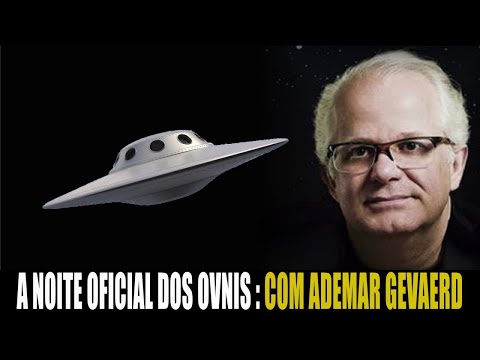
The Official Night of UFOs Remembered, feat. Ademar Gevaerd
A retrospective interview featuring Revista UFO's Ademar Gevaerd, whose 2005 Freedom of Information campaign helped bring the case's archives to light.
Sources
- "1986 Brazilian UFO incident," Wikipedia. en.wikipedia.org
- "Noite dos discos voadores," Wikipédia (Portuguese). pt.wikipedia.org
- CNN Brasil. "Noite dos OVNIs: Brasil já teve caças da FAB perseguindo objetos voadores," February 13, 2023. cnnbrasil.com.br
- Portal Vigília. "Brasília? Boa noite! Bem-vindo ao festival dos discos voadores," November 1, 2015. vigilia.com.br
- Revista UFO / ufo.com.br. "A Noite Oficial dos UFOs no Brasil, 30 anos depois." ufo.com.br
- Government of Brazil (Portal Gov.br). "Official UFO Night in Brazil," 2022. gov.br
- UFO Insight. "The 'Night Of UFOs' — The 1986 Brazilian Air Force Chase." ufoinsight.com
- Gross, Patrick. "UFOs at close sight: Jets chase UFOs over Brazil in 1986." ufologie.patrickgross.org
- UFO Evidence. "Jet Chase Over Brazil — Brazil — May 19, 1986." ufoevidence.org
- Revista Asas / edrotacultural.com.br. "Há 40 anos, FAB caçou alvos na 'Noite Oficial dos Óvnis'." edrotacultural.com.br
- Click Petróleo e Gás (English edition). "The night the Brazilian Air Force hunted UFOs in the sky of Brazil." en.clickpetroleoegas.com.br
- Metabunk. "Brazilian UFO Flap of 1986 — 'Night of Lights' / 'Official UFO Night'" (skeptical discussion thread). metabunk.org
- Arquivo Nacional do Brasil (National Archive of Brazil). Declassified Air Defense Command Occurrence Report, dated June 2, 1986, released September 25, 2009 (PDF). sian.an.gov.br
- Kean, Leslie. UFOs: Generals, Pilots, and Government Officials Go on the Record, Harmony Books, 2010 (reproduces the June 2, 1986 Brazilian Occurrence Report).
- "Ozires Silva," Wikipedia. en.wikipedia.org
- "Ademar José Gevaerd," Wikipedia. en.wikipedia.org
- "CINDACTA," Wikipedia. pt.wikipedia.org
- Wikimedia Commons. "Brazilian Air Force Northrop F-5E Tiger II.jpg" (Guilherme Bystronski, CC BY-SA 4.0). commons.wikimedia.org
- Clark, Jerome. The UFO Encyclopedia, 4th Edition, Visible Ink Press, 2023.
- Good, Timothy. Above Top Secret: The Worldwide UFO Cover-Up, William Morrow, 1988.
- Pratt, Bob. UFO Danger Zone: Terror and Death in Brazil, Rho Sigma Books, 1996.
See something inaccurate? Have additional information or sources?
Suggest an Edit →Last Updated: August 2026