
The Varginha UFO Incident
Between January 13 and 21, 1996, residents of Varginha, a mid-sized coffee-farming city in the Brazilian state of Minas Gerais, reported a cluster of extraordinary events: a distressed, cigar-shaped object trailing smoke and an ammonia-like odor; a small, oily-skinned, red-eyed bipedal creature allegedly cornered by firefighters in the Jardim Andere district; and, that same afternoon, an even more famous sighting of a similar being by three teenagers — sisters Liliane Silva and Valquíria Silva, and their friend Kátia Xavier — who fled screaming from a vacant lot. What followed became, by a wide margin, the most formally documented UFO case in Brazilian history: a May 1996 internal Army inquiry (sindicância) led by Colonel René Jairo Fagundes, and a full Military Police Inquiry — Inquérito Policial Militar No. 18/1997 — that ran from February to June 1997 and produced 357 pages of sworn testimony now archived at Brazil's Superior Military Court. The Army's official and enduring conclusion was mundane: the girls had mistaken a mentally disabled local resident, Luiz Antônio de Paula, nicknamed "Mudinho," crouched against a wall in the rain, for an extraterrestrial being, and the Army truck movements witnesses cited were routine, unrelated vehicle-maintenance runs. That conclusion has never been overturned by any government body — yet nearly thirty years later, in January 2026, Brazilian witnesses including neurosurgeon Dr. Ítalo Venturelli testified before members of the U.S. Congress and at Washington's National Press Club, and Missouri Representative Eric Burlison formally asked the CIA and FBI for any American records related to the case, keeping Varginha one of the most actively contested UFO files in the world.
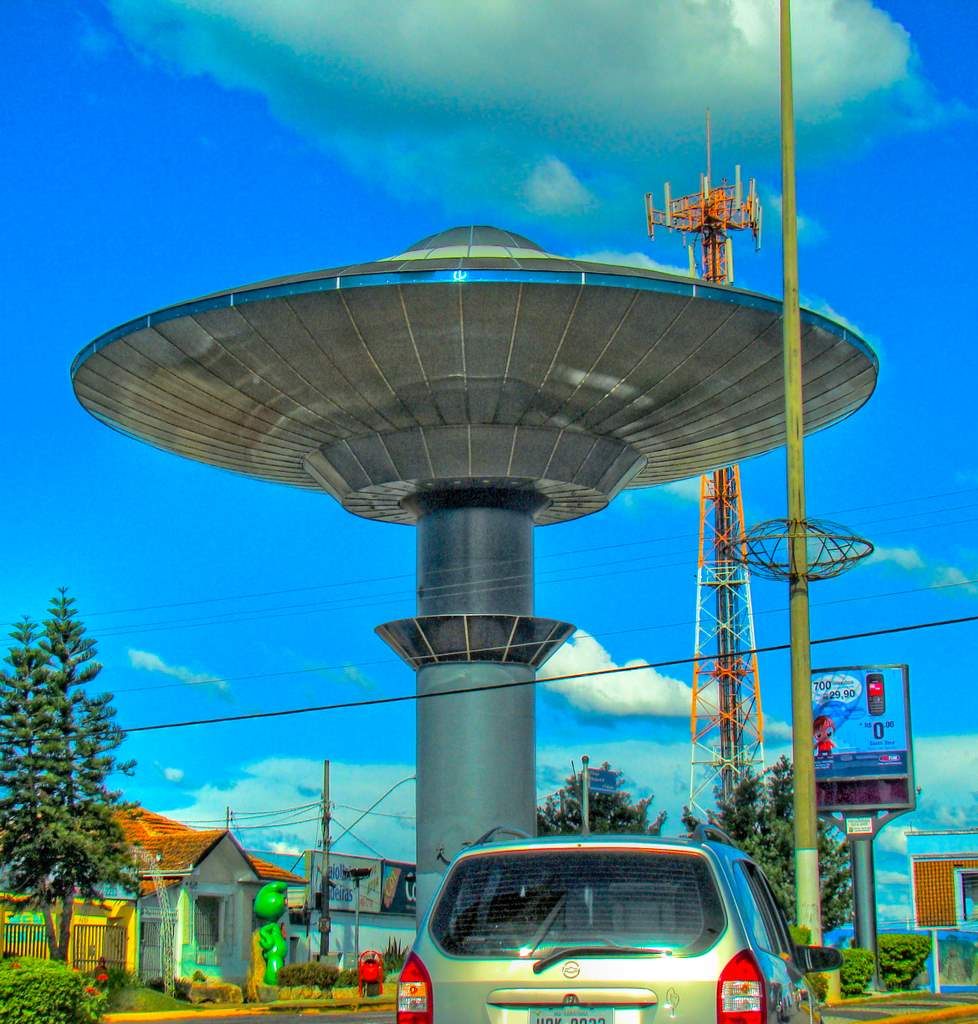
Pictured: the Nave Espacial (Space Ship) water tower, a flying-saucer-shaped municipal monument built in Varginha, Minas Gerais, Brazil to commemorate the 1996 incident. This is not a photograph of the object, the alleged creature, or the actual sites where the events unfolded — it is a modern civic landmark built decades after the fact. No verified photograph of the creature or craft itself is known to exist; the only contemporaneous visual evidence consists of disputed photographs and unreleased military and hospital records.
Theoretical Alignment
Varginha presents an unusual profile for this catalogue: an extremely high volume of formal documentation paired with an unusually strong psycho-social/cultural explanation. The Psycho-Social Hypothesis scores higher here than in almost any other file on this site, not merely because of generic crowd contagion but because Brazilian skeptical researchers have identified a specific, pre-existing local legend centered on the same vacant lot where the three girls had their encounter — decades-old neighborhood rumors that a property owner known as Zé Gomes practiced black magic there and had "opened a portal" that produced thin, red-eyed, horned entities, a folk narrative that predates January 1996 and maps disturbingly well onto the girls' description of a crouched, red-eyed, horn-like-bumped being encountered on his former property during a frightening thunderstorm. The Extraterrestrial Hypothesis is not dismissed outright because the case's documentary record is genuinely unusual: two separate, non-trivial Brazilian Army investigations were opened specifically to address public claims of a creature capture, a level of institutional engagement rarely seen for a "simple misidentification," and multiple witness categories (firefighters, a hospital neurosurgeon, a pilot) independently converged on a broadly similar creature description years and even decades apart with no evident contact between them. The Interdimensional Hypothesis finds little support beyond generic "portal" folklore language borrowed for PSH purposes rather than any documented trans-dimensional physics.
Background
Varginha is a mid-sized city in the Sul de Minas ("South of Minas") coffee-growing region of Minas Gerais state, roughly 320 km northeast of São Paulo and 480 km southwest of Rio de Janeiro. In January 1996 it was an unremarkable regional commercial center of roughly 105,000 people, known chiefly for coffee exports and dairy production, with no prior reputation whatsoever in Brazilian ufology. That reputation already existed elsewhere in the country: nearly two decades earlier, the Brazilian Air Force had conducted Operação Prato, a multi-month official military investigation into the 1977 "Chupa-Chupa" wave on Colares Island in the Amazon delta, where residents reported puncture wounds and blood loss from luminous aerial phenomena. That precedent mattered because it meant Brazil's military and its ufological research community — publications like Ademar Gevaerd's Revista UFO, founded in the early 1990s — already had an institutional memory of taking UAP field reports seriously enough to formally investigate them, rather than dismissing every claim on arrival.
Two Brazilian Army units had a physical presence near Varginha at the time: the 10th Field Artillery Group (10º GAC) maintained a garrison inside the city itself, and the Escola de Sargentos das Armas (ESA), a sergeants' training school, was located roughly 30 km away in Três Corações. Both would become central to the rumors that followed the January sightings — rumors that soldiers from one or both units had captured, transported, or guarded a non-human being, claims that would eventually be tested, and ultimately rejected, by two formal Army investigations over the following eighteen months. It was against this backdrop — an ordinary agricultural city, a nearby military garrison and training school, and a national ufological press already primed by Colares to take a strange report seriously — that the events of mid-January 1996 unfolded.
Complete Timeline
| Date | Event |
|---|---|
| 1977 | The Brazilian Air Force conducts Operação Prato, an official military investigation into the Colares "Chupa-Chupa" UAP wave in Pará — an institutional precedent for later Army engagement with Varginha. |
| January 13, 1996 | Farm couple Oralina Augusta de Freitas and Eurico Rodrigues de Freitas report a cigar/cylindrical object in apparent distress, trailing smoke and an ammonia-like odor, near their property outside Varginha. Separately the same day, ultralight pilot and geography teacher Carlos de Souza reports following a similar object — which he compares to "a broken washing machine" — to a rural crash site, where he says he was confronted at gunpoint by military personnel after picking up a self-reshaping metallic fragment. |
| January 20, 1996, ~8:00 AM | An anonymous caller alerts the Varginha Fire Department to a strange "animal" in the Jardim Andere district. |
| ~10:00 AM | Four firefighters under Major Maciel search the wooded lot with cages and nets, expecting a wild animal; they report instead glimpsing a small, oily-brown-skinned, red-eyed bipedal creature roughly four feet tall. |
| ~3:30 PM | During an afternoon thunderstorm, sisters Liliane and Valquíria Silva and their friend Kátia Xavier encounter a similar crouched being near a wall on a vacant lot on Dr. Benevenuto Braz Vieira street; terrified, they flee and alert their families. |
| Evening, January 20–21, 1996 | Witnesses report military trucks and a grid-search pattern converging on the neighborhood. Firefighters reportedly approach zoo biologist Leila Cabral asking her to accept "a very weird animal"; she does not take custody of anything that night. |
| January 20–21, 1996 | Multiple later accounts allege a creature was brought to the Hospital Regional do Sul de Minas through a back entrance under armed guard; per decades-later testimony, neurosurgeon Dr. Ítalo Venturelli reports a brief face-to-face encounter with a non-human patient. |
| January 21, 1996 | Zoo restaurant employee Terezinha Clepf reports seeing what she describes as a creature's head on the restaurant veranda, comparing it to "a motorcycle helmet." |
| February–April 1996 | Several animals at Varginha's municipal zoo — including a tapir, an ocelot, a spider monkey, and two gray brocket deer — die under circumstances biologist Leila Cabral describes as medically inexplicable. |
| February 12, 1996 | Corporal Marco Eli Chereze of the 24th Military Police Battalion, age 23, is hospitalized with abdominal pain; he had a pre-existing cyst under his left armpit already scheduled for surgical removal. |
| February 15, 1996 | Chereze dies. An autopsy on February 16 (report issued February 29) identifies Staphylococcus schleiferi in a post-surgical wound culture; the official cause of death is recorded as sepsis. |
| May 1996 | The ESA commander in Três Corações orders an internal sindicância, led by Colonel René Jairo Fagundes; 23 military personnel are interviewed over eight days regarding claims of a creature capture or transport operation. |
| June 28, 1996 | The Wall Street Journal publishes "Tale of Stinky Extraterrestrials Stirs Up UFO Crowd in Brazil," giving the case its first major international press coverage. |
| 1996 | Ufologists Vitório Pacaccini and Maxs Portes publish Incidente em Varginha, naming specific Army Police personnel allegedly involved in a creature-transport operation — the claims that formally trigger the 1997 Military Police Inquiry. |
| February–June 1997 | Brazil's Army Ministry opens Inquérito Policial Militar No. 18/1997 (production dates February 13–June 19, 1997), conducted at the ESA under Lt. Col. Lúcio Carlos Finholdt Pereira; seven named Army Police personnel testify and are formally cleared. |
| July 15, 1997 | Brazil's Military Public Ministry recommends archiving the inquiry, finding the capture allegations too implausible to constitute crimes against the Armed Forces. |
| August 1997 | The Superior Tribunal Militar (STM) formally archives the 357-page, two-volume inquiry as Autos Findos No. 908/1997. |
| 2005 | Brazil's General Military Police Commission IPM archives, including No. 18/1997, are transferred to Brazil's National Archive and digitized for public research access. |
| 2010 | Renewed Brazilian press retrospectives (IstoÉ and others) republish the Army's official conclusion identifying local resident Luiz Antônio de Paula ("Mudinho") as the likely source of the girls' misidentification, including a photographic comparison study from the inquiry file. |
| 2022 | Documentary filmmaker James Fox releases Moment of Contact, built substantially around new interviews connected to the Varginha case, reintroducing it to a global audience. |
| 2025 | Neurosurgeon Dr. Ítalo Venturelli goes on the record in detail for the first time, following a near-fatal heart attack, describing a brief 1996 encounter with a non-human hospital patient; Fox releases an expanded documentary, Moment of Contact: New Revelations of Alien Encounters. |
| January 15, 2026 | Three Brazilian witnesses, including Dr. Venturelli, present testimony in a closed-door Congressional meeting in the office of Rep. Tim Burchett (R-TN), also attended by Reps. Anna Paulina Luna and Eric Burlison. |
| January 20, 2026 | Exactly 30 years after the original sighting, James Fox holds a public press conference at the National Press Club in Washington, D.C., presenting witness testimony and renewed calls for U.S. disclosure of any related records. |
| July 2026 | Rep. Eric Burlison, a member of the House Oversight Committee's Task Force on the Declassification of Federal Secrets, formally requests any CIA and FBI records related to the January 1996 Varginha/Campinas incident. |
The Crash Reports of January 13
The documented record of the Varginha case begins a full week before its most famous sighting. On January 13, 1996, a farm couple, Oralina Augusta de Freitas and Eurico Rodrigues de Freitas, reported watching a cigar- or cylinder-shaped object moving erratically and losing altitude over rural land outside the city, trailing what they described as a smoke-like vapor and a strong ammonia or sulfur-like odor. Separately that same day, Carlos de Souza, a geography teacher and ultralight aircraft pilot, reported spotting a similar object — roughly the size of a school bus, moving with what he later described as the labored, struggling motion of "a broken washing machine" — and following it, believing it might be an aircraft in distress. By his account, he located a rural crash site strewn with debris and permeated by an overpowering sulfurous smell; when he picked up a fragment of metallic material that, he says, sprang back into its original shape after being crushed in his fist, military personnel arrived within minutes and forced him away at gunpoint, later allegedly threatening his family if he spoke publicly. De Souza did not go on the record with a detailed account for decades, a pattern of long-delayed testimony that recurs throughout this case and that skeptics point to as a serious evidentiary weakness, given the total absence of contemporaneous corroboration, debris, or any surviving fragment to examine.
The Firefighters' Encounter in Jardim Andere
A week later, at approximately 8:00 AM on January 20, 1996, an anonymous caller alerted the Varginha Fire Department to a strange "animal" reportedly seen in a wooded, undeveloped lot in the Jardim Andere district in the city's north. Roughly two hours later, four firefighters under Major Maciel arrived equipped for what they expected to be a routine wildlife call — cages and capture nets, not weapons or containment gear for anything more exotic. According to secondhand accounts collected by journalists and ufologists in the following weeks, the firefighters, climbing a forested slope in the lot, encountered a small bipedal being roughly four feet (1.2–1.5 m) tall, with oily, shiny brown skin, a disproportionately large head, and prominent, glowing red eyes. No contemporaneous written statement from any of the four firefighters has ever been published in full, and this account rests substantially on secondhand journalistic and ufological reconstruction rather than a primary document equivalent to the Godman Field tower log in the Mantell case or the Army disposition form in the Coyne case — a genuine documentary gap this file flags rather than glosses over.
Three Girls, a Vacant Lot, and a Face in the Wall
The case's defining sighting occurred that same afternoon, at approximately 3:30 PM, during a thunderstorm — a detail that later became central to the Army's own explanation. Sisters Liliane Fátima Silva and Valquíria Aparecida Silva, together with their friend Kátia Andrade Xavier, were walking through an empty lot on Dr. Benevenuto Braz Vieira street when they say they saw a crouched figure near a wall. Kátia Xavier's account, among the most detailed on record, describes a heart-shaped face, a head that seemed disproportionately large for the body beneath it, oily skin, hands with only three fingers, feet shaped like the letter "V," and above all a pair of enormous, glowing red eyes she compared to "two red balls." All three girls agreed on three small, horn-like protuberances across the being's forehead. Terrified, they fled and alerted their families; Liliane and Valquíria's mother, Luiza Helena de Silva, later told journalists she found a large, three-toed footprint at the site when she returned with the girls. The sighting spread through the neighborhood within hours and, amplified by local and then national press coverage in the following days, became the defining image of the entire case — even though, chronologically, it was neither the first sighting of an aerial object (January 13) nor the first reported sighting of a creature that day (the firefighters, roughly seven hours earlier).
Military Trucks, the Zoo, and a Town on Edge
By the evening of January 20 and into January 21, residents across Varginha reported an unusual concentration of military vehicles moving through the city, in some accounts converging on Jardim Andere and Humaitá in what witnesses characterized as a coordinated search pattern. It was against this backdrop that the story acquired its most vivid secondary claim: that firefighters, having recovered a creature, approached municipal zoo biologist Leila Cabral the night of January 20 asking her to accept custody of "a very weird animal," an offer she says she did not act on that night. The following evening, January 21, a zoo restaurant employee, Terezinha Clepf, told investigators she saw what she described as a creature's head peering from the restaurant veranda, comparing its shape to "a motorcycle helmet." Cabral would later become a witness in her own right on a different, longer-running thread of the case: between February and April 1996, several zoo animals — a tapir, an ocelot, a spider monkey, and two gray brocket deer — died under circumstances she described as medically unexplained, with an outside laboratory in Belo Horizonte allegedly finding an unidentified "toxic-caustic substance" in tissue samples. No laboratory report substantiating that specific finding has ever been published for independent review, leaving it, like much of the physical-evidence side of this case, an unverified secondhand claim rather than documented fact.
The Regional Hospital and the Neurosurgeon's Late Testimony
The most medically dramatic strand of the Varginha case did not become widely known until nearly three decades after the fact. According to accounts that first circulated informally and then, from 2025 onward, in detailed on-the-record interviews and eventually January 2026 congressional testimony, a colleague summoned neurosurgeon Dr. Ítalo Venturelli, then on staff at the Hospital Regional do Sul de Minas, to view what he describes as a fifteen-to-twenty-second video clip of an unusual patient before leading him to a bedside encounter he says lasted roughly four minutes. Venturelli describes a small, non-human being with reddish or lilac-colored, teardrop-shaped eyes and oily skin, consistent in broad strokes with the girls' description, and says he perceived what he interpreted as a wordless, telepathic exchange rather than any spoken communication. He has stated publicly that armed personnel removed the patient shortly afterward and that hospital staff were instructed not to discuss what they had seen. No hospital admission record, imaging study, or contemporaneous 1996 medical documentation corroborating any part of this account has ever been released, by the hospital, the Army, or Dr. Venturelli himself; his account rests entirely on personal testimony delivered, by his own statement, only after a near-fatal 2025 heart attack led him to reconsider "taking it to the grave." A professional medical credential of this caliber is a genuine point in the case's favor as testimony goes, but the near-thirty-year gap between the alleged event and any public account of it is an equally genuine and serious evidentiary weakness that this file does not minimize.
The Death of Marco Eli Chereze
No single element of the Varginha case has generated more persistent, and more directly falsifiable, rumor than the death of Corporal Marco Eli Chereze, a 23-year-old soldier of the 24th Military Police Battalion born October 10, 1972. Chereze was hospitalized on February 12, 1996 with abdominal pain; he had a pre-existing cyst under his left armpit that had already been scheduled for surgical removal before the Varginha sightings began, according to his documented medical history. He died on February 15, 1996. An autopsy performed the following day (with a full report issued February 29) attributed his death to sepsis following post-operative infection, with a wound culture identifying Staphylococcus schleiferi — a bacterium that, while uncommon in human infections, is a recognized, medically unremarkable cause of post-surgical sepsis, most often associated with animal (particularly canine) skin flora rather than any exotic or unidentified pathogen. Chereze's family has publicly alleged medical negligence, pointed to a denied exhumation request, and criticized what they describe as a rushed, sealed-coffin burial, grievances that speak to a real and understandable family grief and distrust of the military's handling of the case, but which do not, on the documented medical record, establish any connection between Chereze's death and the UFO sightings occurring in the same city that same month. This file treats the coincidence of timing as suggestive enough to warrant inclusion and scrutiny, while noting plainly that the best-documented medical evidence in the entire case points to an ordinary, if tragic, surgical complication.
Colonel Fagundes and the May 1996 Sindicância
Even before any formal military police inquiry was opened, mounting local rumors of a creature-capture operation prompted the commander of the Escola de Sargentos das Armas in Três Corações to order an internal administrative investigation, known in Brazilian military procedure as a sindicância, in May 1996. The inquiry was led by Colonel René Jairo Fagundes, who over eight days interviewed 23 military personnel about claims — already circulating in the local and national press — that soldiers had participated in transporting a captured non-human being. Fagundes's investigation concluded that the specific personnel named by the press had not participated in any such transport operation, and characterized the media claims as unfounded. As an internal, non-judicial administrative review rather than a formal criminal inquiry, the sindicância carried less evidentiary weight than what followed it eight months later, but it represents the first of the case's two genuine documented instances of the Brazilian Army formally investigating itself over Varginha — a level of institutional engagement this file treats as a meaningful, if ultimately exculpatory, data point.
The 1997 Military Police Inquiry and the "Mudinho" Finding
The catalyst for a full, judicially cognizable inquiry was the 1996 publication of Incidente em Varginha, a book by ufologists Vitório Pacaccini and Maxs Portes that named specific Army Police personnel it alleged had participated in capturing and transporting an extraterrestrial being. In response, Brazil's Army Ministry formally opened Inquérito Policial Militar No. 18/1997, conducted at the ESA under the direction of Lieutenant Colonel Lúcio Carlos Finholdt Pereira, with production dates spanning February 13 to June 19, 1997. Seven named Army Police personnel — Lieutenant Colonel Olímpio Vanderlei dos Santos, Major Edson Henrique Ramires, First Lieutenant Márcio Luiz Passos Tibério, First Sergeant Valdir Cabral Pedrosa, Corporal Renato Vassalo Fernandes, and Privates Ricardo Silvério de Melo and Cirilo Martins — gave sworn testimony. The completed inquiry runs to 357 pages across two bound volumes, now catalogued by Brazil's Superior Military Court (STM) under reference code BR DFSTM 002-001-001-ipm-18-1997 and publicly searchable through the STM's ARQUIMEDES digital archive. On July 15, 1997, Brazil's Military Public Ministry recommended the inquiry be archived, concluding that the capture allegations were too implausible to sustain a charge of crimes against the Armed Forces; the STM formally closed the file the following month as Autos Findos No. 908/1997.
The inquiry's substantive conclusion, later republished in Brazilian press retrospectives (notably a 2010 IstoÉ feature and renewed 2026 coverage by G1, CNN Brasil, and Correio Braziliense timed to the case's 30th anniversary), identified the likely source of the girls' sighting as a real, named local resident: Luiz Antônio de Paula, known locally by the nickname "Mudinho," a man in his early thirties at the time with a documented intellectual and physical disability who lived across from the vacant lot and had a long-standing, well-known habit of walking hunched over while scavenging cigarette butts and sticks from the ground. The inquiry file includes a photographic comparison study juxtaposing his crouched posture with the girls' description, and the investigators' own language, later quoted by multiple Brazilian outlets, judged it "more probable" that the girls, terrified and startled during a rainstorm, "confused" a "probably dirty," rain-soaked man crouched against a wall with a "space creature" than that they had encountered a genuine non-human being. The Army's parallel finding regarding the reported troop movements was similarly mundane: the trucks and personnel witnesses observed converging on the area were, per the inquiry, engaged in routine, unrelated vehicle maintenance runs, including scheduled work at a nearby Mercedes-Benz dealership, rather than any creature-recovery operation.
Thirty Years Later: James Fox, Congress, and Renewed Scrutiny in 2026
The Army's 1997 conclusion, formally archived that August, remained the Brazilian government's only official position on Varginha for nearly three decades. That changed substantially with the 2022 release of Moment of Contact, a feature documentary by American filmmaker James Fox built around new interviews connected to the case, followed by a 2025 expanded edition, Moment of Contact: New Revelations of Alien Encounters, which foregrounded Dr. Ítalo Venturelli's first detailed public account. The renewed attention culminated on the case's exact 30th anniversary: on January 15, 2026, three Brazilian witnesses — including Venturelli, Carlos de Souza, and forensic pathologist Dr. Armando Fortunato — presented testimony in a closed-door Congressional meeting hosted by Representative Tim Burchett (R-TN) and attended by Representatives Anna Paulina Luna (R-FL), chair of the House Oversight Committee's Task Force on the Declassification of Federal Secrets, and Eric Burlison (R-MO). Five days later, on January 20, 2026 — exactly thirty years after the original sighting — James Fox held a public press conference at the National Press Club in Washington, D.C., presenting the assembled witness testimony and renewing calls for American disclosure, stating that six additional Brazilian witnesses had been denied U.S. visas to attend in person. In July 2026, Burlison formally wrote to CIA Director John Ratcliffe and FBI Director Kash Patel requesting any American government records or investigative equities connected to the January 1996 Varginha/Campinas incident — keeping the case, as of this writing, an open, actively pursued line of Congressional inquiry rather than a closed historical curiosity, even though no Brazilian or American government body has walked back the 1997 IPM's official conclusion.
Circumstantial Evidence
- Two independent parties — a farm couple and a pilot — separately reported a distressed cigar-shaped aerial object on the same day, January 13, 1996, a week before the more famous creature sightings.
- Multiple independent witness categories — firefighters, three teenagers, and, decades later, a neurosurgeon — converged on a broadly consistent creature description (small stature, oily brown skin, large red eyes) despite no evident contact between them.
- The Brazilian Army opened two separate, genuine investigations — the May 1996 sindicância and the 1997 IPM — an unusually substantial institutional response for a case ultimately attributed to simple misidentification.
- No specimen, wreckage, verified physical trace, or laboratory report has ever been publicly produced or independently reviewed, despite thirty years of sustained media and, since 2026, congressional interest.
- The case's two most credentialed witnesses, Dr. Ítalo Venturelli and pilot Carlos de Souza, both remained silent in detail for approximately three decades, a gap that undercuts the immediacy normally expected of high-value testimony.
- A documented, pre-existing local legend about the same vacant lot — involving black magic and red-eyed, horned entities — predates the January 1996 sighting and closely matches the girls' description.
- The one death directly linked to the case in popular retelling, Corporal Marco Eli Chereze's, is attributed on the documented medical record to a pre-scheduled surgical procedure and a recognized post-operative bacterial infection.
Key Researchers
- Colonel René Jairo Fagundes — Brazilian Army officer who led the May 1996 internal sindicância, the first formal military investigation into the creature-capture claims.
- Lt. Col. Lúcio Carlos Finholdt Pereira — Investigating officer who conducted the 1997 Military Police Inquiry No. 18/1997 at the Escola de Sargentos das Armas.
- Vitório Pacaccini & Maxs Portes — Brazilian ufologists whose 1996 book Incidente em Varginha, naming specific Army Police personnel, directly triggered the formal 1997 inquiry.
- Ademar José Gevaerd — Founder-editor of Revista UFO and one of Brazil's most prominent ufologists, whose publication was among the first national Brazilian outlets to cover the Varginha case.
- James Fox — American documentary filmmaker whose 2022 and 2025 films reintroduced Varginha to a global audience and helped surface Dr. Ítalo Venturelli's testimony.
- Brian Dunning — Host of the Skeptoid podcast, whose episode #853 ("Brazil's Roswell: The Varginha UFO") remains one of the most detailed English-language skeptical analyses of the case's documentary inconsistencies.
- Kevin D. Randle — American UFO researcher and retired military intelligence officer whose published analysis takes a cautiously open position on the case while explicitly flagging the weaknesses in its official Brazilian explanation.
Cultural Impact
Few UFO cases anywhere have reshaped a city's public identity as thoroughly as Varginha's has. The city built a 20-meter flying-saucer-shaped water tower, the Nave Espacial de Varginha, in its central Praça Marechal Floriano in 2001 to disguise what would otherwise have been an ordinary 100,000-liter municipal water tank; it has since become one of the city's most photographed landmarks. Spaceship-themed bus stops, an alien-shaped commemorative memorial, and an annual tourism campaign built around "the Route of the ET" have followed, transforming a genuinely traumatic and contested local event into a defining civic brand. The case has generated multiple books in both Portuguese and English, at least two feature documentaries by James Fox, and recurring anniversary press coverage in Brazil's largest national outlets (G1, CNN Brasil, Correio Braziliense, IstoÉ) every five to ten years since 1996, most recently around its 30th anniversary in January 2026. That renewed 2026 coverage, paired with direct U.S. Congressional engagement, means Varginha's cultural and political afterlife shows no sign of settling into the quiet, closed-file status its 1997 official conclusion might otherwise have earned it.
Key Witnesses
Liliane Fátima Silva & Valquíria Aparecida Silva
Teenage sisters who, together with their friend Kátia Xavier, encountered a crouched, red-eyed being near a wall on a vacant lot during a thunderstorm on the afternoon of January 20, 1996. Their sighting, given to press and later to military investigators within days, became the defining account of the entire case. Their mother, Luiza Helena de Silva, later reported finding an unusual footprint at the site.
Kátia Andrade Xavier
The third of the three teenagers present at the January 20, 1996 sighting, Xavier gave the case's most granular physical description of the being — a heart-shaped face, oversized head, oily skin, three-fingered hands, V-shaped feet, and large red eyes — details that have anchored nearly every subsequent retelling of the case.
Corporal Marco Eli Chereze
A 23-year-old soldier hospitalized February 12, 1996 for a pre-scheduled cyst removal, who died three days later of what his autopsy identified as post-surgical sepsis linked to a Staphylococcus schleiferi infection. His death, coinciding with the Varginha sightings, became the case's most persistent rumor of a UFO-related fatality, though the documented medical record attributes it to an ordinary surgical complication rather than any exotic cause.
Dr. Ítalo Venturelli
A senior neurosurgeon who says he had a roughly four-minute face-to-face encounter with a non-human hospital patient on January 20–21, 1996, describing reddish, teardrop-shaped eyes and a perceived telepathic exchange. He did not go on the record in detail until 2025, following a near-fatal heart attack, and testified before members of the U.S. Congress in January 2026. His professional credentials lend real weight to the account; the nearly three-decade delay and absence of any corroborating 1996 medical record are equally real limitations.
Carlos de Souza
Reported following a distressed, cigar-shaped object to a rural crash site on January 13, 1996, where he says he recovered a self-reshaping metallic fragment before being confronted at gunpoint by military personnel and forced to leave. He did not speak publicly in detail for decades, citing alleged intimidation, before testifying to Congress and at the January 2026 National Press Club press conference.
Leila Cabral
The zoo's biologist, who says firefighters approached her the night of January 20, 1996 asking her to accept "a very weird animal," and who later documented the unexplained deaths of several zoo animals between February and April 1996. No independent laboratory report on those animal deaths has ever been publicly released.
Colonel René Jairo Fagundes
The Brazilian Army colonel who led the internal administrative inquiry (sindicância) ordered in May 1996 at the Escola de Sargentos das Armas, interviewing 23 military personnel over eight days and concluding that named personnel had not participated in any creature-transport operation — the first of the case's two formal military investigations.
Luiz Antônio de Paula ("Mudinho")
A Varginha resident with a documented intellectual and physical disability, known locally by the nickname "Mudinho" for his habit of walking crouched over while collecting cigarette butts and sticks. The 1997 Military Police Inquiry's official conclusion identifies him, seen soaked and crouched against a wall during the January 20 thunderstorm, as the probable source of the three girls' misidentification.
The Five Observables Assessment
The Five Observables framework, developed by former AATIP director Luis Elizondo, is used to classify UAP encounters by performance characteristics exceeding known technology of their era. Applied to Varginha, the framework returns a modest, largely speculative result reflecting the case's total absence of instrumented or aerodynamic performance data:
Assessment: Varginha is not, at its core, a craft-performance case; it is a ground-level creature-encounter and alleged-recovery case, and the Five Observables framework registers that clearly. Anti-Gravity Lift and Hypersonic Velocity are rated absent because no witness at any point described the January 13 object maneuvering in a way exceeding conventional aircraft or balloon performance — de Souza's own "broken washing machine" description implies labored, distressed flight, the opposite of an anti-gravity signature. Instant Acceleration is rated only speculative, reflecting the object's reported erratic loss-of-altitude behavior rather than any documented burst of speed. Low Observability is rated absent: the object was visually conspicuous enough to be independently reported by two separate parties the same day. Trans-Medium travel is rated speculative only in the loosest sense, reflecting persistent but never substantiated rumors of underground or "portal" activity tied to the Jardim Andere site's pre-existing local folklore, discussed in the Theoretical Alignment section above — not any documented transition between physical media.
Evidence Assessment
Supporting Anomalous Origin
- Multiple independent witness categories — firefighters, three teenagers, and decades later a neurosurgeon — described a broadly consistent creature morphology despite no evident contact between them.
- The Brazilian Army opened two separate, genuine investigations into the claims, an unusually substantial institutional response if the case were purely a case of mistaken identity.
- Pilot Carlos de Souza and farm couple Oralina and Eurico de Freitas independently reported a distressed aerial object on the same day, a week before the more famous creature sightings.
- Dr. Ítalo Venturelli, a credentialed neurosurgeon with no prior ufological involvement, has testified under his own name and professional reputation, including before members of the U.S. Congress in January 2026.
- The case remains an active subject of formal U.S. Congressional inquiry as of mid-2026, with Rep. Eric Burlison formally requesting CIA and FBI records.
Supporting Conventional Explanation
- The 1997 Military Police Inquiry identified a specific, named, real local resident with a documented disability and a habitual crouching gait as the probable source of the girls' sighting, supported by a photographic comparison study in the official file.
- A pre-existing local legend tied to the exact same vacant lot — involving black magic, a "portal," and red-eyed, horned entities — predates the 1996 sighting and closely matches the girls' description, a strong psycho-social/cultural contamination candidate.
- The one death popularly linked to the case, Cpl. Marco Eli Chereze's, is explained on the documented medical record by a pre-scheduled surgical procedure and a recognized bacterial post-operative infection.
- No specimen, wreckage, photograph, film, or independently reviewed laboratory report connected to the alleged creature or craft has ever been produced in three decades.
- The case's most credentialed witnesses (Venturelli, de Souza) did not go on the record in detail for roughly 29–30 years, a substantial gap that undercuts the reliability normally expected of high-value testimony and leaves their accounts vulnerable to memory reconstruction.
- Skeptical researchers have identified a documented geographic and temporal inconsistency between the farm couple's sighting location and Carlos de Souza's claimed crash site, roughly 14 miles apart, that popular retellings often present as the same simultaneous event.
Why "Disputed"
This file rates Varginha DISPUTED rather than "Debunked" or "Credible" because the case genuinely pulls in two directions at once, and no honest reading of the record resolves that tension cleanly. On one side, the Brazilian Army investigated itself twice — a May 1996 internal sindicância and a formal, 357-page Military Police Inquiry in 1997 — and both times reached a specific, documented, and reasonably well-supported conventional conclusion: a named local resident with a habitual crouching gait, seen during a thunderstorm, most likely explains the case's single most famous sighting, and the military vehicle movements witnesses cited were routine and unrelated. That official finding has never been formally overturned by any Brazilian or American government body, including as of this writing in 2026. On the other side, this remains the most extensively documented UFO case in Brazilian history for a reason: multiple independent witness categories, separated by hours or even decades and with no evident contact with one another, converged on a broadly consistent, unusual creature description; a credentialed neurosurgeon has staked his professional reputation on a firsthand account; and the case has proven durable enough to draw formal, ongoing U.S. Congressional inquiry three decades after the fact, including direct requests to the CIA and FBI for any related American records. Neither side of that ledger cancels the other out. What genuinely tips this file toward the skeptical end of "Disputed" rather than the credible end is the total absence, after thirty years, of a single surviving photograph, physical specimen, or independently reviewed laboratory finding — and the fact that the case's most dramatic individual claims (Venturelli's hospital encounter, the "toxic-caustic" zoo lab result) rest on testimony delivered decades after the fact, with no contemporaneous documentation to anchor them.
Sensor & Instrumentation Detection Profile
No radar, gun-camera, satellite, or other instrumented sensor data has ever been publicly associated with any phase of the Varginha case. Detection was, in every documented instance, unaided human observation: three teenagers at close range in daylight; municipal firefighters searching a wooded lot with hand tools, cages, and nets rather than any detection equipment; a farm couple and an ultralight pilot, Carlos de Souza, observing an aerial object with the naked eye on January 13; and, per later testimony, hospital staff observing a patient inside a treatment room. The case's closest approach to instrumented data is medical rather than aerospace: the autopsy and laboratory culture performed on Corporal Marco Eli Chereze after his February 1996 death, which identified the bacterium Staphylococcus schleiferi in a post-surgical wound culture, and unverified secondhand claims relayed by zoo biologist Leila Cabral that a laboratory in Belo Horizonte detected an unidentified "toxic-caustic substance" in the tissue of several zoo animals that died between February and April 1996 — a claim for which no laboratory report has ever been published or independently reviewed. No photograph, film frame, or video recording of the alleged creature, the alleged craft, or the alleged crash site has ever surfaced despite three decades of intense media interest, a fact skeptics and proponents alike treat as significant, if for opposite reasons.
Environmental & Geospatial Context
Varginha sits in the coffee- and dairy-farming Sul de Minas region of Minas Gerais state, roughly equidistant from São Paulo, Rio de Janeiro, and Belo Horizonte, and home in 1996 to a population of around 105,000. The January 20, 1996 sightings occurred, according to the Brazilian Army's own later investigative finding, during an afternoon thunderstorm — a detail the Army's report treats as load-bearing, since a soaked, mud-streaked individual crouched against a wall for shelter is central to its misidentification theory. The January 13 aerial sightings, by contrast, are described by witnesses as occurring under clearer conditions. Geospatially, the case's key sites are compact: the Jardim Andere and neighboring Humaitá districts where both the firefighter search and the girls' sighting took place; the Hospital Regional do Sul de Minas in central Varginha; and, roughly 30 km away, the Escola de Sargentos das Armas (ESA) military school in Três Corações — the same city, coincidentally, where football legend Pelé was born — which became the focus of both the May 1996 sindicância and persistent (never verified) claims that a creature was transported there. Unverified secondary claims place additional activity roughly 300 km away at Campinas, São Paulo, where rumors of a U.S. military aircraft landing have circulated for decades without documentary support from any published flight log, Brazilian or American.
Observer Credibility & Occupational Profile
The witness pool spans an unusually wide range of occupational backgrounds, though almost none carry the trained-observer credentials common to military radar or aircrew cases elsewhere in this catalogue. Liliane Silva, Valquíria Silva, and Kátia Xavier were teenagers with no forensic or investigative background, questioned by both civilian press and, later, military investigators within days of their sighting — a comparatively short delay by this case's later standards. The four firefighters who searched Jardim Andere that same morning, under Major Maciel, were trained emergency responders dispatched on what they believed was a routine wild-animal call, not observers primed to expect anything anomalous. Seven named Army Police personnel — including ESA-based officers up to the rank of lieutenant colonel — gave sworn testimony to the 1997 Military Police Inquiry and were formally cleared of any role in a creature capture or transport operation. The case's most credentialed witness by far, neurosurgeon Dr. Ítalo Venturelli, did not go on the record until decades after the event — first informally, then in detailed 2025–2026 interviews and January 2026 congressional testimony — a professional medical credential of real weight, substantially undercut by the extraordinary length of the delay and the total absence of any contemporaneous 1996 medical documentation to corroborate it. Pilot Carlos de Souza, a geography teacher and ultralight aviator, likewise did not speak publicly for decades, citing alleged intimidation. None of the case's core 1996 witnesses had any prior involvement with ufology before that January.
Physical & Material Assays
No specimen, wreckage, or verified physical trace connected to either the alleged creature or the alleged craft has ever been produced, tested by an accredited independent laboratory, or made publicly available for review — a stark contrast with the case's reputation as Brazil's best-documented UFO file. The one piece of alleged physical material in the case — a metallic fragment pilot Carlos de Souza claims to have picked up at a purported crash site on January 13, 1996, which he says sprang back into shape after being crushed in his fist — was, by his own account, confiscated at gunpoint by military personnel within minutes and has never resurfaced. The only genuinely laboratory-tested material connected to the case is medical: the autopsy and bacterial culture performed on Corporal Marco Eli Chereze in February 1996, which identified Staphylococcus schleiferi, a bacterium uncommon but not unknown in human post-surgical wound infections, in a culture taken after his death. Secondhand, unpublished claims of a "toxic-caustic substance" found in the bodies of Varginha's municipal zoo animals that died between February and April 1996 have never been supported by a released laboratory report, chain-of-custody documentation, or independent toxicological peer review, and this file treats them as an open, unverified claim rather than established evidence.
Historical Precedents & Archive Matches
Varginha is popularly nicknamed "Brazil's Roswell," an explicit comparison to the American case profiled elsewhere in this catalogue at Roswell, and the parallel runs deeper than marketing: both involve an alleged crash, an alleged recovery of non-human remains, a rapid military response, and a decades-later resurgence of witness testimony contradicting an early official explanation. Within Brazil specifically, Varginha is not an isolated data point. Nineteen years earlier, the Brazilian Air Force (FAB) launched Operação Prato (Operation Saucer) to investigate the 1977 Colares "Chupa-Chupa" light-beam wave in Pará state, an officially sanctioned military UAP investigation whose lead officer, Captain Uyrangê Hollanda Lima, and whose most prominent chronicler, Ademar José Gevaerd, both later became central figures in the Varginha case's own retelling — Gevaerd's Revista UFO was among the first Brazilian outlets to cover Varginha nationally. The pattern of a formal Brazilian military inquiry into UAP-adjacent claims, producing genuine sworn testimony and internal paperwork rather than dismissing the matter outright, recurs across both cases and distinguishes Brazilian ufology's institutional history from the U.S. Air Force's comparatively terse Project Blue Book dispositions. Varginha's creature description — a small, large-headed, red-eyed humanoid — also echoes a recurring cross-cultural "grey"/humanoid morphology found in cases like Kelly-Hopkinsville and, on the multi-witness military-encounter axis, Rendlesham Forest.
Material Analysis
The Varginha case is, in strict material-evidence terms, remarkably thin for its reputation. No fragment of the alleged craft, no tissue or biological sample from the alleged creature, and no chain-of-custody documentation for any physical item has ever been produced for independent laboratory analysis, in sharp contrast to crash-retrieval cases elsewhere in this catalogue that at least generated disputed metallurgical samples. The single claimed physical artifact — the self-reshaping metallic fragment pilot Carlos de Souza says he recovered on January 13, 1996 — was, by his own account, confiscated by military personnel within minutes of his arrival at the alleged crash site and has never been produced, tested, or photographed by any independent party. The zoo animal deaths reported between February and April 1996 represent the case's second physical-evidence thread; biologist Leila Cabral's account of an unidentified "toxic-caustic substance" detected by a Belo Horizonte laboratory has circulated in secondary ufological literature for decades without the underlying laboratory report itself ever being published, making it impossible for this file, or any outside researcher, to independently evaluate the claim's toxicological basis. The only rigorously documented physical/medical evidence generated by the entire case — Corporal Marco Eli Chereze's February 1996 autopsy and bacterial culture — points not toward an exotic biological agent but toward an ordinary, medically recognized cause of post-surgical sepsis.
Supporting a Genuinely Unusual Physical Event
- An unusually strong sulfur/ammonia-like odor was independently reported in connection with both the January 13 aerial object and the alleged hospital patient, a detail repeated across otherwise unconnected witness accounts.
- The claimed self-reshaping metal fragment, if genuine, would represent an anomalous material property; its disappearance under alleged military confiscation prevents any test of that claim either way.
Supporting a Mundane Origin
- Zero physical specimens, samples, or documented chain-of-custody materials from the case have ever been produced for outside laboratory review in three decades.
- The case's one rigorously documented medical/forensic finding — Chereze's autopsy — identifies an ordinary, medically unremarkable cause of death unconnected to any exotic biological exposure.
- The "toxic-caustic substance" zoo-animal claim rests entirely on secondhand testimony with no published, reviewable laboratory report.
Conventional Explanation Candidates
Because Varginha is fundamentally a cluster of related but distinct claims rather than a single discrete event, no single conventional explanation covers every element of the case. This file evaluates the three candidates that, together, account for the great majority of the documented record.
The "Mudinho" Misidentification (the Army's Official Finding)
The Brazilian Army's own 1997 Military Police Inquiry concluded that the three girls' January 20 sighting — the case's single most famous encounter — most likely involved a real, named local resident, Luiz Antônio de Paula, seen crouched against a wall during a thunderstorm. This candidate is well-documented within the official file, which includes a photographic comparison study, and it accounts economically for the specific circumstances of that one sighting: poor visibility during heavy rain, a genuinely disabled man with a documented habitual crouching gait, and three frightened teenagers under acute stress. Its weakness is scope: the "Mudinho" theory, even if fully accepted, says nothing about the firefighters' earlier same-day sighting in daylight with proper search equipment, the January 13 aerial object reports a week prior, or the later hospital and zoo claims, all of which require entirely separate explanations if this candidate is correct only for the girls' account.
Psycho-Social Contagion and Pre-Existing Local Folklore
Brazilian skeptical researchers have identified a specific, documented local legend predating the 1996 sighting and tied to the same vacant lot: neighborhood rumors that a property owner known as Zé Gomes practiced black magic there and had "opened a portal" producing thin, red-eyed, horned entities. This candidate is unusually strong as psycho-social explanations go, because it is not a generic appeal to "mass hysteria" but a specific, geographically anchored cultural narrative that predates and closely matches the case's central creature description, suggesting the girls' Catholic-influenced cultural framework may have shaped their initial interpretation of an ambiguous stimulus (very plausibly the same "Mudinho" stimulus above) as demonic or otherworldly. Its limitation is that it explains interpretation and elaboration far better than it explains the original stimulus itself, and it does not address the later, independently sourced hospital and zoo claims that emerged from witnesses with no obvious connection to the Jardim Andere folklore.
Medical Misattribution and Escalating Secondary Elaboration
A third candidate addresses the case's two most dramatic secondary claims — Chereze's death and the hospital/neurosurgeon testimony — as a pattern of ordinary events retroactively folded into a UFO narrative already gripping the city. Chereze's autopsy documents a conventional, medically explicable cause of death unconnected on the record to any exotic exposure; skeptical researchers including Skeptoid's Brian Dunning have also flagged a documented geographic and temporal inconsistency between the farm couple's January 13 sighting location and Carlos de Souza's separately claimed crash site, roughly 14 miles apart and hours apart, which popular retellings frequently compress into a single simultaneous event. Under this candidate, decades of documentary filmmaking, ufological book publication, and media anniversary coverage functioned as an amplifying feedback loop, in which each retelling smoothed over inconsistencies and encouraged new, increasingly dramatic witnesses (most strikingly Dr. Venturelli, nearly 30 years after the fact) to come forward. Its limitation is that it cannot, by itself, explain why the earliest witnesses — the firefighters and the three girls, all reporting within hours of each other in January 1996, well before any documentary or ufological amplification began — converged on a similar creature description in the first place.
"Mudinho" Misidentification
Plausible InsufficientPLAUSIBLE for the January 20 girls' sighting specifically — it accounts economically for poor visibility during heavy rain, a genuinely disabled local resident with a documented habitual crouching gait, and three frightened teenagers under acute stress. INSUFFICIENT as an explanation for the case as a whole, since it says nothing about the firefighters' earlier same-day sighting, the January 13 aerial object reports a week prior, or the later hospital and zoo claims.
Psycho-Social Contagion / Local Folklore
Plausible InconclusivePLAUSIBLE and strong for interpretation and elaboration — a specific, geographically anchored local legend about a "portal" producing thin, red-eyed, horned entities predates and closely matches the case's central creature description. INCONCLUSIVE for the original stimulus itself, and it does not address the later, independently sourced hospital and zoo claims from witnesses with no obvious connection to the local folklore.
Medical Misattribution & Escalating Elaboration
Plausible InconclusivePLAUSIBLE for Chereze's death and later testimony — her autopsy documents a conventional, medically explicable cause of death, and decades of documentary filmmaking and media coverage plausibly functioned as an amplifying feedback loop encouraging increasingly dramatic witnesses to come forward. INCONCLUSIVE for the firefighters' and girls' original January 20 reports, since it cannot by itself explain why the earliest witnesses converged on a similar creature description well before any documentary or ufological amplification began.
Related Cases
Confirmed Documents & Official Records
The Brazilian Superior Military Court's own archival description of the 357-page, two-volume Military Police Inquiry into the Varginha case, reference code BR DFSTM 002-001-001-ipm-18-1997, archived as Autos Findos No. 908/1997.
UNCLASSIFIED (public archival record)Official press release documenting Rep. Burlison's formal letters to CIA Director John Ratcliffe and FBI Director Kash Patel requesting any U.S. government records or investigative equities tied to the January 1996 Varginha/Campinas incident.
UNCLASSIFIEDSearch Government Archives Directly
Further Reading — Recommended Literature
UFO Crash in Brazil: A Genuine UFO Crash with Surviving ETs
The first English-language book devoted entirely to the Varginha case, drawing on the author's own field investigation and interviews with Brazilian witnesses and researchers.
UFO Danger Zone: Terror and Death in Brazil
An American investigative journalist's account of nearly two decades of Brazilian UAP fieldwork, including the broader national context — from Colares to Varginha — that shaped how Brazilian ufology and its military engaged with the 1996 case.
Incident in Varginha: Space Creatures in the South of Minas
An English-language edition connected to the original Brazilian research that named specific Army Police personnel and directly triggered the 1997 Military Police Inquiry into the case.
Alien Mysteries, Conspiracies and Cover-Ups
A veteran UFO researcher's survey of contested international cases, including a cautiously balanced treatment of Varginha's evidentiary strengths and its unresolved documentary gaps.
The UFO Encyclopedia, 4th Edition
The definitive UFO reference work, with an extensively cited entry situating Varginha within the broader history of alleged crash-retrieval cases worldwide.
Essential Viewing

LIVE: James Fox UFO Press Conference on Varginha, Brazil Case
NewsNation's live January 20, 2026 coverage of the National Press Club press conference marking the case's exact 30th anniversary, with witness testimony and renewed disclosure calls.
Rep. Burlison on Brazil UFO Claims: "The American People Deserve the Truth"
Posted directly to Rep. Eric Burlison's official congressional YouTube channel, explaining his formal request for CIA and FBI records tied to the Varginha case.
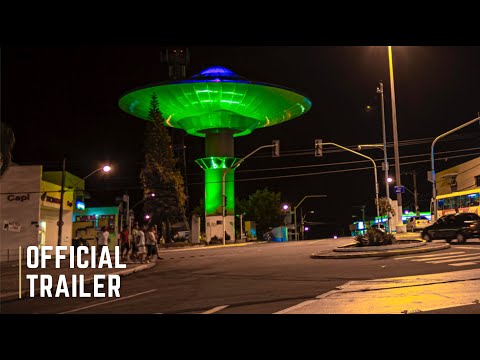
Moment of Contact | Official Trailer
The official trailer for James Fox's 2022 feature documentary built substantially around new interviews and evidence connected to the Varginha case.

James Fox — Direct from Varginha, Brazil (Part 1)
On-location reporting from Varginha itself, walking through the case's key sites alongside continuing witness interviews.
Sources
- "Varginha UFO incident," Wikipedia (comprehensive summary with citations to primary and secondary sources). en.wikipedia.org
- Superior Tribunal Militar (STM). "Inquérito Policial Militar n.18/1997" — ARQUIMEDES archival description, ref. BR DFSTM 002-001-001-ipm-18-1997. arquimedes.stm.jus.br
- Dunning, Brian. "Skeptoid #853: Brazil's Roswell: The Varginha UFO," Skeptoid, 2022. skeptoid.com
- Moffett, Matt. "Tale of Stinky Extraterrestrials Stirs Up UFO Crowd in Brazil," The Wall Street Journal, June 28, 1996.
- The Debrief. "Landmark Brazilian UFO Case Reaches Capitol Hill as Varginha Incident Turns 30." thedebrief.org
- NewsNation. "Varginha UFO incident: What was it and did US recover alien bodies?" newsnationnow.com
- NewsNation. "UFO disclosure advocate Rep. Eric Burlison asks FBI, CIA for info on 'Roswell of Brazil.'" newsnationnow.com
- Rep. Eric Burlison, U.S. House of Representatives. "Burlison Presses CIA and FBI for Records Related to 1996 Brazil UAP Incident," July 2026. burlison.house.gov
- Réveil. "Inside Brazil's UFO Files: What Declassified Military Documents Reveal About the Varginha Incident." reveil.blog
- da Silva, João Lucas. "Os demônios de Varginha," Revista Questão de Ciência, August 11, 2025. revistaquestaodeciencia.com.br
- Correio Braziliense. "Esta é a conclusão do inquérito do exército sobre suposta aparição de um ET em Varginha," January 6, 2026. 1news.correiobraziliense.com.br
- Metabunk. "The Varginha UFO" (forum discussion thread analyzing documentary inconsistencies and the IPM report). metabunk.org
- UAPedia. "Varginha 1996: Brazil's Incredible UAP Crash and NHI Case." uapedia.ai
- All That's Interesting. "Aliens, Strange Aircrafts, And Mysterious Infections: Inside The Varginha UFO Incident Of 1996." allthatsinteresting.com
- Randle, Kevin D. "A Different Perspective: Varginha UFO Encounter," A Different Perspective blog, May 2025. kevinrandle.blogspot.com
- IBTimes UK. "Alien Surgery Bombshell as Brazilian Neurosurgeon Claims He Operated on Live Being." ibtimes.co.uk
- The Exclusion Zone. "Varginha 1996: Brazil's Most Documented UFO Incident." theexclusionzone.com
- Pararational. "Varginha UFO Incident: Creatures, Cover-Up & Witnesses." pararational.com
- "Nave Espacial de Varginha," Wikipedia (the flying-saucer-shaped water tower memorial in central Varginha). en.wikipedia.org
- "Varginha," Wikipedia (city background and demographics). en.wikipedia.org
- Wikimedia Commons. "Nave Espacial de Varginha.jpg" (CC BY-SA 2.0, photographer ubirajararodrigues51, 2008). commons.wikimedia.org
- Pacaccini, Vitório & Portes, Maxs. Incidente em Varginha, 1996 (the original Portuguese-language book naming Army Police personnel, cited directly in the IPM 18/1997 archival record as the inquiry's trigger).
- Leir, Roger K. UFO Crash in Brazil: A Genuine UFO Crash with Surviving ETs, Book Tree, 2005.
- Pratt, Bob. UFO Danger Zone: Terror and Death in Brazil, 1996.
- Clark, Jerome. The UFO Encyclopedia, 4th Edition, Visible Ink Press, 2023.
See something inaccurate? Have additional information or sources?
Suggest an Edit →Last Updated: August 2026