
The Chicago O'Hare UFO Sighting
On the afternoon of November 7, 2006, roughly a dozen United Airlines employees — pilots, mechanics, ramp agents, and gate supervisors — at O'Hare International Airport in Chicago, Illinois reported a dark gray, metallic, disc-shaped object hovering silently and motionless below a low overcast ceiling above Gate C17 in Concourse C. After several minutes, witnesses said, the object shot straight upward at extraordinary speed and punched a clean, roughly circular hole through the cloud layer as it vanished. Neither air traffic controllers nor airport radar registered anything unusual, and both United Airlines and the Federal Aviation Administration initially denied any knowledge of the event. The story remained essentially unknown to the public for nearly two months until National UFO Reporting Center director Peter Davenport contacted Chicago Tribune transportation reporter Jon Hilkevitch, whose January 1, 2007 front-page investigation — built on interviews with numerous witnesses and a Freedom of Information Act request that forced the FAA to acknowledge a supervisor's real-time call to the control tower — became the single most-read story in the newspaper's website history. The FAA ultimately attributed the sighting to a "weather phenomenon," specifically a hole-punch cloud, while former NASA research scientist Richard Haines's National Aviation Reporting Center on Anomalous Phenomena (NARCAP) conducted a formal 150-page technical investigation that found the witnesses credible and the cloud-hole explanation incomplete, without concluding the object was anything other than unidentified.
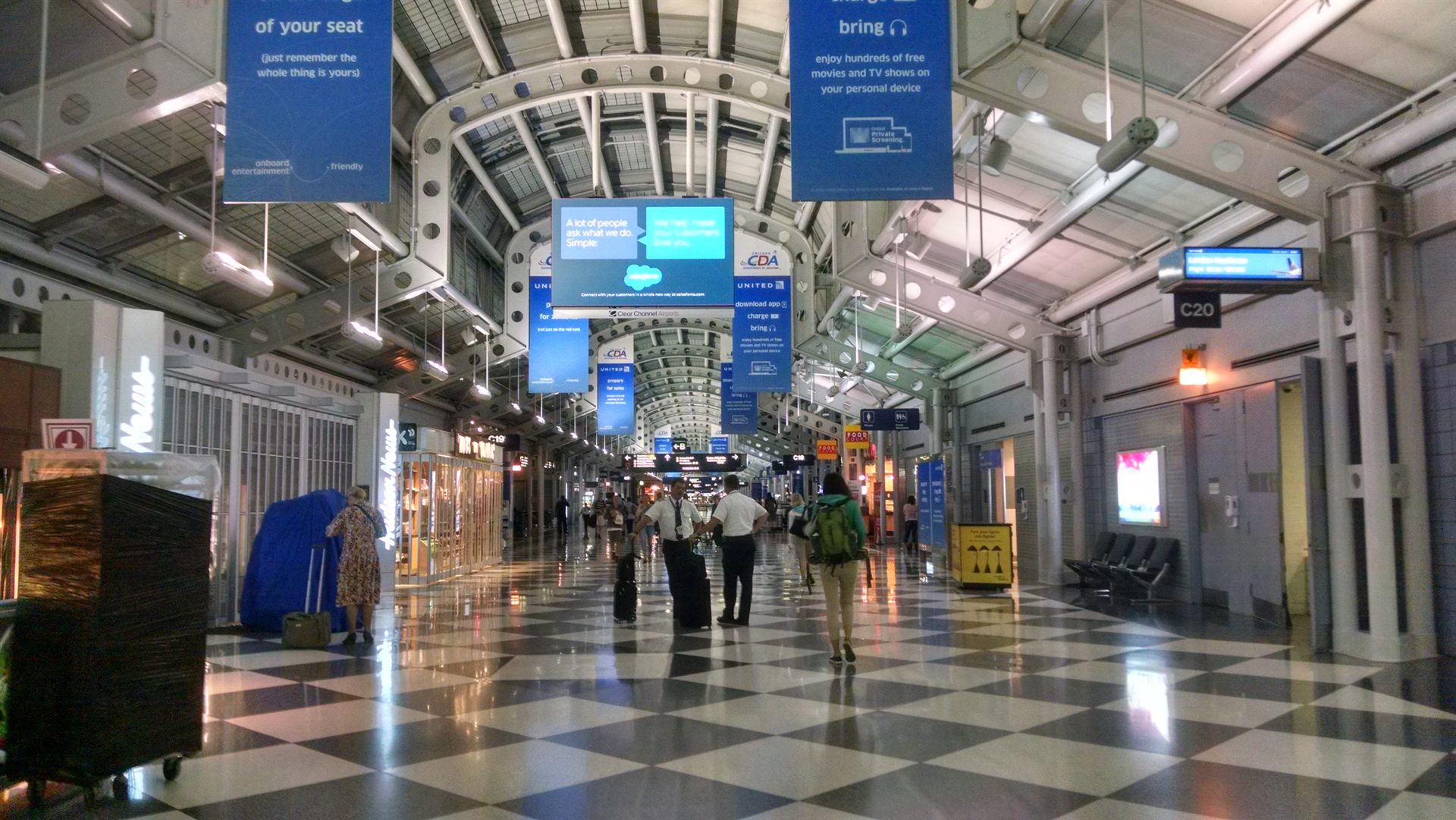
Pictured: Terminal 1, Concourse C at O'Hare International Airport — the actual United Airlines concourse containing Gate C17, photographed in August 2015 by Wikimedia Commons contributor Ndshankar (CC BY-SA 4.0). No public-domain or rights-clear photograph of November 7, 2006 itself, or of the object, is known to exist; two anonymously submitted cell-phone images circulated online in January 2007 have never been authenticated (see "The Unverified Photographs" below).
Theoretical Alignment
The O'Hare case earns a modest Extraterrestrial Hypothesis alignment on the strength of a genuinely large convergent witness pool — roughly a dozen aviation professionals, several of them pilots trained to identify aircraft at a glance, independently describing the same silent, wingless, structured object at the same gate within the same few minutes — reinforced by Richard Haines's NARCAP investigation, which applied aviation-safety methodology rather than advocacy and still could not identify the object. The alignment is capped well below cases like the Coyne helicopter incident or Exeter, however, because O'Hare lacks the one thing that most strengthens those cases: not a single witness has ever gone on the record under their own name, more than nineteen years later, closing off the kind of individual credibility assessment, cross-examination, and reputational risk-taking that gives cases like Bertrand and Hunt's their evidentiary weight. The Psycho-Social Hypothesis scores unusually high for this catalogue because a real, well-documented meteorological phenomenon — the hole-punch cloud — genuinely can produce a bright, roughly circular, disc-like gap in an overcast layer, and because skeptic Brian Dunning's "memory conformity" critique, in which retellings compressed over the two months before formal interviews began, offers a specific, testable mechanism for how independent, honest observers could converge on an exaggerated shared narrative. PSH does not score higher because it struggles to explain the FAA's own recovered tower-call record, timestamped to the encounter itself, in which a United supervisor asked in real time whether the tower was tracking a "spinning disc-shaped object" — a detail that could not have been retrofitted after the fact by later media coverage. The Interdimensional Hypothesis finds no support: nothing about missing time, occupants, or trans-dimensional "high strangeness" was ever reported.
Background
By 2006, the U.S. government's formal relationship with UFO reporting had been settled, on paper, for nearly four decades. Project Blue Book, the Air Force's public UFO investigation office, closed in December 1969, and the FAA that inherited informal jurisdiction over anything unusual in controlled civil airspace had no standing mandate, budget, or protocol for investigating a UFO report as anything other than a possible air-safety hazard to be ruled in or out via radar and witness statements — and, once radar showed nothing, to close. Into that vacuum had stepped civilian organizations: the National UFO Reporting Center (NUFORC), founded in 1974 by Seattle firefighter Robert Gribble and directed since 1994 by Peter Davenport, functioned as the closest thing available to a centralized, publicly accessible clearinghouse for sighting reports the government itself no longer collected. The National Aviation Reporting Center on Anomalous Phenomena (NARCAP), founded in 2000 by former NASA research scientist Richard Haines, existed specifically to apply aviation-safety methodology — the same rigor used to investigate near mid-air collisions or mechanical failures — to pilot and aircrew UAP reports, on the theory that whatever these objects were, an airliner or airport encountering one unexpectedly was a safety question independent of what it ultimately turned out to be.
O'Hare International Airport in November 2006 was, by nearly every measure, the busiest airport in the world, a title it held for much of the 2000s. United Airlines operated Terminal 1 as its primary O'Hare hub, including Concourse C, a constantly active stretch of gates staffed around the clock by ramp agents, mechanics, gate supervisors, and rotating flight crews. It was an entirely ordinary late-afternoon rush at one of the world's busiest transportation hubs — November 7, 2006 was a Tuesday, two days before the American midterm elections that would dominate the following day's news cycle — when, according to multiple later accounts, a ramp employee working near Gate C17 looked up and saw something that did not belong in the sky above a working airport.
Complete Timeline
| Date | Event |
|---|---|
| December 1969 | Project Blue Book closes; the FAA inherits informal, safety-only jurisdiction over unusual aerial reports in civil airspace with no dedicated UFO-investigation mandate. |
| 1974 | The National UFO Reporting Center (NUFORC) is founded by Seattle firefighter Robert Gribble as a civilian clearinghouse for sighting reports. |
| 2000 | Former NASA research scientist Richard Haines founds NARCAP to apply aviation-safety methodology to pilot and aircrew UAP reports. |
| November 7, 2006, ~4:15 PM CST | A ramp employee near Gate C17, Concourse C, first notices a dark gray, disc-shaped object hovering motionless below the cloud ceiling above the United terminal at O'Hare International Airport. |
| ~4:15–4:28 PM | Word spreads by radio; close to a dozen United employees, including two pilots taxiing an empty Boeing 777, converge to view the object over the following several minutes. |
| Same window | A United supervisor calls the O'Hare control tower to ask whether controllers are tracking a "spinning disc-shaped object" near Gate C17; a controller's brief, informal acknowledgment is later recovered on tape. |
| ~4:28–4:30 PM | The object accelerates straight upward at high speed and disappears through the overcast, leaving what several witnesses describe as a clean, roughly circular hole in the cloud layer that persists for several more minutes before closing. |
| November 8, 2006 | United Airlines management reportedly interviews multiple witnesses internally and asks some to write reports or sketch what they saw, while instructing staff not to discuss the incident publicly. |
| Fall 2006 | Independent civilian witnesses in the wider Chicago area separately file sighting reports with NUFORC describing objects in the same general timeframe. |
| December 16, 2006 | NUFORC director Peter Davenport contacts Chicago Tribune transportation reporter Jon Hilkevitch about the case. |
| Late December 2006 | The FAA and United Airlines both tell Hilkevitch they have no record of any unusual incident on November 7; a United Airlines spokesperson says there is "nothing in the duty manager log." |
| January 1, 2007 | Hilkevitch's front-page Chicago Tribune article, "In the sky! A bird? A plane? A … UFO?" is published, drawing over one million page views within a week and setting a Tribune website traffic record. |
| January 2, 2007 | FAA spokeswoman Elizabeth Isham Cory tells the Associated Press the FAA's "theory" is a "weather phenomenon" caused by airport lights reflecting off a low cloud ceiling, and that the agency will not investigate further. |
| Early January 2007 | The Tribune's FOIA request forces an internal FAA review of tower audio, which confirms a United supervisor's real-time call about the object — contradicting the agency's earlier blanket denial of any record. |
| Early 2007 | FAA spokesman Tony Molinaro elaborates the "hole-punch cloud" explanation to reporters, describing a "perfect circular shape like a round disc" with "vapor going up into it." |
| January 23 & 25, 2007 | Two anonymous cell-phone photographs purporting to show the object are separately submitted to the AboveTopSecret.com forum; neither photographer's identity has ever been confirmed. |
| January 26, 2007 | Investigative journalist Linda Moulton Howe publishes an analysis of the two disputed images on Earthfiles.com, reporting that digital-imaging specialists found no obvious manipulation but that the images' origin remains unverified. |
| January 2007 | Astronomer Mark Hammergren of Chicago's Adler Planetarium tells reporters that weather conditions that day were "right for" a hole-punch cloud. |
| March 2007 | NARCAP publishes Technical Report #10, "Report of an Unidentified Aerial Phenomenon and its Safety Implications at O'Hare International Airport on November 7, 2006," led by Richard Haines. |
| February 2009 | The History Channel's UFO Hunters broadcasts an episode built around the case, part of a wave of cable-television treatments over the following decade. |
| 2013 | The Chicago Tribune revisits the case in a retrospective piece describing it as one of the most famous UFO reports in the paper's history. |
| 2021 | New York Post reporter Steven Greenstreet obtains additional FAA tower audio via a fresh FOIA request for his video series The Basement Office. |
| 2023 | A Showtime docuseries revisits the case as part of a broader survey of modern high-credibility UFO reports. |
| 2024 | Skeptic Brian Dunning publishes Skeptoid episode #926, "The Chicago O'Hare Airport UFO," arguing the case likely reflects memory conformity around an unphotographed, misjudged conventional event. |
| 2024–2025 | Physicists at Applied Physics, led by Gianni Martire, publish an analysis situating the reported flight characteristics within theoretical warp-bubble physics while explicitly rejecting an extraterrestrial-craft conclusion as statistically unlikely. |
Gate C17, Late Afternoon
The afternoon of November 7, 2006 unfolded, by every account, as an entirely unremarkable Tuesday rush at the world's busiest airport — right up until, according to Chicago Tribune reporter Jon Hilkevitch's later reconstruction, a ramp employee working the tarmac near Gate C17 in Concourse C glanced upward and saw something hovering below the low, uniform cloud ceiling that had settled over O'Hare that day. What he described was not a conventional aircraft silhouette: a dark gray, apparently metallic disc, hard-edged rather than diffuse, holding a fixed position roughly a thousand to two thousand feet above the terminal with no discernible drift, no lights, and no engine noise of any kind — a genuinely strange thing to see suspended, motionless, over one of the most tightly controlled airspaces in North America. Word spread almost immediately, not through any formal channel but the way unusual news travels fastest on a working ramp: over radio chatter between ground crews, gate agents, and flight crews already in the area. Within minutes, according to the Tribune's reporting and the accounts NARCAP later compiled, close to a dozen United Airlines employees had made their way to vantage points around Concourse C specifically to see it for themselves, several of them abandoning or pausing their assigned tasks to do so — itself a notable detail, since aviation ground personnel are not generally inclined to interrupt active ramp operations at a major hub without good reason.
A Dozen Witnesses Converge
What makes the O'Hare case unusual within its category is less any single witness's account than the sheer number of independent professional observers who converged on the same description within the same few minutes. Among those most frequently cited across secondary reporting are two United pilots who were in the process of taxiing an empty Boeing 777 toward the gate area when they, too, spotted the object and paused to watch it — adding trained aircraft-identification judgment to a witness pool that otherwise consisted of ground and gate personnel. A United mechanic gave one of the case's most quoted lines to investigators: "I know that what I saw and what a lot of other people saw stood out very clearly, and it definitely was not an [Earth] aircraft." Descriptions converged, with the usual minor variation expected of any real multi-witness event, on a dark gray or dull metallic disc, silent and apparently stationary, holding position just beneath the cloud base for what most witnesses estimated as somewhere between five and twenty minutes — a wide range that likely reflects both differing arrival times among witnesses and the well-documented difficulty of judging elapsed time accurately during an unexpected, adrenaline-charged event. Size estimates varied more sharply, from as small as six feet across to as large as twenty-four feet, a discrepancy NARCAP's Richard Haines attributed at least partly to witnesses viewing the object from substantially different distances and angles around the concourse rather than to fabrication, while critics such as Brian Dunning have pointed to the same spread as evidence the "shared" account may have been reconstructed and smoothed over in later retelling.
The Hole in the Sky
The sighting's single most distinctive and most contested detail is its ending. According to multiple witness accounts compiled by both Hilkevitch and NARCAP, the object did not drift away or descend back below the horizon the way a misidentified conventional aircraft typically would; instead, after several minutes of motionless hovering, it accelerated essentially instantaneously straight upward, vanishing into and through the low overcast ceiling. Several witnesses, both at the airport and at outdoor vantage points elsewhere around the field, reported that the object's ascent left behind a distinct, roughly circular gap in the cloud layer directly above where it had been hovering — not a smeared or gradually dispersing patch, but what more than one account described as a clean-edged hole, through which patches of clear sky or a lighter tone of cloud were briefly visible. Accounts of how long the hole persisted vary considerably, from a few minutes to figures as high as ten or fifteen minutes cited in some later retellings, before the surrounding cloud layer reportedly closed back in and the gap disappeared. No photograph of the hole itself, taken from the ground at O'Hare that afternoon and subsequently verified, has ever surfaced, leaving this detail — arguably the case's most visually striking and its most scientifically testable claim — resting entirely on witness recollection.
"Is Anyone Tracking a Disc?" — The Call to the Tower
Independent of what any individual witness later told a reporter, the case's strongest piece of contemporaneous documentary evidence is bureaucratic rather than dramatic: while the object was still visible, a United Airlines supervisor placed a call to the O'Hare control tower to ask, in essence, whether air traffic controllers were tracking anything unusual near Gate C17 — a "spinning disc-shaped object," in the phrasing later confirmed by FAA records. A controller's response, informal and unhurried in tone according to those who have reviewed the recovered audio, acknowledged the call without expressing alarm. That exchange sat undisturbed in FAA archives for nearly two months, unknown to the public, until it became the specific document the Chicago Tribune's Freedom of Information Act request was built to surface. Its evidentiary value lies precisely in its mundane, procedural nature: unlike any witness account gathered weeks or months later, it is a timestamped institutional record created in real time, by someone with no incentive to embellish and every incentive to describe the situation plainly to another aviation professional whose job was to check a radar scope, not humor a UFO report.
Silence, Denial, and a Freedom of Information Act Request
For nearly two months after the sighting, the story existed only within United Airlines' internal channels and a scattering of independent civilian reports quietly filed with NUFORC. Multiple secondary accounts describe United management interviewing witnesses the following day, in some cases asking them to write reports or produce sketches of what they had seen, while simultaneously instructing employees not to discuss the incident publicly — an internal posture consistent with an airline managing a genuinely unresolved safety question rather than dismissing it outright, even as it kept the matter out of public view. When Jon Hilkevitch began asking questions in late December 2006 after being contacted by Peter Davenport, both the FAA and United initially told him they had no information; a United Airlines spokesperson said flatly that there was "nothing in the duty manager log." That denial did not survive contact with formal process. The Tribune's FOIA request compelled the FAA to conduct an internal review of its own tower communications tapes — and that review recovered the supervisor's real-time call, directly contradicting the agency's own earlier statement that it held no record of the incident. It was only after this reversal, forced by a public-records request rather than volunteered, that the FAA acknowledged the event had happened at all and began offering a conventional explanation for it.
Peter Davenport, NUFORC, and the Story That Broke Records
Peter Davenport, director of the National UFO Reporting Center since 1994, had received scattered independent witness reports describing an object over the O'Hare area in the weeks following November 7, logged through NUFORC's ordinary public-facing reporting channel. Rather than publish the reports immediately, Davenport by his own later account held them back for a period out of concern for their potential security and aviation-safety implications, before ultimately deciding the story warranted mainstream journalistic attention and reaching out directly to Jon Hilkevitch, the Chicago Tribune's veteran transportation reporter, on December 16, 2006. Hilkevitch's resulting investigation, drawing on interviews with numerous witnesses inside United's operation as well as the FAA's own records once FOIA forced their release, appeared on the paper's front page on January 1, 2007 under the headline "In the sky! A bird? A plane? A … UFO?" The story's reach dwarfed anything else the paper's website had run to that point: within a week it had drawn well over a million page views, according to the paper's own web editors, and the story was quickly picked up by CNN, MSNBC, Fox News, CBS, NPR, and the wire services, turning a two-month-old internal airline incident into a genuinely international news story almost overnight. Hilkevitch's own editorial framing throughout was notably restrained for a story of this size: his reporting centered less on whether the object was extraterrestrial than on the more immediate question his sources kept raising themselves — why an unidentified object could apparently hover, undetected and uninvestigated, over one of the world's busiest airports for several minutes, and why neither the airline nor the government seemed inclined to find out what it actually was.
The FAA's "Weather Phenomenon"
Once forced to acknowledge the event, the FAA settled quickly on a specific conventional explanation and closed the matter without further field investigation. Elizabeth Isham Cory, the FAA's Midwest public affairs manager, told the Associated Press: "Our theory on this is that it was a weather phenomenon. That night was a perfect atmospheric condition in terms of low (cloud) ceiling and a lot of airport lights. When the lights shine up into the clouds, sometimes you can see funny things." FAA spokesman Tony Molinaro elaborated further in later interviews, specifically naming a hole-punch cloud, describing it as appearing in "a perfect circular shape like a round disc" with "vapor going up into it," while acknowledging plainly that "the absence of any kind of factual evidence precludes an investigation" and that no controller had seen anything, on radar or visually. Chicago-area astronomer Mark Hammergren of the Adler Planetarium lent the theory outside scientific credibility, telling reporters that atmospheric conditions that day were "right for" a hole-punch cloud to form. The explanation is not baseless — hole-punch clouds are a real, well-documented meteorological phenomenon, discussed in detail in the Conventional Explanation Candidate section below — but the FAA offered it as a closing statement rather than a tested conclusion: no meteorologist was dispatched to examine satellite or radar weather data for that specific afternoon as part of any formal FAA investigation, no comparison was made to the altitude ranges at which hole-punch clouds are typically documented, and the agency's own spokespeople repeatedly emphasized that the case was closed for lack of evidence to investigate further, not because the weather explanation had been affirmatively confirmed against the specific details witnesses described.
NARCAP's Technical Report 10
The only genuinely independent, methodologically formal investigation of the O'Hare sighting came not from any government body but from NARCAP, the civilian National Aviation Reporting Center on Anomalous Phenomena founded by former NASA research scientist Richard Haines. In March 2007, NARCAP published Technical Report #10, "Report of an Unidentified Aerial Phenomenon and its Safety Implications at O'Hare International Airport on November 7, 2006," a roughly 150-page study that compiled available witness statements, examined the radar and weather record, calculated the physical energy requirements of the reported cloud-hole formation, and explicitly evaluated and rejected an anonymously submitted internet account (posted under the username "RampAgentX") as inconsistent with the legitimate witness record and likely spurious. NARCAP's radar analysis concluded that no confirmed unexplained target matched the reported time, location, and altitude, but treated this as an aviation-safety finding in its own right rather than a debunking: an object of the reported size, altitude, and apparent radar reflectivity could plausibly evade detection through ordinary ground-clutter filtering built into terminal radar systems, meaning O'Hare's own detection infrastructure may have had a real blind spot large enough to miss a genuine hazard hovering directly over an active gate. NARCAP's report explicitly declined to identify the object, characterizing the case instead as a serious, unresolved gap in aviation detection and reporting procedure that merited formal government investigation — a recommendation the FAA has never acted on.
The Unverified Photographs
No confirmed photograph of the O'Hare object has ever been published, despite the fact that camera phones were already common by 2006 and multiple witnesses had several minutes to react. Jon Hilkevitch himself noted publicly that he had been told photographs existed but that the paper never actually received any. In late January 2007, two anonymously submitted cell-phone images purporting to show a disc above O'Hare surfaced independently on the AboveTopSecret.com forum — one from a user identified only by a numeric alias, the second from an anonymous emailer claiming to be a delayed passenger inside the terminal. Investigative journalist Linda Moulton Howe examined both on Earthfiles.com, reporting that digital-imaging specialists, including an early Photoshop developer consulted for the analysis, found no obvious editing artifacts in either file and judged that if the images were faked, the fabrication had been executed with unusual technical skill. Neither photographer has ever come forward publicly, no original camera file or metadata has ever been independently verified by a neutral party, and neither United Airlines nor the FAA has ever acknowledged receiving or possessing either image. Skeptics, including Brian Dunning, have treated the absence of any verified photograph — from a dozen witnesses, over several minutes, at a major international airport — as one of the case's most significant weaknesses, arguing it is difficult to reconcile with a genuinely solid, close-range object and easier to reconcile with a more distant, ambiguous phenomenon nobody thought worth documenting in the moment.
Legacy, Media, and the Long Afterlife of a Cloud Hole
The O'Hare sighting's public life has followed a familiar arc for a high-profile modern UFO case: an initial burst of mainstream news coverage in early 2007, followed by a long tail of cable-television dramatization, podcast deep-dives, and periodic re-litigation by both believers and skeptics. The History Channel's UFO Hunters devoted a 2009 episode to the case, part of a wave of similar cable treatments over the following decade that this site does not treat as reputable primary sourcing. More substantively, New York Post reporter Steven Greenstreet obtained additional FAA tower audio through a fresh 2021 FOIA request for his video series The Basement Office, and a 2023 Showtime docuseries revisited the case as part of a broader survey of what it characterized as some of the most credible modern UFO reports on record. On the skeptical side, Brian Dunning's 2024 Skeptoid episode #926 offered the case's most detailed contemporary critical re-examination, while a 2024–2025 analysis by physicists at Applied Physics, led by Gianni Martire, situated the reported flight profile within theoretical Alcubierre warp-bubble physics as a thought experiment, explicitly concluding that "the statistical probability that this object was an alien craft is extremely low" while declining to endorse the FAA's weather explanation either. Nearly two decades on, the O'Hare case occupies an unusual position in the UFO literature: widely cited as one of the more credible modern sightings precisely because of its multiple aviation-professional witnesses and documented institutional paper trail, while simultaneously standing as a cautionary example, cited by skeptics and researchers alike, of how far a genuinely unresolved case can travel through media retelling without a single named witness, a verified photograph, or a radar track ever entering the public record.
Circumstantial Evidence
- Close to a dozen United Airlines employees — ground crew, mechanics, gate supervisors, and two pilots — independently converged on the same basic description within the same several minutes, without any of them having been separately briefed or coordinated.
- A United supervisor's real-time call to the O'Hare control tower, asking whether controllers were tracking a "spinning disc-shaped object," was independently preserved on FAA tape and only surfaced after a formal Freedom of Information Act request — a contemporaneous record that could not have been retrofitted after the fact.
- Both United Airlines and the FAA initially and explicitly denied having any record of the incident, a denial that was directly contradicted once FOIA forced a review of the FAA's own tower communications tape.
- Richard Haines's NARCAP investigation, applying formal aviation-safety methodology rather than advocacy, found the witnesses credible and consistent on the sighting's core details and declined to endorse the FAA's weather explanation as complete.
- The FAA's own spokespeople repeatedly emphasized that the case was closed for lack of evidence to investigate further, not because any specific alternative explanation had been affirmatively tested against the witnesses' reported details.
- The 2021 FOIA request by New York Post reporter Steven Greenstreet recovered additional tower audio years after the original story broke, indicating the FAA's own institutional record of the event was more extensive than its initial public statements suggested.
The Applied Physics Warp-Bubble Analysis
In one of the case's more unusual modern developments, a team of physicists at Applied Physics — the same group behind a widely discussed 2021 theoretical paper on physically constructible warp drives — revisited the O'Hare sighting's reported flight characteristics as a thought experiment in 2024 and 2025. Led by chief science officer Gianni Martire alongside physicist Brandon Melcher, the team examined five specific elements of the case — the disc morphology, the reported near-instantaneous vertical acceleration, the object's apparent radar invisibility, the cloud-hole formation, and the multi-witness convergence — against theoretical predictions of how a physically constructible warp bubble might interact with its surroundings, on the premise that light deflection and localized particle effects around such a bubble could, in principle, produce visual and radar signatures resembling parts of the witness testimony. The analysis was explicit that this exercise was not a claim that the O'Hare object was any kind of exotic craft: Melcher stated plainly that "the statistical probability that this object was an alien craft is extremely low." The team was equally unwilling to simply endorse the FAA's weather explanation, however, noting that hole-punch clouds do not typically form directly above an active airport terminal in the specific manner reported, and that if a conventional aircraft had genuinely caused the hole by climbing directly through the cloud layer over a populated gate area, that flight profile would itself represent "a highly unusual and dangerous case" violating standard airspace procedures. The team's stated conclusion left the case's central identity question open, framing their contribution as a physics correlation exercise rather than a verdict on what, if anything, was actually present over Gate C17 that afternoon.
Key Witnesses
Ramp Employee, Gate C17 (First Witness)
The first person reported to have spotted the object, while working the tarmac near Gate C17 in Concourse C. His initial report, relayed by radio to colleagues, is what drew close to a dozen additional United employees to the area within minutes. Like every other O'Hare witness, he has never been publicly identified by name.
United Airlines 777 Flight Crew
Taxiing an empty Boeing 777 near the terminal when the sighting began, the two pilots paused to observe the object directly, adding professional aircraft-identification training to the witness pool. Their accounts, relayed through Jon Hilkevitch's reporting and NARCAP's investigation, are frequently cited as among the case's most credentialed testimony.
United Airlines Ground Supervisor ("The Tower Call")
The supervisor who placed the real-time call to the O'Hare control tower asking whether controllers were tracking a "spinning disc-shaped object," later confirmed by FAA records recovered through the Chicago Tribune's Freedom of Information Act request. That call is the case's single strongest piece of contemporaneous documentary evidence.
United Airlines Mechanic
Source of one of the case's most quoted lines: "I know that what I saw and what a lot of other people saw stood out very clearly, and it definitely was not an [Earth] aircraft." His account, like those of his colleagues, was relayed to investigators and reporters without his name ever being attached publicly.
Independent Civilian Witnesses (NUFORC Reports)
Separate from the United employees at the gate, a smaller number of civilian observers elsewhere around the Chicago area filed independent sighting reports with the National UFO Reporting Center in the weeks following November 7, describing objects broadly consistent in timing and general appearance with the airport witnesses' accounts, though in less detail.
The Five Observables Assessment
The Five Observables framework, developed by former AATIP director Luis Elizondo, is used to classify UAP encounters by performance characteristics exceeding known technology of their era. O'Hare, like other purely visual, non-instrumented sightings, is a difficult structural fit for the framework: everything below reflects what roughly a dozen witnesses impressionistically described over several minutes, not anything independently measured by radar, camera, or onboard instrumentation.
Assessment: Anti-Gravity Lift is rated speculative because witnesses consistently described the object hovering completely motionless at low altitude with no visible rotor, wing, or downwash disturbance of any kind — consistent with a genuinely novel means of lift, but resting entirely on unaided visual observation with no instrumented confirmation. Instant Acceleration is rated present as reported, since essentially every account, from the original ramp employee to NARCAP's compiled statements, agrees the object's vertical departure was abrupt and extremely fast rather than a gradual climb, though no radar or timed measurement exists to quantify it. Hypersonic Velocity is rated only speculative, since no witness offered a specific speed estimate beyond "extraordinary" or "extreme," and the object's total observed flight path — a vertical climb through a cloud layer roughly 1,900 feet up — was too short to support any reliable velocity calculation even from witness timing. Low Observability is rated absent in the visual sense that defines this framework across the site's catalogue: the object was, if anything, unusually conspicuous, plainly visible against an overcast sky to a dozen simultaneous witnesses across a working airport concourse; its absence from radar is treated separately in the Sensor & Instrumentation section above as a possible detection-system gap rather than evidence of stealth technology. Trans-Medium travel is rated absent, as the entire encounter unfolded in open air with no reported transition between air, water, or any other medium.
Evidence Assessment
Supporting Anomalous Origin
- Roughly a dozen aviation professionals, including two trained pilots, independently converged on a consistent core description within minutes of each other.
- A contemporaneous FAA tower recording, recovered only via FOIA, documents a real-time report of the object — not a retrospective account.
- Both United and the FAA initially denied any record of the incident, a denial subsequently and specifically contradicted by the FAA's own archived tower audio.
- NARCAP's independent, aviation-safety-methodology investigation found the witness pool credible and identified real gaps in radar detection capability rather than dismissing the report outright.
- The object's reported behavior — motionless hover with no lights or sound, followed by near-instantaneous vertical acceleration — does not match the flight profile of any conventional 2006-era civilian or military aircraft.
Supporting Conventional Explanation
- No witness has ever been publicly identified by name, preventing the kind of individual credibility verification available in comparable named-witness cases.
- No photograph of the object has ever been authenticated, despite widespread camera-phone ownership by 2006 and several minutes of observation by a dozen witnesses.
- Radar recorded nothing, and no independent instrument corroborated any aspect of the sighting.
- A real, scientifically documented meteorological phenomenon — the hole-punch cloud — can produce a bright, roughly circular gap in an overcast layer under the right conditions.
- Formal interviews did not occur until roughly two months after the event, a delay skeptics argue is long enough for independent, honest recollections to have converged around a shared, partly reconstructed narrative.
Why "Disputed"
The Chicago O'Hare UFO Sighting earns a DISPUTED rating on this site's scale because it combines a genuinely large, professionally credentialed witness pool and a real institutional paper trail with evidentiary gaps too significant to justify a "Credible" rating, while its documented core — a real FAA tower call, a real Freedom of Information Act reversal, a real formal NARCAP investigation — keeps it well clear of "Debunked." On the strength side: close to a dozen aviation professionals, including two trained pilots, converged on a consistent description within minutes of each other at one of the world's busiest and most heavily monitored airports; a United supervisor's real-time call to the control tower was independently preserved on FAA tape and only surfaced after a formal public-records request that directly contradicted the agency's own initial denial; and Richard Haines's NARCAP investigation, applying rigorous aviation-safety methodology rather than advocacy, found the witnesses credible and identified a plausible, serious radar-detection gap rather than simply endorsing the FAA's weather explanation. On the other hand, not one of the dozen or so witnesses has ever been publicly identified by name even decades later — a stark contrast with named, on-record cases like Exeter or Coyne that allowed independent investigators to verify individual witnesses directly; no photograph of the object has ever been authenticated despite widespread 2006-era camera-phone ownership and several minutes of observation; radar recorded nothing; and a real, scientifically documented meteorological phenomenon, the hole-punch cloud, offers a genuine if imperfectly fitting conventional explanation for at least the departure and cloud-hole elements of the account, even though it struggles to explain the structured, hard-edged, motionless object multiple witnesses described seeing first. That combination — a strong aggregate witness count and a genuine documentary record, offset by total anonymity, no physical or photographic evidence, and a real if incomplete mundane candidate — places O'Hare in "disputed" territory: a case that plainly involved something real enough to generate an FAA tower call and a formal aviation-safety investigation, but not one that current evidence allows this site to rate as more than genuinely contested.
Sensor & Instrumentation Detection Profile
No radar system, camera, or automated sensor captured the O'Hare object at any point, which is itself one of the case's most consequential facts given the density of instrumentation ringing one of the world's busiest airports. FAA spokeswoman Elizabeth Isham Cory told reporters that a "preliminary check of radar found nothing out of the ordinary," and no air traffic controller on duty that afternoon reported seeing the object either visually or on scope. Richard Haines's NARCAP report examined this radar silence in technical rather than dismissive terms, concluding that an object flying as slowly as described, at low altitude, and with poor radar reflectivity relative to typical aircraft could plausibly fall into a genuine detection blind spot created by ground-clutter filtering built into terminal radar systems — a limitation NARCAP treated as a serious aviation-safety concern in its own right, rather than proof nothing was there. The case's only positive instrumented record is a piece of mundane, bureaucratic evidence rather than a sensor reading: an internal FAA tower communications tape, recovered only after the Chicago Tribune filed a Freedom of Information Act request, which captured a United supervisor's real-time call asking the tower whether it was tracking a "spinning disc-shaped object" near Gate C17, along with a controller's brief acknowledgment. That the FAA's own recording equipment, not any witness's later recollection, preserved a contemporaneous reference to the object is one of the strongest pieces of documentary corroboration in the case, even though the recording itself confirms only that a call was made, not what caused it.
Environmental & Geospatial Context
O'Hare International Airport sits roughly seventeen miles northwest of downtown Chicago, Illinois, and in 2006 was, by most measures, the busiest airport on Earth, handling well over 900,000 aircraft operations a year across seven runways and multiple terminals. Gate C17 sits in Concourse C of Terminal 1, United Airlines' primary hub concourse, an area with almost constant ground and air traffic and a correspondingly enormous number of trained aviation professionals present at any given moment — part of why the case produced so many simultaneous witnesses. Meteorologically, the afternoon featured a low, uniform overcast stratus deck reported at roughly 1,900 feet, with a surface temperature near 48°F, conditions witnesses and the FAA agreed created dim, flat, late-autumn lighting. That combination matters directly to the case's central conventional explanation: hole-punch clouds (fallstreak holes) require supercooled liquid water droplets, meaning cloud-layer temperatures below freezing even though the water has not yet frozen, and while a 48°F surface reading does not by itself rule that out — temperature drops with altitude, and a cloud base at 1,900 feet in early November Chicago can sit well below freezing even when the ground does not — the phenomenon is nonetheless most commonly documented in higher, colder mid-level altocumulus and cirrocumulus layers several thousand feet higher than the low stratus deck O'Hare reported that day, a genuine point of friction for the FAA's account explored further in the Conventional Explanation Candidate section below. No unusual solar, geomagnetic, or seismic activity has been associated with the sighting in any source reviewed for this file.
Observer Credibility & Occupational Profile
The O'Hare case's central credibility asset, and its central limitation, are the same fact: its witnesses were aviation professionals, and none of them has ever been publicly named. Chicago Tribune reporter Jon Hilkevitch, who spoke with numerous witnesses directly while reporting the story, wrote that "the witness credibility is beyond question," describing pilots, supervisors, and mechanics who were united chiefly by fear of professional ridicule and, in several accounts, explicit instructions from United Airlines management not to discuss the sighting publicly. One mechanic told investigators, in a characteristic line quoted across multiple secondary accounts, "I know that what I saw and what a lot of other people saw stood out very clearly, and it definitely was not an [Earth] aircraft." Two United pilots who were taxiing an empty Boeing 777 at the time are frequently cited among the witnesses, adding professional aircraft-identification training to the pool. Because every one of these witnesses chose, and has continued to choose, anonymity even decades later — unlike named on-record officers such as Eugene Bertrand and David Hunt in the Exeter case, or the four Army Reserve crewmen in the Coyne helicopter incident — no outside investigator has ever been able to interview a primary witness directly, verify their employment or role independently, or assess their individual credibility the way Blue Book investigators or CUFOS field researchers could in those other cases. NARCAP's Richard Haines, a former NASA research psychologist with decades of experience assessing pilot and aircrew testimony, judged the witness pool credible and internally consistent on the sighting's core details despite this anonymity, but explicitly could not perform the kind of individual verification his own methodology normally requires.
Physical & Material Assays
No physical debris, landing trace, or laboratory-testable sample of any kind was ever recovered from the O'Hare sighting, and none has ever been claimed. The case's only purported physical trace is the cloud hole itself — a transient atmospheric feature rather than a durable specimen, gone within the fifteen minutes or so witnesses said it took to close, and never independently measured by any meteorological instrument. Two anonymously submitted cell-phone photographs, discussed in detail below, surfaced online in January 2007 and were examined by digital-imaging specialists who found no obvious signs of manipulation, but neither photographer's identity, camera, or original file has ever been verified, and Hilkevitch himself noted the paper never received the photographs he was told existed. NARCAP's technical report performed the closest thing this case has to a physical assay: using published meteorological data on latent heat of fusion and vaporization, NARCAP investigators calculated that clearing a hole of the reported size in a supercooled cloud layer through pure evaporation would require on the order of several kilojoules of energy per cubic meter of cloud — a calculation offered not as proof of anything exotic, but as a technical benchmark against which any conventional explanation, including a passing aircraft, would need to be measured. No metallurgical, isotopic, or soil-based assay was possible because no physical sample of any kind exists to test.
Historical Precedents & Archive Matches
O'Hare belongs to a specific and comparatively rare sub-category of UAP reporting: the professional aviation-workforce sighting at a major civil airport, witnessed by ground and flight personnel rather than by pilots in the air. It shares its occupational-credibility structure with the 1986 Japan Air Lines Flight 1628 encounter over Alaska, in which a cargo crew and, according to former FAA Accidents and Investigations Division Chief John Callahan, air traffic control radar itself tracked an object pacing the aircraft for over thirty minutes — a case Callahan has repeatedly invoked in later interviews as evidence that the FAA is capable of a far more serious institutional response than it gave O'Hare. It also echoes, in its dozen-strong convergent-witness structure, the Exeter pattern of independently arriving observers reaching the same description, though without Exeter's named, on-record police officers. Within the broader catalogue of aircrew and airport cases on this site, O'Hare sits closest in evidentiary shape to the Kinross Incident and the RB-47 Bomber Chase: real institutional paper trails recovered years or decades after the fact, a genuine radar-silence puzzle, and a persistent gap between what witnesses described and what any instrument confirmed.
Material Analysis
The O'Hare case produced no physical debris, landing trace, or recoverable artifact of any kind, and no witness or investigator has ever claimed otherwise. Its closest analog to physical evidence is the reported cloud hole itself — a transient meteorological feature rather than a durable sample, which by every account had closed and dissipated within roughly fifteen minutes and was never measured by any ground- or satellite-based instrument specifically tasked to the location. NARCAP's technical investigation performed the case's only quantitative material analysis, calculating the approximate energy required to evaporate supercooled cloud moisture across a hole of the reported dimensions purely through latent-heat physics, a figure the report offered as a benchmark for evaluating candidate causes rather than as proof of anything exotic. The two anonymously submitted cell-phone photographs that circulated in January 2007 represent the case's only purported direct visual record of the object; digital-imaging analysis found no obvious signs of manipulation in either file, but neither has ever been tied to a verified photographer, camera, or original unedited file, leaving their evidentiary status permanently unresolved rather than either confirmed or debunked.
Supporting a Genuine Anomalous Event
- The FAA's own tower audio, recovered only via FOIA, documents a contemporaneous, institutionally recorded report of the object rather than a retrospective account.
- NARCAP's independent energy calculations suggest the reported cloud-hole dimensions, if accurate, would require a substantial and specific energy input to produce through evaporation alone.
- Digital-imaging specialists found no obvious manipulation artifacts in either of the two disputed cell-phone photographs.
Supporting a Mundane Origin
- No physical sample of any kind was ever recovered or submitted for laboratory testing.
- Neither disputed photograph has ever been tied to a verified photographer, camera, or unedited original file, leaving authenticity permanently unconfirmed.
- Hole-punch clouds are a real, independently documented meteorological phenomenon capable of producing a circular gap in an overcast layer under the right temperature and moisture conditions.
The Conventional Explanation Candidate: The Hole-Punch Cloud
The Hole-Punch Cloud
Partially PlausibleThe FAA's official position, first offered by Elizabeth Isham Cory and elaborated by Tony Molinaro, holds that witnesses saw a hole-punch cloud, also called a fallstreak hole: a real, scientifically documented atmospheric phenomenon in which supercooled liquid water droplets in a cloud layer — water that remains liquid below freezing because it lacks a nucleus to trigger ice formation — are suddenly triggered to freeze, most commonly by an aircraft passing through the layer. The resulting ice crystals set off a chain reaction, the Bergeron process, in which surrounding droplets evaporate onto the newly formed ice, leaving a large, often circular or elliptical gap in the cloud with a trailing curtain of ice crystals visible below it. Astronomer Mark Hammergren of Chicago's Adler Planetarium lent the theory outside credibility, noting that atmospheric conditions on November 7 were consistent with hole-punch cloud formation, and the FAA has never wavered from this explanation since first offering it. The theory deserves serious evaluation: it is not a fabricated or ad hoc explanation but a well-established phenomenon documented extensively in meteorological literature, including by aviation-safety references such as SKYbrary, and it directly accounts for the case's single most visually dramatic reported detail — a circular hole appearing in an overcast sky.
Its central weakness is sequencing and altitude. Every witness account places a solid, dark, apparently structured object hovering motionless below the cloud base for several minutes before any hole appeared — the hole, by every version of the story, is what the object's departure produced, not what witnesses mistook for an object in the first place. A hole-punch cloud is a feature of the cloud layer itself; it cannot explain a distinct, hard-edged, silent, wingless object that a dozen witnesses watched hovering beneath the clouds for an extended period before any hole formed. Skeptic Robert Sheaffer's related observation, cited by fellow skeptic Brian Dunning, that aircraft punching through cloud layers typically leave "a swirling mass of turbulent clouds" rather than a crisp, disc-shaped hole, is a real point worth weighing, though actual hole-punch photographs on record (see Sources) do often show fairly clean circular edges, softening that specific objection. A more durable technical problem is altitude: hole-punch clouds are most commonly and most reliably documented forming in mid-level altocumulus and cirrocumulus layers several thousand feet higher than the roughly 1,900-foot stratus ceiling O'Hare reported that afternoon, a low-altitude setting in which the phenomenon is comparatively less typical, even though not impossible given the reported near-freezing conditions aloft. No FAA or independent meteorologist has ever published a specific analysis matching that day's satellite or radar weather data against the reported hole's size, location, and duration.
Memory Conformity and the Two-Month Reporting Gap
Partially PlausibleA second, related conventional candidate, most fully developed by Brian Dunning in his 2024 Skeptoid analysis, holds that whatever witnesses genuinely saw — plausibly some version of unusual weather, distant aircraft, or reflected light — became progressively exaggerated and homogenized into a more dramatic, structured "flying saucer" narrative during the roughly two months between the sighting and the first formal interviews, through ordinary social memory-conformity effects rather than deliberate fabrication. Dunning points to the total absence of any verified photograph as the theory's strongest circumstantial support: with a dozen witnesses and several minutes of observation in a camera-phone era, he argues it is "inconceivable that nobody took a photo" if a genuinely solid, close-range object had been present, and considers the absence itself suggestive that nothing sufficiently distinct or nearby existed to photograph. This candidate faces a specific documentary obstacle, however: the FAA's own recovered tower audio establishes that a United supervisor called the control tower about a "spinning disc-shaped object" while the sighting was still in progress, not weeks or months afterward — meaning at least one detailed, structured description existed in a contemporaneous institutional record well before any social reinforcement or media coverage could have shaped it.
Misidentified Aircraft, Balloon, or Drone
Ruled OutA third, more conventional candidate holds that witnesses simply misidentified an ordinary aircraft, weather balloon, or early-era drone. This candidate was investigated and effectively ruled out close to the time of the event: United Airlines contacted the National Weather Service and confirmed no weather balloon had been launched from the area that afternoon, and witnesses — several of them trained pilots and mechanics — consistently described an object too flat, silent, motionless, and disc-like to match any conventional aircraft silhouette or flight behavior. Consumer and commercial drone technology in November 2006 was, in any case, far too limited in altitude capability, endurance, and stealth to loiter motionless above 1,000 feet for several minutes over one of the most tightly controlled airspaces in the country without detection, and no evidence of any unauthorized or military drone operation over O'Hare that day has ever surfaced.
A real, scientifically documented phenomenon that plausibly accounts for the cloud-hole element of the account and offers a genuine mechanism for testimony drift over a two-month reporting gap, but one that does not, on its own, explain the structured, motionless, hard-edged object multiple aviation professionals reported watching before any hole appeared, nor the contemporaneous FAA tower record describing a "disc-shaped object" in real time.
Related Cases
Confirmed Documents & Official Records
The FAA's own FOIA reading room, the same category of records request the Chicago Tribune used in early 2007 to force the release of the O'Hare tower communications tape after the agency's initial denial that any record existed.
UNCLASSIFIEDThe formal civilian aviation-safety investigation of the case, led by former NASA scientist Richard Haines, compiling witness statements, radar analysis, and cloud-hole energy calculations.
PUBLIC RECORDSearch Government Archives Directly
Further Reading — Recommended Literature
UFOs: Generals, Pilots, and Government Officials Go on the Record
The definitive modern case for taking credentialed aviation-professional UAP testimony seriously, directly relevant to a case built almost entirely on pilot, mechanic, and ground-crew witness accounts.
Observing UFOs: An Investigative Handbook
Written by the same NASA-trained scientist who founded NARCAP and led Technical Report #10 on this exact case, laying out the perceptual and investigative methodology he applied to the O'Hare witnesses.
Bad UFOs: Critical Thinking About UFO Claims
A leading skeptical investigator's case-by-case critical analysis, useful as a direct counterweight to the O'Hare case's more credulous treatments and a source for the cloud-penetration skepticism discussed in this file.
UFO: The Inside Story of the US Government's Search for Alien Life Here—and Out There
A recent, comprehensively sourced history of U.S. government UAP policy, situating the FAA's post-Blue Book "no mandate to investigate" posture — on full display in the O'Hare case — within its broader institutional context.
The UFO Encyclopedia, 4th Edition
The definitive UFO reference work, with an entry situating the O'Hare sighting within the broader history of aviation-professional UAP reports and the FAA's institutional response to them.
Essential Viewing

FAA Audio of UFO Over Chicago O'Hare Airport in 2006
New York Post reporter Steven Greenstreet's "The Basement Office" special report, built on FAA tower audio obtained via a fresh 2021 FOIA request.
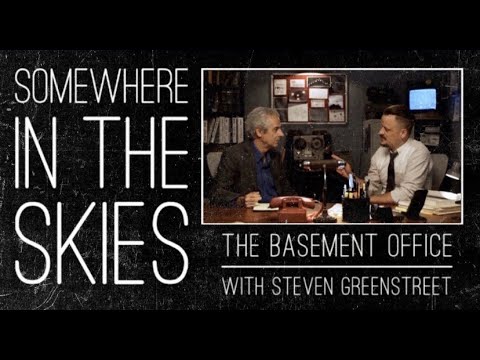
Somewhere in the Skies: The O'Hare UFO Tapes
A deep-dive interview with journalist Steven Greenstreet on the FOIA-recovered FAA tower audio and the case's documentary record.
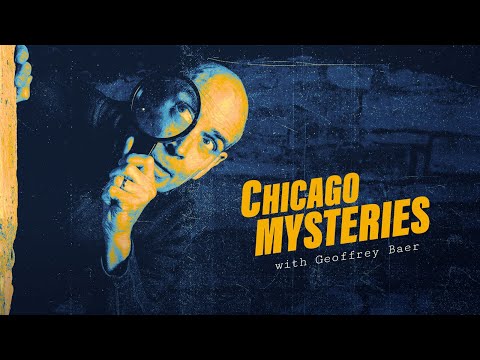
Chicago Mysteries with Geoffrey Baer — Full Show (WTTW/PBS)
PBS-affiliate WTTW's Geoffrey Baer investigates the O'Hare sighting on the tarmac with reporter Jon Hilkevitch and Chicago meteorologist Tom Skilling.
Sources
- "2006 O'Hare International Airport UFO sighting," Wikipedia. en.wikipedia.org
- Hilkevitch, Jon. "In the sky! A bird? A plane? A … UFO?" Chicago Tribune, January 1, 2007 (front-page investigation that broke the story nationally).
- NARCAP (Haines, Richard F., et al.). "Technical Report #10: Report of an Unidentified Aerial Phenomenon and its Safety Implications at O'Hare International Airport on November 7, 2006," March 2007. narcap.org
- The Black Vault. "The Vault Files: 2006 O'Hare International Airport UFO Sighting" case file. theblackvault.com
- Dunning, Brian. "Skeptoid #926: The Chicago O'Hare Airport UFO," Skeptoid, March 5, 2024. skeptoid.com
- The Debrief. "The Chicago O'Hare UAP Incident: Physics Team's Analysis Offers a Fresh Look at This Famous 2006 Case." thedebrief.org
- The Spokesman-Review (Associated Press). "FAA Skeptical of UFO Report at O'Hare," January 2, 2007. spokesman.com
- The UFO Chronicles. "For Many at O'Hare it was a UFO, For The FAA a 'Hole-Punch Cloud'," February 2007. theufochronicles.com
- Aviation Pros. "Just What Was That Object Hovering Overhead at O'Hare?" aviationpros.com
- Kean, Leslie. "What REALLY Happened at that O'Hare UFO Sighting," Unknown Country. unknowncountry.com
- NPR. Transcript covering the O'Hare UFO sighting and interview with Jon Hilkevitch. npr.org
- NBC News. "Airline Workers Say They Saw UFO," January 2007. nbcnews.com
- CBS News. "UFO At O'Hare? Officials Say Weird Weather," January 2007. cbsnews.com
- Columbia Journalism Review. "Chi Trib Readers Seem to Believe," January 5, 2007. cjr.org
- Enigma Labs. "O'Hare Airport Incident" case library entry. enigmalabs.io
- Howe, Linda Moulton. "Two Cell Phone Images of Disc Over Chicago O'Hare Airport," Earthfiles, January 26, 2007. earthfiles.com
- Syfy Wire. "What Happened at O'Hare? Showtime Docu-Series Revisits One of History's Most Credible UFO Sightings in Modern History." syfy.com
- Simple Flying. "Did You Know Chicago O'Hare Airport Had A Reported UFO Sighting In 2006?" simpleflying.com
- SKYbrary Aviation Safety. "Fallstreak Hole." skybrary.aero
- "Fallstreak hole," Wikipedia. en.wikipedia.org
- National UFO Reporting Center (NUFORC), official site. nuforc.org
- The Arlington Cardinal. "FAA Audio of UFO over Chicago O'Hare International Airport in 2006 | Special Report | The Basement Office (New York Post)," February 2021. arlingtoncardinal.com
- WTTW Chicago. "Was a UFO Once Spotted at O'Hare Airport?" Chicago Mysteries with Geoffrey Baer. wttw.com
- KLTV (Associated Press wire). "FAA Blames UFO Report On Weird Weather." kltv.com
- Federal Aviation Administration. Freedom of Information Act Electronic Reading Room. faa.gov
- Kean, Leslie. UFOs: Generals, Pilots, and Government Officials Go on the Record, Harmony Books, 2010 (discusses the O'Hare case within the broader pattern of FAA/pilot UAP reporting).
- Clark, Jerome. The UFO Encyclopedia, 4th Edition, Visible Ink Press, 2023 (entry on the O'Hare/Chicago 2006 sighting).
See something inaccurate? Have additional information or sources?
Suggest an Edit →Last Updated: August 2026