
The Exeter UFO Incident
In the pre-dawn darkness of September 3, 1965, 18-year-old Norman Muscarello was hitchhiking home along Route 150 near Exeter, New Hampshire, when a massive, silent object with brilliant pulsating red lights rose from behind a farmhouse and drifted toward him across a field, forcing him to dive into a roadside ditch. Badly shaken, Muscarello flagged down a passing motorist and was driven to the Exeter Police Station, where Patrolman Eugene Bertrand Jr. — who had, less than two hours earlier, separately encountered a terrified woman motorist reporting an identical object — drove him back to the site. There, joined moments later by Patrolman David Hunt, both trained police officers independently watched the same huge, wingless, engine-less object rise from behind trees, hover roughly a hundred feet away, flash its five red lights in a synchronized rippling sequence, and finally streak off toward Hampton at a speed neither man could reconcile with any aircraft they knew. The U.S. Air Force's Project Blue Book first offered, then effectively withdrew, a conventional explanation; journalist John G. Fuller's 1966 bestseller Incident at Exeter made it one of the most famous UFO cases in American history; and NICAP investigator Raymond Fowler's field report was entered into the Congressional Record, feeding directly into the climate that produced Congress's first public hearing on UFOs the following spring.

Pictured: Water Street in downtown Exeter, New Hampshire, part of the town's historic waterfront commercial district (photographed 2012) — not the actual sighting site, which sat on rural Kensington Road roughly three miles south of town. No public-domain or rights-clear photograph of the original 1965 field or the object itself is known to exist.
Theoretical Alignment
Exeter earns a moderate Extraterrestrial Hypothesis alignment on the strength of its witness pool rather than any physical or instrumented evidence: two on-duty, armed, professionally trained police officers, independently of each other and of the teenager who first reported the object, described the same wingless, silent, erratically moving craft at close range, and the Air Force's own field investigators — who had every institutional incentive to find a mundane cause — privately rated the three original witnesses "stable, reliable persons" and admitted they could not identify a probable cause. That is a genuinely unusual evidentiary profile: not a lone civilian's account, but a converging, same-night, same-object report from officers whose job was to assess exactly this kind of chaotic nighttime report skeptically. The alignment is capped well short of higher scores, however, because the case offers no physical trace, no photograph, no radar return, and no instrumented measurement of any kind — everything rests on visual testimony, however credible — and because a real, still-argued conventional explanation, a Pease Air Force Base KC-97 aerial-refueling tanker, remains on the table more than half a century later. The Interdimensional Hypothesis finds essentially nothing to work with here: this is a conventional, if unexplained, close-range aerial object sighting with no reported occupants, missing time, or trans-dimensional "high strangeness" of the kind IDH proponents typically point to. The Psycho-Social Hypothesis explains part of the story well — the sixty-plus copycat-adjacent reports that flooded the Exeter area in the weeks after national press coverage broke are a textbook example of a UFO "flap" amplified by media attention — but it struggles to account for the original triggering event itself, in which two independent, professionally skeptical police officers, arriving from different directions and without prior contact with each other's account, converged on a detailed, consistent description before any press coverage existed to prime their expectations.
Background
By the summer of 1965, the U.S. Air Force's Project Blue Book had been the government's public UFO-investigation office for more than a decade, inheriting the role from the earlier Project Sign and Project Grudge, and had developed a public reputation — fair or not — for explaining away nearly every report it examined. New Hampshire's own UFO history predated Exeter by four years: in September 1961, Portsmouth couple Betty and Barney Hill reported a close encounter and roughly two hours of missing time while driving near Indian Head in the White Mountains, an episode investigated under hypnosis by psychiatrist Benjamin Simon and later chronicled by journalist John G. Fuller in his 1966 book The Interrupted Journey. Both New Hampshire cases would eventually be documented by the same author within roughly a year of each other, an unusual coincidence that helped make the state, briefly, the epicenter of serious mainstream UFO journalism in America.
Exeter itself was, in September 1965, a quiet town of roughly eight thousand people built around Phillips Exeter Academy and its historic town center on the Squamscott River. Norman Muscarello, eighteen years old and a recent graduate of Exeter High School, was three weeks away from reporting for duty with the United States Navy. On the night of September 2 into the early hours of September 3, he had been visiting his girlfriend's family in Amesbury, Massachusetts, roughly ten miles southeast of Exeter, and was hitchhiking home along NH Route 150 in the small hours of the morning — an entirely ordinary, unremarkable errand that was about to become the opening scene of one of the most publicized UFO cases in American history.
Complete Timeline
| Date | Event |
|---|---|
| September 1961 | Betty and Barney Hill report a close encounter and missing time near Indian Head, New Hampshire, roughly 60 miles from Exeter — later documented by John G. Fuller in The Interrupted Journey (1966). |
| Sept. 2–3, 1965, ~12:30 AM | Patrolman Eugene Bertrand Jr. finds a distraught woman motorist parked along a road near Epping, who reports a huge, glowing red object followed her car for roughly twelve miles. |
| ~2:00 AM | Norman Muscarello, hitchhiking home to Exeter from Amesbury, Massachusetts, sees a huge, silent, oval object with five pulsating red lights rise from behind the Dining farmhouse near Kensington Road and drift toward him; he dives into a roadside ditch before running to flag down a passing car. |
| ~2:00–2:24 AM | A passing motorist drives the shaken Muscarello to the Exeter Police Station, where night-desk officer Reginald Toland takes his report. |
| ~2:24–3:00 AM | Bertrand, recalling the earlier motorist's report, drives Muscarello back to the Kensington Road field; both observe a huge, dark, wingless object with five red lights rise from behind trees and hover roughly 100 feet away at roughly 100 feet altitude. |
| Same window | Bertrand radios the station in evident alarm; Patrolman David Hunt is dispatched and arrives within minutes, independently observing the same object before it silently departs toward Hampton at high speed. |
| Same night | Haverhill Gazette reporter and UPI stringer Virginia Hale separately observes the object's high-speed departure, judging its speed inconsistent with a B-47 bomber. |
| September 3, 1965 (later that day) | The Exeter Police Department notifies nearby Pease Air Force Base; Major David Griffin and Lieutenant Alan Brandt travel to Exeter to interview Muscarello, Bertrand, and Hunt. |
| Shortly after | Griffin's report states he is "unable to arrive at a probable cause" and rates the three witnesses "stable, reliable persons, especially the two patrolmen"; the Pentagon's initial public statement attributes the sighting to stars and planets distorted by a temperature inversion. |
| Fall 1965 | More than sixty additional UFO reports are logged in the greater Exeter area over the following weeks, including sightings by Exeter High School senior Ron Smith and by Mrs. Ralph Lindsay. |
| September 11, 1965 | NICAP field investigator Raymond Fowler travels to Exeter, interviews the principal witnesses, and begins compiling a detailed independent report. |
| Fall 1965 | Saturday Review columnist John G. Fuller arrives in Exeter and begins interviewing roughly sixty area residents, including Toland, Bertrand, Hunt, and Muscarello, for what becomes his book Incident at Exeter. |
| Undated, fall 1965 | Major Hector Quintanilla, chief of Project Blue Book, proposes that Bertrand and Hunt's sighting "might be associated" with "Big Blast," an 8th Air Force SAC/NORAD training operation, plus five B-47 aircraft airborne from Pease that night. |
| Late 1965 | Bertrand and Hunt send two written letters to Blue Book objecting to the explanation, noting the object was "absolutely silent," had "no wings or tail," and that the sighting occurred nearly an hour after Big Blast had reportedly ended. |
| December 29, 1965 | Bertrand and Hunt's second, more detailed rebuttal letter is sent to Blue Book, restating that the object "lit up the entire field, and two nearby houses turned completely red." |
| January 1966 | Lt. Col. John Spaulding replies on behalf of Blue Book: "we have been unable to identify the object you observed on September 3, 1965" — an effective retraction of the "Big Blast" explanation. |
| 1966 | John G. Fuller's Incident at Exeter is published by G.P. Putnam's Sons, becomes a New York Times bestseller, and runs through at least six printings. |
| April 5, 1966 | The House Armed Services Committee holds Congress's first public hearing devoted to UFOs; Raymond Fowler's NICAP field report on Exeter is entered into the Congressional Record as part of the broader record on unexplained sightings. |
| 1972 | J. Allen Hynek publishes The UFO Experience: A Scientific Inquiry, introducing his "Close Encounter" classification system and citing Exeter as a defining example of a Close Encounter of the First Kind. |
| February 23, 2003 | Norman Muscarello dies at age 55 after a sudden illness, having maintained the substance of his account for the rest of his life. |
| 2009 | The Exeter Area Kiwanis Club establishes the annual Exeter UFO Festival as a children's-charity fundraiser, commemorating the case. |
| November 2011 | Skeptics Joe Nickell and James McGaha publish "'Exeter Incident' Solved!" in Skeptical Inquirer, proposing a Pease-based KC-97 aerial-refueling tanker and its fluttering boom lights as the explanation. |
| 2025 | The Exeter UFO Festival marks the case's 60th anniversary, with the town's police department issuing a commemorative patch referencing the incident. |
A Lone Figure on Route 150
Norman Muscarello was doing nothing more unusual than walking home. Eighteen years old, a recent Exeter High School graduate three weeks from reporting for U.S. Navy service, he had spent the evening at his girlfriend's family home in Amesbury, Massachusetts, roughly ten miles southeast of Exeter, and was hitchhiking back along New Hampshire Route 150 in the small hours of September 3, 1965, when no rides materialized. Walking near the Exeter–Kensington town line, in open farm country bordered by the properties of the Russell and Dining families, he became aware of a massive, dark shape rising silently from behind the Dining farmhouse. What he saw next, by his own consistent account for the rest of his life, was a huge, oval or elongated object — he estimated it at 80 to 90 feet across — ringed along its lower edge by five enormous, brilliant red lights that pulsed in sequence rather than shining steadily. The object drifted toward him across the field, growing larger and brighter, its light bathing the ground and the nearby farmhouses in a deep red glow. Terrified, and with the object seeming to close the distance, Muscarello dove into a roadside ditch for cover before scrambling up and running toward the nearest house, pounding on doors that went unanswered before he finally succeeded in flagging down a passing car. The driver and passenger, a couple whose names were not widely publicized, agreed to take the shaken teenager directly to the Exeter Police Station rather than continuing on their own way — itself a small, telling detail, since Muscarello's evident state of fright was persuasive enough to redirect two strangers' night without argument.
The Desk Report and a Second, Independent Sighting
At the Exeter Police Station, night-desk officer Reginald Toland took Muscarello's report around 2:00 AM, and would later tell John Fuller that the teenager arrived "shaking like a leaf," too frightened at first to speak coherently. What made the desk report immediately credible to the department, rather than dismissible as a frightened teenager's imagination, was a detail Toland and Patrolman Eugene Bertrand Jr. both already possessed: less than two hours earlier, on routine patrol, Bertrand himself had come across a woman motorist pulled over and visibly distraught, who told him a huge, glowing red object had followed her car for roughly twelve miles before she managed to escape it. Bertrand, a Korean War-era Air Force veteran with no prior interest in UFOs, had logged the encounter as unusual but unresolved and continued his patrol. When Muscarello's strikingly similar description reached the station soon afterward, Bertrand made the connection immediately and volunteered to drive the teenager back out to where he said he had seen the object, in part specifically to test whether the earlier woman's report and this new one described the same phenomenon.
Kensington Road: Two Officers, One Object
Bertrand and Muscarello arrived back at the field on Kensington Road a little after 2:24 AM. For several minutes nothing appeared, and Bertrand later admitted he had begun to suspect the teenager's imagination had gotten the better of him. Then, according to both men's independent and consistently repeated accounts, a huge, dark, silent shape rose from behind a stand of trees near the same farmhouses Muscarello had described and began moving toward them. Bertrand's own description, given to investigators and later to Fuller, was vivid and specific: a "huge, dark object as big as that barn," ringed with five bright red lights that "dimmed from right to left and then from left to right" in a smooth, rippling sequence, each full cycle taking roughly two seconds. The object hovered at what Bertrand judged to be roughly 100 feet of altitude and a similar horizontal distance, close enough that its light "lit up everything" around them, washing the field and the nearby houses in red. It made no engine noise, produced no detectable heat, and moved with a wobbling, floating motion Bertrand explicitly contrasted with any aircraft he had ever observed: "no tail, no wings," executing what he described as sudden, tight direction changes — "right-angle turns" no fixed-wing aircraft of the era could physically perform. Badly alarmed, Bertrand radioed the station, urgently repeating "I see it! I see it!" as he requested backup.
Patrolman David Hunt, dispatched by radio with no more explanation than an order to get to the scene immediately, arrived within minutes and became the second independent police witness to the same object. Hunt's account matched Bertrand's closely in every material respect — the size, the silence, the five pulsating red lights, the wobbling and erratic movement, the absence of any visible wings, tail, or fuselage detail beyond the dark silhouette against the night sky. Nearby, farm animals reacted with evident distress: horses could be heard neighing and kicking in their stalls, and dogs in the area howled continuously through the encounter, a detail all three witnesses reported independently and one Bertrand and Hunt considered striking given they had no reason to expect or look for such a reaction. After several more minutes of hovering and wobbling roughly overhead, the object abruptly departed, moving off silently toward Hampton at a speed both officers judged to be far beyond anything a conventional propeller or even early jet aircraft of the period could achieve at that altitude, without any corresponding engine sound, sonic disturbance, or visible exhaust.
An Independent Press Witness: Virginia Hale
The Exeter case's evidentiary weight rests heavily on the fact that its witnesses did not require each other's prompting to reach broadly consistent conclusions. Separately from the police encounter at the Kensington Road field, Virginia Hale, a reporter for the Haverhill Gazette and a stringer for United Press International, independently observed the object's high-speed departure that same night and later offered investigators a professional's comparative judgment on its performance: in her own words, describing its speed relative to a Strategic Air Command bomber she was familiar with from regional coverage, "it was going too fast for anything that I know…a B-47 would be half as big." Hale's account mattered to early investigators precisely because she was neither a frightened teenager nor a police officer whose professional reputation was suddenly on the line — she was a trained observer of local and regional events with a working journalist's incentive toward sober, checkable description, and her judgment aligned with, rather than contradicted, what Bertrand and Hunt had already reported.
Pease Air Force Base Responds: Griffin and Brandt's Investigation
Word of the sighting reached Pease Air Force Base quickly, and the Air Force dispatched Major David Griffin and Lieutenant Alan Brandt to Exeter to interview the three witnesses directly, treating the report with a degree of formal seriousness not every Blue Book case of the period received. Griffin's own written assessment, filed shortly after the interviews, was unusually candid for an official Air Force document of the era: "At this time I have been unable to arrive at a probable cause of this sighting. The three observers seem to be stable, reliable persons, especially the two patrolmen." Griffin also personally inspected the field where the sighting occurred and found nothing — no debris, no burn marks, no equipment, nothing — that could account for what the witnesses described. He noted, almost in passing, that Pease had five B-47 bomber aircraft airborne in the general area that night, but explicitly stated he did not believe they had any connection to the sighting — a detail that would become significant months later when his superiors at Blue Book headquarters reached a different conclusion using some of the same underlying facts.
"Big Blast": Blue Book's Explanation and the Officers' Rebuttal
Some weeks after Griffin's inconclusive field report, Project Blue Book's Washington headquarters, under chief Major Hector Quintanilla, proposed a specific conventional explanation the field investigation itself had not endorsed: that the sighting was connected to "Big Blast," a joint Strategic Air Command/NORAD training exercise conducted by the 8th Air Force that night, combined with the five B-47 aircraft Griffin had already noted flying from Pease. Quintanilla's own written correspondence framed the connection cautiously rather than conclusively: "The investigation and evaluation of this sighting indicates a possible association with an 8th Air Force operation, 'Big Blast.' In addition to aircraft from this operation, there were five B-47-type aircraft flying in the area during this period…Since there were many aircraft in the area we might assume that the objects observed…might be associated with this military air operation." Separately, an earlier Pentagon public statement had floated an entirely different, non-aircraft explanation: that the witnesses had seen "nothing more than stars and planets twinkling" owing to an atmospheric temperature inversion — two mutually inconsistent conventional theories offered by the same institution within a matter of weeks.
Bertrand and Hunt, who by this point had "been the subject of considerable ridicule since the Pentagon released its 'final evaluation,'" as their own subsequent letter to Blue Book put it, refused to let either explanation stand unchallenged. Writing directly to Blue Book, the two officers laid out specific, falsifiable objections rather than simply reasserting their belief. Their first letter insisted flatly that "it was not any type of conventional aircraft." Their more detailed second letter, dated December 29, 1965, went further: the object "was absolutely silent with no rush of air from jets or chopper blades whatsoever. And it did not have any wings or tail…it lit up the entire field, and two nearby houses turned completely red." Most damaging to the "Big Blast" theory specifically, the officers pointed out that their sighting had occurred nearly an hour after the training operation was reported to have concluded — a timing discrepancy Blue Book's Washington office had apparently not checked against its own operational records before proposing the explanation. Faced with this direct, specific, and professionally credentialed rebuttal, Blue Book did not attempt to defend the "Big Blast" theory further. In January 1966, Lieutenant Colonel John Spaulding replied on the Air Force's behalf with a considerably more modest final position: "we have been unable to identify the object you observed on September 3, 1965" — effectively conceding, in writing, that its own proposed conventional explanation did not hold up.
John G. Fuller's Investigation and Incident at Exeter
John G. Fuller, a widely read Saturday Review columnist with no prior background in UFO research, arrived in Exeter in the fall of 1965 already skeptical of the subject, drawn by the growing local news coverage of the case and the wider wave of regional sightings that followed it. Over the following weeks he conducted extensive interviews — ultimately with roughly sixty area residents, including Toland, Bertrand, Hunt, Muscarello, and numerous secondary witnesses to the broader wave of activity — and by his own account grew steadily less skeptical as the interviews accumulated. Fuller went further than most journalists covering the case: during his own time in the area conducting research, he reported observing an unusual aerial object himself, one he described as being pursued by an Air Force jet fighter, an episode he included in his subsequent book as a first-person data point rather than secondhand reporting.
The resulting book, Incident at Exeter: The Story of Unidentified Flying Objects over America Today, published by G.P. Putnam's Sons in 1966, became a New York Times bestseller and ran through at least six printings in hardcover alone, remaining one of the best-selling books ever published on the UFO subject. Its impact went well beyond book sales: Fuller's detailed, sympathetic-but-methodical treatment of the Exeter witnesses' credibility — particularly Bertrand and Hunt's professional standing as police officers — reframed the case for a national audience as a serious evidentiary puzzle rather than a tabloid curiosity, and its commercial success helped keep sustained public and press pressure on the Air Force's handling of UFO reports at exactly the moment Congress was beginning to take a public interest in the subject.
Raymond Fowler, NICAP, and the Congressional Record
Raymond E. Fowler, chairman of the Massachusetts subcommittee of the National Investigations Committee on Aerial Phenomena (NICAP), traveled to Exeter on September 11, 1965 — just over a week after the sighting — to conduct an independent field investigation entirely separate from the Air Force's own inquiry. Fowler interviewed the principal witnesses directly, examined the sighting location, and compiled a detailed written report considerably more skeptical of the Air Force's proposed explanations than Blue Book's own internal correspondence had been willing to state publicly. Fowler's report circulated within NICAP's national network and, through the organization's ongoing advocacy for Congressional oversight of UFO investigation, was formally entered into the Congressional Record in connection with the House Armed Services Committee's April 5, 1966 hearing — Congress's first public hearing devoted specifically to the UFO question. The hearing did not occur in a vacuum shaped by Exeter alone: a highly publicized wave of Michigan sightings in March 1966, and the advocacy of Michigan Congressman and House Minority Leader Gerald Ford, who publicly declared "the Air Force has been explaining away UFO's for years, and I don't believe the American people generally are satisfied" and called for hearings to "get to the bottom of this thing," supplied much of the immediate political momentum. But Fowler's Exeter report, and the sustained press attention Fuller's parallel book project was generating, gave the resulting hearing a second, independently documented, multi-witness case study — one involving two named police officers rather than a single uncorroborated account — that lent the broader push for Congressional attention a concreteness the Michigan reports alone did not provide.
Hynek, "Close Encounters," and the Long Afterlife of a Small-Town Case
J. Allen Hynek, the Northwestern University astronomer who served for more than two decades as Project Blue Book's scientific consultant, took a direct personal interest in the Exeter case as it developed, a period that coincided with his own growing private disillusionment with the adequacy of Blue Book's official explanations. When Hynek published his influential 1972 book The UFO Experience: A Scientific Inquiry, introducing the tiered "Close Encounter" classification system that would later give Steven Spielberg's 1977 film its title, he cited Exeter as an example of a Close Encounter of the First Kind — a close-range sighting of a detailed, structured object with no reported physical trace or occupant contact — helping cement the case's place in the formal taxonomy through which UFO researchers have organized sighting reports ever since. Decades later, the case's cultural afterlife has settled into something between solemn case study and civic tradition: since 2009, the Exeter Area Kiwanis Club has run an annual Exeter UFO Festival as a children's-charity fundraiser, drawing UFO researchers, authors, and curious visitors to the town each September, and in 2025 the festival marked the case's sixtieth anniversary with the Exeter Police Department itself issuing a commemorative patch referencing the incident — an unusually warm institutional embrace, half a century on, of a case that once subjected two of the department's own officers to public ridicule.
Muscarello, Bertrand, and Hunt in Later Life
None of the three original witnesses ever meaningfully altered their account of what happened that night. Norman Muscarello reported for U.S. Navy duty as planned three weeks after the sighting, ultimately serving three tours in Vietnam aboard the USS Boston before returning to Exeter, where he worked for Phillips Exeter Academy and later the Alrose Shoe Company. He gave interviews about the sighting periodically for the rest of his life, always maintaining that what he had seen was genuinely unexplained rather than a misidentified aircraft, and died on February 23, 2003, at age 55, after a sudden illness. Eugene Bertrand Jr. died in 1998; David Hunt died in 2011, having outlived both of the other two original witnesses and having spent much of the intervening half-century as the case's most durable living voice, periodically interviewed by journalists, documentary producers, and UFO researchers revisiting the case on its various anniversaries.
Circumstantial Evidence
- Patrolman Eugene Bertrand independently encountered a separate motorist reporting an identical object less than two hours before his own direct sighting, without having heard Muscarello's account yet.
- Two on-duty, professionally trained police officers with no prior UFO interest independently corroborated each other's observations of the same object in real time.
- Haverhill Gazette reporter Virginia Hale, with no connection to the police officers or Muscarello, independently observed the object's departure and judged its speed inconsistent with a B-47 bomber.
- The Air Force's own field investigators, Major David Griffin and Lieutenant Alan Brandt, rated all three original witnesses "stable, reliable persons, especially the two patrolmen" and reported being "unable to arrive at a probable cause."
- Bertrand and Hunt's written rebuttal letters identified a specific, checkable factual flaw in Blue Book's "Big Blast" explanation — that the sighting occurred nearly an hour after the operation had reportedly ended — which Blue Book never publicly refuted.
- The Air Force's own final position, delivered in writing by Lt. Col. John Spaulding in January 1966, was an explicit admission that it had been "unable to identify the object."
- Multiple witnesses independently reported nearby horses and dogs reacting with unusual agitation during the sighting, a detail none of them had reason to expect or fabricate in advance.
- Raymond Fowler's independent NICAP field investigation, conducted within days of the sighting and separately from the Air Force's inquiry, reached broadly consistent conclusions about the witnesses' credibility.
The 1965 New Hampshire UFO Wave
Exeter did not remain an isolated data point for long. In the weeks following the case's first newspaper coverage, more than sixty additional UFO reports were logged across the greater Exeter area, a volume investigators and skeptics alike have treated as a textbook example of a media-amplified regional "flap." Exeter High School senior Ron Smith reported a separate object, distinct in detail from Muscarello's but broadly similar in character — a red light on top, a spinning white glow beneath — passing low over his car on two separate occasions within the following weeks. Mrs. Ralph Lindsay separately reported watching, together with her children, an object she compared to "a big orange ball, almost as big as the harvest moon," visible from her own window. None of these secondary reports carry the same evidentiary weight as the original police-corroborated sighting — they lack the trained-observer credibility, the same-night independent corroboration, and the sustained official investigation that made Muscarello, Bertrand, and Hunt's account exceptional — but their sheer volume illustrates how a single, well-publicized triggering case can measurably raise regional reporting rates regardless of what any individual report in the resulting wave actually represents, a pattern researchers have observed in UFO flaps from Levelland, Texas in 1957 to the Belgian Wave of 1989–1990.
The Skeptical Challenge: The KC-97 Tanker Theory
The most technically detailed and durable conventional explanation for Exeter did not arrive until nearly half a century after the sighting. In the November/December 2011 issue of Skeptical Inquirer, longtime paranormal investigator Joe Nickell and retired U.S. Air Force pilot and astronomer James McGaha published "'Exeter Incident' Solved! A Classic UFO Case, Forty-Five Years 'Cold,'" proposing that Bertrand, Hunt, and Muscarello had witnessed a Boeing KC-97 Stratofreighter aerial-refueling tanker, of the type based at Pease Air Force Base, conducting a nighttime refueling rendezvous with another aircraft. Their theory rests on two specific technical claims: first, that KC-97 tankers of the period displayed a sequence of five red fuselage lights used to signal refueling status to the receiving aircraft, flashing in a pattern — one, two, three, four, five, then four, three, two, one — that could plausibly account for witnesses' description of lights "dimming from right to left and then from left to right"; and second, that the tanker's trailing refueling boom, when not actively engaged and under the control of a boom operator, hung at roughly a sixty-degree angle below the aircraft and could flutter and vibrate unpredictably in air currents, potentially producing the wobbling, erratic motion Bertrand and Hunt described as unlike any aircraft they knew.
The theory is a serious one, offered by a credentialed pilot with direct professional familiarity with tanker operations rather than a casual armchair guess, and it remains the most specific conventional mechanism proposed for the case to date. It also faces real, unresolved objections that proponents of the case's anomalous status have raised. No scheduled KC-97 refueling rendezvous over Kensington Road at that specific hour has ever been located in any published Air Force operational record, leaving the theory's central premise — that a tanker was actually operating in that exact airspace at that exact time — unconfirmed rather than documented. Bertrand, a Korean War-era Air Force veteran with direct personal familiarity with military aircraft, and Hunt both maintained for the rest of their lives that what they saw bore no resemblance to any tanker, bomber, or other aircraft they had ever observed, a judgment from two men whose profession specifically required them to make exactly this kind of assessment under pressure. And the theory has never been tested by an actual controlled nighttime observation of a KC-97 in refueling posture from a comparable ground distance, leaving its central visual claim — that a fluttering boom and sequential fuselage lights could produce the specific "huge, dark, wingless object" silhouette all three witnesses described — a plausible hypothesis rather than a demonstrated match. The KC-97 theory has not displaced Exeter's classification as a serious, unresolved case among most researchers who have examined it closely, but it stands as the most credible surviving conventional explanation nearly six decades on.
Key Witnesses
Norman Muscarello
Hitchhiking home to Exeter from his girlfriend's family home in Amesbury, Massachusetts, Muscarello was the first to observe the object rising from behind a Kensington Road farmhouse, close enough that he dove into a roadside ditch for cover before flagging down a passing motorist and reporting to the Exeter Police Station. He later served three tours in Vietnam aboard the USS Boston, worked for Phillips Exeter Academy and the Alrose Shoe Company, and maintained his account without variation until his death in 2003.
Patrolman Eugene Bertrand Jr.
Bertrand had independently encountered a distraught motorist reporting an identical object less than two hours before driving Muscarello back to the sighting site, where he became the second person — and the first professional witness — to observe the object directly. He radioed the station in evident alarm during the sighting, later co-authored two detailed written rebuttals to the Air Force's proposed explanations, and died in 1998 having never altered his account.
Patrolman David Hunt
Dispatched by radio to Bertrand's location with no advance briefing beyond an order to respond immediately, Hunt arrived within minutes and independently observed the same silent, wingless, red-lit object Bertrand and Muscarello had already been watching. His account matched Bertrand's closely in size, behavior, and lighting pattern. He co-authored the officers' written objections to Blue Book's "Big Blast" explanation and died in 2011, the last of the three original witnesses.
Virginia Hale
A professional local journalist with no connection to the police officers or Muscarello, Hale separately observed the object's high-speed departure the same night and judged its speed and apparent size inconsistent with a Strategic Air Command B-47 bomber, offering an independent, professionally informed comparative assessment that aligned with rather than contradicted the police officers' account.
The Five Observables Assessment
The Five Observables framework, developed by former AATIP director Luis Elizondo, is used to classify UAP encounters by performance characteristics exceeding known technology of their era. Exeter, like other purely visual, non-instrumented sightings in this catalogue, is a difficult structural fit: everything below reflects what three to five witnesses impressionistically described over several minutes of close-range observation, not anything independently measured by radar, camera, or onboard instrumentation.
Assessment: Anti-Gravity Lift is rated speculative because all three primary witnesses described the object hovering motionless at low altitude with no visible rotor, wing, or means of support, and no downwash or ground disturbance was reported — consistent with a genuinely novel means of lift, but based entirely on unaided visual observation rather than any instrumented reading. Instant Acceleration is rated speculative on similar grounds: Bertrand and Hunt described the object's final departure as extremely fast, and reporter Virginia Hale independently judged it faster than a B-47 bomber, but no radar or other timed measurement exists to confirm any specific speed. Hypersonic Velocity is rated absent, since no witness ever claimed the object approached anything resembling supersonic or hypersonic performance — only that it was faster than they expected a conventional propeller aircraft to be at that altitude. Low Observability is rated absent, and distinctively so for this catalogue: the object was, by every account, extraordinarily conspicuous, its five red lights bright enough to bathe an entire field and two houses in red illumination, the opposite of a stealthy or hard-to-detect craft. Trans-Medium travel is rated absent, as the entire encounter took place in open air with no reported transition between air, water, or any other medium. Taken together, Exeter's observable profile is that of a highly visible, silently hovering and departing object witnessed at close range by multiple credible observers — a profile consistent with either a genuinely anomalous craft or a conventional aircraft whose lighting and flight characteristics were, for whatever reason, badly misjudged by frightened observers in the dark.
Evidence Assessment
Supporting Anomalous Origin
- Two independent, on-duty, professionally credentialed police officers with no prior UFO interest corroborated each other's sighting of the same unusual object in real time.
- A pre-sighting, independent report from an unnamed motorist to Bertrand, describing a matching object, preceded and was not influenced by Muscarello's later account.
- An independent professional journalist, Virginia Hale, corroborated the object's unusual speed without any connection to the police witnesses.
- The Air Force's own field investigators formally rated the witnesses as credible and reported being unable to identify a probable cause.
- Blue Book's proposed "Big Blast" explanation contained a specific, unrebutted timing error that the witnesses themselves identified and documented in writing.
- The Air Force's final, written institutional position was an explicit admission of non-identification rather than a maintained conventional explanation.
- Raymond Fowler's independent NICAP investigation and John G. Fuller's extensive independent journalistic investigation both concluded the case remained genuinely unresolved after examining the available conventional explanations.
Supporting Conventional Explanation
- No physical trace, photograph, radar return, or instrumented measurement of any kind exists; the entire case rests on unaided visual testimony given in darkness under high stress.
- Pease Air Force Base maintained active nighttime B-47 bomber and KC-97 tanker operations in the same regional airspace, providing a genuine, regularly occurring source of unusual nighttime aircraft lighting.
- Skeptics Joe Nickell and James McGaha's 2011 KC-97 tanker/refueling-boom theory offers a specific, technically detailed conventional mechanism that has never been experimentally disproven.
- None of the three original witnesses had technical training in aircraft identification or any instrument to measure distance, altitude, or speed.
- The subsequent wave of 60-plus regional reports in the following weeks demonstrates that media attention alone can generate a large volume of look-alike reports, complicating any simple reading of "many witnesses" as independent confirmation of an anomalous phenomenon.
Why "Credible"
The Exeter UFO Incident earns a CREDIBLE rating on this site's scale because it combines an unusually strong, professionally credentialed multi-witness core with the U.S. Air Force's own formal, written admission that it could not identify the object — while stopping short of the kind of physical, photographic, or instrumented corroboration that would justify a higher rating. On the strength side: two on-duty police officers, arriving at the scene under different circumstances and with no coordination beyond a radio call, independently described the same silent, wingless, red-lit object in closely matching detail; an unrelated newspaper reporter corroborated the object's unusual speed the same night; and the Air Force's own field investigators, whose institutional interest ran toward finding a mundane explanation rather than validating an anomalous one, formally rated all three original witnesses "stable, reliable persons." When Blue Book's Washington headquarters did propose a specific conventional explanation, "Big Blast," the officers rebutted it with a concrete, checkable factual objection — a nearly hour-long timing gap — that the Air Force never publicly answered, and the case's official government position ultimately settled not on any conventional explanation but on an explicit written statement of non-identification. On the other hand, Exeter offers no radar track, photograph, film, or physical sample of any kind; its witnesses, however credible, were unaided civilian observers working in full darkness under genuine fright, with none of the technical training that might allow confident judgment of an unfamiliar aircraft's true size, distance, or speed; and a real, technically specific conventional explanation — a Pease-based KC-97 tanker's sequential refueling lights and fluttering boom — was proposed by credentialed skeptics in 2011 and has never been definitively tested against the full combination of details the witnesses reported. That combination — strong, independently corroborating professional testimony and an official admission of non-identification, but no instrumented or physical confirmation and a serious surviving conventional alternative — places Exeter solidly in "credible" territory: one of the best-corroborated small-town police sightings on record, but not a closed case.
Sensor & Instrumentation Detection Profile
No radar, camera, or automated sensor system captured the Exeter object at any point during the encounter. The nearby Pease Air Force Base, home to Strategic Air Command B-47 bombers and KC-97 aerial tankers, maintained its own air-defense radar coverage of the regional airspace, but no radar log or correlated air-traffic record from that specific pre-dawn window has ever been published or cited by any investigator, official or independent — a genuine evidentiary gap rather than a documented "radar showed nothing" negative result. What the case does have, in place of instrumentation, is something closer to an inadvertent cross-check: two separately dispatched police officers, using their own eyes and each other as informal corroborating witnesses in real time, radioing the Exeter station while the object was still overhead. Bertrand radioed back to the station in evident excitement as the object reappeared, and Hunt's arrival by patrol car moments later gave the sighting a second, independently summoned observer before the object finally departed. Project Blue Book's own investigators, Major David Griffin and Lieutenant Alan Brandt, functioned as a delayed, human "instrument" of a kind: dispatched from Pease within days, they interviewed all three original witnesses directly and cross-checked their accounts against known air traffic in the area that night, including the five B-47s Pease had airborne, without finding a match they were willing to formally endorse.
Environmental & Geospatial Context
Exeter, New Hampshire is a small colonial-era town in Rockingham County, in the state's rural southeastern seacoast region, roughly ten miles inland from the Atlantic and a similar distance from Pease Air Force Base in Portsmouth. The sighting itself unfolded not in the town center but on Kensington Road (New Hampshire Route 150), in open farm country a few miles south of Exeter proper, near the Kensington town line, in a large field bordered by the properties of the Russell and Dining families. The area in the mid-1960s was sparsely populated farmland typical of inland New England — dark, quiet, with minimal ambient light pollution, ideal viewing conditions for a genuinely unusual light source, and equally conducive to the misidentification of a distant conventional aircraft light against an otherwise empty black sky. The Pentagon's earliest public response to the case invoked an atmospheric temperature inversion, a real meteorological phenomenon that can distort and magnify the apparent size and movement of stars and planets near the horizon; the witnesses, all of whom reported the object at close range, hovering, and moving with clear directional control, rejected this explanation outright, and no independent meteorological data specific to that pre-dawn window has been published to substantiate or refute the inversion claim on its own terms. The region's importance to the case's later conventional-explanation debate is geographic as much as meteorological: Pease's active B-47 bomber and KC-97 tanker operations meant that unusual nighttime aircraft lighting, including in-flight refueling operations with their own distinctive light patterns, was a genuine, regularly occurring feature of the local night sky that any explanation for Exeter has to reckon with.
Observer Credibility & Occupational Profile
The Exeter case's central credibility asset is occupational: its two most important witnesses were on-duty, professionally trained police officers with no history of UFO interest and every institutional reason to avoid attaching their names to an implausible story. Eugene Bertrand Jr., a Korean War-era Air Force veteran before joining the Exeter Police Department, had already handled one related report earlier the same night — a distraught woman motorist who said a huge, glowing red object had followed her car for miles — before independently witnessing the object himself alongside Muscarello. David Hunt, summoned by radio after Bertrand's own sighting had already begun, arrived as a second trained observer with no prior briefing beyond "get out here," and gave an account that matched Bertrand's closely in every material respect. Norman Muscarello, the case's original witness, was eighteen years old, a recent high school graduate three weeks from reporting for U.S. Navy service — a young man with no evident motive to fabricate an elaborate hoax on the eve of his own military commitment, and one who, according to every investigator who later interviewed him, never wavered from or embellished his account for the rest of his life. Project Blue Book's own field investigators, Major David Griffin and Lieutenant Alan Brandt, delivered a formal written assessment unusually favorable for an Air Force report of the era, describing all three original witnesses as "stable, reliable persons, especially the two patrolmen" — an evaluation offered by officers whose job was institutionally aligned with finding a mundane explanation, not endorsing an anomalous one. The case's credibility is real, but it is not unlimited: none of the three original witnesses had technical training in aircraft identification, none possessed any instrument to measure distance, altitude, or speed, and the sighting occurred in full darkness at an hour when fatigue and adrenaline both run high.
Physical & Material Assays
Exeter produced no physical trace, debris, photograph, or recoverable material of any kind, and no witness or investigator has ever claimed otherwise — this sets it apart from ground-trace cases like Delphos, Kansas or Trans-en-Provence, and places its entire evidentiary weight on testimony and the Air Force's own contemporaneous paper trail. That paper trail is nonetheless unusually well preserved for a mid-1960s regional sighting: the Blue Book file includes Major Griffin's initial field report, Major Hector Quintanilla's subsequent written correspondence proposing the "Big Blast" explanation, two detailed rebuttal letters from Bertrand and Hunt themselves objecting to that explanation on specific factual grounds, and a final January 1966 letter from Lieutenant Colonel John Spaulding effectively retracting the Air Force's own proposed identification. Circumstantial physical evidence exists only at one remove: multiple witnesses, including the officers, reported nearby farm animals reacting with unusual agitation — horses "neighing and kicking in their stalls" and dogs howling — during the sighting, a detail that cannot be independently verified after the fact but that investigators have treated as a minor corroborating data point, since it was reported by witnesses before any of them could have known it was a recognized feature of other close-encounter cases elsewhere. No soil sample, metallic fragment, burn mark, or any other testable physical residue was ever collected, because none was ever found.
Historical Precedents & Archive Matches
Exeter belongs to a specific and historically important sub-category of UFO reports: the police-corroborated nighttime sighting, in which a civilian's initial report is independently confirmed by law-enforcement officers arriving separately and without prior coordination. It sits alongside cases like the 1957 Levelland, Texas wave, in which multiple Hockley County motorists and Sheriff's deputies reported a glowing object causing vehicle ignition failures on successive nights, and prefigures the aircrew-corroboration structure later seen in cases like the 1973 Coyne helicopter incident, where professional occupational credibility, rather than any instrumented measurement, carried the evidentiary weight. Within New England specifically, Exeter followed closely on the heels of the September 1961 Betty and Barney Hill abduction case, which had occurred less than 60 miles away and involved the same Pease Air Force Base radar environment; journalist John G. Fuller would go on to write the defining book on both cases within the same two-year span, cementing New Hampshire's disproportionate place in American UFO history. Exeter also sits at the head of its own regional cluster: in the weeks following the case's national press coverage, more than sixty additional UFO reports were logged in the immediate area, including a separate sighting by Exeter High School senior Ron Smith, who described an object with a red light on top and a spinning white glow beneath passing low over his car on two occasions, and a report from Mrs. Ralph Lindsay of an object "like a big orange ball, almost as big as the harvest moon" watched simultaneously by her children from a window — a wave pattern common to many of ufology's most publicized flaps, in which a single well-documented triggering case measurably increases regional reporting rates regardless of what any individual report actually represents.
Material Analysis
Exeter produced no physical debris, ground trace, or recoverable artifact of any kind, and no witness or investigator has ever suggested otherwise. Unlike landing-trace cases such as Delphos, Kansas or Trans-en-Provence, the object here was never reported at ground level and left nothing behind to sample or test. What exists instead is an unusually well-preserved documentary record: Major Griffin's field-inspection notes, which record no debris, burn marks, or equipment found at the site itself; the full chain of Blue Book correspondence between Quintanilla, Bertrand, Hunt, and Spaulding; and the animal-agitation reports — horses and dogs reacting with distress during the sighting — which, while not physical evidence in a laboratory sense, represent an independently reported, non-visual behavioral data point consistent across multiple witnesses who had no reason to expect or invent such a detail in advance.
Supporting a Genuine Anomalous Trigger
- Major Griffin's own site inspection found nothing at the location that could explain the sighting by conventional means.
- Animal agitation was reported independently by multiple witnesses before any of them could have known it was considered a recognized corroborating detail in other close-encounter literature.
- The Air Force's own documentary record shows its proposed explanation being raised, specifically challenged, and effectively withdrawn — not a case quietly closed and forgotten.
Supporting a Mundane Origin
- The absence of any physical trace is also consistent with a purely aerial phenomenon — a genuine or misidentified aircraft passing at altitude — that would never have been expected to leave ground-level evidence.
- No independent measurement of the animal-agitation reports was taken, leaving them anecdotal rather than documented.
- The Air Force's retraction reflects an admission that its own proposed identification was wrong, not confirmation that the object itself was anomalous.
The Conventional Explanation Candidates
Three distinct conventional explanations have been proposed for the Exeter sighting over the six decades since it occurred, each deserving serious individual evaluation rather than being treated as a single undifferentiated "skeptical" position.
Operation "Big Blast" and the Five B-47 Bombers
Project Blue Book's Washington headquarters, under Major Hector Quintanilla, proposed that the sighting was connected to "Big Blast," an 8th Air Force SAC/NORAD training exercise, combined with five B-47 bombers airborne from Pease Air Force Base that night. This candidate deserves serious consideration because it was the Air Force's own formally proposed explanation, based on real, verifiable operational activity in the area that night, and offered by the institution with the fullest access to relevant flight records. Its central weakness is a specific, documented timing discrepancy that Bertrand and Hunt themselves identified: their sighting occurred nearly an hour after Big Blast had reportedly concluded, a factual objection Blue Book never publicly rebutted. The theory also does not account for the object's reported total silence, absence of wings or tail, or the officers' description of tight directional changes inconsistent with a large multi-engine bomber's turning performance. Blue Book's own eventual retraction, via Lt. Col. Spaulding's January 1966 letter, functions as the clearest evidence that the Air Force itself no longer considered this explanation viable.
Temperature Inversion / Astronomical Misidentification
The Pentagon's earliest public statement attributed the sighting to stars and planets distorted by an atmospheric temperature inversion, a real optical phenomenon capable of magnifying and animating the apparent movement of bright celestial objects near the horizon. This candidate is weak on its face for Exeter specifically: all three original witnesses described the object at close range — close enough to illuminate a field and two houses in red light, close enough for Muscarello to dive for cover — a proximity and apparent scale wholly inconsistent with a distant astronomical point source, however distorted. No specific inversion data for the exact time and location has ever been published to substantiate the claim, and the theory was effectively abandoned by Blue Book itself in favor of the "Big Blast" explanation within weeks of being raised.
The KC-97 Tanker and Refueling Boom
Joe Nickell and James McGaha's 2011 proposal that a Pease-based KC-97 Stratofreighter tanker's sequential refueling lights and fluttering, uncontrolled boom produced the sighting is the most technically specific and currently most-cited conventional explanation. It deserves serious weight because it was offered by a credentialed former military pilot with direct professional familiarity with tanker operations, and because it accounts for several previously unexplained details — the five-light sequential pattern and the object's wobbling, erratic motion — more precisely than either earlier Air Force theory. Its principal weakness is that no specific KC-97 refueling operation over that exact location and time has ever been located in a published flight record, leaving the theory's core premise unconfirmed rather than documented, and that it has never been tested through an actual controlled nighttime observation replicating the reported viewing distance and conditions. Two witnesses with direct personal and professional familiarity with military aircraft — Bertrand and Hunt — both rejected any aircraft explanation for the rest of their lives.
Big Blast / B-47 Operation
ImplausibleContradicted by the officers' own documented timing objection, never rebutted by the Air Force: Bertrand and Hunt's sighting occurred nearly an hour after Big Blast had reportedly concluded. It also fails to account for the object's total silence, absence of wings or tail, and tight directional changes inconsistent with a bomber's turning performance. Blue Book's own January 1966 retraction letter is the clearest evidence the Air Force itself abandoned this explanation.
Temperature Inversion / Astronomical
ImplausibleInconsistent with the close-range, high-detail nature of all three original accounts: the witnesses described the object close enough to illuminate a field and two houses in red light, close enough for Muscarello to dive for cover, wholly inconsistent with a distant astronomical point source. No specific inversion data for the exact time and location was ever published, and Blue Book itself abandoned the theory within weeks in favor of "Big Blast."
KC-97 Tanker / Refueling Boom
Plausible But UnconfirmedThe most technically serious surviving candidate, proposed by Joe Nickell and James McGaha in 2011 from a credentialed former military pilot's perspective, accounting for the five-light sequential pattern and the object's wobbling motion more precisely than either earlier Air Force theory. It rests on an unverified specific flight operation — no matching KC-97 refueling record for that exact location and time has ever been located — and has never been experimentally tested against the full witness record.
Related Cases
Confirmed Documents & Official Records
Full archived record of Congress's first public hearing devoted to UFOs, held in the climate that Raymond Fowler's NICAP report on Exeter and the surrounding press coverage helped create.
PUBLIC RECORDThe independent civilian investigation later cited in the Congressional Record, preserved in NICAP's online case archive alongside the Project Blue Book correspondence it references.
UNCLASSIFIED / PUBLIC ARCHIVESearch Government Archives Directly
Further Reading — Recommended Literature
Incident at Exeter
The definitive primary source on the case: Fuller's original, bestselling investigative account, built from roughly sixty interviews with Exeter-area witnesses, including Bertrand, Hunt, Muscarello, and Toland.
The UFO Experience: A Scientific Inquiry
The book that introduced the "Close Encounter" classification system, citing Exeter as a defining Close Encounter of the First Kind, written by Blue Book's own longtime scientific consultant.
Project Blue Book Exposed
A detailed critical history of Project Blue Book's investigative methods and institutional pressures, directly relevant to understanding the Air Force's shifting explanations for Exeter.
Watch the Skies!: A Chronicle of the Flying Saucer Myth
A rigorously skeptical, well-documented history of American UFO cases spanning the Blue Book era, useful as a counterweight to more credulous treatments of the Exeter case and the 1960s UFO wave.
The UFO Encyclopedia, 4th Edition
The definitive UFO reference work, with an extensively cited entry on the Exeter incident situating it within both the broader 1965 New Hampshire wave and the history of police-corroborated sightings.
Essential Viewing
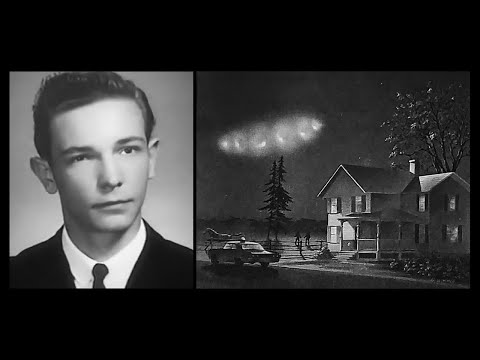
Incident at Exeter: Norman Muscarello and his frightening 1965 UFO encounter
A focused walkthrough of Muscarello's original sighting and its immediate aftermath at the Kensington Road site.
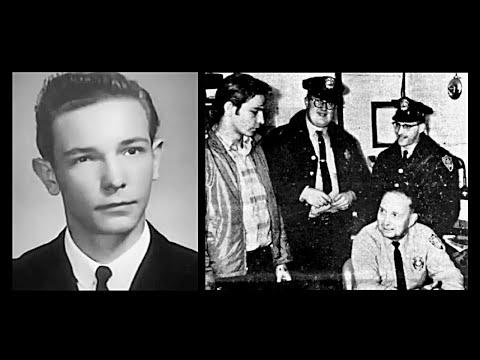
Norman Muscarello and other eyewitnesses recall the 1965 UFO incident in Exeter, New Hampshire
Archival and retrospective witness interviews, including footage related to NICAP investigator Raymond Fowler's involvement.

The 1965 Exeter UFO Incident
A dedicated case overview covering the timeline, the Blue Book investigation, and the case's lasting significance.

1965 UFOB Case Sightings: UFO at Exeter NH, Witnessed by Norman Muscarello
A structured case-file-style summary of the sighting and its documentation.

The Muscarello Miles
A locally produced Exeter TV piece retracing Muscarello's original walking route along Route 150 on the night of the sighting.
Sources
- "Exeter incident," Wikipedia. en.wikipedia.org
- Fowler, Raymond E. "The Exeter, N.H./Muscarello Case," original NICAP field investigation report, 1965. nicap.org
- NICAP. "Sept 2, 1965, Exeter, NH" case directory entry. nicap.org
- NICAP. Exeter case UFO report / summary directory page. nicap.org
- Schuessler, John F. "The Exeter, N.H. UFO Case, September 3, 1965," NICAP supplementary report (PDF). nicap.org
- Nickell, Joe, and James McGaha. "'Exeter Incident' Solved! A Classic UFO Case, Forty-Five Years 'Cold,'" Skeptical Inquirer, Vol. 35, No. 6, November/December 2011. skepticalinquirer.org
- "John G. Fuller," Wikipedia. en.wikipedia.org
- "Raymond E. Fowler," Wikipedia. en.wikipedia.org
- "J. Allen Hynek," Wikipedia. en.wikipedia.org
- "Hector Quintanilla," Wikipedia. en.wikipedia.org
- "Investigation of UFO reports by the United States government," Wikipedia. en.wikipedia.org
- The Black Vault. "Gerald Ford Pushes for Congressional UFO Hearings in 1966" (Gerald R. Ford Presidential Library document archive). theblackvault.com
- Internet Archive. "Unidentified Flying Objects" — House Committee on Armed Services hearing transcript, April 5, 1966. archive.org
- Manchester Ink Link. "New Hampshire: First in the Nation in Major UFO Encounters, Part 2." manchester.inklink.news
- NH Magazine. "New Hampshire's UFO History and the Exeter UFO Festival." nhmagazine.com
- CBS News. "Exeter UFO Festival in New Hampshire Celebrates Notable 1965 Sighting." cbsnews.com
- Union Leader. "Festival Marks 50th Anniversary of 'Exeter Incident.'" unionleader.com
- Union Leader. "Exeter-terrestrial: UFO Festival Marks 60 Years Since Historic Sighting." unionleader.com
- Exeter UFO Festival, official site. "About Us." exeterufofestival.org
- Find a Grave. "Norman J. Muscarello (1947–2003)." findagrave.com
- UFO Casebook. "1965, The Exeter, New Hampshire Encounters." ufocasebook.com
- Coast to Coast AM. "Sept 3, 1965: The Exeter UFO Incident." coasttocoastam.com
- Openminds.tv. "The Exeter, New Hampshire UFO Incident 50 Years Later." openminds.tv
- Clark, Jerome. The UFO Encyclopedia, 4th Edition, Visible Ink Press, 2023 (entry on the Exeter incident).
- Peebles, Curtis. Watch the Skies!: A Chronicle of the Flying Saucer Myth, Smithsonian Institution Press, 1994.
See something inaccurate? Have additional information or sources?
Suggest an Edit →Last Updated: August 2026