
The Choisy-le-Roi Shape-Shifting Object
At 10:12 PM on May 21, 2012, a motorist driving through Choisy-le-Roi, a densely built Paris suburb straddling both banks of the Seine, noticed a luminous phenomenon crossing the overcast night sky from north to south. Stopped at a red light, he made out a cylindrical shape he compared, in his own words, to "an icon whose point is toward the ground." Getting out of his car for a clearer look, he found the object stationary directly above the road, facing him, with powerful light escaping small "portholes" and an orange luminous sphere surrounding it. Within seconds it began an ascending trajectory, changed shape into an inverted V, turned white, and disappeared into the cloud layer. The entire observation, start to finish, lasted 15 seconds. No other witness was ever identified, despite the sighting's location above a public road in one of the more densely populated communes of inner Paris's southeastern suburbs. GEIPAN's own investigation rated the account as precise and of good consistency, explicitly built and then rejected the only plausible conventional candidate it could identify — a novelty or festive balloon — as unable to reconcile the object's reported characteristics, and noted plainly that it found it surprising no one else in the middle of a city seems to have noticed. GEIPAN's own case file, registered under case ID 2012-05-08357, closes the sighting Class D1: an observation of an object of unknown nature.
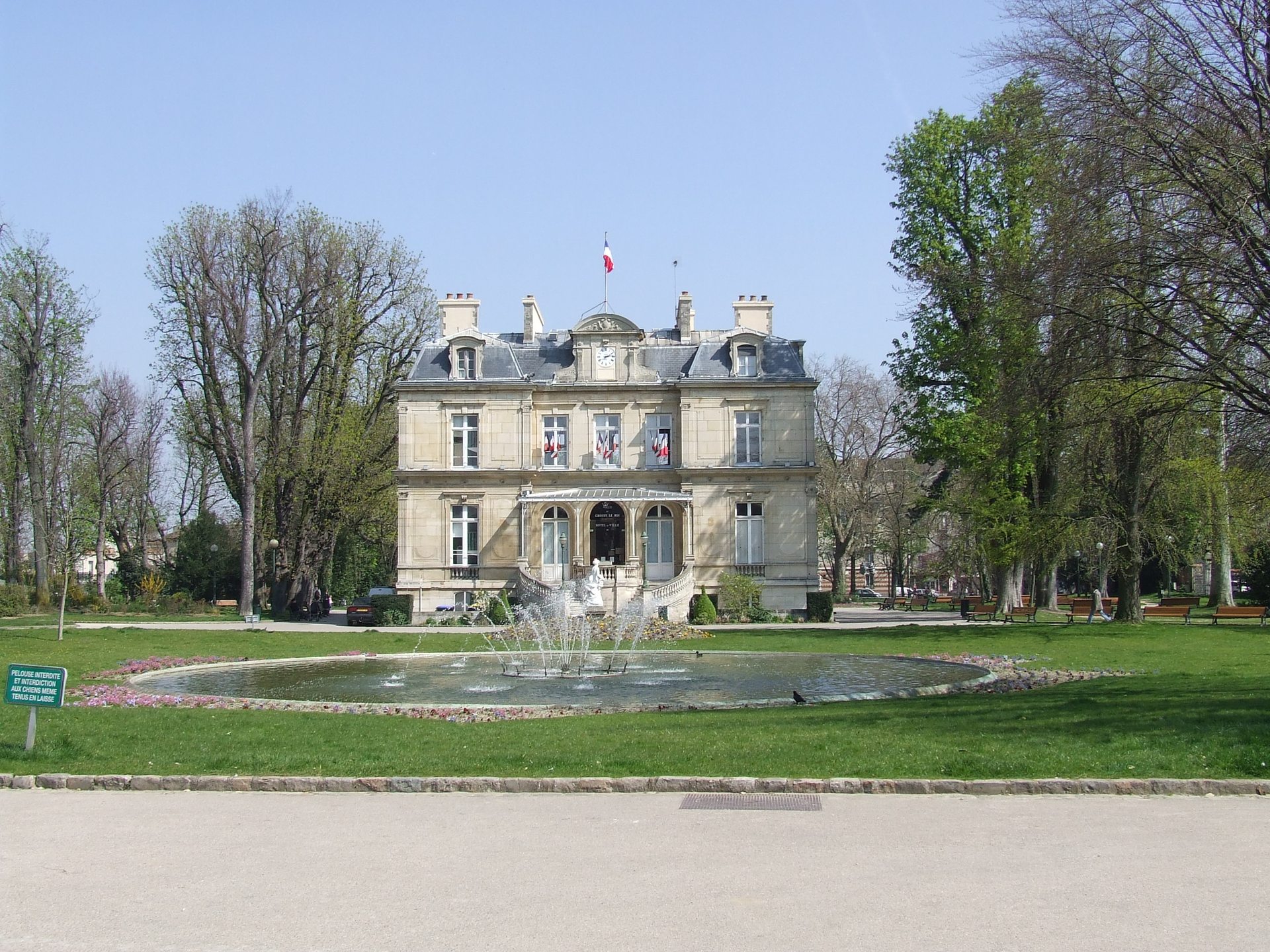
Pictured: the Mairie (town hall) of Choisy-le-Roi, Val-de-Marne, photographed in 2007. This is not a photograph of the actual stretch of road where the sighting occurred, nor of the object itself, of which no photograph, video, or other direct visual recording is known to exist anywhere — only the witness's own verbal testimony, recorded by GEIPAN, survives in the case file. Photo by Wikimedia Commons contributor 1quidam (2007), released under the GNU Free Documentation License / CC BY-SA.
Theoretical Alignment
This case draws the strongest Extraterrestrial Hypothesis alignment of the two GEIPAN files published in this research round, for a specific reason: unlike a brief, largely featureless silhouette sighting, this account describes a structured object with genuine internal detail — a defined cylindrical shape, small illuminated portholes suggesting some kind of internal compartmentalization or engineering, a distinct surrounding luminous envelope, and a coherent, multi-stage sequence of behavior (stationary hover, facing the witness, then ascent, morphing, color change, and departure) rather than a single static impression. That level of structured, sequential detail, combined with GEIPAN's own explicit judgment that its single plausible mundane candidate (a novelty balloon) could not adequately account for it, is the classic profile of a higher ETH-aligned account. Interdimensional framing draws real, if secondary, support specifically from the shape-and-color transformation itself — a cylinder becoming an inverted V, orange becoming white, all within a period of a few seconds — a behavior that is difficult to explain via any known physical or aerodynamic mechanism and that IDH proponents specifically point to as suggestive of technology (or a phenomenon) that does not obey ordinary physical continuity the way a rigid terrestrial craft would. Psycho-Social framing is capped below both of the other two specifically because of what GEIPAN's own investigation found weighing against it: a witness account independently rated "good" and "very precise" by the agency's own assessment, describing a coherent, internally consistent sequence rather than a vague or contradictory impression. It is not, however, negligible: this is a single, uncorroborated witness in a densely populated urban area at an hour (10:12 PM) when other residents, drivers, and pedestrians would ordinarily have been present, and the total absence of a second witness or any photograph despite the near-universal presence of camera-equipped smartphones by 2012 is a real, unresolved oddity this site's analysis weighs honestly rather than dismissing.
Background
Understanding this sighting benefits from two separate threads of context: the specific, densely built stretch of Paris suburb where it occurred, and the genuinely unusual sequence of behavior GEIPAN's own investigators had to work through in weighing what, if anything conventional, could explain it.
Choisy-le-Roi: A Royal Name on a Working-Class Paris Suburb
Choisy-le-Roi is a commune of roughly 45,900 residents in the Val-de-Marne department, roughly 10.7 kilometers southeast of central Paris, notable geographically as the only commune in Paris's immediate inner suburban ring to sit on both banks of the Seine. Its name traces to the Gallo-Roman estate Sociusacum; the "-le-Roi" ("of the King") suffix was added in 1739, when Louis XV purchased the local Château de Choisy and folded it into the royal domain. The château went on to a genuinely eventful eighteenth-century run — Madame de Pompadour took up residence there from 1746, and Marie-Antoinette hosted lavish entertainments on the grounds between 1775 and 1780 — before the Revolution renamed the town Choisy-sur-Seine and the royal estate itself, sold off as national property, fell into disrepair; only the château's entrance survives today. The modern commune bears almost no visible trace of that royal history: it is a dense, working residential and light-industrial suburb, with a population density of roughly 8,460 residents per square kilometer across a compact 5.43 square kilometers, served by the RER C line at Choisy-le-Roi station and crossed by the heavily trafficked Pont de Choisy, a road bridge carrying more than 32,000 vehicles a day across the Seine and the RER tracks below. It was on an ordinary road within this dense, thoroughly urban setting — not the château grounds, not open countryside, but a signalized intersection a driver would pass through on any given evening — that this sighting took place.
A Town Rebuilt Around Rail and Road
Choisy-le-Roi's modern shape owes as much to twentieth-century transport infrastructure as to its eighteenth-century royal history. The commune is served directly by Choisy-le-Roi station on the RER C line, part of the dense suburban rail network radiating out from central Paris that makes a car-free commute into the capital entirely practical for residents, and its current town hall — a building bearing no resemblance to the vanished royal château it distantly succeeded in civic function — was completed in 1988, reflecting decades of postwar municipal growth layered onto the older riverside town. The commune's population grew modestly but steadily through the 2000s and 2010s, reaching roughly 45,900 residents by the most recent Insee count, spread across a compact 5.43 square kilometers that leaves Choisy-le-Roi among the more tightly built communes anywhere in this site's published archive. This is, in short, exactly the kind of ordinary, thoroughly modern, well-connected inner-Paris suburb where an evening commute home would be a routine, unremarkable event for thousands of residents simultaneously — which is precisely what makes the sighting's total lack of any second witness or photograph, discussed further below, a genuinely notable gap rather than an unsurprising one.
A Sequence, Not a Single Impression
What makes this case distinctive within this site's broader GEIPAN archive, and what GEIPAN's own investigation treats as central to its own analysis, is that the witness did not report a single static shape or a brief flash, but a coherent multi-stage sequence unfolding over a genuinely short window (15 seconds total). He first noticed a luminous phenomenon in transit, north to south, in the overcast sky — already, in itself, an unremarkable-sounding report of a light moving across the sky. It was only once he stopped at a red light and looked more carefully that the account became something else entirely: a defined cylindrical shape, point-down, resembling what he himself likened to a smartphone or app "icon"; then, after getting out of his car, a stationary hover directly above the road, facing him, with light visibly escaping from small portholes and a separate orange glow enveloping the whole form; and finally, within a further few seconds, an ascending departure accompanied by a genuine shape change (cylinder to inverted V) and color change (orange to white) before the object vanished into the cloud ceiling above. GEIPAN's own file treats this entire sequence as one continuous, internally consistent observation, not several separate or contradictory reports, and rates the witness's account of it as precise and of good overall consistency — a genuinely strong evidentiary rating for a single, uncorroborated witness, and one this site's research found directly stated in GEIPAN's own published synthesis rather than inferred.
Complete Timeline
| Date | Event |
|---|---|
| 1739 | Louis XV purchases the Château de Choisy, adding "-le-Roi" to the town's name. |
| 1746–1780 | Madame de Pompadour and later Marie-Antoinette use the château as a residence and venue for royal entertainments. |
| Post-1789 | The Revolution renames the town Choisy-sur-Seine; the royal estate is sold and largely demolished, save its entrance. |
| May 21, 2012, 10:12 PM | Sighting begins. A motorist in Choisy-le-Roi notices a luminous phenomenon moving north to south in the overcast sky. |
| Same moment, at a red light | The witness identifies a cylindrical, point-down "icon"-like shape; stops his vehicle. |
| Seconds later | Exiting his car, the witness observes the object stationary directly above the road, facing him, with light escaping small portholes and an orange luminous sphere surrounding it. |
| Within the same 15-second window | The object ascends, changes shape into an inverted V, changes color to white, and disappears into the cloud layer. |
| Following days | The witness's report reaches GEIPAN; a technical questionnaire and formal testimony are recorded. No other witness or press report is ever identified. |
| Case status as maintained | Final classification. GEIPAN records the case as Class D1: an object of unknown nature, with its own closest-fitting conventional candidate (a novelty balloon) explicitly judged unable to account for the reported characteristics. |
Detailed Narrative
A Red Light, and a Second Look
Per GEIPAN's own archived case synthesis, the sighting began in the most unremarkable way imaginable: a motorist driving through Choisy-le-Roi on the evening of May 21, 2012, noticed a luminous phenomenon in the sky, traveling generally north to south against an overcast backdrop, that struck him as intriguing enough to keep watching rather than dismiss outright. It was only when circumstance — a red traffic light — forced him to stop that he had the opportunity to actually study it rather than glimpse it in passing, and it was at that point that the sighting's genuinely distinctive character emerged: a defined, cylindrical shape, its point oriented toward the ground, which the witness himself described using an unusually modern comparison — "resembling an icon whose point is toward the ground," the kind of simile that reaches for a smartphone app icon or a similarly familiar downward-tapered graphic shape rather than for a more traditional "flying saucer" or "cigar" vocabulary.
Getting Out of the Car
What happened next is, on its own, an unusual investigative gift: rather than simply watching from behind the wheel, the witness chose to exit his vehicle for a clearer, unobstructed view. What he then reported was considerably more specific than a distant light. The object was stationary, hovering directly above the road, oriented so as to face him directly. Powerful light was visibly escaping from what he described as small "hublots" — portholes, the same word used for a ship's or aircraft's small round windows — implying, at least to the witness's own eye, some kind of internal structure or compartmentalization rather than a single undifferentiated light source. Surrounding the object, he made out a distinct luminous sphere, orange in color, forming a kind of halo or envelope around the central cylindrical form.
Ascent, Transformation, and Disappearance
The object did not remain in this configuration for long. Within the same brief window — the entire sighting, start to finish, spanned only 15 seconds — it began an ascending trajectory, climbing away from its stationary position above the road. As it climbed, its own reported form changed: the cylindrical shape resolved into what the witness described as an inverted V, and its color shifted from the earlier orange glow to a plain white. It then disappeared into the cloud layer above, bringing the observation to an end. GEIPAN's own synthesis treats this entire progression — transit, stop, hover, ascent, shape change, color change, disappearance — as a single coherent account from one witness, not a set of disconnected impressions, and explicitly credits it as precise and internally consistent.
What GEIPAN's Own Investigators Actually Weighed
GEIPAN's own published synthesis is direct about what drove its conclusion. Investigators identified several "objective elements" from the technical investigation report as decisive: an object of genuinely unusual form, fitted with what appeared to be lit portholes; a stop directly above the road, facing the witness, rather than a simple flyover or distant transit; and a departure, after only a few seconds, accompanied by an actual change of shape. Weighed against the only plausible conventional candidate GEIPAN's investigators could identify — a novelty or festive balloon, of the kind sold with an internal light source and capable of a slow, wind-driven ascent — the agency concluded that the sighting presented "numerous characteristics difficult to reconcile" with that explanation, and classified the object as genuinely unexplained rather than probable-balloon. This is, in this site's own assessment, one of the more explicit and reasoned single-candidate rejections in this site's published GEIPAN archive: GEIPAN did not simply note that a balloon was "possible" and move on, but identified specific features of the report (the portholes, the stop directly facing the witness, the mid-departure shape change) that a simple novelty balloon's own physical behavior does not naturally produce.
The Unresolved Oddity: A City With No Second Witness
GEIPAN's own case file raises, in its own words, a genuine question this site's analysis treats with the same honesty rather than glossing over: given that the sighting occurred directly above a public road, at a signalized intersection, in a commune with a population density among the highest in this site's published French archive, why did no other driver, pedestrian, or resident ever come forward with a corroborating account? This cuts in two directions at once, and this site's own analysis declines to resolve it artificially in either. On one hand, a genuinely brief (15-second), low-altitude, spatially localized phenomenon directly above one specific stretch of road is not something every nearby resident would necessarily be positioned to see — most people in a dense urban environment at 10:12 PM on a Monday evening are indoors, looking at screens, or simply not looking up at that exact moment and in that exact direction, and a genuinely brief event can pass entirely unnoticed by people only a short distance away. On the other hand, this is precisely the kind of case where the total absence of any corroborating photograph is hardest to explain away: by May 2012, smartphone penetration in France was already substantial, and a driver stopped at a red light directly beneath a hovering, glowing object would be an unusually favorable set of circumstances (stationary, hands technically free, object directly overhead and lit) for at least one bystander, even if not the witness himself, to have captured something. That no photograph exists from anyone is a real, unresolved weakness in the case's overall evidentiary picture, and this site's scoring below reflects it directly rather than treating GEIPAN's "good consistency" rating on the testimony itself as the whole story.
Key Witnesses
Choisy-le-Roi Primary Witness (identity withheld per GEIPAN's standard anonymization practice)
Driving through Choisy-le-Roi on the evening of May 21, 2012, this witness noticed a luminous phenomenon in transit, stopped at a red light to study it more closely, then exited his vehicle for an unobstructed view of a stationary, porthole-lit cylindrical object surrounded by an orange glow, hovering directly above the road and facing him. He watched it ascend, change shape into an inverted V, turn white, and vanish into the clouds, all within roughly 15 seconds. GEIPAN's own investigation rated his account as precise and of good overall consistency. No other witness to this sighting was ever identified.
The Five Observables Assessment
The Five Observables framework, developed by the Pentagon's Advanced Aerospace Threat Identification Program to describe performance characteristics beyond known conventional technology, is applied here for comparative consistency across the site's case files. This case registers two genuine "Present" ratings, reflecting the object's reported stationary hover and its total silence, alongside a distinctive shape-and-color transformation that the standard five-category framework itself has no dedicated category to capture.
Assessment: This case's genuinely distinctive feature is one the standard Five Observables framework was never designed to capture cleanly: a structural shape change (cylinder to inverted V) occurring in tandem with a color change (orange to white), within a span of a few seconds, during active flight. Neither "shape-shifting" nor "color-changing" appears as its own category in the AATIP-derived framework, which focuses on propulsion and performance characteristics rather than morphology — but that gap in the framework does not make the behavior itself any less genuinely anomalous relative to any known aircraft, balloon, or other conventional airborne object, none of which are capable of a coherent structural transformation of this kind while airborne. Combined with the confirmed "Present" ratings for both a genuine stationary hover with no visible support and complete silence at close range, this case's overall behavioral profile is one of the more distinctive in this site's published GEIPAN archive, even though its single-witness, uncorroborated structure (discussed further under Observer Credibility below) tempers how much weight that distinctiveness alone should carry.
Evidence Assessment
Supporting an Anomalous Origin
- GEIPAN's own investigation explicitly rates the witness's testimony as precise and of good overall consistency — a stronger rating than several other single-witness cases in this site's published GEIPAN archive receive
- The witness's decision to exit his vehicle for a closer, unobstructed look, rather than simply driving on, produced a genuinely detailed account (portholes, an orange envelope, a direct hover facing the witness) rather than a passing glimpse
- GEIPAN's own investigators explicitly built and then rejected the single most plausible conventional candidate they could identify (a novelty balloon), citing specific reported features (lit portholes, a stop directly facing the witness, a mid-departure shape change) that a balloon's own ordinary physical behavior does not produce
- The object's reported total silence at an estimated close range of roughly 45 meters is a poor match for any conventional powered aircraft
- A structural shape change combined with a color change during active flight has no ready analog among any known conventional aircraft, balloon, or lighting effect identified in the case file
Supporting a Conventional/Mundane or Inconclusive Origin
- This is a single, entirely uncorroborated witness account; despite occurring directly above a public road in one of the more densely populated communes in this site's published archive, no second witness, bystander, or press report was ever identified
- No photograph or video exists, a genuinely notable absence given the sighting's 2012 date, well into the era of near-universal smartphone camera ownership, and the witness's own description of a stationary object directly overhead while he was out of his vehicle
- The observation lasted only 15 seconds in total, limiting independent verification of the exact sequence and timing of the reported shape and color changes
- GEIPAN's own rejection of the balloon hypothesis rests on a contextual, feature-by-feature plausibility judgment rather than any physical test or instrumented measurement of the object itself
Why "Open"
This case is stamped Open because it presents a genuine, honestly-investigated puzzle: a single witness whose account GEIPAN itself rates as precise and internally consistent, describing a structured, multi-stage sighting that the agency's own investigators explicitly could not reconcile with their own best-fitting conventional candidate, weighed against real, unresolved limitations that keep it from scoring higher. The case's core strength is specific and substantive: this is not a vague light report but a detailed sequence — a defined shape, visible internal lighting (portholes), a distinct luminous envelope, a direct stop-and-hover facing the witness, and a coherent structural and color transformation during departure — and GEIPAN's own investigators worked through that detail feature by feature rather than defaulting to the nearest plausible-sounding explanation. Rating the balloon hypothesis as failing to account for the reported characteristics, rather than simply noting it as "possible" and closing the file, is a meaningfully stronger investigative outcome than several other single-witness cases in this site's archive receive.
Weighing against that strength are two real and specific limitations. First, this is a single, entirely uncorroborated account, and GEIPAN's own file explicitly flags the genuine oddity that no second witness ever emerged despite the sighting's location directly above a public road in a dense, heavily trafficked part of inner Paris's suburbs, at an hour when other drivers and residents would ordinarily have been present. Second, and this site's own research treats this as the single most consequential gap in the case, no photograph or video exists from any source — a real absence given the sighting's 2012 date, a period by which smartphone cameras were already widespread, and given the witness's own description of standing outside his vehicle with a stationary, glowing object directly overhead for at least several seconds. Neither limitation is fatal to the case's genuine strangeness, but together they are the specific reason this file scores in the middle of this site's published GEIPAN archive rather than toward its upper end: a genuinely well-investigated, well-rated single testimony, held down by the complete absence of any second data point of any kind, whether human or photographic, in circumstances where at least one might reasonably have been expected. It scores deliberately above this same research round's companion Taverny file, whose own account is thinner in duration, structural detail, and GEIPAN's own stated consistency rating, while remaining well short of this site's more strongly corroborated multi-witness or instrumented French cases.
Sensor & Instrumentation Detection Profile
No photograph, video, radar record, or any other instrumented recording of this phenomenon exists in the published case file. The entire evidentiary record consists of the witness's own verbal testimony, worked through by GEIPAN's standard technical questionnaire and investigation methodology. This site's research found no indication that GEIPAN, or any other body, requested or reviewed air-traffic or radar data for the Paris region for the evening of May 21, 2012 — consistent with the sighting's own reported profile (a low-altitude, extremely brief, non-powered-flight-pattern object) being unlikely to register as a distinct, trackable target on civil air-traffic radar in the first place, rather than reflecting any gap in the investigation's own thoroughness. GEIPAN's dedicated photographic/video analysis toolkit, IPACO, has no imagery to process in a case where none exists; its automated meteor-camera network, FRIPON, would in any case be of no relevance to an object reported hovering, changing shape, and departing under its own apparent control rather than following a ballistic meteor trajectory.
Environmental & Geospatial Context
GEIPAN's own case file records the sky as overcast ("ciel couvert") at the time of the sighting — a detail directly relevant to the object's own reported disappearance into the cloud layer, which required no exceptional altitude to occur given cloud ceilings on an overcast evening are often only a few hundred to low thousands of meters above ground level. No further meteorological detail (wind, precipitation, visibility) is recorded in the published file, and no independent reconstruction is available for this specific evening.
Geographically, the sighting occurred on a signalized road within the built-up core of Choisy-le-Roi, a commune with a population density (roughly 8,460 residents per square kilometer) among the highest of any location documented in this site's published archive, situated on both banks of the Seine roughly 10.7 kilometers southeast of central Paris. The area sits within the ordinary civil airspace of the greater Paris region, with no dedicated military installation, drone-restricted zone, or other specific institutional airspace feature identified anywhere in GEIPAN's own file as bearing on the sighting. The Pont de Choisy, the commune's major Seine road crossing, carries more than 32,000 vehicles daily and sits close to the area where the sighting occurred, underscoring just how routinely trafficked and, by extension, potentially witnessed this stretch of road ordinarily is — a fact this site's analysis weighs directly in treating the case's lack of any second witness as a genuine, unresolved oddity rather than an unremarkable data gap.
The wider Val-de-Marne department, of which Choisy-le-Roi forms a part, sits entirely within the inner ring of Paris's own metropolitan area, bordered by similarly dense communes on every side and crossed by major road and rail arteries linking the capital to Orly Airport and the southern approaches to the city. Unlike this site's companion Val-d'Oise case from this same research round, whose surrounding countryside offers genuinely low ambient light pollution as a favorable observing condition, Choisy-le-Roi's own dense urban lighting environment — street lighting, vehicle headlights, illuminated shopfronts and apartment windows — is a real complicating factor for any brief nighttime sighting, since a well-lit urban foreground can make it genuinely harder to judge a distant or moderately distant light source's true altitude, size, and distance purely by eye. This site's analysis notes this as an honest complication specific to an urban sighting like this one, distinct from (and in addition to) the single-witness corroboration issue discussed above. It is also, however, a complication that cuts both ways: an urban lighting environment that can distort a distant witness's size and distance judgment offers no comparable explanation for the witness's own close-range (roughly 45-meter) observation, made after he had already stopped his vehicle and stepped out specifically to look more carefully, nor for the structural and color transformation he reported watching directly overhead, at close range, rather than glimpsing distantly across a confusing, light-cluttered urban skyline.
Observer Credibility & Occupational Profile
The witness's occupation is not disclosed in GEIPAN's published case file, consistent with the agency's standard anonymization practice. What is recorded, and what this site's research treats as directly relevant to the account's overall credibility, is that GEIPAN's own investigators explicitly rated his testimony as precise and of good overall consistency — a positive, stated credibility judgment by the agency's own field methodology, not a passive, unassessed recording of an unverified claim. The witness's own behavior during the sighting itself — stopping at a red light to observe more carefully, then actively exiting his vehicle for an unobstructed view rather than simply driving past — is, in this site's own analysis, a further, if informal, indicator of a genuinely engaged, deliberate observer rather than someone glancing distractedly at an ambiguous light and filling in details afterward.
At the same time, this site's analysis treats the case's single-witness structure, and specifically the total absence of any second witness in a dense urban setting, as a real and unresolved limitation distinct from any question about this particular witness's own honesty or attentiveness. A lone account, however well-rated by investigators, cannot rule out an idiosyncratic misperception specific to that one observer's own vantage point, lighting conditions, or state of mind at that moment — and GEIPAN's own explicit note of surprise that no other resident, driver, or pedestrian in a densely populated commune ever came forward is, on its own terms, a real signal worth taking seriously rather than explaining away. This site's own analysis does not resolve that tension in either direction: it is entirely possible for a genuinely brief, spatially localized nighttime phenomenon to go unnoticed by everyone except the one person positioned to look up at the right moment, and it is equally reasonable to note that the complete absence of even a single corroborating photograph, in a location and era where smartphone photography was already commonplace, is a real evidentiary gap that keeps this case from scoring higher despite its well-rated central testimony.
A broader, well-established finding from the general psychology of eyewitness perception is directly relevant to weighing this specific tension, without resolving it outright. Perceptual and memory research on brief, high-salience visual events — work descending from early tachistoscopic exposure studies through to modern applied eyewitness research — consistently finds that a short viewing window does not automatically mean an unreliable account: a genuinely attentive, motivated observer (someone who deliberately stops and gets out of a vehicle for a clearer look, as this witness did, rather than glancing distractedly) can encode and later report a surprising amount of accurate detail from even a handful of seconds, particularly for a high-contrast, high-salience stimulus like a lit object against a dark sky. What that same research base does not offer is any way to independently verify a single such account after the fact, absent corroboration from a second observer or an instrument — which is exactly the gap this case cannot close. This site's own analysis treats the witness's active, engaged viewing behavior as a genuine reason to weight his account somewhat more heavily than a passive glance would warrant, while stopping well short of treating that behavioral detail as a substitute for the corroboration the case simply does not have.
Physical & Material Assays
No physical trace evidence exists in this case, and given the object's reported behavior — a hover directly above a paved public road, followed by an ascent and departure, with no landing or ground contact of any kind ever described — none would be expected. This case has no soil, vegetation, or material sample of any kind associated with it, and no metallurgical, isotopic, or trace-chemical assay was performed or would have been applicable.
Historical Precedents & Archive Matches
This case's most instructive points of comparison on this site are, first, the other published GEIPAN file whose own object undergoes a genuine multi-phase transformation in flight, and second, this site's broader archive of structured, lit craft with visible internal detail — a comparison that highlights just how genuinely unusual this specific case's morphology is even within an already unusual field.
Sainte-Foy-de-Peyrolières: The Closest Behavioral Match on This Site
The Sainte-Foy-de-Peyrolières Five-Phase Sighting (Open, case #248) is, on this site's own published archive, the single closest behavioral analog to this Choisy-le-Roi case: a genuinely transforming light formation moving through five to six cascading points, then a dark orange-tinted rectangle marked by aligned lights, then a triangle, then a silent high-speed burst, then a rectangle again before fading out. Read side by side, the two cases share a specific, unusual structural feature that very few reports in this site's archive display at all — a single phenomenon changing its own apparent geometric form multiple times within one continuous observation, rather than simply appearing, moving, and departing in one unchanged shape. Sainte-Foy-de-Peyrolières's transformation sequence is considerably more elaborate (five-plus distinct phases against this case's two: cylinder, then inverted V), but the underlying pattern — an object whose shape is not fixed over the course of a single sighting — is the same, and its recurrence across two independently investigated GEIPAN files, from two different French departments and four years apart, is a genuine, noteworthy data point for this site's broader archive rather than a coincidence specific to either file alone.
Flavin: The Closest "Structured, Lit Craft" Match, Without the Morphing
The Flavin Domed Cylinder Sighting (Open, case #257) offers a different, complementary point of comparison: a structured craft with genuine internal lighting detail (three fixed red lights on a dome, a separate rotating green beacon-like light) rather than a single undifferentiated glow. Choisy-le-Roi's own "small illuminated portholes" and surrounding orange envelope occupy similar territory — a witness perceiving distinct, discrete light sources on or within a structured body, rather than a single point of light — but Flavin's object never changes its own physical shape at any point in its roughly two-minute observation, while this Choisy-le-Roi case's defining feature is precisely that it does. Taken together with the Sainte-Foy-de-Peyrolières comparison above, these two cases usefully bracket this file's own morphology: it combines the "internally-lit structured craft" character of Flavin with the "genuinely shape-changing" character of Sainte-Foy-de-Peyrolières, making it, as far as this site's published GEIPAN archive currently shows, the first case to display both traits together in a single account.
A First for This Site: An Explicitly Rejected Balloon Hypothesis
This case also appears, as far as this site's published GEIPAN archive currently shows, to be the first of this site's French GEIPAN files whose closest-fitting conventional candidate was explicitly a novelty or festive balloon rather than an aircraft, drone, astronomical object, or natural atmospheric phenomenon. That itself is a useful data point: it indicates GEIPAN's own investigators judged the object's reported size, altitude behavior (a genuine stationary hover rather than simple wind-driven drift), and internal lighting detail as closer to a balloon's basic physical envelope than to any powered aircraft or drone — while still concluding, on the specific reported features (the portholes, the direct hover facing the witness, the mid-flight shape change), that even that closest-available conventional category failed to account for what was actually described.
How Rare a D1 Classification Actually Is
It is worth putting this case's own Class D1 rating in the context of GEIPAN's full published case history, since the classification is considerably rarer than a casual reader might assume. Per the agency's own published statistics, of 3,368 total cases on record as of mid-2026, only 106 — roughly 3.1% — are rated Class D, the category covering phenomena that remain genuinely unexplained after a real investigation (as opposed to Class C, covering the far larger 30.1% of cases where the data on record is simply too thin to reach any conclusion either way). This case's own D1 sub-rating, reserved specifically for single-witness, no-photo/video accounts of medium-to-good consistency, sits within that already-small minority. Read against that base rate, this file is not an example of GEIPAN routinely declaring cases mysterious; it is one of a genuinely small number of accounts, out of thousands processed, where the agency's own investigators worked through the most probable conventional explanation available and still could not close the file.
Material Analysis
As with the Physical & Material Assays section above, this case involves no physical or trace evidence of any kind. The object remained airborne throughout the entire observation, departing into cloud cover rather than landing or approaching the ground, and no sample of any kind was ever collected or would have been applicable to collect.
Supporting Non-Terrestrial Origin
- No confirmed physical evidence exists to test in the first place, so no terrestrial material-composition finding contradicts an anomalous interpretation either
- The object's reported structural shape change (cylinder to inverted V) combined with a color change (orange to white) during active flight has no identified analog among any conventional aircraft, balloon, or lighting effect in GEIPAN's own investigation
- GEIPAN's own investigators explicitly found the sighting's specific reported features incompatible with their own closest-fitting conventional candidate (a novelty balloon)
Supporting Terrestrial Origin
- A novelty balloon fitted with an internal light source and capable of wind-driven ascent shares real surface similarities with parts of the reported sighting (a glowing, roughly cylindrical or irregular form, a slow ascent), even though GEIPAN's own investigators found it an incomplete match overall
- With no photograph, video, or physical sample of any kind, there is no independent way to verify the precise sequence, timing, or true physical nature of the reported shape and color changes beyond the single witness's own account
The Conventional Explanation Candidate: Novelty Balloon, Chinese Lantern, and Misperception
GEIPAN's own published synthesis identifies and directly addresses one primary conventional candidate for this sighting, and this site's own research adds two further residual possibilities worth weighing even though GEIPAN's own file does not itself name them separately.
Novelty or Festive Balloon
This is the single candidate GEIPAN's own investigators explicitly built and tested against the reported facts, and the agency's own conclusion is direct: the sighting presents "numerous characteristics difficult to reconcile with the sole plausible hypothesis envisaged, that of a festive balloon." A helium-filled novelty balloon, potentially fitted with a small internal light (a genuine, commercially available product category, including glow/LED novelty balloons), can plausibly account for a slow, wind-driven ascent and a roughly cylindrical or irregular glowing form drifting through an overcast night sky. What it does not naturally explain, per GEIPAN's own reasoning, is the witness's report of small, distinct "portholes" (rather than a single diffuse internal glow), a genuine stop directly above the road, facing the witness specifically, and above all a structural shape change (cylinder to inverted V) mid-departure — a balloon does not restructure its own physical form in flight, whatever else the wind might do to its orientation or apparent silhouette. This site's own analysis finds GEIPAN's rejection well-reasoned on the published facts, while noting that this rejection, like Taverny's drone-hypothesis rejection in this site's companion case file from this same research round, is a contextual and feature-based judgment rather than a physical test of an actual balloon recovered from the scene.
It is worth stating plainly just how strong the balloon hypothesis is as a general category of explanation across GEIPAN's own full archive, since that context makes the agency's specific rejection of it here more significant, not less. Per GEIPAN's own published statistics (3,368 total cases as of mid-2026), fully 28.0% of all cases are classified A (perfectly identified) and a further 38.8% Class B (probably identified) — a combined 66.8% resolved to a conventional cause — and the agency's own family-level breakdown of those resolved cases explicitly names the "Balloon" family (covering weather/sounding balloons, festive balloons, Mylar balloons, gas balloons, and LED novelty balloons alike) as one of its most frequently cited explanation categories, alongside aircraft, drones, and Chinese/sky lanterns, within the roughly 55% of all cases GEIPAN attributes to some form of aeronautical phenomenon. In other words: a balloon of some kind is not an exotic or unusual explanation for GEIPAN to reach for — it is one of the single most common resolutions in the agency's entire case history, which is exactly why GEIPAN's own investigators evidently considered it first and most seriously here. That this specific case's investigators worked through that default, most-likely-to-apply explanation and still could not make it fit the reported portholes, direct hover, and structural transformation is a meaningfully stronger signal than if the agency had simply never considered a balloon at all.
It is worth being specific about which kind of balloon GEIPAN's own file actually proposes, since "balloon" covers more than one genuinely distinct real-world object. GEIPAN's language points to a novelty or festive balloon — a small, helium-filled, potentially internally-lit consumer product — rather than a weather or sounding balloon (a "ballon-sonde" in the same family, per GEIPAN's own statistical grouping, but a physically different object entirely). This site's research independently checked the latter possibility and found it a poor fit on timing alone: Météo-France operates a routine radiosonde launch program from five French sites, including Trappes in the Paris region, releasing weather balloons twice daily at fixed times (00h and 12h UTC, corresponding to roughly 2 AM and 2 PM local time in late May under French summer time) rather than at the 10:12 PM local hour this sighting occurred. A scheduled meteorological radiosonde launch is not a plausible explanation for this specific sighting on timing grounds alone, independent of the fact that a weather balloon's own simple, translucent, roughly spherical profile does not match the witness's reported cylindrical, porthole-lit form in any case.
Chinese Lantern or Similar Sky Lantern
Not named in GEIPAN's own published synthesis, but a closely related candidate this site's research considered independently given how frequently sky lanterns are cited as an explanation for glowing, slowly-ascending nighttime objects generally: a sky lantern's characteristic profile (a single warm-toned internal flame visible through translucent paper, a slow thermal-lift ascent, and eventual extinguishing or drift out of sight) does not naturally produce discrete "portholes," a genuine stationary hover directly facing a specific observer, or a structural shape change, and this site's analysis treats it as a weaker fit than even the balloon hypothesis GEIPAN itself already rejected.
Misperception or Optical Effect
A residual possibility, not explicitly addressed as its own named hypothesis in GEIPAN's file, is that some genuinely conventional light source or optical effect (a distant aircraft's lighting refracted or distorted by the overcast cloud base, an unusual reflection, or some other transient visual artifact) produced an inaccurate impression of a structured, shape-changing object. This site's analysis rates this as a real, non-trivial possibility precisely because the observation was so brief and so entirely uncorroborated, even while noting that GEIPAN's own investigators, working directly with a witness whose account they independently rated precise and consistent, evidently did not find this explanation persuasive enough to adopt, closing the case as an object of unknown nature rather than a probable misperception.
Novelty / Festive Balloon
ImplausibleGEIPAN's own investigation found this, its single considered candidate, unable to reconcile the reported portholes, direct hover, and mid-flight shape change.
Chinese Lantern / Sky Lantern
ImplausibleNot addressed by GEIPAN directly; this site's own analysis finds it an even weaker fit than the balloon hypothesis GEIPAN already rejected.
Misperception or Optical Effect
InconclusiveA real residual possibility given the sighting's brevity and total lack of corroboration, though not clearly favored over GEIPAN's own analysis of a precise, consistent testimony.
Related Cases
Confirmed Documents & Official Records
The official French government case summary: the witness's account, GEIPAN's investigation, the rejected balloon hypothesis, and the Class D1 determination.
GEIPAN's structured summary of the witness's own testimony, including the object's dimensions, faceted 3D form, coloring, and silent departure.
GEIPAN's own published definitions applied to reach this case's D1 rating — a strange phenomenon of medium-to-good consistency, single witness, no photo or video.
GEIPAN's own account of its institutional lineage, the same modern investigative framework applied to this 2012 case.
Further Reading — Recommended Literature
Confrontations: A Scientist's Search for Alien Contact
Vallée's own personal investigations of structured, close-range object sightings provide direct methodological context for weighing this case's own detailed, structural witness account.
Dimensions: A Casebook of Alien Contact
Re-examines the historical record of shape-shifting and transforming aerial phenomena reports, directly relevant to this case's own morphing cylinder-to-inverted-V sequence.
Flying Saucers and the Straight-Line Mystery
A foundational work of French ufology, useful background for a case investigated within the same national tradition Michel helped establish decades before GEIPAN's modern era.
Only Weirdos See UFOs: An Introduction to the Public's Misperception of Unidentified Aerial Phenomena and Extraterrestrial Life
Directly relevant to this case's own central, unresolved tension: a single, well-rated witness account with no corroboration in a densely populated setting where others plausibly should have seen the same thing.
The UFO Evidence
The founding evidentiary-cataloging reference for the field, a useful comparative baseline for how a single detailed witness account like this one should be weighed and recorded.
Essential Viewing
No Videos Available
Sources
- GEIPAN (CNES), "CHOISY-LE-ROI (94) 21.05.2012", Case 2012-05-08357 — official case summary
- GEIPAN (CNES), Témoignage, CHOISY-LE-ROI (94) 21.05.2012 — witness testimony summary
- GEIPAN (CNES), official case archive & public portal — geipan.fr
- GEIPAN (CNES), Glossaire du GEIPAN — official classification definitions, A/B/C/D/D1/D2
- GEIPAN (CNES), Son histoire — institutional history: GEPAN (1977), SEPRA (1988), GEIPAN (2005)
- GEIPAN (CNES), Statistiques — case classification breakdown (A/B/C/D) and explanation-family statistics, including the Balloon family
- Météo-France, "Les radiosondages" — official radiosonde/weather-balloon launch program, including the Trappes station and fixed 00h/12h UTC launch schedule
- Wikipedia (English), "Choisy-le-Roi" — commune history, geography, and the royal Château de Choisy
- Insee, Dossier complet — Commune de Choisy-le-Roi (94022) — official French national statistics for the commune
- Val-de-Marne (departmental government), "Élargissement du pont de Choisy-le-Roi" — traffic volume and infrastructure context for the Pont de Choisy
- OVNI-France.fr, "Vos témoignages OVNI : (Val-de-Marne, dép. 94) 21-05-2012" — independent public witness-report listing matching this case's core description (title/content confirmed via search; direct fetch unreliable for this domain)
- France 3 Régions / France Info, "OVNI : 9 cas 'inexpliqués' en région parisienne" — regional press coverage of unexplained Île-de-France GEIPAN files (title/content independently confirmed via search; direct fetch blocked by the outlet's own access controls)
- Wikimedia Commons, File: Mairie Choisy-le-Roi.JPG, photo by 1quidam (2007), GFDL/CC BY-SA — licensing and attribution
- Wikimedia Commons, Category: Choisy-le-Roi — image archive for the commune
- This site, case-files/sainte-foy-de-peyrolieres-five-phase-sighting.html — comparative GEIPAN case, closest behavioral match (multi-phase shape transformation)
- This site, case-files/flavin-domed-cylinder-sighting.html — comparative GEIPAN case, structured craft with distinct internal lighting detail
- This site, case-files/taverny-triangle-sighting.html — this same research round's companion Île-de-France GEIPAN case
- This site, key-figures.html, entry on Claude Poher — GEPAN founding and early institutional history
- This site, locations/index.html, entry on Toulouse — CNES/GEPAN/SEPRA/GEIPAN institutional headquarters
See something inaccurate? Have additional information or sources?
Suggest an Edit →Last Updated: August 2026