
The Flavin Domed Cylinder Sighting
Around 8 PM on September 12, 1996, a mother and her ten-year-old daughter were driving out of Flavin, a small farming commune on the Lévézou plateau of the Aveyron department, when the girl first joked that a light beside the road looked like a comet the family had discussed seeing months earlier. It wasn't. What both of them then watched, from the car, at a distance of roughly ten meters, was a completely silent craft composed of an ovoid lower section topped by a cylinder and a dome, carrying three bright red lights, with a separate fluorescent-green light rotating around the cylinder "like a police beacon." The object hung motionless about four meters above the ground, roughly the length of two cars end to end, for close to two minutes, before drifting off slowly toward the north or northwest. That evening, mother and daughter each drew what they had seen and wrote down notes while the memory was fresh; the next morning, gendarmes took their formal statements, and one gendarme produced a computer-assisted composite sketch built directly from the witnesses' own description. Investigators searched the site and found no physical trace of any kind; regional air traffic and radar logs showed nothing unusual; follow-up patrols over subsequent nights turned up nothing; and no comparable report ever surfaced in the local press or from any other witness nearby. GEIPAN's own archived case file, registered under case ID 1997-11-01489 and, per the agency's own published case history, once catalogued under the name of the neighboring town of Pont-de-Salars before being re-filed under Flavin, records a phenomenon of medium-to-strong consistency that remains, in the gendarmerie's own words at the time, without any coherent explanation. GEIPAN classifies it Class D: unexplained.
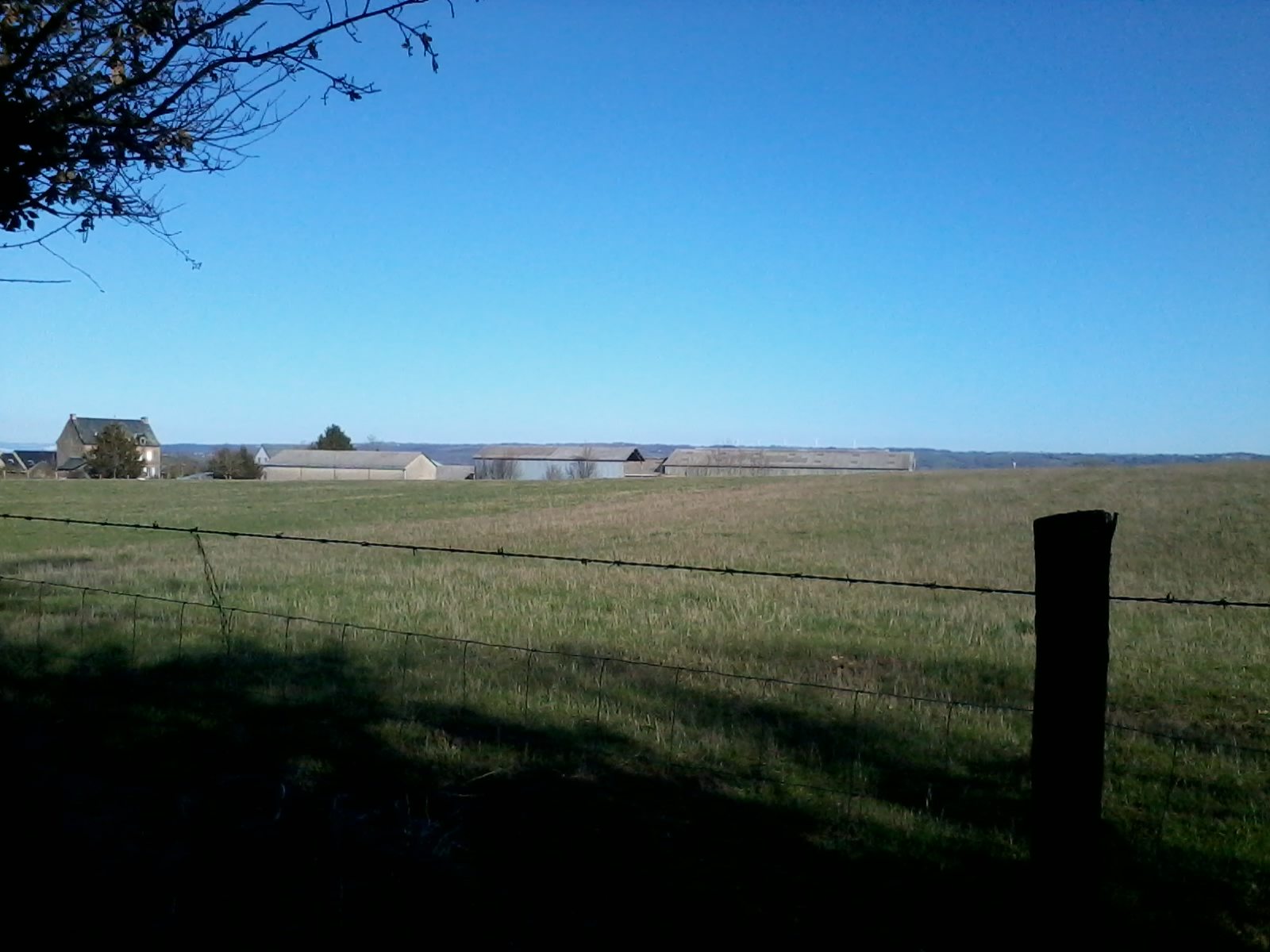
Pictured: rural countryside near Flavin, Aveyron, France, on the Lévézou plateau, taken in 2013. This is not a photograph of the actual stretch of the CD911 where the sighting occurred, nor of the phenomenon itself, of which no photograph, video, or other direct visual recording is known to exist anywhere — only the witnesses' own same-night hand sketches and a gendarme's later computer-assisted composite drawing survive in GEIPAN's archived case file. Photo by Wikimedia Commons contributor "panoramio_user84" (2013), released under CC BY 3.0.
Theoretical Alignment
Of the three cases from this batch built on modern GEIPAN files, this one draws the highest alignment toward the Extraterrestrial Hypothesis, for a straightforward reason: the object described is not an ambiguous light or a formation of points, but a structured craft with distinct, describable components — a lower skirt, a cylindrical body, a dome, fixed red lights, and a separate rotating green light functioning like an instrument or beacon. That level of internal, functional detail, sustained across a close-range observation lasting close to two minutes rather than a few fleeting seconds, is the classic profile of an ETH-aligned account: a physically substantial, apparently engineered object rather than an atmospheric or optical phenomenon. Psycho-Social framing carries comparatively little weight specifically because the gendarmerie investigation found the witnesses credible enough to warrant real follow-up (patrols, air-traffic checks, radar review) rather than dismissing the report outright, and because a ten-year-old's account corroborating her mother's in its core structural details, however imperfect a single child's testimony is in isolation, is not the profile of a fabricated or attention-seeking story. Interdimensional framing draws modest support only from the case's total absence of any physical trace despite a very close, low hover — the kind of "no residue" pattern IDH proponents sometimes point to as suggestive of a non-physical or non-solid technology — without any specific evidence in this file actually supporting that reading over a more conventional, if still unidentified, craft interpretation.
Background
Understanding this case requires understanding both the rural plateau commune where it happened and the specific, decades-long institutional history of the French government body that investigated it — a history this case's own unusual case-ID/event-date mismatch and its own naming history as "Pont-de-Salars" directly reflect.
Flavin and the Lévézou: A High Plateau Farming Commune
The commune of Flavin sits in the Aveyron department of the Occitanie region, part of the Millau arrondissement and the Pays du Lévézou intercommunal area, on a plateau with an average elevation of roughly 615 meters. Its population, recorded most recently at around 2,392 residents known locally as Flavinois and Flavinoises, has grown substantially in recent decades as part of a wider commuter-belt expansion around nearby Rodez, the Aveyron prefecture roughly ten kilometers to the northwest. In 1996, however, Flavin remained a considerably smaller and more traditionally agricultural commune, and the road on which this sighting occurred, the departmental route CD911 running southeast out of Flavin toward the communes of Sainte-Radegonde and Laissac, passes through exactly the kind of open, sparsely lit rural farmland typical of the wider Lévézou plateau: a region historically known for sheep and dairy farming feeding the Roquefort cheese industry of the nearby Combalou plateau, and, in more recent decades, for its lakes (created by mid-twentieth-century hydroelectric dams) and, well after this sighting, for wind-turbine development. None of that later development bears on the 1996 sighting itself, but it establishes the setting clearly: dark, open countryside on a minor departmental road, with essentially no ambient light pollution and no obvious institutional source of unusual aerial activity nearby.
An Older Case in a Longer Institutional History
GEIPAN, based within the Centre National d'Études Spatiales (CNES) in Toulouse, is the modern name (adopted in 2005) for an institutional lineage that began in 1977 as GEPAN under founding director Claude Poher, and passed through an intermediate identity, SEPRA (Service d'Expertise des Phénomènes de Rentrée Atmosphérique), from 1988 to 2005. This case's own official identifier, "1997-11-01489," reflects that institutional history directly: the format encodes a filing or registration date rather than the event date itself, meaning this September 1996 sighting was not formally entered into the national archive under its current case-numbering scheme until roughly fourteen months later, in November 1997 — consistent with a report that reached the gendarmerie and, through it, the relevant national investigative body on a slower, more paper-based track than the same-week electronic filing typical of a modern GEIPAN case like the other cases in this same published batch. This site could not independently confirm every administrative step of that filing history beyond what GEIPAN's own published case archive records, but the pattern — an event reported to and investigated by the gendarmerie soon after it occurred, with its formal entry into the national UAP database following later — is consistent with how SEPRA-era cases from the late 1980s through the mid-2000s were generally processed before GEIPAN's 2005 relaunch introduced its current same-year electronic case-filing standard.
This case's naming history adds a further, directly documented wrinkle: GEIPAN's own published case archive records that this file was formerly catalogued under the name "PONT-DE-SALARS (12)" — after Pont-de-Salars, a nearby lakeside town on the Lévézou plateau slightly better known regionally than Flavin itself — before being re-filed under its current name, Flavin, the commune whose territory the sighting itself actually falls within. This site could independently confirm the "formerly Pont-de-Salars" naming history directly from GEIPAN's own case metadata, though GEIPAN's public case page does not itself explain the specific administrative reason for the rename; the most likely explanation, consistent with how GEIPAN's own case-naming convention works elsewhere in its archive (naming a case for the precise commune of the sighting rather than the nearest well-known town), is a routine correction rather than any substantive change to the case's own facts. It is worth noting that the road on which the sighting occurred, the CD911, runs directly between the two communes, and that a driver heading from Flavin toward Sainte-Radegonde and Laissac passes close enough to the Pont-de-Salars municipal boundary that an early, informal filing referencing the more recognizable town name rather than the smaller commune of Flavin itself would be an entirely unremarkable clerical choice for a gendarmerie report moving through several administrative hands before reaching a national archive.
French Ufology in the Mid-1990s: A Case Between Two Institutional Eras
This case's 1996 date places it in a specific, somewhat awkward position within the broader history of French UAP investigation. SEPRA, the body that would have been responsible for any national-level review of this sighting at the time, operated with a considerably lower public profile than either its GEPAN predecessor or its GEIPAN successor: it did not routinely publish its case files for public access, conducted comparatively few dedicated field investigations of the kind GEPAN had pioneered in the 1970s and 1980s, and is generally regarded by researchers of French ufology as the least active and least transparent of the agency's three institutional identities. Cases from this specific window, roughly 1988 through 2005, accordingly tend to reach the modern public record largely through exactly the channel this case followed: a local gendarmerie investigation, conducted independently of any SEPRA field involvement, whose paperwork was later absorbed into the national archive and only became publicly browsable once GEIPAN's 2005 relaunch introduced the searchable case-file system this site has drawn on throughout its research. This case's comparatively thin instrumented record, discussed further below, is a direct, structural consequence of that history rather than any special weakness unique to this specific sighting.
Complete Timeline
| Date | Event |
|---|---|
| 1977 | GEIPAN's predecessor, GEPAN, is founded within CNES in Toulouse under Claude Poher. |
| 1988 | GEPAN is reorganized as SEPRA within CNES. |
| September 12, 1996, approx. 8:00 PM | Sighting begins. A mother and daughter driving on the CD911 out of Flavin toward Sainte-Radegonde/Laissac spot a light beside the road; the daughter first jokes it might be a comet. |
| September 12, 1996, same evening | Both witnesses watch a silent, hovering craft with an ovoid skirt, a domed cylinder, three red lights, and a rotating green light for approximately two minutes, from roughly ten meters away, before it departs slowly to the north/northwest. |
| September 12, 1996, that night | Both witnesses independently make drawings of the object and write notes while the memory is fresh. |
| September 13, 1996 | Gendarmerie statements. Both witnesses are formally interviewed by the gendarmerie; a gendarme produces a computer-assisted composite sketch of the object based on their description. |
| Following days | Gendarmes search the site for physical traces (none found), check regional air traffic and radar logs (no anomaly found), and conduct follow-up night patrols in the area (nothing found). Searches for other witnesses or press coverage of a similar sighting nearby turn up nothing. |
| 2005 | SEPRA is reorganized and relaunched under its current name, GEIPAN, with a stronger public-information mandate. |
| November 1997 (per case ID) – ongoing | The case is formally registered in the national archive under ID 1997-11-01489, at various points catalogued under the name "PONT-DE-SALARS (12)" before being re-filed under its current name, Flavin. |
| Case status as maintained | Final classification. GEIPAN records the case as Class D, an unexplained phenomenon of medium-to-strong consistency, with no coherent explanation identified by the original gendarmerie investigation or since. |
Detailed Narrative
A Joke About a Comet, Then Silence
The sighting began, according to the case summary preserved in GEIPAN's archive, as the two witnesses drove out of Flavin on the CD911 toward the neighboring communes of Sainte-Radegonde and Laissac. It was the daughter, then about ten years old, who first noticed a light beside the road and, drawing on a family conversation earlier that evening about a comet some friends had reportedly seen a few months before, said something to the effect of "look, a comet." Her mother, seeing what her daughter was pointing at, quickly disagreed: whatever this was, it did not look like any comet. What resolved into view, at a distance both witnesses separately estimated at roughly ten meters from the roadside, was a structured object rather than a diffuse light: a lower section shaped like an ovoid "skirt," topped by a distinct cylindrical body, itself topped by a dome. Three lights, described as a vivid, bright red, sat fixed on the dome section. Separately, a single light described as fluorescent green rotated continuously around the cylinder, in a motion both witnesses compared to a police car's rooftop beacon.
The object was, by both witnesses' account, entirely silent, hovering motionless at a height of roughly four meters above the ground, positioned some ten meters off the road itself. Both witnesses independently judged its overall size as comparable to two cars placed end to end. It held this stationary position for what both witnesses estimated, independently, at close to two minutes — a genuinely long observation window by the standards of this site's other GEIPAN-documented sightings, most of which last only seconds. After that interval, the object began moving, departing slowly, without any sudden acceleration, on a heading its witnesses described as toward the north or northwest.
Independent Same-Night Sketches, Then a Gendarme's Composite
As with several of the more consistency-rated cases on this site, both witnesses' instinct to document what they had seen while the memory was still fresh proved evidentially useful: each made her own drawing of the object that same evening, along with written notes, before the family had slept on the experience or discussed it extensively with anyone outside the car. The following morning, September 13, 1996, both mother and daughter were formally interviewed by the local gendarmerie, giving statements that, per GEIPAN's own case summary, together described "a fairly consistent" version of the object's structure and behavior. As part of that formal interview process, one of the interviewing gendarmes produced a composite drawing of the craft using early computer-assisted sketching tools, working directly from the two witnesses' own descriptions rather than from their personal sketches — giving the case file two independently generated visual records of the same object: the witnesses' own same-night drawings, and a law-enforcement officer's later composite rendering built from their verbal testimony the next day.
A Genuinely Thorough, and Genuinely Empty, Ground Investigation
What distinguishes this case's investigation from a simple witness-statement filing is the concrete follow-up the gendarmerie actually carried out. Investigators searched the specific roadside location the witnesses identified for any physical trace — scorching, compression, vegetation damage, or any other mark consistent with an object having hovered at low altitude nearby — and found nothing. They checked regional air traffic control records and radar logs covering the relevant time window and found no anomalous track, no unscheduled flight, and no unidentified radar return corresponding to the sighting. In the nights following the report, gendarmes conducted follow-up patrols of the area specifically watching for a recurrence, and these patrols turned up nothing. Investigators also made an effort to locate any other witness who might have seen the same object independently, given its reported size and the fact that it hovered in a fixed position for close to two minutes along a public road — a search that came back empty, as did a check of local newspaper and television coverage from the days following the sighting, which recorded no other report of anything similar in the area. GEIPAN's own case summary is direct about the result: from the gendarmerie's own investigation and the witnesses' own description of the phenomenon, "no coherent explanation could be given."
Two Descriptions of the Same Object, Filtered Through Two Very Different Vantage Points
GEIPAN's archive preserves the mother's and daughter's testimonies as two separately structured records, and reading them side by side is genuinely instructive about how the same brief, intense event can be encoded differently by two people of very different age and experience. The mother's own testimony, recorded under the technical questionnaire's structured fields, describes the object in explicitly architectural terms: a three-dimensional form with two axes of symmetry, ovoid in its lower section, larger than two cars placed side by side, observed from a distance of roughly ten meters along the CD911 toward Sainte-Radegonde and Laissac, and, most tellingly, recorded as producing "aucun, silence total" — no sound whatsoever, total silence. Her account emphasizes structure, proportion, and precise, checkable geographic detail: a specific road, a specific pair of destination communes, a specific comparative size.
The daughter's own testimony, filtered through a ten-year-old's vocabulary and frame of reference, describes what is very plausibly the same object in a different register entirely: a three-dimensional, spherical or ball-shaped form with red and green coloring, "un peu plus gros que" the Space Shuttle orbiter itself — a comparison a child of that generation, raised watching televised shuttle launches, would reach for naturally when trying to convey something that felt simultaneously familiar in scale and utterly unfamiliar in form. She recorded the object's movement as displaying both stationary and rapid phases and an ascending trajectory with changes in flight level, and placed its disappearance specifically in the direction of the cathedral of Rodez — a landmark a child from the area would recognize immediately as a fixed point on the horizon, in exactly the way an adult witness elsewhere in this site's archive might instead reach for a compass bearing or a named road. Read this way, the two testimonies are not two competing accounts of what happened so much as two different encoding systems applied to the same brief, unfamiliar event: one adult and geometric, one childlike and referential, converging on the same core facts — an unusual, silent, colored object hovering nearby before moving off toward a shared, mutually recognizable landmark.
What the Case File Does Not Contain
It is worth being explicit about a specific claim that circulates in some secondary online listicle coverage of this case, which asserts that gendarmes found physical traces at the site consistent with a heavy object having landed — including traces of iron, iron oxide, phosphate, and zinc, along with signs of heating. This site's own research, based directly on GEIPAN's own published case summary and its underlying testimony pages, found no support for that specific claim, which appears to conflate this case with a different, much more famous GEPAN investigation: the 1981 Trans-en-Provence sighting, discussed further in Historical Precedents below, whose defining physical evidence genuinely was a set of GEPAN-analyzed soil and vegetation traces including specific metallic and biochemical findings. GEIPAN's own record for this case is unambiguous on the opposite point: the site investigation "did not allow the discovery of any traces or indices." This site reports the case as GEIPAN's own record describes it — no trace evidence of any kind — rather than repeating an unsourced secondary claim that does not match the primary record.
Key Witnesses
Flavin Primary Witness (identity withheld per GEIPAN's standard anonymization practice)
Driving her daughter home on the CD911 out of Flavin on the evening of September 12, 1996, this witness watched a silent, structured craft hover roughly four meters off the ground for close to two minutes at a distance of about ten meters. She quickly rejected her daughter's initial comet joke on seeing the object clearly, and her own description of the craft's ovoid-skirt-and-domed-cylinder structure, given independently the following morning to the gendarmerie, closely matched her daughter's account. She made her own drawing of the object the same evening, before the family gave formal statements.
Flavin Secondary Witness (identity withheld per GEIPAN's standard anonymization practice)
The first of the two to spot the object, this witness initially joked it might be the comet her family had discussed seeing months earlier, before quickly recognizing — alongside her mother — that it was something else entirely. Her own account, recorded separately by GEIPAN, describes a single spherical or ball-like impression with red and green coloring, of a size she compared to a large spacecraft, moving rapidly and vanishing in the direction of the Rodez cathedral skyline — a description GEIPAN's own file treats as the same event as her mother's more detailed structural account, filtered through a ten-year-old's own perceptual framing and vocabulary rather than as a contradictory second sighting. She, too, made her own drawing the same evening.
The Five Observables Assessment
The Five Observables framework, developed by the Pentagon's Advanced Aerospace Threat Identification Program to describe performance characteristics beyond known conventional technology, is applied here for comparative consistency across the site's case files. This case registers two genuine "Present" ratings — a notably higher count than most of the other GEIPAN cases in this same published batch.
Assessment: This case's combination of a genuine, sustained hover and complete silence, both observed at very close range, sets it apart from most of the other GEIPAN cases this site has published, the large majority of which register at most a single "Present" rating and typically involve either constant horizontal motion or an observation too brief to assess a stationary hover at all. Here, by contrast, two witnesses watched an apparently stationary object for close to two minutes from a distance of roughly ten meters — close enough that any conventional rotor, jet, or propeller noise, however quiet, would very plausibly have been audible, and yet neither witness reported hearing anything. The absence of Instant Acceleration and Hypersonic behavior is consistent with virtually every case in this site's archive; what makes this file distinctive is specifically the pairing of a long, close-range, silent hover with a departure that remained slow and unhurried rather than a sudden high-speed exit, a profile that reads less like a brief visual illusion and more like a sustained, close encounter with something the witnesses had ample time to study in detail.
Evidence Assessment
Supporting an Anomalous Origin
- Two witnesses, independently interviewed by the gendarmerie the morning after the sighting, gave closely matching descriptions of a structured craft with specific, unusual components (ovoid skirt, domed cylinder, three fixed red lights, one rotating green light)
- Both witnesses made their own independent drawings the same evening, before any formal interview, reducing the risk of memory drift or mutual suggestion contaminating the initial record
- A trained gendarme produced a separate computer-assisted composite sketch directly from the witnesses' verbal description, giving the case file two independently generated visual records
- A genuinely close-range (~10m), sustained (~2 minute) observation gave both witnesses far more opportunity to register detail than the brief few-second sightings typical of most cases in this site's archive
- Regional air traffic and radar logs, checked directly by the gendarmerie, showed no anomalous track or unscheduled flight corresponding to the sighting
- No comparable report was ever recorded by local press, television, or any other independent witness in the area, despite the object's reported low altitude and roadside proximity, arguing against a spectacular but mundane event (a bright meteor, a widely-visible flare) that many people should plausibly have also seen
Supporting a Conventional/Mundane or Inconclusive Origin
- The two witnesses are a mother and her ten-year-old daughter, a closer and less independent relationship than the multi-adult, non-familial witness groups in several other cases on this site, and one in which a child's account is more susceptible to a parent's unconscious influence, in either direction
- No photograph or video of the object exists; the only visual records are the witnesses' own same-night sketches and a gendarme's later composite drawing, none of which are photographic evidence
- This is an older, 1996 case investigated primarily by local gendarmes rather than GEIPAN's own modern field-investigation apparatus; it lacks the cognitive interviews, meteorological reconstruction, astronomical cross-check, and quantitative hypothesis-scoring GEIPAN routinely applies to sightings filed after its 2005 relaunch
- No soil, vegetation, or other physical trace was ever found at the site, despite a very low (~4m) reported hover directly beside a road, somewhat unusual for an object of the described size and proximity
- The daughter's own separately recorded account describes the object in noticeably different terms (a single fast-moving spherical shape vanishing toward Rodez) than her mother's more detailed structural description, a divergence consistent either with a ten-year-old's different perceptual framing of the same event or with two accounts that diverge more than a fully independent corroboration would ideally show
Why "Open"
This case is stamped Open because a genuinely close-range, extended, two-witness observation of a highly specific, structured craft produced a real, if dated, investigation that could not identify a source — while several real limitations keep it from scoring as strongly as this site's better-corroborated modern GEIPAN files. The case's core strength is direct: two witnesses, interviewed independently by the gendarmerie within a day of the sighting, gave closely matching descriptions of an unusual, specific object structure sustained over roughly two minutes at a distance of only about ten meters, reinforced by two independently produced visual records (the witnesses' own same-night sketches and a gendarme's composite drawing). The gendarmerie's investigation was not perfunctory: it included a genuine site search for physical evidence, a check of regional air traffic and radar data, follow-up patrols, and outreach for corroborating witnesses and press coverage, none of which surfaced anything to explain, corroborate, or contradict the sighting.
Weighing against that strength: this is a mother-and-daughter pair rather than a group of unrelated adults, a real limitation on how independently the two accounts should be read, particularly given the daughter's young age and her own account's somewhat different framing of the object's shape and behavior. The case also predates GEIPAN's modern investigative toolkit by a decade or more — there is no cognitive interview, no formal meteorological or astronomical cross-check, and no itemized, probability-scored hypothesis table of the kind this site's more recently filed GEIPAN cases receive, leaving this file's analysis necessarily reliant on the original 1996 gendarmerie investigation's own more limited methods. And, as with most cases in this site's archive, there is no photograph, video, or instrumented reading of the object itself. Taken together, this case earns a score in the lower-middle range of this site's published GEIPAN files: a real, physically detailed, well-corroborated-for-its-era sighting, held down by its dated investigative record and its less-than-fully-independent two-witness structure, and scored specifically below this site's modern, more heavily instrumented GEIPAN files while still comfortably above a case resting on a single, uncorroborated account.
Sensor & Instrumentation Detection Profile
No photograph, video, or dedicated scientific instrument recorded this phenomenon at the time. The only instrumented checks available in this case's investigative record are institutional rather than technical in the modern GEIPAN sense: the gendarmerie's own review of regional air traffic control records and radar logs for the relevant evening, which found no anomalous track, and the department's ordinary night-patrol resources, deployed specifically to watch for a recurrence over the nights following the report. Neither constitutes a purpose-built sensor system of the kind this site's more recently filed GEIPAN cases benefit from (formal CAPCODA data requests, FRIPON meteor-camera cross-checks, IPACO image-processing reconstructions), reflecting both this case's age and its handling primarily through the gendarmerie's own investigative channel rather than GEIPAN's later, more instrumented field-investigation methodology.
Environmental & Geospatial Context
GEIPAN's own case summary records the evening's conditions plainly: a clear, starry sky, with no wind. No formal meteorological station data, astronomical reconstruction, or ceilometer/visibility record of the kind this site's more recently filed GEIPAN cases typically include is available for this older file, a direct reflection of its 1996 gendarmerie-led investigation predating GEIPAN's modern reconstruction toolkit. What can be said with confidence, based on the described conditions, is that clear, calm, moonlit-or-starlit rural sky conditions on the Lévézou plateau offer little basis for confusing a fixed, structured, close-range object with a natural atmospheric or astronomical phenomenon.
Geographically, the sighting occurred on the CD911 departmental road running southeast out of Flavin toward the communes of Sainte-Radegonde and Laissac, in open farmland typical of the wider Lévézou plateau. No military installation, airport, or major industrial facility sits near this stretch of road; the nearest sizable town, Rodez (the Aveyron prefecture, notable for its Gothic cathedral, whose silhouette the daughter's own account references as a landmark near where the object appeared to vanish), lies roughly ten kilometers to the northwest. The gendarmerie's own regional air-traffic and radar check specifically covered this area and found nothing anomalous, and no nearby drone-restricted zone, agricultural operation, or other locally-based candidate source is identified anywhere in GEIPAN's case file.
The wider Lévézou plateau, of which Flavin's own territory forms a part, is defined geologically by granite and gneiss uplands rarely exceeding 1,000 meters, historically given over to sheep pasture feeding the Roquefort cheese economy of the nearby Combalou caves, and, since the mid-twentieth century, reshaped by a series of hydroelectric dams (Pareloup, Pont-de-Salars, and Bage) that created the plateau's now-defining lakes. In 1996, nighttime skies over this stretch of countryside would have been essentially unaffected by artificial light pollution beyond the scattered glow of small villages, giving both witnesses an unusually dark, high-contrast backdrop against which to observe a lit object at close range — a genuinely favorable observing condition, independent of anything about the object itself, that argues against any simple visual confusion with a dim or marginal light source.
Observer Credibility & Occupational Profile
Neither witness's occupation is disclosed in GEIPAN's published case file, consistent with the agency's standard anonymization practice; what is recorded is that the two are a mother of approximately 40 and her daughter of approximately 10, observing together from their car. The gendarmerie's own decision to take both witnesses' statements formally, produce a composite sketch, and follow up with a genuine ground and records investigation reflects a period judgment that the report merited real institutional effort rather than dismissal — a judgment this site's research found no reason in the surviving record to second-guess, particularly given the searches conducted for corroborating witnesses and press coverage that came back empty rather than simply being skipped.
At the same time, this site's analysis treats the mother-daughter relationship as a genuine, if limited, credibility complication rather than ignoring it. A young child's testimony carries well-documented limitations distinct from an adult's — greater susceptibility to a parent's unconscious framing of an event, and, independently, a greater tendency to describe an unfamiliar object using whatever comparison is most available to a child's own frame of reference (the daughter's comparison of the object's size to a "space shuttle" and her framing of a "spherical" rather than structured shape both plausibly reflect this). None of this means her account should be disregarded — the core elements she and her mother agree on (color, general size, a stationary hover, complete silence, and departure in a broadly consistent direction) are exactly the elements GEIPAN's own case summary treats as the reliable common core of the sighting — but it is a real, honestly-acknowledged reason this case's overall corroboration should be weighted somewhat below a comparable two-unrelated-adult account.
The broader psychological literature on eyewitness memory, most influentially Elizabeth Loftus's decades of experimental work on post-event suggestion and memory malleability, offers a useful general framework for weighing this specific complication without overstating it. Loftus's research is concerned primarily with how a witness's memory of an event can be altered by information encountered after the fact — leading questions, media coverage, or a co-witness's own retelling — rather than with whether a child can accurately perceive and later describe a genuinely novel visual stimulus in the first place. Applied here, the more salient risk is not that the daughter's memory was corrupted by suggestion (the family's statements were taken separately and promptly, within a day of the sighting, well before any extended opportunity for cross-contamination), but simply that a child's spontaneous vocabulary and reference points differ naturally from an adult's when both are trying to describe the same unfamiliar object under pressure. That distinction matters for how this case should be read: the daughter's account diverging from her mother's in register and comparison, while converging on the same core structural facts, is closer to what ordinary developmental differences in observation and description would predict than it is to evidence of contamination or fabrication.
Physical & Material Assays
Despite the object's reported very low hover (~4m above ground) directly beside a public road for close to two minutes, the gendarmerie's site investigation found no physical trace of any kind — no scorching, no compaction, no vegetation damage, and no other ground disturbance consistent with a nearby hovering object. No soil or vegetation sample was collected for laboratory analysis, either because none was judged necessary in the absence of any visible anomaly, or because 1996-era gendarmerie UAP investigations simply did not routinely include the kind of systematic soil sampling later GEPAN/SEPRA cases like Trans-en-Provence (1981) received. This is a materially different, and in a specific sense more puzzling, negative result than a simple absence of evidence: an object described as hovering only four meters up, long enough and close enough to be watched for two full minutes, left literally no mark on the ground beneath or around it, a genuinely clean result whichever explanation for the sighting is ultimately correct.
Historical Precedents & Archive Matches
This case's most instructive points of comparison on this site are, first, a genuinely famous case built around exactly the kind of low-hover physical-trace question this file raises by its absence, and second, the other cases in this same published batch, against which this file's craft morphology and witness structure stand out as genuinely distinctive.
Trans-en-Provence (1981) — The Case This File Is Sometimes Confused With, and Why the Comparison Still Matters
The Trans-en-Provence Sighting (Disputed, case #99) remains the reference case in French ufology for a landed or near-ground-level object that left genuine, laboratory-analyzed physical evidence: GEPAN's own investigators identified soil compaction, heating, and biochemical changes in the alfalfa growing at the site, a rare instance of hard physical trace data directly tied to a UAP report. As discussed above, this site's own research found that a claim of comparable trace evidence — specific mentions of iron, iron oxide, phosphate, and zinc — circulating in some secondary online coverage of the Flavin case appears to be a conflation with Trans-en-Provence's own well-documented findings, not a fact supported by GEIPAN's actual Flavin case record. Read side by side, the two cases usefully illustrate the evidentiary distance between a landed object that leaves a measurable physical footprint and a hovering object that, despite an even lower reported altitude here (roughly four meters, versus Trans-en-Provence's object resting on the ground itself), left none at all — a genuine, informative contrast rather than a similarity.
A Genuinely Different Craft Morphology Than the Rest of This Batch
Compared to the other GEIPAN-sourced cases published alongside this one — the paired bluish lights of Aunay-les-Bois, the ring-shaped lights of the Hem Ring-Light Triangle, the featureless dark rectangle of the Montluel Cloud-Distorting Object, the red rectangular light-forms of Crozon, and the large dark triangle of Villers-lès-Luxeuil — this case's domed-cylinder-and-ovoid-skirt structure, with fixed colored lights alongside a separate rotating beacon-like light, is a genuinely distinct craft morphology within this specific published set. None of the others in this batch describe anything resembling a classically "structured," multi-part vehicle with a rotating instrument-like light; most instead describe either simple light formations or largely featureless dark shapes. This case's closer resemblance is to older, pre-modern-GEIPAN-era "classic" French UFO reports — the kind catalogued at length in Jacques Vallée's own French-sourced landing-case compilations — than to the newer GEIPAN files this site has otherwise been documenting from this queue, a genuine reflection of the roughly quarter-century gap separating this 1996 sighting from the rest of the batch.
That morphological gap is worth dwelling on briefly, because it cuts in two directions at once for how this case should be read. On one hand, a "flying saucer with a dome and rotating light" description sits squarely within the most heavily catalogued, most stereotyped visual vocabulary of twentieth-century UFO reporting — the kind of account a skeptic might reasonably note is exactly what popular culture had, by 1996, spent nearly five decades teaching witnesses to expect and describe, raising a genuine, if unprovable, question about how much cultural pre-loading shaped two witnesses' spontaneous vocabulary for an unfamiliar object. On the other hand, that same familiarity of description is precisely what makes the case's specific combination of details — an ovoid skirt distinct from the cylinder above it, three fixed red lights specifically on the dome rather than distributed around the body, and a single rotating green light functioning like an instrument rather than simply glowing — a more falsifiable, checkable account than a vaguer "lights in the sky" report would have been, and it is exactly this level of specific, checkable detail that gave the investigating gendarmes a real basis for the site search, air-traffic check, and follow-up patrols they actually carried out rather than simply logging an unverifiable light report.
Material Analysis
As with the Physical & Material Assays section above, this case involves no confirmed physical or trace evidence despite a reported hover only four meters above the ground. No soil, vegetation, or other sample was collected or tested, and the gendarmerie's own site search explicitly found nothing.
Supporting Non-Terrestrial Origin
- No confirmed physical evidence exists to test in the first place, so no terrestrial material-composition finding contradicts an anomalous interpretation either
- The object's reported structured, multi-component form (ovoid skirt, cylinder, dome, fixed and rotating lights), sustained silence at close range for close to two minutes, and slow, unhurried departure do not correspond to any conventional aircraft, balloon, or ground-based light source identified anywhere in the gendarmerie's investigation
- Regional air traffic and radar checks, conducted directly by the gendarmerie, found no anomalous track corresponding to the sighting
Supporting Terrestrial Origin
- The complete absence of any ground trace, despite the object's very low reported hover directly beside a road, could be read as consistent with there having been no genuinely massive physical object present at all, whatever the witnesses believed they saw
- No soil or vegetation sample was ever collected for laboratory testing, unlike the contemporaneous Trans-en-Provence case, leaving open the possibility that a more thorough period investigation might have found something the initial site search missed
The Conventional Explanation Candidate: Aircraft/Helicopter, Ground Vehicle Reflection, and Hoax
GEIPAN's own surviving case summary does not itemize a numerically scored hypothesis table of the kind the agency now routinely produces for cases filed after its 2005 relaunch — a direct consequence of this file's 1996, gendarmerie-led investigative process, which predates the itemized 0-to-1 hypothesis-reliability scoring methodology this site's other, more recently filed GEIPAN cases document in detail. That absence is itself worth being explicit about, rather than papering over with an invented score this site has no genuine basis for assigning: where a modern case like this site's own Aunay-les-Bois file allows a direct, numbered comparison across three named hypotheses, this file's conventional-explanation analysis rests on the gendarmerie's own narrower, though genuinely conducted, 1996 investigation, supplemented by this site's own reasoning about what that investigation's specific findings do and do not rule out. This site's own analysis instead evaluates the three conventional candidates a case of this description would ordinarily invite, against what the original investigation actually checked and found.
Conventional Aircraft or Helicopter
The gendarmerie's own review of regional air traffic control and radar data found no unscheduled flight or anomalous track corresponding to the sighting. Independently, the object's reported total silence at a range of roughly ten meters, sustained for close to two minutes, is a poor match for any powered aircraft or helicopter, which would be expected to produce clearly audible engine or rotor noise at that distance and duration. The specific described structure — a domed cylinder with a rotating green beacon-like light — also has no ready analog among any conventional civil or military aircraft of the period.
Reflected or Misidentified Ground-Based Light Source (Vehicle, Farm Equipment, or Fixed Installation)
The gendarmerie's site investigation found no farm equipment, vehicle, or fixed installation at the reported location capable of producing the described lighting configuration, and the object's independently-estimated altitude (roughly four meters above ground, clear of any obstruction) and its later slow departure into open sky both argue against a fixed or vehicle-mounted light misperceived at a distance.
Hoax or Fabrication
Nothing in the surviving case file supports a hoax reading: the witnesses reported the sighting to the gendarmerie promptly, gave independent same-night sketches before any formal interview, and their account was treated seriously enough by investigators to justify a genuine (if ultimately unsuccessful) search for corroborating evidence and witnesses. A ten-year-old's involvement, while a real complication for the case's overall independence as discussed above, is not itself evidence of fabrication, and no financial, media, or other incentive for a hoax is identified anywhere in the record.
Conventional Aircraft/Helicopter
ImplausibleNo matching air traffic or radar track found; total silence at close range for two minutes is a poor match for any powered aircraft.
Reflected/Misidentified Ground Light Source
ImplausibleNo candidate vehicle, equipment, or fixed installation was found at the site; the object's clear, unobstructed hover and slow departure argue against a ground-based light misperceived at a distance.
Hoax or Fabrication
ImplausiblePrompt, independent same-night sketches, a formal and unremarkable gendarmerie report, and no identifiable motive argue against fabrication.
Related Cases
Confirmed Documents & Official Records
The official French government case summary: both witnesses' accounts, the gendarmerie's investigation, and the Class D determination.
GEIPAN's structured summary of the mother's testimony, including the object's ovoid form, size, silence, and the CD911 location near Sainte-Radegonde/Laissac.
GEIPAN's structured summary of the daughter's testimony, describing the object's coloring, size comparison, and disappearance toward Rodez.
GEIPAN's own published definitions for classifications A, B, C, D, D1, and D2, applied to reach this case's Class D rating.
GEIPAN's own account of the institutional lineage (GEPAN → SEPRA → GEIPAN) that processed this case across its unusual multi-year filing history.
Further Reading — Recommended Literature
Passport to Magonia: On UFOs, Folklore, and Parallel Worlds
Vallée's catalog of centuries of landing and close-encounter reports, many French, offers direct historical context for this case's own structured, multi-component craft description.
Confrontations: A Scientist's Search for Alien Contact
Vallée's own personal, on-the-ground investigations of landed and low-hovering craft reports around the world provide a useful methodological comparison to this case's gendarmerie-led ground investigation.
Physical Traces Associated with UFO Sightings: A Preliminary Catalog
The reference catalog for landing-trace evidence, useful precisely because this case's own investigation, unlike Phillips's catalogued cases, found no physical trace at all despite a very low reported hover.
UFOs and Government: A Historical Inquiry
Includes a dedicated chapter on French government UAP investigation, directly relevant to this case's own GEPAN/SEPRA/GEIPAN institutional filing history.
Flying Saucers and the Straight-Line Mystery
An early, foundational work of French ufology, useful background for a case investigated within the same national tradition Michel helped establish decades before GEIPAN's modern era.
Essential Viewing
No Videos Available
Sources
- GEIPAN (CNES), "FLAVIN (12) 12.09.1996", Case 1997-11-01489 (formerly "PONT-DE-SALARS (12)") — official case summary
- GEIPAN (CNES), Témoignage T1, FLAVIN (12) 12.09.1996 — mother's witness testimony summary
- GEIPAN (CNES), Témoignage T2, FLAVIN (12) 12.09.1996 — daughter's witness testimony summary
- GEIPAN (CNES), official case archive & public portal — geipan.fr
- GEIPAN (CNES), Glossaire du GEIPAN — official classification definitions, A/B/C/D/D1/D2
- GEIPAN (CNES), Son histoire — institutional history: GEPAN (1977), SEPRA (1988), GEIPAN (2005)
- GEIPAN (CNES), "Missions, méthodes et résultats" — investigative structure and methodology, historical and modern
- Wikipedia (English), "Flavin, Aveyron" — commune history, geography, and population data
- Wikipedia (English), "Pont-de-Salars" — background on the neighboring town this case was formerly catalogued under
- Insee, Dossier complet — Commune de Flavin (12102) — official French national statistics for the commune
- Wikimedia Commons, File: Flavin, France - panoramio.jpg, photo by "panoramio_user84" (2013), CC BY 3.0 — licensing and attribution
- Wikimedia Commons, Category: Flavin — image archive for the commune
- This site, case-files/trans-en-provence-1981.html — comparative GEPAN case with confirmed physical/biochemical soil traces
- This site, case-files/aunay-les-bois-triple-witness-sighting.html — comparative modern GEIPAN case published in this same research batch
- This site, case-files/villers-les-luxeuil-triangle.html — comparative GEIPAN case with a large, structured dark craft
- This site, case-files/crozon-peninsula-red-rectangles.html — comparative GEIPAN case with a distinct light-form craft morphology
- This site, key-figures.html, entry on Claude Poher — GEPAN founding and early institutional history
- This site, locations/index.html, entry on Toulouse — CNES/GEPAN/SEPRA/GEIPAN institutional headquarters
See something inaccurate? Have additional information or sources?
Suggest an Edit →Last Updated: August 2026