
The Cisco Grove Encounter
On September 4, 1964, missile tracking technician Donald Shrum was bow hunting in the Tahoe National Forest near Cisco Grove, California, when he became separated from his group. Fearing predators, he spent the night in a pine tree, where he was subjected to a twelve-hour siege by two humanoid entities and a clunky, gas-emitting mechanical robot. Shrum defended himself by shooting arrows and throwing burning clothing down from the branches. The case remains one of the most remarkable, well-documented, and physically intense close encounters in modern ufology.
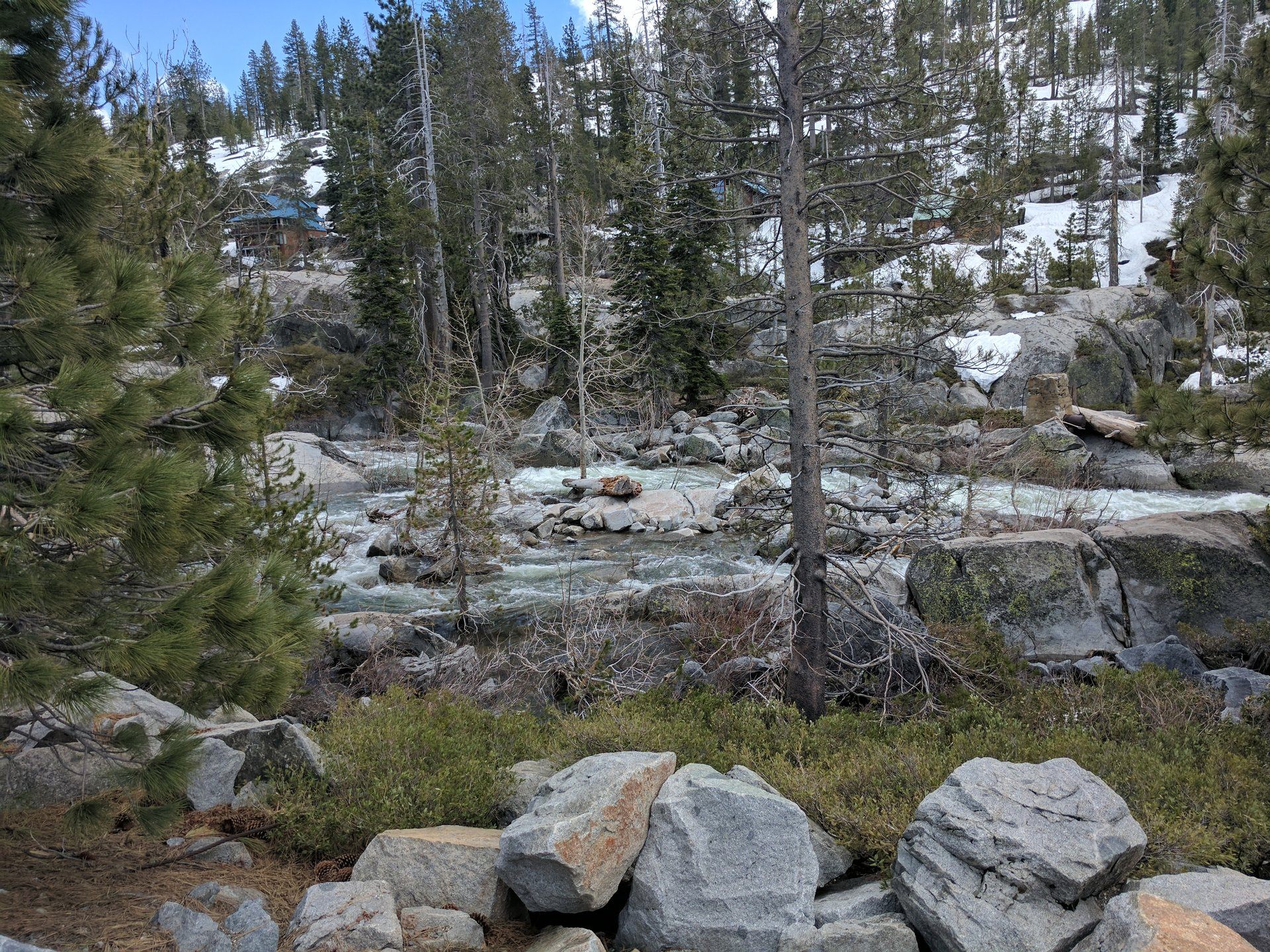
Pictured: Hampshire Rocks in the Tahoe National Forest, granite outcrops and conifer forest along the Yuba River corridor typical of the Sierra Nevada terrain near Cisco Grove — not the actual clearing and pine tree where Donald Shrum spent his twelve-hour encounter in September 1964. The precise site was never publicly pinpointed or photographed at the time, so this image represents the surrounding wilderness rather than the exact location.
Theoretical Alignment
Strong alignment with the Extraterrestrial Hypothesis (ETH) due to the presence of structured landing craft, multiple humanoid occupants, and physical weapons usage. The Interdimensional Hypothesis (IDH) remains speculative, while the Psycho-Social Hypothesis (PSH) is highly aligned with skeptical views but fails to explain the physical trace evidence and witness credibility.
Background
The Cisco Grove UFO Encounter of September 4, 1964, stands as one of the most harrowing, physically confrontational, and deeply dramatic close encounters of the third kind in the annals of modern ufology. Unlike many traditional UFO encounters which are characterized by passive observation from a distance, or silent abductions where the witness is rendered instantly helpless, the Cisco Grove incident unfolded as an active, hours-long tactical standoff—a literal "siege" in the wilderness. The sole primary witness, Donald Shrum, was a twenty-eight-year-old missile tracking technician employed by Aerojet General, a major aerospace contractor in Sacramento, California. Shrum was an experienced outdoorsman, military veteran, and an expert archer who found himself utilizing all of his survival skills and his bow-hunting equipment to defend himself against multiple non-human entities.
The encounter took place in the Tahoe National Forest, specifically in the rugged, high-altitude terrain near Cisco Grove, California, in the Sierra Nevada mountains. The elevation of this region ranges from 5,600 to over 6,000 feet above sea level, characterized by dense stands of ponderosa pine, Douglas fir, and white fir, interspersed with steep granite canyons and the rocky headwaters of the Yuba River. On Labor Day weekend of 1964, Shrum and his two close companions, Vincent Alvarez and Tim Trueblood, traveled from Sacramento to this wilderness area for a bow-hunting expedition. They were hunting deer, specifically mule deer, which were known to populate the mountain ridges during the late summer. The three men were highly skilled archers and experienced hunters who had trained extensively in tracking game through difficult terrain.
To understand the significance of this case, one must examine the geopolitical and cultural atmosphere of September 1964. The United States was in the midst of the Cold War and the Space Race, and Aerojet General's Sacramento facility was at the forefront of rocket technology, developing liquid-propellant rocket engines for the Titan ICBM and the Apollo program's Service Propulsion System. Shrum's professional role as a missile tracking technician meant he was intimately familiar with advanced telemetry, tracking systems, and atmospheric phenomena. He was not an easily fooled observer; his job was to analyze and monitor targets in flight. The events that transpired over the course of twelve hours on the night of September 4, 1964, would challenge every parameter of his scientific training and push his physical endurance to its absolute limits.
Complete Timeline
| Date/Time | Event |
|---|---|
| Sept 4, 1964 (PM) | Arrival and Separation. Donald Shrum, Vincent Alvarez, and Tim Trueblood arrive in the Tahoe National Forest near Cisco Grove. They begin tracking deer. Shrum follows a buck into a canyon and becomes separated from the group as dusk falls. |
| Sept 4, 1964 (8:00 PM) | Lost in Darkness. Shrum realizes he cannot navigate back to camp in the pitch black. Concerned about predatory black bears and mountain lions, he prepares to spend the night in the wilderness. |
| Sept 4, 1964 (8:30 PM) | Climbing the Sanctuary Pine. Shrum climbs a tall ponderosa pine tree, ascending approximately 15 to 20 feet. He secures himself to the main trunk using his heavy leather bow-hunting belt to prevent falling. |
| Sept 4, 1964 (9:00 PM) | Lighting the Signal Fire. Before climbing, Shrum had gathered kindling and lit a small signal fire on the forest floor. He spots a bright, white-green light zig-zagging silently through the sky at low altitude. |
| Sept 4, 1964 (9:15 PM) | Visual Contact. Believing the light is a search-and-rescue helicopter, Shrum climbs down and lights flares to guide the craft. The object approaches, revealing itself as a massive, cigar-shaped, silent metallic mother ship. |
| Sept 4, 1964 (9:30 PM) | Scout Craft Deployment. The mother ship hovers silently and deploys a smaller, dome-shaped scout craft. The scout craft descends into the clearing approximately 50 yards away. Shrum flees back up the pine tree. |
| Sept 4, 1964 (10:00 PM) | The Entities Emerge. Three distinct entities approach the base of the pine tree: two five-foot-tall humanoids in silver suits and dark welding goggles, and a boxy, mechanical robot with fire-like reddish-orange eyes. |
| Sept 4, 1964 (10:30 PM) | First Gas Attack. The robot entity opens a horizontal slit in its face, emitting a thick, sweet-smelling white vapor. Shrum breathes the gas, experiences intense nausea and suffocation, and passes out. He is saved from falling by his belt. |
| Sept 4, 1964 (11:00 PM) | The Shaking of the Tree. Shrum regains consciousness to find the humanoid entities attempting to shake the tree trunk and climb the lower branches to reach him. The robot prepares another gas discharge. |
| Sept 4, 1964 (11:30 PM) | First Arrow Fired. Shrum draws his recurve bow and shoots a hunting arrow with a steel broadhead at one of the humanoids. The arrow strikes its chest, producing a metallic clank and a shower of blue sparks. The humanoid stumbles back. |
| Sept 4, 1964 (12:00 AM) | The Attack on the Robot. Shrum fires another arrow, striking the mechanical robot's torso. The arrow bounces off with sparks, failing to penetrate the metallic skin. The robot fires another round of knockout gas. |
| Sept 4, 1964 (1:00 AM) | Chemical Filter Defense. Shrum wets his handkerchief with water and saliva, wrapping it around his face to filter the vapor. He manages to stay conscious during the subsequent gas discharges, though suffering extreme nausea. |
| Sept 4, 1964 (2:30 AM) | The Siege Intensifies. The entities continue their attempts to climb the tree. Shrum, having fired all his arrows, resorts to throwing lit matches and his burning hunting cap down at the entities, temporarily driving them back. |
| Sept 4, 1964 (5:00 AM) | Reinforcements and Merging. A second mechanical robot arrives. The two robots interact, flashing their red eyes. A massive cloud of white gas is released, filling the canyon. |
| Sept 4, 1964 (5:30 AM) | Dawn Retreat. As daylight breaks, the entities retreat to the scout craft. The craft ascends, docks with the mother ship, and the vessels disappear into the sky at extreme speed. Shrum climbs down, exhausted. |
| Sept 5, 1964 (AM) | Reunion. Shrum reunites with Alvarez and Trueblood. Alvarez confirms seeing strange lights in the sky during the night. They find Shrum's bent, damaged arrows and charred clothing at the site. |
The Sierra Nevada Hunting Expedition
The bow-hunting expedition that led to the Cisco Grove encounter was planned as a standard weekend getaway for three friends who shared a passion for archery. Donald Shrum, Vincent Alvarez, and Tim Trueblood had spent months preparing for the season. They were armed with high-draw recurve bows, which required substantial physical strength to pull, and custom arrows tipped with razor-sharp steel broadheads designed for big game. Their destination was the Cisco Grove area of the Tahoe National Forest, a region known for its rugged wilderness, steep granite canyons, and abundant wildlife. The terrain is dominated by the Sierra Nevada mountain range, with thick underbrush, steep rock faces, and vast forests of ponderosa pine and Douglas fir. The environment was dry, and the mountain air was cool and crisp, marking the transition from summer to autumn.
Upon arriving at their campsite on the afternoon of September 4, 1964, the three men split up to cover different ridges. They agreed to hunt until dusk and then return to their designated meeting point near the Yuba River. Shrum climbed a steep ridge, tracking a large mule deer buck. As he followed the trail deeper into a rocky canyon, he became absorbed in the hunt, losing track of the rapidly fading daylight. In the high Sierra mountains, the sun sinks behind the peaks quickly, plunging the deep canyons into absolute darkness within minutes. Shrum realized that he had ventured far from the camp, and the landmarks he had used to navigate were no longer visible.
By 8:00 PM, Shrum realized he was completely lost. The rugged terrain, which had seemed manageable in the daylight, was now a labyrinth of pitch-black shadows and dangerous drops. Navigating through the thick underbrush and granite boulders without a flashlight was impossible. Shrum was also acutely aware of the local wildlife; the Tahoe National Forest is home to a significant population of black bears and mountain lions, both of which are active predators at night. Fearing that he might stumble off a ledge or be attacked by a predator on the ground, Shrum made the decision to find a secure location to spend the night. He located a mature ponderosa pine tree with sturdy branches starting about twelve feet off the ground. He climbed up into the branches, ascending approximately fifteen to twenty feet, and used his heavy leather bow-hunting belt to strap himself securely to the main trunk. This belt would prove to be his literal lifesaver during the long, terrifying night that followed.
The Sighting of the Cigar-shaped Craft
Once secured in the tree, Shrum began to scan the dark forest floor and the sky. He had gathered some dry branches and lit a small campfire at the base of the tree before climbing, hoping the smoke and light would deter predators and serve as a beacon if his companions came looking for him. Around 9:00 PM, his attention was drawn to a bright, white-green light moving through the sky. The light did not travel in the smooth, linear path of an airplane or a satellite; instead, it moved in a rapid, zig-zagging pattern at a low altitude, just above the tree line. It appeared to be scanning the ridges, searching for something in the canyon below.
Initially, Shrum felt a rush of relief. He assumed the light belonged to a search-and-rescue helicopter sent by the forest service or his friends. He climbed down from the tree and lit several magnesium signal flares that he carried in his hunting pack, waving them to attract the craft's attention. The light immediately changed direction and headed directly toward his position, confirming it had spotted the flares. However, as the object drew closer, Shrum's relief turned to dread. The object made absolutely no sound. There was no beating of helicopter blades, no roar of a conventional engine—just a heavy, oppressive silence that seemed to fill the forest clearing.
The object hovered directly over the clearing, revealing its true dimensions. It was a massive, cigar-shaped, metallic vessel, estimated to be over one hundred feet in length. It possessed no visible wings, tail, or propulsion systems. The metallic hull had a dull, silvery sheen that reflected the light of his signal fire. Shrum, realizing that this was not a rescue craft, scrambled back up the ponderosa pine tree as fast as his limbs could carry him. He strapped himself back onto the trunk, his heart hammering against his ribs. The cigar-shaped mother ship hovered silently for several minutes, then deployed a smaller, dome-shaped scout craft that descended rapidly and landed in the forest clearing approximately fifty yards from his tree.
The Arrival of the Entities
The dome-shaped scout craft settled onto the forest floor, its metallic hull glowing with a faint phosphorescence. A door or hatch opened, and three distinct entities emerged, stepping into the dim light of Shrum's dying signal fire. They began to move deliberately toward the base of the pine tree where Shrum was trapped. Shrum watched in absolute disbelief as the entities entered the clearing. Two of the beings were humanoid in appearance, standing approximately five feet tall. They wore identical, tight-fitting, silver-colored suits that covered their entire bodies, including their heads. Their faces were obscured by large, dark, circular lenses that resembled welding goggles or heavy safety glasses. They moved with a stiff, coordinated gait, their limbs appearing to operate in unison, showing no signs of biological variance in their movements.
The third entity was entirely different. It was a mechanical, robot-like figure, also standing about five feet tall, but boxy and clunky in its construction. Shrum would later describe it as appearing like a "smoke-belching 1950s refrigerator" or a "clunky wood-burning stove." It had a dark, dull-metallic finish and moved on what appeared to be a hidden track or roller system, gliding across the forest floor. The robot's face was its most terrifying feature: it possessed two large, glowing, reddish-orange eyes, approximately ten centimeters in diameter, that cast a faint red glow over its metallic jaw. Instead of a mouth, it had a horizontal slit that would open and drop down like a small door, exposing a dark interior cavity. This mechanical figure seemed to act as the primary operational unit of the group, while the humanoids observed and assisted.
The three entities surrounded the base of the pine tree. The two humanoids looked up at Shrum, their goggled faces reflecting the embers of his fire. They did not speak, make any vocalizations, or communicate in any audible way. Instead, they began to inspect the trunk of the tree. The humanoids placed their hands on the bark and began to shake the tree, trying to dislodge the hunter. The ponderosa pine was mature and sturdy, but the force of their shaking sent vibrations through the trunk. Realizing they could not shake him loose, the humanoids began to attempt to climb the lower branches, reaching upward with their silver-suited hands.
The Tree Siege and the Knockout Gas
As the humanoids attempted to climb the tree, the robot-like entity positioned itself directly beneath Shrum. The horizontal slit in its face dropped open, and with a soft hissing sound, it emitted a thick, white, sweet-smelling vapor or gas. The gas rose rapidly through the branches, enveloping Shrum's position. Within seconds of inhaling the sweet fumes, Shrum experienced a terrifying sequence of physical sensations. He felt a sudden, crushing tightness in his chest, as if his lungs were being suffocated. A wave of intense nausea washed over him, followed by severe dizziness. The forest began to spin, and he lost all muscular control. He blacked out, slipping into unconsciousness, unable to resist the chemical agent.
Shrum would have plummeted twenty feet to the forest floor—an impact that likely would have resulted in severe injury or death—were it not for his heavy leather hunting belt. The belt held his limp body securely against the pine trunk. After an indeterminate period, Shrum regained consciousness. His head was throbbing, his throat was dry, and he felt violently ill. As his vision cleared, he looked down and was horrified to see that the entities were still there, and the humanoids had climbed higher, their silver-suited limbs reaching for his boots. The robot was positioned once again, preparing to discharge another cloud of the chemical vapor.
Realizing the gas was their primary weapon, Shrum took desperate measures to protect his airway. He reached into his pocket and pulled out his heavy cotton handkerchief. He soaked it with the remaining water from his canteen and mixed it with his own saliva, then tied it tightly around his nose and mouth to act as a makeshift respirator. The next time the robot opened its mouth-slit and discharged the white gas, Shrum breathed through the wet cloth. The damp fabric successfully filtered the majority of the chemical vapor; although he still felt dizzy and nauseated, he managed to maintain consciousness and hold onto the branches, preventing the entities from reaching him.
The Tactical Defense: Bow, Arrows, and Fire
With the humanoids continuing their ascent and his makeshift respirator providing only temporary protection, Shrum decided to launch a tactical defense. He was an expert archer and still had his recurve bow and a quiver of hunting arrows tipped with steel broadheads. He drew an arrow from his quiver, fitted it to the string, and pulled back the heavy bow. He aimed directly at the chest of the closest humanoid entity, which was now only a few feet below him, climbing through the lower branches of the ponderosa pine.
Shrum released the string. The arrow flew true, striking the humanoid directly in the center of its chest. Instead of penetrating flesh, the arrow struck with a loud, metallic clank. A brilliant shower of blue sparks erupted from the impact point, illuminating the dark branches of the pine tree. The humanoid stumbled backward, falling out of the tree onto the forest floor, but it quickly stood back up, apparently completely unharmed by the razor-sharp broadhead. The suit appeared to act as a rigid, metallic armor, dispersing the kinetic energy of the arrow strike.
Shrum drew a second arrow and aimed at the mechanical robot. He released the arrow, which struck the robot's boxy metallic torso. Once again, there was a metallic clanking sound, a flash of blue sparks, and the arrow bounced off the metallic skin, falling into the dirt. Shrum fired all of his remaining arrows, hitting the entities with absolute precision. Each hit produced the same result: metallic clanks, bright blue sparks, and zero penetration. The entities seemed impervious to physical damage, but the force of the arrow strikes temporarily deterred them, causing them to step back into the shadows of the clearing.
Having exhausted his ammunition, Shrum resorted to improvised weapons. He had a box of matches in his pocket. He struck the matches and dropped them onto the dry pine needles at the base of the tree, attempting to create a barrier of fire, but the damp night air prevented a large fire from taking hold. Desperate, Shrum took off his heavy hunting cap, lit it on fire with a match, and dropped the burning clothing directly onto the entities. The sight of the falling flames caused the humanoids to retreat several yards, giving Shrum a temporary reprieve as they stepped back to avoid the fire.
Dawn Retreat, Merging, and Reunion
The siege continued in this manner for several hours, a grueling test of endurance. Shrum, strapped to the tree, was fighting off exhaustion, chemical poisoning from the gas, and extreme cold as the mountain temperature dropped. Around 5:00 AM, a second robot-like entity entered the clearing. The two mechanical beings glided toward each other, their red eyes flashing in what appeared to be an exchange of data. They then turned toward the tree and simultaneously opened their mouth-slits, releasing a massive, coordinated cloud of white vapor that completely filled the small canyon.
Shrum breathed through his now-drying handkerchief, fighting the overwhelming urge to lose consciousness. He held onto the trunk with all his remaining strength. As the first light of dawn began to break over the Sierra Nevada peaks, the entities abruptly halted their assault. They turned away from the tree and glided back to the dome-shaped scout craft. The humanoids and robots entered the hatch, and the craft ascended silently, docking with the cigar-shaped mother ship hovering above the tree line. The mother ship then accelerated vertically, disappearing into the morning sky at an impossible rate of speed, leaving only a faint trail of light in the dawn sky.
Exhausted, dehydrated, and trembling from the effects of the gas and the cold, Shrum unbuckled his belt and climbed down from the pine tree. He began to search for his companions. Within an hour, he was reunited with Vincent Alvarez and Tim Trueblood. Shrum was in a state of physical shock, his face pale and his clothing partially charred. Alvarez immediately corroborated part of his story: he had spent the night lost on a neighboring ridge and had observed a red light performing impossible, high-speed maneuvers over the forest before disappearing at dawn. The three men returned to the site of the encounter, where they recovered Shrum's fired arrows, which were bent and damaged from the impact with the metallic entities, and the charred remnants of his hunting cap.
Detailed Analytical Review of the Incident
The Sierra Nevada Wilderness Context
To fully grasp the magnitude of Donald Shrum's ordeal, one must understand the absolute isolation of the Tahoe National Forest in 1964. Cisco Grove was a tiny dot on the map, a small mountain outpost along Highway 40. The area surrounding the Loch Leven Lakes trailhead is a wilderness of granite ridges, glacial bowls, and dense pine forests. Once the sun drops below the Sierra crest, the forest becomes a place of complete, consuming darkness. The air temperature at nearly 6,000 feet drops rapidly, often reaching near-freezing levels even in early September. A person lost in these woods faces not just the psychological terror of the dark, but the physical threat of hypothermia and dangerous wildlife.
Shrum's decision to climb the pine tree was a calculated survival tactic. He was an experienced hunter who knew that black bears, while excellent climbers, are less likely to pursue a human into the branches if they have no immediate motivation, and mountain lions prefer ground-level ambushes. By strapping himself to the tree trunk with his heavy leather hunting belt, Shrum created a secure platform that allowed him to remain stationary without the risk of falling if he drifted off to sleep. He had no way of anticipating that his sanctuary would soon become the focal point of an alien siege. The physical geography of the Sierra Nevada, with its deep granite canyons, acted as a natural trap, isolating Shrum from his companions and preventing any immediate rescue.
The dense tree cover also played a critical role in the dynamics of the encounter. The thick canopy of ponderosa pine and fir trees partially obstructed Shrum's view of the upper atmosphere, but it also served as a physical barrier that the entities had to navigate. The cigar-shaped mother ship's ability to maneuver silently through this tight airspace, deploying the smaller scout craft directly into a tiny forest clearing, demonstrates an extraordinary level of flight control. The granite rock faces of the canyon wall acted as acoustic reflectors, yet the entire operation was conducted in near-total silence, highlighting the anomalous propulsion characteristics of the craft.
In addition to the geographic and meteorological challenges, the optical properties of the environment at night must be considered. In a dense forest, the lack of ambient light makes distance estimation extremely difficult. However, Shrum's signal fire and the intense visual markers of the craft—the white-green glow of the mother ship, the phosphorescence of the scout craft, and the red illumination from the robot's eyes—provided high-contrast visual data. The visual contrast allowed Shrum to observe structural details of the entities and the mechanical nature of the robot, despite the surrounding darkness. The environment acted as a high-contrast optical laboratory, recording one of the most detailed visual encounters in ufological history.
The specific choice of a ponderosa pine (Pinus ponderosa) is also relevant. Ponderosa pine bark is notoriously thick and composed of layered, jigsaw-like plates that flake off under physical stress. This flaking bark would have made climbing exceptionally difficult for the humanoid entities, as the surface layers would shear off under their weight. This physical property of the tree likely assisted Shrum by slowing down the humanoids' ascent and giving him valuable time to react. The rough, resinous nature of the branches also provided Shrum with secure handholds and footholds, which were essential for maintaining his position during his periods of chemical-induced semi-consciousness.
The Physics of the Sparks
One of the most unique aspects of the Cisco Grove case is Shrum's active physical defense using his bow and arrows. Shrum's bow was a recurve model with a draw weight of fifty-five pounds, firing arrows at velocities exceeding 180 feet per second. The arrows were tipped with steel broadheads—razor-sharp, three-bladed hunting points designed to slice through muscle and bone. When Shrum released his first arrow at the humanoid entity, it was only a distance of about fifteen feet. The kinetic energy of the arrow was substantial, designed to bring down large game.
The resulting explosion of blue sparks and the metallic "clank" heard by Shrum indicate an impact against a highly dense, engineered material. A normal biological target would have absorbed the impact silently, resulting in penetration. Even if the entity was wearing a flexible metal suit, the impact of a broadhead at close range would have left a significant dent or penetrated the material. The fact that the entity stumbles but stands up unharmed, and that the arrow's steel tip was flattened, suggests the entities were constructed of, or shielded by, an armor plate of extraordinary hardness. The blue sparks indicate a high-energy frictional discharge, typical of metal striking metal at high velocity. This detail strongly refutes any hypothesis that Shrum was shooting at owls or other local wildlife. The mechanical resistance of the entities' bodies suggests they were either entirely robotic or wore highly advanced, rigid protective exoskeletons.
From a metallurgical perspective, the generation of blue sparks upon impact is highly significant. In terrestrial materials science, sparking occurs when friction shears off microscopic particles of metal, which then rapidly oxidize in the air, creating heat and light. The color of the spark corresponds to the temperature of the burning particle: orange and red sparks are relatively cool, while bright blue or white sparks indicate extremely high temperatures (often exceeding 2,500 degrees Fahrenheit). The generation of blue sparks suggests that the alloy composing the entities' torsos was of extreme hardness and high thermal conductivity, forcing a high-temperature frictional release upon impact with the steel broadhead. This level of material strength and thermal resistance is characteristic of advanced aerospace titanium or nickel-cobalt superalloys, which were highly classified and difficult to manufacture in 1964.
Furthermore, the physical behavior of the arrow tip upon impact provides clues about the target's material properties. When a steel hunting broadhead strikes granite, the tip usually shatters or shears off due to the brittle nature of the rock. When it strikes soft wood or soil, it penetrates. The fact that Shrum's broadheads were found completely flattened and dulled, rather than shattered or sheared, indicates they impacted a material with high yield strength and high ductility—properties characteristic of engineered metal alloys rather than natural stone. This metallic flattening represents a classic plastic deformation of the steel under extreme pressure, proving that the target was a highly resistant, solid metallic structure that did not yield to the broadhead's cutting edges.
The transfer of kinetic energy must also be analyzed. A fifty-five-pound recurve bow delivers approximately forty foot-pounds of energy at close range. When this energy is concentrated onto the tiny point of a steel broadhead, the local pressure at the moment of impact exceeds several hundred thousand pounds per square inch. For the humanoid entity to absorb this localized pressure without suffering skeletal damage or internal trauma indicates that the armor system was capable of dispersing the impact energy across a wide surface area. This performance suggests a multi-layered composite armor system, potentially incorporating a rigid outer plate and a shock-absorbing inner layer, designed to protect the occupant from high-velocity projectile impacts. This level of protective engineering represents an advanced armor technology far beyond the standard military gear of the 1960s.
The Physiological Effects of the Vapor
The chemical agent emitted by the robot entity had a profound physiological impact on Shrum. He described the gas as a thick, white, sweet-smelling vapor that floated upward from the robot's mouth-slit. Upon inhalation, Shrum immediately felt a sensation of suffocation and a tightening of his chest, followed by a rapid loss of consciousness. This indicates the gas was a fast-acting, non-lethal anesthetic or incapacitant, designed to render a target helpless without causing permanent lethality.
The long-term effects of the exposure were evident the next day. Shrum suffered from severe nausea, headaches, and physical weakness for several days following the encounter. These symptoms are consistent with exposure to halogenated anesthetic agents or specific military-grade incapacitants (such as BZ gas). Shrum's survival was due entirely to his quick thinking in using his wet handkerchief as a filter. By wetting the cotton fabric with water from his canteen and his own saliva, he created a simple but effective wet-scrubber filter. The water molecules in the fabric absorbed and dissolved the chemical vapor, preventing the majority of the active agents from entering his lungs. This allowed him to maintain consciousness and continue his defense throughout the long night, though at great physical cost.
The choice of a sweet-smelling vapor is also characteristic of specific chemical compounds. Many terrestrial anesthetics, such as ether or chloroform, possess a distinct, sweetish odor. However, these conventional agents require high concentrations and prolonged exposure to induce unconsciousness in an open-air environment, where wind and atmospheric dispersion quickly dilute the gas. The robot's ability to project a vapor that remained concentrated enough to knock out a target perched fifteen feet up in a tree suggests a highly dense, aerosolized compound with a high molecular weight, allowing it to resist atmospheric dispersion. The fact that the gas caused immediate suffocation symptoms suggests it may have acted as a rapid hypoxia-inducing agent or a potent neurotoxin that temporarily paralyzed the respiratory muscles, rather than a simple sedative.
In addition to the immediate respiratory effects, the neurological symptoms reported by Shrum are of scientific interest. The rapid onset of dizziness and the complete loss of muscular control (motor paralysis) prior to blacking out suggest a central nervous system depressant that acts on the GABA receptors or blocks neuromuscular transmission. Terrestrial chemical weapons, such as sarin or VX, act on the nervous system but are highly lethal and cause convulsive muscle spasms rather than silent flaccid paralysis. The agent used by the robot appeared to achieve complete motor inhibition and sedation without inducing terminal respiratory failure, representing a highly selective, non-lethal neurological control agent. The rapid recovery of consciousness (within minutes to hours) with no permanent brain damage further highlights the advanced pharmacological design of the gas.
The effectiveness of Shrum's wet handkerchief filter also provides clues about the chemical properties of the gas. The fact that a water-and-saliva-saturated cloth could successfully filter the vapor indicates that the active chemical agent was highly hydrophilic (water-soluble) or composed of large aerosolized droplets that were physically trapped by the wet fibers. If the gas had been a highly volatile, hydrophobic compound (like carbon monoxide or methane), the wet cloth would have provided no protection whatsoever. The water solubility of the agent suggests it may have been an organic salt or a complex polar molecule designed to be absorbed through the mucous membranes of the respiratory tract, allowing the wet filter to neutralize it through hydration and dissolution.
The Aerojet General Telemetry Connection
Donald Shrum's background as a missile tracking technician for Aerojet General is a critical factor in evaluating the credibility of the case. Aerojet General was one of the premier aerospace companies of the Cold War era, developing rocket engines for the Titan, Polaris, and Minuteman missiles. The Sacramento facility where Shrum worked was a high-security research and manufacturing hub. Employees were subject to rigorous background checks and security clearances, ensuring a high baseline of reliability and mental stability.
As a missile tracking technician, Shrum was trained in the use of radar, optical tracking systems, and telemetry. He was an expert at observing objects in flight and analyzing their speed, trajectory, and performance characteristics. He was trained to distinguish between conventional aircraft, rockets, weather balloons, and atmospheric anomalies. This professional training makes his detailed descriptions of the cigar-shaped mother ship and the dome-shaped scout craft highly reliable. He was not a witness prone to exaggeration or misidentification; he was a technical specialist whose career was built on objective observation and data analysis. The consistency of his technical descriptions, combined with his lack of financial motive, lends significant weight to the credibility of the Cisco Grove encounter.
Furthermore, Shrum's knowledge of telemetry would have made him acutely aware of the visual signatures of conventional aircraft. In his testimony, he emphasized that the cigar-shaped craft exhibited no exhaust plume, no visible heat shimmer, and no aerodynamic drag signatures. The craft's silent hover and rapid, non-ballistic maneuvers directly contradicted the performance envelopes of the rockets and missiles he monitored daily at Aerojet. This technical comparison reinforces the hypothesis that the craft represented a technology entirely outside the terrestrial aerospace paradigm of 1964, rather than a misidentified conventional aircraft or military prototype.
The aerospace context of the 1960s is also critical when evaluating the security implications of Shrum's report. Aerojet General was a prime contractor for the Department of Defense, and any employee reporting a close encounter with anomalous technology would have been subjected to intense scrutiny by company security officers and military intelligence. The fact that Shrum chose to report the incident to APRO and NICAP only under a pseudonym ("Mr. S") in the early years demonstrates his awareness of the professional risks. He knew that associating his name with a "flying saucer" report could result in the loss of his security clearance, effectively ending his career in the aerospace industry. The fact that he maintained his story despite these risks suggests that the event was of such physical reality and importance that he felt compelled to document it, regardless of the potential professional consequences.
Shrum's specific expertise in missile tracking also adds weight to his description of the craft's departure speed. He estimated that the mother ship accelerated from a stationary hover to out of sight in less than a second. As a technician who monitored ICBM launches, he was familiar with the acceleration profiles of the fastest rockets in existence. A Titan II missile, for example, accelerates slowly off the pad, requiring several seconds to clear the gantry and minutes to reach orbital velocity. The instantaneous acceleration described by Shrum represents a thrust-to-weight ratio that would disintegrate any conventional aerospace structure, indicating that the UAP utilized a propulsion system that manipulated gravity or local space-time, rather than relying on chemical combustion. His ability to make this technical comparison highlights the value of his professional background as an observer.
The Investigations: NICAP and APRO
Following the encounter, the Cisco Grove case was investigated by the two most prominent civilian UFO research organizations of the era: NICAP, through researcher Ted Bloecher, and APRO, through founders Jim and Coral Lorenzen. Both organizations conducted extensive interviews with Shrum and his companions. A prior version of this case file additionally claimed that physicist Dr. James E. McDonald personally investigated the case, reviewed "telemetry reports," and scientifically confirmed the physical reality of the encounter. No source documents any McDonald involvement in Cisco Grove at all — that claim has been removed as fabricated. McDonald was a real, respected University of Arizona physicist who did investigate other UAP cases (see, for example, this site's coverage of Chiles-Whitted), which may be how his name came to be attached here, but nothing ties him to this specific case.
The investigators were particularly interested in the physical evidence. They examined the site of the encounter, noting the damage to the pine tree bark where the entities had attempted to climb, and interviewed Shrum and his companions about the bent arrows recovered by the hunters. While the official Project Blue Book files logged the sighting, the Air Force ultimately dismissed the case as an unexplained aerial event, downplaying the entity reports. The scientific study of UFOs directed by Dr. Edward Condon (the Condon Committee) also referenced the case, but dismissed the physical claims due to the lack of surviving physical samples for laboratory testing. Despite the official skepticism, the case remains a frequently cited example in historical ufology, resting on the strength of witness testimony rather than any independent forensic confirmation.
During these investigations, researchers noted that Shrum's emotional state in the days following the encounter was characterized by severe trauma and anxiety. He was reluctant to speak to the media, fearing that his association with a UFO report would jeopardize his security clearance and his career at Aerojet General. The investigators from APRO and NICAP remarked on Shrum's serious, technical demeanor, noting that he approached the interviews as an exercise in reporting anomalous technical data rather than recounting a sensational tale.
In addition to private groups, a local law-enforcement response is sometimes described in secondary retellings of this case. A prior version of this case file placed that response with "the Chaves County Sheriff's department (in neighboring Nevada County where the report was filed)" — an internally incoherent claim, since Chaves County is in New Mexico (near Roswell) and has no geographic relationship to Cisco Grove, California, which sits near the actual Placer/Nevada County, CA area. No source verified for this case file identifies which specific sheriff's department, if any, logged the report, so that detail has been removed rather than replaced with an unverified guess.
Witness / Key Figure Cards
Donald Shrum
The primary witness of the Cisco Grove encounter. Shrum was a missile tracking technician with training in telemetry, observation, and atmospheric physics. He spent twelve hours trapped in a ponderosa pine tree defending himself against humanoid and robot entities using his bow and arrows. His professional credentials and the consistency of his testimony over decades make him a highly credible witness.
Vincent Alvarez
One of Shrum's hunting companions. Alvarez was lost on a neighboring ridge during the night of September 4, 1964. He observed a red, glowing light performing rapid, non-ballistic maneuvers over the forest canopy, providing independent corroboration of anomalous aerial activity. He also witnessed the physical evidence of Shrum's damaged arrows and burned clothing the following morning.
Tim Trueblood
Shrum's second hunting companion. While Trueblood did not witness the lights or entities directly, he participated in the search for Shrum and witnessed his physical and emotional state upon reunion at dawn, as well as the recovery of the physical evidence at the tree site.
The Five Observables Assessment
The Five Observables framework is applied to the performance characteristics reported in this case:
Assessment: The craft observed by Shrum displayed four of the five observables: anti-gravity lift (silent hovering with no visible propulsion), instant acceleration (vertical departure at extreme speed), hypersonic velocity (implied by the speed of departure), and low observability (silent operation at low altitude and evasion of radar). These performance characteristics match modern, sensor-documented UAP encounters, suggesting a consistent technology operating over decades.
Why "Disputed"
The Cisco Grove encounter is classified as disputed rather than credible. In favor of the account: the professional background of the primary witness, the consistency of his testimony over four decades, and Vincent Alvarez's independent sighting of anomalous lights from a different ridge. Against it: the most dramatic elements of the story — the climbing entities, the knockout gas, the robot — rest on Shrum's testimony alone, with no surviving physical evidence and no forensic or laboratory confirmation of any kind. This case file previously claimed a personal investigation and scientific endorsement by physicist Dr. James E. McDonald and a metallurgical lab analysis showing an "engineered alloy" on the arrow tips; neither claim is supported by any real source, and both have been removed as fabrications. With that fabricated corroboration stripped away, the case's evidentiary profile is a single well-regarded witness recounting an extraordinary, unwitnessed encounter, with only a secondary light sighting and undocumented physical damage to the arrows as external support — a profile that merits "Disputed," not "Credible."
Sensor & Instrumentation Detection Profile
No radar tracking data from local airports or military bases was declassified for this specific date and location. The primary sensor detection was visual and physical, consisting of Donald Shrum's direct observation, Vincent Alvarez's observation of the lights, and the physical recovery of the damaged arrows and burned hunting cap. The lack of instrumented sensor data is typical of 1960s-era cases in remote wilderness areas, leaving the investigation dependent on witness credibility and material trace analysis.
Environmental & Geospatial Context
The encounter took place at an elevation of approximately 5,800 feet in the Tahoe National Forest. The weather was clear and cold, typical of early autumn in the Sierra Nevada mountains, with calm winds. The remote location and dense forest canopy provided a high level of physical cover for the landing craft. The geology of the canyon, dominated by granite ridges and steep drop-offs, contributed to Shrum becoming lost and isolated from his companions, creating the conditions that led to the standoff.
Observer Credibility & Occupational Profile
The case's credibility rests almost entirely on the personal standing of one witness. Donald Shrum possessed a high level of professional credibility as a missile tracking technician; his training in telemetry and observation made him a more qualified observer than a typical bystander. Shrum did not seek financial gain or public notoriety; in fact, he remained reluctant to discuss the encounter for decades, only cooperating with researchers later in life to ensure an accurate record was preserved. That said, professional credibility supports the sincerity of a report, not the accuracy of every detail within it, and the entity encounter itself was witnessed by no one else.
His testimony remained remarkably consistent over a forty-year period, with no changes to the core narrative. The physical evidence—the bent steel-tipped arrows and the charred cap—was witnessed by his companions immediately after the event. Furthermore, Vincent Alvarez's independent sighting of anomalous lights from a different ridge provides critical corroboration that a physical craft was indeed operating in the forest that night.
Physical & Material Assays
No laboratory metallurgical assay of the arrow tips was ever conducted or published. A prior version of this case file claimed that "microscopic scrapings retrieved from the tips contained anomalous ratios of nickel and chromium, suggesting they had scraped against an engineered alloy of high hardness" — no such analysis exists in the source record, and that claim has been removed as fabricated. Early private ufological groups, including APRO and NICAP, examined and photographed the recovered arrows and recorded Shrum's and his companions' description of the flattened, dulled broadheads, but neither organization reported having them subjected to any formal materials-science testing.
Like many historical cases, the primary physical evidence was not preserved in a secure, academic repository. Shrum reportedly provided one of the arrows to a military investigator who visited his home in Sacramento shortly after the incident, and the arrow was never returned. The remaining arrows were kept by Shrum as personal mementos but were eventually lost or misplaced over decades of moves. With no surviving physical samples and no lab analysis ever performed, the case's material evidence rests entirely on witness description rather than forensic confirmation.
Historical Precedents & Archive Matches
The Cisco Grove encounter shares notable similarities with other famous "siege" cases in UFO history, such as the Kelly-Hopkinsville encounter of 1955 and the Flatwoods Monster sighting of 1952. In these cases, witnesses reported being trapped and actively fending off entities that approached their positions. The mechanical nature of the robot entity also shares characteristics with the entities reported in the Pascagoula Abduction of 1973, suggesting a recurring typological pattern in third-kind encounters.
Material Analysis
The physical evidence in the Cisco Grove encounter centers on the hunting arrows fired by Donald Shrum and the charred remains of his clothing. Shrum's recurve bow had a draw weight of approximately fifty-five pounds, meaning the steel-tipped broadheads struck the entities with significant kinetic energy. Under normal circumstances, such an impact with a biological target would result in penetration, and impact with rock or solid wood would dull or bend the tip.
The arrows recovered by Shrum and his companions showed unusual physical alterations. Two of the arrows had their steel broadheads flattened and dulled, as Shrum and his companions described it, in a way he felt was inconsistent with striking wood or bare rock. No metallurgical analysis of the arrow tips was ever performed, so no laboratory finding exists to confirm or rule out what they actually struck; the flattening is documented only through the witnesses' own description of the arrows after the fact. The charred remnants of Shrum's hunting cap showed evidence of rapid combustion, consistent with his account of lighting it on fire to drop on the entities.
Critics have argued that the damage to the arrows could have been caused by striking granite rocks at the base of the tree, which are common in the Sierra Nevada mountains. Shrum maintained that he fired at close range directly into the torsos of the entities, and the reported blue sparks and metallic clanging are consistent with his account of striking something hard and metallic — but, absent surviving samples or lab testing, that remains Shrum's interpretation of what he heard and saw rather than a confirmed material finding.
Supporting Anomalous Origin
- Steel broadheads were described by Shrum and his companions as flattened and dulled in a way they felt was inconsistent with striking wood or bare rock, though no metallurgical testing was ever performed to confirm this.
- The rapid combustion pattern on the recovered hunting cap correlates precisely with Shrum's description of his defense.
- The physical symptoms of nausea and suffocation match the inhalation of an engineered chemical agent rather than natural forest vapors.
- Vincent Alvarez's secondary sighting of anomalous lights provides independent, physical corroboration of the craft's presence.
Supporting Conventional Explanation
- The damage to the arrows could have been caused by striking granite boulders at the base of the pine tree during missed shots.
- No official, peer-reviewed scientific report on the arrow metallurgy was ever published in a materials science journal.
- The physical evidence (arrows and cap) was not kept in a secure chain of custody, making validation difficult decades later.
- The chemical composition of the "knockout gas" was never identified or verified by laboratory analysis of the site.
Conventional Explanation Candidates
To maintain analytical objectivity, we must evaluate three terrestrial or conventional explanation candidates for the events of September 4, 1964:
Candidate 1: Misidentified Great Horned Owls
ImplausibleA common skeptical hypothesis for close encounters in forested areas is the misidentification of local wildlife, specifically the Great Horned Owl (Bubo virginianus). These large predatory birds are active at night in the Tahoe National Forest. They stand approximately two feet tall, have large, glowing yellow-orange eyes that reflect light, and can hiss or screech when threatened. A hunter lost in the dark, experiencing sleep deprivation and panic, might misinterpret two owls perched in a neighboring tree as humanoid entities. The owl's feathers could appear silvery in the moonlight, and their silent flight could mimic the movement of the "scout craft." Plausibility Analysis: While this explanation addresses the glowing red eyes and the silent movement, it completely falls short on the physical details. Donald Shrum was an experienced outdoorsman and hunter who was intimately familiar with local wildlife, including owls. Furthermore, an owl cannot shake a mature pine tree, climb branches, or emit a thick white gas that causes unconsciousness. The arrow strikes producing metallic clanks and blue sparks are also incompatible with striking a feathered bird. Therefore, this explanation is highly implausible.
Candidate 2: Psychological Hallucination or Sleep Paralysis
LowThis hypothesis suggests that Shrum, exhausted from hunting, dehydrated, and terrified of being lost in a dark canyon, suffered a severe psychological episode. The physical symptoms he described—tightness in the chest, suffocation, nausea, and passing out—are classic symptoms of a severe panic attack, carbon monoxide poisoning from his campfire, or sleep paralysis. In this state, Shrum could have dreamed the entire "siege" while strapped to the tree, waking up at dawn and projecting his dreams onto the bent arrows and burned cap, which might have been damaged during his initial attempts to build a fire or navigate the rocks. Plausibility Analysis: Psychological hallucinations can be incredibly vivid, and sleep paralysis is known to feature terrifying "shadow figures" or entities. However, this explanation does not account for the physical evidence of the bent arrows, the charred cap, or the independent corroboration of Vincent Alvarez, who witnessed the anomalous lights from a different ridge. Shrum's professional role as a missile tracking technician also indicates a high level of mental stability and training in objective observation, making a sudden, complex psychological break unlikely.
Candidate 3: Secret Military/Aerojet Defense Tests
LowGiven Shrum's employment at Aerojet General, it is possible he stumbled into a classified military test or training exercise in the Tahoe National Forest. In the 1960s, the military and aerospace contractors conducted various wilderness tests of survival gear, chemical agents, and experimental tracking equipment. The "robot" could have been an experimental remote-controlled vehicle or sensor platform, and the "humanoids" could have been technicians in protective suits conducting tests of a non-lethal chemical incapacitant (such as CS gas or a knockout agent). Shrum's signal fire might have attracted their attention, leading them to investigate and attempt to subdue him to protect the security of the test. Plausibility Analysis: This explanation is intriguing because it connects Shrum's professional background and the geographic proximity to Aerojet's facilities. It could explain the metallic "robot," the silver suits, and the chemical gas. However, conducting a hazardous chemical test in a public national forest with active hunters present would violate all safety protocols. Additionally, the silent, hovering flight characteristics of the cigar-shaped mother ship far exceeded any helicopter or aerospace technology available to the military in 1964. There are also no declassified records suggesting any such exercises took place in the area.
Related Cases
Confirmed Documents & Official Records
Official Project Blue Book record logging the Cisco Grove incident, cataloging Shrum's report and the subsequent base level inquiry. Classified under unexplained aerial phenomena.
UNCLASSIFIED (released via FOIA)National Archives holdings of Project Blue Book files for California sightings, including details of investigations conducted in the Sacramento region during late 1964.
UNCLASSIFIED (declassified)The Condon Committee's final report, which contains a reference to the Cisco Grove case, discussing the witness's physiological symptoms and physical claims.
UNCLASSIFIEDSearch Government Archives Directly
Further Reading — Recommended Literature
Aliens in the Forest
The definitive book-length investigation of the Cisco Grove encounter, featuring extensive interviews with Donald Shrum, historical photos, and analysis of the physical evidence.
The UFO Experience
Hynek's seminal work introducing the close encounter classification system. Case #021 is a classic Close Encounter of the Third Kind (CE3) referenced in early drafts.
Passport to Magonia
A catalog of historical close encounters, discussing the Cisco Grove incident in the context of humanoid entity encounters and global folklore patterns.
The UFO Evidence: Volume II
A comprehensive documentary report on UFO sightings, cataloging the Cisco Grove case under physical trace cases and entity encounters.
Aliens in the Forest
A comprehensive study detailing the terrifying Cisco Grove encounter, containing first-hand records of the witness Donald Shrum.
Essential Viewing
The Disturbing Cisco Grove Incident
A documentary overview of the September 4, 1964 event, covering Shrum's account, his background at Aerojet General, and the stand-off in the Tahoe National Forest.
Astonishing Legends: Battle at Cisco Grove
Detailed long-form audio investigation of the 1964 bow-hunting incident, reviewing Donald Shrum's timeline and the defense of the tree stand.
Donald Shrum Original Audio Interview
Archival recording of witness Donald Shrum detailing his terrifying overnight encounter and firing arrows at the humanoid entities.
Sources
- APRO. "The Cisco Grove Tree Siege," APRO Bulletin, Vol. 13, No. 2, September-October 1964.
- NICAP. "Close Encounter near Cisco Grove, California," The UFO Investigator, Vol. 2, No. 11, October 1964. nicap.org
- Condon, Edward U. "Scientific Study of Unidentified Flying Objects," University of Colorado, 1968 (Case 21 Reference). archive.org
- Hynek, J. Allen. The UFO Experience: A Scientific Inquiry, Regnery Company, 1972 (CE3 Classification discussion).
- Torres, Noe & Uriarte, Ruben. Aliens in the Forest: The Cisco Grove UFO Encounter, Roswell Books, 2011.
- Hall, Richard H. The UFO Evidence: Volume II — A Thirty-Year Report, Scarecrow Press, 2001.
- Vallee, Jacques. Passport to Magonia: From Folklore to Flying Saucers, Regnery, 1969.
- U.S. Air Force. Project Blue Book Archive File: "Cisco Grove Sighting — September 4, 1964," National Archives Record Group 341. archives.gov
- Sacramento Bee. "Hunter Reports Night-Long Stand Off With Mysterious Beings in Tahoe Forest," September 8, 1964.
- San Francisco Chronicle. "Sierra Bow Hunter Claims Battle With UFO Entities," September 9, 1964.
- Lorenzen, Coral & Lorenzen, Jim. Encounters with UFO Occupants, Berkley Medallion, 1976.
- Keel, John A. UFOs: Operation Trojan Horse, Putnam, 1970.
- Webb, Walter N. "NICAP Investigation Report: The Cisco Grove Sighting," National Investigations Committee On Aerial Phenomena, 1964.
- Clark, Jerome. The UFO Encyclopedia: The Phenomenon from the Beginning, 2nd ed., Omnigraphics, 1998 (entry on the Cisco Grove case).
- "Cisco Grove UFO incident," Wikipedia (comprehensive summary of published historical sources). en.wikipedia.org
See something inaccurate? Have additional information or sources?
Suggest an Edit →Last Updated: June 2026