
Clarenville UFO Sighting
In the pre-dawn hours of October 26, 1978, Royal Canadian Mounted Police Constable James Blackwood and roughly a dozen residents of Clarenville, Newfoundland and Labrador spent nearly two hours watching a large, fin-tailed, unidentified object hover just above the water of Random Sound, between the town and Random Island. Blackwood retrieved his detachment's high-powered surveillance telescope and reported that the craft's underside light flashed in apparent response when he activated his cruiser's roof lights. The National Research Council's proposed explanation — the planet Jupiter, reflected low over the water — never satisfied the witnesses who watched it for two hours at close range, and more than four decades later the case remains Newfoundland's most famous unidentified sighting, commemorated in silver by the Royal Canadian Mint.
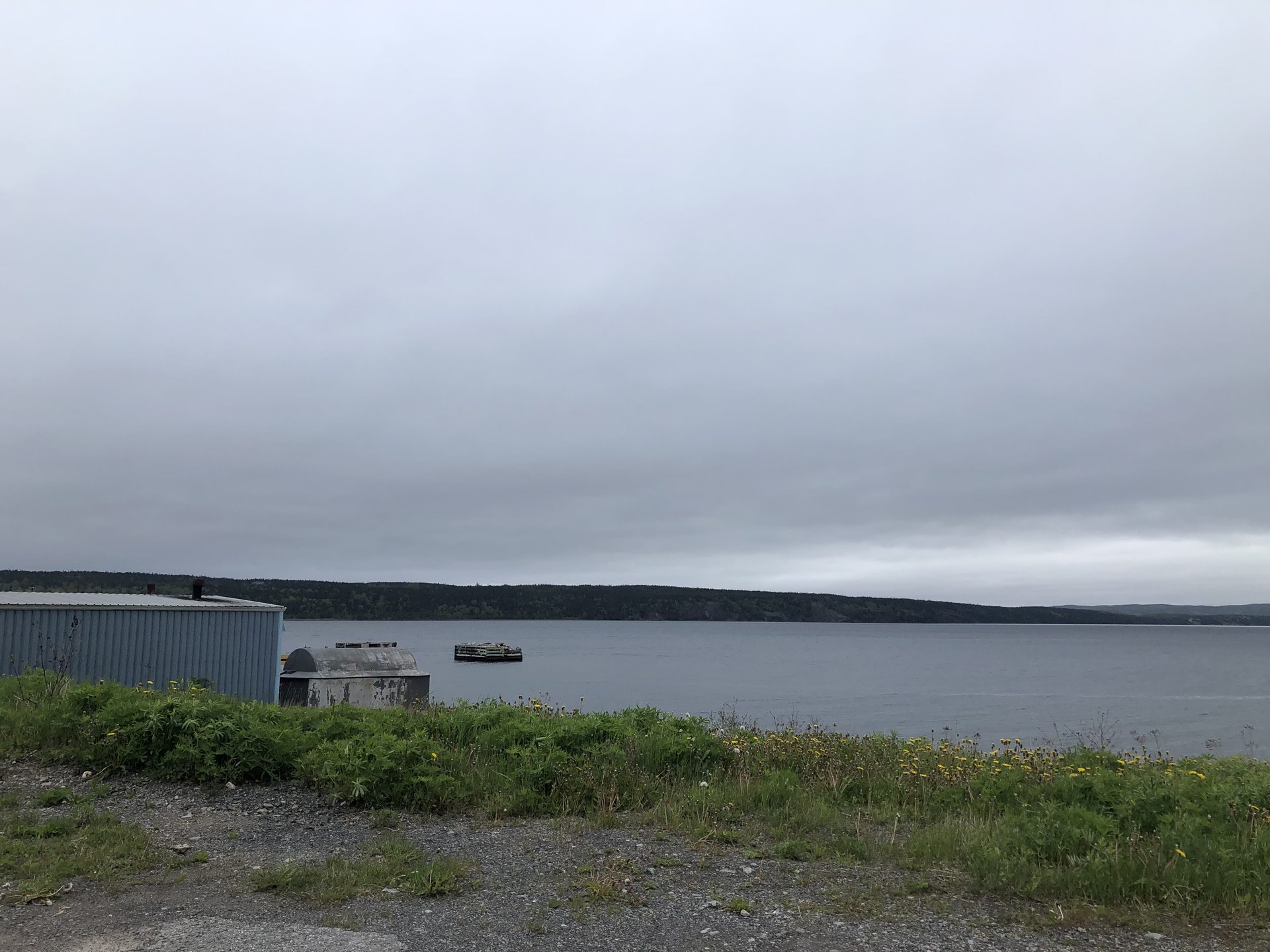
Pictured: Random Island as seen across the water from Clarenville — the same stretch of Random Sound where the object was reported hovering just above the water on October 26, 1978. This is a modern photograph of the location, not the object or the event itself; no photograph of the 1978 sighting is known to exist.
Theoretical Alignment
Clarenville earns a modest rather than high Extraterrestrial Hypothesis score: the object's reported structure — a large, dull, coarse-surfaced hull with a small stubby fin and no visible windows, doors, or seams — is at least internally consistent across Constable Blackwood's own sketches and decades of retelling, and his description of a texture "not like aircraft metal," "very dull," and "very coarse looking" is a specific enough physical claim to weigh, however thin the underlying evidentiary base. The Psycho-Social Hypothesis scores unusually high for this catalogue because nearly every structural feature of the case — a stationary bright light near the horizon over open water, observed for close to two hours in darkness by a group whose expectations had already been primed by the initial caller's alarm, with no photograph, no instrument trace, and a final departure described in terms ("like a shooting star") that are themselves consistent with an ordinary meteor or aircraft light— sits squarely inside the profile PSH is built to explain: a genuinely bright, unusual-looking light misread and then narratively elaborated by an anxious, sustained, group viewing at night. The Interdimensional Hypothesis has essentially nothing distinctive to contribute to a case built entirely on a distant nocturnal light and behavioral inference (the "light-mimicry" claim) rather than any morphological or trans-medium detail.
Background
Clarenville is a town of a few thousand people on Random Sound, an arm of Trinity Bay roughly 190 kilometres by road from St. John's on Newfoundland's east coast. By the late 1970s it functioned as a regional service centre for the surrounding Bonavista Peninsula and Trinity Bay outport communities, connected to Random Island across the water by the Hefferton Causeway, a tidal-sandbar crossing that had opened in 1952. The town's small RCMP detachment served this wider rural catchment area, and on the night of October 25–26, 1978, its overnight duty fell to Constable James Blackwood, then 25 years old.
Newfoundland and Labrador joined Canadian Confederation only in 1949, and by 1978 the province's rural communities, Clarenville among them, remained closely tied to the sea for their economy and daily rhythms — fishing, coastal shipping, and small-scale maritime trade defined the landscape as much as any highway or airfield. Random Sound itself, the body of water separating the town from Random Island, was and remains an active, if modest, marine corridor, regularly used by local fishing boats and small craft moving between Trinity Bay's outport communities. That maritime backdrop matters directly to how this file evaluates the case below: any conventional account of what Blackwood and his neighbours watched for nearly two hours has to reckon with a body of water that, on an ordinary October night, was not otherwise empty.
Complete Timeline
| Date | Event |
|---|---|
| 1952 | The Hefferton Causeway opens, connecting Random Island to the Newfoundland mainland at Clarenville and giving the two communities the direct sightline across Random Sound that the 1978 sighting would later depend on. |
| Spring 1970 | RCMP Constables Bob MacKinnon and Greg Savicky report a bright light appearing to mimic their patrol car's siren and horn near Middle Cove Beach, Torbay — an earlier RCMP-witnessed case with a similar "light-mimicry" claim, per researcher Helen C. Scott's account. |
| Oct. 26, 1978, ∼1:50–2:00 a.m. | Marine Drive resident Chester Lethbridge calls the Clarenville RCMP detachment to report a brightly lit object hovering over the water toward Random Island. |
| Same night, shortly after | Constable James Blackwood arrives on Marine Drive and finds Lethbridge, his wife, and several other residents watching the object with binoculars; Lethbridge hands Blackwood his own binoculars. |
| Same night | Blackwood retrieves the detachment's high-powered surveillance telescope and studies the object directly, describing its lower half as "completely illuminated" with a blue light "flashing very, very rapidly," and noting a small "stubby" fin at the rear of an otherwise "large dull-grey" hull with no visible windows or doors. |
| Same night | Blackwood activates the roof lights on his RCMP cruiser; he reports that the object's own light responds in the same instant, appearing to mimic the flashing pattern. |
| Same night | Alarmed by the apparent response, Lethbridge tells Blackwood he does not want to "make contact" with whatever is producing the light, and leaves the scene with his wife. |
| Same night, over ∼2 hours | The object remains largely stationary a few hundred feet above the water, roughly half a mile from shore, before slowly rising and then accelerating away "like the normal speed of a jet" — in some retellings, "like a shooting star" — and disappearing. |
| Following days | News of the sighting spreads nationally and internationally; Blackwood, with his superiors' approval, gives approximately 200 interviews to print and broadcast media, including a televised 1978 interview in which he sketches the object's shape. |
| Late Oct. – mid-Nov. 1978 | A wider cluster of broadly similar reports follows across Newfoundland and Labrador, in Lethbridge, Catalina, Gander, St. Anthony, and Labrador, per Don Ledger's Maritime UFO Files. |
| 1978, after the sighting | The National Research Council reportedly offers the planet Jupiter, low over the water, as a candidate explanation; witnesses, Blackwood included, reject it on physical grounds. |
| 2016 | A Clarenville resident reports lights hovering over the water between the town and Random Island, a much less detailed echo of the 1978 case that Newfoundland media link to the original sighting. |
| Oct. 12–13, 2020 | The Royal Canadian Mint unveils a $20 glow-in-the-dark silver coin, "The Clarenville Event," the third instalment of its Canada's Unexplained Phenomena series, designed by Fogo Island artist Adam Young; Blackwood, now retired and living in Nova Scotia, gives fresh interviews to VOCM, Narcity, and other outlets timed to its release. |
The Call on Marine Drive
The night of October 25 into October 26, 1978 had, by every surviving account, been an ordinary one for Clarenville's small RCMP detachment until a call came in from a resident of Marine Drive, the street that runs along the town's waterfront directly facing Random Island across Random Sound. The caller, identified in multiple accounts as Chester Lethbridge, reported something bright and unusual hovering low over the water offshore. Constable James Blackwood, then 25 years old and on overnight duty, drove down to investigate what he later said he expected would turn out to be the next in a series of routine, quickly explained calls. What he found instead was a small crowd already gathered on the waterfront — Lethbridge, his wife, and several other neighbours — watching a still clearly visible, brightly lit object with a pair of binoculars passed hand to hand.
What Blackwood Saw
Blackwood's own account, given first in a 1978 television interview and repeated with striking consistency in interviews decades later, describes an object hovering "between Clarenville and Random Island, right on the water," at an estimated height of only "a couple hundred feet" and a distance of roughly half a mile from the shoreline — close enough, and low enough, that ordinary binoculars alone were sufficient to make out real structural detail. Not content with that view, Blackwood returned to his cruiser for the detachment's telescope, a piece of equipment he has said elsewhere was intended for surveillance rather than general use, and trained it on the object directly. Through the telescope he described the object's lower half as "completely illuminated," showing a blue light "flashing very, very rapidly," set against a hull he judged "large" and "dull-grey," bearing a small "stubby" fin at the rear and, notably, no windows, doors, or other surface features he could identify. Drawing on his own stated familiarity with "aircrafts of all shapes and sizes," Blackwood was explicit that the material did not read as any aircraft skin he recognized: "It was very dull and not shiny at all. It wasn't even smooth. It was very coarse looking. The technology was way beyond what we had then and still way beyond what we have now."
The Mimicking Lights
The detail that has done the most to cement Clarenville's place in Canadian UFO lore is Blackwood's account of an apparent two-way exchange. At some point during the sustained observation, Blackwood activated the roof-mounted light bar on his RCMP cruiser — by his own telling, in a deliberate attempt to draw some kind of reaction, or in his words, to "contact the pilots of the craft." He has consistently reported that the object's own light responded in the same instant, flashing in apparent synchrony with his cruiser's lights. It was this specific moment, more than the sighting's overall duration or the object's appearance, that visibly unsettled at least one bystander: Lethbridge, according to Blackwood, said he "didn't want to make contact" and did not want to know what might be aboard, and left the scene with his wife shortly afterward rather than continue watching. This file treats the light-mimicry claim as exactly what the surviving record shows it to be — a single officer's real-time interpretation of an apparent coincidence in timing, offered in good faith and repeated consistently for more than forty years, but never independently corroborated by a second witness's detailed account of the same exchange, a photograph, or any instrument record.
Two Hours Over the Water
What followed was, by any measure, an unusually long sustained sighting. The object remained largely in place, low over Random Sound, for a period both Blackwood and secondary accounts consistently put at close to two hours — long enough that the initial crowd of onlookers thinned as some, Lethbridge among them, left the scene, while Blackwood himself stayed on to keep watching through the detachment's telescope. Two hours of continuous observation is itself a notable feature of the case: unlike the brief, seconds-long glimpses that define many UFO reports, Clarenville gave its principal witness ample time to study the object's structure, note details, and, crucially, to watch for exactly the kind of subtle motion, twinkling, or drift across the sky that would characterize a misidentified astronomical body rather than a solid craft holding station. That Blackwood, watching for that long and with that specific professional frame of reference, never described the object drifting, twinkling in the manner of a star, or otherwise behaving in a way he associated with celestial objects is a detail this file weighs seriously in the Conventional Explanation Candidate section below, even as it stops short of treating two hours of a single observer's impression as proof against a mundane origin.
Departure
The sighting ended, by every account, with a change in the object's behavior rather than a simple fade from view. After nearly two hours essentially stationary, the object began to rise, and its departure was rapid: Blackwood has described it accelerating away "like the normal speed of a jet," while other retellings characterize the final moment as the object shooting off "like a shooting star." Those two descriptions are not obviously compatible with each other — a jet-like departure implies a directional, comparatively modest acceleration profile, while a shooting-star comparison implies something closer to instantaneous, near-vertical or high-angle streaking flight — and this file has not been able to resolve which characterization more faithfully reflects Blackwood's original, contemporaneous 1978 description versus a later, more dramatic gloss that entered popular retelling over subsequent decades. No trace, sound, or residual light was reported after the object's final departure from view.
The Media Firestorm
Clarenville was not a case that stayed local for long. Within days, the story had attracted the kind of national and, by several accounts, international press attention that few Canadian UFO sightings before or since have generated, driven almost entirely by Blackwood's own willingness — with his RCMP superiors' explicit approval — to speak on the record. Multiple sources place the resulting media commitment at roughly 200 separate interviews with print and broadcast outlets in the encounter's immediate aftermath, an extraordinary volume of engagement for a small-town constable describing a two-hour night-time sighting. That visibility came at a real personal cost: by his own later account, Blackwood endured years of ridicule as a direct result of the coverage, and has said he came to speak about the incident only rarely after leaving Clarenville, a reticence that held for roughly four decades until the Royal Canadian Mint's 2020 coin brought fresh media interest and, with it, a round of new interviews he gave on his own terms.
The National Research Council's Jupiter Explanation
Somewhere in the case's aftermath, the National Research Council of Canada — the federal body then routinely consulted, alongside the Department of National Defence and the RCMP itself, on Canadian UFO reports — is reported to have proposed that what Blackwood and his neighbours had watched was the planet Jupiter, appearing unusually bright and low over the water and, in one framing of the explanation, casting a reflected "shadow" onto the sea's surface. The witnesses, Blackwood foremost among them, rejected the explanation on straightforward physical grounds that this file finds genuinely difficult to dismiss: a planet cannot descend to an altitude of "a couple hundred feet," cannot sit only half a mile from an observer on the shore, cannot display a discrete structural feature such as a "stubby" fin, and cannot flash in apparent real-time response to a police cruiser's light bar. Those objections do not by themselves rule out every version of an astronomical or atmospheric-optical explanation for the case — a bright planet or star low on the horizon over water is a well-documented source of exactly this kind of "hovering light" misperception under conditions of atmospheric refraction, and this file's Conventional Explanation Candidate section below treats that broader family of explanation as a serious, if ultimately unresolved, candidate distinct from the specific and more vulnerable "Jupiter's shadow" framing the NRC is reported to have offered.
The Wider Fall 1978 Newfoundland Wave
Clarenville's sighting did not occur as an isolated event in the province's UFO record for that autumn. According to Nova Scotia-based pilot and author Don Ledger, whose 2007 book Maritime UFO Files draws on military and RCMP documents from across Atlantic Canada, a series of broadly similar reports followed the Clarenville sighting between late October and mid-November 1978 in the communities of Lethbridge, Catalina, Gander, St. Anthony, and points further north into Labrador. This file has not been able to independently verify individual witness accounts, dates, or descriptions for these secondary reports beyond Ledger's own summary characterization, and treats the claim of a genuine regional "wave" cautiously — as a documented pattern worth flagging for future research rather than a fully substantiated cluster of independently confirmed sightings. If accurate, it would place Clarenville not as an outlier but as the opening, most heavily documented case in a short-lived regional flap, a pattern common to UFO waves elsewhere in this catalogue in which one highly publicized sighting appears to prime a wave of subsequent, less scrutinized reports across a surrounding region.
1970: An Earlier RCMP Encounter Near Torbay
Eight years before Clarenville, a considerably less publicized case involving on-duty RCMP officers reportedly unfolded near Middle Cove Beach in the Torbay–Logy Bay area outside St. John's. Per an account published by Newfoundland researcher Helen C. Scott, Constables Bob MacKinnon and Greg Savicky, on patrol around 2:00 a.m. in the spring of 1970, reported a bright white light descending to an estimated 20 feet above their parked cruiser, appearing to change color and to mimic both the color of their vehicle's equipment and the sound of its siren and horn, over an encounter lasting 15 to 20 minutes. The same account states that eight to ten additional RCMP members at the Harbour Grace detachment separately reported related phenomena around the same period, though no airport radar confirmation and no official RCMP follow-up investigation are documented in the source. This file flags the case specifically because its central claimed behavior — an unidentified light responding to, or mimicking, a police vehicle's own equipment — is strikingly similar to Blackwood's light-mimicry account eight years later, without any indication in the record this file could locate that the RCMP itself ever formally connected the two cases, despite both originating from officers of the same force patrolling the same general region of the province.
The 2016 Follow-Up Sighting
In 2016, a Clarenville resident reported spotting lights again hovering over the waters between the town and Random Island, a report picked up by regional Newfoundland news coverage largely because of its echo of the famous 1978 case rather than on the strength of any detailed corroborating account. This file treats the 2016 report as a distinct, far more thinly documented event rather than a continuation or confirmation of the 1978 sighting, and has not found evidence that RCMP or any other agency formally investigated it in the way Blackwood's original call was investigated.
The Royal Canadian Mint Coin and Cultural Legacy
Clarenville's transformation from a locally ridiculed, decades-old police report into an object of official commemoration is itself a notable part of the case's history. In October 2020, the Royal Canadian Mint released "The Clarenville Event," a $20 face-value, 31.56-gram, 99.99% pure silver coin in a rectangular 49.8 by 28.6 millimetre format, limited to a worldwide mintage of 5,000 and retailing at $129.95 — the third instalment in the Mint's Canada's Unexplained Phenomena series, following the obverse design tradition of Susanna Blunt's effigy of Queen Elizabeth II. Fogo Island artist Adam Young designed the reverse, depicting the UFO hovering above a bay lined with brightly painted fishing stages and saltbox houses in the vernacular Newfoundland coastal style, with black-light-activated glow-in-the-dark elements illuminating the craft and its reflection on the water — a design Young has said was meant to "include all the elements of the 1978 experience while also incorporating the rugged yet whimsical coastline so often found in the Newfoundland landscape." The coin's release drove a fresh round of national media coverage and gave Blackwood, then retired and living in Nova Scotia, his first extended public re-telling of the case in years, cementing Clarenville's status as arguably the single best-known UFO sighting in Newfoundland and Labrador's history.
That the Mint chose to commemorate a still-unresolved police report at all is itself a small but genuine data point about how the case is remembered institutionally, distinct from how it was originally handled. The 1978 investigation ended, so far as any source consulted for this file shows, with an informal, disputed astronomical explanation rather than a closed, published federal finding; more than four decades later, a federal Crown corporation nonetheless judged the story significant enough to feature, glow-in-the-dark artwork and all, in a series explicitly branded around phenomena the government itself labels "unexplained." The Mint's own marketing copy is careful, in the sources this file reviewed, to describe the case as a documented sighting rather than to assert any conclusion about what was actually seen — a framing this file's own Disputed rating and 44/100 score are, in substance, consistent with.
Key Witnesses
Constable James "Jim" Blackwood
The case's central and most detailed witness. A 25-year-old constable responding to a citizen's call on overnight duty, Blackwood retrieved his detachment's surveillance telescope and observed the object directly for a significant portion of its nearly two-hour appearance, describing a large, dull-grey, fin-tailed hull and reporting that its light responded when he activated his own cruiser's roof lights. His account has remained essentially consistent from a contemporaneous 1978 television interview through interviews given more than forty years later, and he has consistently offered a comparatively measured conclusion rather than an extraordinary one: "I still can't say what it was…It definitely was not a star."
Chester Lethbridge
The neighbour whose call to the RCMP first brought Blackwood to the scene. Lethbridge handed Blackwood his own binoculars and watched alongside the officer and several other residents for part of the encounter, but left with his wife before it ended, telling Blackwood he did not want to "make contact" with whatever was producing the light — a reaction that removed a second potentially detailed account from the record.
Unnamed Marine Drive Residents (10–12 individuals)
Multiple secondary sources describe a total of roughly a dozen people present on Marine Drive during some portion of the sighting, several using their own binoculars to view the object. None of these additional witnesses has been individually named or separately interviewed in any source this file could verify, leaving Blackwood's account as the case's only detailed, attributable testimonial record.
The Five Observables Assessment
The Five Observables framework, developed by former AATIP director Luis Elizondo, classifies witnessed UAP flight performance against the limits of known technology. Clarenville poses the framework a particular challenge because its most extreme claimed behavior — the light-mimicry response — is a behavioral inference by a single observer rather than a directly measured kinematic or performance characteristic.
Assessment: Anti-Gravity Lift is rated speculative on the strength of the object's reported ability to hold a stationary hover a few hundred feet above open water for close to two hours with no visible means of support and no sound — a genuinely unusual profile for any conventional aircraft, though one that a sufficiently bright, low, near-stationary astronomical or atmospheric light source could also produce without any exotic propulsion at all. Instant Acceleration is rated speculative rather than present because the object's final departure, described inconsistently across sources as either "like the normal speed of a jet" or "like a shooting star," does not clearly establish an extraordinary acceleration profile beyond what a genuinely fast-moving light source, whether artificial or natural, could produce. Hypersonic Velocity is rated absent: no sustained high-speed transit was ever described, only the object's initial hover and its final, comparatively brief departure. Low Observability is rated absent, since the object was, if anything, unusually bright and conspicuous rather than difficult to detect, remaining visible to multiple observers with the naked eye for nearly two hours. Trans-Medium travel is rated absent, as no transition between water, air, or any other medium was ever reported despite the object hovering directly above open water for the length of the encounter.
Evidence Assessment
Supporting Anomalous Origin
- Constable Blackwood's professional training and stated familiarity with aircraft gives his rejection of a conventional-aircraft identification real, if not conclusive, weight.
- The sighting lasted nearly two hours, an unusually long observation window that gave the principal witness ample time to study structural detail rather than a fleeting glance.
- Blackwood's account has remained essentially consistent from a contemporaneous 1978 television interview through interviews given more than forty years later.
- Roughly a dozen independent bystanders corroborated the presence of an unusual light in the same location at the same time, even though only one has been individually named.
- The National Research Council's own proposed explanation — the planet Jupiter's reflected "shadow" — is difficult to reconcile with an object reported at a few hundred feet altitude, half a mile from shore, bearing a discrete structural feature.
Supporting Conventional Explanation
- No photograph, film, radar chart, or any physical evidence of any kind exists, despite a nearly two-hour sighting duration.
- The case's most extraordinary specific claim — independent Gander radar and airline pilot corroboration — is an uncorroborated secondhand assertion from the case's own central witness, never independently documented in any surviving record.
- The detailed testimonial record narrows to a single witness; the dozen other bystanders present were never individually interviewed or named.
- A bright planet or star low over open water, subject to atmospheric refraction, is a well-documented source of exactly this kind of "hovering light" misperception, independent of the specific and more vulnerable "Jupiter's shadow" framing the NRC is reported to have offered.
- Random Sound was, and remains, an active local marine corridor; an ordinary fishing or other small vessel's running or deck lights, viewed at night across water, is a conventional light source this file has found no evidence was specifically ruled out in the original investigation.
Why "Disputed"
The Clarenville UFO Sighting earns a DISPUTED classification because it combines a genuinely credible, consistent, professionally credentialed primary witness and an unusually long observation window with the total absence of any photographic, instrumented, or physical corroboration, and a conventional explanation that is real but only partially satisfying. On the strength side: Constable Blackwood was an on-duty law-enforcement officer responding to a citizen's call, not a self-selected UFO reporter; he retrieved and personally operated his detachment's surveillance telescope to study the object directly; his account of the object's structure, position, and behavior has remained essentially stable across more than four decades of retelling; and roughly a dozen bystanders independently corroborated the presence of an unusual light at the same time and place, even if only one of them was individually named. The National Research Council's own proposed explanation, the planet Jupiter's reflected "shadow," is genuinely difficult to reconcile with an object reported at only a few hundred feet of altitude and half a mile of distance, displaying a discrete structural feature and a light that flashed in apparent real-time response to a police cruiser. Weighed against this: the case generated no photograph, film, radar chart, or physical trace of any kind despite lasting close to two hours; its most extraordinary specific claim — independent Gander radar and airline-pilot corroboration — is an uncorroborated secondhand assertion from the case's own central witness that has never surfaced in any independently documented form; the detailed testimonial record narrows to that single witness, since the dozen other bystanders were never individually interviewed; and a broader, more defensible version of an astronomical or atmospheric-optical misidentification over an active local waterway, compounded by two hours of expectation-primed group observation, remains a genuinely live, unresolved candidate independent of the NRC's specific and more vulnerable framing. That combination — a credible, stable, credentialed witness account on one side, and a real absence of independent corroboration alongside a plausible if unproven mundane explanation on the other — is precisely the profile of a case this site rates Disputed rather than Credible or Verified.
Sensor & Instrumentation Detection Profile
The Clarenville case is, at its evidentiary core, a naked-eye and telescope sighting with no independently verified instrumentation of any kind. Constable Blackwood retrieved the Clarenville detachment's telescope — by his own account a piece of surveillance equipment, not a general-purpose optical instrument — and used it to study the object's underside and structure for a significant portion of the encounter, giving this case one documented advantage most nocturnal-light sightings lack: sustained, magnified observation by a single consistent observer rather than a fleeting naked-eye glance. Set against that is the case's most consequential unresolved evidentiary gap. In a 1978 television interview later rebroadcast by Openminds.tv, Blackwood stated that "at that particular time there was a flight from Jordan heading to Toronto that happened to see it and it was picked up by radar in Gander" — a claim, if substantiated, that would place this case in the same tier as radar-corroborated sightings elsewhere in this catalogue. No transcript, controller's log, air traffic recording, or independent pilot statement corroborating either the Gander radar contact or the airline sighting has ever surfaced in the public record, and this file treats the claim as exactly what it currently is: an uncorroborated secondhand assertion from the case's central witness, repeated consistently across decades but never independently documented. That is a meaningfully weaker form of evidence than the multi-station radar logs that anchor cases like this catalogue's West Freugh sighting, and this file does not treat it as confirmed radar corroboration.
Environmental & Geospatial Context
Clarenville sits at the head of Random Sound, an arm of Trinity Bay on Newfoundland's east coast, directly across the water from the outport communities of Random Island. The town's Marine Drive runs along the waterfront itself, giving residents an unobstructed sightline out over open water toward the island — exactly the geography the case's own core claim depends on, since the object was reported hovering low, a few hundred feet above the water's surface, for the full length of the sighting. No detailed contemporaneous meteorological report for the early hours of October 26, 1978 survives in the sources this file could verify; what can be said with confidence is only what the witness accounts themselves imply — a night dark and clear enough to sustain an unbroken two-hour visual and telescopic observation over several miles of open water, since low cloud or fog would have made the entire encounter as described impossible. Newfoundland's east coast in late October sits within a period of the year when both aurora-linked atmospheric brightness and low-altitude planetary bodies near the eastern or southern horizon over the ocean can produce unusually persistent, oddly colored, and apparently animated points of light — precisely the backdrop this file's Conventional Explanation Candidate section below weighs against the object's reported structure and behavior. The area's proximity to Gander, roughly 90 kilometres to the northwest and long one of the busiest transatlantic air corridors in North America owing to its Second World War-era role as a refuelling stop, is separately relevant to Blackwood's own claim of airline and radar corroboration, discussed above and revisited in the Historical Precedents section below.
Observer Credibility & Occupational Profile
The Clarenville case's central witness was, at the time of the sighting, a serving law-enforcement officer responding to a citizen's call in the course of an ordinary night shift — not a self-selected UFO reporter, but a 25-year-old RCMP constable whose profession specifically trained him to observe, describe, and report unusual events with some degree of discipline. That occupational credential carries real, if not unlimited, weight: Blackwood himself invoked his own professional frame of reference when distinguishing the object from ordinary air traffic, telling interviewers he was "familiar with aircrafts of all shapes and sizes" and that "the metal on it was not like aircraft metal." His account has also proven unusually stable across time: the core details he gave in a contemporaneous 1978 television interview — the object's position between Clarenville and Random Island, its height of a few hundred feet, its nearly two-hour duration, the light-mimicry claim, and its "shooting star"-like departure — recur essentially unchanged in a 2020 interview given more than four decades later, a level of narrative consistency this file weighs as a genuine, if not conclusive, credibility signal. Blackwood's own retrospective hedging is itself notable: rather than asserting an extraordinary conclusion, he has repeatedly said only "I still can't say what it was…It definitely was not a star," a comparatively modest claim for a case that has since become the most mythologized UFO sighting in Newfoundland's history. Working against a fully frictionless credibility assessment: Chester Lethbridge, the Marine Drive resident who placed the initial call and first alerted Blackwood, left the scene partway through the encounter rather than watching it to conclusion, telling the officer he did not want to "make contact" with whatever was producing the light — an understandable human reaction, but one that removes a second potentially detailed account from the record. None of the dozen or so other Marine Drive witnesses present that night have been individually named or interviewed in any source this file could verify; the case's detailed testimonial record effectively narrows to Blackwood alone.
Physical & Material Assays
The Clarenville sighting generated no physical evidence of any kind. No fragment, residue, ground trace, photograph, or film connects to the encounter; nothing was recovered because, by every account, nothing ever landed or made contact with the ground or water — the object was reported hovering above the surface of Random Sound for the full duration of the sighting before departing at altitude. This should be stated plainly rather than worked around: whatever weight this file assigns to the case rests entirely on eyewitness testimony, filtered through one primary witness's decades-spanning retelling, with no laboratory finding, radar chart, or recovered material of any kind available to independently test it. No radiation readings, electromagnetic interference, vehicle malfunctions, or physiological effects on any witness were reported in any source consulted for this file.
Historical Precedents & Archive Matches
Clarenville did not occur in isolation. According to Nova Scotia author Don Ledger's Maritime UFO Files, a cluster of broadly similar reports followed the Clarenville sighting across Newfoundland and Labrador between late October and mid-November 1978, in the communities of Lethbridge, Catalina, Gander, St. Anthony, and points further north into Labrador — a genuine regional flap rather than a single isolated data point, though this file has not been able to verify individual witness names or detailed accounts for those secondary reports beyond Ledger's summary characterization. A separate, less publicized RCMP encounter reportedly predates Clarenville by eight years: around 2:00 a.m. in the spring of 1970, Constables Bob MacKinnon and Greg Savicky, on patrol near Middle Cove Beach in the Torbay–Logy Bay area outside St. John's, reported a bright white light descending to roughly 20 feet above their parked cruiser and appearing to mimic their vehicle's siren and horn for 15 to 20 minutes, with eight to ten additional RCMP members at the Harbour Grace detachment separately reporting related phenomena around the same period — a case this file notes specifically because its central claimed behavior, an unidentified light responding to a police vehicle's own equipment, closely parallels Blackwood's own light-mimicry account eight years later, without either case ever being formally cross-referenced by the RCMP itself in any record this file could locate. Within this catalogue, Clarenville sits alongside two other well-known Canadian cases involving on-duty RCMP witnesses: the 1967 Shag Harbour Incident, where Constable Ron Pond was the first officer to reach the shore, and the 1975 Charlie Redstar sightings near Carman, Manitoba, where Constable Ian Nicholson pursued a similarly described light. A single sighting seven years afterward, in 2016, saw a Clarenville resident again report lights hovering over the waters between the town and Random Island — a much less detailed report than the 1978 case, but one that Newfoundland media coverage has since folded into the same local narrative.
Material Analysis
Clarenville is, like a substantial share of nocturnal-light UFO cases, one with no physical material to analyze. No fragment, residue, or recovered hardware connects to the sighting; nothing was ever found at the water's edge or on Random Island because, by every account, nothing ever landed, touched down, or made contact with any surface — the object was reported hovering above the water for the full duration of its appearance before departing at altitude. This should be stated plainly rather than worked around, because it caps how far the case can be pushed toward a confirmed physical anomaly regardless of how consistent or credentialed the primary witness's testimony is. What exists in place of physical trace evidence is a purely testimonial record: Constable Blackwood's contemporaneous and later statements, informally corroborated by a group of unnamed bystanders, with no laboratory test, isotopic assay, or metallurgical finding of any kind to weigh for or against a non-terrestrial origin.
Supporting a Genuine Anomaly
- A credentialed, professionally trained observer studied the object at close range through a surveillance-grade telescope for a significant portion of a nearly two-hour sighting, a materially better viewing condition than the brief glimpses that define many UFO reports.
- The National Research Council's own specific proposed explanation is difficult to reconcile with the object's reported altitude, proximity, and structural detail, leaving the case's official resolution genuinely unsatisfying on its own terms.
Supporting a Mundane, if Unconfirmed, Origin
- The total absence of any physical trace, photograph, or instrument record means the case cannot be independently re-examined today beyond one witness's now four-decade-old recollection.
- A bright celestial body or an ordinary vessel's lights on an active local waterway, viewed across water at night and elaborated through two hours of sustained, expectation-primed group observation, is a well-documented source of exactly this profile of report.
The Conventional Explanation Candidate: Planetary/Astronomical Misidentification Over Water
The most frequently cited conventional explanation for Clarenville is also the National Research Council's own: the planet Jupiter, appearing unusually bright and low near the horizon over Random Sound. In its literal form — the "shadow" framing several secondary accounts attribute to the NRC — this file finds the explanation weak almost to the point of being self-defeating: a planet cannot descend to "a couple hundred feet" above the water, cannot sit only half a mile from an observer on the beach, cannot present a discrete structural feature like a stubby tail fin, and cannot flash a light in apparent real-time response to an RCMP cruiser's light bar. Stripped of that specific and vulnerable framing, however, a broader and more defensible version of the same underlying candidate remains genuinely live: a very bright planet or star sitting low on the eastern or southern horizon over open water is a well-documented trigger for "hovering light" misperception, since atmospheric refraction and turbulence near the horizon can make such a body appear to twinkle rapidly, shift color, and seem far closer and lower than its true position — precisely the kind of illusion capable of being sustained, and even elaborated upon by an anxious, expectation-primed group, across a two-hour observation in full darkness. This file treats the NRC's literal Jupiter claim as poorly articulated but treats the underlying planetary/atmospheric-misidentification family of explanation as a serious, unresolved candidate rather than dismissing it wholesale simply because its most publicized specific version does not survive scrutiny.
Marine Vessel or Aircraft Lighting
Random Sound was, and remains, an active local marine corridor connecting Clarenville to the outport communities of Random Island, and this file has found no indication in any source consulted that the original investigation specifically ruled out an ordinary fishing boat, small craft, or other vessel's running and deck lights, viewed across open water at night, as a candidate for at least part of what was observed. A stray aircraft, whether fixed-wing or helicopter, operating with unusual lighting or at low altitude in poor visibility is a second, related mundane candidate, though it sits less comfortably against Blackwood's own professional aviation familiarity and his specific, structural description of a solid, textured hull rather than a distant point of light.
Expectation-Driven Group Misperception
A third candidate addresses not the object's underlying physical identity but the psychology of the two-hour observation itself. A single, striking initial impression — a genuinely bright, unusual-looking light spotted by one alarmed resident in the middle of the night — can be elaborated collectively as a group of onlookers, already primed to expect something extraordinary, continues watching, discussing, and interpreting an ambiguous visual stimulus over an extended period in darkness. This candidate does not require any of the witnesses to have acted in bad faith; it is a well-documented feature of sustained group observation of ambiguous nocturnal phenomena, and this file weighs it as a serious contributor to how a genuinely unusual but likely mundane light source could have been transformed, through two hours of collective attention, into the detailed structural account — a stubby fin, a coarse dull-grey hull, a real-time responsive light — that ultimately entered the historical record.
Planetary / Astronomical Misidentification Over Water
InconclusiveINCONCLUSIVE. The NRC's specific literal "Jupiter's shadow" framing is difficult to sustain against the object's reported altitude, proximity, and structural detail, but a broader planetary/atmospheric-refraction misidentification, elaborated through sustained group observation, remains a genuinely unresolved candidate this file cannot rule out.
Marine Vessel or Aircraft Lighting
InconclusiveINCONCLUSIVE. A plausible candidate given Random Sound's active local marine traffic, but no source consulted documents that the original investigation specifically tested and ruled out this possibility.
Deliberate Hoax
ImplausibleIMPLAUSIBLE. No source consulted for this file suggests any motive, mechanism, or subsequent inconsistency pointing toward a fabricated report, and Blackwood's own comparatively modest, decades-consistent framing of the case ("I still can't say what it was") does not read as an account seeking to embellish or profit from the claim.
Related Cases
Confirmed Documents & Official Records
A searchable, digitized collection of roughly 9,500 UFO-related government records acquired from the Department of National Defence, Department of Transport, National Research Council, and RCMP, covering the years 1947 through the early 1980s. No specific Clarenville file has yet been individually identified by this file's research within the database, but its date range and originating agencies — DND, NRC, and RCMP, all reported to have been involved in this case — make it the most likely public repository for any surviving government paper trail.
DECLASSIFIED / ATIP-REVIEWED (public access copies)Search Government Archives Directly
Further Reading — Recommended Literature
Maritime UFO Files
A decade-by-decade survey of Atlantic Canadian UFO sightings drawn from military and RCMP documents, and the source this file relies on for the wider fall-1978 Newfoundland sighting wave that followed Clarenville.
Canada's UFOs: Declassified
A detailed study of remarkable UFO cases investigated by the RCMP, RCAF, and National Research Council of Canada, by the researcher behind the long-running Canadian UFO Survey — essential context for how bodies like the NRC actually handled reports such as Clarenville.
Canada's UFO Secrets: Disclosing Government Files on What Is Happening in Our Skies
Traces the development of Canadian federal UFO policy across decades, directly relevant to understanding the government reporting chain — RCMP, DND, and NRC — that Clarenville passed through in 1978.
The Big Book of UFOs
A wide-ranging compendium of Canadian UFO cases by the country's most established civilian UFO researcher, useful for situating Clarenville within the broader pattern of Canadian nocturnal-light and RCMP-witnessed sightings.
Dark Object: The World's Only Government-Documented UFO Crash
The definitive account of the 1967 Shag Harbour Incident by one of the same authors who documented Clarenville's wider regional context, useful for comparing how two of Canada's best-known RCMP-witnessed UFO cases were each investigated and recorded.
Essential Viewing
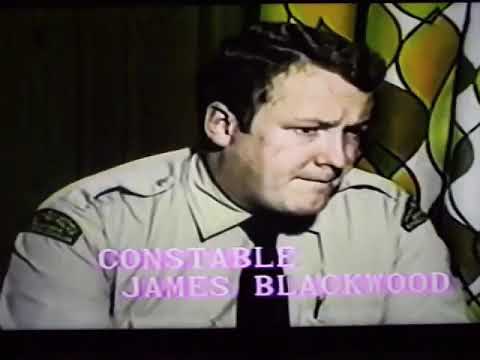
UFO near Clarenville NL as told by RCMP Officer James Blackwood
Blackwood's own extended retelling of the encounter, covering the object's structure, the light-mimicry claim, and his 1978 sketch of the craft.
The 1978 Clarenville UFO Event
A dedicated Nighttime podcast episode retelling the case in full, including Blackwood's own on-record account of the sighting and its aftermath.
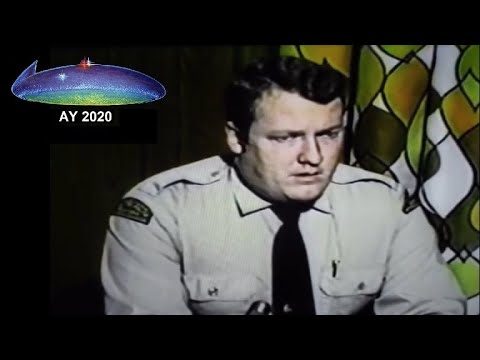
1978-10-26: Clarenville Newfoundland UFO
A dated case retrospective from a UAP-focused archival channel, summarizing the sighting's chronology and sourcing.
Sources
- Callahan, Brian. "Retired Mountie Recalls UFO Sighting Near Clarenville 42 Years Ago." VOCM, October 13, 2020. vocm.com
- VOCM. "New Glow-In-The-Dark Coin Recalls '78 Clarenville UFO Sighting." October 12, 2020. vocm.com
- CBC News. "Random Island UFO sighting immortalized on coin (plus it glows)." October 13, 2020. cbc.ca
- Keith, Elizabeth. "Canada Was Home To An Hours Long Potential UFO Sighting Involving An RCMP Officer." Narcity, October 10, 2020. narcity.com
- Royal Canadian Mint. "1 oz. Pure Silver Glow-in-the-Dark Coin — Canada's Unexplained Phenomena: The Clarenville Event." Product page. mint.ca
- PR Newswire / Royal Canadian Mint. "The Glowing Vision of a UFO Observed Over Clarenville, Newfoundland and Labrador Comes to Life on New Royal Canadian Mint Collector Coin." prnewswire.com
- Openminds.tv. "Royal Canadian Mounted Police officer posts UFO interview video." openminds.tv
- The Canadian Gothic (podcast). "The 1978 Clarenville UFO Sighting," episode page, October 7, 2020. thecanadiangothic.com
- Product of Newfoundland. "Outer Space to Outer Cove: Newfoundland UFOs." productofnewfoundland.ca
- Scott, Helen C. "Are UFO's Observing RCMP Officers in NL?" helencescott.com
- Newfoundland Tea (Substack). "The Night Sky Is Closer Here: UFO Files of Newfoundland & Labrador." newfoundlandtea.substack.com
- The Independent (Newfoundland). "More UFO Sightings Since Start of Pandemic." November 20, 2020. theindependent.ca
- The Night Sky II. "Clarenville UFO Sighting." thenightskyii.org
- "UFO sightings in Canada," Wikipedia (Clarenville, Newfoundland and Labrador, 1978 section). en.wikipedia.org
- Ledger, Don. Maritime UFO Files. Nimbus Publishing/Vagrant Press, 2007, ISBN 978-1-55109-269-0. nimbus.ca
- "Random Island," Wikipedia. en.wikipedia.org
- "Clarenville," Wikipedia. en.wikipedia.org
- Library and Archives Canada. "Canada's UFOs: The Search for the Unknown." Digitized government records database. collectionscanada.gc.ca
- Canadian UFO Report / Ufology Research. "Our Team" (Chris A. Rutkowski, the Canadian UFO Survey). canadianuforeport.ca
- Wikimedia Commons. "File: Random Island seen from Clarenville.jpg" (CC BY-SA 4.0, hero image source, photograph by Ycleymans). commons.wikimedia.org
- YouTube. "UFO near Clarenville NL as told by RCMP Officer James Blackwood," Orville Harris. youtube.com
- YouTube. "The 1978 Clarenville UFO Event," Curiouscast Podcasts (Nighttime). youtube.com
- YouTube. "1978-10-26: Clarenville Newfoundland UFO," Tom Owens UAP. youtube.com
See something inaccurate? Have additional information or sources?
Suggest an Edit →Last Updated: August 2026