
COMETA Report Context
This case file is not a witness account of a single sighting — it is an investigation of a document. On July 16, 1999, a private French think tank calling itself COMETA (Comité d'Études Approfondies) publicly released a 90-page report, Les OVNI et la Défense: À quoi doit-on se préparer? ("UFOs and Defense: What Must We Prepare For?"), personally delivered to President Jacques Chirac and Prime Minister Lionel Jospin at Hôtel Matignon. Authored by roughly thirty retired and serving French generals, admirals, engineers, and scientists — chaired by Air Force General Denis Letty — the report reviewed decades of radar-corroborated and physically-traced UAP cases and concluded the extraterrestrial hypothesis was the "most probable" explanation for a residual, unexplained category. It remains one of the most-cited documents in UFO/UAP literature — and one of the most persistently mischaracterized, routinely described in secondary coverage as an "official French government report" despite the French government, and the very agency that later archived it, explicitly stating otherwise.
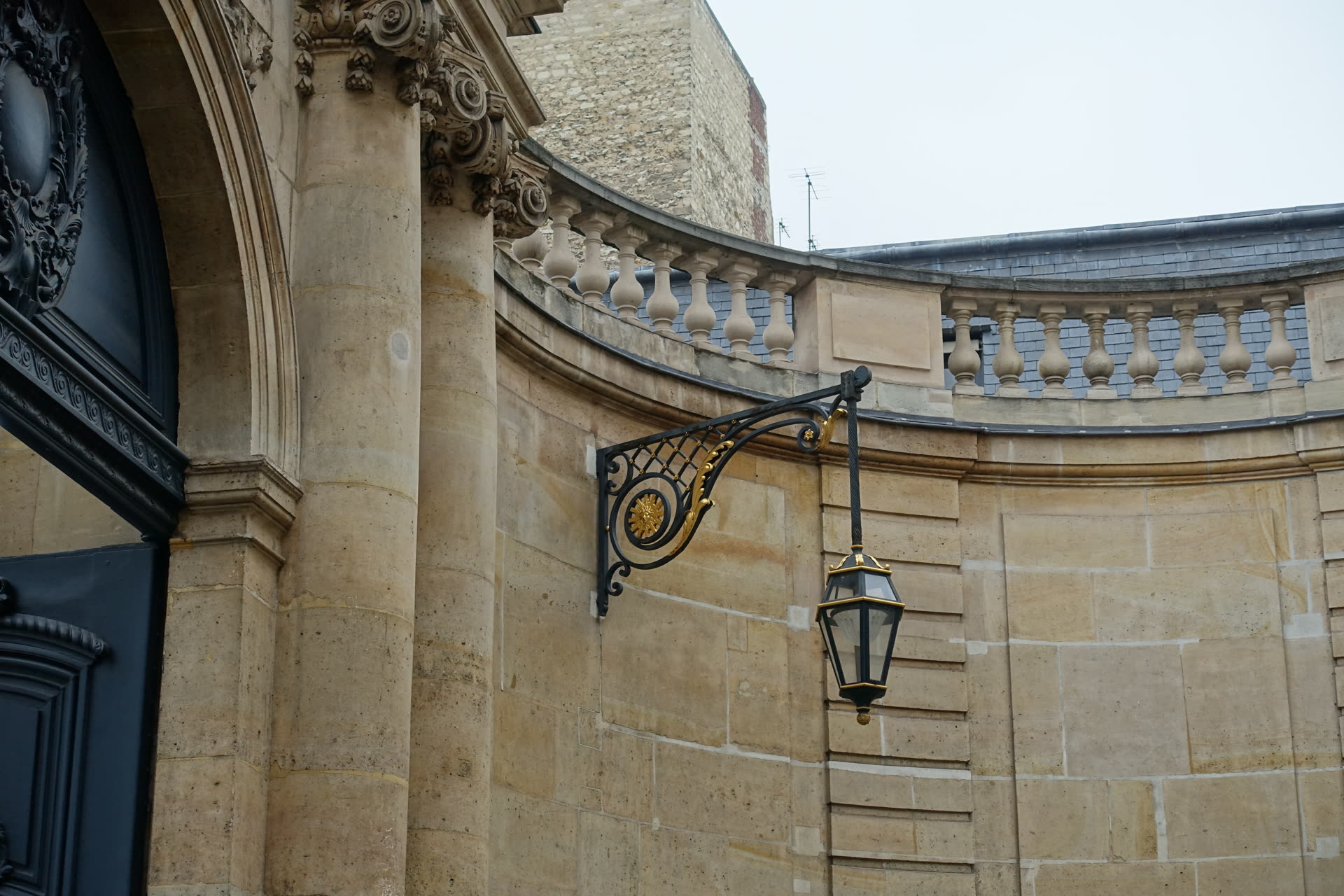
Pictured: Hôtel Matignon, the official residence and working office of the French Prime Minister in Paris's 7th arrondissement — not the report itself or any of its authors. This is the building where the COMETA report was personally delivered to Prime Minister Lionel Jospin in 1999. No public-domain or rights-clear photograph of the report's cover, of chairman General Denis Letty, or of any COMETA committee session is known to exist; the print edition's cover art remains its publisher's copyrighted property, and no free-license portrait of Letty could be located.
Theoretical Alignment
The COMETA report explicitly and self-consciously aligns itself with the Extraterrestrial Hypothesis, naming it directly and arguing it is the "most probable" explanation for the residue of well-documented, unexplained cases its authors reviewed — while carefully hedging that this remains unproven. It gives little weight to interdimensional or ultraterrestrial framing, and its authors devote a section to explicitly rejecting a purely psycho-social or misperception-based account of the cases they selected, on the grounds that several involved corroborating radar and physical-trace data alongside pilot and gendarmerie testimony.
Background
France has maintained the longest continuously operating official government UAP study effort of any nation on Earth, and that institutional history is the essential backdrop against which COMETA has to be understood. In 1977, CNES engineer Claude Poher, with the backing of CNES's then-director general, established GEPAN (Groupe d'Études des Phénomènes Aérospatiaux Non-identifiés) as a formal technical unit inside France's national space agency, tasked with scientifically investigating UAP reports referred through the national gendarmerie. GEPAN's willingness to commission genuine multi-laboratory physical analysis directly enabled its most famous case, the January 1981 Trans-en-Provence landing investigated by engineer Jean-Jacques Velasco, who went on to head GEPAN's successor unit, SEPRA, through most of the 1990s. By the time COMETA formed, France's official study program had already been running for two decades, had classified thousands of reports, and openly acknowledged that a residual percentage — GEPAN and its successors have historically reported figures in roughly the 13–25% range across various periods — remained genuinely unexplained despite adequate data (GEPAN/GEIPAN's own Category D).
Against that backdrop, a group of auditors (graduates) of the Institut des Hautes Études de Défense Nationale (IHEDN) — the French state's premier defense-studies institute for senior military officers, civil servants, and industry figures, housed at the École Militaire in Paris — began meeting informally around 1996 to study the national-security implications of the UAP question on their own initiative. The effort was led by retired Air Force General Denis Letty, whose own career had included fighter squadron command, base command at Strasbourg, air operations command during French military deployments to Chad and Mauritania, and a posting as chief of the French military liaison mission to NATO forces at Ramstein. Because COMETA's members were drawn overwhelmingly from IHEDN's alumni network, the École Militaire functioned as the group's de facto institutional home even though COMETA itself held no formal IHEDN charter and operated as an independent, privately organized effort throughout.
The group formally incorporated as a nonprofit association, COMETA (Comité d'Études Approfondies — "Committee for In-Depth Studies"), on February 24, 1999, capping roughly three years of informal work. Over that period the committee reviewed a substantial number of French and foreign case files it judged particularly well-documented, consulted directly with Jean-Jacques Velasco at SEPRA and photo-analysis specialist François Louange, and interviewed several serving and former civilian and military pilots. The finished 90-page report, Les OVNI et la Défense: À quoi doit-on se préparer?, carried a scientific preamble by former CNES president André Lebeau and a preface by retired General Bernard Norlain, IHEDN's former director. It was personally delivered to President Jacques Chirac and Prime Minister Lionel Jospin before its wider public release — a sequence its authors clearly intended to lend it gravity, and which secondary coverage has repeatedly, and inaccurately, mistaken for evidence that the French government itself had commissioned or endorsed it.
Complete Timeline
| Date | Event |
|---|---|
| 1977 | Claude Poher founds GEPAN inside CNES, establishing the institutional lineage (GEPAN → SEPRA → GEIPAN) that COMETA would later study and recommend strengthening. |
| January 8, 1981 | GEPAN investigates the Trans-en-Provence landing under Jean-Jacques Velasco, producing the physical-trace laboratory data COMETA would later cite as its strongest material-evidence example. |
| c. 1996 | A group of IHEDN auditors led by General Denis Letty begins informally meeting to study the UAP question's national-security dimensions. |
| 1996–1999 | The group reviews case files, consults Jean-Jacques Velasco and photo-analyst François Louange, and interviews serving and former military and civilian pilots. |
| February 24, 1999 | COMETA formally incorporates as a nonprofit association ("Comité d'Études Approfondies"). |
| Spring 1999 | The finished 90-page report is completed, with a scientific preamble by André Lebeau and a preface by General Bernard Norlain. |
| February 21, 1999 | Even before the report's public release, the newspaper Libération mocks the very notion of a general-led private UFO study group under the punning headline "Ovni soit qui mal y pense." |
| 1999 (before July 16) | The report is personally delivered to President Jacques Chirac and Prime Minister Lionel Jospin at Hôtel Matignon. Jospin's chief of staff, Olivier Schrameck, later confirms the Prime Minister read and personally annotated it. |
| July 16, 1999 | The report is publicly released as a special supplement to the French weekly magazine VSD. |
| July 21, 1999 | Le Canard enchaîné mocks the report under the headline "Frappes chirurgicales contre les Martiens" ("Surgical strikes against the Martians"). |
| August 5, 1999 | Journalist Marc Traverson publishes a dismissive review in L'Express, "Ovnis: un rapport délirant" ("UFOs: a deranged report"), quoting sociologist Pierre Lagrange's assessment that the report uncritically revived material other researchers considered folklore. |
| June 2000 | Skeptic Claude Maugé publishes a detailed critical commentary on COMETA's methodology and case selection in the French skeptical journal Inforespace (no. 100). |
| 2003 | The report is reissued as a standalone print book, Les OVNI et la Défense: À quoi doit-on se préparer?, by Éditions du Rocher. |
| 2005 | CNES reorganizes SEPRA into GEIPAN (Groupe d'Études et d'Informations sur les Phénomènes Aérospatiaux Non identifiés) — adopting the broader "PAN" (aérospatial, not just "flying") terminology COMETA had specifically urged. |
| c. 2006 | The COMETA association itself becomes dormant. |
| May 11, 2007 | GEIPAN publishes an archival copy of the COMETA report on its own website, accompanied by an explicit public statement that doing so "does not signify in any way an approval of the report by CNES." |
| 2008 | Michel Scheller, president of the 3AF (Association Aéronautique et Astronautique de France), creates the SIGMA Commission to re-examine the UAP question using a scientific, engineering-led methodology. |
| May 31, 2010 | The 3AF/SIGMA commission releases a progress report agreeing, in substance, with several of COMETA's 1999 conclusions about the reality of a residual unexplained category. |
| 2021 | 3AF's successor commission, SIGMA2, publishes a further technical progress report continuing this scientific-methodology approach to unexplained GEIPAN Category D cases. |
Origins: From an IHEDN Study Circle to a Formal Association
What eventually became COMETA did not begin as an organized research project with a mandate or a budget. It began as a handful of retired officers and officials — men who had spent full careers inside France's defense establishment and who, through the alumni network of the IHEDN, had both the security clearances and the institutional standing to take the UAP question seriously without professional risk. That mattered, because taking the subject seriously in French public life in the 1990s carried real reputational cost, as the press reaction eight years later would confirm. General Denis Letty's own background — fighter command, base command, operational deployments, a NATO liaison posting — gave him exactly the kind of institutional credibility that could not easily be dismissed as fringe enthusiasm, and it was Letty who assembled the group and eventually chaired it through to publication.
The group's early work was informal: gathering to discuss specific well-known cases, debating which ones met a threshold of documentation worth taking seriously, and drawing on members' own professional networks to consult specialists outside the group. It was not until February 24, 1999 — after roughly three years of this informal activity, and only months before the finished report's release — that the group formally incorporated as a nonprofit association under French law. That incorporation date matters for understanding a persistent point of confusion in later coverage: COMETA was never a government commission, ministry working group, or any kind of official body with statutory authority. It was, from its first formal legal existence, a private nonprofit association — distinguished from a hundred other private UFO-interest groups almost entirely by the professional pedigree of its individual members, not by any government charter.
Structure and Methodology of the Report
The finished document is organized in three parts. Part One presents a selection of case studies its authors judged particularly well-documented, drawing on both French and foreign material: the Trans-en-Provence landing, the September 1976 Tehran incident, the 1957 RB-47 case, the 1980 Bentwaters–Lakenheath radar-visual case in England, a French military Mirage IV pilot account, a 1994 Air France Flight AF 3532 encounter, and the 1965 Valensole close encounter, among others. Part Two reviews the existing state of official and scientific knowledge on the subject, in France (principally GEPAN/SEPRA's institutional history and case statistics) and abroad (surveying other countries' government engagement, or lack of it, with the subject). Part Three is the report's actual argument and recommendation section: an assessment of what UAP might mean for national defense, a discussion of possible motives and technologies if the extraterrestrial hypothesis were true, and a set of concrete policy recommendations for the French government.
For its case analysis, COMETA explicitly adopted GEPAN's own established four-part investigative framework rather than inventing a new one: an analysis of the witnesses themselves (physiology, psychology, occupational background), of their testimony (internal consistency, behavior under questioning), of the physical environment (weather, air traffic, radar data, photographs, ground traces), and of the broader psychosociological environment (media coverage, contemporaneous rumor, social contagion effects). Cases were then sorted using GEPAN/SEPRA's four-tier classification — Category A (fully identified), B (probably identified), C (insufficient data to classify), and D (unidentified despite good-quality data) — with COMETA's central substantive argument being that Category D cases, though a minority, could not simply be attributed to memory error, misperception, or hoax once the strongest examples were examined closely.
The Extraterrestrial Hypothesis Conclusion
The report's own language is more hedged than most summaries of it suggest. It states that the "almost certain physical reality" of unidentified flying objects displaying extraordinary performance characteristics is established by the case record it reviewed, and that among competing explanations for this residual category, the extraterrestrial hypothesis "appears to be the most 'probable' or 'credible'" — while explicitly distinguishing that conclusion from any claim of proof, and from any specific claim about visitor intent or contact. Its authors devote real space to what such a finding would imply for national defense: air-defense doctrine built around adversaries with conventional performance envelopes, the strategic, political, and even religious consequences of any future public confirmation, and a specific recommendation that France quietly open diplomatic channels with the United States on the subject given Washington's presumed greater intelligence access to the question. Preamble author André Lebeau framed the underlying epistemological claim directly: a rare but collectively and reliably observed phenomenon is a legitimate object of ordinary scientific study, he argued, regardless of what any individual researcher personally believes about its cause, provided the researcher is methodologically careful.
The Report's Policy Recommendations
Part Three's practical recommendations are frequently skipped over in popular summaries that focus only on the extraterrestrial-hypothesis conclusion, but they are arguably the more concrete and checkable part of the document, since each can be measured against what actually happened afterward:
- Establish a formal, high-level government decision-making structure dedicated to the UAP question, with direct access to the Prime Minister's office — never implemented in the form COMETA envisioned.
- Strengthen and better resource SEPRA (the CNES unit then headed by Jean-Jacques Velasco), rather than leaving it under-resourced relative to its mandate — SEPRA continued largely unchanged until its 2005 reorganization into GEIPAN, a change more attributable to CNES's own institutional evolution than to any direct budgetary response to COMETA.
- Broaden official terminology from "OVNI" (UFO) to "PAN" (Phénomènes Aérospatiaux Non-identifiés), reflecting a wider aerospace-safety framing rather than a narrowly extraterrestrial one — this specific recommendation was, notably, the one the French government did eventually adopt, directly reflected in GEIPAN's own name.
- Open discreet diplomatic channels with the United States on the subject, on the premise that U.S. intelligence agencies likely possessed more extensive relevant data — no public evidence of any such formal channel being opened has ever surfaced.
- Prepare a public-communication strategy for the political, strategic, and even religious consequences of any future official confirmation of the extraterrestrial hypothesis — a recommendation that, by its own nature, would be difficult to verify whether or not it was ever quietly acted upon.
Measured against this five-point list, COMETA's practical policy influence looks considerably more modest than its reputation suggests: one recommendation (terminology) was substantively adopted years later as part of a broader agency reorganization; the rest were either not implemented or cannot be verified as implemented from the public record.
Delivery to Chirac and Jospin, and the Government's Non-Response
COMETA's decision to deliver the finished report directly to the sitting President and Prime Minister, rather than simply publishing it, was a deliberate choice meant to signal that this was a serious document demanding a serious government answer. It partly succeeded: Prime Minister Lionel Jospin's chief of staff, Olivier Schrameck, later confirmed that Jospin personally read the report and annotated it "to mark his interest." That is a genuinely unusual outcome for a private advocacy document from a nonprofit association — most such reports receive no acknowledgment at all from a head of government's office. But "read and annotated" is a considerable distance from "acted upon." No French ministry adopted COMETA's central recommendation to establish a high-level government decision-making structure on the subject; no formal diplomatic channel with the United States on UAP was publicly opened as a result; and SEPRA, the specific agency COMETA urged be strengthened and given greater resources, continued operating largely as before until its 2005 reorganization into GEIPAN — a change more plausibly explained by CNES's own institutional evolution than by any direct government response to COMETA's advocacy, even though COMETA's specific "PAN" terminology recommendation was, notably, the one concrete suggestion the government did eventually adopt in the agency's new name.
Press Reception: Mockery in the French Media
If COMETA's authors expected their collective credentials to buy the report a respectful hearing in the French press, the actual reception was close to the opposite. Even before the July 1999 public release, Libération greeted news of the group's existence with a punning headline, "Ovni soit qui mal y pense" (February 21, 1999) — a play on the old French chivalric motto "Honi soit qui mal y pense," substituting "Ovni" (the French acronym for UFO) for comic effect. Once the report itself was released, the satirical weekly Le Canard enchaîné ran "Frappes chirurgicales contre les Martiens" ("Surgical strikes against the Martians," July 21, 1999), and journalist Marc Traverson published a considerably more substantive but still dismissive piece in L'Express, "Ovnis: un rapport délirant" (August 5, 1999), describing COMETA as, in effect, a private committee led by a general rather than any kind of authoritative body, and quoting sociologist Pierre Lagrange's view that the report uncritically revived interpretive frameworks that many contemporary UFO researchers themselves had already set aside as folklore. France's two most prominent national dailies, Le Monde and Le Figaro, did not cover the report's release at all — a silence some COMETA sympathizers have read as an implicit acknowledgment of its seriousness (too significant to risk mocking) and which skeptics have read simply as professional disinterest in a report that did not meet ordinary journalistic evidentiary standards.
Scientific and Methodological Criticism
The most sustained technical critique of COMETA came from Claude Maugé, a mathematics and physics teacher affiliated with the University of Nice Sophia-Antipolis's zeteticism (skeptical-inquiry) laboratory, who published a detailed commentary in the French skeptical journal Inforespace in June 2000. Maugé argued that COMETA's authors, whatever their genuine defense and engineering credentials, lacked the specific investigative training and methodological rigor that UAP case analysis actually requires, and that the report's case selection favored dramatic, hard-to-explain-sounding accounts over the far larger body of cases that conventional analysis resolves cleanly — a selection-bias critique independent of, and in some ways more substantive than, the press's simple mockery. Separately, close readers of the report's own text (including, later, contributors to its English Wikipedia summary) have noted that its "Findings" section is comparatively thin on inline citation for a document making claims of this magnitude — readers are frequently pointed to case files and data sources described in general terms rather than given precise, checkable references, a real editorial weakness distinct from any question of the authors' sincerity. A further specific criticism concerns the "retired generals" framing itself: while accurate for some members, others were, according to independent documentation of the committee's roster, still professionally active at the time the report was written, meaning the "consensus of elder statesmen with nothing left to prove" narrative that circulated in later popular coverage overstates a more mixed reality. Taken together, these are not fringe objections; they are the specific, substantive reasons mainstream French and international scientific communities, while rarely bothering to publicly rebut COMETA point by point, have overwhelmingly declined to treat it as a serious contribution to the scientific literature on the subject.
GEIPAN's 2007 Publication and Explicit Non-Endorsement
Perhaps the single most important fact for correctly characterizing COMETA's status is one that came from the French government's own UAP-study apparatus, eight years after the report's release. On May 11, 2007, GEIPAN — by then the successor to GEPAN and SEPRA, operating out of CNES headquarters in Toulouse — published an archival copy of the COMETA report on its own website. Its accompanying public statement was explicit and unambiguous: making the report available, GEIPAN wrote, "does not signify in any way an approval of the report by CNES" (cette publication ne signifie en aucun cas une approbation du rapport par le CNES). GEIPAN explained it was publishing the document because visitors had repeatedly requested access to it, framing the move as purely informational — a historical artifact relevant to understanding French PAN research, not a validated scientific finding the agency itself now endorsed. GEIPAN further noted that a steering committee had reviewed the private commission's working methods and judged them serious, "regardless of its conclusions" — a carefully worded distinction between crediting the effort's diligence and endorsing where that effort ultimately landed. This is the single clearest documentary evidence available that COMETA was never, at any point, an official French government report, notwithstanding how frequently it continues to be described that way in secondary and tertiary UFO literature.
Legacy: SIGMA, SIGMA2, and Renewed Scientific Engagement
COMETA's own institutional life was brief; the association itself became dormant around 2006, roughly a decade after the informal study circle that produced it first began meeting. But its central argument — that France's unexplained UAP residue deserved sustained, credentialed, methodologically serious study rather than either credulous advocacy or reflexive dismissal — found a second life through an entirely separate organization. In 2008, Michel Scheller, then president of the 3AF (Association Aéronautique et Astronautique de France, France's professional aeronautics and astronautics society), created the SIGMA Commission specifically to revisit the UAP question using working aerospace engineers and scientists. A May 31, 2010 SIGMA progress report agreed, in substance, with several of COMETA's core 1999 conclusions about the physical reality of a residual unexplained category, while continuing to frame the extraterrestrial hypothesis as one serious possibility among others rather than a settled conclusion. The commission's work has continued under its successor, SIGMA2, a standing 3AF technical commission of roughly twenty-five aerospace and physics specialists mandated to study GEIPAN's own Category D ("foreign," i.e., genuinely unexplained) cases using radar, infrared, electro-optical, and electromagnetic observable data wherever available — publishing further technical progress reports as recently as 2021. SIGMA2's existence is, in a real sense, the closest thing COMETA's 1999 recommendations ever received to actual institutional follow-through — not from the French state directly, but from the professional engineering society COMETA's own membership overlapped with.
Key Researchers & Commentators on COMETA
Beyond the report's own authors, a handful of independent researchers and commentators have shaped how COMETA is understood today, on both the sympathetic and skeptical sides. French journalist and ufologist Gildas Bourdais authored the most widely read English-language summary of the report, published in the Center for UFO Studies' International UFO Reporter in the summer of 2000; Bourdais's translation and framing became, for many English-speaking readers, their first and often only exposure to COMETA's actual contents, and his generally sympathetic presentation contributed to the report's international reputation as more authoritative than its private, unofficial status actually supports. On the skeptical side, Claude Maugé — a mathematics and physics teacher affiliated with the University of Nice Sophia-Antipolis's zeteticism laboratory and the developer of what he called the Composite Reductionist Hypothesis, an approach that systematically searches for combinations of mundane causes (misidentified aircraft, astronomical objects, atmospheric optical effects, and witness psychology) before entertaining anomalous explanations — wrote the most technically detailed contemporary critique, arguing that COMETA's own case-selection process was not immune to exactly the kind of motivated reasoning it accused mainstream science of applying to the subject. Independent documentarian Patrick Gross has separately maintained one of the most detailed case-by-case fact-checking resources on COMETA's specific claims, including the disputed detail that some committee members described in later popular accounts as simply "retired" were, per his research, still professionally active at the time. Jean-Jacques Velasco's own later writings and public statements, drawing on his SEPRA tenure, have continued to treat COMETA's underlying case citations (especially Trans-en-Provence) as scientifically serious independent of what one makes of COMETA's own advocacy framing.
Cultural Impact: COMETA in Later UFO/UAP Discourse
COMETA's afterlife in English-language UFO and UAP literature has been disproportionate to its actual institutional weight, precisely because "a report by French generals concluded aliens are real" is an unusually quotable, shareable claim — one that travels far more easily than the more complicated reality of a private nonprofit association whose own government's space agency later publicly distanced itself from its conclusions. Leslie Kean's influential 2010 book UFOs: Generals, Pilots, and Government Officials Go on the Record situates COMETA within a broader international pattern of credentialed officials speaking on the subject, helping cement its place in the modern disclosure-era canon alongside cases like the 2004 USS Nimitz encounters and the 2017 New York Times Pentagon videos story. Following the 2023 Congressional testimony of David Grusch and the broader post-2017 American UAP disclosure push, COMETA has been repeatedly invoked in books, podcasts, and television commentary as an example of a foreign government "already having said" what U.S. officials were only beginning to acknowledge — a framing that, per GEIPAN's own explicit 2007 statement, significantly overstates what the French government has actually endorsed. This gap between COMETA's actual documented status and its popular reputation is, in itself, one of the most instructive things about the report: it demonstrates how quickly a document's real institutional context can be flattened in retelling once it starts circulating as a talking point rather than being read directly.
Key Witnesses
COMETA involved no eyewitnesses of its own — it is a documentary analysis, not a sighting report. In place of witness testimony, the figures below are the report's principal named authors and contributors, whose individual credentials are the actual substance of the "credibility" debate this case file exists to weigh.
General Denis Letty
Letty assembled and chaired the committee that produced the report, drawing principally on the alumni network of the IHEDN. His own career — fighter squadron command, base command at Strasbourg, air operations command during deployments to Chad and Mauritania, and a liaison posting with NATO allied forces at Ramstein — gave him institutional standing that was difficult for critics to dismiss outright, even as they disputed his committee's conclusions. Letty signed the report's principal acknowledgments and has continued, in later years, to defend both COMETA's seriousness and its members' credentials against characterizations of the group as fringe or amateur.
General Bernard Norlain
As the former director of the very institute from which most of COMETA's membership was drawn, Norlain's preface functioned as an implicit institutional endorsement of the committee's seriousness, even though IHEDN itself held no formal role in producing the report. Norlain wrote that "almost all" of COMETA's members held or had held significant responsibilities in defense, industry, teaching, research, or central administration, and expressed hope the government would examine the report's recommendations — a hope that, as the report's reception shows, went largely unfulfilled.
André Lebeau
Lebeau's preamble supplied the report's scientific and epistemological framing, arguing that a rare but collectively observed phenomenon is a legitimate subject for ordinary scientific method regardless of a researcher's personal beliefs about its ultimate cause. As a former head of France's space agency, his participation gave the report a direct institutional link to the same agency — CNES — that had housed GEPAN and SEPRA and would later host GEIPAN, reinforcing the report's self-presentation as a continuation of, rather than a break from, France's existing official study tradition.
Jean-Jacques Velasco
As the serving head of SEPRA — the actual French government unit with a scientific mandate to investigate UAP reports — Velasco's direct consultation with COMETA supplied the committee's most substantive link to genuine primary case data, including the Trans-en-Provence physical-trace evidence the report leaned on most heavily. Some accounts describe Velasco as personally involved in the report's delivery to government officials. His participation is frequently cited by COMETA's defenders as evidence the report was grounded in real government case data rather than pure speculation, even though SEPRA itself, like GEIPAN after it, never formally endorsed COMETA's own conclusions.
The Five Observables Assessment
COMETA made no first-hand observation of any craft; the framework below therefore assesses the flight characteristics that the underlying cases COMETA's own report cites attribute to their objects — principally Tehran 1976, the RB-47 case, and Trans-en-Provence — not any independent finding generated by COMETA itself.
Assessment: The performance characteristics COMETA's own selected cases describe are broadly consistent with the general "Five Observables" pattern researchers have proposed elsewhere on this site — but because none of it is COMETA's own first-hand observation, this grid measures the report's source material, not an independent COMETA finding. This distinction is central to fairly assessing the document: it is a synthesis and interpretation of existing observational claims, not a new observational contribution.
Evidence Assessment
Supporting the Report's Seriousness
- Its ~30 named and credited contributors include genuine, verifiable senior French defense, engineering, and scientific credentials — not a claim manufactured after the fact, but documented in the report's own acknowledgments.
- Its principal external consultant, Jean-Jacques Velasco, was the serving head of SEPRA, France's actual government UAP-study unit, giving the report a direct line to real primary case data rather than secondhand rumor.
- Prime Minister Lionel Jospin's office confirmed he personally read and annotated the report — a genuinely unusual outcome for a private nonprofit association's advocacy document.
- Its central case citations (Trans-en-Provence, Tehran 1976, the RB-47 case) are independently documented, multiply-corroborated cases with real radar and physical-trace evidence, not invented anecdotes.
- Its core institutional recommendation — broaden "OVNI"/UFO terminology to the wider "PAN" (aérospatial) framing and maintain a dedicated government study unit — was substantively adopted when SEPRA was reorganized into GEIPAN in 2005.
- Its concerns helped motivate the 3AF's later SIGMA and SIGMA2 commissions, a genuine, ongoing scientific-engineering study effort that continues to this day.
- France's underlying official case statistics, independent of COMETA, do show a persistent residual "Category D" (unexplained despite good data) percentage across GEPAN/SEPRA/GEIPAN's entire multi-decade operating history.
Supporting Skepticism of the Report's Conclusions
- COMETA was, at every point in its existence, a private nonprofit association — never a government commission, ministry body, or officially chartered study group, despite being routinely and incorrectly described as an "official French government report" in secondary coverage.
- GEIPAN, the very agency that archived the report in 2007, explicitly and publicly stated that doing so "does not signify in any way an approval of the report by CNES."
- Skeptic Claude Maugé's 2000 technical commentary specifically challenged the committee's investigative rigor and case-selection methodology, independent of any general dismissiveness toward the topic.
- The report's own "Findings" section has been criticized, including by later close readers, for comparatively thin inline sourcing given the scale of its claims.
- France's two most prominent national dailies, Le Monde and Le Figaro, declined to cover the report at all; the coverage that did appear (Libération, Le Canard enchaîné, L'Express) was uniformly mocking or dismissive.
- The "distinguished retired elder statesmen" framing that dominates popular retellings is complicated by the fact that some committee members were, per independent documentation, still professionally active at the time — a detail favorable to the report's contemporaneity but unfavorable to the specific "nothing left to prove" credibility narrative built around it.
- No formal French government policy, diplomatic initiative, or funding decision has ever been publicly and directly attributed to COMETA's specific recommendations, twenty-five-plus years on.
- The report itself performed no independent case investigation, laboratory testing, or data collection — its entire evidentiary basis is borrowed from pre-existing GEPAN/SEPRA and international case files.
Why "Disputed"
The COMETA report earns a DISPUTED classification because a fair assessment of the document splits sharply depending on which axis is weighted. Judged purely on the credentials of the people who put their names to it, COMETA is a genuinely unusual artifact: it is difficult to find another UFO-advocacy document anywhere in the world with a comparably dense concentration of verifiable senior defense, engineering, and scientific credentials attached, and its direct line to SEPRA's own serving director gave it real access to primary government case data most UFO literature never has. Its institutional afterlife — GEIPAN's 2005 adoption of "PAN" terminology, the 3AF's SIGMA and SIGMA2 commissions — is real and ongoing, not merely claimed.
Judged as a piece of scientific or policy analysis, however, the report has real, well-documented weaknesses that go beyond simple press mockery: it is a private nonprofit association's advocacy document, not a government-commissioned study, and the government agency that eventually archived it went out of its way to say so in writing; its own text has been faulted for thin sourcing relative to the scale of its claims; and its most specific technical critic, Claude Maugé, raised substantive methodological objections about case selection and investigative rigor that neither COMETA nor its later defenders have directly rebutted in the technical literature. What is not disputed: COMETA's members were real people with real, verifiable careers; Prime Minister Jospin genuinely read and annotated the report; the specific cases it leans on most heavily (Trans-en-Provence, Tehran, the RB-47 intercept) are independently documented and multiply corroborated in their own right; and the persistent, widespread mischaracterization of COMETA as an "official French government report" is demonstrably false by the French government's own explicit statement.
Sensor & Instrumentation Detection Profile
COMETA generated no sensor data of its own. As a documentary review committee, its "instrumentation" consisted entirely of second-hand access to sensor records already compiled by other bodies: French Air Force and gendarmerie radar logs, GEPAN/SEPRA's own case files, and, for its most frequently cited international case, the ground-radar and passive radar-warning-receiver tracks logged by a U.S. Air Force RB-47 reconnaissance aircraft over the Gulf Coast in July 1957. The report's central methodological claim rests on the idea that a residual category of cases combines multiple independent sensor modalities (visual, radar, and electromagnetic-interference reports) rather than any single, uncorroborated instrument reading.
Environmental & Geospatial Context
Not applicable in the conventional sense used elsewhere on this site: COMETA's work took place in conference rooms and archives in Paris, principally at the École Militaire, home of the Institut des Hautes Études de Défense Nationale (IHEDN), from which nearly all of the committee's membership was drawn. No fieldwork, site visits, or original environmental data collection were conducted by the committee itself; any geospatial detail in the report is inherited from the individual cases it cites, most substantially the GEPAN-investigated Trans-en-Provence landing site in Var, France.
Observer Credibility & Occupational Profile
This is the single dimension on which the COMETA report is genuinely unusual, and it is the crux of every serious argument for taking the document seriously at all. The committee's non-exhaustive published membership list included Air Force General Denis Letty (chairman), Air Force General Bruno Le Moine, Admiral Marc Merlo, weapons engineer General Pierre Bescond, weapons engineer General and physicist Dr. Alain Orszag, honorary engineer general Dr. Jean Dunglas, Christian Marchal (chief engineer of the Corps des Mines and research director at ONERA, France's national aerospace research agency), Michel Algrin (doctor of political science and barrister), and Denis Blancher (a chief of the National Police). External contributors and consultants credited by name included Jean-Jacques Velasco (then head of SEPRA at CNES, France's national space agency), photo-analysis specialist François Louange, former Air France technical director Edmond Campagnac, gendarmerie Squadron Commander Michel Perrier, and several serving and former civilian and military pilots, including Jean-Charles Duboc, Jean-Pierre Fartek, and René Giraud. The report's preface was written by Air Force General Bernard Norlain, IHEDN's former director, and its scientific preamble by André Lebeau, a former president of CNES. Critics have specifically disputed one element of this credibility framing: several members described in press coverage as simply "retired" were, according to researcher Patrick Gross's documentation of the report, still professionally active in relevant fields at the time of writing — a nuance proponents cite as evidence of contemporaneous, not merely nostalgic, expertise, and which skeptics say has been used to inflate claims about the report's institutional weight.
Physical & Material Assays
COMETA conducted no independent laboratory or material analysis of its own — a fact its authors did not hide, since the report is explicitly a documentary synthesis rather than a primary investigation. Its strongest physical-evidence citation is borrowed directly from GEPAN's own 1981 fieldwork at Trans-en-Provence, where soil samples showed mechanical compression consistent with roughly four to five tons of pressure, localized heating to 300–600°C, trace phosphate and zinc deposits, and a 30–50% chlorophyll deficit in nearby alfalfa relative to control samples — laboratory results produced years earlier by GEPAN engineer Jean-Jacques Velasco's team, not by COMETA. The absence of any new sample collection or forensic testing conducted by COMETA itself is, in a case file about the report rather than about a sighting, itself the material finding: COMETA's contribution was argumentative and institutional, not evidentiary.
Historical Precedents & Archive Matches
COMETA's report explicitly built on more than two decades of prior official French engagement with the subject: Claude Poher's 1977 founding of GEPAN inside CNES, GEPAN's successor SEPRA, and specific case files those units had already investigated, most prominently Trans-en-Provence (1981). According to researcher Patrick Gross, the effort also had a little-known institutional precedent within IHEDN itself, in the form of an earlier, more limited 1976 internal study circle on the subject. Internationally, the report drew heavily on the September 1976 Tehran UFO incident (in which Iranian F-4 Phantom crews reported instrument failures approaching a bright object), the July 1957 RB-47 electronic intercept case, the 1980 Royal Air Force Bentwaters–Lakenheath radar-visual case in England, and closer to home, the July 1965 Valensole close encounter of farmer Maurice Masse, alongside a French military Mirage IV pilot sighting and a widely discussed 1994 Air France Flight AF 3532 encounter.
Material Analysis
There is no physical or trace evidence associated with COMETA itself — no soil samples, no metallurgical residue, no photographic plates in the committee's own custody. This absence is not a gap in the record; it reflects exactly what kind of document COMETA produced. Every physical-evidence claim the report makes is inherited, with attribution, from prior official investigations, above all GEPAN's 1981 laboratory work at Trans-en-Provence: mechanical ground compression consistent with roughly four to five tons of pressure, localized heating to 300–600°C, trace phosphate and zinc deposits at the landing point, and a measured 30–50% chlorophyll deficit in nearby alfalfa relative to unaffected control plants nearby, all originally produced by GEPAN engineer Jean-Jacques Velasco's multi-laboratory analysis, not by COMETA.
Supporting the Report's Use of Physical Evidence
- The Trans-en-Provence data COMETA cites was independently produced by a government laboratory process (GEPAN), not fabricated or exaggerated by COMETA itself.
- COMETA's authors correctly attributed this evidence to GEPAN rather than claiming it as their own original finding.
Supporting Skepticism of COMETA's Physical-Evidence Claims
- COMETA performed no independent physical, chemical, or metallurgical analysis of any kind during its three years of work.
- The report's reliance on secondhand physical evidence means its "physical reality is almost certain" conclusion rests on the evidentiary strength of a small number of pre-existing cases, not on any new corroborating data the committee itself generated.
- No chain-of-custody or independent re-testing of the original Trans-en-Provence samples was conducted as part of COMETA's work.
The Conventional Explanation Candidate: What COMETA Actually Was
Because this case file concerns a document rather than a sighting, its "Conventional Explanation Candidate" section asks a different question than usual: not "what conventional phenomenon explains an observed object," but "what is the most plausible conventional explanation for the existence, content, and reception of the COMETA report itself." Three candidate explanations deserve serious evaluation.
A Sincere, Credentialed, but Methodologically Informal Advocacy Document
The most parsimonious reading, consistent with essentially every verifiable fact in this case file, is that COMETA was exactly what it presented itself as: a genuine, voluntary, unpaid effort by a group of retired and serving French defense, engineering, and scientific professionals who had become personally convinced — through their own review of a small set of well-documented cases — that the subject deserved more serious government attention than it was receiving, and who used their real institutional standing and personal networks (chiefly through IHEDN and SEPRA) to give that conviction a hearing at the highest level of French government they could reach. This explanation accounts for the credentials (real), the informal three-year gestation (documented), the direct SEPRA consultation (confirmed via Velasco), the government's polite-but-non-committal response (confirmed via Jospin's office), and the subsequent lack of any formal government follow-through (confirmed by the historical record).
An Orchestrated Institutional Signal or Disinformation Exercise
A minority position within some UFO-research circles has floated the idea that COMETA's real function was some form of managed institutional signaling — either testing public reaction to eventual disclosure, or a deliberate disinformation exercise using credentialed messengers to add unearned weight to a particular narrative. No documentary evidence in the public record supports this: GEIPAN's own 2007 statement went out of its way to distance CNES from the report rather than exploit it, the press reaction was overwhelmingly negative rather than credulous, and no leaked internal government communication or subsequent investigative reporting has ever surfaced connecting the report's origin to any coordinated state messaging effort. The theory also struggles with motive: a genuine disinformation campaign engineered for maximum credibility would be unlikely to choose a private nonprofit whose own government later publicly disowned it.
Genuine, if Circumstantial, Evidence of Suppressed Extraterrestrial Contact
COMETA's own preferred reading of its evidence — that the extraterrestrial hypothesis is the most probable explanation for its cited residual cases — is the interpretation its proponents continue to advocate today. This explanation is not disprovable by anything in this case file, but it is also not established by anything in it: COMETA generated no new primary evidence, and its argument is an inference built entirely from case files (Trans-en-Provence, Tehran, RB-47) that this site treats as independently documented cases in their own right, each with its own separate evidentiary record and its own separate skeptical counter-arguments, rather than as proof that flows specifically from COMETA's re-packaging of them. The credentials of COMETA's authors establish that serious, non-fringe people found the residual evidence compelling; they do not, by themselves, establish that the underlying phenomenon is extraterrestrial.
Sincere Credentialed Advocacy Document
Highly PlausibleConsistent with every independently verifiable fact: the informal genesis, the real credentials, the direct SEPRA link, the government's read-but-not-acted-upon response, and the total absence of any documented follow-through.
Orchestrated Institutional Signal / Disinformation
ImplausibleNo documentary evidence supports it, the French government's own 2007 statement actively distanced itself from the report rather than leveraging it, and the motive for choosing a later-disowned private association as a disinformation vehicle is unclear.
Genuine Evidence of Extraterrestrial Contact
InconclusiveNot disproven, but not established by COMETA itself: the report generated no new primary evidence, and its conclusion is an interpretive argument built on pre-existing, separately documented case files rather than independent proof.
Related Cases
Confirmed Documents & Official Records
GEIPAN's own documentation index, where the COMETA report is archived alongside GEIPAN's other historical and case-file materials.
UNCLASSIFIED (privately authored; publicly archived by CNES/GEIPAN)GEIPAN/CNES's explicit public statement clarifying that archiving the COMETA report does not constitute government or agency endorsement of its conclusions.
UNCLASSIFIEDThe full scanned French-language text of the report, hosted directly on GEIPAN/CNES's own domain.
UNCLASSIFIEDCNES's own description of GEIPAN's official mandate to collect, analyze, and archive UAP reports — the government body whose institutional lineage COMETA studied and whose successor archived its report.
UNCLASSIFIEDSearch Government Archives Directly
Further Reading — Recommended Literature
Les OVNI et la Défense: À quoi doit-on se préparer?
The report itself, in its full French-language book edition — the primary document this case file is about, essential for readers who want the committee's own words and case selections rather than a secondary summary.
UFOs: Generals, Pilots, and Government Officials Go on the Record
Investigative journalist Kean's landmark survey of credentialed international testimony situates COMETA within a broader pattern of retired military and government officials going on record about UAP, useful for comparing its authorship model against other countries' equivalents.
UFOs and Government: A Historical Inquiry
A scholarly, multi-author history of government engagement with the UFO question across several nations including France, providing the institutional GEPAN/SEPRA/GEIPAN context necessary to understand what COMETA was reacting to and building on.
Forbidden Science 4: The Spring Hill Chronicles, 1990–1999
French-American astronomer and ufologist Vallée's own contemporaneous journals from precisely the decade COMETA was forming, offering an independent, skeptical-of-easy-answers vantage point on the same French and international UFO research milieu that produced the report.
UFOs for the 21st Century Mind: A Fresh Guide to an Ancient Mystery
A broad single-volume overview of the UFO subject's full history, including international government reports like COMETA, useful for readers wanting to place this one document within the wider landscape of official and quasi-official UAP study efforts worldwide.
Essential Viewing
No Videos Available
A reasonable search effort (multiple query angles, in both English and French) did not surface any video from a genuinely reputable documentary source primarily and specifically about the COMETA report itself, as opposed to general coverage of GEIPAN's ongoing UAP work or unrelated UFO content. Per this site's video sourcing standard, an honest absence is preferable to padding this section with off-topic or unverified content.
Sources
- GEIPAN / CNES, "À propos de la publication du rapport COMETA" (May 11, 2007) — GEIPAN's official statement explicitly denying that its archiving of the report constitutes CNES endorsement.
- GEIPAN / CNES, Documentation Archive, listing the COMETA report among GEIPAN's historical holdings.
- GEIPAN / CNES, Rapport COMETA (full scanned French-language text, as archived by GEIPAN).
- CNES, "GEIPAN" project overview page, describing GEIPAN's official mandate and institutional history.
- GEIPAN, "What is the methodology used?" — official description of the seven-stage investigative process and A–D case classification system COMETA adopted from GEPAN/SEPRA.
- 3AF (Association Aéronautique et Astronautique de France), SIGMA2 Commission overview, describing the successor scientific-engineering study effort that continued COMETA's core recommendation for rigorous UAP research.
- Institut des Hautes Études de Défense Nationale (IHEDN), Official Site — the state defense-studies institute from which the majority of COMETA's membership was drawn.
- Wikipedia, "COMETA report" — used for orientation and cross-checking membership and timeline details against primary sources.
- Archive.org, The COMETA Report (English translation, full text) — used to verify the report's own stated membership list, methodology, and the exact wording of its conclusions and prefaces.
- Center for UFO Studies (CUFOS), Gildas Bourdais, "The French Report on UFOs and Defense: A Summary", International UFO Reporter, Summer 2000.
- Patrick Gross, "UFOs at Close Sight: French Report COMETA, 1999" — detailed independent documentation of the report's membership, case selections, and reception.
- Claude Maugé, "Commentaire sur COMETA," Inforespace, no. 100 (June 2000), p. 78 — the most substantive contemporary technical critique of the report's methodology and case selection.
- Libération, "Ovni soit qui mal y pense" (February 21, 1999) — French press mockery of COMETA's formation, predating the report's public release.
- Le Canard enchaîné, "Frappes chirurgicales contre les Martiens" (July 21, 1999) — satirical French press coverage following the report's release.
- Marc Traverson, "Ovnis: un rapport délirant," L'Express (August 5, 1999) — a substantive, named-source critical review, quoting sociologist Pierre Lagrange.
- Leslie Kean, UFOs: Generals, Pilots, and Government Officials Go on the Record (Harmony Books, 2010) — comparative context on international credentialed UAP testimony.
- Michael Swords & Robert Powell, UFOs and Government: A Historical Inquiry (Anomalist Books, 2012) — scholarly institutional history of GEPAN/SEPRA/GEIPAN and other national UAP-study programs.
- Association COMETA, Les OVNI et la Défense: À quoi doit-on se préparer? (Éditions du Rocher, 2003 print edition), preface by Gén. Bernard Norlain.
- Key-Figures Registry, The Omni Ledger, Jean-Jacques Velasco and Claude Poher profiles — cross-referenced GEPAN/SEPRA institutional history.
- Case File, The Omni Ledger, Trans-en-Provence Sighting — primary-source physical-trace data cited by COMETA.
- Case File, The Omni Ledger, Tehran UFO Incident — primary-source case data cited by COMETA.
- Case File, The Omni Ledger, RB-47 UAP Electronic Intercept Chase — primary-source case data cited by COMETA.
See something inaccurate? Have additional information or sources?
Suggest an Edit →Last Updated: August 2026