
The Étrelles High-Speed Object
At 11:07 PM on June 1, 2014, two gendarmes on night patrol near Étrelles, a small farming commune in the Ille-et-Vilaine department of Brittany, glanced up through their marked service vehicle's windshield and saw a dark, apparently solid mass hanging almost directly above them, carrying two small, dimly glowing lights. One officer judged it large enough to mask the stars behind it, and roughly comparable in apparent size to two Renault Espace minivans parked end to end, hovering at an estimated altitude of around 1,000 meters. Within about two seconds, the mass accelerated to what GEIPAN's own file calls a “vertiginous” speed and vanished. France's amateur meteor camera network recorded a real fireball just over five minutes later, at 23:12:30 — and GEIPAN's own investigators checked it directly, finding it matched neither the time nor the direction the officers described. GEIPAN's field investigation confirmed both witnesses' accounts, rated the pair “of great reliability” observing under “ideal conditions,” and classified the case D1 on file 2014-06-50078: unexplained, of elevated consistency, resistant even to the meteor hypothesis that came closest to fitting — while stating explicitly that the sighting's brief duration, the uncertainty over the object's approach trajectory, and the fact that the two officers discussed what they had seen with each other immediately afterward were themselves what kept the case from reaching GEIPAN's higher D2 tier.

Pictured: the Church of Saint-Pierre-et-Saint-Paul in Étrelles, Ille-et-Vilaine — not the "Le Piquet" area where the two gendarmes' patrol vehicle actually was when the sighting occurred, a specific rural locality GEIPAN's published file does not further pinpoint. No photograph, video, or other direct visual recording of the object itself is known to exist; the entire evidentiary record consists of the two officers' own testimony, their official procès-verbal, and GEIPAN's investigation. Photo by Wikimedia Commons contributor GO69 (2011), released into the public domain (CC0).
Theoretical Alignment
This case's weighting sits close to a genuine three-way split, and for reasons specific to its own evidentiary shape rather than a generic default. Extraterrestrial framing draws real support from GEIPAN's own explicit characterization of the two witnesses as observers "of great reliability" working under "ideal observation conditions" — language the agency does not use loosely — combined with a specific, tested negative result (the 23:12:30 meteor, checked and excluded) that removes the single most obvious mundane candidate for a fast-moving, briefly visible night light. Psycho-Social framing, however, draws nearly as much weight here as in any file in this site's GEIPAN archive, for a structural reason GEIPAN's own classification decision makes explicit: the sighting itself lasted only about two seconds, an interval so brief that ordinary perceptual and memory-reconstruction effects are a live methodological concern even for trained, professional observers, and one GEIPAN's investigators appear to have weighed directly by declining to award the case's higher D2 tier. Interdimensional framing remains this site's lowest-weighted category across nearly every GEIPAN file, and this case is no exception, resting mainly on the total absence of any photographic, radar, or other instrumented corroboration rather than anything distinctive about what the two officers described.
Background
Two threads of context matter here: the small Breton farming commune where the sighting occurred, and the specific institutional tools — an amateur meteor-camera network and a now-defunct astronomical calculation service — GEIPAN's investigators actually used to test the leading conventional candidate.
Étrelles: A Roman Road and a Massacre
Étrelles is a commune of roughly 2,700 residents in the Ille-et-Vilaine department of Brittany, sitting just south of the market town of Vitré in the Fougères-Vitré arrondissement, within the broader bocage countryside of dispersed hamlets and consolidated farmland typical of inland Brittany. Its name most likely derives from the Latin strata ("paved road"), by way of a diminutive form recorded historically as Estrellis — a fitting etymology, since a Roman road linking Rennes to Le Mans once passed roughly 200 meters south of the present village center, a route later remembered locally as the "Chemin des Sauniers" (Salt-Merchants' Road). The commune's single most consequential historical event came in 1589, during the French Wars of Religion, when Huguenot forces under a commander named La Courdavon burned the town, killing 101 residents along with the parish priest — a massacre commemorated in the stained-glass windows of the rebuilt parish church of Saint-Pierre-et-Saint-Paul, itself reconstructed between 1892 and 1901 by architect Arthur Regnault after the medieval original was destroyed by fire in 1891. Like much of the wider Vitré area, Étrelles's population grew substantially over the late 20th and early 21st centuries, from roughly 1,251 residents in 1968 to 2,703 by the 2023 census, a growth pattern consistent with the broader suburbanization of communes within easy commuting range of Vitré and, further afield, Rennes. The commune retains two distinct traditional names reflecting Brittany's layered linguistic history: Stredell in Breton and Estrèll in Gallo, the Romance regional language historically spoken across most of eastern, French-speaking Brittany (as distinct from the Celtic Breton language, historically concentrated further west) — a linguistic split roughly tracking the same east-west line that also divides Brittany's more Celtic-influenced western place-names from the more Latinate eastern ones like Étrelles's own strata-derived etymology.
BOAM and CalSky: The Tools Behind the Meteor Check
GEIPAN's own published case documentation for Étrelles lists, among its investigative files, a document named "BOAM.pdf" alongside a second named "Calsky.pdf" — both genuine, identifiable tools this site's own research was able to trace independently. BOAM stands for Base des Observateurs Amateurs de Météores (Base of Amateur Meteor Observers), a French volunteer-run meteor and fireball camera detection network that had been operating since 2010, four years before this sighting and roughly two years before FRIPON, GEIPAN's own later, more comprehensive automated fireball camera network, became operational in 2016. CalSky, referenced in the second document, was a widely used (and, since its 2017 closure, now-defunct) astronomical calculation website that allowed precise queries of satellite passes, planetary positions, comet visibility, and related sky events for any given time and location — the same general category of real, checkable astronomical tool GEIPAN's investigators applied to calculate Saturn's excluded brightness in this site's Palau-del-Vidre Black Triangle file. That GEIPAN's investigators drew on both a genuine amateur meteor-detection archive and a genuine astronomical calculation service, rather than reasoning about the meteor hypothesis in the abstract, is itself a meaningful marker of investigative rigor this site's research treats as directly comparable to the Saturn-exclusion calculation in the Palau-del-Vidre file.
Complete Timeline
| Date | Event |
|---|---|
| Roman era | A Roman road linking Rennes to Le Mans passes roughly 200 meters south of the future village of Étrelles, later remembered locally as the "Chemin des Sauniers." |
| 1589 | Huguenot forces burn Étrelles during the French Wars of Religion, killing 101 residents and the parish priest. |
| 1891–1901 | Étrelles's medieval parish church, destroyed by fire, is rebuilt as the Church of Saint-Pierre-et-Saint-Paul under architect Arthur Regnault. |
| 1977 | GEPAN, GEIPAN's founding predecessor agency, is established at CNES under Claude Poher. |
| 2010 | BOAM, France's amateur meteor-camera detection network, begins operating — four years before this sighting. |
| June 1, 2014, 23:07 | Sighting begins. Two gendarmes on night patrol near Étrelles see a dark mass with two small lights hanging above their vehicle at an estimated 1,000 meters, masking the stars behind it. |
| June 1, 2014, approx. 23:07–23:09 | The object vanishes. Within about two seconds, the mass accelerates to a "vertiginous" speed and disappears; the two officers immediately discuss what they have just seen with each other. |
| June 1, 2014, 23:12:30 | A real meteor is recorded on France's amateur meteor-camera network — roughly five minutes after the sighting. |
| Date not published | The officers file an official gendarmerie procès-verbal, PV n°2851, documenting the sighting. |
| Date not published | GEIPAN conducts a field investigation, confirming both witnesses' accounts and checking the BOAM meteor record and CalSky astronomical data against the sighting's reported time and direction. |
| 2014 | Final classification. GEIPAN classifies the case D1 on file 2014-06-50078: unexplained, of elevated consistency and medium strangeness, citing the witnesses' great reliability and ideal observing conditions, while withholding the higher D2 tier due to the sighting's brevity, trajectory uncertainty, and the witnesses' immediate mutual discussion of it. |
Detailed Narrative
A Routine Patrol, Interrupted
According to GEIPAN's own case synthesis and corroborating narrative detail preserved in regional French ufology research, the two gendarmes were carrying out an ordinary night patrol in a marked service vehicle in the "Le Piquet" area of Étrelles, a rural locality within the commune south of Vitré, when, at 23:07, something in the sky ahead of or above their vehicle drew their attention through the windshield. The sky that night was clear and full of stars, the wind light, with no rain or storm, and a crescent moon present in the sky but positioned outside the officers' actual field of view at the moment of the sighting — the kind of unambiguous, high-visibility observing conditions GEIPAN's own file specifically credits as "ideal."
A Dark Mass That Masked the Stars
What the two officers reported was not a point of light in the conventional sense, but a genuinely dark, apparently solid mass, carrying two small points of light that GEIPAN's own synthesis describes as "dimly illuminating" rather than bright or dazzling. One officer, attempting to convey the object's apparent scale, compared it to roughly two Renault Espace minivans — a large French family MPV, each model measuring close to five meters in length — positioned end to end, and stated that the object was large enough, at whatever its actual altitude and distance were, to visibly mask the stars directly behind it. Independent regional reporting on the case places the object's estimated altitude at approximately 1,000 meters above the patrol vehicle, though this site's own analysis treats that figure, like the Renault Espace comparison itself, as a witness's best estimate rather than an instrumented measurement: without a laser rangefinder, radar return, or a second simultaneous ground reference point, altitude and true physical size estimates for a night-sky object are inherently difficult to pin down precisely, a limitation this site's research treats as an honest evidentiary gap rather than grounds to dismiss the estimate outright.
Vertiginous Speed, and Then Nothing
GEIPAN's own case synthesis is direct and economical on what happened next: the mass "se déplace soudain à une vitesse vertigineuse et disparaît" — it suddenly moves at a vertiginous speed and disappears. The entire dynamic phase of the sighting, from the object's apparent departure to its disappearance, is described elsewhere in regional accounts of the case as lasting only about two seconds in total — an extraordinarily short window for two independent observers to register, process, and later separately recount a coherent, matching description of an object's shape, relative size, coloration, and light configuration. This site's own analysis treats that brevity as the case's single most important interpretive fact, in both directions at once: it is precisely the kind of narrow observation window in which perceptual error, motion-parallax illusions, or simple startle-response misjudgment become genuinely difficult to rule out, and it is also, per GEIPAN's own stated reasoning below, one of the specific, named factors that kept this otherwise highly rated case from reaching the agency's higher D2 tier.
"I Never Spoke of Extraterrestrials": The Officer's Own Words
One of the two gendarme witnesses is quoted, in regional French ufology coverage of the case, offering an unusually candid and carefully hedged personal reflection on what he saw: "Oui, j'ai vu un ovni. Mais je n'ai jamais parlé d'extraterrestres. Pour moi, c'est un phénomène scientifique encore non défini, qui pourra peut-être s'expliquer dans plusieurs centaines d'années" — "Yes, I saw a UFO. But I never spoke of extraterrestrials. For me, it's a scientific phenomenon still undefined, that maybe can be explained in several hundred years." This site's own analysis treats that quotation, if accurately attributed, as a genuinely useful data point on witness credibility: it reflects a witness actively distinguishing the observational claim (something unidentified was seen) from any interpretive claim about its ultimate nature, a distinction this site's own case-file methodology treats as the correct one to draw, and one professional training as a law-enforcement officer accustomed to giving precise, hedged testimony may plausibly have reinforced.
Immediate Discussion: Why This Case Was Not Classified D2
GEIPAN's own file is explicit, in terms this site's research treats as the single most important nuance in the entire case, about exactly why it was not classified D2 despite its otherwise strong witness-reliability rating. The agency's own published reasoning states plainly: "l'incertitude sur la trajectoire d'apparition du PAN, son caractère de grande brièveté, et l'interdépendance des deux témoins — qui ont aussitôt échangé sur leur observation — interdisent un classement en D2, en l'absence de photographie ou vidéo" — the uncertainty over the phenomenon's approach trajectory, its extremely brief character, and the interdependence of the two witnesses, who immediately exchanged views on their observation, together forbid a D2 classification, in the absence of any photograph or video. This is a materially different, and in this site's assessment more intellectually honest, framing than simply noting "two witnesses" as an unqualified positive: GEIPAN's own investigators are stating directly that because the two gendarmes discussed what they had seen with each other right after it happened, their two accounts cannot be treated as the kind of fully independent corroboration that would justify the agency's highest unexplained-case tier, even though both witnesses were independently judged highly reliable and even though their accounts, examined individually, were internally consistent and detailed. This site's own case-file methodology treats this exact same tension — two people who experienced an event together, and who therefore had every ordinary opportunity to align their language and emphasis before ever speaking to an investigator, versus two people with no contact in the interim — as a recurring and genuinely important distinction across its GEIPAN archive, most directly comparable to the same dynamic already documented in this site's Palau-del-Vidre Black Triangle file.
The Meteor That Almost Fit — But Didn't
GEIPAN's own investigation did not simply assert that no meteor explained the sighting; it checked a real, specific, independently recorded fireball event against the witnesses' account and found a concrete mismatch. France's BOAM amateur meteor-camera network recorded a genuine meteor passage at 23:12:30 that same night — just over five minutes after the gendarmes' 23:07 sighting. GEIPAN's own synthesis states that this recorded meteor "corresponded poorly" with the Étrelles sighting "both in space and time," a specific dual mismatch (wrong time window, wrong apparent trajectory/direction) rather than a vague dismissal. This site's own analysis treats this as directly comparable, in investigative method if not outcome, to the Saturn-exclusion calculation in the Palau-del-Vidre file and the triple-candidate elimination (a Robin DR400 aircraft, a confirmed Mirage 2000-5F exercise, and a documented drone-transit notice) in the Villers-lès-Luxeuil Triangle file: in each case, GEIPAN's investigators identified the single most obvious conventional candidate and tested it against real, independently sourced data, rather than either accepting or rejecting it by assumption.
Key Witnesses
T1 — Gendarme, Driver or Front-Seat Officer (identity withheld per GEIPAN's standard anonymization practice)
On duty in a marked gendarmerie patrol vehicle in the "Le Piquet" area of Étrelles at 23:07 on June 1, 2014, this officer was among the first to notice the dark mass hanging above the vehicle, later comparing its apparent size to roughly two Renault Espace minivans and noting that it appeared to mask the stars directly behind it. His testimony, together with T2's, was formalized in an official gendarmerie procès-verbal, PV n°2851, and GEIPAN's own investigation rated him a witness "of great reliability."
T2 — Gendarme, Second Officer, Age 40 (identity withheld per GEIPAN's standard anonymization practice)
The second officer in the same patrol vehicle, recorded in GEIPAN's own published technical file as a 40-year-old man who reacted to the sighting with curiosity and active interest rather than fear. His account of the object's sudden, "vertiginous" acceleration and disappearance, examined by GEIPAN's field investigators alongside T1's, was found consistent enough to support a D1 classification — though the two officers' own admitted discussion of the sighting immediately after it happened is the specific reason GEIPAN's file cites for withholding the higher D2 tier.
The Five Observables Assessment
The Five Observables framework, developed by the Pentagon's Advanced Aerospace Threat Identification Program to describe performance characteristics beyond known conventional technology, is applied here for comparative consistency across this site's case files. This sighting's defining performance characteristic is a single, extreme instant of acceleration bracketing an otherwise unremarkable, brief stationary phase.
Assessment: This case's strongest, most specific Five Observables signal is Instant Acceleration, rated Present rather than merely Speculative because GEIPAN's own file explicitly and repeatedly emphasizes the sighting's abrupt, near-instantaneous transition from a stationary, star-masking mass to complete disappearance at "vertiginous" speed, all within roughly two seconds. That same brevity, however, is precisely why this site's analysis rates Hypersonic and Low Observability only Speculative rather than Present: a two-second dynamic phase, observed without any instrument capable of measuring true velocity or verifying the object's actual reflectivity/radar cross-section, cannot on its own distinguish a genuinely exotic performance envelope from a rapid but still fundamentally conventional departure whose speed was simply misjudged under the adrenaline and compressed timescale of an unexpected two-second event. Anti-Gravity Lift earns a Speculative rating on the strength of the object's reported motionless, hovering phase immediately preceding its departure — a detail that, if accurately perceived, is difficult to reconcile with any conventional means of remaining aloft without forward airspeed, though this site's analysis stops short of rating it Present given how little detail exists about the hover phase's actual duration.
Evidence Assessment
Supporting an Anomalous Origin
- GEIPAN's own investigation explicitly rated both witnesses "of great reliability" observing under "ideal observation conditions" — language the agency does not apply to every case in this site's archive
- The sighting was formalized in an official gendarmerie procès-verbal (PV n°2851), filed by the witnesses in their own professional capacity as law-enforcement officers rather than as informal civilian reports
- GEIPAN's investigators identified and tested a real, specific, independently recorded meteor event (BOAM network, 23:12:30) against the sighting's exact time and reported trajectory, and found a genuine dual mismatch rather than a vague dismissal
- The reported combination of a briefly motionless, star-masking dark mass followed by near-instantaneous acceleration to "vertiginous" speed is difficult to reconcile with any conventional aircraft's flight characteristics
- GEIPAN's field investigation confirmed the substance of both witnesses' testimony independently, and the case's own classification (D1) explicitly states that "none" of the multiple hypotheses examined corresponded well to the observations
Supporting a Conventional/Mundane or Inconclusive Origin
- GEIPAN's own file explicitly states that the sighting's extreme brevity (roughly two seconds of dynamic observation), the uncertainty over the object's approach trajectory, and the two witnesses' immediate mutual discussion of what they saw together are themselves the specific, named reasons the case could not be classified D2
- The two witnesses were together in the same vehicle for the entire sighting and spoke with each other about it immediately afterward, meaning their two accounts, however individually reliable, are not methodologically independent corroboration in the strict sense
- No photograph, video, radar track, or other instrumented data of any kind exists; the entire evidentiary record rests on testimony and an official written report filed after the fact
- Estimates of the object's altitude (~1,000 meters) and apparent size (roughly two Renault Espace minivans) are witness impressions rather than measured quantities, and are inherently difficult to pin down precisely for a brief night-sky sighting with no independent reference point
- A two-second observation window is short enough that ordinary perceptual misjudgment under sudden, unexpected conditions remains a live possibility even for trained, professional observers
Why "Open"
This case is stamped Open because GEIPAN's own investigation reached a genuinely tested, and genuinely inconclusive, result: it identified the single strongest conventional candidate (a real, independently recorded meteor just over five minutes later) and excluded it on specific, checkable grounds rather than by assumption, while explicitly crediting both witnesses as highly reliable observers working under ideal conditions. That combination — a real negative test on the leading mundane hypothesis, plus unusually strong, professionally credentialed witness testimony formalized in an official procès-verbal — is a genuinely above-average evidentiary profile within this site's own GEIPAN archive.
At the same time, this site's own analysis is explicit that GEIPAN's own classification decision itself supplies the clearest statement of this case's real limits. The agency's own file does not merely note two witnesses; it specifically declines to award its higher D2 tier because those two witnesses discussed the sighting with each other immediately after it happened, because the object's approach trajectory before the witnesses noticed it remains unknown, and because the entire dynamic phase of the sighting lasted only about two seconds — an interval this site's research treats as a genuine, structural constraint on how much can be concluded from the account, regardless of how reliable the witnesses themselves were individually judged to be. No photograph, video, or physical trace corroborates the account at any point, and the two officers' shared vantage point in one vehicle means this case, like several others in this site's published GEIPAN archive, sits closer to "two witnesses whose accounts agree" than to "two fully independent witnesses whose accounts happen to match." Weighed together — genuinely elevated witness credibility and a real, tested negative meteor result, against an extremely brief observation window, an unknown approach trajectory, and non-independent testimony — this case is scored in the middle of this site's published GEIPAN archive: stronger than its thinnest single-witness or long-delayed-report files, but held back from the upper tier by the same brevity and interdependence GEIPAN's own investigators cited as their reason for withholding D2.
Sensor & Instrumentation Detection Profile
No photograph, video, radar track, or other live sensor recording of any kind captured this sighting. What this case does have, distinguishing it from several of this site's other single-instant French sightings, is a specific, named, and independently traceable pair of investigative tools GEIPAN's own case file cites directly: BOAM, France's volunteer amateur meteor-camera detection network (operating since 2010, predating GEIPAN's own later FRIPON network by roughly six years), and CalSky, a since-closed but at the time widely used astronomical calculation service capable of checking satellite passes, planetary positions, and related sky events for a specific time and location. GEIPAN's investigators used the first of these to identify and then rule out the 23:12:30 meteor as a match for the sighting, on the dual grounds of both timing and apparent trajectory. This is directly comparable, in kind, to the astronomical calculation GEIPAN performed to exclude Saturn as the source of the preceding light in the Palau-del-Vidre Black Triangle case, and to the radar/flight-log cross-checks performed in the Villers-lès-Luxeuil Triangle and Rixheim Course-Changing Light files: in each instance, a real, external, independently verifiable dataset was checked against the sighting's specific reported parameters, rather than the conventional hypothesis being accepted or dismissed by assumption alone.
This site's own research was unable to locate any indication that regional civil or military air-traffic radar was separately checked for this specific sighting, and GEIPAN's own published file does not reference such a check — a gap distinct from cases like the Palau-del-Vidre and Villers-lès-Luxeuil files, where air traffic control and/or gendarmerie records were specifically confirmed to contain no matching report. Here, since the witnesses were themselves the reporting gendarmerie, no separate confirmation from a different police unit was structurally necessary in the same way; the procès-verbal (PV n°2851) the officers filed effectively functions as both the witness testimony and its own contemporaneous official documentation.
It is also worth noting what this sensor profile does not include, since the absence itself is informative: no nearby weather radar station, no commercial aviation transponder data, and no dedicated all-sky camera of the kind FRIPON would later deploy across France beginning in 2016 covered this specific rural stretch of Ille-et-Vilaine on the night in question. The BOAM network's own coverage in 2014, per this site's research, was limited to a comparatively small number of volunteer-operated cameras nationwide, meaning its successful detection of the 23:12:30 meteor at all — whatever its ultimate relevance to this sighting — was itself a reasonably fortunate instrumented catch for a sparse, amateur-run network of that era, underscoring how much of this case's evidentiary record depends on exactly two pieces of testimony rather than any independent instrumented layer.
Environmental & Geospatial Context
Geographically, the sighting occurred in the "Le Piquet" locality within the commune of Étrelles, a rural farming area south of Vitré in the inland Ille-et-Vilaine department of Brittany, within the characteristic bocage landscape of dispersed hamlets, hedgerow-divided fields, and consolidated agricultural land common across this part of inland Brittany. The commune sits at a modest elevation between 52 and 108 meters, crossed by the Vallière river along its northern boundary and several smaller tributary streams, with no major airport, military installation, or industrial facility located directly within or immediately adjacent to the commune itself that this site's research was able to identify as a plausible local light source or aircraft-traffic explanation.
Astronomically, the sighting's 23:07 timing placed it well after nautical twilight on a June evening at this latitude (a season when far-northern France experiences comparatively late, prolonged dusk, though by 23:07 full darkness would have set in), under a sky both witnesses and GEIPAN's own file describe as clear and star-filled, with a crescent moon present but specifically noted as outside the witnesses' field of view at the relevant moment — a detail this site's research treats as significant precisely because it forecloses the otherwise very common misidentification candidate of the moon itself, low on the horizon, appearing unusually large or oddly colored. The real meteor GEIPAN's investigators checked and excluded, recorded by the BOAM network at 23:12:30, is itself a genuine, verifiable astronomical event from that same night, independent of the object the officers described; this site's analysis treats its recorded existence, and its documented failure to match the sighting's own time and trajectory, as a meaningfully strong piece of tested negative evidence rather than a mere assertion.
Within this site's own published GEIPAN archive, the most relevant points of comparison for this sighting's extremely brief, high-speed profile are the Rixheim Course-Changing Light, whose own dynamic sighting phase (an interrupted trajectory, a sharp turn, and a fast overhead pass) similarly compressed into roughly 10 to 12 seconds, and the witness-interdependence dynamic already explored at length in the Palau-del-Vidre Black Triangle file, each discussed further in the Historical Precedents section below.
The nearest sizable town to the sighting, Vitré, sits just a few kilometers north of Étrelles and gives useful regional context even though it plays no direct role in the case itself. A market town of roughly 19,365 residents anchoring a functional area of some 54,000 people on Brittany's eastern edge, near the historic boundary with Normandy, Maine, and Anjou, Vitré traces its formal origins to around 1000 AD, when the Duke of Brittany granted feudal authority over the area as a defensive buffer zone; a stone castle raised in 1070 still partially stands today. Victor Hugo, visiting in the 19th century, praised Vitré as "a Gothic city entire, complete, homogeneous," comparing its preserved medieval core to Nuremberg. The town's economic peak came during the 16th-century Renaissance, when a merchants' brotherhood founded in 1472 built substantial regional prosperity trading locally produced hemp across Europe, financing the ornate Renaissance mansions still standing within its old walls. Vitré lost its formal subprefecture status in 1926 but remains its canton's administrative seat and a recognized "ville d'art et d'histoire," with the 1857 arrival of the railway cementing its role as the area's principal market and transport hub — the same practical role that would have made it the natural administrative center for a night patrol covering the surrounding rural communes, including Étrelles, on the night of this sighting.
Observer Credibility & Occupational Profile
This case carries a specific, well-documented occupational credibility factor largely absent from most of this site's other GEIPAN files: both witnesses were on-duty gendarmes, members of the French national police force with formal training in observation, incident documentation, and the drafting of official reports, actively engaged in a night patrol at the moment of the sighting rather than passive bystanders. GEIPAN's own file reflects this directly by rating both officers "of great reliability" — among the strongest witness-credibility language this site's research has found applied to any French case in its published archive — and the sighting's formalization in an official gendarmerie procès-verbal (PV n°2851) means this case's evidentiary record includes a genuinely institutional document, not merely an informal statement collected after the fact by GEIPAN's own investigators.
This site's analysis also credits the specific, publicly attributed quotation from one of the two officers — his explicit statement that he "never spoke of extraterrestrials" and instead regards the sighting as "a scientific phenomenon still undefined" — as a genuinely useful, if secondary, credibility signal, reflecting a witness carefully distinguishing an observational claim from any speculative interpretation of it, consistent with the kind of disciplined, precise testimony professional law-enforcement training is generally intended to instill.
At the same time, this site's research is careful to state plainly what this occupational strength does not resolve: professional training in observation and reporting does not, on its own, extend the physically available observation window, and a two-second sighting remains a two-second sighting regardless of who experiences it. Nor does it fully substitute for independent corroboration; the two officers' shared vantage point in a single vehicle, and their immediate discussion of the sighting with each other, is the same non-independence dynamic this site's research has flagged in several of its other multi-witness GEIPAN files, GEIPAN's own investigators' stated reason for withholding a D2 classification here specifically.
Physical & Material Assays
No physical trace evidence exists in this case, and GEIPAN's own published file gives no indication that any ground-level search for trace material was ever conducted or would have been applicable. The object remained airborne throughout the entire brief observation, at an altitude both witnesses estimated at roughly 1,000 meters, and no landing, low-altitude ground approach, or other ground-level effect was ever reported. Accordingly, this case has no soil, vegetation, or material sample of any kind associated with it, and no metallurgical, isotopic, or trace-chemical assay was performed or would have been relevant given the sighting as described.
Historical Precedents & Archive Matches
This case's most useful points of comparison within this site's own published GEIPAN archive fall into two categories: other extremely brief, high-speed sightings, and other multi-witness cases where GEIPAN itself identified witness interdependence as a limiting factor.
Rixheim: A Different Kind of Brevity
The Rixheim Course-Changing Light (Open, case #262) offers the closest comparison this site has published for a sighting whose entire anomalous behavior compressed into a handful of seconds. There, a single witness watched what first appeared to be an ordinary satellite pass execute a sharp turn and accelerate onto a fast, overhead trajectory, the whole dynamic sequence lasting only 10 to 12 seconds; GEIPAN tested and eliminated three specific, real candidates (regional air-traffic radar, the planet Jupiter's actual position, and the real orbital pass of the Soviet-era rocket body Cosmos 1151) before classifying the case D1. Read against Étrelles, Rixheim's own single-witness structure removes the interdependence problem entirely, but at the cost of losing the cross-corroboration two witnesses can provide even when not fully independent; Étrelles, conversely, gains real (if qualified) two-witness support but at the cost of an even shorter roughly two-second window and the specific interdependence GEIPAN's own file flags directly. Neither case reached GEIPAN's D2 tier, for related but distinct reasons in each instance.
Palau-del-Vidre and Villers-lès-Luxeuil: The Interdependence Problem, Twice More
The Palau-del-Vidre Black Triangle (Open, case #264) and the Villers-lès-Luxeuil Triangle (Open, case #251) both give this site substantial prior grounding in exactly the evidentiary tension Étrelles's own D1-not-D2 classification turns on. Palau-del-Vidre's two witnesses were colleagues riding together in one utility vehicle, exactly as in Étrelles, though there the reporting delay ran to thirteen months rather than being filed promptly via an official procès-verbal; GEIPAN's own file for that case states its investigation "considerably reinforced" the account's consistency without ever claiming the two witnesses were methodologically independent. Villers-lès-Luxeuil's own two witnesses, a married couple, were more genuinely independent in the strict sense — driving separate cars, on separate schedules, with one failing entirely to notice a preceding light phenomenon the other saw clearly — a structurally stronger form of corroboration than either Palau-del-Vidre's or Étrelles's shared-vehicle witnesses, though GEIPAN's own file for that case still describes its consistency only as "good" rather than citing the kind of explicit "great reliability" language applied to the two gendarmes here. Read across all three cases together, this site's research draws out a consistent pattern: GEIPAN's own investigators treat witness independence as a distinct, separately weighted factor from witness individual credibility, and are willing to say so explicitly in their own published classification reasoning rather than collapsing the two into a single undifferentiated "multiple witnesses" data point.
Douai: A Different Institutional Cross-Check
The Douai Prison-Adjacent Sighting (Open, case #253) offers a useful contrast in how GEIPAN pursues institutional cross-checks once a specific conventional candidate is identified. There, investigators pursued a civilian and military drone hypothesis directly, contacting local hobbyist drone operators and a Marine Nationale drone instructor, none of whom could match the sighting's described lighting configuration — a targeted, name-and-contact-based institutional check broadly comparable in spirit, though different in specific method, to GEIPAN's own use of the BOAM meteor-camera archive here to test and exclude a real, dated astronomical event rather than a hypothetical drone operator. Both approaches share the same underlying investigative logic this site's research has found running through nearly every GEIPAN D1 file it has published: identify the single most specific, checkable conventional candidate available, and test it against real external data rather than deciding the question by inference alone.
The Broader Ille-et-Vilaine and Breton GEIPAN Record
This site's own research did not identify another D1-classified GEIPAN case specifically within Ille-et-Vilaine already published in this site's archive, making Étrelles this site's first dedicated case file from the department. Set against the wider pattern this site's GEIPAN archive has documented across other French departments — genuinely unexplained cases remain a small minority of all reports GEIPAN receives, with GEIPAN's own published statistics page indicating only around 3% of its roughly 3,368 classified cases (Type D, unexplained after investigation — roughly 106 cases) remain unexplained, against 28% perfectly identified (Type A), 39% probably identified (Type B), and 30% unanalyzable for lack of information (Type C) — Étrelles's own combination of professionally credentialed witnesses, a real tested-and-excluded meteor candidate, and an unusually candid classification decision explaining its own D1-not-D2 boundary makes it a genuinely distinctive addition to this site's regional coverage of Brittany, a part of France otherwise more associated in the popular UFO literature with older, less rigorously documented reports than with a modern, methodically investigated GEIPAN file of this kind.
Material Analysis
As with the Physical & Material Assays section above, this case involves no physical or trace evidence of any kind. The object remained airborne throughout the entire brief observation, and no landing, ground-level approach, or other effect capable of producing testable physical trace material was ever reported by either witness.
Supporting Non-Terrestrial Origin
- No confirmed physical evidence exists to test in the first place, so no terrestrial material-composition finding contradicts an anomalous interpretation either
- Two professionally credentialed witnesses, rated highly reliable by GEIPAN's own investigation and working under ideal observing conditions, describe a specific, unusual dark-mass-plus-near-instant-acceleration profile that survived GEIPAN's own tested meteor exclusion
Supporting Terrestrial Origin
- GEIPAN's own file explicitly names the sighting's extreme brevity, its uncertain approach trajectory, and the witnesses' non-independent, jointly discussed testimony as the specific reasons it could not be rated the agency's highest unexplained-case tier
- No photograph, video, radar track, or physical trace of any kind exists; the entire evidentiary record rests on testimony collected from two officers who discussed the event together before ever speaking to an investigator
The Conventional Explanation Candidate: Meteor, Aircraft, and Perceptual Misjudgment
GEIPAN's own published synthesis for this case names one specific candidate directly and reports its own tested conclusion on it; this site's own research adds two further, related considerations it weighed and found insufficient to independently resolve the case.
The 23:12:30 Meteor
GEIPAN's own investigators identified a real, independently recorded meteor event on France's BOAM amateur camera network at 23:12:30 that same night — just over five minutes after the witnesses' 23:07 sighting — and checked it directly against the reported observation. The agency's own conclusion, stated plainly in its published case synthesis, is that this meteor "corresponded poorly" with the Étrelles sighting in both space and time: a genuine, specific, dual-axis mismatch (the wrong moment, and per regional reporting on the case, a trajectory not consistent with what the witnesses described) rather than a general or hand-waved exclusion. This site's own analysis treats the meteor hypothesis as genuinely tested and genuinely falling short on these specific grounds, the strongest and most concrete negative result in this case's entire evidentiary record.
Conventional Aircraft or Drone
GEIPAN's own published file does not name a conventional aircraft or drone hypothesis directly for this case, and this site's own research found no indication that regional air-traffic control records were checked. This site's analysis nonetheless considers, and finds a poor fit for, this candidate on the strength of the witnesses' own description: a genuinely dark, non-illuminated mass rather than a lit aircraft silhouette, carrying only two small, dim lights rather than a recognizable civil or military aviation lighting configuration, and departing at a described "vertiginous" speed within roughly two seconds — a profile that matches no conventional aircraft type this site's research was able to identify, though the absence of an explicit ATC check (unlike the Palau-del-Vidre and Villers-lès-Luxeuil files) means this candidate cannot be excluded with the same degree of documented rigor GEIPAN applied to the meteor hypothesis.
Perceptual Misjudgment Under a Brief, Startling Observation
This site's own research raises, independently of GEIPAN's published file, the general possibility that an unexpected, roughly two-second sighting — however professionally trained the observers — carries an inherent risk of misjudged scale, distance, speed, or duration, simply as a function of how little time human perception and memory-encoding have to work with in such a compressed window. This site's analysis treats this candidate as a genuine, standing caveat rather than a specific tested hypothesis GEIPAN itself examined and rejected; it is the closest analogue, in this case, to the general psychological/perceptual candidates this site's other case files sometimes weigh against more exotic interpretations, and it is also, in this site's assessment, substantially the same underlying concern GEIPAN's own investigators appear to have weighed when declining to award the case its higher D2 tier.
What this candidate cannot easily explain away, however, is the specific content of what both officers reported rather than merely the fact that they reported something. A misjudged distance or a startled overestimate of speed is one thing; independently arriving at the same specific, unusual combination of a genuinely dark (rather than merely dim or glare-obscured) silhouette, two small secondary lights rather than one or several, and a size comparison concrete enough to invoke a specific, everyday reference vehicle, is a different and harder thing to attribute to perceptual noise alone. This site's own case-file methodology treats specific, idiosyncratic, cross-corroborated descriptive detail of this kind — as opposed to a vague, generic "bright light in the sky" report — as a meaningfully stronger signal against simple misperception, even while acknowledging, per the section above, that the two officers' own admitted discussion of the sighting before speaking to investigators means this particular form of corroboration is weaker here than it would be between two witnesses with no contact in the interim.
Meteor (BOAM 23:12:30)
ImplausibleDirectly tested by GEIPAN's own investigators against a real, independently recorded meteor event; found to mismatch the sighting in both timing and trajectory.
Conventional Aircraft or Drone
InconclusiveNot named or tested in GEIPAN's own published file; a poor descriptive fit given the reported dark, non-illuminated mass and near-instant "vertiginous" departure, but not excluded via a documented ATC or radar check.
Perceptual Misjudgment (Brief, Startling Sighting)
InconclusiveA standing, generic caveat for any roughly two-second observation, substantially the same concern this site's research believes underlies GEIPAN's own decision to withhold the case's higher D2 tier; not a specific hypothesis GEIPAN itself tested and rejected.
Fabrication or Collusion
ImplausibleWeighed against the witnesses' professional law-enforcement standing, their prompt formal procès-verbal, and GEIPAN's own explicit "great reliability" rating; this site's research found no basis in the record to suspect deliberate fabrication.
Related Cases
Confirmed Documents & Official Records
The official French government case summary: the two gendarmes' testimony, the BOAM meteor exclusion, the witness-reliability rating, and the D1 classification with its explicit D2 exclusion criteria.
The second witness's individual testimony record, listing the case's attached documents: PV n°2851, BOAM.pdf, Calsky.pdf, and the field investigation report.
GEIPAN's own published definitions, including the D1 category (unexplained phenomena of elevated consistency) applied to reach this case's rating, and the higher D2 tier this case's own file states it did not reach.
Official French national statistics for the commune, including its historical population series.
Further Reading — Recommended Literature
Passport to Magonia: On UFOs, Folklore, and Parallel Worlds
Vallée's foundational catalog of centuries of French and international sightings offers direct background for reading this case within a much longer national tradition of reported anomalous aerial phenomena.
UFOs and Government: A Historical Inquiry
Includes a dedicated chapter on French government UAP investigation, directly relevant to the GEIPAN institutional framework that investigated this case.
CONFRONTATIONS: A Scientist's Search for Alien Contact
Vallée's personal investigation of forty international UFO cases, useful for its methodological attention to cross-checking multiple witnesses' testimony, exactly the process GEIPAN applied to weigh this case's own two co-located witnesses.
Identified Flying Objects: A Multidisciplinary Scientific Approach to the UFO Phenomenon
A methodologically-focused work directly relevant to weighing witness independence, occupational credibility, and the limits of very brief eyewitness observation windows, all central to this case.
UFOs: Generals, Pilots, and Government Officials Go on Record
A collection built substantially around credentialed, professional witnesses — pilots, officials, and (in other national contexts) law-enforcement and military personnel — directly relevant to weighing this case's own two on-duty gendarme witnesses.
Essential Viewing
Sources
- GEIPAN (CNES), "ETRELLES (35) 01.06.2014", Case 2014-06-50078 — official case summary
- GEIPAN (CNES), "ETRELLES (35) 01.06.2014 T2" — second witness testimony sub-file and document list (PV n°2851, BOAM.pdf, Calsky.pdf)
- GEIPAN (CNES), official case archive & public portal — geipan.fr
- GEIPAN (CNES), Glossaire du GEIPAN — official classification definitions, A/B/C/D/D1/D2
- GEIPAN (CNES), Son histoire — institutional history: GEPAN (1977), SEPRA (1988), GEIPAN (2005)
- Christian Macé, "L'ovni du 1 juin 2014 vu par des Gendarmes à Etrelles en Ille-et-Vilaine Bretagne" — detailed regional account, including the "Le Piquet" locality, altitude estimate, and the officer's own quoted statement
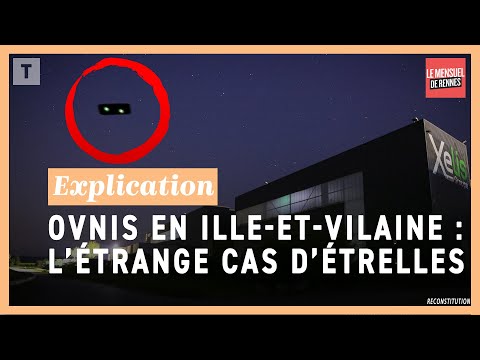
- Le Télégramme, "Ovnis inexpliqués près de Rennes : reconstitution filmée du cas d'Étrelles" — filmed reenactment and explainer video
- BOAM (Base des Observateurs Amateurs de Météores), French amateur meteor-camera detection network — network overview and methodology
- Wikipedia (English), "Étrelles" — population, coordinates, and administrative data
- Wikipédia (français), "Étrelles" — village history, etymology, the 1589 massacre, and church reconstruction
- INSEE, Dossier complet — Commune d'Étrelles (35109) — official French national statistics for the commune
- Wikimedia Commons, File: Étrelles (35) Église 03.jpg, photo by GO69 (2011), CC0 1.0 — licensing and attribution
- Wikimedia Commons, Category: Étrelles (Ille-et-Vilaine) — image archive for the commune
- This site, case-files/palau-del-vidre-black-triangle.html — comparative GEIPAN case, the closest structural match on witness interdependence
- This site, case-files/villers-les-luxeuil-triangle.html — comparative GEIPAN case, a more genuinely independent two-witness sighting
- This site, case-files/rixheim-course-changing-light.html — comparative GEIPAN case, a similarly brief high-speed dynamic sighting phase
- This site, key-figures.html, entry on Claude Poher — GEPAN founding and early institutional history
- This site, locations/index.html, entry on Toulouse — CNES/GEPAN/SEPRA/GEIPAN institutional headquarters
See something inaccurate? Have additional information or sources?
Suggest an Edit →Last Updated: August 2026