
Greifswald Lights
On the evening of August 24, 1990 — five weeks before the formal reunification of Germany and barely a week before the Unification Treaty itself was signed — hundreds of tourists and residents across the Greifswald, Rostock, Isle of Rügen, Isle of Usedom and Neubrandenburg area of the collapsing East German state watched, photographed, and filmed two formations of luminous spheres — a ring of seven and a rotating "Y" of up to seven more — hovering almost motionless in the sky above the Greifswalder Bodden, near the still-operating Greifswald Nuclear Power Plant, for between thirty and sixty minutes. Cameraman Valery Vinogradov and at least five other named witnesses captured the phenomenon on six videos and more than twenty-five photographs, later subjected to computer contrast enhancement, brightness photometry, and geometric triangulation by physicist Illobrand von Ludwiger's MUFON-CES investigative team. Despite three decades of competing skeptical inquiries proposing Warsaw Pact military flare exercises as the source, no investigator — believer or skeptic — has ever produced a confirmed unit, exercise log, or launch order tying any specific ordnance to the sighting, and the case remains one of the most thoroughly documented, and most stubbornly unresolved, sightings of the late Cold War.
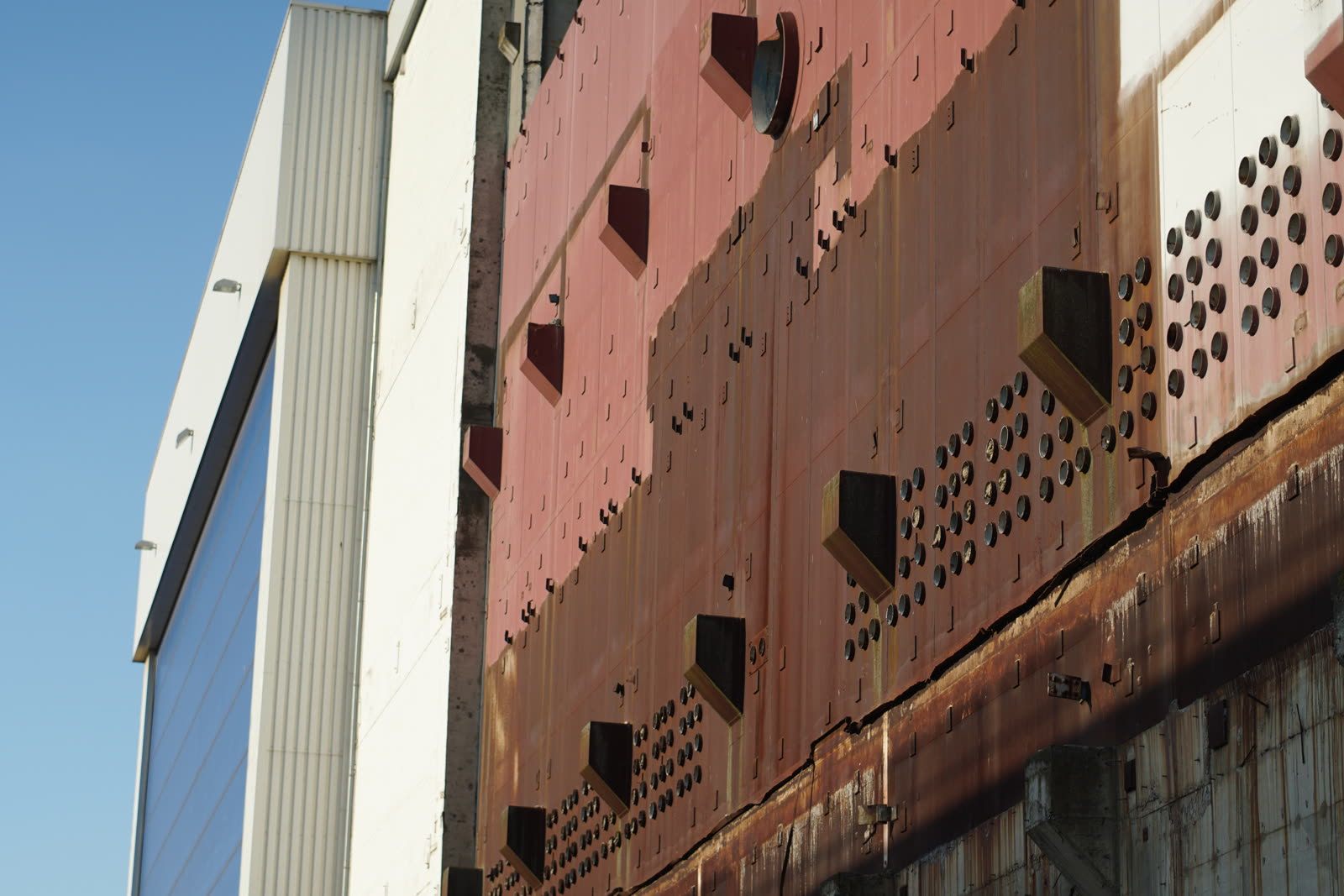
Pictured: the decommissioned Greifswald Nuclear Power Plant (Kernkraftwerk Nord) at Lubmin on the Greifswalder Bodden, photographed in 2021 — not a photograph of the lights themselves, which were captured only on the witnesses' own period video and 35mm stills. Witness Mr. Luchterhand was driving roughly 6 km south of this plant when he first spotted the formations, and it was still in commercial operation on the night of the sighting. The original MUFON-CES photographs and video frames remain under MUFON-CES's own copyright and are not available for free redistribution; this file links out to Google Images and to the MUFON-CES report itself (see Sources) for readers who want to see them directly.
Theoretical Alignment
Assessment: The Extraterrestrial Hypothesis is scored low here because nothing in the record requires it: the objects were lights of unknown origin, not a structured craft with occupants, and every proposed explanation on record is terrestrial. The Terrestrial Ordnance Hypothesis — that the formations were Warsaw Pact signal or illumination flares fired during a military exercise in the Baltic "Luftschießzone II" gunnery range — carries the most institutional and circumstantial support of any explanation offered, from two independent skeptical investigations two decades apart, but has never been confirmed by a single archival document, unit log, or launch order from any of the several militaries that operated in the area in August 1990. That gap, combined with specific technical objections — documented burn-times for known Warsaw Pact and NVA illuminating ordnance running 3 to a maximum of roughly 22 minutes against witness-reported hover durations of 30 to 60 minutes, and multiple independent reports of sub-objects decelerating from apparent supersonic speed to a dead stop — keeps a genuine "Unidentified/Undetermined" residue in the case that neither MUFON-CES nor its skeptical critics have closed.
Background
By August 1990, the German Democratic Republic existed in name only. Its first and only freely elected Volkskammer had voted on April 12, 1990 to pursue rapid unification with West Germany under Article 23 of the West German Basic Law, and by the summer the practical machinery of East German statehood — its currency, its economy, and increasingly its military command structure — was already being absorbed into the Federal Republic's. The formal Unification Treaty (Einigungsvertrag) would not be signed until August 31, 1990, exactly one week after this sighting, and Unification Day itself fell on October 3, 1990, roughly five and a half weeks later. The National People's Army (Nationale Volksarmee, NVA), still nominally East Germany's military, was in the process of being wound down and absorbed into the Bundeswehr, while the Soviet Union's Western Group of Forces remained stationed across the country pending a phased withdrawal that would not complete until 1994. This is the specific, narrow window — a state dissolving in real time, its army disintegrating administratively while still operationally present, Soviet forces still garrisoned, and Warsaw Pact command-and-control arrangements simultaneously unraveling — in which the Greifswald sighting occurred, and it is directly relevant to why, three decades on, no single government archive holds a confirmed record of what any military unit was doing in the area that night.
The immediate geography compounds the case's historical significance. Greifswald, a Hanseatic university city on the Baltic coast of what is now Mecklenburg-Vorpommern, sat a few kilometers from the Greifswald Nuclear Power Plant (Kernkraftwerk Nord), East Germany's largest nuclear facility, home to four commercially operating VVER-440 reactors and a fifth in trial operation on the night of the sighting. The plant's safety problems had already become a matter of public record seven months earlier, when Der Spiegel's February 1, 1990 investigation "Zeitbombe Greifswald" ("Time Bomb Greifswald") first exposed serious deficiencies to a national audience; within weeks of German reunification that October, Chancellor Helmut Kohl would publicly declare the plant met none of West Germany's nuclear safety standards, and all of its reactors would be shut down in stages through the following year. A few kilometers further along the coast lay Peenemünde, the former Third Reich rocket-development site where Wernher von Braun's team had built the V-2, repurposed by 1990 into a Soviet military garrison. And the waters immediately offshore, the Greifswalder Bodden and the open Baltic beyond it, sat inside the Warsaw Pact's own "Luftschießzone II" gunnery and exercise range, regularly used by East German, Soviet, and allied Warsaw Pact naval and air forces for live-fire training. A region with a major nuclear facility, a former strategic rocket site turned active military garrison, and a live Warsaw Pact firing range, observed at the single most administratively chaotic moment in that region's modern military history, is exactly the kind of setting in which genuine but undocumented military activity is plausible — and exactly the kind of setting in which record-keeping failures during a state's collapse make confirming or ruling out that activity three decades later extraordinarily difficult.
Complete Timeline
| Date | Event |
|---|---|
| Early August 1990 | Scattered earlier sightings of similar luminous-sphere groups are reported along the Baltic coast between Rostock, Greifswald, and the Isles of Rügen and Usedom, establishing that some version of the phenomenon predates the well-documented August 24 event. |
| Aug. 24, 1990, ~8:15–8:30 PM | The sighting begins. Two formations of luminous spheres become visible over the Greifswalder Bodden: a brighter, closer "circle" group of six spheres at roughly 13° elevation as seen from Greifswald, and a fainter "Y"-shaped group at roughly 20° elevation, both nearly motionless. Dr. Ludmilla Ivanova and her husband Nicolai Ivanov begin filming from their third-floor Greifswald balcony. |
| Aug. 24, 1990, ~8:30 PM | Valery Vinogradov, alerted by noisy children in the street below his Greifswald apartment, photographs the circle group at the moment two objects join three already-present lights; the group is later described as forming a ring of seven spheres before fading from view within a few minutes. |
| Aug. 24, 1990, ~8:40 PM | Rainer Ladwig, walking the beach at Trassenheide on the Isle of Usedom with his family, spots both formations and photographs them with a Yashica camera, capturing both automatic-exposure images and one crucial underexposed manual shot, plus a separate photo showing the lights' reflection in the water. |
| Aug. 24, 1990, ~8:45 PM | Mr. Luchterhand, driving roughly 6 km south of the Greifswald Nuclear Power Plant, stops and films both formations with his father-in-law's Canon video camera from about 25 km away; his video captures the ring-formation slowly rotating clockwise and fading from view, along with his own recorded exclamation of disbelief. |
| Aug. 24, 1990, ~8:47 PM | The sudden flash. Several witnesses, and the Ivanova and Luchterhand videos independently, record a brief, intense flash of light roughly 100 m from the Y-formation at approximately the same altitude, resembling a surface-to-air missile detonation but with no explosive sound reported by any witness. |
| Aug. 24, 1990, ~8:47–9:00 PM | Forty schoolboys and teachers on a field trip at Mukran, Isle of Rügen, roughly 30 km away, observe individual objects moving independently within the Y-formation and smaller lights shuttling between the two groups; a similar exchange is separately described by witness Minack (also rendered "Mirack" in the source record) from the same location as resembling "a ping-pong game." |
| Aug. 24, 1990, ~9:00 PM | The objects fade away one after another, in a manner witnesses compared to burning-out illuminating ammunition. |
| Aug. 24, 1990, shortly after 9:00 PM | The reappearance. The Y-formation suddenly reappears to the north-east of its original position, seemingly brighter and larger to witnesses on Rügen, and is independently noted by observers roughly 100 km away in Neubrandenburg before disappearing again after one to two minutes. No video exists of this second appearance. |
| Aug. 31, 1990 | The West German tabloid Bild publishes the first detailed press account, quoting tourist Gerald Schwab ("They stood there for three minutes before they accelerated rapidly forward") and reporting that NVA radar registered no signal during the sighting. |
| 1990s (undated) | Illobrand von Ludwiger's MUFON-CES team begins its formal investigation, ultimately collecting six videos and more than eleven photographs and personally interviewing more than a dozen witnesses. |
| May 23, 1993 | A closely similar "Greifswald-type" formation is filmed from the Isle of Usedom, visible for 60–90 minutes. |
| June 22, 1993 | Mr. J. Ksrodski films 10–12 similar objects for about five minutes over Mrzezyno near Kolberg, Poland — within the same general Baltic exercise theater proposed by later flare hypotheses. |
| 1994 | Werner Walter and CENAP publish an investigation identifying the objects as Warsaw Pact signal/illumination flares ("Tannenbäume") fired from naval vessels in the Baltic "Luftschießzone II," citing testimony from Dr. Lueder-Stock and former NVA Air Force press spokesman Franz-Lorenz Lill. |
| Oct. 24, 1994 | West German broadcaster ARD airs the documentary "UFOs — They Do Exist," based on von Ludwiger's book Der Stand der UFO-Forschung and featuring the Greifswald case; the broadcast prompts additional witnesses to come forward. |
| Late Oct.–Nov. 1994 | Mr. and Mrs. Groeschel submit a 15-minute video shot from Uckeritz, Isle of Usedom, showing the Y-formation drifting with the wind toward Peenemünde — detailed enough to rule out luminous ammunition on technical grounds (no parachutes visible; burn duration exceeds known ordnance limits). |
| Nov. 8, 1994 | The Swedish Ministry of Defence sends a letter, later cited by CENAP, reporting that it had separately tracked Russian air-force missile exercises east of Rügen around the relevant period. |
| Nov. 14, 1994 | Germany's Federal Office for Military Technology and Procurement (Bundesamt für Wehrtechnik und Beschaffung) responds to CENAP's inquiry confirming that "corresponding tests" had occurred in the region, without further specifics. |
| Feb. 1995 | MUFON-CES receives a sixth video, filmed from Zinnowitz by a Mr. Stoffers, showing luminous cloud-like haze around the light spheres resembling pyrotechnic smoke. |
| May 1995 | Former Soviet submarine commander Dr. Aschascha tells von Ludwiger that the Russian Navy did not possess illuminating ordnance capable of burning longer than 10 minutes, and that igniting fourteen such expensive devices simultaneously would have been operationally implausible. |
| Aug. 13, 1994 | Mr. and Mrs. Bode independently observe a near-identical seven-light formation while vacationing at Pissuri near Limassol, Cyprus. |
| End of June 1994 | MUFON-CES separately receives fourteen photographs of a comparable light group taken at Sassnitz on Rügen. |
| May 2000 | Von Ludwiger publishes MUFON-CES's full formal English-language investigative report, "The Greifswald Lights," as a model Class-B case study. |
| Aug. 24, 1999 | A visually near-identical stationary light group is filmed for 41 minutes over Beinwil-Hirzel-Richterswil, Switzerland — the first documented occurrence of the phenomenon over land, on the ninth anniversary of the original Greifswald sighting. |
| Nov. 2012 | Researcher Dennis Kirstein publishes a competing solution attributing the lights to Czechoslovak Air Force SAB illumination bombs deployed over the Baltic firing zone, reigniting public debate; military historian Marius Kettmann of DEGUFO publicly disputes the theory's duration and evidentiary basis within weeks. |
The Main Event: Two Formations Over the Bodden
Ivanova's Balcony and the Y-Formation
Ludmilla Ivanova, a medical doctor, and her husband Nicolai Ivanov, a project engineer, were the first witnesses to begin systematically filming the phenomenon, doing so from their own third-floor balcony in Greifswald with an Orion video camera loaded with Fuji Super HG film. The group they focused on, higher in the sky and further away than the circle group below it, was initially indistinct. As the circle group faded from view, the second formation resolved into sharper focus: at first only four objects were visible, arranged in a cross, before two more "came shooting toward it," and a little while later a seventh object appeared between the upper lights — the sequence that gave the group its lasting name, the "Y-formation." Ivanova filmed for roughly four continuous minutes, though the formation itself remained visible to the naked eye for a further fifteen minutes beyond that. Across her footage the objects appeared to rotate slowly about their own individual axes, a detail later corroborated independently by several other witnesses at different vantage points.
The Vinogradovs and the Ring of Seven
One floor below the Ivanovs, in the same Greifswald apartment building, Valery Vinogradov's wife was alerted by unusually noisy children in the street outside. Looking through her window, she found roughly fifty people already gathered, looking skyward, and called for her husband. Vinogradov, a professional translator, took a photograph at the precise moment two additional objects joined a group of three lights already present in the sky, using a Zenith-E camera with an Industar 50mm lens. This group subsequently formed what witnesses described as a ring of seven luminous spheres, remaining clearly visible for only a few minutes before disappearing — the "circle" formation referenced throughout the MUFON-CES report, and the formation closest to and brightest for the Greifswald-based witnesses, appearing at roughly 13° of elevation versus the Y-group's 20°.
Trassenheide: Rainer Ladwig's Photographs
On the Isle of Usedom, at Trassenheide, Rainer Ladwig was walking the beach with his family around 8:40 PM when he spotted both formations and ran to retrieve his Yashica camera with its 300x optical zoom. His automatic-exposure photographs, shot at a fixed one-second exposure, came out blurred, but Ladwig also took one photograph with the automatic feature disabled. That single underexposed frame turned out to be the single most useful image in the entire investigation: while too dim to view comfortably by eye, its structured contrast made it the best available source for MUFON-CES's later computer-assisted photometric analysis, ultimately yielding the case's 12 ± 2 meter sphere-diameter estimate. Separately, Ladwig captured a photograph showing the lights' reflection on the water below — evidence MUFON-CES treated as ruling out a mirage or atmospheric-refraction origin, since a true mirage would not produce a genuine surface reflection. Witnesses at Trassenheide additionally reported the Y-formation appeared as bright as the full moon, and that it remained clearly visible even from Neubrandenburg, roughly 100 km away — a detail von Ludwiger's team used to rule out a hot-air-balloon explanation, since a balloon-borne light source of that brightness would not typically remain resolvable at such range.
Luchterhand Near the Reactor
Mr. Luchterhand, a Berlin resident on a family drive roughly 6 km south of the Greifswald Nuclear Power Plant, stopped his car when he spotted the lights and filmed both formations using his father-in-law's Canon video camera with 8x zoom, from a distance of roughly 25 km from the Y-formation. His footage, among the most technically useful in the case, captured the ring-formation rotating slowly clockwise before fading away around 8:45 PM, and preserved an audio track on which Luchterhand can be heard exclaiming, unprompted: "I don't believe in UFOs and such nonsense, but I have never seen anything like this in my whole life." That specific, self-undermining remark — from a witness explicitly disclaiming any prior UFO belief, recorded in the moment rather than reconstructed afterward — is treated by this file as a genuinely useful piece of corroborating context for the sighting's subjective intensity, whatever its ultimate cause.
The Sudden Flash at 8:47 PM
Independently, several witnesses reported a brief, intense flash of light approximately 100 meters from the Y-group, at roughly the same altitude, around 8:47 PM. This flash is visible on both the Ivanova and Luchterhand videos, and MUFON-CES's photometric analysis found its diameter on film to be roughly four times that of the brightest individual sphere in the formation, diminishing to nothing within one-eighth of a second. Von Ludwiger's report explicitly notes the flash's visual resemblance to a surface-to-air missile detonation — but also notes that no witness, including those close enough to have heard an explosion had one occurred, reported any accompanying sound. This detail cuts in two directions at once: it is consistent with some kind of ordnance detonating in the area (supporting a military-exercise explanation), while its total silence is difficult to reconcile with an actual missile warhead or anti-aircraft round, which would be expected to produce an audible report even at a distance of several kilometers on a calm evening.
The Fade and the Unexplained Reappearance
Around 9:00 PM, the objects in both formations faded away one after another, in a manner several witnesses independently compared to burning-out illuminating ammunition — among the strongest single visual details supporting a pyrotechnic origin. What complicates that reading is what followed: after a gap of a few minutes, the Y-formation suddenly reappeared, displaced to the north-east of its original position, appearing seemingly brighter and larger to witnesses on Rügen, and was separately noted by observers in Neubrandenburg, roughly 100 km distant, before vanishing again after one to two minutes. No video recording exists of this second appearance, which rests entirely on eyewitness testimony from multiple, geographically separated observers who had no means of coordinating their accounts in advance. A conventional flare or illumination round, once extinguished, does not reappear; a second, independently launched round arriving at almost the same shape and position at almost the same moment is not impossible, but stretches the single-exercise flare explanation considerably further than the initial fade-out does.
Later Witnesses and the 1994 Expansion of the File
The case's evidentiary record did not close in 1990. Following the October 24, 1994 broadcast of the ARD documentary "UFOs — They Do Exist," based on von Ludwiger's own book Der Stand der UFO-Forschung and featuring the Greifswald case prominently, additional witnesses came forward with previously unsubmitted material. Mr. and Mrs. Groeschel, who had watched the phenomenon from the village of Uckeritz on the Isle of Usedom, provided a fifteen-minute video — by far the longest continuous recording in the case — that proved unusually useful precisely because of its camera's light sensitivity, which rendered the surrounding cloud background bright and detailed enough to reveal fine structure. That clarity let MUFON-CES rule out two specific mundane explanations with some confidence: the video shows no parachute of any kind attached to any of the light sources, and its extended, continuous coverage confirmed a burn duration well beyond the three-to-ten-minute maximum documented for known Warsaw Pact luminous ammunition of the period. The same video also showed the Y-formation drifting with a measured 15 km/h wind directly toward Peenemünde, the former V-2 site and then-active Soviet garrison — a detail some proponents of the case cite as evidence of deliberate flight control, but which this file notes is equally consistent with a wind-borne parachute flare simply drifting downwind, exactly as a parachute-suspended illumination round would be expected to behave.
A commercial pilot, identified in the surviving MUFON-CES record only as "Gerald D.," separately submitted five photographs taken north of Greifswald. His account is among the case's most specific: he described watching smaller objects approach the Y-formation at what he personally estimated, drawing on his professional experience judging relative aircraft speed, as supersonic velocity, before coming to what he called "a dead stop" precisely upon reaching the formation. His own written conclusion was unambiguous: "Because of their specific flight movements one must conclude that these objects flew under intelligent control." In February 1995, a sixth video arrived from a Mr. Stoffers, filmed from Zinnowitz on the Baltic coast (the MUFON-CES report's own English translation locates Zinnowitz on the "Isle of Ruegen," though the town is geographically situated on the Isle of Usedom — an apparent error in the original document that this file notes rather than silently corrects). Stoffers's footage, filmed from only about 10 km away, showed luminous, cloud-like haze visible between the individual light spheres, resembling pyrotechnic smoke — one of the case's stronger pieces of circumstantial support for a combustion-based, rather than purely electromagnetic or exotic, light source.
Measuring the Unmeasurable: MUFON-CES's Photometric and Triangulation Analysis
What distinguishes Greifswald from the great majority of nocturnal-light cases on this site is that its raw photographic and video material was subjected to genuine, documented quantitative analysis rather than being treated purely as illustrative evidence. Using two independent lines of sight — one from Greifswald itself, another from Posetitz on the Isle of Rügen — von Ludwiger's team triangulated the Y-formation's position at approximately 30 km from Greifswald. Working from the smallest resolvable light-spot on Rainer Ladwig's deliberately underexposed Trassenheide photograph, and estimating that spot's extent at roughly one-twentieth of the full formation's apparent size, the team calculated an individual sphere diameter of 12 ± 2 meters. Two independent methods were used to estimate the light output of the objects. The first compared the Y-group's apparent brightness — described by Ladwig as equal to the full moon at a distance of 14 km — against the known lux value of moonlight, using the inverse-square law to derive an estimated radiated power of roughly 4.43 megawatts. The second method used a photograph in which Valery Vinogradov had inadvertently captured ordinary 75-watt household light bulbs burning in nearby apartment windows at a known distance, comparing their brightness directly against one of the luminous spheres in the same frame; this method yielded an estimated 0.24 megawatts — a full order of magnitude apart from the first estimate, but, as von Ludwiger's report itself acknowledges, "the same order of magnitude" once the very different assumptions and error margins of each method are accounted for. Both figures were compared against a standard photographic reference — a 650-watt bulb producing roughly 20,000 lumens — and found the Greifswald objects to have radiated on the order of twenty-five times more light. Separately, computer-assisted contrast enhancement of the individual light-spots across several photographs revealed consistent rings of even brightness with darker edges, which von Ludwiger's team interpreted as confirming the objects were genuinely spherical rather than point sources or lens artifacts. This is a materially higher standard of technical analysis than most nocturnal-light cases receive, and it is one of the central reasons this file rates Greifswald's evidentiary record above the site average for filmed light-formation cases — even though, as discussed in Conventional Explanation Candidates below, quantitative analysis of an image says nothing definitive about what kind of object produced the light in the first place.
The Search for a Responsible Party
From the earliest press coverage onward, investigators on both the believer and skeptical sides pursued the same basic question: which military, if any, was operating in the Greifswalder Bodden that night. The results were consistently inconclusive. Bild's August 31, 1990 report stated that the NVA's own radar had registered no signal during the sighting window. The former Chief Commander of the NVA Air Force, Lieutenant General Berger, told investigators he had no knowledge of the incident, though he did confirm two specific technical facts that would become central to the later skeptical debate: that known illuminating ammunition burned for far less than twenty minutes, and that, to his knowledge, neither Soviet nor East German forces possessed ordnance capable of burning longer than that. A former NVA colonel responsible for weapons-system installations, identified only as "Mr. Mann," separately told von Ludwiger he had heard the phenomenon had been "captured" by some unspecified instrument — a claim that has never been corroborated by any named document or unit and remains, at best, uncheckable hearsay. Dr. Lueder-Stock, a Rostock pediatrician who had been aboard a small boat in the Baltic that evening, initially told investigators he believed the lights had been fired from naval vessels — testimony that skeptics seized on as effectively settling the case. Under direct follow-up questioning from von Ludwiger, however, Lueder-Stock acknowledged he had never actually seen any ships that night, owing to the darkness, and that his belief the lights came from a vessel was an inference rather than a direct observation. A separate written statement from employees of Silbermuhle, a manufacturer organized skeptics believed had supplied long-burning illuminating ammunition to the NVA (and which by the 1990s had been absorbed into the firm NICO, near Hamburg), stated that the company's ordnance burn times were limited to roughly ten minutes at the relevant period. In May 1995, a former Soviet submarine commander, Dr. Aschascha, told von Ludwiger in a direct conversation that the Russian Navy did not, to his knowledge, possess illuminating ordnance capable of burning longer than ten minutes, and that simultaneously igniting the roughly fourteen such expensive devices the sighting would have required was operationally implausible. Thirty-five years on, no government — East German, Soviet/Russian, Polish, Czechoslovak/Czech, or West German/reunified German — has ever released a confirmed unit designation, exercise order, or after-action report identifying who, if anyone, was firing ordnance over the Greifswalder Bodden on the night of August 24, 1990.
The Skeptical Investigations
Werner Walter and CENAP, 1994
Werner Walter, who had led the skeptical research group CENAP (Centrales Erforschungsnetz außergewöhnlicher Himmelsphänomene) since 1976, opened his own investigation into the case and, in 1994, proposed that the objects were military signal or illumination flares — known in period military jargon as "Tannenbäume" ("Christmas trees") — launched by rocket from Warsaw Pact naval vessels operating in the Baltic "Luftschießzone II" gunnery zone, descending slowly on parachutes and appearing to hover as they drifted over the relatively warm Baltic water. Walter's account drew directly on Dr. Lueder-Stock's initial impression of naval-vessel involvement and on testimony from Franz-Lorenz Lill, a former East German Air Force press spokesman, who confirmed general details of the exercise zone's use. Different secondary accounts of Walter's own published conclusion attribute the specific flares to slightly different forces — one 1999 Skeptiker retrospective describes Polish naval units firing the flares, while a separate CENAP-hosted account describes them more generally as a Warsaw Pact naval/air exercise without pinning the nationality down — a discrepancy this file notes honestly rather than smoothing over, since it reflects genuine imprecision even within the skeptical camp about exactly whose ordnance was allegedly involved. Walter's explanation received its widest public exposure via the tabloid Bild on October 29, 1994, and gained two pieces of what its proponents present as corroborating institutional support: a November 8, 1994 letter from the Swedish Ministry of Defence, cited by CENAP, reporting that Swedish military intelligence had separately tracked Russian air-force missile exercises east of Rügen around the relevant period, and a November 14, 1994 response from Germany's own Federal Office for Military Technology and Procurement (Bundesamt für Wehrtechnik und Beschaffung) confirming only, in general terms, that "corresponding tests" had taken place in the region — without naming a unit, an exercise, or a specific date matching August 24. Separately, several witnesses who came forward after the 1994 broadcast said they personally recognized the phenomenon from prior experience: Greifswald sailor Steffen Pichollek identified the lights as "illumination targets from Peenemünde being fired upon"; a Berlin resident named only as Frau Peitersen described recognizing "army flares" with visible explosions passing through the formation; and ferry captain Erwin Kollath said he recognized the lights from prior experience as "flares on parachutes, Swedish or Polish units."
Dennis Kirstein and the Czechoslovak Air Force Hypothesis, 2012
Eighteen years later, in November 2012, independent researcher Dennis Kirstein, writing for the German UFO-skeptical site ufo-information.de, published a substantially different technical explanation, arguing the objects were SAB-type illumination bombs (Svetyashchaya Avia Bomba) — each device releasing seven pyrotechnic flares on individual parachutes, dropped from roughly 10 km altitude — deployed not by East German or Soviet naval forces but specifically by the Czechoslovak Air Force, a fellow Warsaw Pact member also authorized to use the Baltic "Luftschießzone II" range for its own exercises. Kirstein explicitly credited the case's genuine gap in supporting documentation, noting that prior East German- or Soviet-attributed skeptical theories "lacked supporting evidence," and attempted to close that gap himself by directly contacting the embassies, military archives, and defense ministries of several former Warsaw Pact states. That effort largely failed: correspondence with the relevant institutions produced little useful confirmation, which Kirstein attributed to the likelihood that unit-level exercise records from the final chaotic months of Warsaw Pact cohesion had simply been lost or destroyed during the alliance's dissolution the following year. He nonetheless published his findings under the headline "Indizienbeweise bringen Deutschlands größtes Ufo-Mysterium zu Fall" ("Circumstantial evidence brings down Germany's greatest UFO mystery") — a title this file treats as considerably more confident than Kirstein's own underlying documentation, by his own account, actually supports.
Von Ludwiger's and Kettmann's Rebuttals
Both flare hypotheses have been directly and specifically challenged, and not only by UAP proponents. Von Ludwiger himself argued in television appearances responding to the 1994 CENAP explanation that known illuminating ordnance "never burn 45 minutes" — a duration objection Walter's own defenders characterized as misreading a case in which the formation's overall visibility (across two fades, a reappearance, and multiple separately-timed formations) spanned that long in aggregate, rather than any single flare burning continuously for 45 minutes. More significant is the response Kirstein's 2012 Czechoslovak Air Force theory received from within German ufology's own more rigorously skeptical wing: military historian Marius Kettmann, an official of DEGUFO (Deutsche Gesellschaft für UFO-Forschung), publicly disputed Kirstein's conclusion within weeks on strictly technical and evidentiary grounds rather than any belief in an anomalous cause. Kettmann noted that documented SAB flare burn times, at roughly 22 minutes, remained well short of the 30-to-60-minute (and in the 1993 Usedom recurrence, 60-to-90-minute) hover durations multiple independent witness groups reported; that none of the witnesses interviewed across either 1990 or 1994 — several of them, like Dr. Lueder-Stock, personally experienced with the sound of regional military exercises — reported hearing aircraft engine noise or seeing any aircraft, which a high-altitude bombing run of the kind Kirstein proposed would ordinarily produce; and that Kirstein's own correspondence with former Warsaw Pact archives had failed to confirm which unit, if any, had actually conducted the exercise. Kettmann's own position was explicitly not that the sighting was anomalous, but that Kirstein's specific solution remained "premature" and rested on circumstantial inference rather than verified fact — the same standard, notably, that this file applies throughout. That a credentialed skeptical military historian, working from a position of general disbelief in the extraterrestrial hypothesis, found the leading conventional explanation's own evidentiary basis insufficient is treated here as a genuinely significant data point, distinct from and more consequential than a UAP proponent's objection to the same theory.
Key Witnesses
Valery Vinogradov
A professional translator living in Greifswald whose wife first noticed the commotion outside their apartment building. Vinogradov photographed the ring-formation with a Zenith-E camera at the precise moment two objects joined a group of three already-present lights, and separately captured a photograph showing nearby apartment-window lighting later used by MUFON-CES for brightness-comparison photometry. His account — describing "glowing balls which hung in a strange formation in the sky" that "all appeared to rotate and hover, but in a stable and controlled type of fashion" — is among the most frequently quoted in later popular coverage of the case, and he has stated publicly that hundreds of witnesses saw the same event and that many photographs were taken that night.
Dr. Ludmilla Ivanova & Nicolai Ivanov
A medical doctor and her husband, a project engineer, who filmed the Y-formation for roughly four continuous minutes from their own third-floor Greifswald balcony using an Orion video camera. Their footage — capturing the group's four-then-seven-object evolution and the 8:47 PM flash — forms one of the two most technically important videos in MUFON-CES's photometric analysis, alongside Mr. Luchterhand's.
Rainer Ladwig
Ladwig photographed both formations from the beach at Trassenheide with a Yashica 300x-zoom camera. His deliberately underexposed manual-exposure photograph became the single most useful image for MUFON-CES's computer contrast-enhancement work, yielding the case's core 12 ± 2 meter sphere-size estimate, while a separate photograph of the lights' reflection in the water was used to rule out a mirage explanation.
Illobrand von Ludwiger
Von Ludwiger (1937–2023), a physics graduate of the University of Erlangen and longtime aerospace systems analyst, founded MUFON's Central European Section in 1974 and led the formal investigation into the Greifswald case, ultimately collecting six videos and more than twenty-five photographs and personally interviewing more than a dozen witnesses. His May 2000 report, "The Greifswald Lights," remains the case's single most complete primary source, combining witness testimony with genuine quantitative photometric and triangulation analysis of the surviving photographic material.
Werner Walter
Walter's 1994 investigation proposed that the lights were Warsaw Pact naval signal/illumination flares fired in the Baltic "Luftschießzone II" exercise zone, drawing on testimony from a former NVA officer and a former East German Air Force press spokesman, and citing limited institutional correspondence from the Swedish Ministry of Defence and Germany's own Federal Office for Military Technology and Procurement. His explanation remains the most widely repeated conventional account of the case in German media, though it has never been confirmed by a named unit or exercise record.
Dennis Kirstein & Marius Kettmann
Kirstein's November 2012 investigation proposed a distinct, competing explanation — Czechoslovak Air Force SAB parachute-flare illumination bombs — based on technical ordnance research, though his own attempts to confirm it through former Warsaw Pact military archives were largely unsuccessful. Kettmann, a DEGUFO military historian, publicly challenged Kirstein's conclusion within weeks on evidentiary grounds — not out of belief in an anomalous explanation, but because he judged the specific duration and corroboration data did not yet support it, a skeptic-on-skeptic critique this file treats as significant precisely because it did not originate from a UAP proponent.
The Five Observables Assessment
The Five Observables framework, developed to classify UAP encounters by performance characteristics that exceed known technology, is applied here to the flight behavior described by the Greifswald witnesses:
Assessment: Multiple independent witnesses, including a commercial pilot professionally trained to judge closure rate, described sub-objects decelerating from what they estimated as supersonic velocity to a complete stop upon reaching the main formation — the single most genuinely anomalous observable in the case, and one this file classifies as speculative rather than present only because it rests entirely on unaided, non-instrumented visual estimation. The extended near-motionless hover of both formations, lasting well beyond the documented burn time of any known regional illuminating ordnance, is likewise speculative evidence of anti-gravity-style lift rather than confirmation of it, since a slowly descending parachute flare drifting on a light wind can produce a visually similar, if not identical, impression of stationary hovering over a period of several minutes. Low observability is unambiguously absent: the phenomenon was bright enough to be seen from towns up to 100 km apart simultaneously, the opposite of a stealth signature. No transition between air, water, or space was reported by any witness, so trans-medium travel is likewise absent. Unlike a strong ETH case, no witness described a solid craft, an occupant, or any object outside the two illuminated-sphere formations themselves — a detail this file weighs heavily in scoring the Extraterrestrial Hypothesis's own alignment low in the Theoretical Alignment section above, even as it declines to fully endorse either flare theory in its place.
Evidence Assessment
Supporting Anomalous Origin
- Several hundred independent witnesses across five separate towns and islands, several dozen kilometers apart, reported a consistent event on the same evening
- A commercial pilot with professional speed-judgment training specifically described sub-object deceleration behavior with no known conventional analogue
- Documented illuminating-ordnance burn times (3–22 minutes) fall well short of the reported 30–60 minute hover durations, per multiple independent military sources on both the East German and Soviet sides
- The Y-formation's unexplained reappearance, minutes after fading away and displaced from its original position, has no clean conventional analogue
- A credentialed physicist's photometric and triangulation analysis, rather than testimony alone, anchors the case's central size and brightness estimates
- Two separate skeptical investigations, twenty years apart, proposed mutually inconsistent military explanations, and neither has ever been confirmed by a named unit or archival document
Supporting Conventional Explanation
- The sighting occurred directly inside an active Warsaw Pact naval/air gunnery exercise zone, at a time of genuine, if undocumented, regional military activity
- Multiple witnesses independently compared the objects' fade-out to burning-out illuminating ammunition
- The Groeschel video shows the Y-formation drifting downwind, consistent with a parachute-suspended flare rather than a powered craft
- A brief flash resembling ordnance detonation was recorded near the formation at 8:47 PM
- Multiple witnesses who came forward after 1994 said they personally recognized the lights as military flares from prior direct experience with regional exercises
- The sighting's timing, during the total administrative collapse of East German and Warsaw Pact command structures, is a well-documented, independently verifiable reason why a genuine military record might never surface
Why "Disputed"
The Greifswald Lights are classified DISPUTED, with a score reflecting genuine evidentiary strength weighed against a real, if unconfirmed, competing conventional explanation. On the evidence side, this case stands well above most nocturnal-light sightings on this site: several hundred witnesses across five separate locations, eight or more individually named and occupationally varied observers, six independent video recordings and more than twenty-five photographs with cross-corroborating timecodes, and a genuine program of quantitative photometric and triangulation analysis performed by a credentialed physicist rather than testimony alone. That is a materially stronger evidentiary package than cases like Thomas Mantell or the Voronezh Landing, neither of which produced any photographic or video record at all.
Set against that is an unusually well-developed, if still unconfirmed, conventional explanation. Not one but two independent skeptical investigations, conducted twenty years apart by different researchers working from different evidence, both concluded the case's most likely origin was military pyrotechnic ordnance fired during a Warsaw Pact Baltic exercise — a genuinely more concrete convergence than a single skeptic's own theory would represent. Multiple witnesses who came forward specifically said they recognized the lights from prior direct experience with regional military exercises, and the sighting occurred squarely inside an active gunnery zone at a documented, historically verifiable moment when East German and Warsaw Pact military record-keeping was collapsing in real time — a specific, non-speculative reason why a genuine exercise might never leave a surviving paper trail. What keeps this case from resolving cleanly into either "Credible" or "Debunked" is that the two skeptical theories directly contradict each other on which force was responsible, neither has ever been confirmed by a named unit or launch order despite direct archival inquiries, and both face the same unaddressed technical objection from credentialed military sources on both sides of the Cold War divide: documented illuminating-ordnance burn times of three to at most twenty-two minutes cannot obviously account for hover durations witnesses on both August 24, 1990 and the closely related May 1993 Usedom recurrence placed at thirty minutes to a full ninety. A case with this much genuine documentary evidence, this much institutional skeptical effort invested in explaining it, and this little final resolution to show for either, earns a rating in the middle of this site's scale rather than at either extreme.
Sensor & Instrumentation Detection Profile
No radar system is known to have detected the phenomenon. Per the newspaper Bild (August 31, 1990), the National People's Army's (NVA) own radar screens registered no signal during the sighting window, and the German Weather Service's radar stations in both Greifswald and Rostock reported no unusual returns. The only claim of an instrumented "capture" is second-hand and unconfirmed: a former NVA colonel responsible for weapons-system installations, identified in the MUFON-CES report only as "Mr. Mann," told Illobrand von Ludwiger he had heard the appearance had been "captured," without further detail, corroborating document, or named unit. No air-traffic-control log, military after-action report, or intelligence intercept documenting the event has ever been located or declassified by any government, East or West. The entirety of the case's evidentiary record is instead built from unaided visual observation converted into six independently shot amateur videos (VHS-PAL, Super-8-adjacent consumer formats) and more than twenty-five 35mm photographs, several bearing embedded camera time codes that allowed MUFON-CES to reconstruct a consistent timeline across witnesses who had not spoken to one another. Subsequent laboratory-style work on this raw material — computer-assisted blur reduction, frame averaging, and brightness-contrast enhancement — is the closest the case comes to instrumented analysis, and it was performed after the fact on consumer recording media rather than during the event by any dedicated sensor.
Environmental & Geospatial Context
The sighting unfolded over the Greifswalder Bodden and the adjacent Pommeranian Sea (centered near 14°10′ E, 54°25′ N), the shallow Baltic lagoon separating the East German mainland near Greifswald from the islands of Rügen and Usedom. This is a genuinely unusual patch of geography for a Cold War-era UAP case to occur in: it sat inside the Warsaw Pact's Baltic "Luftschießzone II" (Air Firing Zone II), an active naval and air gunnery range used by East German, Soviet, and other Warsaw Pact forces for live-fire and ordnance exercises, and it lay within a few kilometers of two facilities of real strategic significance — the Greifswald Nuclear Power Plant (Kernkraftwerk Nord) at Lubmin, still in commercial operation that night, and Peenemünde, the former Nazi V-2 rocket development site that by 1990 hosted a Soviet/Russian military garrison. Witness Mr. Luchterhand was driving roughly 6 km south of the nuclear plant when he first spotted the lights, and the Groeschel family's 1994-submitted video shows the Y-formation visibly drifting on a 15 km/h wind directly toward Peenemünde. The German Weather Service in Rostock recorded roughly 5/8 sky cover — high, fleecy, partly shaded cloud plus a lower gray-bluish sheet layer at a minimum altitude of 2,500 meters — a light east-north-easterly wind, and a temperature near 60°F. The sun sat 8° below the horizon, still illuminating the low cloud base from beneath, and the moon was roughly 90° below the horizon and contributed no light. No unusual geomagnetic, solar, or seismic activity for the date is noted in any source reviewed for this file. Geopolitically, the location and date compound each other: the sighting occurred inside the brief, chaotic window between the Volkskammer's March 1990 vote to pursue unification and the October 3, 1990 Unification Day itself — the Unification Treaty (Einigungsvertrag) would not even be signed until August 31, 1990, exactly a week after this sighting — when East German military command structures, Soviet Western Group of Forces oversight, and Warsaw Pact administrative record-keeping in the region were all simultaneously dissolving, a detail directly relevant to why no confirming military document has ever surfaced.
Observer Credibility & Occupational Profile
The Greifswald case's witness pool is unusually broad and occupationally varied for a UAP sighting, spanning several hundred people across five separate towns and islands, of whom at least a dozen were personally interviewed by von Ludwiger's team and eight are individually named in the surviving MUFON-CES record. Ludmilla Ivanova was a practicing medical doctor who filmed from her own third-floor balcony with her husband, project engineer Nicolai Ivanov, standing beside her. Valery Vinogradov, a professional translator, photographed the ring-formation from the floor below in the same building. A commercial airline pilot, identified in the report only as "Gerald D.," submitted five photographs and offered a trained aviator's specific technical judgment that the sub-objects' deceleration behavior implied "intelligent control" — testimony that carries more weight than a layperson's because pilots are professionally trained to judge relative aircraft speed, altitude, and closure rate, and because his account is corroborated independently by several other witnesses describing the same stop-on-a-dime behavior from unrelated vantage points. A former National People's Army officer, Dr. Lueder-Stock, and a former NVA Lieutenant General, Berger, both engaged directly and on the record with the case's military dimension — Berger specifically confirming the technical burn-time limits of the ordnance types under discussion rather than simply denying the sighting occurred. Set against this occupational range are real limitations: no witness held a formal astronomy, meteorology, or optics background; none of the recordings came from an institutional or government camera; and, as discussed below, at least one of the case's own key "solving" witnesses (Dr. Lueder-Stock) later admitted under direct questioning that a central piece of his corroborating testimony was inference rather than direct observation.
Physical & Material Assays
No physical trace evidence — no debris, no ground scorching, no recovered ordnance fragment, no soil or vegetation anomaly — was ever recovered from this case, which is consistent with a purely aerial phenomenon that never approached the ground and was never claimed to have landed. The closest the case comes to a physical assay is the after-the-fact photometric and geometric analysis MUFON-CES performed on the surviving photographic and video material itself, detailed fully in the Material Analysis section below: triangulation from two independent lines of sight (Greifswald and Posetitz, on Rügen) placing the Y-formation roughly 30 km from Greifswald; a size estimate of 12 ± 2 meters per sphere, derived from the smallest resolvable light-spot on Rainer Ladwig's deliberately underexposed photograph; and two independent radiometric estimates of the light output (roughly 0.24 to 4.4 megawatts, depending on method) that both landed in the same order of magnitude and were, per von Ludwiger, comparable to luminosities Jacques Vallée had documented in other unexplained aerial-light cases. Computer contrast enhancement of the individual light-spots showed rings of even brightness with darker edges — consistent, per the report, with true spherical light sources rather than point sources or lens artifacts. None of this constitutes physical material in hand; it is entirely derived, second-order measurement performed on consumer photographic media, and this file treats it accordingly — as a real but inherently limited form of evidence, well short of a recovered or tested physical object.
Historical Precedents & Archive Matches
What sets Greifswald apart from most single-occurrence UAP cases is that MUFON-CES's own archive contains a documented string of visually near-identical "Greifswald-type" sightings across the following decade, which von Ludwiger treated as directly relevant comparative data in his own report rather than as unrelated curiosities. On May 23, 1993, a closely similar formation was filmed from the Isle of Usedom, visible for a striking 60 to 90 minutes — longer than the original 1990 event and harder still to reconcile with any single flare's burn time. One month later, on June 22, 1993, a Mr. J. Ksrodski filmed ten to twelve motionless luminous objects with three smaller lights circling the group for roughly five minutes over Mrzezyno near Kolberg, on the Polish Baltic coast — notably the same general theater in which several of the flare hypotheses place the responsible military unit, and rotating clockwise about a vertical axis exactly as the original Greifswald Y-formation had. At the end of June 1994, MUFON-CES received fourteen further photographs of a "Greifswald-type" light group taken at Sassnitz on Rügen. On August 13, 1994, Mr. and Mrs. Bode independently reported a near-identical seven-light formation while on vacation at Pissuri near Limassol, Cyprus — the only instance of the phenomenon reported outside the Baltic. And on August 24, 1999 — the ninth anniversary of the original sighting, to the day — a similar stationary group was filmed for 41 minutes over Beinwil-Hirzel-Richterswil, Switzerland, the first documented instance of the phenomenon appearing over land rather than water. Within this site's own catalog, Greifswald's closest analogue is the Voronezh Landing, a September 1989 Soviet case occurring less than a year earlier and roughly 1,900 km to the east, sharing the same glasnost-era Eastern Bloc setting, though Voronezh's evidentiary record (child witnesses, no video) is considerably weaker than Greifswald's own extensive photographic and video documentation.
Material Analysis
Greifswald is unusual among this site's nocturnal-light cases in that its central evidentiary asset is not eyewitness testimony alone but a genuine body of photographic and video material that was subsequently subjected to real, documented technical analysis — making this section, unlike on many older or purely testimonial case files, a case where the evidence deserves to be taken seriously on its own analytical merits rather than treated as an afterthought.
Video and photographic corpus. MUFON-CES's investigation ultimately assembled six independent video recordings (from Ivanova/Ivanov, Luchterhand, the Groeschels, and Stoffers, among others) and more than twenty-five still photographs (from Vinogradov, Ladwig, "Gerald D.," and the fourteen Sassnitz photographs received in 1999), captured on ordinary consumer VHS-PAL video cameras and 35mm still cameras rather than any specialized or government equipment. Several of the video sources carried embedded timecodes, which allowed investigators to cross-reference footage from witnesses who had never met or communicated with one another into a single, internally consistent timeline — a genuine methodological strength, since independently-timed footage converging on the same sequence of events is harder to explain via simple rumor contagion or copied testimony than a set of purely verbal accounts would be.
Computer-assisted image analysis. Working from the raw source material, MUFON-CES's team applied blur-reduction and frame-averaging techniques to sharpen otherwise indistinct footage, and contrast-enhancement algorithms to individual light-spots in several photographs. That enhancement revealed each light-spot to consist of a ring of even brightness with a darker interior edge — a pattern the report interprets as consistent with a true three-dimensional spherical light source rather than a simple point source, lens flare, or bokeh artifact from an out-of-focus distant light. This file notes, in fairness to skeptics, that a sufficiently bright out-of-focus point source photographed on period consumer optics can itself sometimes produce ring-like bokeh artifacts, and that MUFON-CES's own report does not claim to have definitively excluded this alternative through independent optical testing — a genuine, if narrow, gap in the analysis as published.
Triangulation and photometry. Using two independent lines of sight, from Greifswald and from Posetitz on Rügen, investigators triangulated the Y-formation's position at roughly 30 km from Greifswald, and derived an individual sphere-diameter estimate of 12 ± 2 meters from the smallest resolvable light-spot on Ladwig's underexposed photograph. Two independent photometric methods — a moonlight-brightness comparison and a household-lightbulb-brightness comparison — produced light-power estimates of 4.43 and 0.24 megawatts respectively; MUFON-CES's own report acknowledges this order-of-magnitude discrepancy candidly rather than presenting a single, spuriously precise figure, which this file treats as a mark of methodological honesty rather than a fatal inconsistency, though the wide spread does mean neither figure should be treated as more than a rough estimate.
Supporting a Genuinely Unresolved Origin
- Six independently shot videos and 25+ photographs, several with embedded timecodes, corroborate a single consistent event across witnesses with no means of coordinating beforehand
- Computer contrast enhancement shows individual light-spots as rings of even brightness consistent with true spherical sources
- A photograph of the lights' reflection in the water at Trassenheide argues against a mirage explanation
- Sub-object deceleration behavior, described independently by multiple witnesses including a professionally trained pilot, has no confirmed conventional analogue
- Documented burn-time limits for regional illuminating ordnance (3–22 minutes, per multiple military sources) fall well short of the reported 30–60 minute hover durations
Supporting a Mundane or Unresolved Origin
- All photographic and video material comes from uncontrolled, consumer-grade amateur equipment, not scientific instrumentation
- No radar, government camera, or other instrumented sensor independently corroborated the sighting
- The objects' fade-out pattern was directly compared by multiple witnesses to burning-out illuminating ammunition
- The Groeschel video shows the Y-formation drifting downwind toward Peenemünde, consistent with a wind-borne parachute flare
- MUFON-CES's own bokeh/lens-artifact alternative for the "ring" light-spot pattern was not independently tested against period optics
- The case sits inside an active Warsaw Pact military exercise zone at a documented moment of record-keeping collapse, making an undocumented but genuine exercise entirely plausible even absent a surviving paper trail
Conventional Explanation Candidates
Every conventional explanation seriously proposed for the Greifswald case is a variant of military ordnance fired during a Baltic exercise, differing chiefly on which Warsaw Pact force was responsible; two further explanations — a hot-air-balloon cluster and a misidentified aircraft formation — were considered and explicitly ruled out by MUFON-CES's own investigation on the strength of the surviving photographic and video evidence, and are addressed here on their own merits rather than silently omitted.
Candidate 1: Warsaw Pact Naval Signal/Illumination Flares (Werner Walter, CENAP, 1994)
The best-known conventional explanation, first published by Werner Walter's CENAP group in 1994, holds that the lights were military signal or illumination flares — "Tannenbäume" in period jargon — fired by rocket from naval vessels operating in the Baltic "Luftschießzone II" exercise zone, descending on parachutes and drifting with the wind while appearing to hover. This explanation is genuinely strengthened by direct testimony from several witnesses who said they personally recognized the phenomenon from prior experience with regional military exercises, by limited institutional correspondence from the Swedish Ministry of Defence and Germany's own Federal Office for Military Technology and Procurement confirming unspecified regional military activity around the same period, and by the Groeschel video's clear downwind drift pattern. It is weakened by the absence of any named unit, ship, or exercise order confirming the specific date; by the burn-time discrepancy documented by NVA Lieutenant General Berger and Soviet submarine commander Dr. Aschascha, both of whom stated that known regional illuminating ordnance did not burn anywhere near the reported 30-to-60-minute hover duration; and by the fact that the theory's own key corroborating witness, Dr. Lueder-Stock, later admitted his belief in naval-vessel involvement was an inference rather than a direct observation.
Candidate 2: Czechoslovak Air Force SAB Parachute-Flare Bombs (Dennis Kirstein, 2012)
A distinct, technically detailed alternative proposed by Dennis Kirstein in 2012 holds that the objects were SAB-type illumination bombs, each releasing seven parachute-suspended pyrotechnic flares from roughly 10 km altitude, dropped by the Czechoslovak Air Force during its own authorized use of the same Baltic exercise zone. This candidate has the advantage of directly explaining the seven-object count in both formations, a detail neither the 1994 naval-flare theory nor any other explanation accounts for as precisely. It is weakened by Kirstein's own unsuccessful attempt to confirm it through former Warsaw Pact military archives, by the documented ~22-minute burn time for SAB ordnance falling short of the reported hover durations, and by military historian Marius Kettmann's specific, evidence-based public rebuttal — offered from a position of general skepticism rather than belief in an anomalous cause — that no witness reported the aircraft noise a high-altitude bombing run would ordinarily produce.
Candidate 3: Hot-Air Balloon Cluster
A hot-air-balloon origin was considered directly by MUFON-CES's own investigation and explicitly rejected on two specific evidentiary grounds: the formations remained clearly visible and individually resolvable from Neubrandenburg, roughly 100 km away, a range at which a balloon-borne light source of ordinary brightness would not typically remain distinguishable to the naked eye; and Rainer Ladwig's photograph of the lights reflected in the water at Trassenheide is difficult to reconcile with a balloon cluster large enough to be visible at that range and brightness. This file finds MUFON-CES's own rejection of this candidate well-supported by the visibility and reflection evidence specifically cited, and does not find a basis in the surviving record to revisit it.
Candidate 4: Misidentified Aircraft Formation
A formation of conventional aircraft, potentially performing a nighttime training exercise, was likewise considered and rejected by MUFON-CES on the grounds that no witness among several hundred, including a commercial pilot specifically qualified to distinguish aircraft lighting from an unfamiliar phenomenon, reported hearing any engine noise, and that the described near-total stillness of both formations for periods of ten minutes or more is inconsistent with any powered aircraft, which cannot loiter motionless in a fixed formation for that duration without either circling (which was not reported) or landing. This file agrees the aircraft-formation candidate is poorly supported by the specific silence and stillness evidence and treats it as effectively ruled out, consistent with MUFON-CES's own published assessment.
Warsaw Pact Naval Signal Flares (CENAP, 1994)
InconclusiveSupported by recognition testimony and limited government correspondence, but unconfirmed by any named unit or exercise order, and directly contradicted by documented burn-time limits from two independent former military sources.
Czechoslovak Air Force SAB Bombs (Kirstein, 2012)
InconclusiveExplains the seven-object count precisely, but Kirstein's own archival research failed to confirm it, and a skeptical military historian specifically disputed its duration and noise evidence.
Hot-Air Balloon Cluster
ImplausibleDirectly contradicted by 100 km visibility range and a water-reflection photograph inconsistent with a balloon-borne light source of ordinary brightness.
Misidentified Aircraft Formation
ImplausibleNo engine noise was reported by any of several hundred witnesses including a commercial pilot, and sustained motionless hovering is inconsistent with powered flight.
Related Cases
Honest Assessment: No Formal Declassified Case File Exists
Unlike many U.S. cases with a NARA, CIA, or FBI Vault paper trail, no East German, Soviet/Russian, Polish, Czechoslovak/Czech, or reunified German government agency has ever released a dedicated, confirmed case file, exercise order, or after-action report specifically addressing the August 24, 1990 sighting. This is itself informative, not merely an absence: the collapse of East German and Warsaw Pact administrative structures in the exact weeks surrounding this event is a documented, independently verifiable historical fact (see Background, above), and later investigator Dennis Kirstein's own 2012 attempt to obtain unit-level records from former Warsaw Pact military archives came back largely empty, which he attributed to record loss during the alliance's 1991 dissolution. The closest the case comes to official government engagement is two pieces of limited institutional correspondence obtained by skeptical investigators in 1994, summarized below from secondary reporting; this file has not been able to independently verify or link to the original letters themselves, which do not appear to be held in any public digital archive, and states that limitation honestly rather than presenting the correspondence as more than it is.
Per CENAP's own published account of its 1994 investigation, Swedish military intelligence separately tracked Russian air-force missile exercises in the general area east of Rügen around the relevant period. No copy of the original letter is known to be hosted in a public archive; this file cites it as reported by the secondary source rather than as an independently verified primary document.
REFERENCED CORRESPONDENCE (not independently verified against a primary copy)Per the same CENAP account, this federal office responded to a direct inquiry confirming only, in general terms, that "corresponding tests" had taken place in the region — without naming a specific unit, exercise, or date matching August 24, 1990. This file treats this as a genuine but limited and non-specific piece of institutional acknowledgment, not as confirmation of the Greifswald sighting itself.
REFERENCED CORRESPONDENCE (not independently verified against a primary copy)Search Government Archives Directly
Further Reading — Recommended Literature
Best UFO Cases: Europe
The MUFON-CES founder's own English-language survey of the best-documented Central European cases, written by the physicist who personally led the Greifswald investigation and photometric analysis.
Confrontations: A Scientist's Search for Alien Contact
Cited directly in the MUFON-CES Greifswald report itself as a comparison point for the case's estimated light-power output, this field-investigation trilogy volume situates Greifswald-type luminosity data within Vallée's broader international casework.
UFOs, 1947–1987: The 40-Year Search for an Explanation
A landmark European-focused survey and methodological reference for exactly the kind of formation-of-lights case Greifswald represents, useful for placing the case's photometric and eyewitness-credibility questions in a wider evidentiary context.
The UFO Encyclopedia (3rd Edition)
A comprehensive reference situating Greifswald within the broader history and taxonomy of the UFO phenomenon and its late-Cold-War European context.
UFOs Explained
The foundational text of technical, ordnance- and optics-based UFO skepticism; useful background for weighing the flare and pyrotechnic-ordnance explanations this file's Conventional Explanation Candidates section evaluates.
Essential Viewing
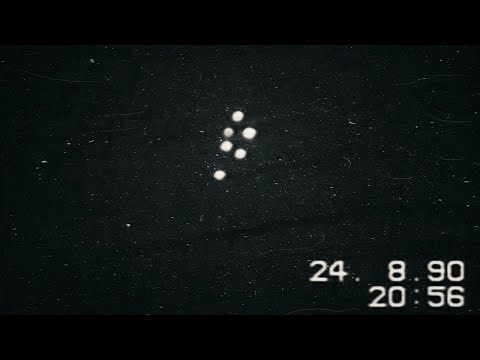
The Mysterious Lights of the Greifswald UFO Incident (Eyes On Cinema)
A dedicated retrospective walking through the August 24, 1990 sightings, the two light formations, and the MUFON-CES investigation.
UFO Greifswald Lights — August 24, 1990 Germany
A case-specific overview of the sighting, its witnesses, and the formation of lights over the Greifswalder Bodden.
UFO Lights — Greifswald, Germany — August 24, 1990
Further case-specific footage and discussion of the sighting and its formation of luminous objects.
Sources
- von Ludwiger, Illobrand. "The 'Greifswald Lights': Example for a Class B UFO Report by MUFON-CES, Inc." MUFON-CES, May 2000. Download PDF (archiv.mufon-ces.org)
- MUFON-CES. "Die leuchtenden Kugeln bei Greifswald" (German-language case landing page). archiv.mufon-ces.org
- UFO Insight. "The Greifswald Lights Incident — A Last Sighting Of The Cold War?" Detailed English-language retrospective compiling witness names, timeline, and the competing conventional explanations. ufoinsight.com
- Walter, Werner (CENAP). "Das UFO-Phänomen von Greifswald — Ein deutscher Klassiker." Skeptiker, GWUP e.V., 4/1999. gwup.org
- CENAP. "Greifswald" case summary, including the 1994 naval-flare investigation, Swedish Ministry of Defence and Bundesamt für Wehrtechnik und Beschaffung correspondence. alien.de
- exomagazin.tv. "Das Rätsel der Greifswald-Lichter." Retrospective covering the 1994 CENAP investigation, named witness recognition testimony, and the ongoing researcher debate. exomagazin.tv
- grenzwissenschaft-aktuell.blogspot.com. "Kontroverse: UFO-Skeptiker erklären erneut 'Greifswald-UFOs' für gelöst — UFO-Forscher widersprechen." Coverage of Dennis Kirstein's November 2012 Czechoslovak Air Force hypothesis and Marius Kettmann's (DEGUFO) rebuttal. grenzwissenschaft-aktuell.blogspot.com
- Vallée, Jacques. Confrontations: A Scientist's Search for Alien Contact. New York: Ballantine Books, 1990, p. 30. Cited directly in the MUFON-CES Greifswald report as a comparative brightness reference.
- "Zeitbombe Greifswald." Der Spiegel, February 1, 1990. Contemporary investigative report on safety deficiencies at the Greifswald Nuclear Power Plant, establishing the facility's documented public-safety controversy in the months before the sighting.
- Deutsches Elektromuseum. "Ehemaliges Kernkraftwerk Lubmin." Historical overview of the Greifswald/Lubmin nuclear plant's operational status and 1990–1995 shutdown. deutsches-elektromuseum.de
- Nuklearesicherheit.de (Portal on Nuclear Safety). "Nuclear Power Plant Greifswald." Technical and historical summary of the plant's reactor units and reunification-era shutdown. nuklearesicherheit.de
- "Greifswald Nuclear Power Plant." Wikipedia, consulted only for general orientation on the plant's operational timeline and reactor units, cross-checked against the Der Spiegel and Deutsches Elektromuseum sources above rather than relied upon independently. en.wikipedia.org
- "Illobrand von Ludwiger." Biographical entry (German Wikipedia), consulted for birth/death dates and career background, cross-checked against MUFON-CES's own report and publisher listings for his books. de.wikipedia.org
- Pädagogische Hochschule Karlsruhe. Faculty profile confirming Dennis Kirstein's academic affiliation, consulted to establish his identity independent of the ufo-information.de byline. ph-karlsruhe.de
- "Best UFO Cases: Europe" by Illobrand von Ludwiger, National Institute for Discovery Science, 1998. Publisher/bibliographic listing. amazon.com
- Bild. Contemporary August 31, 1990 report quoting witness Gerald Schwab and NVA radar non-detection, as cited in the MUFON-CES report and secondary retrospectives (no surviving public digital archive copy located; cited via the MUFON-CES and CENAP secondary sourcing).
- Klein, Rolf-D., and von Ludwiger, Illobrand. UFO — Beweise für ein Phänomen (CD-ROM). Munich-Grünwald: Komplett-Media, 1997. Cited as a primary literature reference in the MUFON-CES Greifswald report itself.
- von Ludwiger, Illobrand. "Die ungewöhnlichen Lichterscheinungen über Greifswald," in UFOs — Zeugen und Zeichen, pp. 251–257. Berlin: edition q, 1995. Cited as a primary literature reference in the MUFON-CES Greifswald report itself.
- YouTube (Eyes On Cinema). "The mysterious lights of the Greifswald UFO incident, August 24, 1990." Video documentary retrospective, verified live via the YouTube oEmbed API. youtube.com
- YouTube (Anomalist). "UFO Greifswald Lights - August 24, 1990 Germany." Video retrospective, verified live via the YouTube oEmbed API. youtube.com
- YouTube (Anomalist). "UFO lights - Greifswald - Germany - August 24, 1990." Video retrospective, verified live via the YouTube oEmbed API. youtube.com
- Wikimedia Commons. "AKW Greifswald.jpg," photographed by Lewin Bormann, June 20, 2021, licensed CC BY-SA 2.0. Source of this file's hero image. commons.wikimedia.org
See something inaccurate? Have additional information or sources?
Suggest an Edit →Last Updated: August 2026