
The Lubbock Lights
On the night of August 25, 1951, three Texas Technological College professors — geologist Dr. W.I. Robinson, chemical engineer Dr. A.G. Oberg, and petroleum-engineering department head Professor W.L. Ducker — were sitting in Robinson's backyard in Lubbock, Texas when a semicircular formation of 15 to 30 soft, glowing, blue-green lights streaked overhead in under three seconds. Over the following weeks the same four-man team (joined later by two colleagues) logged a dozen more flights, hundreds of ordinary Lubbock residents reported their own sightings, and on the night of August 30–31 an 18-year-old Texas Tech freshman named Carl Hart Jr. photographed a tight V-formation of the lights from his parents' backyard, producing five negatives that ran in newspapers nationwide and in Life magazine. Project Blue Book chief Edward J. Ruppelt personally investigated, floated migrating plovers reflecting Lubbock's newly installed mercury-vapor street lighting as his leading theory, and then, in his published 1956 account, pointedly refused to say what he actually concluded — citing an anonymous scientist's private research he had promised never to reveal. Seventy-five years, a disputed second-edition postscript naming Ducker himself as that scientist, a still-unauthenticated set of photographic negatives, and at least one serious modern digital re-analysis later, the Lubbock Lights remain one of the most scientifically credentialed, most thoroughly investigated, and most quietly unresolved sighting waves in American UFO history.
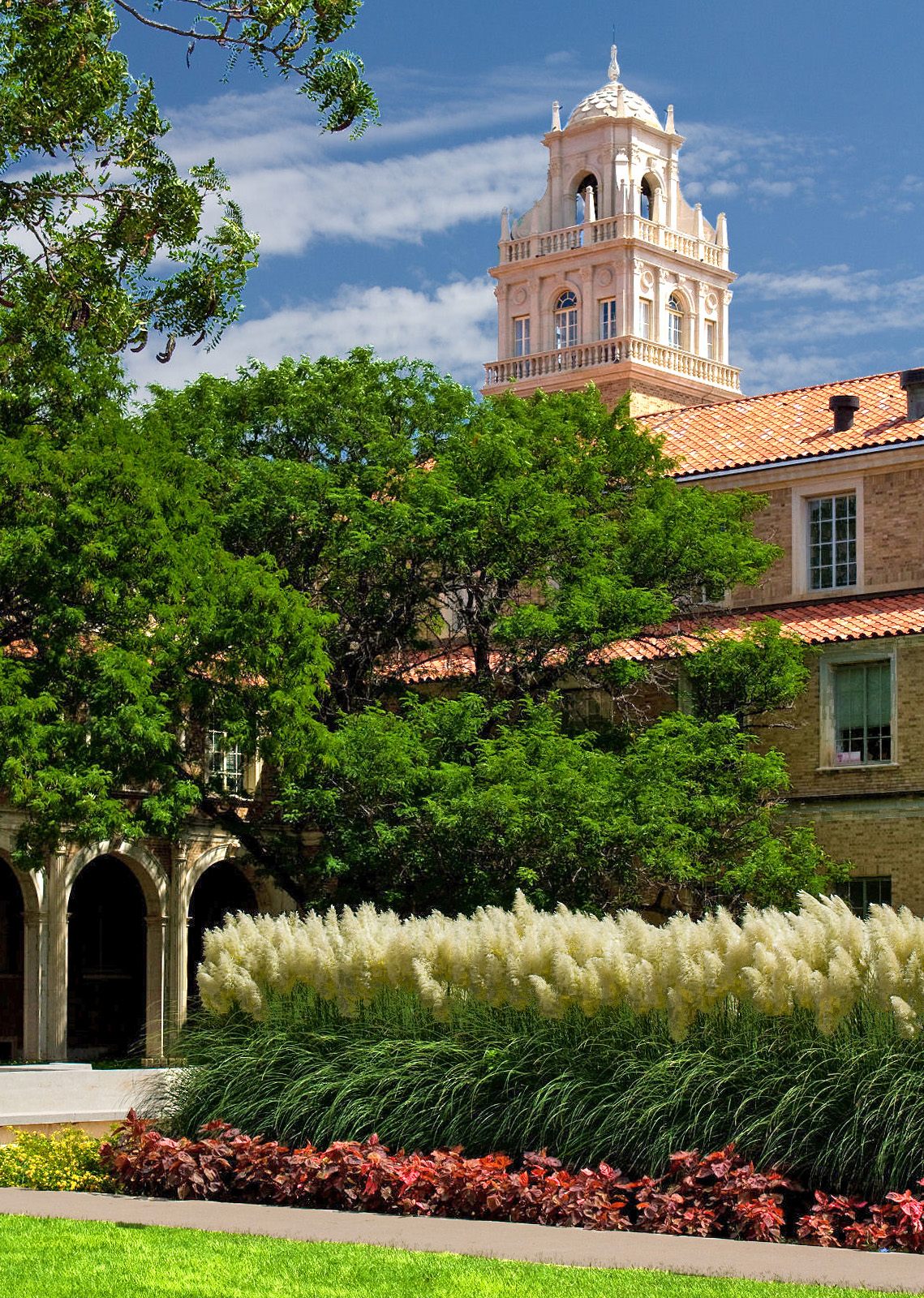
Pictured: the Administration Building tower on the Texas Technological College campus in Lubbock — the school where Robinson, Oberg, and Ducker taught and where Carl Hart Jr. was a freshman, not the lights themselves or the backyards where they were seen and photographed. Carl Hart Jr.'s original 1951 negatives remain commercially copyrighted, and no image of the actual sighting is in the public domain, so this file uses the campus most directly tied to the case's witnesses instead.
Theoretical Alignment
The Lubbock Lights resist a confident placement on any single framework, and the honest reason is that the case's own evidentiary quality is genuinely mixed rather than uniformly strong or weak. The Extraterrestrial Hypothesis draws real, if modest, support from the professors' own measurements — a tight, repeatable 30-degrees-per-second angular velocity, a disciplined attempt at triangulated altitude measurement, and four credentialed scientists who spent weeks trying and failing to force the data into a mundane box — but it is capped by the fact that nobody, across a dozen-plus sightings, ever reported a solid object, only point-source lights, which is a much thinner evidentiary basis than a witnessed structured craft. The Psycho-Social Hypothesis earns a higher rating than usual for a "hard" case like this one because the record so clearly documents contagion effects layered on top of a genuine initial event: once the professors' story ran in the Lubbock Avalanche-Journal, reports poured in from across the South Plains, investigators explicitly noted that very few witnesses claimed to have seen the lights before reading about them, and Ruppelt himself weighed how much of the flood was "the power of suggestion." At the same time, PSH cannot easily explain away the original, unprimed sighting by four working scientists who had no newspaper story to prime them, which is why it is rated speculative rather than dominant. The Interdimensional Hypothesis finds essentially no purchase in a case built entirely on ordinary point-source lights and photographic evidence, with nothing resembling materialization or dimensional transition ever reported, and is rated accordingly low.
Background
By the late summer of 1951, the American "flying saucer" phenomenon was four years old, and the Air Force's investigative arm — then still called Project Grudge, months away from its March 1952 reorganization into Project Blue Book under newly promoted Captain Edward J. Ruppelt — had settled into a posture of quiet, low-staffed skepticism. Lubbock, the largest city of the West Texas South Plains, was home to Texas Technological College (renamed Texas Tech University in 1969), a growing state college whose faculty in 1951 included Dr. W.I. Robinson, professor of geology; Dr. A.G. Oberg, professor of chemical engineering; and Professor W.L. Ducker, head of the petroleum engineering department. None of the three had any documented prior interest in UFOs beyond ordinary awareness of the national news cycle.
The city itself had just strung new mercury-vapor street lighting along several main boulevards — a detail that would become central to every explanation later offered for what happened next, and one that, at the time, meant nothing more to the men sitting in a Lubbock backyard than slightly brighter streets.
Complete Timeline
| Date | Event |
|---|---|
| August 25, 1951, ~9:20 PM CST | In Albuquerque, New Mexico, a security-cleared Sandia Corporation employee and his wife see a huge, silent, swept-wing "flying wing" aircraft pass low over their backyard, its trailing edge lined with pairs of soft bluish lights. |
| August 25, 1951, ~9:20–9:30 PM CST | Sitting in Dr. W.I. Robinson's Lubbock backyard, Robinson, Dr. A.G. Oberg, Professor W.L. Ducker, and a fourth colleague, a physics professor, watch 15–30 soft, glowing, blue-green lights cross the sky in a semicircular formation in under three seconds. A second, looser flight passes about an hour later. |
| August 25, 1951, same evening | Separately, Lubbock resident Joe Bryant and his wife watch several groups of lights pass overhead from their own yard; when a third group circles their home, the Bryants identify the objects, by sight and sound, as plovers. |
| August 26, 1951, after midnight | Two radar sets at an Air Defense Command station in Washington State track an unidentified target at roughly 900 mph for six minutes; a scrambled F-86 interceptor arrives too late. Blue Book later folds this report into the same case file. |
| Late August 1951 | The professors' team, now expecting the lights might return, begins deliberate observation, adding two more colleagues (mathematics professor E. Richard Heineman and Grayson Mead) and attempting triangulated altitude measurements with two-way-radio-linked observer teams, without success. |
| August 30–31, 1951, ~11:10 PM–midnight CST | Carl Hart Jr., a Texas Tech freshman lying in bed by an open window, sees a V-formation of lights cross the sky, grabs his father's Kodak 35 camera, and photographs three separate passes from his backyard, producing five exposures. |
| ~September 1, 1951 | Hart takes the undeveloped roll to a friend's photo-finishing shop; seeing the images had come out, the friend urges him to call the newspaper. |
| Early September 1951 | Lubbock Avalanche-Journal editor Jay Harris buys the photographs from Hart for $10, warning he will "run him out of town" if they prove fraudulent, and publishes them; national wire services and papers nationwide pick up the story within days. |
| September 5, 1951 | The expanded professors' team, observing again from Robinson's front yard, sees a formation Grayson Mead describes as "about the size of a dinner plate," "absolutely circular," and "extremely eerie" — a description at odds with Hart's tight V-formation of point lights. |
| Late September 1951 | Reports of the Lubbock case reach the Air Technical Intelligence Center (ATIC) at Wright-Patterson AFB in three near-simultaneous letters — from Albuquerque, from a Washington-State radar station, and from Reese Air Force Base in Lubbock. |
| November 6–9, 1951 | Edward J. Ruppelt flies to Lubbock, interviews the professors, Hart, and other local witnesses in person, and borrows Hart's negatives to take back to Wright Field. The professors report twelve sightings total since August 25. |
| November 29, 1951 | The Wright Air Development Center's Photo Reconnaissance Laboratory (Physics Branch) completes Test Report No. WCEFP-2-4, its formal photogrammetric analysis of Hart's four surviving negatives. |
| 1951–1975 (subsequent years) | Ducker's team continues informal observation; by his own later account he documents roughly a dozen distinct flights of the lights between August and November 1951 alone, and continues research into the phenomenon privately for years afterward. |
| April 7, 1952 | Life magazine publishes Hart's photographs nationally in a feature on the UFO phenomenon, cementing their status as some of the most widely circulated UFO images of the era. |
| 1953 | Harvard astronomer Donald Menzel attacks the case in Look, Time, and his book Flying Saucers, arguing the professors had merely seen refracted city lights. |
| 1956 | Ruppelt's The Report on Unidentified Flying Objects is published, devoting an entire chapter to Lubbock. He states the lights were "positively identified as a very commonplace and easily explainable natural phenomenon" but refuses, citing a promise of anonymity, to name the scientist or the specific explanation. |
| 1960 | Ruppelt's revised second edition adds new chapters; researchers have since noted a passage crediting Ducker himself with finally solving the case — concluding the lights were "night flying moths reflecting the bluish-green light of a nearby row of mercury vapor street lights," an explanation some researchers, including Kevin Randle, find as hard to credit as the original plover theory. |
| 1975–1980 | Researchers Michael D. Hall and Wendy Connors compile a detailed documentary history of the case; on July 27, 1980, Texas Tech professor Meredith McClain records an oral-history interview with Ducker, who by then privately believed the lights were birds reflecting street light, roughly two years before his death. |
| 1999 | Dallas station KDFW's The Tex Files interviews Carl Hart Jr. on camera; he maintains, more than four decades on, that he does not know what he photographed. |
| 2001 | Mathematician and researcher Donald R. Burleson publishes a computer-enhanced re-analysis of one Hart negative in the International UFO Reporter, claiming a previously undetected hexagonal cellular structure on the underside of one object. |
| 2019 | The History Channel's dramatized series Project Blue Book devotes its third episode to a fictionalized version of the case, prompting renewed critical scrutiny of the Hart photographs' authenticity from researchers including Kevin Randle. |
| 2021 | Lubbock media mark the case's 70th anniversary with retrospective coverage revisiting the professors, Hart, and the still-unresolved explanation. |
The First Sighting: Four Scientists in a Backyard
Just after nine o'clock on the evening of August 25, 1951, Dr. W.I. Robinson, professor of geology at Texas Technological College, was sitting in his own backyard with three colleagues — Dr. A.G. Oberg, professor of chemical engineering; Professor W.L. Ducker, head of the petroleum engineering department; and a fourth colleague, a physics professor. According to Ruppelt's contemporaneous account, the four men were drinking tea and discussing micrometeorites — a detail they stressed, half-jokingly, once they realized how their story was going to sound. At 9:20 PM, a formation of lights streaked directly overhead, crossing the sky so quickly that none of the men, all trained observers by profession, managed to get more than a fleeting look. They estimated between fifteen and thirty separate lights, a weird bluish-green color, arranged in a rough semicircle, moving north to south. About an hour later a second, looser group passed over; this time the men, no longer caught off guard, confirmed the color and speed but noted the second formation lacked any orderly pattern at all.
That same evening, unknown to the professors, a separate Lubbock couple, Joe Bryant and his wife, watched several groups of lights pass over their own home. When a third group approached, the lights appeared to circle the house directly, and the Bryants told investigators they identified the objects by sight and sound as plovers — a claim that would become one pillar of the case's leading conventional explanation, discussed at length below.
Fifty minutes earlier and 250 miles away, an Atomic Energy Commission employee with a "Q" security clearance at the Sandia Corporation in Albuquerque, New Mexico, and his wife had watched a huge, silent, sharply swept-wing aircraft — roughly one and a half times the size of a B-36 — pass low over their home, its trailing edge marked with six to eight pairs of soft, glowing bluish lights. When Ruppelt later showed the couple copies of Hart's Lubbock photographs without explanation, they immediately said, "this is what we saw on the night of 25 August."
The Sightings Multiply
Reasoning that if the lights had appeared twice in one night they might well return, the professors' team began deliberate, repeated observation over the following days and weeks, eventually growing to six members with the addition of mathematics professor E. Richard Heineman and Grayson Mead. Being, in Ruppelt's phrase, "methodical, as college professors are," the group made a genuine effort to gather hard data: they measured the angle the lights traveled through and timed it, repeatedly clocking roughly 30 degrees of arc per second, with the formation typically appearing 45 degrees above the northern horizon and vanishing 45 degrees above the southern horizon, always on a consistent north-south heading. They attempted to estimate altitude by comparing the lights' position to nearby clouds, but the clouds and the lights were never conveniently aligned; they then set up a measured baseline with two teams of observing friends at either end, linked by two-way radio and equipped with elevation-measuring instruments, hoping to triangulate a genuine speed and altitude. Neither team ever once saw the lights during a formal attempt — even as the observers' own wives, watching casually from home, continued to see them. Over the following weeks the team logged twelve separate observed flights; hundreds of other Lubbock-area residents, spread across many miles, reported matching sightings, though investigators later noted that very few people claimed to have seen the phenomenon before reading about the professors' account in the newspaper, a detail that cuts directly toward, without fully proving, a psycho-social contagion effect layered on top of a real initial event.
On September 5, 1951, the expanded team, observing from Robinson's front yard, recorded a formation Grayson Mead described in unusually precise terms: "about the size of a dinner plate," "smaller than the full moon at the horizon," "absolutely circular," and, in aggregate, productive of "an extremely eerie feeling." Mead's account is also the clearest surviving statement of the professors' own objection to the bird explanation that would soon be proposed for their sightings: "these objects were too large for any bird... I don't know of any bird that could go this fast... we would not be able to hear [birds]... to have gone as fast as this, to be birds, they would have to have been exceedingly low."
The Albuquerque and Washington-State Reports
What made the Lubbock file unusually compelling to Ruppelt when it finally landed on his desk in late September was not the professors' sighting in isolation, but its apparent correlation with two geographically distant reports arriving in the same week's mail. The Albuquerque "flying wing" description matched the shape and light pattern visible in Hart's photographs closely enough that Ruppelt rushed prints to the couple's local Air Division intelligence officer for a blind identification — and got back a wire reading, "Observers immediately said that this is what they saw on the night of 25 August." Separately, a report from an Air Defense Command radar station in Washington State described two independent radar sets tracking a target at roughly 900 miles per hour on a northwesterly heading in the early hours of August 26 — a course and timing that, plotted on a map, put the target roughly where a fast-moving object leaving Lubbock might have been, had it been traveling toward the Pacific Northwest. Blue Book's own electronics specialists later concluded the radar target was most likely a borderline weather-related return, and no confirmed physical link between the three reports has ever been established; Ruppelt's own bundling of them into a single "Lubbock Lights" file remains, by his own admission, an inference from timing and description rather than a proven connection.
Carl Hart Jr.'s Photographs
Carl Hart Jr., an 18-year-old Texas Tech freshman, had heard about the Lubbock lights like everyone else in town but had never seen them himself. On the warm night of August 30–31, 1951, he was lying in an upstairs bedroom with his bed pushed next to an open window when a formation of lights crossed an open patch of sky and disappeared over the house. Guessing the lights might make another pass, as they had for the professors, he grabbed his father's loaded Kodak 35, set the lens and shutter to f/3.5 and one-tenth of a second, and went out into the middle of the backyard. A second formation obliged him with two exposures; a third pass minutes later gave him three more. The next morning he took the undeveloped roll to a friend who ran a photo-finishing shop — the same lab where he did all his own processing — not expecting much, since the lights had looked too dim to his eye to register on film. When the negatives came back showing a clear image, the friend urged him to call the newspaper.
The Lubbock Avalanche-Journal was not initially interested, but after its own informal check, editor Jay Harris bought the photographs from Hart for ten dollars, reportedly warning him he would "run him out of town" if the images proved fraudulent. Published first locally, the pictures were picked up by newspapers nationwide within days and, on April 7, 1952, ran in Life magazine — instantly making them some of the most widely reproduced UFO photographs of the decade. Hart's own images showed a tight, orderly V-formation, unlike anything the professors themselves had reported; when Ruppelt walked the backyard with Hart to re-enact the sighting, Hart traced a flight path crossing roughly 120 degrees of sky in four seconds — a 30-degrees-per-second angular velocity matching the professors' own measurements almost exactly, despite the two groups apparently never having compared notes before Ruppelt's visit.
The Wright-Patterson Photo Analysis
Ruppelt personally carried Hart's borrowed negatives to the Photo Reconnaissance Laboratory at Wright Field. Only four of the original five negatives could still be produced; the fifth was never recovered. The lab's photographic experts found the images badly scratched and handled, but were able to confirm the lights photographed were circular, near-pinpoint sources — like a bright star or a distant bulb — each shifting position between frames according to a consistent internal pattern rather than remaining fixed. A striking, still-unresolved detail from the Wright Air Development Center's formal Test Report No. WCEFP-2-4, completed November 29, 1951: although the photographs were taken on a clear night, no star images could be found anywhere in the background, meaning the lights were, whatever they were, considerably brighter on film than the surrounding stars. Lab technicians told Ruppelt this specific signature — dim to the naked eye but intensely bright to the film — was consistent with an extremely hot light source skewed toward the infrared end of the spectrum, though they could not identify a real-world source matching that profile in 1951.
Attempts to replicate what Hart described doing were only partly successful. Ruppelt and colleagues rigged an identical camera and a light moved at the same measured angular speed Hart had traced; in four seconds they managed only two frames, both far more blurred than Hart's, at the same one-tenth-second shutter speed. A physiologist at the Aeromedical Laboratory dismissed the timing discrepancy as easily explained by adrenaline-driven reflexes; several professional photographers, including one from Life itself, noted that a photographer experienced with panning action shots — and Hart had previously shot sporting events for a local paper — would naturally produce sharper images than an inexperienced re-enactor. Blue Book's official written verdict, later given to the press by Ruppelt, was carefully split down the middle: "The photos were never proven to be a hoax but neither were they proven to be genuine. There is no definite answer." Locally, photographer William Hams made his own separate attempt to duplicate the images using birds photographed against streetlights, and could not reproduce Hart's results either — a failure believers have cited as evidence for authenticity and skeptics have cited as evidence only that Hart's specific method, whatever it was, simply wasn't birds photographed casually.
The Plover Theory, Joe Bryant, and the Professors' Objections
Ruppelt's investigation turned up what he called the only solid lead in the entire case almost by accident. On his final day in Lubbock, an elderly rancher near Lamesa, Texas, told Ruppelt he had watched the lights repeatedly and, on one pass, distinctly heard one of them call out "Plover" — immediately identifying the sound as a plover, a small water bird roughly the size of a quail. A visit to the Lubbock federal game warden's office confirmed the physical premise: a plover's oily white breast could plausibly reflect light, though the warden had never seen or heard of plovers flying in flocks larger than two or three, well short of the fifteen to thirty lights reported by the professors' first sighting — while noting, in the same conversation, that an unusually large number of plovers had in fact been present in the area that fall. Separately, and independently of Ruppelt's own Lamesa lead, Lubbock resident Joe Bryant and his wife had already identified their own August 25 sighting as plovers by sight and sound, and local witness T.E. Snider reported watching birds with visibly light-reflecting undersides pass over a drive-in theater on August 31.
The professors themselves were never persuaded. Beyond Mead's direct objections on size, speed, and silence, Texas Tech biology department head J.C. Cross and, separately, the same federal game warden Ruppelt had consulted both told investigators the sightings, as described, did not match bird behavior they recognized. The professors also pointed out that Hart's tight V-formation simply did not match what they themselves had observed — mostly semicircular or disorganized groupings — a discrepancy that has never been fully reconciled and that some of the professors reportedly took as a personal affront, privately suspecting Hart's photographs did not represent the same phenomenon they had spent weeks documenting.
Ruppelt's own published verdict on the bird theory, written for a general audience in 1956, is unusually candid about its limits: "Personally I thought that the professors' lights might have been some kind of birds reflecting the light from mercury-vapor street lights, but I was wrong. They weren't birds, they weren't refracted light, but they weren't spaceships." He credited an anonymous scientist — someone he said had built dedicated instrumentation and spent months testing theory after theory — with the true answer, but refused to identify him or the explanation in print, citing a personal promise of confidentiality. It is one of the most quoted passages in the literature of American ufology precisely because it withholds the one fact every reader wants most.
The Anonymous Scientist and the Moth Controversy
The identity Ruppelt refused to reveal in 1956 appears to have surfaced only in his revised 1960 second edition, published shortly before his death that June. According to researchers who have examined that later text, including a passage discussed at length by Kevin Randle, the "anonymous scientist" was W.L. Ducker himself — the same petroleum-engineering department head who had sat in Robinson's backyard on August 25 and who, by this account, spent years afterward quietly running his own experiments before concluding the lights were "night flying moths reflecting the bluish-green light of a nearby row of mercury vapor street lights." Randle and other researchers have found this explanation nearly as hard to credit as the original plover theory: moths do not fly in disciplined formation, the theory does not obviously explain sightings that continued for years after 1951, and it does nothing to address Hart's photographs, whose measured angular velocity independently matched the professors' own figures. The revised edition itself has drawn scholarly criticism on a broader point — commentators have noted the 1960 second edition generally softened Ruppelt's earlier openness to unexplained cases, aligning more closely with the Air Force's institutional position, which makes the sudden, specific naming of a "solved" explanation for one of Blue Book's most publicized cases a detail some researchers view with real skepticism rather than simple relief.
Muddying the picture further, a 1980 oral-history interview Ducker gave to fellow Texas Tech faculty member Meredith McClain, preserved today in the university's Southwest Collection archive, records Ducker describing his own long private research as concluding the lights were birds — not moths — reflecting the mercury-vapor street lighting, a conclusion researchers Michael D. Hall and Wendy Connors also attribute to him in their detailed documentary history of the case. Whether Ducker settled, over three decades of private research, on birds, moths, or simply "some reflective natural phenomenon" depends on which secondary account is consulted, and the discrepancy has never been definitively resolved by any surviving primary document in Ducker's own hand. What is clear, and corroborated independently in both accounts, is that one of the four original professors — a man whose backyard the sighting happened in, who spent the rest of the case's early years defending the group's professional credibility, and who years later gave a rare, candid interview two years before his 1982 death — ultimately arrived, privately, at a mundane explanation broadly consistent with reflected light off migrating animals, even as his own 1951 testimony had helped make the case's initial anomalous impression so credible.
Skeptical Hoax Allegations Against the Photographs
Independent of the plover/moth debate over the professors' sightings, Hart's photographs have attracted their own, separate line of skeptical analysis focused purely on whether they could have been faked. Harvard astronomer Donald Menzel, writing in Look, Time, and his 1953 book Flying Saucers, argued the professors had simply been looking at refracted city lights, though Ruppelt pointedly noted in his own book that Menzel had never had access to Blue Book's full case file when he wrote his critique. A more specific, mechanically minded hoax theory proposed decades later suggests Hart could have punched a pattern of small holes in a sheet of cardboard with a pencil and photographed it held up against the night sky, which would appear as dark as the background; proponents of this theory note the near-identical light pattern across Hart's consecutive frames as circumstantial support, though they also concede Hart would have needed to alter the cardboard between exposures to make a staged sequence convincing, and no direct physical evidence of such a prop has ever surfaced. Set against every hoax theory is the consistent judgment of the Air Force's own 1951 photo lab — that the images could be neither proven fraudulent nor proven genuine — and Hart's unbroken, decades-long insistence, maintained into interviews given when he had nothing left to gain or lose by confessing, that the photographs were exactly what they appeared to be.
Modern Re-Analysis: The Burleson Hexagonal-Structure Claim
The most significant modern re-examination of Hart's photographs came in 2001, when mathematician and researcher Donald R. Burleson published "New Findings on the Lubbock Lights" in the International UFO Reporter, the journal of the Center for UFO Studies. After roughly two years of computer image-enhancement work on one of the surviving negatives, Burleson reported detecting a previously undocumented beehive-like, hexagonal cellular pattern on the underside of one of the eighteen photographed objects. Using the reported spacing of the pattern and an assumed comparison object, he estimated each individual light source represented a disc roughly 9.5 feet across, calculated a camera-to-object distance of approximately 2,850 feet, and derived an angular-velocity-based airspeed of roughly 1,300 miles per hour — nearly double the fastest conventional aircraft of 1951 — while separately consulting Navy physicist Bruce Maccabee, who confirmed Hart's Kodak camera possessed sufficient resolving power to have captured fine structure of the kind Burleson claimed to find. Burleson explicitly framed his hexagonal-structure claim as a direct rebuttal of both the plover and moth theories, arguing neither explanation could account for a structured, cellular underside pattern.
This analysis has not been independently replicated or widely accepted by mainstream ufological researchers, and it should be read as a minority, speculative interpretation rather than an established finding; no peer-reviewed imaging analysis by an independent laboratory has confirmed Burleson's specific measurements. Burleson's paper additionally connects his finding to an unrelated, far more speculative claim — that a 1947 Roswell ground-crew witness, shown the enhanced image decades later, said it resembled an object he recalled glimpsing in a B-29's bomb bay — a cross-case link that rests entirely on one person's after-the-fact recognition of a computer-enhanced photograph and that this site treats as unverified. It is included here because it represents the most serious modern technical attempt to re-examine the original photographic evidence, not because its conclusions are considered established.
Circumstantial Evidence
- Four credentialed Texas Tech scientists with no prior UFO interest and no financial motive independently and repeatedly witnessed the same phenomenon over several weeks, and made a genuine, if ultimately unsuccessful, effort to instrument their observations.
- The professors' measured angular velocity (30 degrees of arc per second) independently matched Carl Hart Jr.'s own traced flight path almost exactly, despite the two groups apparently not having compared notes before Ruppelt's visit.
- Project Blue Book's own Wright Field photo lab could neither prove Hart's photographs a hoax nor prove them genuine after direct examination of the original negatives — an unresolved, rather than debunked, verdict that has stood for over 70 years.
- A local professional photographer's dedicated attempt to duplicate Hart's images using real birds photographed against mercury-vapor streetlights failed to reproduce his results.
- The professors themselves, including biology department head J.C. Cross and a federal game warden consulted directly, disputed the plover explanation on specific evidentiary grounds — formation size, flight speed, and absence of sound.
- Ruppelt's own official 1956 statement that the professors' sightings had been "positively identified" rested entirely on an anonymous source he refused to name, an evidentiary structure that cannot be independently verified by outside researchers to this day.
- Even the case's own leading conventional explanation is internally inconsistent across primary and secondary sources — some crediting Ducker with a "birds" conclusion, others with "moths" — a discrepancy that has never been resolved by any surviving document in Ducker's own hand.
Key Researchers
- Edward J. Ruppelt (1922–1960) — Head of Project Blue Book (then Project Grudge) during the wave. His 1956 chapter remains the single most important primary account, and his refusal to name his anonymous source remains the case's central mystery.
- Donald H. Menzel (1901–1976) — Harvard astronomer who publicly attributed the professors' sighting to refracted city lights in Look, Time, and his book Flying Saucers, without access to Blue Book's full case file.
- Jerome Clark — UFO historian whose UFO Encyclopedia entry remains a standard secondary reference for the case's full timeline and witness roster.
- Kevin Randle — Retired military intelligence officer and researcher who personally interviewed Carl Hart Jr. decades after the sighting and has written extensively and skeptically about the "moths" claim in Ruppelt's revised edition.
- Michael D. Hall and Wendy Connors — Researchers whose detailed documentary history of the case, drawing on Ruppelt's private papers and Blue Book files, remains one of the most thorough independent accounts available.
- Donald R. Burleson — Mathematician whose 2001 digital re-analysis of one Hart negative proposed a previously undetected hexagonal structure, the most significant modern technical re-examination of the photographs.
- Bruce Maccabee — Navy optical physicist consulted by Burleson to confirm the resolving power of Hart's camera; a longtime independent analyst of contested UFO photographs across multiple cases.
Cultural Impact
Carl Hart Jr.'s photographs became, alongside the McMinnville Trent photos, one of the two or three most widely reproduced sets of UFO images from the entire 1950s, appearing in newspapers nationwide and in Life magazine's April 1952 feature on the phenomenon. The case's blend of unimpeachable witness credentials and a never-resolved photographic mystery has made it a recurring touchstone in later UFO literature and television, most visibly in the History Channel's dramatized 2019 series Project Blue Book, which devoted its third episode to a fictionalized version of events (a dramatization, not a primary source, and not used as a research source for this file). Locally, the case remains a point of civic identity in Lubbock: retrospective news coverage marking anniversaries in 1999, 2021, and beyond has consistently returned to the same unresolved question that faced Ruppelt in 1951 — a group of credentialed scientists who could not explain what they saw, and a set of photographs the government's own laboratory could neither confirm nor debunk.
Key Witnesses
Dr. W.I. Robinson
Hosted the original August 25, 1951 sighting in his own backyard and, alongside Oberg and Ducker, formed the credentialed core of the professors' observing team through the following weeks. Ruppelt considered the group the most technically qualified witnesses he encountered during his entire tenure at Project Blue Book.
Dr. A.G. Oberg
One of the original three professors who witnessed the first flight of lights on August 25, 1951, and who continued observing and attempting to instrument subsequent sightings through the fall.
Professor W.L. Ducker
The senior-most of the original three professors. Defended the group's sighting publicly for years even as he privately conducted his own long-running research into the phenomenon. Researchers have since identified him as the "anonymous scientist" of Ruppelt's revised 1960 account, though secondary sources disagree on whether his eventual private conclusion was birds or moths reflecting Lubbock's mercury-vapor street lighting. Gave a candid oral-history interview to the Texas Tech Southwest Collection in 1980, two years before his death.
Carl Hart Jr.
Photographed five exposures of a V-formation of lights from his parents' backyard on the night of August 30–31, 1951, using his father's Kodak 35 camera. Sold the images to the Lubbock Avalanche-Journal for $10; they subsequently ran nationwide and in Life magazine. Never wavered from his account across nearly five decades of intermittent interviews, telling researcher Kevin Randle in the 1990s that he still had no idea what he had photographed.
Joe Bryant
Watched several groups of lights pass over his home on the same night as the professors' first sighting, August 25, 1951; when a third group circled his house, Bryant and his wife identified the lights, by sight and sound, as plovers — one of the earliest and most direct pieces of evidence cited for the case's leading conventional explanation.
Grayson Mead
Joined the professors' observing team for later sightings, including the September 5, 1951 flight he described in precise, vivid detail as "absolutely circular" and "extremely eerie." Also gave the most detailed contemporaneous rejection of the bird explanation on the record, arguing the objects were too large, too fast, and too silent to be any bird he knew of.
E. Richard Heineman
Joined the expanded observing team for later 1951 sightings, adding a sixth trained scientific observer to the group's ongoing, ultimately unsuccessful attempts to instrument the lights' altitude and speed.
The Five Observables Assessment
The Five Observables framework, developed by former AATIP director Luis Elizondo, classifies UAP encounters by performance characteristics exceeding known technology of their era. The Lubbock case is built entirely on unaided visual sightings and one set of consumer photographs, with no radar or flight-dynamics instrumentation of the lights themselves ever successfully obtained, which limits how confidently several of these categories can be assessed.
Assessment: Anti-Gravity Lift is rated speculative rather than present because no witness ever described a hovering, weightless, or gravity-defying object — only fast, level, horizon-to-horizon flight, which does not itself demonstrate anti-gravitic propulsion. Instant Acceleration and Hypersonic Velocity are both rated speculative: the professors' repeatedly measured 30-degrees-per-second angular velocity, if the lights were flying at any significant altitude, would imply extraordinary speed, and Burleson's 2001 re-analysis specifically calculated roughly 1,300 mph — but because no altitude was ever successfully instrumented, these speed figures remain a range of possibilities rather than a confirmed measurement, and the leading conventional explanations (birds or moths reflecting streetlights, flying low and close to observers) would produce an identical angular velocity at a small fraction of that speed. Low Observability is rated absent because the lights were, by every account, bright, conspicuous, and easily seen by both trained and untrained observers across a wide area — the opposite of a stealthy craft. Trans-Medium travel is rated absent, as no transition between air, water, or any other medium was ever reported.
Evidence Assessment
Supporting Anomalous Origin
- Four credentialed scientists with no financial motive or prior UFO interest independently observed the same phenomenon repeatedly over several weeks, and made a genuine, disciplined effort to instrument it.
- The professors' independently measured 30°/sec angular velocity matched Carl Hart Jr.'s photographically traced flight path almost exactly.
- Project Blue Book's own Wright Field laboratory, after direct examination of the original negatives, could not prove Hart's photographs a hoax.
- A dedicated local attempt to duplicate the Hart photographs using real birds against mercury-vapor streetlights failed to reproduce the images.
- The Albuquerque "flying wing" witnesses independently and immediately identified Hart's photographs as matching what they had separately seen the same night, 250 miles away.
- Carl Hart Jr. never altered his account across nearly five decades of interviews, including one given when he had nothing left to gain from maintaining a hoax.
- Donald Burleson's 2001 digital re-analysis reported a previously undocumented hexagonal structure on one photographed object, though this finding remains unreplicated.
Supporting a Conventional Explanation
- Lubbock resident Joe Bryant and his wife identified their own August 25 sighting as plovers by sight and sound, independent of Ruppelt's separate Lamesa lead.
- Researchers examining Ruppelt's revised 1960 edition have identified Professor W.L. Ducker himself as the "anonymous scientist" who privately concluded the lights were night-flying moths reflecting mercury-vapor street lighting.
- A 1980 Texas Tech oral-history interview and separate documentary research both describe Ducker privately concluding, after years of research, that the lights were birds reflecting street light.
- Reports of the lights spiked sharply once the professors' story ran in the local newspaper, and investigators noted very few witnesses claimed to have seen the phenomenon before reading about it.
- No altitude or speed measurement of the lights was ever successfully obtained despite a genuine attempt, meaning even the case's most "anomalous" speed figures depend entirely on unverified distance assumptions.
- Hart's photographic negatives passed through an uncontrolled chain of custody for months before formal analysis, and one of the five original negatives was permanently lost.
- Harvard astronomer Donald Menzel publicly attributed the professors' sighting to refracted city lights, consistent with the broader mercury-vapor-street-lighting explanation.
Why "Credible"
The Lubbock Lights earn a CREDIBLE classification because the case combines an unusually strong witness core with real, if incomplete, physical evidence, while never crossing into confirmed anomaly and never being cleanly debunked either. What is not seriously disputed: six credentialed Texas Tech faculty members, with no financial motive and no prior UFO interest, independently and repeatedly witnessed a genuine, unexplained phenomenon over several weeks and made a real, disciplined attempt to instrument it; an independent teenage photographer produced images whose measured flight characteristics matched the professors' own figures despite no apparent collaboration between the two groups; and the U.S. Air Force's own dedicated photo laboratory, after direct examination, could not prove the photographs a hoax. What keeps the case from a higher "Verified" rating is equally clear: no altitude, speed, or distance measurement of the lights was ever successfully obtained by any instrument, the leading conventional explanation (birds or moths reflecting the city's brand-new mercury-vapor street lighting) has genuine, specific evidentiary support — including, by several credible secondary accounts, from one of the original professor-witnesses himself — and even that conventional explanation is internally inconsistent across the sources that report it. A case with this much genuine scientific credibility on one side and this much unresolved, partially-insider-endorsed mundane explanation on the other is the textbook profile of "credible": not proven, not debunked, and still argued over by serious researchers three-quarters of a century later.
Sensor & Instrumentation Detection Profile
Every meaningful detection in this case was made with the naked human eye; no radar, infrared, or magnetometer instrument was ever successfully pointed at the Lubbock lights themselves. The professors' team made a genuine, disciplined attempt to instrument the sightings — setting up a measured baseline perpendicular to the objects' usual north-to-south flight path, stationing two teams equipped with elevation-measuring devices and two-way radios at either end, hoping to triangulate altitude and speed — but as Ruppelt recorded, "neither team ever saw the lights," even as the professors' wives, watching unaided from home, did. The only surviving physical instrumentation product of the entire case is Carl Hart Jr.'s Kodak 35 camera, loaded with ordinary black-and-white film and set at f/3.5, 1/10 second — consumer equipment with no purpose-built capability for aerial photography. Project Blue Book's own file additionally folded in a genuinely instrumented but geographically separate report: on the morning of August 26, 1951, roughly 1,300 miles away, two radar sets at an Air Defense Command station in Washington State independently tracked an unidentified target moving at roughly 900 miles per hour before an F-86 interceptor was scrambled too late to intercept it. Blue Book's own electronics specialists later judged this a borderline weather-related target, and it has no confirmed physical connection to the Lubbock sightings beyond the coincidence of timing that struck Ruppelt on the flight home.
Environmental & Geospatial Context
Lubbock sits on the flat, treeless Llano Estacado of the West Texas South Plains, a landscape that gives an unobstructed horizon-to-horizon sightline in every direction — the same geography that six years later would make the Levelland object so conspicuous to dozens of motorists. The single environmental fact most central to this case's own explanatory debate is municipal, not meteorological: the City of Lubbock had recently installed new mercury-vapor street lighting along several of its main boulevards in 1951, casting the distinctive bluish-white glow that both the plover and moth theories depend on as their light source. Ruppelt personally obtained a city map marking every mercury-vapor-lit street and found that the professors' own observation point lay close to one of them — a genuinely suggestive correlation that was nonetheless undermined by reports from Lubbock-area residents living miles from any lighted boulevard. Skies on the nights in question were consistently described as clear; the only competing celestial event on record is an unrelated, spectacular meteor that streaked across New Mexico, West Texas, and Oklahoma in early September 1951, witnessed by Ruppelt himself on his return flight and separately reported in that morning's newspaper, which he considered a useful natural comparison for how ordinary phenomena can read as extraordinary to an unprimed observer.
Observer Credibility & Occupational Profile
Ruppelt considered the Lubbock professors, by his own account, the single best-credentialed witness group he encountered in his entire tenure running Blue Book: "If a group had been hand-picked to observe a UFO, we couldn't have picked a more technically qualified group of people." Robinson (geology), Oberg (chemical engineering), and Ducker (petroleum engineering, department head) were career scientists and engineers with no prior public interest in flying saucers, no financial motive, and every professional incentive to be embarrassed rather than enthusiastic about reporting an unexplained sighting; one of the men later admitted he had spent years admonishing his own students for not being more observant, only to find himself, in the moment, unable to recall more than the barest details of what had streaked overhead. That same rigor cuts against the group in one respect the professors themselves acknowledged: their best efforts at instrumented measurement failed completely, and their attempts to informally poll and cross-check other Lubbock witnesses ran into the ordinary limits of eyewitness recall Ruppelt already knew well. Carl Hart Jr. presents a different credibility profile: an 18-year-old freshman with prior experience photographing sporting events for a local photo-finishing shop — relevant technical experience that professional photographers later cited to explain why his panning technique might plausibly out-perform inexperienced re-enactors — but also, inescapably, the case's single point of photographic failure, someone the Air Force's own laboratory could neither vindicate nor debunk. Hart maintained his account without variation for the rest of his life, including in a rare 1999 televised interview and a later conversation with researcher Kevin Randle, in which he said he still had no idea what he had photographed.
Physical & Material Assays
No physical debris, trace residue, or recovered artifact of any kind is associated with this case, and none has ever been claimed. The sole physical exhibits are Hart's photographic negatives — originally five, of which only four could still be produced when Blue Book investigators asked to borrow them months later, the missing fifth negative never recovered or explained. The negatives were, by Hart's own account, handled casually: developed at a friend's photo-finishing lab the morning after they were taken, sold to Avalanche-Journal editor Jay Harris for ten dollars, and passed through newspaper and wire-service hands before Blue Book's Photo Reconnaissance Laboratory at Wright Field finally examined them — by which point they were, in the lab's own words, "badly scratched and dirty because so many people had handled them." No chain of custody controlled this process at any point; the physical evidentiary record is, at best, informally preserved.
Historical Precedents & Archive Matches
The Lubbock Lights arrived during the second great postwar American saucer wave, four years after Kenneth Arnold's 1947 sighting and during the same summer that would culminate the following July in the far larger Washington, D.C. radar-visual flap. Within Project Blue Book's own files, "the Lubbock Lights" is explicitly a bundled, multi-site case: the same folder that holds the professors' testimony and Hart's photographs also contains a nearly simultaneous "flying wing" sighting 250 miles away in Albuquerque, New Mexico, by a security-cleared Sandia Corporation employee, and the disputed Washington-State radar contact discussed above — a grouping Ruppelt made because the timing and descriptions seemed, to him, too similar to dismiss as coincidence, even though the geography makes any physical connection highly speculative. Geographically and thematically, Lubbock is the direct ancestor of the region's other major Blue Book case, the November 1957 Levelland electromagnetic-stall incidents, which occurred barely 30 miles west on the same flat Llano Estacado terrain; and it belongs, alongside McMinnville, to the small group of early-1950s cases whose evidentiary core is a small set of still-disputed photographs rather than a witnessed craft.
Material Analysis
The Lubbock Lights produced no physical debris, trace residue, or recoverable artifact of any kind, and no witness or investigator has ever claimed otherwise. The case's entire physical evidentiary record consists of Carl Hart Jr.'s photographic negatives — originally five exposures, of which only four could be produced when Blue Book borrowed them months after the sighting, the fifth never explained or recovered. This is a case, like McMinnville after it, where the physical evidence is inseparable from the chain-of-custody problem surrounding it: the negatives were developed at an informal local photo lab, sold to a newspaper editor, distributed nationally through wire services, and only then finally examined by trained government photo analysts at Wright Field — by which point, in the lab's own words, they were "badly scratched and dirty" from handling. No portion of that custody chain was controlled in any way that would satisfy a modern forensic standard.
Supporting Genuine Photographic Evidence
- Wright Field's Photo Reconnaissance Laboratory found the photographed lights were circular, near-pinpoint sources shifting position according to a consistent internal pattern — not obviously consistent with a crude double exposure.
- No star images appeared in the background of any Hart photograph despite clear skies, indicating the photographed lights were considerably brighter on film than the surrounding stars — a specific, technically unusual signature the Air Force's own analysts could not fully explain in 1951.
- A dedicated local re-enactment attempt using real birds photographed against mercury-vapor streetlights failed to reproduce Hart's images.
Supporting a Compromised or Fabricated Record
- The negatives passed through an entirely uncontrolled chain of custody for months before any formal government analysis was performed.
- One of the five original negatives was permanently lost and has never been recovered or accounted for.
- A proposed hoax mechanism (a pattern of holes punched in cardboard, photographed against the night sky) would be simple for an amateur photographer with darkroom access to execute and difficult to distinguish from genuine point-source lights using 1951-era analysis.
The Conventional Explanation Candidate: Birds, Moths, and Streetlights
The leading conventional explanation, first proposed by Ruppelt in the field and never officially retracted, holds that migratory birds — plovers, by the original theory, or possibly ducks or geese by the game warden's own alternative suggestion — or, per a disputed later account, night-flying moths, were passing low over Lubbock and reflecting the glow of the city's newly installed mercury-vapor street lighting from their pale undersides. It deserves serious evaluation because it rests on a real, physically plausible mechanism confirmed by multiple independent witnesses: Joe Bryant's direct sight-and-sound identification, T.E. Snider's drive-in theater observation, the federal game warden's confirmation that migratory bird activity was unusually heavy that fall, and, according to several credible secondary sources, the eventual private conclusion of one of the four original professor-witnesses himself.
Where the Bird/Moth Theory Falls Short
Its central weakness is the same one the professors themselves raised in 1951 and that later researchers have never fully resolved: the federal game warden Ruppelt personally consulted said he had never seen or heard of plovers flying in flocks larger than two or three, well short of the fifteen to thirty lights the professors reported in their very first sighting, and biology department head J.C. Cross independently told investigators the sightings did not match recognizable bird behavior. Grayson Mead's specific, on-the-record objections — size, speed, and silence — were never directly rebutted by any Blue Book document. The theory also does not obviously explain Hart's photographs: his tight, orderly V-formation does not match how flocking birds or moths typically arrange themselves, and the Wright Field lab's finding that the lights registered far brighter on film than the surrounding stars is a harder signature to attribute to reflected streetlight than to almost any other proposed source. Finally, the theory's own history undermines confidence in it: the "moths" version appears to originate from a single, second-hand passage in a revised 1960 book edition that researchers cannot independently verify against Ducker's own contemporaneous notes, while a separate 1980 archival interview attributes a different conclusion (birds, not moths) to the same man.
Photographic Hoax
A second candidate holds that Carl Hart Jr., alone or with help, staged his photographs — whether with a cardboard cutout, a suspended model, or some other darkroom trick — independent of whatever the professors themselves saw. This candidate is weakened by the U.S. Air Force's own direct, contemporaneous laboratory examination of the original negatives, which found no conclusive evidence of fabrication despite dedicated scrutiny; by the failure of at least two separate attempts (Ruppelt's own team and local photographer William Hams) to duplicate Hart's results using plausible mundane methods; and by Hart's own unwavering, decades-long account, maintained even in interviews conducted when confessing would have cost him nothing. It gains support from the case's uncontrolled negative custody chain, the loss of one original negative, and the specific technical plausibility of a simple punched-cardboard method that would require no special equipment for an experienced amateur photographer with darkroom access.
Misidentified Experimental or Military Aircraft
A third candidate, raised by Ruppelt himself in connection with the separate Albuquerque "flying wing" report, holds that some of the wider wave of sightings reflected genuine but misidentified U.S. military aircraft — specifically an early flying-wing-configuration bomber the Air Force is known to have operated in this period. This candidate plausibly accounts for the swept-wing, silent-aircraft description given by the Albuquerque witnesses and, by extension, some of the flying-wing-shaped reports Ruppelt heard secondhand around Lubbock, but it does not fit the professors' or Hart's core observations at all: none of them described a solid aircraft body, only discrete point-source lights, and no experimental aircraft of the era is known to have operated in a silent, repeated, weeks-long pattern directly over a major Texas city and college campus.
Birds/Moths Reflecting Mercury-Vapor Street Lighting
Plausible UnresolvedPlausible as a partial explanation, with credible witness and even insider support, but unresolved as a complete account of the professors' formation counts, angular-velocity consistency, and Hart's photographic evidence.
Related Cases
Confirmed Documents & Official Records
Reproduced Blue Book microfilm pages documenting the original November 1951 field investigation, witness interviews, and case chronology.
UNCLASSIFIED (declassified)The Air Force's own formal photogrammetric analysis of Hart's negatives, including its object-size and distance calculations and its "neither hoax nor genuine" conclusion.
UNCLASSIFIED (declassified)National Archives finding aid for Project Blue Book's microfilm holdings (Record Group 341) and related UAP textual records, the official repository for the underlying Lubbock case documentation.
UNCLASSIFIEDCIA Center for the Study of Intelligence historical study documenting the Agency's broader review of early Blue Book cases, including the 1951 national reporting wave that produced the Lubbock file.
UNCLASSIFIED (declassified)Search Government Archives Directly
Further Reading — Recommended Literature
The Report on Unidentified Flying Objects
Devotes an entire chapter to Lubbock, written by the Project Blue Book chief who personally interviewed the professors and Carl Hart Jr. and who first withheld, then partially revealed, the case's central mystery.
The UFO Encyclopedia, 4th Edition
The definitive UFO reference work, with an extensively cited entry on the Lubbock Lights situating the case within the broader 1951 national wave and Blue Book's early institutional history.
Project Blue Book Exposed
Drawing on declassified Blue Book files and Randle's own interviews with Carl Hart Jr. decades after the sighting, this book examines how the Air Force's investigative program handled cases like Lubbock.
Watch the Skies!: A Chronicle of the Flying Saucer Myth
A rigorously skeptical, well-documented history of American UFO cases including the 1951 wave that produced Lubbock, useful as a counterweight to more credulous treatments of the case.
Flying Saucers
Harvard astronomer Menzel's contemporaneous skeptical treatise, which directly attacked the Lubbock professors' sighting as refracted city lights and helped set the terms of the decades-long debate that followed.
Essential Viewing
THE TEX FILES — "Lubbock Lights"
FOX 4 Dallas-Fort Worth's 1999 news investigation, including an on-camera interview with Carl Hart Jr. decades after the sighting.

Lubbock Lights: 70 Years Later
Local Lubbock station retrospective marking the case's 70th anniversary, revisiting the professors' account and the still-unresolved explanation.
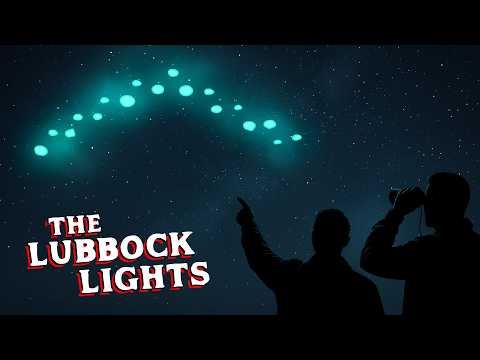
The Unexplained UFO Sighting Witnessed by Scientists
A detailed walkthrough of the professors' sighting, Hart's photographs, and the Air Force investigation from the Red Web history podcast.
The Lubbock Lights Phenomenon
A Texas-history-focused account of the 1951 wave, its West Texas setting, and its place in the state's UFO lore.
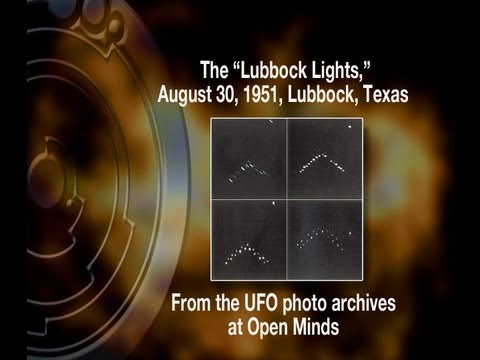
UFO Lubbock Lights, August 30, 1951, Lubbock, Texas
A UFO-news-focused summary of the Hart photographs and the Air Force's inconclusive photographic analysis.
Sources
- "Lubbock Lights," Wikipedia (comprehensive summary with citations to Ruppelt 1956 and Clark 1998). en.wikipedia.org
- Ruppelt, Edward J. "Chapter Eight: The Lubbock Lights, Unabridged," The Report on Unidentified Flying Objects, Doubleday, 1956. Full text at sacred-texts.com
- NICAP. "The Lubbock Lights" case directory, with links to the Blue Book case files, the Air Force photo analysis, and the Hall & Connors detailed history. nicap.org
- Ridge, Fran, ed. "The Blue Book Files on Lubbock," NICAP, reproducing Project Blue Book microfilm sequences 30527–30531 and 30561–30565. nicap.org
- Wright Air Development Center, Physics Branch. Test Report No. WCEFP-2-4, photographic analysis of the Carl Hart Jr. negatives, November 29, 1951, reproduced via NICAP. nicap.org
- Hall, Michael D. & Connors, Wendy. "The Lubbock Lights: The Detailed Story," reproduced via NICAP. nicap.org
- Burleson, Donald R. "New Findings on the Lubbock Lights," International UFO Reporter, Summer 2001, reproduced via NICAP. nicap.org
- Texas Tech University Southwest Collection. William Ducker oral history interview, conducted by Meredith McClain, July 27, 1980. swco-ir.tdl.org
- Texas Tech University Southwest Collection. Reference file listing, "Lubbock Lights" entry cross-referencing Oberg, Robinson, and Jan Aldrich's UFO document collection. depts.ttu.edu
- HISTORY.com. "The Unsolved Mystery of the Lubbock Lights UFO Sightings." history.com
- Lubbock Lights (independent local history site). "Part of the reason we're named Lubbock Lights honors '51 UFO mystery; here's the story of how answer died with investigator." lubbocklights.com
- Randle, Kevin D. "A Different Perspective: Carl Hart and the Lubbock Lights," A Different Perspective blog, August 2006. kevinrandle.blogspot.com
- Randle, Kevin D. "History's Project Blue Book: The Lubbock Lights," A Different Perspective blog, January 2019 (discusses Ruppelt's revised-edition "moths" claim and Ducker's identity). kevinrandle.blogspot.com
- Collins, Curt, et al. "The Lubbock Lights of History Channel's 'Project Blue Book' — how much can we trust those photos?" AIPT, January 23, 2019. aiptcomics.com
- SlashLore. "The Lubbock Lights: When College Students Captured History's Most Debated UFO Photos." slashlore.com
- CASEFILES. "The Lubbock Lights: Multiple Witnesses and Photographic Evidence," Investigation #10. casefiles.space
- Skeptical Inquirer. "The History Channel Mangles Project Blue Book, Mixing Fact with Fiction," May 2019. skepticalinquirer.org
- Den of Geek. "Project Blue Book Episode 3 Review: The Lubbock Lights." denofgeek.com
- National Archives and Records Administration. UAP Textual and Microfilm Records Research Guide. archives.gov
- Haines, Gerald K. "CIA's Role in the Study of UFOs, 1947–90," Studies in Intelligence, Semi-Annual Edition No. 1, 1997. cia.gov
- "The Report on Unidentified Flying Objects," Wikipedia, discussing the differences between Ruppelt's 1956 first edition and 1960 revised second edition. en.wikipedia.org
- Wikimedia Commons. "File:TTUadmin.jpg," Administration Building, Texas Tech University, licensed CC BY-SA 3.0, photographer Johan Hendrikse. commons.wikimedia.org
- "Texas Technological College Historic District," Wikipedia. en.wikipedia.org
- "Donald Menzel," Wikipedia. en.wikipedia.org
- Clark, Jerome. The UFO Encyclopedia, 4th Edition, Visible Ink Press, 2023 (Lubbock Lights entry).
See something inaccurate? Have additional information or sources?
Suggest an Edit →Last Updated: August 2026